




Get a quote for your project
Tell us what needs protecting and an ArmorThane coatings specialist will come back with the right product, the right system and a realistic price.
- Product and system matched to your substrate
- Coverage and budget guidance before you commit
- A certified applicator near you
- 30+ years of field-proven polyurea and polyurethane
Bridge rehabilitation using polyurea coatings represents a paradigm shift in infrastructure preservation. This comprehensive guide examines how spray-applied polyurea systems can extend bridge service life by 25-40 years, reduce rehabilitation costs by up to 60% compared to full reconstruction, and minimize traffic disruption during application. Learn how federal policy, advanced materials science, and proven field techniques converge to protect aging transportation infrastructure across North America and beyond. Polyurea bridge rehabilitation fits the preservation-first approach of the Federal Highway Administration's bridge preservation program, which favors protecting sound structures before they need replacement.
The Complete Guide to Polyurea Bridge Rehabilitation
From deck waterproofing and corrosion prevention to carbon fiber reinforcement and lifecycle cost analysis, this guide equips DOT engineers, bridge contractors, and asset managers with the knowledge to implement polyurea-based rehabilitation programs that extend bridge service life while meeting MAP-21 and FAST Act requirements.
We’re sure you’ve seen the headlines: America’s infrastructure is rapidly aging. And if you’re not one to follow the news, then you’ve probably experienced the problem firsthand when you drive over constant potholes or dilapidated bridges.
To make matters worse, it’s not just a problem here in North America, or even the United States; infrastructure globally has seen better days, demanding fast and effective rehabilitation or outright new construction. The solution? Large-scale and complex approaches using superstructure modeling, load-rating software, finite-element analysis, and other sophisticated software tools are often cited as the answer, but the reality is that bridge rehabilitation is happening span by span, one layer at a time.
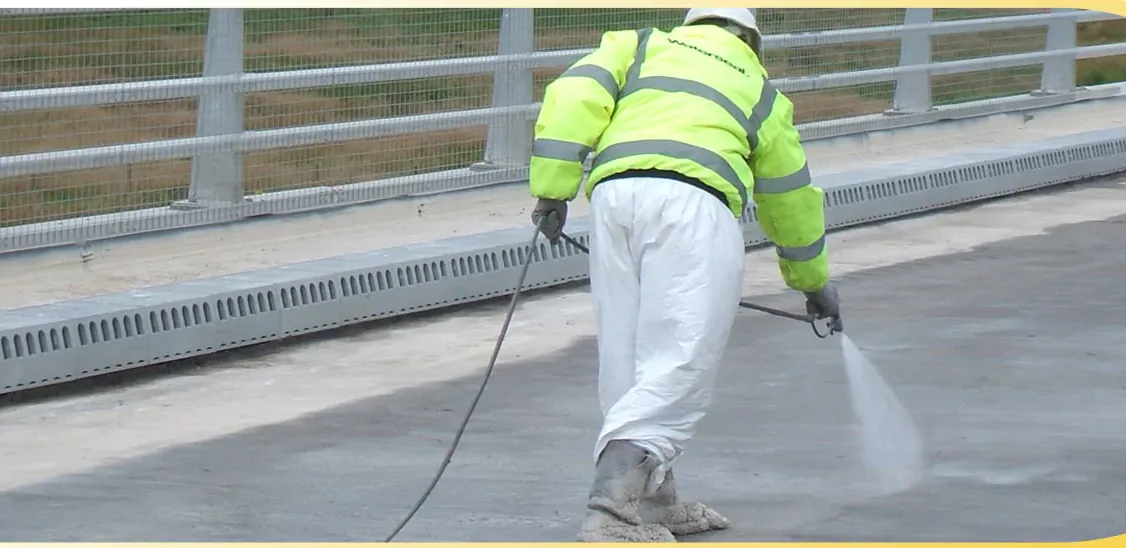
Ultra-fast-setting polyurea elastomers like the systems we offer at ArmorThane now let agencies and public works crews seal a highway bridge deck with speed and precision.
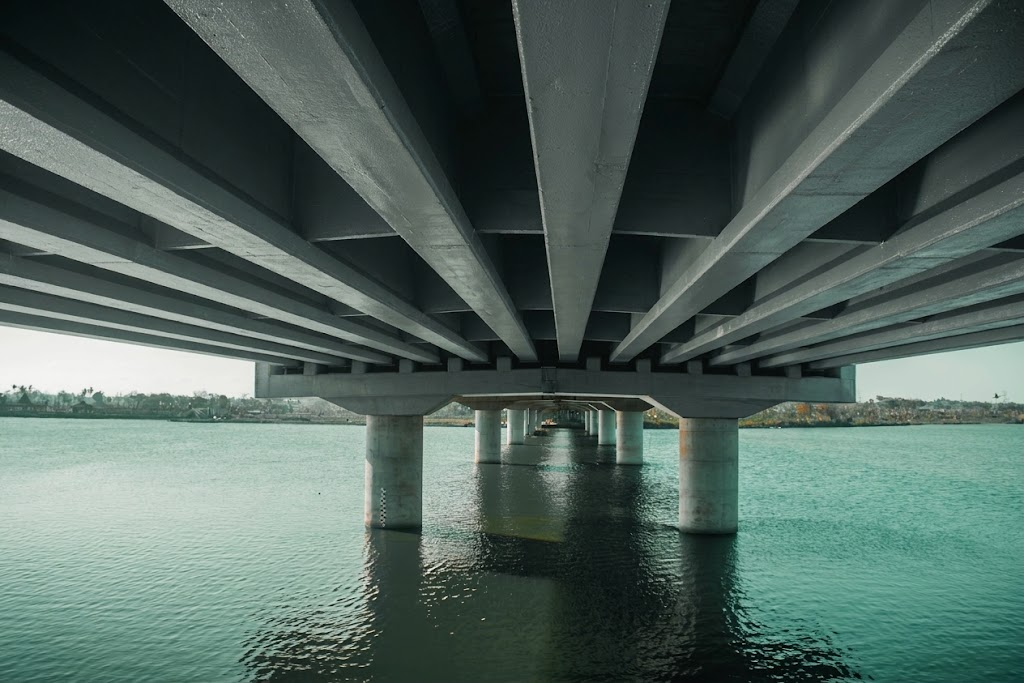
Instead of treating every deteriorating bridge as a candidate for full bridge replacement, the service life of the existing bridge can be stretched for years to avoid the costs and disruption of building a new bridge while still keeping the traveling public in good condition with respect to safety as well as congestion. Considering reports from the Department of Transportation which state that more than 40 % of inventory is in fair or even poor condition, that is no small feat, and is essential to the national transportation network.
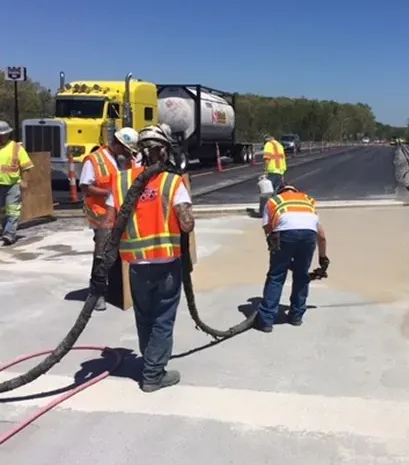
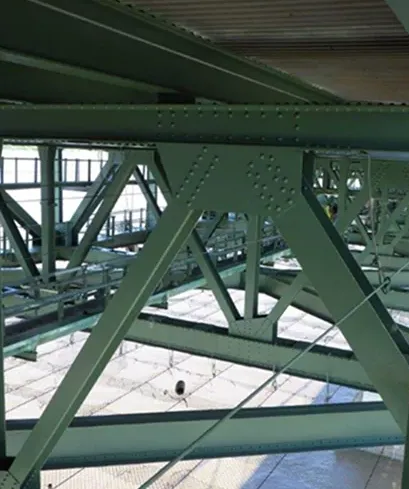
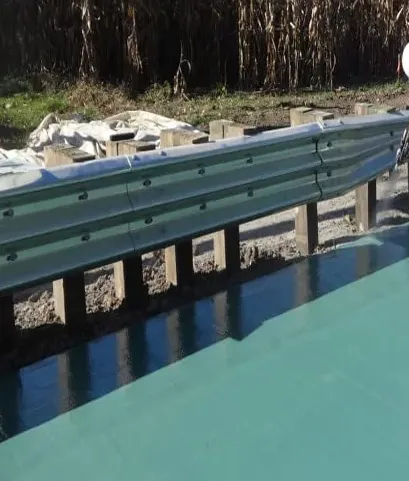
Over 42% of America's 617,000+ bridges are more than 50 years old. Annual repair backlogs exceed $125 billion, making polyurea-based bridge rehabilitation not just a technical solution but an economic imperative for state and federal DOTs.
Policy suggests and supports preservatio over reconstruction
Both the U.S. Department of Transportation and the Federal Highway Administration are urging agencies to change their approach; tear-down mentalities are out, and proactive bridge preservation supported by data-driven transportation asset management is in, and the logic is straightforward. Strategic rehabilitation work costs less than wholesale bridge reconstruction, and the difference is more than in the margins. Rehabilitation work also serves to shorten travel time while simultaneously reducing carbon emissions, all of which match polyurea’s cure-in-seconds chemistry to a T. Crews can finish the overlay, reopen the work zone, and be gone before rush hour to limit exposure to traffic, and more importantly, bolster public safety.
When developing a bridge rehabilitation program, align your project with MAP-21 and FAST Act performance requirements. DOTs that demonstrate measurable preservation outcomes through polyurea coating programs often secure priority funding for subsequent bridge rehabilitation projects.
Start the inspection, define the scope, engineer the surface
A detailed bridge inspection is first and foremost for any and every bridge rehabilitation project. Inspectors focus on deck cracking, chloride-induced spalling in concrete beams, rust pockets along steel girders; basically, when the existing condition shows delamination but no section loss, then a seamless polyurea membrane is equipped to halt moisture ingress and subsequent bridge decay without the need for the gargantuan endeavor that is a new build project.
Crews typically handle localized concrete repairs, targeted joint repair, and replacement of leaking expansion joints early (often during or shortly after inspection) to prevent accelerated wear and tear that defers costlier structural repairs that may eventually necessitate full re-builds, but if findings reveal unanticipated bridge needs–for example, an obsolete parapet height–those can be folded into the same construct to keep the scope defined and coherent.
If it’s time to start spraying, not paying, then the project begins in earnest with thorough surface preparation.
Abrasive blasting removes laitance and road salts from the concrete surface and exposes bright metal on embedded anchors or stainless steel hardware; where chloride ingress has caused impact damage at the deck’s cross section, contractors may opt for partial-depth deck removal, using a combination of low-shrinkage mortars followed by spraying the elastomer. Because polyurea’s elastic modulus is low enough to bridge (no pun intended) micro-cracks in concrete structures while still bonding tenaciously to various substrates–attributes that make it well-suited for the irregular geometrics found on the side of a bridge–polyurea is an ideal candidate technology for effective bridge rehabilitation in most locales and conditions.
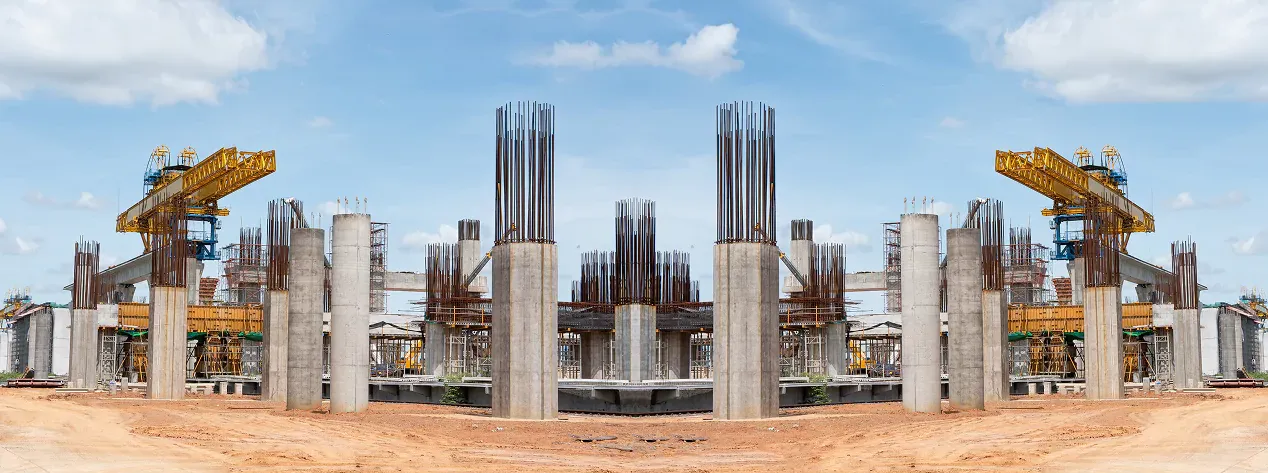
Carbon fiber for reinforcement and dealing with joints, rails, and sidewalks
Polyurea offers exceptional performance on its own, but it also pairs well with other innovative materials technology like carbon fiber. In many applications, for instance, when applied to decks or webs in flexure, engineers commonly specify carbon fiber-reinforced polymer (CFRP) sheets under a polyurea topcoat. Carbon fiber adds tensile capacity; polyurea keeps oxygen and moisture out. The dual material system adds no appreciable bulk, preserving headroom and accommodating pedestrian access on the sidewalk side of the bridge.
Carbon fiber fabrics can also be oriented to match live-load demand, so the system strengthens the bridge structure without altering the girder geometry. Strengthened structures and supported geometry are complemented by polyurea’s elongation, which absorbs the modest differential movement between the carbon fiber and the concrete, making polyurea as flexible as it is tough. Stakeholders across North America have adopted carbon fiber overlays, arguably to the point of becoming standard practice for the rehabilitation of bridges with decks approaching chloride thresholds.
In terms of joints, rails, and sidewalks–open-style joints that are notorious leak paths–spray-applied polyurea lets designers create continuous membranes across joint gaps.
These membranes can be augmented with pre-compressed foam or carbon fiber-back neoprene, which helps accommodate thermal movement and keep runoff away from girder seats. Overlays then extend to the bridge railings and wrap down the traffic-facing side of the bridge to the drop edge; on the downstream side of the bridge, a rougher finish simplifies traffic control planning and meets the public works mandate to minimize disruption.
Carbon fiber reinforced polymer (CFRP) wrapping combined with polyurea overlays creates a dual-system approach that both strengthens deteriorated structural elements and provides long-term waterproofing. This combination is particularly effective for bridges with load-posting restrictions due to structural deterioration.
Construction sequencing and lane management meet lifecycle economics
Regardless of the tools or materials used, nighttime shuttering of selected travel lanes is still common, even with polyurea. Guidelines often suggest pulling temporary barriers before dawn, and polyurea’s rapid return-to-service makes that feasible. By reducing overhead time, crews also cut labor costs and significantly contribute to the overall lower cost of rehabilitation with polyurea as compared to bridge replacement.
? In fact, polyurea-based bridge rehabilitation can be as much as half the price of full bridge replacement, if not more, even before monetizing commuter frustration.
But extended durability matters too: many highway bridges experience CFRP-stiffened decks that remain in good condition beyond fifteen years, and that “extra time” often syncs with funding cycles so that managers can spread scarce dollars across more bridge projects. Ultimately the calculus is variable; it may shift in case of scour or advanced fatigue but the majority of routine rehabilitation work is cheaper and faster than the alternative new build.
For maximum lifecycle cost efficiency, schedule polyurea bridge rehabilitation during off-peak traffic periods. Many DOTs have found that nighttime lane closures with polyurea application can rehabilitate an entire bridge deck in a single weekend, minimizing both cost and public disruption compared to weeks-long epoxy overlay projects.
Polyurea Bridge Rehabilitation vs. Other Methods
See how polyurea stacks up against traditional bridge rehabilitation approaches across key performance metrics.
| Factor | Polyurea Spray | Epoxy Overlay | Full Reconstruction |
|---|---|---|---|
| Application Time | Hours (fast cure) | Days (slow cure) | Months to years |
| Service Life Extension | 25-40 years | 10-20 years | 50-75 years |
| Traffic Disruption | Minimal (hours) | Moderate (days) | Severe (months) |
| Cost Per Sq Ft | $3-8 | $5-12 | $150-400+ |
| Crack Bridging | Excellent | Moderate | N/A (new deck) |
| Chemical Resistance | Outstanding | Good | Depends on system |
| Flexibility/Elongation | 300-400% | 5-10% | N/A |
| Temperature Range | -40°F to 350°F | 40°F to 200°F | N/A |
Frequently Asked Questions About Bridge Rehabilitation
Expert answers to the most common questions about polyurea bridge rehabilitation.
Polyurea is a highly practical and urgently needed technology to protect our bridges
Polyurea is a powerful technology for bridge rehabilitation, and the rehabilitation of concrete structures and surfaces more broadly, but it can’t realign elements or rebuild lost segments; it’s not an elastomeric cure-all, and not every bridge in disrepair can be made safe and long-lasting with polyurea alone. But when coupled with complementary materials science like carbon fiber, supported by professional applications using diligent surface preparation, and a catalog of other supporting tools, materials, and procedures, polyurea can serve as a scalable and demonstrable path to keep concrete structures safe and functional at a fraction of the cost of new construction, bridges included–bridges especially. Bridge rehabilitation is better with polyurea, and ArmorThane is ready to help–contact us today to learn more or get started with the world’s one-stop shop for all things polyurea and polyurethane.
Polyurea bridge rehabilitation represents the most cost-effective, time-efficient, and technically superior approach to preserving America's aging bridge infrastructure. With rapid application times, exceptional durability, and proven DOT approval, polyurea coating systems should be the first consideration for any bridge preservation or rehabilitation program.
Ready to Rehabilitate Your Bridge?
Get a free consultation from ArmorThane's bridge rehabilitation specialists. Our NACE-certified engineers will evaluate your project and provide a detailed scope and cost estimate.