




Why rigid coatings crack and how seamless polyurea follows flexing steel.
Why a Shipping Container Makes a Good Pool, and a Hard One to Coat
A 40-foot container is a box built to be stacked nine high on a rolling ship. It is not built to hold a swimming pool’s worth of water and then get dragged down the interstate on a flatbed.
That’s the whole problem in one sentence.
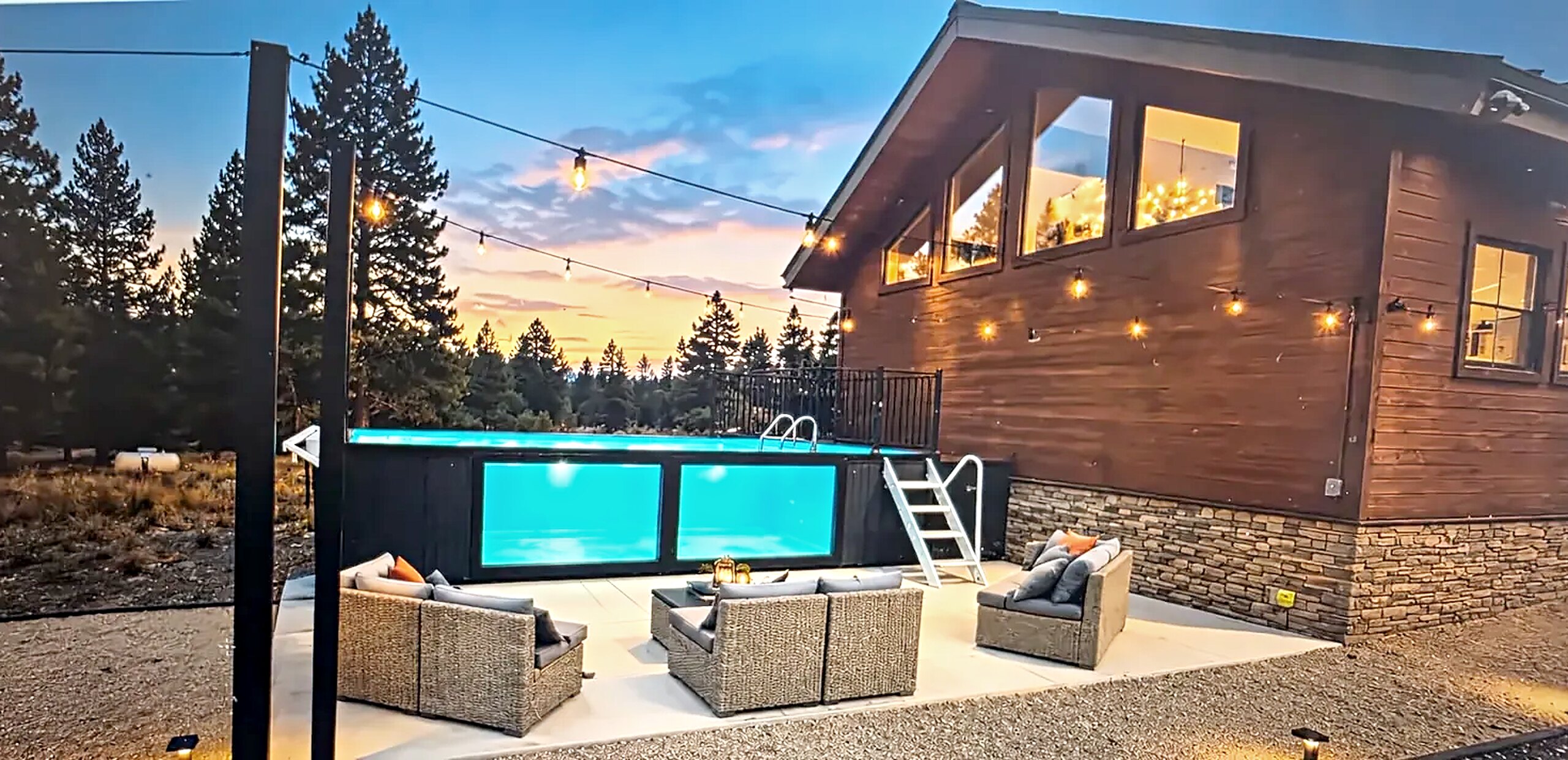
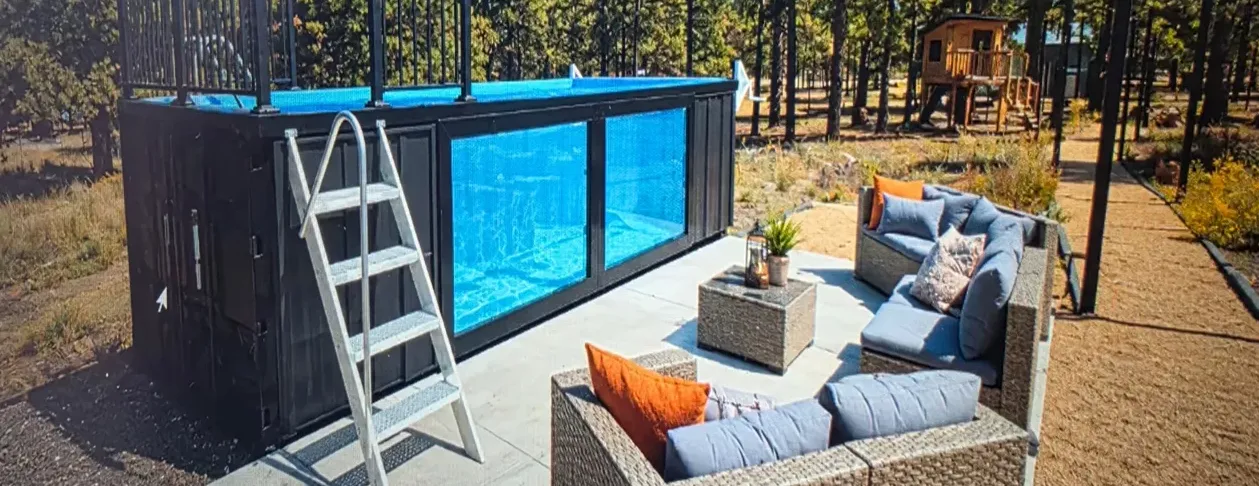
Consider what the steel is actually doing on a build like this one. Corten walls, corrugated, thin enough that the corrugation is doing most of the structural work. Somebody has cut two large rectangles out of one side for acrylic windows and welded in frames. The floor has been reinforced. Water goes in, and now every wall is carrying hydrostatic load it was never designed for — the corrugations want to bow outward, the welds at the window frames take the concentrated stress, and the whole box racks a little every time it gets lifted, hauled, or set on ground that is not perfectly level.
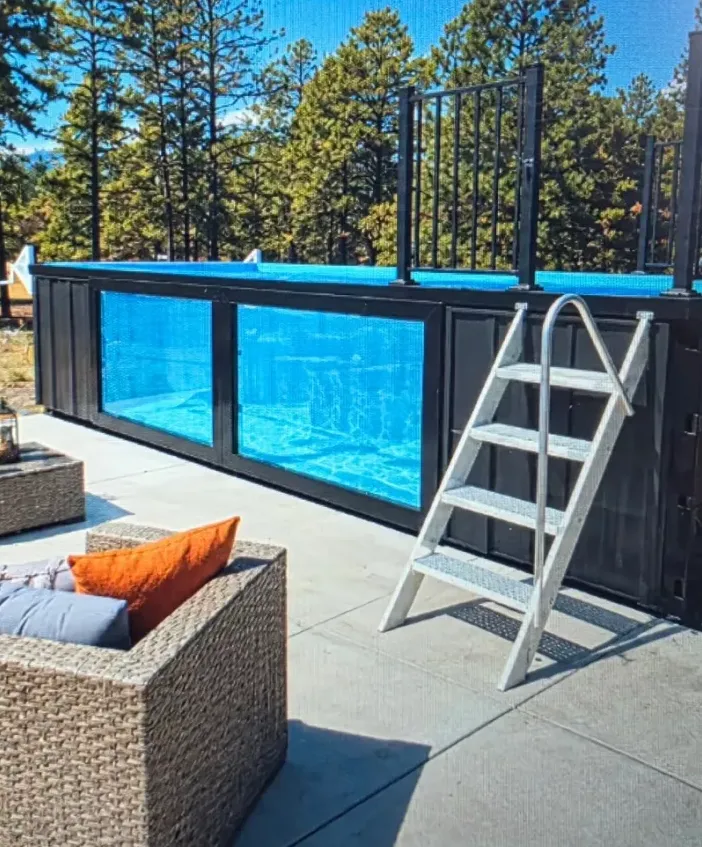
A rigid coating hates that. Epoxy in particular. The finish looks beautiful on day one and develops a hairline crack at a weld seam by the time the unit is delivered, and once water is behind the film the contractor is chasing rust under the coating instead of coating the rust.
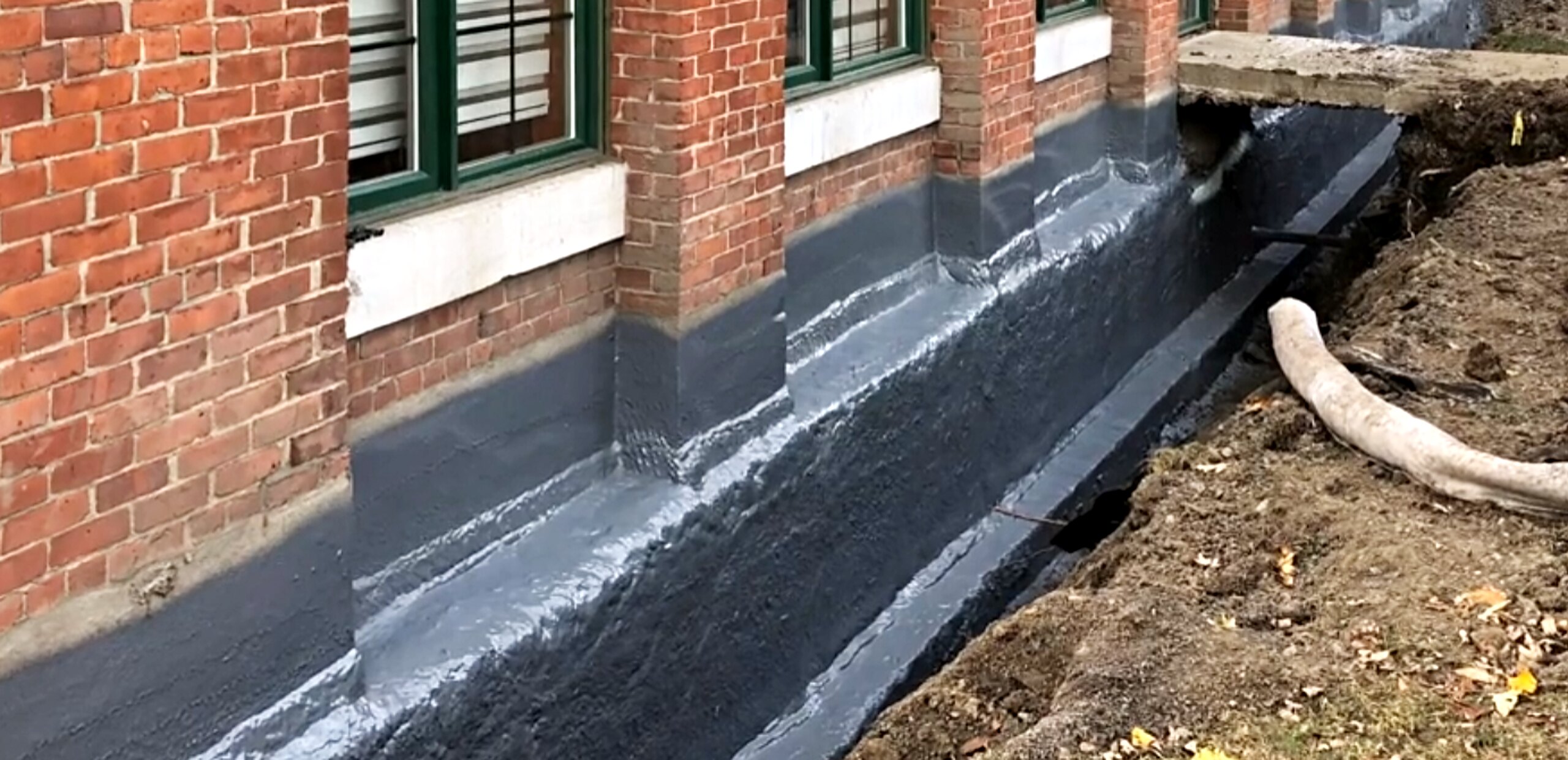
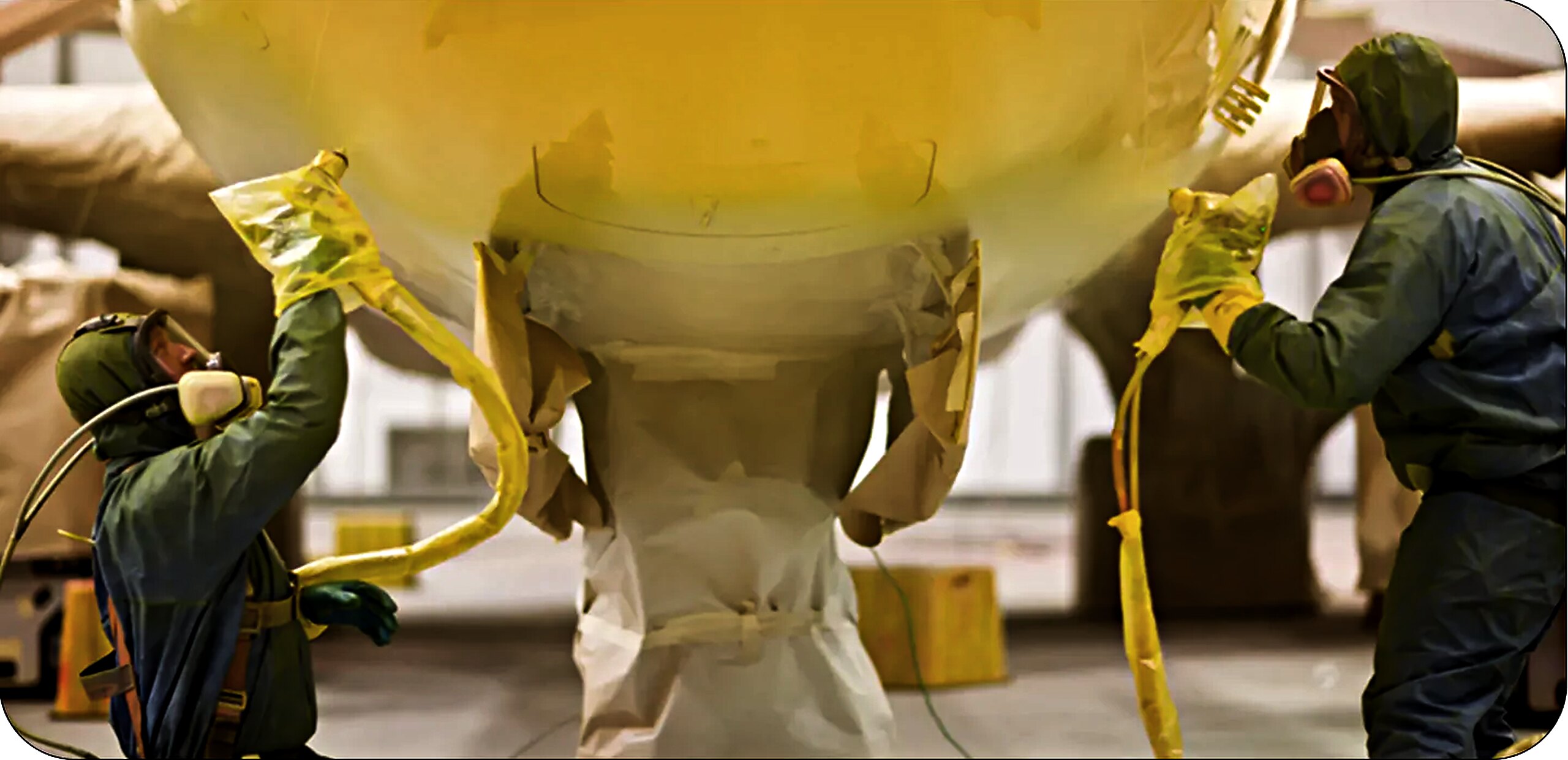
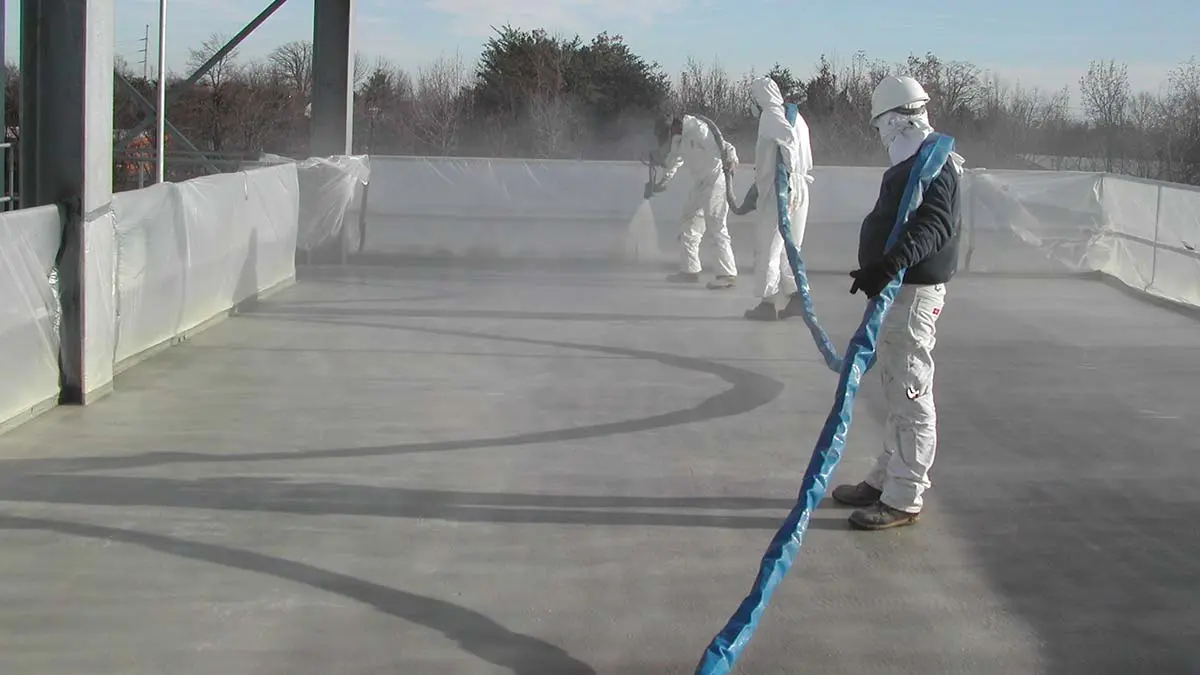
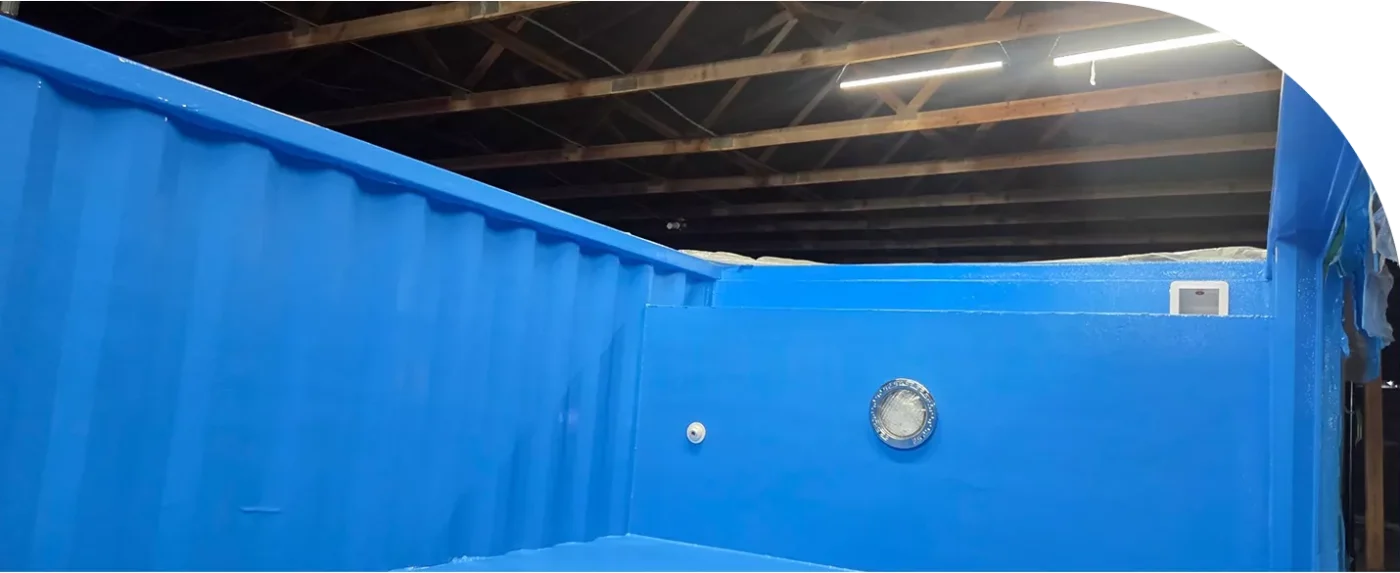
Sprayed polyurea behaves differently. The amine-isocyanate reaction is fast enough to build film in seconds rather than hours, and the result is a seamless membrane with elongation in the hundreds of percent. It moves with the substrate. When the container flexes on the trailer, the coating flexes with it. There is no lap, no seam, no joint to fail, because the whole interior — floor, walls, corners, the radius where the corrugation meets the floor pan, around the light housing, around the skimmer — is one continuous piece of material.
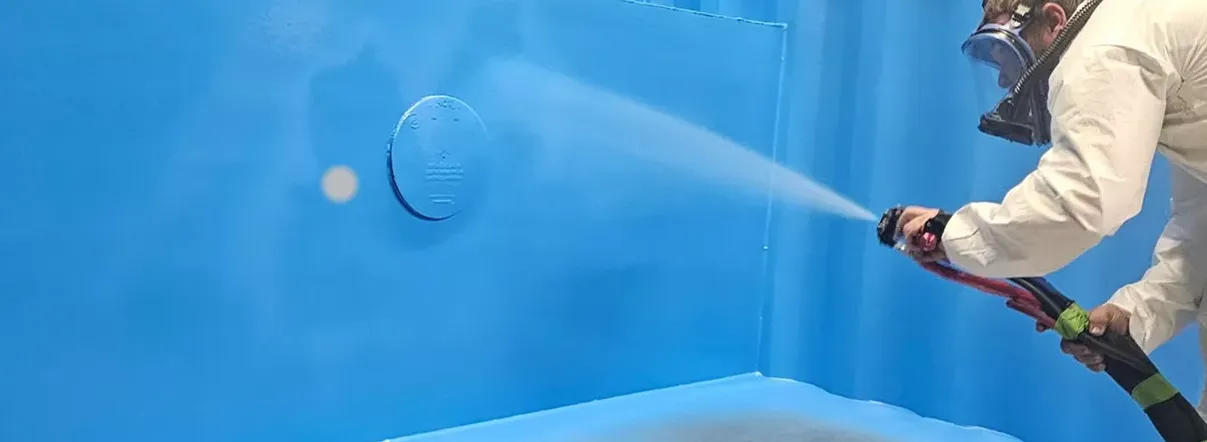
What the photos show
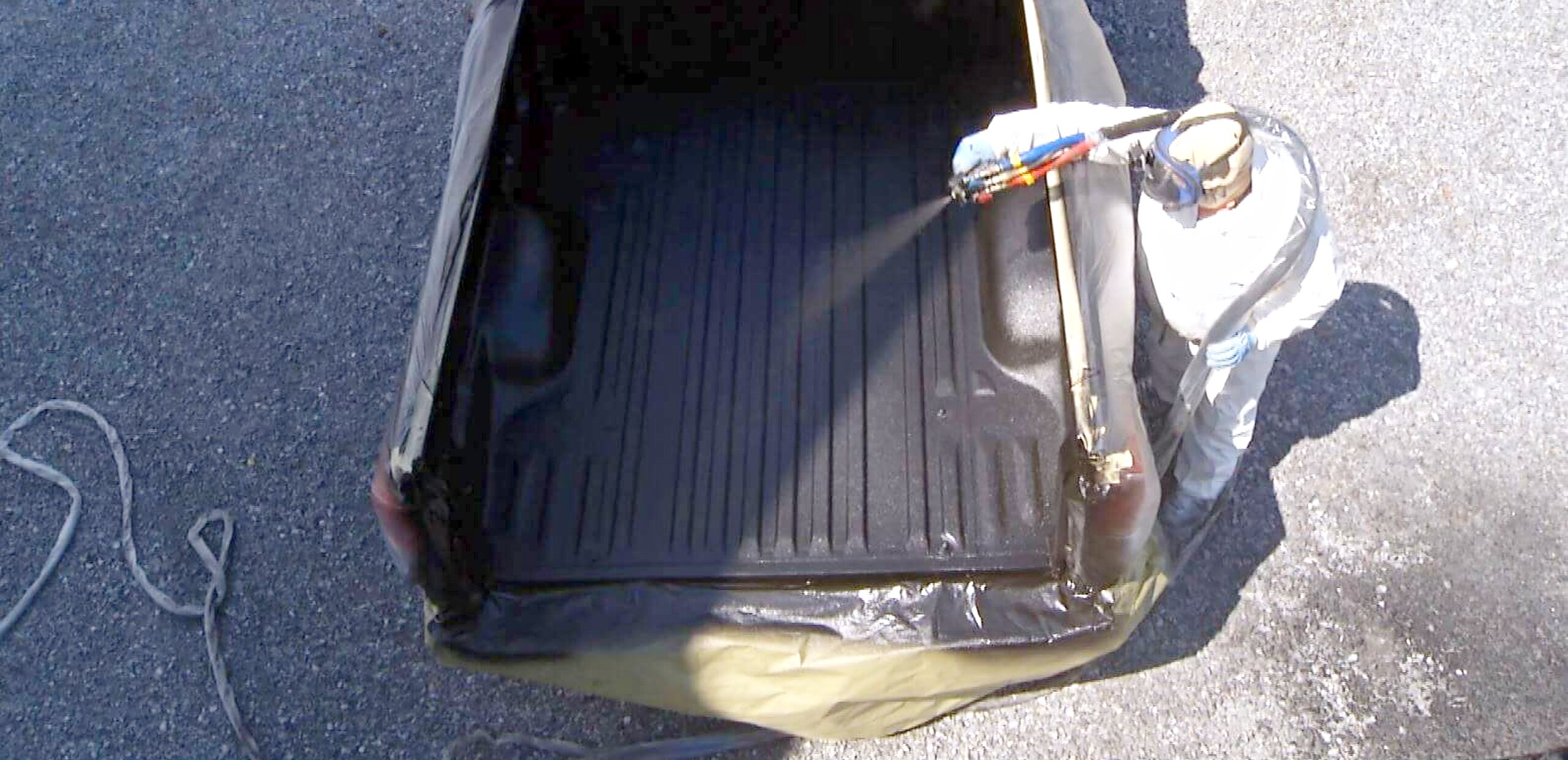
[Applicator name / company] sprayed the interior in [product] from ArmorThane, tinted blue, at [mils DFT]. Prep was [blast profile / SSPC standard], and the coating went on [ambient / substrate conditions].
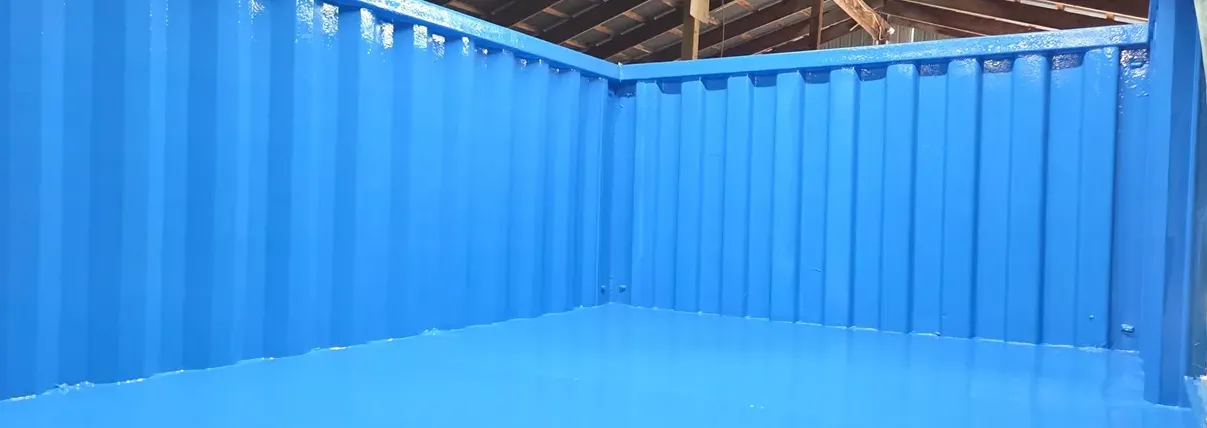
Two details stand out.
First, the corners. The material rounds over the transition where the corrugated wall meets the floor. On a pool that matters more than it might appear — those are the spots where a sheet good has to be cut and lapped, and every lap is a future leak. Sprayed, they simply do not exist as a detail.
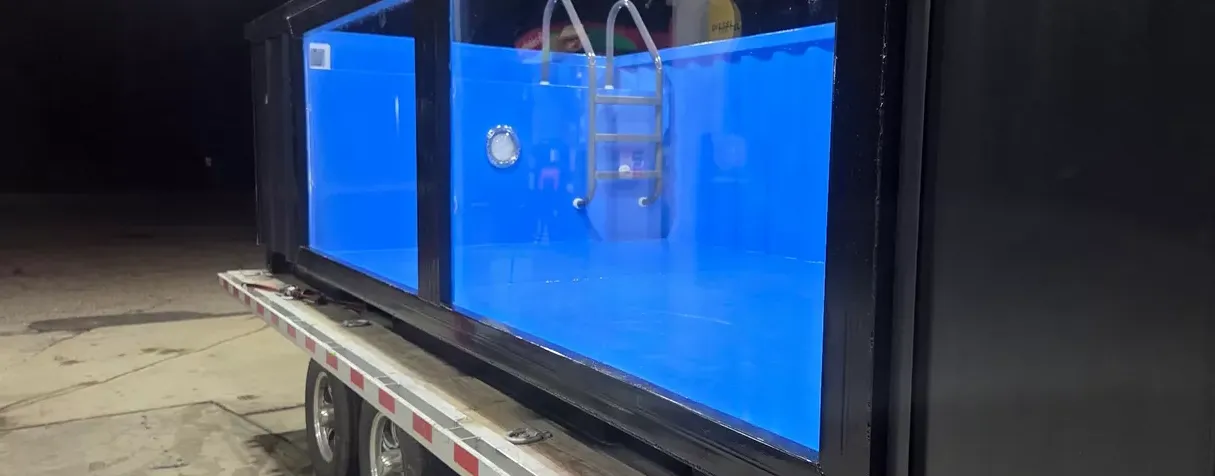
Second, the penetrations. There’s a skimmer, a return, a light housing, and a set of window frames in that box, and every one of them is a hole in the pressure envelope. The coating carries up onto the flanges and seals them in as part of the membrane rather than relying on a bead of sealant to do the work. Most leak calls on water features trace back to a penetration detail, not the field of the wall.
The part nobody wants to talk about
Spraying a container pool is not the hard part. An applicator who can hold a consistent pass on a corrugated wall can do it, and the result looks like the photos here. Water-holding is not the challenge either. Polyurea is a waterproofing material, full stop.
The challenge is what happens over a few seasons in chlorinated water and direct sun.
Free chlorine is an oxidizer. At the concentrations most residential pools run, it goes to work on organic polymers, and an aromatic polyurea will chalk and shift color under UV. That is not a defect; it is the chemistry of an aromatic isocyanate. Above the waterline, on a pool that sits out in the open, it shows.
Which is why the honest framing is this: the barrier is proven, and the long-term immersion finish is still an open question across the industry. Manufacturers including ArmorThane are working the topcoat side of it — a finish layer that goes over the sprayed polyurea rather than replacing it — with field testing underway. Anyone promising a decades-in-chlorine finish today is ahead of the data.
What a contractor should know before quoting one
Prep is the whole job. Container floors come with whatever the last twenty years put on them: residue, old coatings, rust scale. Budget for it honestly, because adhesion failures on a pool are catastrophic, not cosmetic.
Mind the flex. How the pool will be transported and set changes the spec. A container lifted by the corner castings full of water is a different engineering problem than one craned in empty and filled on site.
Seamlessness is the selling point. Buyers shopping container pools have been looking at vinyl liners and fiberglass. A monolithic membrane bonded to the steel, in a color they choose, is the thing they cannot get anywhere else.
Set expectations above the waterline. UV and chlorine are worth raising before the sale rather than after the first summer.
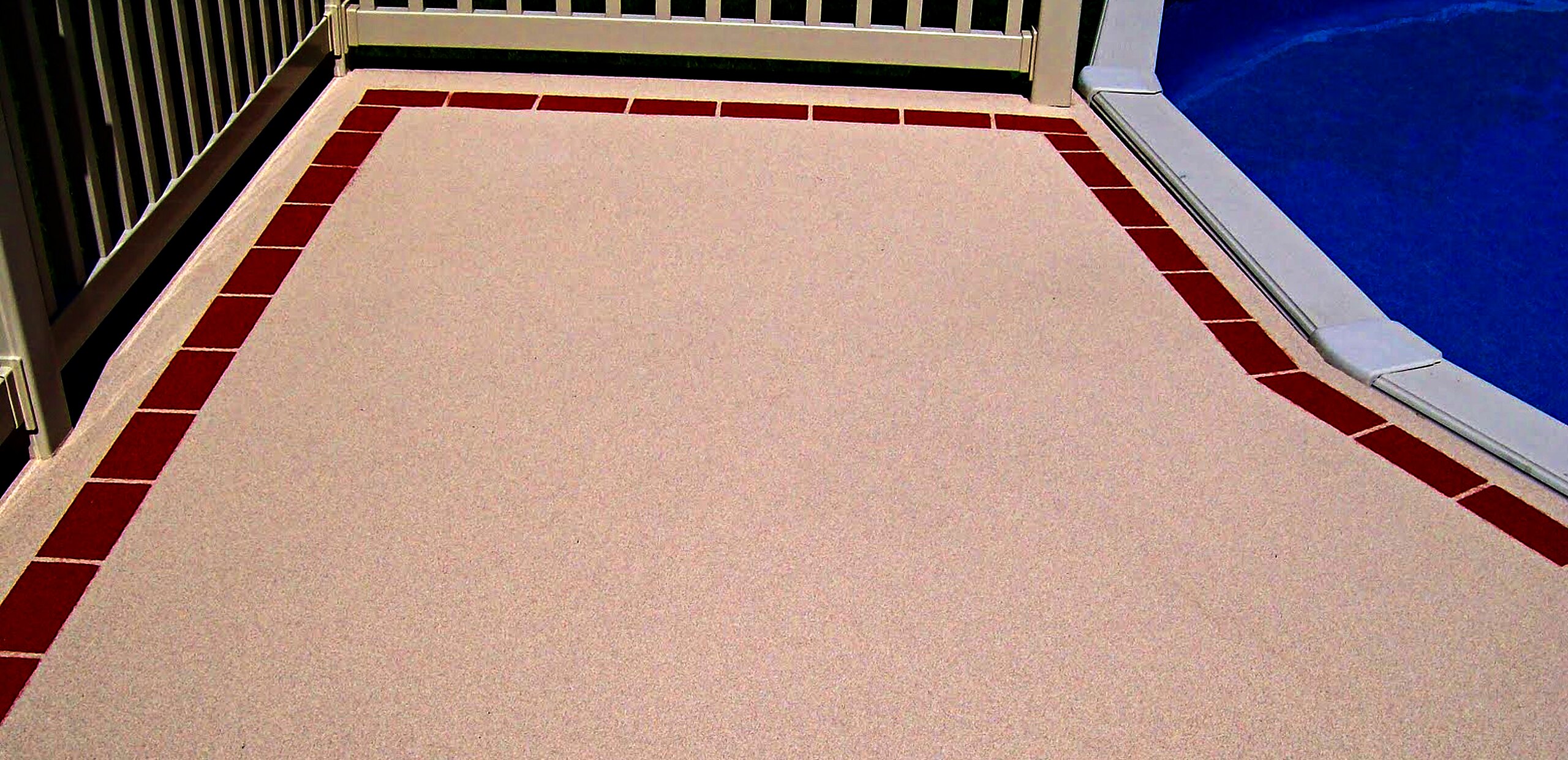
Before you commit to a shipping container pool, check local rules: many areas treat it like any other pool, with fencing, permit and electrical requirements. Structurally, a container is designed to carry loads at its corners, so cutting openings or burying it can weaken it unless an engineer signs off. The wider world of shipping container architecture has plenty of lessons on reinforcement and corrosion. A well-built shipping container pool still needs a continuous, flexible lining that bonds to steel and stands up to chlorinated water, which is where a sprayed polyurea system fits. See our related pages on shipping container coatings and pool deck resurfacing.
Container pools are moving fast as a category. More information on polyurea for water features is at armorthane.com.