Polyurea: The ultimate guide to coatings & types
Written by Tyler Gleckler, a member of ArmorThane’s Council of Polymer Development and Research Team and a NACE/AMPP Certified Coatings Specialist with years of hands-on experience formulating, applying, and training professionals on polyurea protective coating systems across industrial, commercial, and military applications worldwide. | Last Updated: March 2026 | Reviewed by ArmorThane Engineering Division
What Are Polyurea Coatings?
Polyurea is an innovative technology created by the reaction of a simple two-component system. It’s used as a protective coating for many different applications, from waterproofing concrete surfaces.
When used on concrete floor coatings and concrete sealers to preventing corrosion on metal substrates when employed as metal roof coatings or metal tank liners. Polyurea coatings feature favorable application characteristics like a rapid cure time and high humidity tolerance and are easily installed by professional applicators using advanced spray equipment.
After curing, polyurea coatings wield powerful physical and chemical properties, such as high tensile strength and excellent resistance to many types of corrosive substances. Together, this makes polyurea a convenient, cost-effective, and versatile materials technology for reliable surface protection in almost any environment and for nearly every application.
They’ve become the go-to tough coating for applicators, and here we’ll explain everything you need to know about polyurea coatings, including how they work, the different types of polyurea coatings. Where they’re used, and why you should choose polyurea for your next coatings project.
The Chemistry Of Polyurea
Polyurea’s unique chemistry is fundamentally responsible for its exceptional physical and chemical properties and widespread adoption. Polyurea is an elastomer, a type of durable plastic, produced by the reaction of polyisocyanates and polyamines, resulting in the formation of urea linkages in its structure. Which makes polyureas such a high-strength, tough coating. They can protect against abrasion, corrosive chemicals, UV radiation, and other operational and environmental stressors and exhibit excellent adhesion to most substrate materials, including metals, plastics, concrete, fiberglass, and geotextile fabric. Polyurea can also withstand a wide range of temperature and moisture conditions that allow for its fast and reliable application in almost any environment.
Moreover, polyurea is 100% solids with no solvents or volatile organic chemicals (VOCs). Which makes it a safer technology that complies with even the most stringent environmental regulations. After curing, the final system is safe for direct contact, but careful adherence to safety procedures should be followed during the installation process, such as wearing comprehensive PPE and ensuring proper ventilation of indoor spaces.
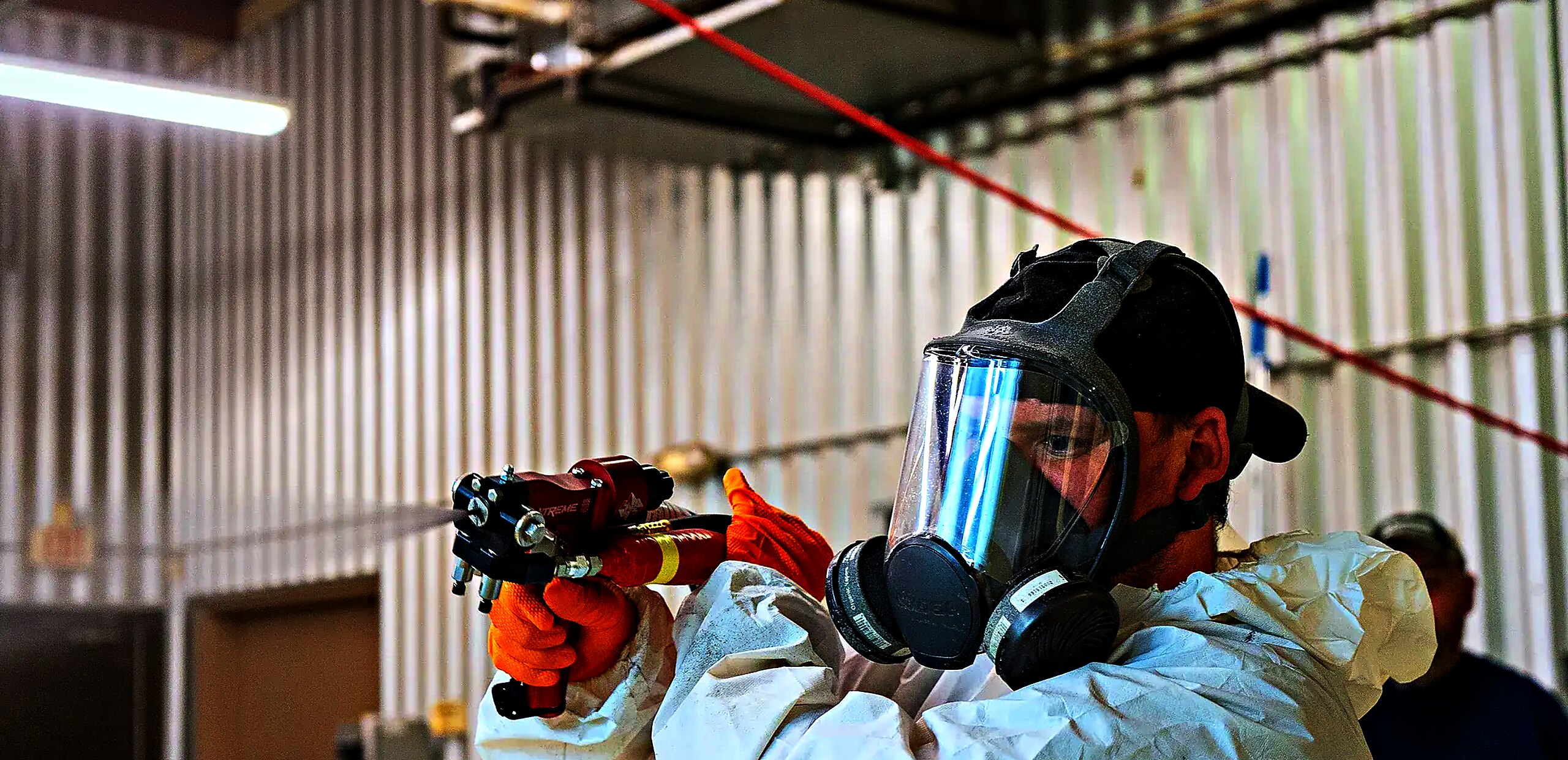
While the final result is a single material, polyurea coatings are not made from a single component. They’re created on-site during the installation process from two separate components (an isocyanate and a mixed resin blend), making it easy to prepare, manage, and apply. The two components react very rapidly, so they must be mixed very shortly before (about 60 seconds or less) contacting treated surfaces. To achieve this, the components are mixed as they’re ejected from the nozzle of spray gun equipment instead of being mixed in advance.
This means polyurea does not have an unlimited pot life – far from it – but it does afford polyurea with its notoriously fast cure time. For many commercial applications like polyurea garage floor coatings and other large surface area projects, this rapid cure time, paired with the speed and flexibility of spray-on coatings, makes tackling surfaces of a large sq. ft. faster and far easier – especially compared to roll-on applications relying on roller covers for installation.


What Are The Different Types Of Polyurea Coatings?
There are several different types of polyurea coatings. Which are categorized by their composition and chemical structure. Most broadly, polyurea is divided into two main groups, which include pure polyurea and hybrid polyurea. Pure polyurea coatings are comprised of only two basic components, whereas hybrid polyurea coatings incorporate other materials like polyurethane or epoxy. Since pure polyureas are formed by the reaction of only two materials, their potential properties are restricted by the limited flexibility in their formulation. So, while a more complex system, the properties of hybrid polyurea formulations are more modular, and can be precisely engineered to improve specific attributes, including hardness, color stability, or finish. Within pure polyurea, there are two different types: aromatic polyurea and aliphatic polyurea.
Aromatic Polyurea
Aromatic polyurea is formed using aromatic diisocyanates like MDI or TDI, and exhibits excellent performance across its many applications. This type of pure polyurea represents the vast majority of polyurea coatings, giving it a reputation as the workhorse of the industry. However, aromatic polyurea lacks a critical property exhibited by aliphatic polyurea, which is light stability. Aromatic polyurea is not light stable, meaning that over time it will yellow and fade if exposed to UV radiation. Thankfully, this discoloration happens without degrading its physical properties, leaving the coating otherwise unaffected.
Aliphatic Polyurea
On the other hand, aliphatic polyurea offers arguably better weathering and abrasion resistance. While also being light-stable, making it the superior choice for installing base coat colors. The catch is that while an overall more robust protective coating, aliphatic polyurea is more difficult to process and can cost more than double compared to aromatic alternatives. For this reason, aliphatic polyurea coatings are a superior choice for outdoor applications. Where UV exposure is an unavoidable part of daily operating conditions, justifying the extra expense.
Where Are Polyurea Coatings Used?
Polyurea coatings are used in countless different applications, with new and interesting uses still being explored. For example, polyurea coatings are used in the construction industry to protect structures against extreme weather, water intrusion, and physical abrasions. Here, its rapid cure time is an especially big advantage, helping meet the tight deadlines and even tighter budget constraints typical of the construction industry.
In the automotive industry, polyurea’s abrasion and impact resistance helps protect vehicles from bumps, spills, drops, or any other type of high-impact collisions that are all too common for motor vehicles.
It also helps improve a vehicle’s performance, absorbing noisy and even potentially damaging vibrations to reduce wear and eliminate distracting sounds. Which is invaluable for emergency vehicles, commercial vehicles, and performance vehicles. Likewise, marine applications also benefit from polyurea’s strong abrasion resistance, protecting vessels and dockside infrastructure from bumpy landings and shifting cargo. Perfect for marine applications, polyurea’s excellent water resistance provides an additional layer of corrosion protection and a more reliable way to seal components, compartments, and cables.
And the list goes on! From agricultural equipment to military installations and garage flooring, polyurea can be applied to almost any surface to provide lasting protection in demanding environments
Before you choose a polyurea coating, think about three things: the surface, the conditions it faces and how fast you need it back in service. A polyurea coating for a truck bed needs different properties than a polyurea coating for a water tank or a roof. Ask your applicator which system fits your project, and whether a primer or topcoat is needed. A well-chosen polyurea coating, applied over a clean, properly prepared surface, can protect it for many years. See surface preparation and polyurea vs other coatings to learn more.
Why Choose Polyurea Coatings?
Polyurea coatings offer many significant advantages over other coating technologies, which is why they’ve continued to explode in popularity across their varied applications. Simply put, polyurea outperforms almost every other protective coating in terms of physical properties. It can be easily formulated to achieve precise performance capabilities and adheres strongly to different substrates, including metal, concrete, wood, and even some types of plastics. And regardless of formulation or application, polyurea coatings are applied faster than any other type of coating technology to see treated surfaces return to service with minimal downtime.
This can mean saving on days or even weeks of lost revenue. Which reveals alternatives that initially may have seemed to be cheaper alternatives as actually more costly and less reliable solutions. For the best in product and service quality, consider making your future polyurea orders with ArmorThane. We’re real people who provide personal support to guide and equip you with anything you need for a successful coatings project. From simple installations like treating your shop floors to more regular or challenging projects that may demand full broadcast kits, we’ve got you covered. Simply give us a call or fill out our online contact form and find out why we’ve become the industry’s one-stop shop for everything polyurea and polyurethane.
Frequently asked questions
Why is polyurea better than epoxy?
Polyurea is a more advanced technology than epoxy and has become increasingly popular in recent years due to its superiority over epoxy performance. It is more durable than epoxy as well as more flexible because it is an elastomer. Polyurea is less toxic than epoxy, which makes it an appealing choice for environments where humans inhabit space, such as industrial facilities, healthcare settings, food processing and packaging plants. We could go on and on here but we think you get the point...
How long do polyurea coatings last?
In industrial settings where excessive abrasion may occur but no chemical wear is expected (e.g., warehouse floors), a well-applied and properly maintained polyurea coating will typically last 20 – 25 years or more, depending on foot traffic and other environmental conditions. It’s important to note that proper maintenance is key in ensuring the lifetime of any protective coating; regular inspections should be made for signs of damage or deterioration, while proper cleaning techniques should be followed during routine maintenance activities for optimum results.
Does polyurea crack?
Under certain conditions, yes, polyurea can potentially crack. This is because polyurea is a thermoplastic material, like many other protective coatings and liners. It can become brittle and eventually crack when exposed to a sudden or excessive temperature change of more than 40°F (22°C). This cracking typically occurs in two ways – crazing or micro-fracturing.
Crazing refers to the formation of small cracks in the surface of the coating due to shrinkage after application. Micro-fracturing involves deeper cracks caused by increased coating stress due to the expansion or contraction of substrate materials beneath it.
The best way to prevent polyurea coatings from cracking is to prepare them carefully before application and properly cure afterward. For example, make sure that all surfaces are clear from dirt, dust, grease, oil stains, etc., before applying the coating, as these can cause adhesion failure, which could lead to cracking down the line. Also, be aware that some substrates are prone to absorption when wetted: if dampness has occurred from snow melt or rainfall, for example, then additional time should be taken for adequate drying before application so as not to risk shrinkage during cure time later on, which could again result in craze cracking over time. Finally, ensure that you follow your manufacturer’s instructions and adhere strictly to their recommended drying times for optimal performance; any deviations here will also strain your polyurea.
Can polyurea be applied to different surfaces?
Yes, polyurea works on many surfaces like concrete, metal, wood, fiberglass, and others. It’s highly versatile as it fits any shape and sticks to a multitude surfaces. proper surface preparation is crucial for it to stick well and last long.
Does polyurea have a strong chemical odor?
Yes, polyurea coatings can have a somewhat strong chemical odor during the application process, but this odor has little to no VOC's and will dissipate quickly once the coating has cured.
Can i get some technical data sheets and/or samples of your product(s)?
Yes, give us a call or fill out our form and one of our customer support representatives will be happy to go over the details of our products and provide you with any extra material you might need in your quest to figure out if you wish to become an applicator.
What is the difference between polyurea and polyurethane?
Polyurea and polyurethane are both two-component polymer coatings, but they differ significantly in chemistry, cure time, and performance. Polyurea is formed by the reaction of an isocyanate with an amine resin, curing in seconds, while polyurethane reacts an isocyanate with a polyol and can take hours or even days to fully cure. Polyurea delivers superior tensile strength, flexibility, and chemical resistance — making it the preferred choice for demanding industrial, commercial, and protective coating applications. Polyurethane is generally less expensive but is more moisture-sensitive during application and less durable under heavy abrasion or impact.
What are the disadvantages of polyurea coatings?
While polyurea coatings are among the most advanced protective coatings available, there are a few considerations to be aware of. Polyurea requires professional-grade spray equipment and trained applicators due to its extremely fast cure time, which means it is not suited for DIY brush or roller application. Aromatic polyurea formulations can yellow over time with prolonged UV exposure, though aliphatic polyurea options like ArmorThane's HighLine 410™ solve this with excellent color stability. Additionally, proper surface preparation is critical — polyurea's rapid gel time means the substrate must be clean, dry, and properly primed to achieve optimal adhesion. Despite these considerations, polyurea's unmatched durability, chemical resistance, and fast return to service make it the most cost-effective long-term coating solution for most applications.
How much does a polyurea coating cost?
The cost of a polyurea coating varies depending on the project size, surface condition, coating type, and application complexity. For residential applications like garage floors, polyurea coatings typically range from $3 to $7+ per square foot installed — which is higher than basic epoxy but delivers significantly longer lifespan, faster cure times, and superior performance. For industrial and commercial projects, costs depend on factors like substrate preparation requirements, mil thickness specifications, and whether aromatic or aliphatic polyurea is needed. While the upfront investment may be higher than alternatives like epoxy, polyurea's 15–20+ year lifespan, minimal maintenance needs, and rapid return to service (often within hours, not days) make it far more cost-effective over time. Contact ArmorThane for a customized quote based on your specific project requirements.
Can I apply polyurea myself (DIY)?
Professional-grade polyurea coatings require specialized high-pressure, heated plural-component spray equipment and trained applicators for proper application. The extremely fast gel time (often 5–15 seconds) demands precise technique, correct temperature settings, and proper substrate preparation that go beyond typical DIY capabilities. Improper mixing ratios, inadequate surface prep, or incorrect equipment settings can lead to adhesion failure, bubbling, or an uneven finish. For the best results and long-term performance, polyurea should be applied by a certified professional with the right equipment and training. ArmorThane offers comprehensive training programs and equipment packages for those looking to become professional polyurea applicators, as well as a nationwide network of certified applicators for end users seeking coating services.
What is the difference between polyurea and polyaspartic coatings?
Polyaspartic coatings are actually a subcategory of polyurea technology — specifically, they are an aliphatic polyurea ester. The key differences lie in their application and performance characteristics. Traditional polyurea coatings (applied via high-pressure spray equipment) cure in seconds, offer extremely high tensile strength and elongation, and are ideal for large-scale industrial, commercial, and protective applications. Polyaspartic coatings cure more slowly (typically 1–4 hours), allowing for brush or roller application, and are commonly used as topcoats or in decorative floor systems like garage floors with color flake. Pure polyurea provides superior abrasion resistance, chemical resistance, and impact protection compared to polyaspartics, making it the better choice for demanding environments. ArmorThane's full line of polyurea products covers both high-performance spray applications and decorative flooring solutions.
Be your own boss
Start a coatings business
A small investment in polyurea or spray foam coating equipment and products will get you started in a new coatings business or increase the revenue of an existing company. With no franchise fees or royalties, starting a business or other ArmorThane applicator business is relatively low-cost.


Interested in learning more? Contact us today to see how we can help. Let’s build a stronger future, one coating at a time!