The Complete Roof Coating Guide for 2026
Everything building owners, facility managers, roofing contractors, and applicators need to know about roof coating — types, compatibility, polyurea performance, cost, ROI, installation process, and how ArmorThane protects roofs for decades.
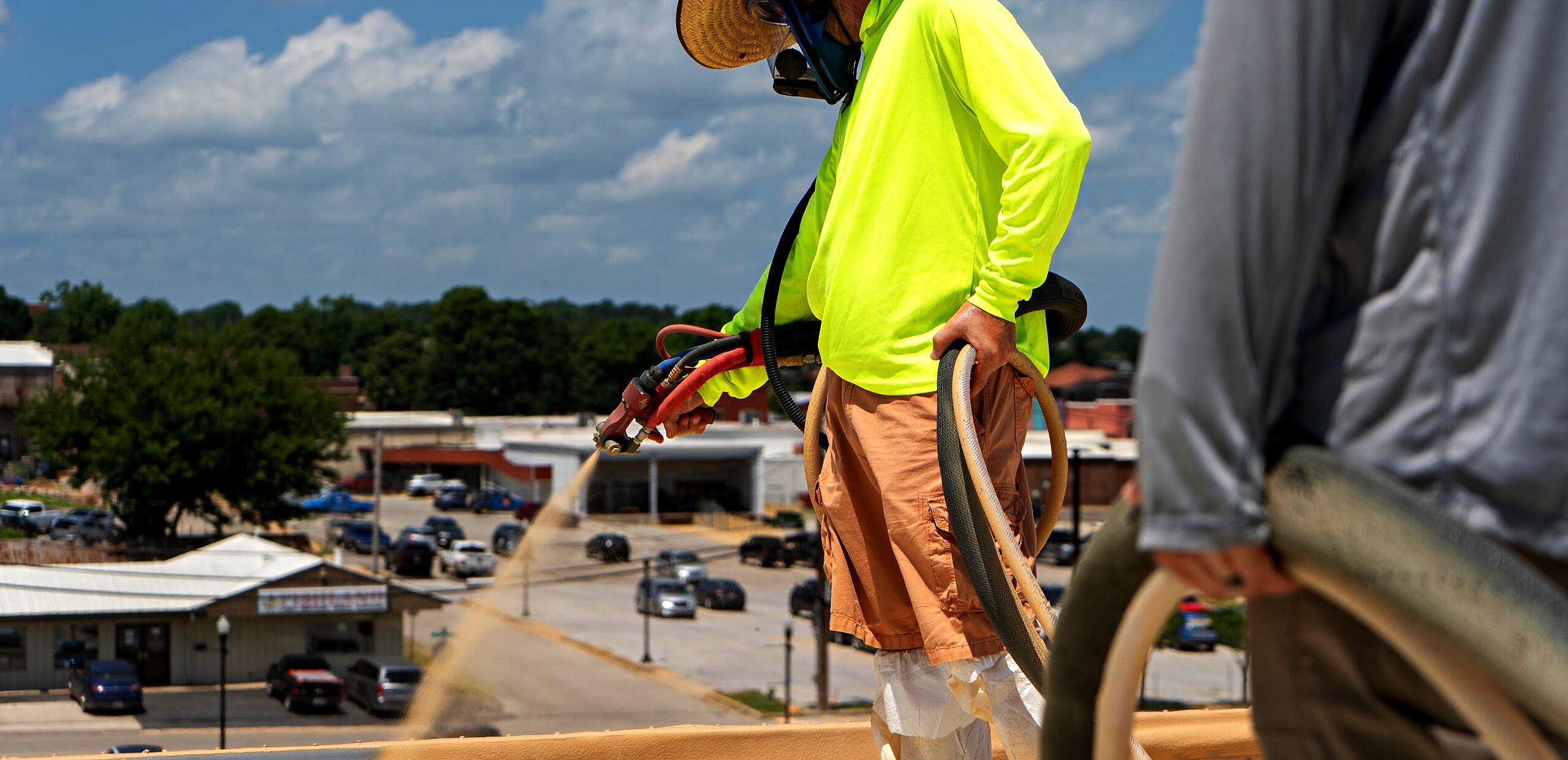
Start a roof coating business
Spray roofs for a living.
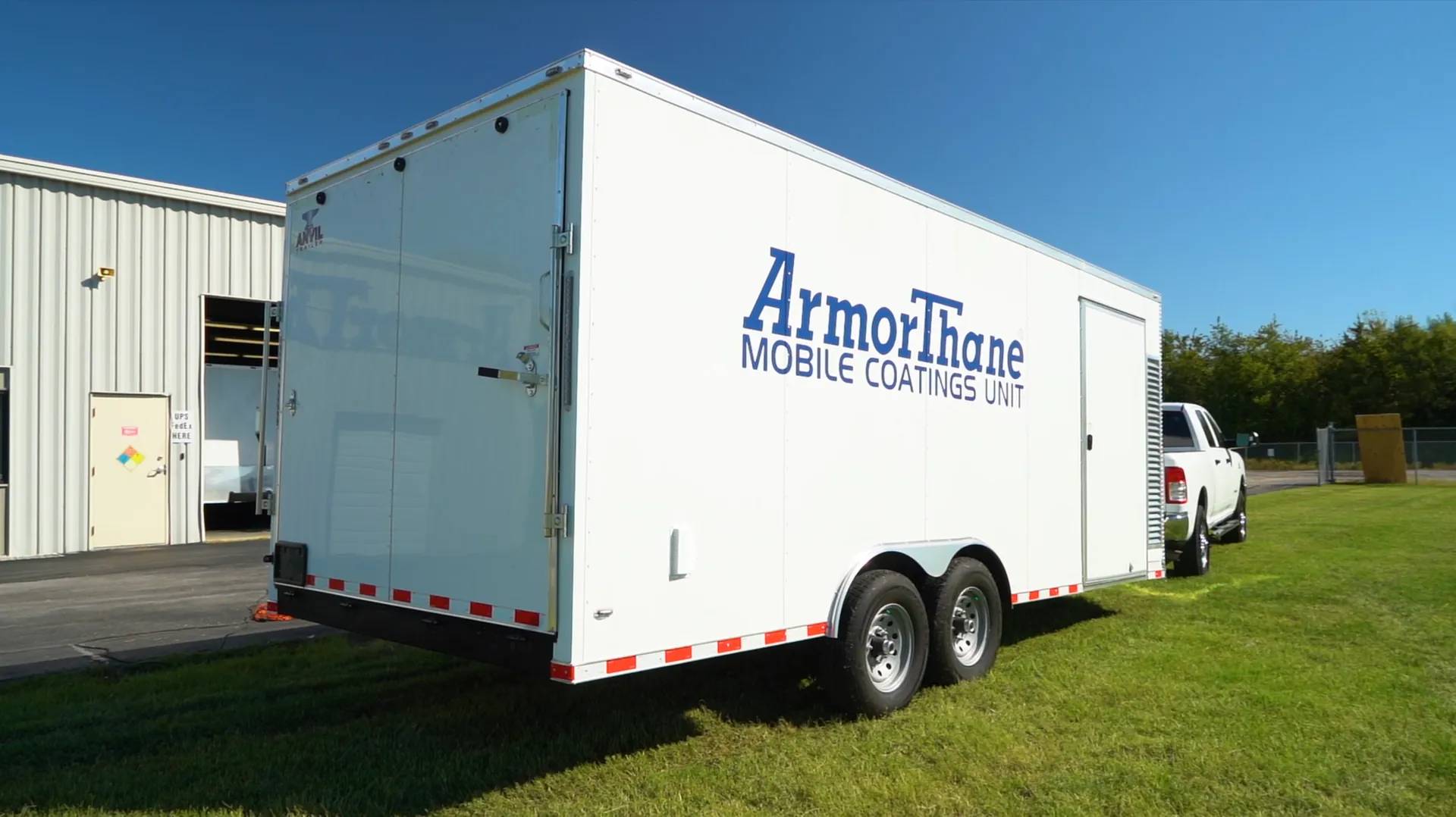
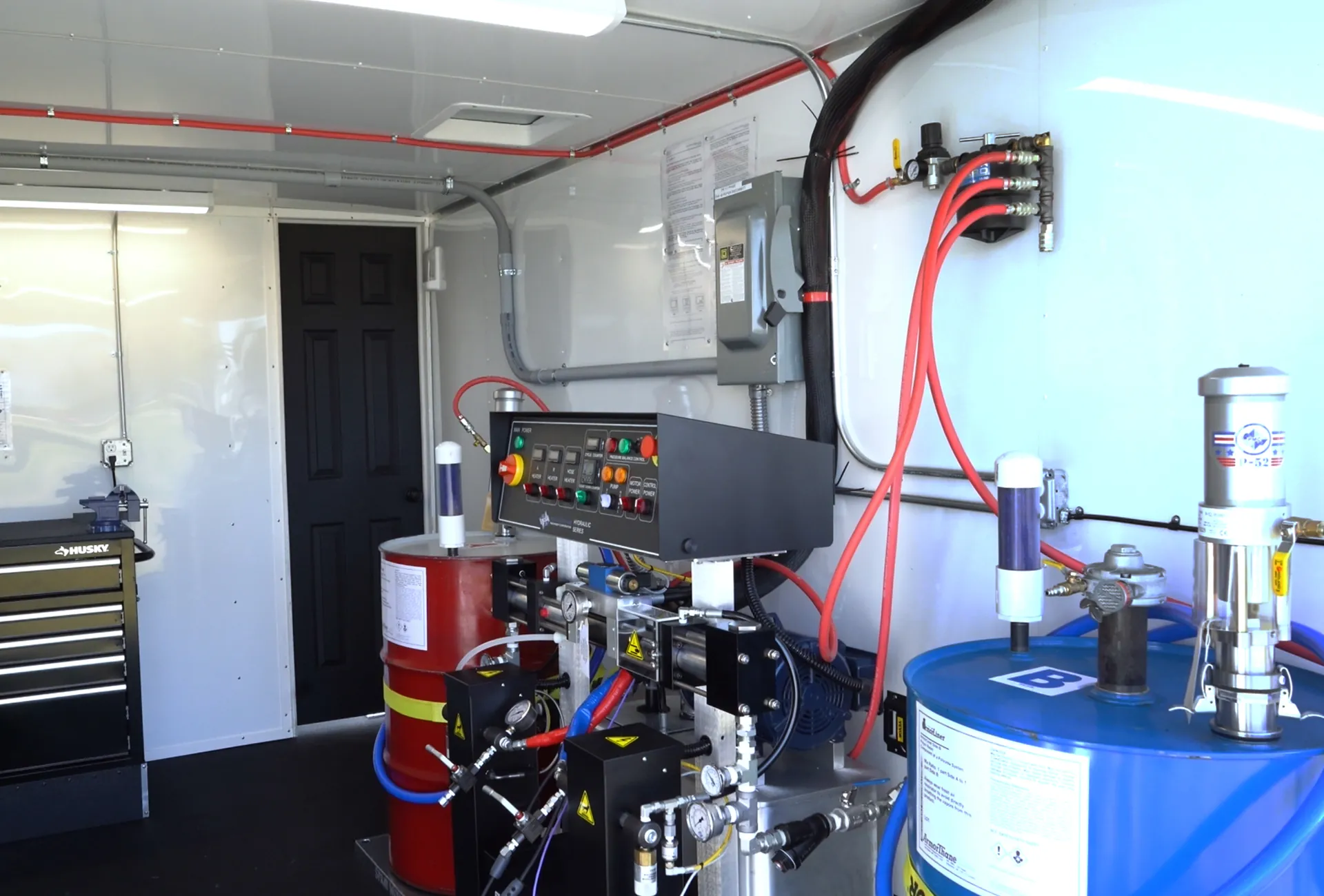
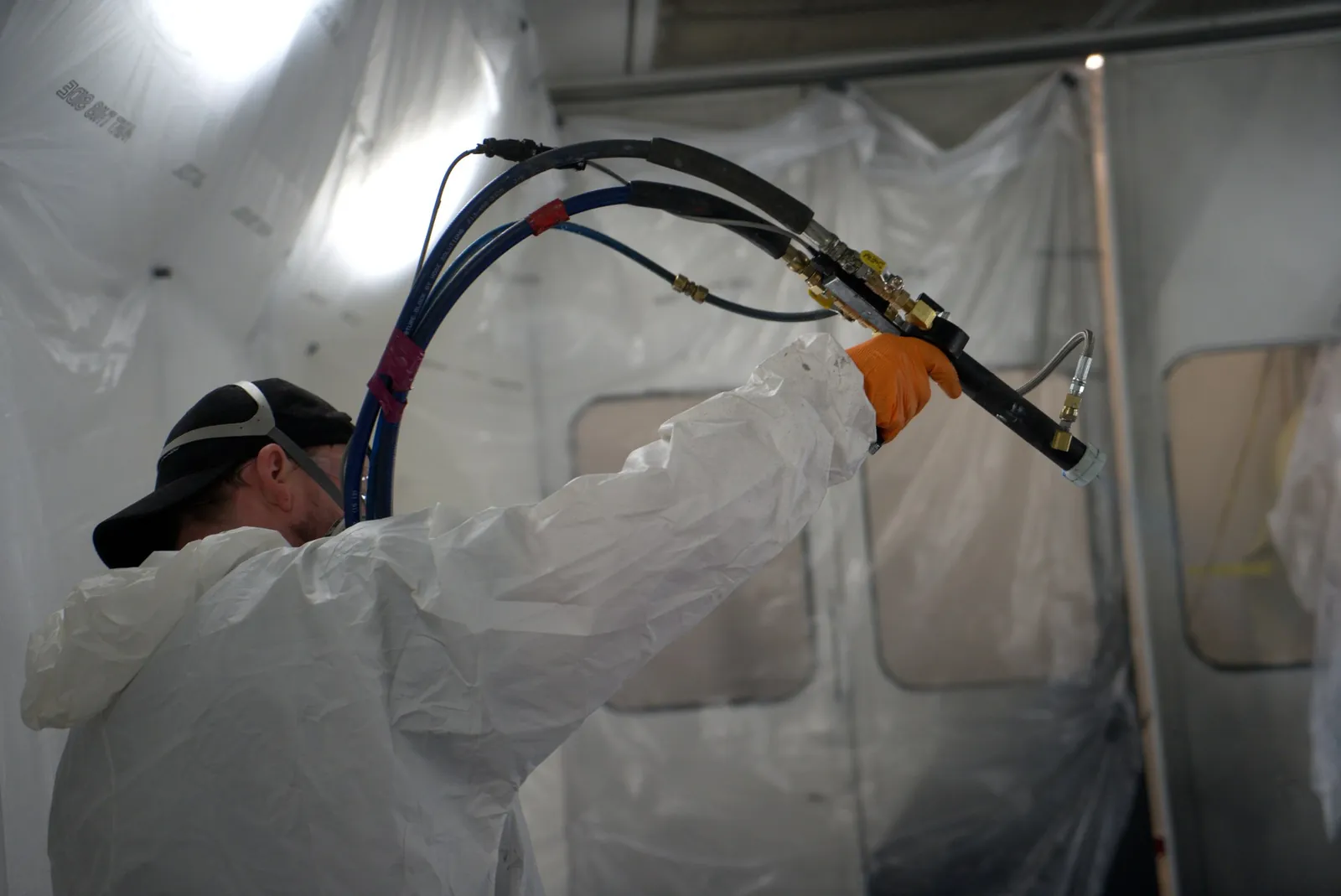
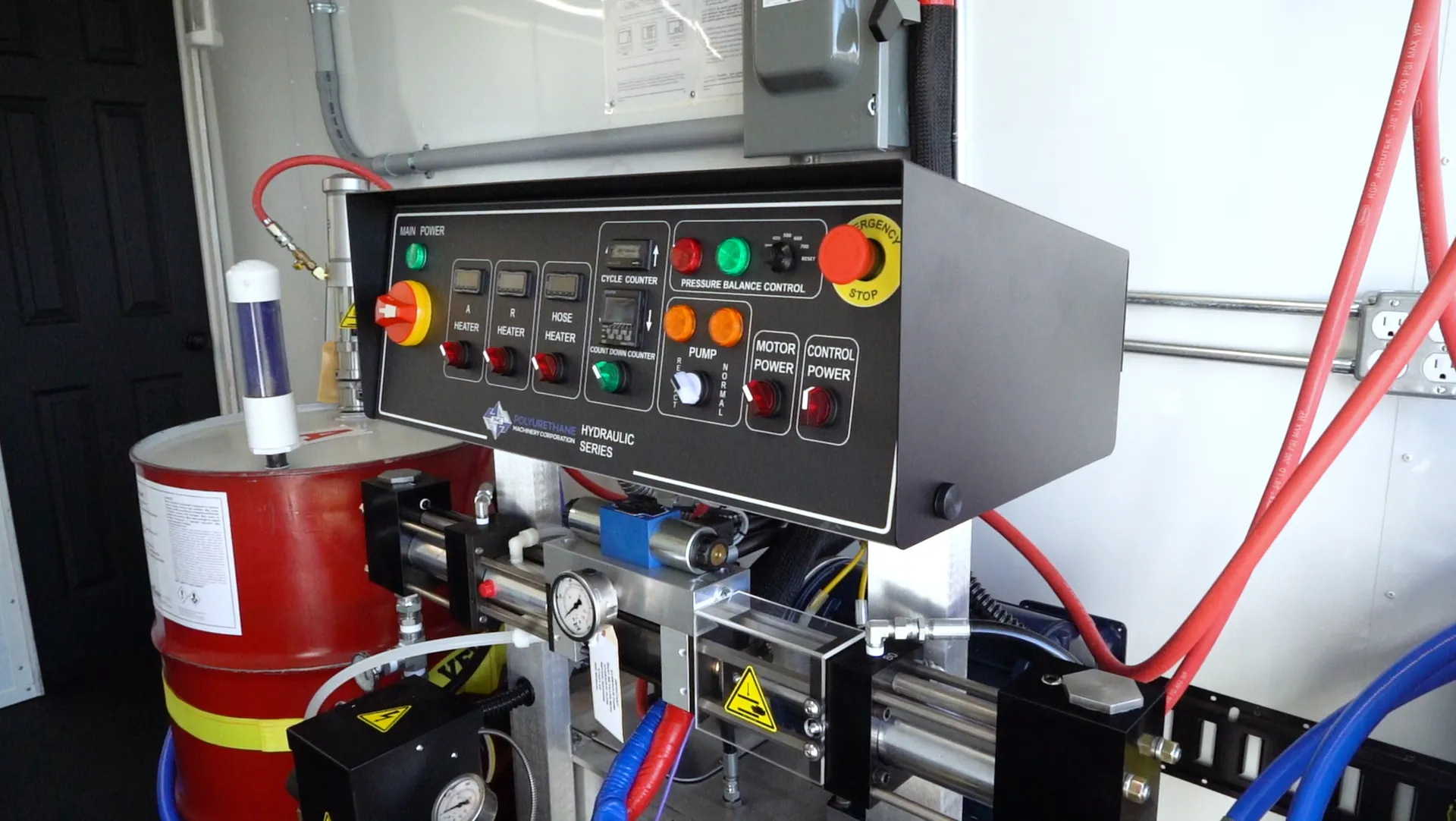
ArmorThane sets you up to do this work, and you own the business. We make the chemistry, build the rigs, train you hands-on and answer the phone when a job gets difficult. You pay no franchise fee and no royalties. It has been that way since 1989.
- $0
- franchise fees or royalties
- 35+
- years in business
- 50+
- countries with applicators
- 24/7
- technical support
70
% Cost Savings vs Tear-Off
30
yr Potential Service Life
% Cooling Energy Reduction
37
Years Manufacturing
Countries Served
Tyler Gleckler
Member, ArmorThane Council of Polymer Development & Research Team
Certified Coatings Specialists · Polyurea Systems Since 1989 · Reviewed by ArmorThane Engineering Division
Tyler holds NACE/AMPP Certified Coatings Specialist certification and has years of hands-on experience formulating, applying, and training professionals on polyurea and polyurethane protective coating systems across industrial, commercial, military, and architectural applications worldwide.

ArmorThane Technical Team 35+ years in polyurea coatings
Article Excerpt
Roof coating is a fluid-applied membrane system that seals, waterproofs, and extends the service life of virtually any commercial or industrial roof at a fraction of tear-off replacement cost. This definitive guide covers every major coating chemistry — polyurea, silicone, acrylic, and SPF — with substrate compatibility matrices, side-by-side performance data, a step-by-step installation breakdown, real-world cost and ROI figures, and a climate-zone specification guide — giving you everything needed to specify the right system for any roof.
What’s Inside This Guide
- 1. What Is Roof Coating?
- 2. Types of Roof Coating Systems
- 3. Substrate Compatibility
- 4. Why Polyurea Wins
- 5. Polyurea vs. Alternatives
- 6. ArmorThane Systems
- 7. Key Benefits
- 8. Installation Process
- 9. 6 Types of Containment Systems
- 10. Cost & ROI Calculator
- 11. Climate Zone Guide
- 12. Case Studies
- 13. Applications by Building Type
- 14. Frequently Asked Questions
What Is Roof Coating?
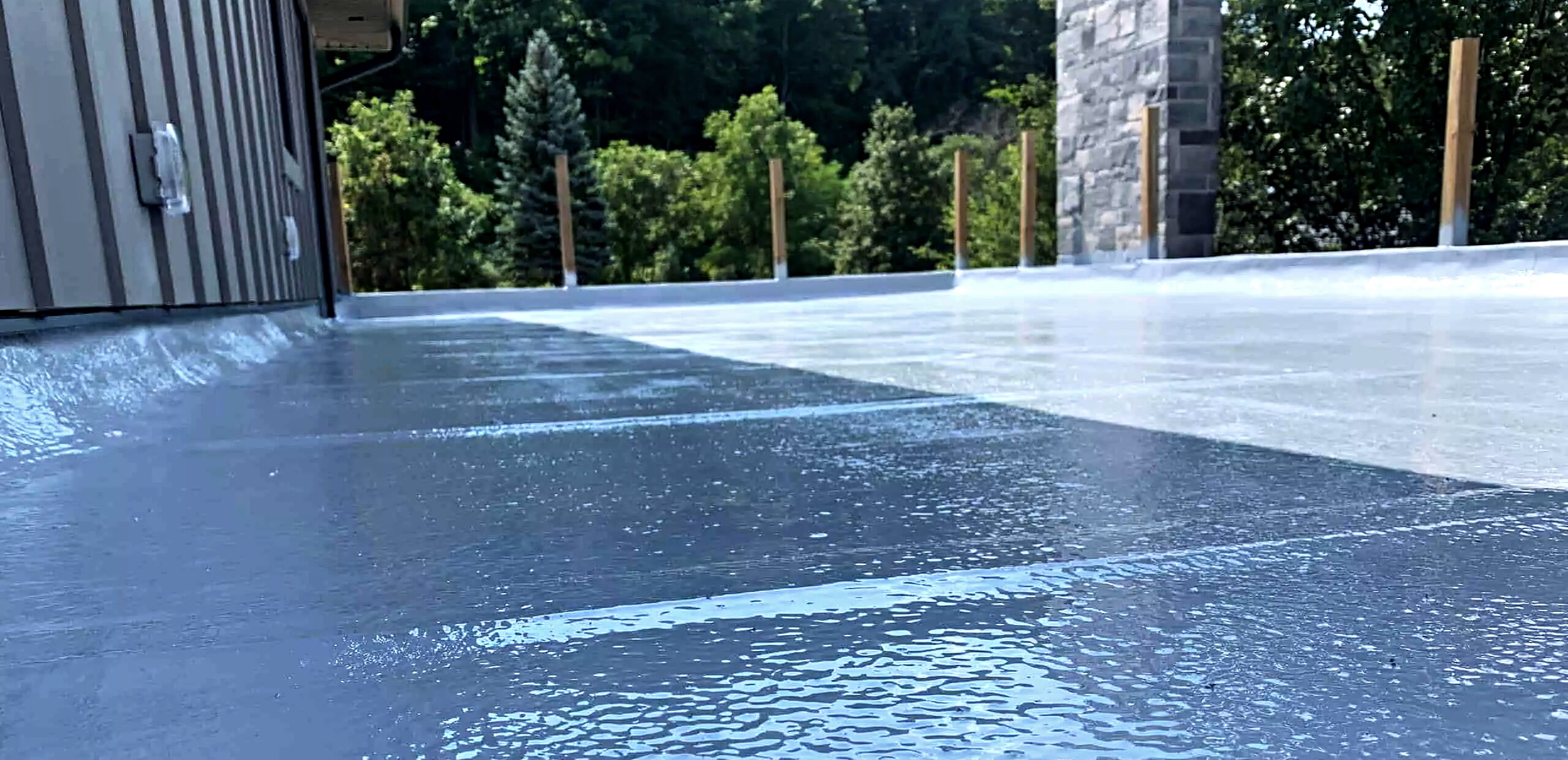
A roof coating is a fluid-applied, monolithic membrane that is spread or sprayed over an existing roof surface to seal, protect, reflectize, and extend the service life of the underlying assembly. Unlike a tear-off replacement — which removes the old roofing material, disposes of it, and installs an entirely new system — a roof coating is applied directly over the existing substrate and cures into a continuous, seamless, waterproof layer that bonds to the surface below.
Roof coatings have been installed on commercial, industrial, institutional, and residential buildings for decades. The chemistry has evolved significantly: early roof coatings were fibered aluminum or asphalt emulsions that provided a few years of additional service life. Modern roof coating systems — particularly spray polyurethane foam (SPF) with a polyurea topcoat, pure polyurea, and high-solids silicone — deliver service lives measured in decades, not years.
Plain-English Definition: A roof coating is any fluid-applied product that is installed over a roof surface to create a waterproof, protective membrane. The coating seals seams, penetrations, and aging surfaces; reflects solar heat; and restores or significantly extends the roof’s functional life — at a fraction of the cost of full replacement.
Why Roof Coating Is One of the Smartest Investments in Building Ownership
Commercial roofing is one of the largest maintenance cost centers a building owner faces. A full tear-off and replacement on a large flat roof can run $8 to $20 per square foot. A roof coating system on the same roof typically runs $1.50 to $8 per square foot depending on system type, film thickness, and surface preparation required — delivering 10 to 30 years of added service life at 20% to 60% of replacement cost.
Beyond pure economics, roof coating systems offer environmental advantages. Tear-off roofing generates billions of pounds of landfill waste in the United States annually. A coating over an existing roof eliminates that waste stream entirely. Many coating systems also qualify for ENERGY STAR or Cool Roof Rating Council certification, reducing cooling loads and lowering utility bills year-round.
Spcc rule (oil & fuel)
The Spill Prevention, Control, and Countermeasure (SPCC) rule applies to non-transportation-related onshore facilities that could discharge oil into U.S. waterways. Covered facilities must provide containment sized for the largest single container plus precipitation freeboard.
Freeboard for Precipitation
Outdoor containment must add capacity for rainfall. The common engineering convention is to size for the largest container plus a 25-year, 24-hour storm event on the exposed containment footprint. Indoor containment: container volume only.
Bulk Storage Requirements
Under 40 CFR 112.8(c)(2), bulk storage container installations must have secondary containment to hold the entire capacity of the largest single container plus sufficient freeboard to contain precipitation.
Types of Roof Coating Systems
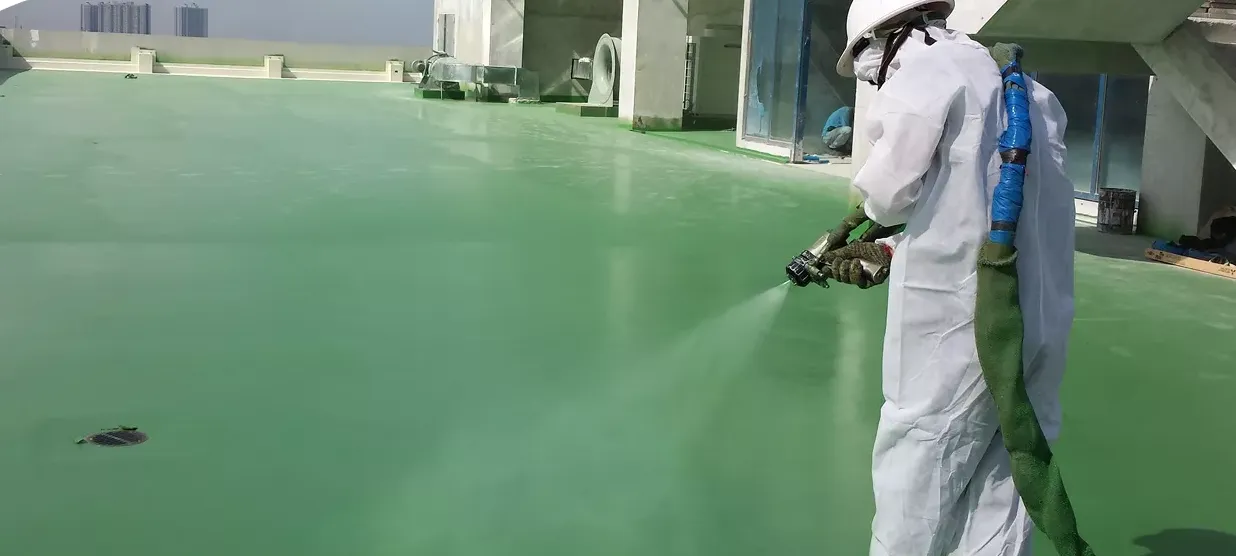
Not every roof — and not every budget — calls for the same coating chemistry. Six primary fluid-applied roof coating technologies cover the vast majority of commercial and industrial applications. Understanding where each system fits is the foundation of a specification that performs.
Polyurea Roof Coatings
The highest-performance fluid-applied roof coating on the market. Pure polyurea delivers tensile strength of 2,500–4,500 psi, elongation of 300–600%, and chemical resistance unmatched by any other coating chemistry. Fast cure — walk-on in under an hour — makes it ideal for occupied buildings. Best for SPF roofs, metal roofs, and high-traffic or chemically exposed roof decks.
Spray Polyurethane Foam + Topcoat
SPF is sprayed directly onto the roof deck, expanding to fill voids and create a seamless insulating substrate. A polyurea or acrylic elastomeric topcoat protects the foam from UV degradation. SPF roof systems provide the highest R-value per inch of any roofing system and can be renewed indefinitely with periodic recoating — making them arguably the most sustainable roofing system available.
Silicone Roof Coatings
Silicone coatings are moisture-cure systems that resist ponding water better than any organic coating chemistry. They are the default recommendation for flat roofs with poor drainage. Silicone does not re-coat well with other chemistries — once a silicone roof, always a silicone roof — so the initial chemistry choice matters. Best for flat roofs with standing water exposure.
Acrylic Elastomeric Coatings
Water-based acrylic elastomeric coatings are the most widely installed roof coating chemistry by volume. They are the most affordable option, offer good UV resistance and reflectivity, and are compatible with a wide range of substrates. Their limitation: they soften in ponding water and lose adhesion in sustained wet exposure. Best for sloped roofs in moderate climates with reliable drainage.
Epoxy & Polyurethane Coatings
Two-component epoxy and polyurethane roof coatings deliver excellent chemical resistance and hardness. Epoxy is used on concrete roofs and in chemical plant environments where solvent or acid exposure is a factor. Single-component moisture-cure polyurethane coatings are flexible and UV-stable in aliphatic grades. Best for chemically aggressive environments and concrete deck applications.
Butyl & Rubberized Asphalt
Butyl and rubberized asphalt coatings are solvent-borne systems used primarily for maintenance recoating on existing BUR (built-up roofing) or modified bitumen systems. They are flexible, adhere well to aged asphalt, and are cost-effective for smaller projects. Limited UV resistance and VOC considerations make them less attractive for new work. Best for existing asphalt and BUR maintenance.
Roof Substrates & Coating Compatibility
Roof coating selection begins with the substrate. The existing roof assembly determines which chemistries bond reliably, which primers are required, and which surface preparation standard applies. Applying the wrong coating to an incompatible substrate — or skipping primer on a difficult surface — is the leading cause of premature roof coating failure.
| SUBSTRATE | RECOMMENDED COATING | PRIMER REQUIRED | KEY PREPARATION NOTES |
|---|---|---|---|
| Spray Polyurethane Foam (SPF) | Polyurea, acrylic elastomeric, silicone | Yes — moisture-cure or foam-specific | Coat within 2 hours of SPF application or prime aged foam. Remove oxidized surface layer on old foam. |
| Metal (steel, aluminum, galvanized) | Polyurea, silicone, acrylic, polyurethane | Yes — rust-inhibitive or adhesion primer | Remove rust, mill scale, and old paint to SSPC- SP 6 minimum. Prime immediately after prep. |
| Concrete / Concrete Deck | Polyurea, epoxy, polyurethane, silicone | Yes — moisture- tolerant penetrating primer | Profile to CSP 3–5 by shot blast or scarify. Address cracks, joints, and penetrations. |
| Modified Bitumen / BUR | Acrylic, silicone, rubberized asphalt | Often — asphaltic or bonding primer | Repair blisters and bare spots. Clean oil contamination. Flash all penetrations. |
| Single-Ply TPO / PVC | Silicone, acrylic (TPO- compatible) | Yes — plasticizer- blocking primer | Verify compatibility via adhesion test. Plasticizer migration can prevent adhesion without proper primer. |
| Single-Ply EPDM | Acrylic (EPDM-grade), silicone | Yes — EPDM-specific bonding primer | EPDM is a notoriously difficult surface. Test adhesion on a small area before full application. |
| Hypalon / Neoprene | Acrylic, silicone with approved primer | Yes | Clean thoroughly. Adhesion test required. These surfaces can be brittle with age. |
Specification Note: Compatibility testing — a small-patch adhesion test on the actual roof surface with the actual primer and coating — should be performed before any full-scale roof coating application. Substrate variability, contamination, and coating age can all affect adhesion in ways that laboratory compatibility charts cannot predict. ArmorThane technical support provides substrate-specific guidance at (417) 831-5090.
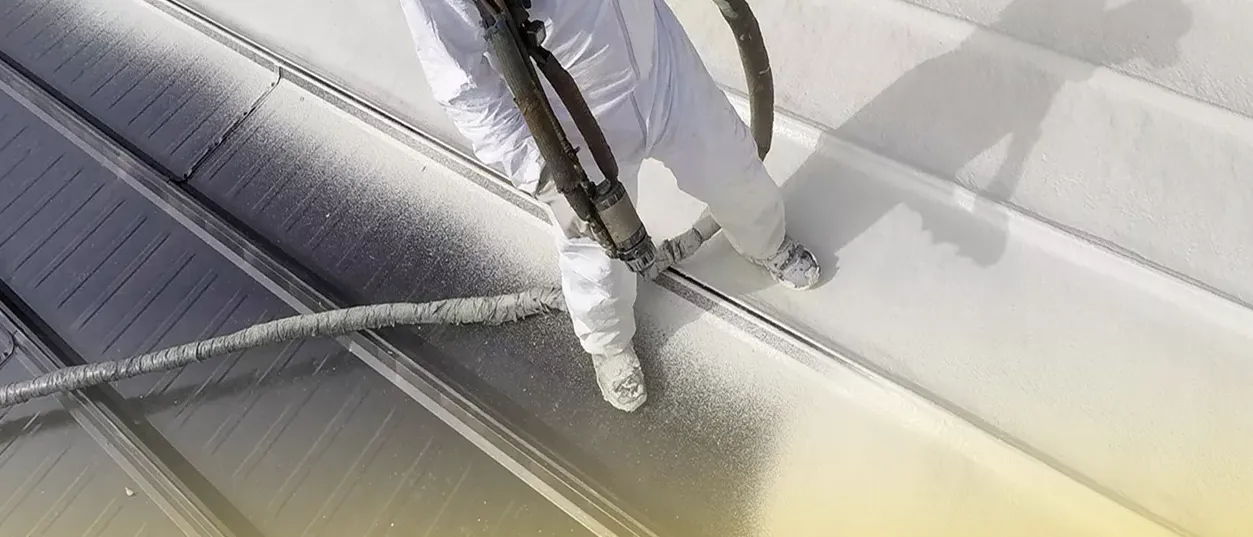
Why Polyurea Is the Superior Roof Coating
When building owners and roofing consultants evaluate the full life-cycle of a roof coating investment — installed cost, service life, maintenance requirements, and the cost of failure — pure polyurea consistently delivers the best total value for demanding applications. Here is the technical case.
Seamless, Monolithic Membrane
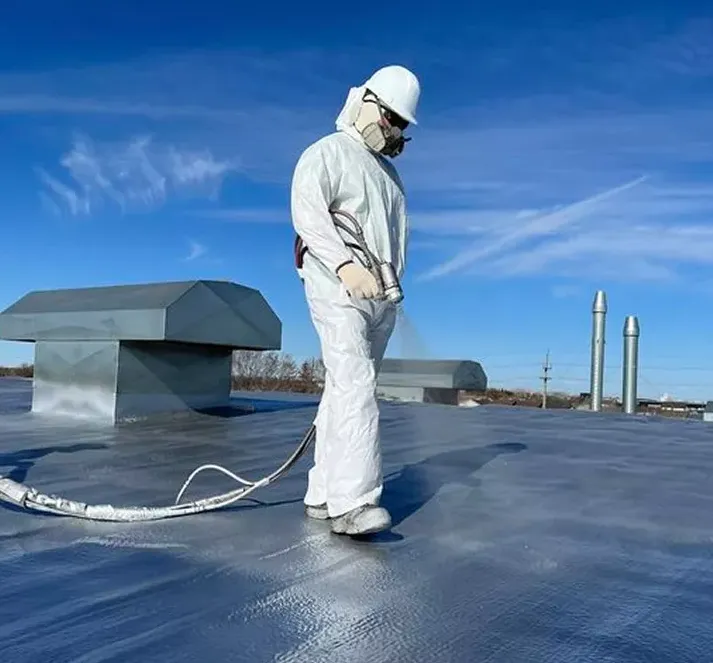
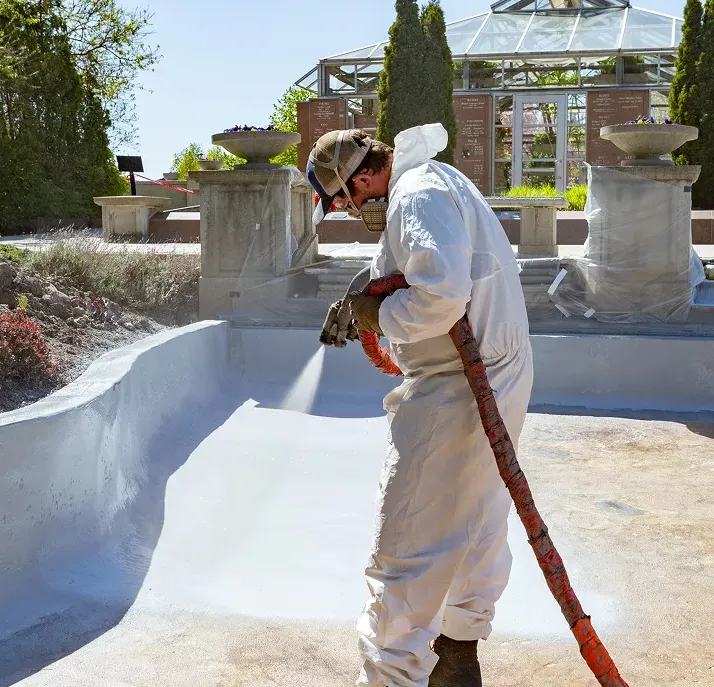
A sprayed polyurea roof coating is applied wet-on-wet in overlapping passes. There are no seams, no laps, and no seams to fail. The result is a continuous membrane that conforms to every penetration, pipe boot, drain, parapet wall, and transition in the roof assembly. Sheet-good membranes and traditional roof systems rely on seams that are only as strong as the adhesive or welded bond. On a large commercial roof, there may be hundreds of linear feet of seam — each one a potential failure point. Polyurea eliminates all of them.
Exceptional Elongation Under Thermal Cycling
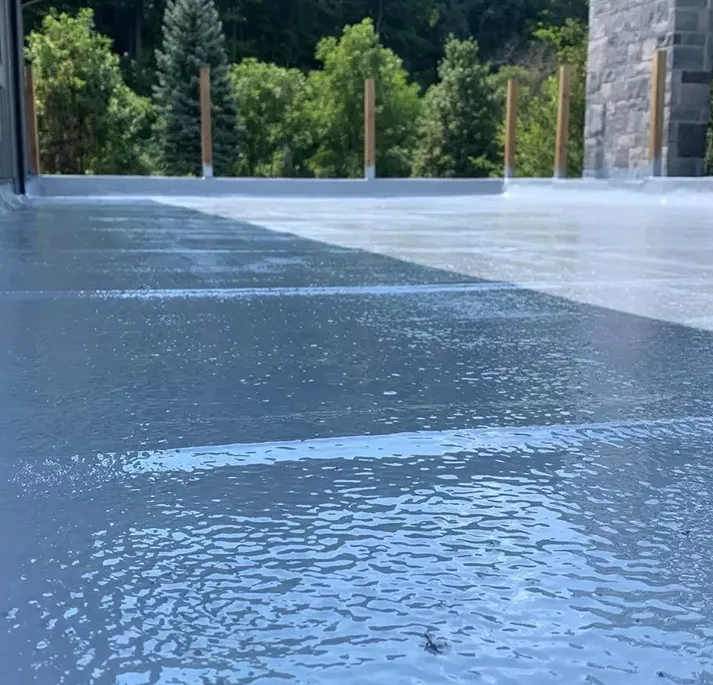
A flat commercial roof in the Sun Belt can experience daily surface temperature swings of 80°F or more — from cool early mornings to extreme afternoon heat. That thermal cycling stresses the coating in expansion and contraction cycles repeated hundreds of times per year. A coating with low elongation — like a rigid epoxy — cracks under repeated cycling and fails within a few seasons. Pure polyurea elastomers deliver elongation at break of 300–600%. The coating stretches and recovers without cracking, season after season, for decades.
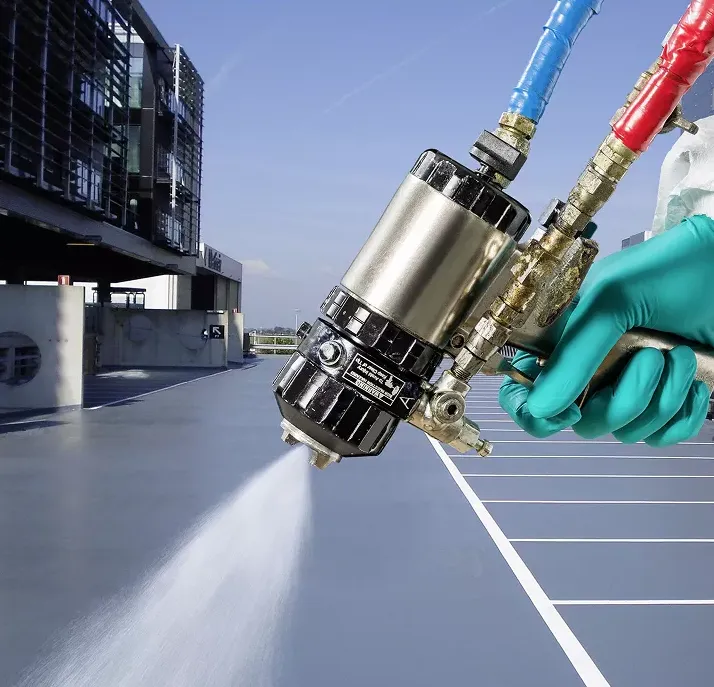
Chemical and UV Resistance
Industrial and commercial roofs are exposed to HVAC condensate, industrial exhaust, bird droppings, acid rain, and cleaning chemicals. Pure polyurea systems formulated for roof service resist this chemical cocktail better than any comparable elastomeric coating. For UV resistance specifically, aliphatic polyurea grades are specified for exposed roofing — aliphatic chemistry does not chalk or yellow under prolonged UV exposure the way aromatic polyurea does.
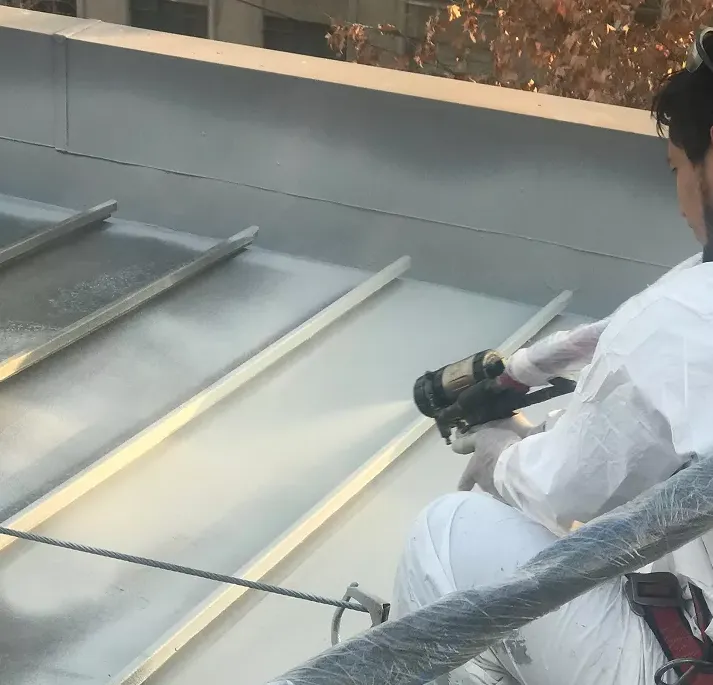
Fast Return to Service
Most polyurea roof coatings can be walked on within an hour and returned to full service within 24 hours. For occupied commercial buildings — hospitals, schools, food plants, warehouses — that cure profile changes the economics of roof restoration work. A silicone or acrylic system may require 24–72 hours or more before foot traffic. Polyurea minimizes business disruption.
High Film Build in One Pass
A properly specified polyurea roof coating reaches 60–125 mils of dry film thickness in a single spray pass. Acrylic elastomeric systems typically require multiple coats — each requiring dry time — to build adequate film thickness. On a large roof, the single-pass advantage of polyurea translates to significantly faster project completion and lower labor cost per square foot at commercial scale.
Polyurea vs. the Alternatives
Most roofing procurement decisions come down to a comparison of four or five systems. The table below puts the key performance dimensions side by side so specification teams can make an informed decision.
| PROPERTY | POLYUREA | SILICONE | ACRYLIC ELASTOMERIC | SPF + TOPCOAT | MODIFIED BITUMEN |
|---|---|---|---|---|---|
| Elongation (flexibility) | 300–600% | 100–400% | 100–300% | Depends on topcoat | Low |
| Tensile strength | 2,500–4,500 psi | 200–400 psi | 200–400 psi | Depends on topcoat | Low |
| Cure to walk-on | 24–48 hours | 4–24 hours | top) | Hours to days | |
| Ponding water resistance | Excellent | Best | Poor | Good | Fair |
| UV stability (aliphatic grade) | Excellent | Excellent | Good | Depends on topcoat | Poor |
| Chemical resistance | Excellent | Good | Moderate | Good | Poor |
| Re-coatability | Easy (same chemistry) | Silicone only | Easy | Easy (recoat topcoat) | Limited |
| Typical installed cost/sq ft | $3.00–$6.00 | $2.50– $5.50 | $1.50–$4.00 | $4.00–$8.00 | $3.00–$6.00 |
| Expected service life | 15–25 years | 15–20 years | 10–15 years | 25–30 years | 10–20 years |
Where Each System Wins
Polyurea wins on mechanical performance, fast cure, and chemical resistance. It is the default recommendation for SPF roof topcoats, metal roofs with foot traffic, and any application where the roof sees mechanical abuse or chemical exposure. Silicone wins on ponding water resistance and is the standard recommendation for flat roofs with drainage challenges. Acrylic elastomeric is the lowest-cost entry point for sloped roofs with reliable drainage in moderate climates. SPF + polyurea topcoat wins on total performance — seamless, insulating, renewable, and nearly indefinitely recoatable — at a higher upfront investment that most large commercial buildings recoup in energy savings within 5–10 years.
ArmorThane Roof Coating Systems
ArmorThane has been formulating pure polyurea and polyurethane protective coatings in Springfield, Missouri since 1989. We manufacture the coating, manufacture the proportioning equipment, and train the applicator network that installs it. We are not a franchise. Coating chemistry, spray rigs, training, and 24/7 technical support are developed and supported under one roof — which means when you call us, you talk to the people who made the product.
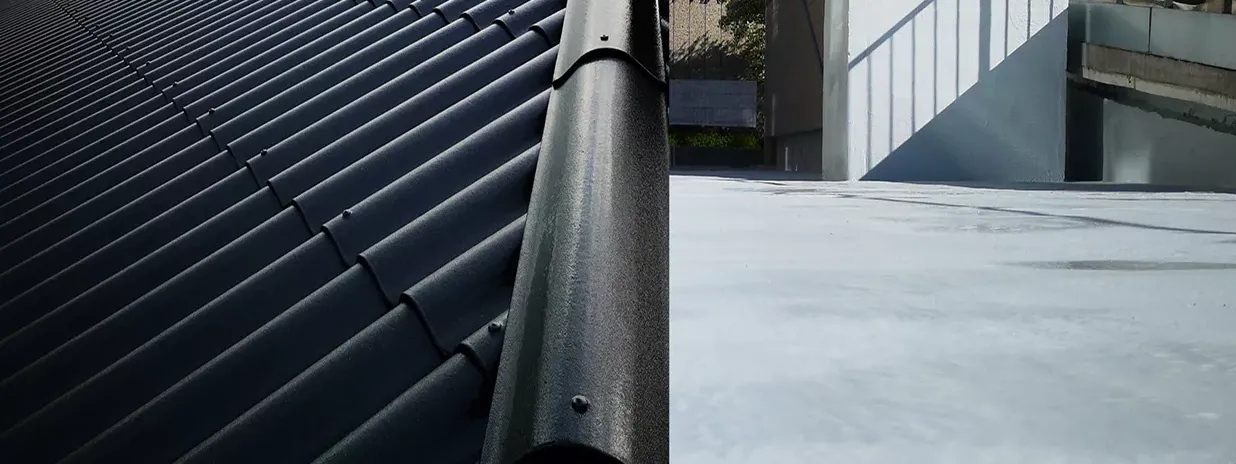
HighLine 510H — Pure Polyurea Roof Coating
HighLine 510H is ArmorThane’s flagship two-component, 100% solids, pure polyurea elastomer for demanding roofing and coating applications. It is the topcoat of choice for ArmorThane spray foam roofing systems, and it performs equally well as a standalone roof coating on metal, concrete, and modified bitumen substrates when properly primed.
Gel time is measured in seconds; tack-free time is minutes. Typical build for roofing applications is 60–100 mils in a single pass. Aliphatic formulations are available for full UV resistance on exposed roofing.
Typical ArmorThane Roof Coating Properties
| PROPERTY | VALUE | TEST METHOD |
|---|---|---|
| Tensile Strength | 2,500–4,500 psi | ASTM D412 |
| Elongation at Break | 300–600% | ASTM D412 |
| Shore A Hardness | 80–90 | ASTM D2240 |
| Tear Resistance | 300–500 pli | ASTM D624 |
| Solids Content | 100% | Zero VOC |
| Gel Time | 3–15 sec | Plural-component spray |
| Tack-Free | 15–90 sec | At specified ambient |
| Return to Service | 1–24 hr | Application-dependent |
| Typical Film Build (roofing) | 60–100 mils DFT | Single pass |
Specification Note: Performance targets for any individual project should be pulled from the ArmorThane Technical Data Sheet that matches the system selected. Call ArmorThane technical support at (417) 831-5090 for the TDS and SDS set that applies to your roof and project.
ArmorFoam SPF Roofing System
ArmorFoam is ArmorThane’s spray polyurethane foam formulation engineered specifically for roofing applications. Closed-cell ArmorFoam delivers R-values of R-6.0 to R-7.0 per inch — the highest thermal resistance of any roofing system — while creating a seamless, self-draining roof surface. The foam is protected with an ArmorThane polyurea or high-solids acrylic elastomeric topcoat that can be refreshed every 10–15 years to renew the roof indefinitely.
The ArmorFoam + polyurea topcoat system addresses the two biggest drivers of commercial roofing cost: thermal performance and service life. Buildings with well-installed SPF roofs consistently report cooling energy reductions of 15–30% and heating energy reductions of 10–20%. At current energy costs, those savings frequently pay back the installation cost of the roof coating within 5–8 years.
Supporting Products
Primers.
ArmorThane supplies primers matched to concrete, steel, modified bitumen, SPF, and single-ply substrates. Primer selection is not optional and is not interchangeable between substrates.
Aliphatic topcoats.
For all exterior roof applications, an aliphatic polyurea or aliphatic polyurethane topcoat is applied to preserve color, minimize chalking, and deliver maximum UV durability.
Application equipment.
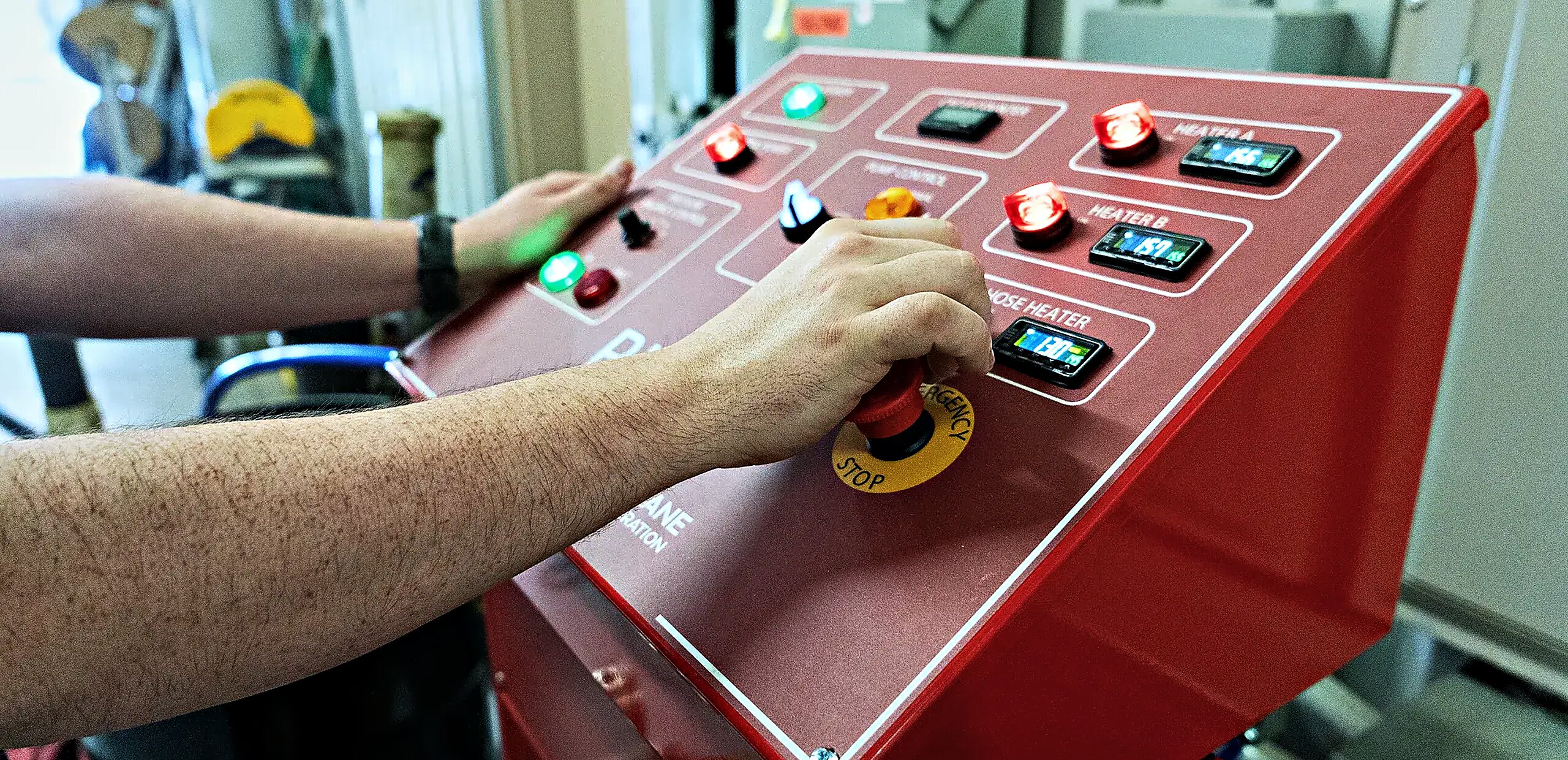
ArmorThane designs and manufactures its own plural-component proportioners, spray guns, heated hose assemblies, and mobile spray rigs in Springfield, Missouri — the same equipment your ArmorThane applicator uses in the field.
Key Benefits of Roof Coating
Whether the specification is a pure polyurea system, an SPF roof with a polyurea topcoat, or a high-reflectance silicone coating, every well-executed roof coating delivers the same core set of benefits to the building owner.
Waterproofing & Leak Elimination
A fluid-applied roof coating seals every seam, lap, penetration, pipe boot, and drain in a single application. Leaks that have cost thousands in interior damage repairs disappear when a properly installed coating bridges them in a seamless membrane.
Extended Roof Service Life
Every year of service life added to an existing roof is a year of deferred replacement cost. A polyurea or SPF roof coating system that delivers 20–30 years of additional service life — versus a tear-off at 10–20 years — can effectively make a well-maintained roof indefinitely renewable.
Environmental Sustainability
Tear-off roofing generates an estimated 10–12 million tons of waste annually in the United States. Every coated roof eliminates that waste stream. Many roof coating systems also carry ENERGY STAR certification, qualifying building owners for utility rebates and contributing to LEED credits.
Structural Protection
SPF + polyurea roofing systems add structural rigidity to the roof deck. Pure polyurea coatings on metal roofs prevent rust and corrosion that would otherwise require panel replacement. The coating becomes part of the building envelope — protecting it from water intrusion, UV degradation, and mechanical damage simultaneously.
Cost Savings vs. Replacement
On virtually every project at commercial scale, a roof coating restoration costs 30–70% less than a full tear-off and replacement. The cost difference is compounded every time the coating is renewed — a building on a 15-year maintenance recoat cycle pays for the roof coating every 15 years instead of a full replacement every 20.
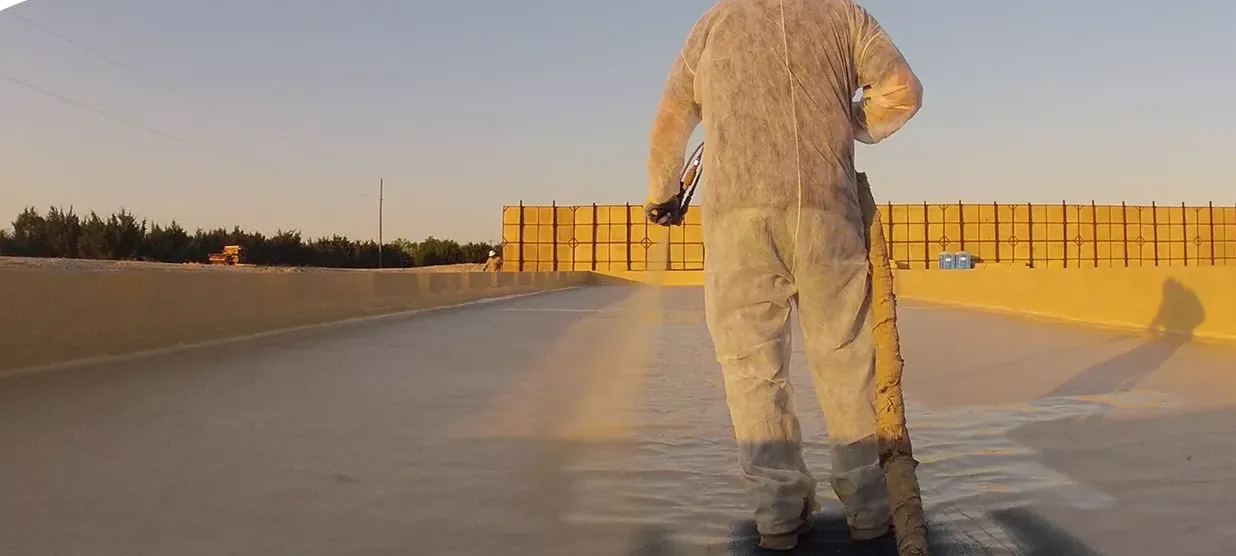
Roof Coating Installation Process
A roof coating only performs to specification if the substrate preparation and application are executed correctly. This is what a properly managed roof coating installation looks like on a commercial building.
Roof assessment & condition survey
Before a coating is specified, the applicator performs a complete roof survey: core cuts to assess insulation and deck condition, infrared scan or capacitance testing to locate wet insulation, documentation of existing coating type, drainage patterns, and penetration inventory. Wet insulation must be removed and replaced before coating — a coating over wet insulation will trap moisture and accelerate decay.
Repairs & substrate remediation
All blisters, delaminations, damaged membrane sections, cracked seams, and failed flashings are repaired before coating application (our flat roof repair guide covers finding and fixing them). On metal roofs, rust is removed and bare metal is treated. On concrete decks, cracks are routed and filled with a compatible sealant. The coating system is only as durable as the substrate beneath it.
Surface cleaning & preparation
The roof surface is cleaned of dirt, debris, biological growth, oil, and incompatible coatings. Pressure washing at 3,000–4,000 PSI is standard for most substrates. Metal substrates requiring rust removal are abrasive blast-cleaned to the profile specified in the TDS. The prepared surface must meet the cleanliness and profile standards specified before primer application.
Penetration & detail work
Pipe boots, drains, HVAC curbs, parapet walls, expansion joints, and all roof penetrations are detailed with compatible sealant, flashing tape, or an embedded fabric reinforcement layer before coating. These transitions are where the majority of roof failures originate. Proper detailing is the most important work on any roof coating job.
Primer application
A primer matched to the substrate is applied at the rate specified on the TDS. Primer selection is not optional. Concrete primers, metal rust-inhibitive primers, foam-specific primers, and modified bitumen bonding primers are different products with different chemistries and application requirements. The primer creates the adhesive bond that will hold the coating for decades.
Base coat application (spf, if applicable)
For SPF roofing systems, the polyurethane foam is sprayed at this stage. The plural-component proportioner heats and pressurizes the A-side and B-side materials, meters them at the correct ratio (typically 1:1 by volume), and delivers them to an impingement-mixing spray gun. The foam expands 30–40 times in volume, self-leveling to fill low spots and creating a seamless tapered surface for positive drainage.
Roof coating application
The coating — polyurea, silicone, or acrylic — is applied to the specified film thickness. For polyurea, the proportioner heats and pressurizes both components and delivers them to an impingement-mixing spray gun at high pressure. Overlapping passes build the membrane to 60–100 mils DFT in a single application session. Film thickness is checked during application with a wet film thickness gauge.
Film thickness verification
After cure, dry film thickness is verified across the entire roof using magnetic or ultrasonic gauges on metal substrates and coring on foam or built-up systems. Low spots that did not achieve minimum DFT are top-coated to specification. For polyurea systems, a low-voltage wet-sponge or high-voltage spark test may be used to find pinholes in critical waterproofing applications.
Final inspection & documentation
The applicator documents all inspection results: surface preparation records, ambient conditions during application, material batch numbers, film thickness readings across the roof, and photographic documentation of critical details. The documentation package is provided to the building owner as part of project closeout and supports any warranty claim process.
Roof Coating Cost & ROI
Cost is the first question most building owners ask when evaluating a roof coating project. The honest answer is that roof coating costs vary significantly by system type, film thickness specification, substrate condition, roof complexity, and regional labor rates. The table below provides realistic installed cost ranges for each major system type, compared against full replacement as the baseline.
| SYSTEM | TYPICAL INSTALLED COST / SQ FT | EXPECTED SERVICE LIFE | MAINTENANCE RECOAT CYCLE | VS. FULL REPLACEMENT |
|---|---|---|---|---|
| Full tear-off & replacement | $8.00–$20.00 | 20–30 years | N/A — replace again | Baseline |
| SPF + Polyurea Topcoat | $4.00–$8.00 | 25–30+ years | Recoat topcoat every 10–15 yr at $1.50–$3.00/sq ft | 40–60% savings |
| Polyurea Roof Coating | $3.00–$6.00 | 15–25 years | Spot repair as needed; full recoat at 15–20 yr | 50–70% savings |
| Silicone Roof Coating | $2.50–$5.50 | 15–20 years | Silicone recoat at 15–20 yr at $1.50–$3.00/sq ft | 50–65% savings |
| Acrylic Elastomeric | $1.50–$4.00 | 10–15 years | Recoat at 10 yr at $1.00–$2.50/sq ft | 60–80% savings |
The ROI Case for Roof Coating
On a 50,000-square-foot commercial roof, the cost difference between an ArmorThane SPF + polyurea system at $6.00/sq ft ($300,000) and a full tear-off replacement at $14.00/sq ft ($700,000) is $400,000. Over a 25-year ownership period, with a maintenance recoat at year 15 at $2.50/sq ft ($125,000), the total 25-year cost of the coated roof is $425,000 — versus $700,000 for a single tear-off replacement that would need to be replaced again before the 25-year mark.
Energy Savings Add to the ROI: An SPF + white polyurea roof system with a Solar Reflectance Index (SRI) of 100+ will reduce cooling loads by 15–30% on most commercial buildings. On a building spending $100,000 per year on cooling, that is $15,000–$30,000 in annual energy savings. At the midpoint ($22,500/year), the energy savings alone pay for the coating system in under 15 years — before maintenance and replacement cost savings are counted. The roof coating pays for itself twice.
What Drives Cost on Individual Projects
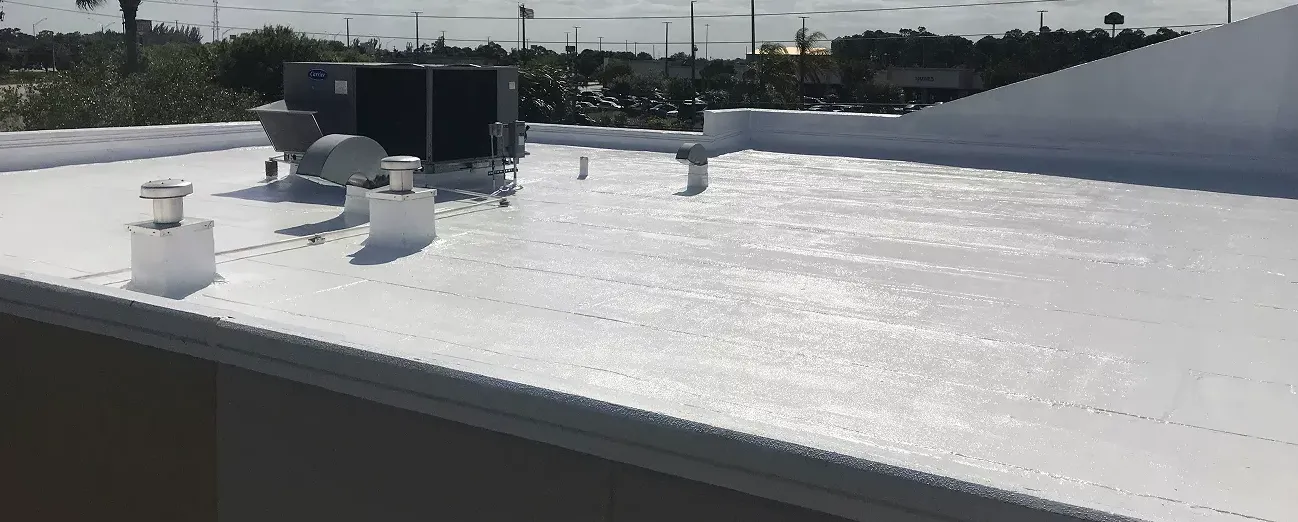
A polyurea containment coating only performs to spec if substrate preparation and application are correct. This is what a compliant installation looks like on a typical concrete containment pad.
Substrate condition
A roof with extensive damage, wet insulation, or multiple failed coating layers requires more preparation — and more cost — than a clean, intact substrate. Condition assessment before bidding is essential to accurate project scoping.
Roof complexity.
HVAC equipment density, penetration count, parapet height, and access constraints all affect labor cost. A simple warehouse roof costs less per square foot than a complex hospital roof with hundreds of penetrations.
Film thickness specification..
Higher film builds require more material. For demanding applications — roofs with chemical exposure, mechanical traffic, or blast mitigation requirements — thicker coatings are specified and cost more per square foot.
Mobilization and equipment.
Polyurea application requires plural-component proportioning equipment. Projects in remote locations or requiring crane access for equipment carry additional mobilization cost.
Regional labor rates.
Labor rates vary by region and season. ArmorThane can connect you with qualified local applicators for accurate project-specific pricing.
Maintenance & Inspection
A roof coating is only as effective as the maintenance program supporting it. Annual inspections, prompt repair of mechanical damage, and periodic performance recoats are what separate a roof coating that delivers 10 years of service from one that delivers 30.
Annual Inspection Protocol
A properly maintained coated roof should be inspected at least twice annually — typically in the spring, after winter’s freeze-thaw cycles, and in the fall, before winter weather arrives. Inspectors look for:
- Ponding water that persists more than 48 hours after rain indicates drainage obstruction or settlement
- Blistering, delamination, or coating separation from the substrate
- Mechanical damage from foot traffic, equipment servicing, or hail
- Cracking or splitting at penetrations, drains, and parapet walls
- Biological growth — algae, moss, and lichen that hold moisture and accelerate degradation
- UV chalking or color change indicating film degradation at or near end of service life
- Failed caulk or sealant at critical transitions
Repair Protocol
One of the most important advantages of polyurea and SPF + polyurea roofing systems is repairability. Damaged areas are abraded, reprimed, and recoated with matching chemistry. The repair bonds to the underlying coating and restores the original film properties when done to the manufacturer’s procedure. Unlike membrane roofing systems where repairs can be visible and mechanically inconsistent, a polyurea repair becomes part of the seamless membrane.
Maintenance Recoating
When a polyurea topcoat on an SPF roof shows UV-induced surface oxidation or chalk, but the underlying foam is intact and adhered, a maintenance recoat refreshes the UV barrier and extends the roof life for another 10–15 years. The maintenance recoat — typically 20–40 mils of fresh aliphatic polyurea or acrylic elastomeric — costs a fraction of the original installation and a very small fraction of a full roof replacement.
Roof Warranty: ArmorThane’s applicator network provides project warranties on labor and materials. Warranty terms depend on the system specified, film thickness installed, and maintenance commitments by the building owner. Contact ArmorThane at (417) 831-5090 or call toll-free at 1-800-227-2905 to discuss warranty options for your project.
Roof Coating by Climate Zone
The best roof coating depends not only on the substrate but on the climate zone. Temperature extremes, UV intensity, humidity, and freeze-thaw frequency all influence chemistry and film thickness selection.
Southwest, Southern California
Extreme UV and daily temp swings of 60–90°F demand high elongation and UV stability. Reflectance is critical for energy management.
Top Choice: Aliphatic Polyurea or Silicone
Top Choice: Aliphatic Polyurea or Silicone Min. 80 mils DFT. Aliphatic topcoat mandatory. Light/white color for SRI ≥ 100.
Northern States, Midwest, Canada
Freeze-thaw cycling (100–150+ cycles/year) demands maximum elongation and adhesion at low temperatures.
Top Choice: Polyurea or SPF + Polyurea
Verify substrate is above dew point. Cold-weather requires heated equipment.
Gulf Coast, Southeast, Florida
High ambient humidity, frequent rain, and sustained ponding water risk. Silicone’s wet-exposure resistance is most valuable.
Top Choice: Silicone or Polyurea (sloped)
Avoid acrylic on flat roofs in this zone. Prioritize drainage improvement.
Atlantic, Pacific, Gulf Coasts
Salt air accelerates corrosion and degrades organic coatings. Chemical resistance is paramount.
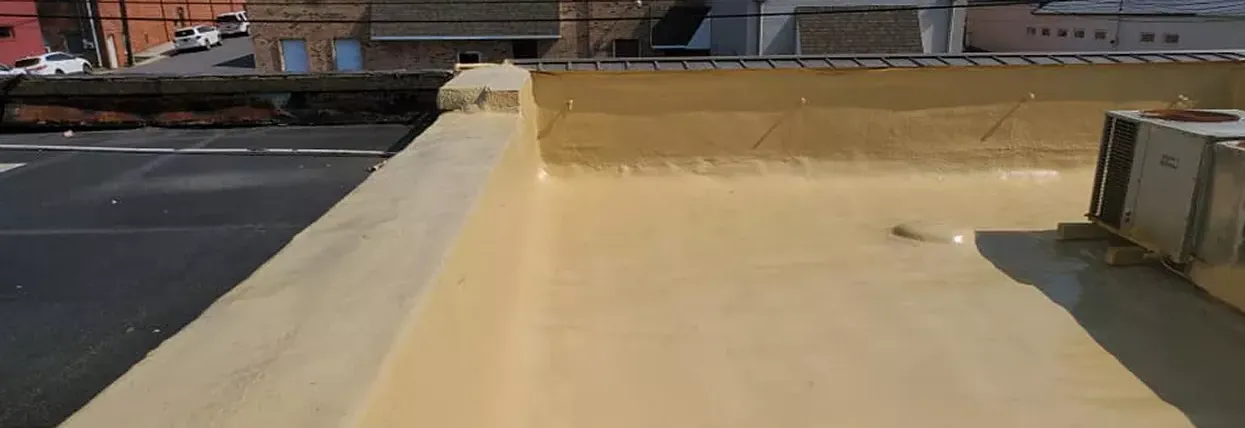
Top Choice: Polyurea with Rust-Inhibitive Primer
SPC-SP 6 minimum on metal. Zinc-rich primer before polyurea topcoat.
Applications by Building Type
Roof coating is relevant across every sector of the built environment. The design details shift by building type, but the performance requirements — waterproofing, longevity, energy efficiency, and minimal disruption to occupants — are consistent.
Commercial Office Buildings
Flat and low-slope office roofs are the primary target market for silicone and acrylic elastomeric coatings. Energy savings from a highly reflective white roof coating directly reduce operating costs and can qualify the building for ENERGY STAR certification. Fast-cure polyurea is specified when foot traffic or rooftop equipment servicing is a factor.
Warehouses & Distribution Centers
Large-footprint metal and built-up roofs on warehouses are among the best candidates for SPF + polyurea roof restoration. The economics of scale are compelling: large square footage means large energy savings, and the seamless coating eliminates the hundreds of seam laps that are the primary leak source on aging metal and built-up roofs.
Manufacturing & Industrial
Industrial roofs face chemical exposure, high thermal cycling from process heat, and heavy foot traffic from equipment maintenance crews. Pure polyurea’s combination of chemical resistance and mechanical toughness is the default specification in food processing, chemical manufacturing, pharmaceutical production, and heavy industrial facilities.
Retail & Big Box
Retail centers and big box stores are typically on tight maintenance budgets. Acrylic elastomeric coatings provide the best cost-per-square-foot performance on the large, simple flat roofs common in this sector. The energy savings from a highly reflective coating are particularly impactful on buildings with heavy air conditioning loads from open retail spaces.
Schools & Educational Facilities
School buildings face the same budget pressures as any public institution. Roof coating provides a cost-effective alternative to capital replacement projects while improving energy performance and reducing maintenance calls. Fast-cure systems can be installed during school breaks to minimize disruption.
Healthcare Facilities
Hospitals and healthcare facilities cannot tolerate leaks or roofing work that disrupts operations. Polyurea’s fast cure, seamless application, and long service life make it the specification of choice for healthcare roofing. Odor-free formulations are available for installations adjacent to occupied areas.
Cold Storage & Refrigerated Warehouses
Refrigerated buildings demand the best possible thermal performance from the roof assembly. SPF + polyurea topcoat provides R-6.0+ per inch of foam — three to four times the R-value of conventional roof insulation — directly reducing the refrigeration load and operating cost of cold storage facilities.
Residential & Multi-Family
Flat-roof residential buildings — apartment complexes, condominiums, and townhomes — benefit from the same economics as commercial buildings. Silicone and acrylic coatings restore waterproofing and improve energy performance on aging flat roofs. SPF + polyurea systems are specified for high-performance residential roofing on custom and luxury projects.
Roof waterproofing FAQ: Frequently asked questions
What is roof coating and how does it work?
A roof coating is a fluid-applied membrane that is spread or sprayed over an existing roof surface to create a continuous, waterproof, protective layer. The coating bonds to the substrate — metal, concrete, modified bitumen, single-ply membrane, or spray foam — and cures to form a seamless skin that seals all seams, penetrations, and deteriorated areas. Modern systems like pure polyurea cure in minutes and are formulated to deliver 15–30 years of service life before recoating is needed.
How long does a roof coating last?
Service life depends on the coating chemistry, film thickness, substrate condition, climate, and maintenance program. Properly installed polyurea roof coatings typically last 15–25 years. Silicone coatings last 15–20 years. Acrylic elastomeric systems last 10–15 years. SPF roofs with polyurea topcoats can serve 25–30 years, with the topcoat refreshed every 10–15 years to renew the UV barrier. The common factor in all long-service-life installations is a proper annual inspection and maintenance program.
What is the best roof coating for a flat roof?
The best roof coating for a flat roof depends on drainage and traffic conditions. For flat roofs with ponding water and limited drainage, silicone is the standard recommendation — it is the only coating chemistry that does not degrade in sustained wet exposure. For flat roofs with good drainage and foot traffic, polyurea delivers the best mechanical performance. For budget-constrained projects on flat roofs with adequate drainage in moderate climates, acrylic elastomeric is the most cost-effective choice.
Can you coat a metal roof?
Yes. Metal roof coating is one of the most cost-effective roofing restoration strategies available. Metal roofs develop rust, failing seam laps, and deteriorating fastener holes over time — all of which can be addressed with a properly specified and installed coating. The process involves rust removal, abrasive blasting or power tool cleaning, application of a rust-inhibitive primer, and then a polyurea or silicone topcoat. An ArmorThane polyurea system on a metal roof eliminates thousands of seam laps and fastener points in a single seamless application.
Coating a single-wide or double-wide? See our mobile home roof coating guide for products, film thickness and cost.
How much does roof coating cost per square foot?
Roof coating costs vary by system. Acrylic elastomeric coatings run $1.50–$4.00 per square foot installed. Silicone coatings run $2.50–$5.50 per square foot. Polyurea systems run $3.00–$6.00 per square foot. SPF + polyurea topcoat systems run $4.00–$8.00 per square foot. Compare these against full tear-off and replacement at $8.00–$20.00 per square foot, and the economics of roof coating are clear. Call ArmorThane at (417) 831-5090 for a project-specific estimate.
Does roof coating stop leaks?
Yes — when properly specified and installed, a fluid-applied roof coating eliminates virtually all active leaks by creating a seamless, continuous membrane over the entire roof surface. Failed seams, cracked membrane, corroded metal, and deteriorated pipe boots are all bridged and sealed. However, a roof coating applied over wet insulation or structurally failed deck will not solve the underlying problem. Wet insulation must be identified and removed before coating, and any structurally compromised deck sections must be repaired.
What is the difference between polyurea and silicone roof coating?
Polyurea and silicone are the two premium roof coating chemistries, and each has a distinct strength. Polyurea delivers superior tensile strength (2,500–4,500 psi), elongation (300–600%), and mechanical toughness. It cures in minutes, tolerates foot traffic, and resists chemical exposure. Silicone is the better choice specifically for flat roofs with ponding water — it retains its properties in sustained wet exposure where polyurea and other organic coatings would eventually soften. For roofs without ponding water concerns, polyurea consistently outperforms silicone in durability and mechanical resistance.
Can roof coating be applied in cold weather?
Polyurea can be applied in temperatures down to approximately 35°F with appropriate precautions: the substrate must be dry, above the dew point, and the coating materials must be at the correct application temperature (typically maintained with heated hose and proportioner equipment). Acrylic elastomeric coatings require minimum surface temperatures of 50°F and rising, and cannot be applied when rain or frost is forecast within 24 hours. Cold-weather application requires experienced crews with heated equipment. Call ArmorThane technical support for cold-weather application guidance.
Does roof coating qualify for tax credits or rebates?
Many roof coating systems qualify for utility rebates through local energy programs when they meet ENERGY STAR or Cool Roof Rating Council (CRRC) minimum solar reflectance requirements. ENERGY STAR-certified roof products may also qualify for IRS Section 179D commercial building energy efficiency deductions or other federal and state incentive programs. The specific incentives available depend on your location, building type, and the coating system specified. Consult your tax advisor and local utility for current programs.
How is ArmorThane different from other roof coating manufacturers?
ArmorThane is a direct manufacturer — not a distributor, not a franchise. We formulate our own coatings, manufacture our own plural-component application equipment, and train and support our own applicator network. That vertical integration means one company is accountable for the performance of the entire system: the chemistry, the equipment, the installation, and the support. Our technical team is available 24/7 at (417) 831-5090, and our global applicator network spans more than 30 countries.
What is spray polyurethane foam (SPF) roofing?
Spray polyurethane foam roofing is a system where closed-cell polyurethane foam is sprayed directly onto the roof deck, self-leveling to fill low spots and creating a seamless, insulating substrate. The foam is immediately protected with an ArmorThane polyurea or high-solids acrylic topcoat that seals the foam against UV degradation and provides a durable walking surface. SPF roofing delivers R-6.0 to R-7.0 per inch — the highest thermal performance of any roofing system — while providing seamless waterproofing and structural stability. Learn more about ArmorFoam spray foam systems.
How do I find an ArmorThane roof coating applicator near me?
ArmorThane maintains a global network of trained and supported applicators across North America and more than 30 countries. To find a qualified applicator in your area, call ArmorThane directly at (417) 831-5090 or toll-free at 1-800-227-2905, Monday–Friday, 8:00 a.m. to 5:00 p.m. Central. You can also submit a project inquiry online and our team will connect you with the right applicator for your project.
Ready to Specify or Install a Roof Coating?
ArmorThane is the manufacturer — coatings, equipment, and technical support under one roof, supporting a global applicator network. Not a franchise. No franchise fees. Get a project quote or find a qualified applicator near you.
More roofing and waterproofing guides
Coating types, leak repair, costs and material comparisons.
- Basement Waterproofing Cost
- Concrete Waterproofing
- Cool Roof Coating
- Deck Waterproofing
- Mobile Home Roof Coating
- TPO Roof Waterproofing
- Roof Coating Sprayer
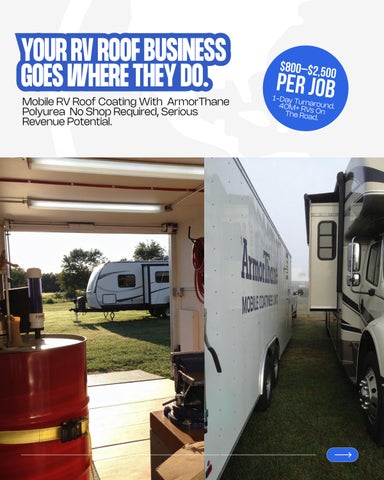
- RV Roof Franchises & Alternatives
- RV Roof Types
- Start a Roofing Company
- Acrylic Roof Coating
- Asphalt Roof Coating
- Metal Roof Condensation
- Metal Roof Paint
- Paint Over Rust
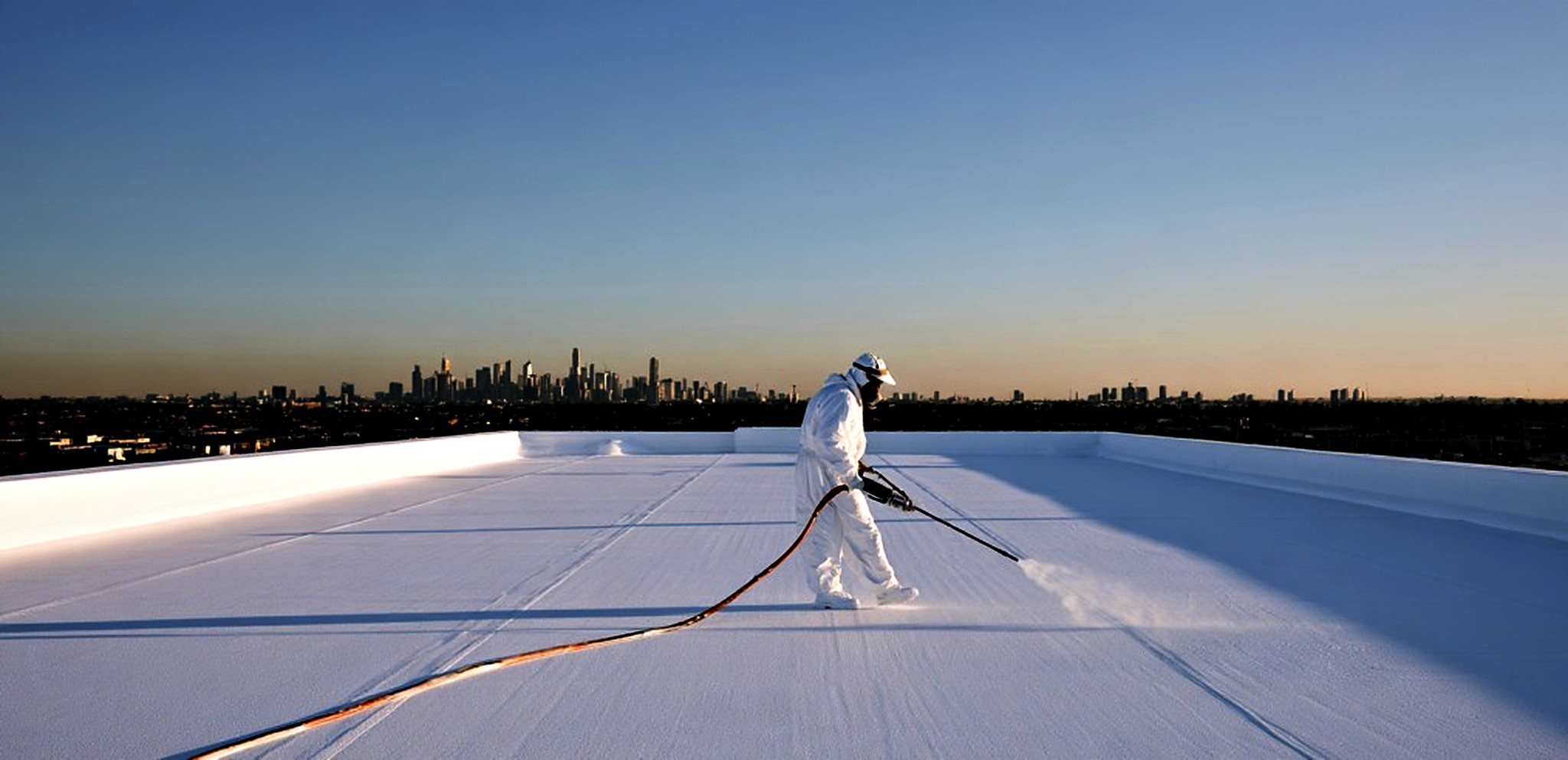
- Spray-On Roof Coating
Start your coatings business with ArmorThane.
Tell us what you want to spray and where you are. An ArmorThane specialist will walk you through the equipment, chemicals, training and startup cost for the work you want to do.
- Equipment package matched to your applications
- Hands-on training and applicator certification
- Technical support once you are spraying
More to read on roofing
Short reads from ArmorThane on Issuu. Tap one to open it right here.