
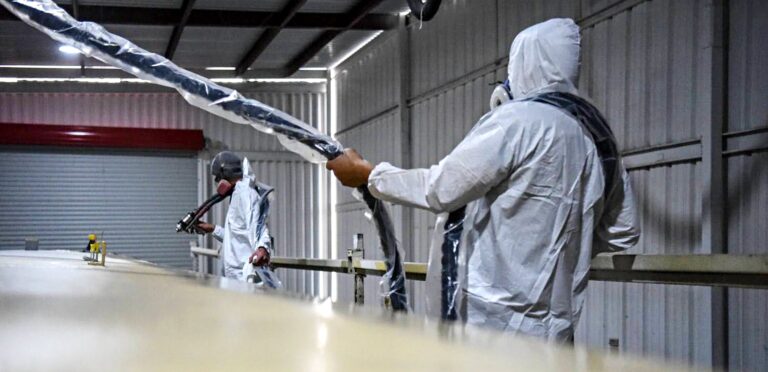

Refineries Hardened Against Catastrophic Failure
ArmorBlast and UltraBlast coatings shield Gulf oil & gas assets from VBIED attacks, accidental detonations, and shockwave damage. FEMA's reference manual for mitigating attacks against buildings remains one of the most widely cited sources on blast-resistant design.
Get a quote for your project
Tell us what needs protecting and an ArmorThane coatings specialist will come back with the right product, the right system and a realistic price.
- Product and system matched to your substrate
- Coverage and budget guidance before you commit
- A certified applicator near you
- 30+ years of field-proven polyurea and polyurethane
What’s Inside This Guide
- Why the Gulf Dem ands Blast Mitigation
- The Science of Blast Mitigation
- Why Polyurea Wins
- The ArmorThane System
- Country-by-Country Breakdown
- Critical Applications
- Standards & Compliance
- Polyurea vs. Alternatives
- Deployment Process
- The Future of Blast Mitigation
- Frequently Asked Questions
Across the Arabian Peninsula, blast mitigation has evolved from a defensive afterthought into a foundational engineering discipline — one that combines polyurea coatings, geometry, mass, and intelligent design to keep people, refineries, embassies, and skyscrapers standing when the unthinkable happens. This is the definitive 2026 guide to blast mitigation in the Gulf countries
Why the Gulf Demands World-Class Blast Mitigation
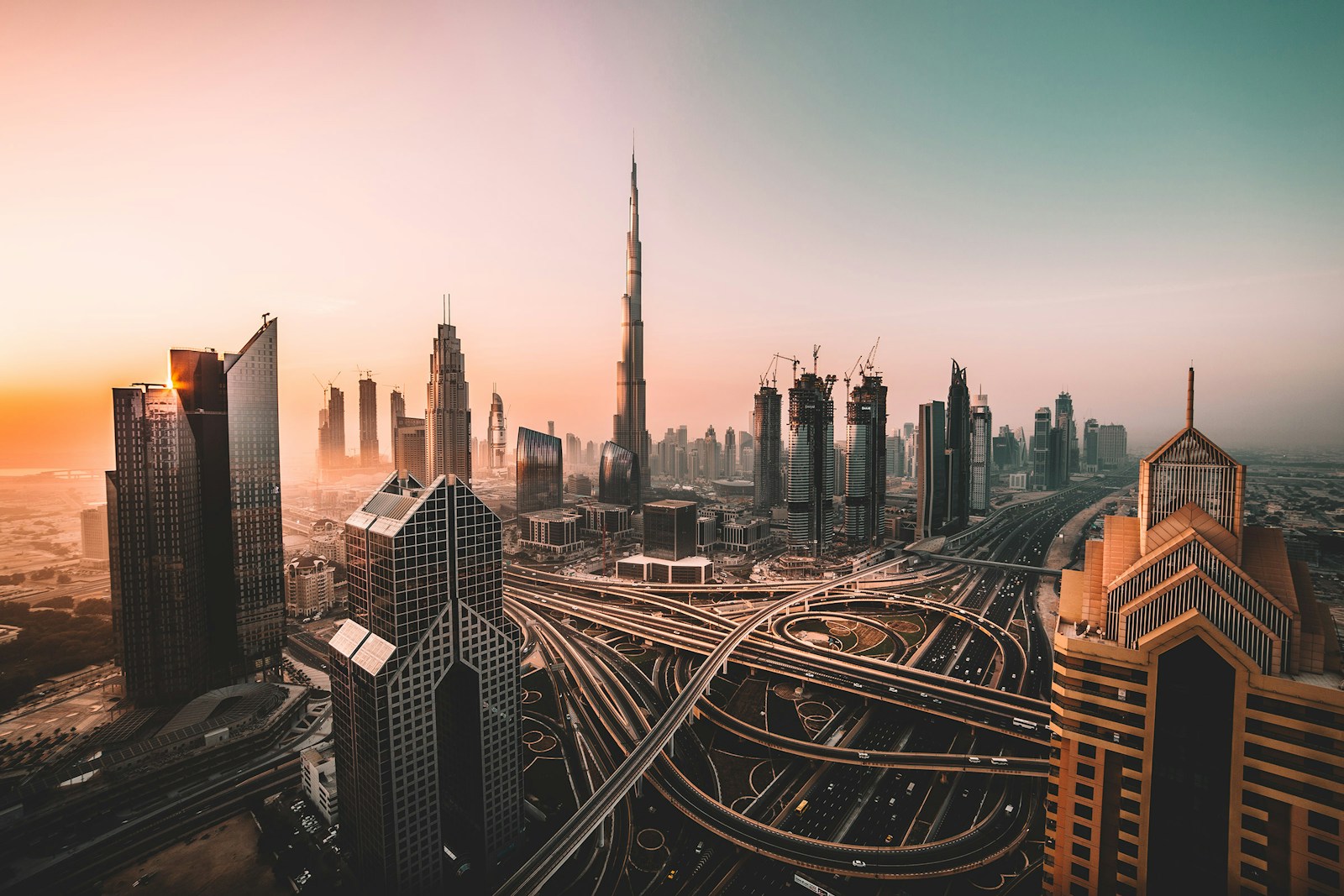
The Gulf Cooperation Council nations — Saudi Arabia, the United Arab Emirates, Qatar, Kuwait, Bahrain, and Oman — along with neighboring Iraq and Yemen, host an extraordinary concentration of high-value, high-risk targets: more than 40% of the world’s proven oil reserves, nine of the planet’s twenty busiest container ports, and a dense network of embassies, defense installations, sovereign wealth headquarters, and supertall towers. In this geography, a single successful blast event can cascade across global energy markets, supply chains, and diplomatic relationships within hours.
That reality has reshaped how Gulf governments specify infrastructure. Where a North American building code might treat blast loading as an optional appendix, the modern blast mitigation in the Gulf countries doctrine treats it as a primary design driver — woven into structural calculations, façade engineering, perimeter security, and — critically — the protective coatings that line vulnerable surfaces.
8
Gulf nations covered
$2.1T
GCC infrastructure pipeline
1,000%+
Polyurea elongation
3 sec
Polyurea gel time
The Science of Blast Mitigation
To understand why polyurea coatings dominate blast mitigation in the Gulf countries, you have to understand the physics of an explosion. A detonation produces a shockwave — a near-instantaneous pressure spike — followed by a longer-duration positive-phase impulse, a negative-phase suction, and finally a rain of fragmentation. Unprotected concrete and CMU fail in tension as the shock reflects off the back face of the wall, sending lethal projectiles inward at hundreds of feet per second. This phenomenon, called spalling, is what kills and injures occupants — not the blast itself.
Effective blast mitigation works on three principles: energy absorption, fragment containment, and structural ductility. The wall must flex, stretch, and dissipate energy without catastrophically failing. Modern polyurea systems do exactly this, transforming brittle masonry into a pseudo-ductile composite that can deflect dramatically and still hold occupants safely on the protected side.
Why Polyurea Wins in Blast Mitigation
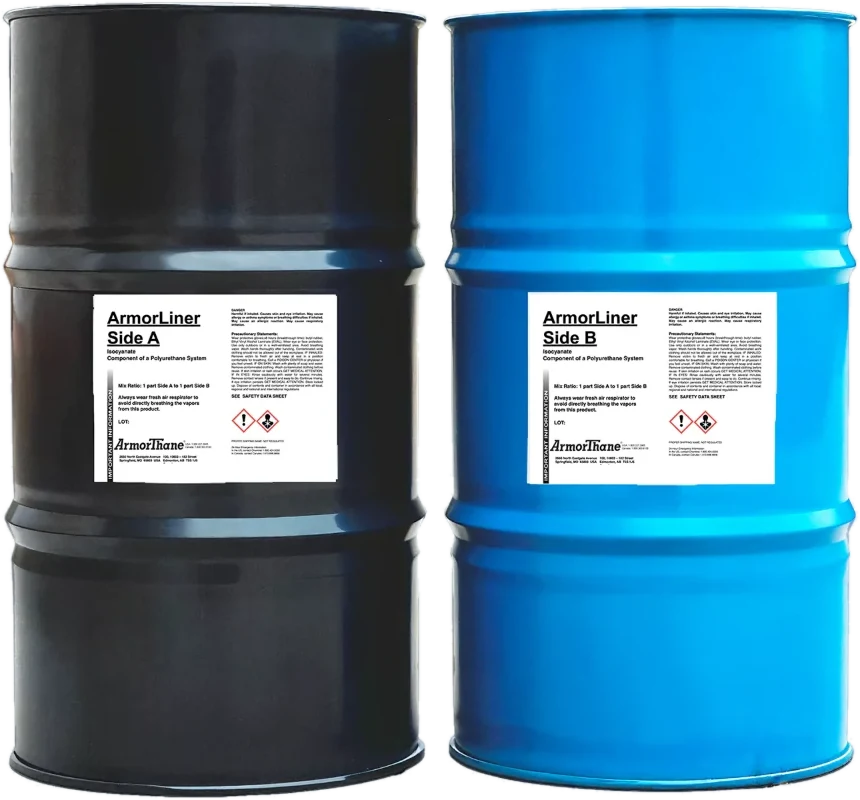
Polyurea is a 100% solids, two-component elastomer formed by the reaction of an isocyanate with an amine resin. It cures in seconds, bonds tenaciously to virtually any properly prepared substrate, and stretches more than ten times its original length before failing. In a blast scenario, this means the coating absorbs and redirects shock energy as elastic strain rather than catastrophic fracture.
The Engineering Advantages
- Clean & Prep typically 2,500–4,500 psi, far exceeding most polymer overlays.
- Elongation over 1,000% allowing dramatic deflection without rupture.
- Sub-second gel times permitting full installation in 24 hours instead of weeks.
- Seamless monolithic membrane with no joints, seams, or edge failures to exploit.
- Heat tolerance service ranges of − 40°F to +250°F suit Gulf conditions perfectly.
- UV-stable topcoats preserving aesthetics and preventing aromatic chalking.
Field insight from Tyler Gleckler
On a 2025 retrofit in Riyadh, an ArmorBlast-coated CMU test panel deflected nearly nine inches under a simulated VBIED load and rebounded without rupturing. The same wall constructed without polyurea reinforcement disintegrated into shrapnel.
The ArmorThane Blast Mitigation System
ArmorThane has spent three decades engineering polyurea systems for the world’s most demanding environments. In the Gulf, two formulations dominate the blast mitigation conversation: ArmorBlast™ and UltraBlast™.
ArmorBlast™ Hybrid Polyurea
Engineered for new-construction blast hardening, ArmorBlast bonds directly to concrete, CMU, steel, and reinforced fiberglass substrates. It cures in under five seconds, allowing entire perimeter walls to be coated in a single shift. Its proprietary chemistry delivers a balance of stiffness and elongation tuned specifically for explosive loading rather than impact alone.
UltraBlast™ Hybrid Polyurea
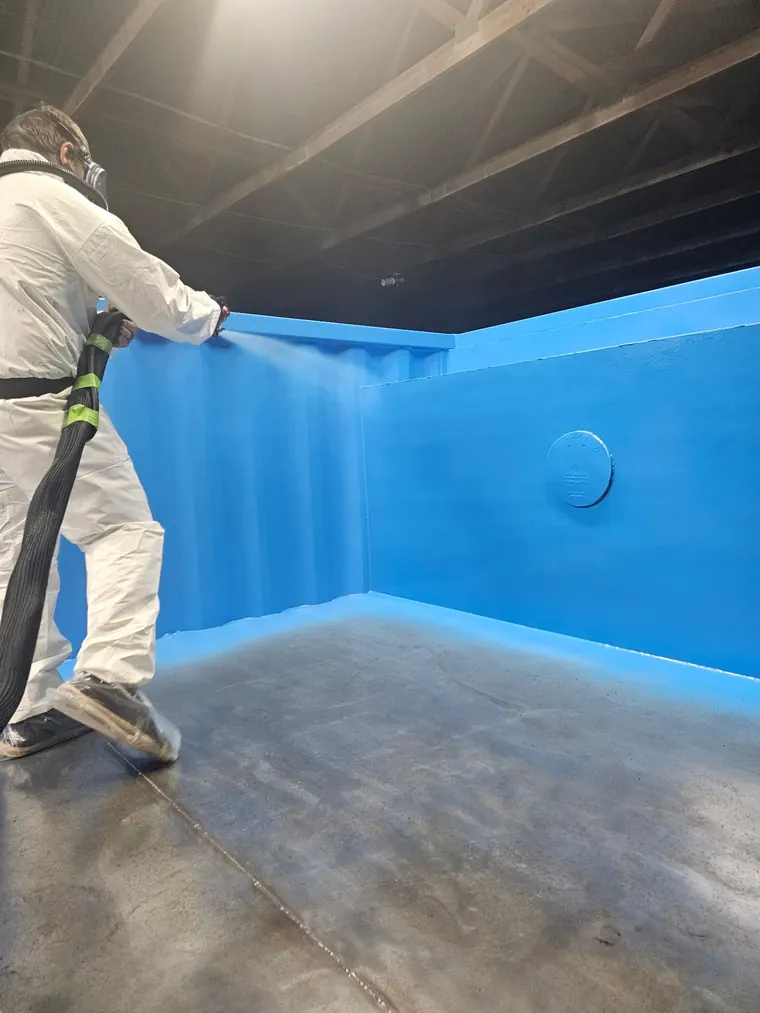
UltraBlast is the heavy-duty cousin: thicker, stiffer, and capable of standing in for steel jacketing on critical military and energy assets. It is the system of choice for ArmorThane’s Gulf government contracts, applied at thicknesses ranging from 120 to 250 mils.
Critical specification note
Not all polyureas are blast-rated. Generic spray polyureas designed for waterproofing or truck-bed lining do not deliver the elongation, tensile strength, or tested ballistic and blast performance of certified systems. Always specify by performance standard and tested data — not by chemistry alone.
Country-by-Country Blast Mitigation in the Gulf
Each Gulf nation approaches blast mitigation through a different lens — shaped by its threat profile, infrastructure pipeline, and regulatory environment. Below is a snapshot of how the eight nations now under ArmorThane’s 2026 GCC contracts are deploying polyurea blast protection.
Saudi Arabia
NEOM, Aramco refineries, Riyadh towers, Vision 2030 megaprojects — the largest single market for blast retrofitting in the GCC.
United Arab Emirates
Embassy row in Abu Dhabi, Dubai supertalls, ADNOC facilities, and Expo legacy buildings — polyurea is now standard for Class A perimeter security.
Qatar
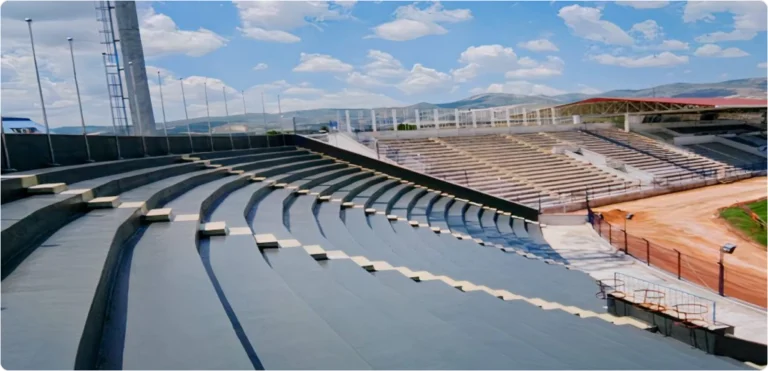
Post-World Cup stadium retrofits, LNG plant hardening, and government district protection in Doha drive Qatari demand.
Kuwait
KOC oil fields, US/UK embassy compounds, and refinery expansions deploy ArmorBlast across both new and legacy assets.
Bahrain
Naval Support Activity and BAPCO refinery work anchor a small but high-spec national program.
Oman
Duqm port and refinery complex, plus Royal Court facilities, expanded Omani polyurea adoption in 2025-26.
Iraq
Diplomatic compounds, energy export terminals, and Baghdad government districts represent some of the most demanding blast specifications globally.
Yemen
Reconstruction projects and humanitarian-mission facilities are increasingly specifying polyurea for both blast and impact resilience.
Critical Applications in the Gulf
Within these eight markets, ArmorThane’s polyurea blast systems show up across a remarkably consistent set of asset classes:
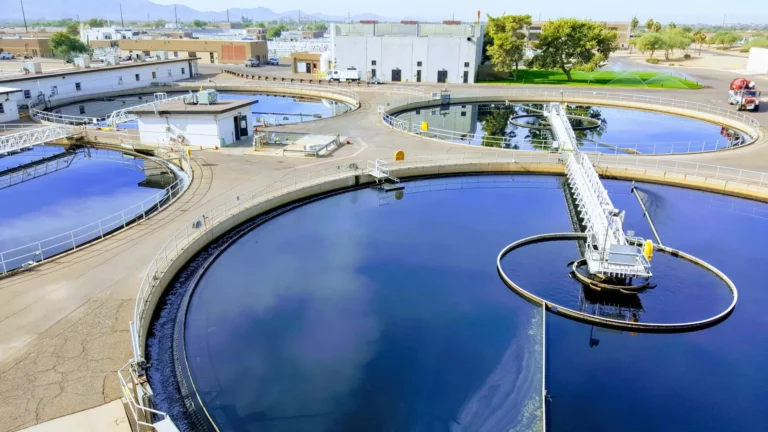
Oil & gas berms and storage tanks
primary and secondary containment, blast-resistant tank skirts, and pipeline corridor reinforcement
Surface Preparation
Remove all debris, dirt, and failing membrane material. Repair structural damage, replace rotted decking, and ensure proper drainage slope (minimum 1/4″ per foot).
Refinery process units
critical control rooms, motor control centers, and analyzer shelters hardened to PIP STC01018 standards.
Embassies & diplomatic facilities
SD-STD-02.01 perimeter walls, façade glazing backstops, and lobby retrofits.
Military & defense bases
hardened command bunkers, ammunition storage magazines, and force-protection barriers.
Ports and maritime terminals
blast-rated cargo handling buildings, perimeter fencing, and security checkpoints.
Critical government facilities
ministries, royal palaces, intelligence headquarters, and presidential residences.
Transportation infrastructure
metro stations, bus depots, and airport landside zones..
Standards & Compliance for Blast Mitigation in the Gulf Countries
Gulf project specifications draw heavily from US, UK, and NATO defense standards layered with national security ministry requirements. The most cited frameworks include:
- UFC 4-010-01
DoD Minimum Antiterrorism Standards for Buildings - ASTM F1642
Glazing and Fenestration Subjected to Airblast Loading - ASTM E1886/E1996
Performance of Exterior Windows, Curtain Walls, Doors, and Impact Protective Systems - SD-STD-02.01
US Department of State Diplomatic Security Standard - GSA TS01-2003
US General Services Administration Test Standard - UK CPNI Hostile Vehicle Mitigation
requirements adopted by GCC ministries - GSA TS01-2003
US General Services Administration Test Standard - ISO 16933
Glass in Building — Explosion-Resistant Security Glazing
ArmorBlast and UltraBlast systems have been independently tested to meet or exceed these benchmarks, with full third-party documentation packets available to specifying engineers and end users on request.
Blast Mitigation Methods
How does pure polyurea actually compare with the alternatives Gulf engineers used to specify? The answer determines billions in retrofit and new-build budgets across the region:
Types of roof waterproofing: A complete comparison
| Method | Blast Performance | Install Time | Lifespan | Gulf Suitability |
|---|---|---|---|---|
| ArmorThane Polyurea | Excellent — ductile, monolithic | 1–2 days | 30+ years | Optimal |
| Steel jacketing | Strong but rigid | 2–6 weeks | 20–30 years | Corrosion concerns |
| FRP wrap | Good in tension | 1–2 weeks | 15–20 years | UV-sensitive |
| Cementitious overlay | Limited ductility | 2–3 weeks | 10–15 years | Cracks readily |
| Sacrificial geofoam | One-time absorption | 3–5 days | One event | Single use |
From Specification to Deployment
Specifying a polyurea blast mitigation system is straightforward when the workflow is followed faithfully. Skipped steps are where blast retrofits fail — often catastrophically and at full project scale.
1. Threat Assessment
Quantify the design basis threat: charge weight, standoff distance, and target classification. This drives every downstream decision and is typically performed by a blast engineer registered in the host country.
2. Substrate & Structural Analysis
Existing wall mass, reinforcement ratio, and connection details determine whether polyurea alone is sufficient or whether it must be paired with structural strengthening.
3. System Selection
ArmorBlast for new construction; UltraBlast for high-threat retrofits; optional ballistic backers for combined ballistic/blast threats.
4. Surface Preparation
SSPC-SP 13/NACE 6 ICRI CSP 3-5 for concrete; abrasive blast for steel. Substrate moisture must be measured — polyurea is forgiving but not infallibe.
5. Application
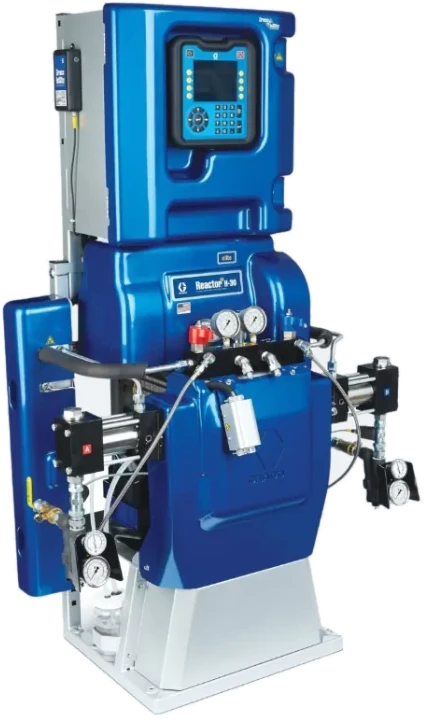
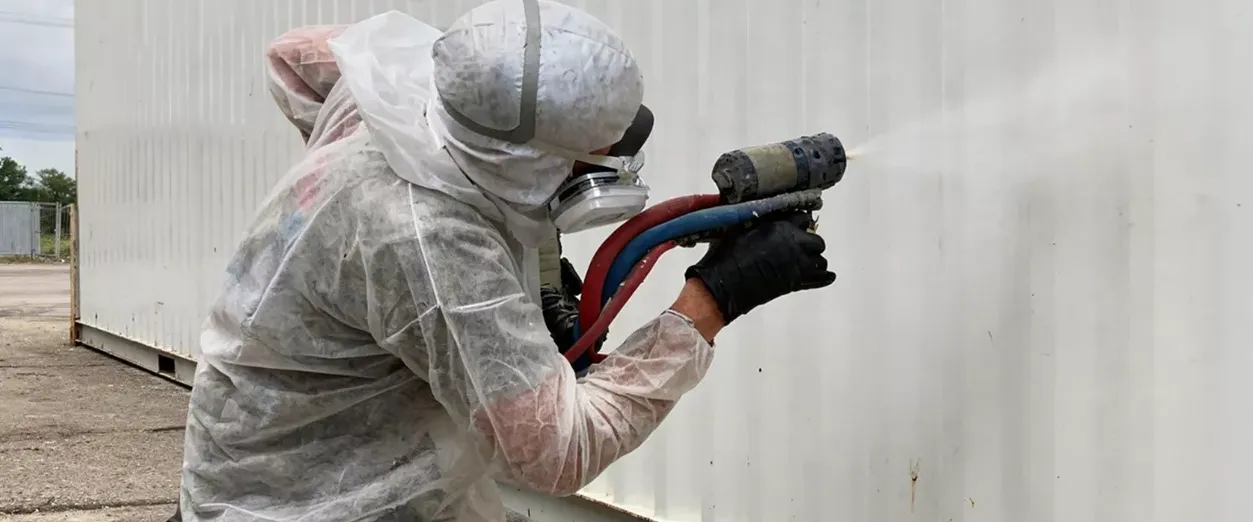
High-pressure plural-component spray equipment, heated to roughly 160°F, applied at 80–250 mils by an ArmorThane-trained applicator team.
6. QA, Documentation & Acceptance
Pull-off adhesion tests, dry film thickness, holiday testing, and full photographic record — packaged for the specifying authority.
Press Release • 2026
ArmorThane Awarded Blast Mitigation Contracts in 8 Gulf Countries
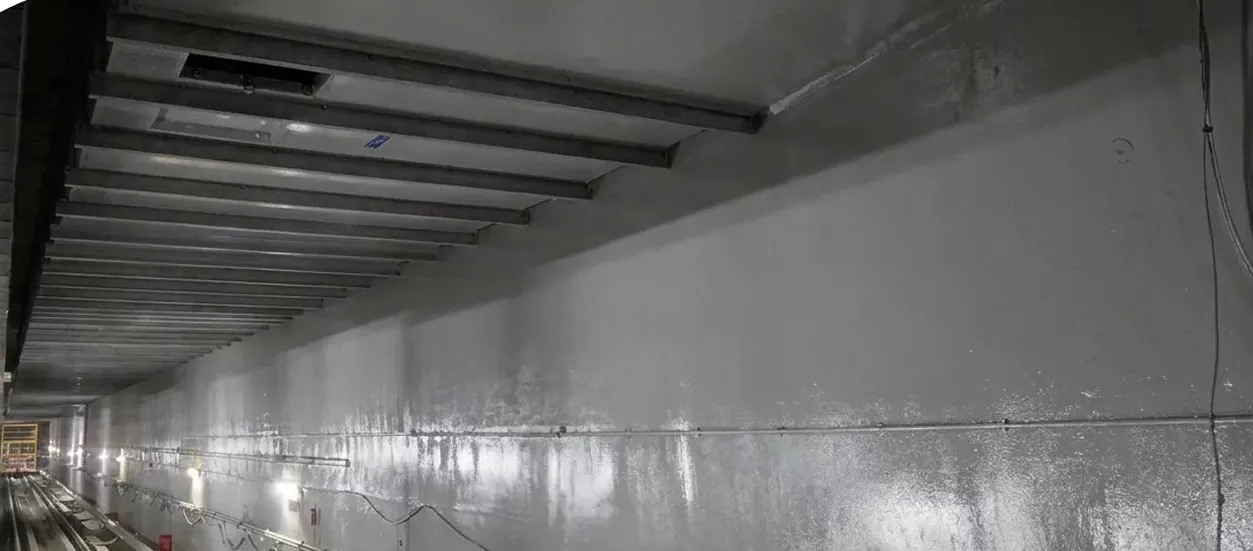
ArmorThane has been selected by sovereign authorities and prime contractors across Saudi Arabia, the UAE, Qatar, Kuwait, Bahrain, Oman, Iraq, and Yemen to supply pure polyurea blast mitigation systems for refineries, embassies, ports, and government facilities.
The Future of Blast Mitigation in the Gulf
Three trends are reshaping the next five years of blast mitigation in the Gulf countries:
Smart polyurea composites. Hybrid systems that embed sensors, fiber reinforcement, or self-healing chemistries are moving from research labs into specification documents in Saudi Arabia and the UAE.
Drone-threat hardening. The 2019 Abqaiq attack made clear that the next generation of explosive threats arrives from the sky. Roof and rooftop equipment hardening is now a standard scope item in many Gulf retrofits, and polyurea’s lightweight, conformable nature makes it ideal for protecting curved tank tops, control buildings, and process modules.
Performance-based specification. Gulf clients are moving away from prescriptive thickness specifications toward performance contracts that require certified blast test data. ArmorThane’s Independent Test Laboratory documentation is purpose-built for exactly this shift.
Frequently Asked Questions about Blast Mitigation in the Gulf Countries
What is blast mitigation in the Gulf countries?
It is the engineered protection of people and property from explosive events through coatings, structural design, and perimeter security. In the Gulf, polyurea elastomers like ArmorBlast and UltraBlast are central because they combine extreme elongation, fast cure, and excellent performance in desert conditions.
Why is polyurea preferred over steel jacketing or concrete overlays?
Polyurea installs in days instead of weeks, weighs a fraction of steel, never corrodes, and absorbs blast energy through ductile elongation rather than brittle fracture. It also bonds to almost any substrate, making it uniquely suited to retrofitting historic and existing structures across the GCC.
How much does polyurea blast mitigation cost in the Gulf?
Pricing depends on threat level, substrate, and access, but ArmorThane projects across the GCC have delivered total installed costs 30–60% lower than equivalent steel jacketing, with vastly shorter site disruption.
Is ArmorThane available across all eight Gulf countries?
Yes. Following the 2026 contract announcement, ArmorThane operates a certified applicator and supply network spanning Saudi Arabia, the UAE, Qatar, Kuwait, Bahrain, Oman, Iraq, and Yemen, with regional logistics hubs in Riyadh, Dubai, and Doha.
Can polyurea be applied over existing painted or coated walls?
Yes, with proper preparation. Existing coatings must be tested for adhesion and compatibility, then mechanically profiled to expose sound substrate. ArmorThane’s technical services team provides specification support and on-site consultations across the region.
Specify ArmorThane on Your Next Gulf Project
From embassies to refineries, ArmorThane’s pure polyurea blast mitigation systems are field-proven across all eight Gulf countries. Talk to our engineering team about your specific threat profile and project timeline.

Written by Tyler Gleckler
Tyler Gleckler is a coatings specialist with deep field expertise in polyurea, polyaspartic, and high-performance protective systems. His writing appears regularly in Polyurea Magazine, the American Polyurea Organization, ArmorThane‘s technical library, and a range of industry publications. He focuses on translating laboratory chemistry into specifications that engineers, owners, and applicators can actually deploy.