Construction equipment coatings
Polyurea construction equipment coatings that outlast paint on buckets, dump beds, blades, cabs and undercarriage. For OEMs, dealers and fleet shops.
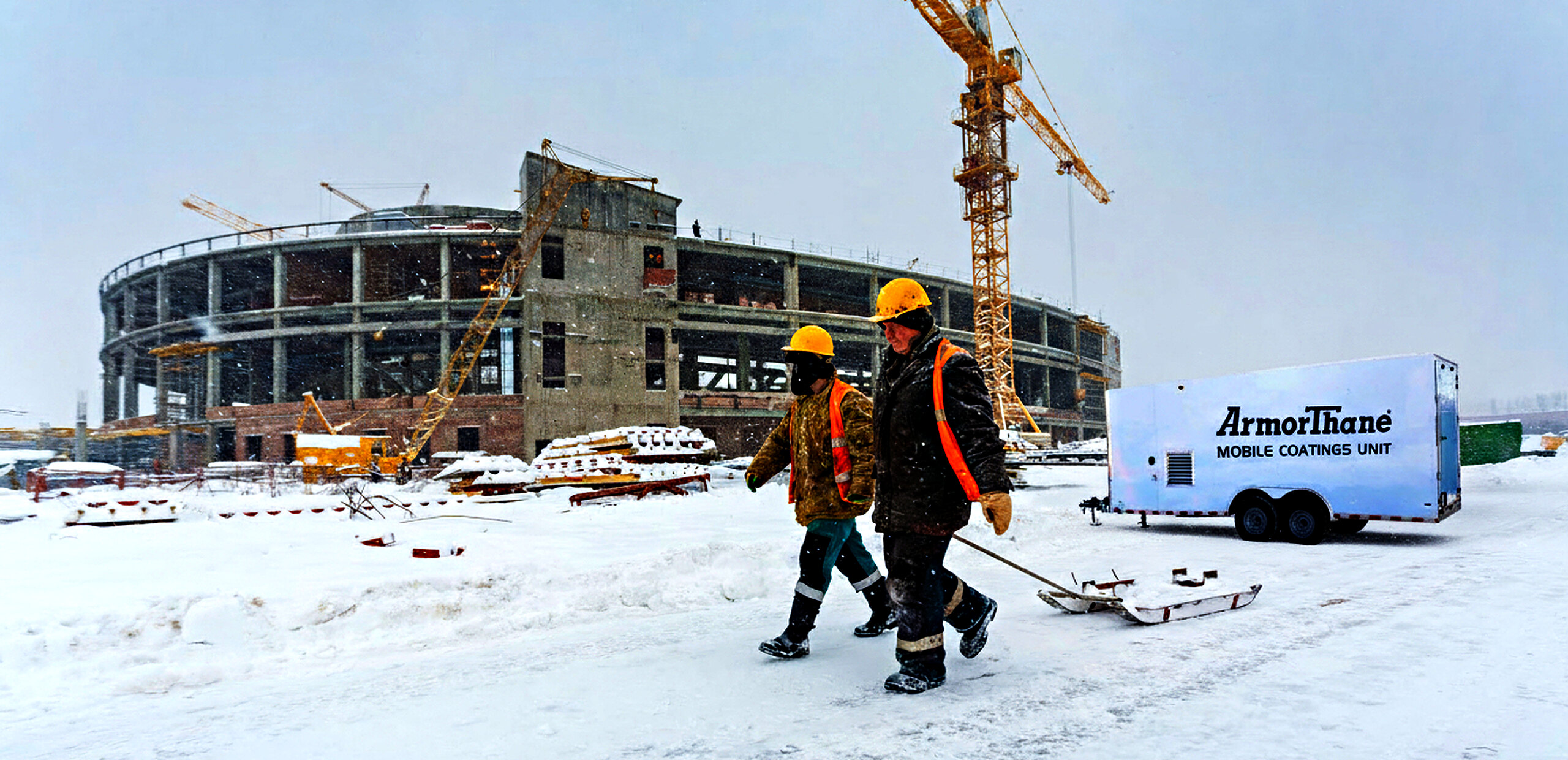
Spray protective coatings for a living.
ArmorThane is the one-stop shop for applicators. We make the chemistry, build the equipment, train you hands-on and back you with technical support, with no franchise fees and no royalties. Applicators have come first here since 1989.
- $0franchise fees or royalties
- 35+years in business
- 50+countries with applicators
- 24/7technical support
Construction equipment protection
A dozer blade sees more abuse in one shift than most structural steel sees in a decade. Rock, sand, rebar, frozen clay — all of it dragging across the same few square feet, all day, every day. Then the machine sits out in the weather overnight, gets hit with hot water and caustic soap in the morning, and goes right back at it.
That is the environment a construction equipment coating has to live in, and it is why factory paint on a $400,000 excavator starts looking tired inside two seasons. Rust creeps out from under the boom pins. Deicing salt eats the underside of the frame. The bucket goes bare in a month. None of that is a paint-quality problem, exactly — it is a chemistry problem. Thin, rigid, solvent-borne enamel was never built to flex with a welded frame or absorb a fist-sized rock at speed.
ArmorThane manufactures the polyurea and polyurethane systems that heavy equipment OEMs, dealers, and fleet shops use instead. Ours go on thick — 40 to 125 mils depending on the part — cure in seconds, and stay bonded through the thermal cycling, impact, and chemical exposure that strips conventional coatings right off the substrate. We have been formulating them in Springfield, Missouri for more than 35 years, and we sell the material, the spray equipment, and the training to apply it as one package.
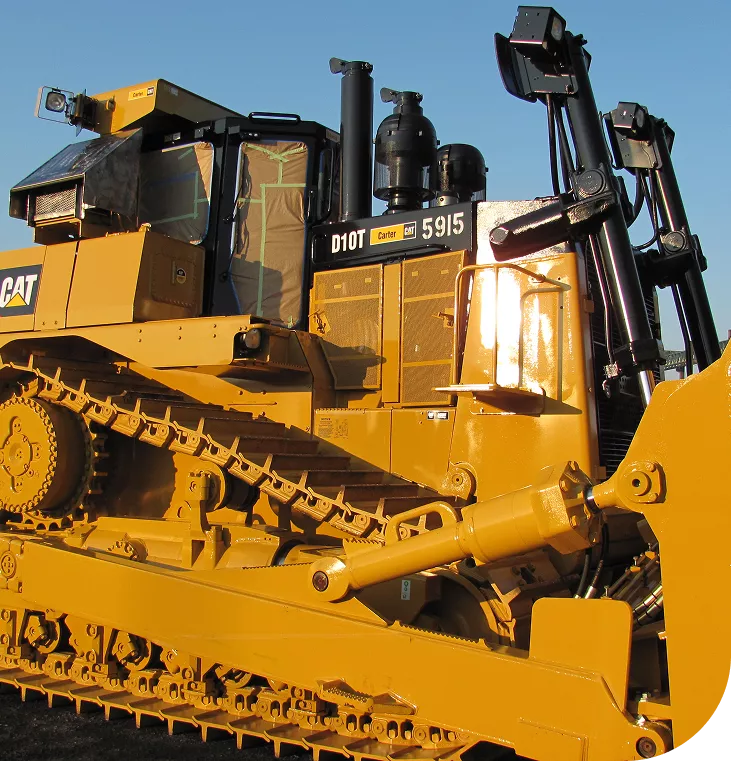
Pavers, graders, spreaders, finishers, haul bodies, buckets, cabs, undercarriage — if it moves dirt or carries aggregate, there is a system for it below
What Construction Equipment Coatings Have To Survive
Specifying a coating for heavy machinery is a different exercise than specifying one for a warehouse floor. Seven things are trying to kill it at once:
- Abrasion. Aggregate sliding across a bucket lip or a haul body is essentially a continuous sanding operation. Abrasion resistance, not gloss retention, is the number that matters.
- Impact and gouging. A rock dropped into an empty dump bed hits with enough energy to dent quarter-inch plate. A brittle film chips at the impact site and then unzips from the edge. An elastomer deforms and comes back.
- UV exposure. Machines live outdoors. Aromatic chemistries chalk and shift color under sustained UV unless they are topcoated or you specify an aliphatic system up front.
- Deicing chemistry. Road salt, calcium chloride, magnesium chloride, and liquid brine are far more aggressive on an undercarriage than seawater. This is what quietly destroys resale value on northern fleets.
- Fluids. Hydraulic oil, diesel, DEF, coolant, and the occasional spill of whatever is in the tank. DEF in particular is unkind to a lot of conventional finishes.
- Thermal cycling and frame flex. A welded frame moves. It moves more at -20°F than at 110°F, and it moves every time the machine articulates. A coating with low elongation cracks along the weld seams first — go look at any five-year-old machine and you will see it.
- Pressure washing. 3,000+ psi at 180°F with a degreaser, aimed at exactly the edges and fastener heads where adhesion is weakest.
Pure polyurea handles that combination better than anything else we have tested, and we have tested a lot of it. The urea linkages in the backbone give you crosslink density for chemical resistance, while the soft-segment content keeps elongation up in the 300–450% range depending on formulation. High crosslink density and high elongation is an unusual combination. That is the whole reason the chemistry exists.
Where the Coating Goes, Machine by Machine — Excavators, Backhoes, and Buckets
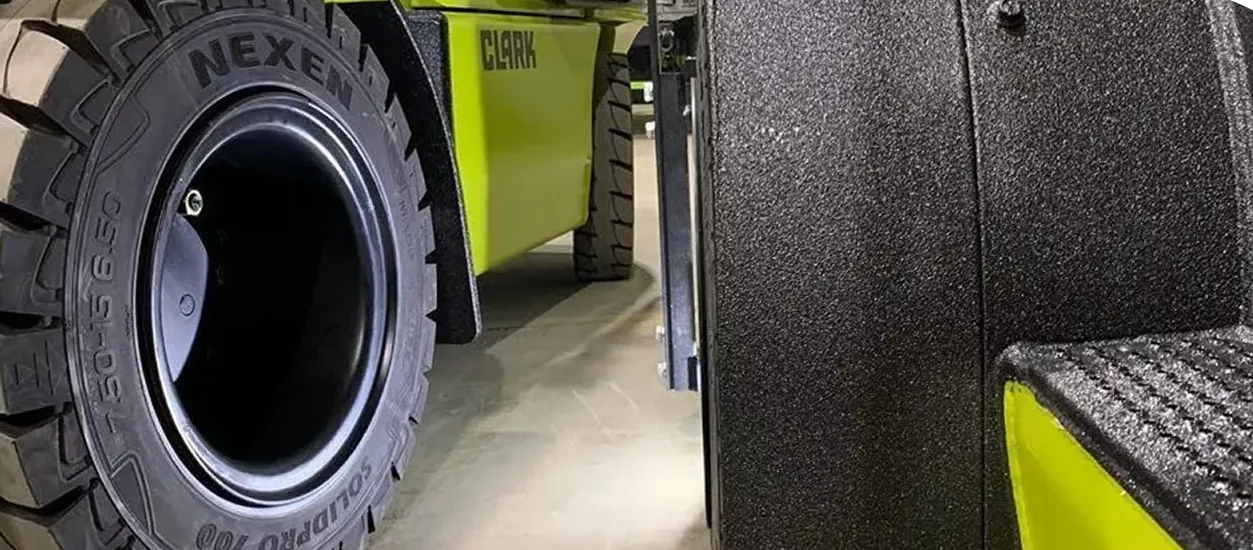
Bucket interiors, cutting edges, and wear strips take a hardcoat. Booms, sticks, and counterweights are usually a standard exterior system in the machine color. The area people forget is the swing platform and the space behind the tracks, where mud packs in, holds moisture against bare steel, and sits there for a week.
Dump Beds, Haul Bodies, and Trailer Decks
This is the highest-value application on the list. A sprayed liner in a dump body does three things: it stops the sidewall corrosion that starts under retained material, it dramatically improves release so wet clay and cold asphalt actually slide out, and it protects the floor plate from the shovel-and-loader damage that puts beds in the shop. The same chemistry we use for spray-on bedliners scales straight up to a 30-yard body.
Dozer Blades, Graders, and Scrapers
Moldboards, push arms, and blade backs. Anything that pushes material benefits from a low-friction, high-abrasion surface, and the blade back in particular corrodes badly because nobody ever cleans it.
Skid Steers, Compact Track Loaders, and Attachments
Attachments get swapped, dropped, dragged, and stacked in a yard. They are also the parts most likely to be rented out. Coating a fleet of buckets, grapples, and augers pays for itself in fewer repaints and fewer damage disputes.
Cabs, ROPS, Catwalks, and Step Surfaces
Two different jobs here. Cab interiors and headliners want a coating that cleans up, damps sound, and does not off-gas — cabs get hot. Catwalks, steps, and deck plate want traction. SureGrip has an extremely high coefficient of friction and enough elongation to move with a substrate that flexes, which is why it ends up on more service platforms than anything else we sell.
Concrete and Asphalt Equipment
Mixer drums and fins, paver hoppers, screeds, augers, and asphalt distributor tanks. Release is the whole game. Cured concrete bonding to a drum fin, or asphalt sticking in a hopper corner, costs more in labor over a season than the coating costs once.
Polyurea vs. Powder Coating, Epoxy, and Equipment Enamel
Fair comparison, because each of these has a place.
Powder coating gives a beautiful, uniform, durable finish on new parts, and for OEM production of small components it is hard to argue with. Two limits: the part has to fit in an oven, and once the film is chipped through, corrosion runs under it. You cannot powder coat a boom in the field, and you cannot repair one on a jobsite.
Epoxy is chemically tough and cheap. It is also comparatively brittle, moisture-sensitive during application, and slow — you are waiting hours to recoat and days for full properties. On a flexing frame, epoxy cracks. We use epoxy-family primers on some substrates, but not as the topcoat on equipment that articulates.
Equipment enamel and single-stage urethane are the default, largely because every shop already sprays them. They look right leaving the paint booth. They are also 3 to 5 mils thick, which is not a protective coating so much as a color, and they are the reason so many machines need a repaint at year three.
Polyurea costs more per gallon and requires plural-component heated spray equipment. What you get is 100% solids with essentially zero VOC, a gel time measured in seconds so you can spray vertical surfaces without sag, film builds ten to thirty times what enamel gives you, and adhesion typically over 500 psi in pull-off testing on properly prepared steel. If you want the deeper chemistry, we wrote it up in our polyurea guide and our polyurea vs. other coatings comparison.
Choosing the Right System
There is no single best construction equipment coating — there is a best one for the part, the exposure, and how the shop is set up to apply it. Rough guide:
| Product | Chemistry | Best for | Why |
|---|---|---|---|
| ArmorLiner | Pure polyurea | Dump beds, buckets, general exterior | The workhorse. Best all-around balance of tensile, tear, and abrasion resistance for most of the machine |
| HighLine 510H | Pure polyurea, high hardness | Wear surfaces, floor plate, high-abrasion zones | Harder heavy-industrial version of our 510 when you need shore hardness without giving up flex |
| HighLine 410 | Aliphatic polyurea | Machine-color exteriors, OEM finish work | Color-fast and intrinsically UV stable, so no topcoat is needed. Bonds to carbon and mild steel without primer |
| HighLine 610 | Pure polyurea, cold-tolerant | Northern shops, winter and unheated-bay work | Lower application temperature threshold and good resistance to cold break |
| HighLine 310 | 1:1 polyurea | Undercarriage and underbody | Formulated for vehicle underbody protection; also insulates against heat |
| UltraTech | Polyurea | Severe-service wear parts | Very high wear resistance where the part would otherwise be a consumable |
| SureGrip | Polyurea | Steps, catwalks, deck plate, ramps | Very high coefficient of friction with high elongation for substrates that move |
| ArmorFoam | Spray polyurethane foam | Cab insulation, sound damping | Sprays with the same equipment; cuts cab noise and heat load |
Most fleets end up running two or three of these — a hardcoat on wear surfaces, an aliphatic on the visible exterior, and grip material on the walking surfaces. Our tech group will spec it by part if you send photos and an exposure description.
Surface Prep Is Where Equipment Coatings Fail
Almost every failure we get called about traces back to prep, not product. Heavy equipment is a hard substrate to prepare because it has spent its life soaking in hydraulic oil.
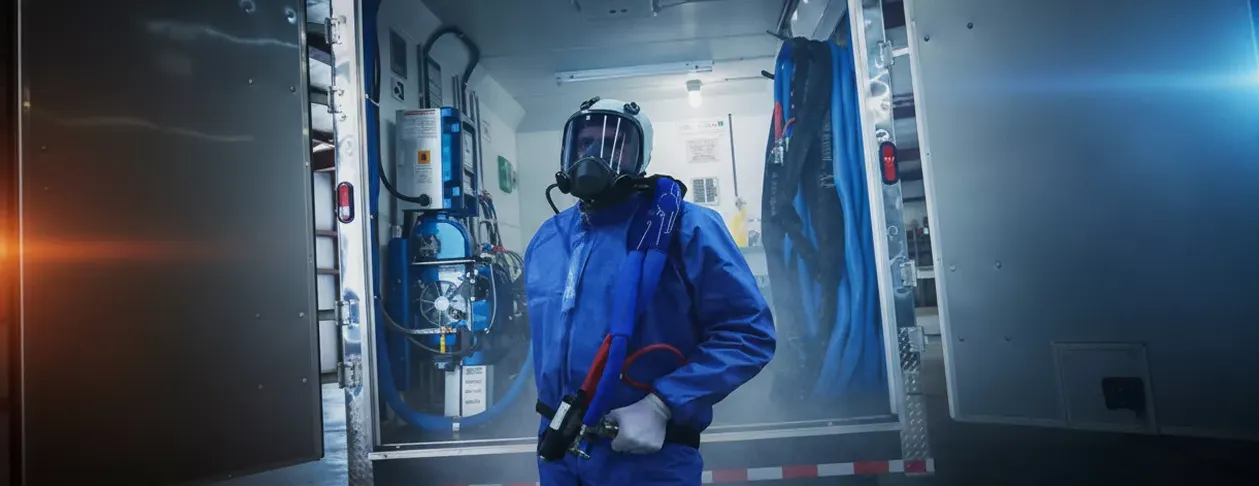
The sequence that works: degrease first — solvent wipe or hot alkaline wash, and do it before blasting, not after, or you drive contamination into the profile. Abrasive blast to a near-white finish (SSPC-SP 10 / NACE No. 2) with an anchor profile in the 2 to 4 mil range. Grind weld spatter and sharp edges; a coating thins at a sharp edge no matter how carefully you spray it. Check dew point and keep the substrate at least 5°F above it. Then coat inside the flash-rust window, which on a humid day is shorter than people think.
Skip any of that and you get fish-eyes from residual oil, blistering from trapped moisture, or straight adhesion failure that peels in sheets six months later. Spray a contrasting color base coat when thickness verification matters — it makes holidays and thin spots obvious before the machine leaves the shop.
For OEMs, Dealers, and Fleet Shops
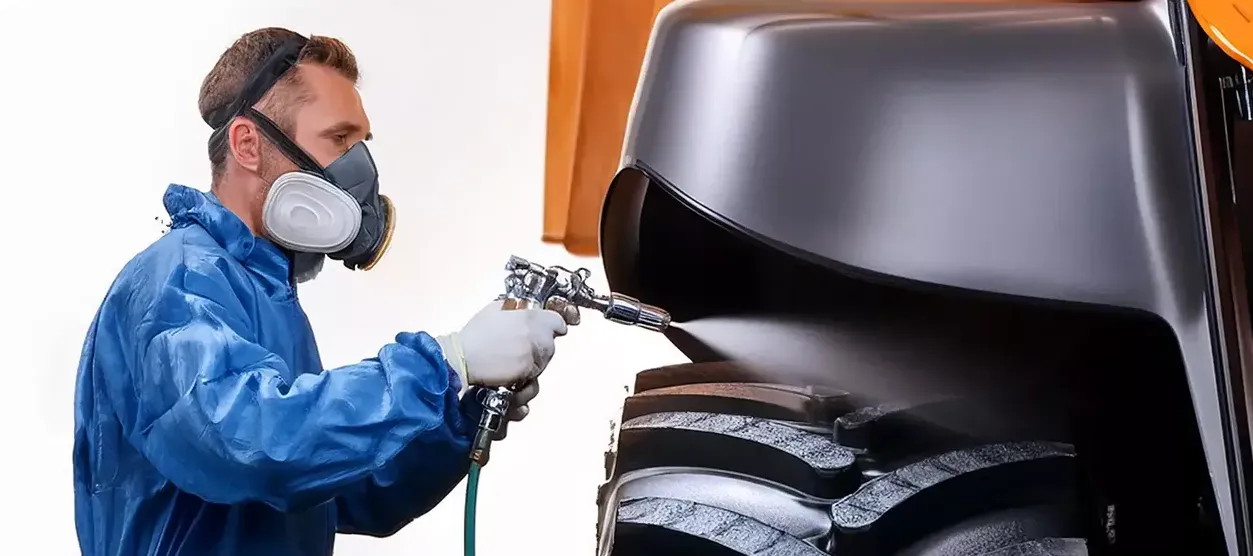
We work three ways. OEMs run our material on a production line as a factory-applied protective finish. Equipment dealers add coating as an aftermarket service on used inventory, which is one of the higher-margin things a used-equipment department can sell. And fleet shops bring the capability in-house — we supply the proportioner, the spray rig, the material, and the training, with no franchise fee and no licensing arrangement.
That last part matters more than it sounds like it should. We are not a franchise. You buy material and equipment, we train your people, and the work you generate is yours.
Construction Equipment Coatings: Common Questions
What is the best coating for construction equipment?
For most of the machine, a pure polyurea like ArmorLiner. It combines the abrasion and impact resistance heavy equipment needs with enough elongation to move with a flexing frame. Visible exterior panels where color retention matters are better served by an aliphatic polyurea such as HighLine 410, which is UV stable without a topcoat.
How long do construction equipment coatings last?
A correctly prepared and applied polyurea system routinely outlives the machine’s original paint by many years. Service life depends far more on film thickness, surface preparation, and exposure than on the product itself — the same coating that lasts a decade on a boom may need touch-up in two years on a bucket lip that moves 40,000 tons of rock.
Can heavy equipment be coated without disassembly?
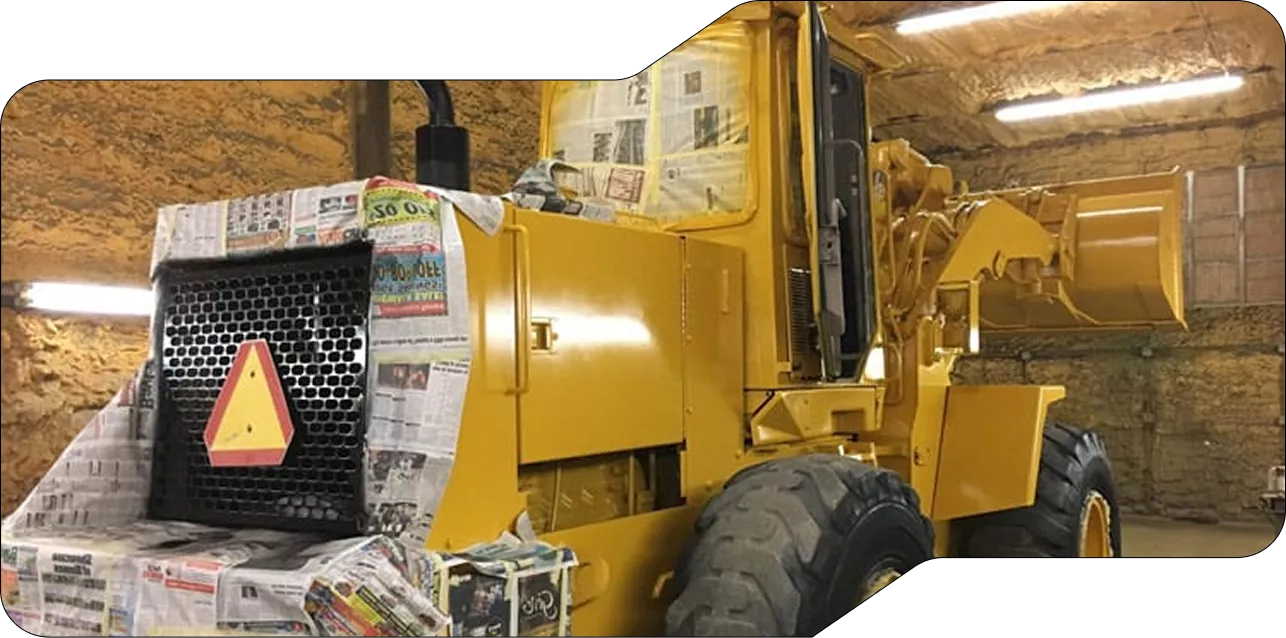
Largely, yes. Masking is more work than most people expect — cylinders, pins, glass, decals, and hydraulic fittings all have to be protected — but the machine does not need to come apart. Buckets and attachments are usually pulled and sprayed separately because it is faster.
Is polyurea better than powder coating for heavy equipment?
For field-applied work, repairs, large weldments, and anything that flexes, yes. Powder coating is excellent for new production parts that fit in an oven and is often the better call there. The two are not really competing for the same job.
How thick is a construction equipment coating applied?
Typically 40 to 125 mils depending on the part. Wear surfaces such as bucket interiors and dump body floors go on the heavy end; exterior body panels are usually much lighter, since the goal there is protection and appearance rather than sacrificial thickness.
Will the coating chip or peel like paint?
Properly applied over a blasted profile, it does not peel — pull-off adhesion typically exceeds 500 psi, and the film is elastomeric rather than brittle, so an impact that would chip enamel simply deforms polyurea. Nearly all peeling failures are prep failures.
Can damaged areas be repaired in the field?
Yes. Cut back the damaged material to a sound edge, feather it, prep the exposed substrate, and respray. Polyurea bonds to itself well when the existing surface is abraded and clean. This is one of the practical advantages over powder coating, which cannot be repaired outside a shop.
Does ArmorThane sell to equipment shops or only to applicators?
Both. We sell material and spray equipment to OEMs, dealers, and fleet shops that want the capability in-house, and we support an independent applicator network for shops that would rather job it out. Either way there is no franchise fee.
Talk To Us About Your Equipment
Send us photos, the parts you want protected, and where the machines work — coastal, northern salt, quarry, or general dirt — and we will spec a system by part rather than selling you one product for the whole machine. Contact ArmorThane to get started, or see how the same chemistry is used on mine equipment, industrial equipment, and construction structures and concrete.
Be your own boss start a waterproofing business
The coatings industry is booming, as protective coatings are being used today more than ever before. Nowhere is this more true than for basement waterproofing, where polyurea coatings are being used to keep basements safe and dry, protecting against the risks of water damage. Always in demand, especially in regions prone to heavy rainfall or changing weather patterns, there are many great opportunities to join the coatings industry. If you’re ready to start your new career in the coatings industry, consider partnering with ArmorThane.
With only a small investment and no franchise fees or other ongoing costs, we’ll provide you with everything you need to start your own coatings business. This includes materials, equipment, training, and support, helping you every step of the way to see you carve your own path as a successful business owner. If you’re interested in learning more, or want to discover any of ArmorThane’s products and services, contact us today! Our 24/7 customer service and technical support teams are always ready to help, so you’re only one call away from beginning your entrepreneurial journey!
No franchise fees
No franchise fees or royalties, makes it a relatively low cost venture.
Training provided
We provide personal training to get your system up and going.
24/7 customer support
Dedicated support team ready to assist you anytime you need us.
Start your coatings business with ArmorThane.
Tell us what you want to spray and where you are. An ArmorThane specialist will walk you through the equipment, chemicals, training and startup cost for the work you want to do.
- Equipment package matched to your applications
- Hands-on training and applicator certification
- Technical support once you are spraying