HardCoat
The hard one. Everything else in the ArmorLine range is built to stretch; HardCoat is built to go rigid. Around 75 on the Shore D scale, it turns carved EPS, wood and delicate shapes into something with a plastic shell around it — hard enough to be climbed on, leaned on, forklifted and left outside.
- 100% solids
- Zero VOC
- About 75 Shore D
- Sprays over EPS and wood


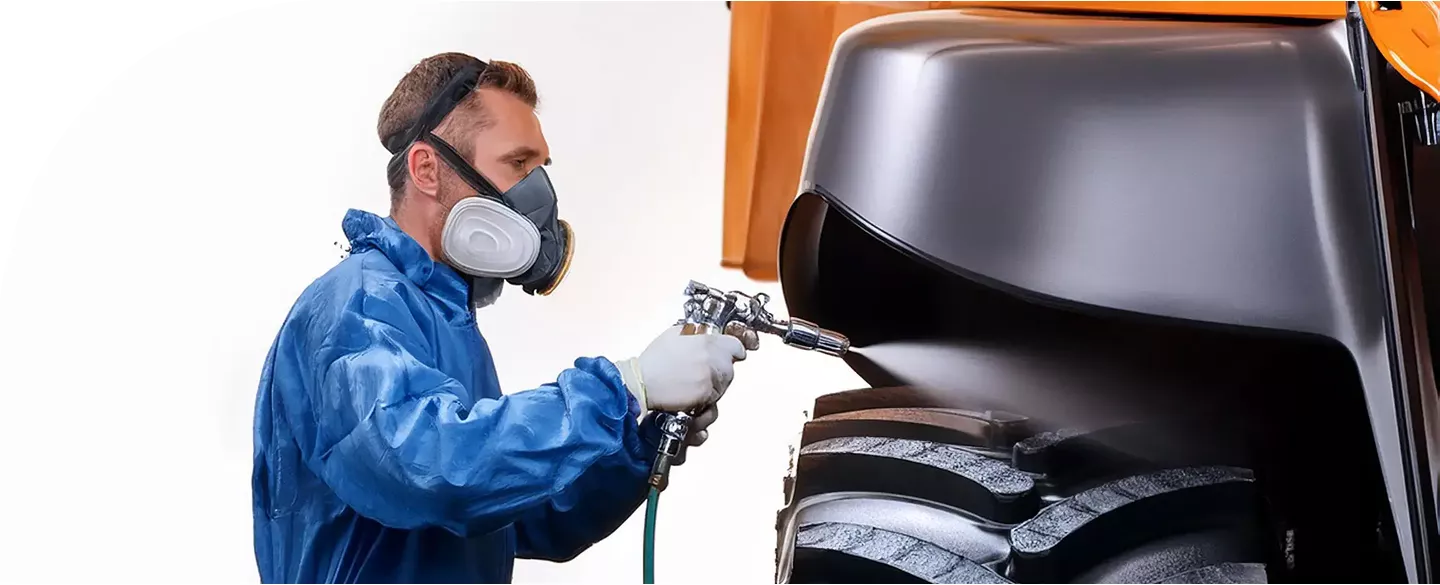
One kit is 100 gallons — a 50 gallon drum of Side A and a 50 gallon drum of Side B, metered 1:1 by volume. Both drums run with a desiccant device fitted while they are in use.
Side A is the isocyanate — a non-pigmented liquid with a mild odor and a flash point above 350°F, the highest in the range. It needs no agitation, but it does need a desiccant device on the drum.
Side B is the polyol resin, and on this product it is the thicker of the two — around 160 cps against Side A's 90, which is the reverse of most of the range. Power-agitate it to a uniform mixture and color before you spray.
Architectural shapes and themed rockwork are where HardCoat earns its name. Carved foam has no strength of its own — the coating is the structure the public actually touches, and it has to stay hard.
Props, housings, molded parts, speaker boxes and crates. The data sheet calls out excellent flow and appearance — this is the product in the range meant to come out looking finished, not just protected.
Formulated to go hard, not to stretch.
HardCoat is an ArmorThane formulation, part of the ArmorLine series. We have developed and manufactured our own polyurea and polyurethane chemistry since 1989. HardCoat is a hybrid polyurea/polyurethane, and it is deliberately the stiffest thing we make.
It is a shell, not a membrane
Around 75 on the Shore D scale with roughly 40% elongation. Every other product in this range is an elastomer that moves with its substrate; HardCoat does the opposite. On carved EPS, which has almost no strength of its own, the coating becomes the structure — and the data sheet describes exactly that, a plastic shell-like protection for delicate foams.
About 75 Shore D · roughly 40% elongation · about 3,700 psi tensile
It goes onto substrates polyurea usually will not
EPS, wood and many other surfaces. Most of the range is written for concrete and steel; this one is written for foam board, plywood, crates, cabinets and shapes that came out of a hot-wire cutter. It will coat steel too, but the reason people buy it is the soft substrates.
Designed for application over EPS, wood and many other surfaces
It takes a hit, including in the cold
The data sheet leads with an excellent balance of stiffness and impact resistance, and calls out excellent cold temperature impact resistance specifically. Rigid coatings often get brittle when the temperature drops — a themed facade or a dock bumper that chips in January is a warranty call.
Excellent cold temperature impact resistance · service range −20 to 250°F
It is meant to look finished
Fast, user-friendly application with excellent flow and appearance is in the first paragraph of the data sheet, and low shrinkage is in the feature list. On a carved shape that matters as much as the hardness does — the coating has to follow the detail without pulling it or sagging off it.
Excellent flow and appearance · low shrinkage
It moves fast enough to be productive
Two to four second pot life, tack free in one to two minutes even at 150 mils, and a recoat window that stays open for twelve hours. High productivity is listed as a feature, and on a shop floor turning out shapes or crates that is the whole economic argument.
Pot life 2–4 seconds · tack free 1–2 minutes at 150 mils · recoat up to 12 hours
Backed by the people who make it
Buying HardCoat means buying the chemistry, the plural-component rig that sprays it, the hands-on training that certifies the crew, and technical support for as long as you spray it. There are no franchise fees and no royalties on any of it.
$0 franchise fees · hands-on applicator training · support for the life of the business
The jobs HardCoat is genuinely the right answer for.
Each of these traces back to the published data sheet — the figures below are rounded.
Architectural shapes and theme work
Carved EPS facades, themed rockwork, caves and feature walls. The foam gives you the shape; HardCoat gives it a surface that survives being touched by the public.
Decorations and props
Props, set pieces, signage and display work that has to look right close up and still get moved, stacked and shipped. Excellent flow and appearance, low shrinkage.
Wood pallets, crates and cabinets
Plywood, pallets, crates and cabinetry. A hard shell over wood that stops moisture, abrasion and handling damage without a separate sealer and paint system.
Dock flotations and marine fixtures
Dock floats, bumpers and marine fixtures built on foam cores. Hard, impact resistant down to −20°F, and seamless over the whole float.
Food processing environments
Meets USDA criteria, odorless once cured, zero VOC and 100% solids. Excellent chemical protection and excellent thermal stability across the −20 to 250°F service range.
Shop work at volume
Two to four second pot life, tack free in a couple of minutes, twelve hour recoat window. High productivity is a published feature, and it shows on a production line.
Foam gives you the shape. HardCoat gives it the strength.
Carved EPS is wonderful for making shapes and useless at being a surface — a thumbnail marks it, a shoulder dents it, and weather eats it. The usual answer is a hard coating, and the usual problem is that hard coatings either shrink and pull the detail, sag off vertical faces, or go brittle in the cold. HardCoat is formulated around those three failures: low shrinkage so the carving survives, a two to four second pot life so it holds on a vertical, and impact resistance that the data sheet specifically rates in cold temperatures.
- Around 75 Shore D — the stiffest product in the ArmorLine range
- Low shrinkage, so carved detail is not pulled as the coating cures
- Pot life of two to four seconds — it stays on vertical and overhead faces
- Excellent cold temperature impact resistance, per the published data sheet
- Service range −20 to 250°F with excellent thermal stability
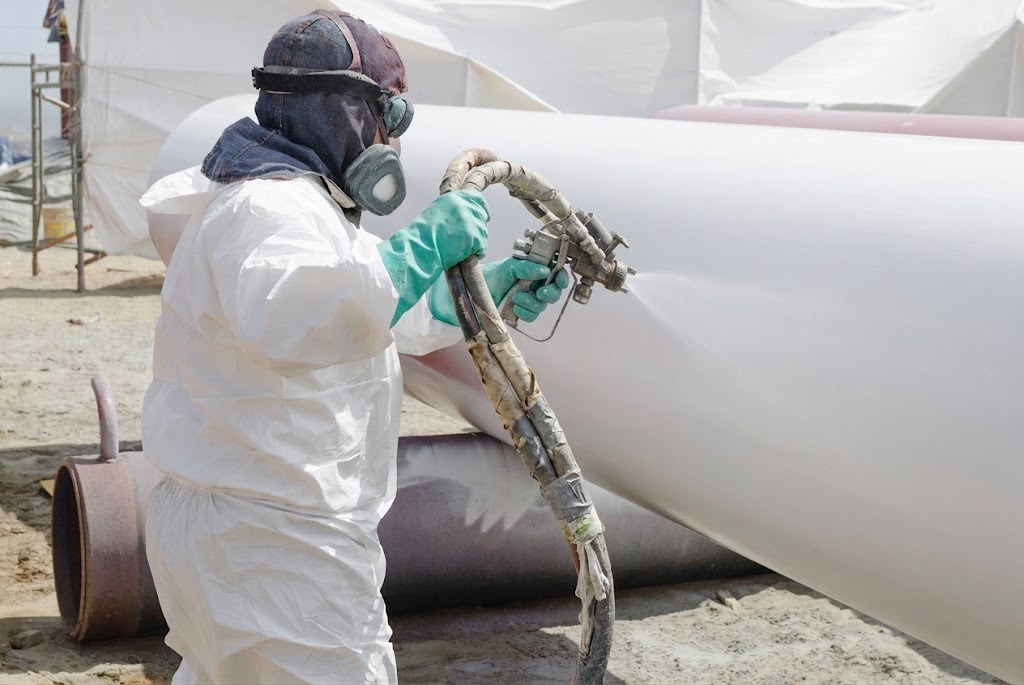
It will yellow outdoors — and there is a twelve hour window to deal with it.
HardCoat is an aromatic chemistry, and the data sheet is blunt about what that means: it will tend to yellow or darken and will go flat after UV exposure. It ships clear or neutral, with custom colors available and pigment added to Side B. If the finished piece lives outdoors and the color matters, the answer is an aliphatic polyurethane or polyurea topcoat — and that topcoat needs to go on within twelve hours of application. Plan the sequence before the shape leaves the booth, because after twelve hours the conversation gets harder.
- Supplied clear or neutral; custom colors available on request
- Pigment is always added to Side B, never Side A
- Will yellow, darken and go flat under UV — aromatic chemistry
- Topcoat within twelve hours with an aliphatic system for a colorfast finish
- Structurally unaffected by UV; this is an appearance issue, not a performance one
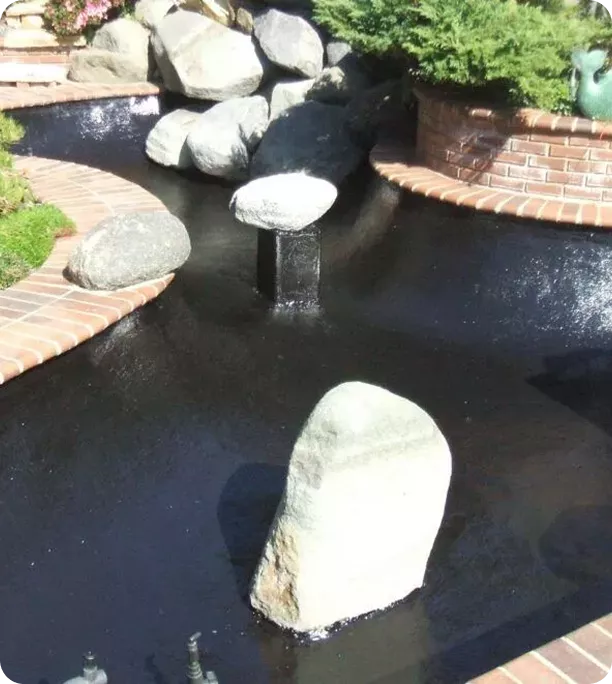
Where HardCoat earns its keep.
The published use list is an unusual mix — these are the places applicators put it most.
Architectural shapes and theming
Carved facades, themed rockwork, caves and feature walls. The hardest coating we make, over the lightest substrate there is.
Decorations and props
Props, set pieces, display work and signage. Excellent flow and appearance, low shrinkage, and finished fast enough to run a production schedule around.
Steel coating
Steel is on the published use list too. Around 3,700 psi tensile and 450 pli tear, with excellent thermal stability across a −20 to 250°F service range.
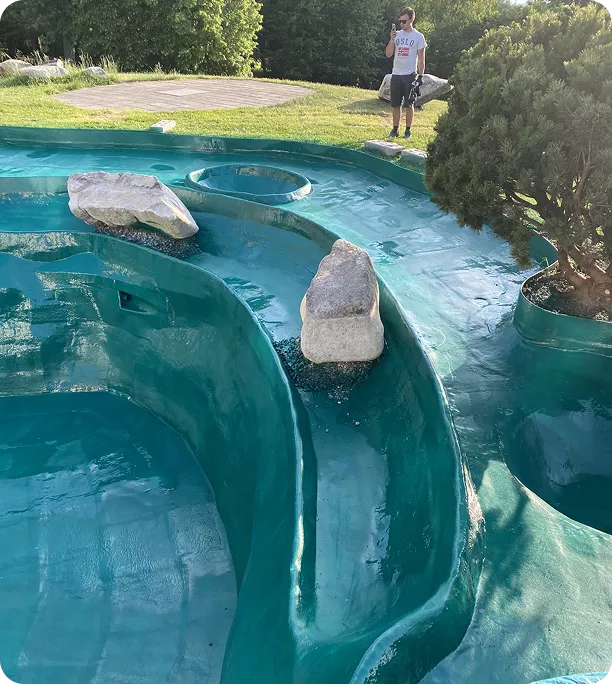
Water features and rockwork
Artificial rockwork, fountains and feature pools where the shape is foam or shotcrete and the surface has to take hands, feet and weather.
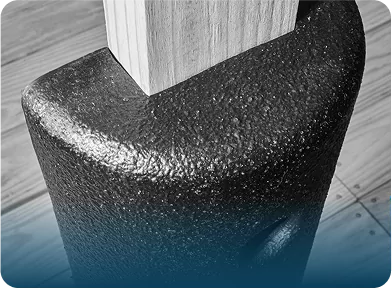
Dock flotations and bumpers
Dock floats and bumpers built on foam cores. Hard, seamless and impact resistant in the cold, which is when docks take their worst knocks.
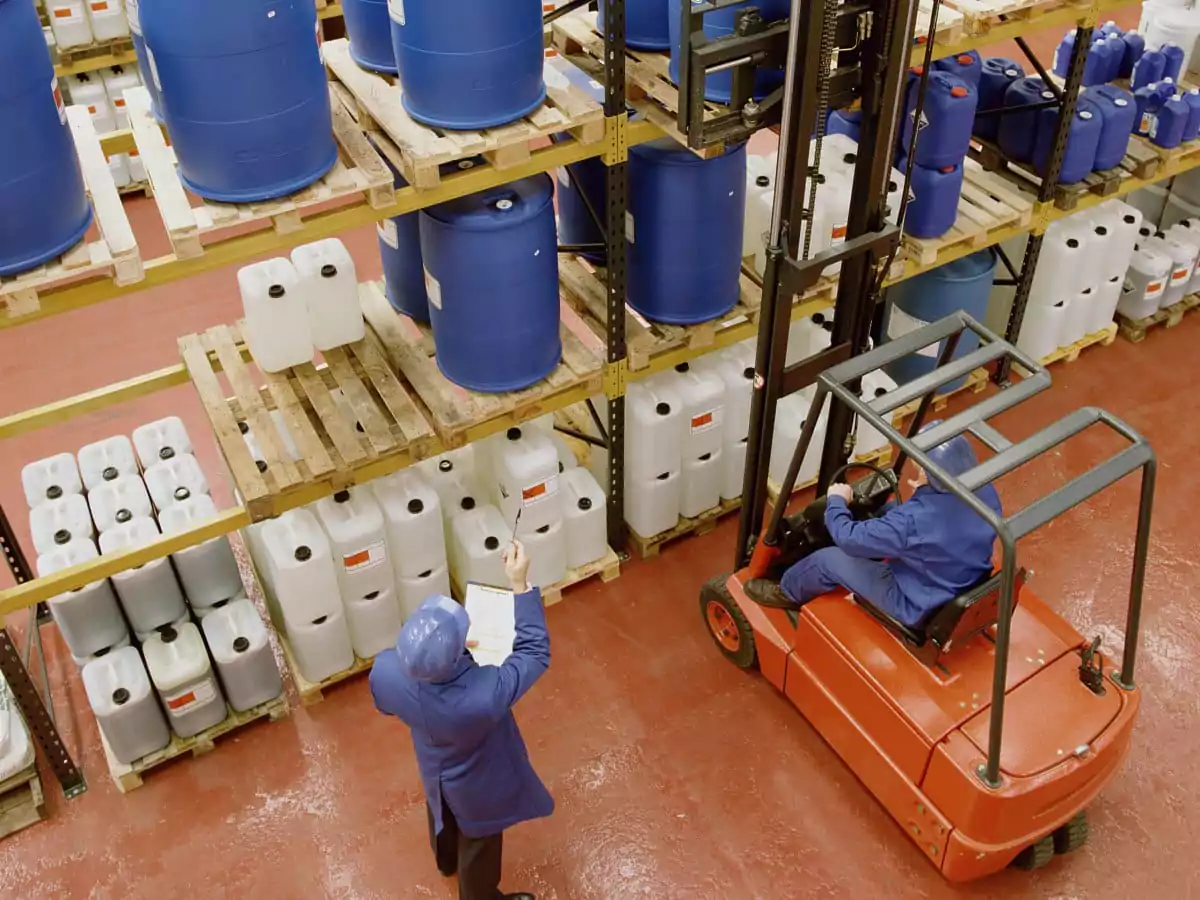
Wood pallets, crates and cabinets
Pallets, crates, cabinets and plywood fixtures. One hard shell instead of a sealer-and-paint system, and it meets USDA criteria.
What to expect from the film.
Typical values, rounded so you can size the product up quickly. Filter by what you care about, search for a property, or flip the sheet to metric.
No published property matches that search.
These are typical, rounded values obtained on ArmorThane equipment and parameters — they are here to give you a feel for the product, not to specify a job. Exact published figures, tolerances and test conditions are on the current HardCoat technical data sheet; ask us and we will send it. Different spray equipment and parameters will affect these properties, so applicators should run their own testing for a given job. HardCoat is for commercial use only and should only be applied by trained personnel.
How a HardCoat job actually goes down.
The short version of the data sheet, in the order a crew does it.
- 01
Prepare the substrate
Coating performance and adhesion are directly proportional to surface preparation, and most coating failures trace back to it. Everything has to come off: dust, dirt, oil, grease, rust, corrosion. On a substrate that has been in service, consider absorption as well — foam and wood both take things up in ways steel does not.
- 02
Precondition both drums and fit the desiccants
Bring Side A and Side B to 70–90°F (21–32°C) before you spray, and fit a desiccant device to both containers while they are in use. Do not open a drum until you are ready to use it.
- 03
Power-agitate Side B and pigment it if needed
Mix Side B with air-driven power equipment until the mixture and the color are homogeneous. HardCoat ships clear or neutral; any pigment goes into Side B, never Side A. Side B is the thicker side on this product, so give it time.
- 04
Check the surface against the dew point
Surface temperature needs to be at least 5°F (3°C) above the dew point, the same as the rest of the range.
- 05
Spray hot, at 2,000 psi or better
Minimum 2,000 psi with material above about 150°F (65°C), through a heated 1:1 plural-component rig such as the ArmorThane HighLine series. Hold pressure and temperature throughout, and work in smooth multidirectional passes for even thickness and appearance.
- 06
Decide about the topcoat before the clock runs out
If the piece lives outdoors and the color matters, an aliphatic polyurethane or polyurea topcoat has to go on within twelve hours of application. Build that into the schedule rather than discovering it the next morning.
The chemistry is only half of what you get.
ArmorThane makes the coating, builds the plural-component rig that sprays it, trains your crew hands-on and certifies them, and answers the technical line afterwards. No franchise fees, no royalties, no territory you have to buy. Applicators have come first here since 1989.
- Equipment package matched to the work you want to take on
- Hands-on training and applicator certification
- Technical support for the life of the business
- Applicators in more than 50 countries
HardCoat, answered.
How is HardCoat different from the rest of the range?
Hardness, and the substrate it is aimed at. Most ArmorLine products sit around 40 to 50 Shore D with 380 to 450% elongation — elastomers that move with concrete and steel. HardCoat is about 75 Shore D with roughly 40% elongation, which makes it a rigid shell rather than a flexible membrane, and it is written for EPS and wood rather than for hard substrates. If your job needs a coating that stretches, this is the wrong one.
Will it really hold up on carved foam?
That is the application it was designed around. The data sheet describes plastic shell-like protection for delicate foams and EPS, and the three things that matter on a carved shape are all addressed: low shrinkage so the detail is not pulled, a two to four second pot life so it holds on verticals and overhangs rather than sagging, and impact resistance rated in cold temperatures. On a themed facade or a prop, the coating is the surface the public actually touches.
Does it yellow?
Yes. It is an aromatic chemistry, and the data sheet states plainly that it will tend to yellow or darken and will go flat after UV exposure. That is appearance, not performance — the shell is structurally fine outdoors. If the color matters, topcoat it with an aliphatic polyurethane or polyurea within twelve hours of application.
What happens if I miss the twelve hour topcoat window?
Call us before you spray anything else. Twelve hours is what the data sheet specifies for intercoat adhesion with an aliphatic topcoat, and past it the surface needs assessing rather than assuming. The technical department would far rather talk it through than look at a delaminated topcoat later.
What color does it come in?
Clear or neutral as standard, with custom colors available on request. Any pigment goes into Side B — never Side A. If you are matching a specified color on a themed build, talk to us early, because the aliphatic topcoat is usually where the final color actually lives.
Why is Side B thicker than Side A on this product?
It just is — around 160 cps against Side A's 90 at spray temperature, which is the reverse of most of the range. Worth knowing because it affects how the rig is set up and balanced. Precondition both sides to 70–90°F and hold material temperature above 150°F and it behaves.
Can I use it on concrete floors?
You can put it on steel and many other surfaces, but a 75 Shore D coating with 40% elongation is not what you want on a concrete floor that moves — a crack in the slab will telegraph straight through it. For floors and containment, ArmorShield or the HighLine 510 family are the right call. Tell us the job and we will point you at the right product rather than the nearest one.
How much material will the job take?
The data sheet says HardCoat may be applied at any rate to achieve the desired thickness and does not publish a theoretical coverage figure. On carved foam, consumption depends heavily on how open the surface is and how much the first pass soaks in, so tell us the substrate and the area and we will work the estimate with you.
What do we need to know before handling it?
This product contains isocyanate and curative material. Read the Safety Data Sheets for both sides before anyone touches a drum — regulations require that every employee be trained on the SDS for the chemicals they work around. Wear a fresh-air respirator, protective gloves and clothing, and eye and face protection. Both sides are listed as not regulated for shipping, which is about transport, not about handling.
Tell us what you need to make hard.
Describe the shape, the substrate, where it lives and what it has to survive. An ArmorThane specialist will come back with the right chemistry, the rig that sprays it and what a startup actually costs.
- Equipment package matched to your applications
- Hands-on training and applicator certification
- Topcoat and color guidance for exterior work