Anti Slip Paint: Grit, Grip & What Lasts
How anti slip paint works, how much grit to add, what slip-resistance numbers actually mean, and when a painted floor needs to step up to textured polyurea.
Start a protective coatings business
Spray protective coatings for a living.
ArmorThane sets you up to do this work, and you own the business. We make the chemistry, build the rigs, train you hands-on and answer the phone when a job gets difficult. You pay no franchise fee and no royalties. It has been that way since 1989.




- $0
- franchise fees or royalties
- 35+
- years in business
- 50+
- countries with applicators
- 24/7
- technical support
Anti slip paint is any floor or deck paint with a texture built in or added, so shoes and bare feet keep traction when the surface is wet. It is the cheapest way to make concrete steps, ramps, pool decks, boat decks and shop floors safer, and it fails in predictable ways: the grit sinks to the bottom of the can, the texture wears smooth in the walking path, or it is so coarse nobody can mop it. We make slip-resistant polyurea for the jobs paint cannot handle, and we have also seen plenty of good paint jobs. This guide covers both, with numbers.
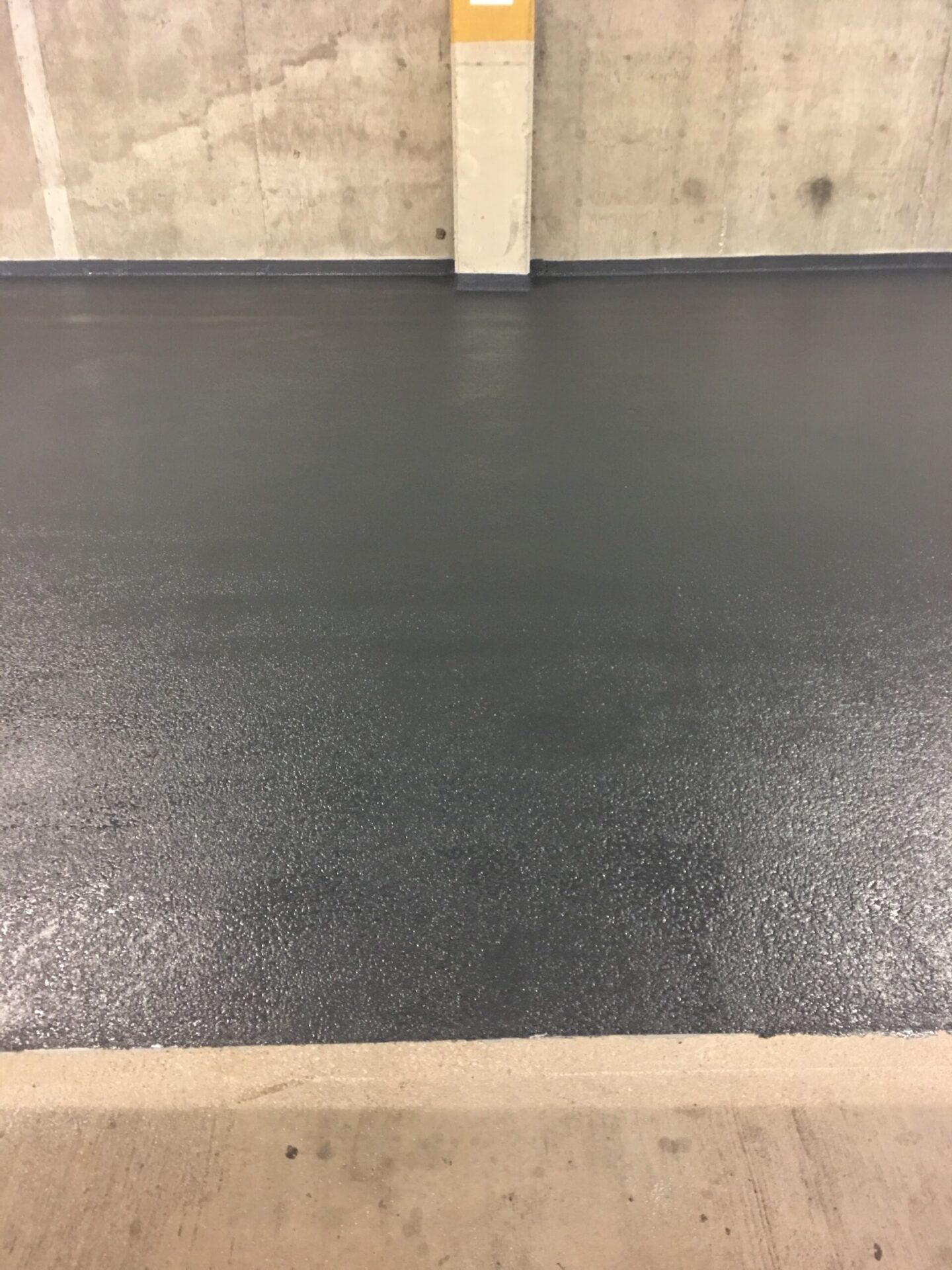
Pick the texture to match the hazard: a fine polymer additive (such as SharkGrip at one 3.2 oz container per gallon) for barefoot and interior areas, aluminum oxide at about 6–8 oz per gallon for shoes and wet outdoor surfaces, and a broadcast coarse aggregate or high-build textured coating for oily floors, ramps and boat decks. Mix grit into the final coat only and keep stirring. For level interior floors, the ANSI A326.3 minimum is 0.42 wet DCOF; exterior wet areas generally need more.
How anti slip paint actually creates grip
A smooth paint film fills the pores and micro-texture of concrete or wood, and a thin layer of water then acts like a lubricant between the floor and a shoe sole. Anti-slip paint puts peaks back on the surface that poke through that water film. There are four ways to do it:
Polymer beads stirred in
Lightweight plastic particles that stay suspended in thin paints and sealers. H&C SharkGrip, a common example, is a micronized polymer dosed at one 3.2 oz container per gallon, mixed into the final topcoat. The maker describes the result as slip-resistant but not non-skid because the particles are small. Comfortable underfoot and easy to mop.
Aluminum oxide stirred in
Hard, angular mineral grit. Duraamen doses its aluminum oxide at 6 to 8 oz per gallon of topcoat; Sherwin-Williams lists #54, #36 and #24 grades for resinous floors, coarser as the number drops. More bite than polymer and it lasts longer under boots, but it is heavy, settles fast and is rough on bare feet.
Aggregate thrown into wet paint
Sand, quartz or aluminum oxide scattered into a wet coat, then locked in with another coat. This gives the most aggressive and most even texture, which is why industrial floors and ramps are done this way. Harder to clean, and it takes skill to get it uniform.
Thick textured coatings
Rolled or sprayed coatings that create texture from their own body. Marine non-skid KiwiGrip goes on 2–3 mm thick at about 20 sq ft per liter. Spray-applied polyurea with aggregate, such as our SureGrip, sits at the top of this category for impact, flexibility and wear.
How slippery is too slippery? DCOF in plain words
Slip resistance is measured as a coefficient of friction: the ratio of the force needed to slide a test foot to the weight pressing it down. The current US method for hard flooring is dynamic coefficient of friction (DCOF), usually measured wet with a BOT-3000 tribometer under ANSI A326.3. It is written for tile, but resinous flooring manufacturers such as Sherwin-Williams use the same categories to talk about coatings.
- Interior, dry and interior, wet (level): at least 0.42 DCOF.
- Interior, wet plus (showers, commercial kitchens): manufacturer-declared, generally 0.50 or more.
- Exterior, wet (pool decks, outdoor steps): manufacturer-declared, generally 0.55 or more.
- Oils and greases: manufacturer-declared, generally 0.55 or more.
Two myths worth killing. The 0.50 figure people quote as an OSHA requirement came from a 1970s study and was never an OSHA standard. And the old 0.60 static coefficient (ASTM C1028) has been withdrawn and discredited. The ADA Standards require surfaces to be "stable, firm, and slip resistant" but, according to the U.S. Access Board, set no minimum number because no consensus test exists.
Choose the right anti slip paint texture for your floor
The most common mistake we see is putting the same grit on everything. A coarse aluminum oxide that is perfect for a loading ramp will shred bare feet on a pool deck and trap dirt in a kitchen. This selector weighs the wet condition, footwear, slope and cleaning routine.
Anti-slip texture selector
Maps your conditions to an ANSI A326.3 use category and a texture method. Coarseness steps up for exterior wet, oil, slopes and work boots, and down for bare feet and frequent mopping.
Anti-slip methods side by side
Click a heading to sort. Coverage and dose figures come from the named product's own literature; ratings in the comfort and cleaning columns are our field experience.
| Method | Example dose / coverage | Grip level | Barefoot comfort | Ease of cleaning | Best for |
|---|---|---|---|---|---|
| Polymer additive | 3.2 oz per gal (SharkGrip) | Light | Good | Easy | Porches, interior wet areas, sealed pavers |
| Aluminum oxide additive | 6–8 oz per gal (Duraamen) | Medium | Poor if coarse | Moderate | Garages, shop floors, steps in shoes |
| Premixed abrasive floor coating | 400–500 sq ft/gal (SparkleTuff) | Medium | Fair | Moderate | Commercial entries, bathrooms |
| Broadcast aggregate | Broadcast to refusal per system | High | Poor | Hard | Ramps, loading docks, oily floors |
| High-build textured coating | About 20 sq ft per liter (KiwiGrip) | High | Fair | Moderate | Boat decks, docks |
| Spray polyurea + aggregate | Applicator-specified | High | Fair to good | Moderate | Pool decks, stairs, ramps, trailers, boats |
Anti slip paint calculator: paint, grit and cost
Grit goes in the final coat only. Both SharkGrip and Duraamen say so, and it is good practice anyway: base coats build film and adhesion, the top coat carries the texture. The calculator splits your paint into base and final coats and doses the additive on the final coat. Enter the coverage rate printed on your paint's label or data sheet; it varies a lot between thin acrylic porch paints and high-solids epoxies.
Paint and anti-slip additive
Paint gallons = area × coats ÷ label coverage. Additive = final-coat gallons × dose (3.2 oz/gal polymer, 6–8 oz/gal aluminum oxide). High-build textured coatings use about 20 sq ft per liter (KiwiGrip).
Check a slip test result against ANSI A326.3
If a safety consultant or flooring rep has run a BOT-3000 test on your painted floor, this checker tells you which ANSI A326.3 category the reading meets. For the manufacturer-declared categories we use the general values Sherwin-Williams cites (0.50 interior wet plus, 0.55 exterior wet and oil/grease).
Wet DCOF result checker
Compares your measured wet DCOF with the threshold for the use you select and lists every category it clears. Margin = measured − threshold.
How to apply anti slip paint so the grip lasts
Strip what will not hold
Anti-slip paint is only as good as its bond. Scrape loose paint, degrease garage and shop floors, and open up smooth or sealed concrete with an etch or grinder. Glossy old coatings need sanding to dull.
Prime the substrate
Bare concrete, wood and metal each need the primer the paint maker specifies. Rust on steel treads must be removed or converted first, or the whole film lifts with it.
Base coat without grit
Roll the first coat smooth. It seals the surface and gives the textured coat something even to sit on.
Final coat with grit, stirred constantly
Mix the additive in at the label dose and stir every few minutes, or the grit sinks and you end up with a slick start and a gritty finish. Roll in one direction at the end of each section so the texture lies evenly.
Or broadcast
For maximum grip, scatter aggregate into the wet coat until it stops sinking in, let it cure, sweep off the loose grit and lock it in with a topcoat.
Respect the cure
Follow the data sheet. KiwiGrip, for example, asks for 50–90°F, allows bare feet after 12–24 hours, soft-soled shoes on day two and hard soles on day three. Keep furniture and carts off longer.
When anti slip paint is not enough
Paint is a thin film. On a porch that sees a few people a day it can hold its texture for years. In the walking path of a commercial pool deck, a loading ramp or a boat that gets hosed down daily, the peaks wear off and the film chips at edges and nosings. Those are the places we would step up to a thicker system:
Porches, steps, garage floors
Light to moderate traffic, shoes, occasional water. A good primer, a polymer or fine aluminum oxide additive and a recoat every few years. See our porch paint guide.
Residential pool decks
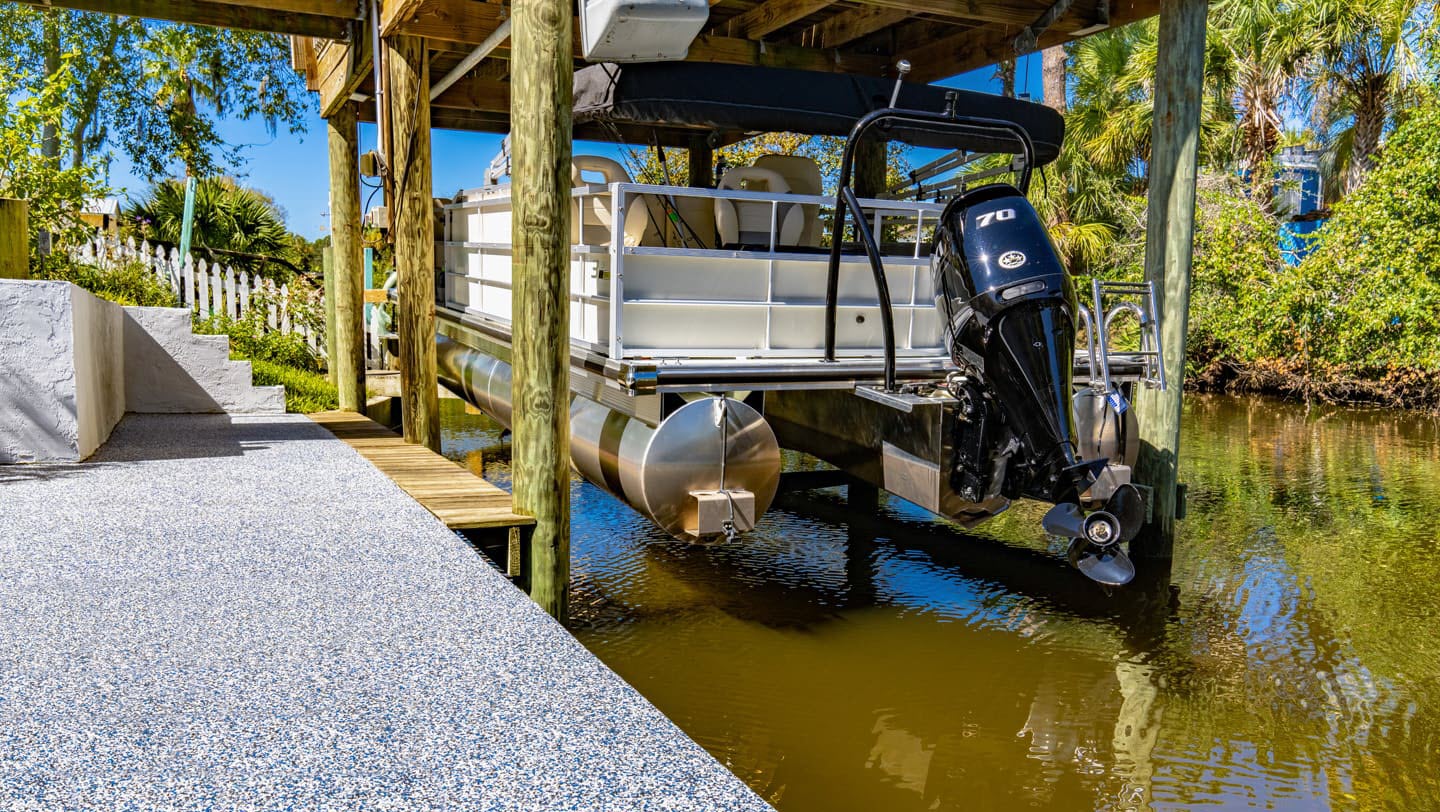
Bare feet, chlorinated water and hot sun. Paint works but needs regular recoats. A textured, cooler deck system often makes more sense; compare cool deck coating and pool deck resurfacing.
Ramps, docks, commercial stairs
Constant wet traffic, carts and impact. Spray-applied polyurea with texturing aggregate builds a thick, flexible, bonded layer. See our non-slip coatings and safety coatings.
Boats, trailers, metal treads
Flexing substrates crack rigid paint. Our SureGrip formula has the highest elongation and the highest coefficient of friction of any ArmorThane polyurea; it is formulated for metal and concrete. On boats and trailers it is the flexibility that matters.
Slip-resistant polyurea for decks, ramps and stairs.
Certified ArmorThane applicators spray textured, seamless polyurea on pool decks, boat decks, ramps and metal treads. Tell us the surface, the traffic and how wet it gets.
Contractors: become an applicator →
Anti slip paint questions
What is the best anti slip paint for outdoor concrete steps?
A primed, exterior-rated floor paint or epoxy with aluminum oxide in the final coat is the usual answer for steps used in shoes. Put the grit on the treads and nosings, where feet land. For heavy commercial use, a spray-applied textured polyurea lasts longer.
Can I add sand to paint to make it non-slip?
You can, and people have for decades, but sand is heavy, sinks fast and its rounded grains give less bite than angular aluminum oxide. Purpose-made polymer or aluminum oxide additives stay suspended better and wear more evenly.
How much anti-slip additive per gallon?
Follow the additive label. Examples: H&C SharkGrip calls for one 3.2 oz container per gallon; Duraamen's aluminum oxide is typically 6 to 8 oz per gallon. Both go in the final coat only.
Is anti slip paint safe for bare feet around a pool?
Use a fine polymer additive or a coating designed for barefoot areas. Coarse aluminum oxide grips well but is abrasive on skin. Exterior wet areas generally call for a wet DCOF of about 0.55 or more under ANSI A326.3 categories.
Does OSHA require a 0.5 coefficient of friction?
No. The 0.5 figure came from a 1970s study and has never been an OSHA standard. The ADA also sets no number. The current reference for hard flooring is ANSI A326.3, with 0.42 wet DCOF for level interior floors.
How long does anti slip paint last?
It depends on traffic far more than on the label. Angi notes acrylic enamels typically need recoating every couple of years and epoxy paints last about 5 to 10 years. KiwiGrip reports 10 years or more on lightly used boat decks and about 5 years in heavy-use areas.
Will anti slip paint make the floor hard to clean?
Coarser texture traps more dirt. Fine polymer additives mop easily; broadcast aggregate floors need a stiff deck brush or scrubber. Pick the finest texture that meets your grip target.
Can anti slip paint go on metal or wood?
Yes, with the right primer. Wood and thin metal flex, so a flexible coating holds up better than a rigid one. That is where elastomeric options such as soft polyurea outperform standard floor paint.
Sources
- Sherwin-Williams, A Guide to Slip Resistance for Resinous Flooring (ANSI A326.3 categories): industrial.sherwin-williams.com/.../guide-to-slip-resistance-resinous-flooring
- Archtoolbox, Floor Slip Resistance: SCOF vs DCOF: archtoolbox.com/floor-slip-resistance-scof-vs-dcof
- U.S. Access Board, Guide to the ADA Standards, Chapter 3 Floor and Ground Surfaces: access-board.gov/ada/guides/chapter-3-floor-and-ground-surfaces
- National Safety Council Injury Facts, Falls to the Same Level: injuryfacts.nsc.org/work/safety-topics/falls-same-level
- H&C SharkGrip Slip-Resistant Additive product sheet: butterfieldcolor.com/.../shark.pdf
- Duraamen, Anti-Skid Additive: duraamen.com/shop/accessories/anti-skid-additive
- KiwiGrip FAQ: pyiinc.com/KiwiGrip/kiwigripfaq.html
- Safety Direct America, DIY abrasive anti-slip floor coatings: safetydirectamerica.com/diyabrasivefloorcoatings
- Angi, cost to paint a pool deck: angi.com/articles/cost-to-paint-pool-deck.htm
Start your coatings business with ArmorThane.
Tell us what you want to spray and where you are. An ArmorThane specialist will walk you through the equipment, chemicals, training and startup cost for the work you want to do.
- Equipment package matched to your applications
- Hands-on training and applicator certification
- Technical support once you are spraying