Rock Chip Protection: What Actually Stops Chips & Where
Paint protection film, ceramic coatings and textured polyurea compared by thickness, real-world chip resistance and 2026 cost, with tools to plan coverage and check whether film pays for itself.
Start a protective coatings business
Spray protective coatings for a living.
ArmorThane sets you up to do this work, and you own the business. We make the chemistry, build the rigs, train you hands-on and answer the phone when a job gets difficult. You pay no franchise fee and no royalties. It has been that way since 1989.




- $0
- franchise fees or royalties
- 35+
- years in business
- 50+
- countries with applicators
- 24/7
- technical support
Rock chip protection comes down to one problem: your factory paint is about a tenth of a millimeter thick, and a stone flung off a tire at highway speed carries more than enough energy to punch through it. Anything you put on top either absorbs that hit or it doesn't. We have been spraying polyurea on trucks, Jeeps, trailers and equipment since 1989, and we see the same mistakes every season: people buying a ceramic coating to stop chips, wrapping the hood while the rocker panels get sandblasted, or putting off touch-ups until the chip turns into rust. This guide explains which products actually stop chips, where each one belongs on the vehicle, what they cost, and two tools to size your exposure and check whether film pays for itself.
For painted surfaces you want to keep glossy, clear paint protection film (PPF) is the only product that reliably stops rock chips: it is roughly 6 to 10 mils thick and premium films are tested by blasting gravel at them. Ceramic coatings, waxes and sealants do not stop chips. For rocker panels, lower doors, flares and bumpers on trucks, Jeeps and work vehicles, a textured polyurea coating at 60 mils or more takes far more abuse than film and costs less per square foot. Most daily drivers are well served by full-front PPF; vehicles on gravel roads should add protection low on the body, plus mud flaps.
Why rock chips happen, and where they land
A factory finish is a stack of thin layers: phosphate pretreatment, electrocoat primer, primer surfacer, basecoat color and clearcoat. Together they average roughly 100 microns. Axalta's guidance to collision shops puts typical OEM film builds between 3.5 and 6.5 mils, and anything well above that usually means the panel has been repainted. That is not much material between a sharp piece of gravel and bare steel or aluminum.
Chips are not random. Stones are picked up and thrown by tires, so damage concentrates in a few predictable places:
- Leading edges: the front edge of the hood, the front bumper, headlight lenses, mirror caps and the A-pillars catch what the vehicle ahead throws back.
- Behind your own front tires: rocker panels, the bottom of the doors and the leading edge of the rear wheel openings get hit by debris your own tires throw. On lifted trucks and Jeeps with aggressive tread, this zone often looks worse than the hood.
- Ahead of the rear tires on pickups: the lower bed sides and rear quarter panels take spray from the front wheels.
- The front of anything you tow: trailer tongues, the front wall of campers and the leading edge of boat hulls.
Road debris is a safety problem as well as a paint problem. The AAA Foundation for Traffic Safety found that debris on U.S. roads was involved in more than 200,000 police-reported crashes from 2011 to 2014, about 39,000 injuries and roughly 500 deaths, and that about two-thirds of those crashes involved items falling from vehicles because of poor maintenance or unsecured loads. Gravel shed from dump trucks and unsecured loads is part of the same story.
How chip resistance is tested
The auto industry measures chip resistance with a gravelometer, defined in SAE J400 and ASTM D3170. A coated 4 by 12 inch panel is blasted with a measured charge of water-worn road gravel, about 300 stones per pint, using compressed air, and then rated by counting chips by size. A rating such as B6 means 10 to 24 chips in the 1 to 3 mm range. Premium film makers publish results from tougher versions of the test: XPEL's data sheet for Ultimate Plus 10 reports no detrimental effect after 3 pints of gravel at 70 psi and a 45 degree angle at -20°F. Cold matters, because most coatings get more brittle as temperature drops, which is exactly when sand and grit are on the road.
Rock chip exposure planner
Not every vehicle needs the same coverage. A sedan that commutes on clean interstate needs less than a lifted truck on a gravel county road. Tell the planner how and where you drive and it scores your exposure, lists the zones that will take the most hits, and suggests a coverage level. The scoring is our own rule of thumb from years of looking at chipped vehicles, not a lab measurement, so treat it as a starting point for a conversation with an installer.
How much rock chip protection does your vehicle need?
Score out of 100 built from miles driven, share of gravel and highway miles, vehicle type and a few risk factors. Higher scores mean more zones need physical protection, not just a coating.
Rock chip protection options compared
The single most useful number in this table is thickness. Chip resistance comes from having enough tough, elastic material to absorb the stone's energy before it reaches the paint. A coating measured in microns cannot do that, no matter what the marketing says. Click any column heading to sort.
| Option | Thickness (mils) | Stops rock chips? | Typical installed cost | Best use |
|---|---|---|---|---|
| Ceramic coating | 0.04–0.08 (1–2 µm) | No | $900–$2,500 (sedan) | Gloss, easier washing, UV and chemical resistance |
| Factory paint alone | 3.5–6.5 total | No | Included | The thing you are trying to protect |
| Rocker panel chip guard (aerosol) | 2–3 per two coats | Some, low on the body | Body-shop product, sold by the can | Restoring the factory textured coating on rockers and valances under paint |
| Paint protection film, partial front | 6–10 | Yes, where installed | $900–$1,500 | Bumper, headlights, mirrors, front of hood and fenders |
| Paint protection film, full front | 6–10 | Yes, where installed | $1,800–$2,800 | Whole hood, fenders, bumper, mirrors on daily drivers |
| Paint protection film, full body | 6–10 | Yes | $5,500–$8,500+ | High-value paint you want to keep glossy everywhere |
| Textured polyurea coating | 60–100 typical undercoat build | Yes, also resists gouges | $5–$10 per sq ft | Rockers, lower doors, flares, bumpers, trailers, work trucks |
What the table does not show
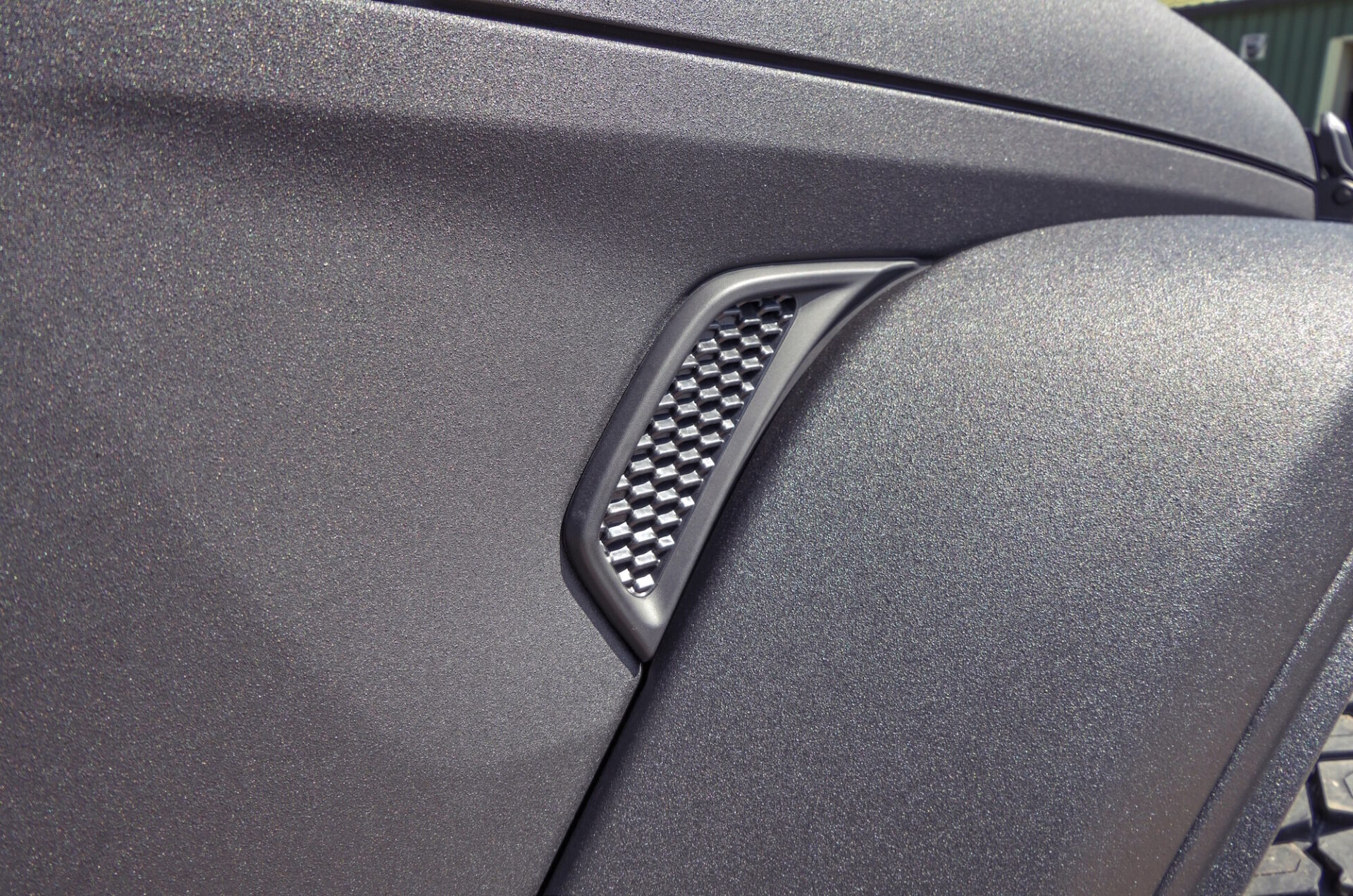
Film is clear; polyurea is not. PPF keeps the factory color and gloss, self-heals light swirls on premium grades, and comes off later if you want it to. Polyurea is a textured, colored finish. It can be tinted to blend or chosen in black to match trim, but it changes the look of whatever it covers. That is why we steer people to film for hoods and fenders on a nice car, and to polyurea for the parts of a truck or Jeep that live in the line of fire.
Rocker panel chip guard is a factory-style repair product. 3M's rocker panel coating builds 2 to 3 mils in two coats, goes over primer and under topcoat, and is meant to reproduce the textured coating carmakers already put low on the body. It adds some resilience, but it is a thin layer and should not be confused with a protective liner.
Windshields are their own category. Windshield protection films exist, but the product we checked carries a one-year warranty, and chip repair is cheap: a 2026 cost guide puts it around $60 to $150 per chip, often covered by comprehensive insurance, versus $250 to $800 for a replacement before any camera recalibration. Get windshield chips repaired quickly so they do not run into cracks.
Where polyurea beats film for rock chip protection
Film is excellent on smooth, visible panels. It struggles in the zones that take the most punishment on trucks and off-road vehicles: complex lower panels, flares, bumpers, steps and the bottom edge of doors where mud, sand and gravel scrub constantly. Edges lift, dirt gets under them, and once film is torn the area under it is unprotected. These are the zones where we spray polyurea instead.
Six to sixteen times thicker than film
Our truck undercoating guide puts a typical polyurea build at 60 to 100 mils in one pass. That much elastic material soaks up impacts that would cut through a 6 to 10 mil film, and it shrugs off the scraping that comes with trails, job sites and gravel driveways.
Stretches instead of cracking
Pure polyureas commonly test at several hundred percent elongation. One published bedliner data sheet lists 400 ± 50% elongation and 3,000 psi tensile strength under ASTM D412, which is why a good liner dents and rebounds instead of chipping like paint.
No edges to lift
Spray-applied polyurea wraps around flanges and into seams. There is no film edge for grit to pry up, and small cuts stay local instead of spreading.
It changes the look
Polyurea is a textured finish. Aromatic polyureas can chalk and shift color in sun, so on exposed body panels we top them with a UV-stable topcoat. If you want factory gloss on every panel, use film there.
Typical polyurea rock chip jobs we see from our applicators: rocker panels and lower doors on half-ton and heavy-duty pickups, fender flares and bumpers on Jeeps, the front wall and tongue of overland and utility trailers (covered in our trailer undercoating guide), and full-body coatings on work trucks and hunting rigs where nobody cares about gloss but everyone cares about scratches. For the coating itself, see ArmorLiner polyurea, finished with UV TopCoat where it sees sun. For trailers built for rough roads, our overland trailer coatings page shows what full coverage looks like.
PPF vs. chip repair: does film pay for itself?
The honest way to decide on film is to compare its price with what you would otherwise spend fixing chips. Count the chips on your current vehicle's hood and bumper, divide by its age, and use that as your chips per year. The calculator does the rest.
Will paint protection film cost less than repairing chips?
Film cost uses 2026 installed price ranges for a typical sedan or crossover. Repair cost = chips per year x years x cost per chip (typical $25–$120, average about $60). Break-even shows how many chips per year make the film the cheaper choice.
Two things the math leaves out. First, most people never fix every chip, so the real cost of skipping film is often a worn-looking front end at trade-in rather than a repair bill. Second, on steel panels in salt states, an unrepaired chip can turn into rust that the factory corrosion warranty will not cover. If either of those matters to you, lean toward film even if the break-even looks close.
Tired of chipped rockers? Armor them in polyurea.
Certified ArmorThane applicators spray textured polyurea on rocker panels, lower doors, flares, bumpers and trailers, then top it with a UV-stable finish. Tell us the vehicle and the zones and we will connect you with a shop near you.
Contractors: become an applicator →
How we would protect a new vehicle from rock chips
Inspect and correct the paint first
Film and coatings lock in whatever is under them. Have the installer check for existing chips, dealer-lot scratches and swirl marks, and correct them before anything goes on. Touch up any chip that reaches primer or metal.
Film the front end
For a daily driver, full-front PPF on the hood, fenders, bumper and mirrors is the sweet spot. Partial front is fine for low-mileage cars. Ask what warranty the film carries and whether edges are wrapped or cut on the car.
Deal with the lower body
On pickups, SUVs and anything that sees gravel, protect the rockers, lower doors and the leading edge of the rear wheel openings. Clear film works on cars; on trucks and Jeeps, textured polyurea on these zones lasts far longer.
Add mud flaps
Splash guards behind the front tires reduce what your own tires throw at the rockers and what you throw at the car behind you. Several states require them on large trucks for exactly that reason.
Change how you drive on gravel
More following distance on highways, slower speeds on gravel, and moving over when passing a loaded dump truck all cut chip counts at zero cost.
Keep up with touch-ups
Inspect the front end and rockers every spring and fall. Seal any chip that reaches metal before winter, especially on steel panels.
Rock chip protection questions
What is the best rock chip protection for a car?
Clear paint protection film is the best rock chip protection for painted panels you want to keep glossy. Premium films are 6 to 10 mils thick and tested by blasting gravel at them. For rocker panels and lower body areas on trucks and off-road vehicles, a textured polyurea coating at 60 mils or more takes more abuse than film.
Does ceramic coating prevent rock chips?
No. Ceramic coatings are typically 1 to 2 microns thick, and Ceramic Pro itself says that is far too thin to stop high-impact road debris. Ceramic coatings are good for gloss, UV resistance and easier cleaning. You can put a ceramic coating on top of PPF if you want both.
How much does rock chip protection cost?
A 2026 pricing guide puts installed PPF at about $900 to $1,500 for a partial front, $1,800 to $2,800 for a full front and $5,500 to $8,500 or more for a full body on a typical sedan or crossover. Installed polyurea generally runs $5 to $10 per square foot, so a rocker and lower-door job costs far less than full-body film.
Can PPF stop every rock chip?
No product stops everything. A large or sharp stone at highway speed can still cut film or dent a panel. What good film does is stop the vast majority of small stones that would otherwise chip paint, and it can be replaced panel by panel if it is damaged.
Is a spray-on bedliner good rock chip protection?
On the right panels, yes. A polyurea bedliner material is thick, elastic and seamless, which is why we spray it on rockers, flares, bumpers and full work-truck bodies. It is a textured finish, so it is not the right choice for a gloss hood on a show car.
Do rock chips cause rust?
On steel panels, a chip that reaches bare metal can start rusting, especially where road salt is used. AAA recommends repairing body damage and touching up chips before corrosion starts. Most factory corrosion warranties exclude rust caused by chips, scratches and road debris.
How long does paint protection film last?
Premium films commonly carry warranties around 10 years against yellowing, cracking and peeling. Lower-cost films can look tired much sooner. Lifespan depends on sun exposure, washing habits and how much abrasion the panel sees.
Should I protect my windshield with film?
You can, but windshield film tends to carry short warranties, and windshield chip repair is inexpensive, about $60 to $150 per chip in a 2026 cost guide and often covered by comprehensive insurance. For most drivers, quick chip repair is the better value.
Sources
- Automotive paint layer structure and total thickness: en.wikipedia.org/wiki/Automotive_paint
- SCRS, Recommendations Regarding Paint Film Thickness (Axalta): scrs.com/.../Recommendations-Regarding-Paint-Film-Thickness.pdf
- Ceramic Pro, how to protect a new car's paint from rock chips: ceramicpro.com/how-do-i-protect-my-new-cars-paint-from-rock-chips
- XPEL Ultimate Plus 10 technical data sheet: xpel.com/web-assets/downloads/XPEL-ULTIMATE-PLUS-10-TDS-V1.1.pdf
- Intertek, chip resistance ASTM D3170 / SAE J400: intertek.com/polymers-plastics/testlopedia/chip-resistance-astm-d3170
- ULTRASHIELD, PPF cost guide (2026): ultrashieldprotection.com/guides/ppf-cost
- Titan Coatings, ceramic coating price (2026): titancoatings.us/ceramic-coating-price
- LatestCost, rock chip paint repair cost (2026): latestcost.com/rock-chip-paint-repair-cost
- AAA Foundation for Traffic Safety, crashes involving road debris 2011–2014: aaafoundation.org/research/prevalence-motor-vehicle-crashes-involving-road-debris
- AAA newsroom, road de-icers and vehicle rust damage: newsroom.aaa.com/2017/02/road-de-icers-cause-3-billion-annually-vehicle-rust-damage
- 3M Rocker Panel Coating 08889 product page: 3m.com/3M/en_US/p/d/b40071593
- MIL-SPEC Liner MS0326 polyurea technical data sheet: milspecliner.com/.../MilSpec-MS0326-TDS-2024-.pdf
- Croc Coatings, polyurea coating cost (2026): croccoatings.com/polyurea-coating-costs-explained
- Glass and Auto, windshield chip repair cost (2026): glassandauto.com/cost-guides/windshield-chip-repair-cost
- Colorado Legislative Council, mud flap laws: content.leg.colorado.gov/content/mud-flap-laws
- XPEL windshield protection film: xpel.com/products/windshield-protection-film
Start your coatings business with ArmorThane.
Tell us what you want to spray and where you are. An ArmorThane specialist will walk you through the equipment, chemicals, training and startup cost for the work you want to do.
- Equipment package matched to your applications
- Hands-on training and applicator certification
- Technical support once you are spraying
Rockers and flares getting sandblasted? Armor them in polyurea.
Tell us the vehicle, the zones you want protected and how you drive it. We will connect you with a certified ArmorThane applicator near you.
- Year, make and model
- Zones: rockers, flares, bumpers
- Gravel, trail or highway use
- Color and finish you want