
Best Spray-In Bedliner (2026): Specs That Matter
Polyurea, polyurethane or hybrid? Aromatic or UV-stable? How thick, how grippy, and whose warranty? We make bedliner chemistry, so here’s how to pick the right liner and judge any installer, whatever the brand.
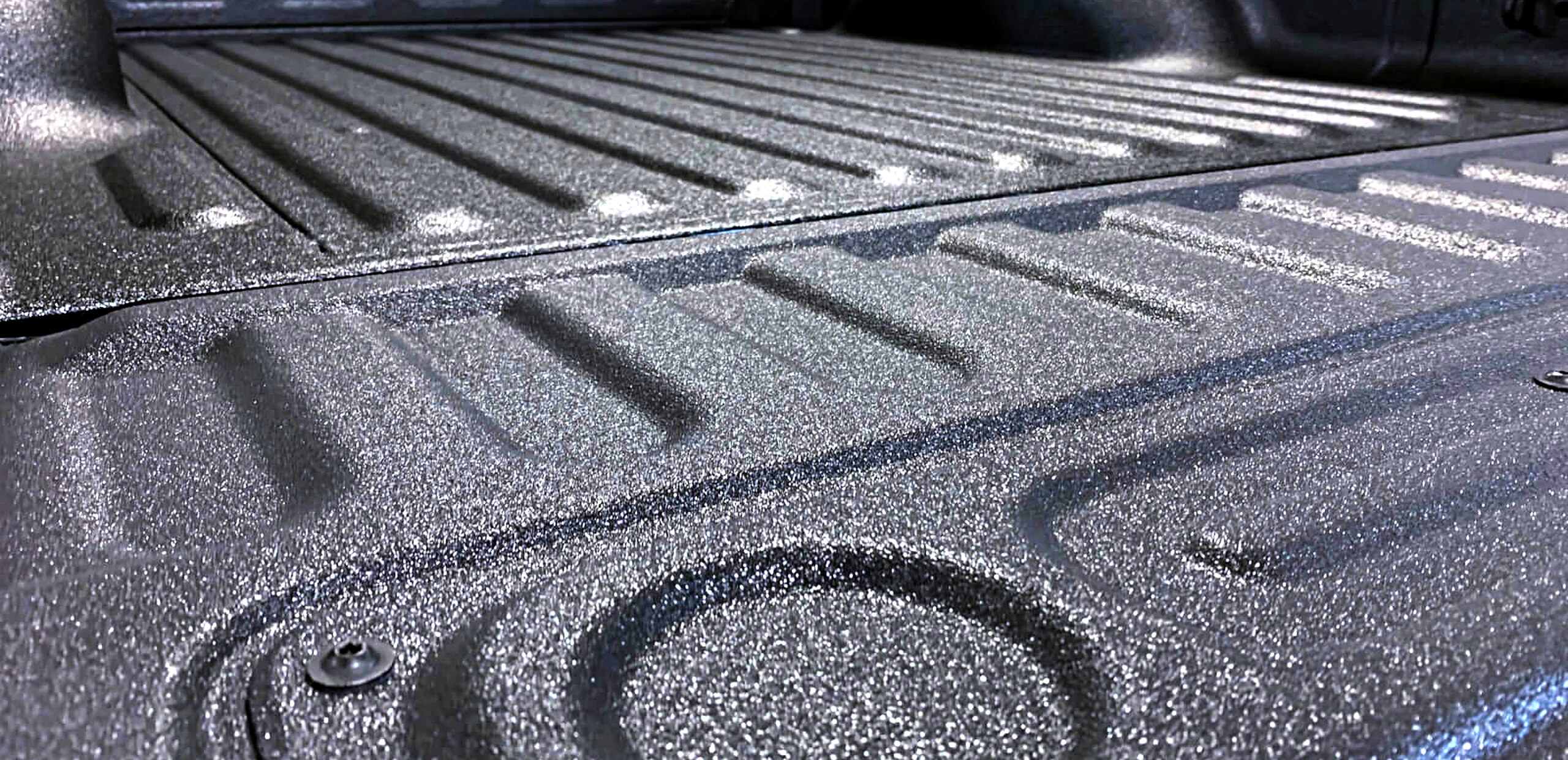
Start a spray-on bedliner business
Spray bedliners for a living.
ArmorThane sets you up to do this work, and you own the business. We make the chemistry, build the rigs, train you hands-on and answer the phone when a job gets difficult. You pay no franchise fee and no royalties. It has been that way since 1989.




- $0
- franchise fees or royalties
- 35+
- years in business
- 50+
- countries with applicators
- 24/7
- technical support
Ask ten truck owners for the best spray-in bedliner and you'll get ten brand names. Ask what's actually in the bed (the chemistry, the thickness, whether it has a UV coat) and most can't tell you. That's the part that decides how a liner looks in year five.
For most trucks, the best spray-in bedliner is a professionally sprayed, high-pressure polyurea or hybrid liner, 80–125 mils thick (heaviest on the floor), with an aliphatic UV topcoat if the truck parks outside. The spec and the installer matter more than the logo: get the product, its data sheet, the thickness and the warranty terms in writing. Leasing, selling soon, or running a fleet? A drop-in may be the smarter buy. Build your spec or score the shops you're considering.
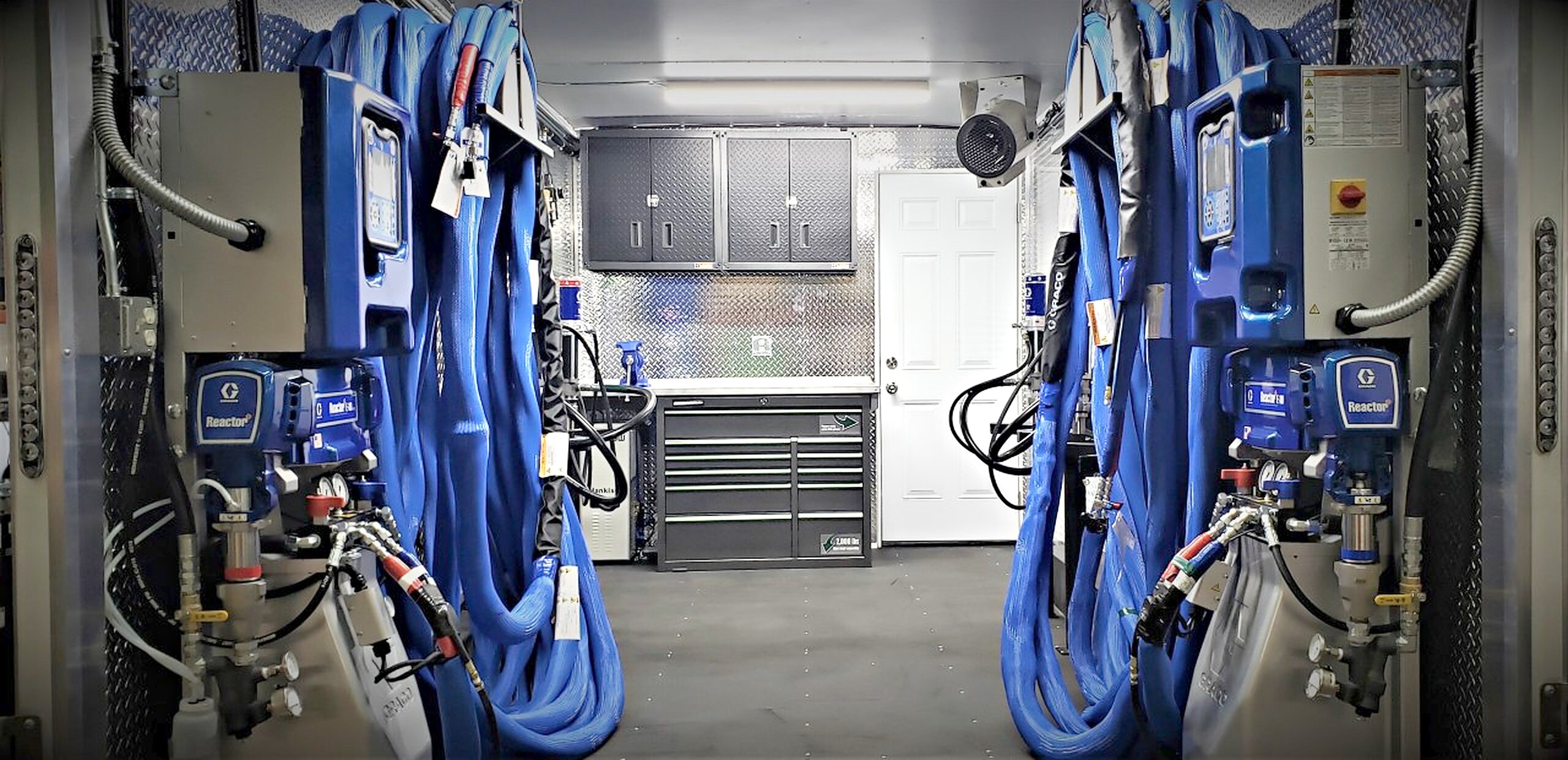
We make bedliner chemistry in Springfield, Missouri: high-pressure polyureas, aliphatic UV-stable liners, low-pressure polyurethanes and the topcoats that go over them. We also train the independent shops that spray it. So we're not neutral about liners in general. We'll try hard to be neutral about brands, and to show you the published numbers instead of adjectives.
Everything here is from manufacturer data sheets, warranty policies and the brands' own pages. Where one of our own pages says something different, we've gone with the data sheet.
- 1The best spray-in bedliners, ranked by type
- 2Build your bedliner spec (tool)
- 3Polyurea vs polyurethane vs hybrid
- 4How to read a bedliner data sheet (decoder)
- 5Do spray-in liners fade? Aromatic vs aliphatic
- 6How thick a bedliner should be
- 7Texture and hardness: grip, cushion or slide (grip check)
- 8LINE-X vs Rhino Linings, and other names
- 9Bedliner warranties compared
- 10How to judge any installer (scorecard)
- 11Spray-in vs drop-in
- 12The best DIY spray-in bedliner
- 13What the best liner costs
- 14Where ArmorThane fits
- 15Best spray-in bedliner FAQ
What is the best spray-in bedliner? Ranked by type
The best spray-in bedliner is a type, not a brand: a thick, high-pressure polyurea or hybrid liner with a UV-stable top layer, sprayed over a properly prepped bed. LINE-X, Rhino Linings, ArmorThane applicators and plenty of independent shops sell versions of it. Here's the full field, best overall first, with the trade-off for each.
| # | Liner type | Best for | Published examples | Watch out for |
|---|---|---|---|---|
| 1 | Pro high-pressure polyurea or hybrid + aliphatic UV topcoat | Best overall; trucks that live outside | LINE-X Premium or MAX; a Rhino liner with a SolarMax topcoat; ArmorThane liner with UV ColorCoat | Costs toward the top of the price range |
| 2 | Pro high-pressure aromatic liner, black, no topcoat | Best value; garaged trucks and work trucks | LINE-X Standard (no UV protection in LINE-X's own comparison); Rhino Extreme | Grays or yellows in the sun. Cosmetic, but permanent |
| 3 | Thick-floor, hard (Shore D) liner | Gravel, scrap, pallets, firewood | LINE-X MAX (25% thicker floor); Rhino HardLine and Hybrid (55D) | Harder surfaces let cargo slide more |
| 4 | Soft, grippy (Shore A) liner | Keeping cargo put, cushioning gear | Rhino TuffGrip (85A); ArmorThane ArmorLiner (75–85A); STS-200 low-pressure urethane | Cuts and gouges show more |
| 5 | Fully aliphatic or color liner | Color-matched and show trucks | LINE-X XTRA (color tier); Rhino SolarMax; ArmorThane HighLine 410 and ArmorFlex UV | Aliphatic material costs more |
| 6 | DIY two-part (2K) kit | Best DIY; older trucks | U-POL RAPTOR kits; Herculiner Professional Grade kit | A fraction of a pro liner's thickness |
| 7 | DIY roll-on or aerosol | Touch-ups, trailers, a beater | Herculiner roll-on; aerosol cans | Thin film; prep is everything |
| 8 | Not a spray-in: drop-in or bed mat | Leases, trucks you'll sell soon, fleets | DualLiner (transferable warranty that covers commercial use, per Capital One) | Slick plastic; can trap water |
1. High-pressure polyurea or hybrid with a UV topcoat: best overall
This is what we'd put in our own truck if it parked outside. A plural-component rig heats both sides to roughly 150–160°F and slams them together at 2,000–3,000 psi; the liner gels in seconds and bonds to a scuffed bed. An aliphatic topcoat over the black base stops the graying that aromatic liners get in the sun. Every major name sells this tier. LINE-X calls it Premium or MAX; Rhino offers SolarMax as a UV topcoat; ours is UV ColorCoat over an ArmorThane base.
2. Black aromatic liner, no topcoat: best value
Same toughness, less money, one cosmetic catch: aromatic chemistry isn't light-stable. Rhino's own data sheet for its pure polyurea says it "will tend to yellow or darken in exterior UV exposure," and that it won't affect performance. If the truck lives in a garage or you honestly don't care about looks, skip the topcoat.
3. Thick, hard floor: best for abrasive loads
Rock, scrap steel and pallets wear the floor, not the walls. Ask for the floor sprayed heavier. LINE-X builds its MAX tier around exactly that, a 25% thicker floor coating. Harder Shore D liners also post tensile strengths roughly 1.5 to 3 times those of the soft ones on published data sheets.
4. Soft and grippy: best for cargo that shouldn't move
Softer Shore A liners stretch 150–300% and grip. Rhino lists a static friction of 0.85 on steel for its slip-resistant TuffGrip. They cushion coolers, bikes and tools, and keep them from wandering. The trade: a sharp edge dragged across a soft liner leaves a mark sooner.
5. Fully aliphatic or color: best for looks
Color-matched and bright liners need UV-stable chemistry throughout or a matching aliphatic topcoat, or the color drifts. Our HighLine 410 is an aliphatic polyurea made for this; Rhino sells SolarMax, and LINE-X sells a color tier called XTRA.
6 and 7. DIY kits: best for older trucks and small jobs
A two-part kit with a hardener is the best you can do at home, and it's honest protection for a 15-year-old truck. It won't match a pro liner's thickness. Details in the DIY section.
8. Drop-in or bed mat: sometimes the right answer
We sell spray equipment and liner chemistry, and we'll still tell you: on a lease, a truck you'll trade in two years, or a fleet truck that needs a warranty covering commercial use, a drop-in can be the better buy. More in spray-in vs drop-in.
Which spray-in bedliner is best for your truck? Build your spec
Tell the builder how the truck is used and where it parks. It writes the spec to hand a shop: chemistry and hardness, UV protection, texture, floor and wall thickness in mils, and the warranty questions that matter for your plans. It also estimates how much the liner adds to the truck's weight.
Your bedliner spec, ready to show an installer
Bed areas use the same maker dimensions as our truck bed dimensions chart. Thickness targets are our guidance inside the 80–125 mil range certified applicators spray.
Your spec: high-pressure liner, 110 mils on the floor and 90 on the walls, aliphatic UV topcoat. Sprayed area for F-150 5.5-ft: about 77 sq ft.
What to ask for
A high-pressure polyurea or hybrid, the default for a reason: it gels in seconds and builds thickness evenly on the walls.
How it should feel
Shore A, around 80–90 A. Grips well (0.85 static friction on steel for one published slip-resistant liner).
Sun and color
Aliphatic UV topcoat over an aromatic base. Without it, a black liner grays, chalks or yellows in the sun. It’s cosmetic, but permanent. Topcoat for this bed: about 0.5 gal at a published 300 sq ft per gallon, two coats.
Grip vs slide
Medium to heavy. More texture, more grip, a little more scrubbing.
- Warranty: Keeping it. Get coverage (crack, peel, bubble), who backs it, and what voids it in writing. Keep the invoice; the brands require it for a claim.
- Thickness: ask for 110 mils floor / 90 mils walls in writing, and how the shop checks it. Adds about 43 lb (LINE-X publishes 40–60 lb for its liners).
- Price: published pro prices run $525–$700 for most full-size beds; UV and color tiers sit toward $800. Price your exact truck.
How the builder works: area = floor (length x maximum width) + two sides and the front wall (length or width x depth) + tailgate, plus 3-in rail caps if over-rail, plus 10% for ribs and wheel wells. Weight = area x thickness x a specific gravity of 1.1 (our assumption; published liner components run 1.03–1.2) x 0.0361 lb per cubic inch of water. For an F-150 5.5-ft bed at 125 mils on the floor and 100 on the walls, that's about 49 lb, inside the 40–60 lb LINE-X publishes. Topcoat quantity uses the published rate for our UV ColorCoat: one gallon per 300 sq ft, two coats.
What is a spray-in bedliner made of? Polyurea vs polyurethane vs hybrid
Every professional spray-in liner is two liquids, an isocyanate and a resin, mixed at the gun and cured in place. If the resin is an amine, you get polyurea, which gels in seconds. If it's a polyol, you get polyurethane, which takes minutes. Hybrids blend the two. None is automatically "best"; each has a data-sheet profile.
High-pressure polyurea
The amine–isocyanate reaction is so fast it can only be mixed by impingement: two heated streams collide at 2,000–3,000 psi in a chamber about the size of a pencil eraser. Gel time is seconds (two to ten, typically), so the liner builds thickness on vertical walls without sagging, and it's walk-on in minutes. That speed is also why nobody brushes on real polyurea. The Polyurea Development Association defines polyurea simply as the reaction product of an isocyanate component and a resin blend. Our polyurea guide goes deeper.
Hybrids
A hybrid adds polyol (urethane) chemistry to the resin side. It sprays on the same high-pressure equipment and can be tuned softer or harder. "Hybrid" and "pure" are marketing words as often as chemistry words, so ask for the data sheet rather than the label.
Low-pressure polyurethane
Slow the chemistry down to polyurethane and a static mixer can do the job at a few hundred psi. That's how low-pressure bedliner systems work. They're cheaper to set up and plenty tough (our STS-200 is one), but you usually get the truck back the same day rather than the same hour. The high- vs low-pressure equipment page shows both setups.
What the data sheets actually show
Rhino Linings publishes full technical data sheets for its whole range, from soft polyurethane to hard aliphatic polyurea, which makes it the cleanest single-maker comparison of the chemistries. We've added what ArmorThane publishes. LINE-X doesn't post property data on its consumer pages.
| Liner (maker) | Chemistry | Hardness | Tensile (psi) | Elongation | Tear (pli) | Abrasion loss (mg) | Gel time |
|---|---|---|---|---|---|---|---|
| TuffGrip 21-90 (Rhino) | Urethane/polyurea hybrid, 2:1 | 85 A | 1,100–1,300 | 250–300% | 200–250 | 10–15 | 10–15 s |
| TuffGrip HP 11-90 (Rhino) | Hybrid polyurea, 1:1 | 90 A | 1,100–1,500 | 150–200% | 200–250 | 55–70 | 4–5 s |
| Tuff Stuff (Rhino) | Polyurethane, 2:1 | 85 A | 1,100–1,300 | 200–300% | 200–250 | 10–15 | 150 s |
| HardLine 21-55 (Rhino) | Polyurethane, 2:1 | 55 D | 2,100–2,200 | 50–80% | 200–250 | 25–30 | 12–15 s |
| Rhino Hybrid 11-55 XP | Hybrid polyurea, 1:1 | 55 D | 2,200–2,600 | 140–180% | 550–650 | – | 2–3 s |
| Rhino Hybrid 21-60 | Hybrid polyurea, 2:1 | 55 D | 3,100–3,300 | 70–80% | 500–600 | 25–30 | 3–6 s |
| Rhino Extreme HP 11-50 | Pure polyurea (aromatic), 1:1 | 50 D | 2,800–3,200 | 250% | 500–600 | 11 | 7–9 s |
| SolarMax 11-60 (Rhino) | Aliphatic polyaspartic polyurea, 1:1 | 65 D | 2,100–2,400 | 40–50% | 300–370 | – | 2–5 s |
| ArmorLiner (ArmorThane) | Polyurea, 1:1, 100% solids | 75–85 A | Not published | – | – | – | – |
| HighLine 410 (ArmorThane) | Aliphatic polyurea, 1:1 | 80 A | Not published | – | – | – | – |
Three things the table makes obvious
- Hard doesn't mean abrasion-proof. Two of the softest liners (85 A) lose 10–15 mg in the Taber test, and the pure polyurea loses 11 mg. Two of the 55 D liners lose 25–30 mg.
- Strength and stretch usually trade off. The Shore D liners run 2,100–3,300 psi in tension, and most stretch 40–180%. The soft ones stretch 150–300% at 1,100–1,500 psi. The pure polyurea is the exception: 50 D, about 3,000 psi and 250% stretch.
- Gel time tells you the equipment. Seconds means a heated, high-pressure impingement rig. The 150-second polyurethane is a slower system.
How to read a bedliner data sheet
Any serious installer can hand you the technical data sheet (TDS) for the liner they spray. Six numbers on it tell you most of what you need: hardness, tensile strength, elongation, tear strength, abrasion loss and gel time. Enter them below and the decoder places the liner against the published sheets above and tells you what kind of liner it is.
What kind of liner is this, and how does it compare?
Use the "typical physical properties" block. Leave a field at 0 if the sheet doesn't list it. Compare only numbers from the same ASTM tests.
Gels in 6 s: sprayed hot on high-pressure impingement equipment (polyurea, hybrid or a fast urethane).
Closest published sheet in our table: Rhino TuffGrip 21-90 (urethane/polyurea hybrid, 2:1).
- Soft liners grip and cushion; sharp edges mark them sooner.
- Numbers only compare fairly when the sheets use the same ASTM tests at similar thickness (the Rhino sheets used 1/8-in stock).
| Property | Test | What it tells you |
|---|---|---|
| Hardness (Shore A or D) | ASTM D2240 | Soft and grippy (A) or hard and slick (D). The single best predictor of how the liner feels. |
| Tensile strength | ASTM D412 | How hard you have to pull before it tears apart. Higher resists gouging. |
| Elongation | ASTM D412 | How far it stretches before breaking. Higher absorbs impacts and flexing. |
| Tear strength | ASTM D624 | Resistance to a cut spreading. Matters where edges catch. |
| Taber abrasion | ASTM D4060 | Weight lost to a grinding wheel. Lower is better; check the wheel and load match. |
| Gel time | Maker's test | Seconds means high-pressure spray. Minutes means a slower urethane system. |
| Coefficient of friction | ASTM D1894 | How grippy the surface is against steel. Higher holds cargo. |
If a shop can't or won't name the product and show you its data sheet, that tells you something too.
Do spray-in bedliners fade? Aromatic vs aliphatic
Most black liners do. They're aromatic polyurea or polyurethane, the toughest and least expensive chemistry, and aromatic chemistry isn't light-stable, so sunlight turns it gray, chalky or yellowish over time. It's cosmetic: the liner still protects. An aliphatic topcoat, or an all-aliphatic liner, keeps the color.
What fading is, and isn't
The brands say it plainly. Rhino's FAQ: "Prolonged exposure to UV radiation may cause fading over time." Its pure polyurea data sheet: it "will tend to yellow or darken in exterior UV exposure, but this will not affect performance." LINE-X's comparison chart gives UV protection only to its Premium and MAX tiers. So a gray liner on a five-year-old truck isn't a failed liner. It's an aromatic liner without a topcoat.
So one claim you'll read on bedliner sites deserves an asterisk: a black aromatic liner isn't "fade-proof." The data sheets say otherwise. Our aromatic polyurea explainer covers why aromatic is still the workhorse chemistry anyway: it's tougher per dollar.
Topcoat or all-aliphatic?
Aliphatic topcoat over an aromatic base is the common answer: you keep the toughness and cost of the aromatic base and put a thin UV-stable layer on top. Our UV ColorCoat, for example, is an aliphatic polyurethane topcoat applied at one gallon per 300 sq ft, normally in two coats; for a 5.5-ft F-150 bed that's about half a gallon. A fully aliphatic liner (our HighLine 410, Rhino's SolarMax) is color-stable all the way through, which matters when a scuff would otherwise show a different color underneath. It costs more, so it's usually reserved for color work.
How thick should a spray-in bedliner be?
Figure 80–125 mils (0.08–0.125 in), which is what ArmorThane-certified applicators spray. Rhino says its liners start at 1/8 inch (125 mils). Put the extra where the wear is: the floor. LINE-X's MAX tier is built on that idea, with a 25% thicker floor coating than its Standard and Premium.
| How you use the truck | Floor | Walls and tailgate | Added weight, F-150 5.5-ft bed (est.) |
|---|---|---|---|
| Light: bikes, groceries, camping | 90 mils | 80 mils | 37 lb |
| General: tools, mulch, DIY runs | 110 mils | 90 mils | 43 lb |
| Heavy: gravel, scrap, pallets | 125 mils | 100 mils | 49 lb |
| Everything at 125 mils | 125 mils | 125 mils | 55 lb |
Why nobody puts thickness on the quote, and why you should ask
Thickness is the easiest thing to cut and the hardest thing for you to see. A liner sprayed at 60 mils looks the same as one at 120 the day you pick up the truck. Ask for the floor and wall thickness in mils in writing, and how the shop checks it. A shop that sprays to a spec will have a number. If you want to check the material side of the math, our spray-in bedliner cost calculator converts thickness to gallons for your bed.
Under-rail vs over-rail
Over-rail adds the top caps of the bed sides, a few square feet, and protects them from ladders and tie-down straps. It also makes a tonneau cover's seal sit on liner instead of paint, so check your cover maker's instructions before you choose.
Bedliner texture and hardness: grip, cushion or slide?
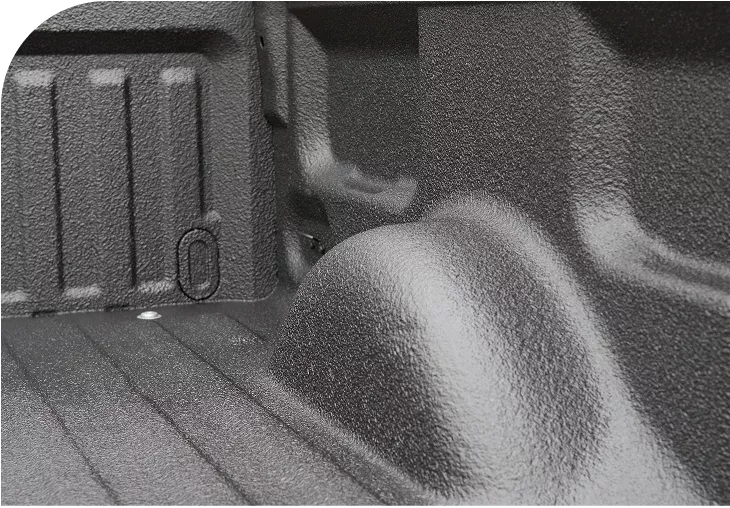
Hardness sets how the liner behaves; texture sets how it feels. A soft Shore A liner with a medium texture grips and cushions. A hard Shore D liner with a fine texture lets pallets and toolboxes slide. Installers can dial texture from fine to heavy on the same material, so tell them which you want.
On a high-pressure rig, texture comes from pressure, temperature, tip size and the sprayer's hand speed, which is a genuine skill. On low-pressure equipment it's adjusted at the gun. Rhino puts it simply: "Surface texture can be adjusted from fine to heavy." Some shops will also spray a smooth, untextured finish on request, for example to match black wheel-well trim.
Heavier texture holds cargo better and hides scuffs, but it also holds more dirt and takes more scrubbing. If you slide a lot of boxes or a bed slide, go finer. If dogs or tools ride loose, go grippier.
How much does texture actually hold? The grip check
Friction isn't a tie-down, but it decides how early an unstrapped load starts moving. The check below uses published static friction against steel: 0.85 for a soft, slip-resistant liner and 0.70 for a hard polyurea (both from Rhino data sheets, ASTM D1894), and 0.2 for polyethylene, the plastic most drop-ins are made of (Engineering ToolBox). The g-forces are the ones federal cargo rules use to size tie-downs on commercial trucks.
When does an unstrapped load start to slide?
Steel cargo on a clean, dry surface. Wet, dusty or bouncing loads slide sooner. Strap everything anyway.
| Event | Push | For straps |
|---|---|---|
| Hard braking, 0.8 g | 240 lb | 0 (friction holds) |
| Swerve or hard corner, 0.5 g | 150 lb | 0 (friction holds) |
| Hard acceleration, 0.5 g | 150 lb | 0 (friction holds) |
A load of 300 lb on a soft, slip-resistant liner stays put until the truck brakes, turns or accelerates at about 0.85 g. For comparison: a hard polyurea liner at 0.70 g and a polyethylene drop-in at 0.20 g. Commercial-vehicle rules size tie-downs so their working load limits add up to at least half the load’s weight (150 lb here), whatever the surface. Friction never counts as a strap; treat this as a measure of how much a liner helps between straps. Friction values are static, steel on a clean, dry surface.
LINE-X vs Rhino Linings (and the other names you'll hear)
Neither is better across the board. Both sell several tiers, both publish lifetime warranties limited to the original owner and personal use, both say to wait about 24 hours before heavy hauling, and both are sold through local shops. The difference you'll feel is usually the local installer and the tier you buy, not the brand.
| Published fact | LINE-X | Rhino Linings |
|---|---|---|
| Tiers and formulas | Standard, Premium (UV resistance), MAX (UV topcoat, 25% thicker floor), XTRA (color), ReNew (repair), ULTRA (topcoat) | TuffGrip (slip-resistant), Tuff Stuff and HardLine (polyurethane), Rhino Hybrid and Rhino Extreme (polyurea), SolarMax (aliphatic, UV-stable) |
| Chemistry disclosed? | Not on its consumer bedliner pages | Yes, full technical data sheets |
| Feel (third-party description) | "Higher hardness level than other spray-ons" (Capital One) | TuffGrip described as a "thick, soft layer" (Capital One) |
| Thickness statement | MAX: 25% thicker floor than Standard or Premium | "Starting from 1/8 inch" |
| Install and cure | A few hours; about 24 hours before hauling | About 3 hours; wait 24 hours before heavy-duty use |
| Weight added | 40–60 lb | Not published |
| Warranty | Won't crack, bubble or flake while you own the truck; original purchaser; not transferable; personal use; original factory finish | Won't crack, bubble or peel while you own the truck; original owner; not transferable; personal use; original bed and paint |
| Published price | $600–$700 average (LINE-X, 2018; Capital One, 2024) | Under $500 to $750 (Capital One, 2024); each location sets its own price |
So which should you pick?
Pick the tier, then the shop. If the truck parks outside, compare LINE-X Premium or MAX against a Rhino liner with a SolarMax topcoat, not Standard against Standard. If you want cargo to stay put, a soft, grippy liner fits; if you slide heavy things, a harder one does. Then compare the two local shops on prep, thickness and paperwork with the scorecard. A great installer with either brand beats a rushed one with the other.
The other names
You'll also see independent and regional systems: ArmorThane (our certified applicators), Armadillo, VORTEX and others sprayed by local shops, plus DIY brands like U-POL RAPTOR and Herculiner. Some shops also spray RAPTOR professionally. Judge them the same way: product named, data sheet, thickness, UV option, written warranty. We haven't found independent head-to-head testing of pro liners, and a brand's own comparison chart isn't one.
Factory and dealer spray-ins
Some truck makers and dealers offer a spray-in liner as an option. It can be a good one. Ask the same questions: who applies it, which product and chemistry, how thick, whether there's a UV topcoat, and whose warranty covers it.
Spray-in bedliner warranties: who they actually cover
"Lifetime" means your lifetime as owner, not the truck's. The two biggest brands' published warranties end when you sell, exclude commercial use, and require the original bed and factory paint. None of that is unusual, but it changes which liner is best for a fleet truck or one you'll sell in two years.
| Warranty term | LINE-X | Rhino Linings | DualLiner (drop-in) |
|---|---|---|---|
| What's covered | Crack, bubble or flake | Crack, bubble or peel | Lifetime warranty |
| How long | As long as you own the vehicle | As long as you own the truck | Lifetime |
| Transfers to the next owner? | No | No | Yes |
| Commercial use? | No (personal, non-commercial) | No (personal, non-commercial) | Covered |
| Bed requirements | Original equipment bed, original factory finish | Original equipment bed and original paint | – |
| Proof | Invoice, receipt or warranty certificate | Original invoice and photos of the damage | – |
ArmorThane-certified applicators offer a lifetime warranty that we back as the manufacturer. Ask your applicator for the written terms the same way you would anywhere else: what's covered, whether it transfers, and whether business use counts.
Worried a liner will void the truck's own warranty? The FTC's position is that using aftermarket parts doesn't void a warranty, but a maker can deny a claim if it proves the aftermarket part caused the damage. Our spray-in bedliner cost guide covers that question in more detail, including corrosion warranties.
How to judge any bedliner installer
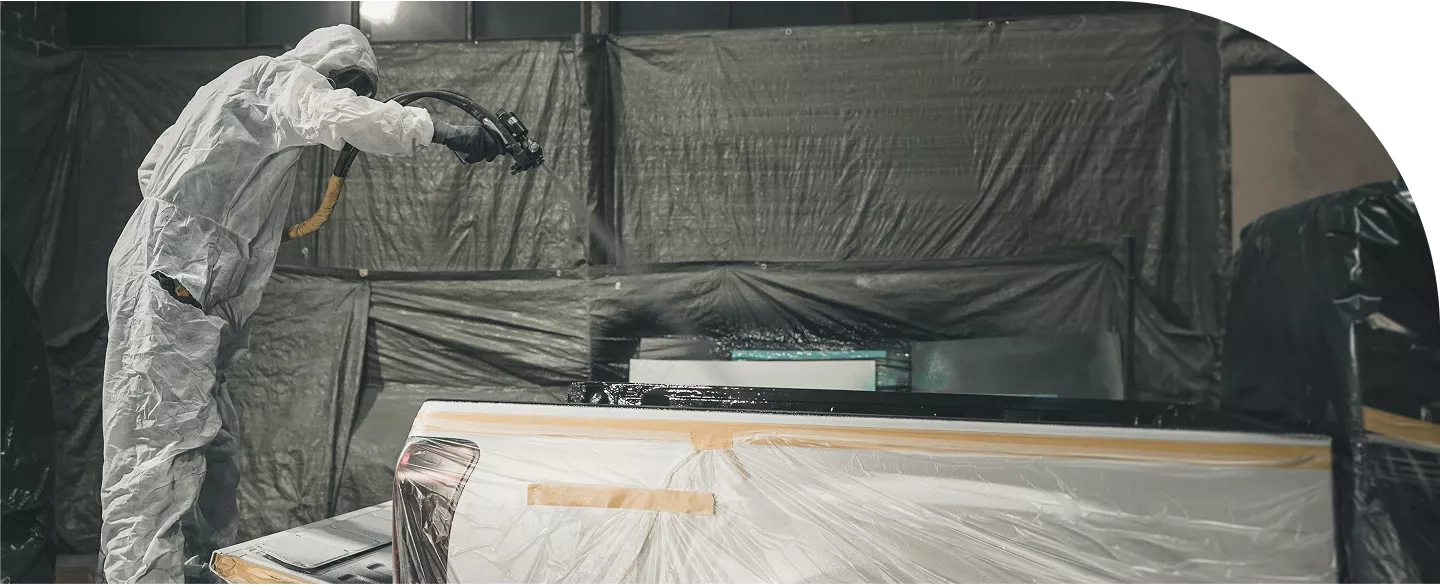
A great installer can make an average liner last and a rushed one can ruin the best. Judge the shop on paperwork and prep: the product named with its data sheet, the thickness in mils in writing, a real description of prep, a straight answer on UV, and warranty terms on paper. Then look at trucks they've finished.
What good prep looks like
Clean and degrease
Wax, silicone and road film come off first, or nothing bonds.
Scuff the whole surface
The factory finish is abraded so the liner has a profile to grip. Bare, rusty spots are treated, and rotted metal is repaired before anything is sprayed. See truck bed rust repair.
Bolts, tie-downs and drains
Bed bolts and tie-down hardware come out or get masked, and drain holes stay open.
Mask everything else
Paint, glass and the cab get covered, and the liner edge gets a clean line.
Spray to thickness, then check it
Built in passes to a stated floor and wall thickness. ArmorThane's applicator training covers surface prep, masking, machine setup (temperature, pressure and ratio) and mil build for this reason.
Compare up to three bedliner shops
Tap A, B or C for each thing a shop told you or put in writing. Weights reflect how much each item predicts a liner that lasts, in our judgment. Price is optional.
| What the shop gave you |
|---|
Named the product and showed its data sheet (12 pts) |
Floor and wall thickness in mils, in writing (14 pts) |
Described prep: degrease, scuff, rust treatment (12 pts) |
Removes or masks bed bolts, tie-downs and drains (6 pts) |
Said what it is: polyurea, hybrid or polyurethane; high or low pressure (8 pts) |
Straight answer on UV: aromatic or aliphatic, topcoat offered (8 pts) |
Warranty terms in writing: coverage, transfer, business use, who backs it (14 pts) |
Showed texture samples or trucks they've finished (6 pts) |
Trained or certified by the liner's manufacturer (6 pts) |
Told you when you can haul and wash (4 pts) |
Itemized quote: over-rail, tailgate, rust repair, topcoat (6 pts) |
Shop A: 70 / 100
$680. Quote within the published $470–$800 range.
Ask them to:
- Say whether the liner is aromatic or aliphatic, and offer a UV topcoat.
- Say how they handle bed bolts, tie-downs and drain holes.
- Tell you who trained or certified them.
- Itemize over-rail, tailgate, rust repair and topcoat.
Shop B: 24 / 100
$450. Quote below every published pro price we found ($470–$800). Ask what’s different.
Ask them to:
- Put floor and wall thickness in mils in writing.
- Give you the warranty in writing: what’s covered, transfer, business use, who backs it.
- Name the product and show you its data sheet.
- Tell you the chemistry (polyurea, hybrid or polyurethane) and whether it’s high or low pressure.
- …and 4 more.
Shop C: 0 / 100
Ask them to:
- Put floor and wall thickness in mils in writing.
- Give you the warranty in writing: what’s covered, transfer, business use, who backs it.
- Name the product and show you its data sheet.
- Describe the prep: degrease, scuff, rust treatment.
- …and 7 more.
Shop A leads with 70 points. Prep, thickness and warranty paperwork carry the most weight; a cheaper quote that skips them usually isn’t the same liner.
Red flags
- "It's our own blend" with no data sheet. Every liner has one.
- No thickness number, or "we spray it thick."
- Spraying over rust, loose paint or a failing old liner without talking about prep.
- A warranty that's only verbal, or that the shop can't say who backs.
- Same-hour pickup on a slow-set system. Low-pressure urethanes usually need longer.
Spray-in bedliner vs drop-in: which is better?
For a truck you'll keep, a spray-in is usually better: it's bonded and seamless, it can't shift or rattle, it grips cargo, and water can't sit under it. A drop-in is better when you need to take it with you: leases, short ownership, fleets that need a transferable or commercial warranty, or anyone who doesn't want a permanent change.
| Point | Spray-in | Drop-in |
|---|---|---|
| Fit | Sprayed to the exact bed | Molded; poor fits shift and rub |
| Grip on steel (static friction) | 0.70–0.85 (published liner data) | About 0.2 (polyethylene) |
| Water underneath | None; bonded to the bed | Can trap water and debris |
| Paint under it | Scuffed for adhesion; permanent | Left intact |
| Removable | No | Yes, transfers to a same-size bed |
| Warranty that transfers or covers business use | Not on LINE-X or Rhino policies | DualLiner, per Capital One |
Bed mats and bed rugs sit in between: cheap, removable, kind to knees and cargo, but the walls stay bare. For the full cost comparison, see spray-in bedliner cost; for the longer pros and cons, our drop-in or spray-on article.
What is the best DIY spray-in bedliner?
A two-part (2K) kit with a separate hardener, like U-POL RAPTOR or Herculiner's Professional Grade kit, is the best you can do yourself. One-part roll-ons and aerosol cans are fine for touch-ups, trailers and older trucks. None will match a pro liner's 80–125 mils, and your prep decides whether it lasts.
| DIY option | Published price | Coverage (maker) | Best for |
|---|---|---|---|
| Herculiner Professional Grade kit (2K, spray or roll) | $164.99 | About 80 sq ft; an 8-ft bed in one coat | Full beds on an older truck |
| U-POL RAPTOR kit (tintable, 2K) | About $130 (Capital One) | Gallon and quart kits | Full beds, color |
| Herculiner roll-on kit (1K) | $109.99; $39.99 per extra quart | One gallon: a 6-ft bed in two coats | Budget full beds |
| Aerosol cans | About $13–$19 a can (2020 test) | 15–16.5 oz each | Touch-ups, rails, small parts |
The thickness gap
One gallon spread over a 77 sq ft F-150 bed is about 21 mils wet across both coats, before any solvent leaves the film. That's roughly a quarter of the thinnest pro liner, and why DIY liners wear through on the floor first. Herculiner's own instructions call for scuffing all paint and wiping with a solvent, two coats on the roll-on, and application between 65 and 90°F for the pro kit.
Which aerosol?
AllOutdoor tested five cans in 2020 and found no all-around winner: EZ Liner won chemical and cold-weather tests, PlastiKote won impact and hot weather, and Rust-Oleum won scratch resistance. Only one held up to gasoline. That's a fair summary of cans generally: good for touch-ups, not a full bed.
Our blunt take on DIY vs sprayed liners is in DIY kits vs a sprayed liner.
What does the best spray-in bedliner cost?
Published prices for a professional liner on a full-size bed run about $470–$800, with a median band of $525–$700. UV-protected and color tiers sit toward the top; long beds, over-rail coverage and rust repair add to it. LINE-X publishes a $600–$700 average; Rhino and ArmorThane-certified shops set their own prices.
Prices by truck, what drives them, and a quote checker are in our spray-in bedliner cost guide. One tip that belongs here: compare quotes spec to spec. A $500 black liner with no topcoat and no thickness stated isn't a cheaper version of a $750 UV liner at 125 mils. It's a different product.
Where ArmorThane fits, and where it doesn't
We're a manufacturer, not a retail chain. We make the liner chemistry: high-pressure polyureas like ArmorLiner, aliphatic HighLine 410 and ArmorFlex UV, low-pressure STS-200 and STS-300 polyurethanes, and the UV ColorCoat topcoat. Independent certified applicators spray it, set their own prices, and can put every item from the scorecard in writing.
Where we're not the best answer: if you want one national brand whose advertising you already know, the big franchise networks are built for that. If you're leasing, get a drop-in. And if the truck is an old farm beater, a good DIY kit is honest money well spent.
Certified thickness
What our certified applicators spray on a truck bed.
Your choice of UV
Black aromatic base, a UV ColorCoat topcoat, or all-aliphatic HighLine 410.
Your choice of texture
Fine for sliding cargo, heavier for grip, or smooth to match trim.
Spray the spec. Keep the margin.
Truck accessory shops, body shops and welders add bedliners with our equipment, chemistry and training. Systems start at $25,000, with no franchise fee and no royalties, and the same rig sprays trailers, flatbeds and dump bodies.
Heavy equipment: dump truck bed liners →
Best spray-in bedliner FAQ
What is the best spray-in bedliner?
For most trucks, a professionally sprayed high-pressure polyurea or hybrid liner, 80–125 mils thick with the floor at the heavy end, plus an aliphatic UV topcoat if the truck parks outside. The spec and the installer matter more than the brand. LINE-X (Premium and MAX), Rhino Linings (SolarMax) and ArmorThane applicators (UV ColorCoat, HighLine 410) all offer UV-protected options.
What is the most durable truck bed liner?
A thick, professionally sprayed liner bonded to a properly prepped bed. On published data sheets, pure and hybrid polyureas post the highest tensile and tear strength (Rhino Extreme: 2,800–3,200 psi and 500–600 pli), while soft Shore A liners stretch more and show low abrasion loss. For gravel, scrap or pallets, ask for extra floor thickness; LINE-X's MAX tier adds 25% on the floor.
Is LINE-X better than Rhino Linings?
Neither is better across the board. Both sell several tiers, both publish lifetime warranties limited to the original owner and personal use, and both say to wait about 24 hours before heavy hauling. Capital One describes LINE-X as harder than other spray-ons and Rhino's TuffGrip as a thick, soft layer. The local installer and the tier you buy decide most of the result.
Is a spray-in bedliner better than a drop-in?
For a truck you'll keep, usually yes: it's bonded and seamless, doesn't trap water, and grips cargo far better (static friction of 0.70–0.85 on steel for published liners vs about 0.2 for polyethylene). A drop-in is better on a lease, a truck you'll sell soon, or a fleet truck that needs a transferable or commercial warranty. See drop-in or spray-on.
What is a spray-in bedliner made of?
Two liquids, an isocyanate and a resin, mixed at a heated spray gun and cured in place. An amine resin makes polyurea, which gels in seconds on high-pressure equipment; a polyol resin makes polyurethane, which takes minutes and is often sprayed with low-pressure equipment; hybrids blend the two. Most black liners are aromatic, and UV-stable liners or topcoats are aliphatic.
Is polyurea better than polyurethane for a bedliner?
Not automatically. Polyurea cures in seconds and the pure and hybrid data sheets we compared show the highest tensile and tear strength. But a soft polyurethane or hybrid can be grippier and just as abrasion-resistant (10–15 mg Taber loss on two Rhino urethane-based sheets). Ask which one you're getting and for its data sheet.
Do spray-in bedliners fade?
Black aromatic liners do: sunlight turns them gray, chalky or yellowish, which is cosmetic and doesn't affect protection. Rhino's FAQ says prolonged UV exposure may cause fading, and its pure polyurea data sheet says it will yellow or darken outdoors. An aliphatic UV topcoat or a fully aliphatic liner keeps the color.
How thick should a spray-in bedliner be?
ArmorThane-certified applicators spray 80–125 mils (0.08–0.125 in). Rhino says its liners start from 1/8 inch, and LINE-X's MAX tier adds 25% on the floor. Put the floor at the thick end and get both numbers in writing; at 125 mils on the floor and 100 on the walls, an F-150 5.5-ft liner weighs about 49 lb by our math.
What is the best DIY spray-in bedliner?
A two-part kit with a hardener, such as U-POL RAPTOR or Herculiner's Professional Grade kit, over a thoroughly scuffed and degreased bed. One-part roll-ons and aerosol cans suit touch-ups and older trucks. Expect a much thinner film than a pro liner: one gallon over an F-150 5.5-ft bed is only about 21 mils wet.
Is a factory or dealer spray-in bedliner good?
It can be. Judge it like any other liner: who applies it, which product and chemistry, the thickness in mils, whether it has a UV topcoat, and whose warranty covers it. Those answers matter more than the badge.
What are the disadvantages of a spray-in bedliner?
It's permanent, it costs more up front than a drop-in, black aromatic liners fade in the sun without a topcoat, and heavy textures hold dirt. The big-brand warranties don't transfer when you sell and exclude commercial use. Quality depends heavily on the installer's prep and thickness.
Will cargo slide on a spray-in bedliner?
Much less than on plastic. Rhino's data sheets list static friction on steel of 0.85 for its slip-resistant TuffGrip and 0.70 for its hard polyurea, against about 0.2 for polyethylene. If you slide heavy items in and out, ask for a finer texture or a harder liner, and strap loads either way.
How do I choose a bedliner installer?
Ask for the product name and data sheet, floor and wall thickness in mils, a description of prep (degrease, scuff, bolts and drains handled, masking), the UV option, and the warranty terms in writing. Look at trucks they've finished. The installer scorecard on this page compares up to three shops on those points.
How much does the best spray-in bedliner cost?
Published prices for a professional liner on a full-size bed run about $470–$800, with a median band of $525–$700; UV-protected and color tiers sit toward the top. See our spray-in bedliner cost guide for prices by truck and a quote checker.
Written from manufacturer data sheets, brand warranty policies and 35+ years of making bedliner chemistry and training the applicators who spray it. Last updated September 26, 2026.
Methodology and sources
Product properties are quoted from manufacturers' technical data sheets and product pages; warranty terms from the brands' current policies (fetched September 2026). Rankings are by liner type, not brand, and are our judgment from that data; we did not test competitors' products. Thickness targets, weights, film-thickness and friction figures are our calculations from the published values shown.
- LINE-X, spray-on bedliners (tiers, weight, cure; fetched Sep. 2026): linex.com/protective-coatings/bedliners
- LINE-X, Premium bedliner: linex.com/protective-coatings/bedliners/premium
- LINE-X, MAX bedliner: linex.com/protective-coatings/bedliners/max
- LINE-X, warranty policies: linex.com/warranty-policies
- LINE-X blog, truck bedliner cost (Jul. 2018): linex.com/blog/truck-bedliner-cost
- Rhino Linings, FAQ: rhinolinings.com/faq/
- Rhino Linings, automotive product lines: rhinolinings.com/industries/automotive/
- Rhino Linings, warranty: rhinolinings.com/warranty/
- Rhino Linings, TuffGrip 21-90 technical data sheet: rhinolinings.com/download/tuffgrip-21-90-tds/
- Rhino Linings, TuffGrip HP 11-90 technical data sheet: rhinolinings.com/download/tuffgrip-hp-11-90-tds/
- Rhino Linings, Tuff Stuff 21-85-120 technical data sheet: rhinolinings.com/download/tuff-stuff-21-85-120-tds/
- Rhino Linings, HardLine 21-55 technical data sheet: rhinolinings.com/download/hardline_21-55_tds/
- Rhino Linings, Rhino Hybrid 11-55 XP technical data sheet: rhinolinings.com/download/rhino-hybrid-11-55-xp-tds/
- Rhino Linings, Rhino Hybrid 21-60 technical data sheet: rhinolinings.com/download/rhino-hybrid-21-60-tds/
- Rhino Linings, Rhino Extreme HP 11-50 technical data sheet: rhinolinings.com/download/rhino-extreme-hp-11-50-tds/
- Rhino Linings, SolarMax 11-60 technical data sheet: rhinolinings.com/download/solarmax-11-60-tds/
- Rhino Linings, spray-on vs drop-in bedliners (Feb. 2024): rhinolinings.com/blog/news/rhino-linings-vs-drop-in-bedliners-which-is
- Capital One Auto Navigator, Rhino vs LINE-X vs DualLiner (May 2024): capitalone.com/cars/learn/finding-the-right-car/bed-liners-compared-rh
- Capital One Auto Navigator, truck bed liners (updated Jul. 2024): capitalone.com/cars/learn/finding-the-right-car/truck-bed-liners-what-
- Polyurea Development Association, about polyurea: pda-online.org/aboutus
- U-POL, RAPTOR bed liner: u-pol.com/en-us/brands/raptor/
- Herculiner, Professional Grade bed liner kit: herculiner.com/professional-bed-liner-kit
- Herculiner, bed liner kit (roll-on): herculiner.com/bed-liner-kit
- AllOutdoor, testing spray-on bed liners (2020): alloutdoor.com/2020/09/11/testing-spray-bed-liners-best/
- Engineering ToolBox, friction coefficients: engineeringtoolbox.com/friction-coefficients-d_778.html
- 49 CFR 393.102, cargo securement performance criteria: ecfr.gov/current/title-49/subtitle-B/chapter-III/subchapter-B/part-393
- 49 CFR 393.106, tiedown working load limits: ecfr.gov/current/title-49/subtitle-B/chapter-III/subchapter-B/part-393
- FTC, auto warranties and service contracts: consumer.ftc.gov/articles/auto-warranties-and-auto-service-contracts
- OSHA, isocyanates: osha.gov/isocyanates
- ArmorThane, bedliner equipment cost (high vs low pressure): armorthane.com/bedliner-equipment-cost/
- ArmorThane, polyurea products (hardness table): armorthane.com/products/polyurea/
- ArmorThane, UV ColorCoat: armorthane.com/products/armorcoat/uvcolorcoat/
- ArmorThane, HighLine 410 aliphatic polyurea: armorthane.com/products/armorline-products/high-pressure/highline-410-
- ArmorThane, bedliner installers near me: armorthane.com/protective-coatings/spray-on-bedliners/bedliner-near-me


Know the spec you want? Get a quote from a certified applicator.
Tell us your truck, what you haul and where it parks. We'll connect you with an independent ArmorThane-certified bedliner applicator near you who can put the product, thickness, UV protection and warranty in writing.
- Polyurea, hybrid or low-pressure urethane, named on the quote
- Floor and wall thickness in mils
- Black, UV topcoat or fully aliphatic color
- Shops: ask about adding spray-in bedliners
More to read on bedliners and vehicles
Short reads from ArmorThane on Issuu. Tap one to open it right here.
 Quick readLaunch Your Bedliner Business Title: Launch Your Bedliner Business – Professional Spray Equipment Un
- Quick readArmorThane’s Spray On Bedliners
- Product spotlightArmorLiner™ The industry’s most trusted spray-applied polyurea liner system.
- Quick readSpray Today, Load Tomorrow: Slip Protection for Dunnage, Work Vehicles, and High-Traffic Surfaces