Low-Cost Franchises: The Real Cost
Franchise fees, royalties and FDD Item 7 totals for 10 low-investment brands, a 10-year cost calculator, FTC protections and a no-fee way into the coatings trade.
Lists of low-cost franchises "under $50K" usually show one number: the upfront fee or the cash you need to qualify. What decides whether a franchise is cheap is what you pay over the life of the agreement, and that's in Items 5, 6 and 7 of the Franchise Disclosure Document (FDD).
A low-cost franchise usually means a total investment under about $50,000. Of the brands we verified, published Item 7 ranges start at $1,945–$20,505 (Cruise Planners) and $12,765–$35,700 (Vanguard Cleaning Systems). The fee is the small part. Royalties of 2% to 20% or more, plus ad funds, come off sales for the whole term. Run the 10-year cost calculator or decode an Item 7 table.
We aren't a franchisor. ArmorThane makes polyurea coatings, spray-on bedliners and spray equipment, and we train independent applicators with no franchise fee, royalty or dealership fee. That gives us a point of view, so this guide sticks to what disclosure documents, the FTC and the SBA publish, with a date on every number. If a franchise suits you better, the tools below will help you choose one well.
- 1What "low cost" really means
- 210 low-investment franchises, with numbers
- 3Every fee, item by item
- 410-year franchise cost calculator (interactive)
- 5How to read Item 7
- 6Item 7 decoder and FDD checklist (interactive)
- 7What the FTC Franchise Rule protects
- 8Due diligence, step by step
- 9Franchises vs no-fee models in the trades
- 10Which route fits you?
- 11Low-cost franchise FAQ
What "low cost" really means
Every franchise has three price tags, and the FTC's Franchise Rule makes the franchisor disclose all three. Most "cheap franchise" lists quote only the first.
The initial fee
What you pay to join, usually before you open. The SBA put standard fees at $20,000–$50,000 (2017). Among the brands we verified they run from $0 to $58,500.
The total investment
The fee plus equipment, inventory, build-out, training and other opening costs, with "additional funds" for at least the first three months. This is the real startup number.
The ongoing fees
Royalties, ad or brand funds, technology, renewal and transfer fees. The SBA's blog: "Monthly royalties are where the profits are for franchisors—not the upfront franchise fee."
The three can be far apart. Kumon's franchise fee is $2,000, and its own site puts the investment at $101,630 to $233,780, with at least $100,000 in liquid capital. Jazzercise's fee is $1,250 on VettedBiz's summary of its 2025 FDD, which also lists a 20% royalty. A brand can be cheap to join and expensive to belong to.
A better definition of low cost: an Item 7 total you can mostly cover with your own cash, and Item 6 fees you can carry at sales you believe.
10 low-investment franchises, with published numbers
We list only brands whose fee, investment and royalty we could read on a dated source on September 27, 2026. Six have Item 7 ranges topping out at about $65,000 or less. The other four look cheap by one measure but not another. Click a heading to sort.
| Franchise (category) | Franchise fee | Total investment (Item 7) | Royalty + fund | Data as published |
|---|---|---|---|---|
| Cruise Planners (home-based travel) | $10,995 per the franchisor; VettedBiz lists $695–$10,995 | $1,945–$20,505 | 2% | VettedBiz, 2025 FDD |
| Jazzercise (fitness classes) | $1,250 | $3,935–$40,725 | 20% | VettedBiz, 2025 FDD |
| Proforma (promotional products) | $0 | $7,030–$27,695 | 7% + 1% marketing | VettedBiz, 2025 FDD |
| Card My Yard (yard-sign greetings) | $8,500 | $10,350–$18,550 | 25% as listed; confirm in Item 6 | VettedBiz, 2025 FDD |
| Vanguard Cleaning Systems (commercial cleaning) | $4,000 | $12,765–$35,700 | 6% (marketing fee not listed) | VettedBiz, 2024 FDD |
| Coverall (commercial cleaning) | $15,570–$40,320 | $17,917–$64,048 | 5% | VettedBiz, 2025 FDD |
| Dryer Vent Wizard (home services) | $49,900 | $82,900–$159,400 | 10% + 2% | VettedBiz, 2025 FDD |
| Fibrenew (leather and vinyl repair) | $47,000 | $100,595–$121,825 | Not listed | VettedBiz, 2024 FDD |
| Pillar To Post (home inspection) | $58,500 | $102,690–$134,290 | 7% + 4% | VettedBiz, 2025 FDD |
| Kumon (tutoring) | $2,000 | $101,630–$233,780 | Not on its site | Kumon franchise site |
"Under $50K" often means cash required
Many list sites rank by the minimum cash a buyer must have, not by what the business costs. America's Best Franchises lists cash required of $10,000 for Cruise Planners and Card My Yard, $20,000 for Kinderdance and Get A Grip Resurfacing, and $25,000 for HouseMaster and Stretch-n-Grow. Franchise Direct lists $45,000–$50,000 minimums for brands such as Five Star Painting, Mr. Handyman and Miracle Method. Those are qualification thresholds; the cost is in Item 7.
The cheapest brands run from home or a vehicle with little equipment, which keeps Item 7 low; their royalties still run from 2% to 25% as listed. See also our mobile business ideas and how to start a painting business without a franchise.
Every fee, item by item
Franchise fees fall into two groups: what you pay once and what you pay for as long as you operate. Item 6 must list the recurring ones in a table.
| Fee | Where it's disclosed | How it's charged | Examples we verified |
|---|---|---|---|
| Initial franchise fee | Item 5 | Once, before opening | $0 (Proforma), $4,000 (Vanguard), $58,500 (Pillar To Post) |
| Royalty | Item 6 | Percentage of gross sales, usually monthly | 2% (Cruise Planners), 5% (Coverall), 10% (Dryer Vent Wizard), 20% (Jazzercise) |
| Ad or brand fund | Item 6 | Percentage of sales, or a flat amount | 1% (Proforma, Garage Force), 2% (Dryer Vent Wizard), 4% (Pillar To Post) |
| Technology and digital marketing | Item 6 | Flat monthly fees | $750 a month (Wise Coatings, 2022 data); $1,000 a month (Garage Force) |
| Renewal and transfer | Items 6 and 17 | When the term ends or you sell | Terms vary; Wise Coatings lists 10 years (2022 data) |
| Materials and startup items | Items 5 and 7 | Up front, then as you operate | Kumon: $2,000 for center materials |
Royalty plus ad fund, as a share of every sale
Royalty plus any published ad or brand fund; fixed monthly fees not included. Where a source lists no fund rate, only the royalty is shown.
Percentage fees rise as you grow. The SBA's example: a 2% marketing fee on $25,000 a month in sales is $500 a month, or $6,000 a year, on top of the royalty. Flat monthly fees are due in slow months too, which matters most in your first year.
Some franchisors step royalties down as sales rise (GarageExperts goes from 6% to 5% and 4%); others add fixed monthly fees. All of it must be in Item 6, so read the whole table, footnotes included.
10-year franchise cost calculator
Pick a brand from the table or type in the fees from any FDD, then enter a yearly sales figure you believe. The calculator adds up everything you'd pay the franchisor over five or ten years. It isn't a forecast of what any franchise earns.
What will this franchise cost me over the long run?
Counts payments to the franchisor only: initial fee, royalties, fund contributions, fixed monthly fees and renewal fees.
How to read Item 7
Item 7 is a table of estimated startup costs, line by line, with a low and a high figure for each. The FTC requires it to include "additional funds" to carry the business for an initial period of at least three months. For a first-time buyer, it's the most useful page in the FDD.
Budget from the high column
The low figure assumes everything goes right: the smallest space, used equipment, a fast start. Plan on the high total and treat anything left over as reserve.
Check the additional funds line
Note how many months it covers and what it assumes about sales. Three months is the minimum the rule requires, and it's an estimate, not a guarantee.
Add your personal runway
Item 7 estimates what the business needs. If it includes no draw for you, your living costs while the business ramps up are extra. Xtreme Polishing Systems, which trains floor coating installers, advises holding three months of business and personal expenses in reserve.
Separate qualification from cost
Liquid capital and net worth requirements tell you whom the franchisor will accept. LINE-X asks for $100,000 in liquid assets and $350,000 in net worth, and its site says startup costs begin at $401,815.
Ask what drives the spread
A wide gap usually comes down to a few lines. Ask the franchisees you call where they landed.
Item 7 decoder and FDD checklist
Enter the low and high totals from a franchise's Item 7 table, the cash you can put in and your monthly living costs. The decoder shows the cash you'll need, your financing gap and which parts of the FDD you haven't read yet.
How much cash do I need, and what have I missed?
Examples use the published ranges above. Tick each FDD item as you read it.
What the FTC Franchise Rule protects
The FTC's Franchise Rule (16 CFR Part 436) is a disclosure law. It doesn't approve franchises, set fees or guarantee results. It makes sure you see the facts, in a standard format, before you commit.
14 calendar days
You must get the disclosure document at least 14 calendar days before you sign a binding agreement or pay the franchisor or an affiliate anything. A salesperson who wants a deposit sooner is skipping a step the law requires.
23 standard items
Including litigation (Item 3), bankruptcy (Item 4), fees (Items 5–7), training and advertising (Item 11), renewal, termination and transfer (Item 17), outlet data (Item 20) and audited financial statements (Item 21).
Item 19 or nothing
In the FTC's words, "Any claims the franchisor makes about sales, income or profits must be in Item 19," backed by a reasonable basis and written substantiation. Figures offered anywhere else don't count.
When the rule doesn't apply
If required payments from before opening through the first six months total under $735, or the investment is at least $1,469,600, or the buyer's net worth is at least $7,348,000. The FTC adjusts these every fourth year for inflation.
What makes something a franchise
Under the rule, a franchise has three parts: you operate under the franchisor's trademark, the franchisor exerts significant control over or gives significant assistance with how you operate, and you make a required payment to the franchisor or an affiliate. The definition of a required payment leaves out "payments for the purchase of reasonable amounts of inventory at bona fide wholesale prices for resale or lease."
So buying equipment and product from a manufacturer isn't, by itself, a franchise fee. Whether a given arrangement is a franchise is a legal question for a franchise attorney. ArmorThane's program is not a franchise: applicators run independent businesses and pay no franchise fee or royalty.
Due diligence, step by step
The FTC's consumer guide and the SBA's business guide agree on the basics. Here's the order we'd follow.
Get the FDD and slow down
Hold it at least 14 days and read all of it, not only the sales deck.
Read Items 3 and 4 first
Litigation and bankruptcy history show how the system behaves when things go wrong.
Build your cost from Items 5, 6 and 7
Use the calculator and decoder above with sales figures you believe.
Read Items 11, 17 and 19
Training and advertising, what happens at renewal or exit, and the only earnings figures that count.
Call current and former franchisees
Item 20 lists them. The FTC suggests owners "in business just over one year," asking about training and how long break-even took.
Hire a franchise lawyer and an accountant
The FTC says to choose "a lawyer who is experienced in franchise matters." The SBA adds that franchise tax rules "are often complex."
- Earnings or profit figures that aren't in Item 19.
- Pressure to sign or pay before your 14 days are up.
- A "low-cost" pitch that quotes the fee but not the Item 7 total.
- Many closures, terminations or transfers in the Item 20 tables.
- Directory numbers that don't match the FDD. We found gaps like this for Kumon and LINE-X.
Franchises vs no-fee models in the coatings trade
Coatings has both models side by side. Garage floor and bedliner franchises sell a brand, a territory and a system. Manufacturer dealer and applicator programs sell equipment, material and training, and you build your own name.
| Business | Franchise fee | Total investment | Ongoing fees |
|---|---|---|---|
| LINE-X (bedliners and coatings, franchise) | $50,000; 25% off for U.S. veterans | From $401,815 per the franchisor; Franchise Gator lists $155,000–$334,000 | Not on the franchisor's page; Franchise Gator lists "No Franchise Royalty Fees" |
| Garage Force (floor coatings, franchise) | $49,500 | $132,900–$200,600 | 5% royalty, 1% brand fund, $1,000 a month digital marketing |
| GarageExperts (floor coatings, franchise) | $54,900 ($38,500 micro-territory) | $136,300–$246,400 | 6% royalty stepping to 5% and 4%; 1.5% brand fund |
| Granite Garage Floors (franchise) | $50,000 | $149,500–$222,200 | 6.5% royalty, 2% brand fund |
| Spartan Floor Coatings (franchise) | $40,000 | $110,000–$225,000 | 6% royalty |
| Penntek (floor coatings, dealer) | $0 | Not published | "No franchise fees or royalties" |
| ArmorThane (independent applicator) | $0 | Turnkey systems from $25,000; low-pressure 1:1 equipment from $20,000 | No royalty or dealership fee |
What a LINE-X franchise costs
LINE-X franchises spray-on bedliners and protective coatings. Its franchise site states a $50,000 fee (25% off for U.S. veterans), startup costs beginning at $401,815, $100,000 in liquid assets and $350,000 in net worth, and says no experience is needed. Franchise Gator shows a lower $155,000–$334,000 range and no franchise royalty fees; the franchisor's page doesn't address royalties, so confirm in Item 6. For a bedliner-only comparison, see our bedliner franchise cost breakdown and what bedliner spray equipment costs.
The floor coating franchises above charge $40,000–$54,900 in fees, with 5–6.5% royalties and brand funds of up to 2%. Our guide to starting a floor coating business runs the five-year math next to an independent start, and getting started in polyurea coatings covers equipment and chemistry.
Which route fits you?
A franchise is a trade: you pay, for as long as you operate, for a brand and a system someone else built. An applicator program costs less over time, but more of the business is on you.
A franchise may fit if you...
- Want a known brand and marketing fund from day one
- Have no trade background and want a full playbook
- Value a defined territory and peer owners
- Can carry the fees at the sales you expect
An applicator model may fit if you...
- Want your own brand and no royalty on your sales
- Will build your own marketing and reputation
- Like hands-on work: prep, spraying, customers
- Want to add a service to an existing business
In fairness to franchises, a brand fund and a proven system are worth something. If you'd spend the same on advertising as an independent, the gap narrows, so run both scenarios through the calculator.
Not a franchise. No franchise fee, no royalty.
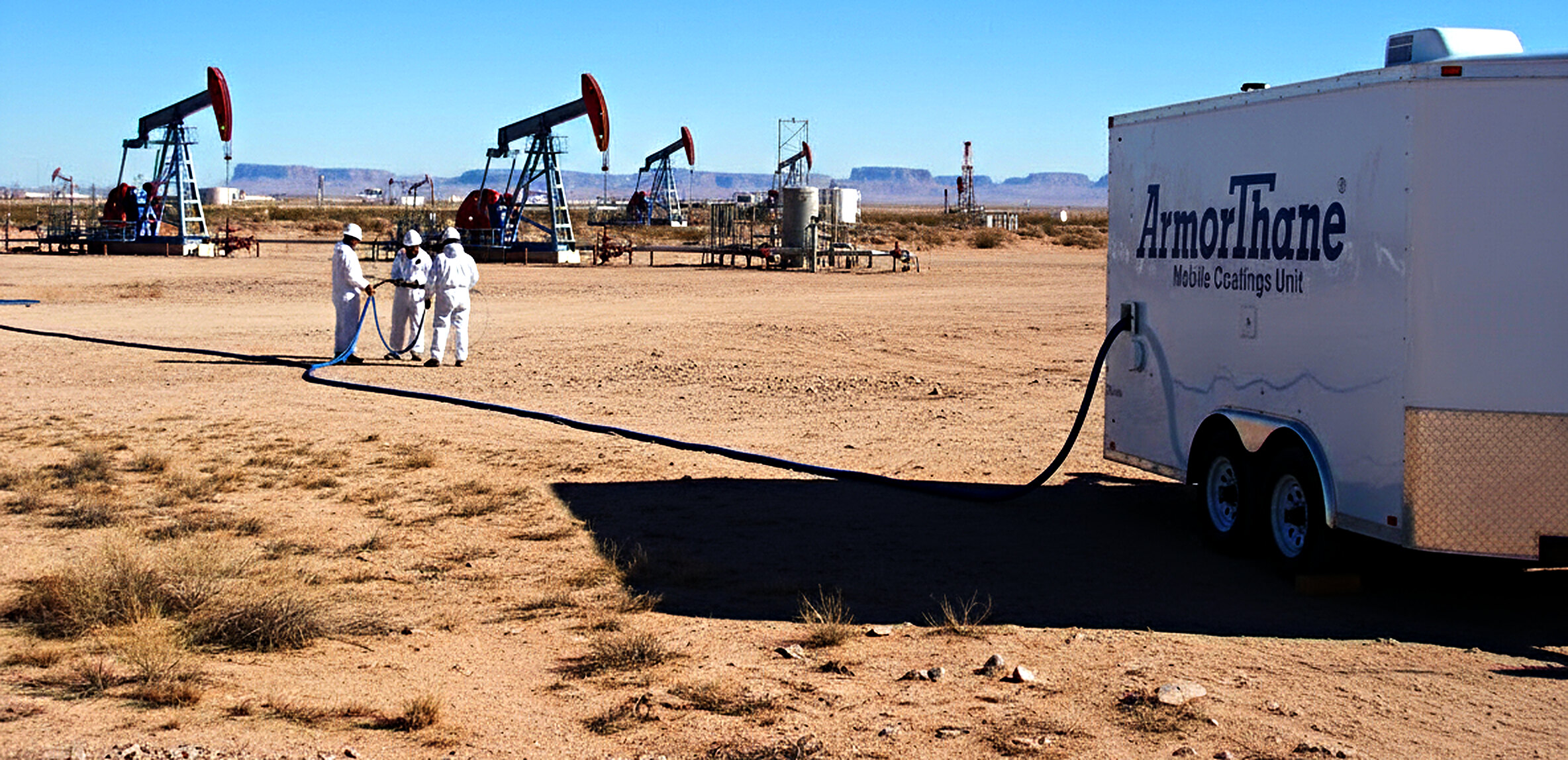
ArmorThane has made polyurea and polyurethane coatings since 1989 and has applicators in more than 50 countries. We don't sell franchises. We sell equipment and material and train independent, certified applicators who run their own businesses, with no franchise fee, no dealership fee and no royalty.
New applicator systems start at $25,000, turnkey: spray equipment, training, first chemical, and prep and safety gear. Low-pressure 1:1 equipment starts as low as $20,000. Training is on site or virtual and ends in certification, backed by a 24/7 tech line, and third-party equipment financing is available. ArmorThane's markets run from spray-on bedliners and RV roofs to floors, containment and spray foam insulation.
Want the work, not the business? Find a certified applicator near you. Still deciding? Our newsletter sends new startup guides and cost updates, and our applicator program FAQ covers how it works.
Franchise fee and royalty
No franchise fee, no dealership fee and no royalty.
Turnkey applicator system
Equipment, training, first chemical, and prep and safety gear.
Tech line and certification
On-site or virtual training ending in certification.
Put the franchise fee into equipment you own.
See what ArmorThane's bedliner applicator program includes: turnkey equipment from $25,000, on-site or virtual training ending in certification and a 24/7 tech line, with no franchise fee and no royalty.
Comparing franchise offers? See how our program compares with a franchise →
Low-cost franchise FAQ
What is the cheapest franchise to start?
Of the brands we verified on September 27, 2026, the lowest published Item 7 starting figures are Cruise Planners ($1,945–$20,505), Jazzercise ($3,935–$40,725) and Proforma ($7,030–$27,695), per VettedBiz summaries of their FDDs. Their royalties differ widely: 2%, 20%, and 7% plus 1% for marketing. Compare the total over the full term, not only the entry price.
How much are franchise fees?
Initial franchise fees are disclosed in Item 5 of the FDD. The SBA put standard fees at $20,000–$50,000 in 2017. Among the low-investment brands we checked, fees ran from $0 (Proforma) to $58,500 (Pillar To Post), and the floor coating franchises we reviewed charge $40,000–$54,900. The fee is usually a small part of the Item 7 total.
What are franchise royalty fees?
A royalty is an ongoing payment to the franchisor, usually a monthly percentage of gross sales, disclosed in Item 6. The SBA says royalties run from about 4% to 12% or more. The brands we verified range from 2% (Cruise Planners) to 20% (Jazzercise), and many add an ad or brand fund of 1% to 4%.
What is Item 7 in a Franchise Disclosure Document?
Item 7 is the estimated initial investment: a table of startup costs with a low and a high figure for each line, including the franchise fee, equipment and other opening costs. The FTC requires it to include additional funds for at least the first three months. Budget from the high column and add your own living costs if no draw is included.
How long do I have to review a franchise disclosure document?
Under the FTC Franchise Rule, you must receive the disclosure document at least 14 calendar days before you sign a binding agreement or pay the franchisor or an affiliate anything. Use that time to read every item, call franchisees listed in Item 20, and have a franchise lawyer and an accountant review it.
Can a franchisor tell me how much money I'll make?
Only in Item 19 of the FDD. The FTC says any claims about sales, income or profits must be in Item 19, with a reasonable basis and written substantiation. Earnings figures offered anywhere else are a red flag. If there's no Item 19, ask current franchisees about their results.
Are there franchises under $10,000?
A few publish Item 7 ranges that start below $10,000: on VettedBiz's summaries of 2025 FDDs, Cruise Planners starts at $1,945, Jazzercise at $3,935 and Proforma at $7,030. The high ends run to $20,505, $40,725 and $27,695. The low end assumes the leanest possible setup, so budget from the high end.
How much does a LINE-X franchise cost?
The LINE-X franchise site, read September 27, 2026, lists a $50,000 franchise fee with 25% off for U.S. veterans, startup costs beginning at $401,815, $100,000 in liquid assets and $350,000 in net worth. Franchise Gator shows a lower $155,000–$334,000 range and no franchise royalty fees. Confirm current figures in Items 5, 6 and 7.
Is ArmorThane a franchise?
No. ArmorThane charges no franchise fee, dealership fee or royalty. It makes polyurea coatings and spray equipment and trains independent, certified applicators. New applicator systems start at $25,000 turnkey, including equipment, training, first chemical, and prep and safety gear; low-pressure 1:1 equipment starts as low as $20,000. Third-party equipment financing is available.
Is a low-cost franchise better than starting a business on my own?
It depends on what you're buying. A franchise gives you a brand, a system and often a territory in exchange for an upfront fee and royalties for the whole term. Starting independently, or as a manufacturer-trained applicator, costs less in fees but puts marketing and reputation on you. Run both routes through the 10-year calculator.
Written from the FTC Franchise Rule, the FTC's consumer guide to buying a franchise, SBA guidance, franchisor websites and FDD summaries read September 27, 2026, and 35+ years of training independent applicators. Reviewed September 27, 2026.
Methodology and sources
Franchise figures are as published by the franchisor or directory named, read September 27, 2026; directory summaries can lag the current FDD, and where a franchisor's own figure differed we show it. The calculator applies Item 5 and Item 6 fees to sales figures the reader enters and makes no projection of any brand's results. ArmorThane is not a franchisor. This is not legal, tax or financial advice.
- FTC, 16 CFR Part 436 (Franchise Rule), current eCFR text: ecfr.gov
- FTC, A Consumer's Guide to Buying a Franchise (Dec. 2023): ftc.gov
- SBA, Buy an existing business or franchise (Sept. 2026): sba.gov
- SBA blog, Franchise Fees: Why Do You Pay Them, and How Much Are They? (Apr. 2017): sba.gov
- VettedBiz franchise profiles, FDD years as shown (read Sept. 2026): vettedbiz.com
- Cruise Planners Franchise (read Sept. 2026): cruiseplannersfranchise.com
- Kumon Franchise (read Sept. 2026): kumonfranchise.com
- America's Best Franchises, Best Franchises Under $50K: americasbestfranchises.com
- Franchise Direct, Low-Cost Franchise Opportunities: franchisedirect.com
- LINE-X Franchise (read Sept. 2026): linexfranchise.com
- Franchise Gator, LINE-X and Spartan Floor Coatings: franchisegator.com
- Franchise Chatter, Garage Force (Aug. 2026) and GarageExperts (Jul. 2026) franchise reviews: franchisechatter.com
- Granite Garage Floors, Franchise Investment: granitegaragefranchise.com
- Entrepreneur, Wise Coatings directory (data Dec. 2022): entrepreneur.com
- Penntek, Become a Dealer: penntek.com
- Xtreme Polishing Systems, Epoxy Flooring as a Side Business (May 2026): xtremepolishingsystems.com
- ArmorThane, Become a Certified Bedliner Applicator (Aug. 2026) and Start A Protective Coatings Business: armorthane.com
Start your coatings business with ArmorThane.
Tell us what you want to spray and where you are. An ArmorThane specialist will walk you through the equipment, chemicals, training and startup cost for the work you want to do.
- Equipment package matched to your applications
- Hands-on training and applicator certification
- Technical support once you are spraying
Comparing low-cost franchises? Price a no-fee coatings business too.
Tell us where you are and what you do now. We'll walk you through ArmorThane equipment, on-site or virtual training and startup costs, with no franchise fee, no dealership fee and no royalty.
- No franchise fee, royalty or dealership fee
- Turnkey applicator systems from $25,000
- Certification training and a 24/7 tech line
- Already a contractor? Add coatings to your services