Bedliner Franchise Costs & Alternatives: The 2026 Guide
One brand in this entire industry actually sells franchises. Everyone else sells a dealer program. Here’s what each one really costs — from the filings, not the brochures.
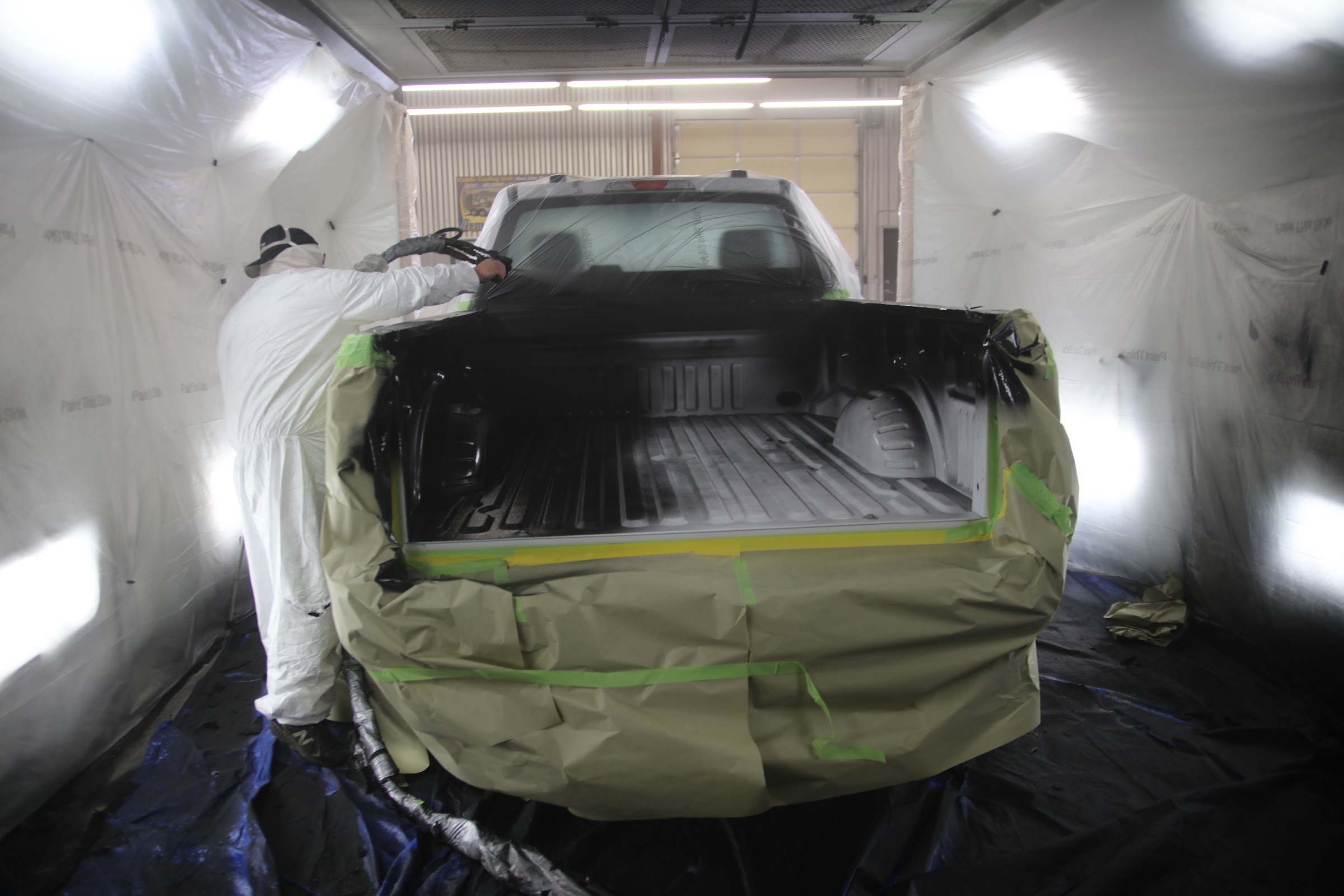
Start a spray-on bedliner business
Spray bedliners for a living.
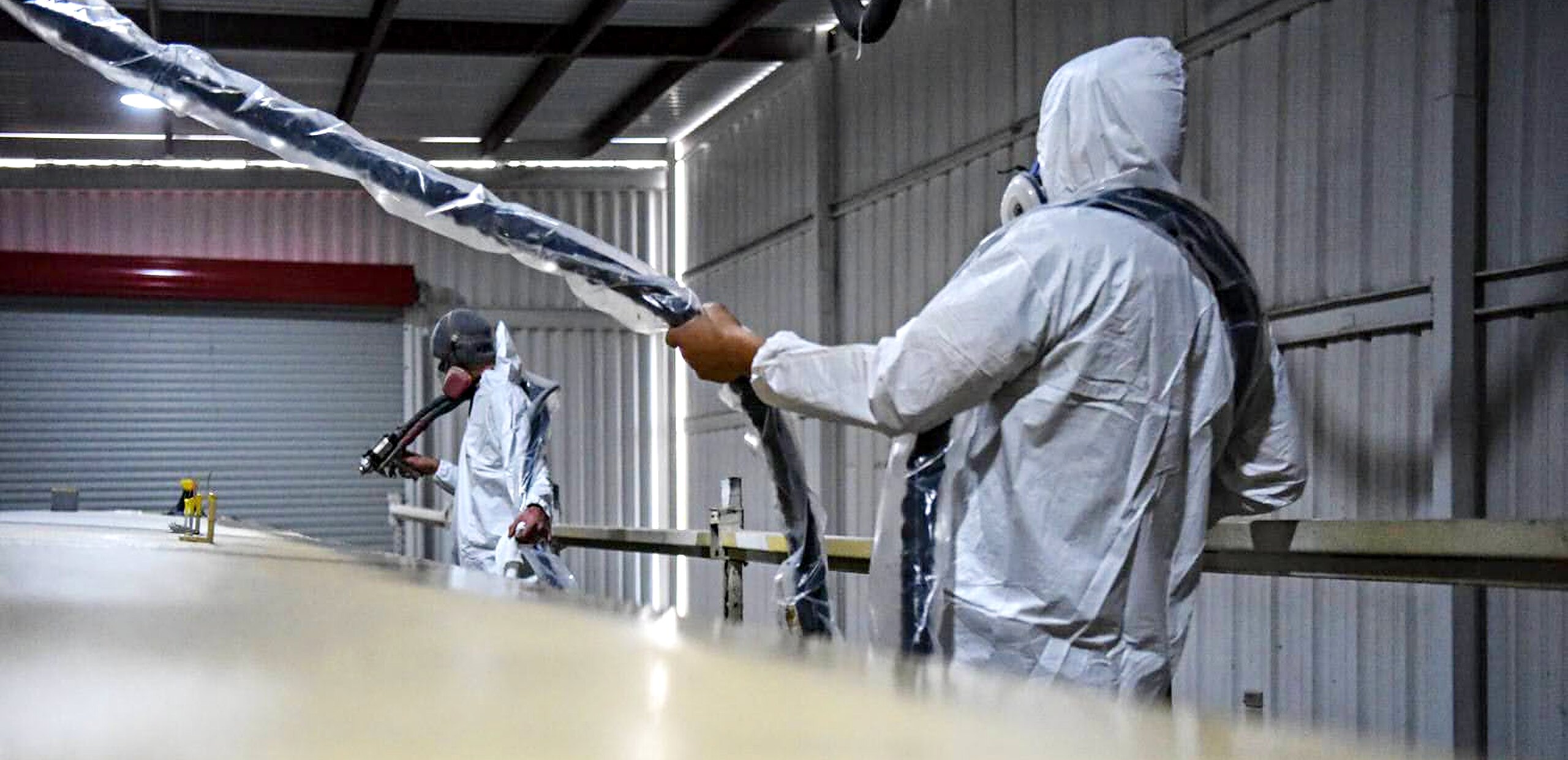
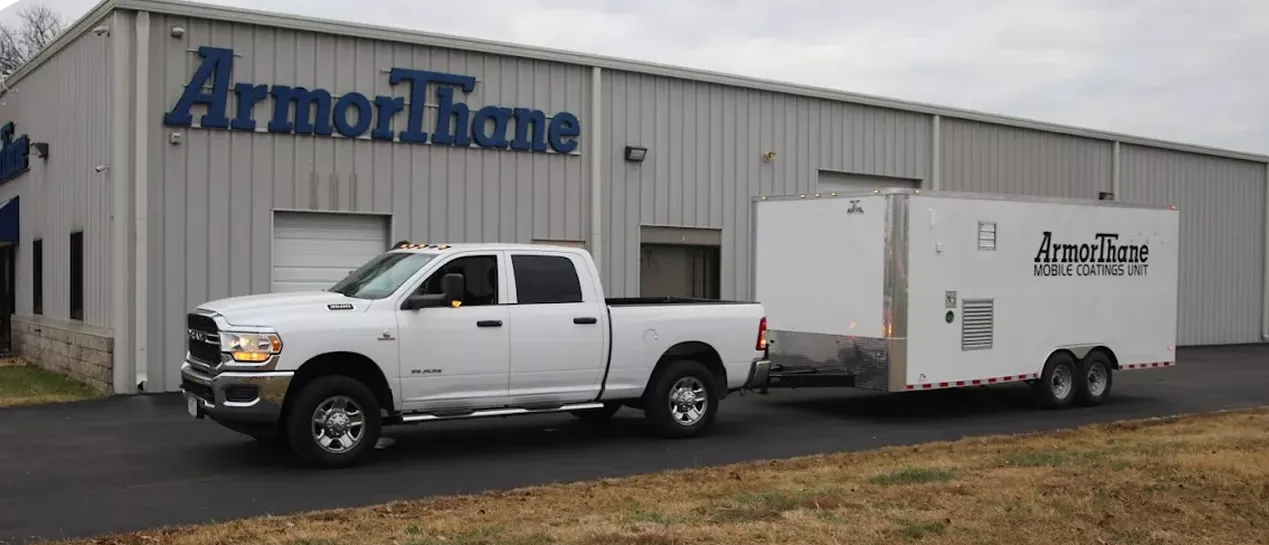
ArmorThane sets you up to do this work, and you own the business. We make the chemistry, build the rigs, train you hands-on and answer the phone when a job gets difficult. You pay no franchise fee and no royalties. It has been that way since 1989.




- $0
- franchise fees or royalties
- 35+
- years in business
- 50+
- countries with applicators
- 24/7
- technical support
$50,000
Plus 6% royalty, 1.5% national marketing, 1.5% local, and $600/mo POS. Total investment $401,815–$1,002,652.
433 → 142
Two-thirds of the system gone in 24 months after a 2023 change to the franchise terms. From their own FDD.
$0
No franchise fee, no royalty, no marketing fund, no territory quota. Equipment from $25,000.
- Let me save you a few weeks of research with one sentence.
There is almost no such thing as a bedliner franchise.
I don’t mean that as a slogan. I mean it literally, in the legal sense of the word. I went looking through the Wisconsin state franchise registry — one of about fourteen states where a company has to register before it can legally sell you a franchise — and pulled the full list of active registrations. There are roughly 1,850 companies on it. Sandwich shops, gyms, tax prep, lawn care, all of it. The FTC's consumer guide to buying a franchise explains what any bedliner franchise must disclose before you sign. If you would rather not pay a franchise fee, compare the ArmorThane dealer program, see real numbers in bedliner equipment cost and read become a bedliner applicator.
Exactly one of them sprays truck beds.
Every other brand you’ve been comparing — Rhino, Bullet Liner, Scorpion, Vortex, Speedliner, Ultimate Linings, Armadillo, us — runs a dealer program. Not a franchise. Some of them say so on their own website in bold type. And the difference between those two words is worth somewhere north of two hundred thousand dollars over five years, which is why it’s worth ten minutes of your attention before you sign anything.
- The Line That Actually Matters

What separates a franchise from a dealer program
The FTC has a test for this. Three parts, spelled out in 16 CFR 436.1(h), and a relationship is a franchise when all three are true at once:
01 — Trademark
You get the right to operate under the company’s brand name and marks.
Educate
The company exerts significant control over how you run the business — or provides significant assistance.
Optimize
You make a required payment to them. The threshold is just $735.
That third one is nothing. Every program in this industry blows past $735 in the first hour of the first conversation.
So the only element genuinely in play is number two — how much control the company exercises over your operation. Sell somebody chemical and a machine and wave goodbye, and you’re a supplier. Tell them what their sign looks like, what hours they keep, what point-of-sale system they run, what they’re allowed to buy and from whom, and hand them a twenty-one item list of required services — and you’re a franchisor, with all the disclosure obligations that carry.
Here’s what actually changes for you when a program is a registered franchise. They have to hand you a Franchise Disclosure Document at least fourteen days before you sign anything or pay them a dollar. That document is twenty-three standardized items, and it includes the stuff nobody volunteers: every fee, the litigation history, the bankruptcy history, and — this is the important one — a three-year table of exactly how many locations opened, closed, transferred and got terminated.
A dealer program has no such obligation. Which doesn’t make it worse, and I want to be careful here, because I’m obviously not neutral. It means the burden of asking good questions shifts entirely onto you. Nobody’s going to hand you a document.
Now let’s look at what that disclosure actually reveals about the one real franchise in this business.
- From The Filing, Not The Brochure
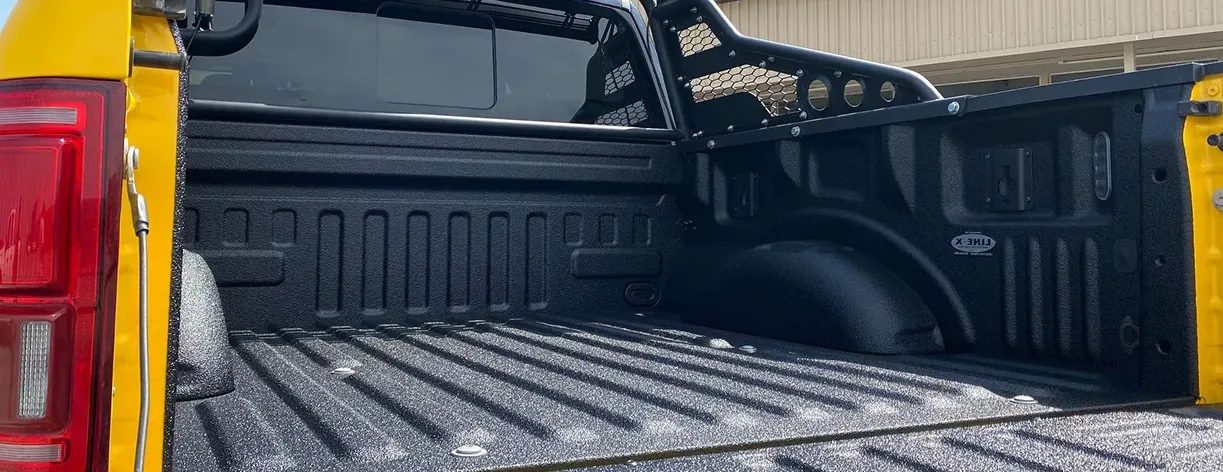
LINE-X in 2026: what the current FDD says
Almost every number published about LINE-X on the internet right now is wrong.
Entrepreneur, Franchise Direct, Franchise Gator, most of the aggregator sites — they’re all running the 2024 document. LINE-X filed a new FDD dated January 15, 2026, amended July 3, 2026. I pulled it from the Wisconsin registry, where anybody can download it for free. Here’s what’s actually in it.
Up front
| ITEM | AMOUNT |
|---|---|
| Initial franchise fee | $50,000 |
| Initial training fee | $8,000 |
| Initial software package | $3,000 |
| Initial inventory (LINE-X Essentials) | $4,000 |
| Grand opening marketing (minimum required spend) | $5,000 |
| Total initial investment, all in | $401,815 – $1,002,652 |
That investment range is the number to sit with. The low end is four hundred grand. And of that total, between $254,815 and $577,152 goes to LINE-X or an affiliate — not to your landlord, not to your electrician. To them.
Worth noting in fairness: the FDD also discloses that “in the past year, we have sold franchises for an Initial Franchise Fee ranging from $0 to $40,000.” So the fifty is a list price, and it’s negotiable. Veterans get 25% off, capped at $10,000. Multi-unit operators pay less.
Ongoing
| ITEM | RATE |
|---|---|
| Royalty on bedliner services | 6% of gross revenue |
| Royalty on other vehicle upfit services | 2% of gross revenue |
| National marketing fund | 1.5% of gross revenue |
| Local marketing (required spend) | 1.5% of gross revenue |
| Point-of-sale system | $600 / month |
| Compliance royalty — if you source from an unapproved supplier | 12% of gross revenue |
- Read that last line again.
If you buy a part, a tool, a service, or a chemical from someone LINE-X hasn’t approved, your royalty rate doubles to twelve percent of everything you sell. And separately, Item 1 of the FDD states they may terminate your franchise agreement entirely if you purchase unapproved products without written permission.
The chemical is mandatory and single-sourced. Item 8: “We and/or an affiliate of ours are the only approved suppliers of select products and other chemicals which are the core ingredient of the LINE-X brand Coating Products.” Orders route through LINE-X Direct. Roughly $2,700 a set. The FDD estimates required purchases run about 25% of your ongoing expenses.
The agreement term is ten years, with one ten-year renewal available — conditioned on you signing “the then-current form of franchise agreement,” which the FDD notes “may contain terms and conditions that are materially different from your original Franchise Agreement.” There’s a non-compete covering the term plus two years afterward.
And there is no Item 19. LINE-X makes no financial performance representation at all. No average unit revenue, no earnings claim, nothing. Their exact words: “We do not make any representations about a franchisee’s future financial performance or the past financial performance of company-owned or franchised outlets.”
- Item 20, Same Document
The part that isn't in the brochure
Every FDD carries an outlet table. It is a regulator-supervised count of how many locations the system opened and lost, three years running. Here is LINE-X’s, fiscal years ending September 30.
Two-thirds of the system, gone in twenty-four months. Company-owned outlets across all three years: zero. Projected new franchised openings for the coming fiscal year, per their own filing: zero.
What happened isn’t a mystery, and LINE-X discloses it themselves in Item 1. For twenty-odd years they ran a commission model — they made their money on chemical sales, and franchisees paid no royalty. Then, in November 2023, the conversion: 6% royalty, a marketing fund, $600 a month for the POS, and a list of required core services.
The FDD’s own phrasing for what followed is a small masterpiece of understatement — “a significant number of then-existing franchisees did not wish to participate.”
Significant. Roughly 190 to 200 of them, running about 217 stores between them and something close to 75% of LINE-X’s revenue, organized into an association and negotiated their way out the door. Termination notices went out in March 2024. The American Association of Franchisees and Dealers publicly announced the mass exit that April, and there was a fight over whether the non-compete clauses were even enforceable.
I’m not telling you this to dunk on a competitor. Well — partly. But mostly because it is the clearest illustration you will ever get of the actual structural risk in a franchise agreement, and it has nothing to do with the fee:
- You are signing a ten-year contract with a company that can change the economics of your business..
And how much room you have to say no is whatever your attorney can dig out of the paperwork.
Those operators didn’t do anything wrong. They built businesses under one set of terms and got handed another, and some of them had been at it two decades by then — long enough to have kids working the counter. The exit door had a two-year non-compete bolted to it.
None of which is unique to LINE-X. That risk sits inside every franchise agreement in every industry. It’s the trade. You’re buying a system and a brand, and the price is that you don’t own the terms.
- Everybody Else
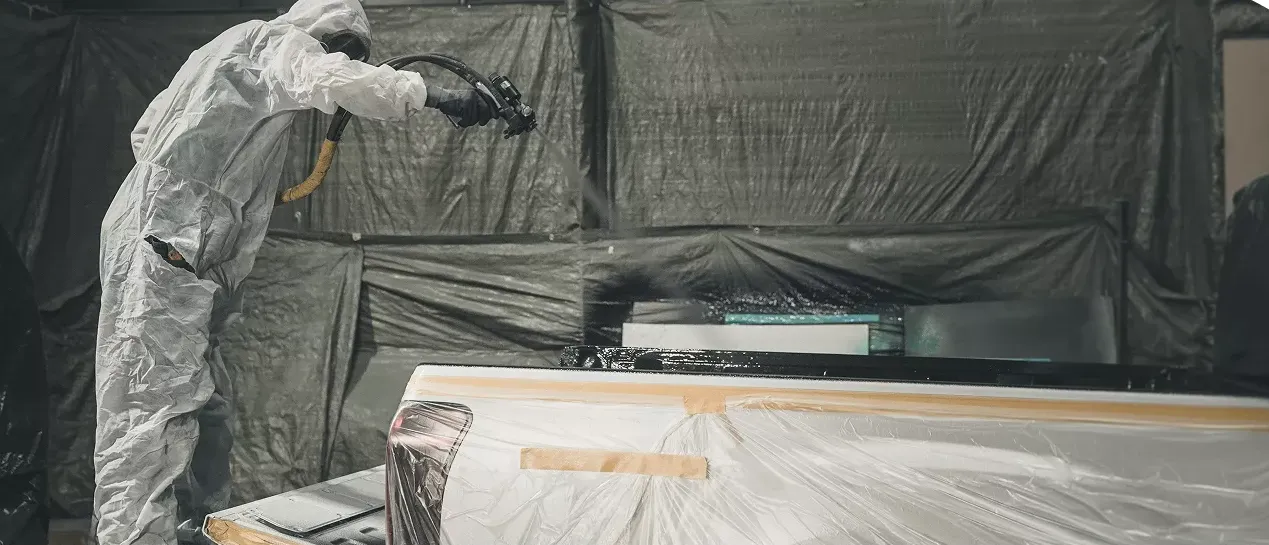
The rest of the field, and what they actually charge
None of these are franchises. Here’s what each publishes — and I’ve noted where a company publishes nothing, because that’s information too.
Line-x
- Franchise fee + 6% royalty
The only registered franchise in the category. Total investment $401,815–$1,002,652. Mandatory single-source chemical, 12% penalty rate for buying off-list, 10-year term, 2-year non-compete.
Rhino Linings — From $12,000
- No royalty, no marketing fund
The most direct about it in the whole industry. Packages scale to expected weekly volume. Over 2,000 businesses in nearly 80 countries — though that’s a global figure; they publish no US count, no territory terms, and no investment ceiling.
“Rhino Linings is a not a franchise. All businesses are independently owned and operated.” (typo theirs)
From $20,000
- Royalty not published
Built its whole pitch on the distinction — they run a page literally titled “The Un-Franchised Alternative,” attacking ongoing fees, purchase quotas and geographic limits. Fair enough. Though they publish no royalty figure of their own, no dealer count and no territory terms, which is a lot of critique-first-disclose-later for my taste.
Scorpion Coatings
$1,500 – $8,445- Three startup packages
Publishes real pricing — credit where it’s due, most of this industry doesn’t. But every package is a low-pressure gun setup: a Professional Series spray gun and a stand, no proportioner anywhere in the lineup. Their pages promise “NO purchase quotas to meet.”
Their Scorpion Pro territory program requires annual purchases equal to 10% of territory population in dollars — their own example works out to $59,000/year. That’s a quota, on a different page from the one promising none.
~$20,000
- Complete system, open territory
“No hidden or lump sum franchise fees.” Low-pressure KV5006 as the core unit, and territory is explicitly unrestricted — “Vortex customers are not restrained in any way.” Also an authorized Graco distributor if you want to go high pressure.
No pricing published
- You have to call
States “No Franchise fees.” Equipment is low pressure only — a hopper gun or pressure pot, which their own site describes as suited to 4–100 gallons a month. Their dealer count appears as both “more than 2,000” and “over 3,000” on the same website.
No terms published
- Nothing disclosed
No pricing, no royalty, no territory terms, no dealer count. Owned by IXS Coatings — the same parent company as LINE-X. Which turns out to be the most interesting fact on this page.
Armadillo Liners
- "NO FRANCHISE FEES"
High pressure, cartridge, and mobile rig options; M91 hybrid polyurea; on-site training. Third-party financing offered. Royalty, territory and dealer count aren’t disclosed.
ArmorThane
$25,000 / $50,000- Low pressure / high pressure
No franchise fee, no royalty, no marketing fund, no territory quota. Complete packages including proportioner, hose, gun, first material, prep and safety gear, training and certification. 35+ years, no franchise agreement ever.
- One Parent, Two Models
The tell
In September 2018, LINE-X and Ultimate Linings combined under a single parent company, IXS Coatings. Same owner. Two brands.
The announcement describes LINE-X as operating “retail franchises” and Ultimate Linings as operating through “dealers.” And it draws a hard line between them:
“LINE-X franchises will not offer Ultimate Linings products. Conversely, dealers offering Ultimate Linings products will not offer LINE-X products.”
One company, deliberately running a franchise network and a dealer network in parallel, keeping them walled off from each other.
Think about what that means. If the franchise structure were simply superior — better economics, better operator outcomes, better everything — you wouldn’t maintain a dealer network alongside it. You’d convert it. The fact that a sophisticated parent company runs both, on purpose, tells you these are two different products for two different buyers.
The franchise is for someone who wants a system handed to them and will pay a percentage forever for it. The dealer program is for someone who’d rather own their own margins.
Neither is wrong. But nobody in this industry says it out loud, so I will.
- Full Disclosure, We're Not Neutral
Where we fit
ArmorThane is a dealer model. Has been for thirty-five-plus years, and Garry built it that way on purpose — the idea being that you shouldn’t have to rent your own business back from somebody who didn’t build it.
No franchise fee. No royalty. No marketing fund. No percentage of your gross, ever. No territory purchase quota. No compliance penalty for buying a compressor from whoever sells compressors near you.
Low Pressure
$25,000
- Where most first-timers should start
Proportioner, 150 ft line set, gun, first material, prep and safety gear, training, certification. Runs on standard shop power — no service upgrade, no transformer.
High Pressure
- When throughput starts to matter
PMC or Graco proportioner, heated hose, gun, polyurea, everything above scaled up. Faster cure, higher throughput — and it opens the industrial work, which pays considerably better per hour than truck beds.
That’s it. That’s the arrangement. You buy equipment, you buy material, you run your business. The full equipment breakdown is here if you want the machine-by-machine detail.
- And here's what you give up
You don’t get a national brand pulling walk-ins. Nobody’s driving past your shop because they saw a TV spot. You have to market yourself — a website, a Google Business profile, relationships with dealerships and fleet managers, and the discipline to actually work on that when you’d rather be spraying.
Some people aren’t built for that, and for them a franchise is a legitimate choice. I won’t pretend otherwise, and anybody who tells you a franchise is always a ripoff is selling you something.
But if you already know how to find customers, paying nine percent of your gross for the rest of your working life to have someone else find them is a very expensive way to solve a problem you don’t have.
- Run It Yourself
The five-year math, done honestly
Say you build a shop doing $300,000 a year in bedliner work. Realistic for an established independent operation
Initial franchise fee (list) — Training + software + initial inventory — Royalty — 6% × $300K × 5 years
$15,000National marketing fund — 1.5% × 5 years — $22,500 — POS system — $600/mo × 60 months
$90,000Five-year total paid to LINE-X — $213,500 — Required local marketing spend — 1.5% × 5 years
$36,000Minimum grand opening marketing — Five-year total of fees and required spend — $241,000
$5,000I’ve separated those last two because that money goes to local vendors rather than to LINE-X — you’d probably spend something on marketing anyway. The honest number for what leaves your business because of the agreement is $213,500 over five years, and it does not include one drum of material, one hose, or one hour of machine time.
ArmorThane, same shop, same five years — Franchise fee — None — Five-year total in fees
- Slow quarter?
Your chemical spend drops with it. Your royalty doesn’t.
- Ask Us Too
How to evaluate any of these, including us
Whoever you end up calling, ask these. The answers will tell you more than any comparison chart.
"Is this a franchise? If yes, send me the FDD."
Federal law requires it at least fourteen days before you sign or pay. If they call it a franchise and can’t produce one, something’s wrong. If they say it’s not a franchise, that’s a fine answer — just know you’re now responsible for asking everything else on this list.
"What are your unit counts for the last three years?"
A franchisor has to disclose it. A dealer program doesn’t — but a confident one will tell you anyway, and the ones that dodge are telling you something too. Watch especially for a worldwide number handed over when what you asked about was the United States.
"What happens at renewal?"
The most expensive question on this list. Can they change the terms? Can they resize my territory? Is there a non-compete if I leave?
"Is there a purchase quota or annual minimum?"
Ask it plainly, and ask whether it’s tied to keeping a territory. Then read every page of their website, not just the one they sent you.
"Who do I call at 9 p.m. when a liner is fish-eyeing?"
Not a financial question. It’s the one that’ll matter most in your first six months.
- Straight Answers
Bedliner franchise FAQ
Is LINE-X a franchise?
Yes — and it's the only one. LINE-X LLC is a registered franchisor with a current Franchise Disclosure Document and active state registrations, and it's the sole spray-on bedliner brand I could verify as such anywhere. Odd wrinkle in its history: LINE-X ran as a license program from 1993 to 2000, then converted every one of those licensees onto franchise agreements.
Is Rhino Linings a franchise?
No. Their own dealer FAQ says it directly: "Rhino Linings is a not a franchise. All businesses are independently owned and operated." No franchise fees and no marketing royalties. It's a dealer program.
How much does a LINE-X franchise cost?
Per the FDD dated January 2026, the initial franchise fee is $50,000 and total initial investment runs $401,815 to $1,002,652. Ongoing: 6% royalty on bedliner services, 2% on other vehicle upfit services, 1.5% national marketing fund, 1.5% required local marketing, and $600 a month for the POS system. Most figures published elsewhere online are from the superseded 2024 document.
What's the cheapest way to start a bedliner business?
Scorpion's entry package is $1,500, but that's a hopper-gun kit with material for four or five trucks — a way to try the work, not a business. For an actual shop, low-pressure systems start around $12,000 (Rhino) to $25,000 (ArmorThane, complete with training and certification), and high-pressure systems run roughly $50,000. The gap between those numbers is mostly what's bundled: hose, gun, first material, training and certification, or just the machine.
Do I need a franchise to spray bedliners?
No. The overwhelming majority of spray-on bedliner businesses in North America operate as independent dealers or applicators under a brand's dealer program, with no franchise agreement of any kind.
What's the difference between a franchise fee and a dealer buy-in?
A franchise fee buys the right to use the brand and system — it's a payment for permission, and it buys no physical goods. A dealer buy-in is typically a purchase: equipment, first material, training. One is rent; the other is inventory. That's why a $50,000 franchise fee and a $50,000 equipment package are not remotely comparable numbers, even though they look alike in a spreadsheet.
Does ArmorThane charge royalties?
No. No franchise fee, no royalties, no marketing fund, no territory quota. You buy equipment and material.
Can I switch brands later?
With a dealer program, usually yes — the equipment is yours, though chemistry is formulated per system and you'd want to talk through compatibility before assuming a machine transfers cleanly. Under a franchise agreement, a non-compete typically applies during the term and for a period after. LINE-X's runs two years past termination.
Is a bedliner franchise worth it?
Depends entirely on whether you can generate your own customers. If you can't and don't want to learn, you're buying marketing and a playbook, and a percentage of gross is what that costs. If you can, you're paying a permanent tax to solve a problem you've already solved. Be honest with yourself about which one you are — that answer, not the fee schedule, is the whole decision.
Ask us the hard version
Call and ask us every question on that list — 417-831-5090 in the States, 780-444-6200 in Canada. Ask what our chemical costs per truck. Ask what happens if you want out. Ask what we don’t do well
And ask the same questions of everyone else you’re talking to. If we lose that comparison on the merits, we deserve to.
The one thing I’d ask: don’t sign a ten-year agreement because a brochure was well designed. Two hundred-odd LINE-X operators can tell you how that ends when the terms change in year eight.
See what it takes to add polyurea
Tell us about your business and an ArmorThane specialist will send the equipment, material and training breakdown for adding spray-applied coatings, then walk you through it by phone.
- Equipment package options and pricing
- Material cost and job pricing guidance
- Hands-on spray training
- No franchise fee and no royalties
More to read on the ArmorThane business
Short reads from ArmorThane on Issuu. Tap one to open it right here.