Start a Painting Business and Price It Right
Licenses, EPA lead-safe rules, insurance, startup costs and production-rate bidding, plus a fair look at adding higher-ticket coatings like floors and polyurea. All sourced.
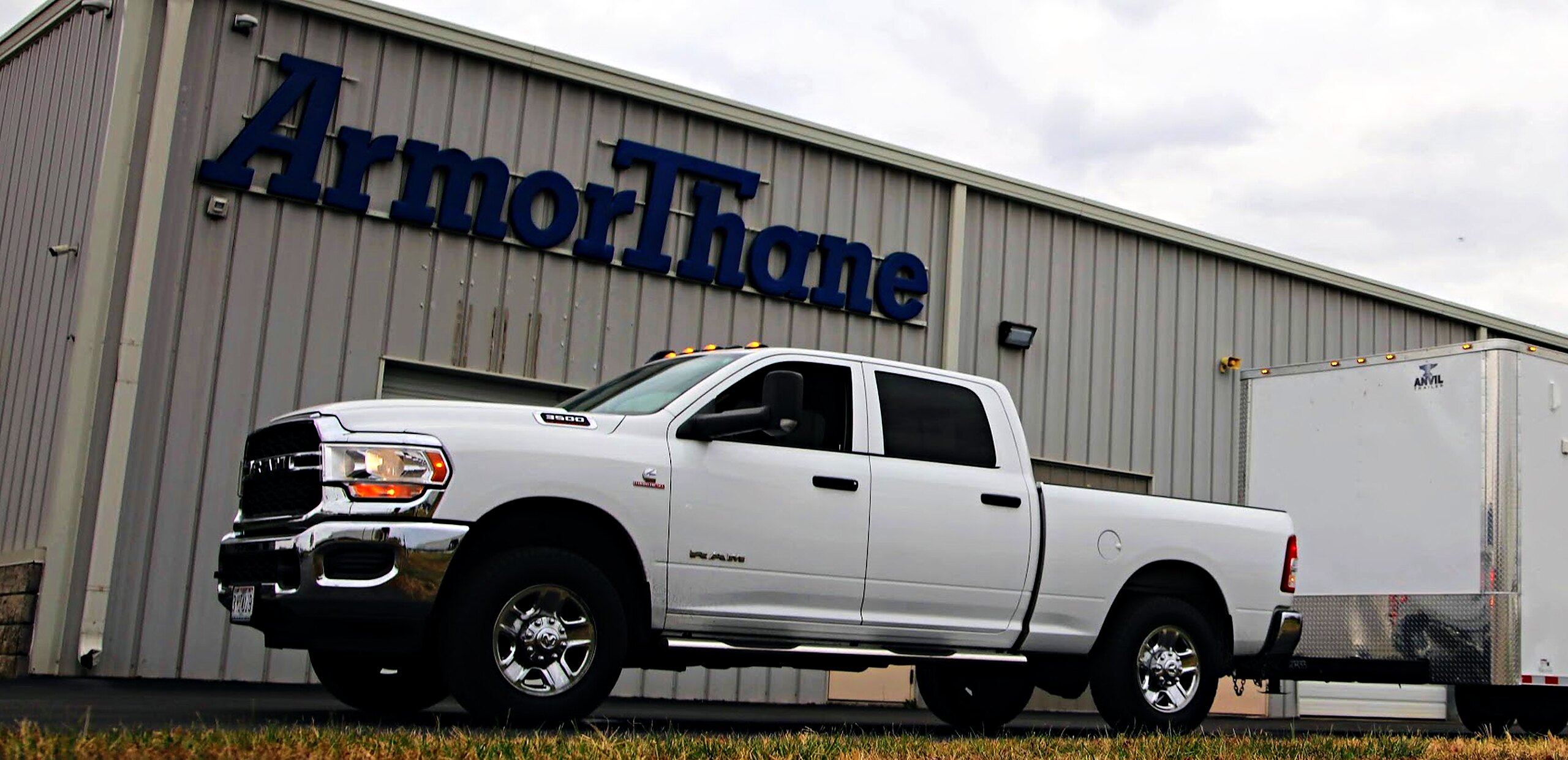
A painting business is one of the cheapest trades to start: ladders, brushes, a truck and a phone number will get you a first job. That low bar is also why the market is crowded. The painters who last price every job from hours and gallons, follow the lead-safe rules on older homes and keep adding work customers will pay more for.
Register the business, check your state's contractor license rules, and if you'll disturb paint in pre-1978 homes, get EPA RRP certified ($300 firm fee plus an 8-hour renovator course). Insure it: general liability runs about $72 a month. Wexford Insurance puts startup at $7,950–$26,800, much of it a used van or truck. Then bid from production and spread rates, not guesses. Price a paint job or test a coatings add-on.
We make polyurea, floor and roof coatings and train independent applicators, including contractors who add coatings to a trade they already run. This guide covers the painting business on its own terms first, then shows with numbers where a painter can add higher-ticket coating work and where it's a different trade.
- 1Is painting a good business?
- 2Eight steps and a business plan
- 3Licenses and registration
- 4EPA lead-safe (RRP) rules
- 5Insurance costs
- 6Startup costs and equipment
- 7How to bid a paint job
- 8Painting bid calculator (interactive)
- 9Finding customers
- 10Adding protective coatings
- 11Coating add-on payback calculator (interactive)
- 12Painting business FAQ
Is painting a good business to start?
There's steady demand and plenty of competition. The Bureau of Labor Statistics counted 326,900 construction and maintenance painters in 2025, and 31% were self-employed. It projects 3% growth from 2025 to 2035 and about 24,900 openings a year. The median painter earned $49,400 in May 2025 ($23.75 an hour), roughly what you'll pay a good employee.
BLS lists no formal education requirement, so it's easy to start and hard to stand out. Angi's 2026 data, as reported by NerdWallet, puts the average interior job at about $2,021 and the average exterior at $3,177. Growth usually comes from pricing (Housecall Pro's advice: "Price from labor hours, not square footage"), clean paperwork on older homes, reviews and a service mix that raises the average ticket.
Eight steps to start a painting company
Pick your lane
Residential repaints, new construction, commercial or a specialty such as cabinets. Lead with one.
Write a short plan
Services, customers, pricing method, startup budget and marketing (below).
Set up the business
Choose a structure, register it, get an EIN from the IRS and open a separate business bank account.
Check licensing
Rules vary by state and city. Examples below.
Get lead-safe certified
Required to disturb paint in homes built before 1978. What it takes.
Insure it
General liability first, workers' comp once you hire, commercial auto for the truck.
Buy the kit and build a pricing system
Ladders, drop cloths, brushes and rollers, then an airless sprayer. Bid from production rates.
Market locally, then add services
Photos, reviews and referrals first; later, add-ons such as floor and polyurea coatings.
What goes in a painting business plan
Unless you're borrowing, a painting business plan can fit on two pages. Cover what you'll paint (and won't), who pays you (homeowners, property managers, realtors, builders), how you'll price, what you'll spend to open, how jobs will find you, and what a year looks like: jobs per week times average ticket, minus labor, paint, overhead and your own pay. For the pricing target, a blog on the Painting Contractors Association site (PCA, founded in 1884 and formerly PDCA) uses this split of the selling price:
PCA blog, "Top Painting Companies Don't Guess on Pricing" (November 2023). Housecall Pro's 2026 guide suggests target margins of 20–40% depending on overhead. Replace both with your own job-cost data after a season.
Licenses and registration
There's no national painting license. Some states license painters, others leave it to cities and counties, and nearly all require a business registration. Two examples:
C-33 Painting and Decorating
Covers surface prep "by scraping, sandblasting or other means" and applying paints, stains, varnishes and similar materials "for purposes of decorating, protecting, fireproofing and waterproofing." Since January 1, 2025, unlicensed work is capped at $1,000, and only with no permit and no employees.
R-34, C-34 and CR-34
Separate residential, commercial and dual painting licenses. The scope includes paint, decorative texture and "liquid floor and wall coatings." A license is generally required "if labor and materials exceed $1,000 OR a permit is required."
Wexford Insurance's 2026 estimate lists a business license at $50–$200 and a contractor's license at $100–$500. Where a license bond is required, Insureon's median for painters is about $9 a month. Check your state contractor board, city and county before you quote.
EPA lead-safe certification for pre-1978 homes
If you're paid to disturb paint in housing or child-occupied facilities built before 1978, EPA's Renovation, Repair and Painting (RRP) rule applies. It has been fully in effect since April 22, 2010, and it covers the scraping and sanding on a lot of repaint work.
| Requirement | What EPA says |
|---|---|
| Who needs it | Anyone paid for work that disturbs paint in housing, child care facilities and kindergartens built before 1978 |
| Small-job exclusion | 6 sq ft or less per room inside, or 20 sq ft or less outside (not window replacement or demolition) |
| Firm certification | $300, applied for online; good for 5 years; processing takes "a week or two" |
| Renovator training | 8-hour course with 2 hours hands-on; 4-hour refresher; online refresher certifies for 3 years, hands-on for 5 |
| On every job | A certified renovator assigned and on site while signs go up, containment is set and cleaning is done; other workers trained on the job, documented |
| Work practices | Contain the work area; no open-flame burning; no power tools without HEPA exhaust control; clean up and verify |
| Paperwork | Give occupants the "Renovate Right" pamphlet before work, with proof; keep records 3 years |
Build lead-safe work into your price: containment, HEPA vacuums and cleaning verification take hours a newer house doesn't need.
How much insurance a painting business needs
Customers, especially commercial ones, often ask for a certificate of insurance before work starts. Insureon's August 2026 medians for painters make a practical starting budget.
| Policy | Per month | Per year |
|---|---|---|
| General liability | $72 | $862 |
| Business owner's policy | $109 | $1,313 |
| Workers' compensation | $190 | $2,279 |
| Commercial auto | $295 | $3,539 |
| Tools and equipment | $42 | $505 |
| Professional liability | $67 | $808 |
| Commercial umbrella | $79 | $947 |
| Surety bond | $9 | $112 |
Wexford's ranges are similar: general liability $400–$1,000 a year, workers' comp $1,000–$3,000 and commercial auto $800–$2,000. Tell your agent before you add higher-risk services such as spray coatings.
How much it costs to start a painting business
Wexford Insurance's 2026 breakdown puts a new painting business at $7,950–$26,800. The biggest line is a used van or truck; if you already own one, your cash start is a fraction of that.
| Item | Wexford estimate |
|---|---|
| Brushes, rollers and trays | $100–$300 |
| Drop cloths and tape | $50–$150 |
| Ladders and scaffolding | $200–$1,000 |
| Paint sprayer (consumer-grade) | $300–$800 |
| Safety gear | $100–$250 |
| Used van or truck | $5,000–$15,000 |
| Business and contractor licenses | $150–$700 |
| EPA lead-safe certification | $300+ |
| Logo, website, cards and flyers | $350–$1,700, plus $100–$500 a month in ads |
Contractor sprayers cost more
An airless sprayer speeds up exteriors, ceilings and vacant interiors, and contractor units cost more than Wexford's sprayer line. September 2026 retail: Graco 390 PC stand $1,089 and Ultra 390 $1,199; Ultra 395 PC stand $1,589; Ultra 490 XT stand $2,392; and the Ultra Max II 695 at $3,999, which Graco pitches to repaint contractors spraying 100–200 gallons a week.
How to bid a paint job using production rates
The method is simple to state: hours = quantity ÷ production rate, labor = hours × loaded labor rate, and price = (labor + materials + other costs) ÷ (1 − margin). Dividing by one minus the margin, rather than adding a percentage to cost, keeps overhead and profit intact.
Measure walls and ceilings in square feet and trim in linear feet; the PCA blog deducts only openings larger than 100 sq ft. For paint, Sherwin-Williams says a gallon covers 350–400 sq ft and primer 200–300; Behr says 250–400, and more on rough, porous or unpainted surfaces. For labor, start from the wage (BLS median $23.75) and add payroll costs. The PCA example uses $27 an hour and a 40% labor share, which means charging $67.50 per labor hour.
| Surface | First coat | Additional coats |
|---|---|---|
| Smooth walls | 210 sq ft/hr | 280 sq ft/hr |
| Textured walls | 265 sq ft/hr | About 345 sq ft/hr |
| Textured ceilings | 175 sq ft/hr | About 233 sq ft/hr |
| Baseboards and trim | 80 linear ft/hr | 240 linear ft/hr |
| Doors, both sides | 45 minutes each | 15 minutes each |
Other published rates run much slower: an illustrative PaintScout example uses 85 sq ft an hour for two coats on walls, and estimating constants of 0.019 labor-hours per sq ft for two coats of acrylic including prep work out to about 53 sq ft an hour. They measure different scopes. Behr's advice for pros is the one to follow: time your own crew on repeatable tasks, because rates that are "too fast" mean "your feet are held to the fire on all future jobs."
Painting bid calculator
Enter the areas and your rates to estimate gallons, labor hours and a bid price.
What should I charge for this paint job?
Defaults use the rates above (additional coats one-third faster), Sherwin-Williams' coverage and the PCA benchmark of 50% overhead plus profit.
Direct cost $1,134: labor $684 (25.3 hours at $27) and paint $450 (10 gallons at $45). A 50% margin on price means dividing by 0.50, not adding 50% to cost. Labor is 30% of the price and paint 20%, against the PCA benchmark of 40% and 10%. That’s about $1.42 per sq ft of wall and ceiling, and about 1.6 days for a two-painter crew. At $90 per labor hour you’re above the $67.50 in the PCA example. Sundries (tape, plastic, caulk, patch) and trim paint aren’t included; add them.
Finding customers and growing past residential
Residential painting is local. Wexford budgets $100–$500 for a logo, $200–$1,000 for a website and $100–$500 a month for local advertising. Spend in this order:
- Google Business Profile with real job photos, and a review request on the day you finish.
- Before-and-after photos on every job. They're your website and your proof.
- Referral partners: realtors preparing listings, property managers turning units, contractors who don't paint.
- Yard signs and truck lettering while you're on the street.
- Repeat customers. Keep a list of jobs and colors.
Commercial painting
A commercial painting business bids differently: expect requests for certificates with higher limits, sometimes a bond, written schedules and after-hours work. Arizona even licenses it separately (C-34 versus residential R-34). Housecall Pro lists commercial specialty and repair work at $60–$100 an hour.
Adding protective coatings to a painting business
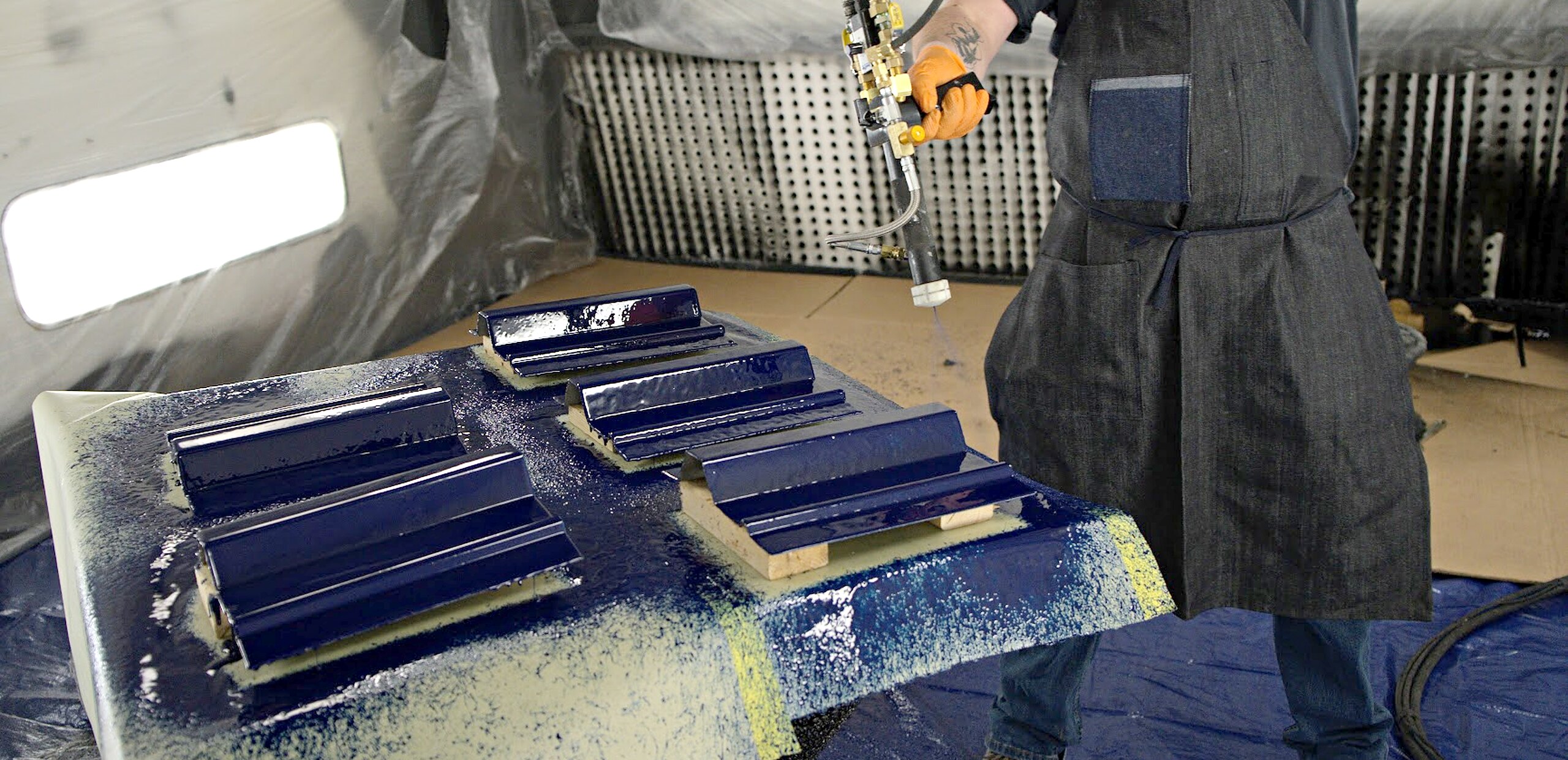
Once the painting side is steady, a coating service can raise the average ticket with customers you already serve: the homeowner with a garage, the contractor with a truck, the RV owner, the business with a flat roof.
| Service | What customers pay | Equipment to start |
|---|---|---|
| Interior room repaint | $400–$1,200 | Brushes, rollers, ladders |
| Full exterior repaint | $2,500–$10,000+ | Airless sprayer, ladders |
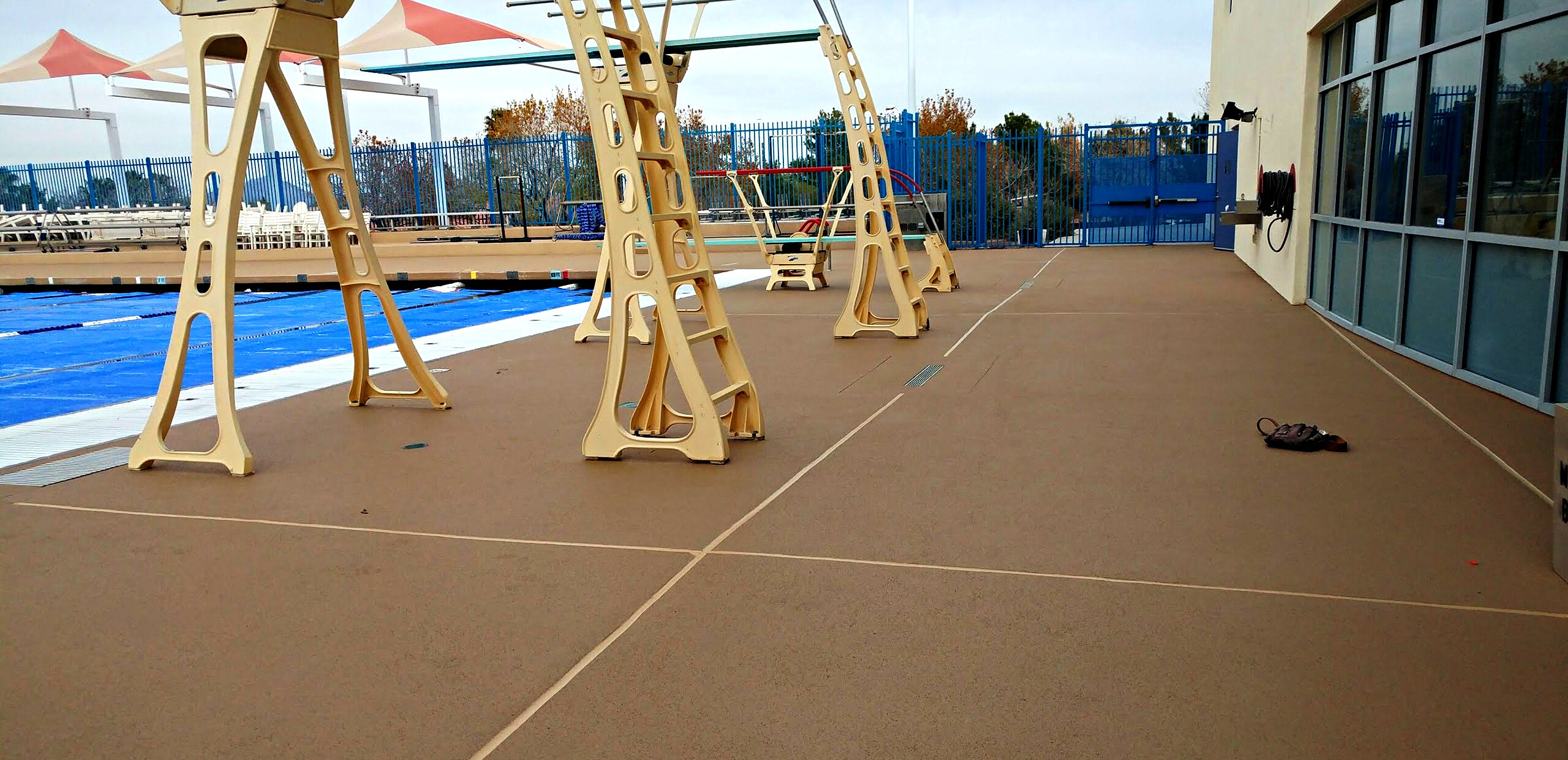
| Garage floor, 2-car (400 sq ft) | $1,600–$4,800 | Grinder, HEPA vacuum, moisture meter (about $12,300 new) |
| Spray-in bedliner, full-size truck | $525–$700 typical | Plural-component spray rig |
| RV roof, 32 ft trailer | $5,400–$6,700 | Plural-component spray rig |
| Polyurea roof coating | $3–$6 per sq ft | Plural-component spray rig |
Why it fits a painter
- The habits that matter carry over: surface preparation, masking and film thickness.
- Some painting license scopes already reach coatings.
- Bigger tickets: one RV roof is $5,400–$6,700.
- Shop work such as bedliners doesn't depend on exterior weather.
What's different
- Polyurea and polyaspartic cure fast and depend on the right surface profile, mix ratio and slab moisture.
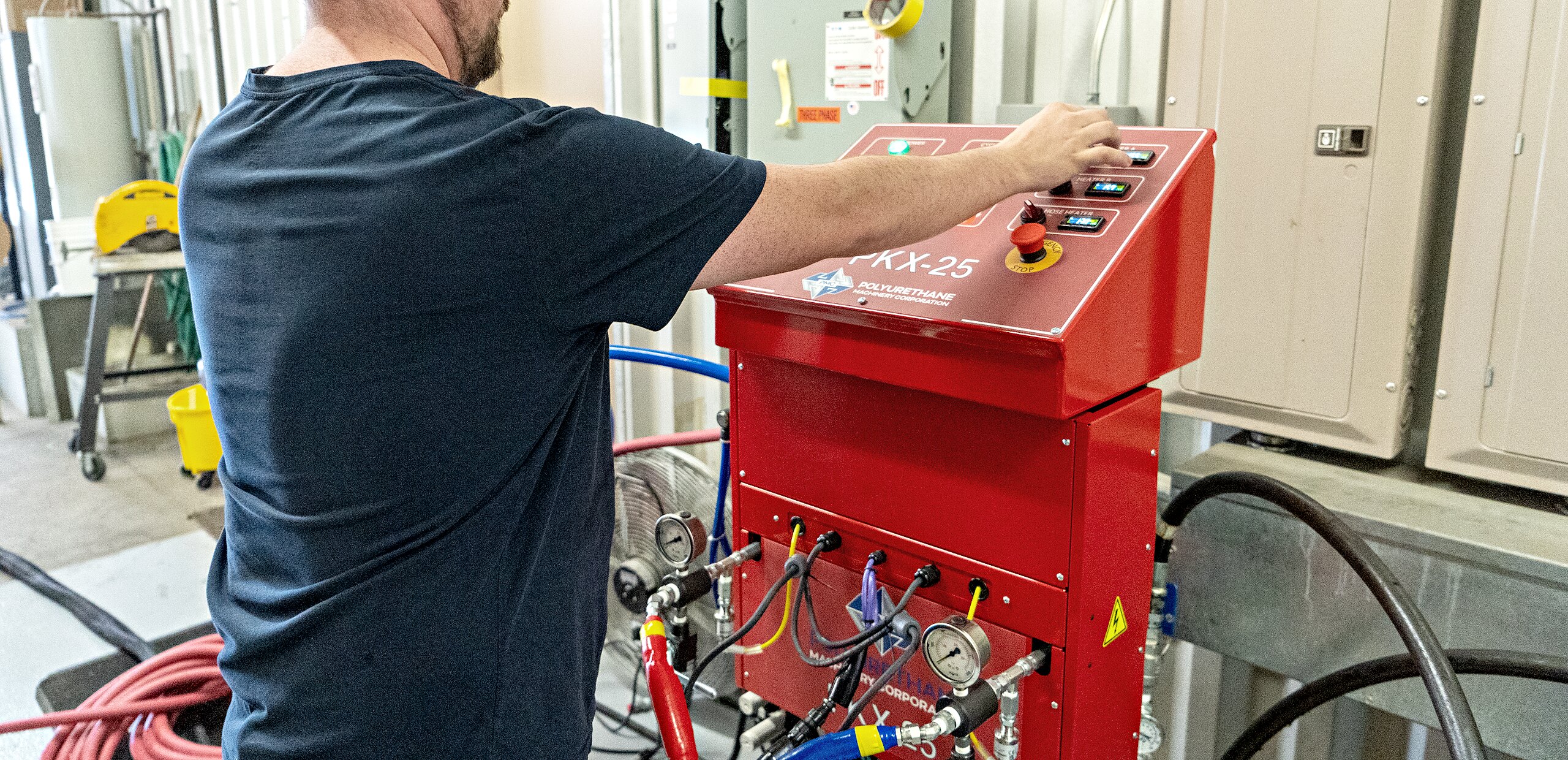
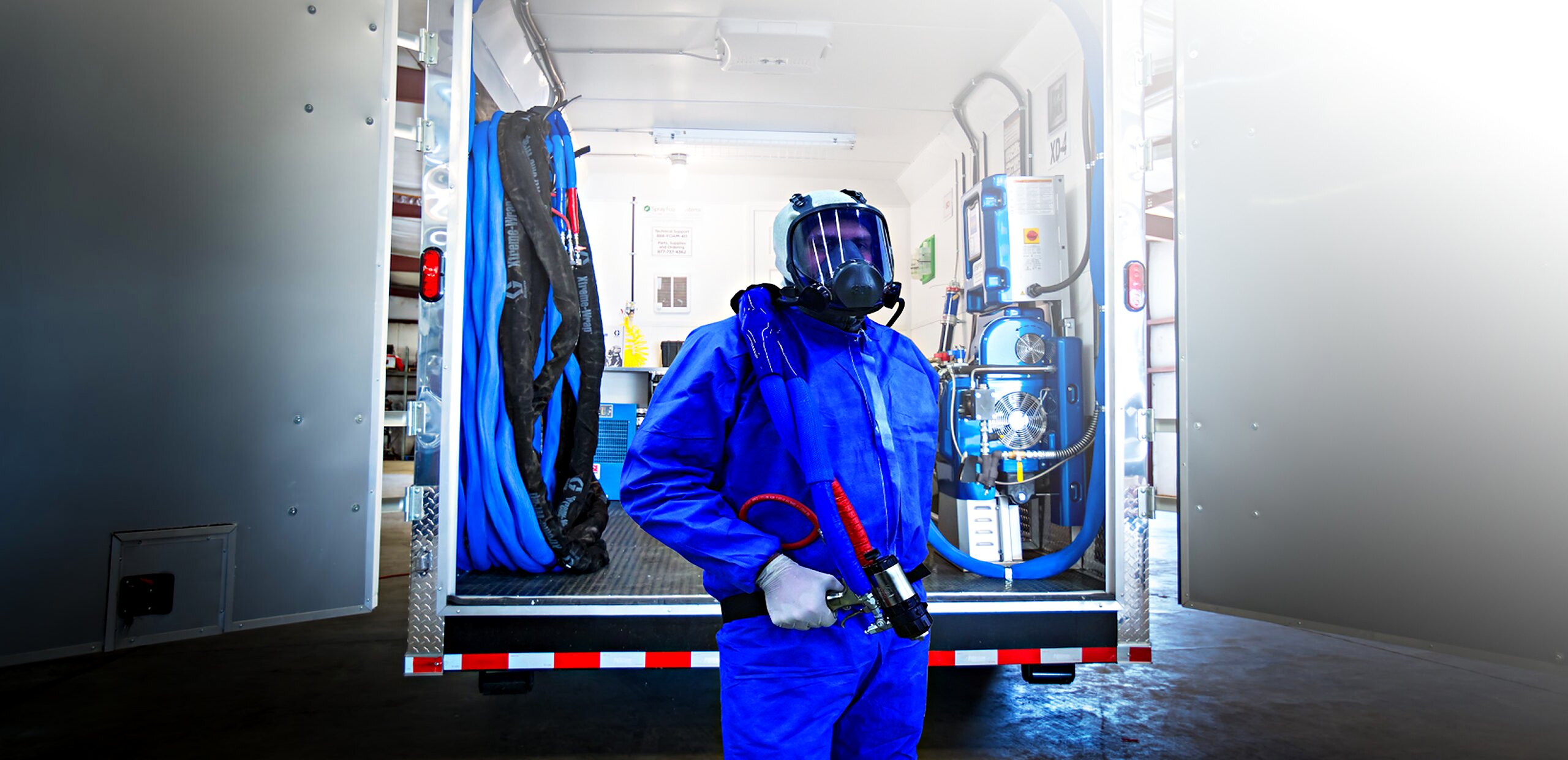
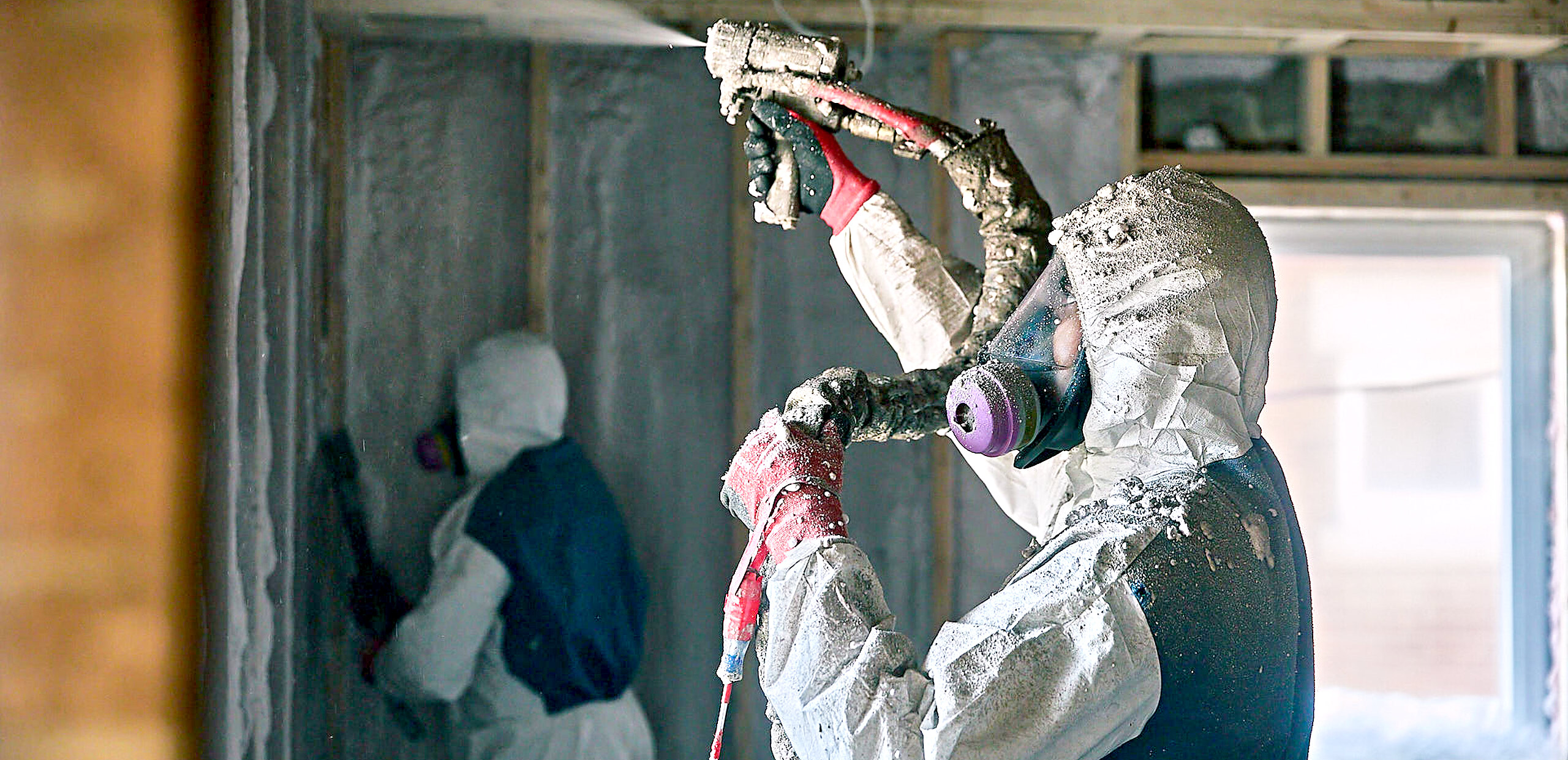
- Floors need grinders and HEPA dust control under OSHA's silica rule; sprayed polyurea needs a plural-component rig.
- Even roll-on floor coatings "require their own unique equipment, training, and safety precautions."
- Peeling floors usually trace to poor prep or moisture, so every slab gets tested.
The real economics
Floors are the lower-cost entry. Xtreme Polishing Systems' worked 500 sq ft garage has $1,520 in direct cost (material, consumables, 12 labor hours and a trip) and a bid of about $2,338; our garage floor coating cost guide puts system material at about $2 per sq ft. Franchise fees, training and equipment are in our guide to starting a floor coating business.
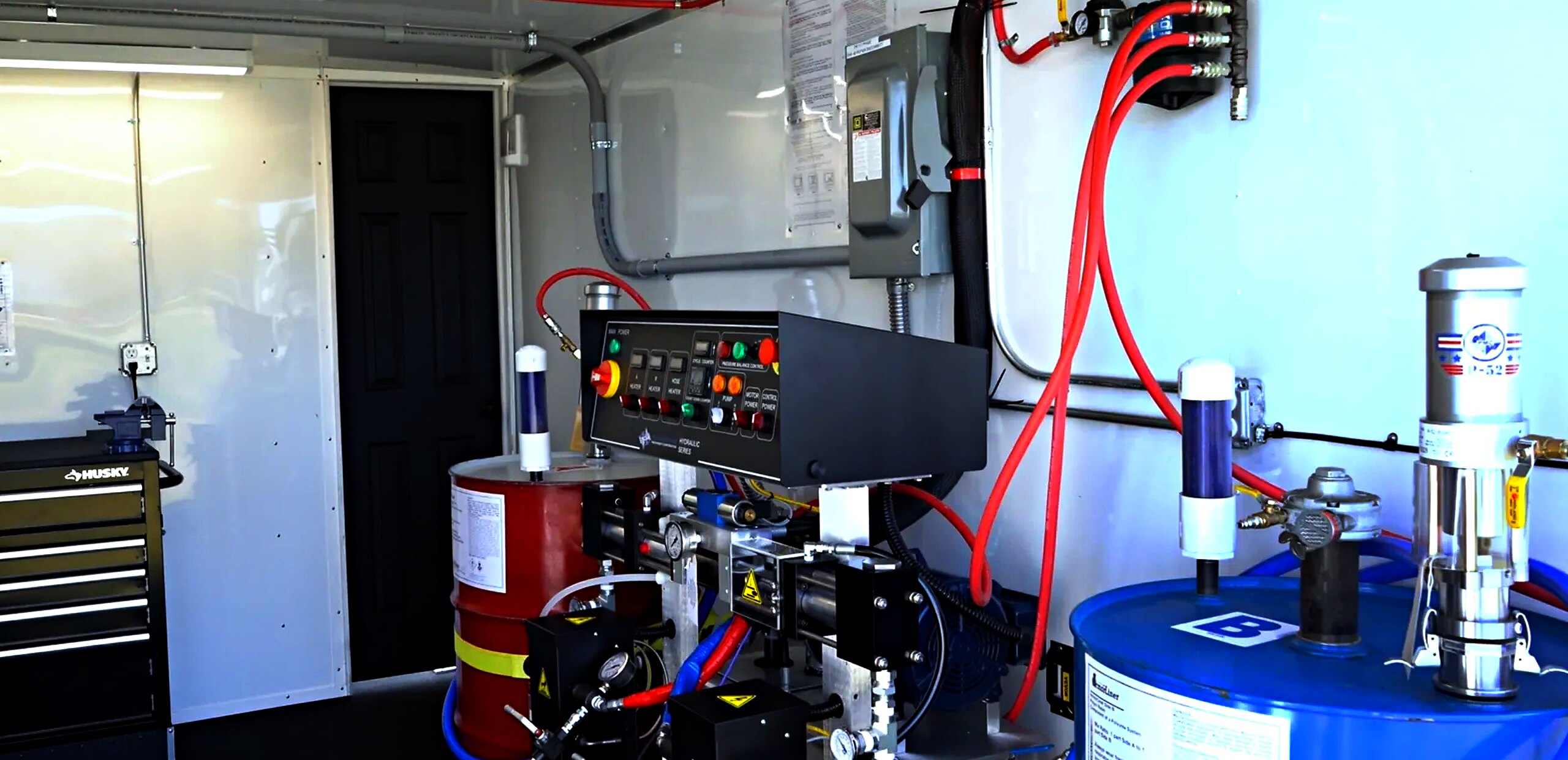
Sprayed polyurea is the bigger step. ArmorThane's RV roof guide prices a 32 ft roof at $185 a linear foot: a $5,920 invoice, $1,088 in chemical, $140 in consumables, $280 for a helper, $90 in fuel and a 3% card fee, leaving about $4,144 before your time and overhead. Bedliners sell for $525–$700, and ArmorThane's bedliner guide describes a one-bay shop turning two or three a day. See spray-in bedliner prices and the RV roof business guide.
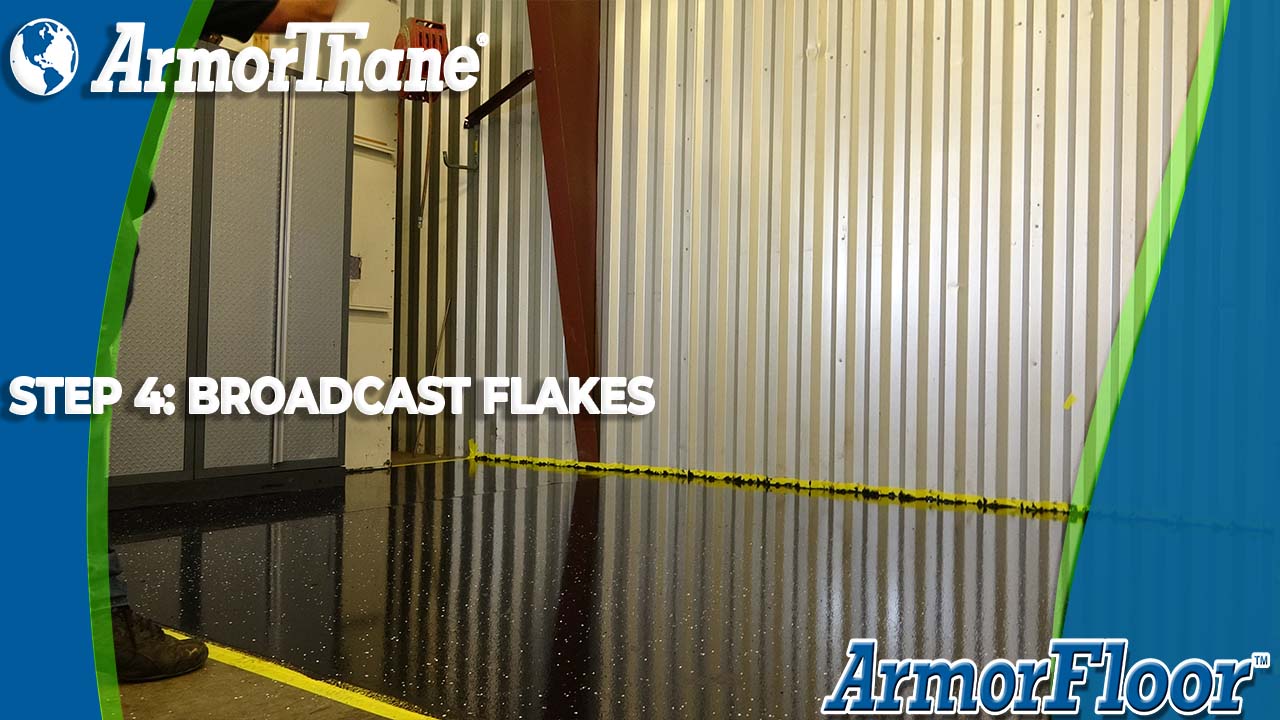
Add coatings to your company. Keep your name.
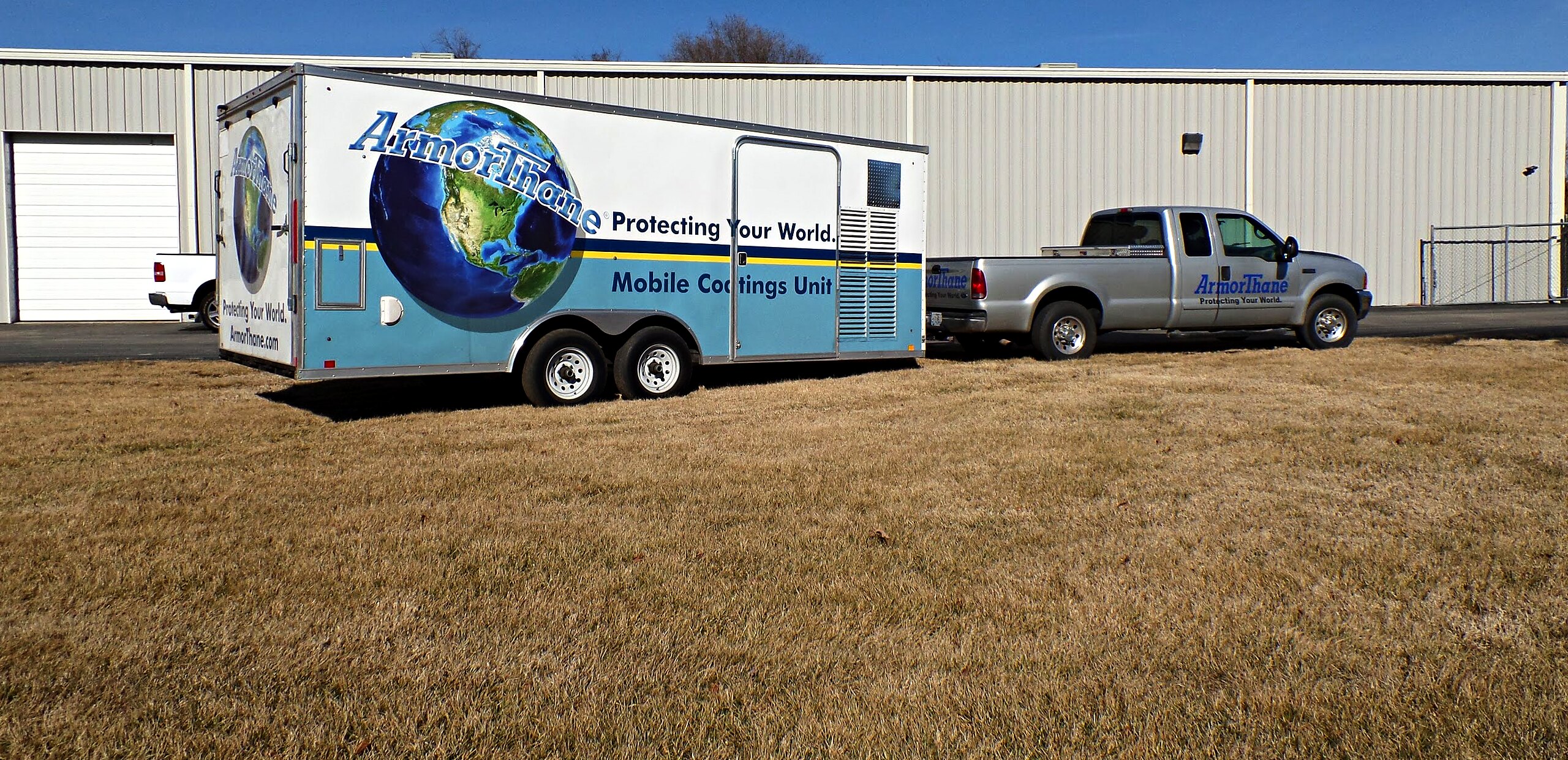
ArmorThane trains and supplies contractors who add floor, bedliner, roof and waterproofing coatings, with no franchise fee, dealership fee or royalty. Turnkey spray systems start at $25,000, with third-party financing available.
Building a broader contracting company? See starting a roofing company or starting a concrete business.
Coating add-on payback calculator
Pick a sourced example or enter your own numbers to see what one coating job earns and how many jobs pay back the equipment.
Would a coating service pay for itself?
Floor: Xtreme Polishing Systems' 500 sq ft example and the core grinding kit. RV roof: ArmorThane's 32 ft example and $25,000 turnkey package. Jobs and months are your estimates.
$748 per job on a $2,338 ticket (32% gross margin): $1,100 material, consumables and trip, $420 labor (12 hours at $35) and $70 in fees. The $12,300 investment is paid back after about 16.4 jobs. At 4 jobs a month for 9 months that’s $26,923 a year before overhead, marketing and your own time. The floor example assumes grinding equipment you’d buy for concrete prep; add training and a first material order if you don’t have them.
Add coatings with ArmorThane, keep your own brand
ArmorThane has made polyurea and polyurethane coatings and trained independent applicators since 1989, with applicators in more than 50 countries. There's no franchise fee, dealership fee or royalty. Training is on site or virtual and ends in certification; our polyurea training is a two-day, hands-on course included with your equipment package, and a 24/7 tech line backs you after that.
New applicator systems start at $25,000 turnkey (equipment, training, first chemical, and prep and safety gear), low-pressure 1:1 equipment from $20,000, with third-party financing available. More on building your coatings business and coatings for construction contractors. Not ready to buy? Refer coating jobs through our applicator finder, and join the newsletter for new business guides.
Painting business FAQ
How much does it cost to start a painting business?
Wexford Insurance's 2026 estimate puts a new painting business at $7,950–$26,800. The biggest line is a used van or truck ($5,000–$15,000), so if you already own one your cash start is much lower. Budget separately for insurance: Insureon's median for painters' general liability is about $72 a month. A contractor-grade airless sprayer adds roughly $1,100–$4,000.
Do I need a license to start a painting business?
It depends on your state and city. California requires a C-33 Painting and Decorating license for jobs over $1,000, or any job that needs a permit or uses employees. Arizona licenses residential and commercial painting separately and requires a license once labor and materials pass $1,000 or a permit is needed. Nearly everywhere, you'll at least need a business registration and a local business license.
Do painters need EPA lead certification?
Yes, if you're paid to disturb paint in homes, child care facilities or kindergartens built before 1978. EPA's RRP rule requires a certified firm ($300, good for five years) and a certified renovator on each job, who takes an 8-hour course with 2 hours hands-on. Small jobs under 6 sq ft per room inside or 20 sq ft outside are excluded. Fifteen states run their own programs.
How much insurance does a painting business need?
Start with general liability; Insureon's August 2026 median for painters is $72 a month ($862 a year). Add workers' compensation when you hire (median $190 a month), commercial auto for the work vehicle ($295) and tools and equipment coverage ($42). Commercial clients may ask for higher limits or an umbrella policy. Your price depends on payroll, revenue, location, claims and services.
What equipment do I need to start painting professionally?
Brushes, rollers and trays, drop cloths and tape, extension and step ladders, safety gear and a work vehicle. Wexford budgets $100–$300 for brushes and rollers and $200–$1,000 for ladders and scaffolding. When you add an airless sprayer, contractor Graco units listed at $1,089–$3,999 in September 2026. Follow OSHA's ladder rules, including side rails 3 ft above the landing.
How do you calculate a painting bid?
Measure walls and ceilings in square feet and trim in linear feet. Divide each quantity by your production rate to get hours, multiply by your loaded labor rate, add paint (area times coats divided by coverage) and sundries, then divide the total by one minus your overhead-plus-profit percentage. A PCA blog example charges $67.50 per labor hour on a $27 labor rate.
How many square feet does a gallon of paint cover?
Sherwin-Williams says a gallon of paint typically covers 350–400 sq ft per coat and a gallon of primer 200–300 sq ft. Behr says 250–400 sq ft per coat. Rough, porous, textured or previously unpainted surfaces take more, and deep color changes may need an extra coat or a tinted primer, so estimate on the low side of the range.
What profit margin should a painting business make?
Housecall Pro suggests target margins of 20–40% depending on overhead. A PCA blog benchmark splits the selling price into 40% labor, 35% overhead, 15% profit and 10% materials. Price with a margin on the selling price, not a markup on cost: for a 30% margin, divide cost by 0.70, so $5,000 in cost becomes a $7,143 price.
How much do painters make?
The median pay for construction and maintenance painters was $49,400 a year, or $23.75 an hour, in May 2025, according to the Bureau of Labor Statistics. BLS counted 326,900 painters in 2025, 31% of them self-employed, and projects 3% growth from 2025 to 2035. Owners' income depends on pricing, crew productivity and how many jobs they sell.
Should I buy a painting franchise or start my own business?
A franchise sells you a brand, a system and marketing help for an upfront fee and ongoing royalties. Painting is cheap to start independently, so compare those fees with the cost of building your own name. In floor coatings, for example, franchise fees run $38,500–$60,000 with 5–6.5% royalties. Read any Franchise Disclosure Document with an attorney before signing.
Can a painting company add floor or polyurea coatings?
Yes, and some painting license scopes already reach coatings: Arizona's painting license includes liquid floor and wall coatings. Expect new equipment and training. A core floor grinding kit costs about $12,300 new, and ArmorThane's turnkey spray systems start at $25,000 with training, with no franchise fee or royalty. A coated two-car garage sells for $1,600–$4,800 in HomeGuide's data.
Can I start a painting business part time?
Yes, but the rules apply from the first paid job: registration, any state or local license, EPA RRP certification for pre-1978 work, and general liability insurance. Keep the jobs small at first so production-rate estimates can be checked against your real hours before you quote larger work.
Written from BLS data, EPA's RRP rules, state licensing boards, OSHA standards, insurer cost data, retail listings read September 27, 2026, dated cost guides and decades of training independent applicators. Reviewed September 27, 2026.
Methodology and sources
Prices are as published, read September 2026; insurance figures are Insureon medians. The bid calculator uses one estimator's rates with additional coats one-third faster, as in that source. The payback calculator uses Xtreme Polishing Systems' floor example and ArmorThane's RV roof example. Not legal or financial advice.
- U.S. Bureau of Labor Statistics, Painters, Construction and Maintenance: bls.gov
- U.S. EPA, RRP program rules, contractors, firm certification, renovator training and work practices: epa.gov
- California CSLB, C-33 classification; Industry Bulletin 24-07 (Dec. 2024): cslb.ca.gov
- Arizona Registrar of Contractors, License Classifications: roc.az.gov
- Insureon, Painter Insurance Costs (Aug. 2026): insureon.com
- Wexford Insurance, How Much Does It Cost to Start a Painting Business? (Aug. 2026): wexfordins.com
- OSHA, 29 CFR 1926.1053 Ladders: osha.gov
- Painting Contractors Association, About; pricing blog (Nov. 2023): pcapainted.org
- Prosperity Painting Consultants, Painting Production Rates (Jul. 2026): prosperitypaintingconsultants.com
- PaintScout Help, Production Rates Overview; Methvin, painting production rates: methvin.co
- Behr Pro, Determining Production Rates (Nov. 2024); Behr, How Much Exterior Paint Do I Need?: behr.com
- Sherwin-Williams, Paint Calculator FAQs: sherwin-williams.com
- Housecall Pro, How to Price Painting Jobs in 2026: housecallpro.com
- NerdWallet, Cost to Paint a House in 2026 (Angi data): nerdwallet.com
- Muller's Paint, Gleco Paint, Portland Compressor and Graco sprayer listings: mullerspaint.com
- HomeGuide, Garage Floor Coating Cost (Dec. 2024): homeguide.com
- Xtreme Polishing Systems, How To Price Epoxy Jobs (Aug. 2026): xtremepolishingsystems.com
- ArmorThane, Add Protective Coatings; RV Roof Business; Spray-In Bedliner Cost; Garage Floor Coating Cost; Roof Coating Guide; Polyurea Training: armorthane.com
Start your coatings business with ArmorThane.
Tell us what you want to spray and where you are. An ArmorThane specialist will walk you through the equipment, chemicals, training and startup cost for the work you want to do.
- Equipment package matched to your applications
- Hands-on training and applicator certification
- Technical support once you are spraying
Want higher-ticket work on the schedule? Talk to ArmorThane about adding coatings.
Tell us where you work and what you paint now. We'll walk you through floor, bedliner and polyurea roof systems, the equipment and the training, with no franchise fee and no royalty.
- No franchise fee, dealership fee or royalty
- Turnkey spray systems from $25,000
- On-site or virtual training and certification
- Become a certified ArmorThane applicator