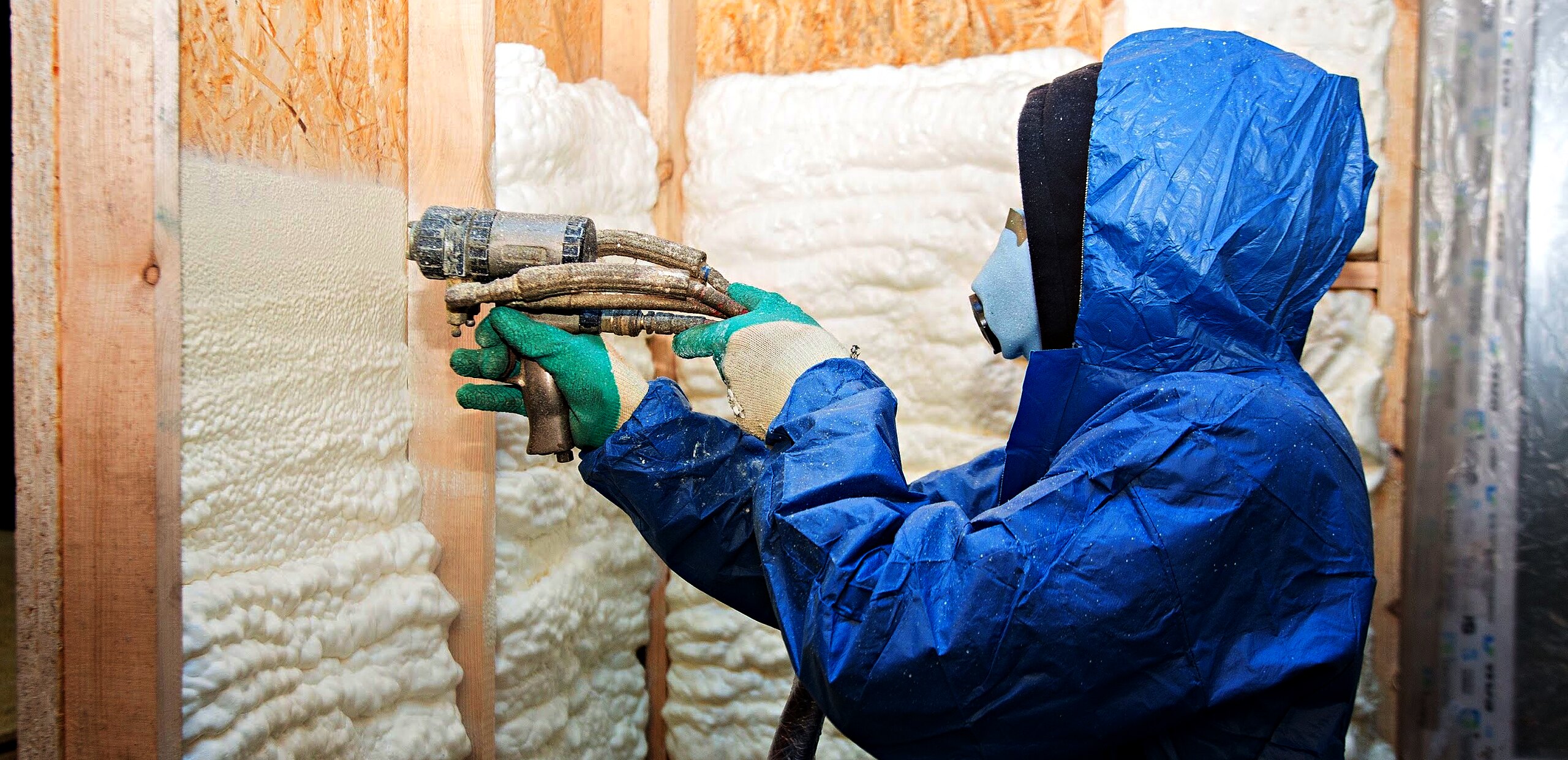
Marine coatings
High-Performance Polyurea and Polyurethane Protective Coatings for Versatile Marine Applications
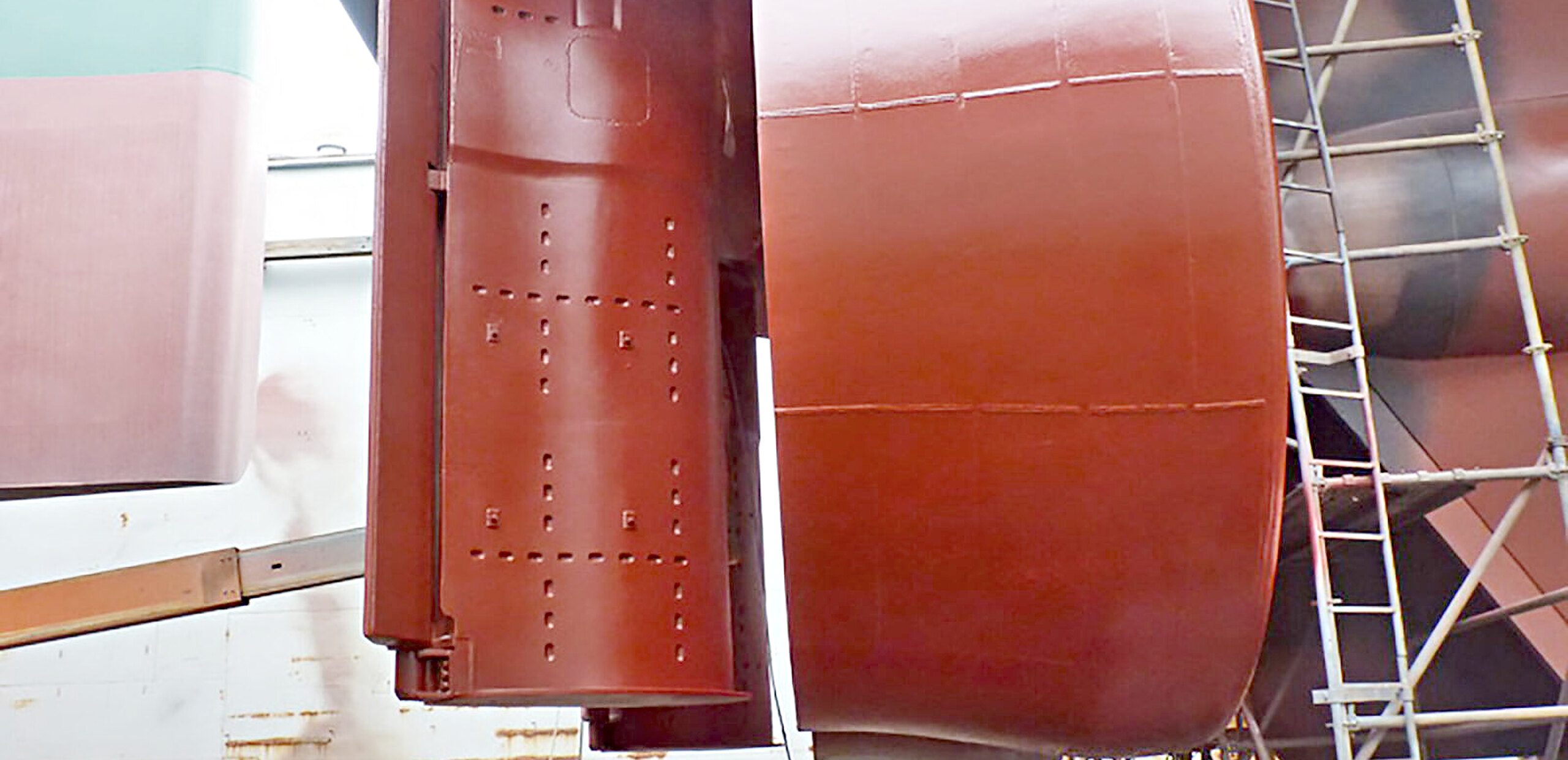
Coat boats and docks for a living.
ArmorThane is the one-stop shop for applicators. We make the chemistry, build the equipment, train you hands-on and back you with technical support, with no franchise fees and no royalties. Applicators have come first here since 1989.
- $0franchise fees or royalties
- 35+years in business
- 50+countries with applicators
- 24/7technical support
The best surface protection for marine equipment and infrastructure
Sailors have been revered as some of the toughest among us since the dawn of history; people who weather extreme conditions for months or even years at a time with no guarantee of a safe return. Now imagine their ships! While there’s no doubt that sailors are tough, their vessels and equipment are the unsung heroes of any voyage. Exposed to corrosive saltwater, constant moisture, biological contaminants, mechanical stress, and countless other hazards, we depend on modern marine infrastructure to withstand these environments for our food, travel, consumer goods, scientific research, and everything in between. To help protect marine structures like boats, tankers, offshore structures, and more, marine coatings can be used to create a durable waterproof barrier to shield marine surfaces from myriad physical and chemical risk factors.
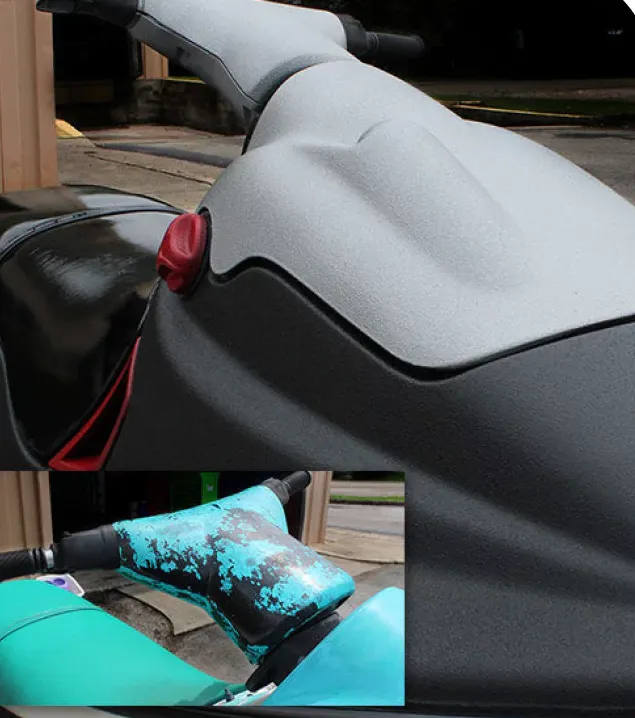
What are marine coatings?
Marine coatings are protective layers applied to boats, docks, hulls, tanks and offshore structures to shield them from saltwater corrosion, abrasion, impact, UV and biological fouling. They fall into two broad families: anti-corrosive coatings, which protect metal from rust and chemical attack, and antifouling coatings, which stop marine organisms attaching to submerged surfaces.
ArmorThane specialises in spray-applied polyurea marine coatings — a seamless, elastomeric, 100% solids alternative to conventional marine paint that cures tack-free in under 60 seconds and flexes with the structure rather than cracking.
- Seamless membrane — no joints for water to track behind
- Tack-free in under 60 seconds; same-day return to service
- 400% ± 50% elongation absorbs impact and movement
- Applies down to -20°F (-28.9°C), zero VOC and odourless
Types of marine coatings
Marine coatings are often categorized by their intended function and include two main types: anti-corrosive and antifouling coatings. Anti-corrosive coatings are applied to metal surfaces, used to protect against rust and subsequent deterioration caused by constant exposure to saltwater and high-moisture. Instead of protecting against chemical degradation, antifouling coatings are used to address biological risk factors by preventing marine organisms from accumulating on the hull of vessels or the submerged surfaces of other types of marine equipment.
In both cases anti-corrosive and antifouling coatings are used to preserve structural integrity and maintain performance requirements, and without them, modern marine activities from leisurely rides at the lake to global container shipping are more dangerous, expensive, and challenging. And this, no pun intended, is only the tip of the iceberg when it comes to the different types of marine coatings! Numerous technologies have been developed and deployed, each with their own unique benefits and drawbacks, from niche self-polishing paints to versatile polyurea marine coatings.
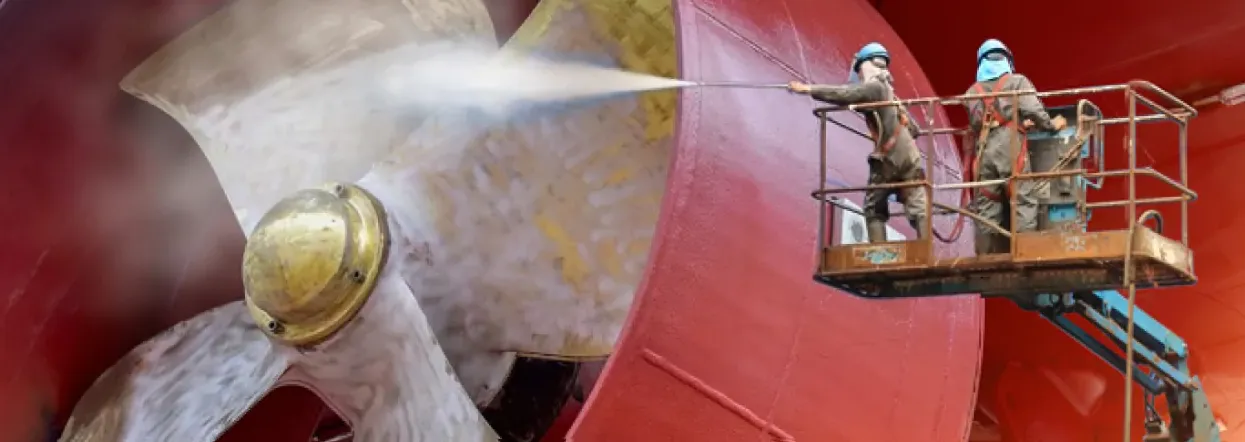
The benefits of marine coatings
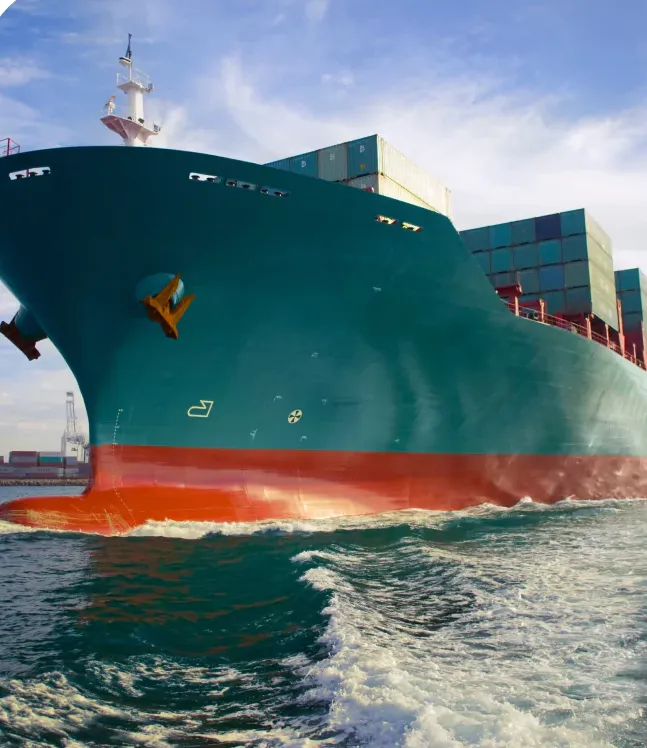
Marine coatings serve one fundamental function: to extend the lifetime and performance of marine structures. How exactly they do this depends on the type of coating, marine environment, marine equipment, and numerous other factors and considerations. However, in any case each serves as a protective barrier that shields marine surfaces from the many dangers they’re constantly exposed to. For anti-corrosive coatings this is accomplished by fighting against rust to see structural material in-tact and unharmed even after sailing the high seas. For antifouling coatings their protection against heavy and potentially damaging marine organisms means a safer, faster, and more fuel-efficient journey. And the list goes on; from bumpy landings at the dock, to abrasive loading and unloading of tools and equipment, or an ambitious trip across the world, marine coatings offer advanced protection against the wild world of maritime activities.
Beyond marine features
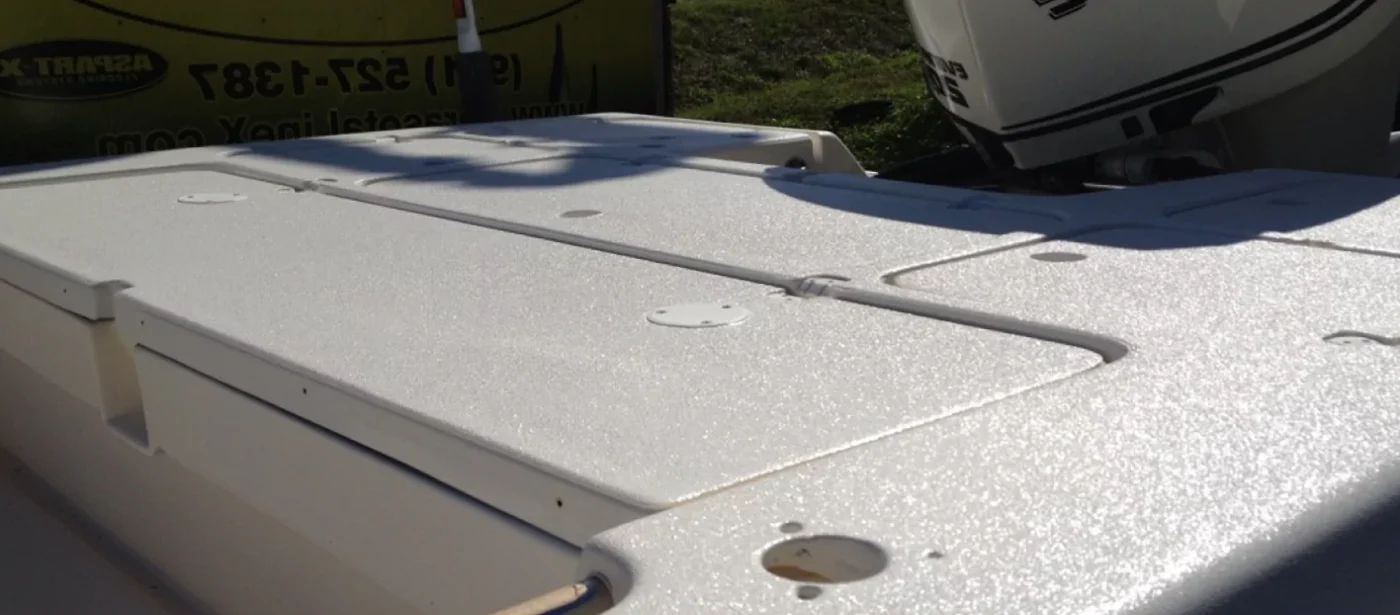
Marine coatings first and foremost must be able to protect structures from the hazards in their environment, but that doesn’t mean that they don’t have anything else to offer! Marine coatings provide many of the same benefits as other types of protective coatings and can be used to create safer and more user-friendly textures, customize aesthetics to match company branding or personal preference, or to protect from unique risk factors that are less common to the typical marine environment among countless other interesting and useful applications. And don’t just think boats, docks, and buoys – think patios, porches, pool decks, and walkways. Marine coatings can be used anywhere water and moisture threaten to damage or destroy structures and surfaces. There’s a reason marine coatings have become nearly ubiquitous across our favorite outdoor aquatic environments!
Marine Coating Applications
Marine coatings are not one product applied one way. The right system depends on where the surface sits relative to the waterline, what it is made of, and what it has to survive. Expand any application below to see how ArmorThane polyurea performs in that environment.
Boat & Yacht Decks
Because there are no seams or fasteners, there is no path for water to reach the core — the primary cause of soft, delaminated decks. Aggregate broadcast into the wet film tunes traction from lightly textured to heavily aggressive.
- Bonds to gelcoat, fibreglass, aluminium and timber
- Custom slip resistance for wet decks and swim platforms
- Cushions underfoot and damps noise
- Colour-stable finishes in ArmorFlex UV
Hulls & Topsides
Below the waterline a hull faces constant immersion, electrolytic attack and impact from debris, ice and docking. Polyurea is a barrier coating, not a biocidal antifouling — where fouling control is needed, an antifouling topcoat goes over the polyurea.
- Impact and abrasion resistance at the waterline
- Flexes with hull movement rather than fracturing
- Seamless — no laps or joints for water to track behind
- Serves as a base beneath antifouling topcoats
Docks, Piers & Marinas
Dock structures endure permanent moisture, UV, freeze-thaw cycling and constant abrasion from vessels, carts, cleats and foot traffic. Same-day return to service keeps marina downtime to a minimum.
- Waterproofs timber, concrete and steel decking
- Walkable the same day it is sprayed
- Slip-resistant texture for wet, high-traffic walkways
- Resists freeze-thaw cycling and standing water
Ballast & Potable Water Tanks
Tank interiors are among the most punishing environments on any vessel — confined, constantly wet and difficult to recoat. AquaShield also meets USDA criteria and is odourless with no toxic vapours.
- ANSI/NSF 61 approved for potable water contact
- Coats carbon and mild steel without primer
- Zero VOC and odourless — safer in confined spaces
- Suitable for tanks from 5 gallons and pipe 9″ or greater
Offshore & Splash Zone
The splash zone is the most aggressive exposure band on any marine structure: alternating wet and dry, oxygen-rich, chloride-saturated and mechanically loaded. Polyurea can be built to the required thickness without sagging.
- Monolithic film, no laminations to delaminate
- Handles wet/dry cycling in the splash zone
- Applies down to -20°F (-28.9°C) for cold-weather windows
- Excellent thermal stability and chemical resistance
Commercial & Workboats
Working vessels earn their keep, and downtime is the real cost of any coating decision. Cargo holds, fish holds, engine rooms, bilges, wheelhouse floors and equipment decks can be returned to service the same day.
- Tack-free in under 60 seconds
- Chemical resistance to fuel, oil and cleaning agents
- Seamless and easy to wash down
- Protects working surfaces from impact and abrasion
ArmorThane Marine Coating Systems
ArmorThane manufactures three polyurea systems used most often in marine service. They are not interchangeable — the correct choice depends on whether the surface touches drinking water, whether it sits in sunlight, and how much movement and impact it has to absorb.
| Specification | ArmorShield | AquaShield | ArmorFlex UV |
|---|---|---|---|
| Polyurea chemistry | Aromatic | Aromatic | Aliphatic |
| Best suited to | General marine protection: decks, docks, hulls, holds, structural steel | Potable water and tank linings afloat and shoreside | Any surface where colour and gloss must hold up in sunlight |
| Solids / VOC | 100% solids, zero VOC | 100% solids | 100% solids |
| Elongation | 400% ± 50% | Flexible — see product TDS | Elastomeric — see product TDS |
| Hardness | 50 Shore D | See product TDS | See product TDS |
| Tack-free time | Under 60 seconds | Extremely fast gel time | Quick gel and tack-free times |
| Minimum application temp. | Down to -20°F (-28.9°C) | Down to -20°F (-28.9°C) | See product TDS |
| Substrates | Prepared concrete and metal | Prepared concrete and metal; carbon and mild steel without primer | Concrete, metal, fibreglass, wood and geotextile fabrics |
| Potable water approval | — | ANSI/NSF 61 approved · meets USDA criteria | — |
| UV colour stability | Will chalk and shift colour (cosmetic only) | Will chalk and shift colour (cosmetic only) | Colour-stable |
| Seamless membrane | Yes | Yes | Yes |
| Odour | Odourless | Odourless, no toxic vapours | Low odour |
Figures shown are published product characteristics. Always confirm values against the current technical data sheet for your specification, and consult a certified ArmorThane applicator for project-specific recommendations.
Polyurea vs. Epoxy vs. Antifouling Paint vs. Gelcoat
Most marine coating decisions come down to a choice between four familiar options. Each one is genuinely the right answer in some situations, and knowing where each fails is more useful than a list of advantages.
| Property | Polyurea | Marine epoxy | Antifouling paint | Gelcoat |
|---|---|---|---|---|
| Film character | Elastomeric, flexes and rebounds | Rigid and brittle | Soft, sacrificial by design | Rigid, thin gel layer |
| Seams and joints | Seamless monolithic membrane | Seamless but laid in timed coats | Brush or roll applied | Moulded, repairs visible |
| Cure / recoat | Tack-free under 60 seconds | Hours to days between coats | Hours between coats | Hours, then fair and polish |
| Impact resistance | Excellent — absorbs and rebounds | Fair — chips and cracks | Poor | Poor — cracks and stars |
| Behaviour when damaged | Stays flexible, damage stays local | Corrosion creeps under the film | Erodes as intended | Water tracks into laminate |
| Moisture tolerance during application | High — relatively insensitive | Low — sensitive to damp and dew | Moderate | Low |
| Cold-weather application | Down to -20°F (-28.9°C) | Typically limited below 50°F | Limited | Limited |
| Stops marine fouling | No — barrier only | No | Yes — this is its job | No |
| VOC / odour | Zero VOC, odourless (ArmorShield) | Solvent content varies | Often high VOC and biocidal | Styrene odour |
| Typical service position | Decks, docks, tanks, holds, splash zone, structural steel | Hull barrier coats, bilges | Below waterline hulls only | Original hull and deck surface |
Where polyurea is not the right answer: if your only requirement is to stop barnacles and weed on a hull below the waterline, an antifouling paint is doing a job polyurea does not do. Polyurea has no biocide. The strongest specification in that case is a polyurea barrier for corrosion and impact protection with an antifouling topcoat over it — each material doing what it is actually designed for.
How Marine Coatings Are Applied
Polyurea is a specified system, not a product you buy off a shelf and roll on. The sequence below is what a professional marine application actually involves, and why ArmorThane supplies through trained, certified applicators rather than over the counter.
- Survey and specificationA certified applicator assesses substrate type and condition, exposure zone, existing coating, and the mechanical and chemical demands the surface actually faces. This determines product selection, film thickness and whether a primer or reinforcement is required. Getting this wrong is the most common reason marine coatings fail early.
- Surface preparationThe largest single predictor of service life. Steel is abrasive-blasted to a specified cleanliness and anchor profile. Concrete is blasted or ground to remove laitance and open the pore structure. Fibreglass and gelcoat are abraded to break the gloss. Salt-contaminated steel is washed and tested for soluble salts before blasting.
- Priming and detailingWhere the specification calls for it, primer is applied and detail work is completed — terminations, penetrations, fasteners, welds and transitions. AquaShield bonds to carbon and mild steel without primer, which removes a step and a failure point on many tank projects.
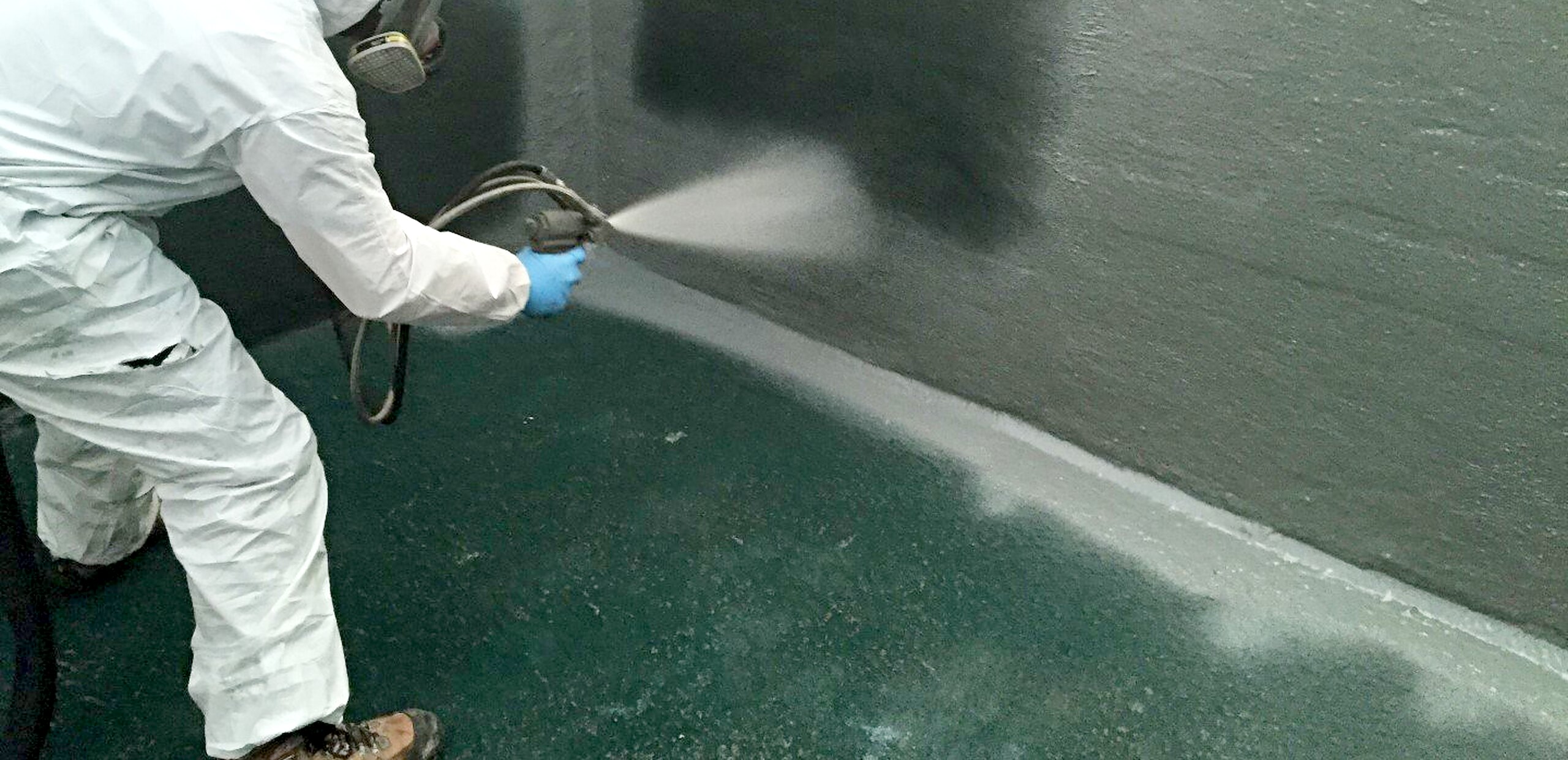
- Spray applicationThe two components are heated, proportioned and plural-component spray applied at high pressure. The film builds to the specified thickness in single or multiple passes without appreciable sagging. Because polyurea is relatively insensitive to moisture and temperature, application windows are far wider than with epoxy.
- Texture and topcoatWhere slip resistance is required, aggregate is broadcast into the wet film and locked in. Where colour retention matters, an aliphatic ArmorFlex UV topcoat is applied. Where fouling control is needed below the waterline, an antifouling topcoat is applied over the polyurea barrier.
- Inspection and return to serviceFilm thickness and holiday testing confirm the system meets specification. With a tack-free time under 60 seconds, most marine surfaces can be returned to service the same day rather than losing a vessel or berth for a week.
Understanding Marine Exposure Zones
The same structure can need three different coating specifications depending on where you are standing on it. Exposure zone, more than substrate, drives product selection.
Atmospheric zone
Above the splash line: superstructure, topsides, wheelhouse, upper decks. Exposure is salt-laden air, UV and condensation rather than immersion. Colour and gloss retention usually matter here, which makes aliphatic ArmorFlex UV the common specification.
Deck and traffic surfaces
Horizontal surfaces take standing salt water, impact from gear, dropped tools, cargo handling and constant foot traffic. Requires an abrasion-resistant, slip-resistant, fully seamless film — any seam becomes a water path into the structure below.
Splash and tidal zone
The most aggressive band on any marine structure. Alternating wet and dry, oxygen-rich, chloride-saturated and mechanically loaded by wave and ice action. This is where conventional paint systems fail first and where film thickness and preparation matter most.
Immersed zone
Permanently submerged: hull below the waterline, piling bases, subsea structures, tank interiors. Constant hydrostatic exposure and electrolytic attack. Requires an impermeable, holiday-free membrane — and, where fouling control is needed, an antifouling topcoat over the barrier.
Which Marine Coating Do You Actually Need?
Most people arrive at this page with a specific problem rather than a product in mind. Find the situation that matches yours.
Why Specify ArmorThane
ArmorThane manufactures its own polyurea and polyurethane systems and supplies them through a worldwide network of trained, certified applicators. Specification support is part of the product — because on marine work, the difference between a coating that lasts and one that fails is almost always preparation and specification rather than the label on the drum.
Explore further
- Complete guide to polyurea coatings
- Corrosion prevention coatings
- Marine & shipping corrosion protection
- Marine, boats & shipping gallery
- ArmorShield polyurea
- AquaShield potable water lining
- ArmorFlex UV colour-stable polyurea
- Pool deck & waterfront resurfacing
- Metal coating guide
- Request a marine coating quote
Marine coatings: Frequently asked questions
Are Marine Coatings Necessary?
Strictly speaking, no, marine coatings aren’t necessary. However, for many private, commercial, and industrial applications, marine coatings may be all but required. They’re used to protect marine structures like ships, docks and seawalls from the harsh conditions of seas, oceans, and other saltwater and freshwater environments. Without them, marine structures are more susceptible to corrosion, fouling, and other common stressors.
Are Marine Coatings Worth It?
Marine coatings have become nearly ubiquitous, and for good reason. Marine coatings can help greatly extend the lifetime and performance of ships, docks, buoys, propellers, offshore structures and more. They protect against corrosion, fouling, forceful impacts, harsh abrasion, and many other risk factors, making them well worth the investment for almost any marine infrastructure.
What Are The Disadvantages To Marine Coatings?
One of the biggest disadvantages to marine coatings is that no matter the type or quality of protective coatings, marine conditions are aggressive enough to wear even the newest and most advanced materials technology. They should be professionally applied and carefully maintained, and it’s critical to choose the right marine coatings for each unique application.
Is polyurea an antifouling coating?
No — and this is an important distinction. Polyurea is a barrier coating. It is engineered to stop corrosion, abrasion, impact and water intrusion, but it does not contain the biocides that antifouling paints use to prevent barnacles, algae and other marine growth from attaching to a hull.
For most of what floats and everything that does not — decks, docks, pilings, bulkheads, ballast and potable water tanks, buoys, splash-zone steel, hatches and workboat interiors — polyurea is the stronger long-term answer. For a hull that sits below the waterline and needs fouling control, polyurea is used as the protective barrier and an antifouling topcoat is applied over it. Any contractor who tells you one product does both jobs is overselling.
How does polyurea compare to marine epoxy?
Marine epoxies are hard, rigid and chemically resistant, but that rigidity is also their weakness: they are relatively brittle, they crack when a substrate flexes or takes an impact, and once the film is breached corrosion spreads underneath it.
Polyurea is an elastomer. ArmorThane ArmorShield cures to roughly 400% ± 50% elongation at 50 Shore D hardness — it stretches and rebounds with the structure instead of fracturing. It is seamless, with no laps or joints for water to track behind, and far less sensitive to moisture and temperature during application. Epoxy typically needs hours to days between coats; ArmorShield is tack-free in under 60 seconds.
How fast does a marine polyurea coating cure?
Very fast. ArmorShield reaches a tack-free state in less than 60 seconds and can be applied in single or multiple passes without appreciable sagging. In practice most marine projects can be sprayed and returned to service the same day, rather than losing a vessel or a dock to a week of cure time.
Fast set also makes the material relatively insensitive to moisture and ambient temperature during application — ArmorShield can be applied in conditions down to -20°F (-28.9°C), which matters for northern yards and winter maintenance windows.
What surfaces can marine polyurea be applied to?
ArmorThane marine systems bond to a wide range of substrates. ArmorFlex UV forms a continuous, seamless membrane on concrete, metal, fibreglass, wood and geotextile fabrics. ArmorShield is formulated for suitably prepared concrete and metal. AquaShield coats carbon and mild steel without a primer.
Substrate condition matters more than substrate type. Every surface must be clean, dry, structurally sound and correctly profiled before spraying.
What surface preparation is required?
Surface preparation is the single largest predictor of how long a marine coating lasts. Steel is typically abrasive-blasted to a specified cleanliness and anchor profile so the polyurea has mechanical tooth to grip. Concrete is usually blasted or ground to remove laitance and open the pore structure. Fibreglass and gelcoat are abraded to break the gloss.
Contamination is the enemy: chlorides, oil, grease and residual moisture will undermine adhesion no matter how good the coating is. On marine work, salt-contaminated steel should be washed and tested for soluble salts before blasting.
Will polyurea fade or chalk in sunlight?
It depends on the chemistry, and being straight about this matters. Aromatic polyureas such as ArmorShield and AquaShield are extremely durable, but like all aromatic systems they will shift colour and chalk at the surface under prolonged UV exposure. This is cosmetic — the physical protection underneath is unaffected.
Where appearance matters — topsides, visible decks, branded surfaces, architectural marine work — ArmorFlex UV is the answer. It is an aliphatic polyurea formulated specifically to be colour-stable in sunlight.
Can marine coatings create a non-slip deck?
Yes, and it is one of the most common marine requests we see. Because polyurea is spray-applied, texture is built into the system: aggregate is broadcast into the wet film and locked in, producing a slip-resistant surface that can be tuned from lightly textured to heavily aggressive.
The same approach works on boat decks, swim platforms, dock surfaces, ramps, pool decks, walkways and marina gangways — anywhere a wet surface becomes a fall hazard.
Is there a marine coating approved for potable water tanks?
Yes. AquaShield is ANSI/NSF 61 approved for direct contact with potable water and meets USDA criteria. It is a fast-setting, 100% solids, flexible aromatic spray polyurea that can be applied to prepared concrete and metal, coats carbon and mild steel without primer, and is odourless with no toxic vapours.
That makes it suitable for potable water tanks afloat and shoreside, for tanks from 5 gallons upward, and for pipe 9″ in diameter or greater.
Do marine polyurea coatings contain VOCs?
ArmorShield is a zero-VOC, 100% solids system — there is no solvent carrier, so there is effectively nothing to evaporate. It is also odourless, which is a genuine practical advantage when spraying inside a hull, tank, bilge or any other confined marine space where solvent-borne paints create ventilation and safety problems.
What drives the cost of a marine coating project?
Rather than quote a misleading per-square-foot figure, it is more useful to know what actually moves the number: total area; the condition of the existing substrate; how much preparation and abrasive blasting is required; whether old coating must be removed; specified film thickness; which product the environment calls for (aromatic vs. aliphatic); access and containment; and whether the work happens in a yard or on site.
A sound dock deck and a corroded splash-zone piling are very different jobs. The fastest route to a real number is a scope-specific quote.
How long will a marine coating last?
Service life is a function of three things: how well the surface was prepared, how much film thickness was applied, and how aggressive the exposure zone is. A properly prepared, correctly specified polyurea system in atmospheric marine exposure will substantially outlast conventional paint. The same product sprayed thin over poorly prepared steel in the splash zone will not.
This is why ArmorThane sells through trained, certified applicators rather than over the counter. ArmorThane has been formulating and supporting protective coatings for over 30 years, and correct specification is part of the product.
Find or become an applicator
Ready to sail the seven seas? Or want to enjoy a weekend at the lake without spending hours pulling barnacles and scraping algae off the hull of your boat? ArmorThane can help! We’ll get your marine equipment protected with our advanced polyurea and polyurethane marine coatings to provide the ultimate combination of chemical and mechanical resistance. In just a matter of hours we can have a new coating system applied to your boat, dock, buoy, pool deck, greenhouse, or anywhere else you need to protect against the elements. And if you’re looking to set sail for something new, we also offer comprehensive start-up packages with everything you need to become a certified professional applicator.
With no profit-stealing franchise fees, licensing costs, or other predatory expenses, we’ll provide all the training, materials, equipment, and support to go from a coatings first officer to a coatings captain. Contact us today to learn more about how we can help with your next coatings project, or help get you started on your next business adventure!
Start your coatings business with ArmorThane.
Tell us what you want to spray and where you are. An ArmorThane specialist will walk you through the equipment, chemicals, training and startup cost for the work you want to do.
- Equipment package matched to your applications
- Hands-on training and applicator certification
- Technical support once you are spraying