UltraBlast
The strongest film we make. Around 7,200 psi tensile with 800% elongation and about 1 mg of Taber loss — numbers that sit well clear of the rest of the range, and of most polyurea generally. It is hard and tough without being brittle, it goes on over primed steel and concrete, and it finishes very smooth and slick.
- 100% solids hybrid
- Zero VOC
- ~7,200 psi tensile
- ~800% elongation

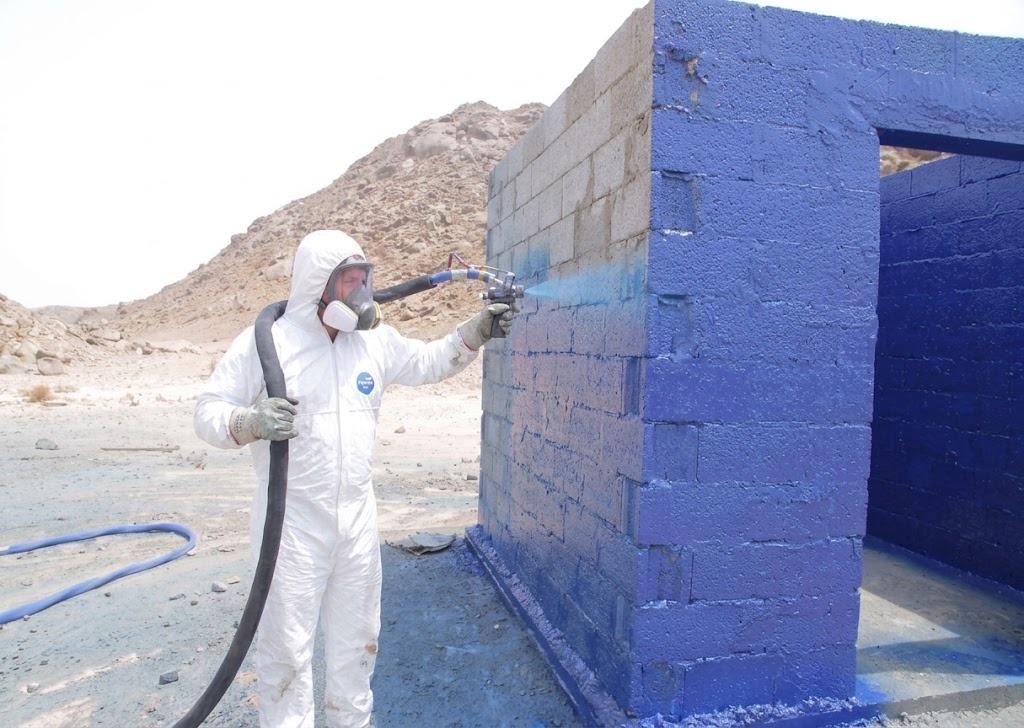
UltraBlast is supplied in 55 gallon drums or 250 gallon totes, metered 1:1 by volume. Side B needs a minimum of one minute of mechanical mixing per gallon before it goes through the rig.
Side A needs no agitation. Store the drums between 60 and 90°F and keep them away from extreme heat, freezing and moisture — and warm the material to at least 70°F before it goes to the gun.
Side B gets a minimum of one minute of mechanical mixing per gallon, until it is homogeneous. That is not a rounding instruction — an under-mixed resin side is the most common reason a batch does not hit its published numbers.
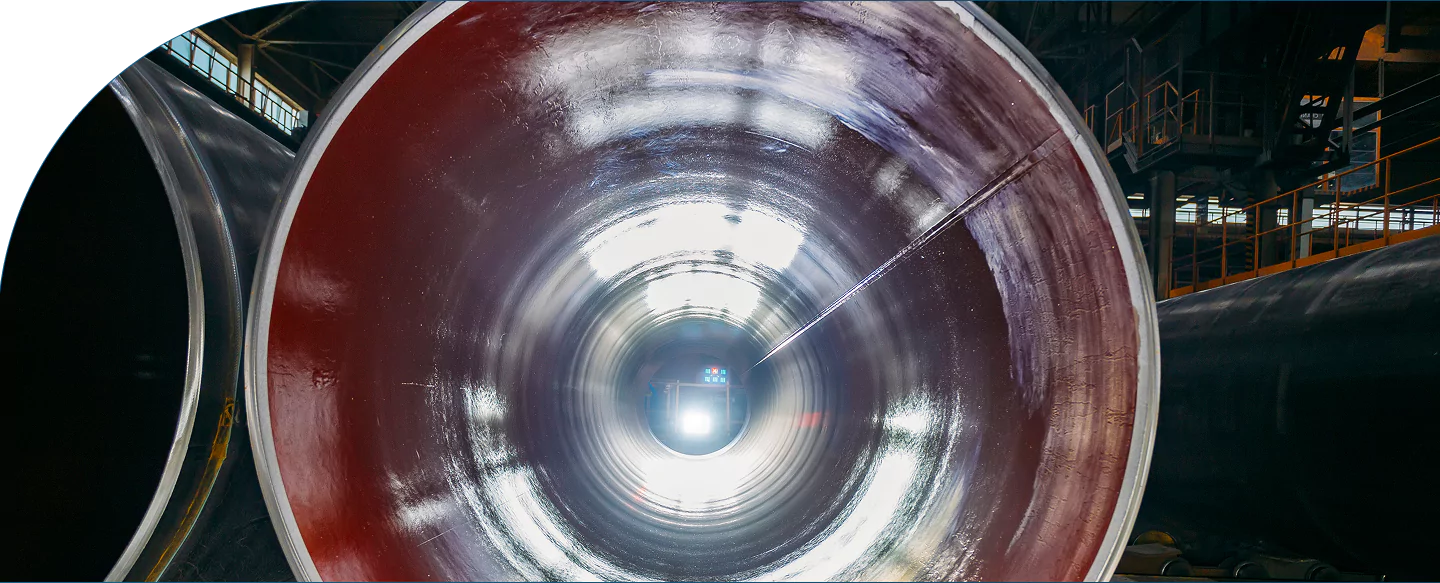
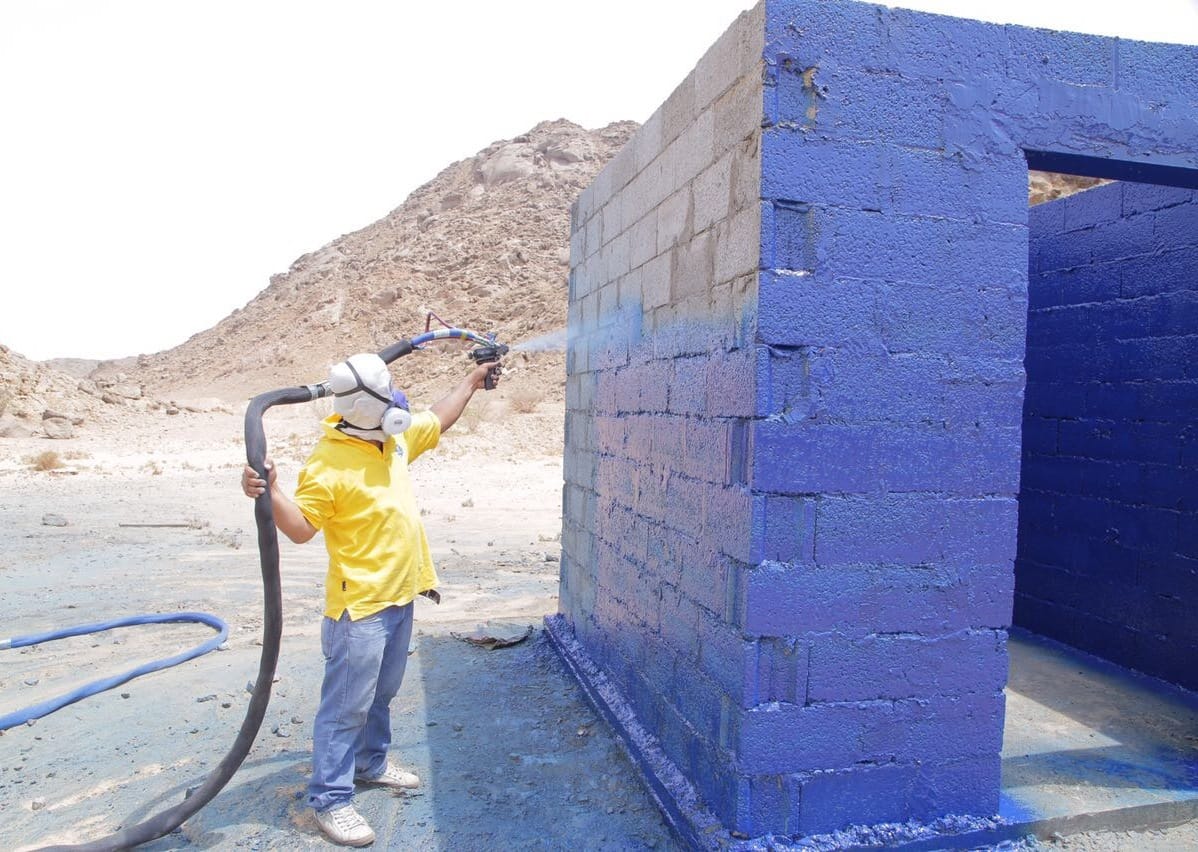
Over primed concrete, UltraBlast forms a monolithic waterproof membrane. Over primed steel it becomes a thick-film plastic encasement with a high level of corrosion protection and bond strength.
Steel saltwater knock-out tanks, oil and fuel tanks, offshore platform decks and concrete ocean pilings. This is the product for primed steel in genuinely hostile service.
Formulated to sit at the top of the range.
UltraBlast is an ArmorThane formulation, part of the ArmorLine series. We have developed and manufactured our own polyurea and polyurethane chemistry since 1989. UltraBlast is the one we reach for when the numbers have to be exceptional rather than merely good.
Strength and stretch at the same time
Around 7,200 psi tensile with 800% elongation. Those two usually trade against each other — a film that strong is normally stiff, and a film that stretchy is normally weak. Getting both is the whole point of this product, and it is why the data sheet describes it as hard and tough while still resilient rather than brittle.
About 7,200 psi tensile · about 800% elongation · 95 Shore A / 50 Shore D
About a milligram of Taber loss
One milligram on a CS17 wheel. For context, the same test gives about 6 mg on ArmorShield and roughly 28 on SureGrip. If the surface is going to be scoured by grit, slurry or traffic, this is the film that stays on it longest.
About 1 mg Taber loss, CS17 wheel
Built for primed steel and concrete
Over the proper primer on steel, the data sheet describes a tremendous level of corrosion protection and bond strength in a thick-film plastic encasement. Over primed concrete it forms a monolithic waterproof membrane. It also adheres extremely well to geotextile fabric, wood, aluminum, fiberglass and galvanized metal.
A primer is usually required on metal and concrete — ask us which one
A smooth, slick finished surface
UltraBlast lays down very smooth and slick, which matters in tanks, knock-out vessels and containment where product has to release and the surface has to be cleanable rather than textured.
Very smooth, slick surface · excellent chemical resistance
Fast, and not fussy about it
Eight second gel, tack free at about fifteen, through HighLine equipment at 2,400 psi and 150 to 160°F. It ships without special precaution for heated or refrigerated service — just warm the material to at least 70°F before you spray it.
Gel 8 seconds · tack free 15 seconds · minimum 2,400 psi
Backed by the people who make it
Buying UltraBlast means buying the chemistry, the plural-component rig that sprays it, the hands-on training that certifies the crew, and technical support for as long as you spray it. There are no franchise fees and no royalties on any of it.
$0 franchise fees · hands-on applicator training · support for the life of the business
The jobs UltraBlast is genuinely the right answer for.
Each of these traces back to the published data sheet — the figures below are rounded.
Primary containment over steel
Steel saltwater knock-out tanks, oil and fuel tanks and primary containment generally. Over the proper primer it behaves as a thick-film encasement rather than a paint.
Wastewater treatment plant
Treatment structures and tanks where abrasion, chemistry and immersion all arrive together, and where about 1 mg of Taber loss is the number that matters.
Offshore and marine structures
Offshore platform decks and concrete ocean pilings. Saltwater, impact and constant movement, with 800% elongation to absorb it.
Mining applications
Chutes, hoppers and wear surfaces in mining, where the coating is competing with abrasion more than with chemistry.
Geotextile composite liners
Secondary containment lining over geotextile composite membranes — it adheres extremely well to the fabric as well as to hard substrates.
Institutional floors and work trailers
Institutional floor coatings and work trailer linings, where the smooth, slick surface is as useful as the toughness.
This one usually wants a primer, and we would rather say so.
Several products in the ArmorLine range will go straight onto carbon steel with nothing underneath. UltraBlast is not one of them — the data sheet says it may require a primer to adhere to metal or concrete, and that where excellent adhesion is required, priming is recommended. That is a feature of how hard and tough the film is, not a defect, and the payoff is what the primer system delivers underneath it.
- Over primed steel: a thick-film plastic encasement with high corrosion protection and bond strength
- Over primed concrete: a monolithic waterproof membrane, tough and durable
- Adheres extremely well to geotextile fabric, wood, aluminum, fiberglass and galvanized metal
- Substrates must be free of dust, dirt, rust, grease, oil and mold release agents before coating
- Talk to the ArmorThane technical department about which primer suits your substrate
Where UltraBlast sits against the rest of the range.
It is worth being concrete about this rather than reaching for superlatives. On tensile, UltraBlast publishes about 7,200 psi where ArmorBlast publishes about 5,000 and most of the line sits between 2,000 and 3,700. On elongation it publishes about 800% where the range mostly runs 200 to 450%. On abrasion it loses about a milligram where the others lose six to twenty-eight. Those are the three places the difference actually shows up.
- Tensile about 7,200 psi — the highest figure we publish
- Elongation about 800% — also the highest in the range
- Taber loss about 1 mg on a CS17 wheel
- Modulus climbs steeply: about 1,136 psi at 100%, 2,054 at 200%, 4,040 at 300%
- Hardness about 95 Shore A, which is about 50 Shore D
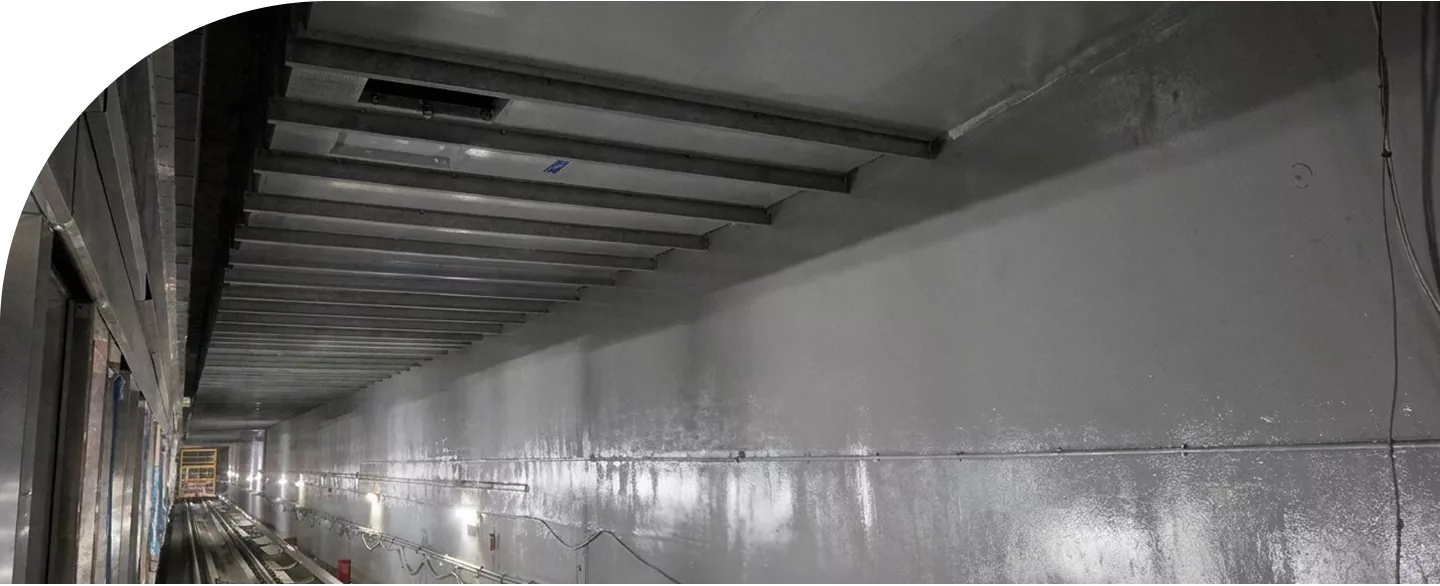
Where UltraBlast earns its keep.
The published use list is short and heavy — these are the places applicators put it most.
Steel tanks and vessels
Inside steel oil and fuel tanks and saltwater knock-out tanks. Over the proper primer, a thick-film encasement with high corrosion protection.
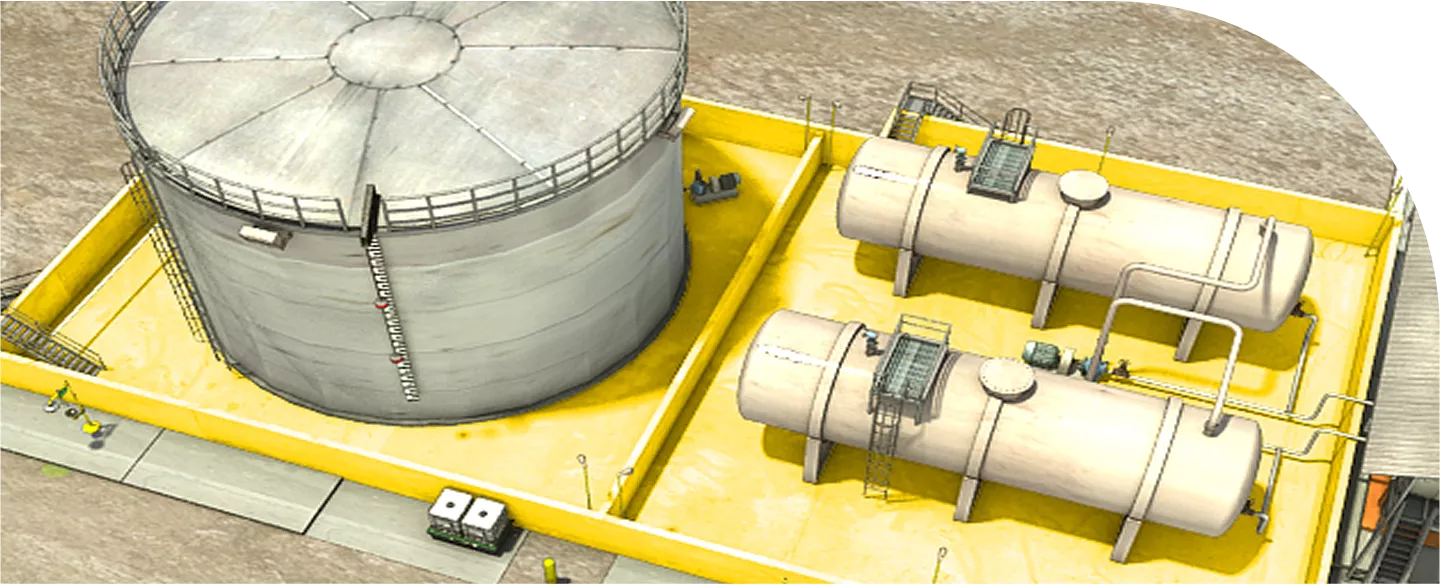
Primary and secondary containment
Primary containment over steel or concrete, and secondary containment lining over geotextile composite membranes.
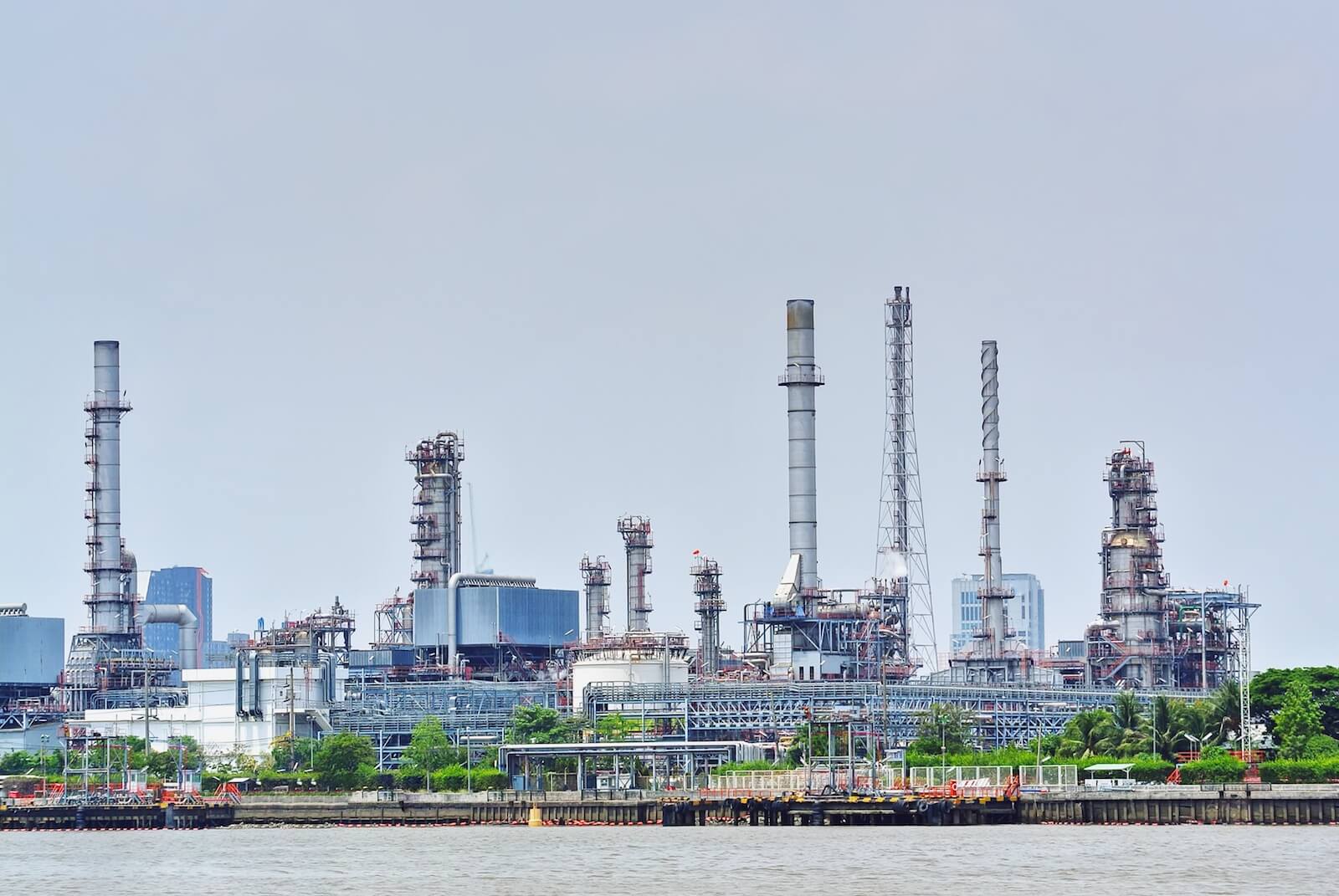
Offshore platforms and pilings
Offshore platform decks and concrete ocean pilings. Salt, impact and movement, with 800% elongation to take it.
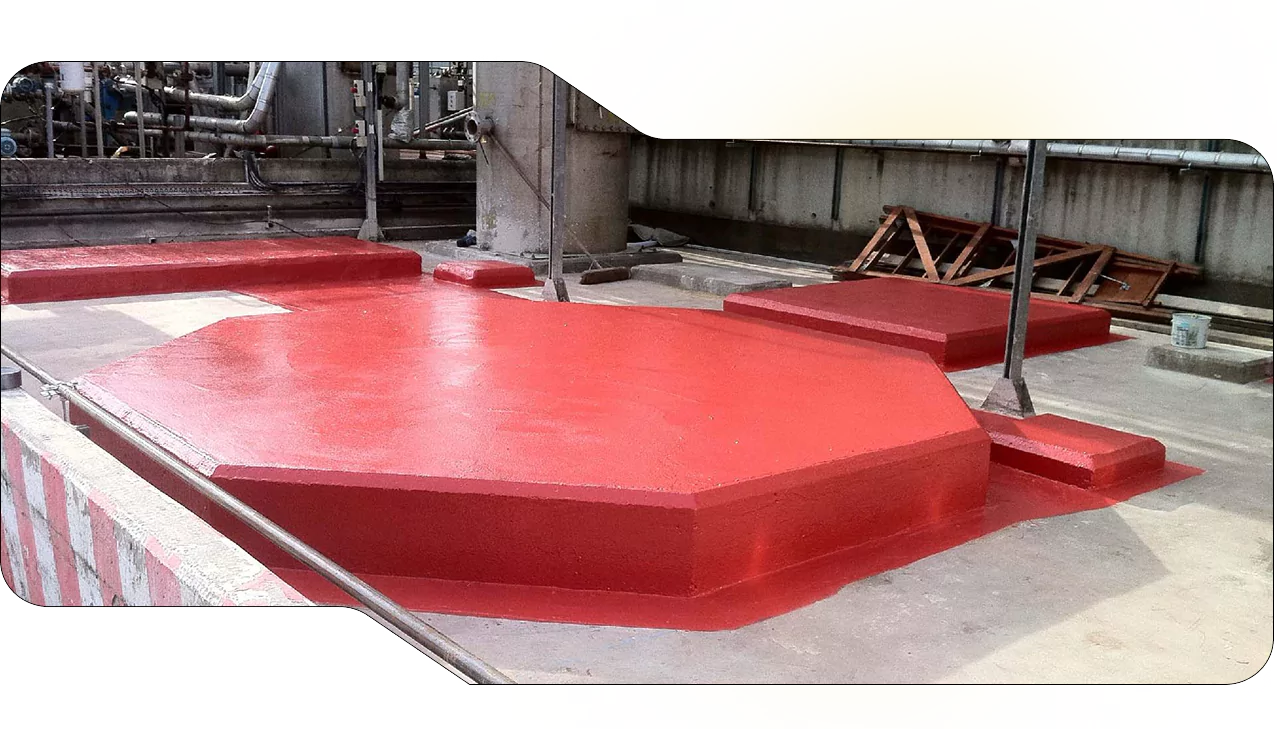
Wastewater treatment plants
Treatment structures where abrasion, chemistry and immersion all arrive at once and about 1 mg of Taber loss is the deciding number.
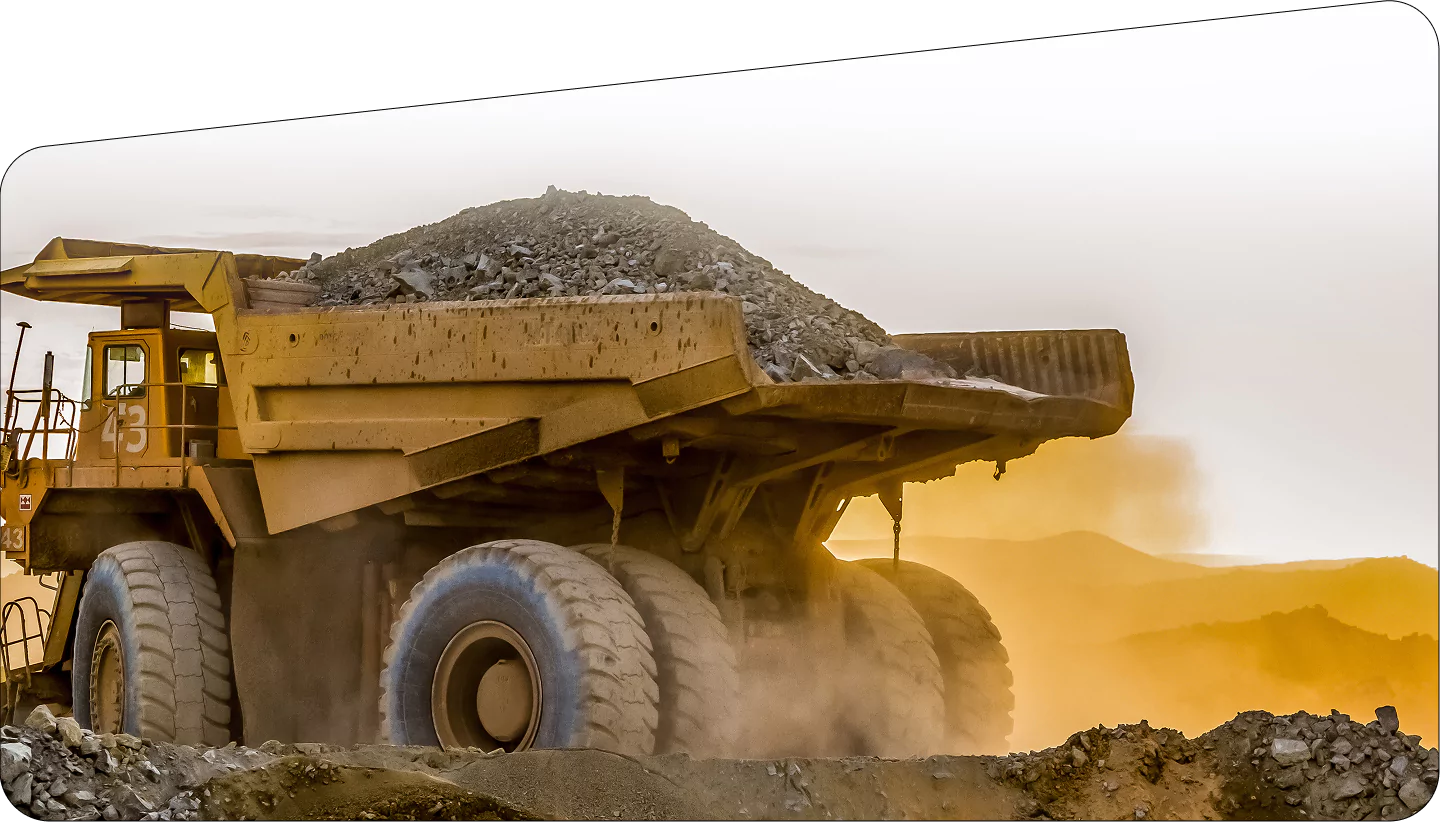
Mining applications
Wear surfaces, chutes and hoppers. The most abrasion-resistant film in the ArmorLine range by a wide margin.
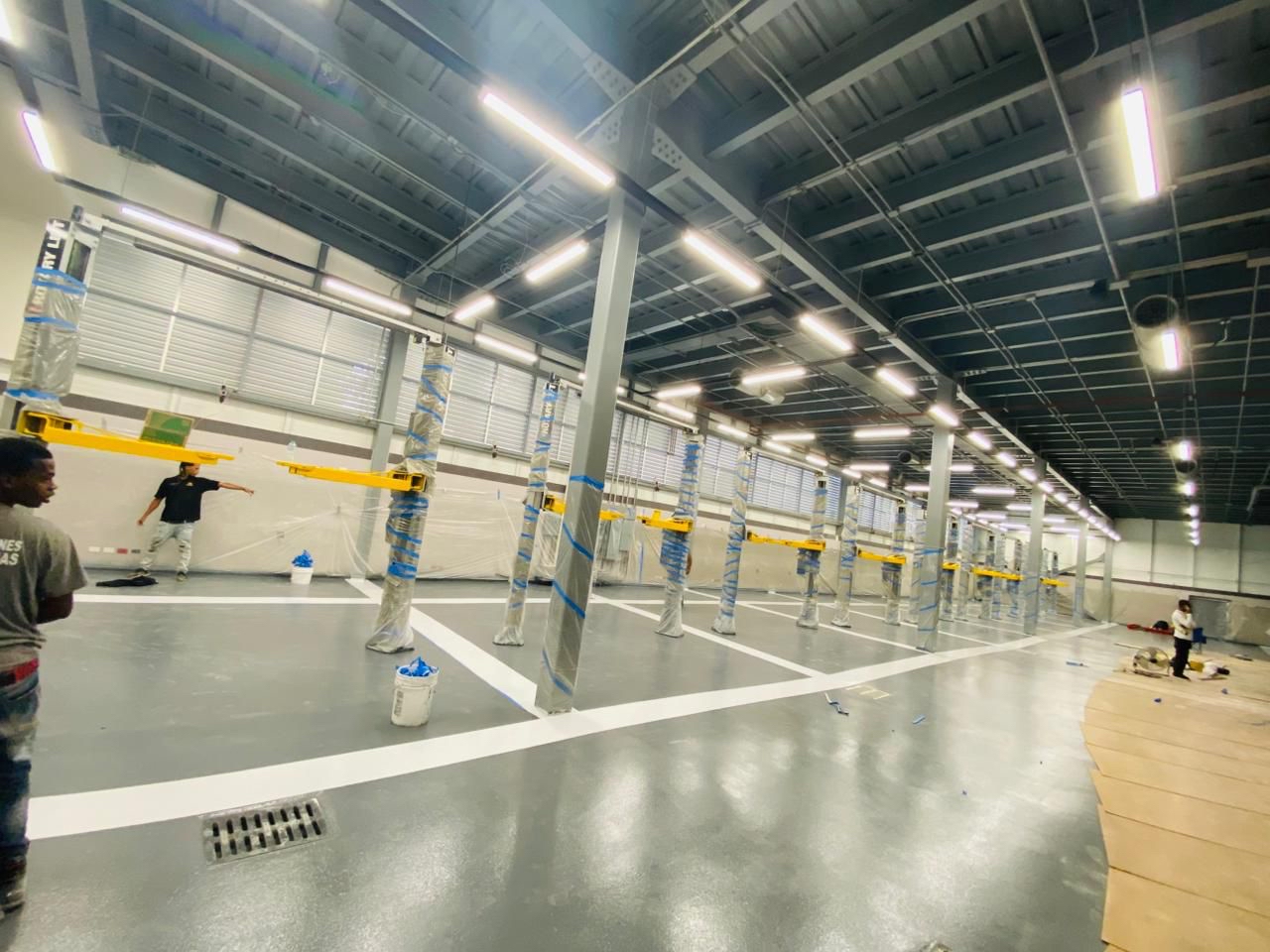
Institutional floors and trailers
Institutional floor coatings and work trailer linings, where the smooth slick surface is as much the point as the strength.
What to expect from the film.
Typical values, rounded so you can size the product up quickly. Filter by what you care about, search for a property, or flip the sheet to metric.
No published property matches that search.
These are typical, rounded values obtained on ArmorThane equipment and parameters — they are here to give you a feel for the product, not to specify a job. Exact published figures, tolerances and test conditions are on the current UltraBlast technical data sheet; ask us and we will send it. Different spray equipment and parameters will affect these properties, so applicators should run their own testing for a given job. UltraBlast is for commercial use only and should only be applied by trained personnel.
How an UltraBlast job actually goes down.
The short version of the data sheet, in the order a crew does it.
- 01
Prepare the substrate properly
Coating performance and adhesion are directly proportional to surface preparation. Everything has to come off: loose dust, dirt, rust, grease, oil and any mold release agent that would interfere with bonding. On a substrate that has been in service, consider absorption as well.
- 02
Settle the primer question first
UltraBlast may require a primer to adhere to metal or concrete, and priming is recommended wherever excellent adhesion is required. Get that decided before the rig is on site — talk to the ArmorThane technical department about which primer suits your substrate.
- 03
Warm the material
Bring the material to at least 70°F (21°C) before application. UltraBlast ships without special precaution for heated or refrigerated service, but it does not spray well cold.
- 04
Mix Side B for a minute per gallon
Side B needs a minimum of one minute of mechanical mixing per gallon, until it is homogeneous. Side A needs no agitation. Never dilute either side.
- 05
Spray hot, at 2,400 psi or better
Minimum 2,400 psi with material at 150 to 160°F (65 to 71°C), through HighLine equipment. Hold pressure and temperature throughout and work in smooth multidirectional passes.
- 06
Build the film the duty needs
UltraBlast is at its best as a thick film — that is where the encasement effect on steel and the monolithic membrane on concrete come from. Tell us the service and we will talk through a build thickness with you.
The chemistry is only half of what you get.
ArmorThane makes the coating, builds the plural-component rig that sprays it, trains your crew hands-on and certifies them, and answers the technical line afterwards. No franchise fees, no royalties, no territory you have to buy. Applicators have come first here since 1989.
- Equipment package matched to the work you want to take on
- Hands-on training and applicator certification
- Technical support for the life of the business
- Applicators in more than 50 countries
UltraBlast, answered.
Is it really that much stronger than the rest?
On the published figures, yes — about 7,200 psi tensile against roughly 2,000 to 5,000 for the rest of the ArmorLine range, about 800% elongation against 200 to 450%, and about 1 mg of Taber loss against 6 to 28. We would rather give you those comparisons than call it the strongest coating in the industry, because the numbers are checkable and the slogan is not.
Does it need a primer?
Usually, on metal and concrete. The data sheet says UltraBlast may require a primer to adhere to those substrates, and that priming is recommended wherever excellent adhesion is required. That is different from products like ArmorShield that go onto carbon steel bare. Budget for the primer and talk to us about which one.
What is the difference between UltraBlast and ArmorBlast?
They are separate products with separate data. ArmorBlast is a 100% solids polyurea with about 5,000 psi tensile, a 44-chemical resistance table, a −40 to 350°F service range and a 2007 university blast test behind it. UltraBlast is a hybrid with much higher tensile and elongation, far better abrasion resistance, and a preference for primed substrates. If the specification is about blast, start with the ArmorBlast page where the test results are published.
Can I spray it over geotextile?
Yes — the data sheet calls out secondary containment lining for geotextile composite membranes as a typical use, and says it adheres extremely well to the fabric. If the job is purely a fabric liner over open ground, HighLine 610 or EnviroThane are the products designed for that specifically; UltraBlast is the heavier, stronger option where the composite has to take real punishment.
What pressure and temperature does it want?
Minimum 2,400 psi through HighLine equipment, with material at 150 to 160°F (65 to 71°C). Hold both throughout. Warm the material to at least 70°F before you start even though it ships without special temperature precautions.
Why is the shelf life only six months?
That is what the data sheet states for UltraBlast in factory-delivered, unopened drums. Store between 60 and 90°F, away from extreme heat, freezing and moisture, rotate your stock, and do not open a drum until you are ready to spray it.
What do we need to know before handling it?
Read the Safety Data Sheets for both sides before anyone touches a drum — regulations require that every employee be trained on the SDS for the chemicals they work around. Avoid contact with eyes and skin, wear a respirator or fresh-air hood when spraying, and note that spraying indoors requires forced ventilation.
Tell us what has to survive.
Describe the tank, the deck, the structure or the containment area, what it holds and where you are. An ArmorThane specialist will come back with the right chemistry, the primer that goes under it, the rig that sprays it and what a startup actually costs.
- Equipment package matched to your applications
- Hands-on training and applicator certification
- Primer and substrate guidance for your specification