ArmorLiner Polyurea
The one most people meet first. ArmorLiner polyurea is the spray-on bedliner product — a 100% solids polyurea that goes down thick, sets in seconds and bonds to metal, concrete, fiberglass and wood. It is our most widely sprayed formulation, and the balance it strikes between toughness and flexibility is why it ends up in truck beds, horse trailers, cargo holds and industrial floors alike.
- 100% solids polyurea
- Zero VOC
- High build
- Tack free in seconds

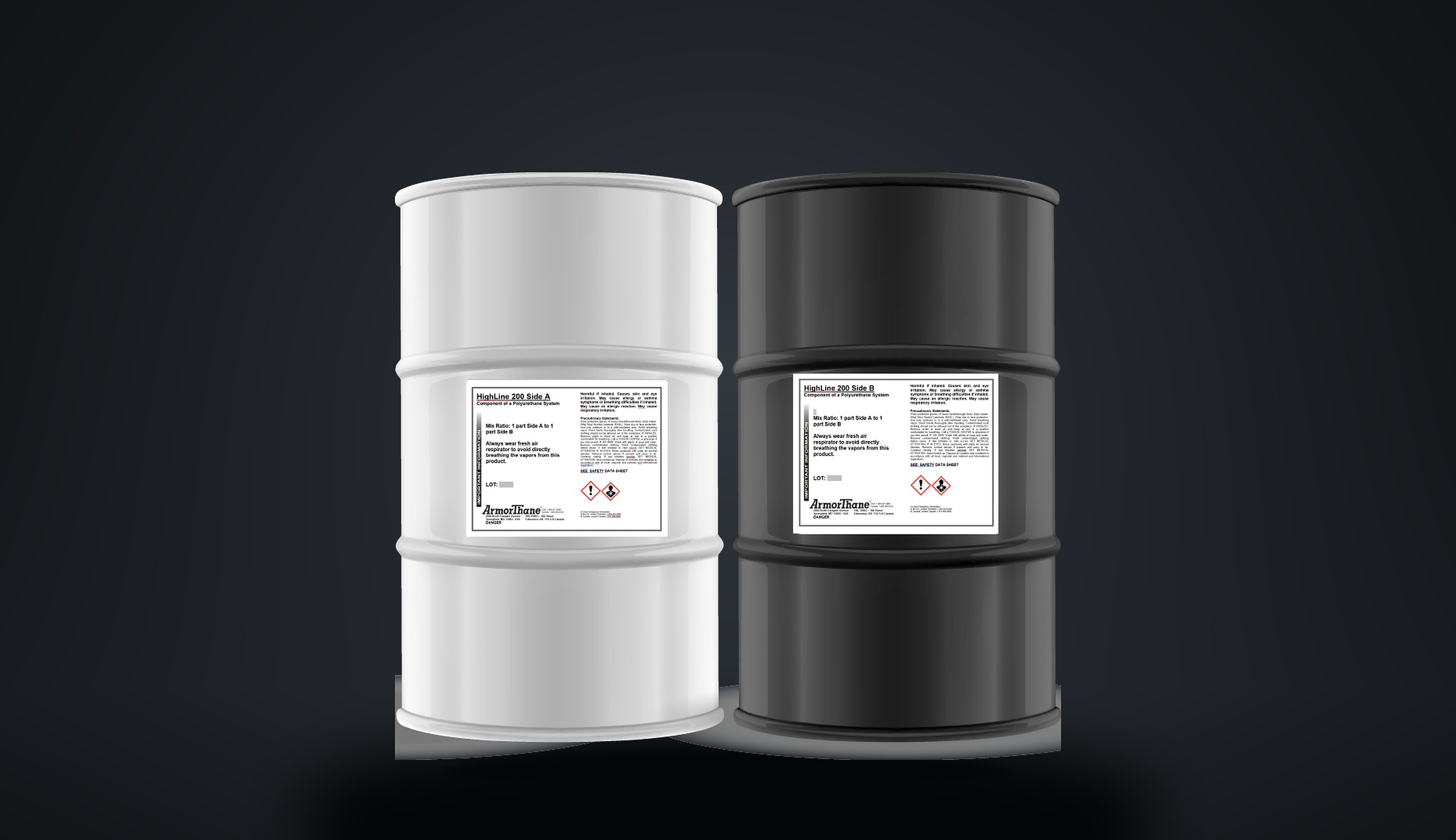
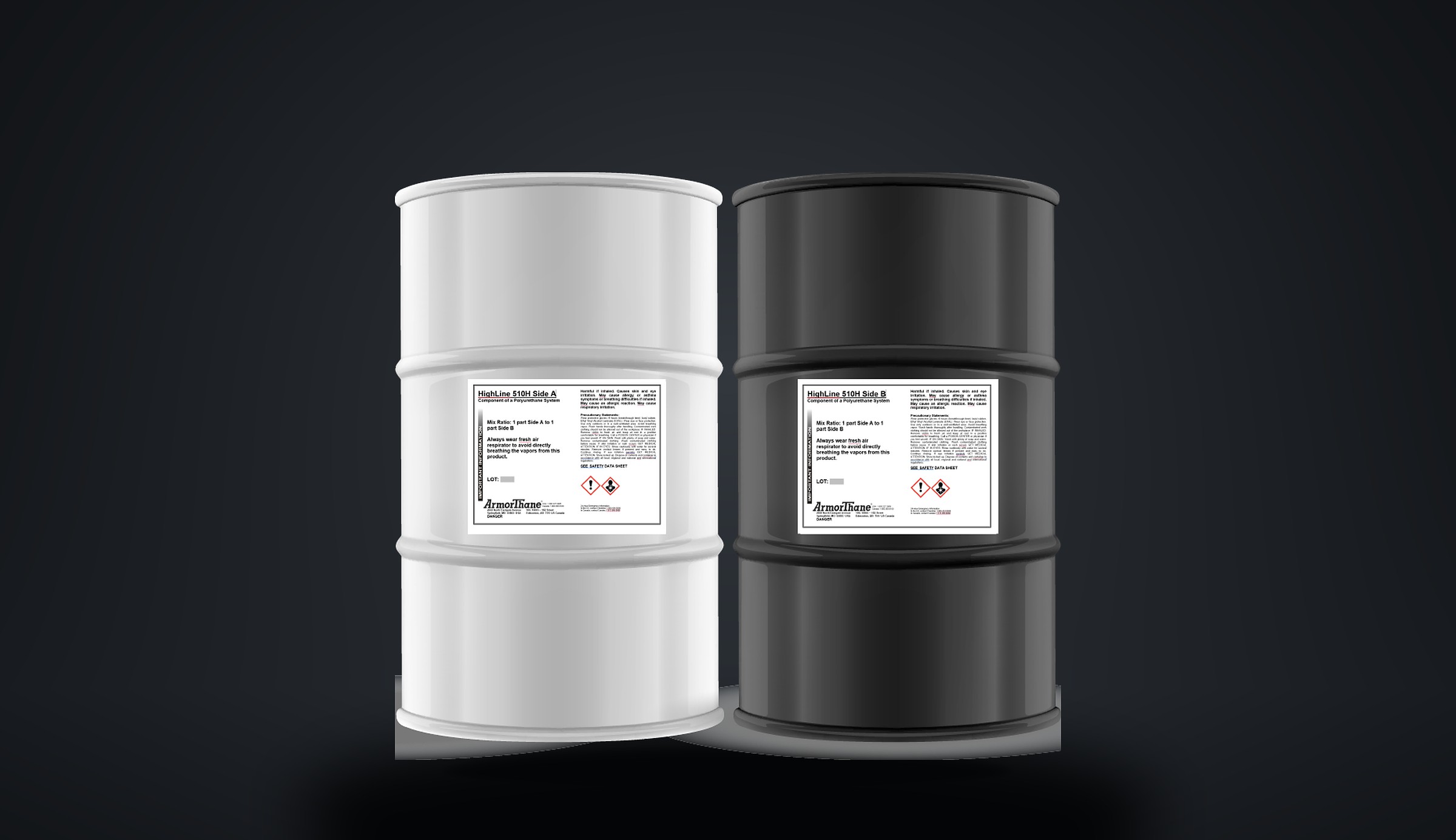
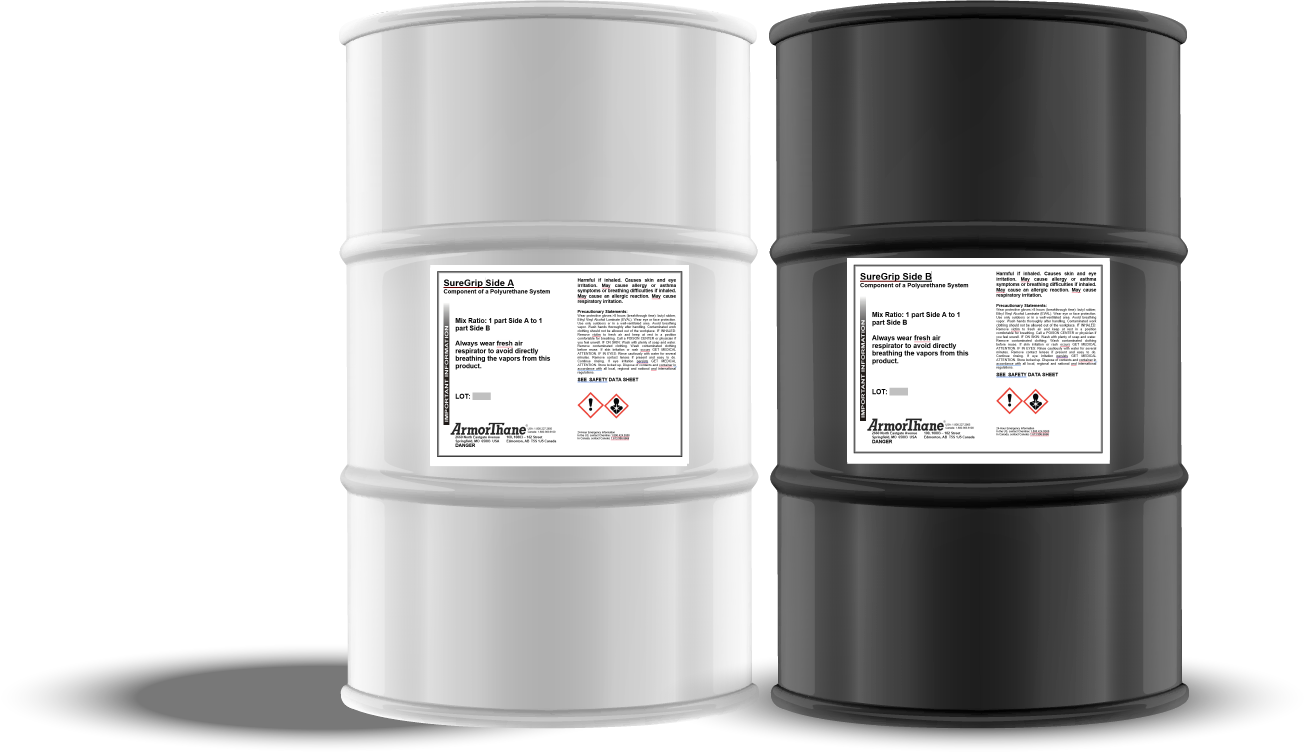
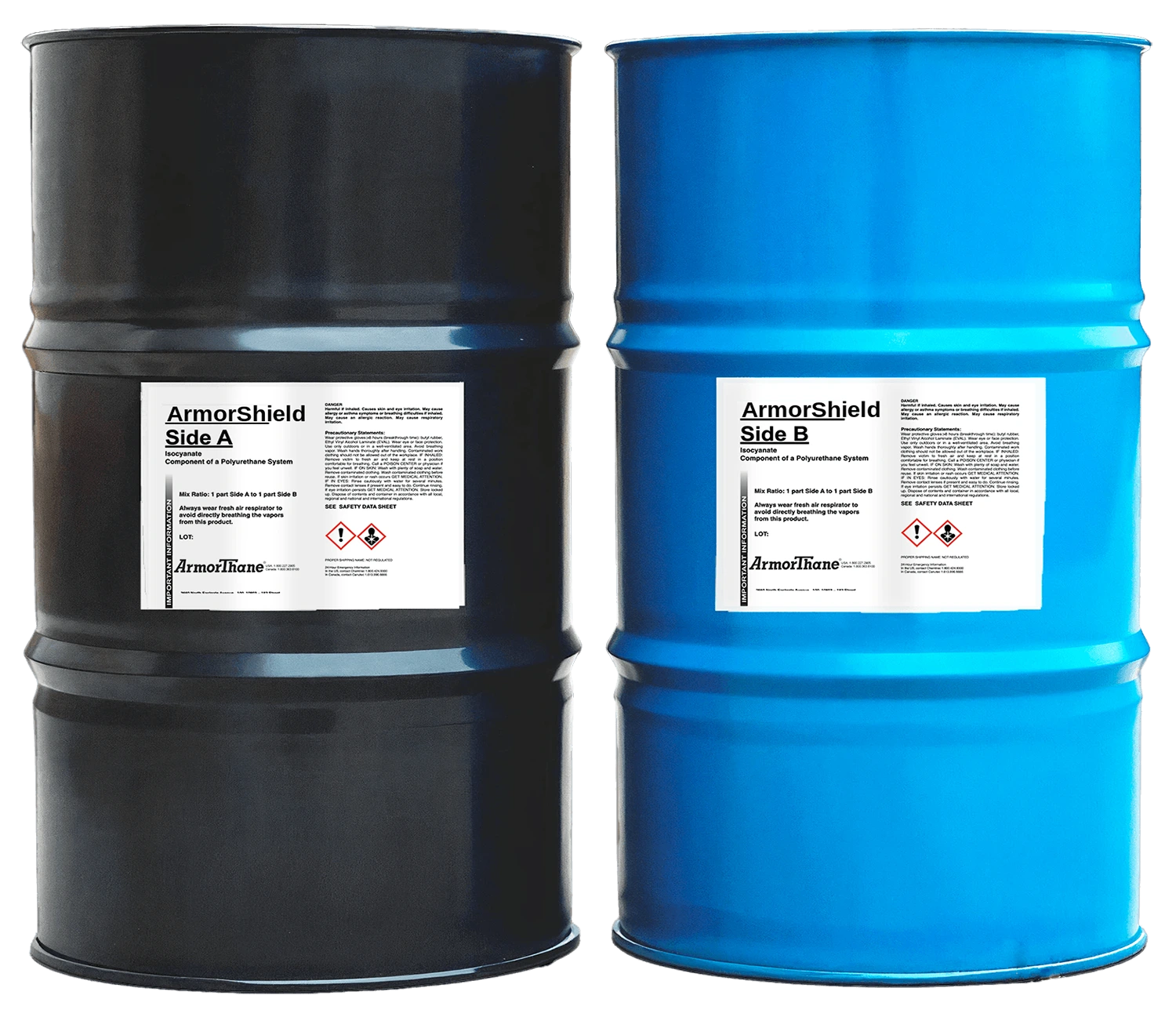
One kit is 100 gallons — a 50 gallon drum of Side A ISO and a 50 gallon drum of Side B polyol resin, metered 1:1 by volume. Both drums run with a desiccant device fitted, and neither side may be diluted.
Side A is the isocyanate, around 120 cps at spray temperature. It needs no agitation but it does need a desiccant device fitted to the drum while it is in use.
Side B is the polyol resin and the thicker of the two at around 200 cps. Power-agitate it to a uniform mixture and color, then pigment it at 100 grams per gallon.
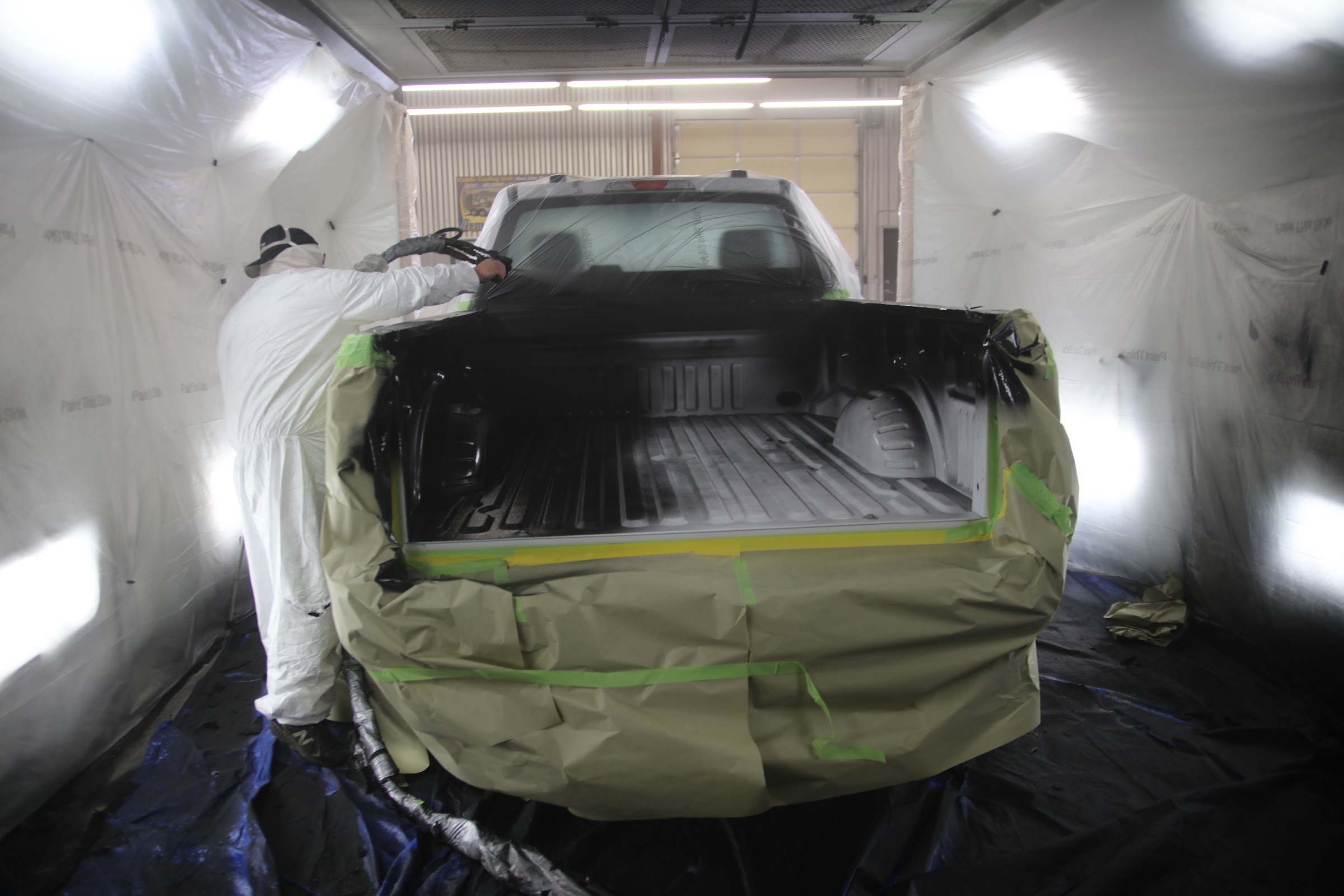
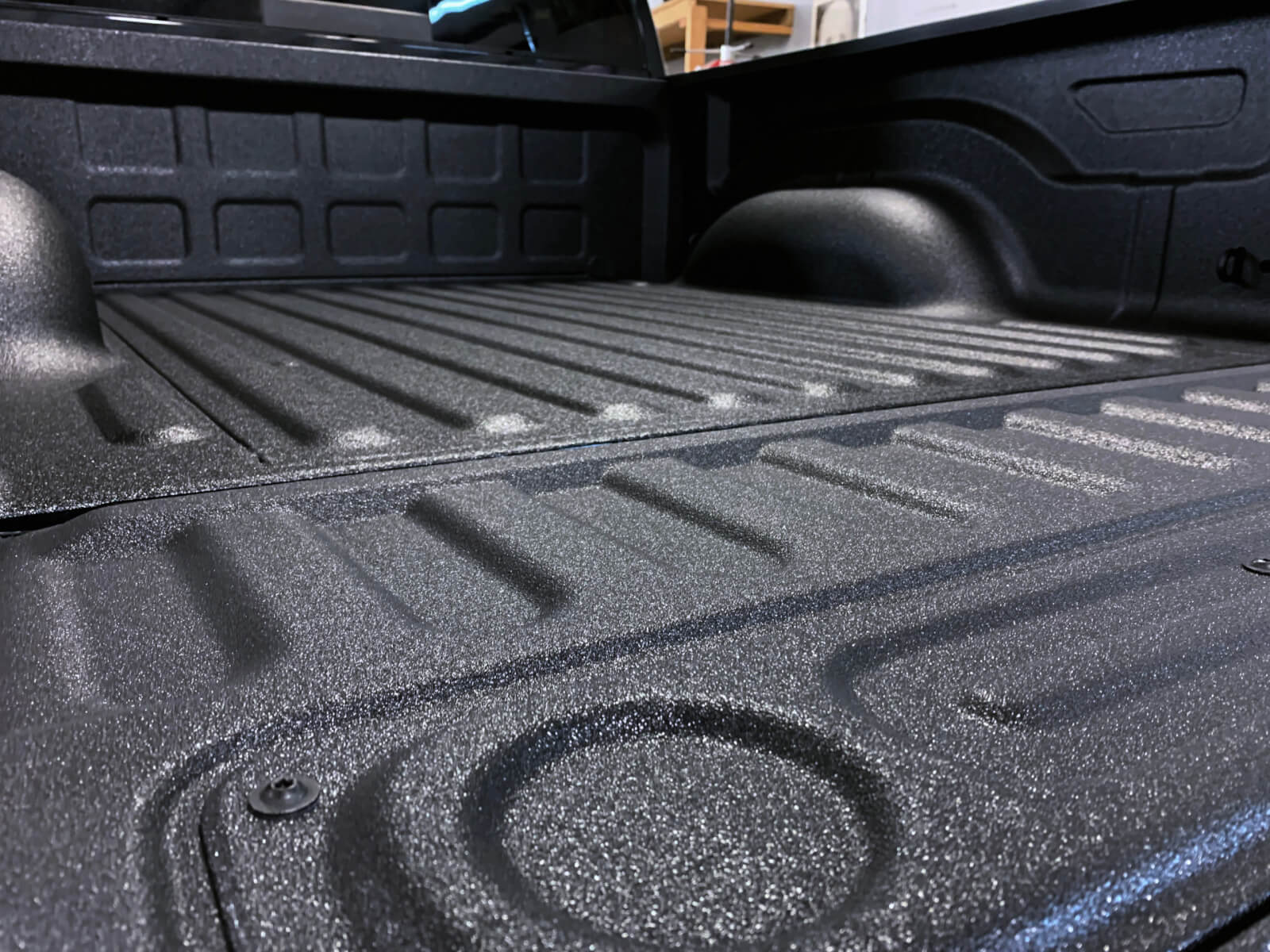
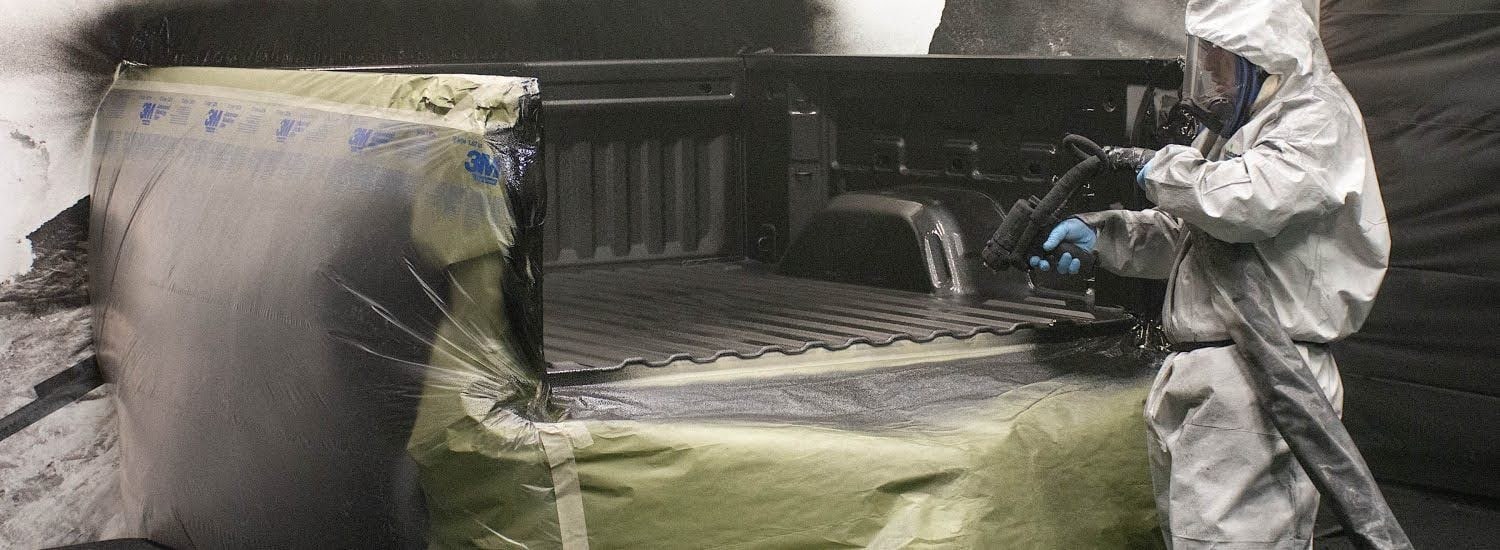
The application the product is best known for. Sprayed in place, it bonds to the bed rather than sitting in it, so there is nothing for water, grit or cargo to get behind.
Around 55 Shore D with 200% elongation and 400 pli tear — firm enough to resist gouging, flexible enough to take impact without cracking. The texture comes from how it is sprayed, not from an additive.
Formulated in-house, and sprayed more than anything else we make.
ArmorLiner is an ArmorThane formulation, part of the ArmorLine series. We have developed and manufactured our own polyurea and polyurethane chemistry since 1989. ArmorLiner is the workhorse — the one most applicators start with and keep using.
A balance rather than an extreme
Around 3,300 psi tensile, 55 Shore D, 400 pli tear and 200% elongation. None of those is the highest number in the range, and that is the point — ArmorLiner is tuned to be good at everything a lining has to do rather than exceptional at one thing and awkward at the rest.
About 3,300 psi tensile · 55 Shore D · 400 pli tear · 200% elongation
It sets before it can run
Two to four second pot life and tack free in ten to thirty seconds at 150 mils. That is what lets it go on thick, on a vertical bedside or an inside corner, without sagging or pooling at the bottom.
Pot life 2–4 seconds · tack free 10–30 seconds at 150 mils · high build
Four substrates, one product
Metal, concrete, fiberglass and wood. A single lining system that covers a truck bed, a trailer floor, a concrete containment area and a plywood deck means less inventory and one set of parameters for a crew to learn.
Metal, concrete, fiberglass and wood — adhesion test recommended before any project
It encapsulates as well as it lines
Encapsulation of fiberglass and polystyrene foams is on the published use list alongside the vehicle work. Spraying over foam turns a shape into a structure, and spraying over fiberglass stops it fretting and cracking.
Encapsulation of fiberglass and polystyrene foams
It yellows — and there is an answer
ArmorLiner is aromatic, so it will yellow or darken after UV exposure. That is cosmetic, not structural, and it can be topcoated with ArmorThane UV Topcoat or UV ColorCoat for a colorfast glossy finish. We would rather tell you that up front than have you discover it on a customer vehicle.
Topcoat with ArmorThane UV Topcoat or UV ColorCoat for a colorfast finish
Backed by the people who make it
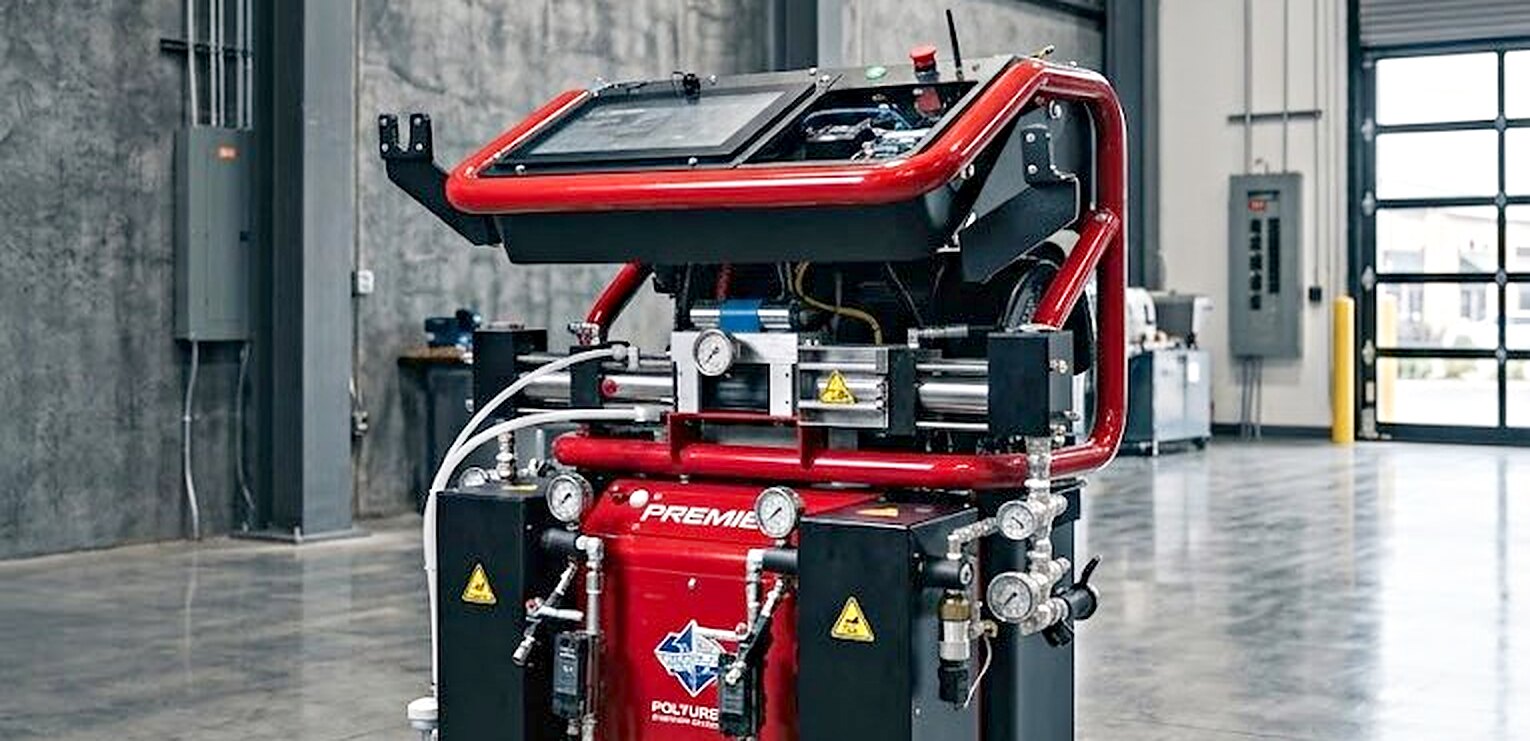
Buying ArmorLiner means buying the chemistry, the plural-component rig that sprays it, the hands-on training that certifies the crew, and technical support for as long as you spray it. There are no franchise fees and no royalties on any of it.
$0 franchise fees · hands-on applicator training · support for the life of the business
The jobs ArmorLiner is genuinely the right answer for.
Each of these traces back to the published data sheet — the figures below are rounded.
Truck beds and utility vehicles
The application it is best known for. Sprayed in place and bonded to the bed, so nothing gets behind it — and no rattle, no gap, no drop-in to replace.
Cargo liners and cargo holds
Cargo areas, holds and horse trailers. High build, abrasion and impact resistant, and seamless across the whole floor and up the walls.
Waterproof decking and walkways
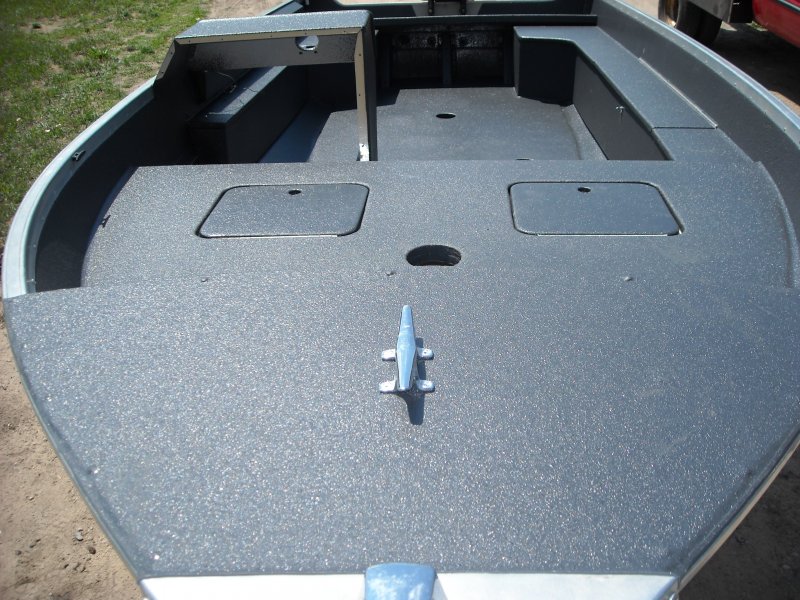
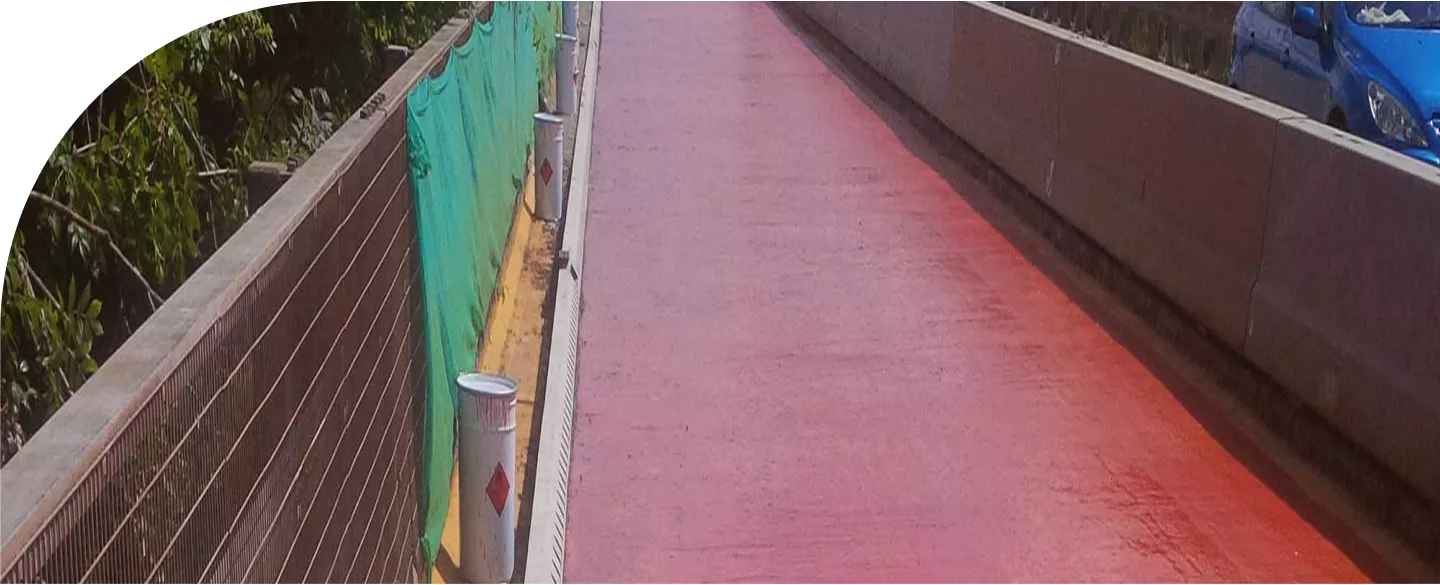
Decking, walkways and boat linings. A continuous waterproof membrane that takes foot traffic and weather without a joint in it.
Encapsulating foam and fiberglass
Polystyrene foam and fiberglass bodies. The coating becomes the working surface over a substrate that has none of its own.
Industrial floors and containment
Industrial flooring and containment areas where a tough, chemical-resistant lining is wanted over concrete rather than over steel.
Vapor barrier work
Vapor barrier is on the published use list. High build in a single application, over the substrates most buildings and vehicles are made of.
It is a bedliner. It is also most of a product line.
Spray-on bedliners are what brought most of our applicators to polyurea, and ArmorLiner is the product that does them. But the published use list runs well past the tailgate — the same drum sprays horse trailers, boat linings, cargo holds, walkways, industrial floors and containment areas. For a new applicator that matters commercially: one chemistry, one set of spray parameters, and a much wider set of jobs you can quote.
- Truck beds, utility vehicles, horse trailers and cargo liners
- Boat linings, cargo holds and waterproof decking
- Industrial flooring, walkways and containment areas
- Encapsulation of fiberglass and polystyrene foams
- Vapor barrier applications
Aromatic, so it fades — and that is a solved problem.
ArmorLiner is an aromatic polyurea, which means UV will yellow or darken it over time. On a truck bed under a tonneau nobody notices. On a horse trailer that lives in the sun, or a deck a customer looks at every day, it matters. The answer is a topcoat: ArmorThane UV Topcoat or UV ColorCoat over the liner gives a colorfast, glossy finish, and the two products are designed to go together.
- Aromatic chemistry — it will yellow or darken under UV
- Structural performance is unaffected; this is appearance only
- Topcoat with ArmorThane UV Topcoat or UV ColorCoat for colorfastness
- Pigment goes into Side B at 100 grams per gallon, never into Side A
- Recoat window is generous at up to twelve hours
Where ArmorLiner earns its keep.
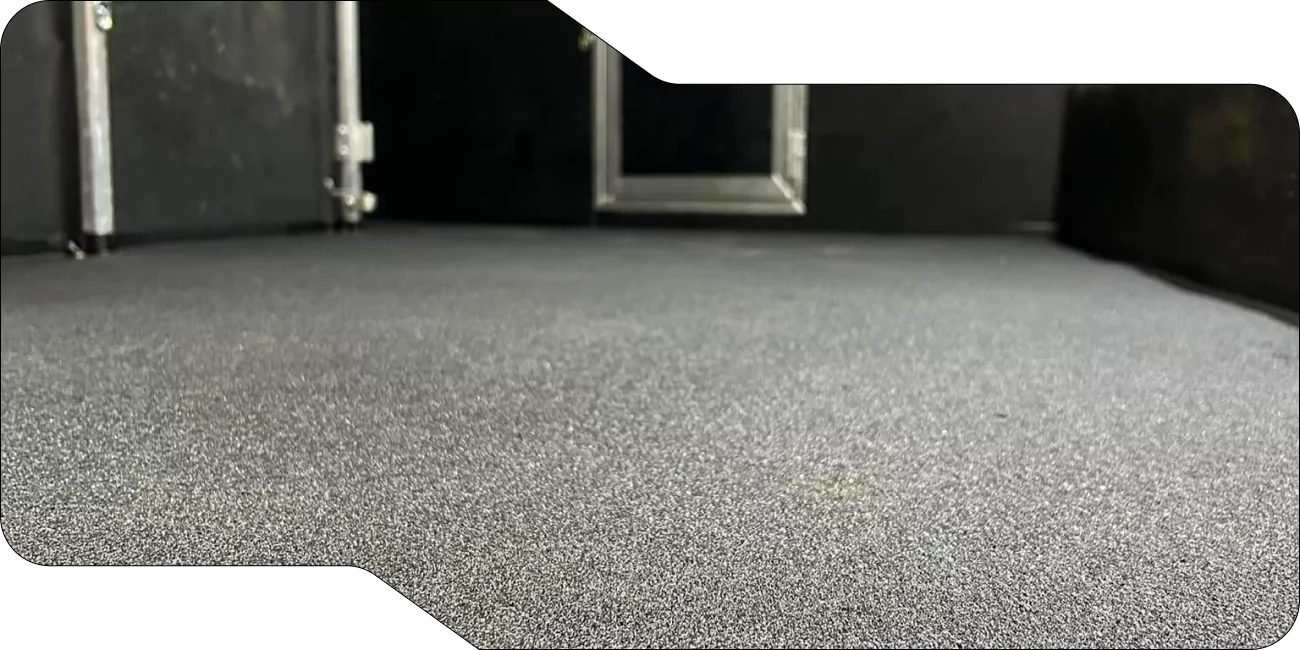
Truck beds are the headline — the published list runs a good deal longer.
Truck beds and utility vehicles
Sprayed in place and bonded to the metal. Seamless, high build, and tack free in under half a minute at 150 mils.
Horse trailers and livestock
Trailer floors and walls that take hooves, moisture and muck. Tough and elastomeric, with low temperature flexibility for winter hauling.
Boat linings and cargo holds
Boat linings, cargo holds and cargo liners. Abrasion and impact resistant, seamless, and it bonds to fiberglass as readily as to metal.
Waterproof decking and walkways
Decking and walkways where a continuous waterproof membrane has to take foot traffic and weather with no joint in it.
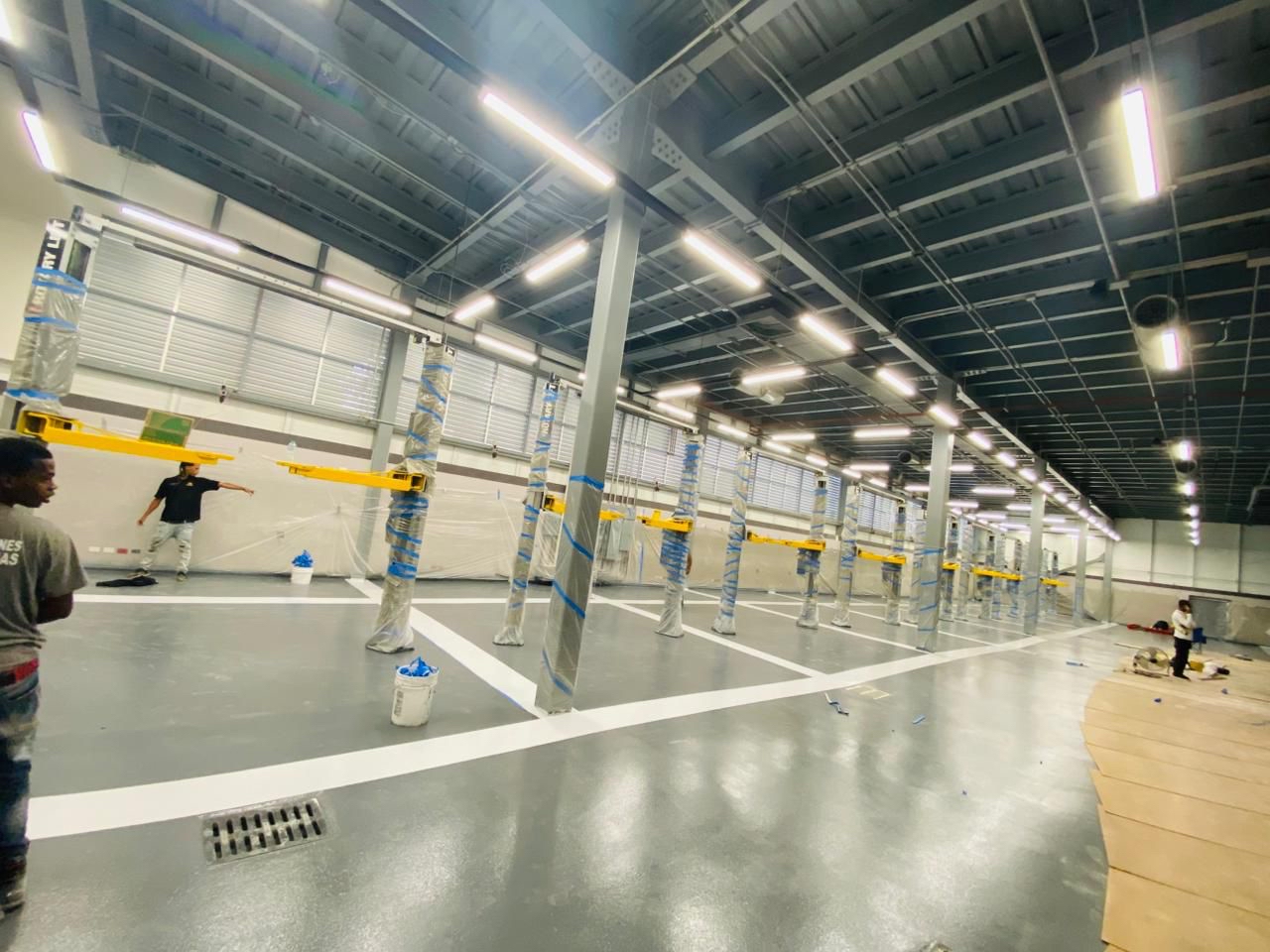
Industrial floors
Industrial flooring over concrete. High build, chemical resistant, and quick enough to cure that a working area comes back fast.
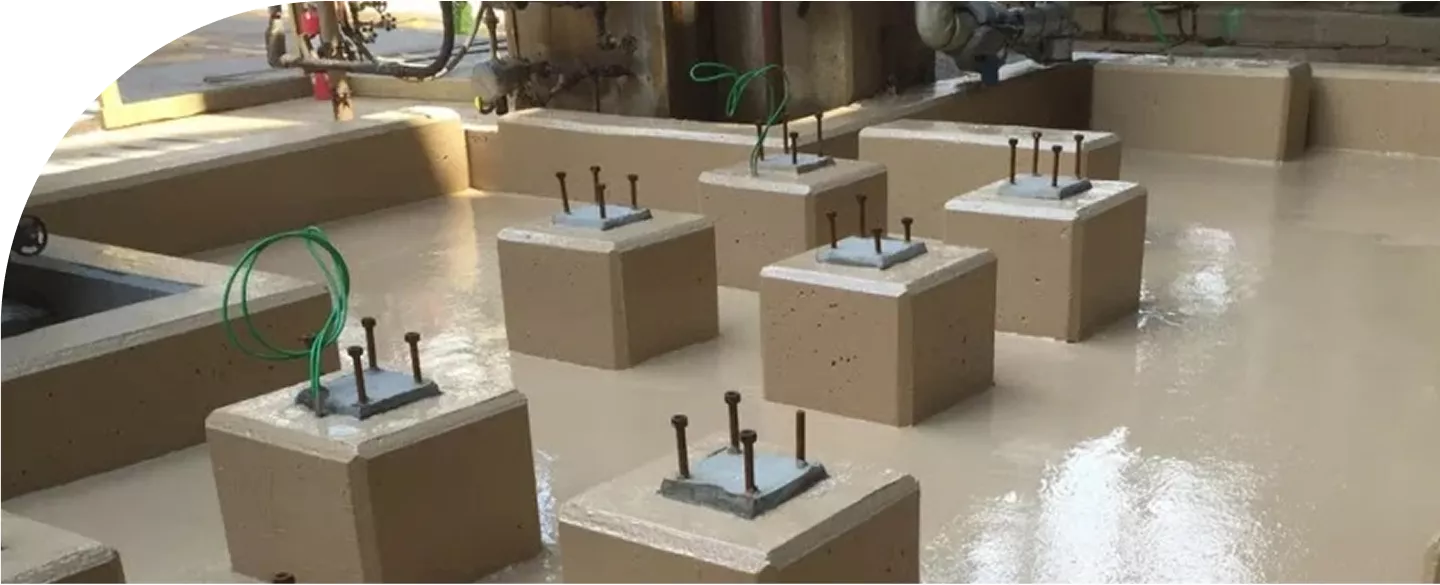
Containment areas
Containment over concrete and metal, and vapor barrier work. A seamless lining with a six month shelf life on the drum.
What to expect from the film.
Typical values, rounded so you can size the product up quickly. Filter by what you care about, search for a property, or flip the sheet to metric.
No published property matches that search.
These are typical, rounded values obtained on ArmorThane equipment and parameters — they are here to give you a feel for the product, not to specify a job. Exact published figures, tolerances and test conditions are on the current ArmorLiner technical data sheet; ask us and we will send it. Different spray equipment and parameters will affect these properties, so applicators should run their own testing and an adhesion test for a given job. ArmorLiner is for commercial use only and should only be applied by trained personnel.
How an ArmorLiner job actually goes down.
The short version of the data sheet, in the order a crew does it.
- 01
Prepare the substrate, then test it
Coating performance and adhesion are directly proportional to surface preparation, and most coating failures trace back to it. Everything has to come off: dust, dirt, oil, grease, rust, corrosion. An adhesion test on the actual substrate is recommended before any project starts.
- 02
Precondition both drums and fit the desiccants
Bring Side A and Side B to 80–90°F (27–32°C) before you spray, and fit a desiccant device to both containers while they are in use. Do not open a drum until you are ready to use it, and never dilute either side.
- 03
Power-agitate Side B and pigment it
Mix Side B with air-driven power equipment until the mixture and the color are homogeneous, then add ArmorThane pigment at 100 grams per gallon. Side A needs no agitation.
- 04
Spray hot through the HighLine rig
Material above about 150°F (66°C) through the ArmorThane HighLine plural-component system. Hold pressure and temperature throughout, and work in smooth multidirectional passes for even thickness and appearance.
- 05
Build the thickness the job needs
ArmorLiner is a high-build product — tack free times are quoted at 150 mils, which is where a bedliner typically lands. Thicker is slower to skin; plan the passes accordingly.
- 06
Topcoat it if the sun will see it
If the finished surface lives outdoors and appearance matters, follow with ArmorThane UV Topcoat or UV ColorCoat for a colorfast glossy finish. The recoat window is up to twelve hours.
Why ArmorLiner Polyurea Works
Most of what makes an ArmorLiner polyurea bedliner last comes down to chemistry and preparation. ArmorLiner polyurea is 100% solids, so nothing evaporates as it cures and the film you spray is the film you keep. ArmorLiner polyurea bonds directly to the prepared surface, which means no gap for water, sand or grit to collect, unlike a drop-in plastic liner. The background on polyurea explains why it sets so quickly and stays flexible. For the full story on choosing a liner, read which truck bedliner is better, see finished trucks in the automotive gallery and learn more about spray-on bedliners. If you want color that stays rich in the sun, finish the job with STS ColorCoat.
The chemistry is only half of what you get.
ArmorThane makes the coating, builds the plural-component rig that sprays it, trains your crew hands-on and certifies them, and answers the technical line afterwards. No franchise fees, no royalties, no territory you have to buy. Applicators have come first here since 1989.
- Equipment package matched to the work you want to take on
- Hands-on training and applicator certification
- Technical support for the life of the business
- Applicators in more than 50 countries
ArmorLiner, answered.
Is ArmorLiner only for truck beds?
No — it is the product most people know as the bedliner, but the published use list also covers horse trailers, cargo liners and holds, boat linings, waterproof decking, walkways, industrial flooring, containment areas, vapor barriers and the encapsulation of fiberglass and polystyrene foams. For a new applicator that breadth is the commercial argument: one chemistry, one set of parameters, a lot of different jobs.
Will it fade?
Yes, if it lives in the sun. ArmorLiner is aromatic, so UV will yellow or darken it. Performance is unaffected — it is purely appearance. ArmorThane UV Topcoat or UV ColorCoat over the top gives a colorfast glossy finish, and they are made to go together.
How is it different from ArmorSeal 100 AL?
They overlap, but ArmorSeal 100 AL is aimed primarily at roofing — a softer film at about 85 Shore A with 225% elongation. ArmorLiner is harder at about 55 Shore D with higher tensile and tear, which suits abrasion and impact in beds, trailers and holds. If the job is an RV or metal roof, start with ArmorSeal; if it is a cargo surface, start here.
What thickness should a bedliner go on at?
The published tack free time is quoted at 150 mils, which is a typical bedliner build. ArmorLiner is a high-build product and can be applied at any rate to reach the thickness you want — the practical limit is how fast it skins, so plan the passes rather than chasing it all in one.
Does it need a primer?
The data sheet does not call for one on metal, concrete, fiberglass or wood, but it does ask for an adhesion test on the actual substrate before any project. Vehicle substrates in particular vary a lot — a bed that has been lined before, or treated, will behave differently to bare steel.
Why is the shelf life only six months?
That is what the data sheet states for ArmorLiner in original factory-sealed containers. Rotate your stock, keep both drums above 60°F, never let them freeze, store them on wooden pallets off the ground, and do not open a drum until you are ready to spray it.
What do we need to know before handling it?
This product contains isocyanate and curative material. Read the Safety Data Sheets for both sides before anyone touches a drum — regulations require that every employee be trained on the SDS for the chemicals they work around. Wear a fresh-air respirator, protective gloves and clothing, and eye and face protection.
Tell us what you want to line.
Beds, trailers, holds, decks, floors — describe the work you want to take on and where you are. An ArmorThane specialist will come back with the right chemistry, the rig that sprays it and what a startup actually costs.
- Equipment package matched to your applications
- Hands-on training and applicator certification
- Topcoat guidance for anything that lives outdoors