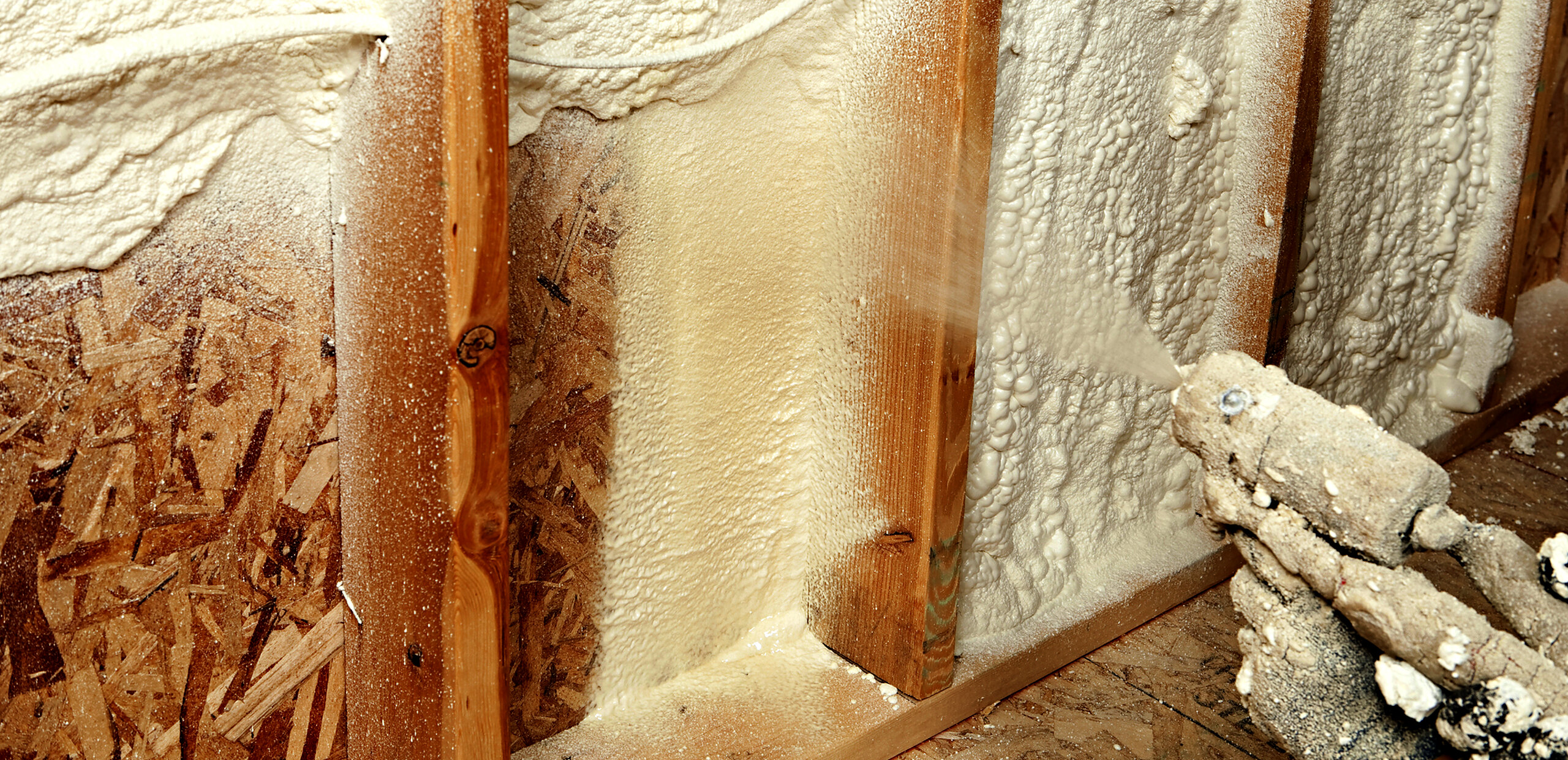






Spray Foam Insulation Cost: 2026 Price Guide
Per board foot, per square foot and by project, with the math shown. We make ArmorFoam, so we can tell you what a set costs, what it yields, and whether the quote in your inbox adds up.
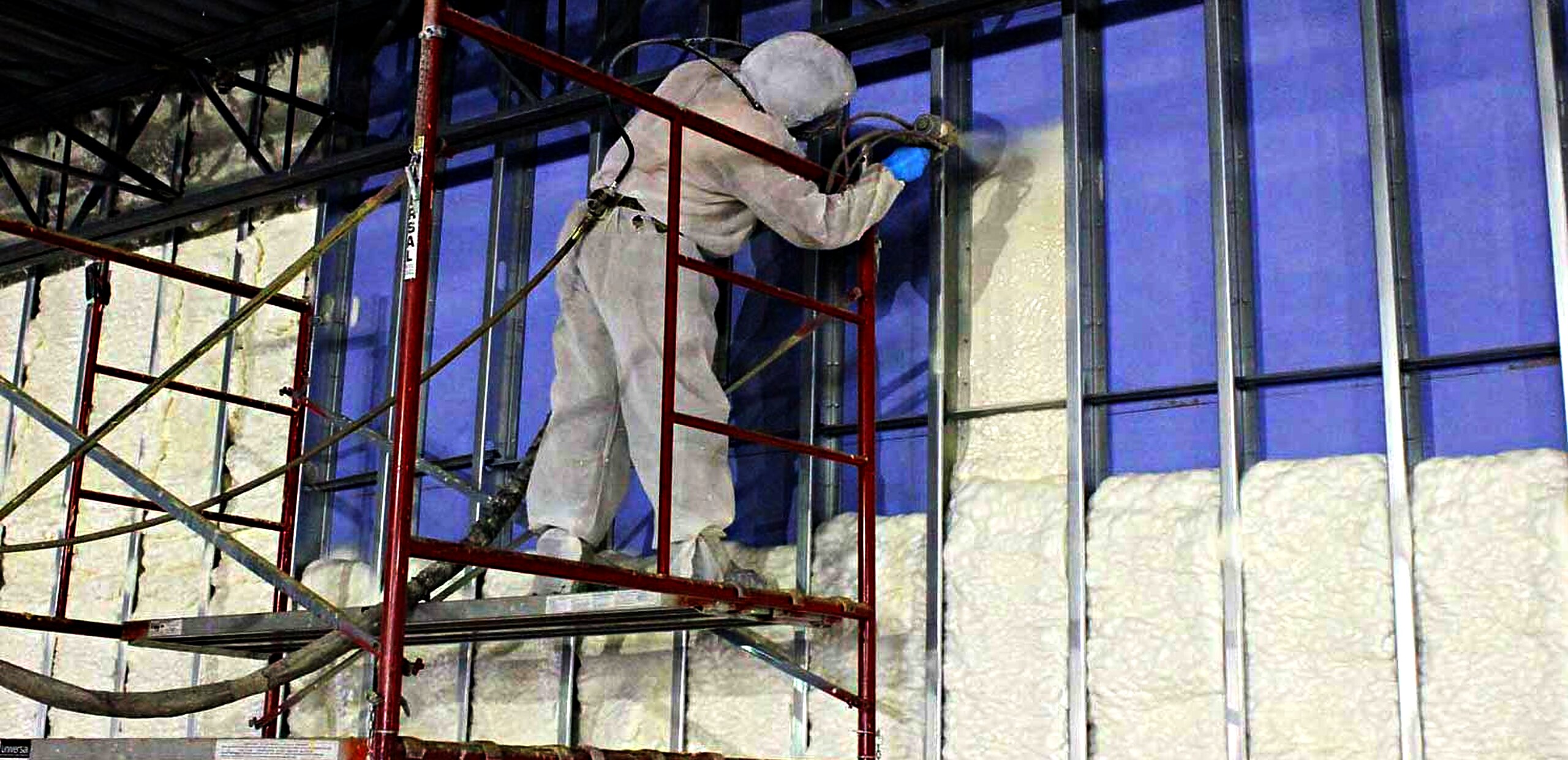
Start a spray foam business
Spray foam for a living.
ArmorThane sets you up to do this work, and you own the business. We make the chemistry, build the rigs, train you hands-on and answer the phone when a job gets difficult. You pay no franchise fee and no royalties. It has been that way since 1989.




- $0
- franchise fees or royalties
- 35+
- years in business
- 50+
- countries with applicators
- 24/7
- technical support
Professionally installed spray foam costs about $0.44–$0.73 per board foot for open-cell and $1.00–$2.12 for closed-cell in 2026. At common thicknesses that's roughly $1.54–$2.56 per square foot for 3.5 inches of open-cell and $2.00–$4.24 for 2 inches of closed-cell. Most contractors also have a $1,000–$2,000 minimum.
Spray foam pricing looks chaotic until you notice what's missing from most of it: thickness. "$1.50 a square foot" and "$4.00 a square foot" can both be fair, because one is an inch and the other is three. So this page prices foam the way contractors actually do, by the board foot, then converts to square feet at real thicknesses and to what your building code asks for.
We manufacture ArmorFoam open- and closed-cell systems and build the rigs applicators spray them with, so we'll also show you the other side of the invoice: what a set costs, what it yields, and why a rim-joist-only job still costs $1,000.
- 1Spray foam cost calculator
- 22026 prices at a glance
- 3How spray foam is priced
- 4Cost by project
- 5Open vs closed vs flash-and-batt vs fiberglass
- 6What code requires, and what that costs
- 7Costs most estimates leave out
- 8What moves the price
- 9Is your quote fair? (checker)
- 10DIY kits vs hiring a pro
- 11Is it worth it? Payback and 2026 incentives
- 12For contractors: what foam costs you
- 13Spray foam cost FAQ
Spray foam insulation cost calculator
Pick the parts of the building you're insulating. The calculator works out square footage from your floor plan (it assumes a square footprint, so treat it as a first pass), picks a thickness for each surface, checks it against the 2021 IECC for your climate zone, and prices it at the published 2026 band.
Estimate board feet, R-value and installed cost
Installed prices already include waste and labor. Not sure of your climate zone? Most of the South is 2–3, the Midwest 4–5, the northern tier 6–7.
| Surface | Sq ft | Foam | R | 2021 IECC | Board ft | Installed |
|---|---|---|---|---|---|---|
| Exterior walls | 1,211 | Open-cell 3.5" | R-13.0 | Below R-30 | 4,239 | $1,865–$3,094 |
| Roof deck + gable ends | 2,736 | Open-cell 6" | R-22.2 | Below R-60 | 16,416 | $7,223–$11,984 |
Square-footprint assumption: 45 x 45 ft, perimeter 179 ft. Foam roof decks rarely reach prescriptive R-60; they’re usually approved through the performance/ERI path. Ask which path your quote assumes. Thermal or ignition barrier not included.
Send these numbers to a certified ArmorThane applicator for a real quote.
Spray foam cost at a glance
Cost per board foot: open-cell vs closed-cell
A board foot is one square foot of foam one inch thick. It's how every spray foam contractor measures and prices work, because it's how the foam comes out of the drum. We pulled installed price per board foot from seven published cost guides and installer pages (dated 2021 to 2026), then took the median of their low ends and the median of their high ends.
| Source (date) | Open-cell $/bf | Closed-cell $/bf |
|---|---|---|
| Angi (Sep 2026, 4,048 projects) | $0.60–$1.60 | $1.30–$3.10 |
| HomeGuide (Nov 2025) | $0.60–$1.30 | $1.30–$2.90 |
| Today's Homeowner (Apr 2025) | $0.44–$0.65 | $1.00–$1.50 |
| Bob Vila (Jun 2024) | $0.44–$0.65 | $1.00–$1.50 |
| MRS Spray Foam, GA installer (Mar 2024) | $0.44–$0.65 | $1.00–$2.00+ |
| SCS Foam, PA installer (Mar 2024) | $0.25–$0.75 | – |
| Fixr (2021) | $0.40–$0.73 | $0.93–$2.23 |
| Median band | $0.44–$0.73 (mid $0.59) | $1.00–$2.12 (mid $1.56) |
Cost per square foot by thickness
Multiply the board-foot price by the thickness in inches and you get the only square-foot price that means anything.
| Thickness | Open-cell R-value | Open-cell $/sq ft | Closed-cell R-value | Closed-cell $/sq ft |
|---|---|---|---|---|
| 1 in | R-3.7 | $0.44–$0.73 | R-6.5 | $1.00–$2.12 |
| 2 in | R-7.4 | $0.88–$1.46 | R-13 | $2.00–$4.24 |
| 3 in | R-11.1 | $1.32–$2.19 | R-19.5 | $3.00–$6.36 |
| 3.5 in (2x4) | R-13 | $1.54–$2.56 | R-22.8 | $3.50–$7.42 |
| 5.5 in (2x6) | R-20.4 | $2.42–$4.02 | R-35.8 | $5.50–$11.66 |
| 6 in | R-22.2 | $2.64–$4.38 | Rarely sprayed this thick | |
| 8 in | R-29.6 | $3.52–$5.84 | – | |
| 10 in | R-37 | $4.40–$7.30 | – | |
For national context, the published average spray foam project lands around $2,750–$2,900 (Angi, Today's Homeowner and Bob Vila), but that's an average across attics, rim joists and whole houses. It's not a useful number for your job.
How spray foam is priced
What a board foot is
Board feet = square feet x thickness in inches. A 100 sq ft wall at 3 inches is 300 board feet. There's no dividing by 12; that's lumber math, and it's a common mistake in online calculators.
Why "price per square foot" means nothing without thickness
Two quotes at $2.00 per square foot can be completely different jobs: one is 2 inches of closed-cell at the bottom of the market, the other is 4.5 inches of open-cell at the top. Always ask for thickness and foam type in writing, then convert to board feet. If a quote won't tell you the thickness, that is the answer.
Minimum job charges and mobilization
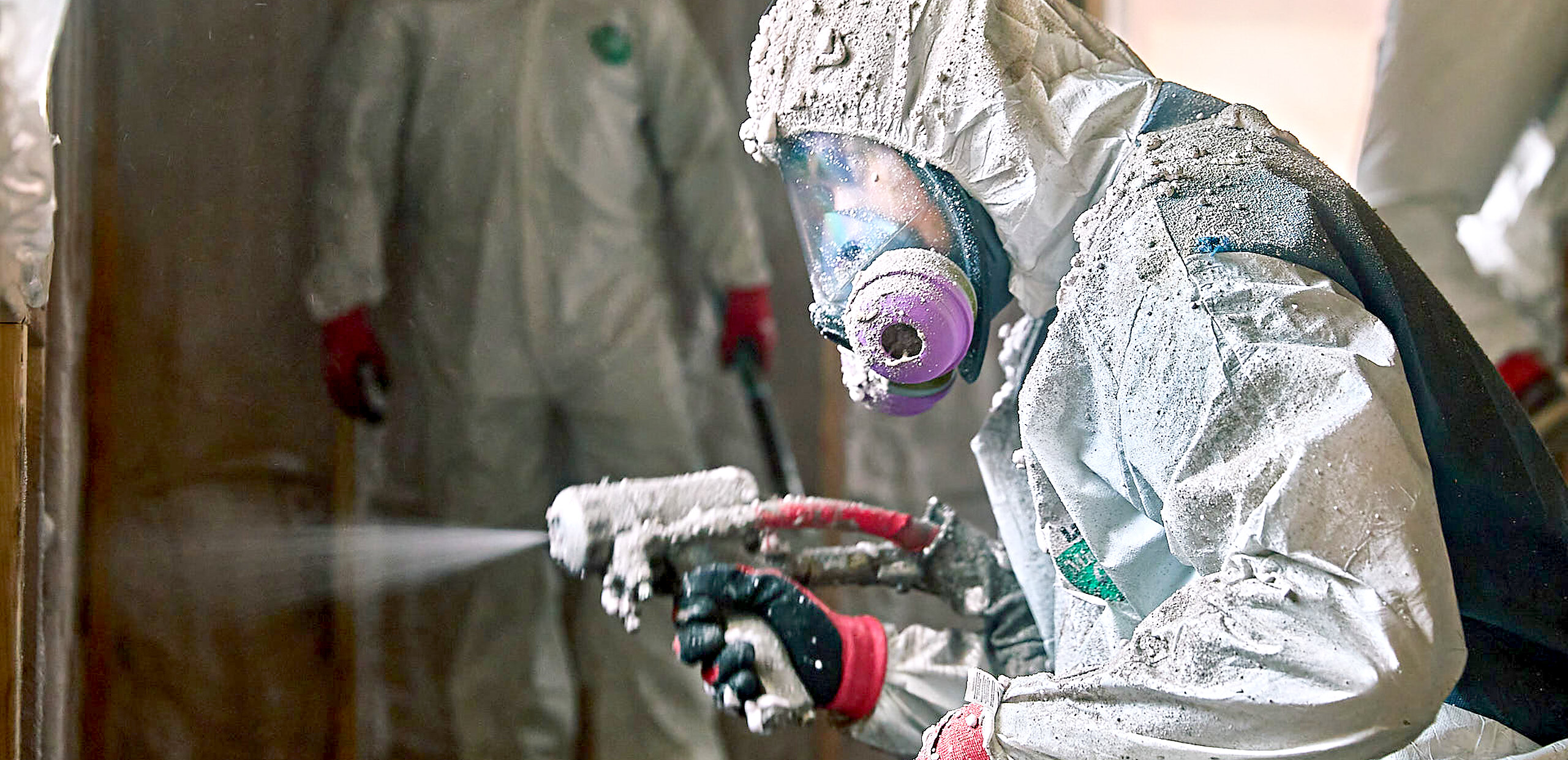
A spray foam crew brings a truck or trailer with a heated plural-component proportioner, a generator and a few hundred feet of heated hose. Setting up, heating material, spraying and cleaning out costs the same whether the job is 400 board feet or 4,000. That's why most contractors carry a $1,000–$2,000 minimum, and why a rim-joist-only job can cost $2,000 even though the foam itself is worth a few hundred. Bundle the rim joists, crawl space and attic into one visit and the minimum stops mattering.
Material vs labor: where the money goes
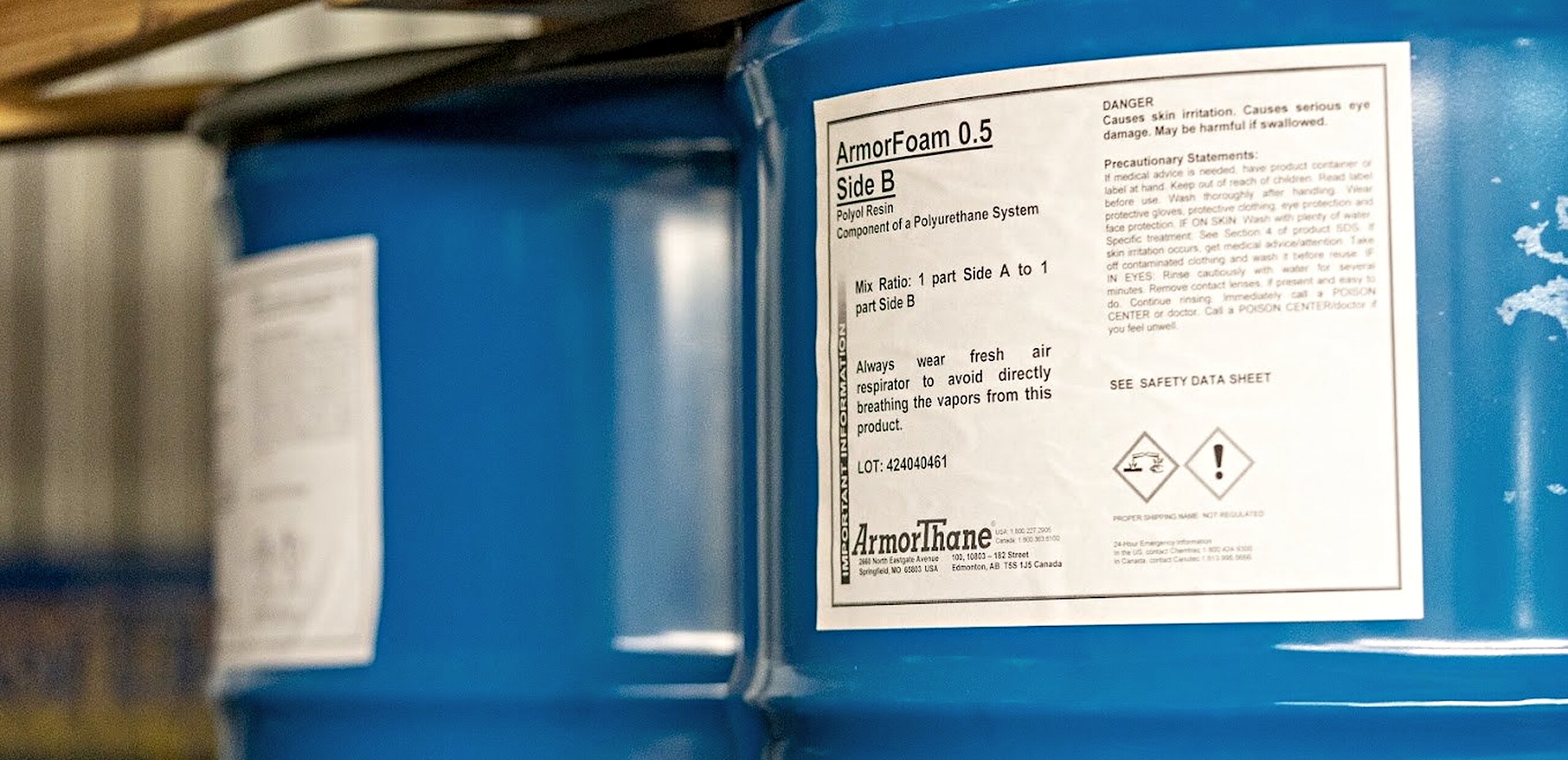
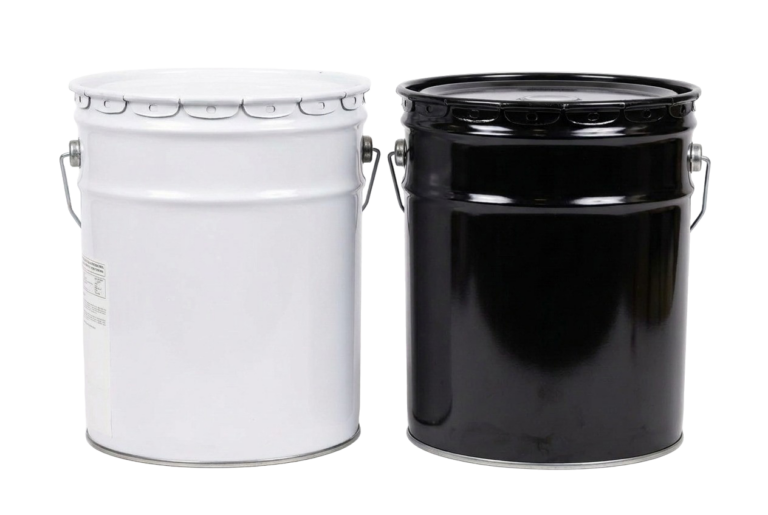
Spray foam comes in sets: one drum of A-side (isocyanate) and one of B-side (resin). An ArmorFoam closed-cell set yields about 5,000 board feet at perfect yield; open-cell, about 17,000. One HFO closed-cell set from another manufacturer was listed at $2,219 for a 4,500–5,000 board-foot yield, which works out to $0.44–$0.49 of chemical per board foot before real-world waste. The rest of an installed price is labor, fuel, equipment, insurance, masking and overhead. Labor typically runs 30–50% of the total.
Spray foam cost by project
Published project ranges are wide because they mix thicknesses and building sizes. Here they are side by side, followed by worked examples at stated thicknesses.
| Project | Angi (2026) | HomeGuide (2025) | This Old House (2026) | Bob Vila (2024) |
|---|---|---|---|---|
| Attic | $1,100–$9,000 | $3,000–$8,000 | $1,500–$7,400 | $1,500–$3,500 |
| Basement | $1,500–$6,200 | $2,500–$9,000 | $1,500–$5,600 | $500–$3,000 (walls) |
| Crawl space | $1,200–$6,900 | $2,000–$4,000 | – | $1,000–$5,900 |
| Garage | $1,500–$9,400 | $2,000–$7,500 | $2,500–$6,500 | $930–$2,100 |
| Rim joists | – | $2,000–$2,500 | – | – |
| Around HVAC / ducts | $1,000–$3,900 | $1,500–$2,500 | $1,000–$3,300 | – |
| All exterior walls | – | $4,000–$10,000 | – | – |
| Whole house | $4,000–$29,000 | $8,000–$20,000 | – | – |
| Pole barn / metal building | HomeGuide: 30x40 $2,600–$13,500; 40x60 $4,500–$22,100 | |||
| Worked example (our math) | Foam and thickness | Board feet | Installed range |
|---|---|---|---|
| Unvented attic, 1,500 sq ft footprint, 6/12 gable (≈2,050 sq ft deck + gables) | Open-cell 6" | 12,300 | $5,400–$9,000 |
| 2x4 walls, 2,000 sq ft | Open-cell 3.5" (R-13) | 7,000 | $3,100–$5,100 |
| 2x4 walls, 2,000 sq ft | Closed-cell 2" (R-13) | 4,000 | $4,000–$8,500 |
| 2x6 walls, 2,000 sq ft | Flash-and-batt: 2" CC + R-13 (R-26) | 4,000 + batts | $6,000–$13,700 |
| Rim joists, 40x40 house | Closed-cell 2" | 250 | $250–$520 of foam, so the $1,000–$2,000 minimum applies |
| Basement walls, 160 ft x 8 ft | Closed-cell 2" (R-13) | 2,560 | $2,560–$5,430 |
| 40x60 metal building, 14 ft eave, 4/12 roof | Closed-cell 2" | 11,200 | $11,200–$23,700 |
| 2,000 sq ft one-story home: walls + unvented roof deck | Open-cell 3.5" walls, 6" deck | 20,700 | $9,100–$15,100 |
Attics: vented floor vs unvented roof deck
Spraying the underside of the roof deck makes the attic part of the conditioned space, which is great if ducts or equipment live up there, but you're insulating more square feet (the sloped deck plus the gable ends) than the attic floor. On a simple vented attic with nothing in it, blown cellulose or fiberglass on the floor is usually cheaper per R. See attic spray foam insulation.
Walls
New construction and gutted remodels are straightforward. Closed walls in a finished house need drywall removed or a different product altogether, which is where "existing home" pricing comes from.
Rim joists, crawl spaces and basements
These are where closed-cell spray foam earns its price: it air-seals the leakiest part of the house and handles damp concrete and cold framing. Crawl spaces usually carry an access premium of 10–20%. Manufactured homes are a special case; our mobile home insulation guide covers the belly, roof and HUD rules. Our rim joist insulation guide and crawl space encapsulation guide go deeper.
Pole barns, shops and metal buildings
Big square footage and condensation on steel make closed-cell the default here, usually at 1 to 2 inches on the panels. We've written separate guides to pole barn insulation and metal building insulation, including condensation calculators.
Open-cell vs closed-cell vs flash-and-batt: cost per R-value
Open-cell costs less per board foot but needs more inches. Closed-cell costs two to three times as much per board foot but packs almost twice the R-value per inch, adds vapor control, and stiffens the wall. Flash-and-batt splits the difference. The fairest comparison is dollars per square foot per R, which is what this tool shows, along with whether each option meets code in your zone.
Which insulation is the best value for this assembly?
Batts installed: $1.00–$2.60/sq ft (HomeGuide). Foam at the 2026 median bands.
| Option | R | Code | Air barrier | Vapor | Installed cost | $/sq ft per R |
|---|---|---|---|---|---|---|
| Open-cell, full cavity (5.5") | R-20.4 | Below | Yes | Class III | $6,490 | $0.159 |
| Closed-cell, 4.7" Best value | R-30.6 | Meets | Yes | Class II | $14,664 | $0.240 |
| Flash-and-batt (2" CC + R-13) | R-26.0 | Below | Yes | Class II | $9,840 | $0.189 |
| Fiberglass batts R-19 Needs separate air sealing | R-19.0 | Below | No | None | $3,600 | $0.095 |
In zones 4–8 a 2x6 cavity alone can’t reach R-30 with open-cell or batts. Closed-cell, flash-and-batt or added continuous insulation (R-20+5ci, R-13+10ci) is the way to comply.
When open-cell is the better buy
Interior walls for sound, roof decks in climate zones 1–3, and any cavity deep enough to reach the R-value you need. It's also forgiving: it expands to fill odd shapes and stays soft, so it moves with framing.
When closed-cell is worth two to three times the price
Anywhere space is tight and the R-value has to come from fewer inches, anywhere moisture is a concern (rim joists, crawl spaces, basement walls, below-grade), on metal buildings where condensation drips off the steel, and in cold-climate roof decks. Closed-cell becomes a Class II vapor retarder at roughly 1.5–2 inches. Our closed-cell spray foam guide covers the specs and code rules in depth, and the open-cell guide covers the other side.
Flash-and-batt and the IRC R806.5 minimums
In an unvented roof, air-permeable insulation like batts can only go under a layer of air-impermeable insulation (spray foam or rigid board) of a minimum R-value set by climate zone: R-5 in zones 1–3, R-10 in 4C, R-15 in 4A/4B, R-20 in 5, R-25 in 6, R-30 in 7 and R-35 in 8. That's why flash-and-batt roof decks in cold climates need 3 to 5.5 inches of closed-cell before the batts go in.
Spray foam vs fiberglass cost
Fiberglass wins on upfront price per R, full stop. What you don't get is an air barrier, so you're paying separately for air sealing (or not doing it). For a longer comparison, see spray foam vs fiberglass.
How much foam code requires, and what it costs
The 2021 International Energy Conservation Code sets prescriptive R-values by climate zone. Here's the thickness of each foam it takes to hit the common targets, and the installed cost per square foot at the 2026 band.
| R-value target | Where it applies (2021 IECC) | Open-cell thickness / cost | Closed-cell thickness / cost |
|---|---|---|---|
| R-13 | Walls CZ 1–2; basement/crawl walls CZ 3–4 (cavity) | 3.6" · $1.58–$2.63 | 2.0" · $2.00–$4.24 |
| R-20 | Walls CZ 3 | 5.5" · $2.42–$4.01 | 3.1" · $3.10–$6.57 |
| R-30 | Walls CZ 4–8 (cavity only); ceiling CZ 1 | 8.2" · $3.61–$5.99 | 4.7" · $4.70–$9.96 |
| R-38 | Floors CZ 7–8 | 10.3" · $4.53–$7.52 | 5.9" · $5.90–$12.51 |
| R-49 | Ceilings CZ 2–3 | 13.3" · $5.85–$9.71 | 7.6" · $7.60–$16.11 |
| R-60 | Ceilings CZ 4–8 | 16.3" · $7.17–$11.90 | 9.3" · $9.30–$19.72 |
Why many foam roof decks don't hit R-49 or R-60
Look at the last two rows. Very few roofs have rafters deep enough for 13 to 16 inches of open-cell, and 9 inches of closed-cell is expensive. In practice, spray foam roof decks are often permitted through the code's performance or ERI path, where the whole house is modeled and air tightness earns credit, or through local amendments. It's legitimate, but ask your contractor which compliance path your quote assumes, because it changes what "enough foam" means.
Retrofit targets
For existing homes, ENERGY STAR's recommendations (based on the 2021 IECC) are R-30 to R-60 for an uninsulated attic depending on zone, or R-25 to R-49 if you already have 3–4 inches. Our spray foam R-value guide has the full table and an inches-to-R calculator.
Costs most spray foam estimates leave out
Thermal and ignition barriers
Foam plastic in a living space has to be covered by a thermal barrier equivalent to 1/2-inch gypsum board. That's IRC R316.4, renumbered R303.4 in the 2024 IRC, and the DOE summarizes it the same way. In attics and crawl spaces entered only to service equipment, a lighter ignition barrier is allowed: 1-1/2 inches of mineral fiber, 1/4-inch wood structural panel, 3/8-inch particleboard or gypsum board, 1/4-inch hardboard, or 0.016-inch steel. Many foams also have an intumescent coating listed in their evaluation report as an alternative. Whatever the method, it's a real line item, and it's the one cheap quotes most often skip.
Removing old insulation
Figure $1.00–$2.50 per square foot to pull old attic insulation, more for hand removal. Spray foam needs a clean, dry substrate, so this isn't optional where old material is in the way.
Vapor-retarder coatings on open-cell in cold climates
In climate zones 5–8, open-cell foam on an unvented roof deck generally needs a vapor-retarder coating over it, because open-cell passes vapor. Budget about $0.65–$1.00 per square foot. Closed-cell at 2 inches or more usually doesn't need one.
Prep, masking and access
Spray foam overspray travels. Masking windows, floors and anything that can't get foam on it takes time. Tight crawl spaces and cathedral ceilings add 10–20%.
Fixing moisture, mold or roof leaks first
Foam over an active leak hides it. Mold remediation runs roughly $1,125–$3,345 on published guides. Fix the water first, then insulate. Our closed-cell guide has a section on why foam can hide roof leaks, and what to do about it.
What makes spray foam cost more or less
Foam type and thickness
The two biggest levers by far. Closed-cell costs roughly 2–3x open-cell per board foot, and every added inch adds a full board foot per square foot.
Job size and minimums
Big jobs spread setup costs over more board feet. Small jobs hit the $1,000–$2,000 minimum.
New vs existing homes
Existing homes run about 15% more on published comparisons: more masking, harder access, old material to remove.
Access and complexity
Crawl spaces, steep roofs and cut-up framing slow crews down. Expect 10–20% more.
Season and temperature
Closed-cell has substrate temperature limits and a maximum thickness per pass that drops as it gets hotter. One HFO product allows 6.5 inches per pass at 70°F or below but only 3.25 inches above 80°F. More passes mean more time.
Blowing agents
EPA's HFC phasedown set a global warming potential limit of 150 for rigid polyurethane foam blowing agents starting in 2025, which pushed the industry to HFO and water-blown foams. It's one input to material cost.
There's no reliable published index for regional pricing, so the best defense is three quotes, all converted to price per board foot at stated thicknesses. The checker below does that for you.
Is your spray foam quote fair?
Enter what's on the quote. The checker converts it to price per board foot and per R, compares it with the 2026 band, checks the thickness against code, and writes the questions you should ask before you sign.
Normalize a quote and spot the red flags
Contractors: switch to contractor mode to work out your own material and break-even cost per board foot.
In range Within the 2026 published range. 2,560 board feet; 2026 band for closed-cell is $1.00–$2.12.
- No thermal or ignition barrier listed. Living spaces need a 1/2" gypsum-equivalent thermal barrier; attics and crawl spaces need at least an ignition barrier.
10 questions to ask a spray foam contractor
- Which product, exactly, and can I see the technical data sheet?
- What's its aged R-value per inch?
- What thickness will be installed, and how will you verify it (depth checks)?
- How many passes, and what's the maximum lift per pass for today's temperature?
- What are the substrate and air temperature limits?
- What's the manufacturer's re-occupancy time? Please put it in writing.
- Is a thermal or ignition barrier included, and which one (with its evaluation report)?
- In a cold climate, is a vapor-retarder coating included where needed?
- Is removal of old insulation and prep included?
- What's your workmanship warranty, insurance, and manufacturer certification?
Red flags in a cheap quote
- No thickness stated. Thin foam is the most common way to win on price.
- Closed-cell in one thick pass. Exceeding the per-pass limit risks heat buildup, shrinkage and cracking.
- No barrier line in a living space, attic or crawl space.
- Price below every published range. Ask what's different.
DIY spray foam kits vs hiring a pro
Two-component DIY kits cost about $1.22–$1.95 per board foot in material alone. The popular 600-board-foot kits run around $740–$920. That's close to a professional's installed price for closed-cell, which is why DIY rarely saves money on a big job. Our closed-cell guide has the full kit-by-kit table.
Where DIY makes sense is the small job under a contractor's minimum: a few rim-joist bays, a band around a bump-out, sealing penetrations. Know the limits. One major kit's ICC-ES evaluation report caps it at 2 inches thick, and low-pressure kit foam is sensitive to temperature. One-component cans from the hardware store are a different product entirely and aren't a substitute.
Is spray foam insulation worth the cost?
Sometimes clearly, sometimes not. It pays off fastest where air leakage and moisture are the real problems: rim joists, crawl spaces, roof decks over ducts, and metal buildings. ENERGY STAR's modeling of air sealing plus insulation in typical older homes puts average savings at 15% of heating and cooling costs (11% of total energy). Claims of 40–50% describe unusually leaky buildings, not the average.
Tax credits and rebates in 2026
- 25C is gone. The federal Energy Efficient Home Improvement Credit (30%, up to $1,200 a year for insulation) isn't allowed for property placed in service after December 31, 2025.
- 45L and 179D are ending. The new-home credit ended for homes acquired after June 30, 2026; the commercial deduction for construction beginning after that date.
- HEAR is still live where states have launched it. Income-qualified households can get up to $1,600 for insulation, air sealing and ventilation: 100% of cost below 80% of area median income, 50% between 80% and 150%.
- Utility rebates vary by provider. Call yours.
Net cost, payback years and 20-year savings
Default savings is ENERGY STAR's modeled 15% of heating and cooling cost. Adjust it if you know your house is unusually leaky or tight.
HEAR rebate applied: $0 (only where your state program is open). 10-year savings: $3,300. The federal 25C credit ended for work placed in service after Dec 31, 2025. Savings above about 15–20% are possible in leaky homes but aren’t the modeled average. Payback is fastest when the foam fixes air leakage or moisture, not just adds R-value.
Value beyond the energy bill
Payback math on heating and cooling alone undersells what spray foam does in some places. Closed-cell stops condensation on a steel roof, keeps a crawl space from sweating, and turns a drafty bonus room into a usable one. Open-cell is a good sound dampener between rooms (see does spray foam reduce noise). Those are the jobs where people rarely regret it.
What spray foam costs you
Your material cost per board foot is simply the set price divided by the yield you actually get. At a $2,219 set and a 5,000 board-foot rated yield, that's $0.44 a board foot on paper, or about $0.52 once a realistic 15% field loss is counted. Open-cell is far cheaper per board foot: an ArmorFoam open-cell set yields about 17,000 board feet at perfect yield. The contractor mode in the quote checker above runs your break-even and target price.
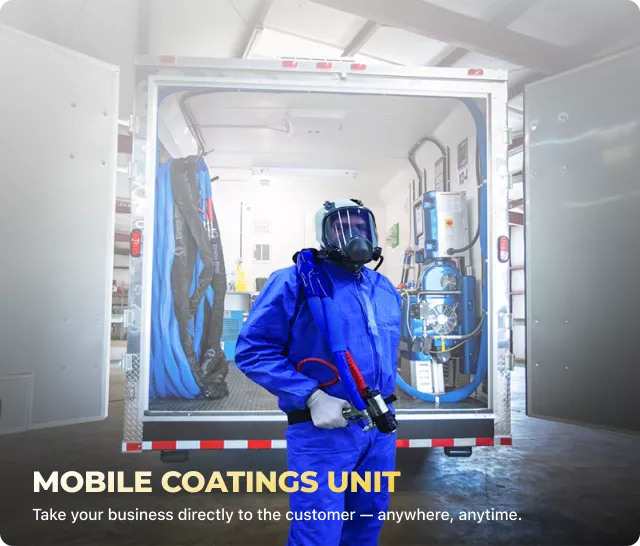
Everything else is the rig: a heated plural-component proportioner, hoses, a generator and a trailer or box truck. We build custom spray foam rigs and supply ArmorFoam, and you can add polyurea roof and floor coatings to the same rig.
ArmorFoam closed-cell
Yield per set at perfect yield. Forms a vapor barrier at about 2 inches.
ArmorFoam open-cell
Yield per set at 1 inch, perfect yield. 0.5 pcf, water-blown.
Franchise fee
No franchise fee and no royalties. Equipment, material and training from one supplier.
Spray foam insulation cost FAQ
How much does spray foam insulation cost per square foot?
It depends on thickness. At 2026 published rates ($0.44–$0.73 per board foot for open-cell and $1.00–$2.12 for closed-cell), 3.5 inches of open-cell in a 2x4 wall runs about $1.54–$2.56 per square foot, and 2 inches of closed-cell about $2.00–$4.24. Consumer guides that quote $1–$5 per square foot usually don't say at what depth.
How much does closed-cell spray foam cost per board foot?
About $1.00–$2.12 installed, which is the median of the published 2021–2026 ranges we compared. Outliers run from $0.93 to $3.10. A contractor's material cost is lower: one HFO closed-cell set listed at $2,219 yields 4,500–5,000 board feet, roughly $0.44–$0.49 per board foot before waste and labor.
How much does open-cell spray foam cost?
About $0.44–$0.73 per board foot installed (outliers $0.25–$1.60). Open-cell goes in thicker, typically 3.5 to 10 inches, so it often lands at $1.50–$4.50 per square foot even though it's cheaper per board foot.
How much does it cost to spray foam a 2,000 sq ft house?
For a one-story, 2,000 sq ft new home with open-cell walls at 3.5 inches and an unvented 6/12 roof deck at 6 inches, the math comes to about 20,700 board feet, or roughly $9,100–$15,100. Published whole-house ranges run $8,000–$20,000 (HomeGuide) and $4,000–$29,000 (Angi). Use the calculator for your design.
How much does it cost to spray foam an attic?
Published ranges run $1,100–$9,000 (Angi, 2026), $3,000–$8,000 (HomeGuide) and $1,500–$7,400 (This Old House). As an example, a 1,500 sq ft footprint under a 6/12 gable roof has about 2,050 sq ft of deck and gable ends; 6 inches of open-cell there comes to roughly $5,400–$9,000.
Is spray foam cheaper than fiberglass?
Not up front. Fiberglass batts run about $1.00–$2.60 per square foot installed, against roughly $1.50–$5.00 for spray foam. Spray foam also air-seals, and closed-cell adds vapor control, so the fair comparison is cost per R-value plus the air-sealing work fiberglass would still need.
Is spray foam insulation worth the cost?
It pays off where air leakage or moisture is the problem: rim joists, crawl spaces, roof decks and metal buildings. ENERGY STAR's modeling puts average savings from air sealing plus insulation at about 15% of heating and cooling costs (11% of total energy). Claims of 40–50% aren't the typical case. Payback is simply net cost divided by your annual savings.
Is DIY spray foam cheaper?
Not by much. Two-component kits cost about $1.22–$1.95 per board foot for material alone, close to a pro's installed closed-cell rate. DIY makes sense mainly for small closed-cell jobs that fall under a contractor's $1,000–$2,000 minimum, and one popular kit's evaluation report limits it to 2 inches thick.
Does spray foam have to be covered?
In living spaces, yes. The IRC requires a thermal barrier equal to 1/2-inch gypsum board over foam plastic (R316.4, renumbered R303.4 in the 2024 IRC). In attics and crawl spaces entered only for service, an ignition barrier or a coating listed in the foam's evaluation report can be used instead. Many quotes leave this out.
Are there tax credits for spray foam insulation in 2026?
The federal 25C Energy Efficient Home Improvement Credit doesn't apply to property placed in service after December 31, 2025, and the 45L new-home credit ended for homes acquired after June 30, 2026. Income-qualified households may still get up to $1,600 for insulation, air sealing and ventilation through HEAR where their state program is open. Check your utility for rebates too.
Why do spray foam quotes vary so much?
Thickness, foam type, job minimums, access, new versus existing construction (existing homes run about 15% more), and whether removal, barriers and coatings are included. Convert every quote to price per board foot and R-value at the same thickness and they usually make sense.
How long does installation take, and when can I go back inside?
Most homes take one to two days. Re-entry time is set by the foam manufacturer, commonly 24 hours or more, so get it in writing. Isocyanates in uncured foam are respiratory irritants and sensitizers, so stay out while it's being sprayed.
How much does a set of spray foam cost?
A set is two drums: an A-side and a B-side. One HFO closed-cell set was listed at $2,219 with a 4,500–5,000 board-foot yield. ArmorFoam closed-cell yields about 5,000 board feet and open-cell about 17,000 per set at perfect yield. Contact us for current ArmorFoam set pricing.
Written from manufacturer data sheets, code text and 35+ years of spraying and supporting applicators. Last updated September 26, 2026.
Methodology and sources
Installed price bands are the median of the low and high ends of seven published ranges (2021–2026), checked against one contractor's published base rate. They're our synthesis, not a survey, and we update them each January. R-values use R-3.7 per inch for open-cell and R-6.5 per inch aged for closed-cell. Code values are 2021 IECC prescriptive, via PNNL; verify against the code your jurisdiction has adopted.
- Angi, spray foam insulation cost (Sep. 2026): angi.com/articles/spray-foam-insulation-cost.htm
- HomeGuide, spray foam insulation cost (Dec. 2025): homeguide.com/costs/spray-foam-insulation-cost
- HomeGuide, pole barn spray foam cost (Nov. 2025): homeguide.com/costs/spray-foam-insulation-cost-pole-barn
- This Old House, spray foam insulation cost (Apr. 2026): thisoldhouse.com/roofing/spray-foam-insulation-cost
- Bob Vila, spray foam insulation cost (Jun. 2024): bobvila.com/articles/spray-foam-insulation-cost/
- Today's Homeowner, spray foam insulation cost (Apr. 2025): todayshomeowner.com/insulation/cost/spray-foam-insulation-cost/
- Fixr, spray foam insulation cost (2021): fixr.com/articles/spray-foam-insulation-cost
- MRS Spray Foam, cost guide (Mar. 2024): mrssprayfoam.com/post/how-much-does-spray-foam-insulation-cost
- SCS Foam, open cell cost (Mar. 2024): scsfoam.com/blog/open-cell-spray-foam-insulation-cost
- Insulation Contractors of Arizona, spray foam quote tool: insulationcontractorsofarizona.com/tools/spray-foam-quote/
- PNNL Building America Solution Center, IECC/IRC minimum insulation: basc.pnnl.gov/information/2009-2021-iecc-and-irc-minimum-insulation-re
- ENERGY STAR, recommended home insulation R-values: energystar.gov/saveathome/seal_insulate/identify-problems-you-want-fix
- ENERGY STAR, seal and insulate methodology: energystar.gov/saveathome/seal_insulate/methodology
- U.S. DOE, types of insulation: energy.gov/energysaver/types-insulation
- IRS, FAQs on modifications to 25C, 45L and 179D (2025 law): irs.gov/newsroom/faqs-for-modification-of-sections-25c-25d-25e-30c-30d
- 42 U.S.C. 18795a, HEAR rebate program: law.cornell.edu/uscode/text/42/18795a
- U.S. DOE, Home Energy Rebate programs: energy.gov/scep/home-energy-rebate-programs
- U.S. EPA, HFC technology transitions by sector: epa.gov/climate-hfcs-reduction/technology-transitions-hfc-restrictions
- OSHA, Isocyanates: osha.gov/isocyanates
- ICC-ES ESR-3228, Froth-Pak (PDF): icc-es.org/wp-content/uploads/report-directory/ESR-3228.pdf
- IAPMO UES ER-0913, open-cell SPF (PDF): forms.iapmo.org/ues_reports/reports/er_0913.pdf
- Huntsman Heatlok HFO High Lift TDS (PDF): huntsmanbuildingsolutions.com/en-US/sites/en_us/files/2021-09/20.00063
- Super Arbor, Heatlok HFO High Lift set listing: superarbor.io/products/huntsman-building-solutions-heatlok%C2%AE-hfo-h
- Penn State PHRC, IRC spray foam thermal and ignition barriers (PDF): phrc.psu.edu/assets/docs/Webinars/2009IRCSprayFoamThermalBarriersIgnit
- ArmorThane, ArmorFoam spray foam products: armorthane.com/products/armorfoam-products/
Want a real number for your project? Get a quote from a certified installer.
Tell us what you're insulating and where. We'll connect you with an ArmorThane-certified spray foam applicator who will quote thickness, R-value and board feet in writing.
- Homes, attics, crawl spaces and basements
- Pole barns, shops and metal buildings
- Thickness and R-value spelled out on the quote
- Contractors: ask about ArmorFoam set pricing
More to read on spray foam
Short reads from ArmorThane on Issuu. Tap one to open it right here.