



Closed-Cell Spray Foam
A 2 lb/ft³ rigid polyurethane foam that hits roughly R-6.5 per inch, stops air at 1 inch, and becomes a vapor retarder around 1.5 to 2 inches. It is the highest-performing insulation you can spray into a cavity — and the one with the most rules attached. This guide covers the specs, the real cost, the building code nobody explains, and the four honest reasons it isn’t always the right call.

Spray foam for a living.
ArmorThane is the one-stop shop for applicators. We make the chemistry, build the equipment, train you hands-on and back you with technical support, with no franchise fees and no royalties. Applicators have come first here since 1989.
- $0franchise fees or royalties
- 35+years in business
- 50+countries with applicators
- 24/7technical support
R-6.5
Aged R-Value Per Inch
ArmorFoam CC · ASTM C518
1.9
lb/ft³ Core Density
ASTM D1622
92–96%
Closed-Cell Content
ASTM D2856
0.83
Perms at 1 Inch
ASTM E96
What's in this guide
- What closed-cell spray foam actually is
- R-value, aging, and the FTC rule
- What it really costs in 2026
- Climate zones & code minimums
- The UK spray foam mortgage story
- Off-gassing, PPE, re-entry
- The HFO blowing agent switch
- Where it belongs — and doesn't
- ArmorFoam closed-cell specs
- Closed-cell vs. open-cell
- Coverage & cost calculator
- Fire code: thermal & ignition barriers
- Moisture, leaks, and roof decks
- Termites and inspectability
- Racking strength & wind uplift
- DIY kits vs. professional rigs
- How closed-cell foam fails
- Frequently asked questions
What Closed-Cell Spray Foam Actually Is
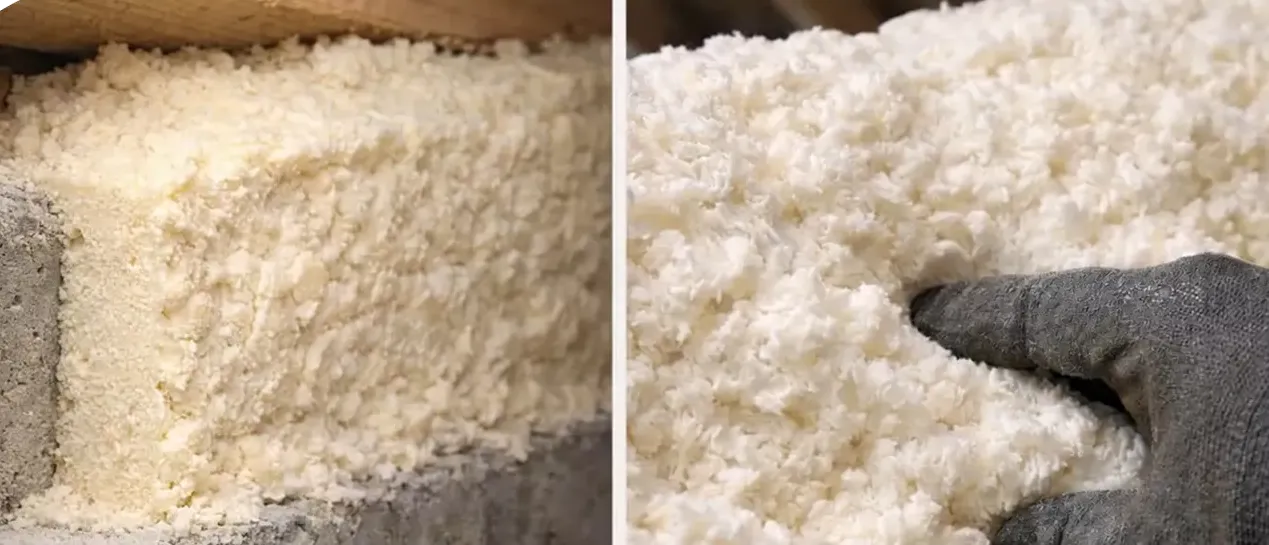
Closed-cell spray foam is a rigid polyurethane insulation created on-site by mixing two liquids — an isocyanate A-side and a resin B-side — that react on contact and expand roughly 30 to 40 times. The cured foam is about 2 lb/ft³, with 90%+ of its cells sealed shut and filled with a low-conductivity blowing agent rather than air. That sealed-cell structure is where every one of its properties comes from.
Here’s the part most articles skip. The R-value isn’t really coming from the plastic. Polyurethane itself is a mediocre insulator. What you’re actually insulating with is the gas trapped inside several billion tiny sealed bubbles — a blowing agent that conducts heat far worse than air does. Open-cell foam ruptures those bubbles on purpose and fills them with air, which is why it lands around R-3.7 per inch. Closed-cell keeps them intact. Same base chemistry, wildly different material.
That distinction explains everything downstream. Water can’t wick through a sealed cell, so closed-cell absorbs almost nothing — under 2% by volume. Air can’t pass through it either, which is why a single inch qualifies as an air barrier under ASTM E2178 while open-cell needs three and a half. Vapor diffuses through slowly, so an inch and a half turns the insulation into your vapor retarder. And because the cell walls are continuous and rigid, the finished foam has real compressive strength — around 35 psi in our own material, which is stiffer than a lot of people expect from something that started as a liquid.
- The one-sentence version
Closed-cell spray foam is insulation, air barrier, and vapor retarder in a single application — which is exactly why it costs two to three times what open-cell costs, and exactly why it carries code requirements that fiberglass doesn’t.
How is it installed?
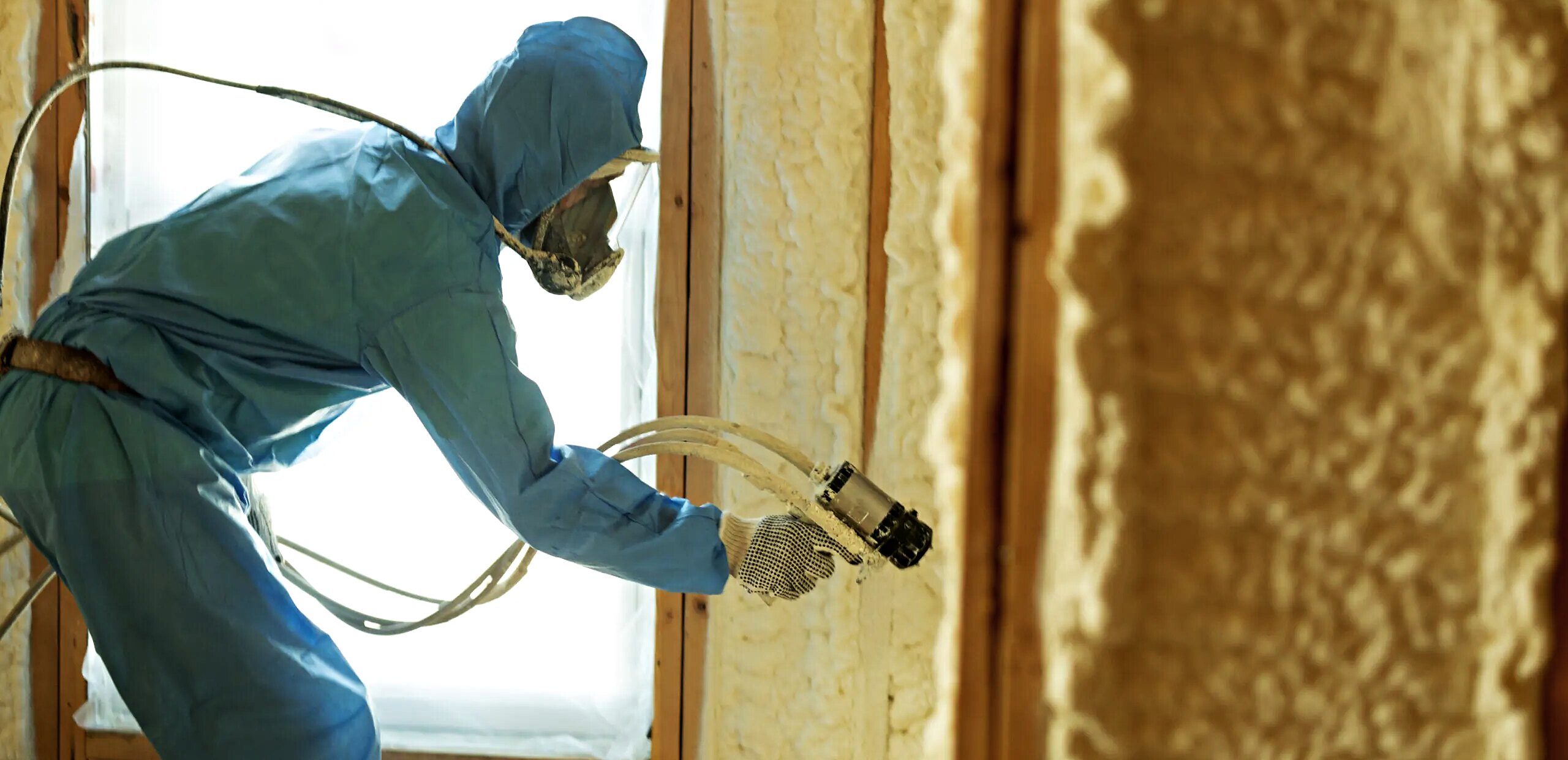
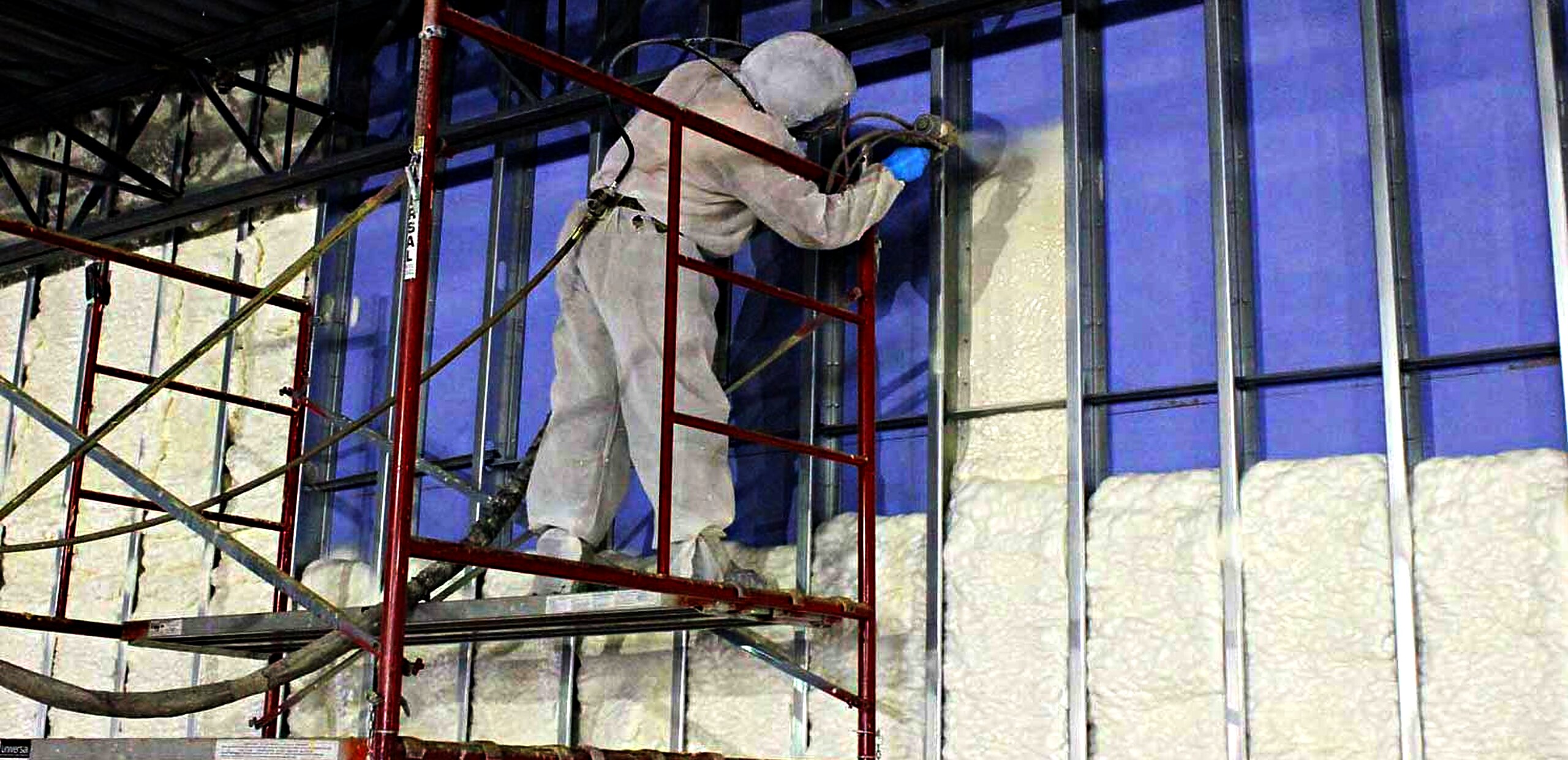
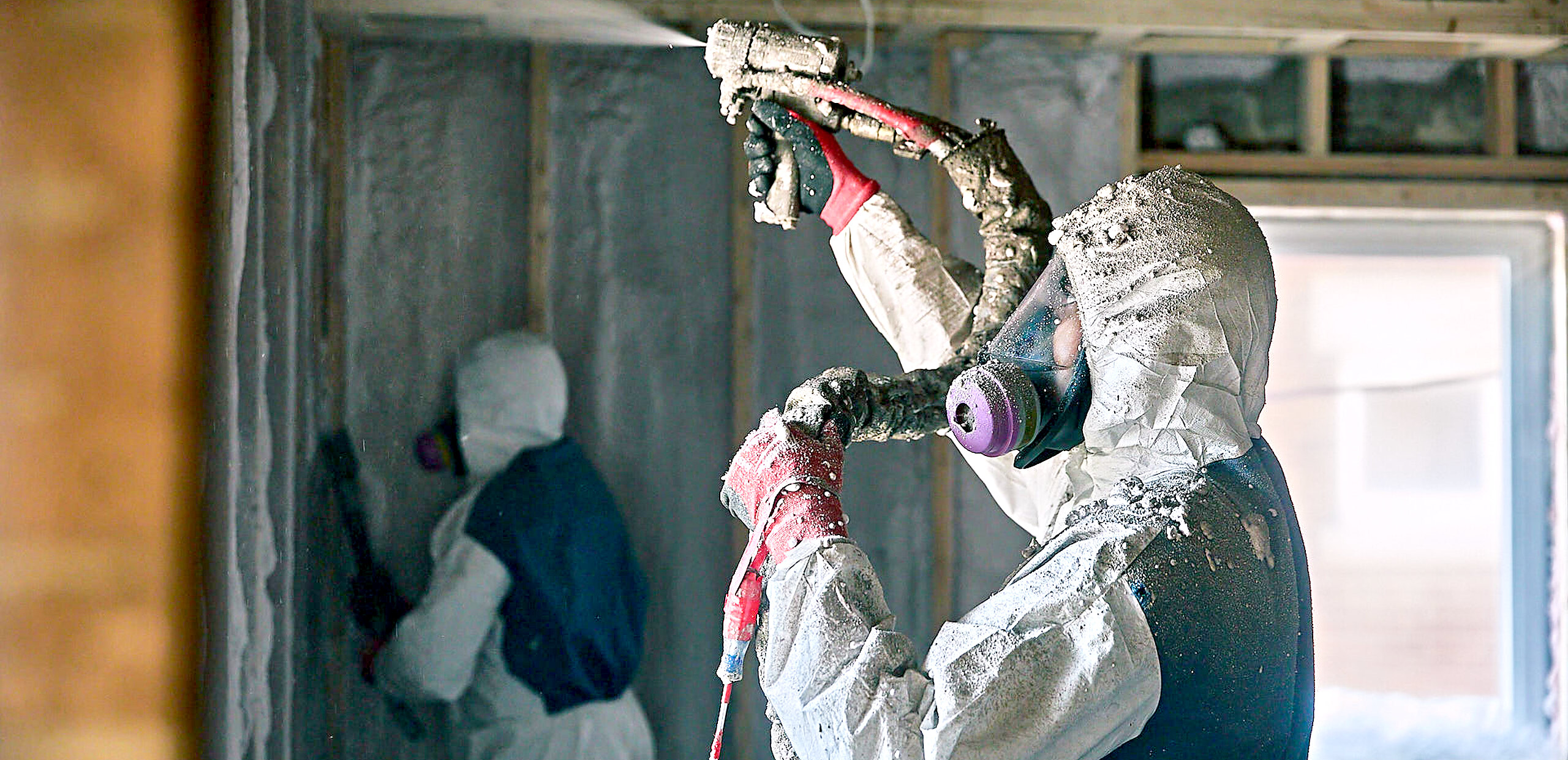
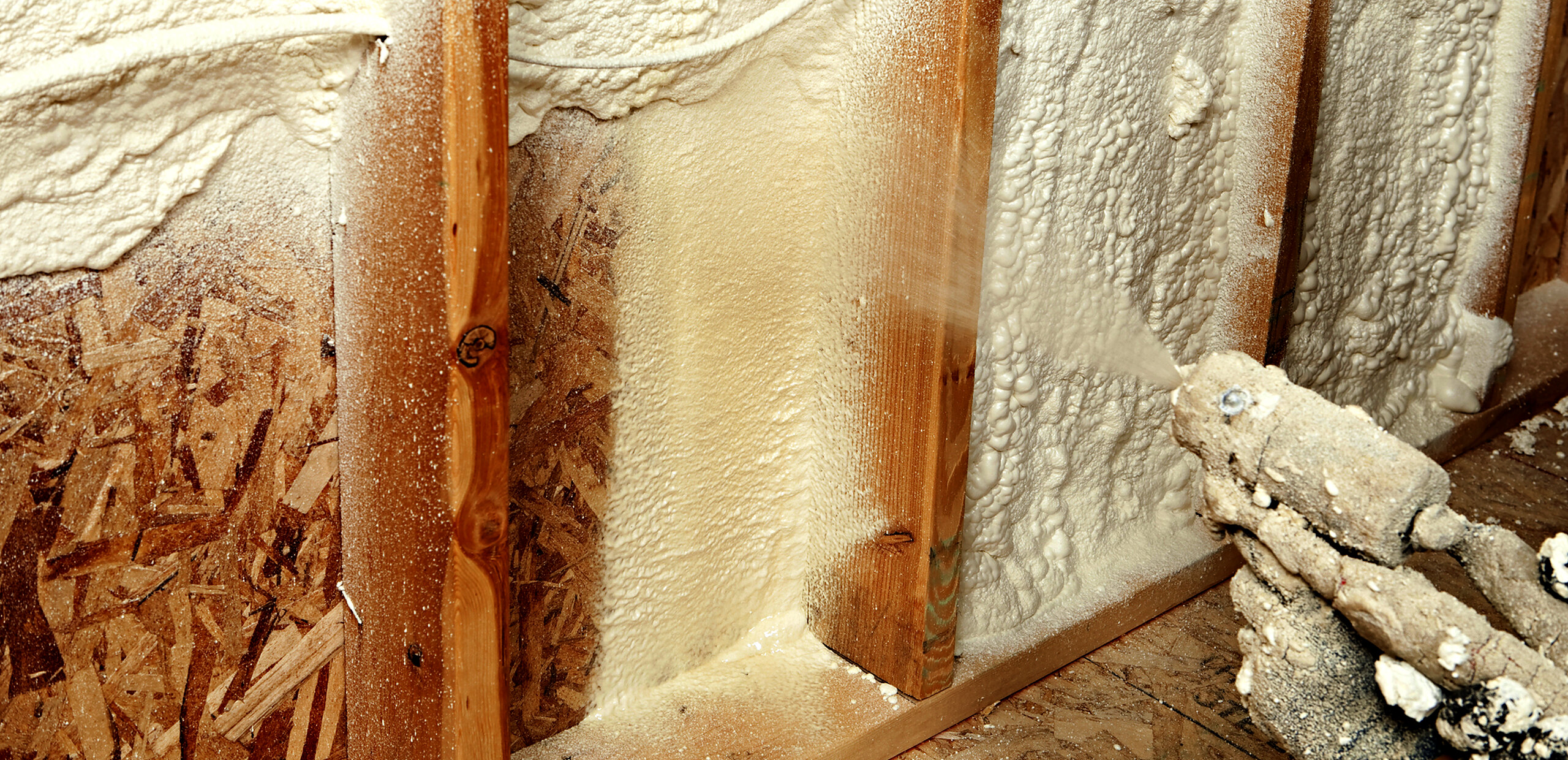
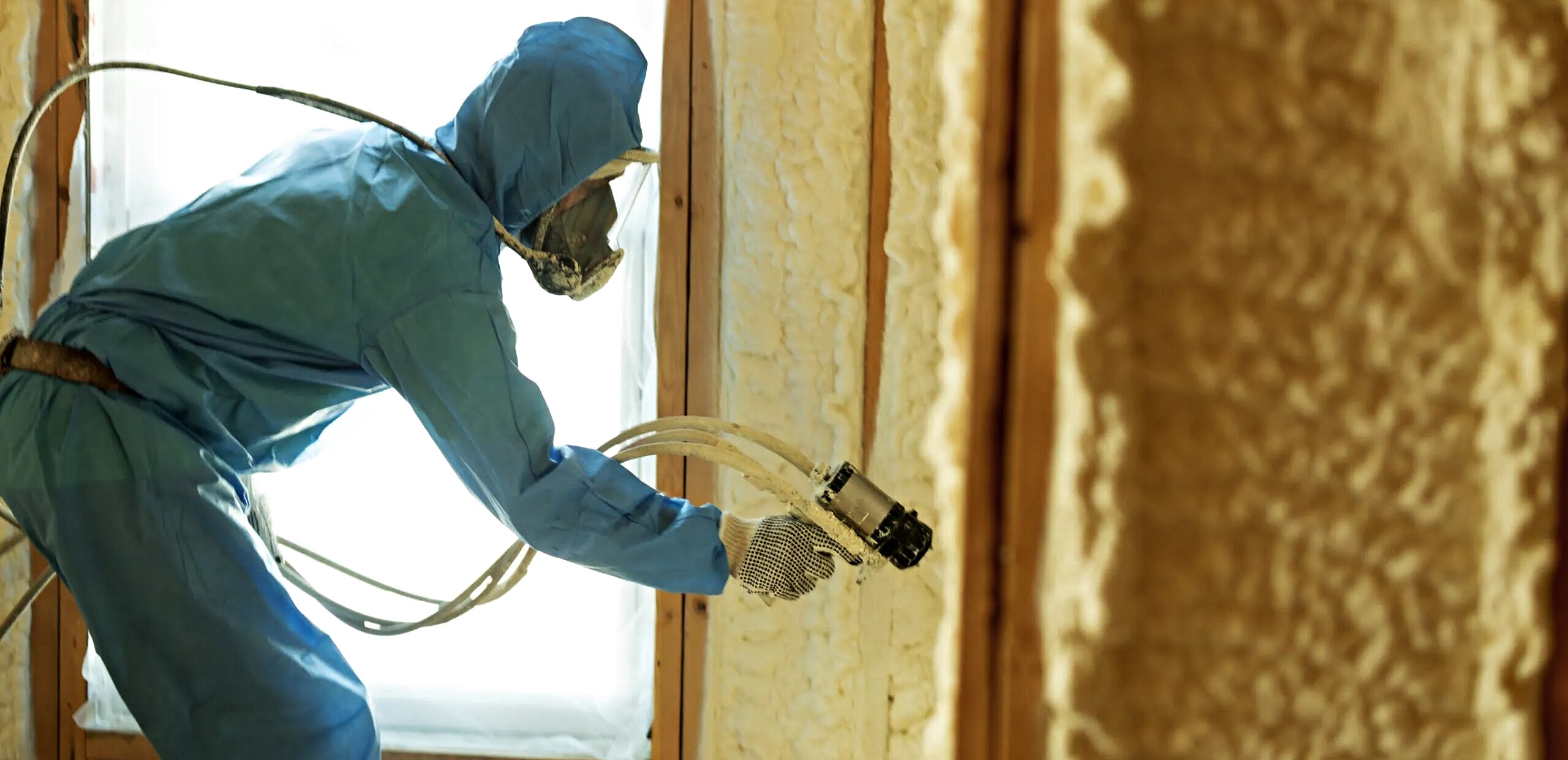
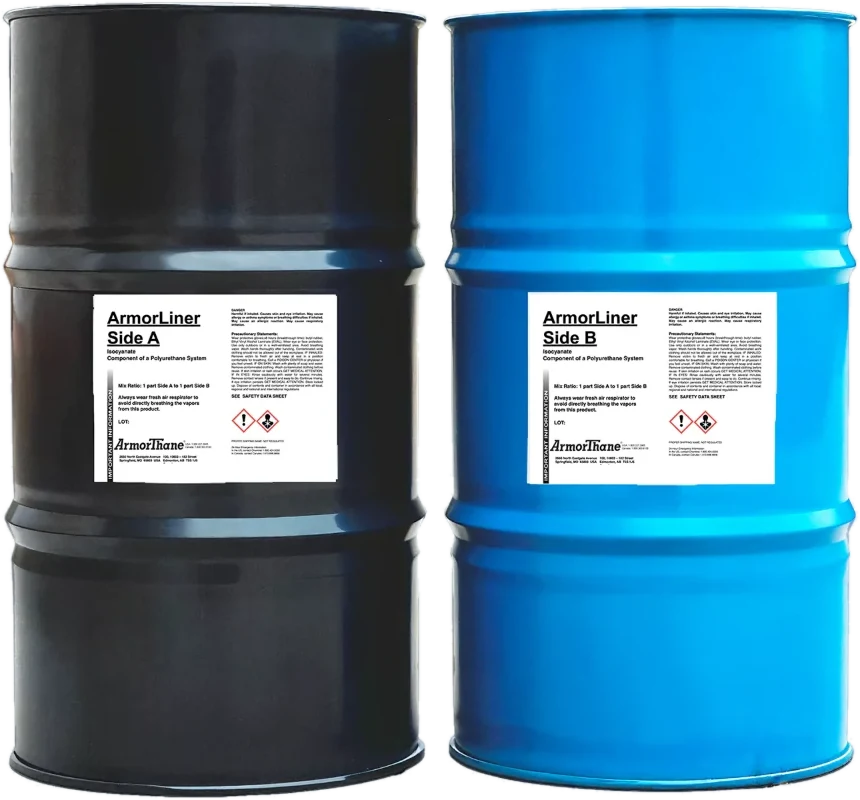
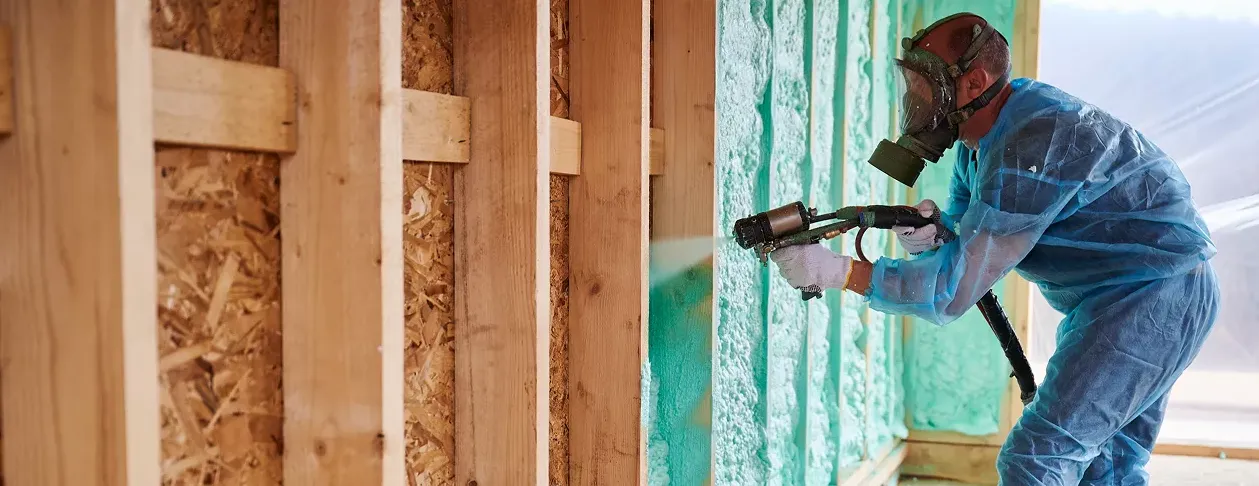
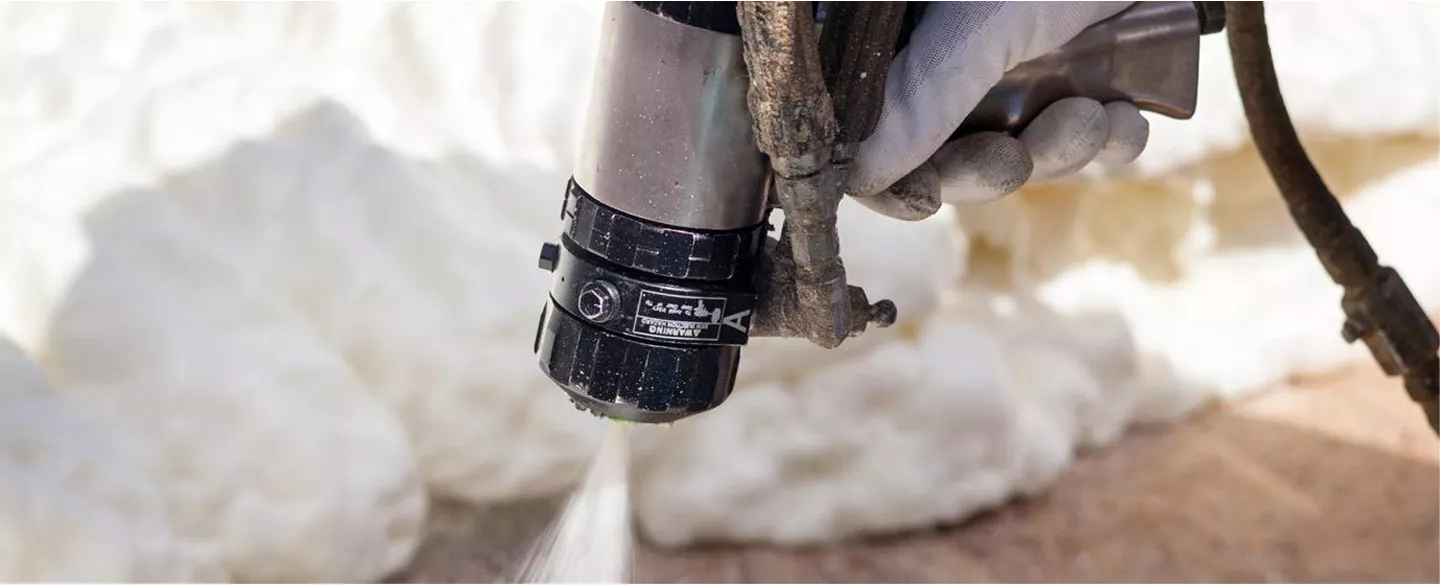
Two-component foam comes as an A-side and a B-side that never meet until the gun. On a professional rig, both sides are heated (typically 120–140°F) and pushed through a proportioner at high pressure — 1,000+ psi — into an impingement mix chamber where they collide, react, and leave the tip as a spray pattern. Cream time on our closed-cell is 2 to 3 seconds. Full rise, 12 to 16. You are not painting. You’re running a chemical reaction in mid-air and steering it onto a wall.
Passes go on in lifts of roughly 1.5 to 2 inches. That limit isn’t arbitrary — the reaction is exothermic, and a lift much thicker than 2 inches can trap enough heat in the core to scorch the foam. In bad cases it can actually smolder. Every applicator who’s been at this a while has either seen it or heard about it from someone who has.
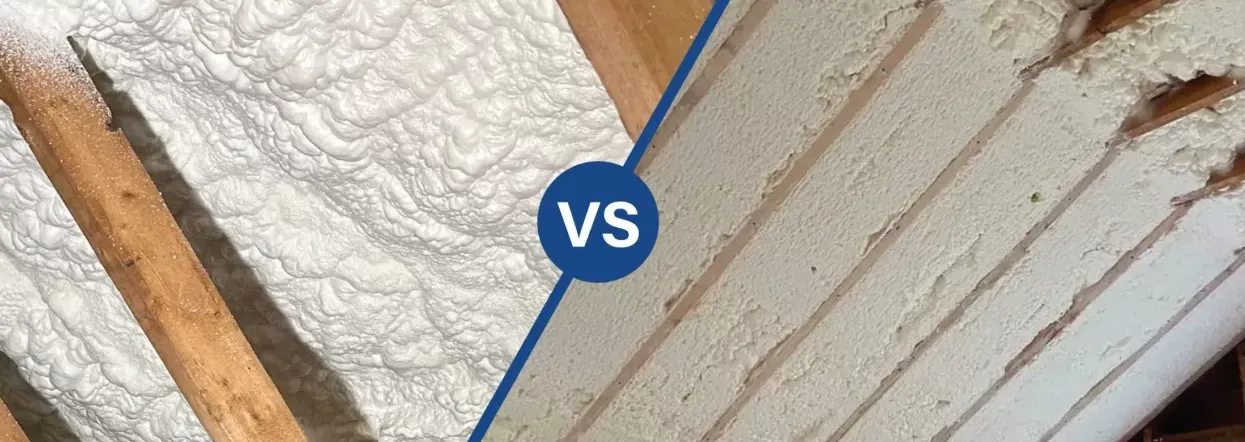
Closed-Cell vs. Open-Cell: What Is Better?
Closed-cell is better where you need R-value per inch, water resistance, or structural stiffness in a shallow cavity. Open-cell is better where you need sound absorption, drying capacity, or the lowest cost per square foot in a deep cavity. Neither one wins outright — they’re two different materials that happen to come out of similar equipment.
The honest answer nobody in the industry likes giving: if you have unlimited cavity depth and no moisture concerns, open-cell often makes more financial sense. A 2×6 cavity filled with open-cell gets you roughly R-20 for about half the material cost of the closed-cell that would get you R-33. If you’re chasing a code number and you have the room, depth is cheaper than density.
Where that logic breaks down is in shallow assemblies, below grade, on the underside of a roof deck, on the interior of a metal building, in a van or trailer, anywhere flood exposure is real, and anywhere you need the insulation to also be your vapor control layer. Which, admittedly, is a lot of places.
| PROPERTY | CLOSED-CELL (CCSPF) | OPEN-CELL (OCSPF) | TEST METHOD |
|---|---|---|---|
| R-value per inch | R-6.0 – R-7.0 (aged) | R-3.5 – R-3.9 | ASTM C518 |
| Core density | 1.75 – 2.2 lb/ft³ | 0.45 – 0.75 lb/ft³ | ASTM D1622 |
| Closed-cell content | 90 – 97% | ~8% (92% open) | ASTM D2856 |
| Water vapor permeance | ~0.8 – 1.6 perms @ 1" | 10 – 20+ perms | ASTM E96 |
| Air barrier at | 1 inch | 3.5 inches | ASTM E2178 |
| Vapor retarder at | 1.5 – 2 inches | Never (needs coating) | IRC R702.7 |
| Compressive strength | 25 – 40 psi | 3 – 6 psi | ASTM D1621 |
| Water absorption | < 2% | Up to 30% | ASTM D2842 |
| Sound (STC contribution) | Modest — it's rigid | Strong — it's soft | ASTM E90 |
| Expansion ratio | ~30–40x | ~100x | — |
| Installed cost / board foot | $1.00 – $3.10 | $0.60 – $1.60 | 2026 market |
| Yield per 55-gal set | ~5,000 board feet | ~17,000 board feet | ArmorFoam, ideal yield |
What Is the R-Value of Closed-Cell Spray Foam?
Closed-cell spray foam is generally rated between R-6.0 and R-7.0 per inch, with most current HFO-blown products landing near R-6.5 aged. ArmorFoam closed-cell tests at R-6.5 per inch aged by ASTM C518. Two inches gets you R-13. Three inches gets you R-19.5. Anyone quoting you R-7.5 or higher is quoting an initial value, not an aged one.
That aged-versus-initial thing deserves a real explanation, because it’s where a lot of marketing lives.
Why does spray foam lose R-value over time?
Fresh out of the gun, the cells are packed with blowing agent. Blowing agent conducts heat poorly, which is the whole point. But gas moves. Over months and years the blowing agent slowly diffuses out through the cell walls and atmospheric gases diffuse in — nitrogen, oxygen, carbon dioxide, all of which conduct heat better than what left. The R-value drops. The industry calls it thermal drift.
The curve is steep for the first several months, then it flattens out and essentially stops. Oak Ridge National Laboratory’s review of long-term thermal performance found that the five-year instantaneous value is roughly equal to the fifteen-year time-weighted average — which is why the five-year number became the standard stand-in for “what you’ll actually get.”
Two standards handle this: CAN/ULC-S770 and ASTM C1303. Both use thin-slicing to accelerate diffusion so a lab can predict a five-year value without waiting five years.
- The number that settles this argument
The FTC R-Value Rule (16 CFR Part 460) already requires polyurethane, polyiso, and XPS to be tested on samples that reflect the effect of aging. A legally marketed R-value for closed-cell spray foam in the US is supposed to be an aged value. If a spec sheet doesn’t say which it is, ask.
How much drift? Be skeptical of anyone who gives you a clean number. A Carlisle white paper cites an industry study where samples aged from 180 days to five years dropped 10% to 18%, averaging about 11%. Meanwhile ORNL’s 2023 blowing-agent assessment cites a study finding just 2.7% reduction over 3.5 years for one HFO formulation. The direction is clear — HFO-blown foams appear to age better than the HFC-blown products they replaced — but there’s no clean published head-to-head drift percentage for high-pressure closed-cell foam. We’re not going to invent one.
| THICKNESS | ARMORFOAM CC @ R-6.5/IN | OPEN-CELL @ R-3.8/IN | FIBERGLASS BATT @ R-3.2/IN |
|---|---|---|---|
| 1 inch | R-6.5 | R-3.8 | R-3.2 |
| 1.5 inches | R-9.8 | R-5.7 | R-4.8 |
| 2 inches | R-13.0 | R-7.6 | R-6.4 |
| 3.5 inches (2x4 cavity) | R-22.8 | R-13.3 | R-11 to R-15 |
| 4 inches | R-26.0 | R-15.2 | R-12.8 |
| 5.5 inches (2x6 cavity) | R-35.8 | R-20.9 | R-19 to R-21 |
| 7 inches | R-45.5 | R-26.6 | R-22.4 |
| 9.25 inches (2x10 cavity) | R-60.1 | R-35.2 | R-29.6 |
- Cavity R-value is not assembly R-value
Fill a 2×6 wall with R-35.8 of foam and the finished wall does not perform at R-35.8. Wood studs conduct heat around the insulation, and at 16″ on center framing is roughly 25% of the wall area. Whole-wall performance typically lands 20–30% below the cavity number unless you add continuous exterior insulation. This is the single most common way R-value gets oversold — by everyone, not just foam contractors.
There’s a related point worth making about single-component canned foam, because it sits on the same search results as professional kits and it is not the same product. A canned “closed-cell” foam from a hardware store is a one-component moisture-cured urethane. It rates around R-5.7 per inch, cures by pulling humidity out of the air, and yields maybe 20 board feet per can. A two-component kit is a chemically balanced 1:1 reaction that rates R-6 to R-6.6 and yields 200 to 600 board feet. Both are technically closed-cell. They are not interchangeable, and the price per board foot isn’t remotely comparable.

Coverage & Cost Calculator
Spray foam is sold by the board foot — one square foot at one inch thick. Contractors quote by the square foot at a stated thickness. Those two units are the number-one source of confusion in spray foam quotes, and they are trivially easy to reconcile once you see the math. Enter your area and target thickness below.
What Closed-Cell Spray Foam Costs in 2026
Professionally installed closed-cell spray foam runs roughly $1.00 to $3.10 per board foot, or about $3.00 to $5.00 per square foot at typical thicknesses of 2 to 3 inches. DIY two-component kits land between $1.22 and $1.95 per board foot before you account for waste, PPE, or the fact that you’re not very good at this yet.
That last part isn’t a dig. Yield is a skill.
Here’s every major DIY kit on the market normalized to the only unit that lets you compare them. Nobody publishes this table, which is strange, because it’s the only way to tell whether a kit is a deal.
| KIT | RATED YIELD | STREET PRICE | COST / BOARD FOOT | TYPE |
|---|---|---|---|---|
| HandiFoam Quick Cure HFO 605 | 605 bf | ~$739 | $1.22 | Two-component |
| Foam It Green 602 | 602 bf | ~$787 | $1.31 | Two-component |
| Froth-Pak 630 | 630 bf | ~$919 | $1.46 | Two-component |
| Foam It Green 202 | 202 bf | ~$377 | $1.87 | Two-component |
| Froth-Pak 200 | 200 bf | ~$389 | $1.95 | Two-component |
| Canned single-component (e.g. FastCoat) | ~20 bf/can | ~$15–24/can | $0.75–1.20 | One-component (not equivalent) |
| Professional 55-gal set | ~5,000 bf | Wholesale | Roughly $0.35–0.60 material | High-pressure |
Look at that last row for a second. A professional 55-gallon set yields around 5,000 board feet, which is why installed pricing can include labor, equipment, insurance, and margin and still land near what a homeowner pays for material alone in a kit. The Reddit consensus on this is blunt and basically correct: for anything above a few hundred square feet, the tanks cost nearly as much as hiring somebody who does this every day.
Where the money actually goes
- Material — usually 30–45% of an installed price. This is the part that scales linearly with thickness.
- Labor and mobilization — a crew, a rig, and a day. Small jobs carry a minimum charge because getting the truck there costs the same whether you spray 400 square feet or 4,000.
- Prep and masking — overspray goes everywhere. On a retrofit this can be a third of the on-site hours.
- Removal of existing insulation — pulling old batts or vacuuming blown cellulose out of an attic is its own line item, often $1–2 per square foot.
- Thermal or ignition barrier — drywall, or an approved intumescent coating. Frequently forgotten in comparison shopping. See Section 6
- Flash and batt
You do not have to fill the cavity with foam. Spraying 1.5–2 inches of closed-cell against the sheathing for air and vapor control, then filling the rest with fiberglass or mineral wool, gets you most of the performance at a fraction of the foam cost. In a 2×6 wall that’s roughly R-13 of foam plus R-13 of batt. It’s the most cost-effective use of closed-cell foam in residential construction and it’s badly underused.
Fire Code: Thermal Barriers and Ignition Barriers
All foam plastic insulation, including closed-cell spray foam, must be separated from the building interior by an approved thermal barrier — normally half-inch gypsum wallboard. In attics and crawl spaces meeting specific conditions, a lighter ignition barrier is allowed instead. A Class A fire rating on the foam does not exempt it from either requirement. This is the most misunderstood part of spray foam, and it’s the part that fails inspections.
We read every page currently ranking for this topic before writing ours. Not one of them mentions a thermal barrier. Which is remarkable, because this is the requirement that fails inspections and the one a homeowner is most likely to discover after the check clears. So let’s actually cover it.
Does spray foam need to be covered with drywall?
Usually, yes. IRC Section R316.4 requires foam plastic to be separated from the interior of a building by an approved thermal barrier: minimum half-inch gypsum wallboard, or a material tested and passing both the Temperature Transmission Fire Test and the Integrity Fire Test of NFPA 275.
You’ll hear the phrase “15-minute thermal barrier” constantly. Worth knowing: the current code text doesn’t actually say “15 minutes” — it points to NFPA 275. The fifteen-minute figure is the historical performance basis, and it means the barrier keeps the foam’s surface below a 250°F average rise for fifteen minutes while the exposed face follows the ASTM E119 time-temperature curve. Also note the benchmark is half-inch regular core gypsum, not Type X. The criterion is thermal, not a fire-resistance rating.
- Class A does not mean "no drywall required"
ASTM E84 is the Steiner Tunnel test. It measures flame spread along a surface over ten minutes and produces a unitless index. A thermal barrier requirement is about heat transmission through a protective layer over fifteen minutes. Different test, different failure mode, different code section. R316.3 (surface burning) and R316.4 (thermal barrier) are separate and cumulative requirements. Passing one has never satisfied the other. Note too that R316.3 only requires a flame spread index of 75 or less — so “Class A” is already above code minimum on that axis, and still says nothing about the barrier.
When can you leave spray foam exposed?
Attics and crawl spaces, under conditions. IRC R316.5.3 waives the thermal barrier in an attic when all of the following are true:
- Attic access is required by Section R807.1
- The space is entered only for repairs or maintenance — not for storage
- The foam is protected by an approved ignition barrier
The prescriptive ignition barrier options, verbatim from the code list, are: 1½” mineral fiber insulation · ¼” wood structural panels · ⅜” particleboard · ¼” hardboard · ⅜” gypsum board · corrosion-resistant steel at 0.016″ base metal thickness · and, for attics only, 1½” cellulose insulation.
IRC R316.5.4 does the same thing for crawl spaces — access required by R408.4, entry only for repairs or maintenance, same barrier list minus cellulose. That omission is real and people miss it.
- Heads up: the 2024 IRC renumbered this entire section
Foam plastic moved from R316 to R303. Thermal barrier is now R303.4; attic ignition barrier R303.5.3; crawl space R303.5.4. Confirmed in ICC-ES evaluation reports ESR-3228 and ESR-5253. The 2024 IRC also newly requires spray-applied foam to comply with ICC 1100. If your jurisdiction still runs the 2018 or 2021 IRC, the R316 numbering above is what applies to you.
How do intumescent coatings replace an ignition barrier?
Through IRC R316.6, the specific-approval path. Foam that doesn’t meet the prescriptive rules can be approved on the basis of large-scale fire testing — NFPA 286 with the acceptance criteria of R302.9.4, or FM 4880, UL 1040, or UL 1715. For spray foam specifically, the test protocol is ICC-ES AC377 Appendix X, a modified room-corner test that evaluates the foam and its coating together on walls and ceilings in one shot.
What comes out the other end is an evaluation report listing exact coatings at exact application rates. This is the concrete part, and it’s public. From BASF’s ESR-2642, for example:
| INTUMESCENT COATING | WET MILS | APPLICATION RATE |
|---|---|---|
| DC315 | 4 | 0.25 gal / 100 ft² |
| Fireshell IB4 | 10 | 0.60 gal / 100 ft² |
| NoBurn Plus | 12 | 0.75 gal / 100 ft² |
| ALDOCOAT 800 | 18 | 1.12 gal / 100 ft² |
| Flame Seal TB | 25 | 1.60 gal / 100 ft² |
- These approvals are thickness-limited, and exceeding the tested thickness voids them
ESR-2642 caps at 9¼” in wall cavities and attic floors, 11¼” on ceilings and the underside of roof sheathing. A different report for a 0.5 pcf open-cell foam with DC315 allows 8″ vertical and 14″ overhead. Same coating, different limits, because the approval covers the foam-and-coating assembly as tested — not the coating on its own.
Every no-ignition-barrier approval also carries the same conditions, which show up nearly word-for-word across evaluation reports: entry to the space is to service utilities and no storage is permitted; there are no interconnected attic or crawl space areas; air in the space isn’t circulated to other parts of the building; and required ventilation is provided.
That “no storage” condition matters more than people realize. Put boxes in a foamed attic that was approved under this path and you’ve technically left the conditions of the approval.
Climate Zones and Code-Minimum R-Values
The 2021 IECC requires R-30 ceilings in Climate Zone 1, R-49 in Zone 2, and R-60 in Zones 4 through 8. Wall requirements range from R-13 in the south to R-30 (or R-20 plus R-5 continuous) in the north. Separately, IRC R806.5 sets a minimum R-value of air-impermeable insulation that must go directly against the roof deck in an unvented attic — R-5 in Zone 1 rising to R-35 in Zone 8 — and that table is the one people miss.
Air leakage: the requirement people forget
Insulation R-value is only half the code. The 2021 IECC also caps whole-house air leakage by blower door test: 5.0 ACH50 in Climate Zones 1–2 and 3.0 ACH50 in Zones 3–8. The 2024 IECC tightened it further to 4.0 / 3.0 / 2.5 ACH50 and renumbered the section to R402.5.1.3.
This is where closed-cell foam quietly earns its price. An inch of it is an air barrier by test — ASTM E2178 air permeance under 0.02 L/s·m². Hitting 3.0 ACH50 with batts and caulk is achievable but takes real discipline from every trade on the job. Hitting it with a sprayed air barrier is close to automatic.
- A caveat on Table R806.5 that almost nobody prints
The condensation-control R-values in Table R806.5 haven’t changed since the 2015 IRC — even though the IECC ceiling requirement climbed from R-49 to R-60 in Zones 4 through 8. Those table values were calibrated to produce a safe ratio of impermeable to permeable insulation against the roof R-values in force at the time. Building Science Corporation’s Kohta Ueno has flagged that the ratio no longer holds at R-60. In cold climates, hitting the table minimum and calling it done can leave you with a riskier assembly than the code intends. Design to the ratio, not just the table.
Does Closed-Cell Spray Foam Hide Leaks and Rot Roof Decks?
It doesn’t cause rot, but it does remove your early warning and it does slow drying. Building Science Corporation field-evaluated eleven in-service spray foam roof systems and found moisture contents within the safe range in every one, with no moisture damage. The single roof failure they reviewed traced back to foam sprayed onto wet OSB — an installation defect, not a design flaw. But the concern behind the question is legitimate and deserves a straight answer.
This is the loudest complaint about closed-cell foam anywhere online, and it usually arrives as a story. Somebody’s contractor found a joist bay that had been quietly holding toilet leak water for five years behind foam. Floor gone, joists gone. That story circulates because it’s real and because it’s the kind of failure that costs more than the insulation ever saved.
So here’s the accurate framing, which is more useful than either “foam rots roofs” or “that’s a myth.”
What actually happens to a leak under closed-cell foam
BSC’s research digest on unvented roof assemblies makes the mechanical point: rainwater migration is severely limited by the foam’s low water transmission and high adhesion, so damage stays local — confined to the area immediately around the hole. It doesn’t run down the sheathing and wet forty square feet. That’s genuinely good.
What you lose is the telltale. In a vented attic a roof leak announces itself as a stain on the sheathing or a drip on the insulation. Foam over the deck means the water is between the foam and the sheathing, where nobody sees it, and drying capacity in that spot has dropped substantially. The leak isn’t hidden by magic. You’ve just removed the inspection surface.
BSC modelled how much leakage different assemblies tolerate, expressed as a fraction of incident rainfall:
| LOCATION | FOAM TYPE | TOLERABLE RAINFALL LEAKAGE |
|---|---|---|
| Minneapolis | Closed-cell | 0.6% |
| Seattle | Open-cell | 0.6% |
| Seattle | Closed-cell | 1.0% |
| Miami | Open-cell | 1.5% |
Read those numbers carefully, because they invert the popular narrative. Closed-cell dries more slowly but tolerates a larger leak volume. Open-cell dries faster but wets more. In the ORNL/ASHRAE sealed-attic field study in Charleston, physical water damage was observed along the rafters of the open-cell sealed attic — closed-cell showed the same trend with much less moisture transfer, because it’s less permeable to begin with.
- What the DOE actually recommends before foaming an existing roof deck
The Building America Solution Center is unambiguous: inspect the existing roof covering for deficiencies first, and if there’s any history or evidence of leakage, correct the leaks and repair the damage before proceeding. If the roof is at or near the end of its service life, replace it first. Roof replacement isn’t required by rule. But the existing roof has to keep water out reliably from here on, because the assembly no longer carries much margin for error.
Which produces the actual rule of thumb: never use spray foam as a band-aid over a wet or failing assembly. Fix the water first. That, not the material, is what went wrong in nearly every horror story.
Does spray foam cook shingles or void the warranty?
The temperature claim is much weaker than the internet thinks. The Florida Solar Energy Center measured this directly at their Flexible Roof Facility, comparing R-19 batts over a vented attic against six inches of foam at the roof plane. The difference in shingle temperature was a maximum of 9°F, averaging about 2°F across the day. Adding 9°F to a shingle already sitting near 150°F in July is not what determines its lifespan. UV is.
- What the DOE actually recommends before foaming an existing roof deck
You’ll see figures like “18°F hotter” and “36°F hotter” quoted in shingle-temperature arguments. Those come from the ORNL Charleston study and they describe the underside of the roof sheathing, not the shingle surface. Sheathing temperature and shingle temperature are different measurements. Competitors conflate them constantly.
On warranties: we tried to find a single current, primary shingle manufacturer warranty document excluding spray foam, and we couldn’t. Secondary sources report Atlas requiring continuous airflow below the nailing surface and CertainTeed listing foam on roof decks as acceptable, but those trace to a contractor blog with a dead source link. So the honest position is that positions vary by manufacturer, the measured temperature effect is small, and you should read your specific warranty. Anybody claiming a blanket “spray foam voids all shingle warranties” can’t support it.
- The easiest factual error on this topic
Vapor retarder classes, since this comes up constantly
| CLASS | PERMEANCE | TYPICAL MATERIALS |
|---|---|---|
| Class I | ≤ 0.1 perm | Sheet polyethylene, unperforated foil |
| Class II | > 0.1 and ≤ 1.0 perm | Kraft-faced batts, vapor retarder paint, closed-cell foam at ~1.5–2" |
| Class III | > 1.0 and ≤ 10.0 perm | Latex or enamel paint |
ArmorFoam closed-cell tests at 0.83 perms at one inch, dropping to 0.10 at eight inches. That puts a nominal two-inch application solidly in Class II territory — which matters because IRC R806.5 requires exactly that in Climate Zones 5 through 8 for any air-impermeable insulation used in an unvented roof assembly. The foam satisfies its own requirement, at adequate thickness.
Off-Gassing, PPE, and When You Can Move Back In
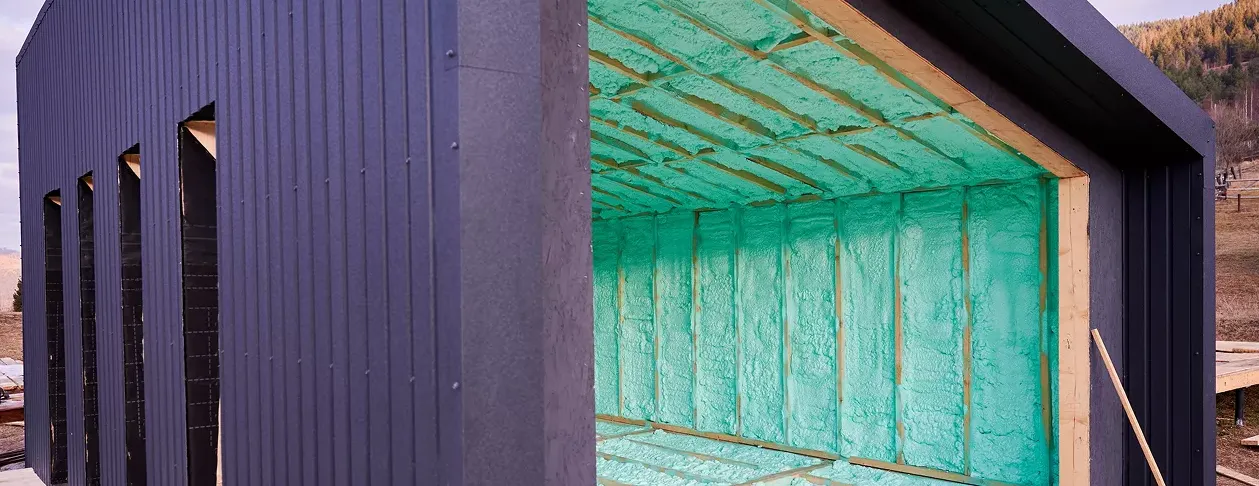
Twenty-four hours is the number most commonly cited for re-occupancy after professional spray foam installation — the CPSC recommends residents vacate for at least 24 hours, and most manufacturers say the same. The EPA explicitly declines to set a universal figure and points to the product’s own instructions. If the foam smells strongly days later, that’s not normal curing. That’s usually off-ratio material.
What is off-gassing, actually?
Somebody on Reddit asked this outright in a thread about closed-cell foam, and the fact that they had to ask says everything about how badly the industry explains it.
Spray foam is a 1:1 volumetric reaction. The A-side is isocyanate, usually MDI. The B-side is a polyol blend carrying catalysts, blowing agent, surfactant, and flame retardants, and it is the more complicated half of the equation by a wide margin. Meet at the right ratio, temperature, and pressure and essentially everything reacts and gets consumed. Miss, and unreacted components are left sitting in the foam with nowhere to go but into your air.
The smell people describe as fish, cat urine, or fresh latex paint is usually unreacted amine catalysts, per the Spray Foam Alliance. CPSC staff reached the same chemistry conclusion in a 2012 review: the odors identified after installation may not come from isocyanates at all, since those are highly reactive and get consumed — tertiary amines are more volatile, have lower boiling points, and carry strong ammonia-like odors. SPFA characterizes the odor as a nuisance rather than a chemical hazard and recommends supplementary ventilation for a few days.
For odor, mold and removal questions, see spray foam insulation problems and fixes.
- Persistent odor is an installation failure, not a material property
Correctly applied foam at correct ratio stops smelling. Foam that still reeks a week later was almost certainly sprayed off-ratio — wrong proportioner settings, pressure imbalance between A and B, wrong material or hose temperature, or excessive pass thickness. CPSC notes there are no standard processes for removal or remediation of misapplied spray foam, which is exactly why installer selection matters more than brand selection.
The health question, answered directly
The exposure risk in spray foam is real and it belongs almost entirely to the applicator during installation, not to the occupant afterward. OSHA’s position: isocyanates are the leading attributable cause of work-related asthma, can cause sensitization, irritate eyes, nose, throat, and skin, and are classified as potential human carcinogens known to cause cancer in animals. The permissible exposure limit for MDI is 0.02 ppm (0.20 mg/m³).
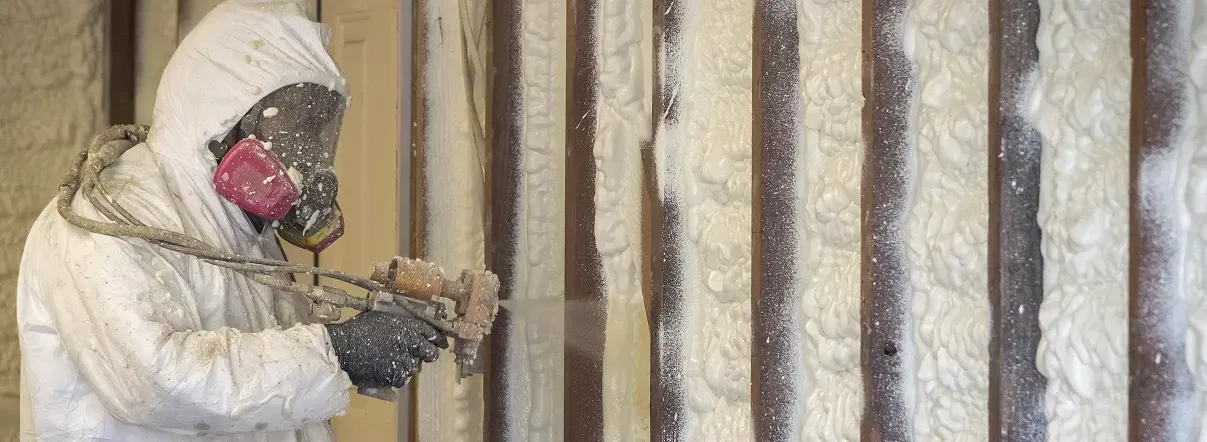
That is why professional crews spray in full suits with supplied-air or organic-vapor respirators and why the building has to be vacated during and after application. It is also why “I’ll just do a whole attic with kits and a dust mask” is a genuinely bad plan.
What CDPH and GREENGUARD Gold actually certify
Both come up when homeowners get nervous, and both are narrower than people assume.
CDPH Standard Method v1.2 (the thing people call “Section 01350”) is a chamber emissions test. The product sits in an environmental chamber for 14 days, emissions are converted into modeled building concentrations for a standard classroom, private office, and single-family residence, and each product category must stay under half the California OEHHA Chronic Reference Exposure Level for each screened chemical — formaldehyde being the exception, capped at the full CREL of 9 µg/m³.
GREENGUARD Gold is built on UL 2818, screens more than 15,000 VOCs, and requires compliance with the CDPH method. UL doesn’t publish the numeric Gold limits, so we’re not going to print a number.
- The important caveat on both
These are emissions certifications for cured product. They say nothing about installation-phase isocyanate exposure, and nothing about what happens if the foam is sprayed off-ratio. A certification on a datasheet does not substitute for a competent installer.
Racking Strength and Wind Uplift
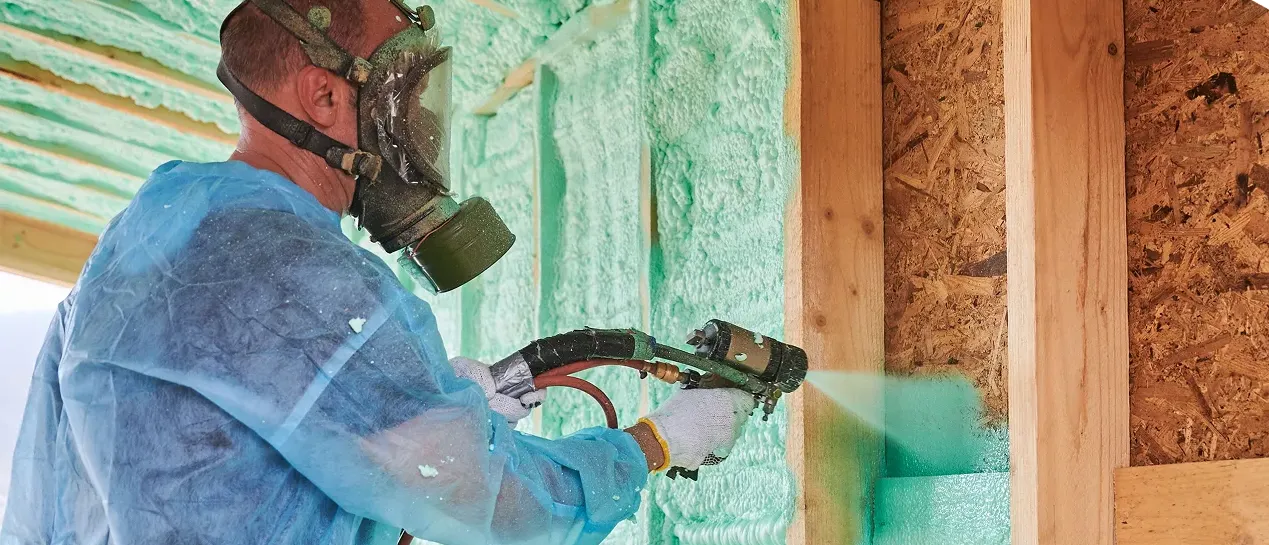
Closed-cell spray foam measurably stiffens wall and roof assemblies. Testing commissioned by the spray foam industry showed racking loads roughly doubling to tripling depending on cladding and stud spacing, and University of Florida hurricane testing showed wind uplift resistance increasing 3 to 3.2 times with a full fill. None of it translates into engineered design capacity — no US model code lets you count foam as a shear-resisting element.
We’re going to be careful here, because this is an area where marketing runs well ahead of the data.
| TEST / ASSEMBLY | BASELINE | WITH CCSPF | INCREASE |
|---|---|---|---|
| Vinyl siding over paper, 2x4 @ 16" o.c. (NAHB, 1992) | 913 lb | 2,800+ lb | ~3× |
| Textured plywood siding, 16" o.c. (NAHB, 1992) | 2,650 lb | 5,300 lb | 2× |
| Plywood siding, 24" o.c. (NAHB, 1992) | 2,900 lb | 6,387 lb | 2.2× |
| Steel studs, drywall both sides (NAHB, 1996) | 2,400 lb | 5,380 lb | 2.2× |
| Steel studs, OSB one side (NAHB, 1996) | 4,800 lb | 6,000 lb | 1.25× |
| Roof uplift, 3" full fill (Univ. of Florida, 2008, ASTM E330-02) | — | — | 3 – 3.2× |
| Roof uplift, fillet application only (Univ. of Florida, 2008) | — | — | 1.9 – 2.2× |
The fillet-versus-full-fill result is the genuinely interesting one and it rarely gets mentioned. Foam applied only at the sheathing-to-rafter joint — a fillet, not a fill — captured 1.9 to 2.2 times the original uplift capacity. That’s a large share of the benefit for a small fraction of the material. For a hurricane-region roof retrofit where you’re not trying to insulate, it’s a legitimately smart application.
The HFO Switch: Why Your Foam Changed
As of January 1, 2025, spray foam manufactured or imported in the United States must use a blowing agent with a global warming potential under 150. That ended HFC-245fa, which has a GWP of 1,030. Its replacement, HFO-1233zd(E), has a GWP somewhere between 1 and 4 depending on which reference table you use. Existing HFC-blown stock can be sold through January 1, 2028.
If you priced spray foam in 2023 and again in 2026 and the product name changed, this is why.
| BLOWING AGENT | GWP | STATUS IN US SPRAY FOAM |
|---|---|---|
| HFC-245fa | 1,030 | Prohibited for manufacture/import since Jan 1, 2025 |
| HFC-365mfc | 794 | Same restriction |
| HFO-1233zd(E) (Solstice LBA) | 1 – 4 | Current standard for closed-cell |
| HFO-1336mzz(Z) | 2 | In use |
| Water / CO2 | — | Standard for open-cell |
The regulatory authority is the AIM Act, implemented through 40 CFR Part 84 Subpart B. The polyurethane foam subsector carries a GWP limit of 150 with a January 1, 2025 compliance date for manufacture and import. The American Chemistry Council’s Center for the Polyurethanes Industry confirms the 2028 sell-through date for existing HFC stock.
Did the switch make the foam worse?
No — if anything the opposite, though the data is thinner than you’d like. Oak Ridge National Laboratory’s 2023 assessment of HFOs as foam blowing agents measured low-pressure spray foam after 90 days of accelerated aging: HFC-245fa came in at 22.9 mW/m·K thermal conductivity, HFO-1233zd(E) at 21.2 — roughly 7% better for the HFO. Honeywell has reported yield improvements up to 10% and application in lifts up to 6½ inches versus the typical 2-inch lift for HFC versions, though that’s a manufacturer claim and should be read as one.
What the switch definitely changed is handling. Converting a rig from HFC to HFO isn’t a matter of swapping drums. B-side holding tanks, day tanks, and recirculating lines have to be completely drained, pump wet wells emptied and wiped. The two resins are incompatible and must not be intermixed. Any applicator who went through the transition remembers it.
One thing we’ll flag as unverified: you’ll hear that HFO foams need warmer substrate temperatures, often stated as a 60°F minimum. HFO-1233zd(E) does boil at 66°F versus about 59°F for HFC-245fa, which is the physical basis for the claim. But we couldn’t find that threshold in a primary manufacturer datasheet, so treat any specific temperature rule as product-specific until you read the TDS.
Can You Do Your Own Closed-Cell Spray Foam?
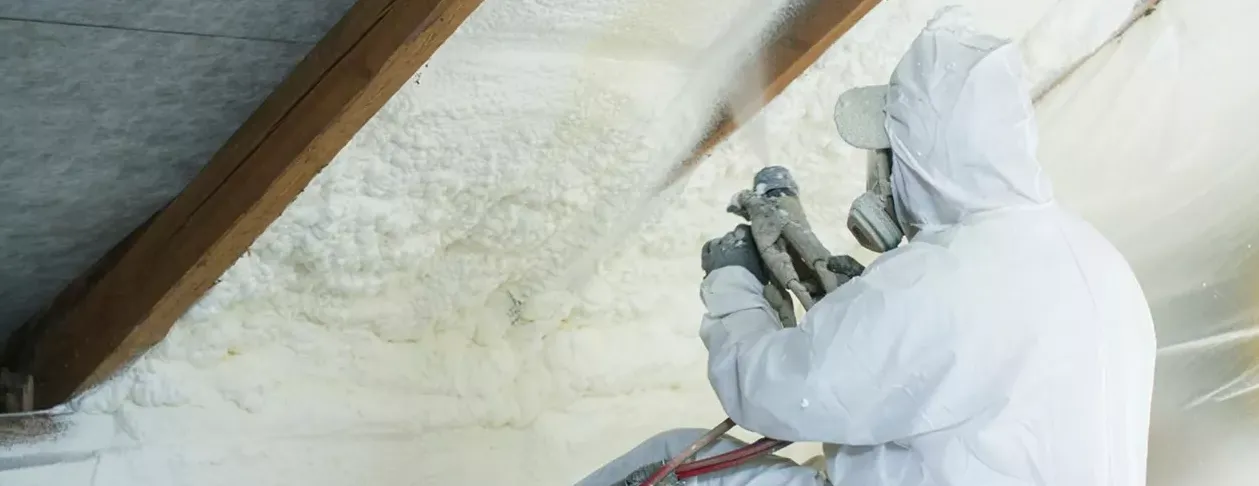
Yes, with a two-component disposable kit — and for small, bounded jobs it’s a reasonable choice. Rim joists, a van conversion, a shed, sealing a crawl space perimeter. Above roughly 500 square feet the economics collapse: kit material approaches the cost of hiring a crew, and yield gets worse the less experience you have.
The case for DIY is real for the right job. A kit is self-contained, needs no proportioner, and lets you spray twenty rim joist bays on a Saturday without scheduling a contractor for a half-day minimum charge. That’s a good use of a $389 kit.
The case against grows fast with square footage. Watch what happens:
| JOB | BOARD FEET @ 2" | DIY KIT COST | TYPICAL PRO INSTALLED | VERDICT |
|---|---|---|---|---|
| 150 lin. ft of rim joist | ~300 bf | ~$500 | $800 – $2,000 | DIY wins |
| Van conversion (~250 sq ft) | ~500 bf | ~$700 | Hard to source | DIY wins |
| 500 sq ft crawl space walls | ~1,000 bf | ~$1,300 | $2,500 – $4,500 | Close call |
| 1,000 sq ft attic roof deck | ~2,000 bf | ~$2,600 + PPE | $4,500 – $7,000 | Pro, usually |
| Whole-house walls | 4,000+ bf | $5,200+ | $4,000 – $10,000 | Pro, clearly |
Notice the bottom row. At whole-house scale a homeowner buying kits can pay more than a contractor charges — and the contractor’s price includes the crew, the rig, insurance, and a warranty.
- Chemical temperature, not just air temperature. Kit tanks want to be around 75–85°F. Cold chemical sprays badly, cures badly, and yields terribly. Bring the kit inside the day before.
- Substrate temperature matters too. — generally 40–95°F, and it has to be dry. Foam on damp OSB is the documented cause of the one full roof failure Building Science Corporation reviewed.
- Respirator, not a dust mask. Organic vapor cartridges with a P95 or P100 pre-filter, plus goggles, chemical-resistant gloves, and a disposable coverall. OSHA's permissible exposure limit for MDI is 0.02 ppm, and a paper dust mask does nothing about it. Not optional.
- Lifts of 1.5–2 inches maximum. Let each pass cool. Thicker lifts trap exothermic heat and can scorch the core.
- Once you crack the kit, you're on a clock. Partial kits generally don't store well. Plan to use the whole thing.
- Ventilate and stay out. Vacate for at least 24 hours per CPSC guidance and run ventilation.
- Remember the thermal barrier. A DIY attic or crawl space job still has to satisfy IRC R316.5 (or R303.5 in the 2024 IRC). Kits don't come with an ignition barrier.
Where Closed-Cell Belongs — And Where It Doesn't
Strong fit
Use closed-cell here
- Crawl spaces and basement walls — water resistance plus vapor control in one pass; the assembly where it most clearly beats every alternative
- Rim and band joists — the biggest air leak in most houses, awkward geometry, tiny material quantity
- Metal buildings and pole barns — kills condensation on the steel and interrupts thermal bridging at purlins and fasteners
- Unvented roof decks — where IRC R806.5 requires air-impermeable insulation in direct contact with the sheathing
- Shallow 2x4 cavities — when you need R-20+ and only have 3.5 inches to work with
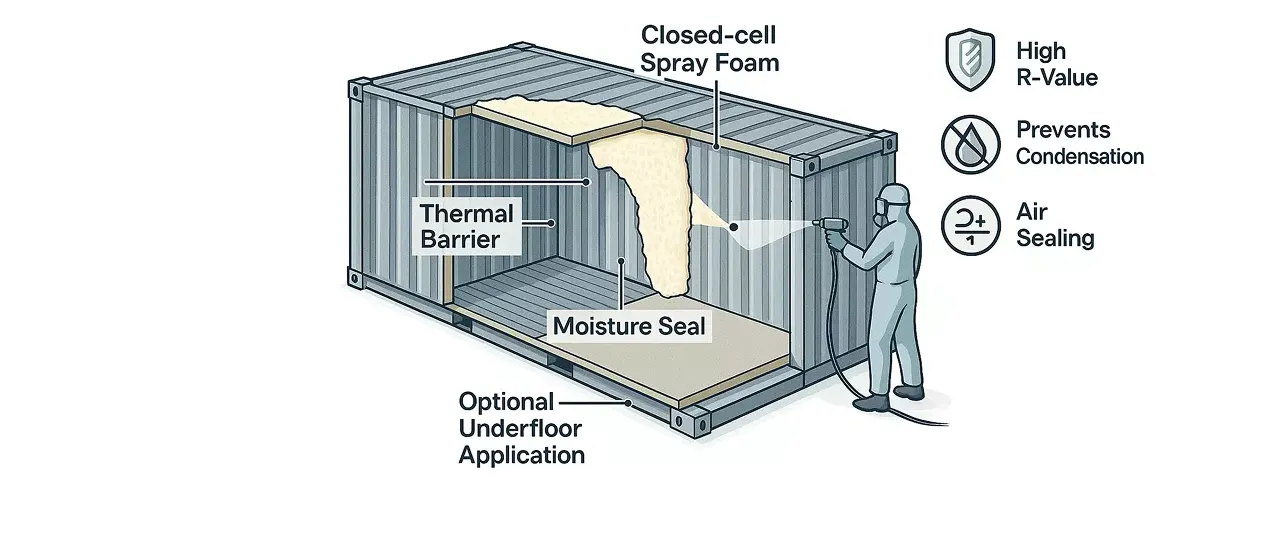
- Vans, RVs, trailers, containers — rigid, self-adhering, no settling under vibration, and it stiffens thin sheet metal
- Flood-prone construction — under 2% water absorption, and it doesn’t hold water against framing
- Cold storage and refrigerated space — the vapor drive is relentless and open-cell won’t hold it
Poor fit
Choose something else
- Interior sound-control partitions — it’s rigid; open-cell or mineral wool absorbs far better for less money
- Deep vented attic floors — you have unlimited depth, so blown cellulose or fiberglass buys R-value far cheaper
- Directly under plumbing in a joist bay — a supply or drain leak above foam has nowhere to show itself
- Below grade on foundation exteriors in "very heavy" termite zones — prohibited by IRC R318.4
- Over a roof at or near end of life — replace the roof first; DOE guidance is explicit
- Damp or contaminated substrates — adhesion fails and you’ve sealed moisture in
- Walls you plan to open up soon — foam and future renovation don’t get along
- Sprayed directly onto tiles or slates — the UK modelling rated this high risk in every single scenario
How Closed-Cell Spray Foam Fails
Nearly every spray foam failure traces to one of six causes, and five of them are installation, not material. Knowing what they look like is the most practical thing on this page — it’s how you evaluate a finished job before you pay for it.
| FAILURE | WHAT YOU SEE | ROOT CAUSE |
|---|---|---|
| Off-ratio cure | Persistent fishy or amine odor days later; foam that stays soft, greasy, or crumbly | Proportioner out of ratio, A/B pressure imbalance, or wrong chemical temperature |
| Scorching / core burn | Dark brown or charred center in a thick section; in bad cases, smoldering | Lifts applied too thick — exothermic heat can't escape the core |
| Shrinkage and pull-away | Gaps opening at framing edges months later, ruining the air seal | Off-ratio material or excessive pass thickness |
| Adhesion failure | Foam peels off in sheets; poor bond at the substrate | Damp, dusty, oily, or too-cold substrate — prep failure |
| Trapped moisture | Rot discovered later behind intact-looking foam | Sprayed over a wet substrate or an unrepaired active leak |
| Code failure | Inspector fails the job; no thermal or ignition barrier | Nobody read IRC R316 (R303 in 2024) |
- How to inspect a finished spray foam job
Walk it before the drywall goes up. Press on the foam — it should be firm and dry, not tacky or greasy. Look at the edges where foam meets framing for any gap. Check thick sections for dark discoloration in the core. And use your nose: a faint smell in the first day or two is normal, a strong persistent one is not.
ArmorFoam Closed-Cell: Published Specifications
ArmorThane has manufactured polyurethane and polyurea systems since 1989, out of Springfield, Missouri, with a second facility in Edmonton. ArmorFoam closed-cell is our 2 lb medium-density system. These are the numbers off the technical data sheet, with the test method attached to each one — because a spec without a test method isn’t a spec.
| PROPERTY | VALUE | TEST METHOD |
|---|---|---|
| R-value per inch (aged) | 6.5 | ASTM C518 |
| Core density | 1.90 lb/ft3 | ASTM D1622 |
| Closed-cell content | 92 – 96% | ASTM D2856 |
| Compressive strength (parallel) | 35 psi | ASTM D1621 |
| Tensile strength | 70 psi | ASTM D1623 |
| Water vapor permeance | 0.83 perm @ 1" → 0.10 perm @ 8" | ASTM E96 |
| k-factor | 0.1538 | ASTM C518 |
| Cream time | 2 – 3 seconds | — |
| Rise time | 12 – 16 seconds | — |
| Yield per set | ~5,000 board feet (ideal) | 55-gal drum set, A + B |
Need the numbers for a submittal?
We'll send the current TDS, SDS, and evaluation report — or put you in touch with a certified ArmorFoam applicator in your area.
Frequently asked questions
- 1. International Residential Code, Section R316 (2012–2021) / Section R303 (2024) — Foam Plastic. Thermal barrier R316.4, attic ignition barrier R316.5.3, crawl space R316.5.4, specific approval R316.6.
- 2. NFPA 275, Standard Method of Fire Tests for the Evaluation of Thermal Barriers, 2022 edition.
- 3. ICC-ES Evaluation Reports ESR-2642, ESR-3089, ESR-3228, ESR-5253 — intumescent coating application rates and thickness limits for spray-applied foam plastic.
- 4. ICC-ES AC377, Acceptance Criteria for Spray-Applied Foam Plastic Insulation, Appendix X.
- 5. 2021 IECC Table R402.1.3 and R402.4.1.2, as reproduced by DOE/PNNL Building America Solution Center.
- 6. IRC Section R806.5 and Table R806.5 — Unvented attic assemblies, insulation for condensation control.
- 7. IRC Section R318.4 — Foam plastic protection in termite areas; IRC R702.7 — vapor retarder classes.
- 8. US EPA, Technology Transitions GWP Reference Table and HFC Restrictions by Sector; 40 CFR Part 84 Subpart B (AIM Act).
- 9. FTC R-Value Rule, 16 CFR Part 460, § 460.5(a).
- 10. CAN/ULC-S770 and ASTM C1303 — Long-term thermal resistance of closed-cell foams.
- 11. Oak Ridge National Laboratory, Closed Cell Foam Insulation: A Review of Long Term Thermal Performance; and ORNL/TM-2023/3050, Assessment of the Performance of Hydrofluoroolefins as Foam Blowing Agents, 2023.
- 12. Grin, Smegal & Lstiburek, Building Science Corporation BA-1312, Application of Spray Foam Insulation Under Plywood and OSB Roof Sheathing, 2013; and BSD-149, Unvented Roof Assemblies for All Climates.
- 13. Miller, Railkar, Shiao & Desjarlais, Sealed Attics Exposed to Two Years of Weathering in a Hot and Humid Climate, ORNL / ASHRAE, 2016.
- 14. Florida Solar Energy Center, Flexible Roof Facility shingle temperature measurements, 2000.
- 15. DOE / PNNL Building America Solution Center, Below Deck Spray Foam Insulation for Existing Roofs.
- 16. HSE / Building Safety Regulator, Spray foam insulation applied to timber sloped roofs in dwellings: Modelling of moisture risk, February 2024. House of Commons Library Briefing CBP-10658, Spray foam insulation and mortgages, 2026.
- 17. Georgia Structural Pest Control Commission, SPCC Notice 18-04, Spray Foam Insulation & Pest Management, 2018.
- 18. OSHA, Green Job Hazards — Weatherization: Chemical Hazards; US CPSC, Spray Polyurethane Foam Insulation: Health and Safety Recommendations for Consumers; CPSC staff, Review of Five Amine Catalysts in Spray Polyurethane Foam, 2012.
- 19. California Department of Public Health, Standard Method for the Testing and Evaluation of VOC Emissions from Indoor Sources Using Environmental Chambers, Version 1.2, 2017.
- 20. Mason Knowles, The Use of Closed-Cell Spray Polyurethane Foam to Enhance the Structural Properties of Wall and Roof Assemblies, RCI/IIBEC, September 2010.
- 21. Cost benchmarks: Angi (July 2026), HomeGuide (December 2025), InsulationRValues.com (May 2026).
Also see: Spray Foam R-Value Chart & Calculator · Open Cell Spray Foam Guide · ArmorFoam Closed Cell Product Page · Spray Foam Insulation Overview · Attic Foam Insulation · Crawl Space Encapsulation Guide
What are the downsides of closed-cell spray foam insulation?
Five real ones. It costs two to three times what open-cell costs per board foot. It removes your ability to spot a roof or plumbing leak early, because water sits between the foam and the substrate where nobody sees it. It complicates future remodeling — fishing a wire through a foamed wall usually means opening drywall. It obstructs termite inspection, which can affect a pest warranty and is restricted below grade by IRC R318.4 in heavy-infestation areas. And it’s unforgiving of bad installation: off-ratio foam can smell for months and there’s no standard remediation process for it.
What is better, closed-cell or open-cell spray foam?
Depends entirely on the cavity and the moisture exposure. Closed-cell wins where depth is limited, water is a factor, or you need the insulation to double as your vapor retarder — crawl spaces, rim joists, metal buildings, unvented roof decks, vehicles. Open-cell wins where you have depth to spare and want R-value cheaply, or where sound absorption matters. In a 2×6 cavity with no moisture concern, open-cell gets you about R-20 for roughly half the cost of the closed-cell that would get you R-33. Depth is cheaper than density when you have the room.
Can you do your own closed-cell spray foam?
Yes, with a two-component disposable kit, and it’s a sensible choice for small bounded jobs — rim joists, a van build, a shed, a crawl space perimeter. Above roughly 500 square feet the math turns against you: kit material starts approaching what a contractor charges for the whole installed job, and DIY yield runs well below the rated figure. You’ll also need a proper organic-vapor respirator, and you still have to satisfy the thermal or ignition barrier requirement in IRC R316 — kits don’t come with one.
What happens if closed-cell spray foam gets wet?
The foam itself is essentially unaffected. Closed-cell absorbs under 2% water by volume and doesn’t lose R-value or structural integrity from contact with water — it’s used in flood-resistant construction for exactly that reason. The problem isn’t the foam getting wet, it’s what’s behind the foam. Water trapped between foam and wood sheathing dries slowly and can’t be seen. Building Science Corporation’s field study of eleven in-service foam roofs found no moisture damage in any of them; the one failure they reviewed came from foam sprayed onto already-wet OSB.
What is the R-value of closed-cell spray foam per inch?
Roughly R-6.0 to R-7.0 per inch aged, with most current HFO-blown products around R-6.5. ArmorFoam closed-cell tests at R-6.5 per inch by ASTM C518. Two inches is R-13, three inches R-19.5, and a filled 2×6 cavity is about R-36. If a product advertises R-7.5 or higher, that’s an initial value before thermal drift, not the aged value the FTC R-Value Rule requires for marketing.
How much does closed-cell spray foam cost?
Professionally installed, about $1.00 to $3.10 per board foot, or $3.00 to $5.00 per square foot at typical 2–3 inch thicknesses. A 1,000 sq ft attic roof deck typically runs $4,500 to $7,000; a 500 sq ft crawl space $2,500 to $4,500; 150 linear feet of rim joist $800 to $2,000. DIY two-component kits run $1.22 to $1.95 per board foot before waste. Use the calculator above for your own numbers.
Is closed-cell spray foam waterproof?
It’s water-resistant, not waterproof, and the distinction matters. Closed-cell foam absorbs less than 2% water by volume (ASTM D2842) and doesn’t lose R-value or structural integrity from contact with water, which is why it shows up in flood-resistant construction. But it isn’t a waterproofing membrane — spray-applied joints, penetrations, and terminations aren’t detailed for hydrostatic pressure. If you need actual waterproofing on a foundation or roof, that’s a job for a polyurea or polyurethane membrane over the foam, not the foam alone.
Does closed-cell spray foam need to be covered with drywall?
In finished, occupied space, yes. IRC R316.4 (R303.4 in the 2024 IRC) requires foam plastic to be separated from the building interior by an approved thermal barrier — normally half-inch gypsum wallboard. In attics and crawl spaces entered only for repairs or maintenance, a lighter ignition barrier is allowed instead, or the foam can be left exposed if it carries an ICC-ES evaluation report qualifying it with a specific intumescent coating at a specific application rate. A Class A fire rating on the foam does not exempt it from either requirement.
Is closed-cell spray foam flammable?
It’s combustible, and that’s why the code treats it the way it does. Most closed-cell foams test to ASTM E84 Class A — flame spread index of 25 or less — which is above the code minimum of 75. But E84 measures surface flame spread in a tunnel over ten minutes; it says nothing about whether the foam is protected from an interior fire. Unprotected spray foam can ignite and produce a flash fire, combustible gases, and heavy black smoke. That’s what the thermal barrier requirement exists to prevent.
How long does closed-cell spray foam last?
Effectively the life of the building when installed correctly and kept out of UV. It doesn’t sag, settle, compress, or get dust-loaded the way fiberglass and cellulose do — that’s one of its real long-term advantages. It does lose some R-value in the first several months as blowing agent diffuses out, then stabilizes. Its enemies are ultraviolet light (any exposed foam needs a coating, generally within about a week) and mechanical damage.
Does closed-cell spray foam add strength to a building?
Measurably, yes — but you can’t count it structurally. Industry-commissioned testing at the NAHB Research Center showed racking loads roughly doubling to tripling depending on cladding and stud spacing, and University of Florida hurricane testing showed 3 to 3.2 times the wind uplift resistance with a full fill. No US model code permits closed-cell foam to be counted as a shear-resisting element, so treat it as a demonstrated side benefit rather than a design credit. Be skeptical of the “300% stronger” headline — that traces to a single best-case test on the weakest baseline assembly.
How long before I can move back in after spray foam is installed?
Twenty-four hours is the figure the CPSC recommends for consumers, and most manufacturers say the same for professional two-component foam. The EPA explicitly declines to set a universal number and points to the product’s instructions, noting that curing rates vary. Ventilate during and after. A faint odor in the first day or two is normal — a strong, persistent fishy or ammonia-like smell days later is not, and usually means the foam went on off-ratio.
Will spray foam void my termite warranty?
It can. Georgia’s Structural Pest Control Commission says so outright in Notice 18-04: spray foam stops inspectors from fully performing inspections for wood-destroying organisms, creates conditions that may invalidate a termite warranty, and no current inspection tool overcomes the visual obstruction. Most pest control contracts contain language to that effect. Separately, IRC R318.4 prohibits foam plastic below grade on foundation walls in “very heavy” termite probability areas and requires a six-inch clearance to exposed earth above grade. Call your pest company before the foam goes in, not after.
Can closed-cell spray foam be sprayed on a roof deck without rotting it?
Yes, when the roof above is sound and the assembly is designed to code. IRC R806.5 governs unvented attics: it sets a minimum R-value of air-impermeable insulation in direct contact with the sheathing by climate zone — R-5 in Zone 1 up to R-35 in Zone 8 — and requires the air-impermeable insulation to be a Class II vapor retarder in Zones 5 through 8. DOE guidance is explicit that you inspect the existing roof first, correct any leaks and damage before proceeding, and replace the roof if it’s near end of life.
Is spray foam in a can the same as closed-cell spray foam insulation?
No, and this trips up a lot of shoppers. A hardware-store can is a one-component moisture-cured urethane — it pulls humidity from the air to cure, rates around R-5.7 per inch, and yields maybe 20 board feet. A two-component kit or professional system is a chemically balanced 1:1 reaction that rates R-6 to R-6.6 and yields hundreds to thousands of board feet. Both get labeled “closed-cell.” They are different products with different cure mechanisms, different performance, and completely different cost per board foot.
How do I find a certified ArmorFoam applicator near me?
Use the ArmorThane dealer search to find a certified applicator in your area, or contact us directly and we’ll route you to the closest one. ArmorThane has more than 500 dealers across 50+ countries. If you’re interested in becoming an applicator yourself, we don’t charge franchise fees, dealership fees, or royalties — see becoming an applicator.
Start your coatings business with ArmorThane.
Tell us what you want to spray and where you are. An ArmorThane specialist will walk you through the equipment, chemicals, training and startup cost for the work you want to do.
- Equipment package matched to your applications
- Hands-on training and applicator certification
- Technical support once you are spraying
More to read on spray foam
Short reads from ArmorThane on Issuu. Tap one to open it right here.