Spray Foam Insulation Problems & Fixes
What actually goes wrong with spray foam, why, and what to do about it: odor, off-gassing, mold, damp roof decks, removal and resale. Sourced from EPA, NIST and Building Science Corporation, written by a foam manufacturer.
Spray foam for a living.
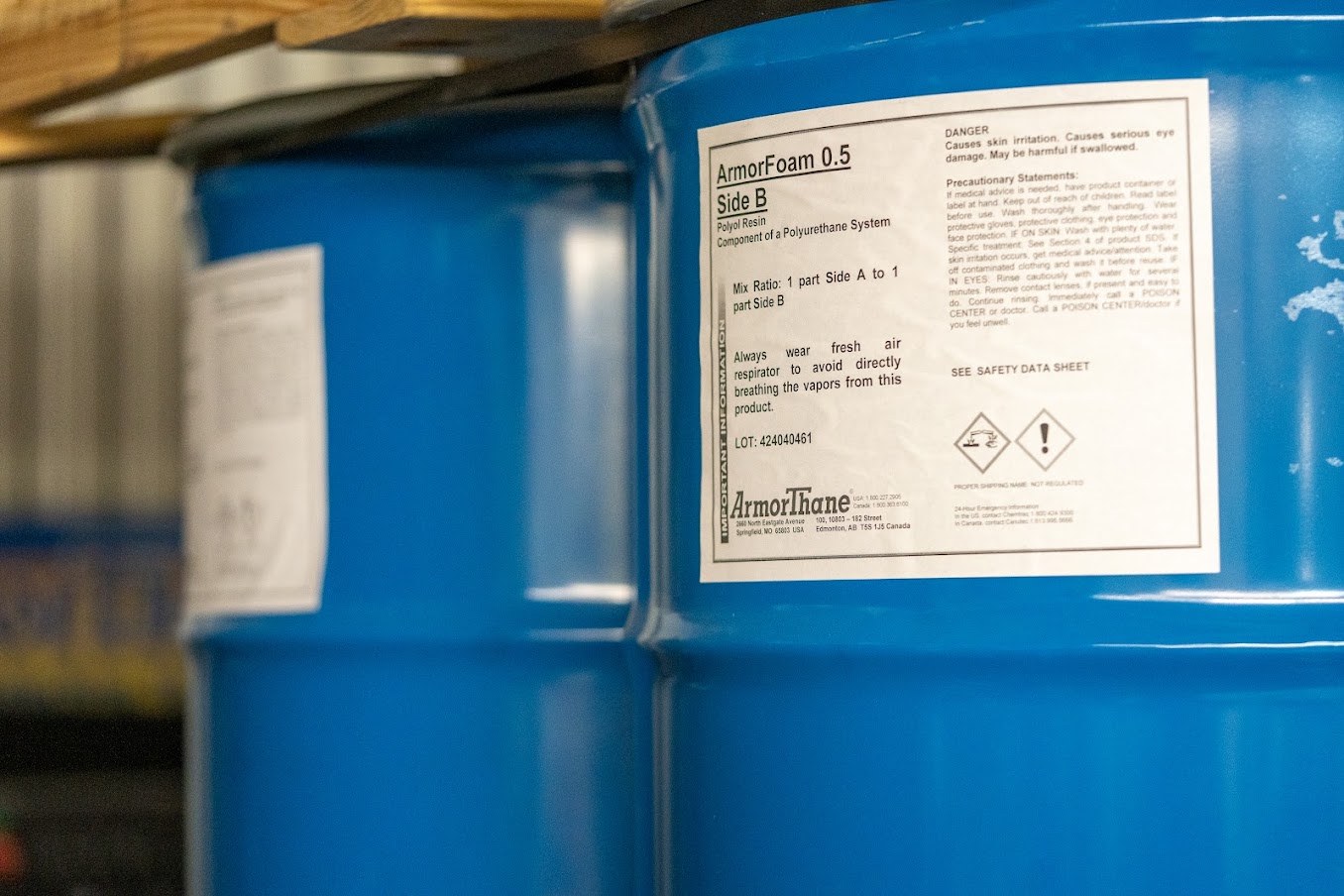
ArmorThane is the one-stop shop for applicators. We make the chemistry, build the equipment, train you hands-on and back you with technical support, with no franchise fees and no royalties. Applicators have come first here since 1989.
- $0franchise fees or royalties
- 35+years in business
- 50+countries with applicators
- 24/7technical support
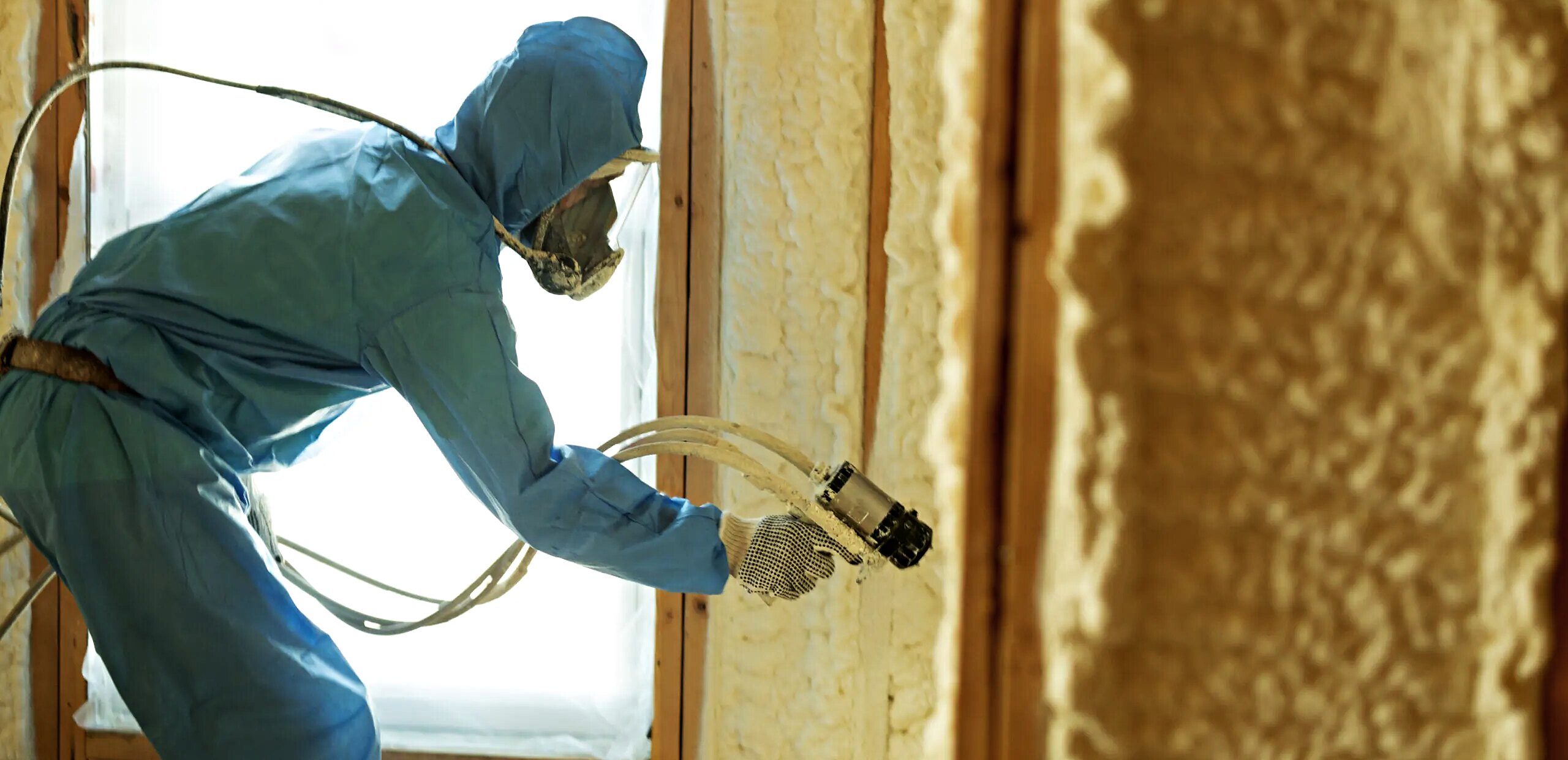
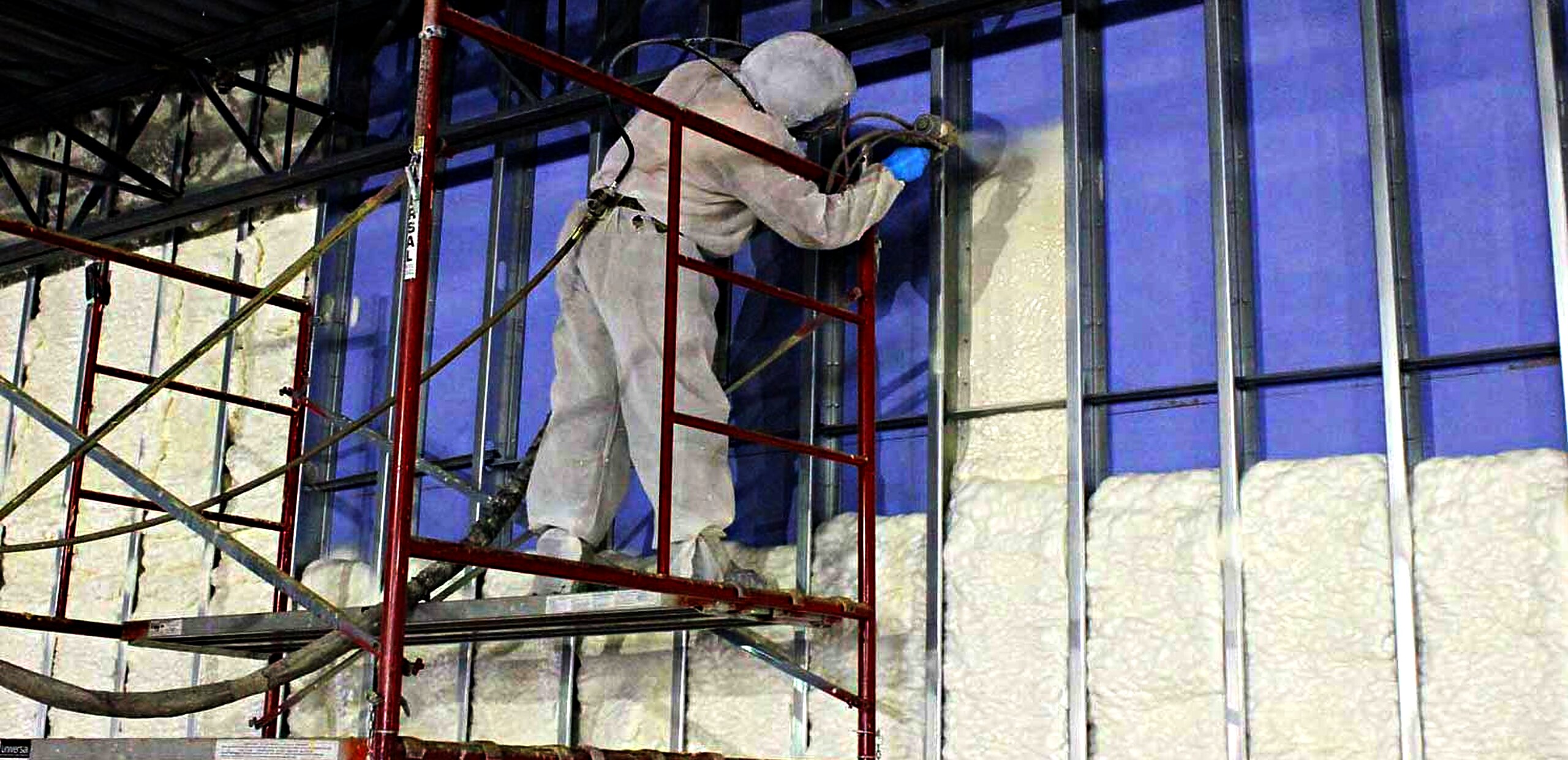
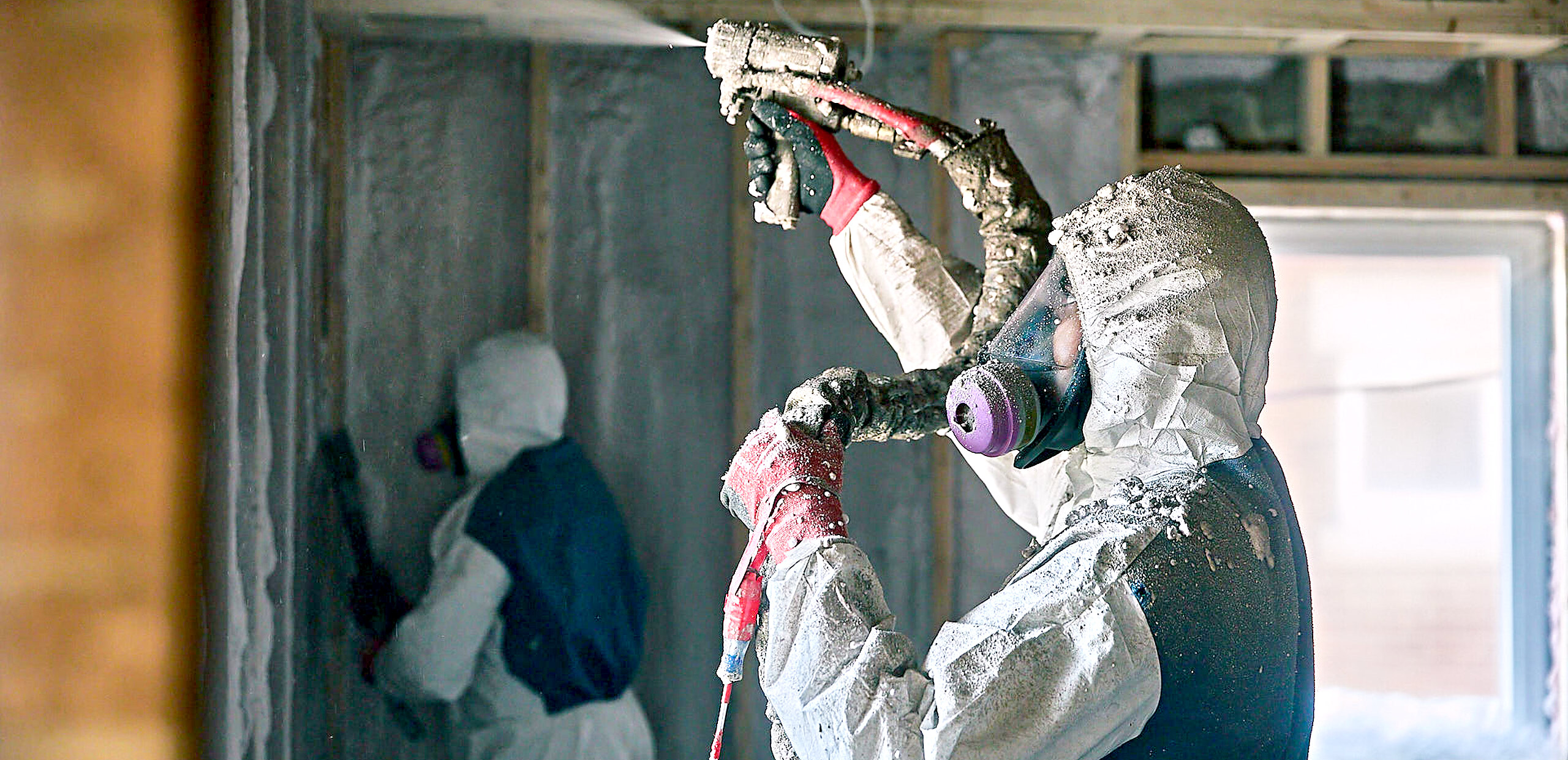
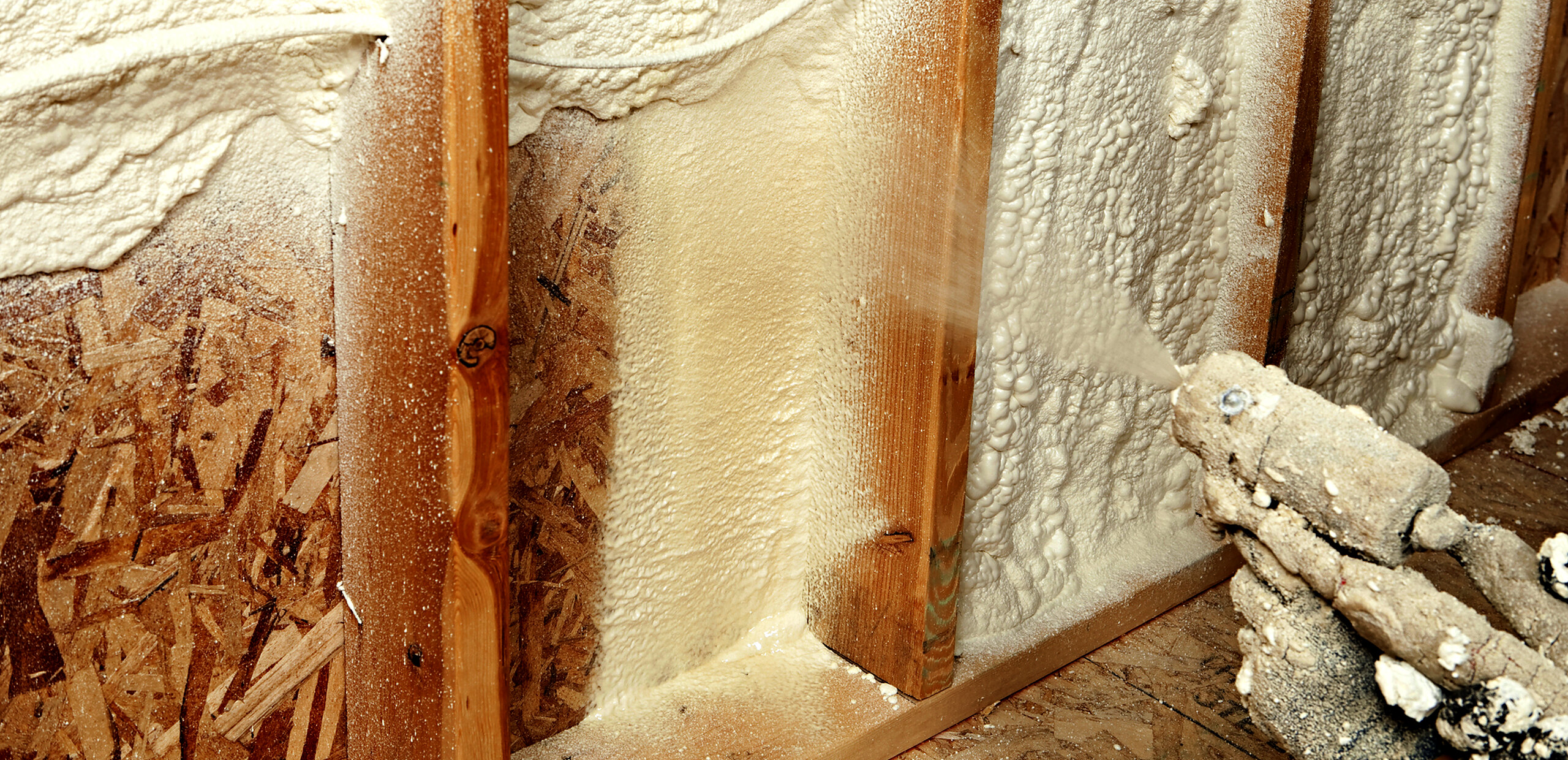
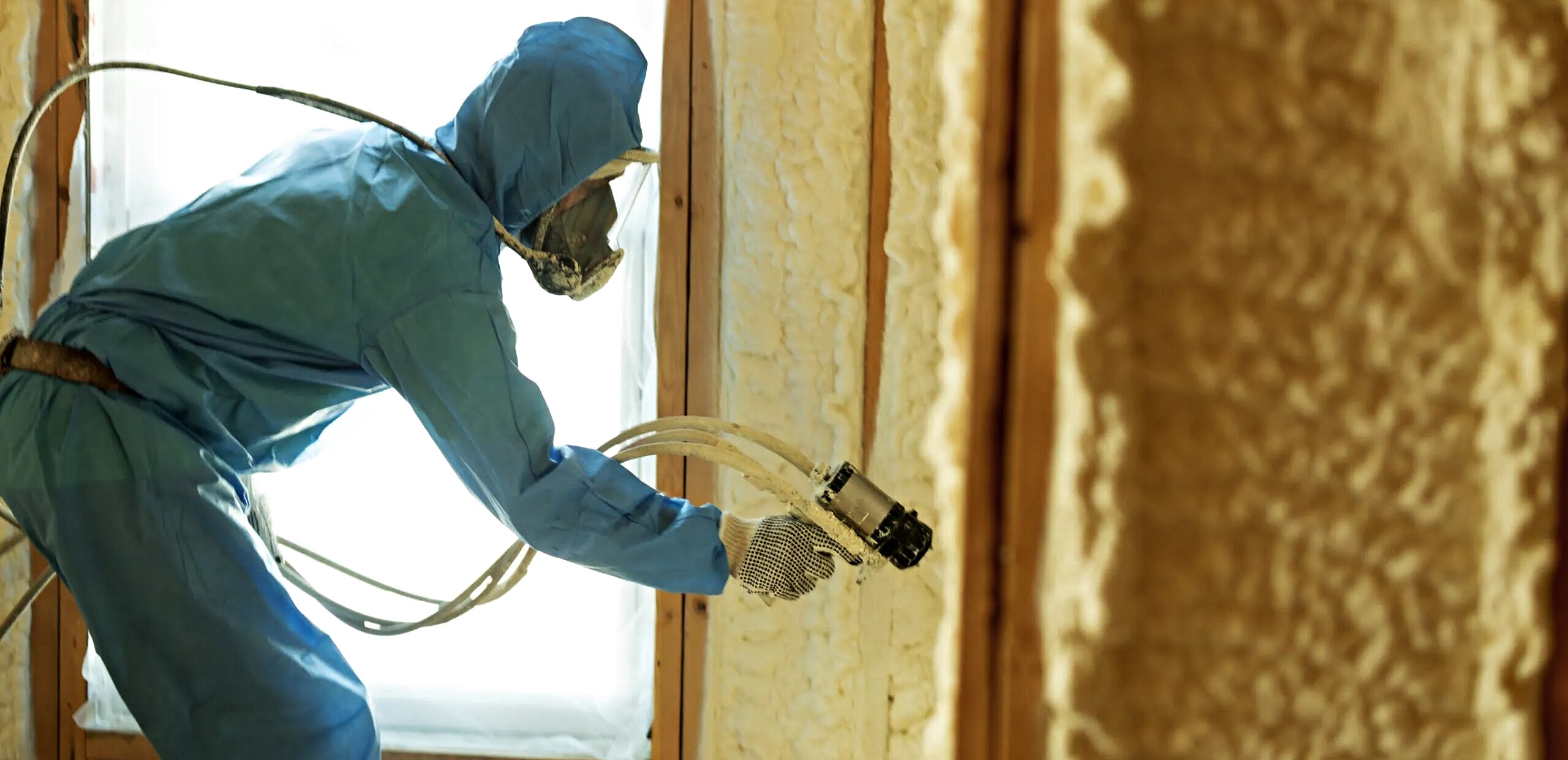
Spray foam is the only insulation that gets manufactured in your house. Two liquids meet at a spray gun, react, and become the insulation, the air barrier and sometimes the vapor retarder. When the crew gets the chemistry and the building right, it's excellent. When they don't, the problems are hard to see, hard to smell out and expensive to undo.
Most spray foam insulation problems come from how it was installed, not from the foam itself: chemicals sprayed off-ratio or too thick (lingering fishy odor, soft or shrinking foam), foam sprayed over wet wood or an unfixed leak (hidden rot), open-cell foam under a roof deck with no way to remove attic moisture (damp sheathing), and missing fire barriers. EPA considers properly cured foam "relatively inert," but it isn't emission-free, and removal runs about $2–$12 per square foot. Diagnose first. Remove only what has actually failed. Jump to the symptom checker.
Search this topic and you'll find two camps. One is horror stories: rotted roofs, houses people couldn't live in, homes that wouldn't sell. The other is installers who say nothing ever goes wrong. Both are wrong in useful ways. The horror stories are real, but they cluster around a handful of installation mistakes. And "nothing goes wrong" ignores what EPA, NIST and Building Science Corporation have actually measured.
We make ArmorFoam open- and closed-cell spray foam in Springfield, Missouri, and we train the applicators who spray it. So we have a reason to defend it, and you should read this knowing that. We've tried to earn your trust the other way: the numbers below come from EPA, NIST, Building Science Corporation, DOE's Pacific Northwest National Laboratory and the building code, and we say plainly where foam is the wrong choice.
- 1The most common spray foam problems
- 2What's wrong with my foam? (symptom checker)
- 3Is spray foam insulation toxic?
- 4Off-gassing: how long, and what the smell means
- 5Does spray foam cause mold?
- 6Does spray foam rot roofs? (risk check)
- 7Selling or buying a house with spray foam
- 8Removal: when, how and what it costs (estimator)
- 9Pros and cons (fit checker)
- 10How to prevent spray foam problems
- 11What we tell our own applicators
- 12Spray foam problems FAQ
The most common spray foam insulation problems
Eleven problems account for nearly every complaint about spray foam: lingering odor, health symptoms after install, soft or uncured foam, shrinkage and gaps, scorched cores, foam over wet wood, hidden leaks, damp attics, mold, missing fire barriers, and trouble at inspection or sale. Most of them are decided on install day, which is good news: they're preventable, and most can be diagnosed.
| Problem | What you notice | Usual cause | How serious | Typical fix |
|---|---|---|---|---|
| Lingering odor | Fishy, ammonia-like smell weeks or months later | Foam that didn't cure right: off-ratio, wrong temperature, too thick, poor ventilation | High if it persists | Installer and manufacturer, core-sample testing, remove bad areas |
| Symptoms indoors | Headaches, irritated eyes or breathing trouble after install | Re-entry before cure and ventilation, or sensitization to isocyanates | High | Leave, ventilate, medical care if needed, independent air-quality check |
| Soft or sticky foam | Foam stays tacky, greasy or crumbly | Off-ratio mix | High | Cut out and re-spray the affected area |
| Shrinkage and gaps | Foam pulls away from studs or rafters; cracks | Off-ratio, passes too thick, cold or dirty surface | Medium | Seal gaps; blower-door test the house |
| Scorched core | Brown or charred center in thick foam | Passes sprayed too thick; heat can't escape | Medium to high | Cut samples; remove scorched sections |
| Foam over wet wood | Nothing, until rot shows up later | Sprayed onto damp sheathing or framing, or over an unfixed leak | High | Expose, dry below 20% moisture, repair, re-insulate |
| Hidden leak | No drip; late stain at a soffit or ceiling | Foam removes the surface where a leak used to show | High | Fix the leak, remove foam locally, repair |
| Damp sealed attic | Humid, musty attic; damp sheathing | Open-cell under the deck with no moisture removal; indoor humidity | Medium to high | Supply air or dehumidify; meter the sheathing |
| Mold | Spots on the foam or on wood nearby | A moisture source: leak, leaky duct, high humidity | Medium to high | Fix the water, clean up, control humidity |
| No fire barrier | Inspector flags exposed foam | Thermal or ignition barrier skipped to save money | Medium (fire safety) | Add drywall or a listed coating |
| Inspection and sale trouble | Buyer, lender or pest company can't see the framing | Foam covers the structure | Medium | Paperwork, moisture readings, core samples |
What's wrong with my spray foam? A symptom checker
Pick the main thing you're noticing and how long ago the foam went in. Timing matters more than anything else: a chemical smell on day two is normal curing, and the same smell in month three isn't. The checker gives the most likely cause, what to do first, who to call, and how likely it is that some foam has to come out.
Diagnose a spray foam problem
A screening tool built from EPA, NIST, Building Science Corporation and code sources. It can't replace someone looking at the foam, but it tells you what to ask for.
- Ventilate, and note when and where the smell is worst.
- Ask the installer and the manufacturer for a core-sample comparison against correctly applied foam from the same system (the method NIST describes).
- Hire an independent indoor-air-quality consultant; ask for testing by a certified lab using a validated chamber method.
- If anyone has breathing problems, get medical attention (EPA).
- Still unresolved? Contact your state consumer protection office or contractor licensing board, and file a report at SaferProducts.gov.
Installer, manufacturer and an independent indoor-air-quality consultant.
Will foam need to come out?Often, for the areas testing shows are bad. Not the whole house by default.
- The house wasn’t ventilated during and after spraying. GreenBuildingAdvisor found missing ventilation fans were a recurring theme in bad foam jobs.
- A sealed attic with no supply air, exhaust or dehumidifier traps odors and moisture. BSC says a means of moisture removal is “necessary” in every unvented attic.
Why we think so: EPA sends odor complaints back to the contractor first. NIST found amine emissions from good foam decay quickly, while a suspected misapplied foam emitted more than 17 chemicals.
How it works: symptom and timing map to the causes documented by EPA (curing, re-entry, off-gassing), NIST (emissions from normal and non-ideal foam), Building Science Corporation and DOE/PNNL (roof moisture), the USDA Forest Products Laboratory (wood decay thresholds) and the IRC (barriers, vapor control). Treat the result as a starting point for a conversation with your installer.
Is spray foam insulation toxic? During install vs. after it cures
During spraying, yes. The isocyanates and amine catalysts in spray foam are respiratory hazards, which is why crews wear respirators and full suits and everyone else leaves the house. Once properly cured, EPA describes the foam as "relatively inert." That isn't the same as emission-free: NIST measured a flame retardant still coming off open-cell foam two years after it was sprayed.
What's in spray foam, and which part matters when
Every two-part spray foam is an A-side and a B-side. The A-side is an isocyanate, usually MDI. The B-side is a proprietary polyol blend that also carries catalysts, flame retardants, blowing agents and surfactants, and it varies from manufacturer to manufacturer.
| Ingredient | What it does | Main concern (EPA unless noted) | When it matters |
|---|---|---|---|
| Isocyanate (MDI), A-side | Reacts to form the polyurethane | Asthma, sensitization, skin, eye and lung irritation. "No recognized safe level" for sensitized people | During spraying; uncured foam; dust from trimming foam before it cures |
| Amine catalysts, B-side | Speed up the reaction | Can be sensitizers and irritants; can cause blurry "halo" vision | First days; much longer if the foam cured badly (NIST) |
| Flame retardants (TCPP and others) | Fire performance | Some halogenated retardants may be persistent or toxic | Slow, steady emission; NIST found TCPP from open-cell foam two years on |
| Blowing agent | Forms the cells (HFO in most closed-cell foam since the 2025 HFC phasedown; water in open-cell) | "May have adverse health effects" | Early days |
| Surfactants | Control cell structure | Some "may be linked to endocrine disruption" | Not quantified |
Who should be most careful
EPA says people with asthma, respiratory allergies, skin conditions or a prior isocyanate sensitization "may want to consider safer alternatives," and it calls out children as a vulnerable group when deciding re-entry. Sensitization is the reason: once someone is sensitized, even low exposures can trigger a reaction. If that describes anyone in your house, a non-foam option or an extra-cautious re-entry plan is a reasonable call. We'd rather lose that job than have it go wrong.
Does spray foam insulation cause cancer?
OSHA says isocyanates "include compounds classified as potential human carcinogens and known to cause cancer in animals." That describes exposure to the chemicals, which is mainly an installer's risk during spraying. We're not aware of evidence tying cured foam in a home to cancer, but the long-term occupant data doesn't exist either: EPA and NIST both say more research on emissions is needed. So the practical answer is to control exposure where it's real: stay out during spraying and until the re-entry time, and never sand, grind or heat foam without protection.
Pets
Same rules as people. The industry's own homeowner guidance talks about the time before "people and animals" may return. Take pets with you, and don't bring birds or small animals back early.
How long to stay out after spray foam
| Product | Typical re-entry guidance | Source |
|---|---|---|
| Professional two-part, high-pressure foam (open- or closed-cell) | "Some manufacturers recommend 24 hours," after the space is ventilated and cleaned | EPA; American Chemistry Council (CPI) |
| Two-part low-pressure kits | Some manufacturers recommend one hour for interior kit jobs | American Chemistry Council (CPI) |
| One-part cans | About 8–24 hours to cure | EPA |
| Your job | Whatever your product's manufacturer states, in writing, for your amount of foam and ventilation | EPA |
Spray foam off-gassing: how long it lasts and what the smell means
From a good job, most of the smell fades in the first few days as the foam finishes curing and the house airs out. NIST's testing for the Consumer Product Safety Commission found amine emissions fall off exponentially, while the flame retardant TCPP kept emitting at a near-constant rate for two years from open-cell foam. A strong fishy odor weeks later isn't normal curing. It usually means foam that didn't cure right.
Odor decoder
| Smell | Timing | Most likely meaning | What to do |
|---|---|---|---|
| Sharp chemical or "new plastic" | First 1–3 days | Normal curing | Stay out for the manufacturer's re-entry time; run exhaust fans |
| Fishy, ammonia or "cat urine" | Lasting weeks or months | Poorly cured foam. Amine catalysts are the usual suspect; NIST found an amine catalyst was the top emission from a suspected misapplied foam | Installer and manufacturer, core-sample comparison, air testing |
| Faint smell only on hot days | Summer, attics and sunny walls | Emissions rise with temperature (NIST) | Ventilate; if it's strong or getting worse, treat it like the row above |
| Musty or earthy | Any time | Mold or damp materials, not the foam itself | Find the moisture (see mold) |
| Acrid or burnt, when cutting or drilling | During work | Heat breaking down foam; EPA lists isocyanates, hydrogen cyanide and carbon monoxide among the byproducts | Stop, ventilate, no hot tools on foam |
Is spray foam still off-gassing years later?
Some of it, yes, even from a good job. That's the TCPP finding: NIST's micro-chamber rates for open-cell foam tested two years after spraying weren't statistically different from fresh foam, and air sampling in NIST's test house suggested occupants "may be exposed to measureable concentrations" two years on. NIST also cautions that its numbers apply to the foams it tested and that closed-cell field foam wasn't part of that phase. What doesn't fit a good job years later is a strong odor. That points back to the cure.
What to do if your foam still smells
Ventilate and keep notes
Run exhaust fans to the outdoors. Write down when the smell is worst: hot afternoons, certain rooms, after rain.
Call the installer first
Ask for the product name, lot numbers, the day's air and surface temperatures, pass thickness and their re-entry guidance. Good crews record all of it.
Then the manufacturer
NIST found that comparing a suspect sample with correctly applied foam from the same system can confirm a bad application. Manufacturers can arrange that.
Get independent air testing
EPA suggests an independent indoor-air-quality consultant and testing by a certified lab using a validated method such as the California CDPH chamber method.
Health first
If anyone has breathing problems, EPA's advice is to seek medical attention right away.
Escalate if you're stuck
EPA and the industry both point to your state consumer protection office or contractor licensing board. You can also file a report at SaferProducts.gov.
EPA's own caution: "Removal may not resolve the problem and may create other problems." Remove foam that's shown to be bad, not foam you're merely suspicious of.
Does spray foam insulation cause mold?
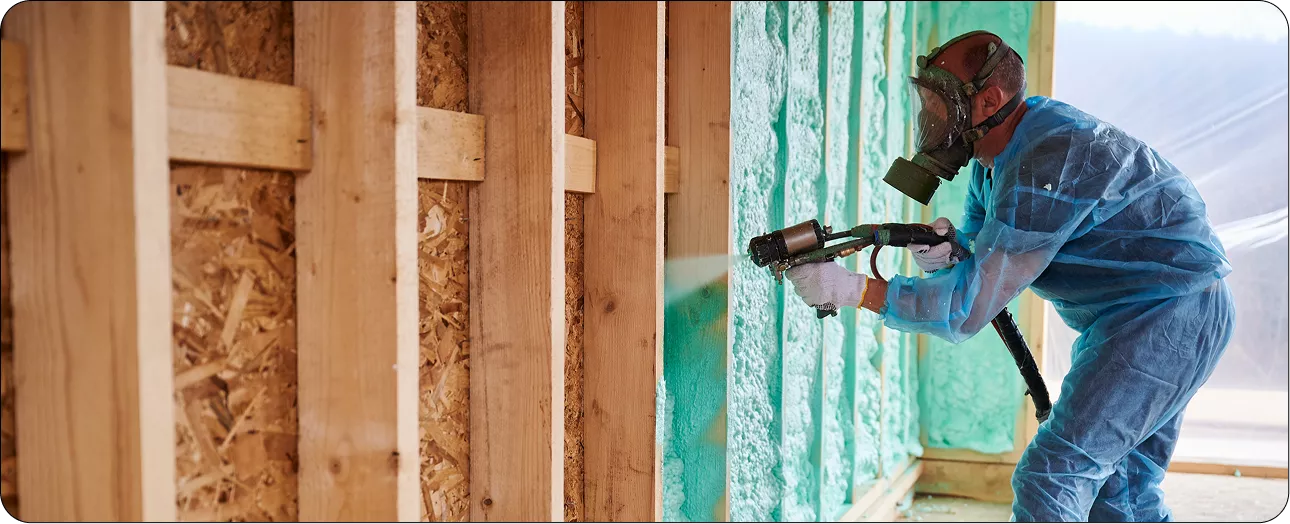
Spray foam doesn't create moisture, and without moisture mold doesn't grow. But foam can hide moisture and slow drying. Mold shows up with spray foam in a few situations: foam sprayed over wet or moldy wood, a leak or duct that keeps wetting one spot, and sealed attics or tight houses where humidity has nowhere to go. EPA's rule covers it: "The key to mold control is moisture control."
| Where mold appears | Why | What fixes it |
|---|---|---|
| Framing or sheathing behind foam, near a roof or plumbing leak | Liquid water, and the foam slows drying | Fix the leak, remove foam locally, dry the wood below 20% moisture, repair |
| Roof sheathing under open-cell foam in a sealed attic | Humid indoor air reaches the cool sheathing; no moisture removal | Supply air or a dehumidifier in the attic; vapor control in cold zones (see roof section) |
| On the foam surface | Dust on the foam plus humidity that stays high | Bring humidity down; check bath-fan and dryer ducts for leaks into the attic; clean per EPA |
| Wood that was foamed while wet | Moisture sealed in at install | Should never happen: framing over 19–20% moisture has to dry before foam goes on |
| Crawl spaces and basements | Ground moisture, drainage, leaks | Fix drainage and water entry first; then insulate |
Is spray foam mold-proof?
No insulation is. You'll see installers claim that "mold cannot grow on spray foam." Mold can grow on dust and debris sitting on any surface, including foam, if the air stays damp. What spray foam does well is stop moist air from leaking into cold framing, which removes one common cause of mold. It can't fix a roof leak, a wet crawl space or a bathroom fan venting into the attic.
What to do about mold with spray foam
- Find the water first. EPA: if you clean up mold but don't fix the water problem, "the mold problem will come back."
- Measure humidity. EPA's target is below 60% relative humidity, ideally 30–50%. A $10–$50 hygrometer tells you.
- Size the cleanup. EPA says an area under about 10 square feet is usually a do-it-yourself job; bigger jobs or lots of water damage call for a professional. Published remediation costs run $1,225–$3,750 (HomeAdvisor, 2026).
- Never foam over mold or wet wood. Clean, dry and fix the source, then insulate.
Crawl spaces are where moisture and foam meet most often. Our crawl space encapsulation guide covers the water side, and the rim joist insulation guide shows how to check whether foam at the rim will stay above the dew point.
Does spray foam rot roofs?
Not by itself. Building Science Corporation opened up 11 in-service foamed roofs and found every sheathing sample "well within the safe range" for moisture; the one full-roof failure it reviewed traced to foam sprayed onto wet OSB. The real risks are narrower: leaks nobody sees, open-cell foam in cold climates without a vapor retarder, and sealed attics with no way to get rid of moisture.
What the field data says about leaks
BSC's 2013 study for DOE also modeled how much rain leakage foamed roofs can dry out. The answer is "a little": a fraction of one percent of the rain that falls on the roof.
| City | Foam under the deck | Leak it can dry (share of rainfall) |
|---|---|---|
| Minneapolis | Closed-cell | 0.6% |
| Seattle | Open-cell | 0.6% |
| Seattle | Closed-cell | 1.0% |
| Miami | Open-cell | 1.5% |
So a foamed roof tolerates small, occasional leaks, but it removes your early warning. In a vented attic a leak shows up as a stain or a drip; under foam, water sits against the sheathing where nobody sees it. Our closed-cell spray foam guide goes deeper on what happens to a leak under closed-cell foam and on the shingle-temperature and warranty questions.
Open-cell under the roof deck: the damp attic problem
This is the documented one. In a 2018 talk for Efficiency Vermont, GreenBuildingAdvisor's editor Martin Holladay collected reports of damp attics under open-cell foam in cold and hot climates, and quoted Oak Ridge National Laboratory researchers concluding that open-cell foam in attics is "risky in all climate zones." Building Science Corporation's position (BSI-116, 2020) is more specific:
- Climate zones 5 and colder: "only high density closed cell spray foam should be used" under the roof deck. Vapor-retarder paint on open-cell has had "limited success."
- Every climate: "Wherever unvented conditioned attics are constructed, a means of moisture removal from the attic is necessary." That means supply air from the HVAC system, balanced exhaust, or a dehumidifier.
- Where the moisture comes from: mostly indoors (showers, cooking, damp basements), not through the shingles, per BSC's Houston study as reported by GreenBuildingAdvisor.
Our take, as a company that sells both foams: under a roof deck in zones 5–8, spray closed-cell. In zones 1–4 open-cell can work, but only with a plan to condition or dehumidify the attic and a blower-door test to prove the seal. If a quote for an open-cell roof deck doesn't mention either, that's the problem to fix before it's sprayed. Our open-cell spray foam guide covers where open-cell is the better foam.
What the code requires under a roof deck
IRC R806.5 sets two rules for unvented attics. In climate zones 5–8, air-impermeable insulation such as spray foam must be a Class II vapor retarder or be covered by one. And where air-permeable insulation (batts, cellulose, open-cell) goes under the foam, the air-impermeable layer needs at least this R-value against the sheathing:
| Climate zone | Minimum R of air-impermeable layer | Closed-cell needed at R-6.5/in |
|---|---|---|
| 1, 2, 3 | R-5 | 0.8 in |
| 4C (Marine) | R-10 | 1.6 in |
| 4A, 4B | R-15 | 2.4 in |
| 5 | R-20 | 3.1 in |
| 6 | R-25 | 3.9 in |
| 7 | R-30 | 4.7 in |
| 8 | R-35 | 5.4 in |
Foaming an existing roof? Do this first
DOE's Building America Solution Center is direct: inspect the roof covering, and "if there is any history or evidence of leakage, correct the leaks and repair the damage before proceeding." If the roof is near the end of its life, consider replacing it first. Measure the sheathing's moisture content before foam goes on, and plan the attic's conditioning. In cold climates, BSC recommends keeping winter indoor humidity below 35% in zones 6–8.
Is my foamed roof deck at risk of moisture damage?
Checks your assembly against IRC R806.5, Building Science Corporation guidance and wood-decay thresholds. Add attic humidity and a sheathing moisture reading if you have them.
Moderate risk A screening score from the checks below, not a hygrothermal model. Code minimums are IRC Table R806.5; your local code governs.
| Check | Status | What it means |
|---|---|---|
| Vapor control (IRC R806.5) | OK | No Class II requirement in zone 4. Don’t add a Class I (polyethylene) layer on the ceiling side; it blocks drying if the roof leaks. |
| Open-cell against the sheathing | Check | Open-cell is air-tight at proper thickness but vapor-open, so humid indoor air can diffuse to the cool sheathing. Workable in zones 1–4 with attic moisture removal; ORNL researchers still called it risky in all zones. |
| Attic moisture removal | Fix | None. BSC: “a means of moisture removal from the attic is necessary” in every unvented attic. |
| Roof covering | OK | Mid-life roof: inspect flashings and penetrations every few years. |
| Leaks | OK | No known leaks. |
| Winter indoor humidity | OK | 40% is within guidance. |
| Attic humidity | Info | Not measured. A $10–$50 hygrometer left in the attic for a week tells you a lot. |
| Sheathing moisture | Info | Not measured. BSC’s method: cut a small core from the foam, meter the wood, patch the hole. |
- Add supply air from the HVAC system (with balanced exhaust) or a dehumidifier. If the foam is covered only by an ignition-barrier coating, ask your code official what air connection to the house is allowed.
Selling or buying a house with spray foam insulation
In the US, we're not aware of any federal lending rule that treats spray foam as a defect. The "you can't sell a house with spray foam" stories mostly come from the UK, where a quarter of the biggest mortgage lenders stopped lending against homes with foam in the roof. What US buyers, inspectors and pest companies worry about is what the foam hides. Good paperwork and a few moisture readings answer most of it.
The UK mortgage story, in one paragraph
A January 2026 House of Commons Library briefing reports that "a quarter of the UK's biggest mortgage providers and all of the equity release lenders it surveyed would not lend against homes with spray foam insulation." The reasons: surveyors "may find it difficult to inspect the condition of individual roofs," and "if installed incorrectly, spray foam insulation may lead to condensation which can affect a roof structure." Much of that foam went directly under tiles and slates in older roofs, an assembly that's rare in American houses. Our closed-cell guide covers the UK modelling and why US roofs differ.
What a home inspector can and can't see
An inspector can check that the foam is firm, free of gaps and odor, covered where code requires it, and that the attic humidity is reasonable. What nobody can see is the sheathing and framing behind it. The fix is the same one Building Science Corporation used in its field study: cut a small core from the foam, read the wood's moisture content with a pin meter, and patch the hole. The USDA Forest Products Laboratory puts the line at about 20% for "a reasonable margin of safety"; serious decay needs wood above roughly 30%.
Documents to keep, or to ask for
- The insulation receipt. FTC rules require installers to give you a contract or receipt showing coverage area, thickness and R-value.
- Product paperwork: product name, technical data sheet, safety data sheet and evaluation report.
- Install date, installer and certification. VTDigger's 2023 investigation found no federal or state certification requirement for US installers; SPFA and the Air Barrier Association of America offer voluntary programs.
- The fire barrier used (drywall, ignition barrier or a listed coating).
- Roof condition and any leak repairs made before the foam went in.
- Blower-door results and how the attic is conditioned or dehumidified.
- How any odor complaint was resolved, in writing.
Why insurers ask about spray foam
Fire, mostly. Nationwide's farm-insurance guidance says plastic spray foam "can also affect the building's loss potential and insurability," that all plastic spray foams "will burn under certain conditions," and that most must be covered with a 15-minute thermal barrier, normally ½-inch drywall. We couldn't find a published US homeowner-insurer policy on spray foam, so ask your agent directly and have the barrier documented.
Termites and pest warranties
In areas the IRC rates "very heavy" for termites, section R318.4 bars foam plastic on the exterior face of, or under, foundation walls below grade (interior basement walls are an exception). Foam over sills and rim joists also blocks the visual inspection pest warranties rely on. Call your pest-control company before foam goes in and ask what inspection gap they need. More detail in our rim joist insulation guide.
Spray foam insulation removal: when it's worth it and what it costs
Removal is slow, messy and expensive. Published 2026 figures run from $2,000–$5,000 for a 1,000 sq ft closed-cell attic to $3–$12 per square foot, before any drywall, mold or re-insulation work. It's worth it for foam that never cured properly, foam hiding rot or an active leak, and foam that has to go for a renovation. It's rarely worth it just because foam makes you nervous.
Remove it, fix it, or leave it
| Situation | Usually | Why |
|---|---|---|
| Persistent odor, testing shows a bad cure | Remove affected areas | Poorly cured foam doesn't improve with time |
| Soft, sticky or crumbly foam | Remove affected areas | Off-ratio foam |
| Rot or an active leak behind foam | Remove locally, repair, re-insulate | You have to reach and dry the wood |
| Damp open-cell attic, sheathing still sound | Fix in place | Add supply air or dehumidification; control indoor humidity; re-test |
| Gaps or shrinkage | Fix in place | Seal gaps; blower-door test |
| Missing thermal or ignition barrier | Fix in place | Add drywall or a listed coating |
| Buyer or lender nervous, foam is sound | Leave it | Document it; core samples and moisture readings |
| Renovating: new wiring, moved walls | Remove where you open up | Plan wiring before foam next time |
How spray foam comes out
Cured polyurethane foam doesn't dissolve. Solvents like acetone only work on fresh, uncured foam; on cured foam they soften the bond at best. So removal is mechanical: cut the bulk out with long foam saws or blades, scrape it off the substrate, then clean up with grinders fitted with vacuum shrouds, or with dry-ice or soft-media blasting. Under a shingled roof deck, roofing nails make every square foot slow. One published estimate puts removal at 2 to 5 days for a typical job.
What will it cost to remove spray foam, and to put it back right?
Removal at the published $2–$12 per sq ft range; drywall, mold and re-insulation at published 2025–2026 rates. Estimates only.
| Line item | Low | Typical | High |
|---|---|---|---|
| Remove closed-cell foam, 1,000 sq ft | $2,000 | $5,000 | $12,000 |
| Re-insulate: closed-cell, 3.0 in (3,000 board ft) | $3,000 | $4,680 | $6,360 |
| Total | $5,000 | $9,680 | $18,360 |
Sheathing and rafter repair isn’t included. BSC puts replacing roof framing, insulation and sheathing on a typical home at $30,000–$50,000, the worst case this estimate leaves out. Shingle nails through the deck slow removal. Published estimates put removal at 2 to 5 days. Get two or three itemized quotes, and ask how dust and fumes will be contained.
Find a certified applicator for a second opinion before you commit to removal.
How we calculated this: removal at $2 (low), $5 (typical) and $12 (high) per square foot of foamed surface, our reading of LA Roof Masters ($2,000–$5,000 for a 1,000 sq ft closed-cell attic, June 2026) and Dropcurb ($3–$12 per sq ft, 2026). Drywall removal $0.50–$2.50 and new drywall $1.50–$3.50 per sq ft (HomeGuide, Sept 2025). Professional mold remediation $1,225–$3,750 (HomeAdvisor, 2026). New foam at the 2026 median bands in our spray foam insulation cost guide, with a $1,000 minimum job charge; batts $1.00–$2.60 per sq ft. UK data (Checkatrade, July 2026: £50–£75 per m² for open-cell, £80–£100 for closed-cell) suggests open-cell costs somewhat less to remove; US sources don't split it, so the estimator doesn't either.
Spray foam insulation pros and cons: the honest version
Spray foam's strengths are real: it air-seals and insulates in one step, closed-cell adds vapor control and packs R-6.5 per inch, and it fills shapes nothing else can. Its weaknesses are real too: cost, chemistry on site, leaks that hide behind it, hard removal, and a result that depends almost entirely on the crew. Which list wins depends on where it's going.
| Factor | Pro | Con |
|---|---|---|
| Air sealing | Insulation and air barrier in one step; ArmorFoam closed-cell passes ASTM E2178 at 1 in | Only as good as the coverage; shrinkage or skipped spots leak |
| R-value per inch | Closed-cell R-6.5 aged (ArmorFoam); open-cell about R-3.7 | Costs more per R than batts or blown insulation |
| Moisture | Closed-cell is a Class II vapor retarder (0.83 perm at 1 in, ArmorFoam) | Hides leaks and slows drying; open-cell roof decks need moisture control |
| Energy savings | ENERGY STAR models about 15% average heating and cooling savings from air sealing plus insulation | Claims of 40–50% describe unusually leaky houses, not the average |
| Health | EPA considers cured foam "relatively inert" | Install-day chemical hazard; sensitized people; slow flame-retardant emissions |
| Fire | Formulated with flame retardants | Still combustible; needs a thermal or ignition barrier |
| Durability | Doesn't settle or sag | Depends on install quality; can't be inspected behind |
| Future work | Closed-cell stiffens walls and roofs | New wiring or plumbing means cutting foam; removal runs $2–$12 per sq ft |
| Pests | Seals the gaps pests use | Pests can chew through it; it hides sills from termite inspection |
Is spray foam the right call for this spot?
Rates closed-cell, open-cell and a non-foam option for one location in your house, with the reasons.
Closed-cell spray foam Good fit
Air barrier, insulation and, above about 1.5 in, a Class II vapor retarder in one layer (BSC). It still needs attic moisture removal and a sound roof.
Open-cell spray foam Avoid
BSC (BSI-116): in zones 5 and colder, only closed-cell should go under the roof deck. IRC R806.5 also requires Class II vapor control there.
Non-foam option Use with care
A vented roof with fluffy insulation, or rigid insulation above the sheathing, avoids the question. Both depend on roof shape and re-roofing plans.
Two places where we'd usually talk you out of foam: a vented attic floor with room to spare, where blown cellulose or fiberglass over an air-sealed ceiling buys R-value for far less, and closed walls in an old house with a moisture history, where the drying the house relies on matters more than the last bit of R-value. For closed walls that do need insulating, our injection foam insulation guide covers the options.
How to prevent spray foam insulation problems: a pre-install checklist
Nearly every failure on this page is preventable before the first pass: fix water first, pick the right foam for the location and climate, get the product and thickness in writing, and hold the crew to the manufacturer's temperature, moisture and lift limits. Then check the work before the drywall goes up.
Fix the water first
Roof, plumbing, gutters, grading, wet crawl spaces. Replace a roof near the end of its life before foaming under it (DOE/PNNL).
Check the wood is dry
Framing and sheathing at or below about 19–20% moisture. Kit makers note foam won't bond to wet surfaces, and moisture in the substrate throws off the chemistry.
Match the foam to the spot
Closed-cell for roof decks in zones 5–8, crawl spaces, basements and rims; open-cell where there's depth and a moisture plan.
Get it in writing
Product, data sheet, safety data sheet, evaluation report, thickness, R-value, fire barrier and the manufacturer's re-occupancy time.
Plan ventilation three ways
During spraying (fans, sealed-off HVAC), after (until the re-entry time), and for the life of the house: mechanical ventilation, plus attic moisture removal for sealed attics.
Hold the limits
Chemical, air and surface temperatures in range, and closed-cell in passes of about 1.5–2 in (ArmorFoam) so heat can escape. Winter job? Read applying spray foam in cold weather.
Inspect before it's covered
Press it: firm, not tacky. Look for gaps at framing and dark cores in thick spots. Check depth. Smell it after the re-entry time. Then a blower-door test.
Keep the paperwork
Your future buyer's inspector will ask for it.
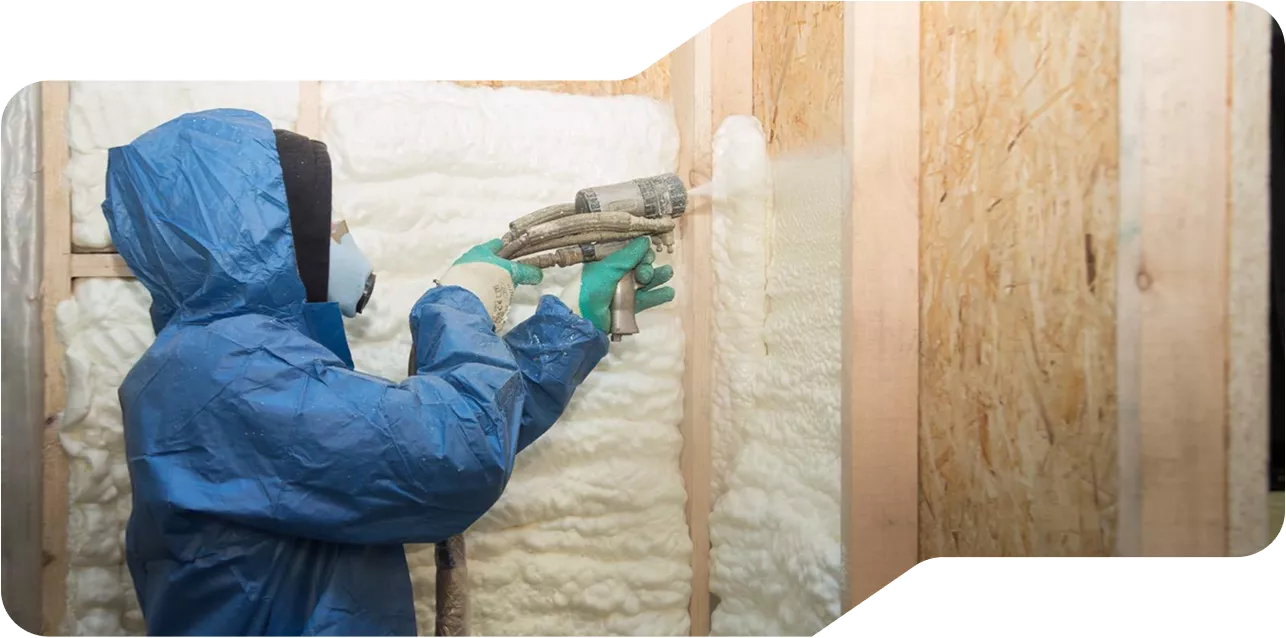
Doing a small job yourself? The same rules apply, plus a kit's own thickness and temperature limits; our DIY spray foam insulation guide walks through them. Pricing a professional job? The spray foam insulation cost guide includes a quote checker that flags missing barriers and unstated thickness.
What we tell our own applicators
We've made polyurethane systems in Springfield, Missouri for more than 35 years, and we sell ArmorFoam through independent certified applicators. Here's the part of our training that matches this page: the foam is only half the product. The other half is ratio, temperature, substrate moisture and pass thickness, decided by the person at the gun. That's where lingering odor, soft foam and shrinkage start, and it's why we train crews on the equipment and the chemistry, not just the sales pitch.
It's also why we'd rather a job not happen than happen wrong. A vented attic floor gets blown insulation. A wet crawl space gets its water fixed before anyone foams it. A roof deck in a cold climate gets closed-cell, not open-cell to save money. If you want a second opinion on a foam job, or a quote from someone who works this way, find a certified applicator below. More on our systems at spray foam insulation and in the spray foam R-value guide.
ArmorFoam closed-cell
Aged R-value, ASTM C518. Air barrier at 1 in (ASTM E2178).
Vapor control at 1 in
Class II vapor retarder (ASTM E96), which is what IRC R806.5 asks for in zones 5–8.
Per pass
Thicker passes trap reaction heat. That's how scorched cores and shrinkage happen.
Spray foam without the callbacks.
Most callbacks trace to ratio, temperature, substrate moisture and pass thickness. We supply ArmorFoam open- and closed-cell systems, matched proportioners and rigs, and training at your location. Not a franchise: no franchise fee and no royalties, with startup packages from $25,000.
Call us: (417) 831-5090 →
Spray foam insulation problems FAQ
What are the most common problems with spray foam insulation?
Lingering odor from foam that didn't cure right, soft or shrinking foam, scorched cores from passes sprayed too thick, foam sprayed over wet wood or unfixed leaks, damp sealed attics under open-cell foam, and missing fire barriers. Most trace to installation rather than the material. The symptom checker matches your symptom and its timing to the likely cause.
Is spray foam insulation toxic after it cures?
EPA describes properly cured spray foam as "relatively inert," but it isn't emission-free: NIST testing for CPSC found the flame retardant TCPP still emitting from open-cell foam two years after spraying. The serious chemical exposure happens during spraying, before the foam cures, and when foam is later heated, sanded or ground.
How long does spray foam off-gas?
From a good job, most odor fades within days, and NIST found amine catalyst emissions decay exponentially. Some flame-retardant emission continues for years at a low, steady rate. A strong fishy smell weeks or months later points to foam that didn't cure properly.
Why does my spray foam smell like fish?
A lasting fish or ammonia smell is the most common complaint in bad foam jobs, usually after foam was sprayed too thick, with chemicals at the wrong temperature, or without ventilation (GreenBuildingAdvisor). Amine catalysts are the usual suspect. Ask the installer and manufacturer for a core-sample comparison and get independent air testing.
How long should you stay out of the house after spray foam insulation?
Follow your product manufacturer's re-occupancy time, in writing. EPA notes some manufacturers recommend 24 hours for professional two-part foam, after the house is ventilated and cleaned, and some low-pressure kits specify one hour. EPA also says the safe time isn't clearly established, so be conservative with children, pets and anyone with asthma.
Does spray foam insulation cause mold?
Not by itself; mold needs moisture. It shows up with spray foam when foam goes over wet wood, a leak or duct keeps wetting one area, or a sealed attic or tight house stays humid. Keep indoor humidity below 60%, ideally 30–50% (EPA), and fix any water source before insulating.
Does spray foam rot roof sheathing?
Not when it's sprayed on dry sheathing under a sound roof with a plan for attic moisture. Building Science Corporation found all 11 in-service foamed roofs it opened within the safe moisture range; the one failure it reviewed was foam sprayed on wet OSB. Risk rises with hidden leaks, open-cell foam in zones 5–8 without vapor control, and attics with no moisture removal.
Why is it hard to sell a house with spray foam insulation?
The problem is mostly in the UK, where a quarter of the biggest lenders stopped lending against homes with roof spray foam because surveyors can't inspect the timbers (House of Commons Library, 2026). We're not aware of a US federal lending rule against it. US buyers mainly want paperwork and proof the framing is dry, which core samples and moisture readings provide.
Why do insurance companies not like spray foam insulation?
Fire is the main concern. All plastic spray foams burn under some conditions, and Nationwide's farm guidance says foam can affect a building's "loss potential and insurability." Most foam must be covered by a thermal barrier such as ½-inch drywall, so document the barrier and ask your agent.
How much does it cost to remove spray foam insulation?
Published 2026 figures run $2,000–$5,000 for a 1,000 sq ft closed-cell attic and $3–$12 per square foot overall. Drywall removal and replacement, mold remediation and re-insulating add to that. The removal estimator totals it for your job.
Can spray foam insulation be removed? Does WD-40 work?
Yes, but only mechanically once it has cured: cutting, scraping, grinding with vacuum shrouds, or dry-ice or media blasting. No solvent fully dissolves cured foam, so acetone or WD-40 will at most loosen residue; acetone works on fresh, uncured foam. Removal creates dust and, if heated, hazardous fumes, so it needs respirators and containment.
Should I remove my spray foam insulation?
Only if it has failed: foam that never cured, foam hiding rot or an active leak, or foam in the way of a renovation. EPA warns that removal "may not resolve the problem and may create other problems." Damp attics, gaps and missing fire barriers can usually be fixed in place.
Does spray foam insulation cause cancer?
OSHA notes that isocyanates include compounds classified as potential human carcinogens and known to cause cancer in animals, an exposure risk mainly for installers during spraying. We're not aware of evidence tying cured foam in homes to cancer, and EPA and NIST both say more emissions research is needed. Stay out during spraying and until the re-entry time.
Is spray foam insulation flammable?
Yes. Cured foam contains flame retardants but will burn when exposed to direct flame (American Chemistry Council), which is why the IRC requires a thermal barrier such as ½-inch drywall between foam and living space. Keep torches, heat guns and welding away from foam.
Written from EPA, NIST and Building Science Corporation research, code text and our own ArmorFoam data sheets. Last updated September 26, 2026.
Methodology and sources
Health and re-entry information is from EPA's archived Safer Choice spray foam pages, OSHA and NIST Technical Note 1921 (2017, prepared for CPSC). Roof moisture data is from Building Science Corporation (BA-1312, BSI-116, BSD-149) and DOE/PNNL's Building America Solution Center; wood thresholds from the USDA Forest Products Laboratory. Removal and repair costs are published 2025–2026 figures; they're thin, so treat the estimator as a range and get quotes. ArmorFoam values are from our technical data sheets. We re-check sources each January.
- U.S. EPA (archived), vacate and safe re-entry time for spray polyurethane foam: archive.epa.gov/epa/saferchoice/vacate-and-safe-re-entry-time-spray-po
- U.S. EPA (archived), potential chemical exposures from spray polyurethane foam: archive.epa.gov/epa/saferchoice/potential-chemical-exposures-spray-pol
- U.S. EPA (archived), health concerns about spray polyurethane foam: archive.epa.gov/epa/saferchoice/health-concerns-about-spray-polyuretha
- U.S. EPA (archived), ventilation guidance for spray polyurethane foam application: archive.epa.gov/epa/saferchoice/ventilation-guidance-spray-polyurethan
- U.S. EPA, a brief guide to mold, moisture and your home: epa.gov/mold/brief-guide-mold-moisture-and-your-home
- U.S. EPA, HFC technology transitions by sector: epa.gov/climate-hfcs-reduction/technology-transitions-hfc-restrictions
- NIST Technical Note 1921, characterization of emissions from spray polyurethane foam, final report to CPSC (Sept. 2017, PDF): nvlpubs.nist.gov/nistpubs/TechnicalNotes/NIST.TN.1921.pdf
- OSHA, isocyanates: osha.gov/isocyanates
- American Chemistry Council CPI, homeowner FAQ on spray foam: spraypolyurethane.org/homeowners/frequently-asked-questions/
- American Chemistry Council CPI, what to expect (re-occupancy): spraypolyurethane.org/homeowners/what-to-expect/
- Building Science Corporation BA-1312, spray foam under plywood and OSB roof sheathing (2013): buildingscience.com/documents/bareports/ba-1312-application-of-spray-f
- Building Science Corporation BSI-116, interior spray foam (2020): buildingscience.com/documents/building-science-insights-newsletters/bs
- Building Science Corporation BSD-149, unvented roof assemblies for all climates: buildingscience.com/documents/digests/bsd-149-unvented-roof-assemblies
- DOE/PNNL Building America Solution Center, below-deck spray foam for existing roofs: basc.pnnl.gov/resource-guides/below-deck-spray-foam-insulation-existin
- Holladay, Why are attics insulated with open-cell spray foam so damp? Efficiency Vermont (Feb. 2018, PDF): efficiencyvermont.com/Media/Default/bbd/2018/docs/presentations/effici
- GreenBuildingAdvisor, does open-cell spray foam really rot roofs?: greenbuildingadvisor.com/article/does-open-cell-spray-foam-really-rot-
- GreenBuildingAdvisor, spray foam jobs with lingering odor problems: greenbuildingadvisor.com/article/spray-foam-jobs-with-lingering-odor-p
- USDA Forest Products Laboratory, Wood Handbook ch. 14 (2021, PDF): fpl.fs.usda.gov/documnts/fplgtr/fplgtr282/chapter_14_fpl_gtr282.pdf
- UpCodes, unvented attic condensation-control table (IBC 1202.3; same values as IRC Table R806.5): up.codes/s/unvented-attic-and-unvented-enclosed-rafter-assemblies
- UpCodes, IRC R318.4 foam plastic protection (termites): up.codes/s/foam-plastic-protection
- Penn State PHRC, IRC spray foam thermal and ignition barriers (PDF): phrc.psu.edu/assets/docs/Webinars/2009IRCSprayFoamThermalBarriersIgnit
- ENERGY STAR, seal and insulate savings methodology: energystar.gov/saveathome/seal_insulate/methodology
- House of Commons Library CBP-10658, spray foam insulation and mortgages (Jan. 2026): commonslibrary.parliament.uk/research-briefings/cbp-10658/
- Nationwide, plastic spray foam insulation risks (agribusiness): nationwide.com/business/agribusiness/safety-risk-management/resource-l
- VTDigger, devastating risks of spray foam insulation (May 2023): vtdigger.org/2023/05/22/i-wanted-to-cry-devastating-risks-of-spray-foa
- Bird Family Insulation, why we stopped spraying attics with foam: birdinsulation.com/why-we-stopped-spraying-attics-with-foam-insulation
- LA Roof Masters, insulation removal cost (June 2026): laroofmasters.com/insulation-removal-cost/
- Dropcurb, insulation removal cost (2026): dropcurb.com/blog/insulation-removal-cost
- Checkatrade (UK), cost of removing roof foam insulation (July 2026): checkatrade.com/blog/cost-guides/cost-removing-roof-foam-insulation/
- HomeAdvisor, attic insulation removal and mold remediation cost (June 2026): homeadvisor.com/cost/insulation/remove-insulation/
- HomeGuide, drywall installation and removal cost (Sept. 2025): homeguide.com/costs/drywall-installation-cost
- Krakenbond, how to remove spray foam insulation: krakenbond.net/blogs/insulation/how-to-remove-spray-foam-insulation
- ArmorThane, closed-cell spray foam guide: armorthane.com/closed-cell-spray-foam/
- ArmorThane, ArmorFoam 0.5 open-cell spray foam: armorthane.com/products/armorfoam-products/open-cell-spray-foam/
- ArmorThane, open-cell spray foam guide: armorthane.com/knowledge-center/open-cell-spray-foam-guide/
Start your coatings business with ArmorThane.
Tell us what you want to spray and where you are. An ArmorThane specialist will walk you through the equipment, chemicals, training and startup cost for the work you want to do.
- Equipment package matched to your applications
- Hands-on training and applicator certification
- Technical support once you are spraying
Worried about a foam job, or planning one? Talk to a certified applicator.
Tell us what you're seeing, or what you're planning to insulate. We'll connect you with an ArmorThane-certified spray foam applicator who can look at existing foam, or quote a new job with foam type, thickness, R-value and fire barrier in writing.
- Second opinions on odor, gaps or damp attics
- Roof decks, walls, crawl spaces and rim joists
- Thickness, R-value and barrier spelled out on the quote
- Contractors: ask about ArmorFoam, rigs and training