Spray Foam Insulation Kit: DIY or Pro?
What two-part kits really cover and cost, what their own evaluation reports allow, the PPE and ventilation they call for, and a calculator that shows when hiring an applicator is cheaper. From the people who make ArmorFoam.
Spray foam for a living.
ArmorThane is the one-stop shop for applicators. We make the chemistry, build the equipment, train you hands-on and back you with technical support, with no franchise fees and no royalties. Applicators have come first here since 1989.
- $0franchise fees or royalties
- 35+years in business
- 50+countries with applicators
- 24/7technical support
Two-part spray foam insulation kits are real insulation, not the hardware-store can. They're also priced so close to what a contractor charges that the real question isn't whether you can do it. It's whether your job is small enough that you should.
Yes, you can spray foam insulation yourself with a two-component kit, and for small jobs (rim joists, a van, a small shed, sealing a crawl-space perimeter) it's often the right call. Closed-cell kits cost $1.22–$1.95 per board foot for the foam alone, about what a pro charges installed, and the two kit evaluation reports we read are written around 2 inches of foam. At 2 inches, kits stop beating a pro's price at roughly 275–300 sq ft by our math. Bigger or thicker than that, hire an applicator. Price your job or check whether it's a DIY job.
Most of what ranks for this topic is a store page. Useful once you've decided. What those pages leave out: the number on the box isn't always the yield, cold tanks can lose 30% of it, the kit's own evaluation report caps thickness and says who's supposed to spray it, and the mask a lot of people grab won't stop isocyanate vapor.
We make ArmorFoam open- and closed-cell spray foam in Springfield, Missouri, and we build the rigs our applicators spray it with. So this page runs the numbers both ways. Where a kit wins, we'll say so.
- 1Can you spray foam insulation yourself?
- 2Kits compared: price per board foot
- 3How much a kit covers (calculator)
- 4DIY vs. pro cost (calculator)
- 5What kits are rated for: thickness, fire and code
- 6Good DIY jobs and ones to hire out (checker)
- 7Safety: respirator, ventilation, re-entry
- 8How to use a kit, step by step (planner)
- 9Common DIY mistakes
- 10Hire an applicator, or become one
- 11DIY spray foam FAQ
Can you spray foam insulation yourself?
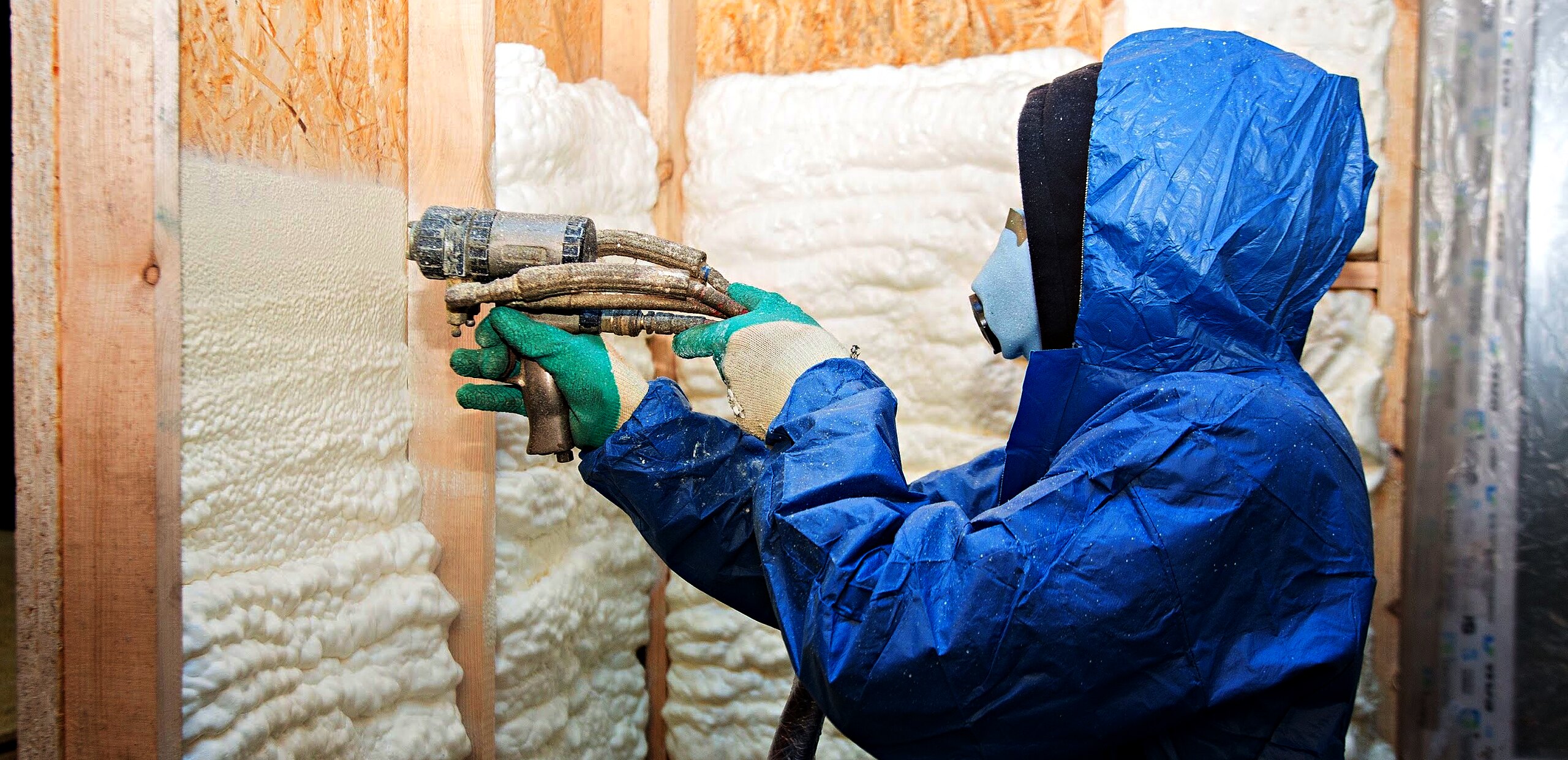
Yes. Two-component disposable kits are sold to homeowners, and they spray genuine closed-cell or open-cell insulation. What you give up compared with a pro is heat, pressure and yield. Kit foam sprays at under 250 psi (Tiger Foam) from tanks you warm up yourself beforehand; a pro rig heats both sides, typically to 120–140°F, and sprays at 1,000 psi or more. That's the whole trade-off in two sentences. A spray foam insulation kit is a two-part system meant for small, well-ventilated jobs; before buying a spray foam insulation kit, read the safety section below.
Four ways to "spray foam it yourself"
| Option | What it is | Yield | Cost per board foot | Good for |
|---|---|---|---|---|
| One-part cans | Moisture-cured foam sealant in 12–24 oz cans | ≈20 bf per can, ≈R-5.7/in. | ≈$0.75–$1.20 (not comparable) | Gaps and cracks, roughly ¼ in. to 3 in. |
| Two-part disposable kits | Pressurized A and B cylinders, hose, gun, mixing nozzles | 180–630 bf closed-cell; 1,350–1,550 bf open-cell | $1.22–$1.95 closed; $0.55–$0.58 open (material) | Rim joists, vans, small sheds, patches |
| Refillable low-pressure systems | Refilled tanks pushed by nitrogen, 17–120 gal; deposit and mandatory training | Not published | Not published | People doing many small jobs |
| High-pressure rig (a pro) | Heated plural-component proportioner, heated hose, 55-gal sets | ≈5,000 bf closed-cell or ≈17,000 bf open-cell per ArmorFoam set | $1.00–$2.12 closed; $0.44–$0.73 open (installed) | Whole houses, attics, metal buildings |
What's in a two-part kit
Two pressurized cylinders: an A side (isocyanate) and a B side (polyol resin). A hose set, a dispensing gun and a bag of static mixing nozzles. The two sides meet in the nozzle, react and rise. A Froth-Pak kit, for example, ships with 8 cone and 4 fan nozzles. Stop spraying for more than about 30 seconds and the foam starts setting inside the nozzle, so you swap it; DuPont, HandiFoam and Tiger Foam all say the same.
Canned foam isn't a kit
A hardware-store can is one-component foam that cures by pulling moisture from the air. The American Chemistry Council's spray foam site pitches it at small jobs such as sealing gaps and crevices, and our closed-cell guide puts it at around R-5.7 per inch and roughly 20 board feet a can. Great around a window frame. Not a way to insulate a wall. The U.S. Department of Energy draws the same line: small pressurized cans for holes and cracks, while most liquid foam "requires special equipment and certification."
Refillable kits: the middle option
Between disposable kits and a rig sit refillable low-pressure systems. Spray Foam Systems, for one, offers 17-, 27-, 60- and 120-gallon versions. The terms tell you who they're for: a refundable deposit on the tanks, mandatory training by video call or on site, nitrogen you source locally, and either an auto-calibrator that holds the 1:1 ratio or a manual setup where you weigh material to check the balance. No prices or yields are published, so we can't compare them per board foot. They make sense if you have a string of van builds or small jobs ahead, not a single basement.
Spray foam insulation kits compared: price per board foot
Closed-cell kits ran $1.22–$1.95 per rated board foot in September 2026 listings, and open-cell kits about $0.55–$0.58. Bigger kits are cheaper per board foot. A board foot is 1 sq ft at 1 in. thick, so a 600-board-foot kit covers about 300 sq ft at 2 in. before any waste. Click a column to sort.
| Kit | Type | Rated yield (bf) | Price | $ per bf | R per inch | Fire (ASTM E84) |
|---|---|---|---|---|---|---|
| HandiFoam Quick Cure HFO 605 | Closed | 605 | $739 | $1.22 | 6.6 initial, ≈6.1 aged | Class A |
| Foam It Green 602* | Closed | 602 | ≈$787 | $1.31 | – | – |
| Tiger Foam TF600FR | Closed | 529 (theoretical) | $729 | $1.38 | 6.1 (ESR-3183) | Class 1 |
| Froth-Pak 630 (15-ft hose) | Closed | 630 | $919 | $1.46 | 6.2 (ESR-3228) | Class A to 2 in. |
| Tiger Foam TF200FR | Closed | 180 (theoretical) | $325 | $1.81 | 6.1 (ESR-3183) | Class 1 |
| Foam It Green 202* | Closed | 202 | ≈$377 | $1.87 | – | – |
| Froth-Pak 200 (9-ft hose) | Closed | 200 | $389 | $1.95 | 6.2 (ESR-3228) | Class A to 2 in. |
| Tiger Foam TF1350 | Open | 1,350 | $749 | $0.55 | 3.6 (Tiger Foam) | Class 2 at 4 in. |
| HandiFoam Low Density HFO 1550 | Open | 1,550 | $899 | $0.58 | See TDS | Class 2 at 4 in. |
The number on the box isn't always the yield
Froth-Pak and HandiFoam name their kits after the rated yield. Tiger Foam's product pages say the TF600FR "theoretically yields 529 board feet" and the TF200FR 180. Neither is a bad deal at $1.38 and $1.81 per board foot. You just need to compare by rated board feet, not the model number. And every rated yield is a best case: HandiFoam's listing calls it coverage "under ideal lab conditions."
Closed-cell kits: close to a pro's installed price
A professional's installed closed-cell price runs about $1.00–$2.12 per board foot in our 2026 median band. The kit's $1.22–$1.95 is material only, before waste, PPE and your Saturday. Kits win on small jobs because contractors carry minimum charges, often $1,000–$2,000 (HomeGuide), not because the foam is cheaper. Our spray foam insulation cost guide shows how pros price.
Open-cell kits save you almost nothing
Open-cell kits cost $0.55–$0.58 per rated board foot. Pros charge about $0.44–$0.73 installed. Add a first-timer's waste and the kit costs more than the job. Open-cell kits are also E84 Class 2 (flame spread 50 on Tiger Foam's sheet), so they always need covering. Our open-cell spray foam guide says whole-cavity open-cell belongs with a contractor, and the numbers agree.
How much does a spray foam kit cover? Froth-Pak coverage calculator
Divide the kit's board feet by your thickness in inches. A Froth-Pak 200 covers about 200 sq ft at 1 in. and 100 sq ft at 2 in. That's rated yield, though. Allow 25% waste on a first job and the 200 covers about 80 sq ft at 2 in., and the Froth-Pak 630 about 250. Cold tanks shrink it further.
How many kits, what they cover, and the R-value you get
Pick a kit, enter the area and thickness, and be honest about the waste. Tank temperature matters more than most people think.
You need 375 board feet: 150 sq ft x 2 in. x 1.25 for waste. The Froth-Pak 200 is rated at 200 bf. That’s $778 in kits, or $5.19 per sq ft, $1.95 per rated board foot. Plan on 1 pass (DuPont: up to 2 in. in one pass). Rated yields are lab numbers, so treat the kit count as a floor.
How we calculated this: board feet needed = area x thickness x (1 + waste); kits = board feet needed ÷ (rated yield x temperature factor), rounded up. Temperature factors: 1.00 at 75–85°F; 0.85 at 60–74°F (our assumption; no maker publishes one); 0.70 below 60°F, from Tiger Foam's "you can lose 30% of the yield"; below 55°F the foam won't expand. R-value uses each kit's rated R per inch (open-cell: a generic R-3.7).
Froth-Pak coverage chart, and the other kits
Square feet covered at common thicknesses. The first number is rated yield; the second allows 25% waste.
| Kit (rated bf) | 1 in. | 1.5 in. | 2 in. | 3 in. |
|---|---|---|---|---|
| Froth-Pak 200 (200) | 200 / 160 | 133 / 107 | 100 / 80 | 67 / 53 |
| Froth-Pak 630 (630) | 630 / 504 | 420 / 336 | 315 / 252 | 210 / 168 |
| HandiFoam QC HFO 605 (605) | 605 / 484 | 403 / 323 | 303 / 242 | 202 / 161 |
| Tiger Foam TF600FR (529) | 529 / 423 | 353 / 282 | 265 / 212 | 176 / 141 |
| Tiger Foam TF200FR (180) | 180 / 144 | 120 / 96 | 90 / 72 | 60 / 48 |
Temperature is the hidden yield killer
Kit makers want the chemical at 75–85°F (Tiger Foam, HandiFoam); DuPont says 75°F or warmer for Froth-Pak, with the room and surfaces at 65°F or more. Tiger Foam's estimating guide is blunt about what happens otherwise: a TF600 below 60°F "can lose 30% of the yield," and below 55°F the foam "doesn't expand and will run." It also points out that tanks sitting on the floor of a 68–70°F house may only reach about 61°F. Warm them one to two days ahead, off the floor. In winter, read spraying foam in cold weather first.
Is DIY spray foam cheaper? Kit vs. pro cost calculator
On small jobs, yes, because a contractor's minimum charge is bigger than the job. At 2 in. of closed-cell, kits stop beating a typical pro price at around 275–300 sq ft by our math, or about 525 sq ft at 1 in. Past that, a pro usually costs the same or less, and brings the rig, the barrier and a warranty.
What kits cost for your job, and what a pro would charge
Picks the cheapest single-brand kit combination from the table above, adds PPE, and compares it with the 2026 installed band and your contractor's minimum.
DIY saves real money on this one Kits: 375 bf with 25% waste, cheapest plan 1 x Tiger Foam TF600FR ($729) plus 1 PPE set at $41.95. Pro: 300 bf at $1.00–$2.12 per board foot installed, never below your $1,000 minimum. At 2 in., kits stop beating the selected pro price at about 275 sq ft. Not included: drywall or ignition barrier, fans, extra nozzles, your time. Our estimate, not a quote.
| Brand | Cheapest kit plan | Rated yield | Kits |
|---|---|---|---|
| HandiFoam | 1 x HandiFoam Quick Cure HFO 605 | 605 bf | $739 |
| Froth-Pak | 2 x Froth-Pak 200 | 400 bf | $778 |
| Tiger Foam | 1 x Tiger Foam TF600FR | 529 bf | $729 |
How we calculated this: kit board feet = area x thickness x (1 + waste), covered by the cheapest combination of one brand's kits. Pro board feet = area x thickness (installed prices already include the contractor's waste), priced at $1.00 / $1.56 / $2.12 per board foot for closed-cell and $0.44 / $0.59 / $0.73 for open-cell, and never below your minimum. Break-even is the first area, in 25 sq ft steps, where kits cost as much as the selected pro level.
Worked examples
| Job | Foam | Board feet (25% waste) | Cheapest kits | DIY with PPE | Pro (band, $1,000 min.) | Verdict |
|---|---|---|---|---|---|---|
| Rim joists, 30 x 40 house (≈120 sq ft) | Closed 2 in. | 300 | 2 x Tiger Foam TF200FR ($650) | $692 | $1,000 minimum | DIY |
| Van walls and roof (≈250 sq ft) | Closed 1.5 in. | 469 | 1 x Tiger Foam TF600FR ($729) | $771 | $1,000 minimum | DIY |
| Shed walls (300 sq ft) | Closed 2 in. | 750 | Froth-Pak 630 + 200 ($1,308) | $1,350 | $1,000–$1,272 | Pro, narrowly |
| Crawl space walls (500 sq ft) | Closed 2 in. | 1,250 | 2 x Froth-Pak 630 ($1,838) | $1,880 | $1,000–$2,120 | Pro, usually |
| Attic roof deck (1,000 sq ft) | Closed 2 in. | 2,500 | 5 x Tiger Foam TF600FR ($3,645) | $3,687 | $2,000–$4,240 | Pro |
| Interior walls (400 sq ft) | Open 3.5 in. | 1,750 | 2 x Tiger Foam TF1350 ($1,498) | $1,540 | $1,000–$1,022 | Pro |
When a kit still makes sense at a higher price
Money isn't the only test. A kit lets you work on your own schedule, one bay at a time, in a van or shed that a crew may not want to mobilize for; our closed-cell guide marks van conversions "hard to source" from pros. It also suits staged remodels, where only one wall is open this month. If you're paying a little more for control over when and where, that's a fair trade. Just don't let it push you past 2 in. or into a space you can't ventilate.
Costs the kit price leaves out
- PPE: a retail foam safety kit (respirator, hooded coverall, goggles, two pairs of gloves) listed at $41.95. One per person.
- Covering the foam: drywall in living space, or an ignition barrier in attics and crawl spaces. More below.
- Ventilation: enough fan capacity for 10 air changes an hour. The spray-day planner sizes it.
- Waste you didn't plan for: cold tanks, practice shots, nozzles that set up.
- Mistakes: cured foam only comes off mechanically (Tiger Foam, HandiFoam). Overspray on a window is yours to scrape.
- Your time, and no workmanship warranty.
What DIY spray foam kits are rated for: thickness, fire and code
Less than most people assume. The two kit evaluation reports we read, Froth-Pak's ICC-ES ESR-3228 and Tiger Foam's ESR-3183, are written around 2 inches of foam, which is about R-12. Both also say the foam must be applied by installers the maker certifies or approves. If your job gets inspected, that sentence matters.
| What the report says | Froth-Pak (ESR-3228, Jan. 2026) | Tiger Foam E-84 (ESR-3183, July 2026) |
|---|---|---|
| Density | 1.75 pcf | 2.0 pcf |
| R-value | 6.2 at 1 in.; 12 at 2 in. | 6.1 per inch |
| Air barrier ("air-impermeable") at | ½ in. | 1 in. (Class 1); ¾ in. (Fast Rise HFO) |
| Thickness | Sprayed "to a maximum 2-inch" thickness | ½–2 in. per pass, 15 minutes between passes; 2 in. total in wall, floor or ceiling cavities |
| Rim joists and sill plates, uncovered | Up to 2 in. | Up to 2 in. |
| Attics and crawl spaces without a prescriptive ignition barrier | Up to 3½ in. under DC 315 intumescent coating (20 wet mils) | Up to 2 in. under No-Burn Plus XD coating |
| Who applies it | "Installers certified by DuPont… or by the Spray Polyurethane Foam Alliance" | "Installers approved by Commercial Thermal Solutions, Inc." |
| Storage | 60–120°F | 50–120°F; 12–24 months shelf life |
2 inches is about R-12
At R-6.1 to R-6.2 per inch, 2 in. of kit foam gets you about R-12. The 2021 IECC asks for R-13 in a wood-frame wall even in climate zones 1–2, R-20 (or R-13 plus R-5 continuous) in zone 3, and R-30 or an equivalent in zones 4–8, per DOE/PNNL. So on a project that has to meet the energy code, kit foam alone won't make a code-minimum wall anywhere. It's an excellent air seal, and a good first layer under a batt where the cavity has room.
Who the reports say should spray it
ESR-3228 §5.3 says Froth-Pak "must be applied by installers certified by DuPont de Nemours, Inc. or by the Spray Polyurethane Foam Alliance (SPFA)." ESR-3183 §5.2 says Tiger Foam "must be applied by installers approved by" its maker, and Tiger Foam's own health and safety page calls its products "for professional use only." That doesn't stop you spraying a kit in your own basement. It means an inspector who relies on the report to approve the foam may not accept a homeowner install. Ask your building department before you spray, not after.
Covering it: thermal and ignition barriers
- Living space: foam must sit behind a thermal barrier, normally ½ in. gypsum board (IRC R316.4; R303.4 in the 2024 IRC).
- Attics and crawl spaces entered only for service: an ignition barrier such as 1½ in. mineral fiber, ¼ in. wood structural panel, ⅜ in. particleboard or gypsum board, ¼ in. hardboard or 0.016 in. steel (IRC R316.5.3 and R316.5.4), or the coating listed in the foam's report.
- Rim joists and sill plates: the IRC lets foam stay exposed up to 3¼ in. if it's 0.5–2.0 pcf with a flame-spread index of 25 or less and smoke-developed index of 450 or less (R316.5.11). Both kit reports cap it at 2 in. Our rim joist insulation guide covers the details.
- Open-cell kits: Class 2 at 4 in. (flame spread 50) misses the rim exemption's limit of 25, so plan to cover them everywhere.
Not every kit foam is a vapor retarder
People often count on closed-cell foam to double as the vapor retarder on a rim joist or basement wall. Check the perm rating at your thickness before you do. The IRC calls 0.1–1.0 perm a Class II vapor retarder. Tiger Foam's Fast Rise HFO measures between 1 and 10 perms at 1½ in., which ESR-3183 treats as Class III. HandiFoam's listing gives 1.6 perms at 1 in. Froth-Pak's report doesn't state one. For comparison, ArmorFoam closed-cell measures 0.83 perm at 1 in. None of that is a problem on its own; it just means "closed-cell" and "vapor retarder" aren't automatically the same thing with a kit.
Good DIY spray foam jobs, and ones to hire out
Kits suit small, reachable, closed-cell jobs you can ventilate: rim joists, a van, a small shed or shop wall, sealing a crawl-space perimeter, patching around penetrations. Hire out anything big, overhead, enclosed or thicker than 2 inches. That means attic roof decks, whole-house walls, closed walls and most metal buildings.
Can I spray foam this myself?
Answer seven questions. You get a verdict plus the size, code, safety and temperature issues specific to your job.
Kit-sized job
- R-12 takes about 2 in. of kit foam at R-6.2 per inch.
- About 290 board feet with 25% waste: one 600-class kit or less.
Can usually stay exposed
- IRC R316.5.11 (2024: R303.5.11) lets foam at the rim stay uncovered up to 3¼ in. if it meets density and flame/smoke limits. Froth-Pak and Tiger Foam allow 2 in. at sill plates and band joists in their reports.
- Open-cell kits (E84 Class 2) don’t meet the flame-spread limit for this exemption. See our rim joist insulation guide.
Covered
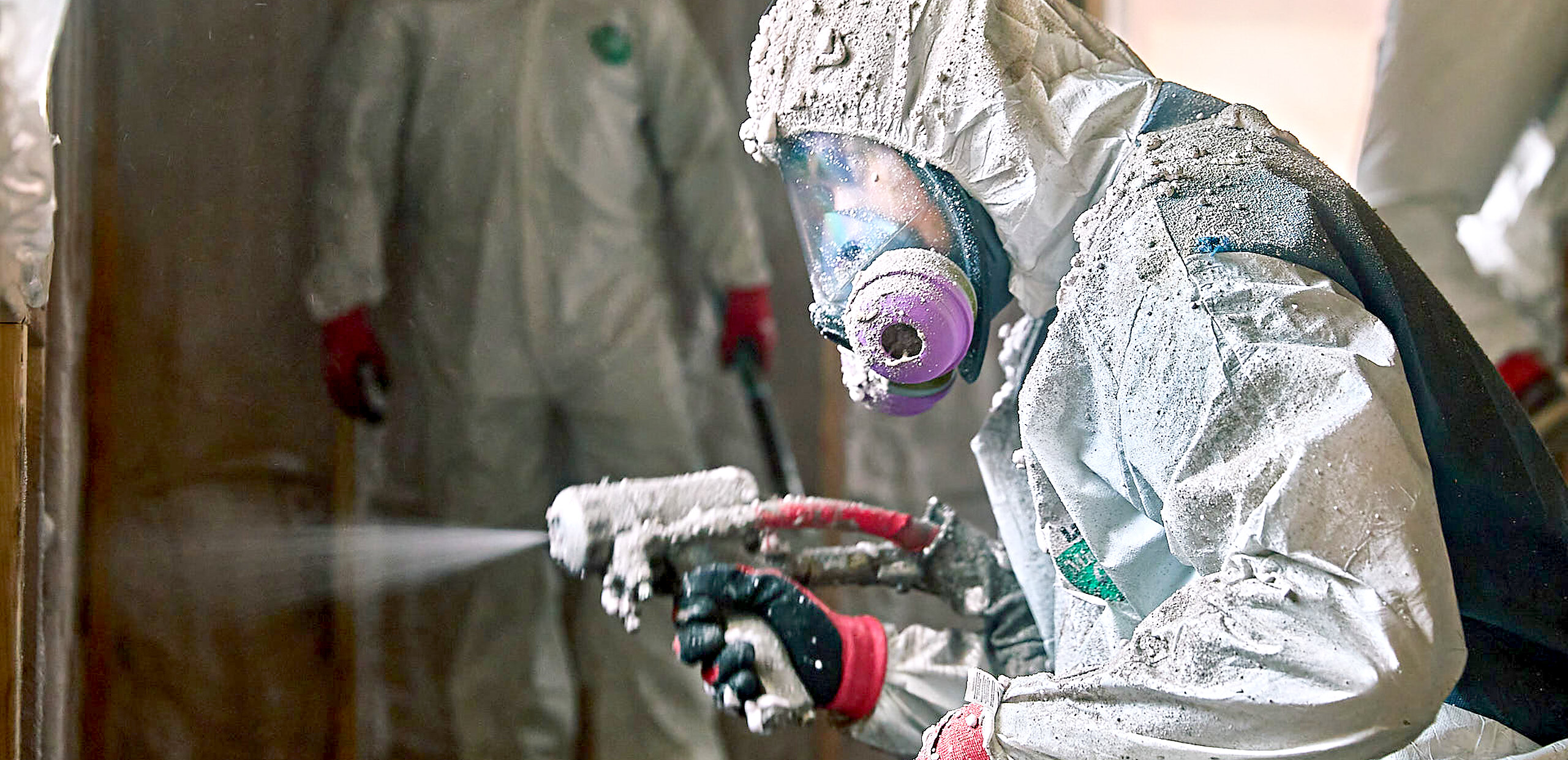
- Organic-vapor half-mask with P100 (or P95) filters, fit-tested: what DuPont and Tiger Foam call for. Add goggles, nitrile gloves and a hooded suit.
- Plan on at least 10 air changes an hour while spraying and for an hour after (DuPont). The planner below sizes the fans.
- Keep kids and pets out; follow the maker’s re-entry time.
Warm enough
- Space at 65°F or more meets Froth-Pak’s ambient and surface minimum. Warm the tanks to 75–85°F.
- Surfaces must be dry, with no frost, oil or loose rust (ESR-3228).
Educational summary; your building department and the kit’s instructions govern.
Small, reachable, closed-cell
- Rim joists in a basement you can air out
- A van or camper shell (van insulation)
- A small shed or shop wall at 1–2 in.
- Sealing around penetrations, bump-outs and band joists
Big, overhead, enclosed or thick
- Attic roof decks and cathedral ceilings
- Whole-house walls, or anything past 2 in.
- Closed walls (injection foam insulation is a different job)
- Jobs that get inspected, unless your building department says kits are fine
DIY spray foam safety: respirator, ventilation and re-entry
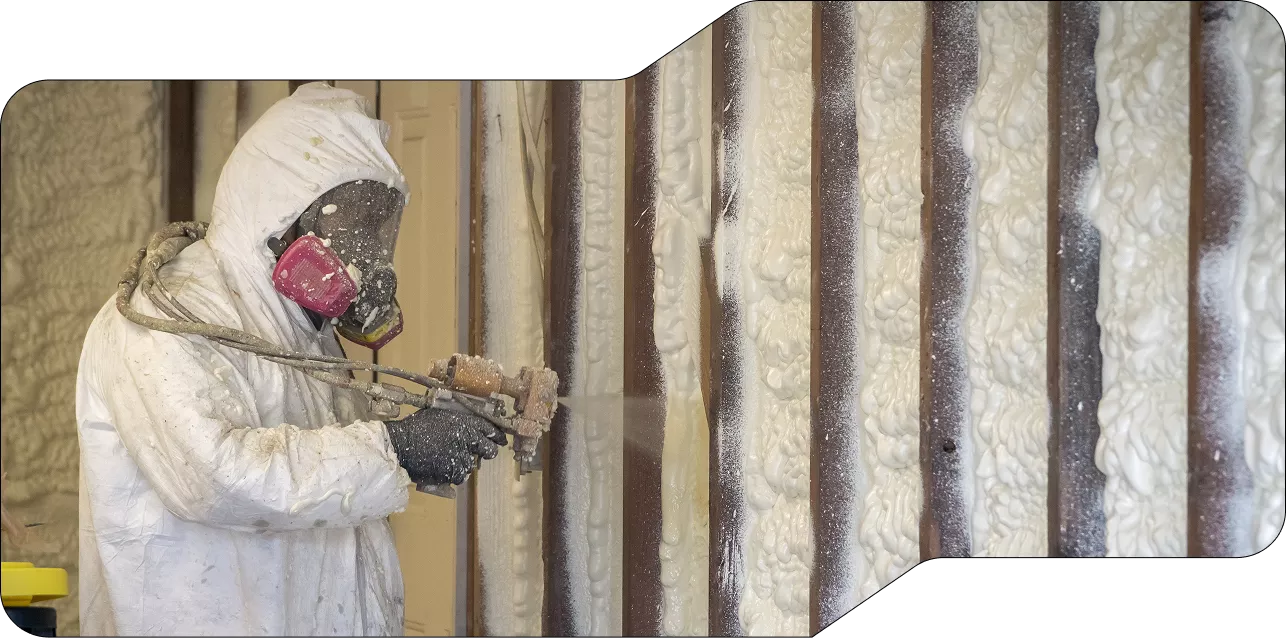
Uncured foam contains isocyanates. OSHA lists irritation of skin and mucous membranes, chest tightness and difficult breathing, and names occupational asthma among the main effects; Tiger Foam warns they "may cause sensitization by inhalation and skin contact." So wear an organic-vapor respirator with a P100 filter, ventilate at 10 air changes an hour, and keep everyone else out.
The respirator: organic vapor, not a dust mask
DuPont's instructions, reprinted in ESR-3228, call for "a respirator with an organic vapor sorbent and P100 particulate filter," especially in attics, crawl spaces and overhead work. Tiger Foam specifies a NIOSH-approved half mask with organic-vapor cartridges and particulate prefilters, or a powered air-purifying respirator, after a medical evaluation, fit test and training. HandiFoam's listing names an organic-vapor respirator with a P95 filter.
DAP's rim-joist how-to lists an N95 mask. An N95 filters particles and does nothing for vapor, so we'd follow the ESR. Add goggles, nitrile gloves and a hooded disposable coverall.
Ventilation: 10 air changes an hour
DuPont's instructions call for at least 10 air changes per hour (ACH) during application, with cross-ventilation and negative pressure in the spray area, then at least an hour more at 10 ACH after you finish. Anyone going back in during that hour wears the respirator. The math is simple: required fan CFM = room length x width x height x 10 ÷ 60. A 12 x 20 ft basement bay with an 8 ft ceiling needs 320 CFM of exhaust. The planner in the next section does it for your room.
When can you go back in?
The maker sets it. DuPont's number is the ventilated hour above. Tiger Foam recommends "a minimum of one hour" for homeowners, based on its own risk assessment. Consumer guides quote 24–72 hours for spray foam in general (Angi). For anything bigger than a few bays, we'd keep people and pets out for the rest of the day and run the fans longer than the minimum. A faint smell for a day is normal. A strong fishy or ammonia smell days later isn't; it usually means off-ratio foam, which our closed-cell spray foam guide explains.
How to use a spray foam insulation kit, step by step
Warm the tanks to 75–85°F a day or two ahead. Prep and mask, set up 10 air changes an hour, suit up and test-spray on cardboard. Then spray in passes no thicker than your kit allows, changing the nozzle whenever you pause more than 30 seconds. Keep ventilating for at least an hour after the last pass.
Fan size, passes and a timeline for your room
Uses DuPont's 10 ACH rule and each maker's pass limits. Check your fan's rated CFM on its label.
- Warm the tanks first. They’re at 68°F; aim for 75–85°F. Tiger Foam says pre-warm 1–2 days, and below 60°F a kit can lose 30% of its yield.
- Before the first pass: fans running at 320 CFM or more of exhaust, a fresh-air opening on the far side, respirator on, everyone else out.
- Spray 1 pass of up to 2 in. DuPont allows up to 2 in. in one pass. Change the nozzle if you stop for more than 30 seconds.
- After the last pass: keep 10 air changes an hour going for at least 1 hour (DuPont, in ESR-3228). Anyone who goes back in within that hour wears the respirator.
- Then: follow the maker’s re-entry time. Tiger Foam recommends at least 1 hour for homeowners; we’d keep the space empty for the rest of the day.
Room 20 x 12 x 8 ft = 1,920 cubic feet. Ten air changes an hour = volume x 10 ÷ 60 = 320 CFM. Fan ratings are free-air numbers; real flow through a window is lower, so round up.
Confirm the job and the rules
Run the job checker above. If the work needs a permit, ask the building department about kit foam first. Read the kit's instructions and safety data sheet; the ESRs require the maker's instructions on site while you work.
Warm the tanks
Bring them to 75–85°F over one to two days, up off a cold floor. An infrared thermometer settles the argument.
Prep the space
Pull old batts and clean the surface. It must be dry, with no frost, oil or loose rust (ESR-3228). Froth-Pak wants the room and surfaces at 65°F or more; HandiFoam allows surfaces from 40°F to 95°F. Mask windows, floors and anything you don't want foamed, and cover heat sources and electrical boxes.
Set up ventilation
Exhaust fans sized for 10 ACH, a fresh-air opening on the far side, and a closed door to the rest of the house.
Suit up
Organic-vapor respirator with P100 filters, goggles, nitrile gloves, hooded coverall. Kids and pets out of the building.
Shake, open, test
Shake the tanks well, open the valves and do a test shot. HandiFoam says to confirm two even streams before the nozzle goes on. Then test-spray on cardboard until the foam rises and colors evenly; properly mixed closed-cell cures pale yellow and firm (HandiFoam).
Picture-frame, then fill in passes
Seal the edges of each bay first, then fill the middle (DAP). Froth-Pak goes on up to 2 in. in one pass. HandiFoam says spray just under ¼ in. and let it rise to about 1 in., with at least 10 minutes between layers. Tiger Foam's report allows ½–2 in. per pass with 15 minutes between. HandiFoam suggests holding the gun about 12 in. away.
Don't let the nozzle sit
Pause more than 30 seconds and put on a new nozzle.
Ventilate, finish, store
Keep 10 ACH going for at least an hour after the last pass. Trim cured foam, then cover it where code requires. DuPont and DAP both say an opened kit can be reused within 30 days. Unopened, Froth-Pak's shelf life is 24 months; Tiger Foam's FAQ says 1 year.
Common DIY spray foam mistakes
If you only remember three: warm the chemical, keep each pass within the maker's limit, and don't use kits on a job that's too big. Here's the full list.
- Buying kits for a job that's too big. Past a few hundred square feet at 2 in., a pro is usually cheaper. Run the cost calculator.
- Spraying cold tanks. Below 60°F you can lose 30% of the yield; below 55°F the foam won't rise (Tiger Foam).
- Going too thick in one pass. Stay within the maker's per-pass limit. Our closed-cell guide explains how thick lifts trap heat and can scorch the core.
- Buying by model number. Compare rated board feet: some "600" kits yield 529.
- Letting the nozzle sit. Over 30 seconds idle, swap it.
- An N95 instead of an organic-vapor respirator.
- No real ventilation. An open window isn't 10 air changes an hour.
- Foaming wet, frosty or oily surfaces, or anything hot: flues, heaters, recessed lights, electrical boxes.
- Leaving foam exposed in living space. It needs a thermal barrier.
- Ignoring the smell test. Foam that still reeks days later was probably sprayed off-ratio. Stop and find out why before you use the rest of the kit.
Hire a spray foam applicator, or become one
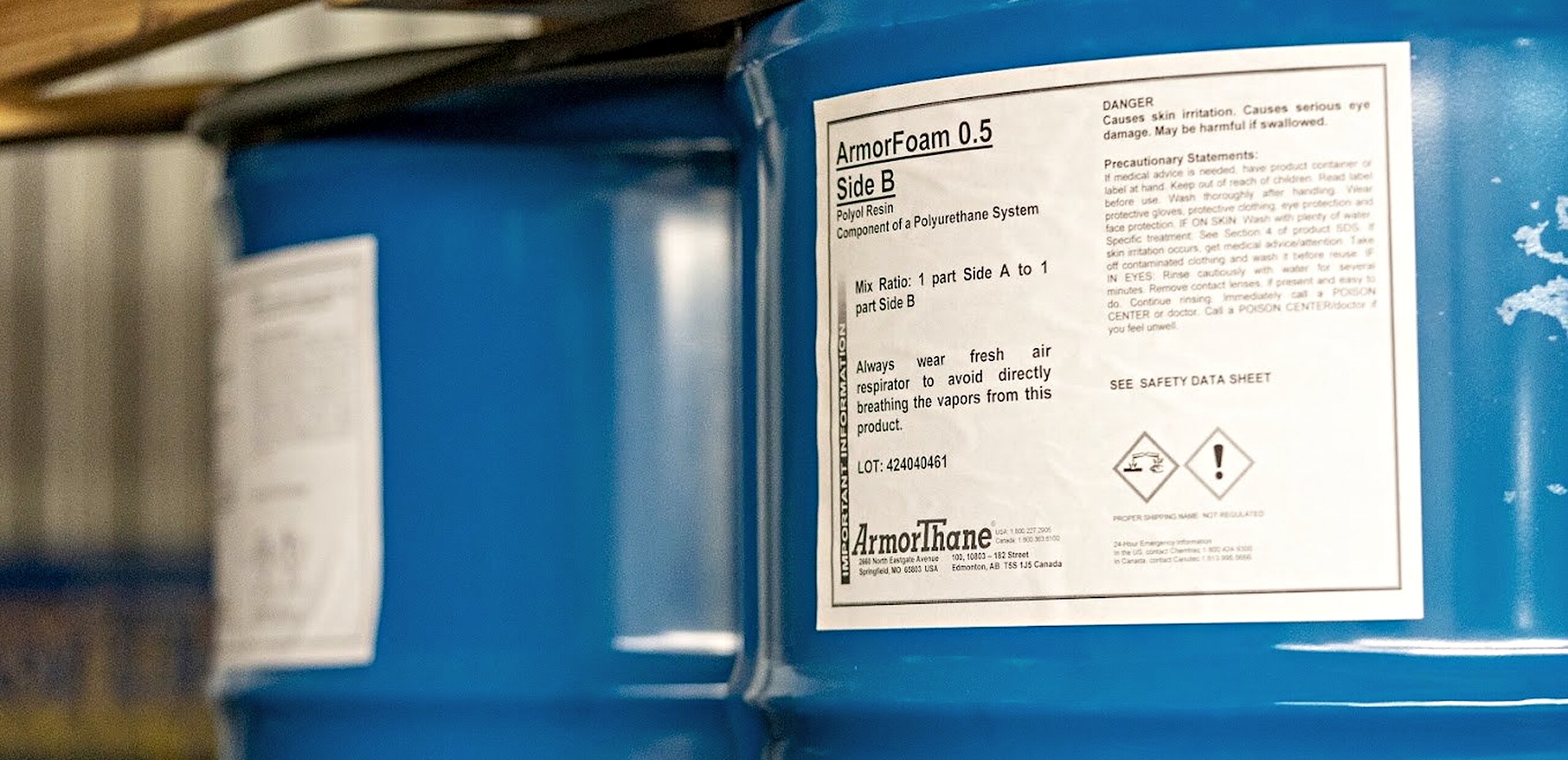
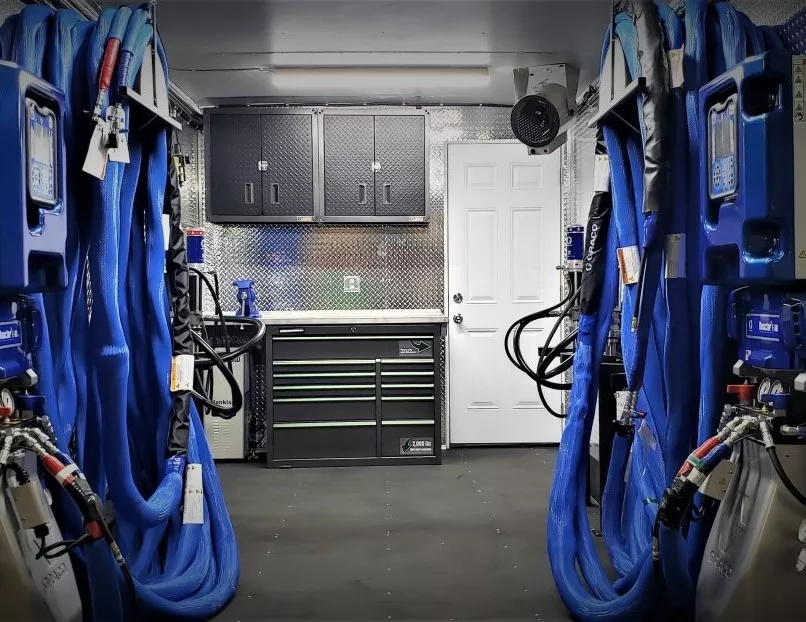
If the calculator says kit, buy the kit. We mean that. If it says pro, an ArmorThane-certified applicator sprays ArmorFoam from a heated, high-pressure rig and puts foam type, thickness and R-value in writing. Our closed-cell tests at R-6.5 per inch aged, works as an air barrier at 1 in. (ASTM E2178) and measures 0.83 perm at that thickness. ArmorFoam 0.5 open-cell is R-3.9 at 1 in.
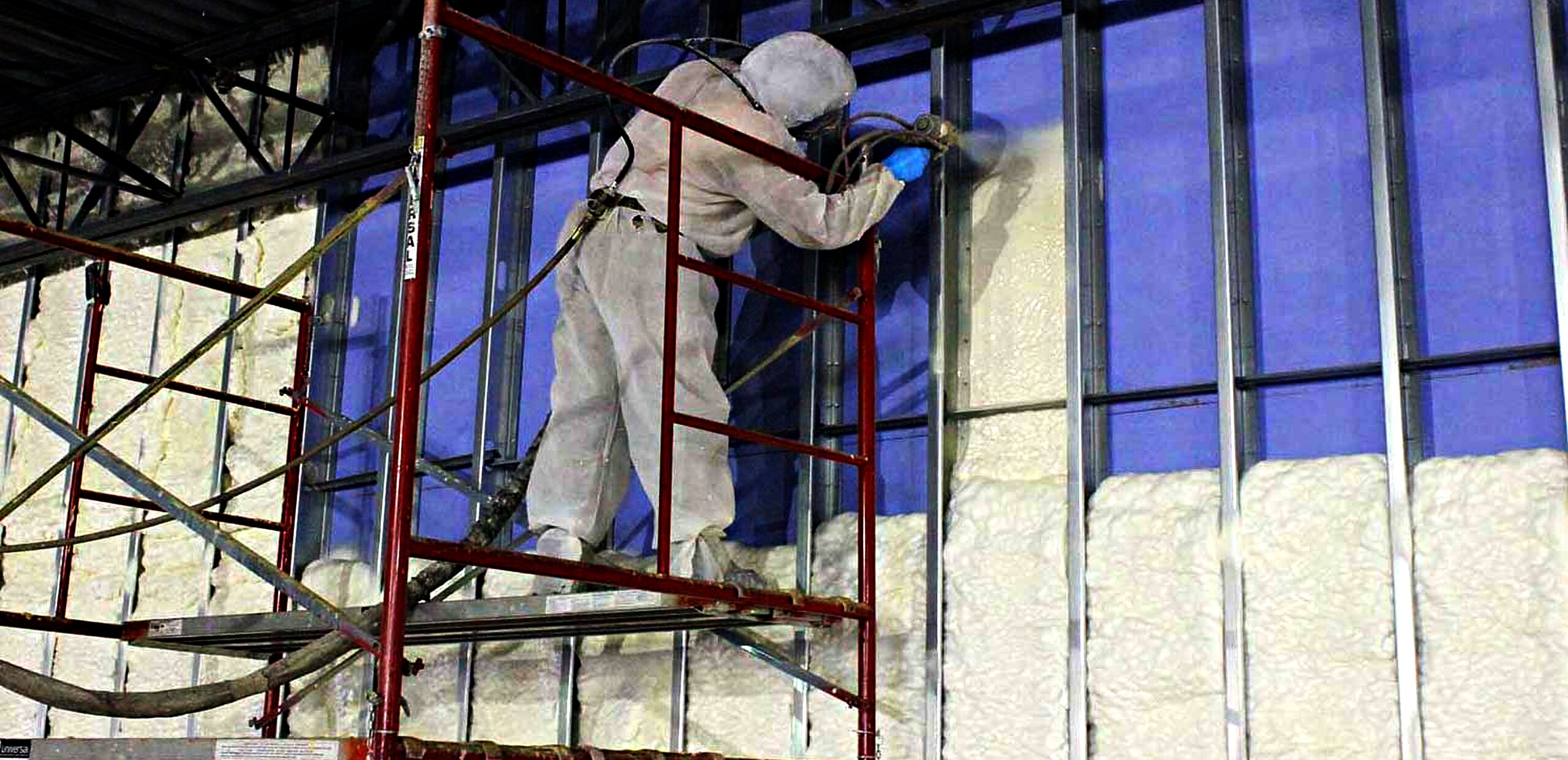
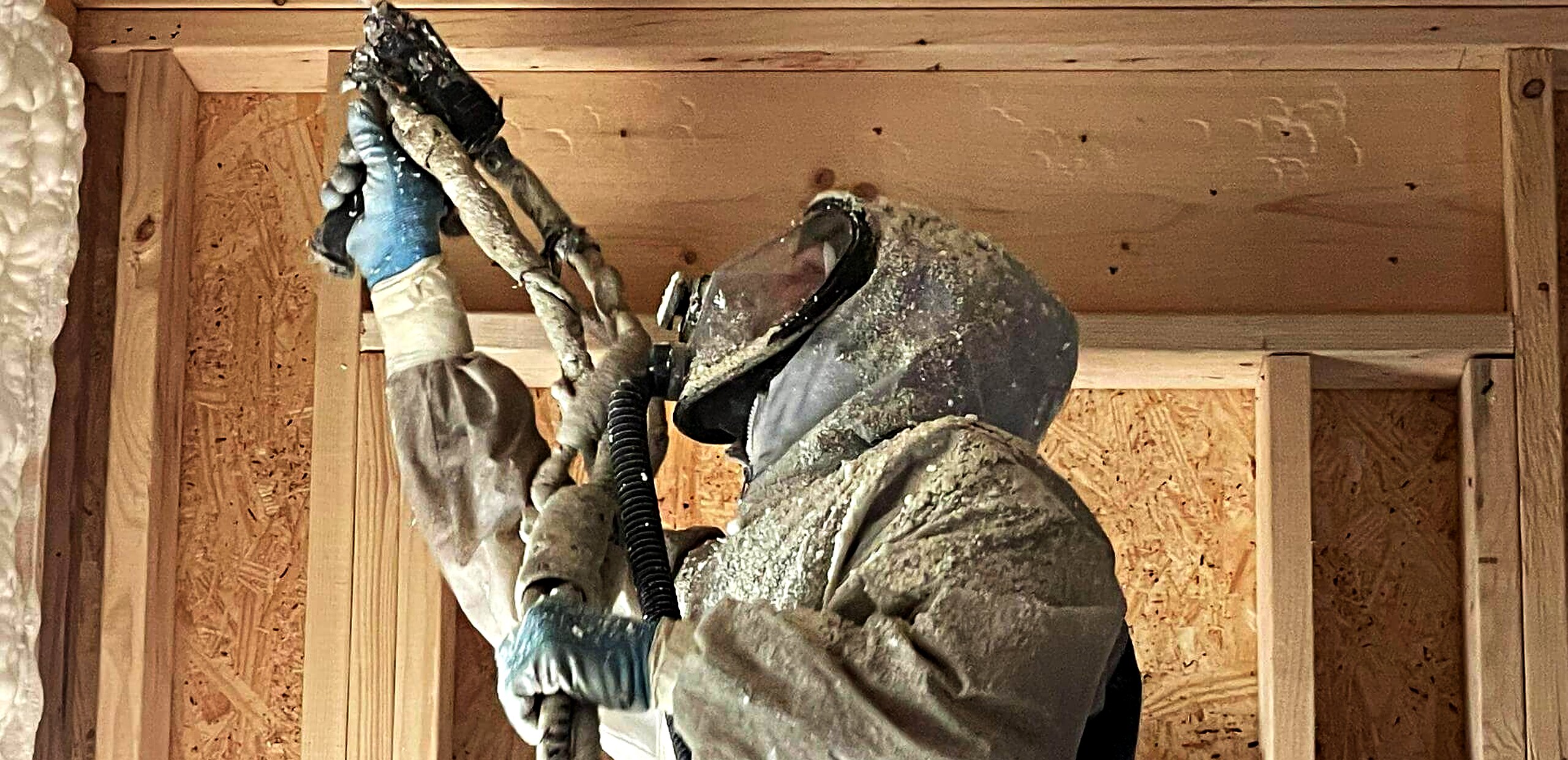
A rig changes the math: one 55-gallon ArmorFoam closed-cell set yields about 5,000 board feet at perfect yield, and an open-cell set about 17,000. That's why a pro can go thicker than a kit and still land near kit prices. More on spray foam insulation and ArmorFoam systems.
ArmorFoam closed-cell
Aged, ASTM C518. Two inches is R-13, where kit foam at its 2 in. limit is about R-12.
Per 55-gallon set
Closed-cell at perfect yield. The biggest closed-cell kit in this guide yields 630.
Thickness and R-value
Certified applicators quote foam type, thickness, R-value and board feet.
A quick rule of thumb: if the job fits in one or two kits, a spray foam insulation kit is reasonable. If it needs five or more, get a quote first, because a crew with a rig will usually beat the price of the kits. And whichever way you go, store any leftover spray foam insulation kit at room temperature and check the expiry date before your next project, since an old spray foam insulation kit can mix poorly and leave soft, sticky foam.
Outgrown the kits? Talk to us about a rig.
Disposable closed-cell kits top out at 630 board feet; a 55-gallon ArmorFoam closed-cell set yields about 5,000. We build spray foam rigs, supply ArmorFoam and train your crew at your location. Startup packages start at $25,000, with no franchise fee and no royalties.
See the rigs: mobile spray foam rigs →
DIY spray foam insulation FAQ
Can I spray foam insulation myself?
Yes. Two-component disposable kits are sold to homeowners, and they're a sensible choice for small, bounded jobs like rim joists, a van or a small shed. Past a few hundred square feet at 2 in., or anywhere you need more than about R-12, hire an applicator. Our job checker sorts it out in a minute.
Is DIY spray foam cheaper than hiring a pro?
Only on small jobs. Closed-cell kits cost $1.22–$1.95 per board foot for material, while pros charge about $1.00–$2.12 per board foot installed, so kits win mainly when the job is smaller than a contractor's $1,000–$2,000 minimum (HomeGuide). By our math, at 2 in. of closed-cell the break-even lands around 275–300 sq ft.
How much does a spray foam insulation kit cost?
In September 2026 listings, closed-cell kits ran from $325 (Tiger Foam TF200FR, 180 board feet) to $919 (Froth-Pak 630, 630 board feet), and open-cell kits $749–$899 for 1,350–1,550 board feet. Compare by price per rated board foot: $1.22–$1.95 for closed-cell and $0.55–$0.58 for open-cell. Add about $42 per person for a respirator, suit, goggles and gloves.
How much does a Froth-Pak cover?
DuPont rates the Froth-Pak 200 at about 200 sq ft at 1 in. thick and the Froth-Pak 630 at about 630 sq ft. At 2 in., that's 100 and 315 sq ft, or roughly 80 and 250 sq ft once you allow 25% waste on a first job. Cold tanks cut coverage further.
How many spray foam kits do I need?
Multiply the area by the thickness in inches to get board feet, add 15–35% for waste, and divide by the kit's rated yield. For example, 150 sq ft at 2 in. with 25% waste is 375 board feet: two Froth-Pak 200s or one 600-class kit. The coverage calculator runs it for any kit.
How thick can I spray a DIY foam kit?
Check your kit's evaluation report. Froth-Pak's ESR-3228 describes spraying to a maximum 2-inch thickness, and Tiger Foam's ESR-3183 allows ½–2 in. per pass, 15 minutes apart, with 2 in. total in wall, floor or ceiling cavities. HandiFoam tells you to spray just under ¼ in. per layer and let it rise to about 1 in.
What respirator do I need for DIY spray foam?
An organic-vapor respirator with a P100 particulate filter, per DuPont's instructions reprinted in ESR-3228. Tiger Foam calls for organic-vapor cartridges with particulate prefilters, or a powered air-purifying respirator, after a fit test. An N95 or dust mask filters particles only and does nothing for isocyanate vapor.
How long after spraying foam can I go back in the house?
Follow the maker's re-entry time. DuPont calls for 10 air changes an hour while spraying and for at least an hour after, and Tiger Foam recommends a minimum of one hour for homeowners; consumer guides quote 24–72 hours for spray foam in general (Angi). For anything beyond a few bays, we'd keep people and pets out for the rest of the day.
Does DIY spray foam have to be covered?
In living space, yes, with a thermal barrier such as ½ in. gypsum board (IRC R316.4; R303.4 in the 2024 IRC). Attics and crawl spaces entered only for service need an ignition barrier or the coating listed in the foam's evaluation report. At rim joists and sill plates, the Froth-Pak and Tiger Foam reports let up to 2 in. stay exposed.
What temperature does a spray foam kit need to be?
Most makers want the chemical at 75–85°F; DuPont says 75°F or warmer for Froth-Pak, with the room and surfaces at 65°F or more. Tiger Foam says a kit below 60°F can lose 30% of its yield, and below 55°F the foam won't expand. Warm the tanks for one to two days before you spray.
Can I save a partly used spray foam kit?
DuPont says an opened Froth-Pak can be reused within 30 days, and DAP says the same for its kits. You'll need a fresh nozzle to restart. Unopened, Froth-Pak's shelf life is 24 months from manufacture and Tiger Foam's FAQ says 1 year.
Is canned spray foam the same as a spray foam kit?
No. A hardware-store can is one-component foam that cures with moisture from the air. It's meant for gaps and cracks, runs about R-5.7 per inch and yields roughly 20 board feet. A two-part kit mixes an A and B side in the nozzle and yields 180–630 board feet of closed-cell foam at about R-6.1–6.2 per inch.
Should I buy an open-cell or closed-cell spray foam kit?
Closed-cell, for almost every DIY job. Open-cell kits cost about what a pro charges installed ($0.55–$0.58 per board foot for material versus $0.44–$0.73 installed), are rated ASTM E84 Class 2 and always need covering. Closed-cell kits give about R-6 per inch and seal air at ½–1 in., which suits the small jobs where kits make sense.
Written from kit makers' evaluation reports and data sheets, code text and 35+ years of making spray foam and supporting applicators. Last updated September 26, 2026.
Methodology and sources
Kit prices and yields are from maker and retailer listings checked September 26, 2026; kit limits are quoted from the ICC-ES evaluation reports. Installed prices are our 2026 median band from seven published cost guides, and the pro-versus-kit comparisons are our own calculations. Code references are to the 2021 IRC and IECC with 2024 IRC numbering where the reports give it. Your kit's instructions, its evaluation report and your building department govern.
- ICC-ES ESR-3228, Froth-Pak Foam System (Jan. 2026, PDF): icc-es.org/wp-content/uploads/report-directory/ESR-3228.pdf
- ICC-ES ESR-3183, Tiger Foam E-84 spray foam systems (July 2026, PDF): icc-es.org/wp-content/uploads/report-directory/ESR-3183.pdf
- DuPont, Froth-Pak 200 Foam System: frothpak.dupont.com/products/200-foam-system.html
- DuPont, Froth-Pak 630 Foam System: frothpak.dupont.com/products/630-foam-system.html
- DuPont, how to air seal rim joists with Froth-Pak: frothpak.dupont.com/how-to/air-seal-rim-joists.html
- A Warehouse Full, Froth-Pak kit listings (Sept. 2026): awarehousefull.com/froth-pak-spray-foam-kits/
- Tiger Foam, spray foam insulation kits (Sept. 2026): tigerfoam.com/order-products/spray-foam-kits/
- Tiger Foam, TF600FR kit: tigerfoam.com/order-products/spray-foam-kits/tf600fr-e84-fast-rise-spr
- Tiger Foam, TF200FR kit: tigerfoam.com/order-products/spray-foam-kits/tf200fr-e84-fast-rise-spr
- Tiger Foam, TF1350 open-cell kit: tigerfoam.com/order-products/spray-foam-kits/tf1350-open-cell-spray-fo
- Tiger Foam, estimating spray foam coverage: tigerfoam.com/technical/estimating/
- Tiger Foam, FAQ: tigerfoam.com/technical/faq/
- Tiger Foam, health and safety: tigerfoam.com/technical/health-safety/
- Energy Efficient Solutions, HandiFoam Quick Cure HFO 605 listing (Sept. 2026): energyefficientsolutions.com/products/handifoam-600bf-quick-cure-fr-hf
- Energy Efficient Solutions, HandiFoam Low Density HFO listing (Sept. 2026): energyefficientsolutions.com/products/open-cell-sound-barrier-spray-fo
- Energy Efficient Solutions, foam safety kit listing (Sept. 2026): energyefficientsolutions.com/products/foam-safety-kit
- DAP, how to insulate rim joists and stud wall cavities: dap.ca/resources-support/how-to-s-tips/insulating-home-sealing/how-to-
- Spray Foam Systems, DIY refillable spray foam kits: sprayfoamsys.com/spray-knowledge/diy-spray-foam-kits/
- American Chemistry Council, spray foam do-it-yourselfer FAQ: spraypolyurethane.org/do-it-yourselfer/frequently-asked-questions/
- U.S. DOE Energy Saver, types of insulation: energy.gov/energysaver/types-insulation
- OSHA, Isocyanates: osha.gov/isocyanates
- ENERGY STAR, A Do-It-Yourself Guide to Sealing and Insulating (PDF): energystar.gov/ia/partners/publications/pubdocs/DIY_Guide_May_2008.pdf
- IRC R316.5.11, sill plates and headers (UpCodes): up.codes/s/sill-plates-and-headers
- IRC R202, vapor retarder class (UpCodes): up.codes/s/vapor-retarder-class
- Penn State PHRC, IRC spray foam thermal and ignition barriers (PDF): phrc.psu.edu/assets/docs/Webinars/2009IRCSprayFoamThermalBarriersIgnit
- DOE/PNNL Building America Solution Center, 2009–2021 IECC insulation requirements: basc.pnnl.gov/information/2009-2021-iecc-and-irc-minimum-insulation-re
- Angi, spray foam insulation cost (Sept. 2026): angi.com/articles/spray-foam-insulation-cost.htm
- HomeGuide, spray foam insulation cost (Dec. 2025): homeguide.com/costs/spray-foam-insulation-cost
- ArmorThane, closed-cell spray foam guide: armorthane.com/closed-cell-spray-foam/
- ArmorThane, open-cell spray foam guide: armorthane.com/knowledge-center/open-cell-spray-foam-guide/
- ArmorThane, ArmorFoam spray foam products: armorthane.com/products/armorfoam-products/
- ArmorThane, ArmorFoam 0.5 open-cell spray foam: armorthane.com/products/armorfoam-products/open-cell-spray-foam/
Job too big for kits? Get a quote from a certified applicator.
Tell us what you're insulating and roughly how big it is. We'll connect you with an ArmorThane-certified spray foam applicator who will quote foam type, thickness and R-value in writing, so you can compare it with the kit math on this page.
- Attics, walls, crawl spaces and basements
- Shops, pole barns and metal buildings
- Thickness, R-value and board feet on the quote
- Contractors: ask about ArmorFoam and spray rigs