




Quonset Hut Insulation Without the Drip
Arch surface-area math for Q, S and A models, why curved steel sweats, spray foam vs board, bubble foil and fiberglass, code notes and 2026 costs.
Start a spray foam business
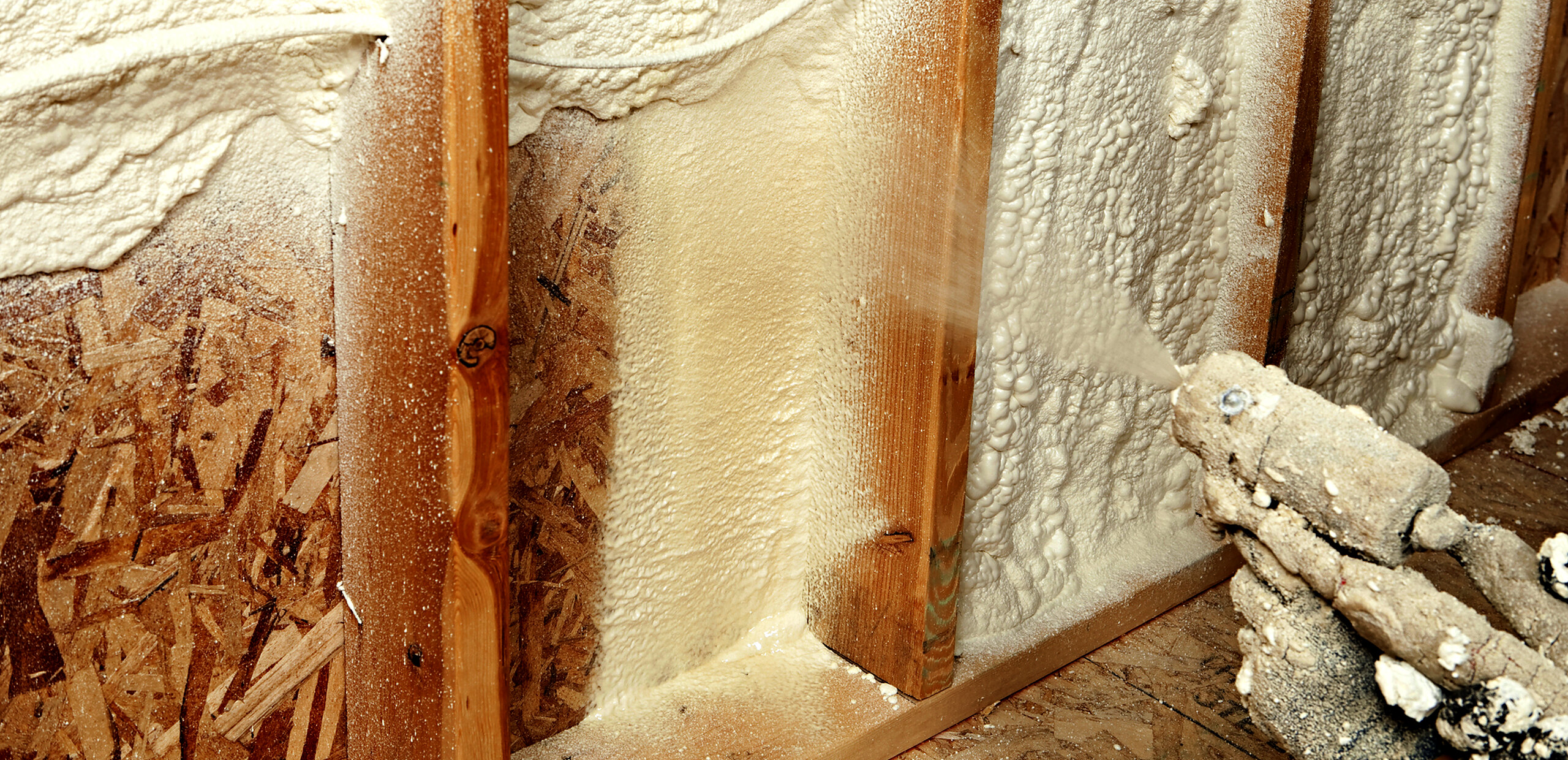
Spray foam for a living.
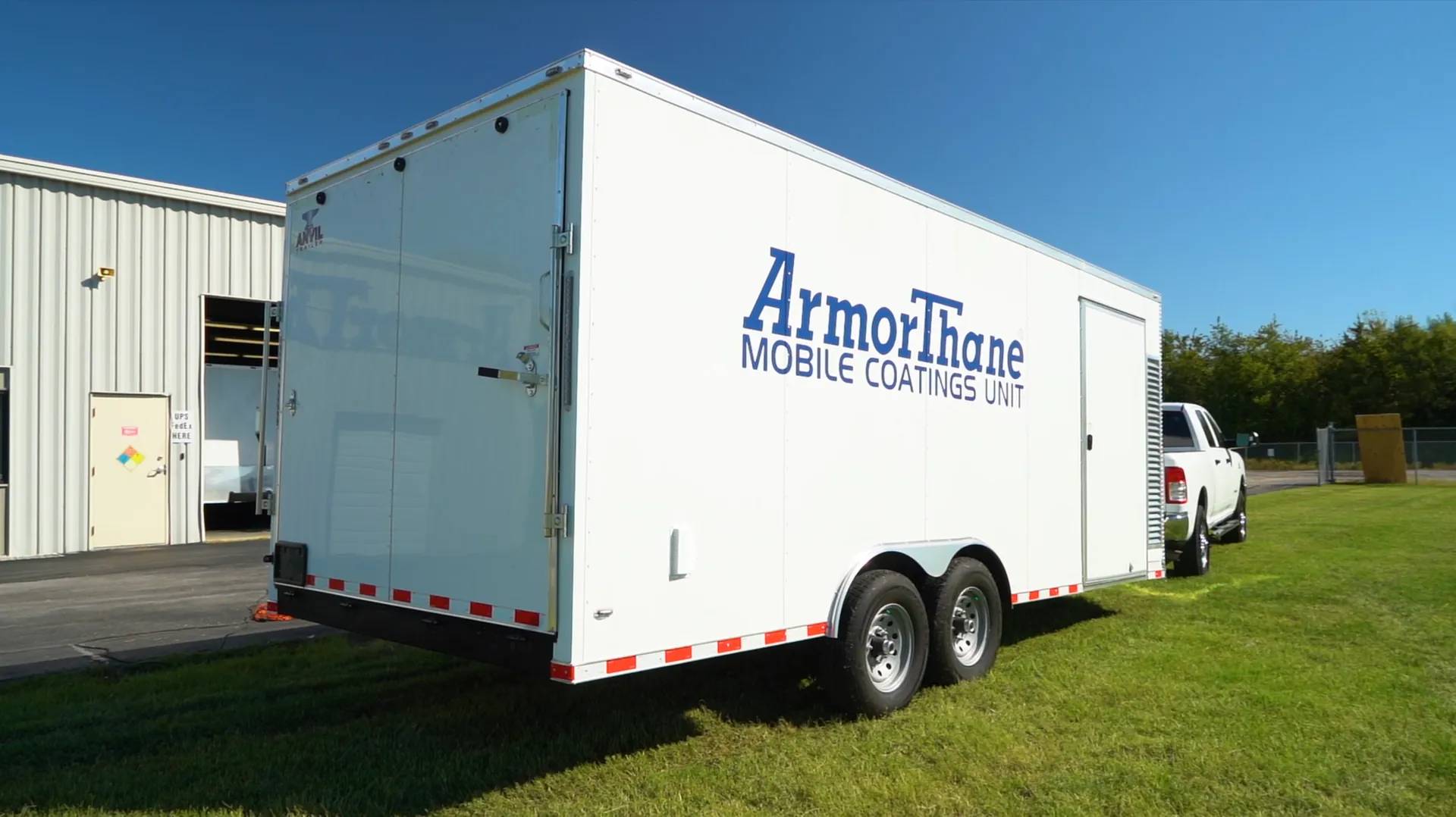
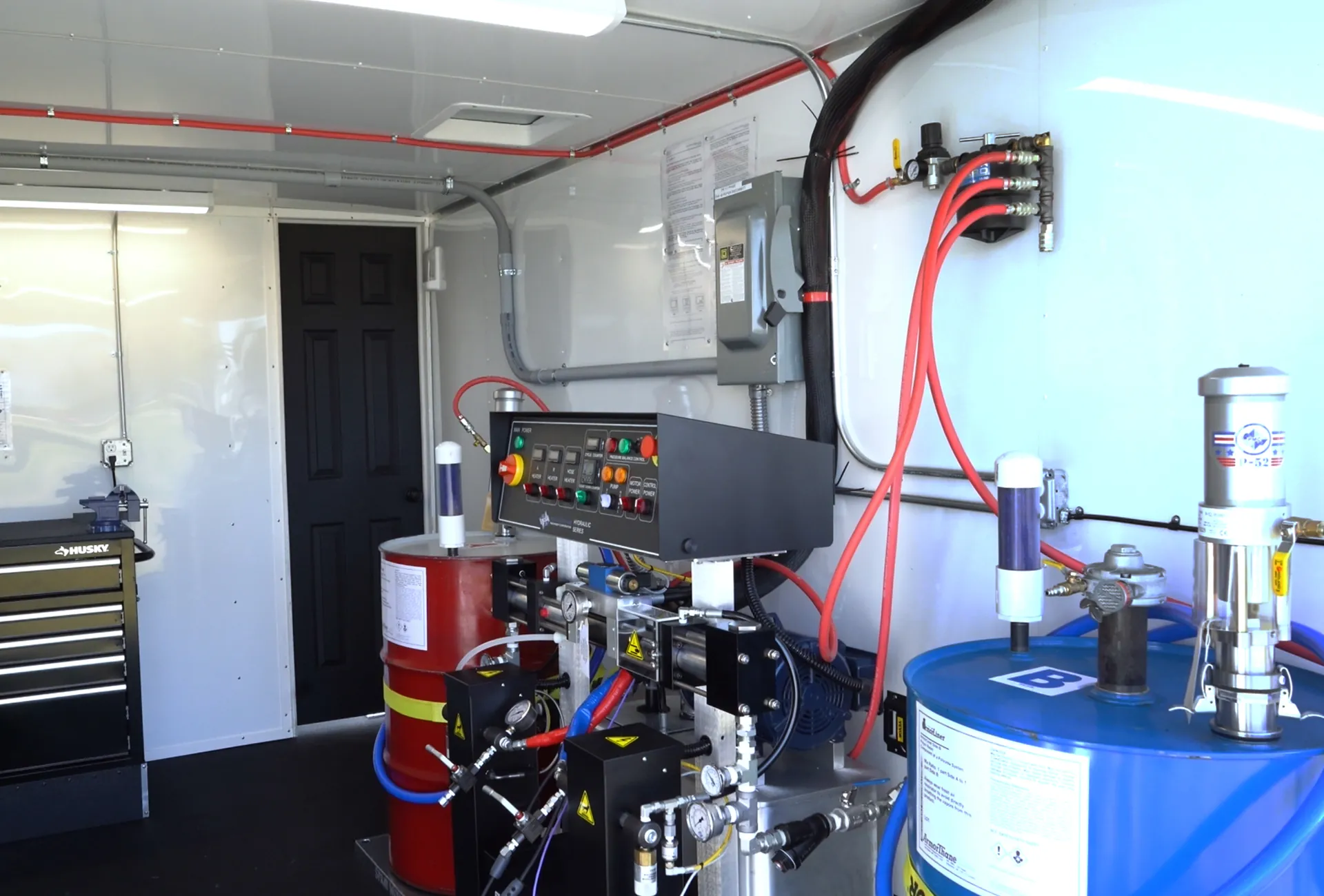
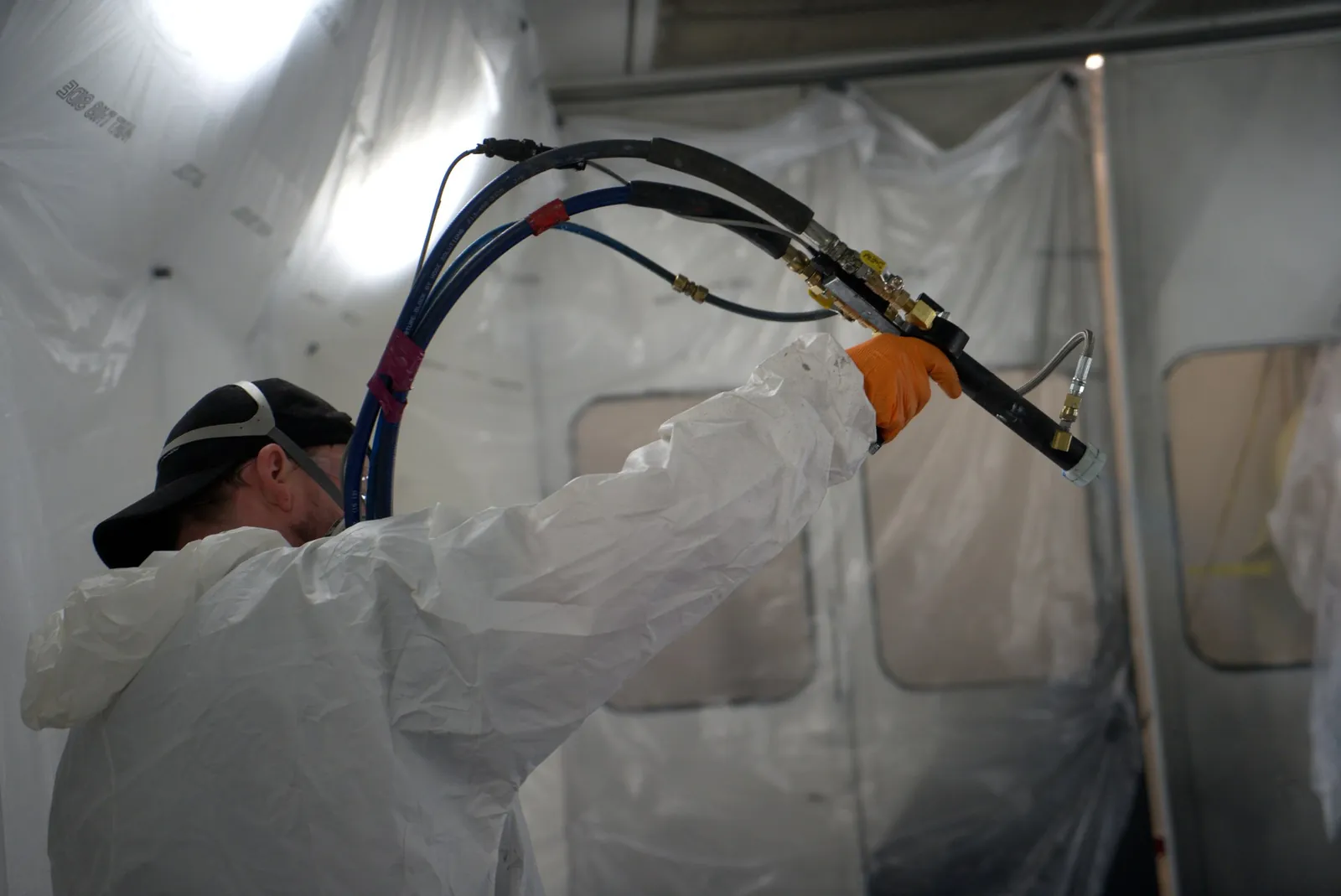
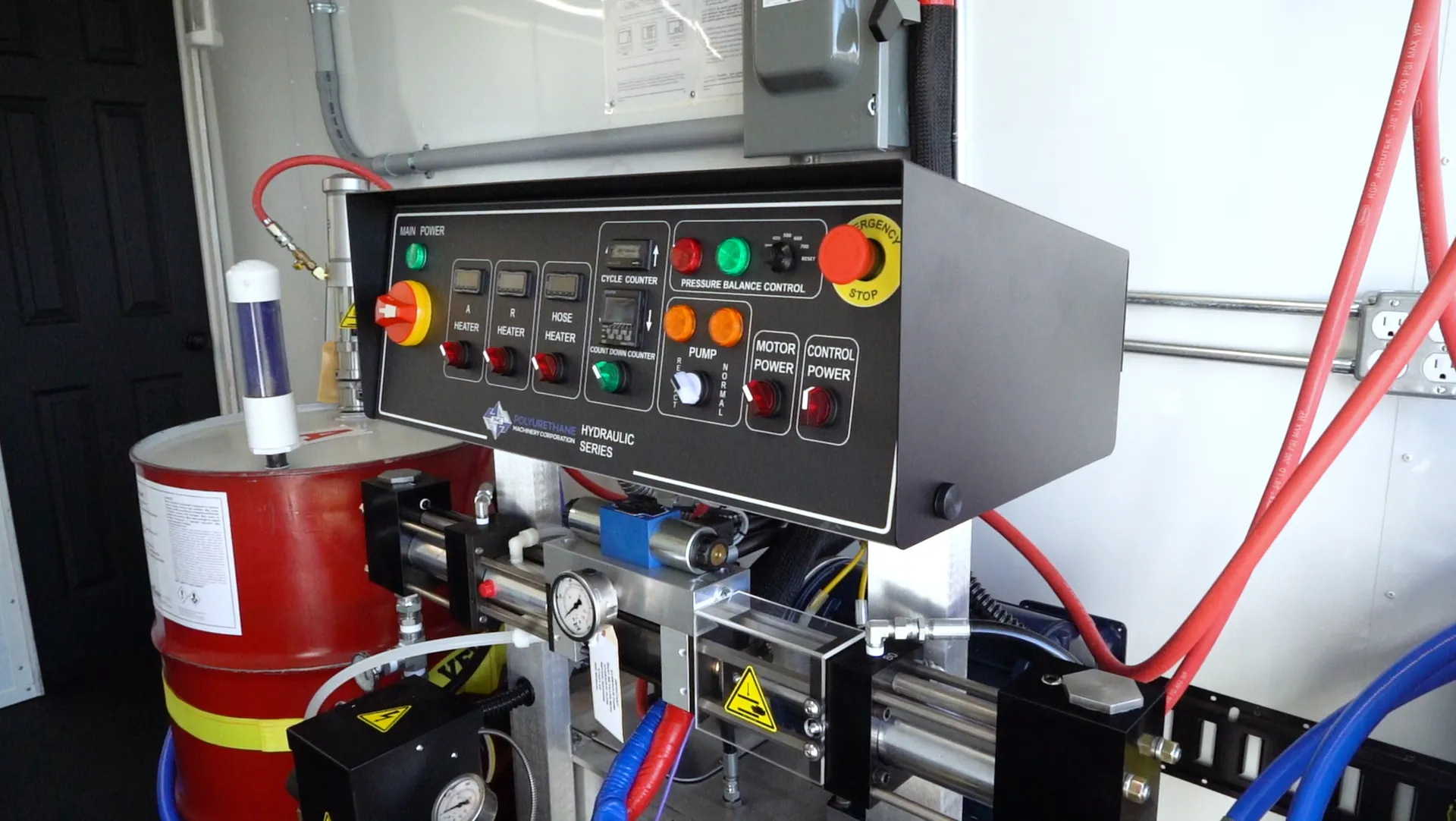
ArmorThane sets you up to do this work, and you own the business. We make the chemistry, build the rigs, train you hands-on and answer the phone when a job gets difficult. You pay no franchise fee and no royalties. It has been that way since 1989.
- $0
- franchise fees or royalties
- 35+
- years in business
- 50+
- countries with applicators
- 24/7
- technical support
A quonset is corrugated steel bolted into an arch. It is all roof, it cools fast at night and humid air finds it. Here is the arch math, why the steel sweats and how each insulation behaves on a curve.
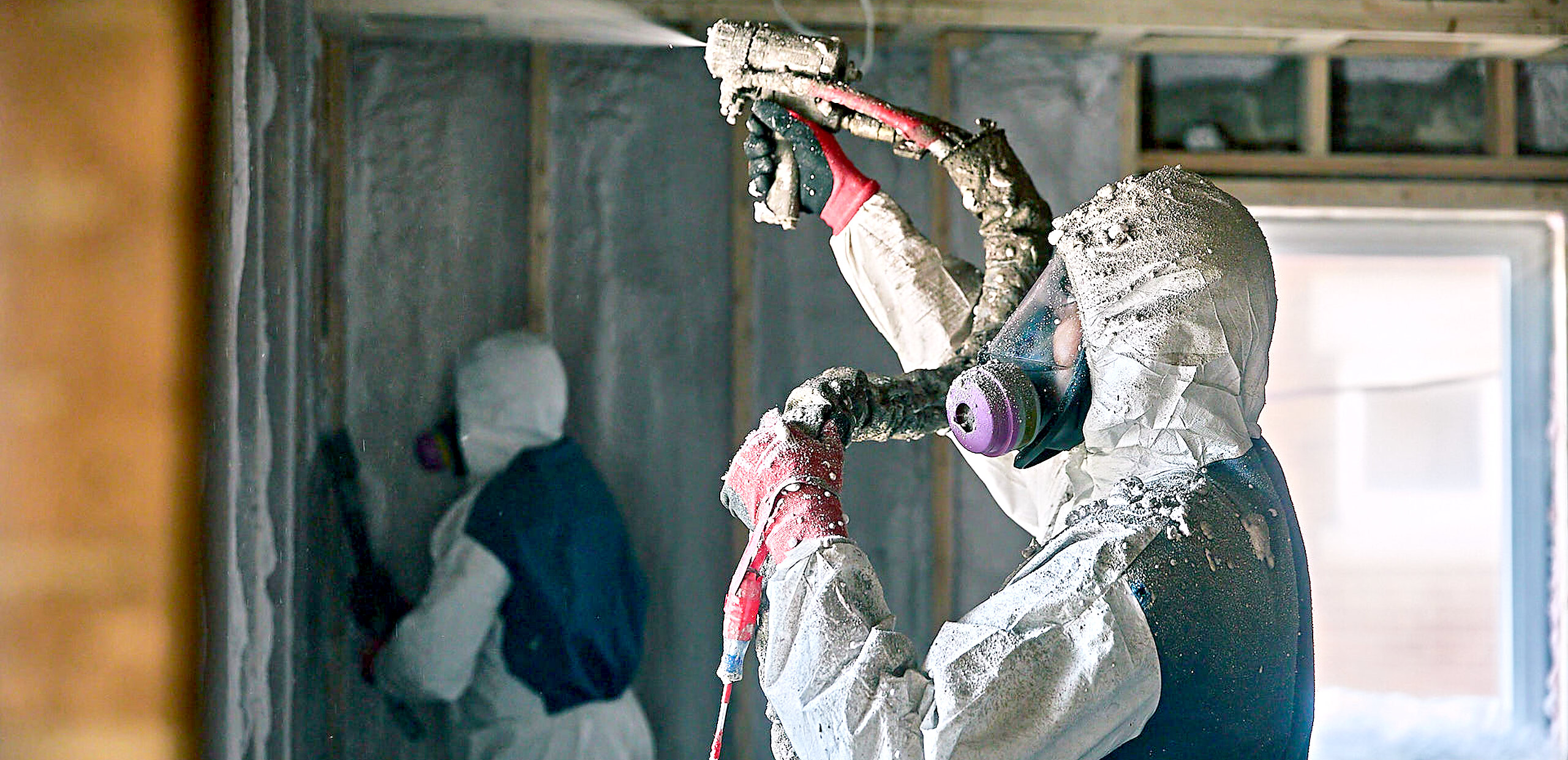
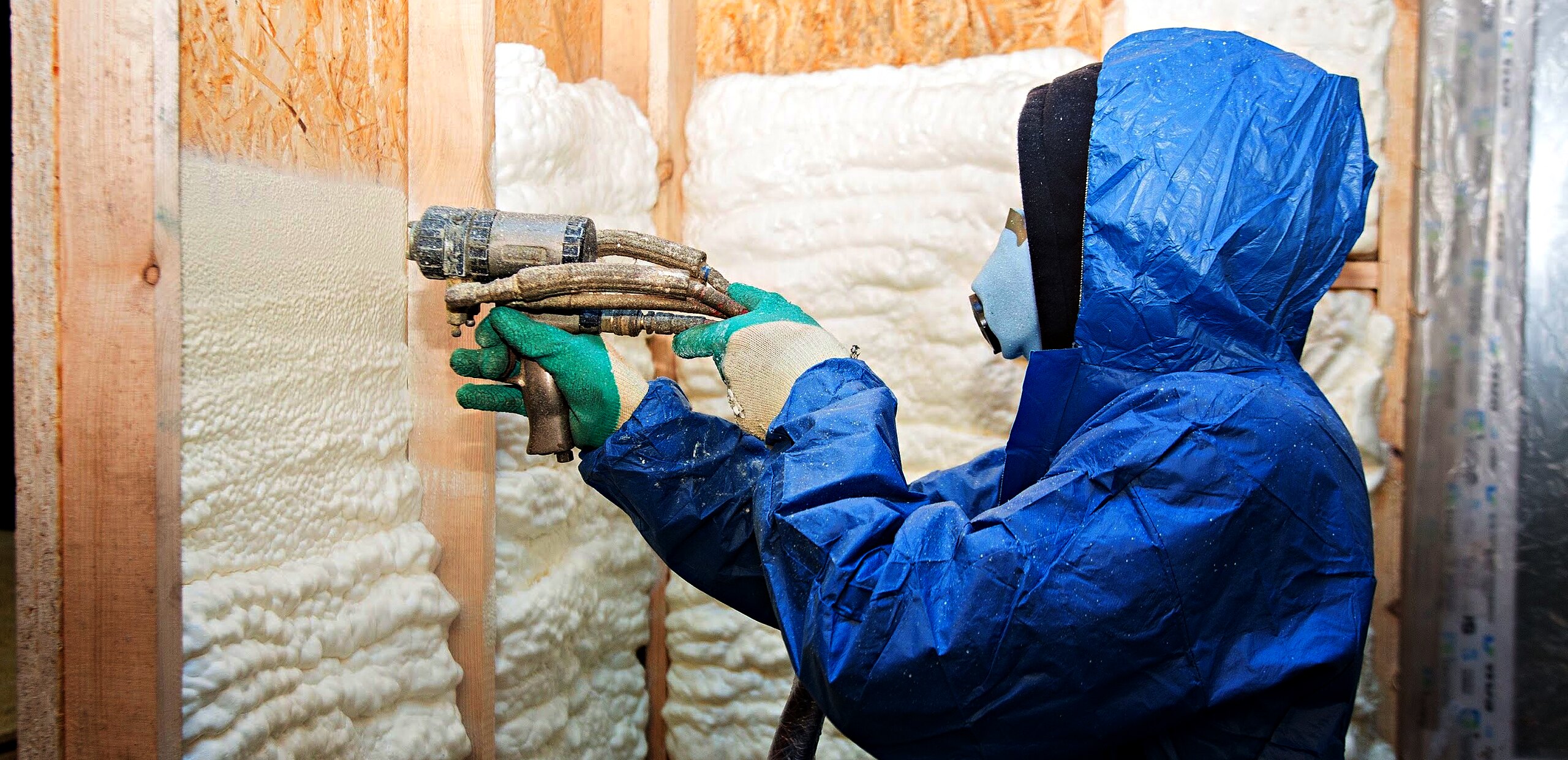
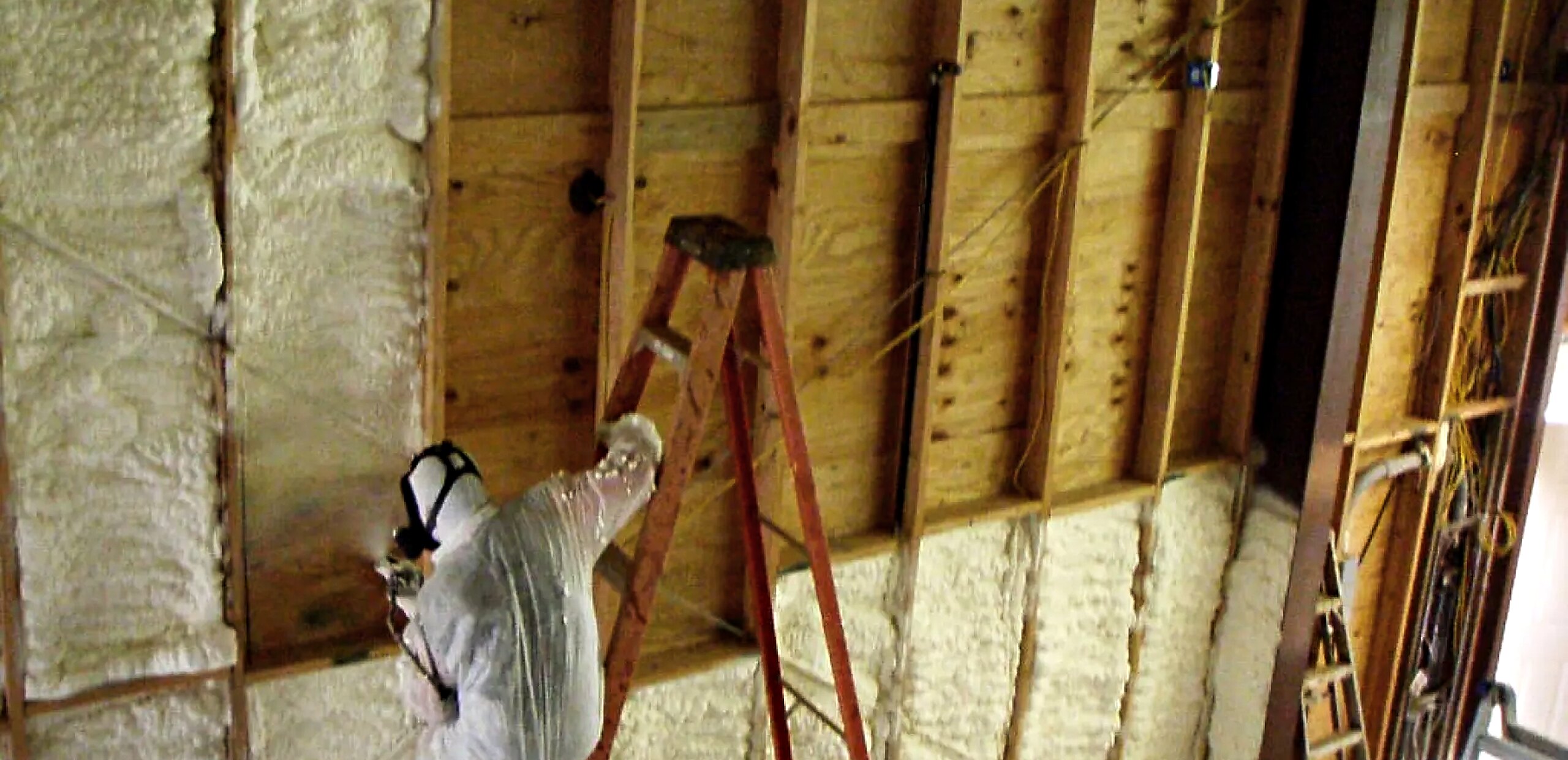
The most reliable way to insulate a quonset hut is closed-cell spray foam sprayed onto the steel, at least 1.5 in thick, so humid air never reaches the cold arch. At about R-6.5 per inch, 2 in gives R-13. Angi puts closed-cell at $1.30–$3.10 per board foot installed, and a 40 × 60 ft Q-model with end walls is about 5,027 sq ft of steel. Measure your arch or check your condensation risk.
Who's writing: ArmorThane makes ArmorFoam spray foam and foam roofing systems in Springfield, Missouri, and trains the applicators who install them. Where a pinned blanket is the better call, we'll say so.
- 1Why a quonset sweats
- 2Quonset surface area: the arch math
- 3Arch area and spray foam calculator (interactive)
- 4Insulation options compared on curved steel
- 5Closed-cell foam: inside, outside or both
- 6Condensation risk checker (interactive)
- 7Fire code: thermal barriers and coatings
- 8Quonset hut insulation cost
- 9How to insulate a quonset hut, step by step
- 10DIY or hire a pro
- 11Quonset insulation FAQ
Why a quonset sweats
A quonset has no attic. The arch is the roof from base rail to base rail, and steel "reacts almost instantly to changes in outside temperature" (QuonsetKits). When the night turns cold, the whole shell does too. Good quonset hut insulation solves two problems at once, heat loss and condensation, which is why closed-cell foam is the most common choice for quonset hut insulation on curved steel.
When warm, humid air touches a surface colder than its dew point, the vapor turns to water. With standard air films (R-0.68 inside, R-0.17 outside), bare steel's inside face sits about 80% of the way from the indoor to the outdoor temperature. A 60°F shop on a 10°F night has steel near 20°F, while its air at 50% humidity has a 41°F dew point. The steel frosts, then drips when the sun warms the shell.
| Inside air | Dew point | Bare steel at 30°F out | At 10°F out | At −10°F out |
|---|---|---|---|---|
| 50°F, 40% RH (lightly heated storage) | 26.7°F | 34°F, dry | 18°F, frost | 2°F, frost |
| 60°F, 50% RH (heated shop) | 41.3°F | 36°F, sweats | 20°F, frost | 4°F, frost |
| 70°F, 40% RH (living space) | 44.6°F | 38°F, sweats | 22°F, frost | 6°F, frost |
| 70°F, 60% RH (wash bay, animals) | 55.5°F | 38°F, sweats | 22°F, frost | 6°F, frost |
Unvented propane
An unvented heater releases 0.82 gallon of water vapor per gallon of propane burned (ArmorThane metal building guide).
Ground moisture
Slabs without a vapor barrier let soil moisture evaporate upward (Agribilt).
Drips find the seams
The curve carries condensation down to seams and low points (Agribilt), so the base rail gets wet.
Wet equipment, welding, livestock and wash bays add more (Agribilt). Insulation fixes the cold surface only if humid air can't get behind it. For straight-wall steel buildings with purlins, see our metal building insulation guide; for post-frame barns, the pole barn insulation guide.
Quonset surface area: the arch math
You insulate the steel, not the floor. SteelMaster sells four enclosed profiles: the Q-model, a "classic semi-circular structure"; the S-model with "straight sidewalls and an arched roofline"; the A-model with a "4:12 pitch roofline with straight walls"; and the X-model, a 4:12 roof on slanted walls for heavy snow.
Blue: steel. Dashed gold: a continuous foam layer. Arch length times building length is the shell area.
- Q-model. Arch = π × W ÷ 2; each end wall = π × W² ÷ 8. A 40 ft Q has a 62.8 ft arch, and any semicircle's shell is 1.57 times its floor.
- S-model. Two sidewalls plus a flatter arch. For span W and rise h: radius R = (W²/4 + h²) ÷ 2h, angle θ = 2 × atan[(W/2) ÷ (R − h)], arc = R × θ.
- A-model. Two walls plus two 4:12 slopes; the roof rises W ÷ 6 and each slope is 0.527 × W.
| 30 × 40 ft building | Arch length | Shell | Two end walls | Total vs floor |
|---|---|---|---|---|
| Q30, 30 ft wide × 15 ft high | 47.1 ft | 1,885 sq ft | 707 sq ft | 2,592 sq ft (2.16×) |
| S30, 30 × 15 ft, 5 ft sidewalls* | 48.2 ft | 1,929 sq ft | 734 sq ft | 2,662 sq ft (2.22×) |
| A30, 30 × 18 ft | 57.6 ft | 2,305 sq ft | 930 sq ft | 3,235 sq ft (2.70×) |
Foam fills the corrugation valleys, so a job uses more than the flat arch area suggests. We found no published multiplier, so the calculator adds an allowance: SprayFoamCalc builds in 10% waste, and ArmorThane's closed-cell spray foam guide cites overspray of 5–35%.
Arch area and spray foam calculator
Pick your profile, size and foam. The calculator works out arch length, shell and end-wall area, board feet and an installed price range.
How much foam does my quonset need?
Default prices: Angi installed ranges (Sep. 9, 2026), closed-cell $1.30–$3.10 and open-cell $0.60–$1.60 per board foot, which is 1 sq ft at 1 in thick. Closed-cell R-6.5 per inch aged, open-cell R-3.5–3.8 (ArmorThane).
Insulation options compared on curved steel
Each option can work in the right building. The questions are the same: does it keep humid air off the cold steel, and does it follow the curve without gaps?
| Option | R-value on the steel | Air and vapor at the steel | On a curve | Installed cost |
|---|---|---|---|---|
| Closed-cell spray foam, inside | ≈R-6.5 per inch; 2 in ≈ R-13 | Bonded, no air gap; Class II vapor retarder from 1.5 in | Sprayed to the arch and into corrugations | $1.30–$3.10 per board foot |
| Open-cell spray foam | R-3.5–3.8 per inch | Stops air, passes vapor (Class III) | Sprayed | $0.60–$1.60 per board foot |
| Faced fiberglass blanket, pinned | The roll's labeled R-value | Only as tight as taped seams and sealed pins | Rolls pinned to the steel; kits come pre-cut | $0.80–$2.60 per sq ft |
| Rigid foam board | EPS R-4, XPS R-5, polyiso R-5.0–5.6 per inch | Air can loop behind boards through corrugations | Flat boards need cutting or framing | $1.20–$3.70 per sq ft |
| Reflective bubble foil | R-1.1 against the steel | Facing blocks vapor; seams and pins leak | Follows the curve; many pins at the crown | $0.30–$2.00 per sq ft (radiant barrier) |
| Closed-cell foam outside, coated | 1.5 in ≈ R-9.8 | Keeps the steel itself warm | Sprayed over the arch, then coated | $4.00–$7.00 per sq ft |
Closed-cell spray foam
No air gap, and a Class II vapor retarder at 1.5 in (Building Science Corporation). Green Building Advisor's Martin Holladay called it "probably the best insulation option" for a metal quonset (2015). It costs the most per inch and needs a rig and a trained crew.
Open-cell spray foam
Cheaper and stops air, but vapor-open. ArmorThane's metal building guide says to use it only over closed-cell, never touching the metal of a heated building. See open-cell vs closed-cell.
Faced fiberglass blanket
What quonset makers sell. SteelMaster's kit comes with pins, washers, 6 in seam tape and patch tape. The facing is the vapor retarder, so tape every seam and pin; Agribilt warns fiberglass "can absorb moisture."
Rigid foam board
Flat sheets don't lie tight on a curve, and air loops behind them through corrugation valleys, as our shipping container guide explains. Use it on end walls and framed rooms.
Reflective bubble foil
Reflectix: "No Air Space = No Reflective Insulation Benefit," leaving R-1.1, and its FTC sheet rates a ceiling at R-1.0 in a northern winter. Agribilt suggests foil for hot climates. Vendor R-15 to R-22 claims assume air spaces.
Foam on the outside
Foam over the arch under a UV-protective coating keeps the steel warm and adds a roof surface. It costs more and the coating needs upkeep; see our spray foam roofing cost guide.
Closed-cell foam: inside, outside or both
ArmorThane rates ArmorFoam closed-cell at R-6.5 per inch aged, 1.9 lb/ft³, under 2% water absorption by volume and an air barrier at 1 in (ASTM E2178); our spray foam R-value guide compares it with board and batts. There are three ways to use it on a quonset.
1. Inside, directly on the steel
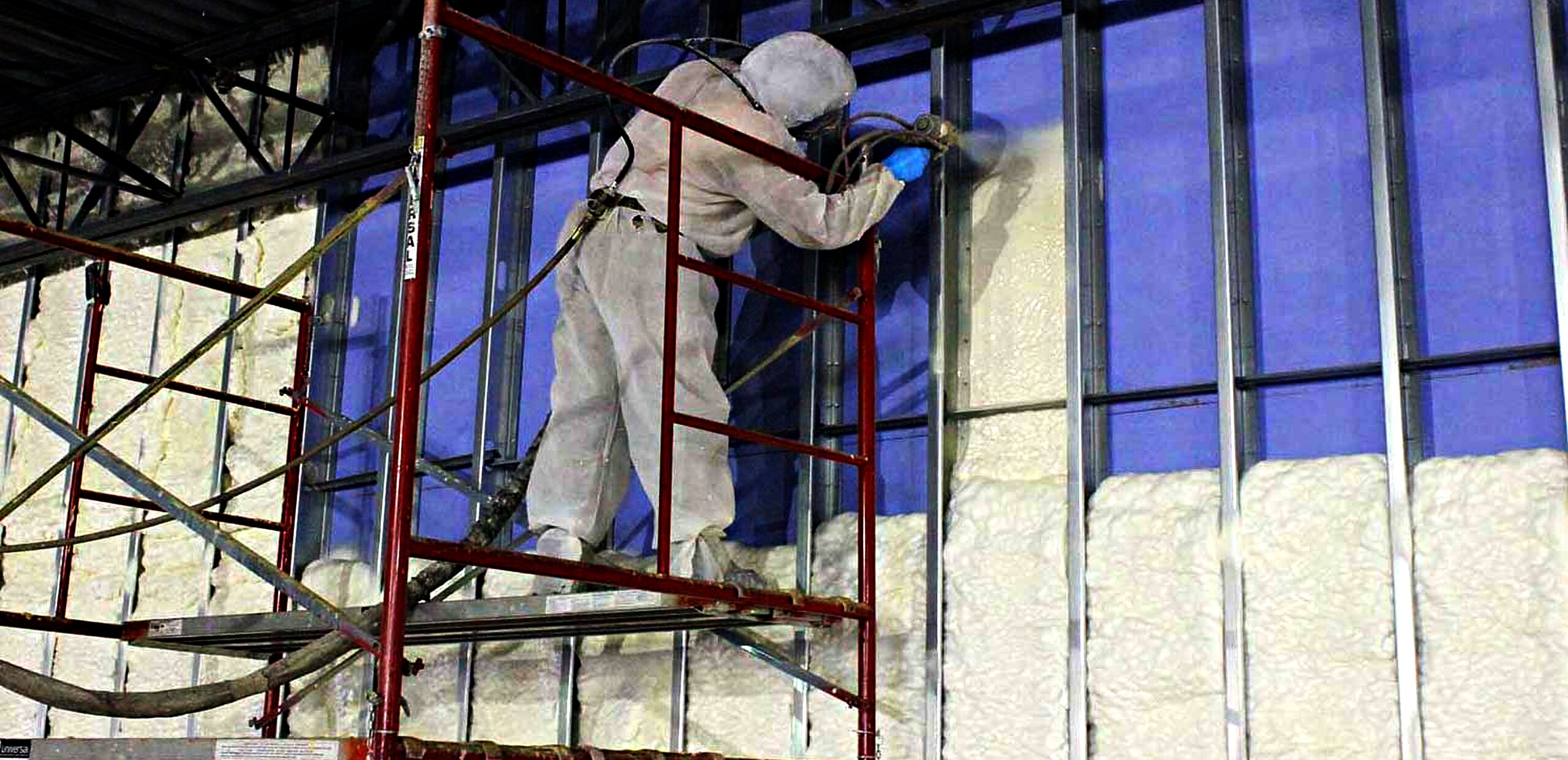
The common choice. A Canadian installer describes foam following "the arch from the base rail up over the crown," bonded "directly to the corrugated steel." Plan on 1.5 in minimum for vapor control; 2 in is R-13 and 3 in R-19.5. The steel stays cold, but neither air nor much vapor can reach it.
2. Outside, under a coating
A Green Building Advisor commenter suggested 2 in of 3 lb foam outside "(about R14) with an UV protective spray on coating," plus mineral wool or cellulose inside. Outside foam keeps the steel warm. The coating must go on within 2–72 hours of spraying (IBC 1507.14.3, per our roofing cost guide), and a reflective topcoat cuts summer heat; see cool roof coating.
3. Flash and frame
From the same thread: "spray a thin shell of the closed-cell stuff (say, 1") all along the interior to encapsulate the metal...Then build framed walls inside." Make that shell 1.5 in so it counts as a vapor retarder, then fill the framing with cheaper insulation.
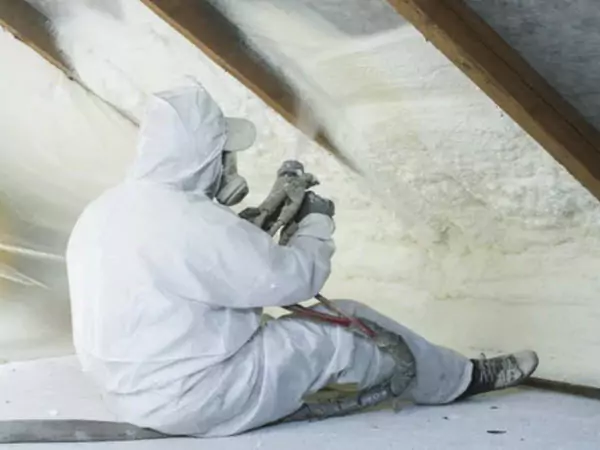
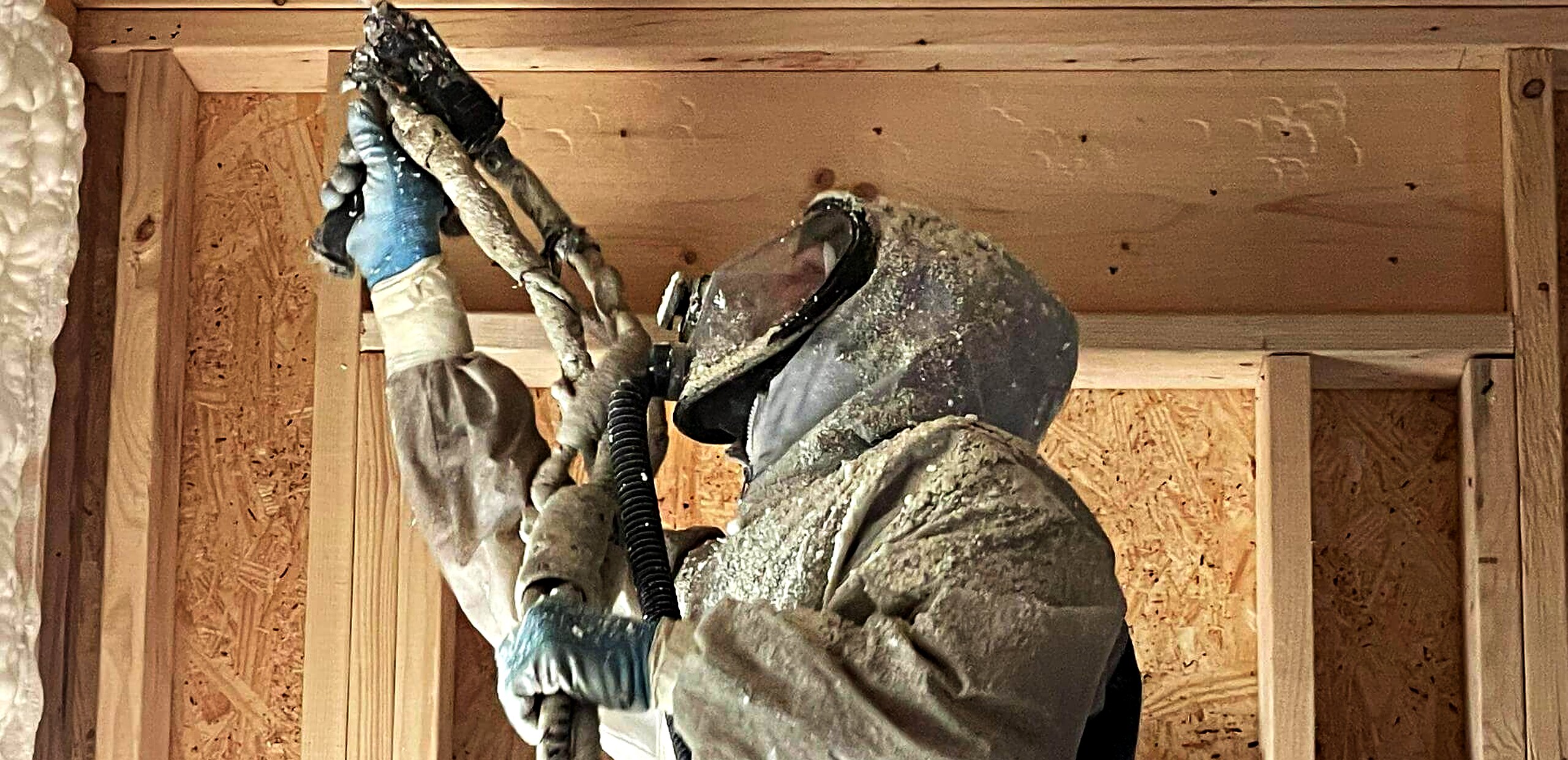
ArmorThane applies closed-cell in lifts of 1.5–2 in to prevent core scorching, and some products cap a pass at 2 in (Gaco 183M data sheet). Cold steel hurts adhesion; see spraying foam in cold weather.
Quonset condensation risk checker
Enter indoor conditions, a cold night and your insulation. The checker finds the dew point, the temperature of the first surface the room air touches and of the steel, and the closed-cell thickness that keeps things dry.
Will my quonset sweat?
Dew point: NWS formula. Air films R-0.68 inside, R-0.17 outside (ColoradoENERGY). Closed-cell R-6.5 per inch, open-cell R-3.5, bubble foil R-1.1 with no air space (Reflectix).
What the numbers show
At 60°F inside, 50% humidity and 10°F outside, the first surface the room air touches sits at:
Bars scaled to the 60°F room; our arithmetic.
Foil clears the dew point by barely a degree, so a colder night or a little more humidity tips it over. Foam clears it by 15°F; for closed-cell inside, the 1.5 in vapor-retarder threshold usually sets the minimum.
Get new quonset, shop and barn insulation guides, condensation fixes and price updates by email. Join the ArmorThane newsletter.
Thermal barriers, ignition barriers and coatings
Foam plastic burns, so codes cover it. IRC R316.4 says foam "shall be separated from the interior of a building by an approved thermal barrier of minimum 1/2 inch gypsum wallboard or a material tested per NFPA 275." The building code's section 2603.4 uses the same 1/2 in gypsum standard.
Drywall or a tested equivalent
A "15-minute" thermal barrier limits the temperature rise to 250°F at 15 minutes (SPFA). Drywall is hard to hang on a curve; framing an interior room inside the arch is one way around that.
Intumescent coatings
Coatings are approved through ICC-ES AC377 plus large-scale fire tests such as NFPA 286 or UL 1715 (SPFA). One example: Gaco 183M lists vertical surfaces up to 5.5 in with DC315 at 20 mil wet.
Ignition barriers are narrower
The lighter ignition-barrier options (1½ in mineral fiber, ¼ in plywood, ⅜ in gypsum, 0.016 in steel and others) apply to attics and crawl spaces entered only for service, which describes few quonset interiors.
Ask before you spray
Codes are enforced locally, and a farm building, a shop and a home can be treated differently. Ask your building department, and ask the applicator for the product's data sheet and evaluation report.
Foam must also meet flame spread 75 or less and smoke-developed 450 or less (IRC R316.3). After spraying, EPA notes "some manufacturers recommend 24 hours" before re-occupancy.
Quonset hut insulation cost
One building priced every way: a 40 × 60 ft Q-model with both end walls, 5,027 sq ft of steel. Spray foam includes the 10% allowance.
| Option | Installed cost | R-value | Price basis |
|---|---|---|---|
| Bubble foil | $1,508–$10,053 | R-1.1 on steel | $0.30–$2.00 per sq ft radiant barrier (HomeGuide) |
| Faced fiberglass blanket | $4,021–$13,069 | As labeled | $0.80–$2.60 per sq ft (ArmorThane) |
| Rigid foam board | $6,032–$18,598 | R-4 to R-5.6 per inch | $1.20–$3.70 per sq ft (HomeGuide) |
| Closed-cell 1.5 in | $10,782–$25,711 | ≈R-9.8 | $1.30–$3.10 per board foot (Angi) |
| Open-cell 3.5 in | $11,611–$30,964 | R-12.3 to R-13.3 | $0.60–$1.60 per board foot (Angi) |
| Closed-cell 2 in | $14,376–$34,281 | ≈R-13 | $1.30–$3.10 per board foot (Angi) |
| Foam roof outside, shell only | $15,080–$26,389 | 1.5 in ≈ R-9.8 | $4.00–$7.00 per sq ft (ArmorThane) |
Sources spread widely: BuildingsGuide (Feb. 2026) lists spray foam at $1.50–$2.50 per sq ft, below Angi's closed-cell price at any useful thickness. Our spray foam insulation cost guide tracks national ranges, and HomeGuide notes minimum job fees of "$1,000 to $2,000 or more." For context, HomeGuide puts a 40 × 60 quonset at $48,000–$120,000 installed. Want a firm number for your building? Request a free quote from a certified applicator.
How to insulate a quonset hut, step by step
Decide how warm and how wet
Cold storage, a heated shop and a home need different answers. Know your target temperature and moisture sources first.
Fix leaks, then clean the steel
A roof leak looks like condensation. Seal leaks, then "clean the interior steel surface with a suitable degreaser" (Insulation4Less).
Stop the ground moisture
Under a new slab, Agribilt calls for 6-mil polyethylene with 6 in overlaps.
Seal the base and end walls
Run insulation continuously from the base rail over the crown and tie it into the end walls.
Install the insulation
Foam in 1.5–2 in lifts on warm, dry steel. For pinned blankets or foil, Insulation4Less suggests one pin per 2 sq ft on lower walls, one per sq ft on the curve and two per sq ft at the crown, every seam taped.
Cover it and ventilate
Add the thermal barrier or coating, then vent moisture: Agribilt's rule of thumb is 4–6 air changes an hour for a shop.
End walls, doors and the base
End walls are flat, often framed, so batts, board or foam all fit. They are a quarter of the 40 × 60 example: 1,257 of 5,027 sq ft. Weatherstrip or insulate big doors and subtract their area in the calculator. Seal where the arch meets the foundation.
DIY or hire a pro
Blankets and foil are DIY jobs. SteelMaster says its kits can be installed "with as little as two people."
Spray foam kits fit small huts and patches. Angi puts DIY kits at $350–$800 for 200–600 sq ft each; a 40 × 60 shell is over 5,000 sq ft. DOE notes most liquid foam "requires special equipment and certification." Our DIY spray foam guide covers kits and safety.
Hiring? Get the product, installed thickness, R-value, thermal barrier plan and re-occupancy time in writing. Our guide to vetting spray foam insulation contractors lists the questions and certifications.
Storage, mild climates
A pinned, taped blanket or foil kit on a building heated little or not at all.
Heated shops and homes
Closed-cell foam on the whole arch plus a thermal barrier plan.
Closed-cell foam on the arch, sprayed by certified applicators
ArmorThane makes ArmorFoam closed-cell spray foam and spray foam roofing systems, and has trained independent applicators since 1989, now in more than 50 countries. For a quonset that means closed-cell foam bonded to the steel inside, or foam and a protective coating outside.
Blankets and foil on a storage building don't need us. For the rest, find a certified applicator near you, or join the newsletter below for new insulation guides.
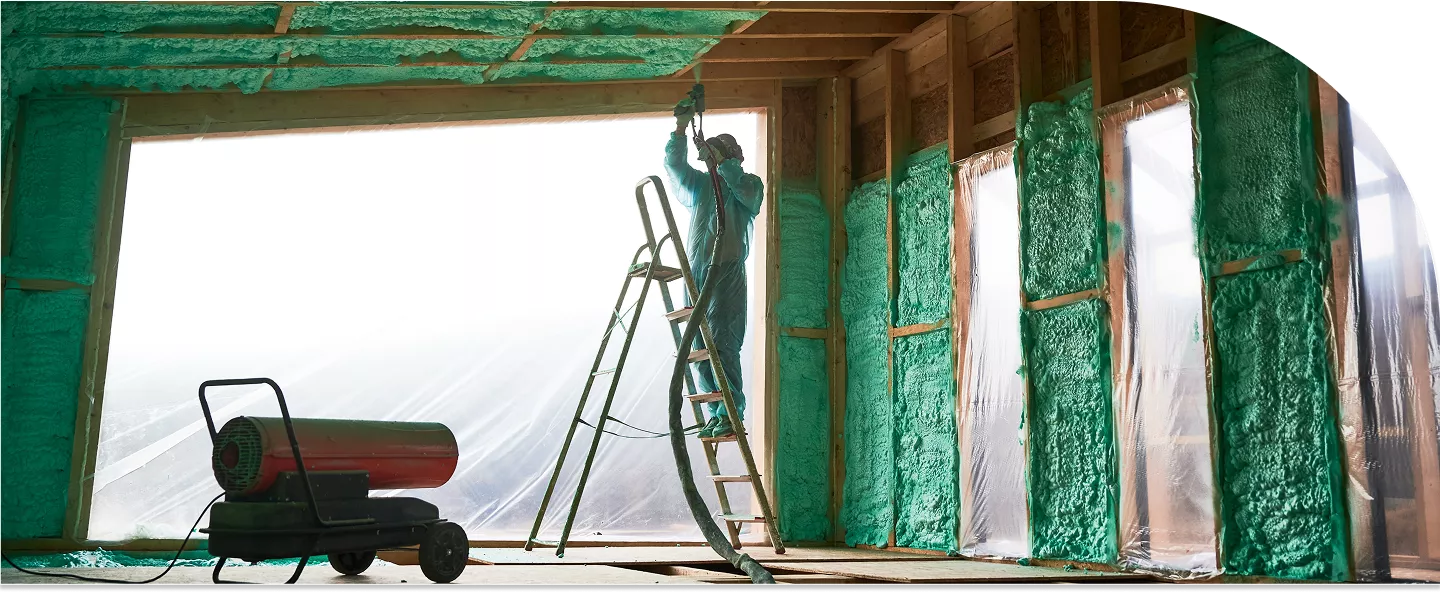
ArmorFoam closed-cell
R-6.5 per inch aged and 1.9 lb/ft³ in our closed-cell guide; the data sheet governs.
Foam and coatings
Interior foam on the steel, or exterior spray foam roofing under a protective coating.
Tech line for applicators
Certified applicators can call our technical line around the clock.
Arch buildings need foam. Be the crew that sprays it.
We supply the spray equipment, ArmorFoam and on-site or virtual training that ends in certification. Turnkey systems start at $25,000, low-pressure 1:1 equipment from $20,000, and third-party financing is available. No franchise, dealership or royalty fee.
Quonset insulation FAQ
What is the best way to insulate a quonset hut?
Closed-cell spray foam sprayed directly on the steel is the most reliable option. It bonds to the corrugations, leaves no air gap and becomes a Class II vapor retarder at 1.5 in (Building Science Corporation); 2 in gives about R-13. A pinned fiberglass blanket with every seam taped costs less and suits storage buildings.
How much does it cost to insulate a quonset hut?
A 40 × 60 ft Q-model with both end walls has about 5,027 sq ft of steel. At Angi's $1.30–$3.10 per board foot (Sep. 2026), 2 in of closed-cell runs about $14,400–$34,300 with a 10% allowance. A faced fiberglass blanket runs about $4,000–$13,100. Many foam contractors charge a $1,000–$2,000 minimum.
How do I stop condensation in my quonset hut?
Keep humid air off the cold steel and cut moisture at the source. Closed-cell foam bonded to the steel does the first, as does a blanket with every seam and pin taped. Vent heaters and welding outside, put a vapor barrier under new slabs and ventilate; Agribilt suggests 4–6 air changes an hour for a shop.
How thick should spray foam be in a quonset hut?
For closed-cell sprayed inside, 1.5 in is the practical minimum, because that is where it becomes a Class II vapor retarder. At R-6.5 per inch, 2 in gives R-13 and 3 in R-19.5 (ArmorThane). It goes on in lifts of about 1.5–2 in. Heating, climate and budget decide how far above the minimum you go.
Why does my quonset sweat even with insulation?
Usually humid air is reaching the steel behind the insulation through open seams, torn facing or unsealed pins, and that steel sits near the outdoor temperature. Open-cell foam against steel lets vapor through. Bubble foil can sweat on its own face: in a 60°F, 50% humidity shop on a 10°F night, it sits only about 1°F above the dew point.
Does bubble foil insulation work in a quonset?
Not well against winter heat loss. Reflective insulation needs an air space; pressed against steel, Reflectix says its product gives R-1.1, and its FTC fact sheet rates a ceiling at R-1.0 in a northern winter. Foil helps more against summer sun. Treat vendor R-15 to R-22 figures as ratings for assemblies with air spaces.
Can you insulate the outside of a quonset hut?
Yes. Closed-cell foam sprayed over the arch under a UV-protective coating keeps the steel warm, so it cannot sweat. ArmorThane's roofing cost guide puts spray foam roofing at $4.00–$7.00 per sq ft installed, with 1.5 in (about R-9.8) common, and notes code requires the coating within 2–72 hours of spraying.
Does spray foam in a quonset need a thermal barrier?
In an occupied building, generally yes. The residential code requires foam to be separated from the interior by 1/2 in gypsum wallboard or a material tested to NFPA 275, and the building code's section 2603.4 matches it. Alternatives on a curve include a framed interior or a fire-tested intumescent coating. Ask your building department what applies.
Can I spray foam a quonset hut myself?
For a small hut or patches, possibly. Angi puts DIY kits at $350–$800 for 200–600 sq ft each, while a 40 × 60 Q-model has about 5,000 sq ft of steel. DOE notes most liquid foam requires special equipment and certification. Pinned blankets and foil are the realistic DIY route; SteelMaster says two people can install its kits.
How do you calculate the square footage of a quonset hut?
For a semicircle (Q-model), the arch length is pi times half the width; multiply by the building length for the shell. Each end wall is pi × width squared ÷ 8. A 40 × 60 ft Q has a 62.8 ft arch, a 3,770 sq ft shell and two 628 sq ft end walls. S- and A-models add straight sidewalls.
Should I use open-cell or closed-cell foam in a quonset?
Closed-cell for anything touching the steel. Open-cell costs less ($0.60–$1.60 vs $1.30–$3.10 per board foot, Angi) and stops air, but lets vapor through to the cold steel. ArmorThane's metal building guide says to use open-cell only as a fill layer over closed-cell, never against the metal of a heated building.
How do you insulate quonset end walls?
End walls are flat and often framed, so batts, rigid board or spray foam all fit. Seal the joints where the end wall meets the arch and the foundation. In a 40 × 60 Q-model the two end walls total about 1,257 sq ft, a quarter of the steel, so make sure any quote includes them.
Written from quonset maker specifications, building science and code sources, dated cost guides and decades of making spray foam. Reviewed September 27, 2026.
Methodology and sources
Arches use circle geometry (semicircle, circular segment, or walls plus a 4:12 gable), rounded corners ignored. Board feet include a 10% allowance (our default). Surface temperatures are steady-state with 0.68 and 0.17 air films and steel counted as zero; clear-night radiation is ignored. "Close call" means within 5°F of the dew point (our margin). Estimates, not engineering or code advice.
- SteelMaster, quonset models and insulation pages (Jun.–Sep. 2026): steelmasterusa.com
- QuonsetKits, Condensation in Quonset Buildings (Jun. 2026): quonsetkits.com
- Agribilt, Quonset Hut Condensation (Dec. 2025) and Quonset Insulation Options (Mar. 2025): agribilt.com
- Green Building Advisor, How would you insulate a metal Quonset hut? (Mar. 2015): greenbuildingadvisor.com
- Advance Insulation, Spray Foam vs Traditional Insulation for Quonsets (Aug. 2026): advanceinsulation.ca
- Insulation4Less, Quonset Hut Insulation Guide (read Sep. 27, 2026): insulation4less.com
- Building Science Corporation, GM-2102 Residential Spray Foam Guide (Jan. 2021): buildingscience.com
- Huntsman Building Solutions, BES-102 Design Note (Oct. 2022): huntsmanbuildingsolutions.com
- Reflectix, FAQ and FTC Fact Sheet N39 (Jan. 2018): reflectixinc.com
- ColoradoENERGY.org, R-Value Table: coloradoenergy.org
- National Weather Service, vapor pressure formula: weather.gov (PDF)
- Angi, Spray Foam Insulation Cost (Sep. 2026): angi.com
- HomeGuide, insulation, spray foam (Dec. 2025) and quonset hut (Jan. 2024) cost guides: homeguide.com
- BuildingsGuide, Quonset Hut Prices (Feb. 2026): buildingsguide.com
- SprayFoamCalc, Quonset Hut Insulation Cost (read Sep. 27, 2026): sprayfoamcalc.com
- IRC R316, via City of Little Falls Foam Plastics handout: cityoflittlefalls.com
- UpCodes, Thermal barrier (IBC-based 2603.4): up.codes
- SPFA, Thermal Barriers and Ignition Barriers for SPF (2011): sprayfoam.org
- Gaco, 183M Closed-Cell Foam product data sheet (Nov. 2022): gaco.com (PDF)
- U.S. DOE Energy Saver, Types of Insulation: energy.gov
- U.S. EPA, Vacate and Safe Re-Entry Time for SPF Application (Sep. 2020): epa.gov
- ArmorThane guides on closed-cell foam, metal buildings, foam roofing cost and containers (read Sep. 27, 2026): armorthane.com
Dripping steel, a shop you can't heat? Get a quote from a certified applicator.
Tell us the model, width and length, and how you use the building. We'll connect you with an ArmorThane-certified applicator who can quote closed-cell foam inside, a foam roof outside or both.
- Closed-cell foam sprayed to the arch
- End walls, base rails and doors sealed
- Thermal barrier and coating options explained
- Contractors: ask about becoming an ArmorThane applicator
More to read on spray foam
Short reads from ArmorThane on Issuu. Tap one to open it right here.