




Spray Foam Proportioners: How to Choose
How a plural-component proportioner meters, heats and pumps foam and polyurea, the main machine types, how to size one for your work, and what to check before you buy.
Start a protective coatings business
Spray protective coatings for a living.
ArmorThane sets you up to do this work, and you own the business. We make the chemistry, build the rigs, train you hands-on and answer the phone when a job gets difficult. You pay no franchise fee and no royalties. It has been that way since 1989.
- $0
- franchise fees or royalties
- 35+
- years in business
- 50+
- countries with applicators
- 24/7
- technical support
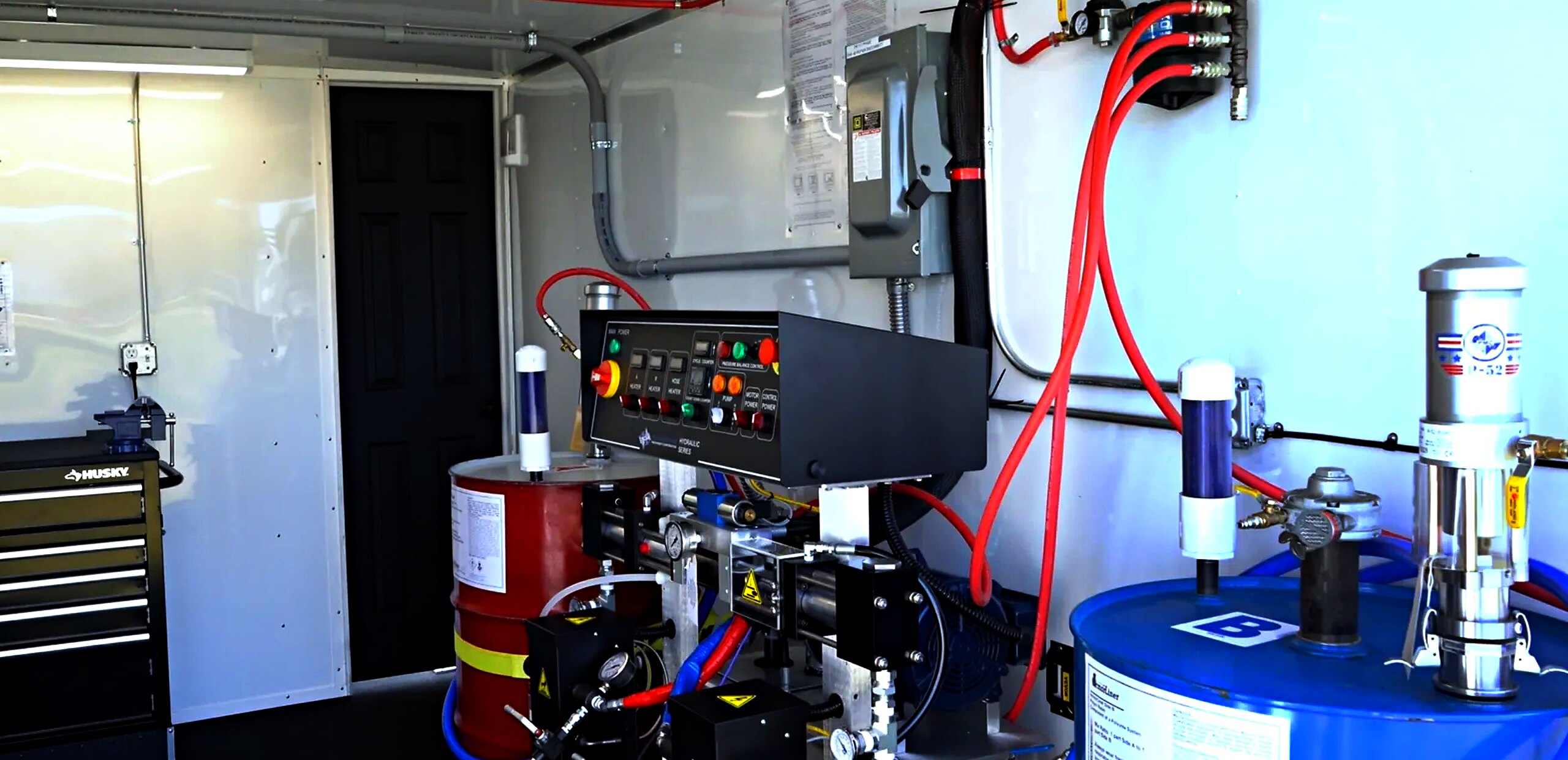
The proportioner is the heart of every spray foam and polyurea rig. It decides how much material you can spray in a day, how well the A and B sides mix, and how much downtime you lose to pressure and heat problems. ArmorThane designs and builds spray rigs in Springfield, Missouri, and this guide explains how proportioners work and how to pick one without overbuying or underbuying.
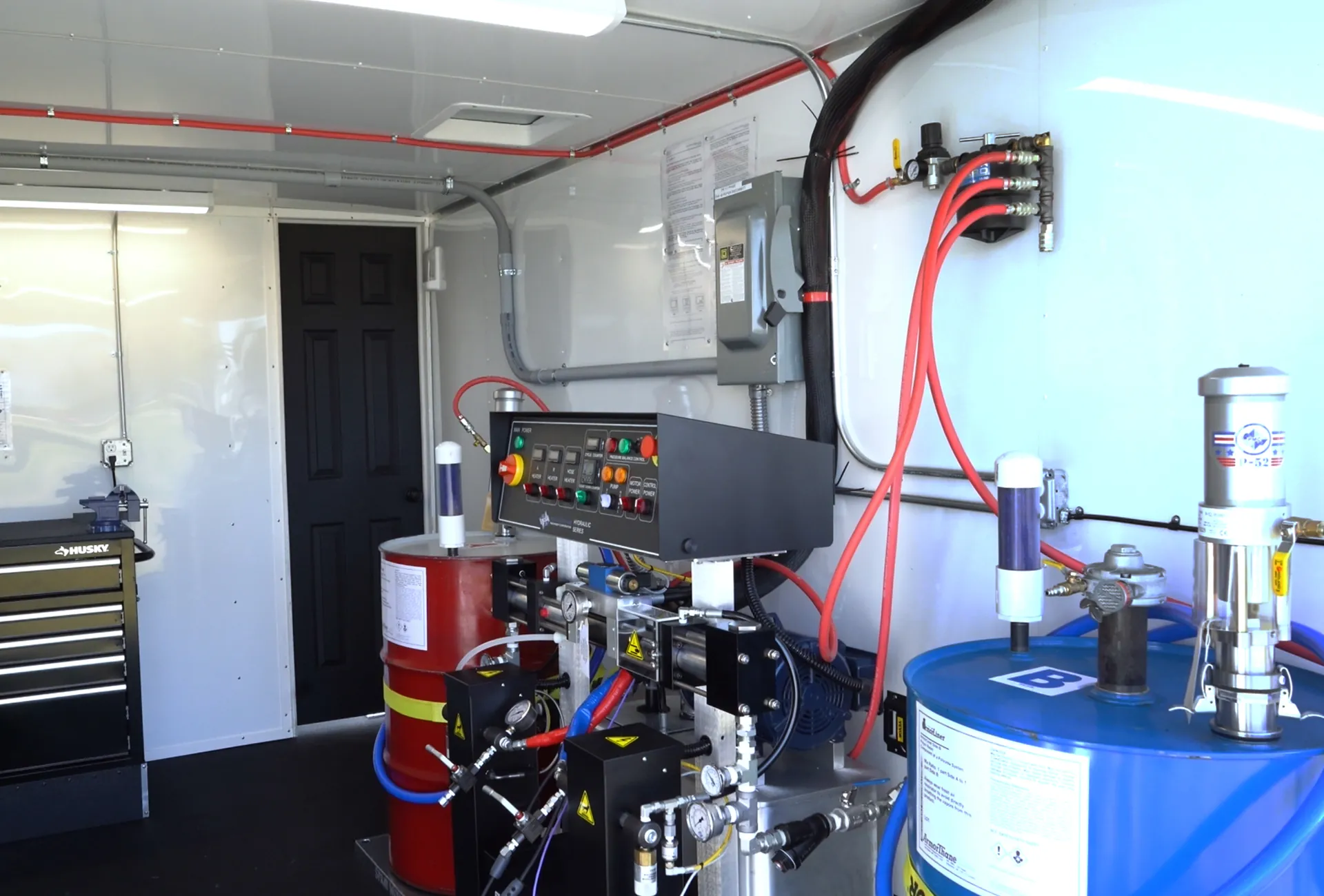
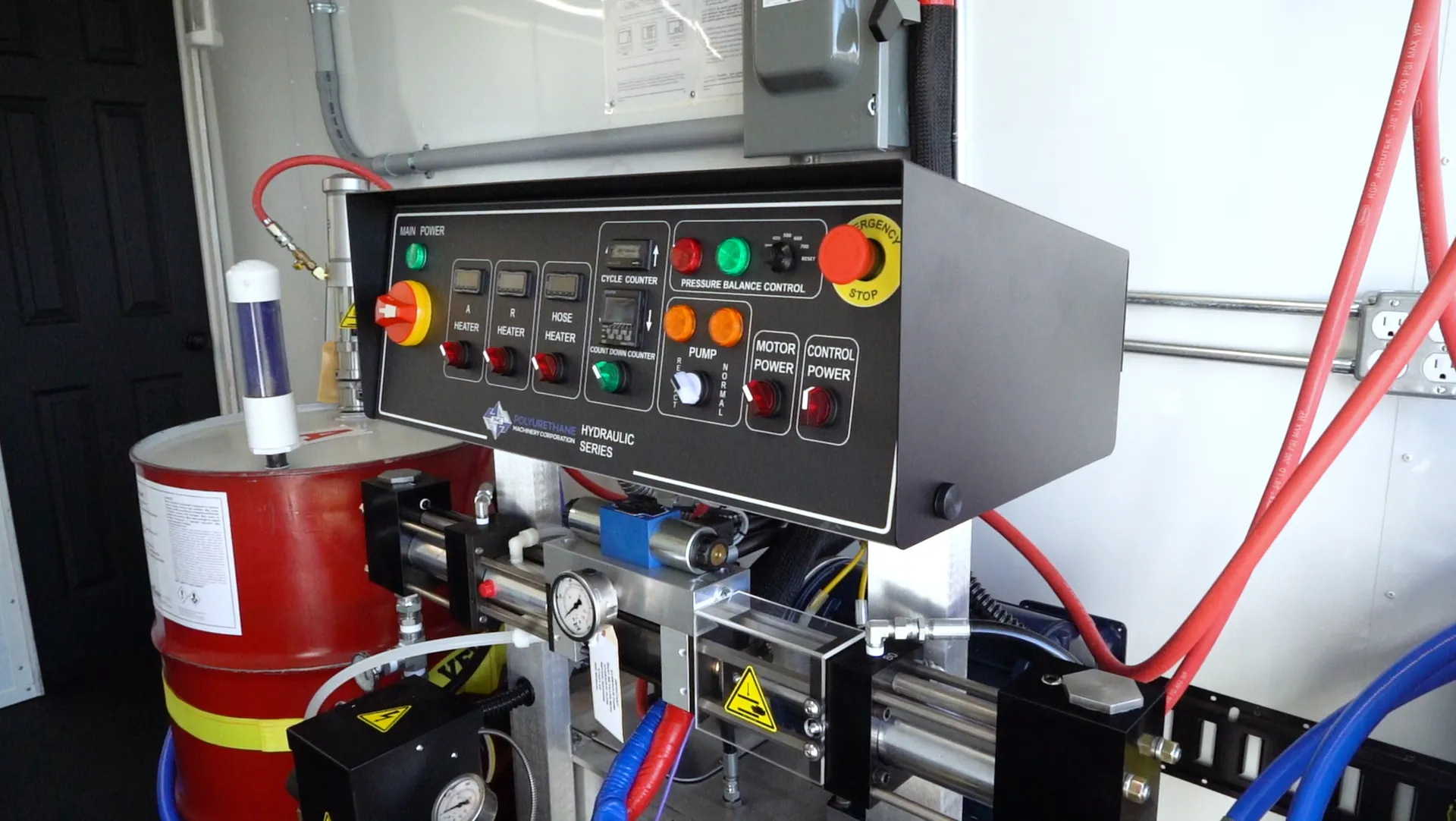
A spray foam proportioner is a plural-component pump that draws the isocyanate (A side) and resin (B side) from drums, meters them at a fixed ratio (usually 1:1 by volume), heats both and pushes them at high pressure through a heated hose to an impingement-mix spray gun. Machines are driven electrically, by air (pneumatic) or hydraulically. Choose by the output you need in pounds per minute, the heater wattage to reach your spray temperature, the hose length you will run and the power available on site.
How a proportioner works
Spray foam and polyurea are two liquids that react when they mix. The proportioner keeps them apart until the last moment, then delivers both at the right ratio, temperature and pressure so they mix completely in the gun. Get any of those three wrong and you get off-ratio material: soft or brittle foam, tacky polyurea, poor adhesion and wasted chemical.
Metering pumps
Paired pumps move equal volumes of A and B on every stroke to hold the ratio.
Primary heaters
Heat each side to the spray temperature on the data sheet, which lowers viscosity for a fine mix.
Heated hose
Keeps material at temperature from the machine to the gun, often over long runs.
Impingement gun
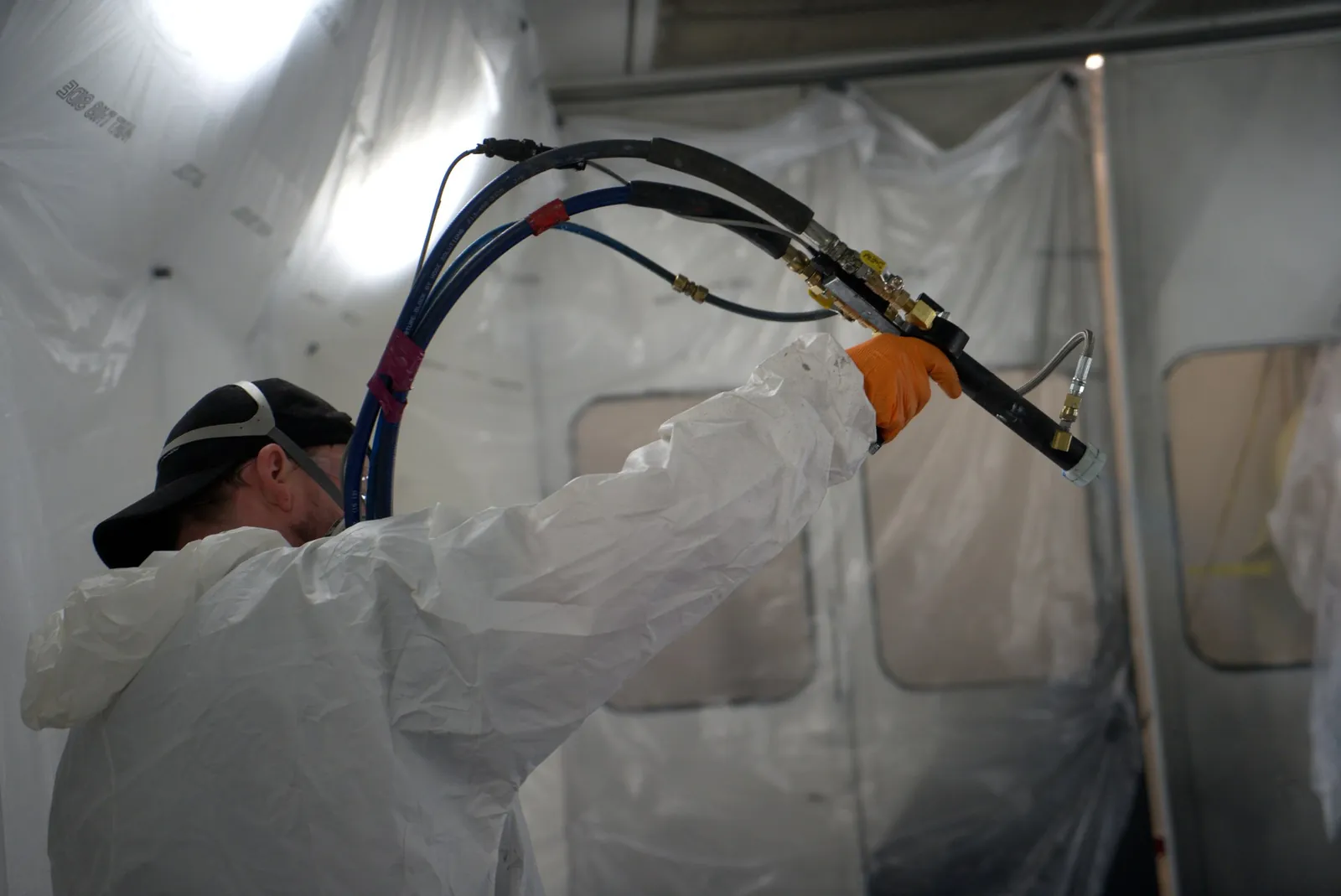
A and B collide at high pressure in a small mix chamber and leave the tip reacting.
Transfer pumps
Feed the proportioner from the drums at steady pressure so the pumps never starve.
Controls and alarms
Display pressure, temperature and imbalance, and shut down before off-ratio spraying.
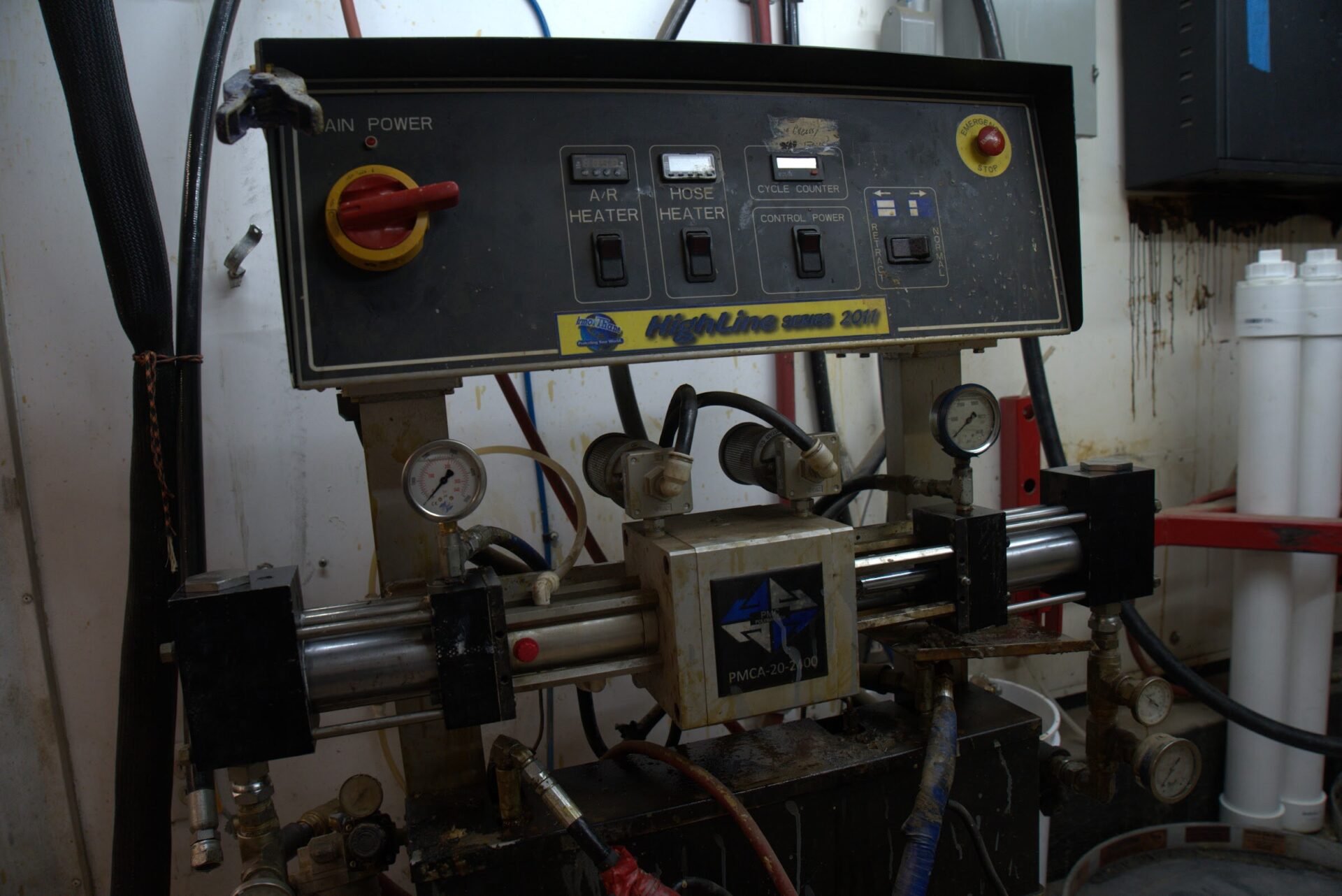
Electric vs air vs hydraulic
| Drive type | How it works | Strengths | Watch-outs |
|---|---|---|---|
| Pneumatic (air) | Air motor drives the pumps | Simple, lower cost, light; good for smaller jobs and training | Needs a large compressor; output and pressure limits |
| Electric | Electric motor drives the pumps | Efficient and quiet, steady pressure, common in mid-size rigs | Needs adequate power or generator capacity |
| Hydraulic | Hydraulic power pack drives the pumps | High output and pressure for big foam and polyurea work | Higher cost, weight and generator demand |
How to size a proportioner
Pounds per minute
Match maximum output to the biggest jobs you will spray, not the smallest. Commercial foam and roofing need more than small residential work.
Heater wattage
Cold climates, cold drums and high output all demand more heat to hold spray temperature.
Hose length
Long hose runs add pressure drop and heat loss. Plan for the farthest point on a typical job.
Power on site
Electric machines need a generator sized for the proportioner, hose heat and compressor at full load.
Foam vs polyurea
Polyurea and coatings usually need higher pressure and temperature than foam.
Parts and service
A machine you cannot get parts for is downtime. Ask who stocks pumps, seals and heaters.
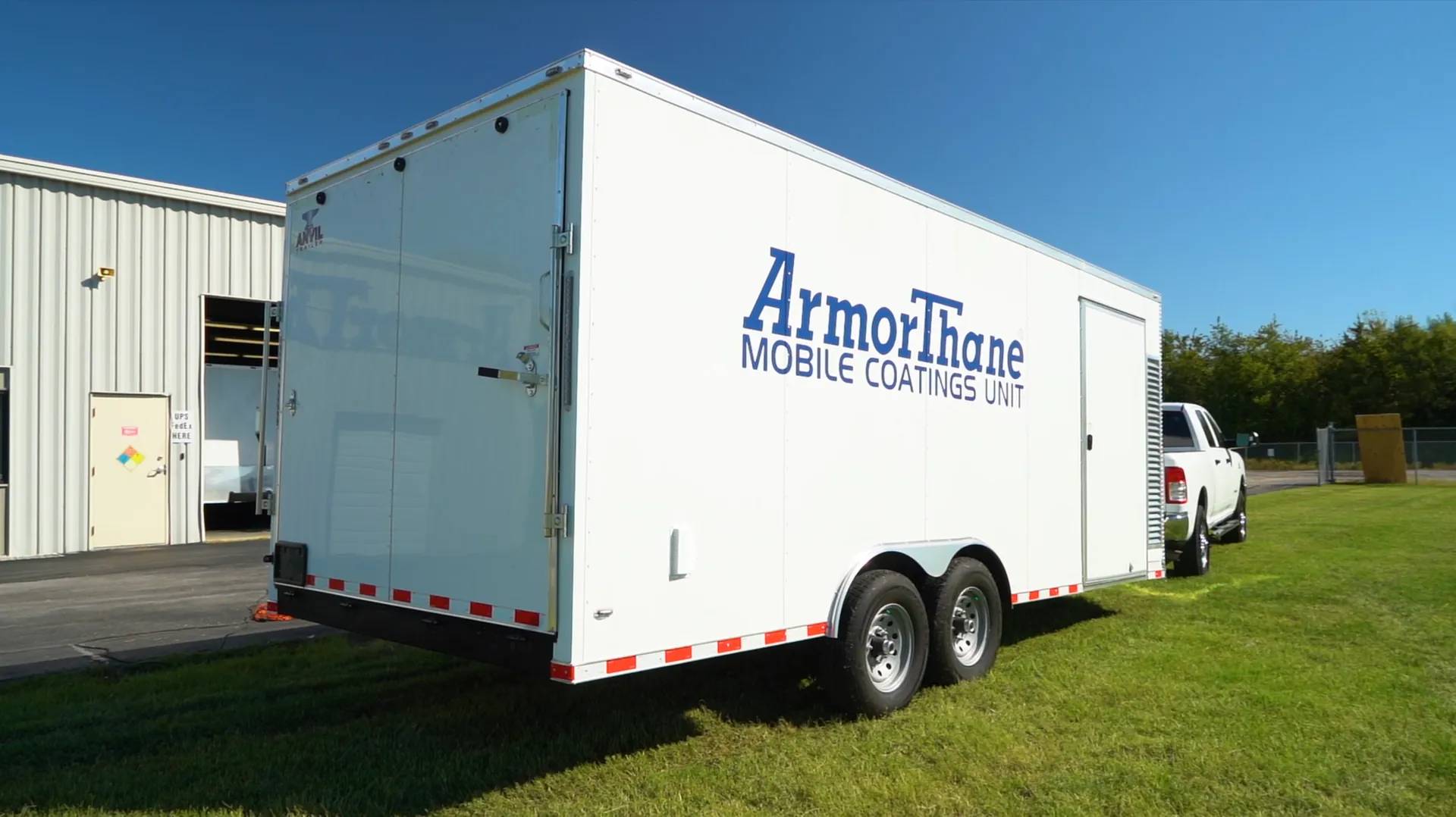
Our standard spray rigs pair the proportioner with a generator, air compressor and dryer, heated hose and drum storage sized to run together at full load. See spray foam rigs and polyurea spray rigs.
Proportioner buying checklist
- What you will spray: open-cell, closed-cell, roofing foam, polyurea or all of them.
- Output: maximum pounds per minute at your spray pressure.
- Heat: primary heater wattage and hose heat for your climate.
- Hose: standard length and how far it can be extended.
- Data: pressure, temperature and ratio monitoring with job reports.
- Training: who teaches your crew to set up, spray and troubleshoot.
- Service: parts availability and response when the machine is down.
Proportioner care and shutdown
Keep moisture out
Isocyanate reacts with moisture. Use desiccant dryers on drums and keep the A side sealed.
Watch the gauges
Rising imbalance between A and B pressure is the first sign of a feed, filter or pump problem.
Clean filters and screens
Check inlet strainers and gun screens on a schedule.
Lubricate pumps
Keep the throat seal lubricant (TSL) cups topped and clean.
Shut down correctly
Park the pumps and follow the short and long term shutdown steps in our proportioner shutdown guide.
Get a machine built for your work.
ArmorThane builds proportioners into complete foam and polyurea rigs and trains your crew to run them. Tell us what you will spray.
Contractors: become an ArmorThane applicator
Spray foam proportioner questions
What is a spray foam proportioner?
It is the machine that meters, heats and pumps the two components of spray foam or polyurea to the spray gun at a fixed ratio and high pressure.
Can one proportioner spray foam and polyurea?
Yes, many machines spray both. Size it for polyurea, which typically needs higher pressure and temperature than foam.
Electric or pneumatic proportioner?
Pneumatic machines are simpler and lower cost for small work. Electric machines give steadier pressure and more output for production foam and polyurea, but need a generator sized for the full load.
How much does a spray foam proportioner cost?
Price depends on drive type, output, heat and controls, and whether it comes as a bare machine or a complete rig. Contact our equipment team for current pricing.
What causes off-ratio spraying?
Starved feed pumps, clogged screens, worn pump seals, wrong temperatures and pressure imbalance are the usual causes. Watch the gauges and stop spraying when pressures drift apart.
Sources
- Spray Polyurethane Foam Alliance, industry guidance and training. sprayfoam.org
- U.S. EPA, spray polyurethane foam safety information. archive.epa.gov/epa/saferchoice/spray-polyurethane-foam-spf-insulation-and-how-use-it-more-safely.html
- OSHA, isocyanates safety and health topic. osha.gov/isocyanates

Start your coatings business with ArmorThane.
Tell us what you want to spray and where you are. An ArmorThane specialist will walk you through the equipment, chemicals, training and startup cost for the work you want to do.
- Equipment package matched to your applications
- Hands-on training and applicator certification
- Technical support once you are spraying
More to read on spray equipment
Short reads from ArmorThane on Issuu. Tap one to open it right here.