Start a Concrete Business: Costs by Service Line
Flatwork, stamped, foam lifting, coatings and sealing compared on startup cost, equipment, licensing, pricing and seasonality, with two calculators. All sourced.
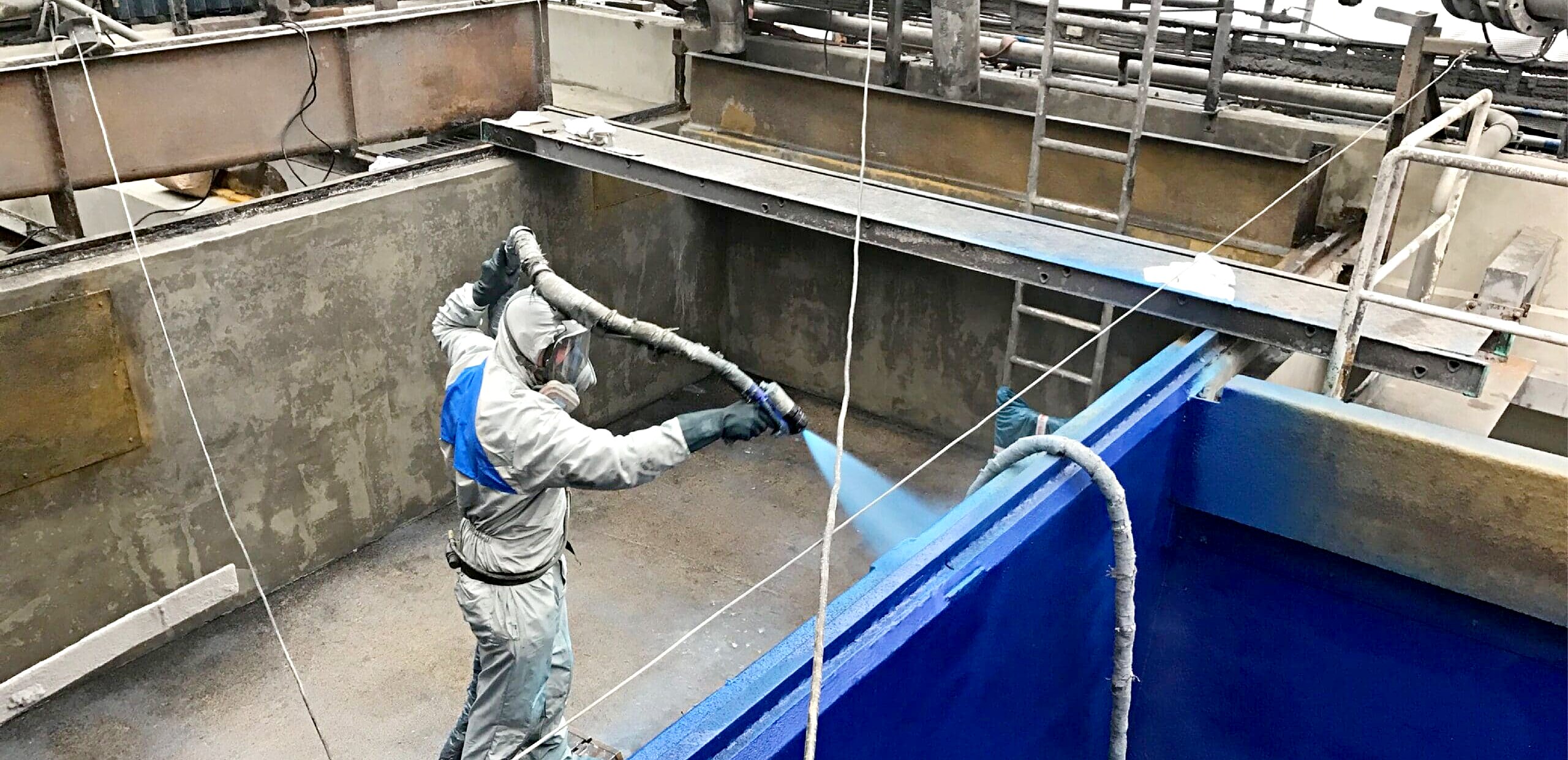
Start a protective coatings business
Spray protective coatings for a living.
ArmorThane sets you up to do this work, and you own the business. We make the chemistry, build the rigs, train you hands-on and answer the phone when a job gets difficult. You pay no franchise fee and no royalties. It has been that way since 1989.
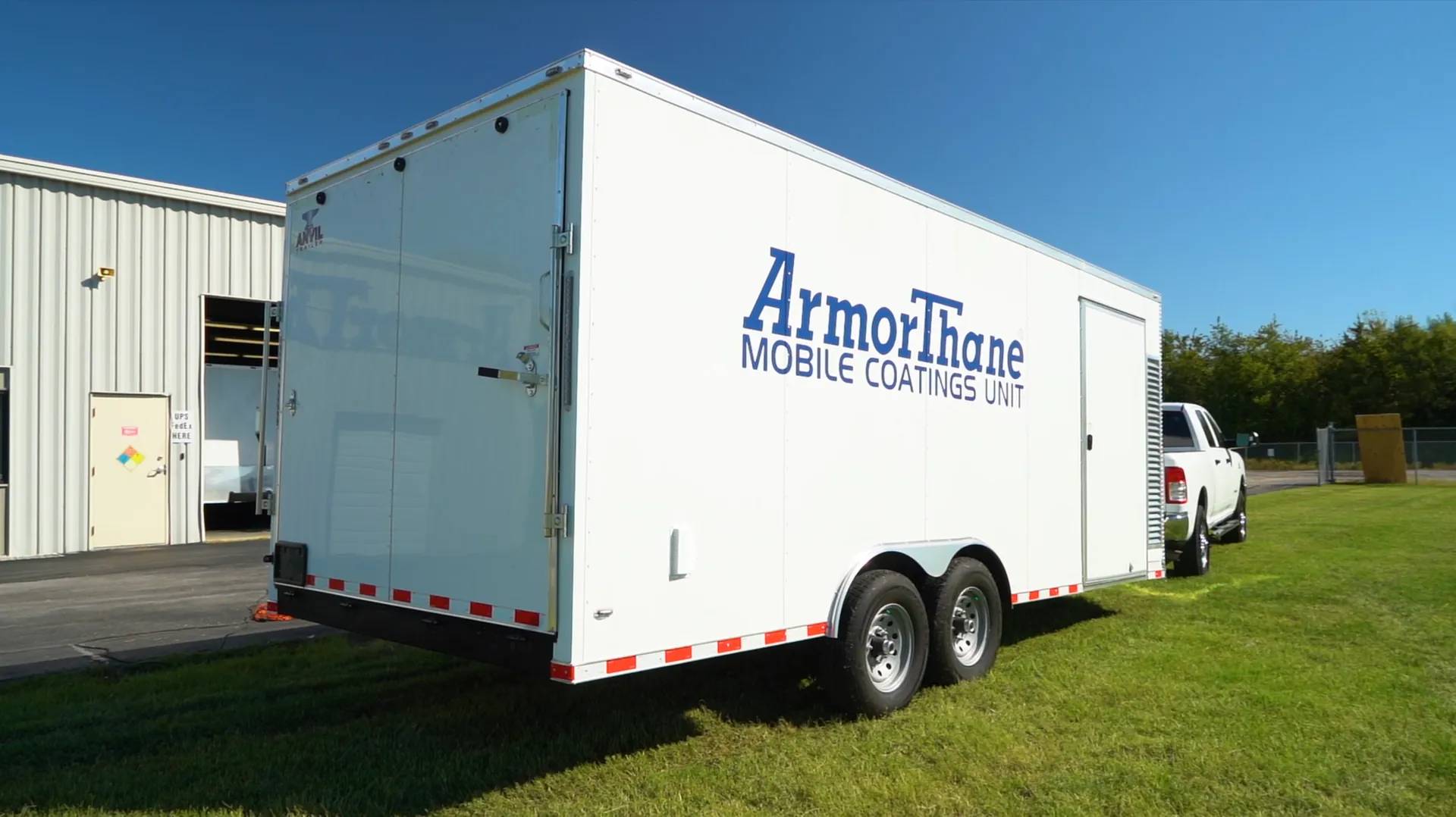
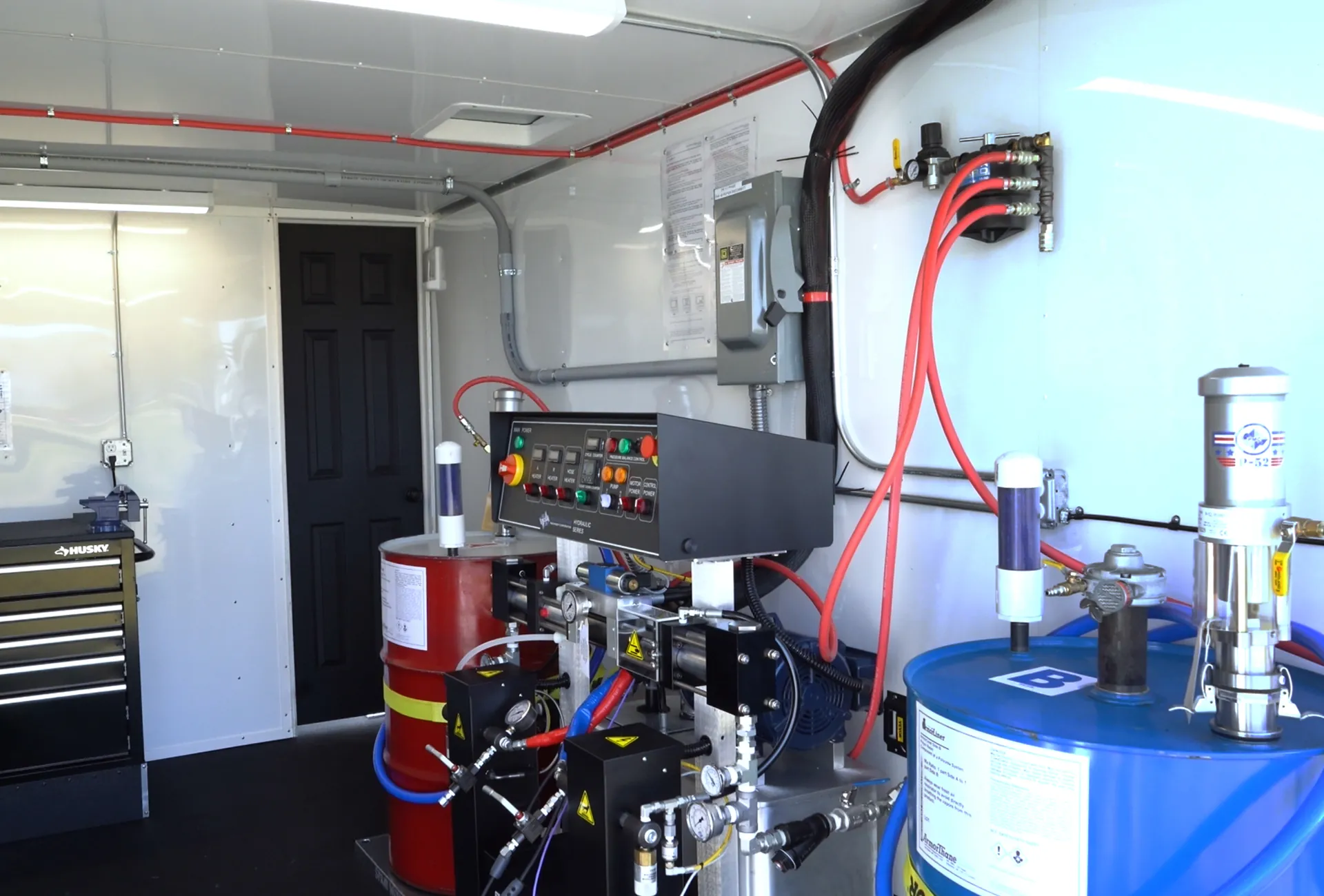
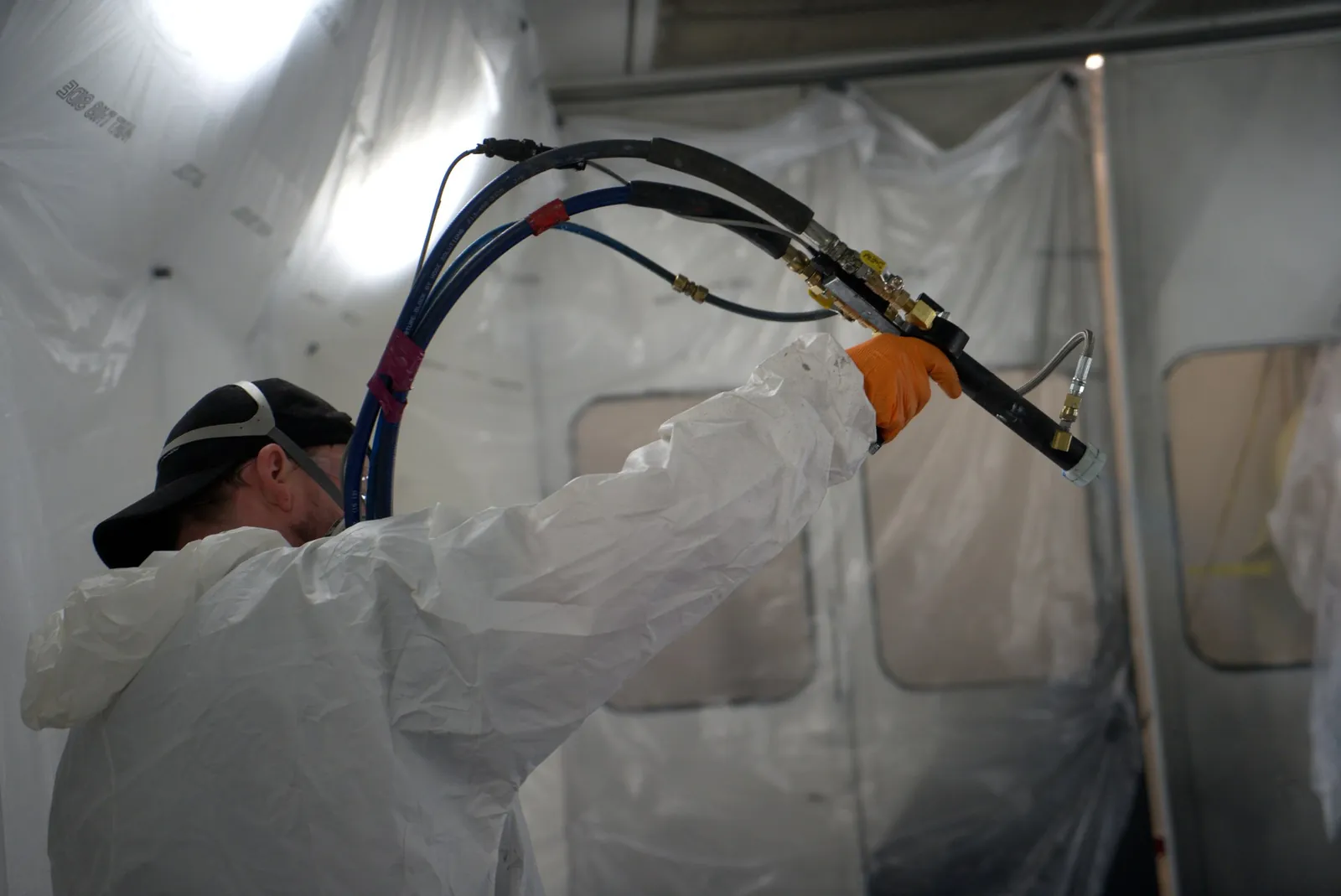
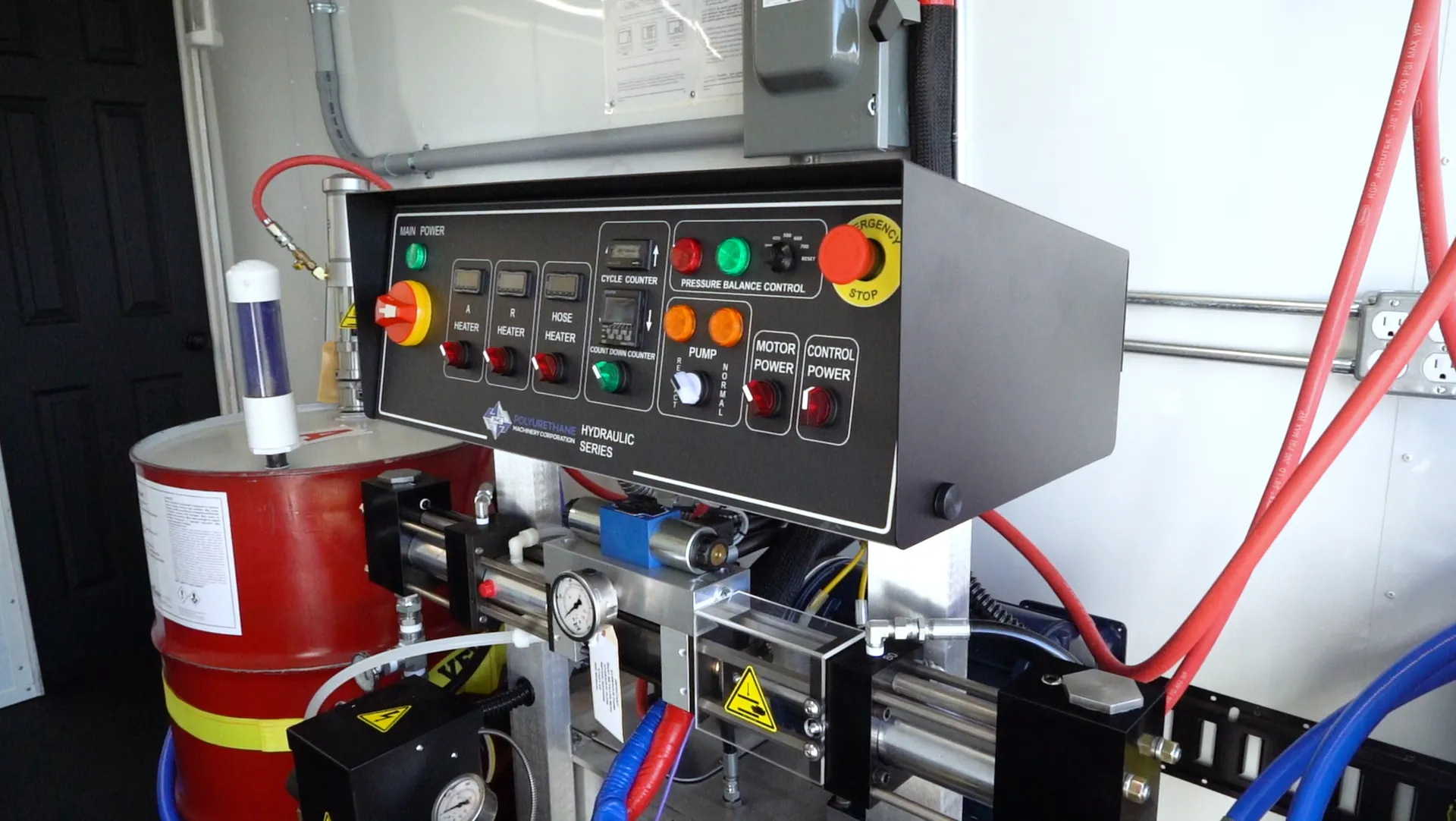
- $0
- franchise fees or royalties
- 35+
- years in business
- 50+
- countries with applicators
- 24/7
- technical support
Most concrete companies start with a screed, a power trowel and a few driveways. Plain flatwork is weather-bound and material-heavy, so many owners look at services that reuse the same customers and truck: stamped work, slab lifting, sealing and coatings. This guide compares those lines on startup cost and earnings, so you can plan the mix before you buy gear.
To start a concrete business, choose your service lines, get licensed and insured, and buy only the gear those lines need. A core flatwork finishing kit costs about $10,900 new, a floor-coating grinding kit about $12,300 and a new foam lifting rig $50,000–$80,000. Customers pay about $6–$10 per sq ft for a standard driveway, $8–$26+ for stamped and $7–$17 for foam lifting. Build your startup budget or compare a pour with a lift.
We make polyurethane lifting foams, polyurea and floor coatings, and we train independent applicators, many of whom already pour concrete. We'd like you to add our systems one day. We'll still give you the flatwork numbers straight, because the right first service depends on your market, not on what we sell.
- 1Choose your service lines
- 2Equipment and startup cost by line
- 3Startup cost builder (interactive)
- 4What customers pay and where the margin is
- 5Pour vs. lift job calculator (interactive)
- 6Adding foam concrete lifting
- 7Adding coatings, sealing and crack repair
- 8Licensing, insurance and silica rules
- 9Seasonality, crews and wages
- 10A 90-day launch plan
- 11Concrete business FAQ
Start a concrete business: choose your service lines
"Concrete business" covers very different companies. A flatwork crew lives on ready-mix, labor and good weather. A lifting crew drills 5/8-inch holes and injects foam from a trailer. A coating crew grinds and rolls. Here's how the common lines compare on published numbers.
| Service line | Startup kit | What customers pay | Typical job | Season and repeat work |
|---|---|---|---|---|
| Flatwork and driveways | ≈$10,900 finishing kit, plus forms and a truck | $6–$10 per sq ft (standard driveway) | 2-car driveway, 400 sq ft: $2,400–$6,000 | Weather-bound pours; ACI publishes a separate guide to cold-weather concreting |
| Stamped and decorative | Flatwork kit plus stamp mats (get quotes) | $8–$13 basic, $13–$19 mid, $19–$26+ high-end per sq ft | 12×12 patio: $1,150–$2,750 | Same season as flatwork; resealing every 2–3 years |
| Foam concrete lifting | $50,000–$80,000 new rig (≈$49,000 starter) | $7–$17 per sq ft typical; HomeGuide lists $8–$25 | $600–$5,000+; national average about $1,235 | Lift 300 is rated for cold, damp ground; northern crews report 6–8 busy months |
| Floor coatings | ≈$12,300 grinding and testing kit | $4–$12 per sq ft | 2-car garage: $1,600–$4,800 | Mostly garages, shops and basements |
| Sealing | Sprayer and rollers; sealer $0.10–$0.75 per sq ft | $1.35–$2.50 per sq ft | 1,000 sq ft: about $1,500 | Reseal every 1–5 years depending on wear |
| Crack injection | Injection gear (pro prices not published); DIY kits $99–$473 | $250–$800+ per crack | Per crack | Indoor work on basement walls |
Material as a share of the price
One quick way to see where the margin room is: compare what the material costs with what the customer pays. These are midpoints of the published ranges, so treat them as rough.
Our arithmetic. Flatwork and stamped use HomeGuide's per-sq-ft breakdowns (stamping and coloring, $3–$4, is listed separately). Foam assumes a 1-inch average void, 2.5 lb per cubic foot foam, a 25% allowance and about $2.30 per pound (HMI).
Equipment and startup cost by service line
Start with flatwork, since every other line on this page rides on it. You don't need a batch plant or a mixer truck; ready-mix suppliers deliver. You need tools to place, strike off, compact, finish and joint the slab. Here's the core kit at September 2026 retail prices.
| Item | Example | Price | Notes |
|---|---|---|---|
| 36 in walk-behind power trowel | Whiteman J Series, Bartell BC436 | $2,498–$2,728 (Marshalltown $4,045) | 46 in models $3,253–$4,664 |
| Power screed | Husqvarna BV 20 G, Wyco Screed King | $1,693–$2,999 | Strikes off wider pours faster than a hand screed |
| Plate compactor | Bartell BCF2150H, Wacker WP1550A | $2,693–$2,825 | Reversible models from $3,263 |
| Walk-behind saw | Husqvarna FS309 (14 in) | $2,469 (20 in: $2,879) | Early-entry Soff-Cut 150: $3,119 |
| Portable mixer | Imer Minuteman II | $950–$1,859 | Or rent for about $120 a day |
| Ready-mix, delivered | 3,000 psi | About $124 per yd³ | Short loads under 10 yd³: +$53 per yd³ |
| Pumping (as needed) | Trailer pump or boom truck | $15 per yd³ ($125 min) or $140–$190 an hour | Boom trucks carry a 4–5 hour minimum |
The trowel, screed, compactor, 14-inch saw and mixer come to about $10,871 new. Add hand tools, forms, a truck and a trailer, which vary too much to price here.
The other lines
Stamped work adds stamp mats, texture skins, color and release; we couldn't verify a current stamp-set price, so get quotes. Foam lifting needs a rig, $50,000–$80,000 new per LevelRight Marketing, and HMI runs a two-day seminar for $595. Floor coatings need a grinder, HEPA extractor, hand grinder and moisture meter, about $12,300 new; see our floor coating business guide. Sealing needs little more than a sprayer and rollers.
Startup cost builder
Tick the service lines you'll open with and change any amount to match your own quotes. Defaults come from the prices above; insurance uses Insureon's national medians.
What will my service mix cost to open?
Each line's amount covers its equipment, training and first material. Vehicle and marketing are yours to adjust.
What customers pay and where the margin is
Price from your costs, then check the result against what the market pays. The formula floor coaters learn from Xtreme Polishing Systems works for any concrete job: bid = (materials + labor + consumables + trip) ÷ (1 − (overhead % + profit %)). Overhead and profit are shares of the price, not markups on cost, which is where many new contractors underbid.
$6–$10 per sq ft
HomeGuide's standard driveway range, with labor at $3–$7 and materials $3–$8 per sq ft. Removal adds $2–$6, grading $3–$8 and rebar $1–$3 per sq ft. Permits run $50–$200.
$8–$26+ per sq ft
Basic one-pattern work starts at $8–$13; multi-color custom work tops $19. Stamping and coloring adds $3–$4 per sq ft, and customers reseal every 2–3 years at $1–$3 per sq ft.
$7–$17 per sq ft
Typical 2026 band in our concrete leveling cost guide, with a published range of $5–$25. Minimum charges run $300–$700. HMI budgets $200–$300 of foam on a typical job.
$4–$12 per sq ft
A polyurea base, flake and polyaspartic top runs about $2 per sq ft in material. One franchise disclosure shows roughly 48% gross profit after labor and materials.
$1.35–$2.50 per sq ft
Angi's installed range; material is $0.10–$0.75 per sq ft. A 1,000 sq ft job averages about $1,500, and customers reseal every one to five years.
$250–$800+ per crack
HomeGuide's range for injected foundation cracks. It pairs naturally with lifting and waterproofing calls.
Add-on services sell for several times their material cost and reuse customers you already have. The trade-off is equipment for lifting and skill for stamping and coatings. Get new pricing guides and cost updates by email: join the ArmorThane newsletter.
Pour vs. lift job calculator
A sunken driveway can be torn out and repoured or, if it's sound, lifted. Enter the slab once and see both jobs side by side: the flatwork bid from your costs, and the foam job at a market price. The $220 "fixed costs per lift" default spreads HMI's equipment-financing estimate (about $90 a working day), LevelRight's $800-a-month ad example and $326 a month of insurance over 12 jobs a month.
Replace it or lift it: what does each job earn?
Defaults: a 20 × 20 ft driveway, 3,000 psi ready-mix at HomeGuide's price, O*NET's median finisher wage and ArmorFoam Lift 200's density.
Adding foam concrete lifting
Polyurethane lifting (polyjacking) raises a settled slab by injecting two-part foam through small drilled holes. It's the natural add-on for a flatwork company: the same homeowners who call about a new driveway also have a sunken sidewalk, patio or garage floor. Our foam concrete lifting page explains the method, and mudjacking vs. polyjacking compares it with cement slurry.
Polyjacking equipment
LevelRight Marketing lists what goes into a trailer rig:
- Enclosed trailer or box truck
- Generator (10 kW or larger) and air compressor
- Proportioner pump (Graco and PMC are named)
- 100–200 ft of heated hose and an injection gun
- Transfer pumps, drill bits and hand tools
New complete rigs run $50,000–$80,000 in that guide. Foam is the small line: HMI prices it at about $2.30 a pound and budgets $200–$300 of chemical per typical job.
Mudjacking or foam?
| Mudjacking | Foam | |
|---|---|---|
| Price per sq ft | $3–$7 (HomeGuide $4–$9) | $7–$17 (HomeGuide $8–$25) |
| Material weight | 100–125 lb/ft³ | 2.5–3.75 lb/ft³ |
| Hole size | 1½–2 in | About ⅝ in |
| Back in use | About 24 hours | Drive on within 30 minutes |
ArmorFoam Lift 200
Two-component, closed-cell, water-blown slab-jacking foam at 2.50 lb/ft³ for residential concrete or asphalt. Hydrophobic, and it can be driven on within 30 minutes or less. Lift 200 details.
ArmorFoam Lift 300
A 3.75 lb/ft³ version for commercial and industrial slabs. ArmorThane rates it for all climate zones and for injection into cold, damp or wet ground. Lift 300 details.
Treat income projections with care. One equipment seller models four jobs a day and a roughly 70% net margin; a marketing agency illustrates about $500 net on a $2,000 job and breakeven in year two. Your lead flow decides which is closer.
Adding coatings, sealing and crack repair
Coatings turn a one-time pour into follow-up work. You already have the customer's trust and the slab's history. Here's how each add-on fits a concrete company.
Sealing
Offer it at handover and on a schedule. Stamped customers reseal every 2–3 years and plain concrete every one to five, per HomeGuide and Angi. See our concrete driveway sealer page for polyurea options.
Garage and shop floor coatings
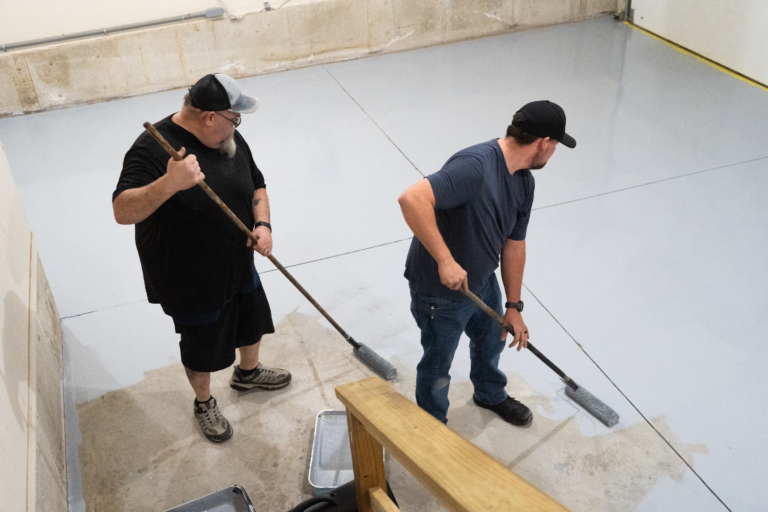
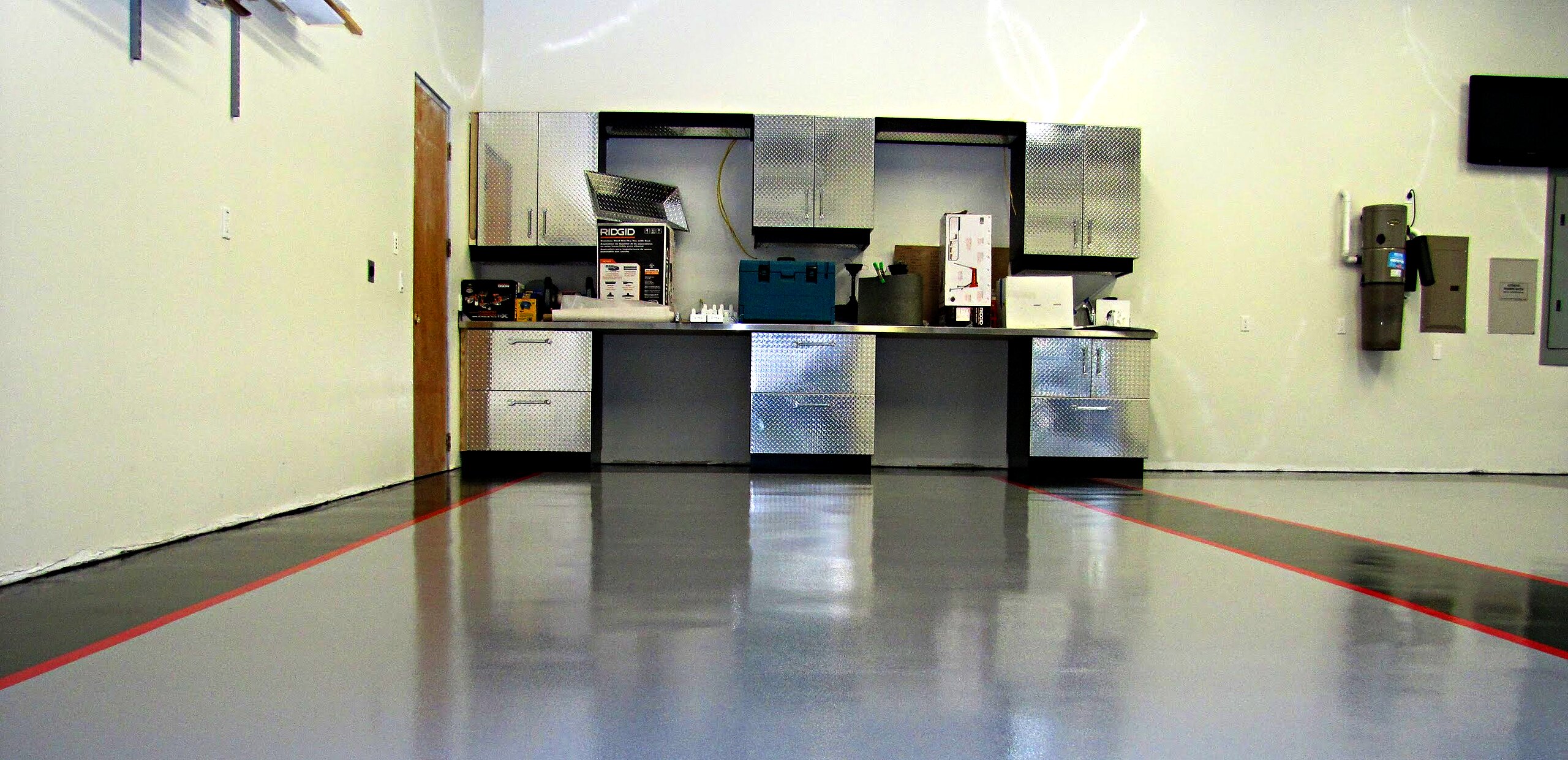
Grinding, moisture testing and a flake system. It's a separate skill with its own callbacks, covered step by step in our floor coating business guide.
Crack injection
Injecting basement wall cracks sells at $250–$800+ per crack. Our polyurea crack injection page covers the method and foundation crack repair covers when a crack is structural.
Spray polyurea
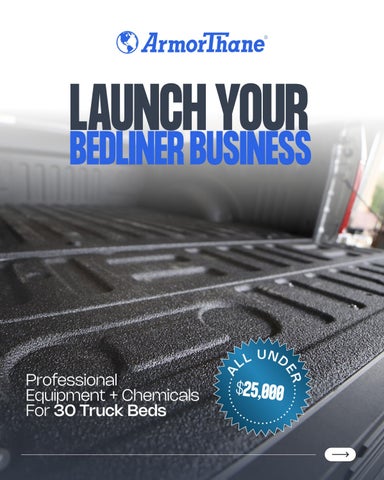
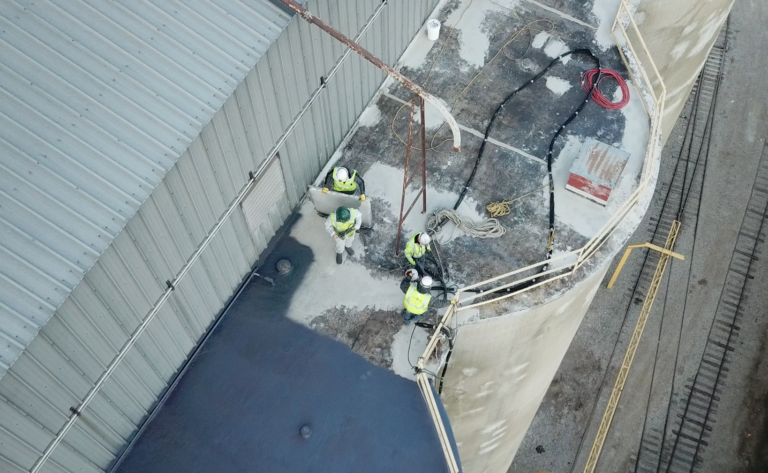
Patios, pool decks, walls and containment. ArmorThane turnkey applicator systems start at $25,000. Prep decides the result; read prepping concrete for spraying first.
Licensing, insurance and silica rules
Licensing is set by your state and often your city. California's C-8 Concrete classification covers contractors who "form, pour, place, finish and install" flat and other concrete work, and since January 1, 2025, unlicensed work there is capped at $1,000 and only where no permit is needed and no one is employed. Arizona requires a license when labor and materials exceed $1,000 or a permit is required. Driveway permits themselves run $50–$200 in HomeGuide's data. Check your state contractor board and city before your first bid.
For insurance, we couldn't read a concrete-specific survey, so here are Insureon's August 2026 medians for flooring installers, the closest class we could verify: general liability about $77 a month, a business owner's policy $115, workers' comp $144, commercial auto $208 and tools and equipment $41. Concrete rates may differ with payroll and claims, so get quotes.
OSHA's silica rule, by task
Cutting joints, drilling lift holes and grinding all make respirable crystalline silica. OSHA's standard (29 CFR 1926.1153) sets a 50 µg/m³ eight-hour limit, and its Table 1 lists the controls for each tool.
Walk-behind saws
An integrated water system that feeds the blade continuously. No respirator outdoors; APF 10 indoors or in enclosed areas.
Handheld power saws
Integrated water. Outdoors, no respirator up to four hours a shift and APF 10 beyond that; APF 10 indoors.
Drills, including rotary hammers
A shroud or cowling with a dust collector (99% filter efficiency) and a HEPA vacuum to clean holes. No respirator required.
Floor grinders
Water, or a dust collector with a 99%-efficient filter and a filter-cleaning mechanism. No respirator required when controls are followed.
Seasonality, crews and wages
Flatwork follows the weather. Cold slows curing and needs protection (ACI publishes a guide to cold-weather concreting), rain stops pours, and ready-mix plants set their own schedules and Saturday surcharges. A multi-line company can fill the gaps. LevelRight Marketing reports northern lifting crews work a six-to-eight-month heavy season, and ArmorThane rates Lift 300 for injection into cold, damp or wet ground. Coating work is mostly indoors. Resealing schedules bring customers back every few years.
$27.41 an hour
O*NET's 2025 median for cement masons and concrete finishers, or $57,020 a year. Add payroll taxes and workers' comp to get your true labor cost.
206,700 finishers
U.S. employment in 2024, with growth projected at 1–2% through 2034, slower than average. Good finishers are worth keeping busy all year.
Days to a year
O*NET rates the work at a few days to a year of on-the-job training, with registered apprenticeships available.
A 90-day launch plan
Weeks 1–2: pick the mix
Decide your lead service and one add-on. Run the startup builder with your own quotes and the job calculator with local ready-mix prices.
Weeks 2–4: register, license, insure
Form your business entity, register with your state and city, and get the license your state requires. Buy general liability before you bid.
Weeks 3–6: equip and train
Buy or rent the flatwork kit. Book training for any add-on line, whether that's a lifting seminar or coating certification.
Weeks 5–8: first jobs and photos
Pour a few small slabs and sidewalks at fair prices. Photograph every step; those photos sell the next job.
Weeks 8–12: marketing that pays
A Google Business Profile, a simple website and a modest ad budget. LevelRight's example spends $800 a month on Google and Facebook, with Facebook leads at $20–$40 each.
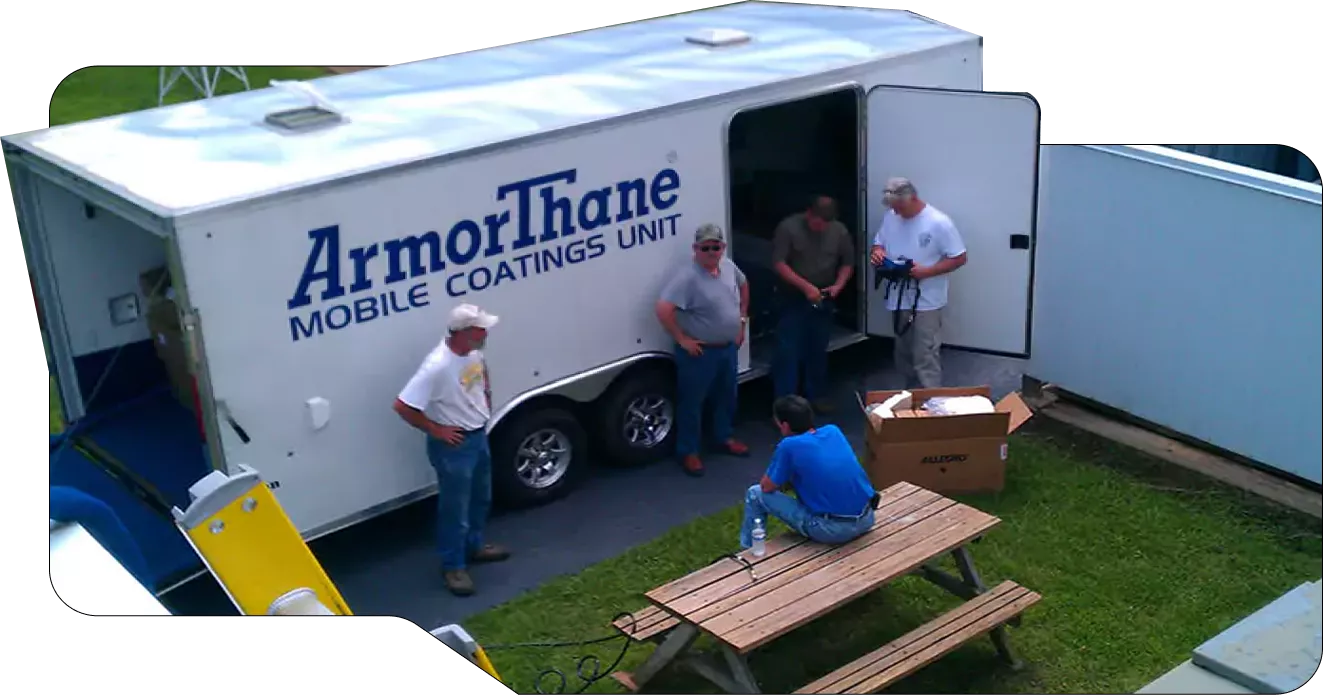
Pour, lift and coat, under your own name
ArmorThane has trained and supplied independent applicators since 1989, with applicators in more than 50 countries. We make the Lift 200 and Lift 300 slab-jacking foams, polyurea and floor coatings, and there's no franchise fee, no dealership fee and no royalty. Training is on site or virtual and ends in certification, and you'll have a 24/7 tech line afterward.
New applicator systems start at $25,000 turnkey, including equipment, training, first chemical, prep and safety gear, and low-pressure 1:1 equipment starts as low as $20,000. Third-party equipment financing is available. Homeowners reading this can use our applicator finder to find a certified applicator nearby, and everyone can get new guides through the ArmorThane newsletter.
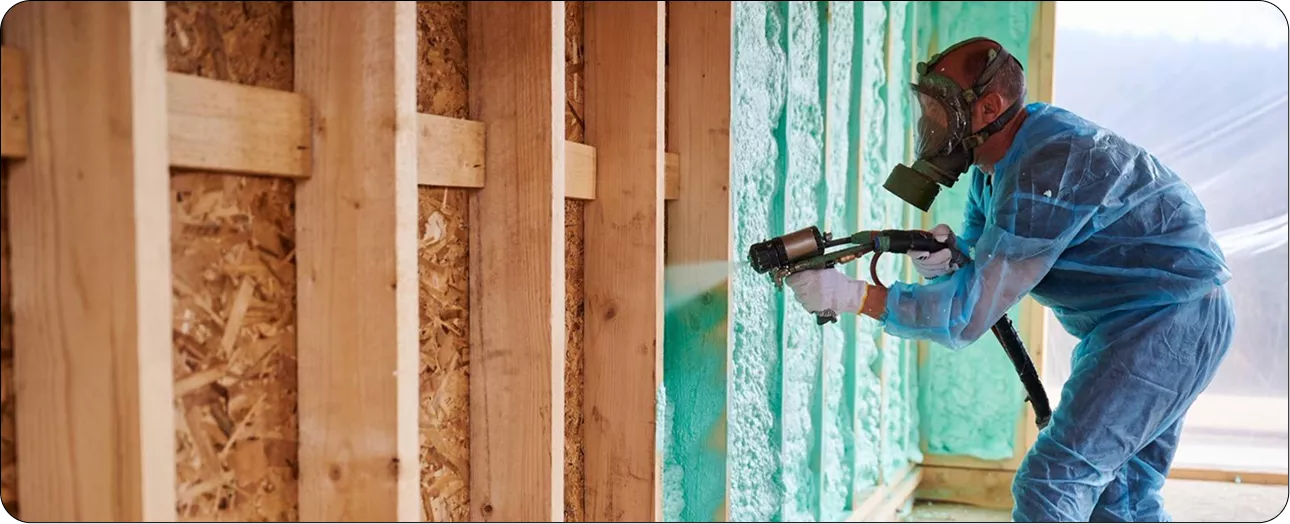
Already pouring? Add protective coatings.
Concrete contractors are one of the trades ArmorThane works with to add coatings. We supply the systems and train your crew, with no franchise fee and no royalties, so the coating work carries your name.
Starting from scratch? See how to start a floor coating business →
Concrete business FAQ
How much does it cost to start a concrete business?
It depends on the services you open with. A core flatwork kit (36-inch power trowel, power screed, plate compactor, walk-behind saw and portable mixer) costs about $10,900 new at September 2026 retail prices, before forms, hand tools and a truck. Adding foam lifting means a rig that LevelRight Marketing puts at $50,000–$80,000 new. A floor-coating grinding kit is about $12,300. Budget insurance, licensing and a few months of marketing on top.
What equipment do I need to start a concrete business?
For flatwork: forms and hand tools, a power screed ($1,693–$2,999), a walk-behind power trowel ($2,498–$4,664), a plate compactor ($2,693–$2,825), a walk-behind saw with water feed for control joints ($2,469 and up) and a truck. Ready-mix suppliers deliver the concrete, so you don't need a mixer truck. Many new crews rent the compactor and mixer until the work is steady.
Do I need a license to start a concrete company?
In most places, yes, but the rules are set by your state and often your city. California's C-8 Concrete classification covers forming, pouring, placing and finishing flatwork, and unlicensed jobs there are capped at $1,000 with no permit or employees. Arizona requires a license when labor and materials exceed $1,000 or a permit is needed. Check your state contractor board before you bid.
How much insurance does a concrete contractor need?
Start with general liability, add commercial auto for your truck and tools coverage for your equipment, and add workers' comp once you hire. We couldn't read a concrete-specific survey, but Insureon's August 2026 medians for flooring installers are a reasonable first budget: about $77 a month for general liability, $144 for workers' comp, $208 for commercial auto and $41 for tools and equipment. Get quotes for your state.
How much do concrete contractors charge per square foot?
HomeGuide lists $6–$10 per sq ft for a standard concrete driveway and $5–$10 for a plain slab. Stamped concrete runs $8–$13 basic, $13–$19 mid-range and $19–$26+ high-end. Foam slab lifting typically runs $7–$17 per sq ft in our cost guide, with HomeGuide listing $8–$25. Sealing runs $1.35–$2.50 per sq ft installed, per Angi.
How profitable is a concrete business?
Flatwork is material-heavy: by our arithmetic from HomeGuide's breakdown, materials are roughly half the price of a driveway, so margin depends on labor efficiency and pricing. Use the bid formula: direct costs divided by one minus your overhead and profit percentage. Add-on services such as sealing, coatings and foam lifting sell for several times their material cost, though lifting carries rig payments and marketing costs.
Is concrete lifting a good business?
It can be, especially added to an existing concrete company. Jobs are short, material is a small share of the price, and sunken slabs are common. The trade-offs are a $50,000–$80,000 rig and the marketing needed to keep it busy. Vendor projections vary widely: one equipment seller models a 70% net margin, while a marketing agency illustrates about $500 net on a $2,000 job.
What equipment do you need for polyjacking?
A polyjacking rig usually includes an enclosed trailer or box truck, a 10 kW or larger generator, an air compressor, a proportioner pump, 100–200 ft of heated hose, an injection gun, transfer pumps and drill bits. LevelRight Marketing prices new complete rigs at $50,000–$80,000. Drilling lift holes falls under OSHA's silica rule, which calls for a shrouded drill with dust collection.
Should a new company offer mudjacking or polyjacking?
Mudjacking is cheaper for customers, about $3–$9 per sq ft, and uses cement slurry at 100–125 lb per cubic foot through 1½–2 inch holes. Polyjacking sells for more, about $7–$17 per sq ft, uses foam at 2.5–3.75 lb per cubic foot through holes about ⅝ inch wide, and slabs can take traffic within 30 minutes. Foam adds far less weight to the soil and gets the slab back in use faster.
Can a concrete business work year-round?
Flatwork is weather-bound in cold climates, and ACI publishes a separate guide to cold-weather concreting. Adding lines helps: ArmorThane rates its Lift 300 foam for injection into cold, damp or wet ground, coating work is mostly indoors, and sealing customers come back every one to five years. LevelRight Marketing reports northern lifting crews work a six-to-eight-month heavy season.
Should a concrete company add coatings?
It's a common next step because you already have the customers. Garage floor coatings sell for $4–$12 per sq ft with about $2 per sq ft in material for a polyurea, flake and polyaspartic system, and sealing and stamped resealing bring repeat work. ArmorThane trains and supplies independent applicators with no franchise fee, dealership fee or royalty.
Written from dated cost guides, retail equipment listings read September 27, 2026, OSHA's silica standard, state licensing boards, O*NET wage data, ArmorThane product pages and 35+ years of training independent applicators. Reviewed September 27, 2026.
Methodology and sources
Customer prices are national ranges; local prices vary. Equipment prices are retail listings on the date shown. Kit totals, material shares and the calculators' fixed-cost default are our arithmetic. Rig costs and income examples come from an equipment seller (HMI) and a marketing agency (LevelRight). Insurance uses Insureon's flooring-installer medians as a proxy. This is not financial or legal advice.
- HomeGuide, Concrete Driveway Cost (June 2025) and Concrete Cost Per Yard (Jan. 2026): homeguide.com
- HomeGuide, Stamped Concrete Cost (Dec. 2025) and Mudjacking Cost (Nov. 2025): homeguide.com
- HomeGuide, Foundation Crack Repair Cost (July 2025) and Garage Floor Coating Cost (Dec. 2024): homeguide.com
- Angi, How Much Does It Cost to Seal Concrete? (July 2026): angi.com
- Contractors Direct, power trowels, screeds, compactors, walk-behind saws and mixers (read Sept. 27, 2026): contractorsdirect.com
- LevelRight Marketing, How to Start a Concrete Lifting Business (Jan. 2026): levelrightmarketing.com
- HMI, Cost to Start a Concrete Lifting Business in 2026 (Apr. 2026): hmicompany.com
- Xtreme Polishing Systems, How To Price Epoxy Jobs (Aug. 2026): xtremepolishingsystems.com
- Franchise Chatter, GarageExperts Franchise Review 2026 (July 2026): franchisechatter.com
- OSHA, 29 CFR 1926.1153 Respirable crystalline silica: osha.gov
- CSLB, C-8 Concrete classification and Industry Bulletin 24-07: cslb.ca.gov
- Arizona Registrar of Contractors, License Classifications: roc.az.gov
- Insureon, Flooring Installer Insurance Cost (Aug. 2026): insureon.com
- O*NET OnLine, Cement Masons and Concrete Finishers 47-2051.00: onetonline.org
- American Concrete Institute, ACI 306R-16 Guide to Cold Weather Concreting: concrete.org
- ArmorThane, Concrete Leveling Cost (2026); Mudjacking vs Polyjacking (2026); Garage Floor Coating Cost (2026): armorthane.com
- ArmorThane, ArmorFoam Lift 200 and Lift 300 product pages (Apr. 2026): armorthane.com
- ArmorThane, Start A Protective Coatings Business; Add Protective Coatings To Your Contracting Business: armorthane.com

Start your coatings business with ArmorThane.
Tell us what you want to spray and where you are. An ArmorThane specialist will walk you through the equipment, chemicals, training and startup cost for the work you want to do.
- Equipment package matched to your applications
- Hands-on training and applicator certification
- Technical support once you are spraying
Pouring concrete now, or about to? Add lifting and coatings with ArmorThane.
Tell us where you work and what you pour. We'll walk you through our LIFT foams, polyurea and floor coating systems, the equipment and on-site training, with no franchise fee and no royalty.
- No franchise fee, dealership fee or royalty
- On-site or virtual training ending in certification
- Turnkey applicator systems from $25,000
- Third-party equipment financing and a 24/7 tech line
More to read on the ArmorThane business
Short reads from ArmorThane on Issuu. Tap one to open it right here.