




Garage Floor Paint: What Holds Up to Tires & What Peels
Which garage floor paints are made for car traffic, how to prep so they stay, how much to buy, and when a professional coating pays for itself.
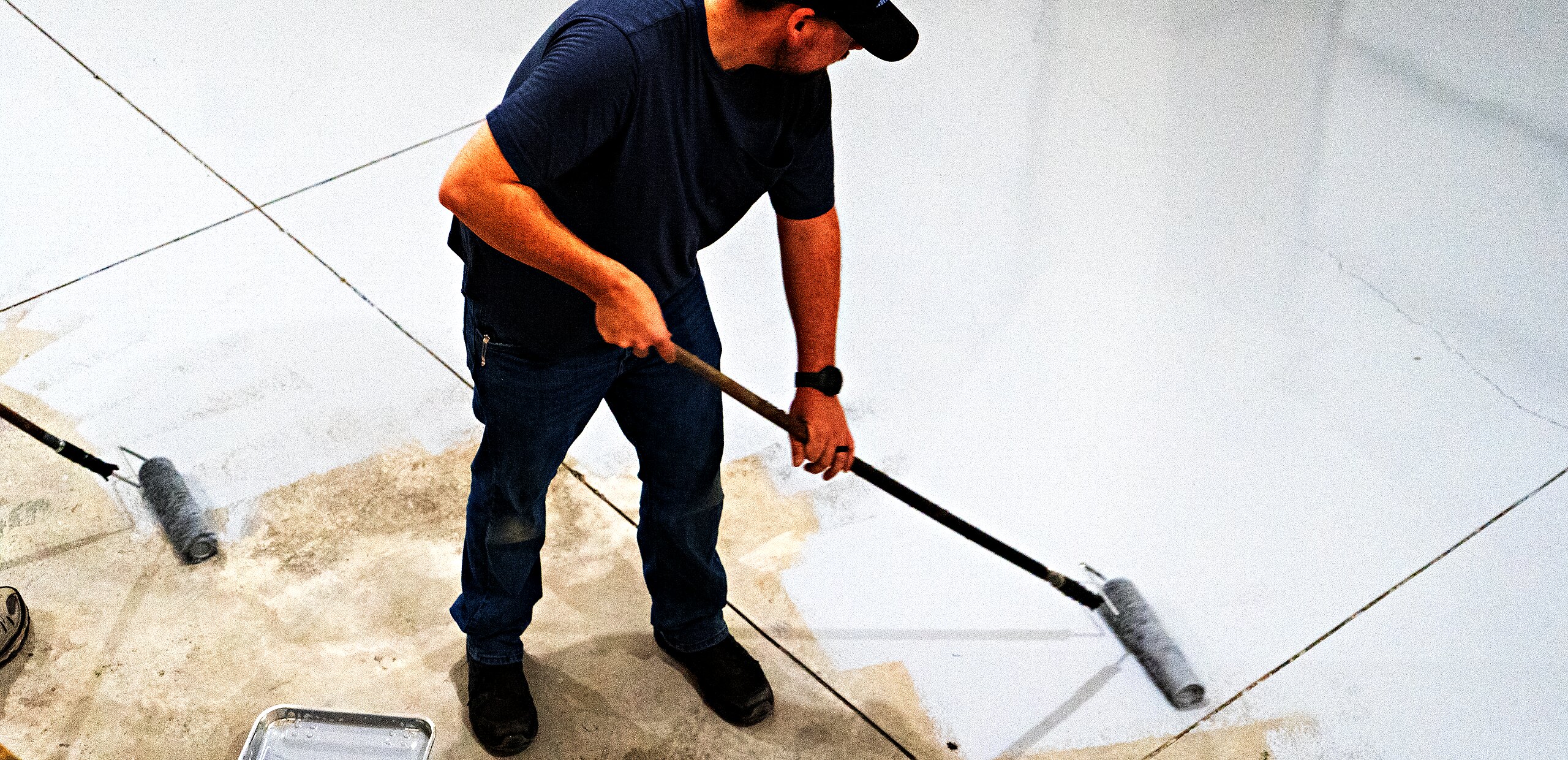
Start a floor coating business
Coat floors for a living.
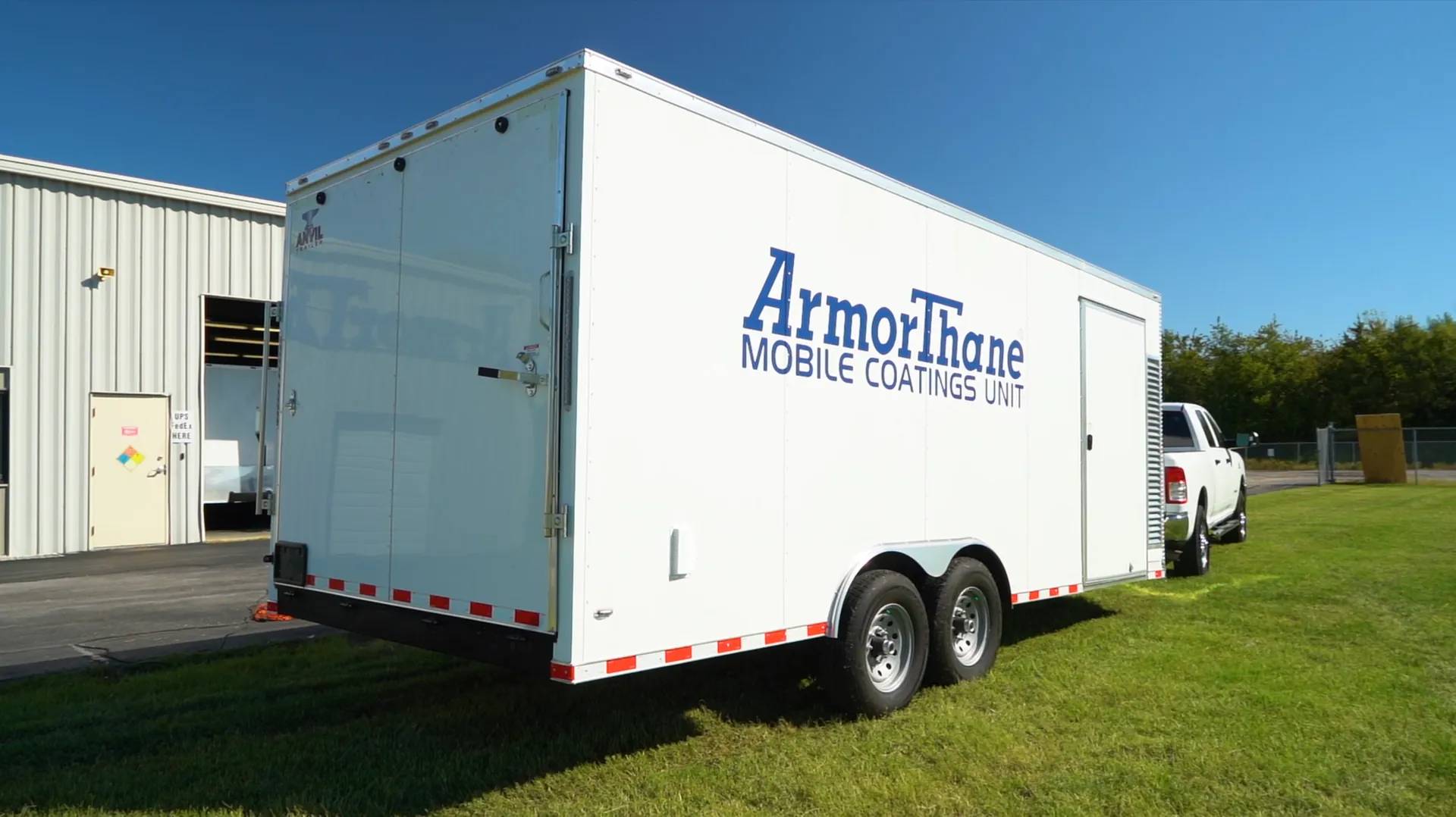
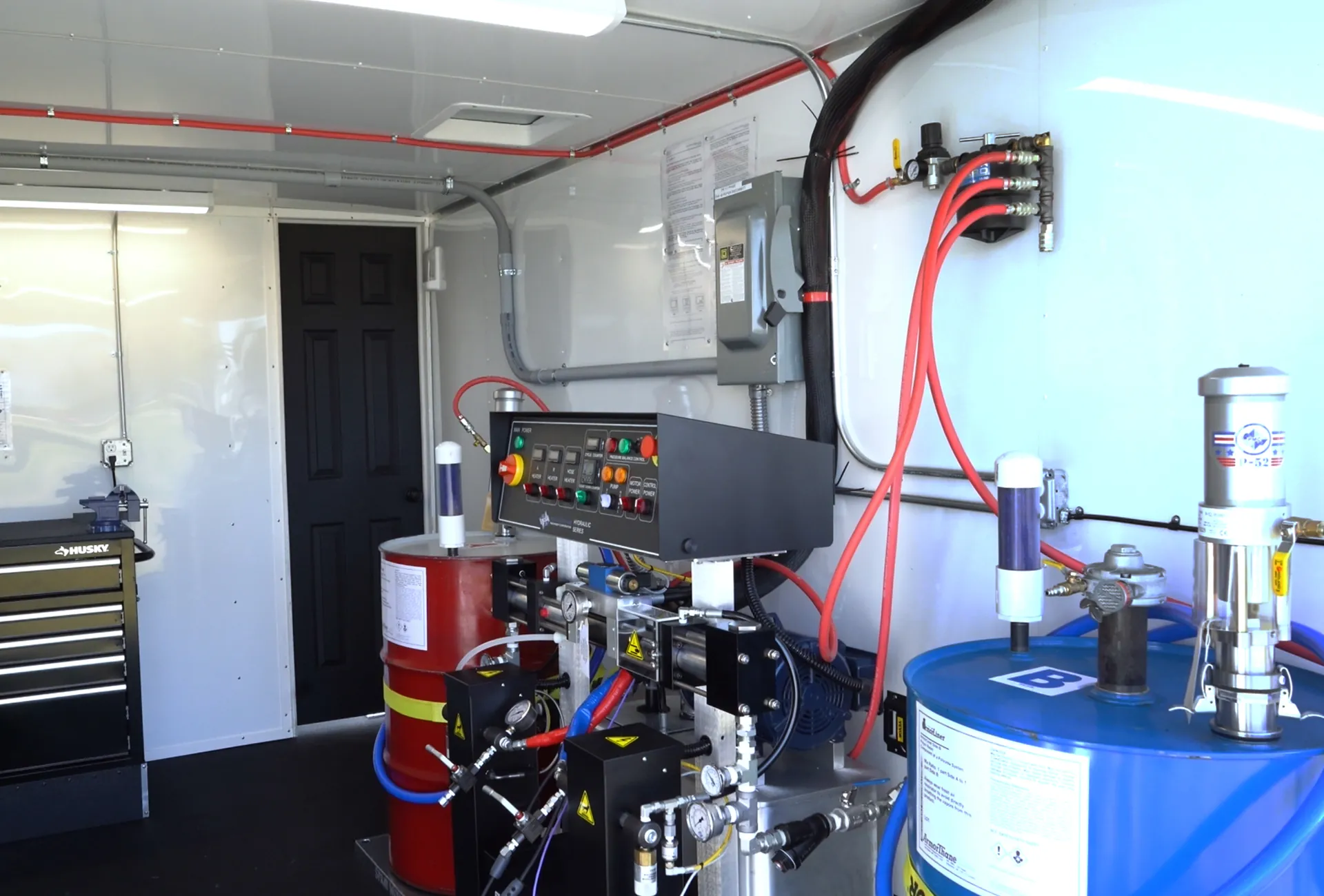
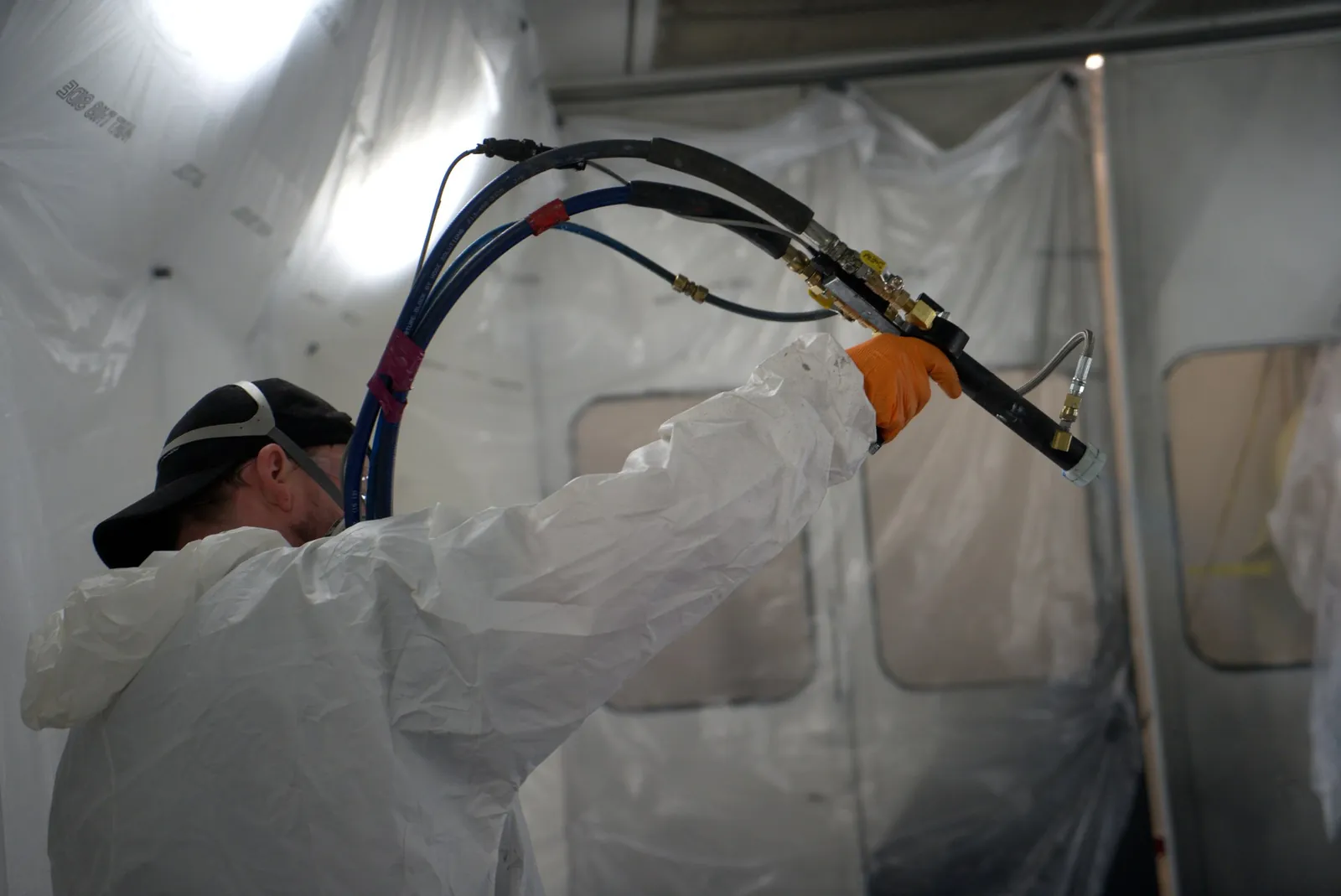
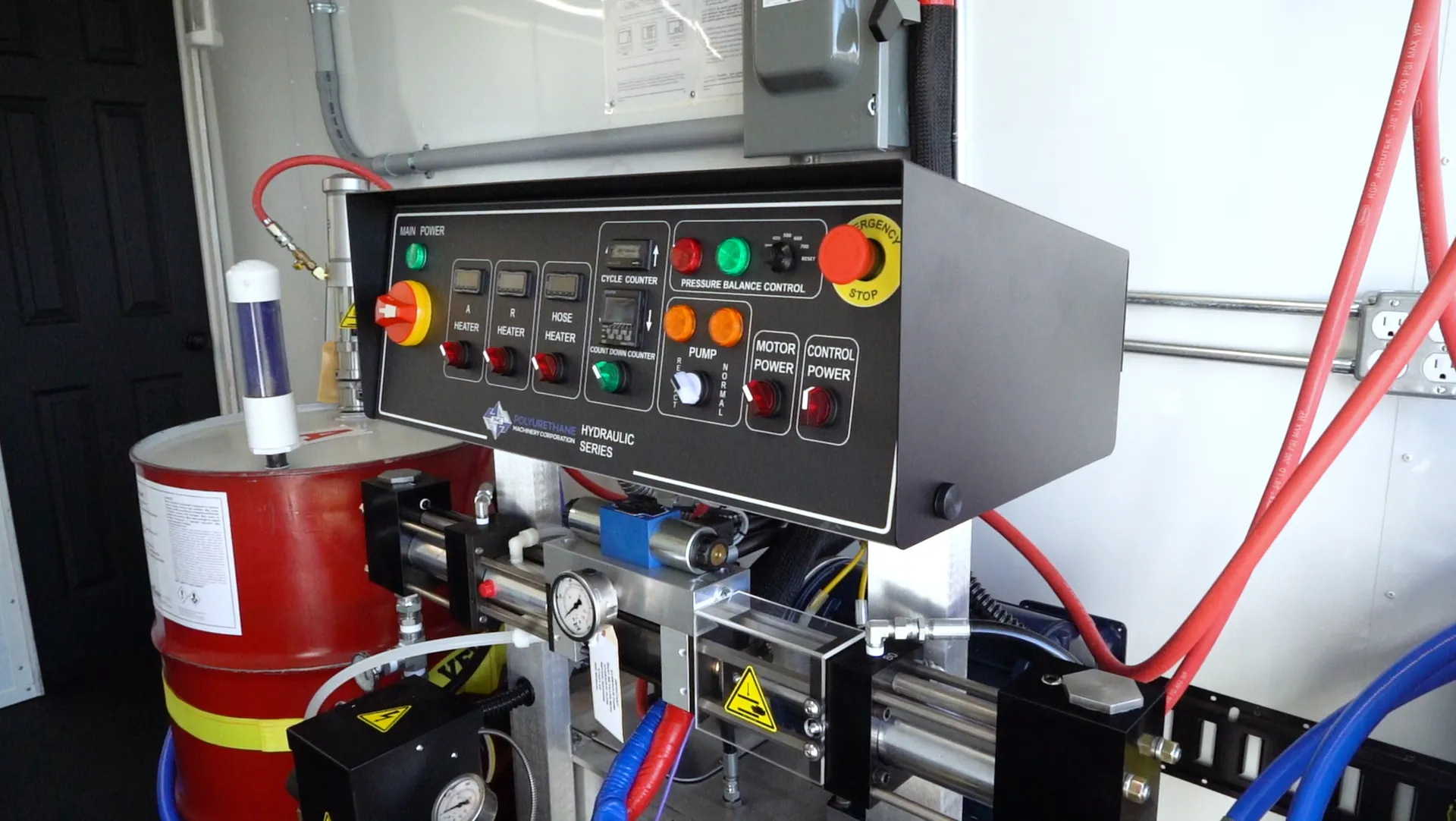
ArmorThane sets you up to do this work, and you own the business. We make the chemistry, build the rigs, train you hands-on and answer the phone when a job gets difficult. You pay no franchise fee and no royalties. It has been that way since 1989.
- $0
- franchise fees or royalties
- 35+
- years in business
- 50+
- countries with applicators
- 24/7
- technical support
Garage floor paint is the most demanding job you can ask a can of paint to do. The slab sees hot tires, road salt, dripping oil, dropped tools and, in a lot of homes, moisture coming up from underneath. Some garage floor paints handle that reasonably well for a few years. Others peel off in tire-shaped patches by the first winter. We coat garage floors for a living, and this guide is the straight version: which products are actually made for car traffic, how to prep so the paint stays, how much you need, and when paying for a coating makes more sense than painting again.
If you park on it, use a product labeled for vehicle traffic: a 1-part epoxy garage paint at minimum, a 2-part epoxy or polycuramine kit if you can. Never use plain porch & floor paint where tires sit. Prep is the job: degrease, etch or grind, and run a 24-hour plastic-sheet moisture test first. If you never want to repaint, a professionally ground and coated polyaspartic or polyurea floor is a different class of product. Run the break-even calculator to see if it pays for you.
Garage floor paint options compared honestly
There are four kinds of product sold as garage floor paint, and they are not interchangeable. The biggest differences are whether the product cures chemically (two parts mixed together) or just dries (one can), and how long the maker tells you to wait before you drive on it. That wait is a decent proxy for how hard the film gets.
1-part epoxy garage floor paint
One can, no mixing, rolls on like wall paint. Behr's self-priming 1-part epoxy is a good example: 300–500 sq ft per gallon depending on texture, recoat in 4–6 hours, 24 hours to light foot traffic and 7 days before car tires. These are acrylics with epoxy modifiers. They are a real improvement over porch paint, and Behr says its version resists hot-tire peeling, but they are still a thin film.
2-part water-based epoxy kits
A resin and hardener mixed in the pouch. Rust-Oleum EpoxyShield covers about 250 sq ft per pouch at 3.0–3.5 dry mils, needs 3 days before vehicles, and must go on between 60 and 85°F. Because it cures rather than dries, it holds up better to tires and chemicals than any 1-part product.
Polycuramine and other hybrid kits
Rust-Oleum RockSolid is the best-known. It covers 200–250 sq ft per pouch, has a 45-minute to 1-hour working window once activated, takes foot traffic in 8–10 hours and cars in 24–36 hours. Fast return to service is the selling point. The short pot life is the catch: work in small sections and have a helper.
Professional coating systems
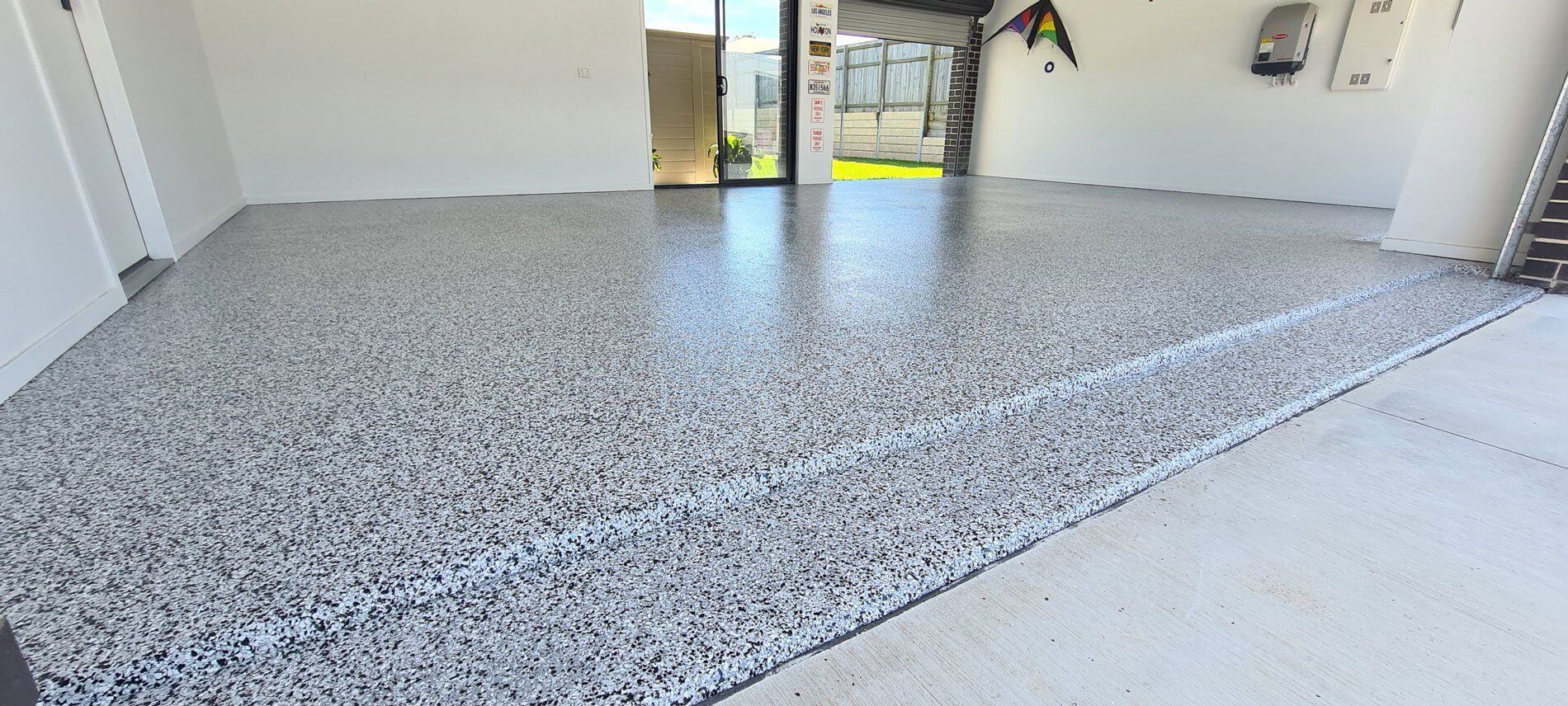
Ground concrete, a primer, a thick body coat, often vinyl flake, and a clear topcoat. Epoxy, polyurea and polyaspartic systems run $4–$12 per sq ft installed according to HomeGuide. This is what we make and what our applicators install. It is not paint, and it is not cheap, which is why we included a break-even calculator below.
| Product | Coverage | Application temp (°F) | Wait before cars | Cures chemically? | Watch out for |
|---|---|---|---|---|---|
| Porch & floor acrylic | 200–400 sq ft/gal | 50–90 | Not rated for tires | No | Peels under hot tires |
| 1-part epoxy paint (Behr) | 300–500 sq ft/gal | 50–90 | 7 days | No | Thin film, long wait |
| 2-part epoxy kit (EpoxyShield) | ~250 sq ft/pouch | 60–85 | 3 days | Yes | Narrow temp window |
| Polycuramine kit (RockSolid) | 200–250 sq ft/pouch | 40–90 | 24–36 hrs | Yes | 45–60 min pot life |
| Pro polyaspartic / polyurea | System-specific | Per data sheet | Installer-specific | Yes | Cost; needs a trained crew |
Why garage floors are hard on paint
A garage slab gets attacked from above and below at the same time. Knowing which of these you are dealing with tells you how much product you need to buy.
Hot tire pickup
Tires come off the road warm. They soften a thin paint film, the rubber grips it as it cools, and when you back out the paint goes with the tire. The result is peeled rectangles exactly where you park. Plain acrylic suffers most, 1-part epoxy paint less, cured 2-part products far less.
Salt, oil and fluids
Winter slush carries de-icing salt onto the floor and sits there for days. Oil, brake fluid, gas and battery acid all drip eventually. Thin paint stains and softens; chemically cured coatings shrug off most of it if you wipe spills up.
Moisture vapor
Many garage slabs were poured without a vapor barrier. Moisture moving up through the concrete pushes the film off from underneath as blisters or white powder. This is why the 24-hour plastic-sheet test is printed on every kit's instructions.
Slick, sealed or oily concrete
Garage slabs are often hard-troweled smooth and sometimes sealed at construction. Paint needs an open, textured surface; Behr asks for a profile like 150-grit sandpaper. If water beads on your floor, paint will not stick to it.
Garage floor paint planner: how much, and when you can park
Pick your garage size and product. The planner works out how many gallons or pouches to buy from the manufacturer's coverage, checks your expected temperature against the label range, and lays out a realistic schedule from prep day to parking.
Quantity, weather check & cure timeline
Area x coats / coverage + 10% waste, rounded up. Temperature is checked against the product's published application range.
How to paint a garage floor step by step
Empty the garage and test first
Everything out, including shelving along the walls if you want clean edges. Then tape an 18 x 18 inch sheet of 4-mil plastic to the bare slab for 24 hours, as Rust-Oleum's RockSolid instructions call for. Condensation under the sheet or darker concrete means moisture is coming through. Stop and solve that before buying anything.
Check any old coating
Cut a small X through the old paint, press duct tape over it and pull. If paint lifts, it all has to come off. New paint over a failing coat fails with it.
Degrease, then degrease again
Oil stains under where the car sits are the most common reason a new garage floor lets go in one spot. Scrub with a concrete degreaser, rinse, and repeat until water no longer beads on the stain.
Etch or grind
Kits include an etcher or tell you which to use. Etching works on clean, unsealed concrete. A rented diamond grinder is more work but removes sealers, laitance and stubborn stains, and it gives a more consistent profile. Professionals grind every time.
Fill cracks and divots
Use a patch product compatible with your coating. Leave control joints as joints, or fill them with a flexible joint filler; paint will crack along a moving joint either way.
Apply in sections
Cut in the edges with a brush, then roll 4 x 4 ft or similar sections, back to the garage door. With 2-part products, mix only what you can apply in the pot life printed on the box. If you want decorative flakes, broadcast them into the wet coat section by section.
Wait out the cure
Follow the product's vehicle time, not your impatience: 7 days for Behr's 1-part epoxy, 3 days for EpoxyShield, 24–36 hours for RockSolid. Keep the door cracked for ventilation, and in cold weather expect longer.
A garage floor built for tires, not touch-ups.
Certified ArmorThane applicators diamond-grind, repair and coat garage floors with polyaspartic and polyurea systems, usually in a day or two. Tell us your garage size and we will connect you with one near you.
Contractors: become an applicator →
Garage floor paint vs coating: the break-even math
Lifespan claims for garage coatings are all over the place and depend heavily on the install, so we will not hand you a number. Instead, this calculator answers a question you can judge yourself: a coating costs the same as painting the floor how many times? Defaults come from HomeGuide's 2026 ranges and Angi's 2–3 year repaint figure for latex garage floors. Change them to your own quotes.
How many repaints equal one coating?
Coating job cost / paint job cost = repaints to break even; x repaint interval = years the coating must last to pay off.
If the break-even is under 10 years and you plan to stay in the house, a coating usually wins on cost alone, before counting the weekends you would spend repainting. If you are selling in two years, or the garage is just storage, paint is the sensible choice.
| Garage | Sq ft | Paint at $2–$4 | Coating (HomeGuide total) |
|---|---|---|---|
| 1-car (12 x 24) | 288 | $576–$1,152 | $1,200–$3,500 |
| 2-car (20 x 20) | 400 | $800–$1,600 | $1,600–$4,800 |
| 2-car (24 x 24) | 576 | $1,152–$2,304 | $2,300–$6,900 |
| 3-car (24 x 36) | 864 | $1,728–$3,456 | $3,500–$10,400 |
When garage floor paint is enough, and when it is not
We sell coatings, so take this with that in mind, but there are plenty of garages where we would tell you to paint.
Storage or hobby garage, no car
Foot traffic and a workbench. A 1-part epoxy paint or a porch & floor enamel will look good for years at a fraction of the cost.
Selling soon, or a rental
A fresh, clean floor helps a listing. Spending coating money on a house you are leaving rarely comes back.
Daily parking, mild climate
Use a 2-part epoxy or polycuramine kit and prep it properly. Expect touch-ups where tires sit.
Snow belt, heavy use, shop work
Salt, studded tires, jacks and creepers will chew through paint. A ground-and-coated polyaspartic or polyurea floor is built for that.
When a coating is the answer, our applicators grind the slab, fix cracks, prime, and apply a polyurea or polyaspartic system such as ArmorFloor aliphatic polyaspartic. Aliphatic chemistry is the UV-stable kind, which matters on the strip of floor the sun hits when the door is open. For a full comparison of systems see our garage floor coating guide, polyaspartic vs epoxy and best garage floor coating. If the slab is not a garage, our general concrete paint guide covers walls, porches and basements.
Garage floor paint questions
What is the best garage floor paint?
For a DIY job you will park on, a 2-part epoxy or polycuramine kit holds up better than any one-can paint, because it cures chemically. If you want a one-can product, choose a 1-part epoxy paint labeled for vehicle traffic, never a porch & floor paint.
How long before I can park on a painted garage floor?
It depends on the product: Behr asks for 7 days with its 1-part epoxy, Rust-Oleum asks for 3 days with EpoxyShield and 24–36 hours with RockSolid. Cold weather slows all of them.
Why is my garage floor paint peeling where the tires sit?
That is hot tire pickup. Warm tires soften the film, the rubber bonds to it, and it pulls up when the car moves. Thin 1-part paints and poor prep make it much worse. A cured 2-part product over properly etched or ground concrete is the fix.
How much garage floor paint do I need for a 2-car garage?
A 24 x 24 ft garage is 576 sq ft. At Behr's 300–500 sq ft per gallon, two coats take roughly 2.5–4 gallons including waste. For 2-part kits, which cover about 200–250 sq ft per pouch, plan on a 2.5-car kit plus a spare, or use the planner above.
Do I need to etch a garage floor before painting?
Yes, or grind it. Smooth, hard-troweled garage concrete gives paint nothing to grip. Behr asks for a texture similar to 150-grit sandpaper, and every kit includes or specifies an etcher.
Can I paint over an old garage floor coating?
Only if it is well bonded. Cut an X, press duct tape over it and pull. If it lifts, remove the old coating. If it passes, scuff-sand, clean and test a small area with the new product first.
Is garage floor paint worth it compared with epoxy or polyaspartic?
It depends on how long you will stay and how hard the floor works. HomeGuide puts paint at $2–$4 per sq ft and professional coatings at $4–$12. Use the break-even calculator above with your own quotes.
Can I paint a garage floor in winter?
Only if the slab and air stay inside the label range through the cure, for example 50–90°F for Behr's 1-part epoxy and 60–85°F for EpoxyShield. Cold slabs often stay colder than the air, so measure the floor, not the room.
Sources
- Behr, Premium Interior/Exterior Concrete & Garage Self-Priming 1-Part Epoxy: behr.com/consumer/products
- Behr, Premium Porch & Patio Floor Paint: behr.com/products/floor-coatings
- Rust-Oleum, EpoxyShield Water-Based Epoxy Garage Floor Coating TDS (ESH-39): rustoleum.com/.../ESH-39 TDS
- Rust-Oleum Support, RockSolid Polycuramine Garage Floor Coating Kit: rustoleumsupport.zendesk.com
- HomeGuide, How Much Does Concrete Coating Cost (2026): homeguide.com/costs/concrete-coating-cost
- Angi, 7 Tips for Choosing the Best Concrete Paint: angi.com/articles/exterior-concrete-paint
- All Garage Floors, 1-Part Epoxy Garage Paint vs 2-Part Epoxy Coatings: allgaragefloors.com/is-it-paint-or-epoxy
- Tnemec, 3 Ways to Test Concrete Moisture: tnemec.com

Done repainting the garage? Get a coating quote.
Tell us your garage size, what is on the floor now, and whether you park on it. We will match you with a certified ArmorThane applicator near you.
- Diamond grinding and crack repair
- Polyaspartic and polyurea systems
- Flake and solid color options
- Free on-site assessment
More to read on floors and decks
Short reads from ArmorThane on Issuu. Tap one to open it right here.