





Jon Boat Floor: Plywood, Aluminum or Polyurea?
Real weights for plywood and aluminum decks, the treated-wood mistake that eats aluminum hulls, and which surface holds up to dogs, decoys and wet boots.
Start a marine coating business
Coat boats and docks for a living.
ArmorThane sets you up to do this work, and you own the business. We make the chemistry, build the rigs, train you hands-on and answer the phone when a job gets difficult. You pay no franchise fee and no royalties. It has been that way since 1989.




- $0
- franchise fees or royalties
- 35+
- years in business
- 50+
- countries with applicators
- 24/7
- technical support
A jon boat floor turns a ribbed aluminum hull into a flat, stable platform you can stand, cast, shoot or haul gear on. The choice of material decides how heavy the boat gets, how loud it is, whether anything rots, and how much grip you have when the floor is wet. We spray polyurea on aluminum fishing boats, duck boats and pontoons, so we have seen most jon boat floor builds, good and bad. This guide compares the real options with actual weights, explains the plywood mistake that eats aluminum hulls, and gives you two tools: a floor weight and capacity calculator and a floor system picker.
For most jon boats, the best floor is either 1/2 inch marine plywood, sealed on every face and edge, over aluminum framing, or a 0.100 inch 5052 aluminum sheet floor, which is lighter per square foot than 1/2 inch plywood and cannot rot. Top either with a slip-resistant surface: nonskid paint for light use, marine carpet or EVA foam for comfort, or sprayed polyurea where the floor takes abuse. Never put pressure-treated lumber against an aluminum hull, and never remove the flotation foam under the floor.
Jon boat floor options and what each one costs you
Every jon boat floor is two decisions: the structural deck (what you stand on) and the surface (what your boots touch). Get the first right and the second is easy to change later.
Marine plywood
Stiff, quiet, easy to cut and screw into, and cheap to replace. It is also heavy: a 4 x 8 sheet of 3/4 inch marine plywood is about 75 pounds and 1/2 inch about 50, according to Inch Calculator. Marine grade has no internal voids, so water has fewer places to sit. Seal every face and edge or it will still rot.
Exterior and pressure-treated plywood
Exterior plywood is cheaper and lighter (about 61 pounds for 3/4 inch softwood), but has voids that hold water. Pressure-treated plywood is the one to avoid in an aluminum boat: the copper in ACQ and copper azole treatments reacts with aluminum and causes corrosion, as Pro Builder reported when those treatments replaced CCA.
Aluminum sheet
Marine-grade 5052-H32 sheet will not rot and is lighter than you would think: 0.100 inch weighs about 1.43 pounds per square foot, against roughly 1.56 for 1/2 inch marine plywood. It is louder, slick when wet, and hot in the sun until you put something on top of it.
Coatings and coverings
Nonskid paint, marine carpet, vinyl, EVA foam pads or sprayed polyurea go on top of the structural deck. They set grip, noise, comfort and cleanup, and some, like polyurea, also seal the plywood beneath.
Jon boat floor weight and capacity calculator
A floor is weight you carry every trip. On a small hull, it eats into the capacity plate's limit for persons, motor and gear, and it changes how the boat sits. We treat added floor weight as part of the load. Enter your floor size and the numbers from your capacity plate.
Floor weight and capacity check
Deck weights per sq ft: marine plywood 1/2 in 1.56 and 3/4 in 2.34 (50 and 75 lb per 4 x 8 sheet), softwood exterior plywood 1/2 in 1.27 and 3/4 in 1.91 (Inch Calculator); 5052-H32 aluminum 0.080 in 1.14, 0.100 in 1.43, 0.125 in 1.78 (Chatham Steel). Polyurea at 2 mm adds 0.43 (2.1 kg/m², Tecnopol). Framing is your own allowance.
Jon boat floor materials compared
Weights are calculated from the cited sheet weights. Noise and grip ratings are our field judgment. Click a header to sort.
| Material | Weight (lb per sq ft) | Rot risk | Corrosion risk to hull | Noise underfoot | Best for |
|---|---|---|---|---|---|
| 0.080 in 5052-H32 aluminum | 1.14 | None | Low, same metal family | Loud | Light decks over close framing |
| 1/2 in exterior softwood plywood | 1.27 | High, voids hold water | Low if untreated | Quiet | Budget builds you expect to redo |
| 0.100 in 5052-H32 aluminum | 1.43 | None | Low | Loud | Most aluminum floor builds |
| 1/2 in marine plywood | 1.56 | Moderate, low if fully sealed | Low if untreated | Quiet | Most plywood floor builds |
| 0.125 in 5052-H32 aluminum | 1.78 | None | Low | Loud | Wide spans, heavy loads |
| 3/4 in marine plywood | 2.34 | Moderate, low if fully sealed | Low if untreated | Quiet | Wide spans; heavy for small hulls |
| Pressure-treated plywood | Similar to plywood | Low | High: copper reacts with aluminum | Quiet | Not for aluminum boats |
| Sprayed polyurea surface, 2 mm | 0.43 added | Seals what it covers | None | Deadens noise | Surface over plywood or aluminum |
Jon boat floor picker: deck and surface
Tell us how you use the boat and what you care about most. The picker recommends a structural deck and a surface to put on it.
Which jon boat floor should you build?
Rules from our field experience: aluminum when rot-free and low maintenance matter or you can work metal, sealed marine plywood when quiet, cost or easy woodworking matter, and a surface matched to how wet, muddy or barefoot the floor gets.
How to build a jon boat floor that lasts
Whether it is plywood or aluminum, these are the steps that keep a floor from becoming a project you redo in three seasons.
Strip, inspect and patch
Pull the old floor and look at the hull underneath: pitting where wet wood sat, loose rivets, cracked welds. Fix leaks now, while you can reach them. This is also when you find out whether the old floor was pressure-treated wood sitting on bare aluminum.
Check and replace flotation
Waterlogged foam is heavy and no longer floats the boat. Replace it with closed-cell marine flotation foam of equal volume; boats under 20 feet with outboards over 2 horsepower must meet Coast Guard flotation rules.
Frame for your span
Run stringers or aluminum angle so the deck is supported often enough that it does not flex. Thinner sheet needs closer framing. Keep framing off the hull bottom where water collects, or isolate it with a non-absorbent pad.
Template, then cut
Make cardboard templates of each panel first. Leave room for drain paths along the chines and for access hatches over the bilge, battery and fuel line.
Seal plywood on every face and edge
Encapsulate marine plywood with epoxy or a sealer before installation, especially edges and fastener holes, which is where rot starts. Treat any hole you drill later the same way.
Isolate dissimilar metals
Use aluminum rivets or stainless fasteners with isolation washers or sealant between stainless and aluminum. Keep copper, brass and treated lumber away from the hull.
Finish the surface
Paint, carpet, foam or polyurea, matched to how you use the boat. If you coat, do it before final installation where possible so the underside and edges get sealed too.
The mistakes we see most on jon boat floors
- Treated lumber on bare aluminum. It looks fine for a season, then you find pitting along every rib it touched.
- Carpet over raw plywood. Carpet holds water against the wood. Within a few seasons the plywood under the seat where you stand most is soft.
- No way for water to leave. A floor sealed tight to the hull with no drain path traps rain and spray underneath, where it soaks foam and wood out of sight.
- Going heavy for stiffness. Builders jump to 3/4 inch plywood to stop flex when closer framing with 1/2 inch would be stiffer and lighter. On a 35 square foot floor, 3/4 inch marine plywood weighs about 27 pounds more than 1/2 inch.
- Coating over wet wood. Any coating, ours included, applied over damp plywood seals the moisture in. Let it dry, check it with a moisture meter, then coat.
Want a floor that grips, seals and stays quiet? Spray it.
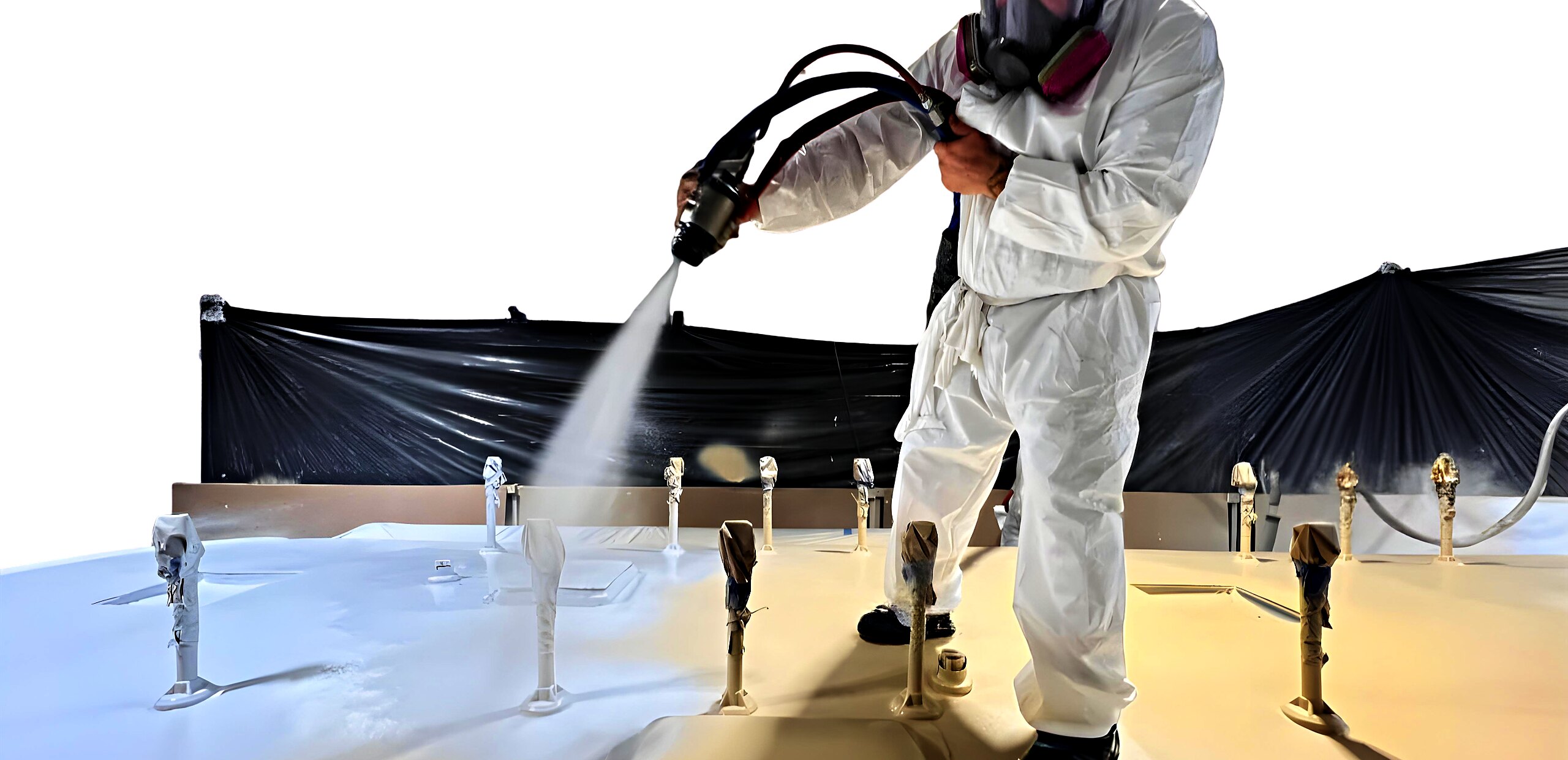
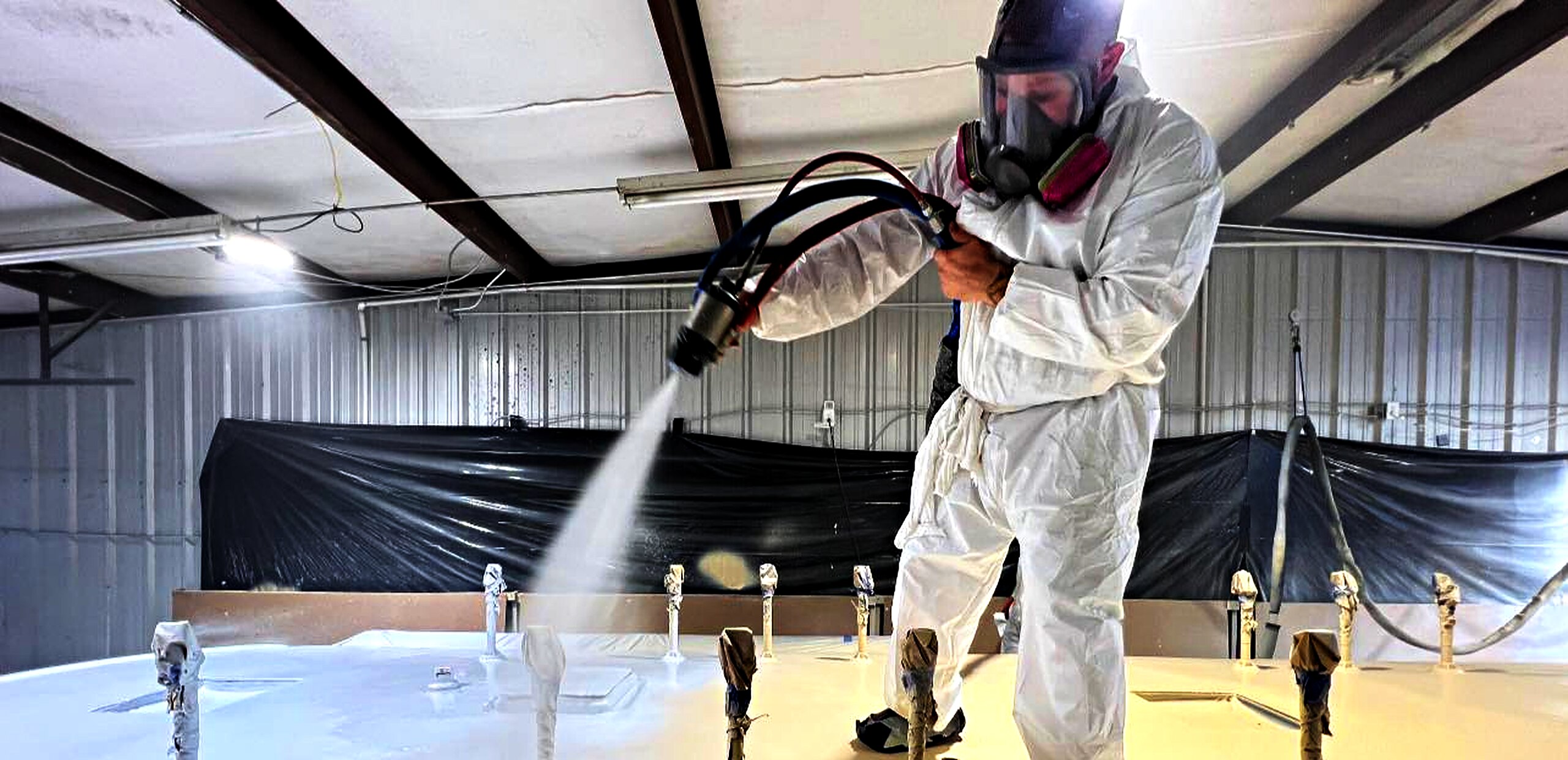
Certified ArmorThane applicators spray seamless, textured polyurea over aluminum and plywood floors, casting decks and entire interiors of jon boats, duck boats and pontoons.
Boat dealers and shops: add polyurea boat coatings →
Finishing the jon boat floor surface
The structural deck decides weight and rot. The surface decides whether you slip at 5 a.m. with a dog, decoys and wet boots. Here is how the common surfaces compare on a jon boat.
Nonskid paint
Light and easy. One-part nonskid paints cover about 80 to 100 square feet per quart per coat (TotalBoat), and bare aluminum needs the maker's primer first. It wears through where feet and gear land. Our boat deck paint guide compares the options.
Marine carpet
Quiet and comfortable, which is why bass boats use it. It holds water, mud, blood and smell, and keeps plywood under it damp. Fine for clean casting decks; poor for duck boats.
EVA foam pads
Closed-cell PE/EVA foam in 5 to 13 mm thicknesses, peel and stick, installed above 60°F. The USA Tuff SeaDek FAQ puts typical life at 5 to 7 years in harsh conditions. Hooks, dog claws and decoy weights cut it.
Sprayed polyurea
A seamless, textured membrane that seals plywood, deadens the drumming of an aluminum floor and hoses clean. A typical spray polyurea reaches tack-free in about 5 seconds per its data sheet, and adds about 0.43 lb per sq ft at 2 mm. Applicator-installed. See our marine coatings and pontoon boat flooring pages.
Where polyurea is not the answer
If your plywood is already soft, a coating will not save it; replace the wood first. If weight is your top concern on a very small hull, a thin paint over 0.080 aluminum will always be lighter than any thick coating. And if you want to swap surfaces often, peel-and-stick foam is easier to change. For grip on a polyurea floor, applicators broadcast texturing aggregate or use a slip-resistant product such as SureGrip, and bare aluminum gets a primer such as ArmorPrime for adhesion.
Jon boat floor questions
What is the best material for a jon boat floor?
For most builds, either 1/2 inch marine plywood sealed on every face and edge, or 0.100 inch 5052-H32 aluminum sheet. The aluminum weighs about 1.43 pounds per square foot against about 1.56 for 1/2 inch marine plywood, and cannot rot; plywood is quieter, cheaper and easier to work.
Can I use pressure-treated plywood in an aluminum jon boat?
No. Modern treatments such as ACQ and copper azole contain high levels of copper that react with aluminum and cause corrosion. Use untreated marine plywood sealed with epoxy or a coating, and keep wood from sitting in water against the hull.
How thick should a jon boat floor be?
It depends on the framing. With closely spaced support, 1/2 inch plywood or 0.080 to 0.100 inch aluminum is common; wider spans need 3/4 inch plywood or 0.125 inch aluminum, at a weight cost. Stiffness comes mostly from framing, not deck thickness.
How much weight does a plywood floor add?
A 4 x 8 sheet of 3/4 inch marine plywood weighs about 75 pounds and 1/2 inch about 50. A 10 by 3.5 foot floor in 1/2 inch marine plywood adds roughly 55 pounds before framing. Use the calculator above for your boat.
Can I put bedliner on a jon boat floor?
Yes. Spray polyurea, the same family of material used for spray-on bedliners, is a common jon boat and duck boat floor finish. It seals plywood and grips when wet. Roll-on bedliner kits are thinner and less durable; a professionally sprayed system holds up best on a working floor.
Should I remove the foam under my jon boat floor?
Only to replace it. Small outboard boats must meet Coast Guard flotation rules, and that foam is often what keeps a swamped boat afloat. Replace waterlogged foam with an equal volume of closed-cell marine flotation foam.
Does a new floor affect my capacity plate?
The plate rates persons, motor and gear for boats under 20 feet. We recommend counting heavy floors and anything else you add as part of that load, so your usual trip stays well inside the rating.
Related guides: boat deck paint and nonskid, pontoon boat flooring, deck joist protection and finding an undercoating shop.
Sources
- Inch Calculator, how much plywood weighs: inchcalculator.com
- Chatham Steel, aluminum sheet and plate weights: chathamsteel.com
- Tecnopol, Tecnocoat P-2049 polyurea data sheet: tecnopolgroup.com
- Pro Builder, ACQ and aluminum do not mix: probuilder.com
- GovInfo, 33 CFR Part 183 (capacity and flotation): govinfo.gov
- Discover Boating, all about capacity plates: discoverboating.com
- TotalBoat, TotalTread instruction sheet and TDS: support.totalboat.com
- USA Tuff, SeaDek FAQ: usatuff.com

Start your coatings business with ArmorThane.
Tell us what you want to spray and where you are. An ArmorThane specialist will walk you through the equipment, chemicals, training and startup cost for the work you want to do.
- Equipment package matched to your applications
- Hands-on training and applicator certification
- Technical support once you are spraying
Building a new floor? Spray it tough and quiet.
Tell us the boat length, floor material (aluminum or plywood), how you use it and the color you want. We will connect you with a certified ArmorThane applicator near you.
- Boat length and model
- Aluminum or plywood floor
- Hunting, fishing or work use
- Floor only or full interior
More to read on floors and decks
Short reads from ArmorThane on Issuu. Tap one to open it right here.