




Chemical Resistant Coatings: Systems Compared
Which coating chemistries hold up to acids, caustics, fuels and solvents, the difference between splash and immersion service, and how to spec a system that will not soften, blister or let go.
Start a containment coating business
Line containment for a living.
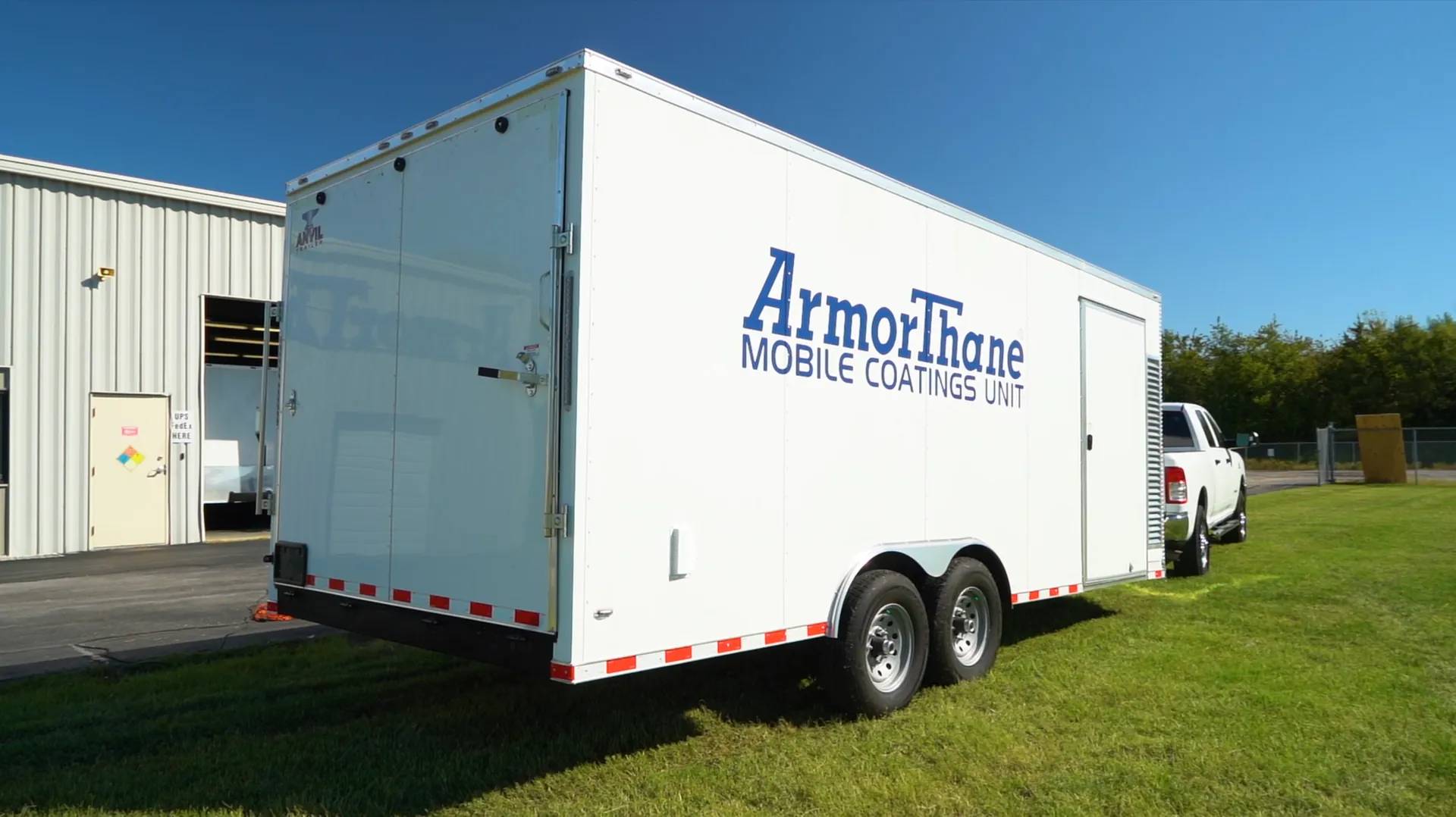
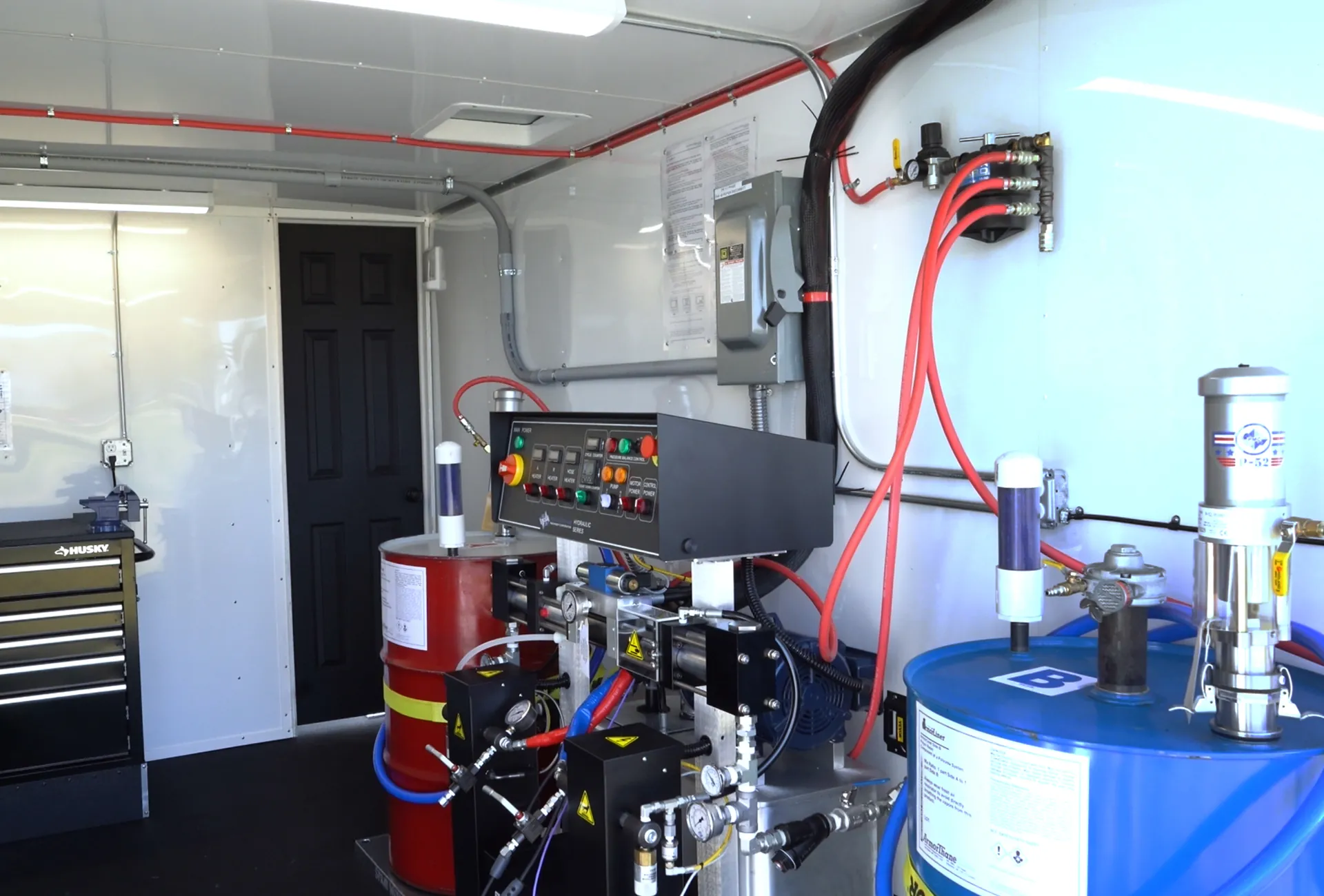
ArmorThane sets you up to do this work, and you own the business. We make the chemistry, build the rigs, train you hands-on and answer the phone when a job gets difficult. You pay no franchise fee and no royalties. It has been that way since 1989.
- $0
- franchise fees or royalties
- 35+
- years in business
- 50+
- countries with applicators
- 24/7
- technical support
"Chemical resistant" on a can means very little until you know which chemical, how strong, how hot and for how long. A coating that shrugs off diesel drips can soften under hot caustic washdown, and one that survives sulfuric acid splash may fail in constant immersion. This guide explains how the main chemistries compare and how to specify one with the exposure spelled out, from a team that manufactures polyurea, polyurethane and hybrid coatings.
A chemical resistant coating is a protective lining chosen to resist a specific chemical at a specific concentration and temperature. For most acids, caustics and fuels in containment, sumps and floors, novolac epoxy and vinyl ester give the highest chemical resistance, while polyurea and polyurea hybrids give a thick, flexible, crack-bridging membrane that handles splash, spills and secondary containment with fast return to service. Always check the manufacturer chemical resistance chart for the exact chemical, and decide up front whether the service is splash, spill or immersion.
What makes a coating chemical resistant
Chemicals attack coatings in three ways: they dissolve or soften the resin, they permeate through the film and attack the substrate underneath, or they react with the coating and break it down. Dense, highly cross-linked films resist all three better, which is why novolac epoxies and vinyl esters top most resistance charts. Elastomers like polyurea trade a little chemical resistance for toughness, elongation and the ability to bridge cracks.
Which chemical
Acids, caustics, solvents, fuels and oxidizers each attack resins differently. Name the actual product, not just "acid."
Concentration
10% sulfuric acid and 98% sulfuric acid are different services. Many coatings resist one and not the other.
Temperature
Resistance drops as temperature rises. A rating at 75°F says nothing about hot washdown or process spills.
Exposure time
Splash cleaned up in hours is much easier than spills that sit for days or constant immersion.
Substrate
Steel, concrete and old coatings need different primers and prep. Concrete adds moisture and cracking to the list.
Cleaning and washdown
Hot water, caustic cleaners and pressure washing can be harder on a coating than the process chemical.
Chemical resistant coatings compared
| System | Strengths | Watch-outs | Best fit |
|---|---|---|---|
| Standard epoxy | Good resistance to many mild chemicals, fuels and oils; strong adhesion | Rigid; weaker against strong acids and solvents; chalks in sunlight | Light-duty floors, mild spills |
| Novolac epoxy | Higher resistance to strong acids, solvents and heat than standard epoxy | Brittle; does not bridge moving cracks; needs good prep | Sumps, trenches, battery rooms, acid containment |
| Vinyl ester | Very high resistance to strong acids and oxidizers, often glass-reinforced | Odor, shrinkage, skilled application | Severe acid immersion, chemical plants |
| Spray polyurea | Thick seamless membrane, high elongation, cures in seconds | Check each chemical; some solvents and hot acids need other systems | Secondary containment, splash and spill zones, wastewater |
| Polyurea hybrid | Lower cost, fast set, good water and spill resistance | Less chemical resistance than pure polyurea | Budget containment, non-critical spill areas |
| Polyurethane | Abrasion resistant; aliphatic topcoats are UV stable | Moisture sensitive during cure | Topcoats over epoxy, floors with light chemicals |
Chemical resistant coatings by area
Secondary containment
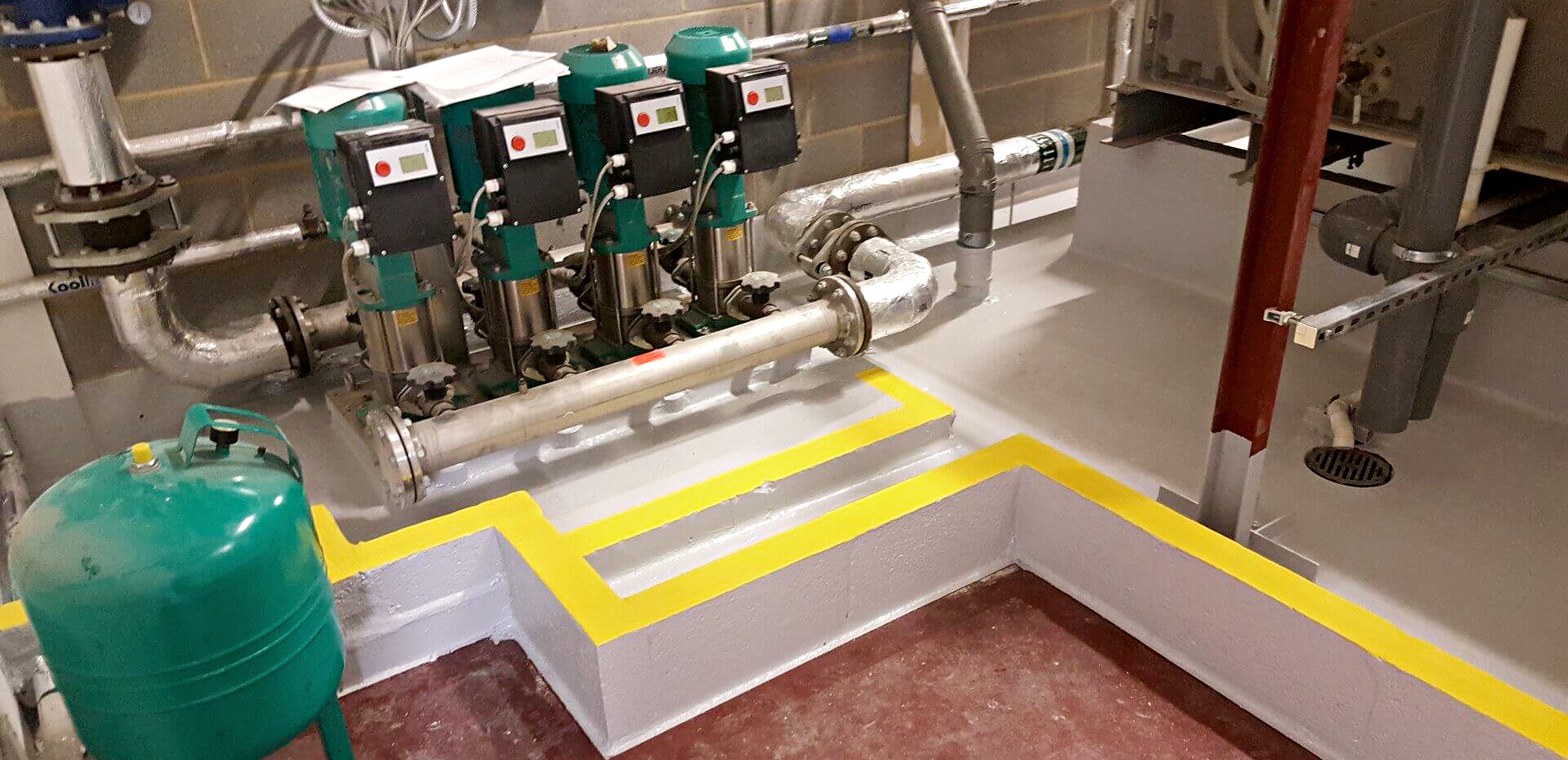
Dikes and berms around tanks need a seamless, crack-bridging liner that holds a spill until cleanup. See secondary containment.
Chemical plant and warehouse floors
Forklift traffic plus drips and spills. Choose for abrasion and chemistry together.
Sumps, trenches and pits
Chemicals collect and sit here, so treat them as near-immersion service.
Wastewater and H2S
Hydrogen sulfide turns to sulfuric acid on concrete crowns. See wastewater coatings.
Tank interiors
Immersion service needs a lining rated for that chemical and temperature. See tank lining.
How to specify a chemical resistant coating
List every chemical
Product name, concentration and safety data sheet for each chemical, including cleaners and wash-down agents.
Define the exposure
Splash, spill (how long before cleanup), or immersion, plus the highest temperature it will see.
Check the chart
Confirm each chemical against the manufacturer chemical resistance chart at your temperature.
Spec the prep
Abrasive blast steel to the specified standard; shot blast or grind concrete and test moisture. See surface preparation.
Spec thickness and system
Primer, body coat and topcoat, with minimum dry film thickness for each.
Test and document
Holiday test linings, check thickness and adhesion, and keep the records.
When polyurea is the right call
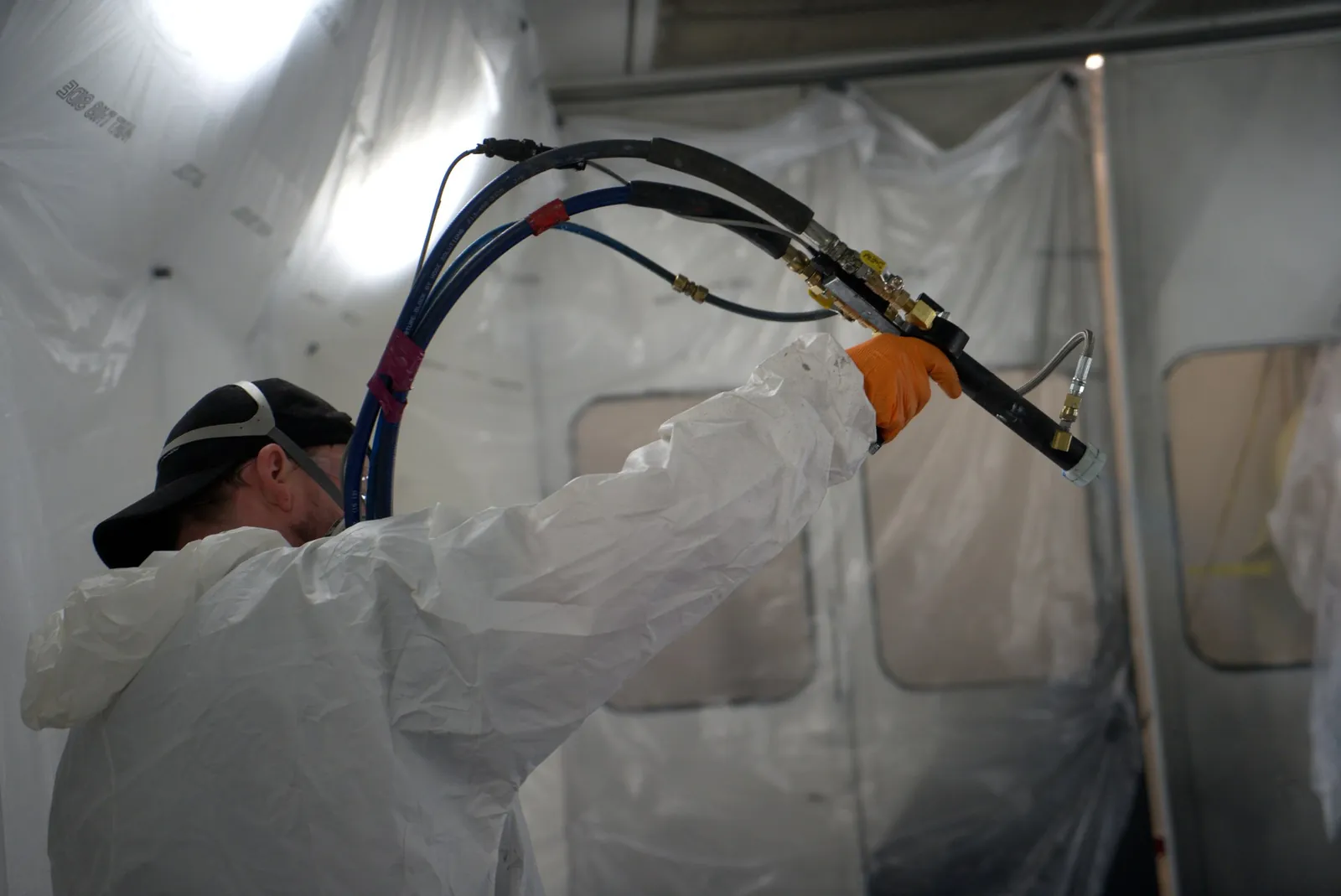
Spray polyurea is 100% solids and gels in seconds, so an applicator can build a thick, seamless membrane on walls, floors and dikes in one visit. It stays flexible, so it bridges shrinkage cracks that would crack a rigid lining. It is a strong choice for secondary containment, spill zones and wastewater structures. It is not the answer to every chemical: strong solvents, hot concentrated acids and some oxidizers call for novolac epoxy, vinyl ester or a specialty lining.
- Seamless: no laps or seams for a spill to find.
- Crack bridging: high elongation moves with the concrete.
- Fast return to service: walkable in minutes, not days.
- Primer matters: specify a primer such as ArmorPrime for concrete and steel.
See our chemical coating products and the industrial coatings guide.
Match the coating to the chemical.
A certified ArmorThane applicator can review your chemical list and exposure and quote a system with prep, thickness and testing spelled out.
Contractors: become an ArmorThane applicator
Chemical resistant coating questions
What is the most chemical resistant coating?
For strong acids and solvents, novolac epoxies and vinyl esters are usually the most chemical resistant coatings. The right answer depends on the exact chemical, concentration and temperature, so check the resistance chart.
Is polyurea chemical resistant?
Polyurea resists water, many dilute acids and caustics, fuels and oils, which suits secondary containment and spill areas. Some strong solvents and hot concentrated acids need a different system. Check the product chart for each chemical.
Is epoxy chemical resistant?
Standard epoxy resists many mild chemicals, oils and fuels. Novolac epoxy is the upgrade for stronger acids, solvents and higher temperatures.
What is the difference between splash and immersion resistance?
Splash means occasional contact that is cleaned up quickly. Immersion means the coating sits in the chemical continuously. Many coatings rated for splash are not rated for immersion.
How long does a chemical resistant coating last?
With the right chemistry, proper prep and the specified thickness, linings commonly last many years. Most early failures trace back to the wrong system for the exposure, poor prep or thin film.
Sources
- ASTM D1308, effect of household chemicals on organic finishes. store.astm.org/d1308-20.html
- AMPP (formerly NACE and SSPC), coatings standards and training. ampp.org
- U.S. EPA, SPCC rule for oil spill prevention and containment. epa.gov/oil-spills-prevention-and-preparedness-regulations
Start your coatings business with ArmorThane.
Tell us what you want to spray and where you are. An ArmorThane specialist will walk you through the equipment, chemicals, training and startup cost for the work you want to do.
- Equipment package matched to your applications
- Hands-on training and applicator certification
- Technical support once you are spraying
Acids, caustics or fuels? Get the right system.
Tell us what the surface sees and how often. We will connect you with a certified applicator who can match the coating to the chemical.
- Chemicals and concentration
- Splash, spill or immersion
- Temperature of the service
- Concrete or steel substrate