










Oil Undercoating: Products, Amounts & Real Costs
How oil and lanolin undercoatings work, how Fluid Film, Woolwax, NH Oil and Krown compare, how much product your vehicle needs, and whether to spray it yourself or pay a shop.
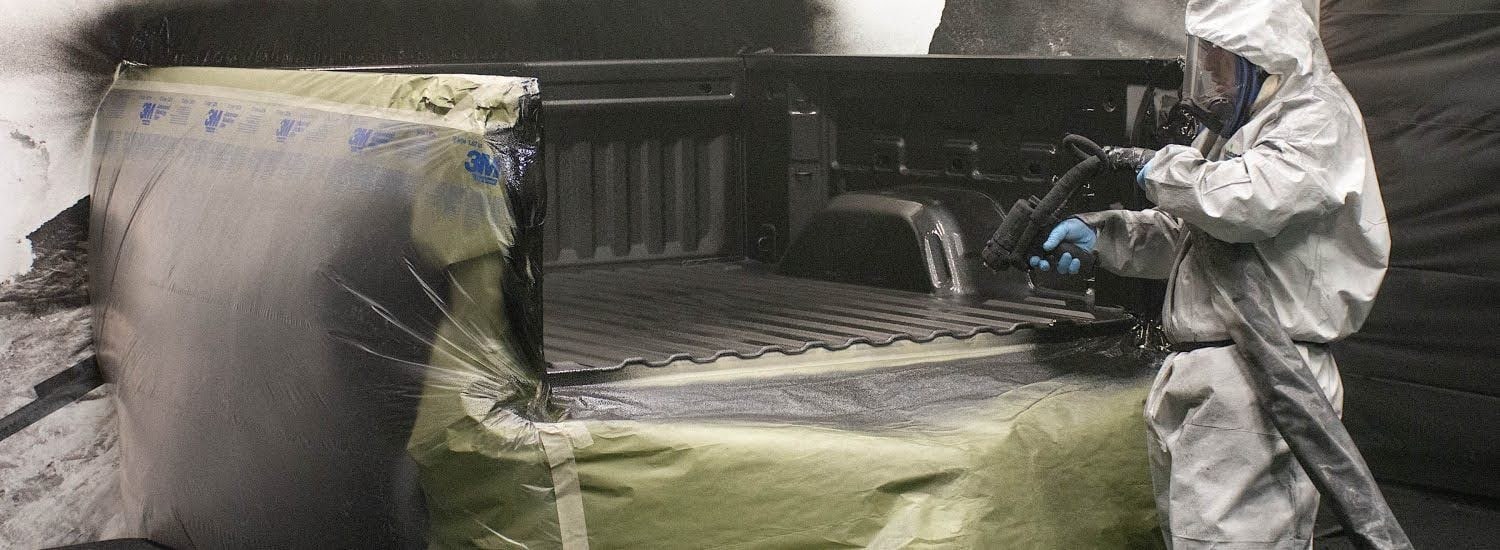
Start a spray-on bedliner business
Spray bedliners for a living.
ArmorThane sets you up to do this work, and you own the business. We make the chemistry, build the rigs, train you hands-on and answer the phone when a job gets difficult. You pay no franchise fee and no royalties. It has been that way since 1989.




- $0
- franchise fees or royalties
- 35+
- years in business
- 50+
- countries with applicators
- 24/7
- technical support
Oil undercoating is the closest thing salt-belt mechanics agree on. It is cheap, it creeps into seams that no hard coating can reach, it slows rust that has already started, and it is easy to renew every fall. It also drips, smells for a while, collects dirt and washes off, which is why it has to be redone every year or two. We make hard coatings, including polyurea undercoats, and we still recommend oil undercoating for a lot of vehicles. This guide compares the main oil and lanolin products, shows how much product a vehicle needs, works out DIY versus shop cost, and explains when a hard coating is the better choice.
Oil undercoating is a thin, non-drying oil or lanolin film sprayed on the underbody and inside cavities such as rocker panels, doors and frame rails, where it creeps into seams and displaces moisture. Petroleum-based products are typically reapplied every year; thicker lanolin products such as wool-wax last about two years on exposed areas. At about 250 square feet per gallon, most vehicles need one to a few gallons; the calculator below sizes yours. Shop applications run about $160 to $350; DIY costs well under that after the first year. Never use used motor oil.
What oil undercoating is and how it works
Oil undercoating is not a coating in the paint sense. It never cures. It is a rust-inhibiting oil, grease or lanolin that stays wet or tacky, so it can migrate into tight seams, spot welds and folded flanges and keep moving after it is applied. One major supplier says a quality product should creep 4 to 6 inches into seams and folds. Because it stays soft, it self-heals when gravel scuffs it, and it does not crack and trap water the way an aging hard coating can.
Thin, penetrating, annual
Mineral-oil blends with rust inhibitors, sprayed thin at high pressure so they atomize into cavities. They penetrate best and wash off fastest, which is why makers like NH Oil Undercoating recommend an annual application.
Thicker, tackier, longer-lasting
Wool grease products such as Fluid Film and Woolwax. Fluid Film describes its liquid as solvent-free and lanolin-based; Woolwax says it carries more raw lanolin than competitors, making it thicker and more resistant to wash-off.
Both types work by keeping water and dissolved salt off the steel. Neither adds any strength, and neither will stop a stone from chipping paint on the body. They are about the underside and the inside of the vehicle. If chips on rockers and lower doors are your problem, see our rock chip protection guide.
Oil undercoating products compared
These are the names you will hear at any salt-belt shop counter. We do not sell any of them; the figures come from the makers' and installers' own published data. Click a column heading to sort.
| Product | Base | Reapply about every | Shop price per application | DIY material | Notes |
|---|---|---|---|---|---|
| Fluid Film (Liquid A) | Lanolin, solvent-free | 1 year (exposed areas) | Varies by installer | About $40 per gallon | 250 sq ft per gallon at 3–4 mils; flash point 315°F |
| Woolwax | Lanolin, no solvents | About 2 years exposed; years in cavities | $249–$399 (one installer's packages) | Sold by the gallon and pail | Thicker, more wash-off resistant; may need heating in cold weather |
| NH Oil Undercoating | Oil-based | 1 year | $250–$350 (car to 1-ton dump) | $173–$404 kits (1–5 gal with gun) | Sprayed at high pressure to reach seams |
| Krown (shop network) | Oil-based | 1 year | About $160–$180 in-shop (U.S.) | Aerosols for touch-up | Recommended by Canada's APA; applied through drilled, plugged holes |
| Used motor oil | Waste crankcase oil | Weeks | Not offered by reputable shops | Free, and a liability | Contaminants and heavy metals; pollutes water |
How much oil undercoating do you need?
The underbody of a vehicle has far more surface than its footprint: frame rails have four sides, and suspension arms, crossmembers, the fuel tank and the inside of the wheel wells all add area. The calculator multiplies length by width, applies a complexity factor for the vehicle type, adds cavities if you treat them, and divides by published coverage. The complexity factors are our own rule of thumb from estimating jobs, not manufacturer data, so treat the result as a buying estimate.
How many gallons will your vehicle take?
Area = length x width x complexity factor (+25% if cavities are fogged) + overspray. Gallons = area / coverage: about 309 sq ft per gallon at 2–3 mils or 250 at 3–4 mils (Fluid Film figures).
DIY vs. shop oil undercoating cost
Doing it yourself is cheap on material, but you need a lift or ramps, an undercoating gun, a compressor that keeps up, and a willingness to get oily. NH Oil Undercoating says self-application runs under $100 for cars and under $150 for trucks and SUVs. The calculator compares the full cost over the years you plan to keep the vehicle.
Should you spray it yourself or pay a shop?
DIY = gun (one time) + gallons x price per gallon x applications. Shop = price per application x applications. Defaults: $129 undercoating gun, about $40 per gallon, and a $300 shop job (mid-range of a published $250–$350 list).
How to apply oil undercoating
Pick a dry, warm day before salt season
Oil goes on and creeps best over dry metal. Late summer or early fall gives it time to work into seams before the first brine. Thick lanolin products may need to be warmed in cold weather to spray properly.
Wash the underbody and let it dry
Rinse off mud and salt, paying attention to the inside of frame rails and wheel wells. Let it dry overnight if you can. Knock off any loose scale with a wire brush or scraper.
Mask what must stay clean
Cover brake rotors, pads and calipers, exhaust components, drive belts and the alternator. Fluid Film lists a flash point of 315°F, and exhaust parts run hotter than that, so overspray on a pipe will smoke and smell. Keep oil off brake parts entirely.
Spray with the right pressure
Air-powered undercoating guns typically run at 70 to 90 psi; one popular gun is rated 60 to 90 psi at 5 to 8 cfm. Airless rigs need around 2,000 psi with a 515 to 517 tip, per Fluid Film. Use a 360 degree wand inside rockers, doors, tailgate and frame rails through existing holes.
Cover the exposed underbody
Work front to back: frame, crossmembers, floor seams, fuel tank straps, suspension arms, brake and fuel lines, and the backside of bumpers. A thin, even film beats puddles that will just drip off.
Expect some drips, then inspect
Park it outside or over cardboard for the first days. Check coverage after the first salt event and touch up bare spots. Avoid high-pressure undercarriage washes, which strip the film faster.
Oil undercoating vs. hard coatings
Inside cavities and on older rust
Nothing else gets into closed rocker panels and frame rails. Oil also slows existing surface rust and scale, where a hard coating would need blasting first.
Low cost per year, easy to renew
A gallon or two and an afternoon. If gravel scrubs it off, the next application fixes it.
Abrasion and gravel
On plow trucks, farm trucks and anything driven on gravel daily, oil gets sandblasted off. A polyurea undercoat on blasted, primed steel takes the abuse for years.
Oil blocks later coatings
Nothing bonds over oil or lanolin. Fluid Film calls for a hot-water or steam detergent wash of at least 120°F before painting. Decide on hard coatings first, then oil the rest.
Many of our applicators combine both: ArmorLiner polyurea on the exposed frame and wheel wells of a work truck, cavity oil inside rockers and rails. Our truck undercoating guide explains that system, the rubberized undercoating page compares it with rubberized products, and our rust proofing guide lays out a full yearly program. For cars and crossovers, start with the car undercoating guide.
Put a permanent barrier on the exposed steel.
For trucks, plows and equipment that eat through oil every winter, certified ArmorThane applicators blast, prime and spray polyurea on frames, wheel wells and floors, leaving cavities for oil. Tell us what you drive and we will match you with a shop.
Contractors: become an applicator →
Oil undercoating questions
Is oil undercoating better than rubberized undercoating?
For most vehicles in salt country, yes. Oil stays soft, creeps into seams and inside cavities, and does not crack and trap salt water against the metal. Rubberized coatings last longer between applications but must go on clean metal and can hide rust underneath once they crack.
How often do you need to reapply oil undercoating?
Oil-based products are typically reapplied every year; NH Oil Undercoating recommends an annual application. Thicker lanolin products such as Woolwax are often re-treated every other year on exposed areas, and treatments inside enclosed cavities can last much longer.
How much does oil undercoating cost?
Published shop prices run about $160 to $180 per visit at one chain's in-shop rates and $250 to $350 at an independent installer, depending on vehicle size. DIY material costs about $40 per gallon for a leading lanolin product, plus about $129 for an undercoating gun if you do not own one.
Does oil undercoating drip?
Thin oil products drip for a while after application, which is the trade-off for their ability to penetrate. Thicker lanolin and dripless formulas drip less but creep less. Park outside or over cardboard for the first few days after treatment.
Is Fluid Film or Woolwax better?
Both are lanolin-based. Fluid Film is thinner and penetrates easily; Woolwax says it has more raw lanolin and is thicker and more resistant to wash-off, so it lasts longer on exposed surfaces but may need warming to spray in cold weather. Many people use a thinner product in cavities and a thicker one underneath.
Can I use used motor oil as undercoating?
No. The EPA notes used motor oil can contain toxic chemicals and heavy metals, and that the oil from one oil change can contaminate one million gallons of fresh water. It also runs off quickly and has no added rust inhibitors.
Will oil undercoating hurt rubber bushings or brakes?
Keep it off brake rotors, pads and calipers entirely, and mask exhaust parts. Most undercoating oils are formulated to be compatible with typical rubber parts, but check the product data sheet and avoid soaking bushings and boots.
Can you put oil undercoating over rust?
Yes. That is one of its strengths. Remove loose scale first, then apply; the oil penetrates remaining rust and slows it. It will not restore strength to rusted-through metal, which needs to be repaired.
Sources
- Fluid Film, spraying Fluid Film (coverage, pressure, tips, removal): fluid-film.com/spraying-fluid-film
- Fluid Film Liquid A technical data sheet: fluidfilm.no/.../Teknisk_datablad_usa_LqA.pdf
- The Rust Store, Fluid Film 1 gallon can: theruststore.com/products/fluid-film-1-gallon-can
- The Rust Store, Fluid Film undercoating gun: theruststore.com/products/fluid-film-undercoating-gun
- Woolwax USA, lanolin undercoating 1 gallon: woolwaxusa.com/Woolwax-lanolin-Undercoating-1-Gallon
- ECC Coating, Woolwax details: ecccoating.com/wwdetails
- NH Oil Undercoating, DIY kits: nhoilundercoating.com/product/nh-oil-undercoating-diy-kits
- NH Oil Undercoating, vehicle undercoating pros and cons: nhoilundercoating.com/vehicle-undercoating-pros-and-cons
- NHOU of Maine, pricing: nhouofmaine.com/pricing
- Krown St. Louis, price list: krownstl.com/pricing.html
- The Car Guide, choosing the best rustproofing treatment: guideautoweb.com/en/articles/79956
- U.S. EPA, managing, reusing and recycling used oil: epa.gov/recycle/managing-reusing-and-recycling-used-oil
Protection that does not wash off.
Owners get a certified ArmorThane applicator who blasts, primes and sprays polyurea on exposed steel that oil cannot keep covered. Contractors can add undercoating services with no franchise fee and no royalties.
Start your coatings business with ArmorThane.
Tell us what you want to spray and where you are. An ArmorThane specialist will walk you through the equipment, chemicals, training and startup cost for the work you want to do.
- Equipment package matched to your applications
- Hands-on training and applicator certification
- Technical support once you are spraying
Tired of oiling it every fall? Ask about a permanent coat.
Tell us the vehicle or equipment, how it is used and what the underside looks like today. We will connect you with a certified ArmorThane applicator near you.
- Vehicle or equipment type
- Plow, farm, gravel or highway use
- Current rust and oil residue
- Frame, wheel wells or full underbody
More in Industrial & infrastructure
 Industrial & infrastructurePolyurea Manhole Rehabilitation Coatings
 Industrial & infrastructurePrimary Containment
 Industrial & infrastructureRepairing Deteriorating Sewer Systems – Case StudyIndustrial & infrastructureRust Converter
 Industrial & infrastructureSecondary Containment Coating Solutions
 Industrial & infrastructureSecondary Containment Near MeIndustrial & infrastructureSecondary Containment: Complete 2026 Guide
 Industrial & infrastructureSewer Lining: The Complete Guide to Trenchless Pipe Rehabilitation