

Skip to content
Chute Liner

Chute Liner: Steel, Ceramic, UHMW or Polyurea?

How chutes wear, which liner belongs in the impact zone and which in the slide, and how much weight each option hangs on the chute.

Start a protective coatings business

Spray protective coatings for a living.

ArmorThane sets you up to do this work, and you own the business. We make the chemistry, build the rigs, train you hands-on and answer the phone when a job gets difficult. You pay no franchise fee and no royalties. It has been that way since 1989.
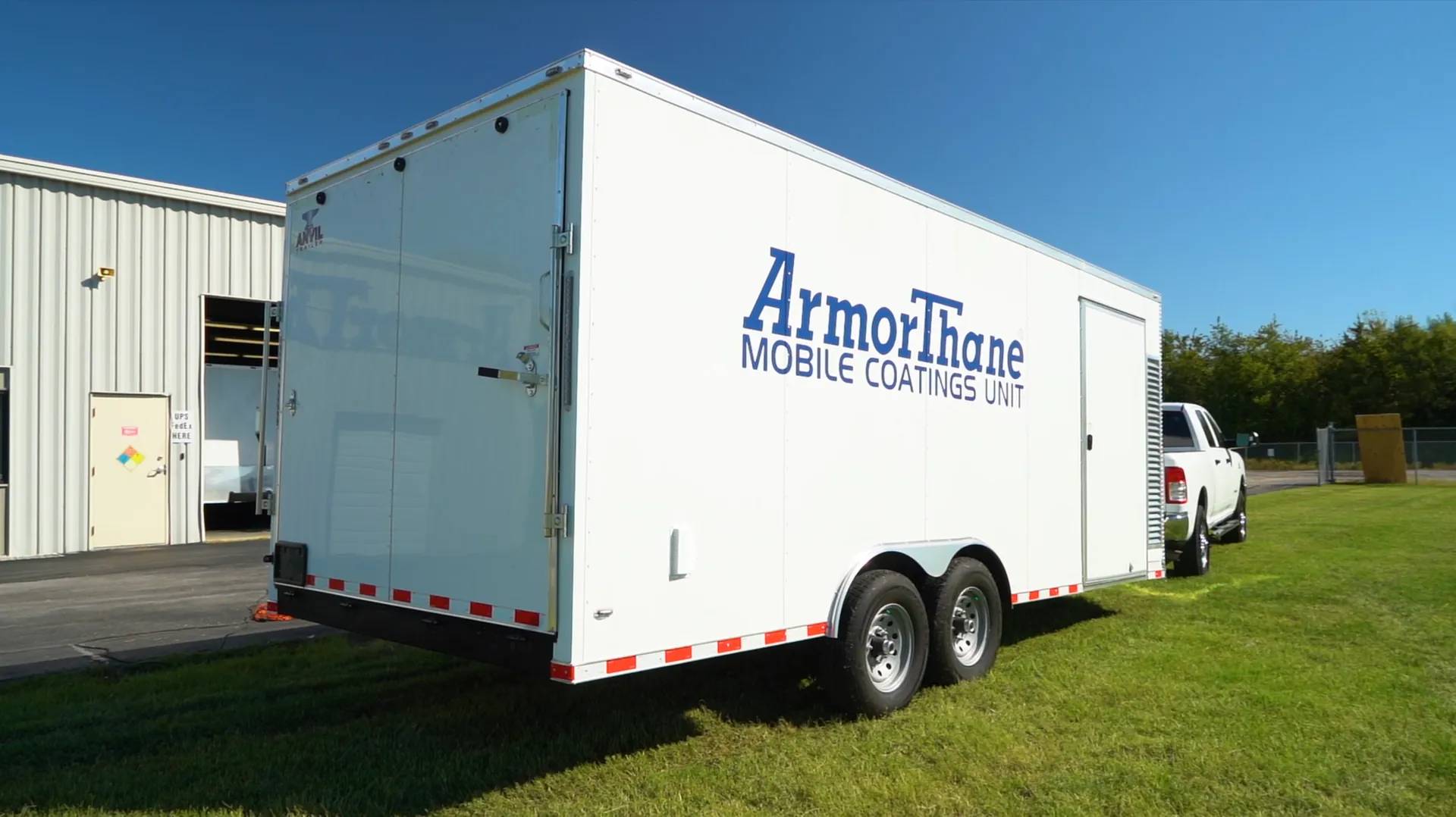
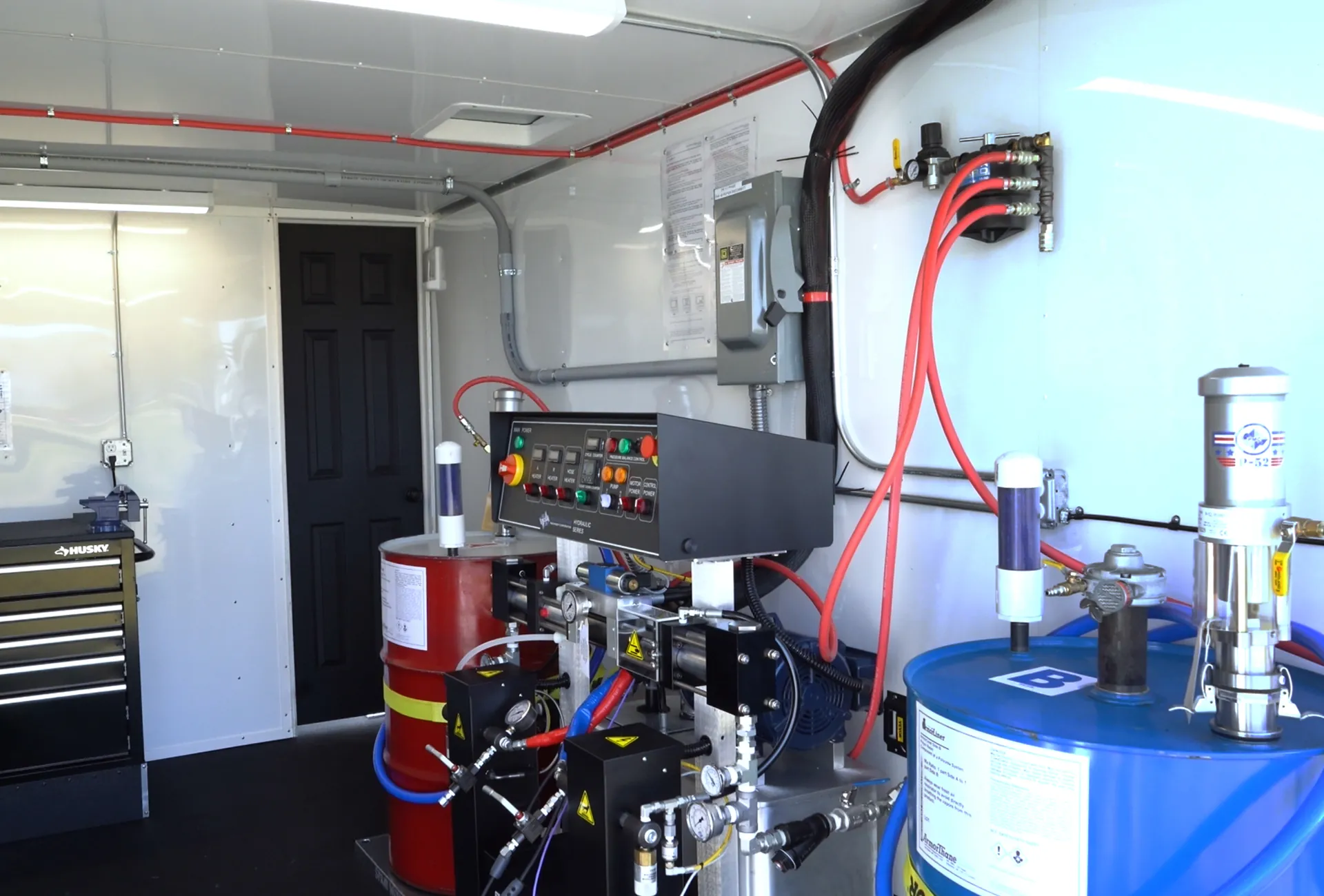
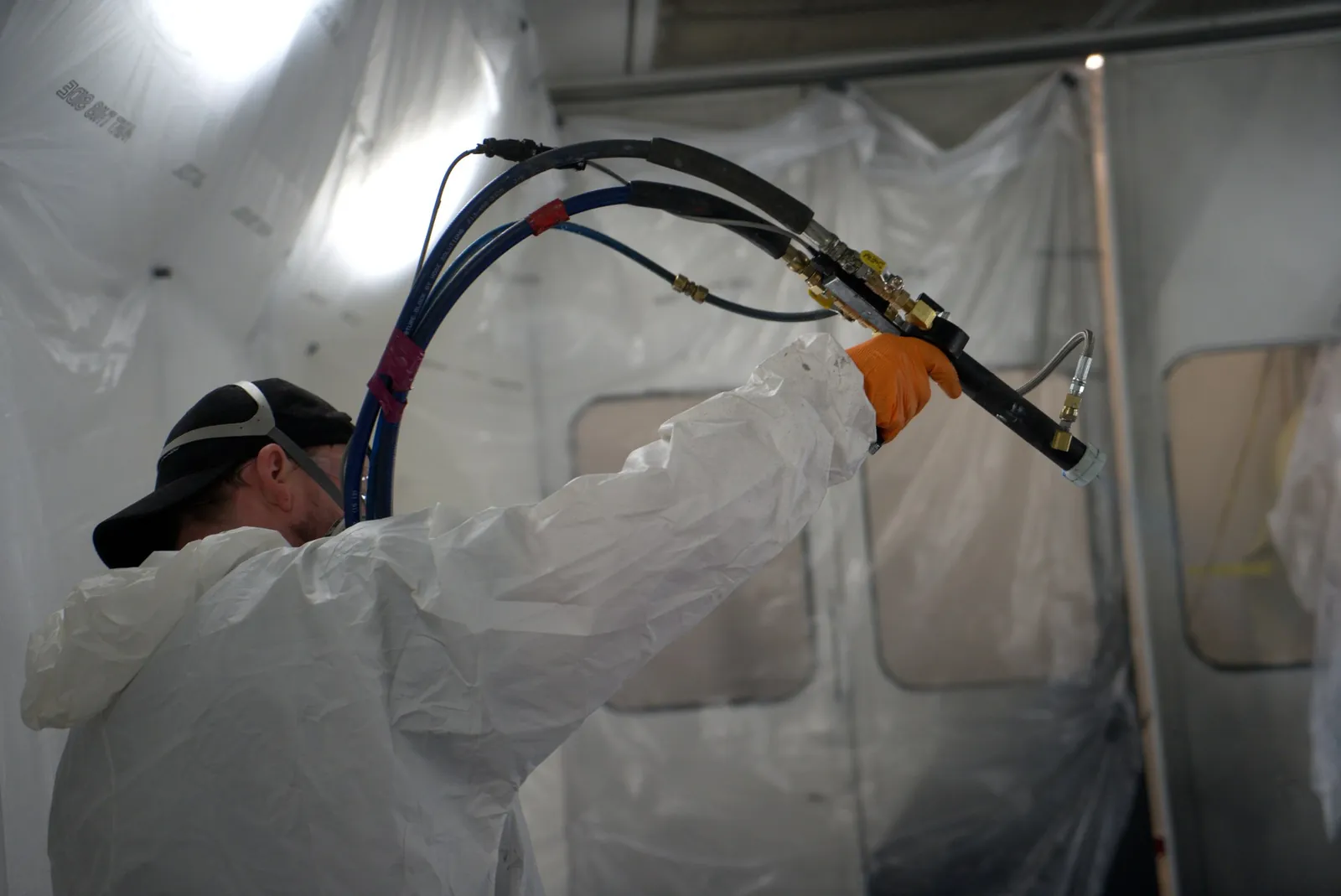
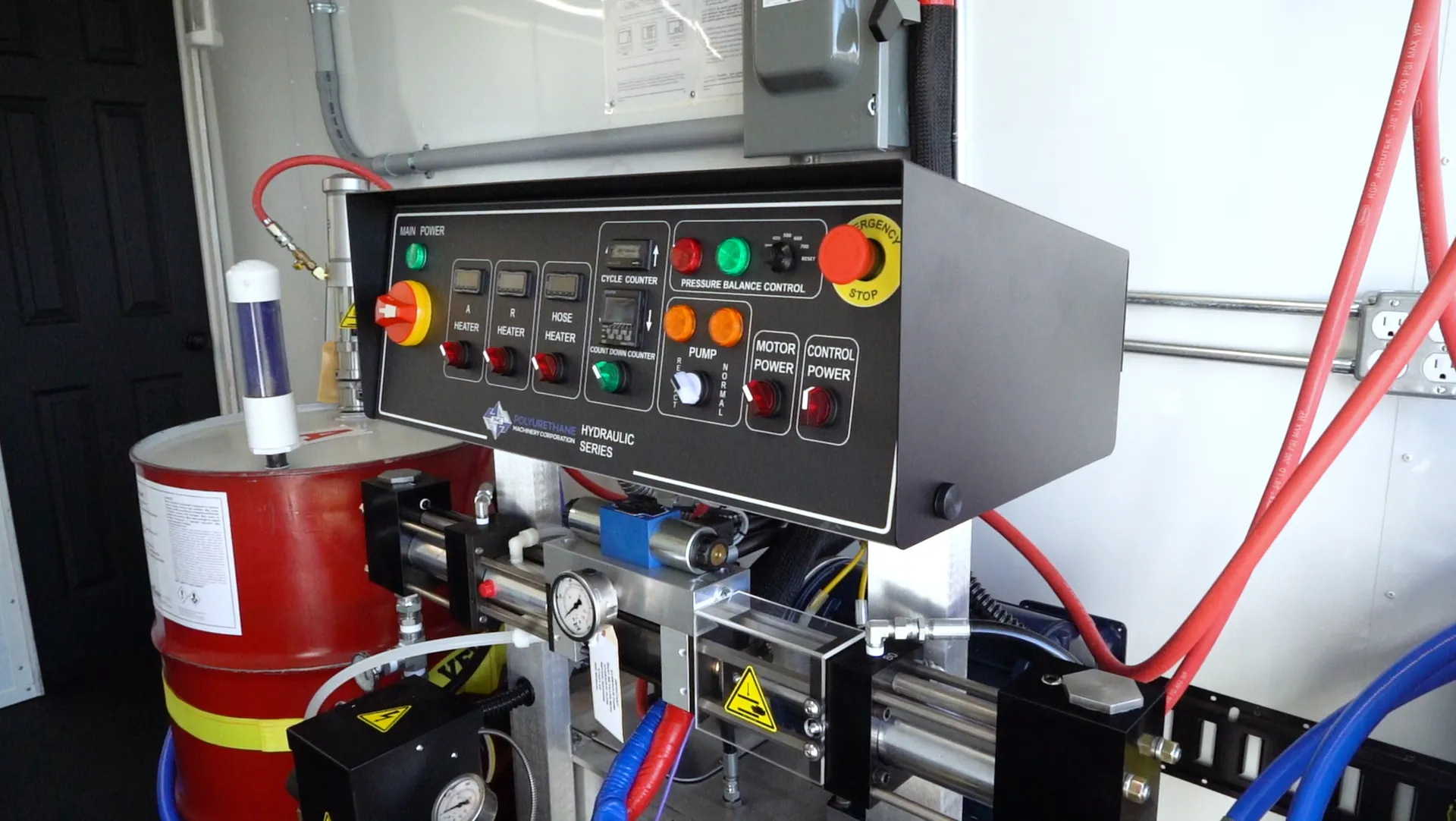
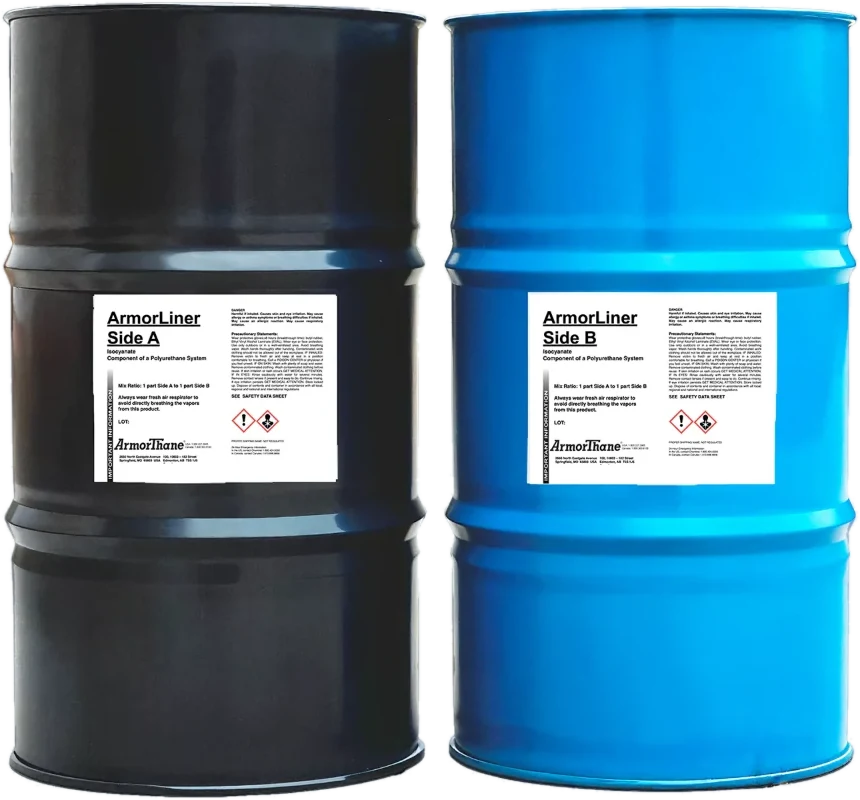
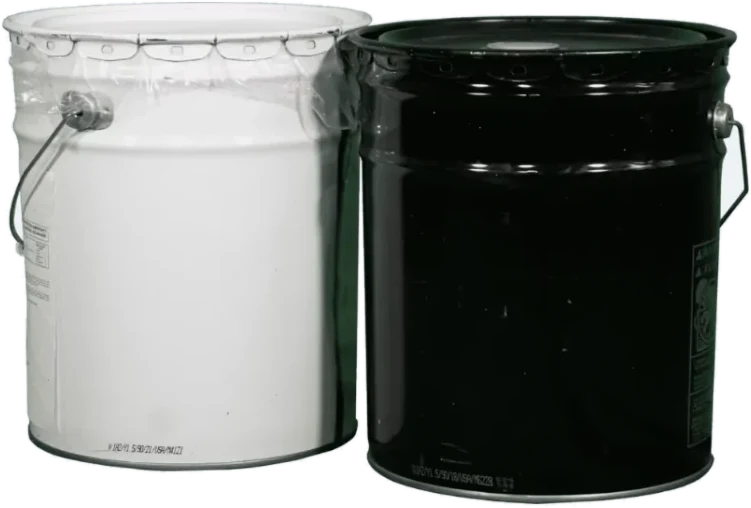
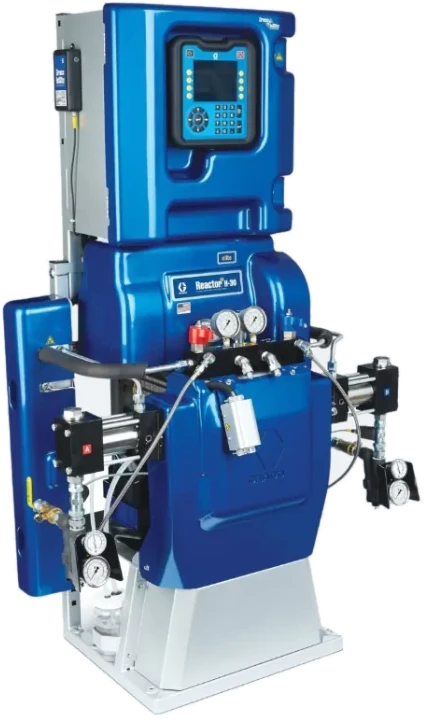
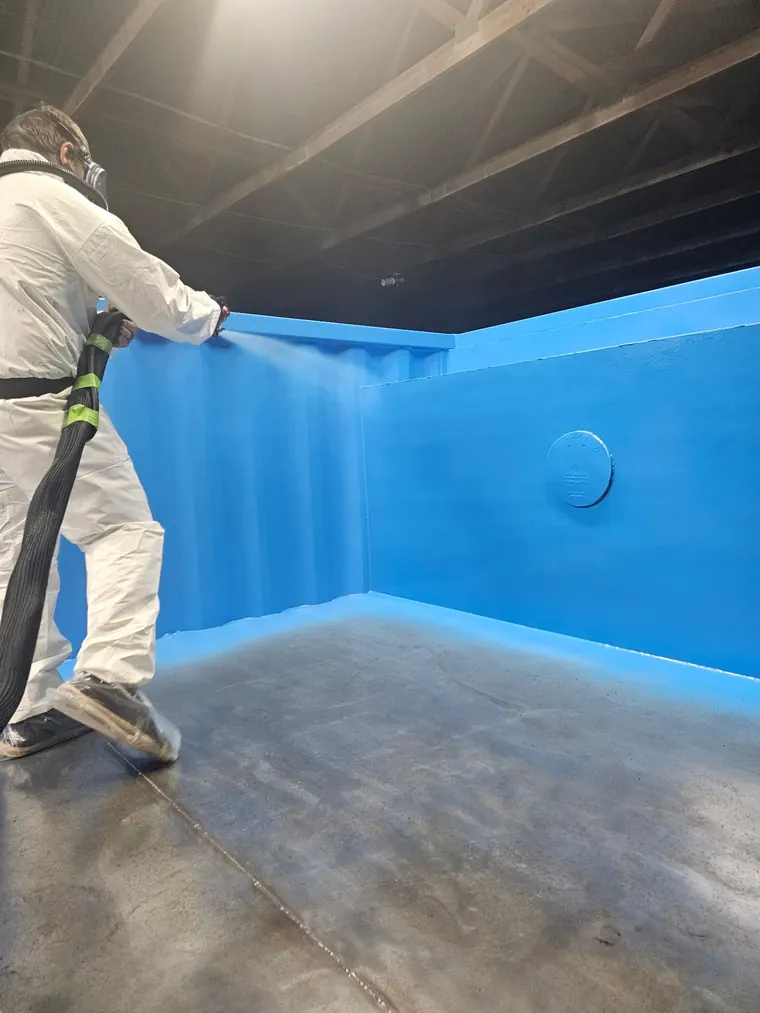
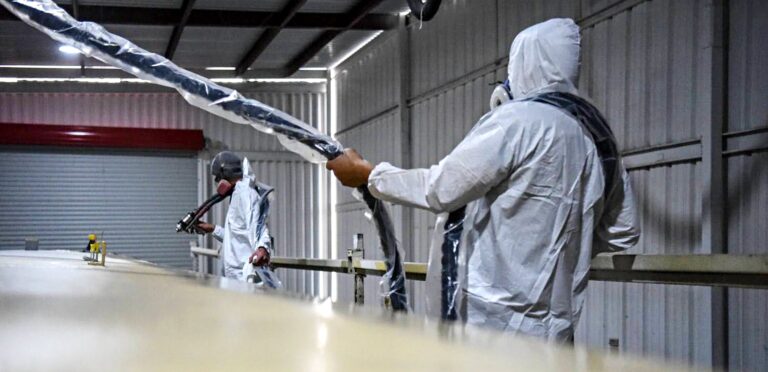
ArmorThane Mobile Coatings Unit trailer hitched to a pickup outside the plant Proportioner, A and B material drums and transfer pumps inside the spray rig Applicator in a protective suit holding a plural-component spray gun in a spray booth Proportioner control panel with heater, pressure balance and cycle counter controls

What comes with itProportioners, guns and complete spray rigs. We build them.

$0
franchise fees or royalties
35+
years in business
50+
countries with applicators
24/7
technical support
7.82
Density of steel plate, g/cm³
About 488 lb per cubic foot
0.93–0.94
Density of UHMW polyethylene, g/cm³
It floats in water
90 °C
UHMW's ceiling for continuous use
About 194 °F
370–430
Brinell hardness of a 400-grade wear plate
SSAB Hardox 400

A chute liner is the part of a transfer point you are supposed to wear out. Rock, ore, coal, grain or wood chips grind against the liner instead of the chute body, and when the liner is gone you replace it, not the chute. Pick the wrong one and you replace it every few months, or you fight hang-ups and plugged chutes every shift.

Quick answer

A chute liner is a replaceable wear surface bolted, bonded or sprayed inside a chute so the material wears the liner instead of the structure. AR400 to AR500 steel and ceramic tile handle the harshest sliding wear. Rubber soaks up impact. UHMW polyethylene sheds sticky material with low friction. Spray polyurea gives a seamless, impact-tough lining in one visit, usually 125 to 250 mils thick.

Failure modes

How a chute actually wears

Walk a worn chute with a flashlight and the damage is never even. One spot is gouged to bare metal, a long stripe down the floor is polished thin, and a corner is packed solid with fines. Each of those is a different wear mechanism, and each wants a different liner.

Impact zone

Where the load lands

Lumps dropping off a head pulley or out of a bin hit hard and gouge. Hard, brittle liners crack here. Tough, elastic ones bounce the energy back.

Slide zone

Where it scours

Below the impact point the stream slides along the floor. Wear is steady and predictable, and hardness wins: ceramic and AR plate last longest.

Buildup

Where it sticks

Wet fines, clay and frozen material hang up on rough or rusted steel. Low-friction liners such as UHMW, or a smooth polymer lining, keep it moving.

Heat and fines

Hot or dusty streams

Hot clinker or dryer discharge rules out most plastics. Fine, fast streams erode rather than gouge, which favors ceramic.

Line the zones, not the chuteThe impact box and the slide rarely want the same liner. Ceramic tile under a four-foot drop of six-inch rock is how you end up buying ceramic twice. Put the tough liner where the load lands and the hard liner where it slides.
Options

Chute liner materials, side by side

Every option here works somewhere. The question is how it holds up to your mix of impact, sliding, moisture and temperature, and how much weight and downtime it costs to install.

LinerDensity (g/cm³)Strong atWeak atHow it goes in
AR400 to AR500 steel plate7.82Sliding wear, heat, large lumpsWeight, noise, rust, sticky materialBolted or welded panels
Alumina ceramic tile3.95–4.1 (pure alumina)Severe sliding abrasion, fine erosive streamsCracks under heavy impact; heavyBonded or weld-stud backing plates
Rubber sheet0.91–1.2Impact, wet fines, noiseHeat, oils, sharp cutting edgesBolted or bonded sheet
UHMW polyethylene0.93–0.94Low friction, sticky material, impactContinuous heat above about 90 °C; large thermal movementCountersunk bolts in slotted holes
Spray polyureaAbout 1.0–1.1 (typical)Impact plus sliding, odd shapes, no seamsHeat and chemistry limits per data sheet; needs dry, blasted steelSprayed in place, 125–250 mils common
Densities from Engineering ToolBox and published UHMW data; polyurea is a typical range, check the product data sheet. Tap a heading to sort.
Steel

Hardness costs weight

Stepping up from a 400 to a 450 or 500 grade buys more wear life per inch, but every square foot of 1/2 in plate still weighs about 20 lb.

Plastics

Slick, light, temperature-limited

UHMW is the go-to when material sticks. Keep it out of hot streams and give it room to grow and shrink.

Spray-on

No bolts to work loose

Polyurea bonds to the chute itself, fills pitted steel and leaves no seams or bolt heads for material to catch on.

Weight check

Chute liner weight and material calculator

Liner weight matters more than people think. It loads the chute supports, it decides whether two people or a crane handle the panels, and on a hanging chute it can mean new steel. Enter the chute and pick what to line.

Weight math

Liner weight by material

Weight (lb) = lined area (sq ft) × thickness (ft) × density (g/cm³) × 62.43. Densities: steel 7.82, alumina 3.95, rubber 1.2, UHMW 0.935 and spray polyurea about 1.05 (typical). Polyurea gallons = area × mils ÷ 1,604 at 100% solids. Backing plates, adhesives and fasteners are not included.

0
Lined area, sq ft
0
Liner weight, lb
0
Pounds per sq ft
0
Polyurea at this thickness, gallons

For how many mils to spray in each zone, see our polyurea thickness guide.

Spray-applied

Spraying a polyurea chute liner

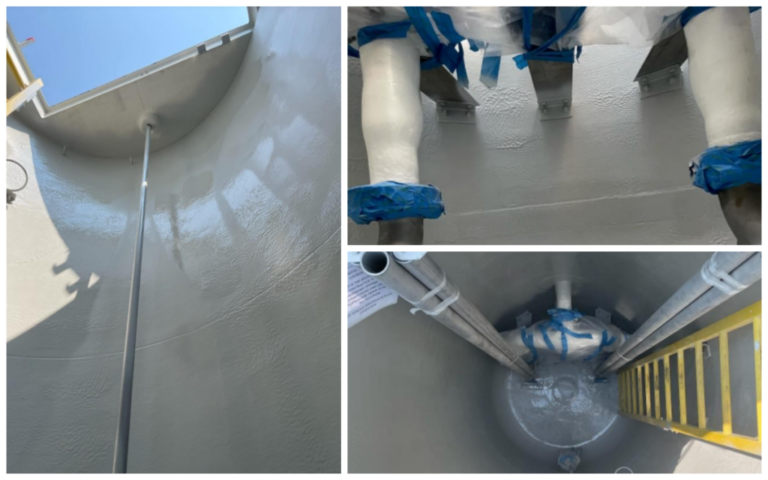
A sprayed lining suits transfer chutes, hoppers, bins and spouts with curves, transitions and bolt-heavy access doors where sheet liners are a fight to fit. Done right, it's a one-shutdown job.

  1. Lock out and clean

    Lock out the conveyor, dig out buildup and pressure wash. Oily or packed fines have to go.

  2. Blast for profile

    Abrasive blast the steel to clean metal with an angular profile. Worn, pitted plate is fine; the polyurea fills it. Our surface preparation guide covers the standards.

  3. Prime and stripe

    Prime per the data sheet and stripe edges, welds and bolt heads so they do not end up thin.

  4. Build thickness by zone

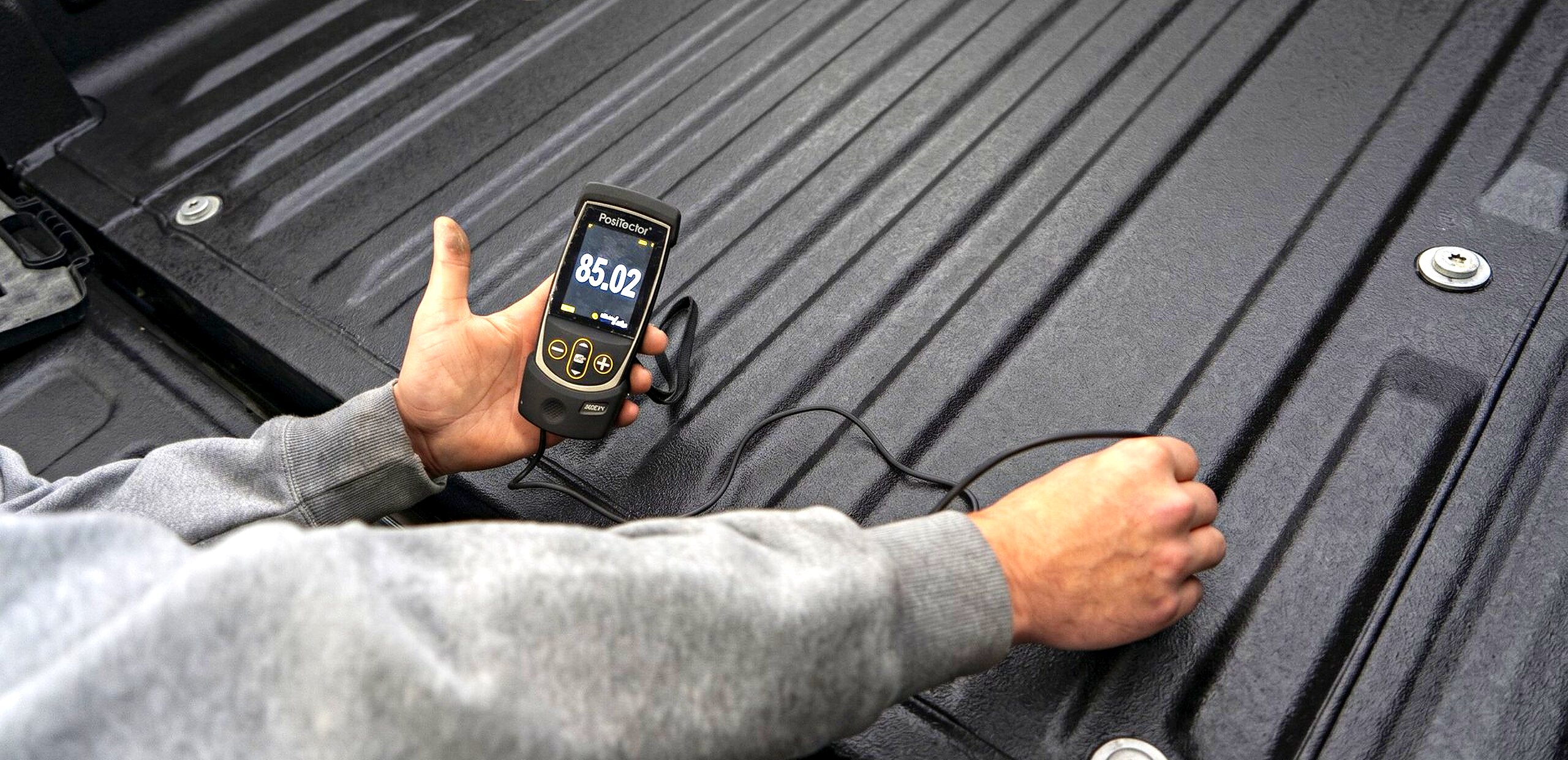
    Spray the slide areas to spec and add extra film in the impact box, measuring as you go. 125 to 250 mils is a common range.

  5. Back in service

    Polyurea gels in seconds and is usually ready for material the same day, depending on the product.

Where we would not spray itHot clinker, kiln discharge and dryer outlets that run above the product's temperature rating. Large, sharp lumps falling a long way onto a thin film. Those belong to steel or ceramic, sometimes with polyurea on the cooler sections around them.
  • Repairable: a worn patch can be cleaned and resprayed without pulling panels.
  • Quiet: an elastomeric lining knocks down the racket of rock on bare steel.
  • Over old liners: worn AR plate can be blasted and sprayed to get more life from it.

Related: abrasion-resistant coatings compares wear systems in general, mine equipment coatings covers the rest of the plant, railcar lining covers hoppers and gondolas, and refuse chute repair handles building trash chutes.

One shutdown

A seamless liner, sprayed where it wears.

A certified ArmorThane applicator can quote a polyurea chute liner built up by zone, with the thickness readings to back it up.

Contractors: become an ArmorThane applicator

FAQ

Chute liner questions

What is the best chute liner material?

It depends on the wear. Use tough, elastic liners such as rubber or polyurea where heavy lumps land, hard liners such as AR plate or ceramic where material slides, and UHMW where wet or sticky material hangs up. Many chutes use two materials.

Is UHMW or polyurea better in a chute?

UHMW sheet has lower friction and shines with sticky material, but it is bolted in panels and limited to about 90 °C continuous. Spray polyurea bonds to the steel with no seams, fits any shape and takes impact well. Check both against your temperature and lump size.

How thick should a chute liner be?

Spray polyurea chute linings commonly run 125 to 250 mils, thicker in the impact zone. Steel and sheet liners are often 1/4 to 1 inch, chosen by the wear rate you measure and how often you can afford to shut down to replace them.

Can you spray a liner into an existing steel chute?

Yes. The chute is cleaned, abrasive blasted, primed and sprayed in place. Pitted or worn steel does not need to be smooth first, because the polyurea fills it. Most chutes can be done in a single planned shutdown.

How do you stop material sticking in a chute?

Use a smooth, low-friction surface such as UHMW or a polymer lining, remove ledges and bolt heads that catch fines, and check the chute angle. Rusted, rough steel is one of the most common reasons wet material hangs up.

How much does a wear liner weigh?

Weight equals area times thickness times density. One square foot of 1/4 inch steel weighs about 10 lb; the same area of UHMW or polyurea weighs about 1.2 to 1.4 lb. Ceramic tile falls in between at roughly 5 lb plus backing.

AT
Written by the ArmorThane technical team. We have manufactured polyurea, polyurethane and polyaspartic coatings and plural component spray equipment in Springfield, Missouri since 1989. Liner choices here are general guidance; match the final liner to your material, temperatures and the product data sheet.

Sources

  1. Engineering ToolBox, Densities of selected solids. engineeringtoolbox.com/density-solids-d_1265.html
  2. Wikipedia, Ultra-high-molecular-weight polyethylene (properties and service temperature). en.wikipedia.org/wiki/Ultra-high-molecular-weight_polyethylene
  3. SSAB, Hardox 400 wear plate product data. ssab.com/en-us/brands-and-products/hardox/product-program/400

Wear the liner, save the steel.

Certified ArmorThane applicators spray thick polyurea linings into chutes, hoppers and bulk equipment, often in a single shutdown. Contractors can add wear lining work with our equipment and training, with no franchise fee and no royalties.

United States 417-831-5090 · Canada 780-444-6200
Become an applicator

Start your coatings business with ArmorThane.

Tell us what you want to spray and where you are. An ArmorThane specialist will walk you through the equipment, chemicals, training and startup cost for the work you want to do.

  • Equipment package matched to your applications
  • Hands-on training and applicator certification
  • Technical support once you are spraying
Step 1 of 3

We want to help you find the best ArmorThane applicator for your protective coating project. Please either fill out the request form below or call us toll free at 417-831-5090, any time Monday-Friday, 8:00 a.m. to 5:00 p.m. Central Standard Time.

Chutes eating liners? Spray one that lasts.

Tell us what runs down the chute and how it fails today. We will connect you with a certified ArmorThane applicator who sprays seamless polyurea wear linings in chutes, hoppers and bins.

  • Material: rock, ore, coal, grain, wood chips
  • Lump size, drop height and tons per hour
  • Chute size and current liner
  • Problems: gouging, wear-through, sticking, noise
Become an applicator

Start your coatings business

Choose “becoming an Applicator / Dealer” and add your details. Our team will call you to talk through markets, equipment and budget.

1Choice
2Contact Information
3Location

Rather talk now? (417) 831-5090 · About the opportunity