








Basketball Court Paint: Products, Dimensions & Coverage
Which court coating goes on asphalt, concrete or an indoor slab, regulation dimensions, how many gallons you need, and when it is warm enough to paint.
Start a protective coatings business
Spray protective coatings for a living.
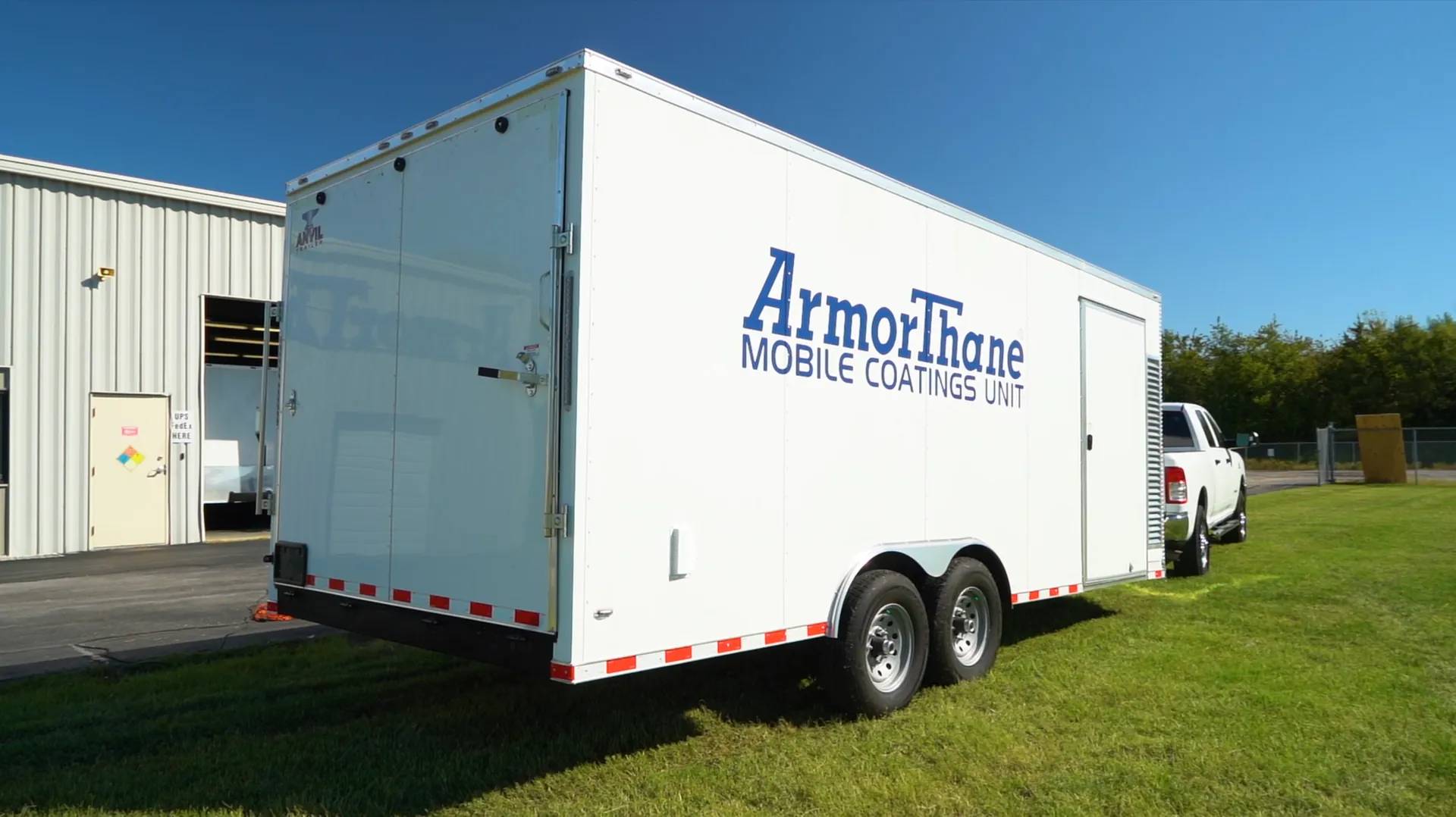
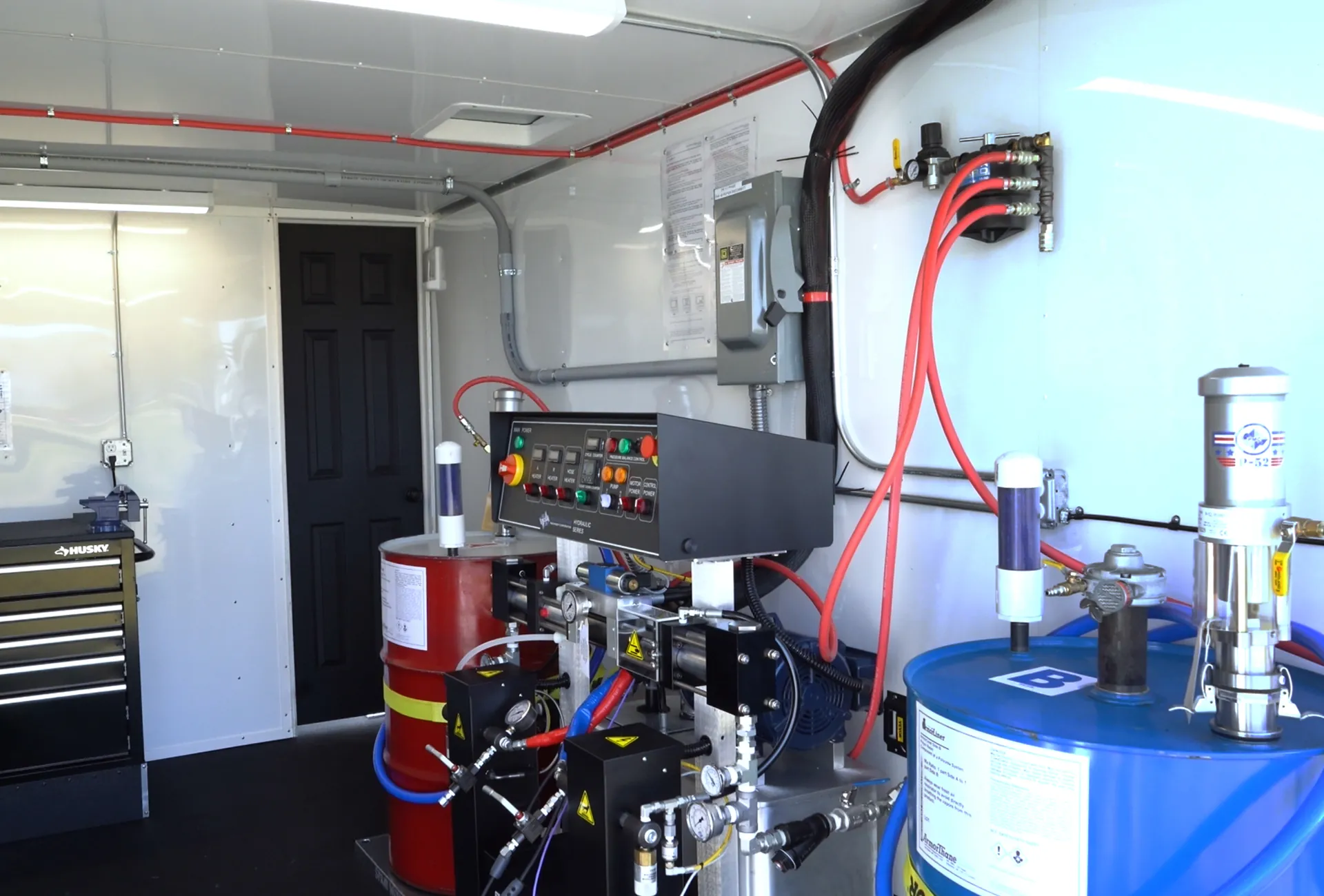
ArmorThane sets you up to do this work, and you own the business. We make the chemistry, build the rigs, train you hands-on and answer the phone when a job gets difficult. You pay no franchise fee and no royalties. It has been that way since 1989.
- $0
- franchise fees or royalties
- 35+
- years in business
- 50+
- countries with applicators
- 24/7
- technical support
Basketball court paint is not regular porch paint in a sporty color. An outdoor court takes sun, standing water, freeze-thaw and a lot of rubber soles stopping hard, and the products that survive that are built differently from anything in the house-paint aisle. We make coatings for concrete, and we get asked about courts constantly, from backyard half courts to church gyms on a slab. This guide covers which court paint goes on which surface, real court dimensions, how much material a job takes, when it is warm enough to paint, and where our polyaspartic and polyurea products make sense and where they do not.
For an outdoor asphalt or concrete court, use a 100% acrylic sport-surface system: crack repair, a resurfacer if the surface is rough or porous, then two color coats at roughly 95 sq ft per gallon per coat, and 2 inch game lines. Paint only when air and surface are 50°F and rising, and keep players off for 48 hours. For an indoor concrete court, a two-part polyaspartic with a fine aggregate in the topcoat is tougher and easier to clean. Wood gym floors need finishes made for wood, not concrete coatings.
Types of basketball court paint
The right product depends almost entirely on what the court is made of and whether it lives outside. Here is how we sort it out when someone calls.
| Coating type | Surface | Indoor / outdoor | Traction | Our take |
|---|---|---|---|---|
| Acrylic sport surface (resurfacer + color coats) | Asphalt, concrete | Outdoor | Built-in silica texture | Industry standard for outdoor courts |
| Acrylic line paint | Over acrylic color coats | Both | Smooth; keep lines 2 in | Use with the color system, same brand |
| Two-part polyaspartic with aggregate | Concrete | Indoor, covered | Good only with grit in topcoat | Best for indoor slab courts and shop floors with a hoop |
| Two-part epoxy | Concrete | Indoor only | Needs grit | Works indoors; chalks and yellows in sun |
| Single-part porch and floor paint | Concrete | Both | Slick when wet or dusty | Peels under hard stops; not recommended |
| Wood floor finish (oil or water-based poly) | Maple hardwood | Indoor | Spec'd for play | Not our product; follow the floor maker's finish list |
Why acrylic wins outdoors
Acrylic court systems breathe, take UV well, and are designed to go on thin in several layers mixed with silica sand, which gives the ball a predictable bounce and gives shoes grip. They are also easy to recoat: you clean, patch and add color coats every several years instead of grinding everything off. Angi puts the acrylic resurfacing cycle at 4 to 8 years.
Where our coatings fit
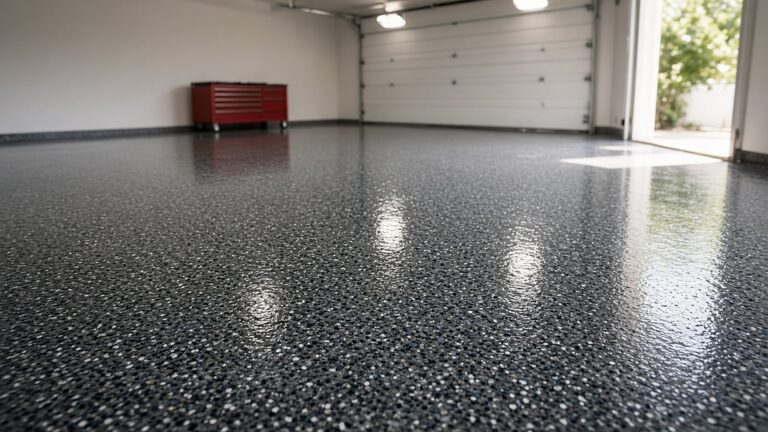
Our sweet spot is indoor and covered concrete: a court painted in a pole barn, a shop, a church fellowship hall, a basement rec room or a garage with a hoop. There, a two-part aliphatic polyaspartic such as ArmorFloor stands up to bouncing balls, rolling equipment and spilled drinks far better than acrylic does, and it cleans with a mop. The catch is traction. A glossy coating with no grit is slippery under dust, so we broadcast or mix a fine texturing aggregate into the topcoat on every court. If you want a full garage system with a court layout, start with our garage floor coating guide.
Basketball court dimensions for painting the lines
Lay the lines out before you buy paint, because the court size sets the paint quantity and the level of play sets the lane width and three-point distance. Game lines are 2 inches wide, and on a regulation court the boundary line counts as out of bounds.
| Level | Court (L x W) | Area | Lane width | 3-point distance | Free throw line |
|---|---|---|---|---|---|
| NBA | 94 x 50 ft | 4,700 sq ft | 16 ft | 23 ft 9 in (22 ft corners) | 15 ft from backboard |
| NCAA | 94 x 50 ft | 4,700 sq ft | 12 ft | 22 ft 1.75 in | 15 ft |
| FIBA | 28 x 15 m (91.9 x 49.2 ft) | about 4,520 sq ft | 4.9 m (16.08 ft) | 6.75 m (6.60 m corners) | 15 ft equivalent |
| High school (NFHS) | 84 x 50 ft | 4,200 sq ft | 12 ft | 19 ft 9 in | 15 ft |
| Junior high | 74 x 42 ft | 3,108 sq ft | varies | varies | 15 ft |
| NBA half court | 47 x 50 ft | 2,350 sq ft | 16 ft | 23 ft 9 in | 15 ft |
| Backyard half court | 30 x 30 ft | 900 sq ft | 12 ft typical | high school arc fits | 15 ft |
Basketball court paint calculator
Pick a court size or type your own, choose the coating, and the calculator works out the paint for the color coats, approximate game-line footage, line paint, and a pro versus DIY budget.
How much court paint do I need?
Area = (length + 2 x run-out) x (width + 2 x run-out). Gallons = area x coats / coverage. Line footage adds boundary, midcourt, center circle, lanes, free-throw circles, restricted arcs and three-point arcs (arcs treated as semicircles, about plus or minus 5%).
Can you paint the court today?
Most court paint failures we hear about trace back to timing: fresh concrete, a cold night after a warm afternoon, or a pop-up storm. Run your conditions through this before you open a pail.
Court coating readiness check
Applies the published limits for acrylic court systems: 50°F and rising, held for 24 hours; 28-day cure for new concrete; 14 to 30 days for new asphalt; 48 hours before play.
How a court gets resurfaced, step by step
This is the sequence for an outdoor acrylic system, which is what most driveway, park and school courts need. Indoor polyaspartic work follows the same logic, with grinding in place of acid etching.
Check drainage and flatness
Flood the court with a hose and look for birdbaths. California Sports Surfaces calls for the surface to vary between 0.83% and 1% slope in one plane. Coatings do not fix low spots; patch them first or water will sit and lift the color.
Clean and repair
Pressure wash, remove dirt, mildew and loose coating, then fill cracks with a court crack filler and patch depressions. Angi puts professional crack filling and patching at $300 to $800 per visit.
Prepare new concrete properly
New concrete must cure at least 28 days, should have a medium broom finish and a vapor barrier under the slab, and must be acid etched and rinsed to remove laitance before an adhesion promoter. Skip any of these and the coating peels in sheets.
Resurfacer coats (if needed)
On asphalt or rough concrete, one or two coats of acrylic resurfacer mixed with silica sand fill the texture. SportMaster recommends two coats on new or uncoated asphalt.
Two color coats
Apply at least two color coats with a squeegee, each at roughly 95 sq ft per gallon for a ready-mix product. Under good drying conditions coats dry in 30 to 60 minutes.
Tape and paint lines
Snap the layout, mask 2 inch lines, seal the tape edge with a thin coat of the court color so lines do not bleed, then paint the lines.
Let it cure
Keep play off for 48 hours. Hard stops and pivots on soft coating leave permanent scuffs.
What basketball court paint costs in 2026
Court pricing splits into three very different jobs: refreshing lines, resurfacing an existing court, and building a new one. Do not let a contractor sell you the third when you need the first.
$200–$600
Angi's range for repainting game lines. Custom striping, logos or color schemes run $500 to $2,500.
$1.50–$4 per sq ft
Angi's range for professional acrylic resurfacing. A 30 x 30 ft half court works out to roughly $1,350 to $3,600.
$4–$16 per sq ft
HomeGuide's installed range for a new basketball court; a 30 x 30 half court runs $3,600 to $14,400.
Paint it yourself or hire it out?
A backyard half court is a reasonable weekend project if the slab is sound, you have a long-handled squeegee, and you can work in steady weather. Hire it out when the slab has cracks wider than a credit card, when the court is asphalt that needs resurfacer, or when you want regulation lines on a full court. Layout errors on a three-point arc are hard to unsee.
Painting a court on concrete inside a building?
Tell us the slab size, what else the floor gets used for, and whether it is heated. A certified ArmorThane applicator can quote a slip-resistant polyaspartic court floor with lines built in.
Contractors: become an applicator →
Other floors we get asked about
Warehouse floor marking
Line widths, color codes and paint vs. tape, with a footage estimator that also works for gym and shop layouts.
Barn floor coating
If your court is going into a pole barn, read this first for traction and moisture advice.
Also useful: epoxy floor coating for indoor slabs and concrete sealer for driveways and patios that do not need a full court system.
Basketball court paint questions
What kind of paint do you use on an outdoor basketball court?
A 100% acrylic sport-surface system made for courts, applied over a clean, repaired surface, usually with silica sand in the resurfacer or color coats for traction. Regular house or porch paint is too thin and too slick and peels under hard stops.
How much paint does a half court take?
A 30 x 30 ft backyard half court with 3 ft of run-out on each side is 1,296 sq ft. At about 95 sq ft per gallon per coat, two coats need roughly 27 gallons of ready-mix color, plus a gallon or two of line paint. Use the calculator above for your exact size.
How long before you can play on a newly painted court?
SportMaster's guidance is 48 hours before foot traffic or play for its acrylic color. Cooler or humid weather can stretch that, so press a thumbnail into an out-of-the-way edge before you let anyone pivot on it.
Can I paint a basketball court on new concrete?
Wait at least 28 days for the concrete to cure, then acid etch and rinse it and apply an adhesion promoter before the court coats. The slab should also have a vapor barrier underneath.
How wide are basketball court lines?
Two inches. Under NFHS rules the boundary line is part of the out-of-bounds area, so measure the court from the inside edge of the boundary lines.
Is epoxy good for a basketball court?
Indoors on a dry slab, a two-part coating can work well if the topcoat has aggregate for grip. Outdoors, we do not recommend epoxy: it is non-breathing, and sun yellows and chalks most epoxies. An aliphatic polyaspartic holds color better, but outdoors acrylic is still the safer system.
How often does a court need to be resurfaced?
Angi puts acrylic resurfacing at every 4 to 8 years, depending on climate, use and how well the court drains. Cleaning, crack filling and repainting lines in between stretch that cycle.
What temperature do you need to paint a court?
For acrylic court coatings, both air and surface should be at least 50°F and rising before you start, and stay above 50°F for at least 24 hours after. Do not coat a damp surface or one with dew on it.
Sources
- SportMaster, Ready-Mix acrylic court color (coverage, temperature, cure): sportmaster.net/readymix
- SportMaster, Acrylic Resurfacer: sportmaster.net/acrylicresurfacer
- SportMaster, concrete court surfaces: sportmaster.net/colorconc
- California Sports Surfaces, preparing concrete for athletic surfaces: californiasportssurfaces.com/properly-preparing-concrete…
- Angi, tennis and sport court resurfacing cost (2026): angi.com/articles/cost-to-resurface-a-tennis-court.htm
- HomeGuide, sport court cost (2026): homeguide.com/costs/sport-court-cost
- Wikipedia, basketball court: en.wikipedia.org/wiki/Basketball_court
- CoverSports, high school basketball court dimensions: coversports.com/resources/gym-guides/high-school…
- Gamegistics, basketball court dimensions by level: gamegistics.com/basketball-court-dimensions
- Simiron Polyaspartic HS sell sheet (coverage): simiron.com/…/SIM_POLYASPARTIC-HS_SELLSHEET…pdf
A court floor that grips and lasts.
Homeowners, schools and churches get a certified ArmorThane applicator who preps the slab and adds traction to every topcoat. Contractors can add coatings to their business with no franchise fee and no royalties.
Start your coatings business with ArmorThane.
Tell us what you want to spray and where you are. An ArmorThane specialist will walk you through the equipment, chemicals, training and startup cost for the work you want to do.
- Equipment package matched to your applications
- Hands-on training and applicator certification
- Technical support once you are spraying
More in Guides & resources
 Guides & resourcesCase Studies
 Guides & resourcesCathodic ProtectionGuides & resourcesChute Liner
 Guides & resourcesConstruction Coatings
 Guides & resourcesCulvert LiningGuides & resourcesDew Point CalculatorGuides & resourcesEfflorescence: Causes, Removal & Prevention
 Guides & resourcesElastomeric Coating Guide