





Abrasion Resistant Coating Guide: Linings That Last
Which coatings stand up to sliding, gouging and impact wear on chutes, hoppers, truck beds, floors and pipes, how polyurea compares with epoxy, urethane and rubber, and how abrasion is tested.
Start a containment coating business
Line containment for a living.
ArmorThane sets you up to do this work, and you own the business. We make the chemistry, build the rigs, train you hands-on and answer the phone when a job gets difficult. You pay no franchise fee and no royalties. It has been that way since 1989.




- $0
- franchise fees or royalties
- 35+
- years in business
- 50+
- countries with applicators
- 24/7
- technical support
Abrasion is the slow killer of equipment. Gravel, ore, grain, sand and slurry grind away steel and concrete, and hard coatings chip the first time a rock lands on them. The best abrasion resistant coatings are often not the hardest ones: tough elastomers like polyurea and polyurethane absorb impact and shed sliding wear. This guide compares wear coatings and explains how to choose one for the way your surface actually wears.
An abrasion resistant coating protects a surface from wear caused by sliding, scraping, impact and erosion. For impact plus sliding wear on truck beds, chutes, hoppers and loader buckets, thick elastomeric polyurea and polyurethane linings usually outperform hard epoxies because they flex and rebound instead of chipping. For fine sliding wear and slurries, polyurethane and rubber linings are common; for severe high-temperature wear, ceramic tile or hardfacing may be needed. Abrasion resistance is often compared with the Taber test, ASTM D4060. Choosing an abrasion resistant coating starts with knowing how the surface wears.
Know how it wears
Sliding abrasion
Material sliding across a surface: grain in chutes, sand in truck beds.
Impact and gouging
Rocks and scrap dropping onto a surface. Hard coatings chip; elastomers rebound.
Erosion
Slurry and particles carried in fluid, as in pipes and pump boxes.
Traffic wear
Wheels, boots and dragged pallets on floors and decks.
Hot wear
Hot materials soften many coatings; check the service temperature.
Wear plus chemicals
Abrasion and chemical attack together, as in mining and wastewater.
Abrasion resistant coatings compared
| System | Handles | Watch-outs | Best fit |
|---|---|---|---|
| Spray polyurea | Impact plus sliding wear; thick, seamless | Check temperature limits and chemical exposure | Truck beds, chutes, hoppers, trailers, equipment |
| Polyurethane elastomer | Fine sliding wear and slurry erosion | Moisture sensitive during cure | Pump boxes, screens, conveyors |
| Epoxy, aggregate-filled | Rolling and sliding traffic on floors | Rigid; chips under impact | Industrial floors |
| Rubber lining | Slurry and fine particle erosion | Seams, bonding and replacement time | Pipes, tanks, mill liners |
| Ceramic tile or hardfacing | Severe, hot, sharp abrasion | Weight, cost, brittle under impact | Extreme mining wear points |
How abrasion is measured
The Taber abraser test, ASTM D4060, spins a coated panel under abrasive wheels at a set load for a set number of cycles, then measures weight loss. Lower loss means better abrasion resistance under those conditions. It is useful for comparing coatings, but it does not reproduce impact or gouging. For heavy-duty linings, field trials and case histories on similar equipment matter just as much.
Where abrasion linings pay off
Chutes, hoppers and bins
Ore, aggregate and coal sliding and dropping.
Loaders and attachments
Buckets, decks and fenders on heavy equipment.
Docks and floors
Loading docks and wash bays with heavy traffic.
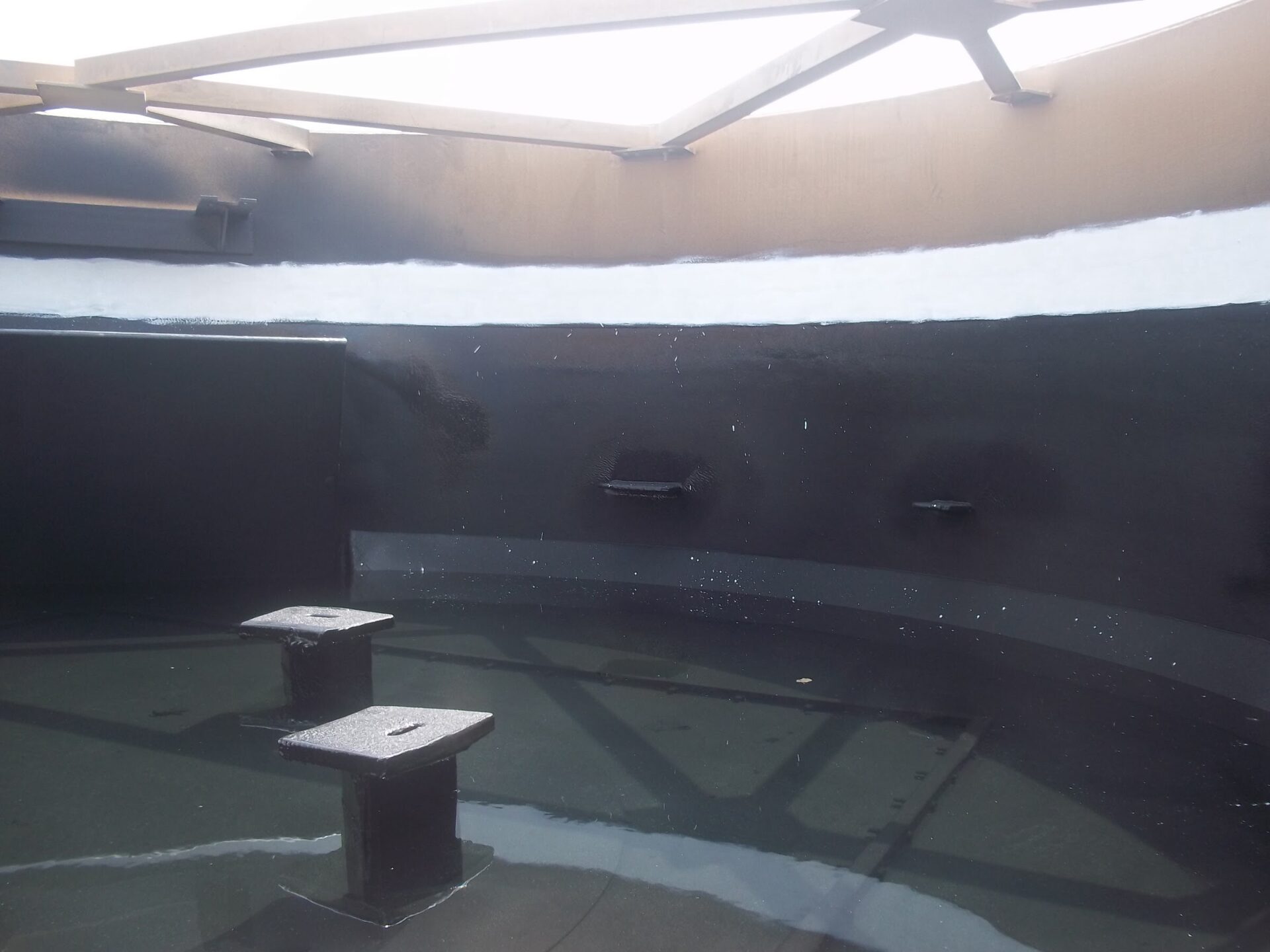
Slurry pipes and pump boxes
Erosion service; confirm the lining for the slurry and velocity.
Signs a Lining Is Wearing Out
Even the toughest lining wears eventually, so check high-traffic areas on a regular schedule. Look for shiny, polished patches where material slides most. Check for thin spots where the base color starts to show through. Watch for edges that have started to lift, and for cuts or gouges from sharp rock or tools. Catching wear early lets an applicator patch the area before the substrate is exposed. Repairs are usually quick, because fresh polyurea bonds well to a cleaned and roughened existing coat. See our surface preparation guide and tech tips for more.
Why polyurea for wear
- Tough and elastic: rebounds from impact instead of chipping.
- Thick in one visit: build up wear zones in multiple passes.
- Seamless: no edges for material to catch and peel.
- Fast: equipment goes back to work the same day in most cases.
- Noise reduction: elastomers quiet rock drops in beds and chutes.
ArmorThane manufactures polyurea and the equipment to spray it. See polyurea products and our industrial coatings guide.
Line it once, stop replacing steel.
A certified ArmorThane applicator can look at your equipment and quote a wear lining with prep and thickness spelled out.
Contractors: become an ArmorThane applicator
Abrasion resistant coating questions
What is the most abrasion resistant coating?
It depends on the wear. For impact plus sliding, thick polyurea and polyurethane elastomers usually last longest. For fine slurry erosion, polyurethane and rubber linings are common. For extreme hot wear, ceramic or hardfacing may be needed.
Is polyurea abrasion resistant?
Yes. Polyurea is tough and elastic, so it resists impact and sliding wear well, which is why it is used in truck beds, chutes and hoppers.
Is epoxy abrasion resistant?
Aggregate-filled epoxy resists rolling and sliding traffic on floors, but it is rigid and can chip under impact.
What is the Taber abrasion test?
ASTM D4060 abrades a coated panel with wheels under load for a set number of cycles and measures weight loss to compare coatings.
How thick should an abrasion resistant coating be?
Wear life grows with thickness. Heavy-wear linings are usually much thicker than paint; follow the product data sheet and the wear severity.
Sources
- ASTM D4060, abrasion resistance of organic coatings by the Taber abraser. store.astm.org/d4060-19.html
- Omega Research, a closer look at Taber abrasion testing. omegaresearchinc.com/a-closer-look-at-taber-abrasion-testing
- ArmorThane dump truck bed liner guide. armorthane.com/dump-truck-bed-liner

Start your coatings business with ArmorThane.
Tell us what you want to spray and where you are. An ArmorThane specialist will walk you through the equipment, chemicals, training and startup cost for the work you want to do.
- Equipment package matched to your applications
- Hands-on training and applicator certification
- Technical support once you are spraying
More to read on mining and industrial coatings
Short reads from ArmorThane on Issuu. Tap one to open it right here.
 Quick readEnahancing AAV’S: ArmorThane’s Corrosion Resistant Solutions
- Quick readYour Hull Is Steel. Against a Blast, That’s Not Enough.
- Quick readDoesn’t Destroy Equipment Slowly – How Salt Corrosion Kills Plows, Spreaders, and Dump Bodies Fast
- Quick readWhy the U.S. Spec’d Polyurea for Border Wall Protection – Corrosion Control for Exposed Steel