Polyurea Garage Floor Coating: What You Get
Most “polyurea” floors are a thin polyurea base, vinyl flake and a polyaspartic topcoat, installed in a day. We make polyurea, so here’s what each system really is, what it costs, and what to ask before you sign.
Start a floor coating business
Coat floors for a living.
ArmorThane sets you up to do this work, and you own the business. We make the chemistry, build the rigs, train you hands-on and answer the phone when a job gets difficult. You pay no franchise fee and no royalties. It has been that way since 1989.
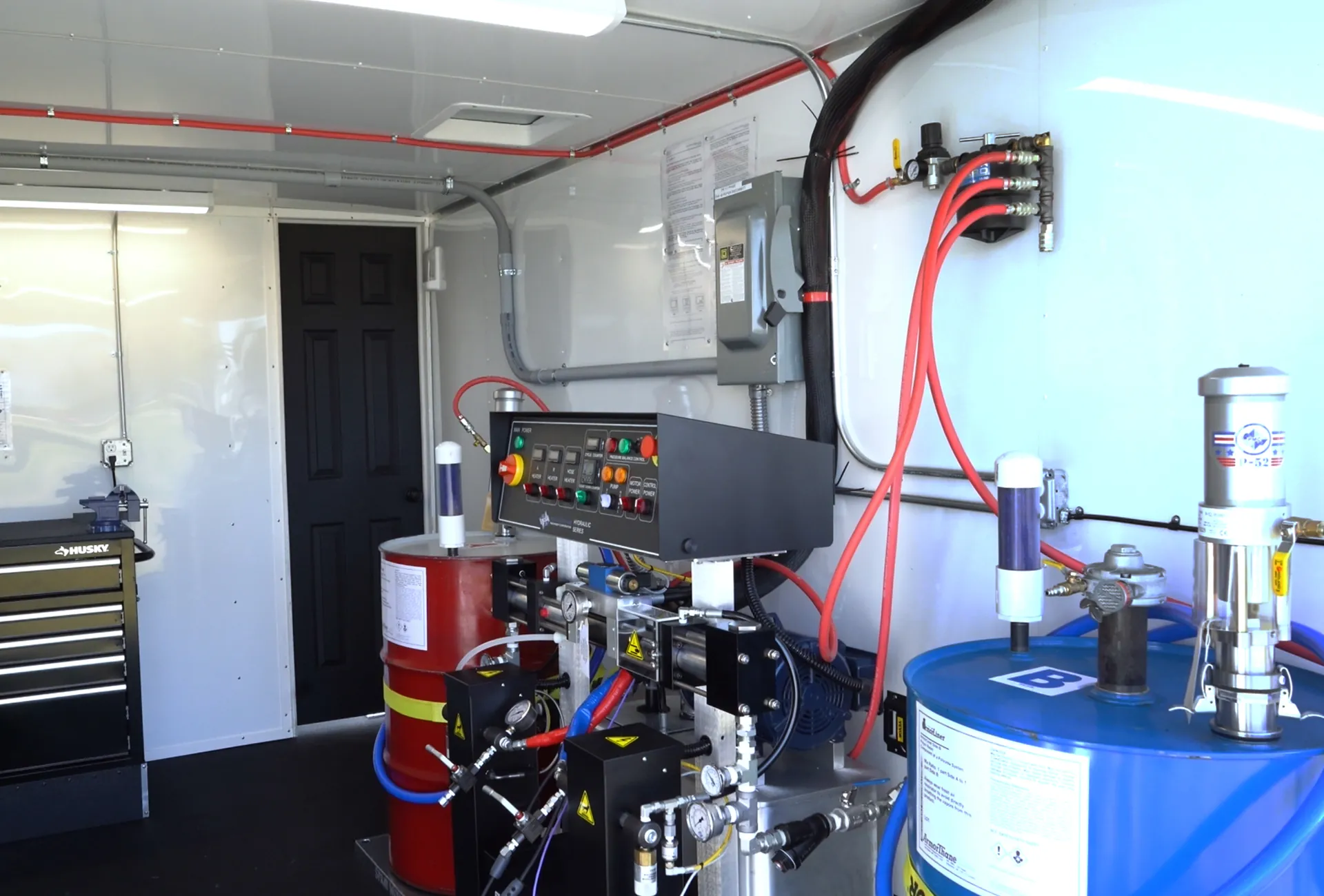
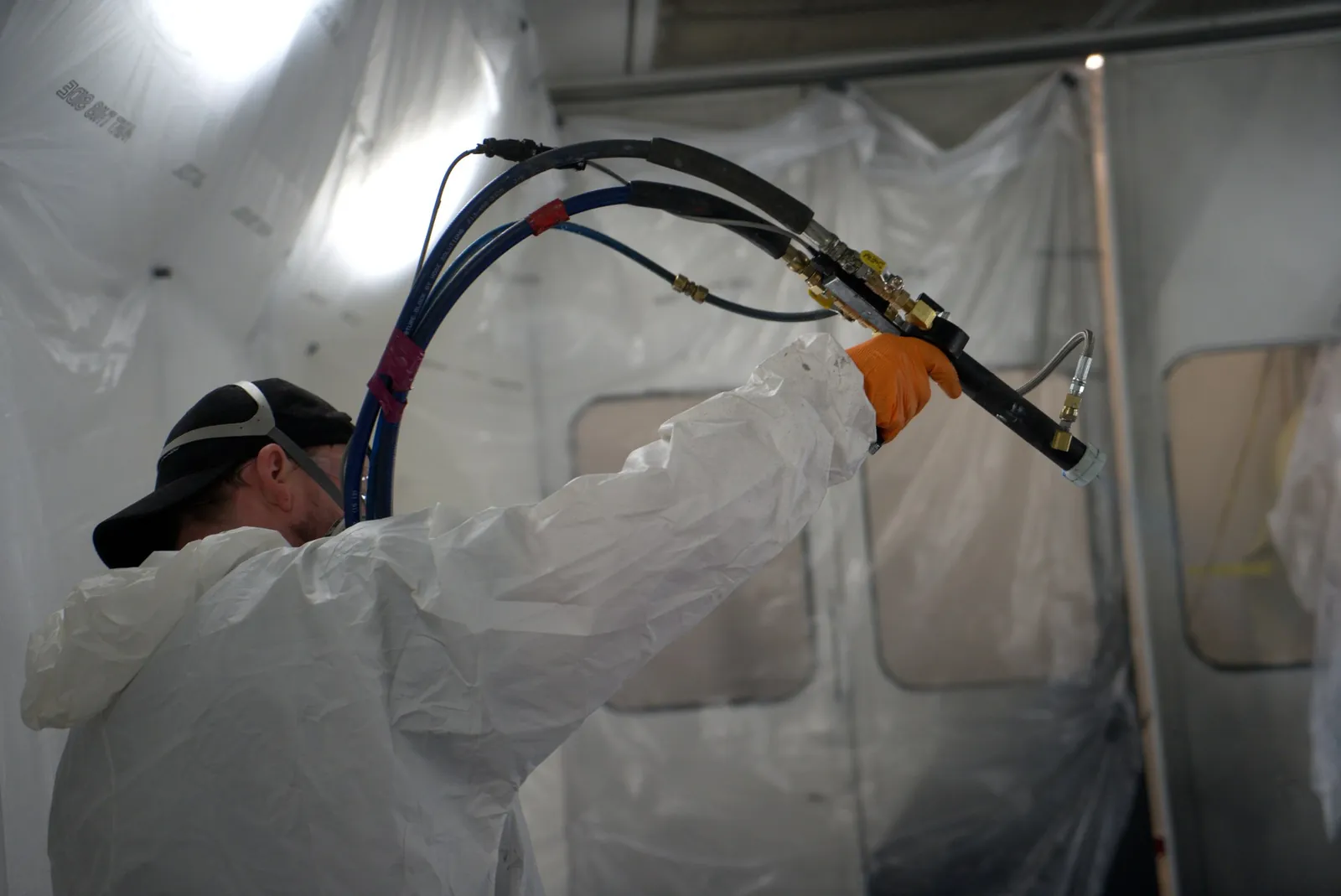
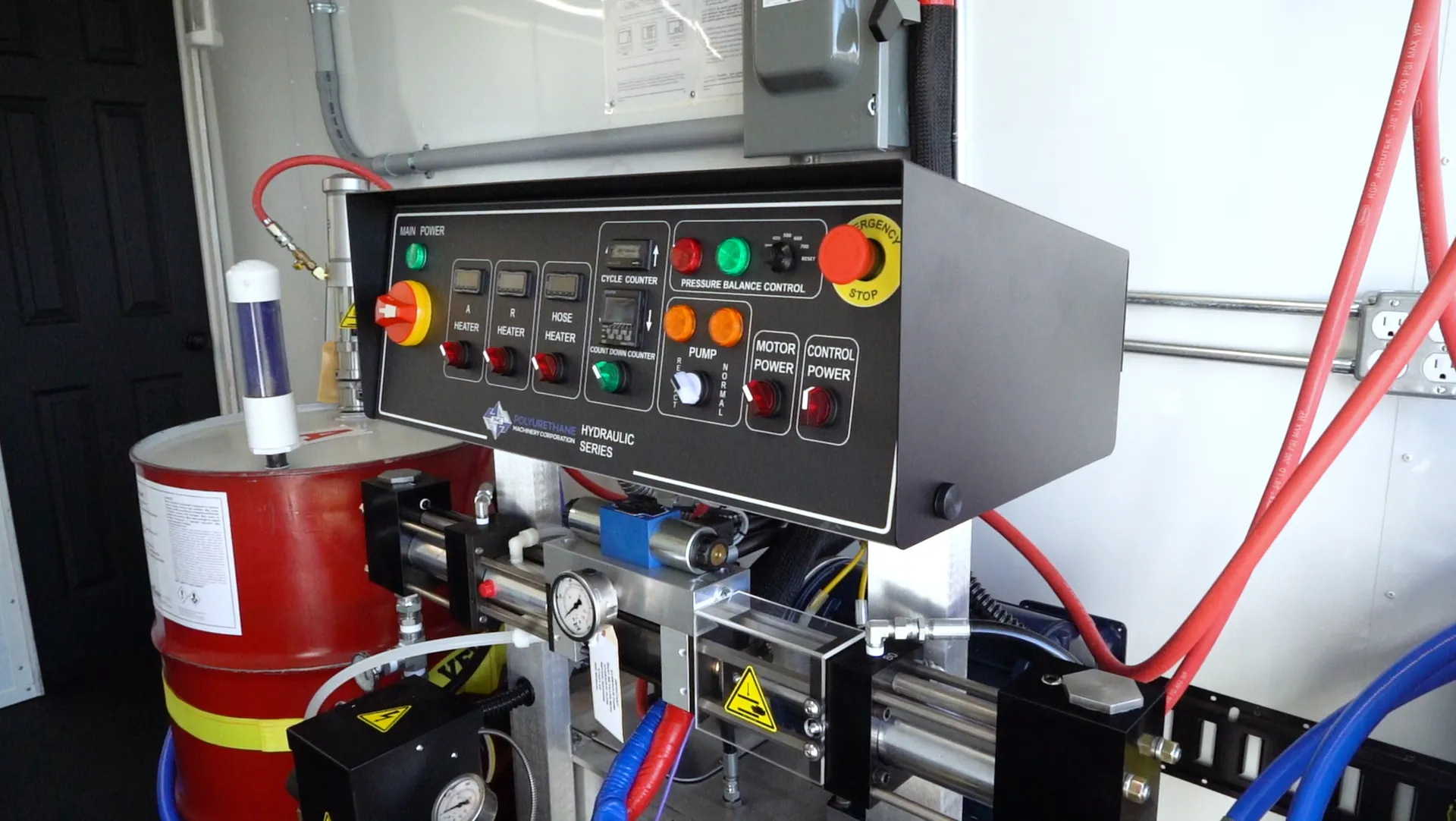
- $0
- franchise fees or royalties
- 35+
- years in business
- 50+
- countries with applicators
- 24/7
- technical support
“Polyurea garage floor” is one of the most used and least precise phrases in the coatings business. It can mean a 70-mil membrane sprayed from a heated rig, a 7-mil rolled basecoat hidden under vinyl flake, an all-polyaspartic system, or a one-part kit you can't park on for a week. We manufacture polyurea and polyaspartic coatings, so we'll tell you which is which, and which one you're probably being quoted.
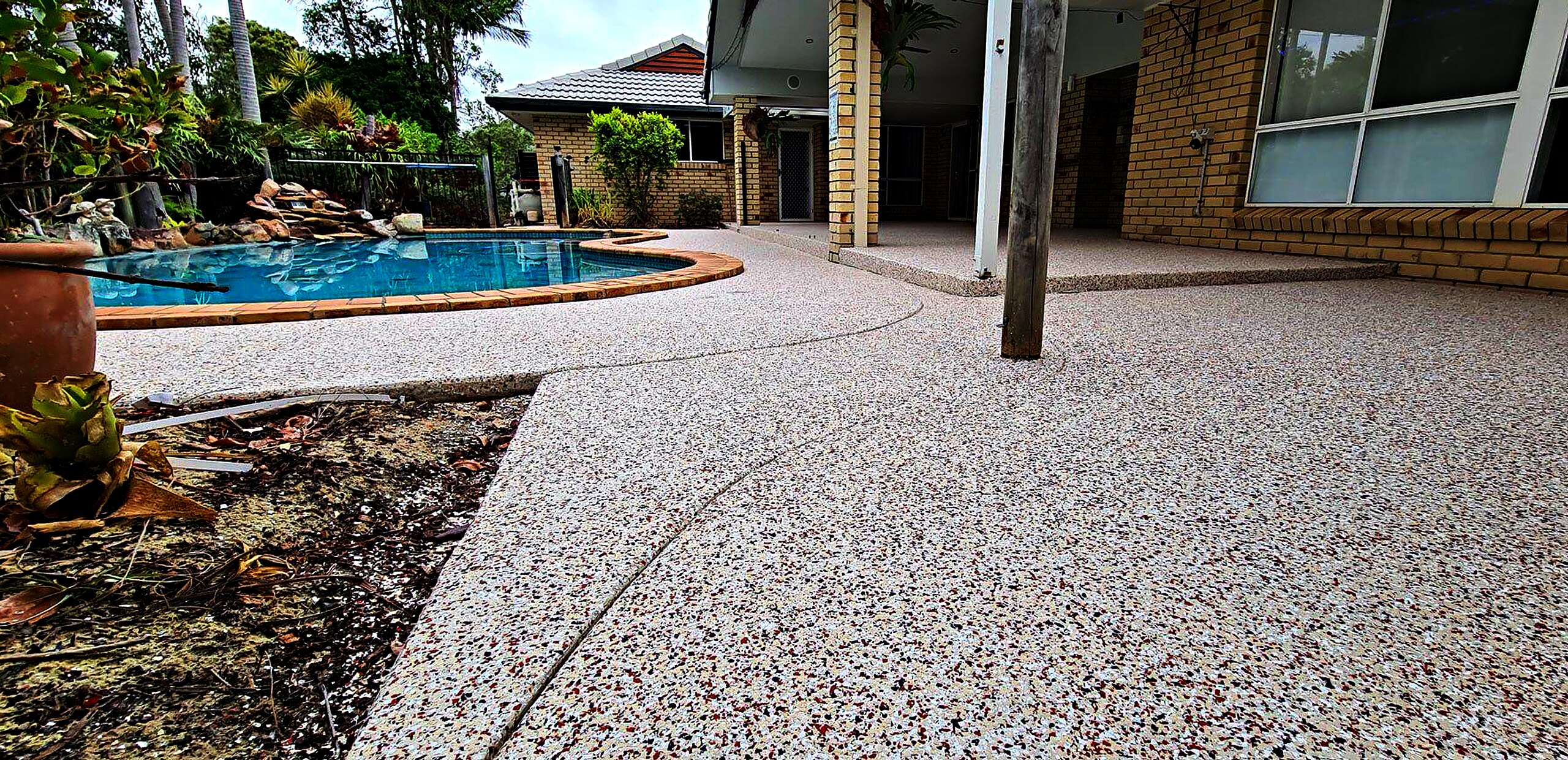
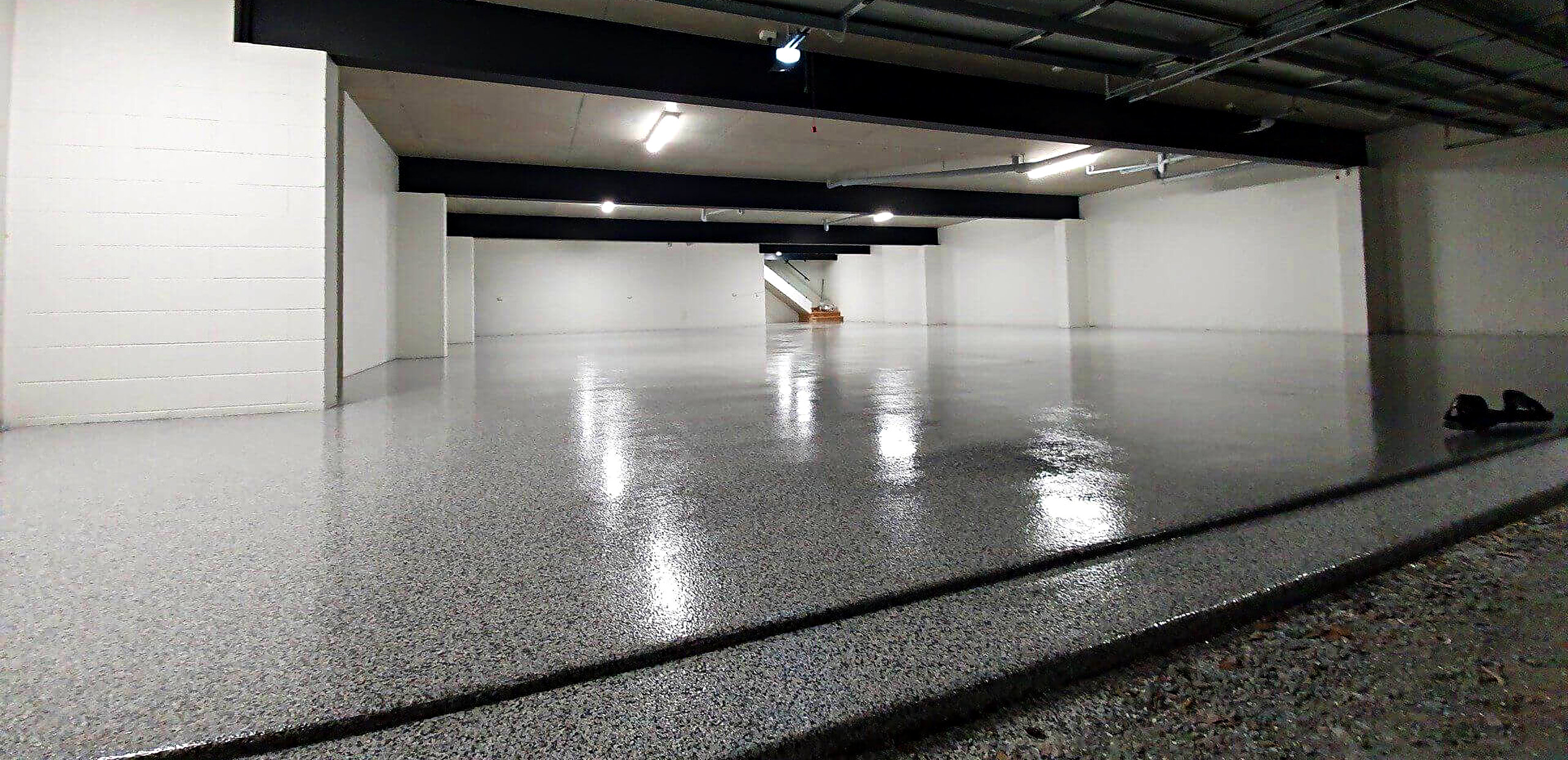
Most residential “polyurea” garage floors are rolled 1-day flake systems: a 6–8 mil polyurea basecoat, a full broadcast of vinyl flake and a 9–14 mil polyaspartic topcoat, about 50 mils in all. Installed, they run about $5–$10 per sq ft, roughly $2,000–$4,000 for a 400 sq ft two-car garage. You can walk on them within hours and park after about 24 hours in a warm garage. On a dry, properly ground slab they're an excellent floor. On a damp slab they need a vapor primer first, and that usually adds a day.
The label matters because the parts differ so much. The thin polyurea basecoat in a 1-day floor yellows if sunlight reaches it, has moisture limits tighter than a good epoxy primer, and is about as flexible as the topcoat on top of it. A sprayed polyurea membrane is a different animal: thicker, stretchier and pricier. Neither one is the same thing as a one-part “polyurea” from a kit.
So this page is about what's really in the bucket. It covers how a 1-day floor goes in and when “one day” turns into three, the published costs, hot tire pickup, and the questions that separate a good installer from a fast one. It comes with four tools: a quote decoder, a cost calculator, a hot tire risk check and an installer scorecard.
- 1What a polyurea garage floor really is
- 2Decode your quote (tool)
- 3How a 1-day floor is installed, and cure times
- 4Sprayed polyurea vs a rolled 1-day floor
- 5Pros and cons
- 6What it costs (calculator)
- 7Hot tire pickup (risk check)
- 8Polyurea vs epoxy, the short version
- 9What to ask an installer (scorecard)
- 10Where ArmorThane fits, and where it doesn't
- 11Polyurea garage floor FAQ
What is a polyurea garage floor, really?
A polyurea garage floor is a concrete coating whose base layer, or whole build, is a polyurea: a plastic formed when an isocyanate reacts with an amine. On most homes that means a rolled 1-day system with a polyurea basecoat, vinyl flake and a polyaspartic topcoat. Less often, it's a thick membrane sprayed from a heated rig.
The chemistry in two minutes
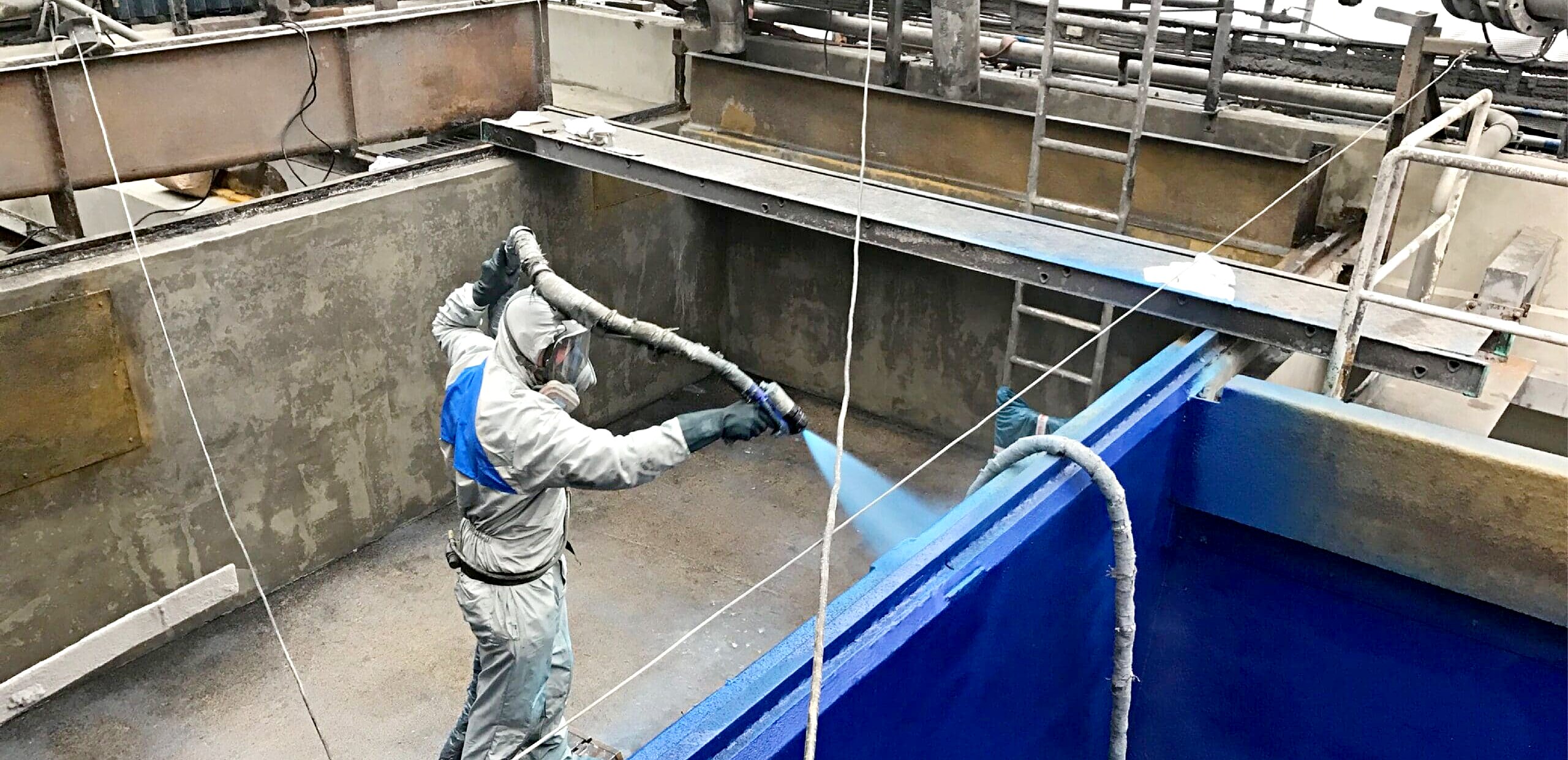
Every polyurea starts as two liquids: an isocyanate (the A side) and an amine-terminated resin (the B side). They react so fast that no catalyst is needed. That's why pure polyurea is sprayed through a heated, high-pressure plural-component gun that mixes the two sides at the gun, and why it gels in seconds. You can't pour that into a roller pan.
Polyaspartic is the chemists' workaround, introduced in the early 1990s. Its aspartic-ester resins are amines with bulky groups attached, which slow the reaction from seconds to minutes so the mix can be rolled or squeegeed. It's still a polyurea, a modified one. Made with aliphatic isocyanates, it's light-stable and has a low tendency to yellow. That's why nearly every 1-day topcoat is a polyaspartic, and why “polyurea or polyaspartic?” is really a question about how the floor is built. Our polyurea vs polyaspartic page covers the chemistry side by side.
The other word to know is aromatic. Most spray polyurea is made with aromatic isocyanates. They perform well and cost less, but they aren't light-stable: in sunlight they yellow and fade. Aliphatic polyurea, such as our HighLine 410, holds its color and costs more, which is why so many systems put an aromatic base under an aliphatic topcoat.
Five products, one name
Here's what gets sold as a “polyurea garage floor”, with the numbers their own data sheets and listings publish.
| Sold as “polyurea” | How it goes on | Layers and thickness | Top layer in sunlight | Park after | Price per sq ft |
|---|---|---|---|---|---|
| Spray polyurea membrane | Heated plural-component rig; gels in seconds | Typically 60–80 mils on a concrete floor; flake or quartz and a clear topcoat optional | Aromatic grades yellow; needs an aliphatic grade or topcoat | Vehicles within 24 h (ArmorThane) | $7–$12 installed |
| Rolled 1-day polyurea flake system | Roller and squeegee, 10–15 minute batches | 6–8 mil polyurea base, full vinyl flake, 9–14 mil polyaspartic top; 50+ mils nominal | Polyaspartic top is UV-stable; the base yellows where exposed | 24 h at 72°F+ and 50% RH+ | $5–$10 installed |
| All-polyaspartic flake system | Roller and squeegee | Polyaspartic base, flake, polyaspartic top | UV-stable throughout | 24 h at 72°F+ and 50% RH+ | $5–$12 installed |
| Epoxy base, polyaspartic top (“1-day epoxy”) | Squeegee and roller | 16-mil epoxy base, flake, polyaspartic top; 50+ mils nominal | Top is UV-stable; the epoxy base yellows where exposed | Set by the topcoat | Not published separately |
| One-part DIY “polyurea” kit | Rolled from the can; cures with humidity in the air | 10–12 mils (two coats) to 15–18 mils (three coats) | Sold as UV-stable | 7–10 days before use (seller) | ≈$3.77–$4.79 material (full-flake kit) |
When “polyurea” isn't polyurea
Labels in this market are loose. One supplier sells a “Polyurea Floor Coating” kit that its own product page describes as a two-component, 100%-solids polyurethane basecoat with a 35–45 minute pot life. One DIY “polyurea” kit line is, in the seller's words, a hybrid polyurea-polyaspartic “with the single component properties of moisture-cured urethane.” It's 30% solvent, and the seller says to wait 7–10 days before using the floor.
Neither is a bad product for what it is. Neither is what a 1-day installer or a spray polyurea applicator puts down. Ask for the data sheet, not the label.
And one fact almost no sales page mentions: the maker of one published 1-day polyurea basecoat says to use it only as a primer or basecoat, because it “will yellow over time, so spots not covered by flake will discolor.” That's why a 1-day floor is broadcast to full flake coverage, and why a “light flake” option over a polyurea base deserves a question.
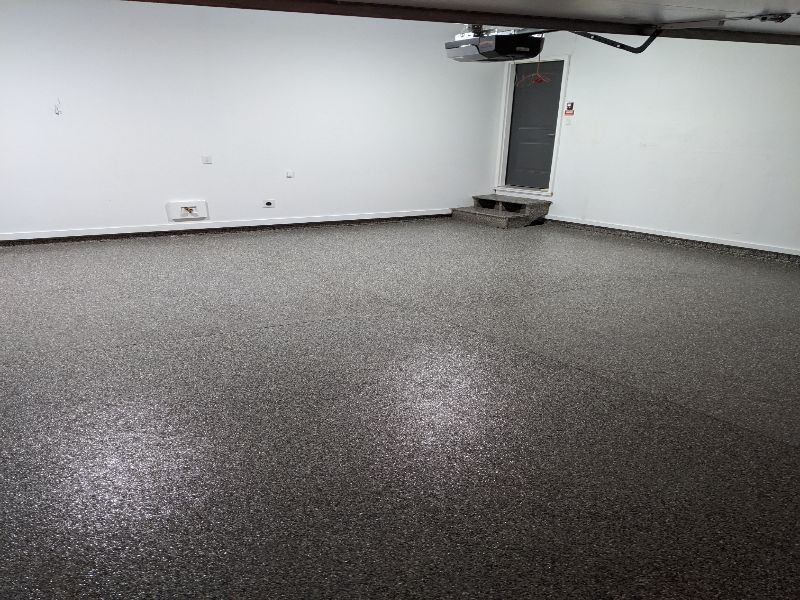
Decode your quote: which polyurea floor are you being sold?
Enter what the quote, the ad or the kit label says. The decoder tells you which of the five systems it most likely is, what the published data says about thickness, sunlight, moisture and parking, and which details are missing. If something isn't on your quote, leave it on “not stated.” That's a finding too.
What's actually going on your slab?
Thickness bars are drawn to scale (0–100 mils). System data comes from the sources in the table above; nothing you enter is stored.
A thin, fast polyurea basecoat is rolled on, vinyl flake is broadcast into it until none of it shows, and a polyaspartic topcoat is squeegeed over the top. This is what most 1-day garage installers sell as “polyurea.”
The polyaspartic topcoat is UV-stable; the polyurea base yellows wherever flake doesn’t cover it. Moisture limit is without a vapor primer. *Heavy traffic at 72°F and 50% RH or more.
- No thickness stated. Ask for mils per layer (base and topcoat) in writing, and how they’ll check it.
- Moisture: this system’s published limit is 3 lb (ASTM F1869) or 75% RH (ASTM F2170) without a vapor primer. Ask which test they’ll run and what happens if the slab fails.
How a 1-day polyurea garage floor is installed
A 1-day floor goes down in one working day: test, grind, repair, roll a thin polyurea basecoat, broadcast flake until no wet resin shows, scrape, then squeegee and back-roll a polyaspartic topcoat. The next 24 hours matter as much as the install. The heavy-traffic times on the topcoat data we reviewed assume at least 72°F and 50% humidity.
The steps below follow one manufacturer's published 1-day polyurea system guide. Other systems differ in the details, not the order.
Test the slab for moisture
By ASTM F1869 (calcium chloride, in pounds per 1,000 sq ft per 24 hours) or ASTM F2170 (in-slab relative humidity probes). That system's polyurea base allows up to 3 lb and 75% RH without a vapor primer. A slab on grade also needs a vapor retarder underneath, because seasonal ground moisture can exceed what one test shows. New concrete must cure at least 28 days.
Grind or shot blast to CSP 3
A mechanical profile, measured against the ICRI concrete surface profile chips, and complete removal of old coatings and sealers. Acid etching and pressure washing don't give a reliable mechanical key. Grinding throws silica dust, so OSHA's standard for walk-behind grinders calls for water or the maker's dust collection. More on prep in our surface preparation guide.
Repair cracks and spalls
Patch material goes in and is ground flush. Sawcut contraction joints may be filled and coated over, but the system guide warns they can crack through later if the slab keeps moving. Isolation and expansion joints are left as joints.
Roll the polyurea basecoat
6–8 mils, about 200–267 sq ft per gallon, mixed only in batches the crew can place and broadcast within 15 minutes. Spread it heavier than 200 sq ft per gallon, or let it pool in cracks, and it can foam and swell.
Broadcast flake to full coverage
Quarter-inch vinyl chip is tossed into the wet base until none shows through, about 6 sq ft per pound (a 40-lb box per 240 sq ft). It's the decoration, and it's also what keeps light off a basecoat that would otherwise yellow.
Scrape and vacuum
After about 1.5 hours, when the base can take foot traffic, the crew scrapes off loose chip and vacuums.
Squeegee and back-roll the polyaspartic topcoat
At 100–160 sq ft per gallon, which leaves 9–14 mils dry. This is the layer your tires and spills touch. Batches have to be placed in 10–15 minutes, and heat and humidity shorten that window.
How long before you can walk and park?
That's set by the topcoat. Here's one polyaspartic topcoat's published cure table. Humidity speeds it up, cold slows it down, and heavy-traffic times assume 72°F and 50% RH or more. Below that, the sheet says only to “expect traffic times to be extended.”
| Topcoat grade | Working time, 72°F · 20% RH | Working time, 72°F · 80% RH | Tack-free, 20% → 80% RH | Foot traffic | Heavy traffic (park) |
|---|---|---|---|---|---|
| Fast | 25 min | 14 min | 110 min → 40 min | 4–6 h | 24 h |
| Medium | 32 min | 17 min | 3.5 h → 90 min | 10–12 h | 24 h |
| Slow | 70 min | 28 min | 6.5 h → 3.75 h | 17–20 h | 24 h |
| Extra slow | 2 h | 70 min | 10.5 h → 6.5 h | 30–34 h | 3 days |
These are one manufacturer's numbers, not a law of nature, but they show how the chemistry behaves. ArmorThane's ArmorFloor TopCoat builds 14 ± 2 mils per coat; we don't publish a cure table for it, so your applicator's written walk and park times are the ones to use. If you want a clock, the return-to-service planner on our polyaspartic vs epoxy page turns tables like this into a schedule for your start time, slab temperature and humidity.
When one day becomes three
- The slab tests wet. Over the limit, a vapor primer goes down first. One epoxy moisture-vapor-barrier primer, rated to 25 lb and 95% RH, needs 5 hours before recoat (3 on its fast grade) and has to be topped within 24 hours. That can push flake and topcoat to day two; one installer's guide simply says moisture mitigation “adds time.”
- The garage is cold. Below 72°F and 50% RH, traffic times stretch by an amount the data sheet doesn't quantify. Below 60°F only the fast grade is allowed, and below 35°F nothing goes down.
- The slab is near the dew point. The floor has to be at least 5°F warmer than the dew point, or moisture condenses on it. A cold slab on a humid morning can hold up the whole job.
- There's real damage. Spalls, heaved slabs and old coatings to strip add grinding and patch time.
- The concrete is new. Under 28 days, wait.
- It's a one-part kit. The seller of one DIY kit line says to wait 7–10 days before using the floor.
HomeGuide's cost guide puts it conservatively: a polyurea floor can be ready for foot traffic in one to two days, “but you may need to wait 3 days before driving on it.” Installers who promise tonight in a 50°F garage should show you the data sheet that says so.
Sprayed polyurea vs a rolled 1-day floor
Both get sold as polyurea floors, and they're built differently. Spray polyurea is a thick elastomeric membrane, typically 60–80 mils on a concrete floor, applied from a heated plural-component rig. A rolled 1-day system is a thin polyurea basecoat plus flake and a polyaspartic topcoat, about 50 mils nominal, and much of that thickness is flake.
| Property | Spray polyurea | Rolled 1-day flake system |
|---|---|---|
| Equipment | Heated plural-component proportioner, heated hose, spray gun | Drill mixer, rollers, squeegees, spiked shoes |
| Working time | Gels in seconds | Batches placed within 10–15 minutes |
| Thickness | Typically 60–80 mils; 20–120 mils possible per pass | Base 6–8 + top 9–14 dry mils; 50+ mils nominal with flake |
| Flexibility | Elastomeric; get the product's elongation from its data sheet | 5–10% elongation (published 1-day system) |
| Slip resistance | Aggregate sprayed into the final coat, or flake plus a clear topcoat | Full flake plus topcoat: wet DCOF 0.65 published |
| Sunlight | Aromatic grades yellow; use an aliphatic grade or topcoat | UV-stable polyaspartic top over a base that must stay covered |
| Slab moisture | Depends on the primer; get its limit in writing | ≤3 lb and ≤75% RH direct; vapor primer above that |
| Back in service | Foot traffic in hours; vehicles within 24 h | Foot traffic in 4–34 h by grade; park at 24 h (72°F+, 50% RH+) |
| Installed price | $7–$12 per sq ft | $5–$10 per sq ft |
| Who installs it | Spray polyurea applicators (fewer of them) | Most garage floor installers and franchises |
Where each one wins
The rolled 1-day system wins the typical attached garage: a dry slab, two cars, some storage, sun at the door. It's the better value there, far more installers offer it, and the polyaspartic topcoat is rated excellent against the fluids a garage actually sees. If that's your garage, don't let anyone upsell you on the word “polyurea”.
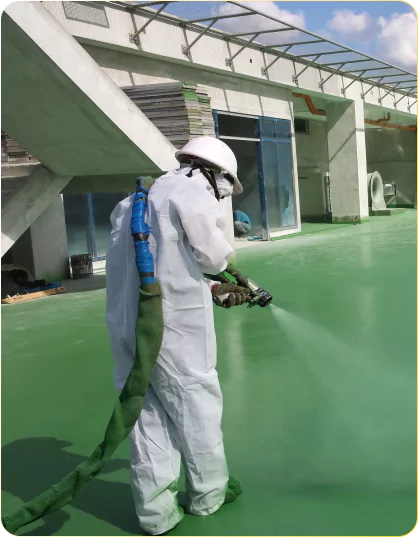
Spray polyurea earns its premium when the film has to do more than look good: a shop floor that takes dropped tools and jack stands, a slab with hairline cracks you want bridged by an elastic layer, a wash bay, or a floor that doubles as a waterproofing membrane. At published prices the premium is about $2 per square foot, or roughly $800 on a 400 sq ft garage. Ask what you're getting for it: the product name, its elongation, the mils, and whether the top layer is aliphatic.
A note on flexibility claims. Figures like “600% elongation” describe sprayed elastomeric polyurea. They don't describe a rolled 1-day flake system, whose published elongation is 5–10%. Both numbers are honest. They're just different products.
Polyurea garage floor pros and cons
A good polyurea flake floor goes down in a day, bonds harder than the concrete under it, shrugs off oil, fuel and road salt, and keeps its gloss in the sun. The costs are tighter moisture limits than epoxy, a short working time that punishes rushed crews, a base that yellows if exposed, and a price above epoxy.
Back in service fast
Foot traffic in hours and parking in about 24 hours at 72°F and 50% RH, against three days for a DIY water-based epoxy kit and up to a week for many pro epoxy systems.
Bonds to the concrete
The published 1-day system pulls over 400 psi in an ASTM D7234 test with 100% concrete failure: the slab breaks before the bond does. That only holds on a ground, dry, clean slab.
Resists garage fluids and salt
Rated excellent against motor oil, brake and transmission fluid, gasoline, E85, 20% salt solution and bleach on the system data (full table below).
UV-stable top layer
On the published data the polyaspartic topcoat still measured 87–89 gloss units after 1,000 hours of accelerated UV (QUV) exposure, so the door opening doesn't turn amber.
Grip built in
Full flake under the topcoat measured a wet DCOF of 0.63–0.65. ANSI A326.3 sets 0.42 as the minimum for level interior floors walked on wet.
Real thickness
About 50 mils nominal, against 3.0–3.5 mils for one coat of Rust-Oleum's EpoxyShield water-based kit. Thickness is most of what separates a floor from paint.
Tighter moisture limits
3 lb and 75% RH for the polyurea base, against 12 lb and 85% for a 16-mil epoxy base and 25 lb and 95% for an epoxy vapor primer. Damp slabs need the epoxy first.
Short working time
Ten to fifteen minutes per batch, less in heat and humidity. Crew skill shows up in the finish: roller marks, bare spots and haze from rolling too late.
The base yellows if exposed
Aromatic polyurea (and epoxy) bases discolor in light, so they have to be fully covered by flake. A thin-flake look over a polyurea base is a compromise.
Not very stretchy
A rolled system publishes 5–10% elongation. Moving joints and shrinkage cracks can telegraph through; filled sawcut joints may crack later.
Tire marking can happen
Both sheets we reviewed say “tire marking may occur.” That's a stain, not a failure, and those are premium-system data sheets.
Price, and not a DIY product
$5–$10 per sq ft installed versus about $3–$7 for basic pro epoxy (The Garage Guide). Hardeners contain isocyanates, which OSHA links to occupational asthma, so installers wear respirators.
Chemical resistance on the published data
| Garage fluid or chemical | Rating |
|---|---|
| Motor oil | Excellent |
| Brake fluid | Excellent |
| Transmission fluid | Excellent |
| Unleaded gasoline, E85, E95 | Excellent |
| 50:1 gas/oil mix | Excellent |
| 20% sodium chloride (road salt brine) | Excellent |
| Bleach | Excellent |
| Ethylene glycol (antifreeze) | Excellent |
| 30% hydrochloric (muriatic) acid | Good |
| Mineral spirits | Fair |
| 50% phosphoric acid | Fair |
| 10% nitric acid | Not recommended |
How much does a polyurea garage floor cost?
Published installed prices for rolled polyurea flake systems run about $5–$10 per square foot, so a 400 sq ft two-car garage costs roughly $2,000–$4,000 and a 576 sq ft one about $2,900–$5,800. Spray polyurea runs about $7–$12. Grinding is normally in the price. Heavy repairs, old coating removal and moisture mitigation usually aren't.
| Source (date) | Polyurea floor, per sq ft | Also quoted |
|---|---|---|
| HomeGuide (Dec 2024) | $5–$10 | Two-car $2,000–$5,800; polyaspartic $5–$12 |
| The Garage Guide (Mar 2026) | $5–$10 | Polyaspartic $5–$12 |
| Cleveland Concrete Coatings, installer (Apr 2026) | $6–$9 | – |
| Duration Concrete Coatings, installer (Aug 2026) | $4–$8 | – |
| A House in the Hills (Dec 2024) | $6–$12 | – |
| Tru Colors Contracting, installer (Mar 2025) | – | Two-car $2,500–$4,500 |
| Median of the five ranges | $5–$10 | Low ends $4–$6; high ends $8–$12 |
| ArmorThane, spray polyurea (Aug 2026) | $7–$12 | High-build sprayed membrane |
Five ways to get a “polyurea” floor, priced for your garage
Garage sizes are HomeGuide's. Prep adders are The Garage Guide's (Mar 2026). Lifespans are industry estimates, not independent studies.
| System | Estimate | Low–high | Per sq ft | Per sq ft per mil | Park after | Life (estimate) |
|---|---|---|---|---|---|---|
| Rolled 1-day polyurea Installed | $3,000 | $2,000–$4,000 | $7.50 | $0.15 | 24 h* | 10–20 yr |
| All-polyaspartic flake Installed | $3,400 | $2,000–$4,800 | $8.50 | Not published | 24 h* | 10–20 yr |
| Spray polyurea Installed | $3,800 | $2,800–$4,800 | $9.50 | $0.14 | ≤24 h | 15–20+ yr |
| One-part DIY “polyurea” kit Materials + rental + supplies | $2,210 | $2,010–$2,420 | $5.53 | $0.26 | 7–10 days | Not published |
| DIY, pro-grade materials Materials + rental + supplies | $1,310 | $1,200–$1,420 | $3.27 | $0.04 | 24 h* if to spec | Not published |
Floor: 400 sq ft. Pro prices assume a sound slab; grinding is normally included, heavy repairs aren’t. DIY rows add $500 of grinder rental and supplies to material. Per-mil figures use material or installed price per sq ft ÷ nominal mils (flake counts toward mils in flake systems). *Park times assume 72°F and 50% RH or more. Per year = estimate ÷ midpoint of the published life range.
Get a written quote from a certified applicator to replace these ranges with a real number.
Why a DIY “polyurea” kit can cost more per mil than a pro floor
Divide price by thickness and the picture flips. A one-part full-flake kit at about $3.77–$4.79 per sq ft builds 15–18 mils, or roughly $0.21–$0.32 per square foot per mil. A pro 1-day floor at $5–$10 for 50+ mils nominal works out to about $0.10–$0.20, and spray polyurea at $7–$12 for 60–80 mils to about $0.09–$0.20. Flake counts toward nominal thickness without being resin, so treat price per mil as a yardstick, not a performance rating. Then add a grinder rental: one installer quotes $200–$500 a day.
Buying pro-grade polyurea base, flake and polyaspartic topcoat yourself is cheaper, about $1.75–$2.30 per sq ft in materials by our arithmetic on published list prices and coverage rates. It's also a 10–15 minute race per batch in spiked shoes. We'd only suggest it to someone who has rolled a fast-cure coating before. For every other system, garage-size totals and a quote checker, see our garage floor coating cost guide.
Hot tire pickup on polyurea garage floors
Hot tire pickup is when a warm tire lifts the coating off the slab where you park. It's an adhesion and cure problem more than a chemistry problem. Tires can exceed 140°F after a drive, and a film that's poorly bonded, under-cured or sitting on damp concrete lets go. A well-prepped polyurea floor resists it; no coating makes a bad install immune.
Lifting and marking are two different problems
Lifting is a failure. The film comes up with the tire, often within days of the first hot drive, and it traces back to one of five things an installer controls: adhesion, cure, moisture vapor coming through the slab, prep, and application conditions. Marking is cosmetic: a stain where the tires sit. The polyaspartic topcoat sheet we reviewed says plainly that “tire marking may occur,” and its maker suggests a small piece of sheet metal or plexiglass between each tire and the floor.
How likely is your floor to lift where you park?
A checklist score built from the failure causes installers and data sheets name. It's our weighting, not a lab model, and every point is something you can fix before the install.
- Hot summers or long drives (+1). Tires can exceed 140°F. Not a fault, just more stress on the bond.
Scores: 0–2 low, 3–5 moderate, 6+ high. This checks lifting, not marking. Tire marks (stains) can appear on any coating; the topcoat maker we reviewed suggests sheet metal or plexiglass under parked tires.
The two inputs that move the score most are prep and parking too soon, and both are decided before the first bucket is opened. If your quote says “etch” or “clean,” ask for grinding. If it promises parking the same evening, ask which topcoat grade and what temperature that assumes. For a head-to-head on how epoxy and polyaspartic handle heat, see the hot tire section of our best garage floor coatings ranking.
Polyurea vs epoxy garage floors: the short version
For a dry slab that sees sun at the door, hot tires and road salt, a polyurea-base system with a polyaspartic topcoat is usually the better garage floor: faster back in service, UV-stable on top, and rated excellent against garage fluids. Epoxy wins on damp slabs and on price, and it's the only one of the two that's realistic as a DIY job.
The moisture limits explain most of that. Here's what each base layer tolerates before something else has to go down first:
| Base layer | ASTM F1869 limit (lb/1,000 sq ft/24 h) | ASTM F2170 limit (in-slab RH) |
|---|---|---|
| Polyurea basecoat (1-day system) | 3 | 75% |
| Polyaspartic direct to concrete | 3 | 75% |
| 16-mil 100%-solids epoxy base (1-day epoxy system) | 12 | 85% |
| Epoxy moisture-vapor-barrier primer | 25 | 95% |
Read that table from the bottom up and it says something marketing pages rarely do: on a slab that tests wet, a good “polyurea floor” often starts with an epoxy primer. That's not a knock on polyurea. It's using each chemistry where it's strongest. Epoxy's weak spots are sunlight (it yellows, which is why it also gets buried under flake) and speed. Polyurea's are moisture during the first coat and working time.
For the full property comparison and a lifecycle calculator, see polyurea vs epoxy floor coatings. For cure times and slab limits, polyaspartic vs epoxy goes deeper, and the slab readiness checker tells you whether your concrete is ready today.
What to ask a polyurea floor installer
Ask about the things that decide whether a floor stays down: a moisture test with a number, mechanical grinding, product names with data sheets, mils per layer, full flake, walk and park times in writing, and a warranty that names peeling and hot tire pickup. Tick what your quote already covers. The scorecard turns the rest into questions.
Does your quote say what it needs to?
Must-haves count double. Only tick what's in writing; a verbal “don't worry about it” doesn't count.
Get it in writing, or get another quote Copy the questions below into an email to your installer and ask for the answers in writing.
- What is the basecoat, by product name, and can I see its data sheet? Must-have
Products sold as “polyurea” basecoats range from true polyurea to polyurethane. - What is the topcoat, and is it aliphatic? Must-have
The topcoat carries the UV, chemical and hot tire resistance. - How many mils is each layer, and how will you check it? Must-have
Published 1-day systems run 6–8 mils of base and 9–14 mils of topcoat, 50+ mils nominal with flake. - Does the written warranty cover peeling and hot tire pickup, for how long, and what does it exclude? Must-have
One maker’s warranty covers material only, for one year, and excludes labor. The installer’s warranty is what pays for a redo. - How will you treat cracks, spalls and joints?
Filled sawcut joints can crack through later; moving joints must be honored. - Is removal of any sealer or old coating included?
System guides require old coatings and sealers to be removed completely. - Are stem walls and steps included, or priced separately?
Stem walls are slow hand work, often priced by the linear foot. - What’s the slip resistance of this finish?
Glossy coatings can be slick when wet; full flake measured wet DCOF 0.63–0.65 on the data we reviewed.
Red flags on a polyurea floor quote
- “Polyurea” with no product name. You can't check a moisture limit or cure time on a word.
- Acid etch or “deep clean” instead of grinding. Every system guide we reviewed calls for a mechanical profile.
- “The slab looks dry.” That's not a test. F1869 and F2170 give numbers.
- Park-tonight promises in a cold garage. The data sheets assume 72°F and 50% RH.
- Light or partial flake over a polyurea base. The base under the gaps can yellow.
- A price below every published range. The lowest published low end we found is $4 per sq ft. Thin material and skipped prep are how quotes get cheaper.
One more thing to read closely: whose warranty it is. The manufacturer's warranty on one 1-day system we reviewed covers material only, for one year, and excludes labor. The installer's written warranty is the one that pays to redo your floor, so get its exclusions in writing. If you have two quotes to compare on price, the quote checker on our cost guide normalizes them.
Where ArmorThane fits, and where it doesn't
We make both halves of the polyurea floor story. ArmorFloor is our two-component aliphatic polyaspartic for indoor and outdoor floors in moderate to severe chemical environments. It goes down by roller, high-pressure spray or cup gun at a minimum of 5 mils, takes Color Chips for looks and Color Quartz for grip, and ArmorFloor TopCoat builds 14 ± 2 mils per coat at 65 ± 5 Shore D. On the spray side, our certified applicators shoot polyurea on concrete floors at typically 60–80 mils, with aliphatic grades where color has to hold in the sun.
Where we're not the answer: we don't sell a DIY floor kit, and our rolled systems need trained hands. We don't publish an ArmorFloor cure table, so get your applicator's walk and park times in writing. If your slab tests wet, the right first coat may be a moisture-barrier primer rather than any polyurea. And if the slab is cracked and heaving, or you rent, no coating from anyone is money well spent: tiles or leveling the slab come first.
ArmorFloor minimum film
Aliphatic polyaspartic, rolled or sprayed, for garages and outdoor slabs.
ArmorFloor TopCoat, per coat
65 ± 5 Shore D; SCAQMD compliant.
Spray polyurea on floors
Typical build from our certified applicators on concrete.
Garage floors are a repeat-business line.
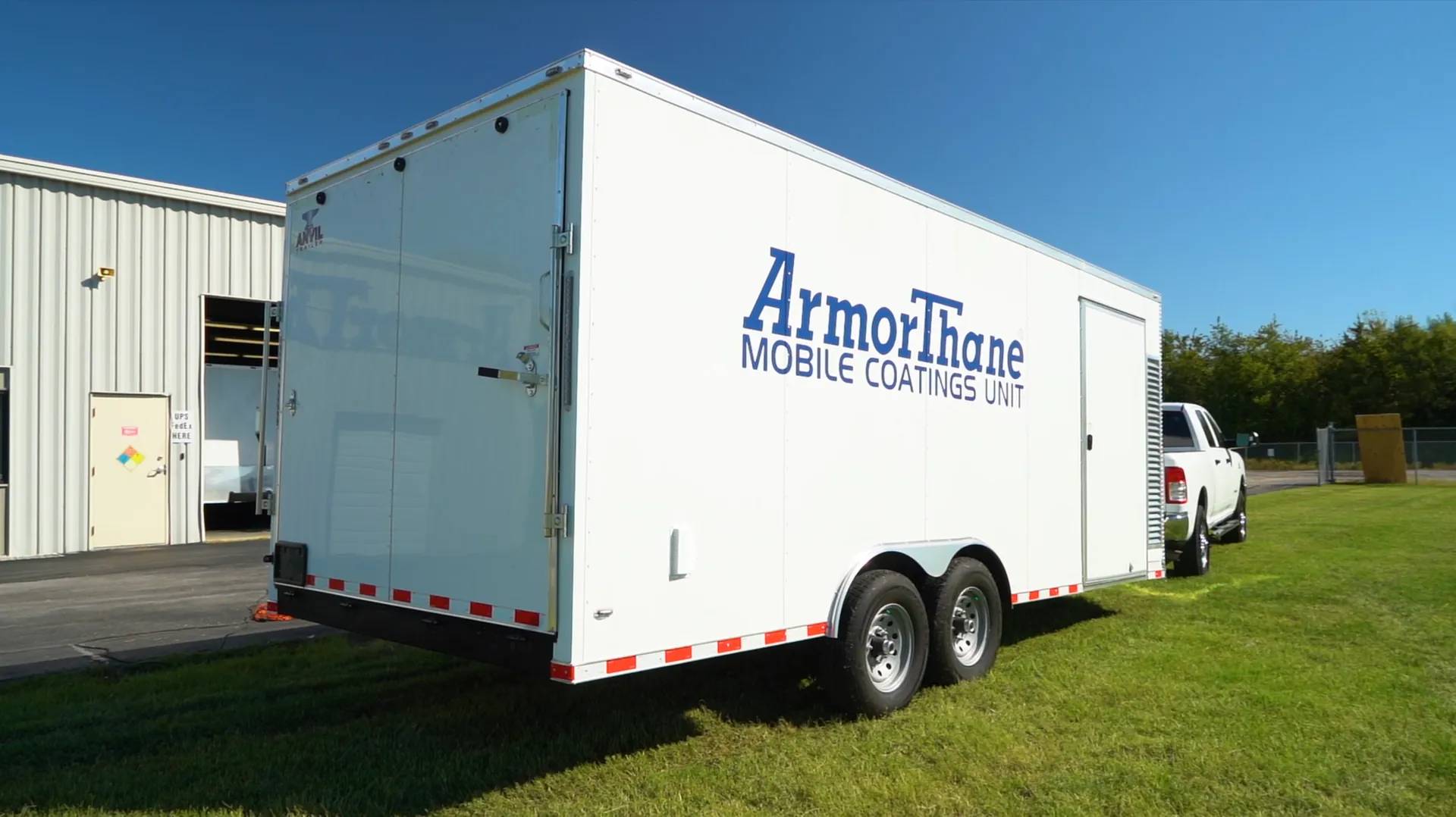
Rolled ArmorFloor systems need no proportioner, and a polyurea spray rig that lines truck beds can also coat shop floors, wash bays and outdoor slabs. We supply the material, the equipment and the training, with startup packages from $25,000. It's not a franchise: no franchise fee, no royalties.
Questions first? Call (417) 831-5090 (US) or 780-444-6200 (Canada).
Polyurea garage floor FAQ
What is a polyurea garage floor?
It's a concrete floor coating built on polyurea, the product of an isocyanate reacting with an amine. Most residential versions are rolled 1-day systems: a 6–8 mil polyurea basecoat, a full broadcast of vinyl flake and a 9–14 mil polyaspartic topcoat, about 50 mils nominal. Less often it's a 60–80 mil membrane sprayed from a heated plural-component rig. The decoder tells you which one a quote describes.
Is polyurea better than epoxy for a garage floor?
On a dry slab, usually yes: a polyurea-base system with a polyaspartic topcoat is back in service in about a day, holds up in sunlight and is rated excellent against oil, fuel and road salt. Epoxy wins on damp slabs, since a 16-mil epoxy base tolerates 12 lb or 85% RH against 3 lb or 75% for a polyurea base, and it costs less. See polyurea vs epoxy floor coatings for the full comparison.
Is polyurea the same as polyaspartic?
Polyaspartic is a type of polyurea. Its aspartic-ester resins slow the reaction from seconds to minutes, so it can be rolled, and it's made with aliphatic isocyanates, so it doesn't yellow. In a 1-day floor, the basecoat is usually a polyurea and the topcoat a polyaspartic. Our polyurea vs polyaspartic page compares them in detail.
How much does a polyurea garage floor cost?
Published installed prices run about $5–$10 per sq ft for rolled polyurea flake systems (HomeGuide, Dec 2024; The Garage Guide, Mar 2026). That's roughly $2,000–$4,000 for a 400 sq ft two-car garage and $2,900–$5,800 for 576 sq ft. Spray polyurea runs about $7–$12 per sq ft. Moisture mitigation, big repairs and old coating removal are extra.
How long does a polyurea garage floor last?
Published estimates run 10–20+ years for professionally installed polyurea and polyaspartic floors (HomeGuide; The Garage Guide), and ArmorThane publishes 15–20+ years for high-build spray polyurea. Those are industry estimates, not independent studies. Prep and moisture decide most of the outcome.
How long before I can drive on a polyurea garage floor?
On a rolled 1-day system, the topcoat sets the time: one published polyaspartic topcoat allows heavy traffic after 24 hours at 72°F and 50% RH or more, and longer when it's colder or drier. HomeGuide's guidance is more conservative at up to 3 days. One-part DIY “polyurea” kits need 7–10 days, per the seller of one kit line.
Does a polyurea garage floor turn yellow?
The top layer shouldn't, if it's an aliphatic polyaspartic or aliphatic polyurea. The basecoat can: aromatic polyurea yellows and fades in sunlight, and the maker of one 1-day polyurea basecoat says spots not covered by flake will discolor. That's why full flake coverage and a UV-stable topcoat matter.
Is a polyurea garage floor slippery?
A smooth, glossy coating can be slick when wet. A full vinyl flake broadcast under the topcoat measured a wet DCOF of 0.63–0.65 on published data, above the 0.42 minimum ANSI A326.3 sets for level interior floors walked on wet. Quartz or an anti-slip additive in the topcoat adds more grip.
Can I install a polyurea garage floor myself?
Spray polyurea, no: it needs a heated plural-component rig and a trained applicator. Pro-grade rolled polyurea and polyaspartic materials cost about $1.75–$2.30 per sq ft by our arithmetic, but give you 10–15 minutes per batch on a slab you've ground yourself. One-part DIY “polyurea” kits are easier to roll but are moisture-cured hybrids that need 7–10 days before use.
Does polyurea prevent hot tire pickup?
A well-bonded, fully cured polyurea or polyaspartic floor resists it, but no coating makes a bad install immune. Tires can exceed 140°F, and lifting traces back to prep, moisture, cure time and application conditions. Tire marking, a cosmetic stain, can occur on any floor; the risk check covers both.
Can polyurea go over an existing epoxy floor?
Only over a sound, fully bonded coating that has been abraded and adhesion-tested. If the old epoxy is peeling, blistered or unknown, it has to be ground off, and the published 1-day system guides require previous coatings and sealers to be removed completely. Removal typically adds $1–$3 per sq ft (The Garage Guide).
Can a polyurea floor be installed in cold weather?
Rolled 1-day systems we reviewed allow air and surface temperatures of 35–85°F, but below 60°F the topcoat must be a fast-cure grade, and below 72°F traffic times get longer. The slab must also be at least 5°F above the dew point. Spray polyurea has its own limits; ask your applicator for them in writing.
Is polyurea toxic? Does it smell?
The hazard is during installation. Polyurea and polyaspartic hardeners contain isocyanates, which OSHA links to occupational asthma and eye, nose, throat and skin irritation, so installers wear respirators and you should stay out until the crew says otherwise. One published 1-day polyurea system lists VOC under 50 g/L.
Why do polyurea garage floors peel?
Almost always because of what's under them: no mechanical grinding, a sealer that wasn't removed, moisture vapor above the base coat's limit, or cars parked before the topcoat cured. The polyurea base in one published system bonds at over 400 psi with the concrete failing first, but only on a ground, clean, dry slab.
Written from manufacturer system guides and data sheets, published 2024–2026 price guides and 35+ years of making polyurea and supporting the applicators who install it. Last updated September 26, 2026.
Methodology and sources
System descriptions, thicknesses, moisture limits and cure times come from manufacturer system guides and data sheets, chiefly Simiron's published 1-Day Polyurea and 1-Day Epoxy systems, used here because they publish complete numbers; other makers' systems differ. ArmorThane figures come from our own product and application pages. Prices are the published installer and publisher ranges in the cost table, dated; per-mil and DIY material figures are our arithmetic on listed prices and coverage rates. Lifespans are industry estimates, not independent studies. The hot tire check is a weighted checklist, not a test.
- Simiron SimFlake SB 1-Day Polyurea system guide (PDF): simiron.com/wp-content/uploads/2024/07/SIM_SimFlake-SB_1-Day-Polyurea_
- Simiron Polyaspartic HS product data sheet (PDF): simiron.com/wp-content/uploads/2020/09/SIM_Polyaspartic-HS_ProductData
- Simiron SimFlake SB 1-Day Epoxy system guide (PDF): simiron.com/wp-content/uploads/2024/07/SIM_SimFlake-SB-1-Day-Epoxy_Sys
- Simiron MVB moisture vapor barrier sell sheet (PDF): simiron.com/wp-content/uploads/2020/09/SIM_MVB_SELLSHEET_8.5x11.pdf
- Wikipedia, Polyurea: en.wikipedia.org/wiki/Polyurea
- Wikipedia, Polyaspartic esters: en.wikipedia.org/wiki/Polyaspartic_esters
- HomeGuide, garage floor coating cost (Dec. 2024): homeguide.com/costs/garage-floor-coating-cost
- The Garage Guide, garage floor coating cost (Mar. 2026): thegarage.guide/cost-guides/garage-floor-coating-cost
- Cleveland Concrete Coatings, estimating garage floor coating cost (2026): clevelandconcretecoatings.com/blog/estimate-cost-coating-garage-floor/
- Duration Concrete Coatings, how to calculate garage floor coating cost (2026): durationconcretecoatings.com/blog/how-to-calculate-garage-floor-coatin
- A House in the Hills, polyurea garage floor coating 101 (Dec. 2024): ahouseinthehills.com/polyurea-garage-floor-coating-101-benefits-drawba
- Tru Colors Contracting, is polyurea floor coating worth it (Mar. 2025): trucolorscontracting.com/is-polyurea-floor-coating-worth-it/
- Galaxy Concrete Coatings, polyaspartic floor coating cost (2026): galaxyconcretecoatings.com/learning-center/polyaspartic-floor-coatings
- Garage Flooring LLC, polyurea garage floor coating kits (Sept. 2026): garageflooringllc.com/polyurea-garage-floor-coating-kits/
- Garage Flooring LLC, polyurea full broadcast kits (Sept. 2026): garageflooringllc.com/product/polyurea-full-broadcast-garage-floor-coa
- Xtreme Polishing Systems, polyurea floor coating kit (Sept. 2026): xtremepolishingsystems.com/products/polyurea-floor-coating-medium-gray
- Xtreme Polishing Systems, Rockhard Poly polyaspartic kit (Sept. 2026): xtremepolishingsystems.com/products/rockhard-poly-3-gal
- Xtreme Polishing Systems, Hybrid Stone flake (Sept. 2026): xtremepolishingsystems.com/products/hybrid-flake-floor-epoxy
- Rust-Oleum EpoxyShield water-based garage floor coating TDS: rustoleum.com/~/media/DigitalEncyclopedia/Documents/RustoleumUSA/TDS/E
- Garage Force, hot tire pickup explained (Sept. 2026): garageforce.com/2026/09/15/2026-hot-tire-pickup-heat-related-coating-f
- Penntek, epoxy vs polyurea garage floor coatings (Sept. 2026): penntek.com/epoxy-vs-polyurea-which-garage-floor-coating-is-right-for-
- Sherwin-Williams, guide to slip resistance in resinous flooring (ANSI A326.3): industrial.sherwin-williams.com/na/us/en/resin-flooring/media-center/a
- ASTM F1869, moisture vapor emission rate (calcium chloride): store.astm.org/f1869-16a.html
- ASTM F2170, relative humidity in concrete slabs: store.astm.org/f2170-19a.html
- ICRI, concrete surface profile (CSP) bulletin (PDF): icri.org/wp-content/uploads/2024/04/CRBMayJun14_WInkler.pdf
- OSHA, Isocyanates: osha.gov/isocyanates
- OSHA 29 CFR 1926.1153, respirable crystalline silica: osha.gov/laws-regs/regulations/standardnumber/1926/1926.1153
- ArmorThane, polyurea vs epoxy floor coatings (Aug. 2026): armorthane.com/polyurea-vs-epoxy-floor-coatings-which-is-better/
- ArmorThane, concrete coatings near me: armorthane.com/protective-coatings/concrete-coatings/concrete-coatings
- ArmorThane, polyurea guide (aromatic vs aliphatic): armorthane.com/polyurea-guide/
- ArmorThane, ArmorFloor aliphatic polyaspartic: armorthane.com/products/armorflooring-product-page/armorfloor-aliphati
- ArmorThane, ArmorFloor TopCoat: armorthane.com/products/armorcoat/armorfloor-topcoat-4/
- ArmorThane, HighLine 410 aliphatic polyurea: armorthane.com/products/armorline-products/high-pressure/highline-410-
- ArmorThane, texturing aggregate: armorthane.com/products/texturing-aggregate/
- ArmorThane, weather conditions and coating applications: armorthane.com/weather-conditions-coating-applications/

Want a floor that's specified, not just sold? Get a quote from a certified applicator.
Tell us the garage size and what the slab looks like. We'll connect you with an ArmorThane-certified applicator who will test for moisture and quote the prep, the products and the mils in writing.
- Rolled 1-day flake floors and sprayed polyurea
- Moisture test and grinding spelled out on the quote
- Base, topcoat and thickness named in writing
- Contractors: ask about ArmorFloor and spray rigs
More to read on floors and decks
Short reads from ArmorThane on Issuu. Tap one to open it right here.