








Polished Concrete vs Epoxy: Which Floor Fits Your Slab?
Cost, lifespan, moisture, slip resistance and upkeep compared with sourced numbers, plus a selector and a lifetime cost calculator.
Start a floor coating business
Coat floors for a living.
ArmorThane sets you up to do this work, and you own the business. We make the chemistry, build the rigs, train you hands-on and answer the phone when a job gets difficult. You pay no franchise fee and no royalties. It has been that way since 1989.
- $0
- franchise fees or royalties
- 35+
- years in business
- 50+
- countries with applicators
- 24/7
- technical support
Polished concrete vs epoxy is really a question about your slab. Polishing grinds and densifies the concrete you already have, so it rewards a good slab and exposes a bad one. Epoxy covers the concrete with a resin film, so it hides a lot and protects a lot, but only if it stays bonded. We make coatings, not polishing equipment, and we still tell people to polish when the slab and the use call for it. This guide compares the two on cost, lifespan, moisture, slip resistance and maintenance with sourced numbers, then gives you a selector and a lifetime cost calculator so you can run your own floor through both.
Choose polished concrete for a sound, flat, fairly new slab in dry interior spaces like retail, offices, showrooms and homes, where low long-term maintenance cost and a natural look matter most. Choose epoxy, or a polyaspartic or polyurea coating, when the slab is worn, stained or patched, when you need chemical, oil or acid resistance, color and line marking, or texture for wet areas. Test slab moisture before either. High moisture rules out most epoxies and does not stop polishing.
How polished concrete and epoxy are made
Polished concrete
Diamond tooling grinds the slab in steps, a chemical densifier hardens the surface, and progressively finer grits bring up the sheen. Concrete Network describes four levels: flat (below 100 grit), satin (100 to 400 grit), semi-polished and highly polished (800 grit and higher, gloss readings up to 60 to 80). How deep you grind sets the look, from cream (little aggregate showing) to salt and pepper (about 1/16 in cut) to medium and large aggregate (1/8 to 1/4 in).
Epoxy floor coating
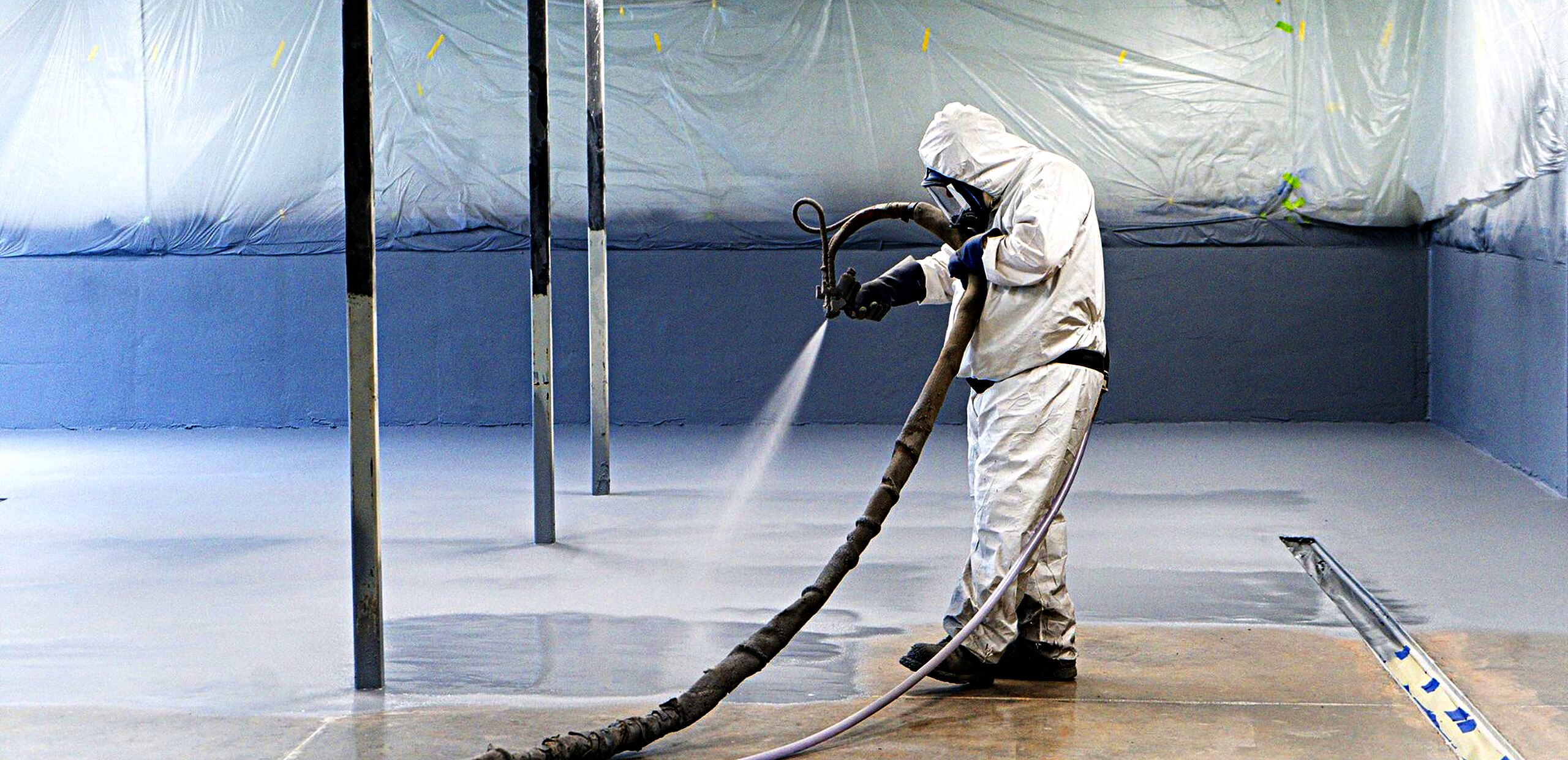
The slab is ground or shot blasted to open it up, cracks and pits are filled, then a primer and one or more coats of epoxy go down, often with broadcast flake or quartz and a clear topcoat. Film thickness depends on the system, from a thin roll coat to a multi-coat broadcast build. It is a separate layer that has to stay stuck to the concrete. Our epoxy floor coating guide breaks down the nine common system types.
Polished concrete vs epoxy: comparison table
Installed cost and service life from 2026 cost guides and an industry coatings consultant. Click any header to sort.
| Floor | Installed $/sq ft | Upkeep interval | Hides slab flaws | Slab moisture tolerance | Chemical and stain resistance |
|---|---|---|---|---|---|
| Polished, cream finish | $3–$8 | Reseal or guard every 2–5 yrs | No | High, no film to blister | Moderate; acids etch |
| Polished, salt and pepper | $4–$10 | Reseal or guard every 2–5 yrs | No | High, no film to blister | Moderate; acids etch |
| Polished, exposed aggregate | $6–$12 | Reseal or guard every 2–5 yrs | Partly | High, no film to blister | Moderate; acids etch |
| Water-based epoxy | $4–$10 | Recoat every 3–5 yrs | Yes | Low, often under 75% RH | Good |
| 100% solids epoxy system | $4–$10 | Lasts 10–20 yrs | Yes | Low unless a vapor-tolerant primer is used | Very good |
Polished concrete or epoxy: which fits your floor?
Pick your slab condition, moisture, use, chemical exposure and top priority. The selector scores polished concrete, epoxy, and polyaspartic or polyurea coatings using the factors that decide most of the floors we are asked about.
Polish vs. coat score
Each option starts at 60 and gains or loses points for each condition. Scores are a guide to the conversation with your contractor, not a spec.
Polished concrete vs epoxy lifetime cost calculator
First cost is only part of it. This calculator adds the renewals each floor needs over the period you choose: resealing a polished floor every 2 to 5 years at $1 to $3 per sq ft (HomeGuide), and replacing a water-based epoxy every 3 to 5 years or a 100% solids epoxy every 10 to 20 years at HomeGuide's $4 to $10 installed. Low figures use the cheapest price and longest interval; high figures use the opposite.
Cost over the life of the floor
Renewals = ceiling(years / interval) - 1. Daily cleaning labor is not included for either floor.
Two things the math does not capture. A coatings consultant at KTA notes that high-shine polished floors need daily maintenance and periodic burnishing, roughly quarterly, to hold their gloss. And the epoxy numbers assume the coating stays bonded. On a slab with a moisture problem, an epoxy can blister and delaminate long before its rated life, which turns a cheap floor into an expensive one.
Slip resistance: the factor people skip
Both floors can be slippery when wet, and both can be made safer. The difference is how much control you have.
The current US benchmark is ANSI A326.3. Sherwin-Williams summarizes its minimums as a wet dynamic coefficient of friction (DCOF) of at least 0.42 for level interior floors that get wet, with manufacturers generally declaring 0.50 or more for wetter interior areas and 0.55 or more for exterior wet areas and oily areas.
Polished concrete
Results are mixed. Safety Direct America reports wet DCOF readings on polished concrete from 0.41 to 0.75, and cites an industry study with very high gloss floors around 0.50. But the same firm found wet pendulum values of only 7 to 10 on its samples, against a UK minimum of 36, and argues that DCOF alone is not a reliable way to judge slip risk on polished concrete. It also notes that several large UK operators, including London Underground, have stopped installing it. A lower sheen level helps; so does keeping the floor clean of dust and liquids.
Epoxy and other resin floors
A smooth, glossy epoxy is slick when wet too. The difference is that traction can be built into the system. Sherwin-Williams raises DCOF with broadcast aggregates (flake, quartz) and texture additives such as aluminum oxide. That is how we build floors for wash bays, kitchens and ramps. A coating can be anything from smooth to sandpaper, and you choose where on that range it sits.
Moisture, chemicals and wear
Moisture in the slab
IFTI lists the typical ceiling for epoxy and other coatings at 75% relative humidity by ASTM F2170, or 3 lb per 1,000 sq ft per 24 hours by calcium chloride test. Above that, coatings blister and delaminate. A polished floor has no film to push off. Some coating systems use moisture-tolerant primers that KTA notes can bond at relative humidity up to 99%, at extra cost.
Acids, oils and staining
A densified, guarded polished floor resists water and light spills, but it is still cement. Acids, sugars, wine and citrus etch it, and oil wicks in if left. Resin coatings put a non-porous barrier between the chemical and the slab, which is why food plants, auto shops and labs coat.
Abrasion and impact
Polished concrete has no film to scratch or chip; worn spots can be re-honed. Epoxy scratches and can chip at joints under steel wheels, but a scratched coating is recoated, not replaced. KTA puts typical coating service life at 5 to 10 years; HomeGuide gives 10 to 20 for solid epoxy.
Ugly or damaged slabs
Polishing shows every patch, crack and stain. If the slab is not good enough to look at, a coating is the practical choice. Old floors that need flattening first are covered in our self leveling concrete guide.
Where ArmorThane fits
We do not polish concrete. When a floor needs a coating, our applicators install polyaspartic and polyurea systems rather than standard epoxy where fast return to service, UV stability or flexibility matters. ArmorFloor aliphatic polyaspartic is one example. Polyaspartics generally return to service faster than standard epoxy, and aliphatic chemistry resists the yellowing in sunlight that most epoxies show. Our polyaspartic vs epoxy comparison covers that trade-off in detail, and our industrial flooring page shows systems for heavy traffic.
Want color on a polished floor? Dyes and stains are often applied during polishing; our concrete stain guide explains why dyes stay indoors and which stains hold up outside.
Have the slab tested, then choose.
A certified ArmorThane applicator can check moisture, condition and use, and tell you honestly whether your floor should be coated or would be better polished by a specialist.
Contractors: become an applicator →
Polished concrete vs epoxy questions
Is polished concrete cheaper than epoxy?
Up front they overlap. HomeGuide puts polished concrete at $3 to $12 per sq ft depending on how much aggregate is exposed, and epoxy at $4 to $10 installed. Over 10 or more years polished concrete is often cheaper because it only needs resealing every 2 to 5 years, while water-based epoxies need recoating every 3 to 5 years.
Which lasts longer, polished concrete or epoxy?
Polished concrete, in general. HomeGuide says it can last a lifetime with minimal maintenance, because the wear surface is the slab itself. Epoxy lasts 3 to 5 years for water-based products and 10 to 20 years for solid epoxy, per HomeGuide, provided the slab stays dry enough for the coating to stay bonded.
Is polished concrete or epoxy better for a garage?
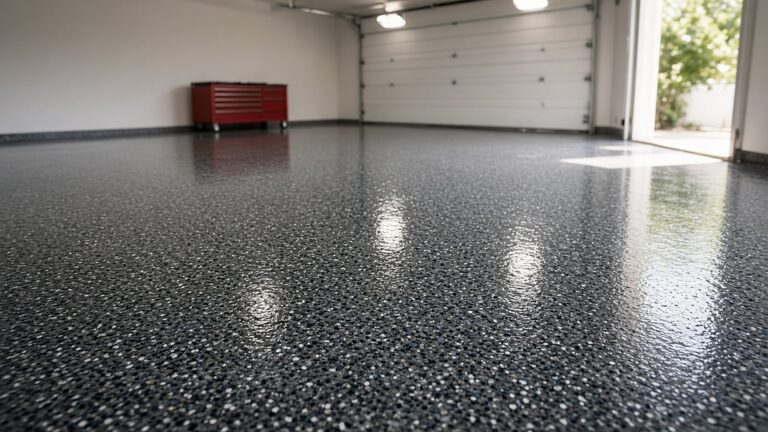
Usually a coating. Garages see oil, brake fluid, road salt and hot tires, and they need to be cleaned easily. Polished concrete stains and etches. Most garage floors also have cracks and stains that polishing would show. See our garage floor coating guide for system options.
Is polished concrete slippery?
It can be, especially when wet or dusty. Safety Direct America measured wet pendulum values of 7 to 10 on polished samples against a UK minimum of 36. A lower sheen and good housekeeping help. Epoxy is also slick when smooth and wet, but texture can be broadcast into a coating to raise traction.
Can you put epoxy over polished concrete?
Not directly. A polished, densified surface is too smooth and closed for a coating to bond. It has to be ground or shot blasted back to an open profile first, which removes most of the polish you paid for.
Can any concrete be polished?
Most sound slabs can, but the result depends on the concrete. Soft, heavily patched, cracked or oil-soaked slabs polish poorly and show every flaw. HomeGuide notes damaged concrete may need $3 to $12 per sq ft of leveling or repairs first, at which point a coating is often the better value.
How do I know if my slab has too much moisture for epoxy?
Test it. The preferred method is in-situ relative humidity probes per ASTM F2170. IFTI lists 75% RH or 3 lb per 1,000 sq ft per 24 hours as the typical ceiling for epoxy. Above that you need a moisture-tolerant primer, a different system or polishing.
Which is better for a warehouse?
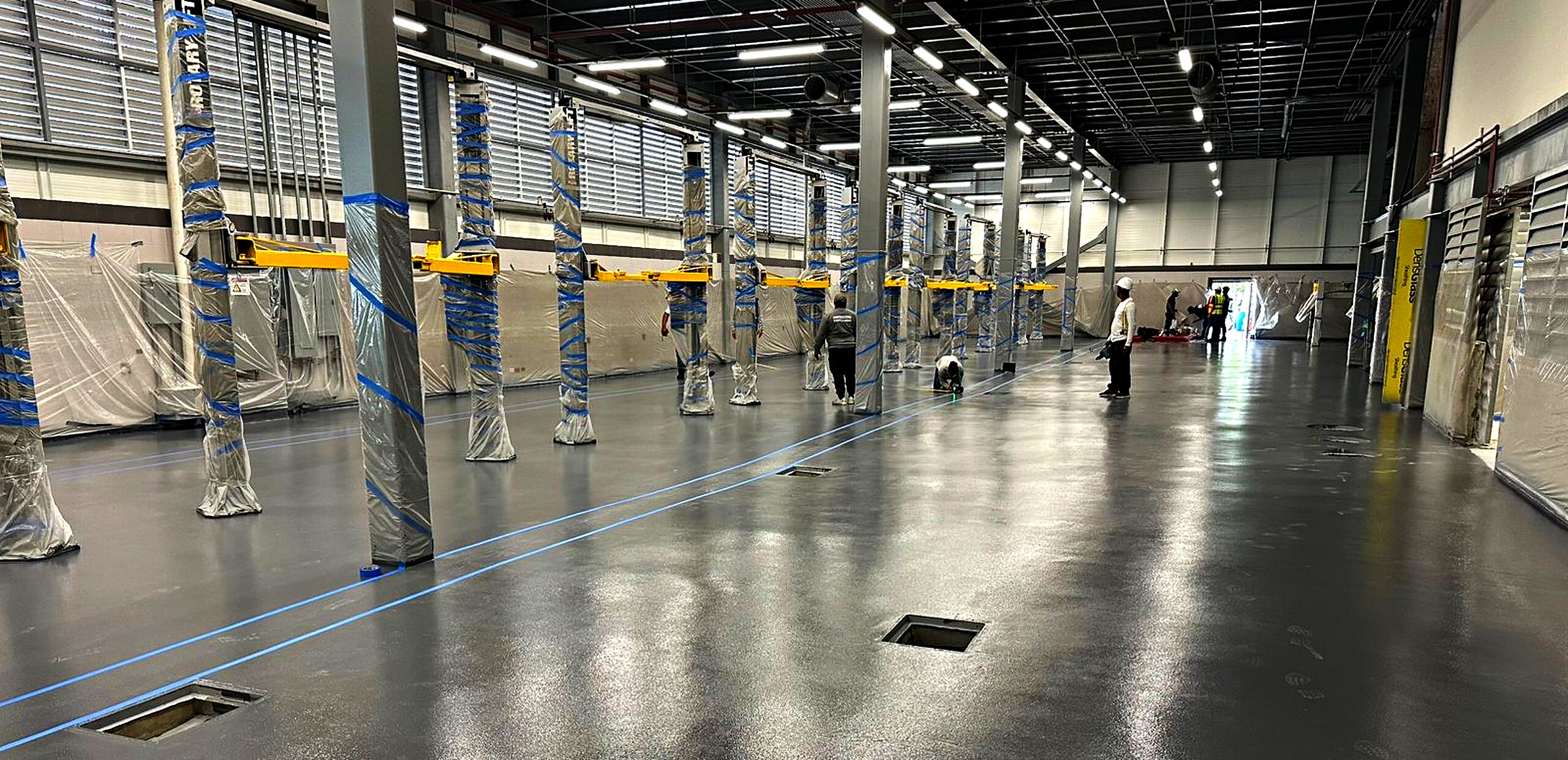
For large dry warehouses with a sound slab, polished concrete is hard to beat on lifetime cost. Where you need chemical resistance, line striping that lasts, battery-charging areas or clean rooms, a resin coating makes more sense. Many facilities do both: polish the racking aisles and coat the problem areas.
Related floor guides
Sources
- HomeGuide, polished concrete floor cost (2026): homeguide.com/costs/polished-concrete-floor-cost
- HomeGuide, epoxy flooring cost (2026): homeguide.com/costs/epoxy-flooring-cost
- Concrete Network, polished concrete levels: concretenetwork.com/concrete/polishing/levels.html
- KTA-Tator, concrete floors: coat, cover or polish: kta.com/concrete-floor-coat-cover-polish
- IFTI, concrete moisture testing requirements by flooring type: ifti.com/concrete-floor-moisture-testing-requirements-for-different-flooring-types
- Sherwin-Williams, guide to slip resistance for resinous flooring: industrial.sherwin-williams.com/.../guide-to-slip-resistance-resinous-flooring
- Safety Direct America, polished concrete floors slippery when wet: safetydirectamerica.com/polished-concrete-floors-slippery-when-wet
The right floor for the slab you have.
Facility managers and homeowners get a certified ArmorThane applicator who tests the slab and recommends the system that fits it. Contractors can add coatings to their business with no franchise fee and no royalties.
Start your coatings business with ArmorThane.
Tell us what you want to spray and where you are. An ArmorThane specialist will walk you through the equipment, chemicals, training and startup cost for the work you want to do.
- Equipment package matched to your applications
- Hands-on training and applicator certification
- Technical support once you are spraying
Polish it or coat it? Get a straight answer.
Tell us about the space, the slab condition, what the floor sees every day and whether moisture has been tested. We will connect you with a certified applicator near you.
- Square footage and use
- Slab age and condition
- Chemicals, vehicles or wet areas
- Moisture test results if any
More in Floors & concrete
 Floors & concreteHow to Remove Paint from Concrete: Methods, Tools & Safety
 Floors & concreteIndustrial Flooring
 Floors & concreteMetallic Epoxy Floor
 Floors & concretePatio Coating
 Floors & concretePolyaspartic Floor CoatingFloors & concretePolyaspartic vs Epoxy
 Floors & concretePolyurea Garage Floor
 Floors & concretePolyurea vs Polyaspartic