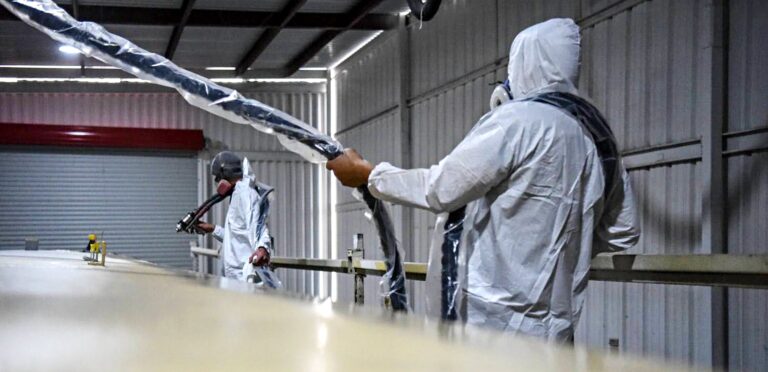

RV Insulation Ranked by Heat Saved Per Dollar
Windows, skirting, underbelly, vents, slide-outs and spray foam ranked by heat saved per dollar, with a propane calculator, a condensation check and winter tips.
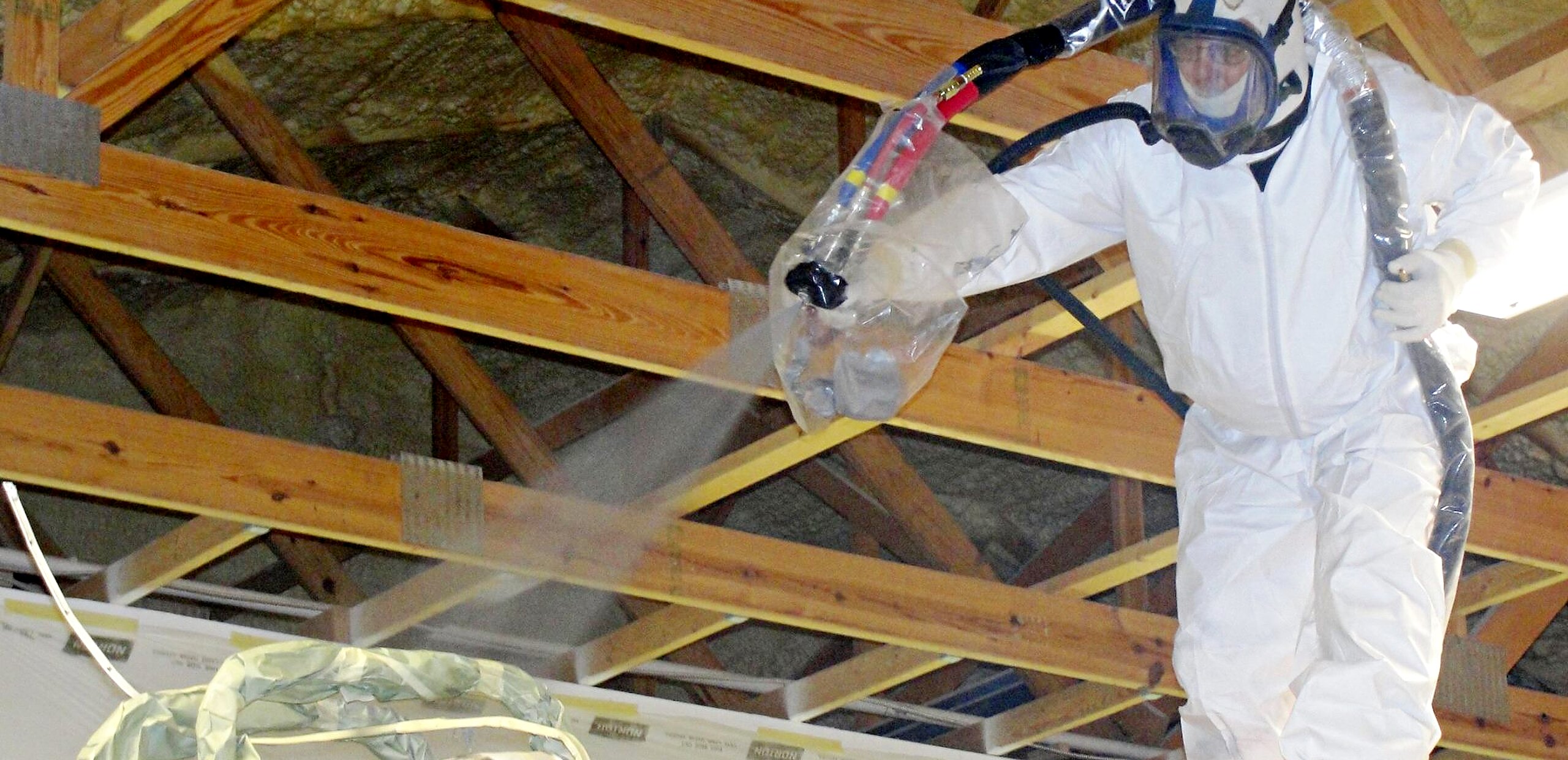
Start an RV roof coating business
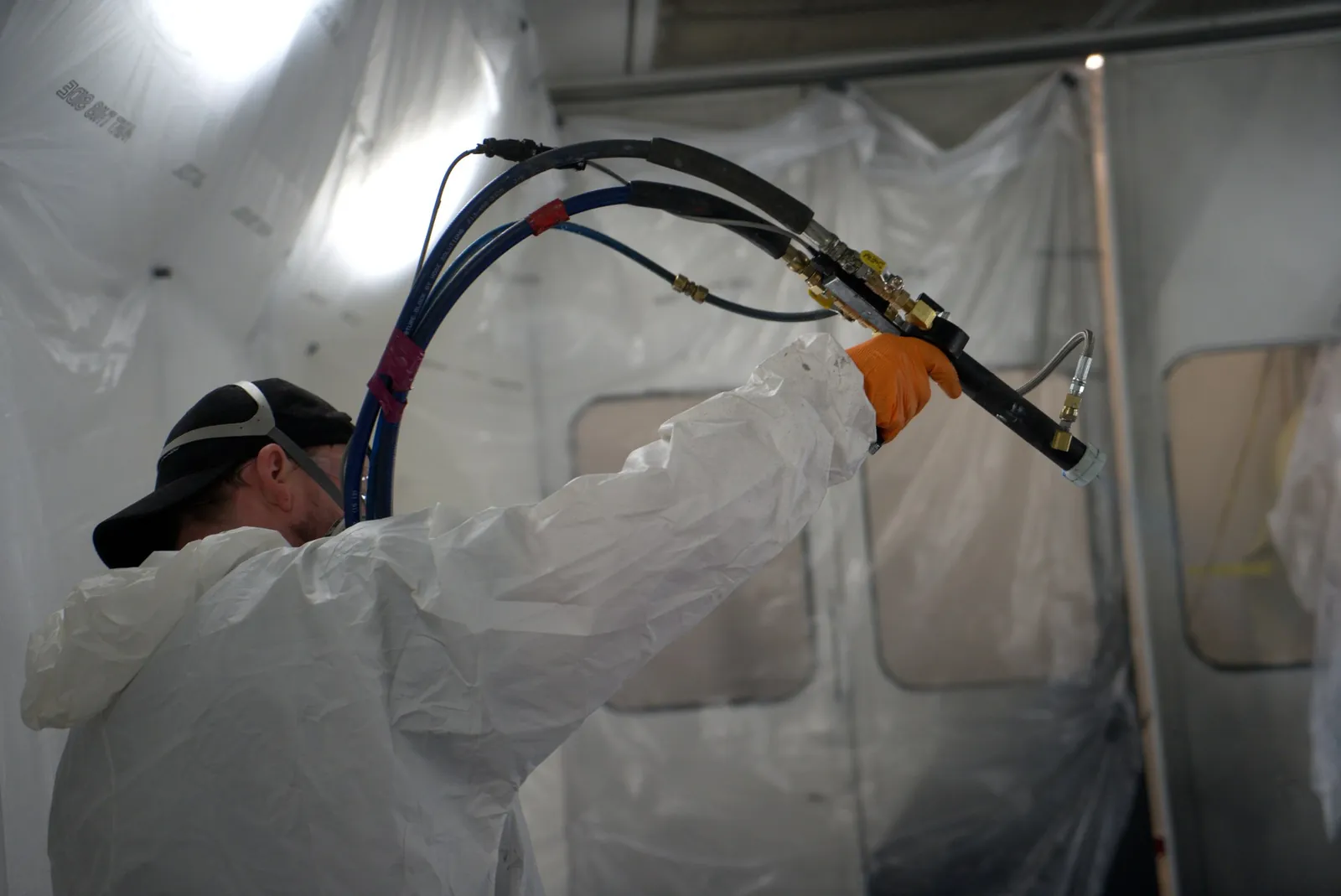
Spray RV roofs for a living.
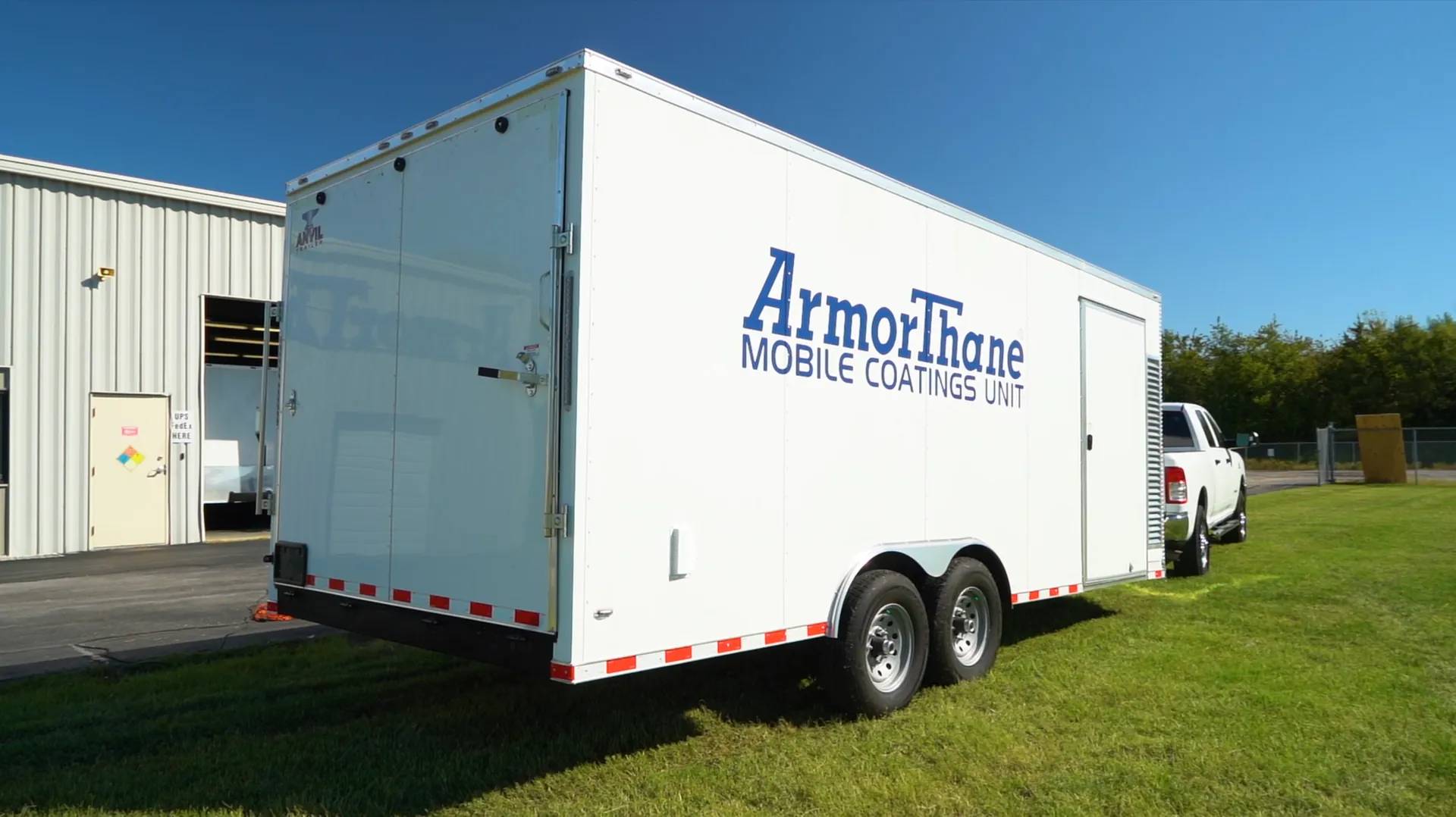
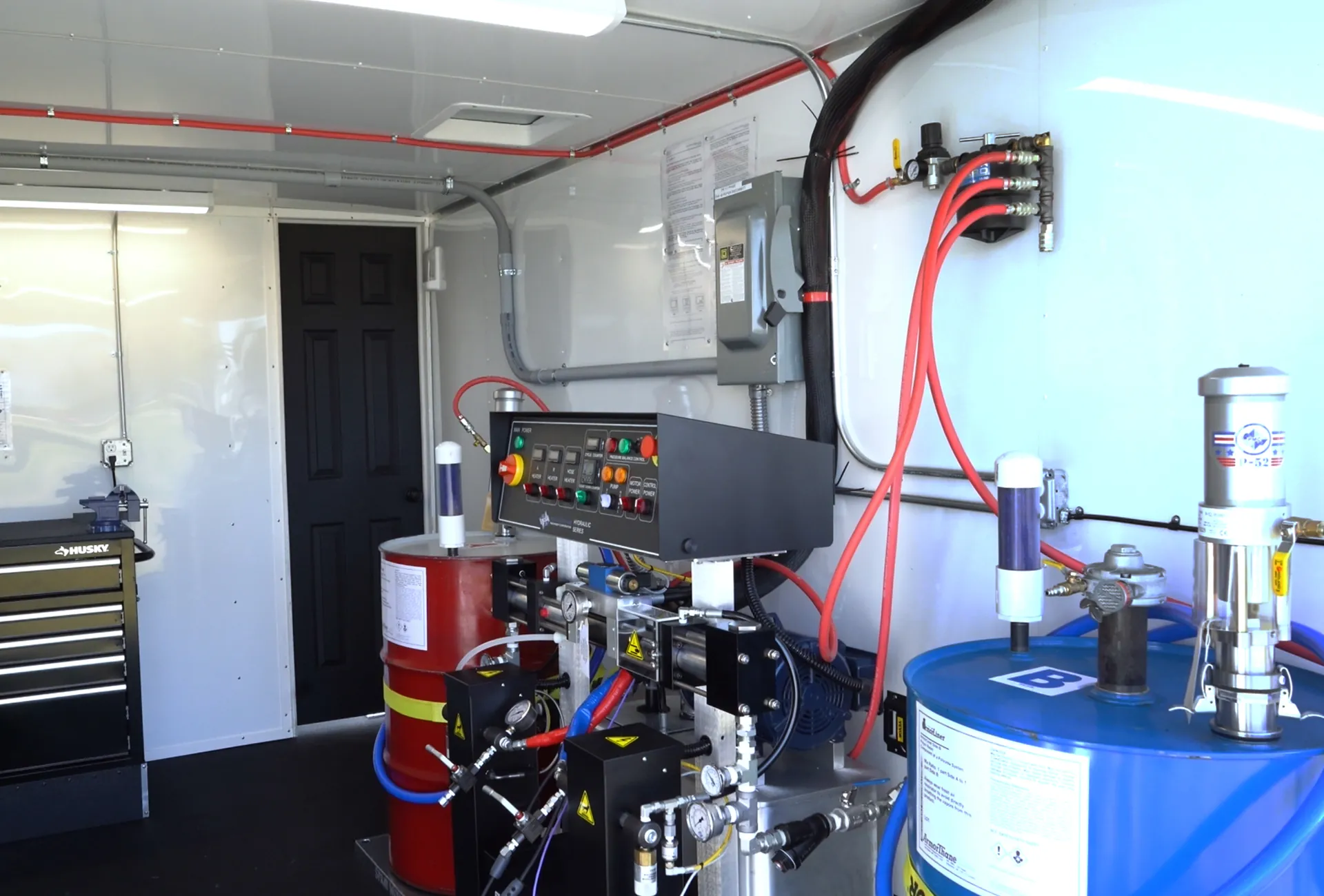
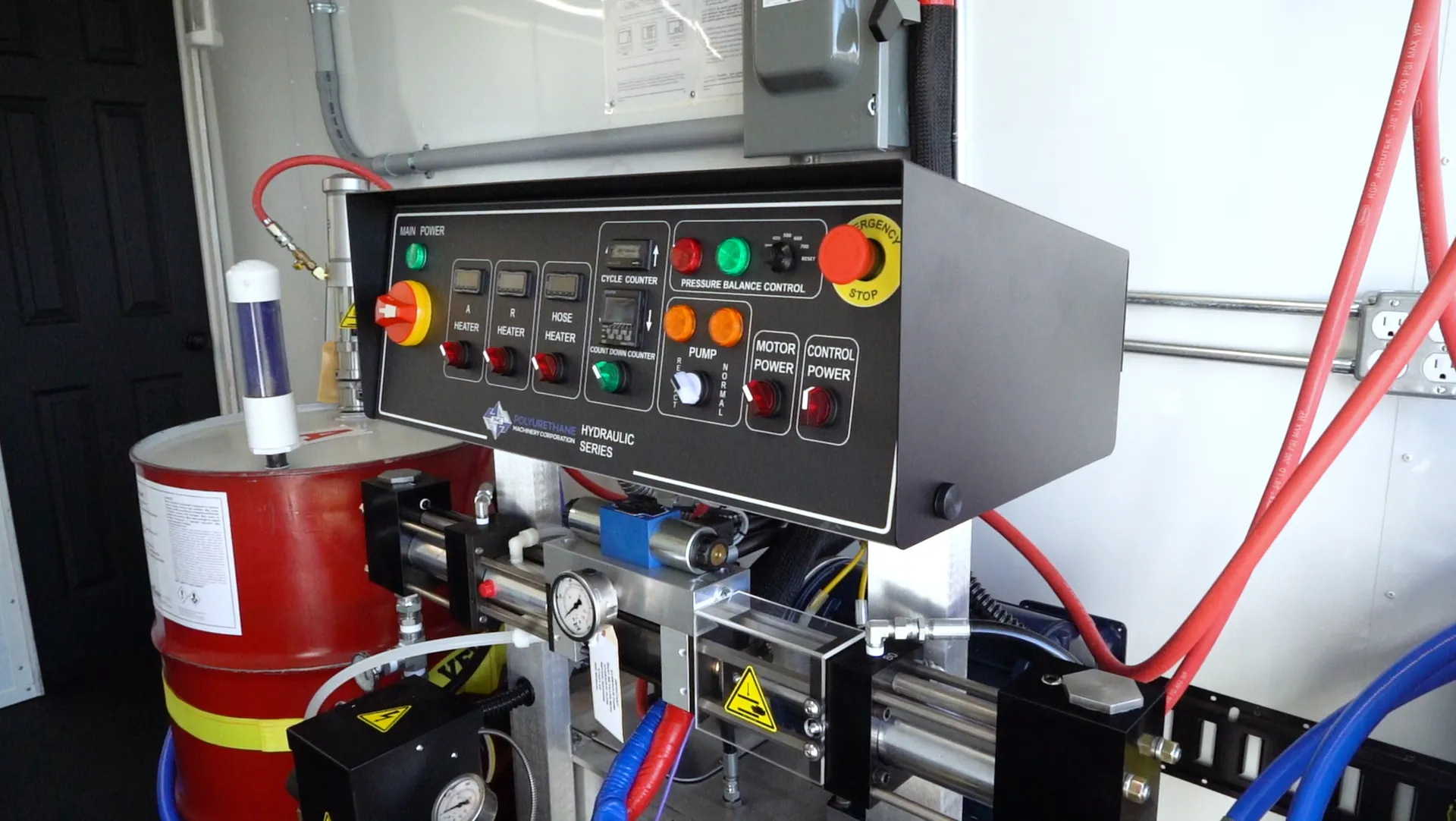
ArmorThane sets you up to do this work, and you own the business. We make the chemistry, build the rigs, train you hands-on and answer the phone when a job gets difficult. You pay no franchise fee and no royalties. It has been that way since 1989.
- $0
- franchise fees or royalties
- 35+
- years in business
- 50+
- countries with applicators
- 24/7
- technical support
An RV has inch-and-a-half walls, a roof full of openings and a floor hanging in the wind. You can't make it a house, but you can choose where the next insulation dollar goes. This guide ranks upgrades by heat saved per dollar, with the math shown.
Most RV walls are R-5 to R-7 block foam and roofs R-10 to R-20, so windows, the floor, vents and air leaks do much of the losing. A single-pane metal-frame window loses about nine times the heat of an R-7 wall per sq ft. Per dollar, start with seals and reflective window covers, then underbelly foam, vent cushions and skirting when you're parked below freezing. Spray foam fits bays and rebuilds, not finished walls. Estimate your propane burn or rank upgrades for your rig.
Who's writing: ArmorThane makes ArmorFoam spray foam and sprayed polyurea RV roof coatings in Springfield, Missouri, and trains the applicators who install them. Many upgrades here are $30 DIY jobs, and we'll say so.
- 1How RVs are insulated
- 2Where an RV loses heat
- 3Heat-loss and propane calculator (interactive)
- 4Upgrades ranked by heat saved per dollar
- 5RV insulation for windows
- 6Roof vents, doors and slide-outs
- 7RV skirting
- 8RV underbelly insulation
- 9Upgrade ranker for your rig (interactive)
- 10Spray foam in an RV
- 11Condensation
- 12Winter camping and summer heat
- 13RV insulation FAQ
How RVs are insulated, and what the R-values mean
Most towables have laminated walls: an outer skin, block foam and interior paneling bonded together, often around an aluminum frame. RV Blogger puts sidewall foam at R-5 to R-7 and roofs at R-10 to R-20. Camper insulation in truck campers runs R-7 to R-15 in the walls. And "four-season" has no rulebook: "There's no standard as to what these packages include" (RV.com).
| RV (as published) | Walls | Roof | Floor | Source |
|---|---|---|---|---|
| Winnebago Revel 4×4 (van) | R-9.8 | R-7.7 | R-5 | RV.com, 2023 |
| Arctic Fox truck camper | R-7 | R-18 | R-7 | Truck Camper Adventure, 2026 |
| Bigfoot 2500 truck camper | R-8 | R-8 | R-8 | Truck Camper Adventure |
| K-Z Sportsmen SE 292RBK | R-9 | R-20 | R-24 | RV.com |
| Host truck camper | R-13 | R-19 | R-16 | Truck Camper Adventure |
| Prairie Schooner | R-10 | R-26 | R-32 | Roamly, 2026 |
| East to West Alta 3100KXT | R-15 | R-21 | R-38 | RV.com |
Why brochure R-values run high
Reflective foil is the usual reason. Reflectix says its product alone is R-1.1, and its FTC fact sheet rates it R-1.0 in a northern ceiling in winter, when heat flows up, but R-16 under a floor with a 9.5 in air space. So "R-15 reflective foil" in a roof means more in July than in January. Luxe, a fifth-wheel builder, adds that an R-40 claim for a 6 in roof cavity is closer to R-19 once compressed.
Ask for "a layer-by-layer construction diagram covering the roof, floor, walls, front cap, slideout floor, and underbelly," as RVLiving advises, and ask what a "tested to zero degrees" claim actually tested.
Where an RV loses heat
Heat loss is area divided by R-value, times the temperature difference. Walls win on area; windows and gaps lose far more per square foot. Our model of a 26 ft standard trailer (R-7 walls, R-10 roof, R-7 floor, 30 sq ft of single-pane windows) at 68°F inside and 20°F outside loses about 8,830 Btu/h:
A model, not a measurement. Change every input in the calculator below.
The weakest square feet
NREL rates a single-glazed metal-frame window at U-1.29, nine times an R-7 wall's loss. Here 30 sq ft of glass does a fifth of the losing.
Wind under the rig
The floor sits over moving air, with tanks and water lines below it, so the underbelly is also a freeze problem.
Slides, doors, hatches
Seals age and slides move. RVLiving's checklist names entry and baggage doors, roof vents and slideout seals.
RV heat-loss and propane calculator
Enter your living space, R-values and windows. The calculator adds up heat loss piece by piece, converts it to propane and checks whether your windows will sweat.
How much heat does my RV lose, and what does it cost?
Window U-factors from NREL; propane at 91,452 Btu per gallon (EIA); 78% furnace efficiency from a Suburban data plate; default price is EIA's residential average, week of March 30, 2026. Air-leak rates are our assumption.
RV insulation upgrades ranked by heat saved per dollar
Same 26 ft trailer, 30°F average, each upgrade alone, priced from September 2026 listings and dated cost guides. "Per $100" is heat saved divided by midpoint cost.
| Upgrade | Cost | Heat saved | Per $100 | Best for |
|---|---|---|---|---|
| 1. Door, slide and hatch seals | $58–$94 door seal; $61–$364 slide seals | Not modeled | — | Everyone, first |
| 2. Reflective window covers | ≈$59 for 30 sq ft | 860 Btu/h | 1,475 Btu/h | Winter nights |
| 3. Underbelly foam board (DIY) | $52–$146 materials | 470 Btu/h | 476 Btu/h | An open or damaged belly |
| 4. Roof vent cushions (3) | $71–$89 | 180 Btu/h | 222 Btu/h | Everyone |
| 5. Foam-board skirting (DIY) | $100–$500 | 630 Btu/h | 211 Btu/h | Parked for weeks below 32°F |
| 6. Roof or wall foam in a rebuild | $166–$502 materials | 410–620 Btu/h | 161–171 Btu/h | When it's already open |
| 7. Closed-cell spray foam, underbelly | $406–$967 | 660 Btu/h | 96 Btu/h | Full-timers, open bellies |
| 8. Dual-pane windows (7) | $6,841, parts only | 520 Btu/h | 8 Btu/h | Broken windows |
| 9. Inflatable skirt kit | $2,299–$2,499 | 180 Btu/h* | 7 Btu/h* | Seasonal sites |
Cheap fixes on weak spots beat expensive fixes everywhere: covering glass returns more heat per dollar than replacing it. Payback depends on how much you camp in the cold. Sixty days at 30°F burns about 141 gallons ($377), so a weekend camper's spray foam pays back mostly in comfort and a furnace that keeps up. A full-timer's pays back in propane.
Want closed-cell foam in the bays or a reflective polyurea roof? Request a free quote from a certified applicator.
RV insulation for windows
RV.com puts dual-pane RV windows at "typically less than R-1.8." Here's how each type compares, and how cold its inside surface gets at 20°F outside.
| Window | U-factor | ≈ R-value | Loss vs R-7 wall | Inside surface at 20°F |
|---|---|---|---|---|
| Single pane, metal frame | 1.29 | R-0.8 | 9.0× | ≈26°F (frost) |
| Dual pane, metal frame | 0.83 | R-1.2 | 5.8× | ≈41°F |
| Dual pane, non-metal frame | 0.52 | R-1.9 | 3.6× | ≈51°F |
| Single pane + reflective cover | 0.53 | R-1.9 | 3.7× | ≈51°F on the cover |
Reflective covers
AirSkirts sells a 24 in × 10 ft Reflectix roll for $39. Cut it snug to the glass. We credit only R-1.1; a sealed air gap adds more.
Shades and insulating panels
Cornell Cooperative Extension found a tight roller shade cuts window loss about 27%, 45% with side tracks, and an R-4 insulating panel about 75%. RV shades run $149–$159.
Shrink film kits
They trap an air layer, though AirSkirts says clear film "typically isn't quite as effective as other methods."
Dual-pane replacement
A Lippert frameless dual-pane window lists at $977.29 before installation: worth it for a broken window, not as an insulation project.
Roof vents, doors and slide-outs
Roof vents. A 14 × 14 in vent is about 1.4 sq ft of thin plastic lid. Foam cushions 3 in thick press into the opening; Camco, Valterra and Adco versions cost $23.58–$29.74 at etrailer. Savings are modest because vents are small, but so is the price. Pull one out when you shower or cook so the fan can clear moisture.
Doors. Entry and baggage doors seal with rubber strips: $57.91 for 15 ft of door and hatch seal, $93.81 for 50 ft of ribbed seal. If you see daylight or feel air at the latch, replace the seal before insulating anything else.
Slide-outs. Slides add seams that move every setup. Wiper and bulb seals cost $61 for 15 ft to $364 for 60 ft. Toppers ($240–$300) shield the slide roof but aren't insulation. Ask about the slide floor too.
RV skirting: when it pays
Skirting turns the windy space under the rig into a sheltered buffer that protects tanks and lines as much as it saves heat. Camping World's rule: skirt for "any extended time spent camping in below-freezing temps." In our model, 1 in foam board at 20°F warms the air under the floor to about 47°F and cuts floor loss by more than half.
| RV insulation skirting | Cost | Notes |
|---|---|---|
| Foam board (DIY) | $100–$500+ (Camping World); board $0.25–$0.70 per board foot (HomeGuide) | Cut to fit, seams taped; most R per dollar |
| Plywood (DIY) | Not published | Sturdy and heavy; add foam behind it |
| Snap-on vinyl, custom | $1,000–$5,000 installed (Camping World) | Usually needs an on-site measure |
| Inflatable tubes | $1,899–$3,199 by length and height (AirSkirts kits) | Maker claims setup under 30 minutes; no R-value published |
Suburban's furnace manual says not to vent the furnace "where the vent is covered or obstructed." Keep furnace, water heater and generator exhausts in open air, and leave a hatch to reach the dump valves.
Skirting a manufactured home is a different job with HUD vent rules; see our mobile home insulation guide.
RV underbelly insulation and tanks
An enclosed, heated underbelly is the core of most winter packages: a chassis cavity "sealed and warmed via furnace ducts or 12V/electric heating elements" (Camping World). K-Z adds "a heat duct blowing directly on" the tanks, and Lance ducts heat to its holding tanks.
For RV insulation, underbelly work pays twice: it saves heat and keeps tanks and lines from freezing. If your belly is open or torn, start there. Foam board goes up between the frame rails: XPS at R-5 per inch costs $0.25–$0.70 a board foot (HomeGuide). Reflective foil works here because heat flows down; Reflectix rates one layer over a 9.5 in air space at R-16. Close the belly with corrugated plastic to keep foam dry and mice out.
Tank heater pads
Thermostat-controlled pads stick to holding tanks; a dump-valve pad is $33.35. Freeze protection, not heat savings.
Heated water hose
From 15 to 50 ft. Camping World notes one Camco hose is rated to −20°F.
Heat that stays below
Suburban says ducts ending in tank compartments without return air don't count toward required duct area. Check before adding belly ducts.
Upgrade ranker for your rig
Tell us how you camp. The ranker prices each upgrade, models the heat it saves and sorts them by heat saved per $100.
What should I insulate first?
Assumes an 8 ft wide, 7 ft high living space at 68°F with average drafts, heated 24 hours a day. Standard build: R-7 walls, R-10 roof, R-7 floor; four-season: R-13, R-19, R-16.
Spray foam in an RV: rebuild yes, retrofit rarely
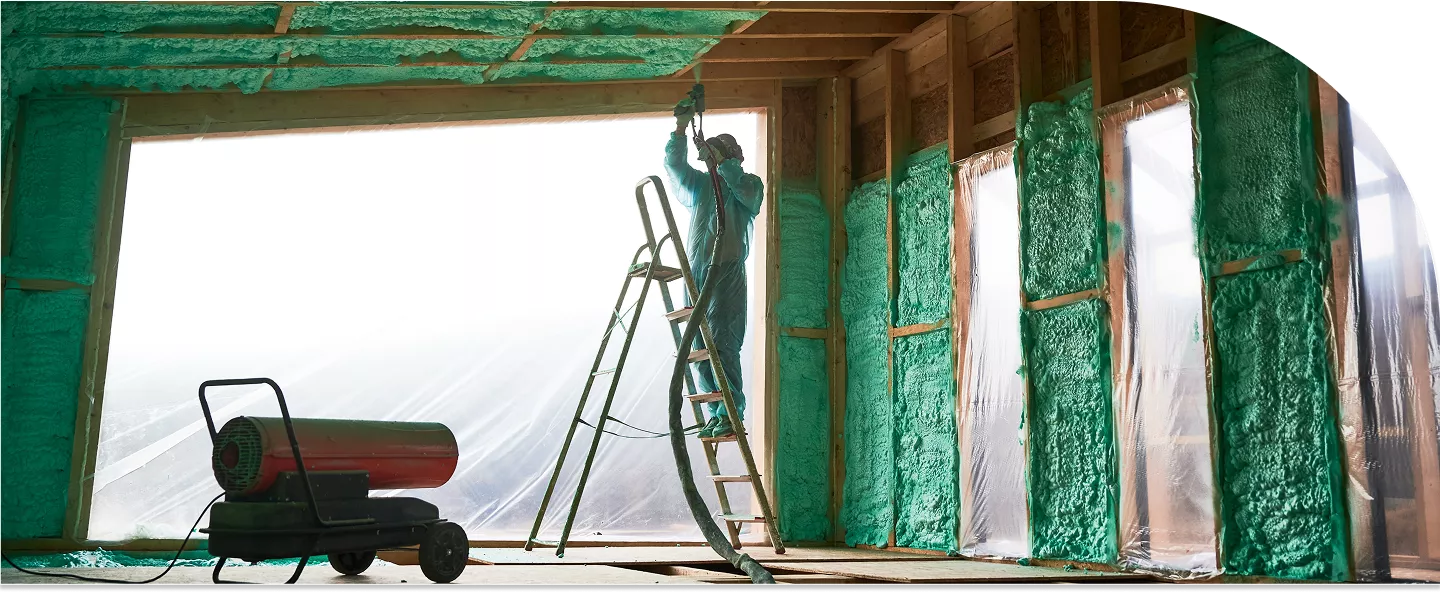
Closed-cell spray foam is roughly R-6 to R-7 per inch (the product's data sheet governs), seals air and becomes a Class II vapor retarder at 1.5 in, according to Building Science Corporation; our spray foam R-value guide compares it with board foam. Some makers design it in: Northern Lite truck camper walls are R-7 spray foam (Truck Camper Adventure). Retrofitting a finished RV is different.
Basement bays and open underbellies
Closed-cell bonds to metal and wood, absorbs under 2% water by volume and adds only about 0.16 lb per board foot at 1.9 lb/ft³: roughly 48 lb for 1.5 in over 200 sq ft. Installed cost is $1.30–$3.10 per board foot (Angi, Sep. 2026). See closed-cell spray foam.
Rebuilds with the roof or walls open
Dicor says to replace the decking any time a roof is replaced, so that's the moment to upgrade insulation. A1 RV Repair prices a 30 ft TPO roof at $3,800–$7,500, plus $1,200–$4,500 for substrate. Details in our RV roof replacement cost guide.
Finished laminated walls
There's no cavity to fill, expanding foam can bow thin panels, and foam hides leaks, while delamination is "most often the result of moisture intrusion" (RV Inspector Pro).
Overspray, heat and weight
Mask everything: overspray runs 5–35%. Spray in lifts of 1.5–2 in, onto a warm substrate (see cold-weather spraying), stay out 24 hours as some makers advise (EPA), and check your cargo capacity label.
DIY kit or a rig?
Angi puts DIY kits at $350–$800 for 200–600 sq ft, fine for a few bays. See our DIY spray foam guide and spray foam problems. Converting a van or cargo trailer? Sheet metal has its own rules: van insulation. Tiny house on wheels? See tiny house insulation.
Condensation: the other half of RV insulation
A small space with people, cooking and showers gets humid fast, and every cold surface collects water. At 68°F and 40% humidity the dew point is about 43°F; a single-pane metal-frame window at 20°F outside averages about 26°F inside, so it frosts.
Hold 30–50% humidity
EPA's target is "ideally between 30 and 50 percent," always below 60%. A cheap hygrometer tells you where you are.
Vent the moisture you make
Camping World names cooking and showering as the top moisture sources. Run the fans or crack a vent every time.
Skip unvented propane heaters
RV furnaces are sealed-combustion and vent outside (Suburban). Unvented heaters add water vapor, and DOE doesn't recommend them indoors because of carbon monoxide.
Warm the cold spots
Window covers, dual-pane glass and closed-cell foam against metal skins keep inside surfaces above the dew point.
Get new RV insulation and roof guides, seasonal checklists and price updates by email. Join the ArmorThane newsletter.
Winter camping and summer heat
- Keep propane above half. Camping World notes small cylinders "seem to run out of gas when they're only half empty" in cold weather.
- Dump at two-thirds. Empty holding tanks when they reach about two-thirds full and connect the sewer hose only while dumping.
- Size electric heat realistically. Keep space heaters at 1,500 W or less; each adds about 5,100 Btu/h.
- Protect the water. Heated hose, tank pads and skirting before the first hard freeze.
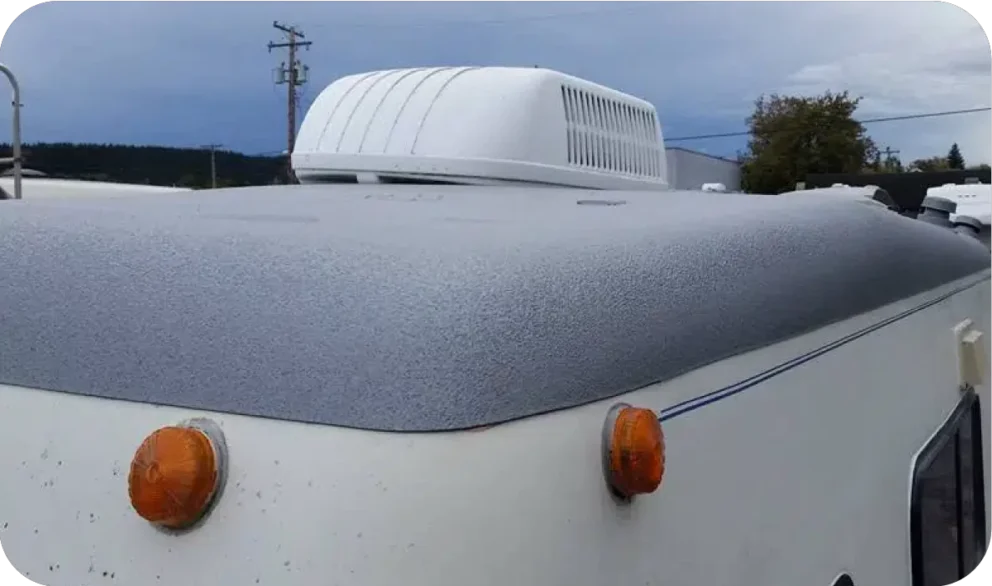
In summer the order changes. DOE says a reflective roof "could stay more than 50°F (28 °C) cooler," and ArmorThane's white polyurea RV roof coatings reflect sunlight to ease the air conditioner's load. Identify your roof with RV roof types and fix leaks and soft spots first (RV roof repair guide). Reflective covers go in sunny windows, reflective side out.
Foam in the bays, polyurea on the roof, sprayed by certified applicators
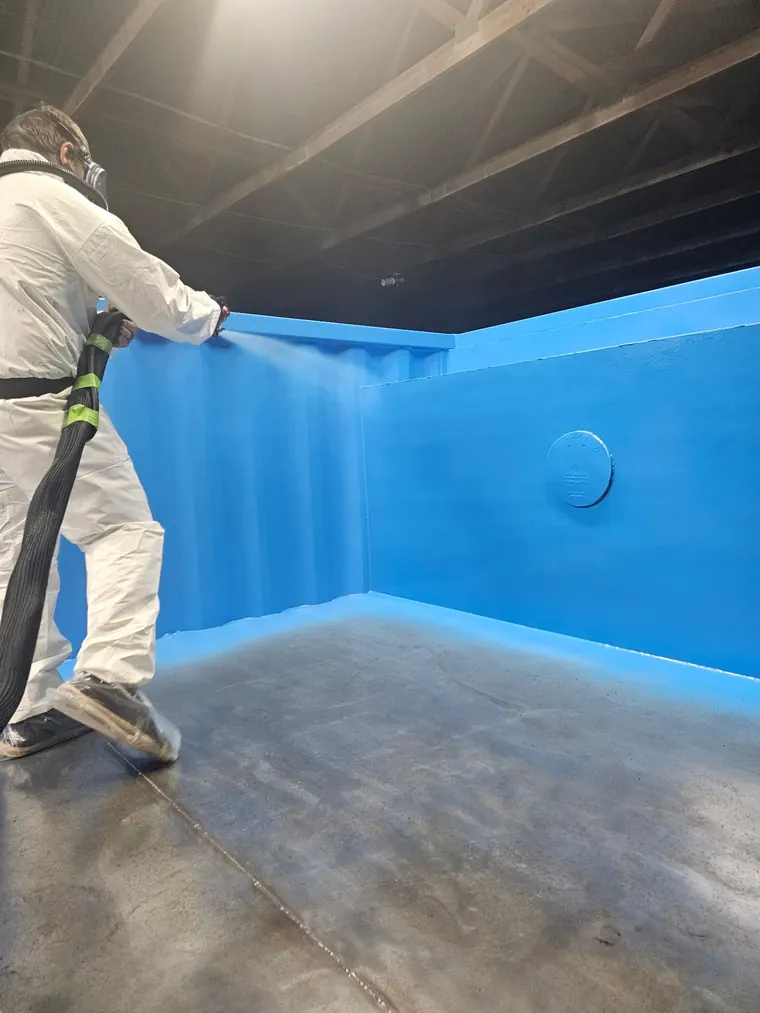
ArmorThane makes ArmorFoam closed-cell spray foam and polyurea RV roof systems, and has trained independent applicators since 1989, now in more than 50 countries. For an RV that means closed-cell foam in bays, open bellies and rebuilds, or a reflective sprayed roof. Ask for product, thickness and added weight in writing.
Covers, cushions, seals and foam-board skirting don't need us. For the rest, find a certified applicator near you, or join the newsletter below for new RV guides.
Closed-cell foam
R-6.5 per inch aged and 1.9 lb/ft³ in our closed-cell guide; the data sheet governs.
Polyurea RV roofs
Reflects sunlight and adds only a few pounds to a 30 ft roof, per our RV roof coatings page.
Tech line for applicators
Certified applicators can call our technical line around the clock.
RV owners need roofs and insulation. Add both to your shop.
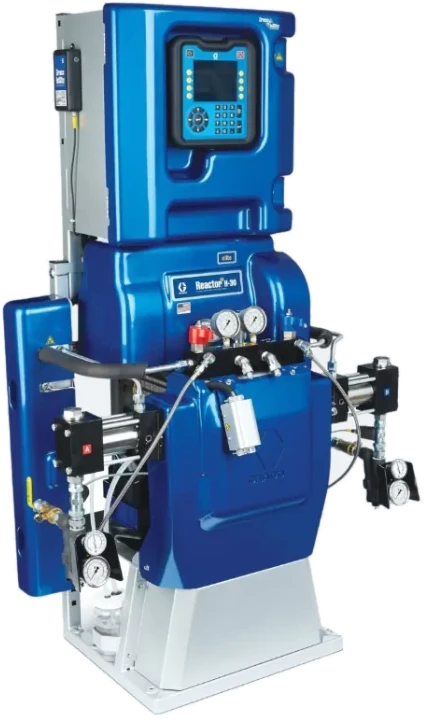
We supply the spray equipment, the chemistry and on-site or virtual training that ends in certification. Turnkey systems start at $25,000, low-pressure 1:1 equipment from $20,000, and third-party financing is available. No franchise, dealership or royalty fee.
Insulation side: spray foam insulation training →
RV insulation FAQ
What is the best insulation for an RV?
There isn't one best material. Most RVs already have R-5 to R-7 block foam walls and R-10 to R-20 roofs, so the best buys target weak spots: seals, reflective window covers, vent cushions, underbelly foam board and skirting in freezing weather. Closed-cell spray foam, roughly R-6 to R-7 per inch, fits bays, open bellies and rebuilds.
How do I insulate RV windows for winter?
Cut reflective bubble foil to fit snug against the glass, use insulated shades or panels at night, or shrink-film windows you won't open. Reflectix rates its product at R-1.1 even without an air gap, and Cornell Cooperative Extension found R-4 insulating panels cut window heat loss about 75%. Dual-pane replacements cost about $977 per window before installation.
Is RV skirting worth it?
Yes, if you stay parked for weeks below freezing; Camping World advises skirting for extended stays below 32°F. It shelters tanks and lines, and in our model 1 in foam board cut floor heat loss by more than half at 20°F. DIY foam board runs $100–$500, inflatable kits $1,899–$3,199 and custom vinyl $1,000–$5,000 installed.
How do you insulate the underbelly of an RV?
Open the belly covering, fit foam board between the frame rails or have closed-cell foam sprayed where the belly is open, then close it with corrugated plastic. XPS board is about R-5 per inch at $0.25–$0.70 per board foot (HomeGuide). Keep tanks and lines on the warm side and add 12-volt tank heater pads ($37–$118).
Can you spray foam the inside of an RV?
Only where there's an open cavity or bare surface: basement bays, open underbellies, and walls or roofs opened for a rebuild. It's a poor retrofit for finished laminated walls, where there's no cavity, expanding foam can bow thin panels and foam hides leaks. Mask for 5–35% overspray and spray in lifts of 1.5–2 in.
How much weight does spray foam add to an RV?
Closed-cell foam at about 1.9 lb per cubic foot adds roughly 0.16 lb per board foot. An inch and a half over 200 sq ft is about 300 board feet, or 48 lb. Check that against the cargo carrying capacity on your RV's weight label, which federal rules require on every RV trailer.
How much propane does an RV furnace use in cold weather?
It depends on size, insulation and temperature. In our model, a 26 ft standard trailer at 68°F inside and 20°F outside loses about 8,830 Btu/h. A 78%-efficient furnace covers that with about 3 gallons of propane a day, roughly $7.93 at EIA's March 2026 residential average of $2.67 a gallon.
How do I stop condensation in my RV in winter?
Keep humidity between 30 and 50 percent, as EPA advises, and run fans or crack a vent when cooking or showering. Avoid unvented propane heaters, which add water vapor; the RV furnace vents outside. At 68°F and 40% humidity the dew point is about 43°F, and a single-pane window runs near 26°F when it's 20°F outside.
What does a four-season RV package include?
There's no industry standard. Packages usually include an enclosed, heated underbelly, heated or insulated holding tanks, dual-pane windows, more roof and floor insulation and a furnace of 35,000 Btu or more. Published R-values vary widely, so ask for a layer-by-layer construction diagram and what any temperature claim actually tested.
Do RV vent cushions really work?
They help, modestly. A standard roof vent opening is 14 × 14 in, about 1.4 sq ft, so in our model three cushions save around 180 Btu/h at 30°F outside. At $24–$30 each they're still one of the cheapest upgrades. Pull one out when cooking or showering so the fan can clear moisture.
Is reflective foil insulation good for an RV?
It depends on heat-flow direction and air space. Reflectix rates its product at R-1.1 alone, R-1.0 in a northern ceiling in winter when heat flows up, and R-16 under a floor with a 9.5 in air space, where heat flows down. Foil works well under floors and against summer sun, much less in a winter roof.
Is it worth adding insulation to a camper?
For weekend campers, cheap fixes pay back fastest: in our 60-heating-day model, reflective window covers paid for themselves in a little over a year. Bigger jobs pay back mostly in comfort and a furnace that keeps up. Full-timers and winter campers burn more propane, so foam and skirting pay back sooner.
Written from RV maker specs, NREL, DOE, EPA and EIA data, retail listings read September 27, 2026, dated cost guides and decades of making spray foam and RV roof coatings. Reviewed September 27, 2026.
Methodology and sources
Heat loss is area ÷ R × temperature difference: windows at NREL U-factors, vent lids as single glazing, air leaks at 0.5, 1 or 1.5 air changes an hour (our assumption; we found no RV blower-door data) using 1.08 × cfm × °F, skirting as a sheltered buffer ignoring ground heat and skirt leaks. Vent cushions are credited R-6 and window covers R-1.1, both conservative. Propane 91,452 Btu per gallon (EIA), 78% furnace efficiency; dew point from the NWS formula. Published R-values and prices as stated on the dates shown. Estimates, not engineering or code advice.
- RV.com, Four-Season RVs: Winter Wonders (Dec. 2023): rv.com
- RV Blogger, Travel Trailer and RV Insulation Guide (Jan. 2024): rvblogger.com
- Truck Camper Adventure, Four Season Truck Camper (Mar. 2026): truckcamperadventure.com
- Northwood Mfg., Arctic Fox Edge 26MK: northwoodmfg.com
- K-Z RV, 2018 All-Weather Insulation Package: kz-rv.com
- Roamly, RVs with the Best Insulation (Apr. 2026): roamly.com
- Camping World, four-season RV, winter camping, skirting and moisture guides (Oct. 2025–Aug. 2026): blog.campingworld.com
- RVLiving, Buying a Four-Season RV (Sep. 2026): rvliving.com
- Luxe Fifth Wheel, RV Insulation and R-Values (Dec. 2024): luxefifthwheel.com
- Reflectix, FTC Fact Sheet N39 (Jan. 2018) and FAQ: reflectixinc.com
- NREL for DOE, Energy-Efficient Window Performance and Selection (Nov. 2012): efficientwindows.org (PDF)
- ColoradoENERGY.org, R-Value Table: coloradoenergy.org
- Engineering ToolBox, heat loss and heating equations: engineeringtoolbox.com
- U.S. EIA, energy units; weekly propane prices (Mar. 2026): eia.gov
- National Weather Service, vapor pressure formula: weather.gov (PDF)
- Suburban Mfg., RV Furnaces Service Manual (Nov. 2015): heartlandowners.org (PDF)
- U.S. DOE Energy Saver, space heaters and cool roofs: energy.gov
- U.S. EPA, mold and moisture guide; SPF re-entry (Sep. 2020): epa.gov
- Cornell Cooperative Extension, window treatments (Oct. 2000): cce.cornell.edu
- AirSkirts, window insulation and custom skirting (Mar. 2025): airskirts.com
- etrailer product listings (read Sep. 27, 2026): etrailer.com
- HomeGuide, Insulation Cost (Dec. 2025): homeguide.com
- Angi, Spray Foam Insulation Cost (Sep. 2026): angi.com
- Building Science Corporation, GM-2102 (Jan. 2021): buildingscience.com
- Dicor FAQ (Jun. 2026); A1 RV Repair (May 2026); RV Inspector Pro (Jan. 2019): dicorproducts.com
- eCFR, 49 CFR 571.120 (FMVSS 120): ecfr.gov
- ArmorThane, closed-cell foam and RV roof coating pages: armorthane.com

Cold floors, frosty windows, a furnace that never stops? Get a quote from a certified applicator.
Tell us your rig and how you camp. We'll connect you with an ArmorThane-certified applicator who can quote closed-cell foam for bays, open bellies and rebuilds, or a reflective polyurea roof.
- Closed-cell foam in bays, bellies and rebuilds
- Reflective polyurea RV roof coatings
- Straight advice when a $30 DIY fix will do
- RV techs: ask about becoming an ArmorThane applicator
More to read on RV roofs
Short reads from ArmorThane on Issuu. Tap one to open it right here.