




Pool Paint: Epoxy vs Rubber vs Acrylic
Which pool paint goes over which, how much you need, how long before you fill, and what it costs per year compared with replastering. Plus a solvent-test tool and a paint calculator.
Start a deck and pool coating business
Coat decks and pools for a living.
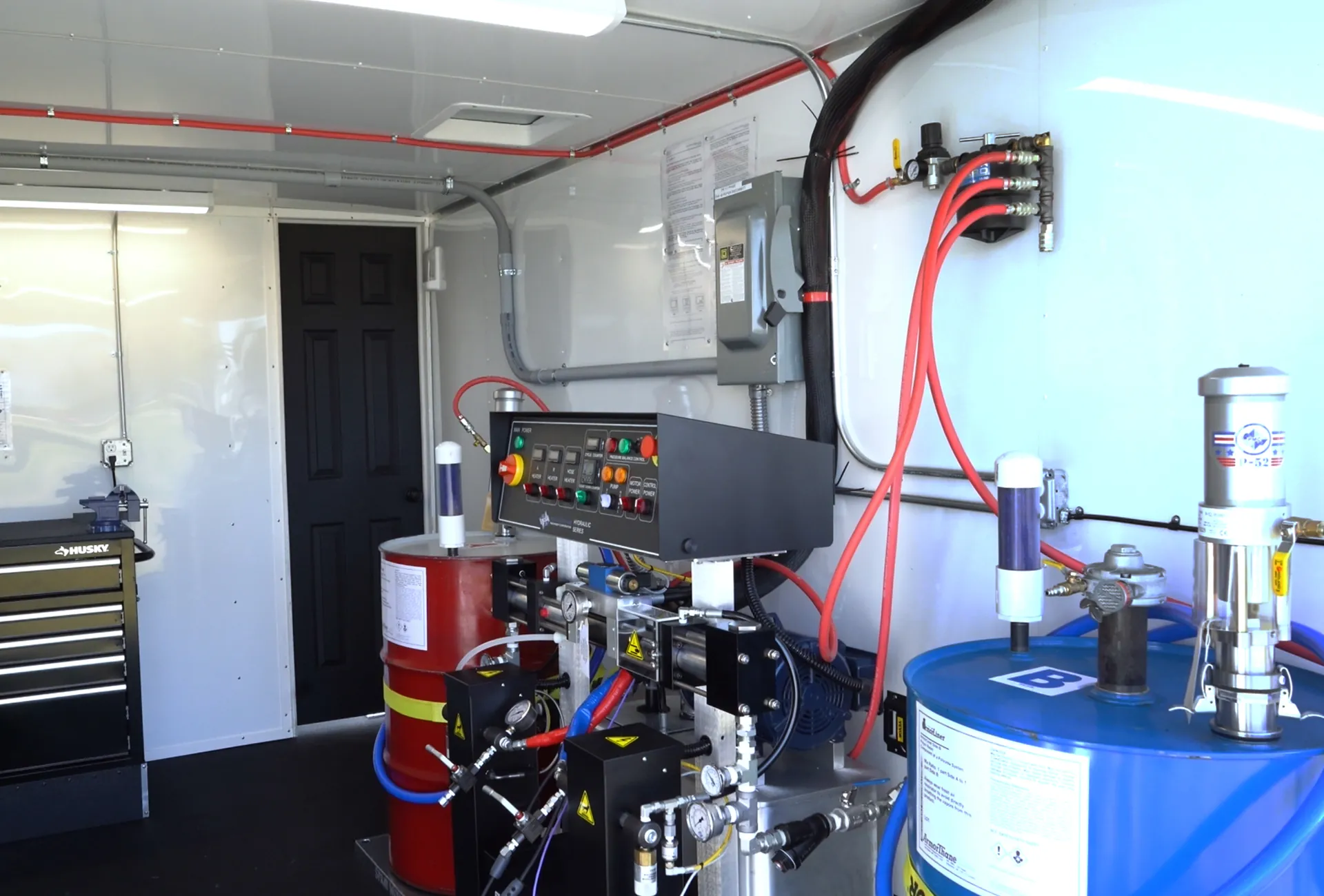
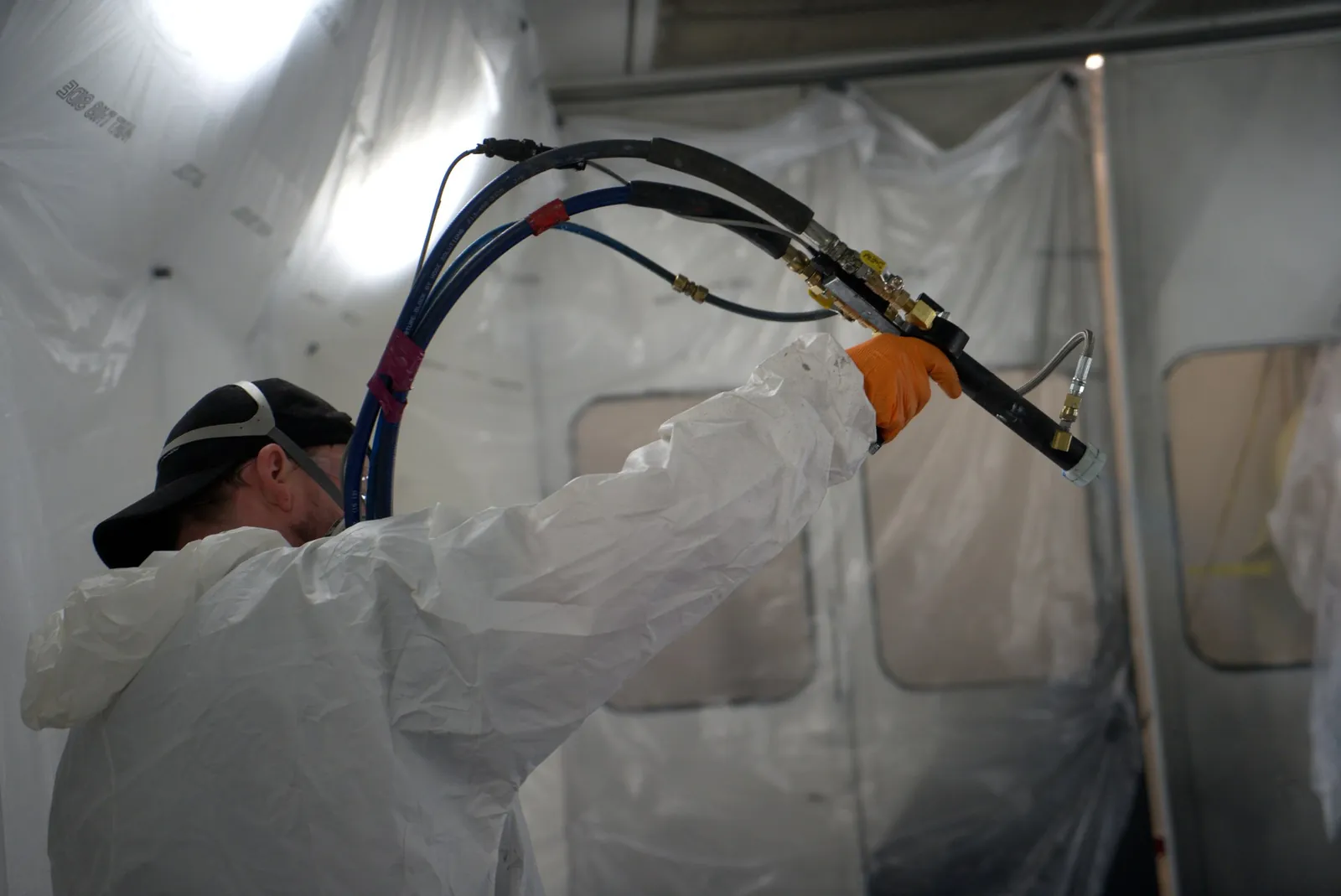
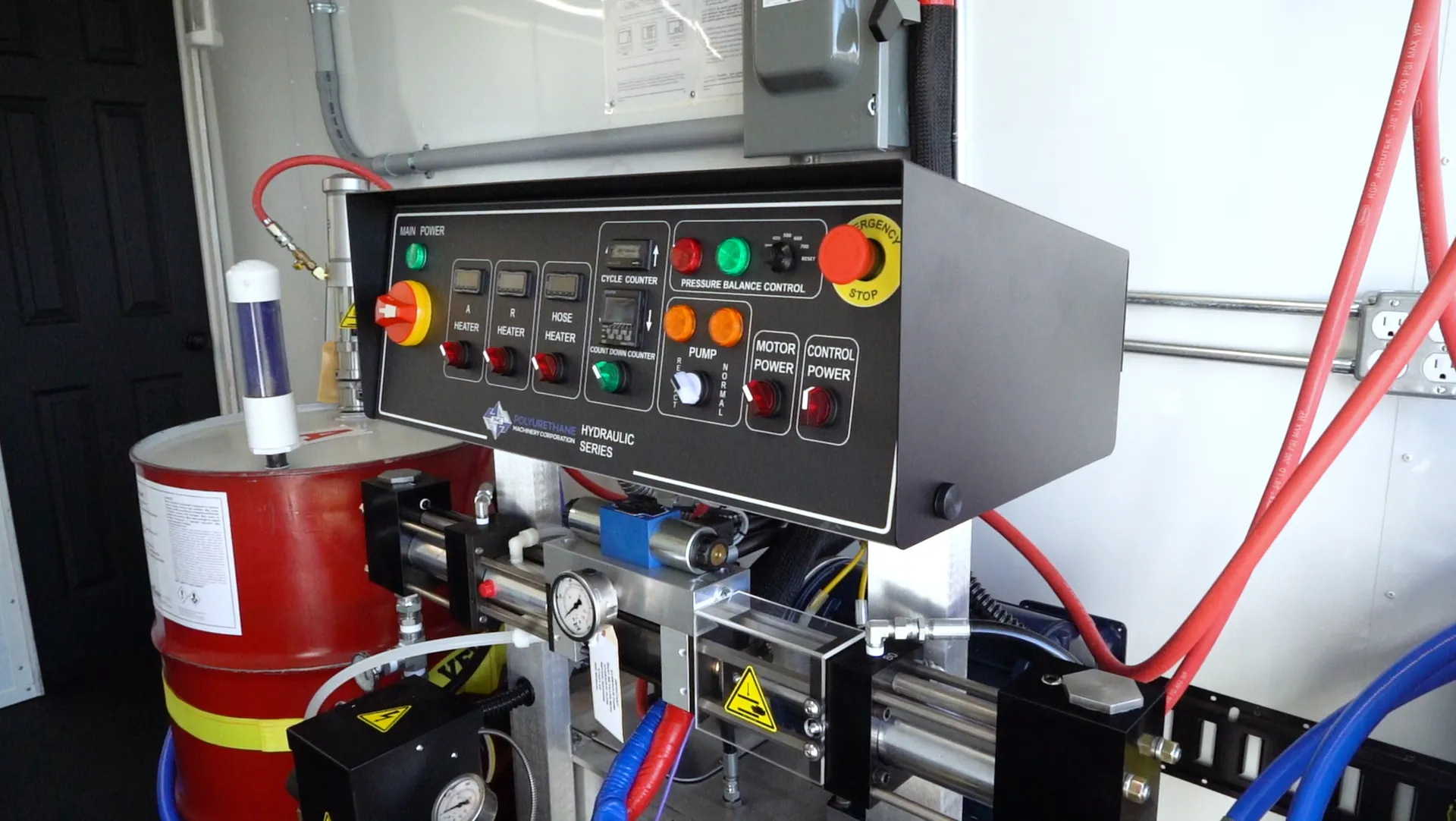
ArmorThane sets you up to do this work, and you own the business. We make the chemistry, build the rigs, train you hands-on and answer the phone when a job gets difficult. You pay no franchise fee and no royalties. It has been that way since 1989.
- $0
- franchise fees or royalties
- 35+
- years in business
- 50+
- countries with applicators
- 24/7
- technical support
Pool paint is the cheapest way to refinish a concrete or plaster pool, and the easiest to get wrong. Three different chemistries are sold as "pool paint," and they mostly can't go over each other. Get the combination wrong and the new coat can blister and peel in its first season. We don't make pool paint: we make the spray polyurea our applicators use on pools, fountains and water features. So this is an outside-but-informed guide: how to identify what's on your pool, which paint can go over it, how much you need, and when paint stops being the right answer.
For a bare or previously epoxy-painted concrete or plaster pool, two-part epoxy pool paint is the most durable choice, lasting about 5–8 years. If your pool already has rubber-based paint, you're limited to rubber-based (2–3 years) or a water-based acrylic (2–3 years), unless you strip it or use a conversion primer. Water-based acrylic is the most forgiving: it can go over any existing pool paint and some versions tolerate a slightly damp surface. Most pool paints need two coats at roughly 225–400 sq ft per gallon, and 3–7 days of cure before filling outdoors (up to 14 indoors). Identify your paint before you buy.
- 1The three types of pool paint
- 2What paint is on your pool? (test & compatibility)
- 3How much pool paint you need (calculator)
- 4Prep: acid wash, TSP and dry time
- 5How long before you can fill the pool
- 6Paint vs replaster vs pebble (cost per year)
- 7Pool paint colors and water color
- 8Why pool paint fails
- 9The Reflecting Pool lesson
- 10When to skip paint: spray polyurea
- 11Pool paint FAQ
The three types of pool paint
Click a column to sort. Coverage is per gallon per coat; bare surfaces drink more than repaints.
| Type | Life | Coverage (sq ft/gal) | Coats | Fill after (outdoor) | Goes over | Price / gal |
|---|---|---|---|---|---|---|
| Two-part epoxy | 5–8 yrs | 125–250 bare; 300–450 repaint | 1 thick or 2 | 3–7 days by temp | Epoxy only (or bare) | ≈$117–$151 |
| Synthetic rubber | 2–4 yrs | ≈250–350 | 2 | ≈5 days | Synthetic or chlorinated rubber | Varies |
| Chlorinated rubber | 2–3 yrs | ≈250 | 2 | ≈5 days | Chlorinated rubber only | Varies |
| Water-based acrylic | ≈2–3 yrs | 300–400 | 2 | 3–7 days | Any previous pool paint | ≈$83 |
Epoxy is a two-component coating that cures chemically into a hard, chemical-resistant film. High-build products like Olympic Zeron go on 10–12 mils in one coat over a primer; standard epoxies like Benjamin Moore's IG-40XX go on in two coats of about 2.5–2.9 dry mils each. It's the toughest pool paint and the least forgiving: it needs a clean, profiled, dry surface and can't go over rubber or acrylic paints.
Rubber-based paints (synthetic and the older chlorinated rubber) are single-component, solvent-borne and easy to apply. They're a good match for pools that already have rubber paint. Insl-X notes its rubber pool paint shouldn't be used where water exceeds 95°F, and can't go over epoxy, water-based paint, metal, fiberglass or vinyl.
Water-based acrylic is the universal fallback. It's low-odor, cleans up with water, can go over any existing pool paint and, in Insl-X Waterborne's case, can be applied to a slightly damp surface. The trade-off is life: plan on repainting every two or three seasons.
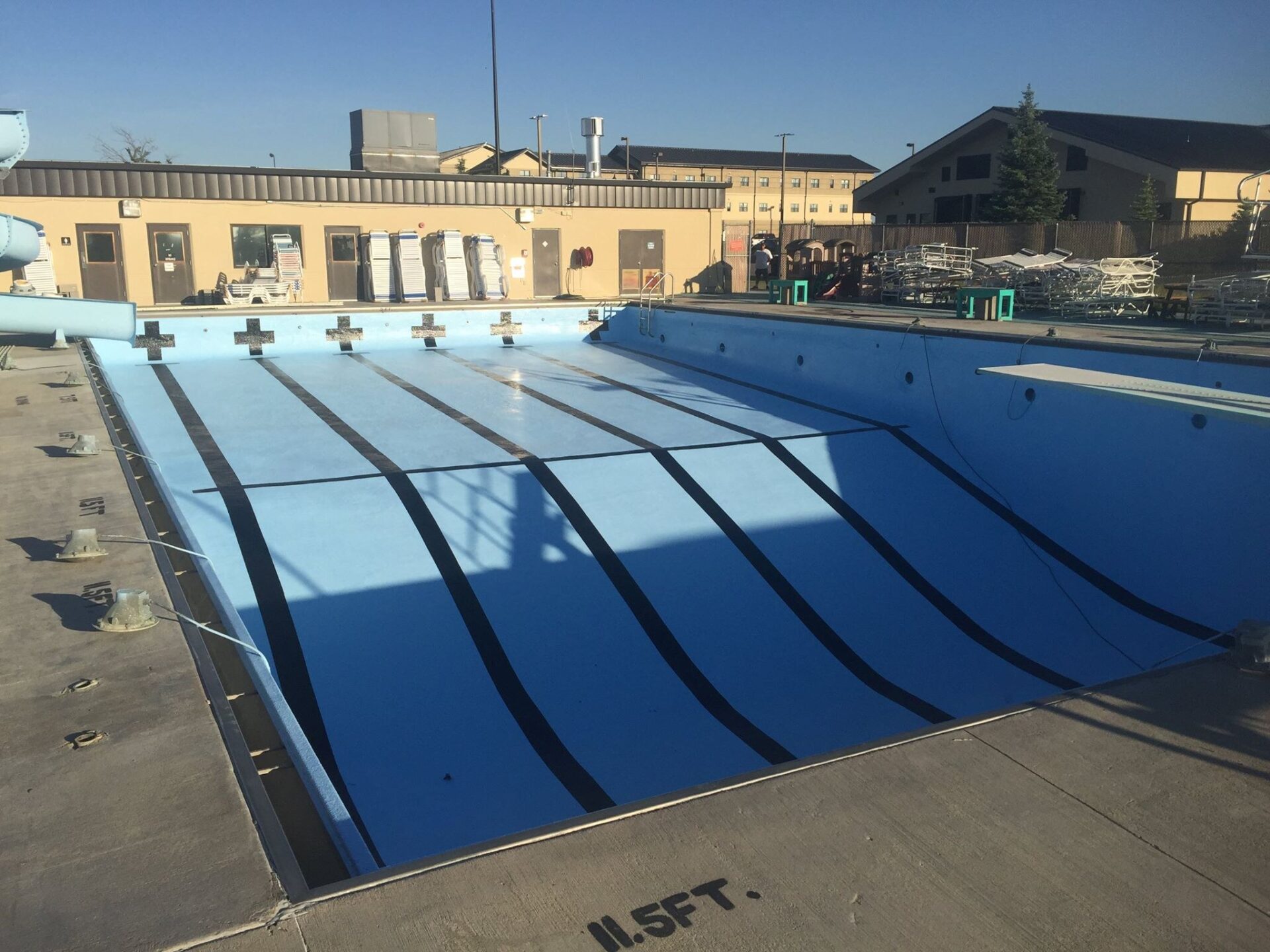
What paint is on your pool?
If you don't have the old can, run the solvent test Olympic publishes. Chip off a piece of paint about an inch across and soak it in each solvent in turn, wearing gloves and eye protection, outdoors. Tell the tool what happened and it will tell you what you can put on top.
Identify the old paint, then pick the new one
Based on Olympic's solvent test and the Insl-X / Olympic compatibility rules.
How much pool paint do you need?
The calculator adds the floor and wall area from your pool's shape and average depth, then divides by the coverage for your paint and surface. As a cross-check, Insl-X's worked example puts a 30 × 10 ft pool, 5 ft deep, at about 730 sq ft and 4 gallons for two coats.
Surface area, gallons and cost
Area estimate = floor + (perimeter × average depth). Rough or pitted surfaces can take about 50% more paint.
Prep: acid wash, TSP and dry time
Drain and inspect
Check local rules on draining, and never drain a pool with a high water table without professional advice: an empty shell can float. Mark cracks, hollow spots and loose paint.
Remove failing paint
Scrape or pressure-wash loose and blistered paint. If there are already four or more layers, Insl-X recommends stripping to the base rather than adding another.
Acid etch bare plaster or concrete
Olympic's mix: 1 gallon of 30% muriatic acid to 2 gallons of water (about 10%), roughly 100 sq ft per gallon of solution. Other makers specify 15–20% (Ramuc) or 1 part etch to 3 parts water (Insl-X). Use your paint maker's ratio, then neutralize and rinse thoroughly.
Degrease with TSP
Olympic: 8 oz of trisodium phosphate per gallon of warm water, about 200 sq ft per gallon, scrubbed and rinsed until water sheets off without beading.
Sand fiberglass, don't etch it
On fiberglass, sand in straight lines (Olympic says not to use an orbital sander) and use a paint rated for fiberglass. Rubber-based paints are not.
Let it dry, then watch the weather
Most pool paints need a dry surface and 50–90°F (some to 100°F), and Insl-X wants the surface at least 5°F above the dew point. Recoat epoxy within its window: Ramuc EP gives 16–72 hours, then requires sanding.
How long before you can fill the pool?
Filling too early is the single most common reason a new pool paint job blisters. The paint needs to cure, not just dry. Cooler weather adds days.
| Product (type) | Cure before filling |
|---|---|
| Olympic Poxolon 2 / Zeron (epoxy) | 3 days at 75–85°F · 4 days at 70–75°F · 5 days at 65–70°F · 6 days at 60–65°F |
| Benjamin Moore IG-40XX (epoxy) | 7 days outdoors · 14 days indoors |
| National Pool Finishes Pool Guard EHB (epoxy) | 5 days, plus 1 day for every day of rain |
| Ramuc Type EP (epoxy) | 5 dry days outdoors · 10 days indoors |
| Olympic Paralon 2 / Optilon | At least 5 days |
| Insl-X Waterborne WR-10XX (acrylic) | 7 days outdoors · 14 days indoors |
| Rust-Oleum acrylic pool paint | Within 3 days (epoxy: 7) |
Paint vs replaster vs pebble: cost per year
Paint is cheap per job and expensive per decade. This compares a DIY epoxy or acrylic paint job, a professional paint job and the two common resurfacing options, all divided by how long each lasts. For resurfacing details see our pool resurfacing cost guide.
What each finish costs per year of use
Uses the surface area from the calculator above. Midpoints shown on the bars.
Pool paint colors and water color
The color in the can isn't the color you'll see. Water filters out reds first, so every finish reads bluer and darker under water, and darker again in the deep end. As a rough guide from pool builders:
White
Bright, light aqua water. Shows dirt and stains fastest.
Light blue / gray
Classic blue pool water. The safe choice.
Tan / sandstone
Green-blue "lagoon" water. Natural look.
Dark gray / black
Deep, mirror-like blue. Warms the water a little; shows fading sooner.
Builder guidance from Southern Pool Designs; it's an observation, not lab data. Dark colors also chalk and fade more visibly in strong sun.
Why pool paint fails
Wrong paint over old paint
Epoxy over rubber, rubber over epoxy or acrylic. The solvents attack the old film or the new one never bonds. Run the solvent test.
Filled too early or painted damp
Trapped solvent or moisture forms blisters once the pool is filled. Respect the cure-to-fill days and dew point.
Poor prep
No etch on bare plaster, leftover chalk or oils, or a glossy old epoxy that wasn't sanded. Paint is only as good as what it's stuck to.
Sun and chemistry
UV and chlorine slowly break down the surface. High chlorine and low pH accelerate it. Keep water balanced.
Too many layers
Each repaint adds stress. After about four layers, strip back to the base.
Missed recoat window
Second coats applied after the window close only stick mechanically unless the first coat is sanded.
The Reflecting Pool lesson
In June 2026, the Lincoln Memorial Reflecting Pool reopened after a roughly $14–15 million refinishing: a light-blue epoxy primer (Rhino 406) under a dark-blue hybrid polyurea topcoat (Rhino Pipeliner 5000), sprayed over the pool's concrete and granite. Within weeks, sections were visibly peeling.
The Washington Post's July 16 investigation, citing coatings experts, traced the failures to application, not chemistry. Failures clustered at seams between sections, where more than five hours passed between adjacent sprays on a topcoat that dries in about four. In one spot, the topcoat went on more than 24 hours after the primer, outside the manufacturer's recoat window. Experts also pointed to edge preparation. In late July, the Justice Department moved to drop vandalism charges, attributing the peeling to flawed installation and a rush to finish before America 250 (CBS, NPR).
What every pool owner should take from it: recoat windows, seam and edge prep, and an applicator who has done this before matter as much as the coating. That's true of a $200 can of epoxy and of a sprayed polyurea system alike.
When to skip paint: spray polyurea
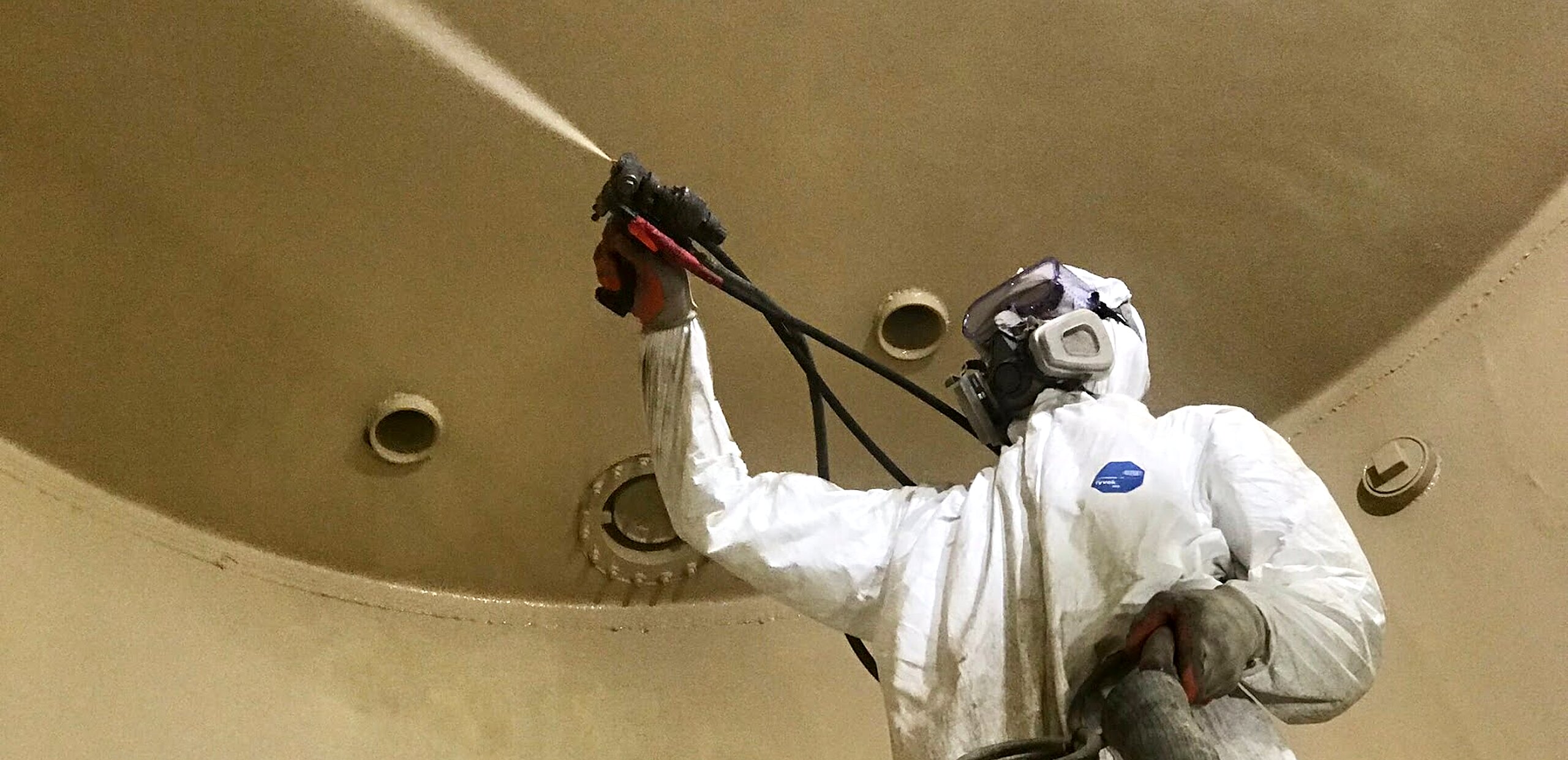
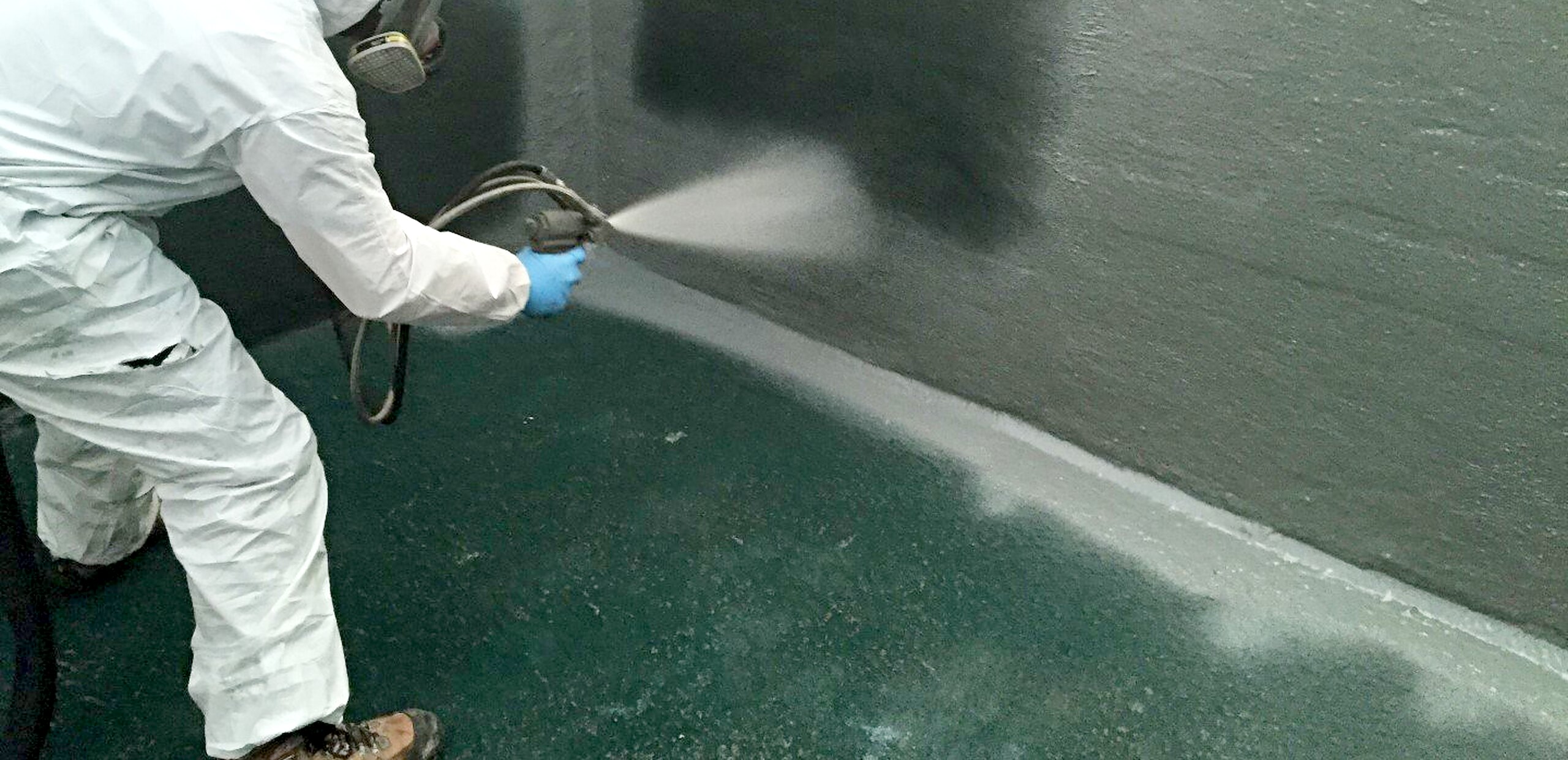
Paint is a film measured in single-digit mils. Sprayed polyurea is an elastomeric membrane built to dozens of mils in one session, flexible enough to bridge hairline cracks, and it cures in seconds rather than days. That makes it a waterproofing system, not just a finish. It makes sense when:
- A concrete pool, fountain or water feature leaks through cracks, and painting it just changes the color of the leak
- You're tired of a paint cycle every 2–8 years on a commercial or public pool
- The structure is unusual: stock tank pools, shipping container pools, splash pads, fountains
- The water is potable or a holding tank: our AquaShield is NSF/ANSI 61 certified
It's applied by trained crews with plural-component equipment and priced per job. As the Reflecting Pool showed, it has to be applied within its windows by people who know the material. That's exactly what ArmorThane certification is for.
A pool coating measured in decades, not seasons.
ArmorThane-certified applicators spray polyurea on concrete pools, fountains and water features: seamless, crack-bridging and cured in a day. Tell us about your pool and we'll connect you with a local applicator.
Pool contractors: add polyurea pool coatings →
Pool paint FAQ
What is the best pool paint?
Two-part epoxy is the most durable, lasting about 5–8 years, and is the best choice for bare plaster or concrete or pools already painted with epoxy. If your pool has rubber-based paint, stay with rubber-based or use a water-based acrylic, which can go over any pool paint.
How long does pool paint last?
Epoxy lasts roughly 5–8 years, synthetic and chlorinated rubber 2–4 years, and water-based acrylic about 2–3 years. Sun, chlorine levels, water balance, color and how the pool is used all affect this.
Can you put epoxy paint over rubber-based pool paint?
Not directly. Epoxy goes only over epoxy or a properly prepared bare surface. To switch from rubber to epoxy, either strip the rubber paint or use a manufacturer's conversion primer made for that purpose.
How do I tell what paint is on my pool?
Soak a chip in denatured alcohol: if it dissolves, it's water-based acrylic. If not, try 75% mineral spirits and 25% xylol for 30 seconds: dissolving means synthetic rubber. If not, try 100% xylol: dissolving means chlorinated rubber, and no change means epoxy.
How long after painting a pool can you fill it?
Typically 3–7 days outdoors and up to 14 days indoors, depending on the paint and temperature. Olympic's epoxies, for example, need 3 days at 75–85°F but 6 days at 60–65°F. Rain adds time.
How many gallons of paint do I need for my pool?
Estimate the surface area (floor plus walls), multiply by the number of coats and divide by the paint's coverage, typically 225–400 sq ft per gallon. Insl-X's example: a 30 × 10 ft pool, 5 ft deep, is about 730 sq ft and needs about 4 gallons for two coats.
How much does it cost to paint a pool?
HomeGuide puts professional pool painting at about $1–$2 per sq ft, or $1,000–$2,000 for 1,000 sq ft. DIY paint costs roughly $83 per gallon for water-based acrylic and $117–$151 per gallon for epoxy, plus prep supplies.
Is painting a pool cheaper than replastering?
Up front, yes: painting runs about $1,000–$2,000 versus $6,000–$8,000 for plaster. But plaster lasts 7–12 years and paint 2–8, so the cost per year is closer than it looks.
Can you paint a fiberglass pool?
Yes, with a paint rated for fiberglass, usually an epoxy or a waterborne acrylic. The gelcoat must be cleaned and sanded rather than acid-etched. Rubber-based pool paints are not for fiberglass.
Why is the Reflecting Pool peeling?
According to the Washington Post's July 2026 investigation and the experts it consulted, the peeling of the Lincoln Memorial Reflecting Pool's epoxy-primed polyurea coating was likely caused by application problems: sections sprayed outside the topcoat's recoat window and poor edge preparation. The Justice Department later attributed it to flawed installation.
Sources
- Olympic Pool Paint, which coating / solvent test: olympicpoolpaint.com/howto/whichcoating
- Olympic Pool Paint, application procedures: olympicpoolpaint.com/howto/appprocedure
- Olympic Pool Paint, surface preparation: olympicpoolpaint.com/howto/surfaceprep
- Benjamin Moore / Insl-X pool paint FAQs: benjaminmoore.com (PDF)
- Benjamin Moore IG-40XX epoxy pool coating TDS: benjaminmoore.com (PDF)
- Insl-X rubber-based pool paint guide: benjaminmoore.com (PDF)
- Insl-X Waterborne WR-10XX TDS: benjaminmoore.com (PDF)
- Ramuc Type EP application guide: lincolnaquatics.com (PDF)
- National Pool Finishes Pool Guard EHB tech sheet: bottompaintstore.com (PDF)
- Sau-Sea epoxy and rubber pool paint: sausea.com
- Rust-Oleum, pool coatings: rustoleum.com
- Doheny's, guide to painting a pool: doheny.com
- Doheny's, Olympic Zeron price: doheny.com
- Pool Supply Unlimited, Ramuc pricing: poolsupplyunlimited.com
- Ace Hardware, Insl-X Waterborne pool paint: acehardware.com
- HomeGuide, pool resurfacing cost (2026): homeguide.com/costs/pool-resurfacing-cost
- Southern Pool Designs, finish color and water color: southernpooldesigns.com
- Washington Post, Reflecting Pool peeling likely caused by application flaws (Jul 16, 2026): washingtonpost.com
- Scientific American, why the Reflecting Pool paint is peeling: scientificamerican.com
- CBS News, DOJ moves to dismiss Reflecting Pool vandalism charges: cbsnews.com
- NPR, Reflecting Pool vandalism charges dismissed (Oct 1, 2026): npr.org
Tired of repainting the pool? Get a spray polyurea quote.
Tell us about the pool, fountain or water feature: size, surface and what's on it now. We'll connect you with an ArmorThane-certified applicator for a seamless, crack-bridging polyurea coating quote.
- Concrete pools, fountains and water features
- Seamless and crack-bridging
- NSF/ANSI 61 grades for potable water
- Pool contractors: ask about equipment and training