

Basement Ceiling Insulation: When It Helps & When It Hurts
Ceiling or walls? What DOE and the 2021 code say, the right materials for warmth or for quiet, fire and pipe-freeze rules, and tools to choose and price the job.
Start a spray foam business
Spray foam for a living.
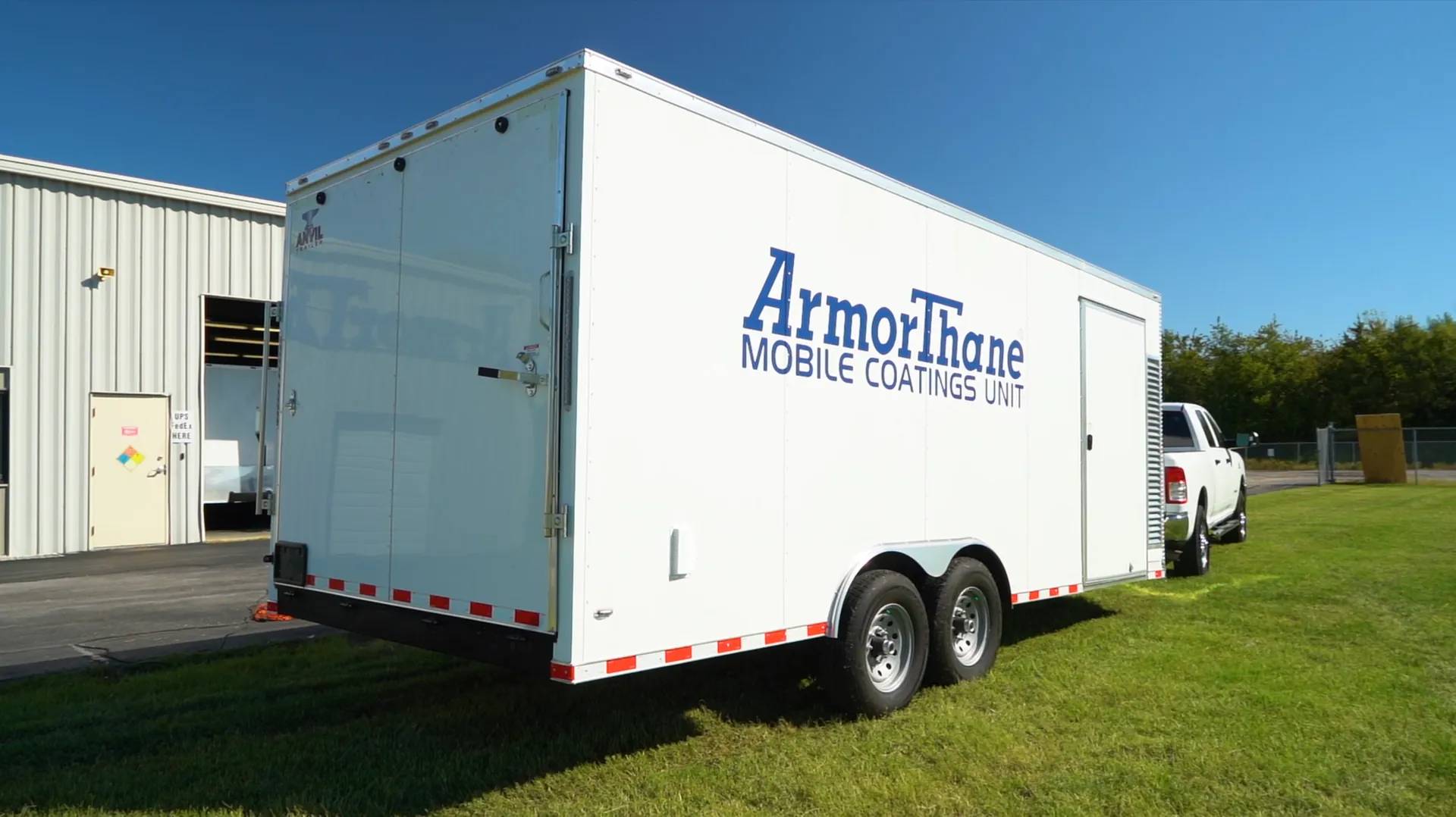
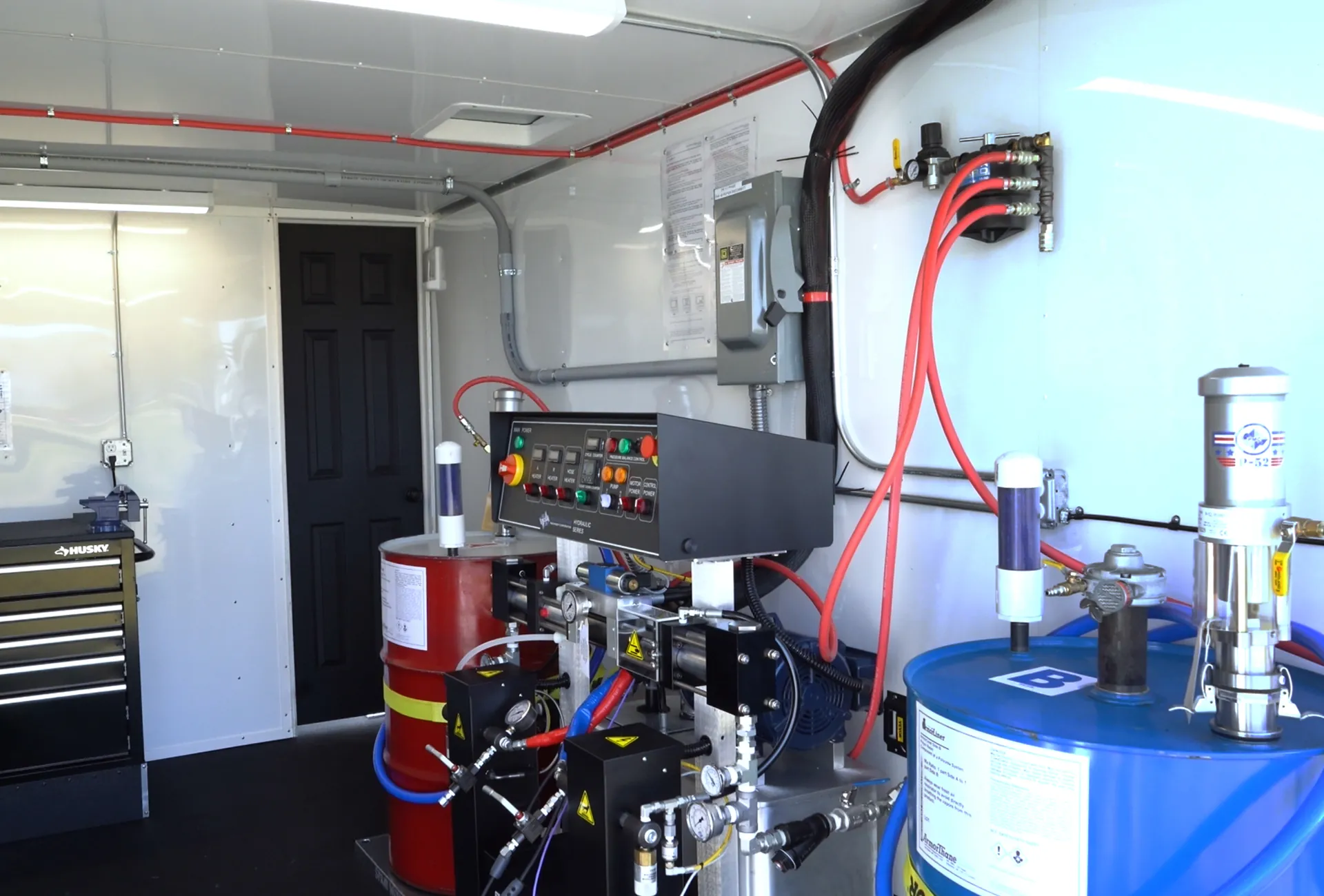
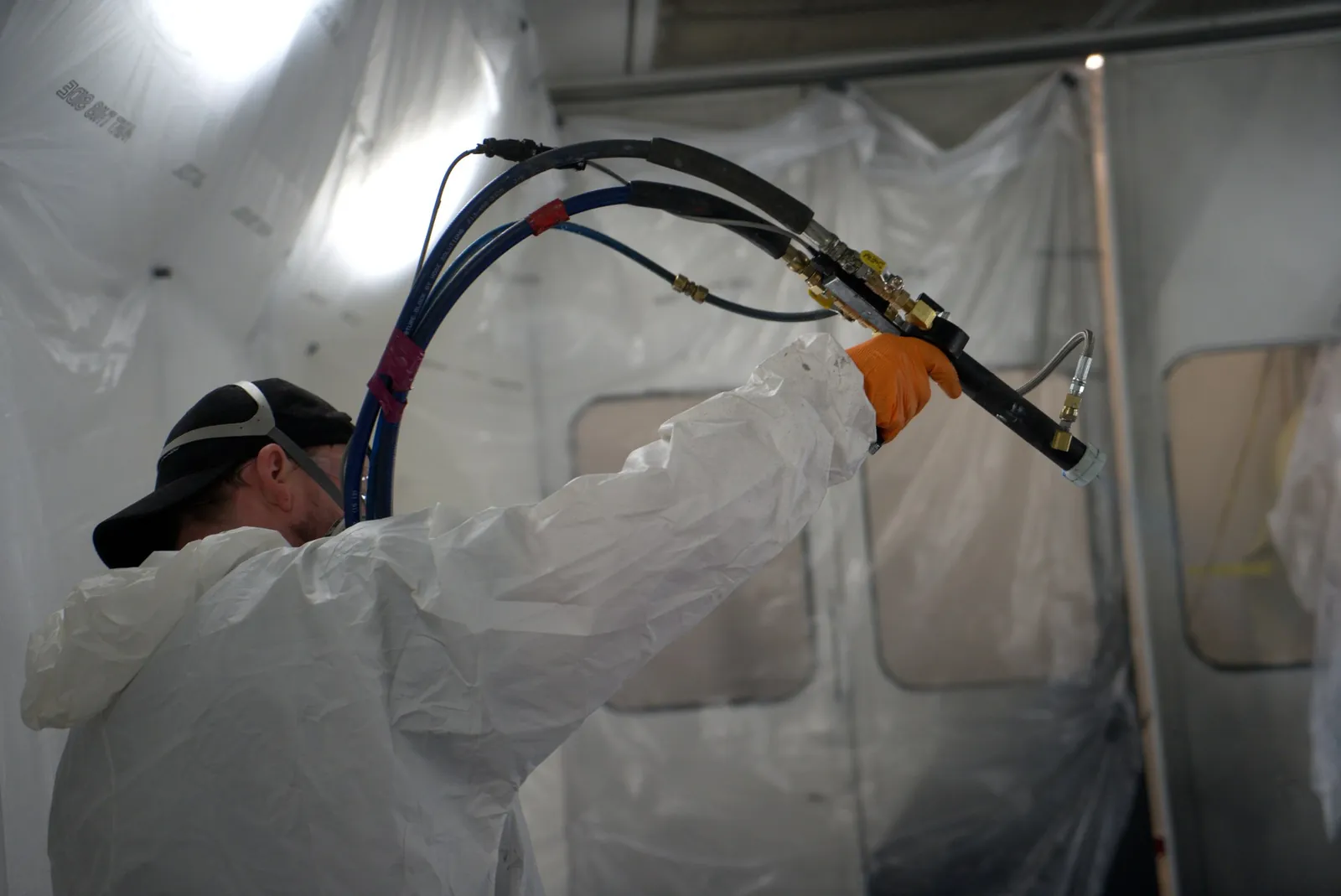
ArmorThane sets you up to do this work, and you own the business. We make the chemistry, build the rigs, train you hands-on and answer the phone when a job gets difficult. You pay no franchise fee and no royalties. It has been that way since 1989.
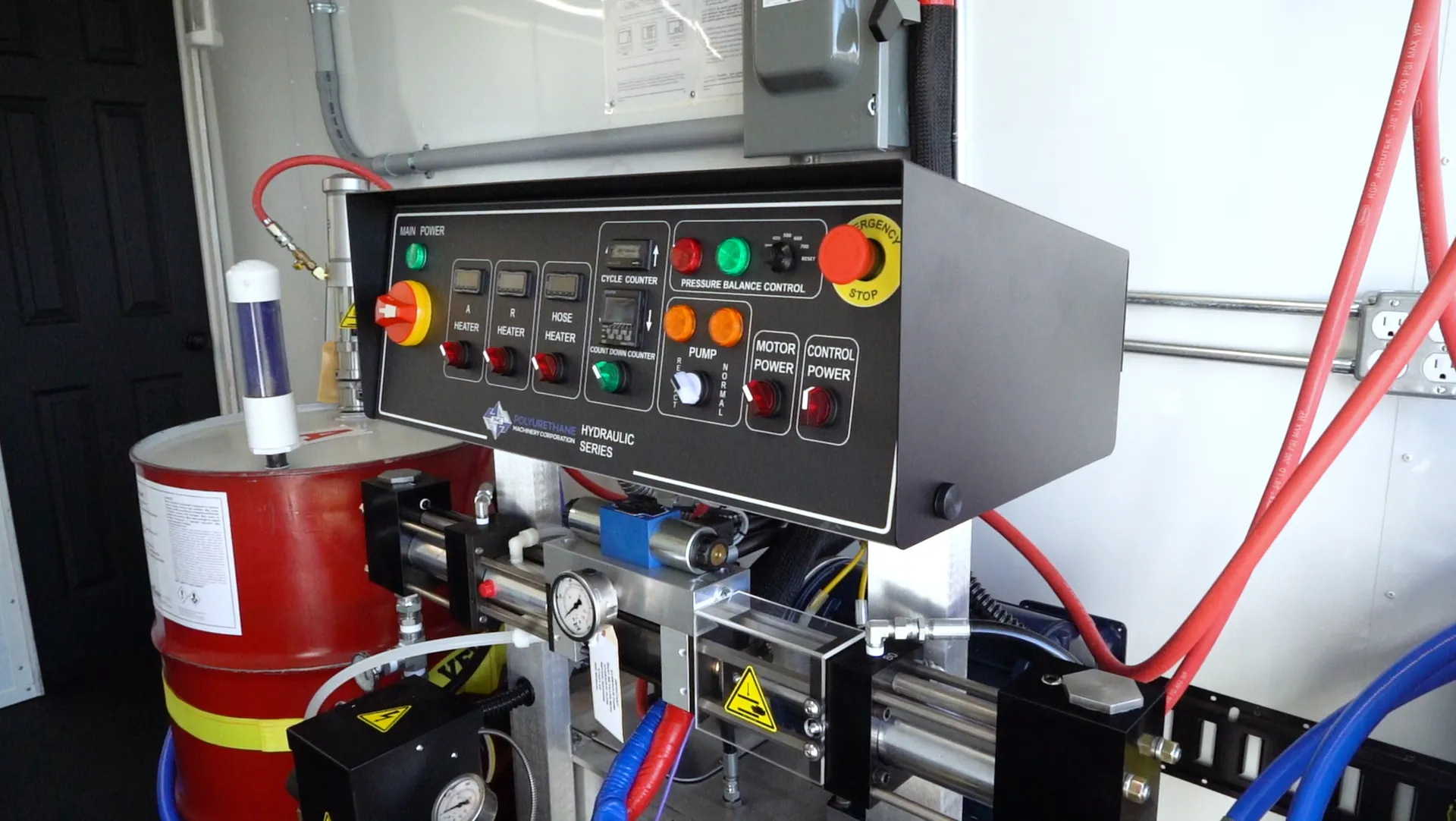
- $0
- franchise fees or royalties
- 35+
- years in business
- 50+
- countries with applicators
- 24/7
- technical support
Basement ceiling insulation does two very different jobs, and a lot of confusing advice comes from mixing them up. As sound control between floors, it works well. As energy insulation, it usually puts the boundary in the wrong place, because the furnace, ducts and water lines are down in the basement. We make spray foam and see a lot of basements; this guide helps you decide whether to insulate the ceiling or the walls, which material to use for warmth or for quiet, what the code and fire rules say, and two tools to choose an approach and price the work.
For energy savings, insulate and air-seal the basement walls and rim joist instead; the Department of Energy says basement wall insulation is preferable to ceiling insulation because the basement is more connected to the house than to the outdoors. Insulate the basement ceiling when the basement is truly unconditioned and holds nothing that can freeze, or when the goal is sound control, in which case unfaced mineral wool batts and a well-sealed drywall ceiling are the usual choice. If you do insulate the ceiling for energy, meet the floor R-value for your zone, air-seal first, and insulate any pipes and ducts left below.
Should you insulate the basement ceiling?
The answer depends on why you want to, and on what is in the basement.
To save energy
DOE's guidance: even an unconditioned basement "is more connected to other living spaces than to the outside, which makes basement wall insulation preferable to ceiling insulation." Insulating the walls keeps the furnace, ducts and pipes inside the warm envelope.
For sound between floors
A home theater, workshop, laundry or kids' playroom below a bedroom. Here ceiling insulation is part of a sound assembly, and it does not change the energy boundary.
Truly unconditioned basements
A vented, damp or outdoor-like basement with nothing that can freeze, often in older homes or under additions. Treat the ceiling like a floor over a crawl space and meet the floor R-value.
How to insulate a basement ceiling
If the selector below points you to the ceiling, for warmth over a cold basement or for sound, this is the order of work.
Clear and inspect the joist bays
Look for water stains, active leaks and old knob-and-tube wiring before anything gets covered. Wiring that old needs an electrician's opinion first, and leaks need fixing.
Air-seal the floor above
Seal plumbing, wiring and duct holes through the subfloor with fire-rated sealant or foam, and seal the rim joist. Air leaks carry heat, smells and sound, and insulation alone does not stop them.
Insulate pipes and ducts that will end up in the cold
If the ceiling is the energy boundary, everything below it gets colder. Wrap water lines and seal and insulate duct runs before the bays are closed.
Fit the batts
Push batts up tight to the subfloor, full width, split around pipes and wires rather than compressed behind them. Unfaced batts are the simplest choice; if you use faced batts, the facing goes up against the subfloor and must be covered below.
Support or cover them
Wire supports or netting hold batts in an open ceiling. A drywall ceiling does the job permanently and adds fire and sound performance.
Keep appliance clearances
Leave the listed clearance around flue pipes and keep combustion air openings for the furnace and water heater clear.
Basement ceiling or walls? Selector
Answer six questions. The selector applies the DOE guidance and code rules in this guide and tells you where the insulation should go, and what to watch for.
Where should my basement insulation go?
Weighs your goal, what is in the basement, how it is used, moisture and climate. Recommendations follow DOE's basement guidance and IECC floor and wall requirements.
Basement ceiling vs wall insulation compared
Both approaches can meet code. They put the boundary in different places, and that changes almost everything else. Click a heading to sort.
| Factor | Insulate the ceiling | Insulate the walls and rim | Edge |
|---|---|---|---|
| Where the boundary sits | Between basement and first floor | Around the foundation | Depends on use |
| Code target (zone 5 example) | Floor R-30, or fill the cavity at R-19 minimum | Basement wall R-15 ci, R-19, or R-13 + 5 ci | Similar |
| Furnace, ducts and pipes | Left in a colder space; need insulating | Stay inside the warm envelope | Walls |
| Area to cover | The full floor area, around pipes, wires and ducts | Usually less: perimeter x wall height | Walls |
| Sound between floors | Helps, especially with mineral wool and drywall | No effect | Ceiling |
| Moisture risk | Low for the insulation; basement may get damper | Needs a dry wall and the right materials | Similar |
| Future finished basement | Works against it | The first step of finishing | Walls |
| Installed cost per sq ft | $1.00 to $5.00 of ceiling area | $1.00 to $5.00 of wall area | Walls usually cover less area |
Basement ceiling insulation estimator
If the ceiling is the right place for your project, this sizes it: area, the R-value each material reaches in your joists, whether that meets the code floor value, and an installed cost range with or without a drywall ceiling.
What will my basement ceiling take?
R per inch: fiberglass 3.2, mineral wool 3.65 (midpoint of 3.2 to 4.1), closed-cell 6.5. Costs per sq ft from HomeGuide 2026: fiberglass $1.00 to $2.60, mineral wool $1.50 to $3.80, spray foam $1.50 to $5.00, drywall $1.50 to $3.50.
Insulating a basement ceiling for sound
Insulation in the joists absorbs sound inside the cavity, which takes the hollow drum effect out of a floor. On its own it is only part of the answer. The ceiling below and the gaps in it matter as much.
Use unfaced mineral wool or sound batts
Dense stone wool fills the bay and absorbs well, and it does not need a facing. ROCKWOOL lists its Comfortbatt at a flame spread and smoke developed index of 0 and noncombustible under ASTM E136, which also helps in a basement with a furnace.
Fill the bay, do not pack it
Full-depth or near-full-depth batts cut to fit tight to the joists. Compressing insulation does not add sound control.
Close the ceiling and seal it
A drywall ceiling does most of the blocking. Seal around can lights, ducts and pipes with acoustical sealant; sound goes through gaps the way air does. Decoupling the drywall from the joists with resilient channel or clips improves impact noise further.
Deal with the ducts
Sheet metal ducts in the joist bays carry sound room to room. Line or wrap them, and seal the joints while you are there.
Spray foam is not a sound product on its own; closed-cell foam is rigid and transmits more vibration than mineral wool. Our spray foam soundproofing page explains where foam helps (sealing air paths) and where it does not, and mineral wool insulation covers the batts themselves.
Fire, code and safety
Do not leave kraft paper exposed
Kraft and foil facings on batts are combustible and are generally not allowed to be left exposed in a basement ceiling under the IRC's insulation facing rules (R302.10). Use unfaced batts, or cover faced batts with drywall.
Foam needs a barrier
Spray foam and foam board inside the house generally need a thermal barrier such as 1/2 inch gypsum board (IRC R316.4). The rim joist has its own limited exception for thin foam at the sill and header. See our ignition barrier guide for the difference.
Keep clear of flues and combustion air
Hold insulation back from furnace and water heater flue pipes by the clearance the manufacturer lists, and do not block combustion air openings. A gas appliance starved of air is a carbon monoxide risk.
Protect pipes and ducts
When the ceiling becomes the boundary, the energy code expects ducts outside conditioned space to be sealed and insulated, and water lines in a cold basement need insulation against freezing. Our pipe insulation guide covers sizes and R-values.
Do the rim joist either way
Ceiling or walls, the rim joist on top of the foundation is usually the leakiest part of a basement. It is a small area that is hard to seal with batts and easy to seal with closed-cell foam. Our rim joist insulation and basement wall insulation guides cover the wall route in detail, and floor insulation covers floors over crawl spaces and garages. Other guides in this series: roof insulation and garage door insulation.
Ceiling or walls? Get it right the first time.
A certified ArmorThane applicator can seal the rim joist and spray the basement walls with closed-cell foam, or insulate the ceiling where that is the better plan.
Contractors: become an applicator →
Basement ceiling insulation questions
Should I insulate my basement ceiling or walls?
For energy, usually the walls. The Department of Energy says the basement is more connected to the living space than to the outdoors, which makes wall insulation preferable to ceiling insulation. Insulate the ceiling for sound control, or as the energy boundary only when the basement is truly unconditioned and holds nothing that can freeze.
What R-value should basement ceiling insulation be?
If the ceiling is your energy boundary, use the floor values from the 2021 IECC: R-13 in zones 1 and 2, R-19 in zones 3 and 4, R-30 in zones 5 and 6, and R-38 in zones 7 and 8, or fill the joist cavity at R-19 or more in zones 5 to 8. For sound only, no R-value is required; fill the bays with mineral wool.
Does insulating the basement ceiling make the upstairs warmer?
It can make the floor feel warmer if the basement is cold, but it also makes the basement colder. If the furnace and ducts are down there, you lose some of their stray heat to a space you have just cut off. Sealing the rim joist and insulating the basement walls usually warms the floor above without that trade-off.
What is the best insulation for a basement ceiling?
Unfaced mineral wool batts for most basements: they fill the bay, absorb sound, resist moisture and are noncombustible. Fiberglass costs less. Closed-cell spray foam makes sense at the rim joist and in damp, unconditioned basements, but it needs a thermal barrier inside the house.
How much does it cost to insulate a basement ceiling?
HomeGuide's 2026 figures are $1 to $5 per square foot of ceiling or wall area: fiberglass batts $1.00 to $2.60, mineral wool $1.50 to $3.80 and spray foam $1.50 to $5.00. A drywall ceiling adds roughly $1.50 to $3.50 per square foot.
Can I leave basement ceiling insulation exposed?
Unfaced fiberglass and mineral wool can generally be left exposed. Kraft or foil-faced batts should not be, because the facings are combustible. Spray foam and foam board generally need a thermal barrier such as 1/2 inch drywall.
Which way does the vapor barrier face on basement ceiling insulation?
Toward the heated side, which for a ceiling over an unheated basement means up against the subfloor. If the basement is heated, skip faced batts and use unfaced insulation; there is no need for a vapor retarder between two conditioned spaces.
Will insulating the basement ceiling cause pipes to freeze?
It can in cold climates, because the basement no longer gets heat from the floor above. Insulate water lines, keep the basement above freezing, or insulate the walls instead so the pipes stay inside the warm envelope.
Sources
- U.S. Department of Energy, where to insulate in a home: energy.gov/energysaver/where-insulate-home
- DOE/PNNL Building America Solution Center, 2009–2021 IECC minimum insulation requirements: basc.pnnl.gov/…/2009-2021-iecc-and-irc-minimum-insulation-requirements-new-homes
- Building America Solution Center, basement blanket insulation: basc.pnnl.gov/resource-guides/basement-blanket-insulation
- ICC, 2021 International Residential Code, Chapter 3 (R302.10 insulation facings, R316 foam plastic): codes.iccsafe.org/content/IRC2021P2/chapter-3-building-planning
- ICC, 2021 IECC Residential, Chapter 4: codes.iccsafe.org/content/IECC2021P1/chapter-4-re-residential-energy-efficiency
- HomeGuide, basement insulation cost (2026): homeguide.com/costs/basement-insulation-cost
- ROCKWOOL Comfortbatt product data (fire, moisture, sizes): rockwool.com/…/comfortbatt
- ENERGY STAR, insulation fact sheet: energystar.gov/…/Insulation Fact Sheet.pdf
- ArmorThane, spray foam R-value guide: armorthane.com/knowledge-center/spray-foam-r-value-guide
Seal the rim. Insulate the walls. Keep the basement inside.
Homeowners get a certified ArmorThane applicator for rim joists, basement walls and crawl spaces. Contractors can add spray foam to their services with no franchise fee and no royalties.
Start your coatings business with ArmorThane.
Tell us what you want to spray and where you are. An ArmorThane specialist will walk you through the equipment, chemicals, training and startup cost for the work you want to do.
- Equipment package matched to your applications
- Hands-on training and applicator certification
- Technical support once you are spraying
Cold floors or noisy ceilings? Start with the right boundary.
Tell us the basement size, what is down there, how you use it and any moisture. We will connect you with a certified ArmorThane applicator near you.
- Basement size and wall type
- Furnace, ducts or plumbing below
- Finished, unfinished or planned
- Any dampness or water
More to read on spray foam
Short reads from ArmorThane on Issuu. Tap one to open it right here.