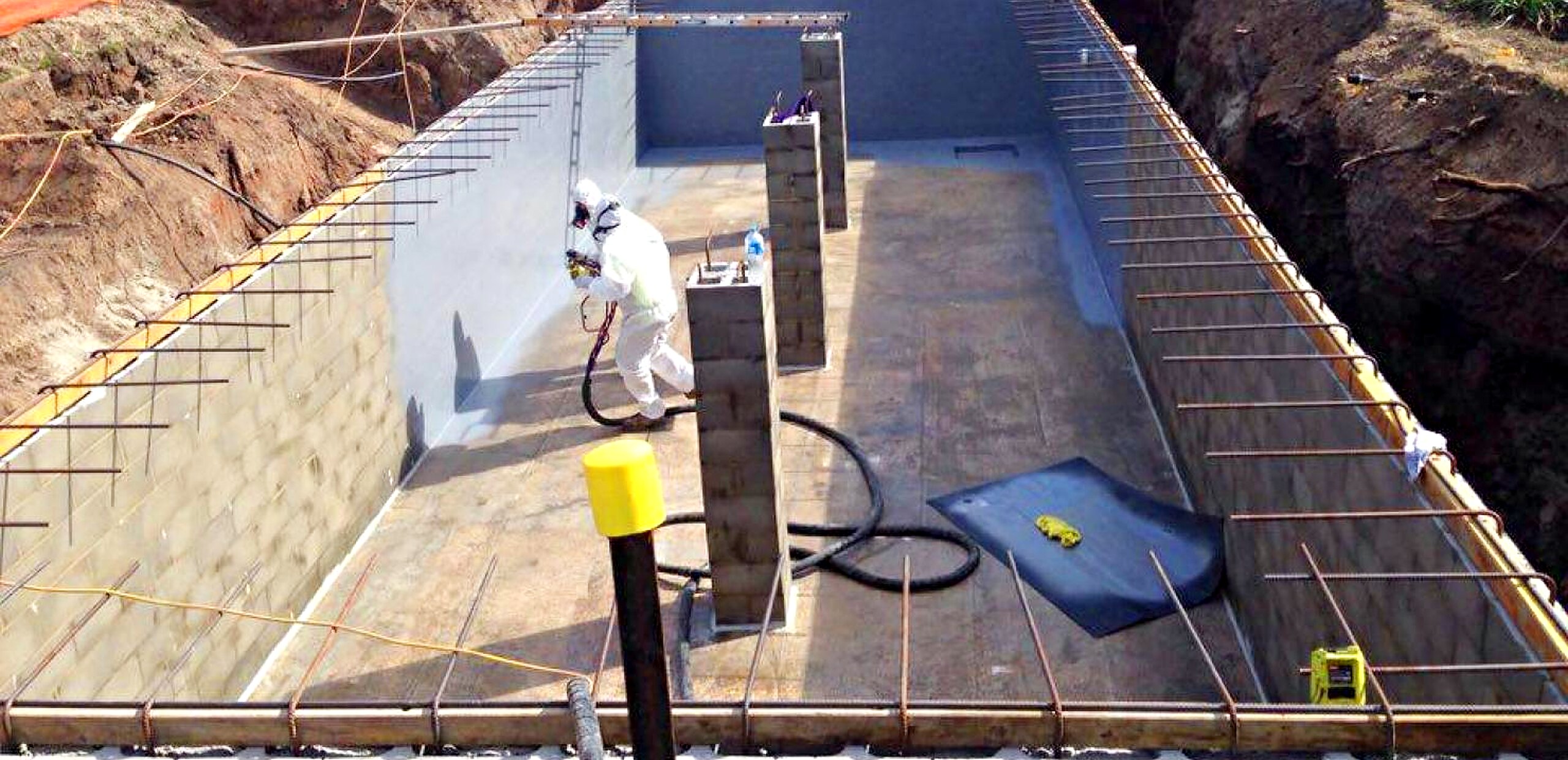
Aboveground storage tank containment
Ensure environmental protection with ArmorThane aboveground storage tank containment coatings. Prevent leaks and spills.
Where does a spill go?
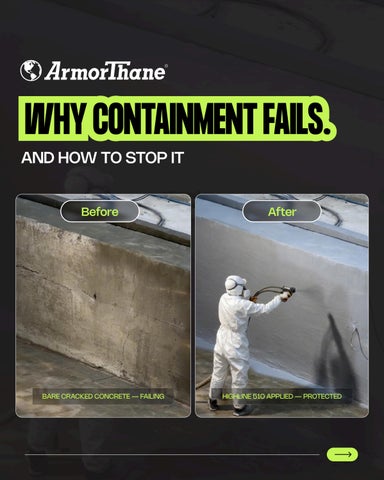
A leaking tank is only half the problem. Pick what you store, start the leak, and see what happens on bare concrete compared with a seamless ArmorThane lining.
1Pick what you store
2Run the test
Size it to the rules
Containment is sized to the volume your regulations require, usually based on the largest tank in the area.
Match the lining to the chemical
Ask for chemical resistance data for exactly what you store before choosing a system.
Make it continuous
Pipe penetrations, joints and the wall-to-floor corners are detailed so the lining has no gaps.
Read ArmorThane's secondary containment brochure, or find an ArmorThane applicator near you.
Line containment areas for a living? Become an ArmorThane applicator
Illustration only. What happens on a real job depends on the condition of the surface, the prep and the system an ArmorThane applicator specifies.
Understanding storage area containment
Aboveground storage tanks (ASTs) are very safe when properly designed and operated. However, ASTs and their associated piping are subject to corrosion, stress, cracking, construction flaws, weld failures, overfills, spills during transfers, and occasionally tank ruptures. Product types in the tanks can range from food-based to petroleum to hazardous materials.
When it’s leak or spill, the stored substances may flow into lakes and rivers, migrate through the soil to the water table, or catch fire, thereby contaminating soil, groundwater, or surface water and creating hazards to aquatic life and human health.
All states regulate stored liquid substances that may pollute the state’s waters if site capacity is less than so many gallons. The goal of regulating ASTs is to prevent spills and leaks by providing storage tank owners with various safeguard options. These options include safeguards such as secondary containment to minimize the impact of a release, corrosion protection, overfill prevention to prevent releases and tank monitoring for leak detection. The level of protection needed depends on the type of product stored, the size of the tank, and the date that the tank was installed.
Tank farms are only one application — read more on secondary containment requirements and how required capacity is calculated.
Leader in protective coatings
In recent years, the many benefits of polyurea systems have made them attractive as alternatives to traditional epoxy and acrylic systems. UV-resistant aliphatic formulations provide long-lasting exterior or aboveground protection. It is also important that the coatings selected be flexible enough to withstand expansion and contraction for both interior and exterior applications. Steel water tanks often include joints and seams designed for movement in response to changes in the environment. The coatings used to protect these surfaces must have sufficient flexibility to match the expected level of movement.
In addition, coatings used to protect steel in these challenging conditions must meet increasingly stringent environmental regulations, particularly concerning the volatile organic compound (VOC) content. Most technologies in use today are either water-based or 100% solids systems. Fast setting systems (polyureas and polyurethanes) used in OEM facilities are 100% solids, zero VOC, and plasticizer- and extender-free.

Vs polyurea
The majority of epoxy systems currently used in the market are between 55% and 70% solids and contain flammable solvents. The majority of fast-setting polyurethane and polyureas are 100% solids and contain zero flammable solvents. Polyurea has become the go to coating system for AST’s as there really is no match in terms of durability and safety of its application.
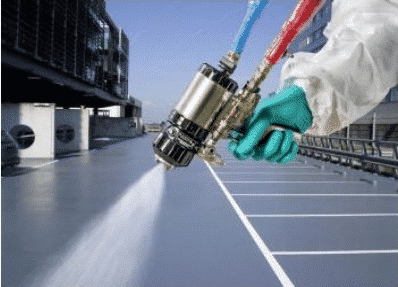
100% solids coatings?
The majority of fast-set polyurethane and polyurea elastomers are 100% solids coatings that cure rapidly and adhere strongly to steel. Other substrates can be coated but may require a primer. Because of the unique chemistry of these ultra-high solids systems, they can be formulated to the desired level of flexibility needed to withstand the movement associated with steel tanks and pipes.
With the appropriate choice of starting materials, it is also possible to formulate both polyurethane and polyurea systems with curing times that allow for the application of perfectly smooth, high-build coatings. Importantly, 100% solids, polyurethanes, and polyureas used for OEM potable water tank coatings and linings cure much more rapidly than epoxies – typically within minutes to hours, rather than days – and will cure below 50 degrees F.
What's the difference?
Aromatic and aliphatic systems for potable water pipe and tank applications cure rapidly and provide excellent, long-term corrosion protection. Both can be used for exterior and interior applications; however, aliphatic systems generally find a use for the coating of the exterior surfaces of ASTs.
We provide personal training to get your new polyurea or polyurethane system up and going. Plus, we have a dedicated support team ready to assist you anytime you need us. We sell to dealers around the world who use our products for a wide variety of applications. These include everything from truck bed liners to animal habitats.
Aromatics have chemical bonds that absorb UV radiation, which leads to undesirable yellowing of these coatings over time. Aliphatics do not possess this bond and therefore are not affected by UV radiation. Their color, gloss, and other appearance characteristics are retained for extended periods, even when exposed to sunlight.
Aliphatic polyurea and polyurethane coatings are more expensive, however. One solution to this issue is to use a thick aromatic basecoat with a thinner aliphatic topcoat to reduce the overall cost.
In addition, polyaspartic coatings are thinner than regular aliphatic polyureas but thicker than traditional solvent-borne aliphatic polyurethanes, making them suitable for high-performance topcoats. Like regular polyureas, their fast cure time makes them ideal for OEM potable water tank and pipe manufacturing, where a rapid turnaround time equates to higher productivity and greater profits.
For the interiors of potable water storage tanks and the exterior and interior of belowground piping, since UV exposure isn’t a concern, there is no need for aliphatic chemistry in these applications. Aromatic systems provide long-term protection combined with a quick return to service.
Storage Tank Containment Requirements
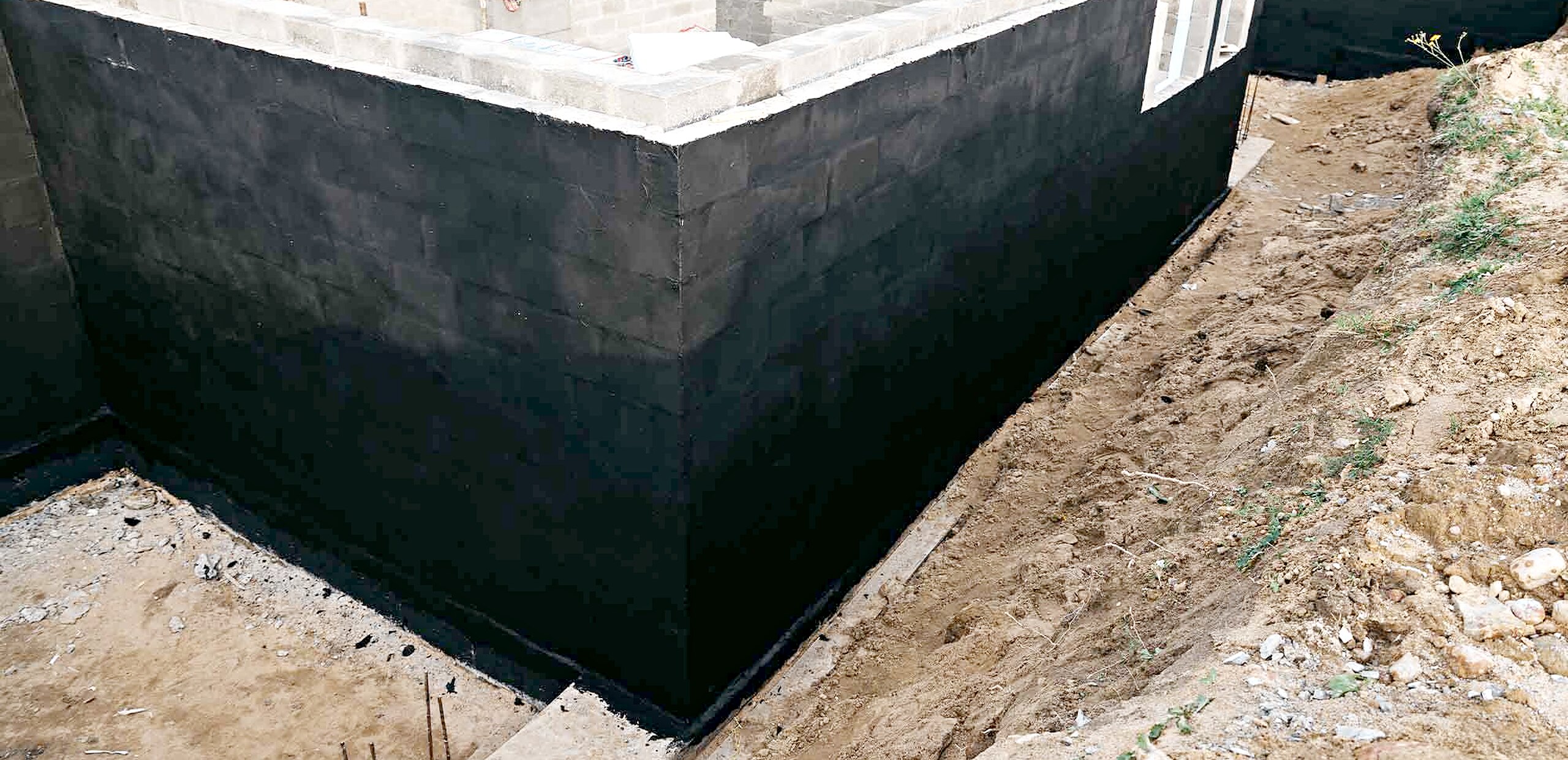
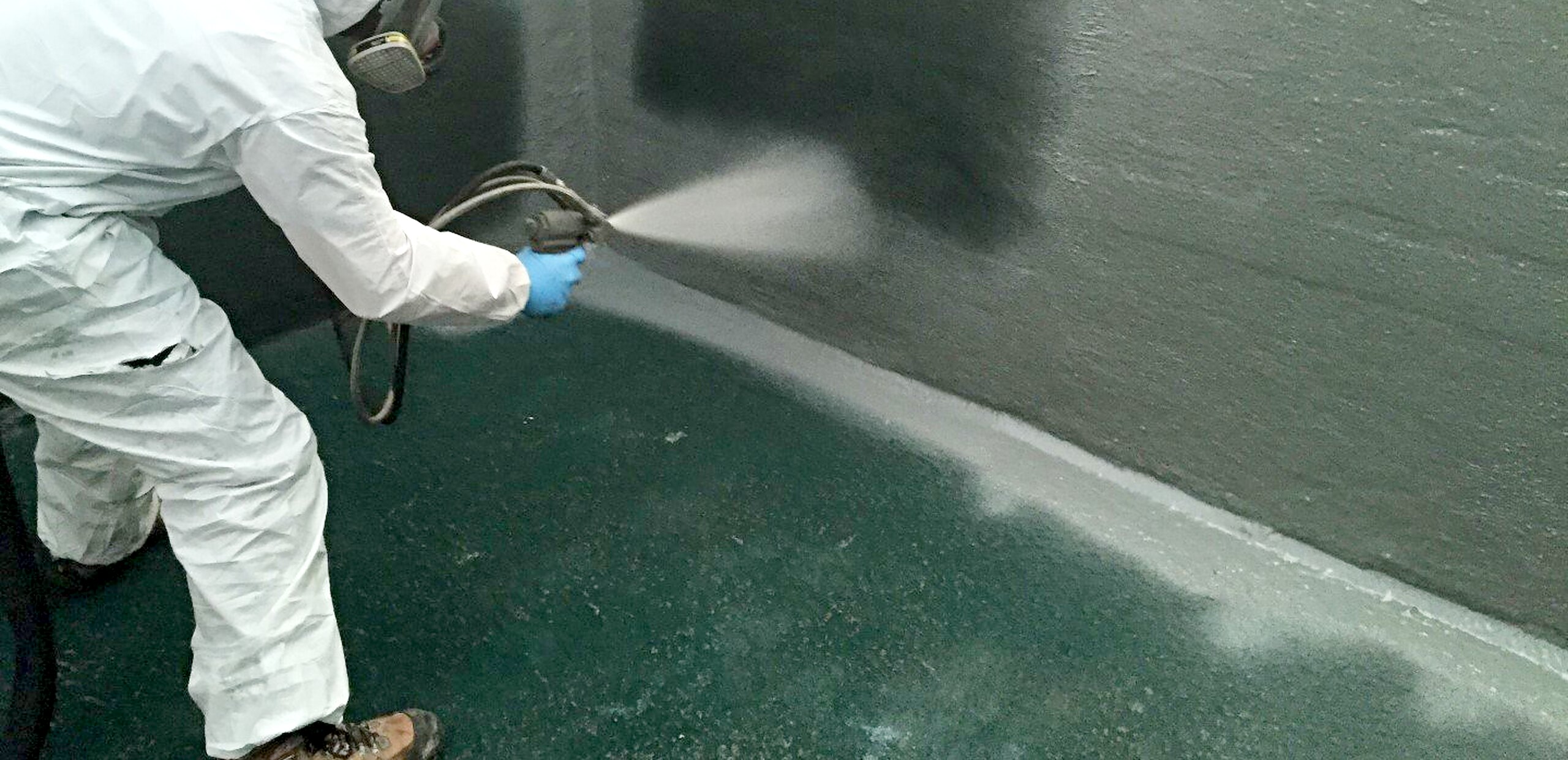
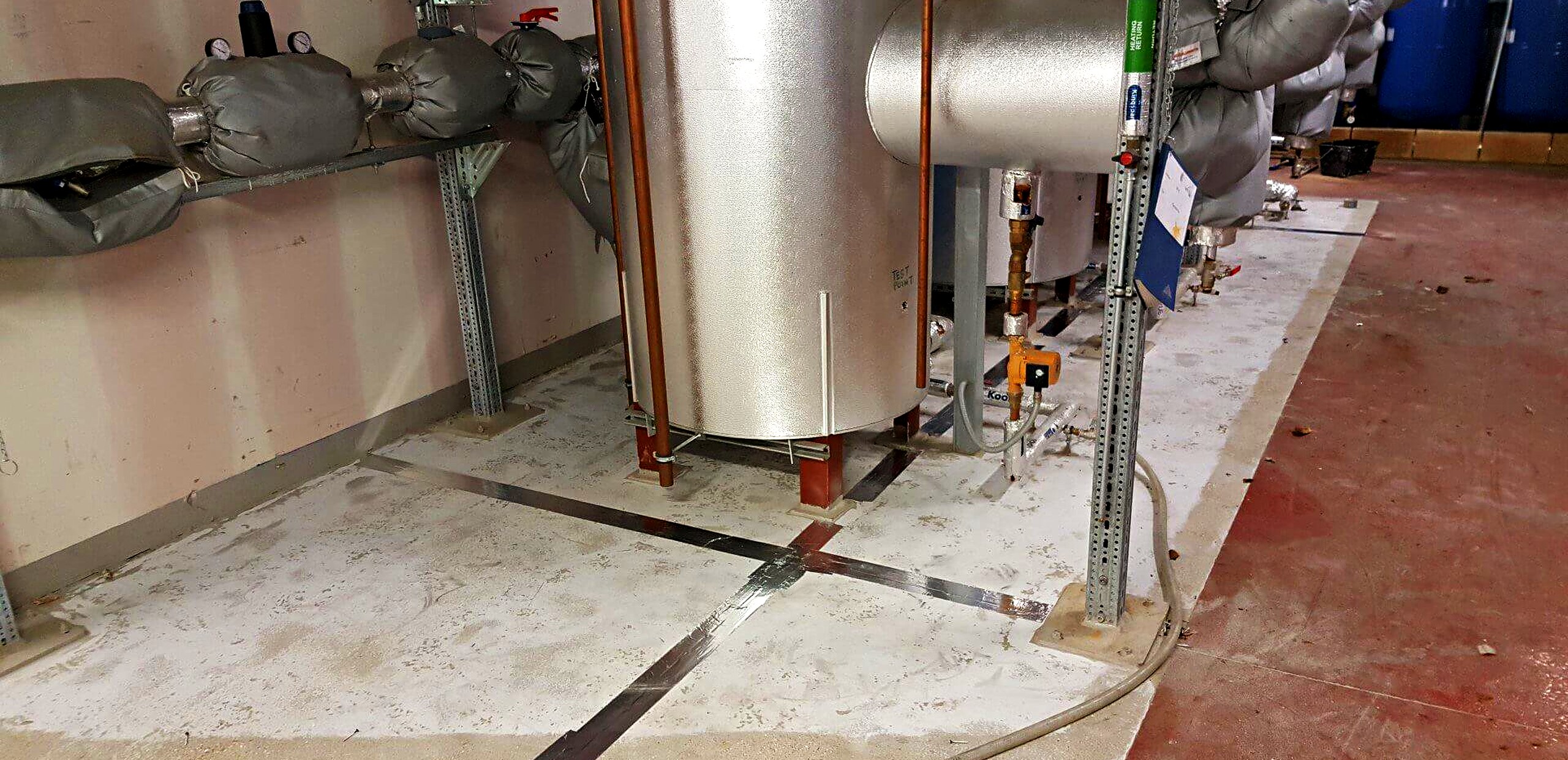
Storage tank containment has to be sized for the largest tank in the area, with extra room for rain if it is outdoors, and it has to stay liquid-tight for the life of the tanks. The U.S. EPA describes these expectations in its guidance on secondary containment under the SPCC rule. A sprayed polyurea lining helps meet them by sealing dike walls, floors and penetrations in one membrane that resists fuels and many chemicals. For related work, see fuel containment, tank corrosion prevention and storage area containment.
Contact US now
Take the first step towards a low cost polyurea, polyurethane, or spray foam business opportunity and contact us through the form below.. Someone from our company will contact you to answer your questions and provide you more information.
More to read on containment
Short reads from ArmorThane on Issuu. Tap one to open it right here.