Pool Resurfacing Cost by Finish: 2026 Price Guide
Plaster, quartz, pebble, tile, paint, fiberglass, vinyl and polymer coatings priced per square foot and per year of life, with the math shown, from a coatings maker that will tell you when a coating isn’t the answer.
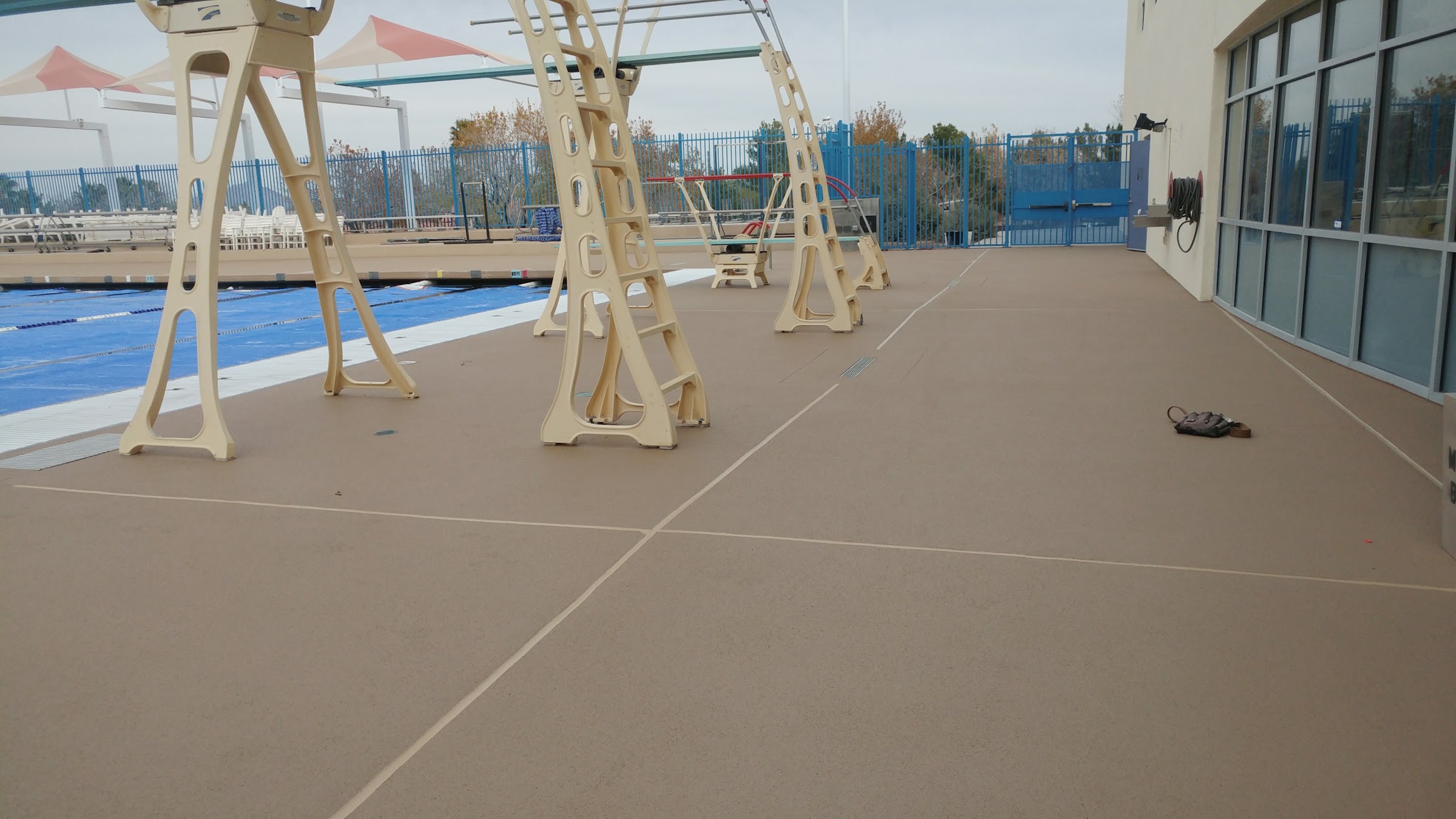
Coat decks and pools for a living.
ArmorThane is the one-stop shop for applicators. We make the chemistry, build the equipment, train you hands-on and back you with technical support, with no franchise fees and no royalties. Applicators have come first here since 1989.
- $0franchise fees or royalties
- 35+years in business
- 50+countries with applicators
- 24/7technical support
Resurfacing an inground concrete pool usually costs $6,000–$15,000 (HomeGuide, Angi). Per square foot of interior surface, figure paint $1–$2.50, white plaster $4–$8, quartz $7–$10, pebble $7–$15 and full tile $10–$35. A 16x32 pool has about 1,000 sq ft of floor and wall. Vinyl pools get a new liner instead ($3,000–$7,500), and fiberglass pools rarely need resurfacing at all. Price your pool.
Most pool resurfacing prices online are hard to use for one simple reason: nobody says which square feet they're pricing. One major cost guide's size table multiplies length by width, the water you see from the deck, and skips the walls entirely. The walls are about half the job. So this page measures the whole shell, floor plus walls, and prices every common finish against it.
We're ArmorThane, a Springfield, Missouri coatings manufacturer. We make polyurea and polyaspartic systems, not pool plaster, so we have no reason to steer you toward one plaster or pebble brand. We'll also tell you plainly where our own kind of coating fits a pool and where it doesn't. Short version: decks, yes; the inside of a typical backyard pool, usually not.
- 1Pool resurfacing cost calculator
- 2Cost per square foot by finish
- 3Concrete, fiberglass and vinyl pools
- 4Plaster vs quartz vs pebble vs tile vs paint
- 5Cheapest finish over 20 years
- 6What a replaster job includes
- 7Concrete pool paint: cost and coverage
- 8Costs most quotes leave out
- 9Signs your pool needs resurfacing
- 10Is your quote fair? (checker)
- 11DIY pool resurfacing
- 12Pool coatings: where polyurea fits
- 13Pool resurfacing cost FAQ
Pool resurfacing cost calculator
Enter your pool's size and depths. The calculator works out the interior surface (floor plus walls at average depth), the water volume, and the installed price for the finish you pick, then adds the line items that usually ride along: waterline tile, coping, draining and refilling. Below the estimate you'll see every finish that suits your pool type, side by side.
Estimate surface area, gallons and installed cost
Prices are our 2026 bands from published cost guides (sources below). Freeform shapes use our approximation, so measure the real surface for a quote.
| Line | Quantity | Low | Typical | High |
|---|---|---|---|---|
| White plaster | 992 sq ft | $3,968 | $5,456 | $7,936 |
| Drain & clean | 1 visit | $425 | $540 | $650 |
| Refill water (garden hose) | 19,149 gal | $77 | $134 | $191 |
| Total | $4,470 | $6,130 | $8,777 |
Surface = 512 sq ft of floor + 480 sq ft of wall (96 ft of edge x 5.00 ft average depth). Pricing only the water surface would miss about 48% of the job. Permits, deck work and equipment aren’t included. Planning deck or water-feature coatings too? Find a certified ArmorThane applicator.
Every finish that suits a concrete or gunite pool this size
Finish only for the range; cost per year uses the typical price plus the draining and refill you ticked, divided by typical life.
| Finish | $/sq ft | Finish cost | Lifespan | Typical cost per year |
|---|---|---|---|---|
| Pool paint (epoxy) | $1.00–$2.50 | $1,000–$2,500 | 4–8 yr | $360/yr |
| White plaster Selected | $4.00–$8.00 | $4,000–$7,900 | 5–12 yr | $681/yr |
| Quartz plaster | $7.00–$10.00 | $6,900–$9,900 | 7–15 yr | $828/yr |
| Pebble / aggregate | $7.00–$15.00 | $6,900–$14,900 | 15–25 yr | $530/yr |
| Full tile | $10.00–$35.00 | $9,900–$34,700 | 20+ yr | $1,274/yr |
| Sprayed fiberglass | $5.00–$7.00 | $5,000–$6,900 | No published figure | – |
| Thermoplastic polymer | $10.00–$15.00 | $9,900–$14,900 | No published figure | – |
Pool resurfacing cost per square foot
Installed, a new pool finish runs from about $1 a square foot for paint to $35 for full tile, with white plaster at $4–$8 and pebble at $7–$15. We compared the per-square-foot prices in five cost guides, dated 2020 to 2026, and set a low, typical and high value for each finish. Where only one source had a number, we say so.
| Finish | HomeGuide (Apr 2025) | Angi (Aug 2026) | Others | Our band (typical) |
|---|---|---|---|---|
| Pool paint (epoxy) | $1–$2 | $1 ($1–$2 by pool type) | Bob Vila ≈$1.50; HomeGuide remodel $1,400–$2,500 per job | $1.00–$2.50 ($1.50) |
| White plaster (marcite) | $6–$8 | $4 (concrete pools $5–$6) | Bob Vila $5.50; This Old House ≈$5; River Pools $3.60–$4 | $4.00–$8.00 ($5.50) |
| Quartz plaster | $7–$10 | – | – | $7.00–$10.00 ($8.50), one source |
| Pebble / exposed aggregate | $7–$15 (aggregate $6–$15) | $10 (aggregate $5–$7) | This Old House: nearly double plain plaster | $7.00–$15.00 ($10.00) |
| Full tile | $8–$30+ | $25 average, up to $35 | Bob Vila ≈$30; HomeGuide tile page totals ≈$10–$33 | $10–$35 ($25) |
| Sprayed fiberglass (over concrete) | – | – | This Old House $5–$7 | $5.00–$7.00 ($6.00), one source |
| Thermoplastic polymer (EcoFinish-type) | $10–$15 | – | – | $10.00–$15.00 ($12.50), one source |
| New vinyl liner | $3,000–$7,500 per pool | $1–$3.50 | This Old House $1–$5 | $3.10–$5.70 ($3.90), our fit to HomeGuide's size table |
What "per square foot" should mean
Plaster, pebble, paint and tile all cover the floor and the walls. For a rectangle that's length x width, plus the perimeter times the average depth. It's the same formula one pool-paint maker's quantity calculator uses: a bottom and four walls. A 16x32 pool that runs 3.5 to 6.5 feet deep has 512 sq ft of floor and 480 sq ft of wall, so 992 sq ft in all.
Angi's size table prices that same pool at $3,400. Divide it out and you get $6.50 times 512, the water surface only. The walls are missing. That's why online numbers for a given pool size often look too cheap next to a real quote.
Pool resurfacing cost by pool size
Here's what the bands above come to for common rectangular sizes at a 5-foot average depth.
| Pool size | Interior sq ft | Gallons | Paint | Plaster | Quartz | Pebble | Full tile | Vinyl liner |
|---|---|---|---|---|---|---|---|---|
| 12 x 24 ft | 648 | 10,800 | $600–$1,600 | $2,600–$5,200 | $4,500–$6,500 | $4,500–$9,700 | $6,500–$22,700 | $2,000–$3,700 |
| 14 x 28 ft | 812 | 14,700 | $800–$2,000 | $3,200–$6,500 | $5,700–$8,100 | $5,700–$12,200 | $8,100–$28,400 | $2,500–$4,600 |
| 16 x 32 ft | 992 | 19,100 | $1,000–$2,500 | $4,000–$7,900 | $6,900–$9,900 | $6,900–$14,900 | $9,900–$34,700 | $3,100–$5,700 |
| 18 x 36 ft | 1,188 | 24,200 | $1,200–$3,000 | $4,800–$9,500 | $8,300–$11,900 | $8,300–$17,800 | $11,900–$41,600 | $3,700–$6,800 |
| 20 x 40 ft | 1,400 | 29,900 | $1,400–$3,500 | $5,600–$11,200 | $9,800–$14,000 | $9,800–$21,000 | $14,000–$49,000 | $4,300–$8,000 |
What moves the price
The finish
The biggest lever by far: from about $1 a square foot for paint to $35 for premium tile. Pebble and quartz sit in the middle.
Size and depth
Walls are about half the surface of a typical pool, so a deep diving end adds real cost even when the footprint is the same.
Condition and prep
Hollow plaster, cracks and old paint that has to be blasted off. Angi puts repairs at $240–$1,200; paint removal is rarely priced until you ask.
Tile and coping
Waterline tile runs about $20–$50 per linear foot and coping $40–$80. A 16x32 pool has 96 feet of edge, so these can rival the finish itself.
Labor and region
Guides list $45–$110 an hour (HomeGuide) and $45–$65 (Angi). We couldn't find a published regional index for Florida, Texas, Arizona or California.
Water
Refilling from a hose costs $4–$10 per 1,000 gallons; a delivery truck, $30–$100 (HomeGuide). On a 19,000-gallon pool that's the difference between about $130 and $1,200.
How to spend less on resurfacing
- Try an acid wash first on plaster that's sound but stained. It's $150–$300 (HomeGuide).
- Bundle the work. Tile, coping, repairs and deck work all cost less while the pool is already empty.
- Choose by cost per year, not sticker price. The lifetime tool shows why pebble often beats plaster.
- Get three itemized quotes for the same finish and convert each to price per square foot. The quote checker does that.
- Keep the water balanced. Aggressive water shortens every cementitious finish; the CDC's baseline for pools is pH 7.0–7.8 with at least 1 ppm free chlorine.
Resurfacing cost by pool type
A concrete or gunite pool can take any cementitious finish, paint or tile, and it's the pool type that needs resurfacing most often: every 10–15 years by River Pools' count. A vinyl pool isn't resurfaced at all; the liner is replaced. A fiberglass pool is the odd one out. Its gelcoat usually outlasts everything else on this list.
$6,000–$15,000
HomeGuide's range. River Pools puts it at $10,000–$20,000 including new waterline tile, which most concrete jobs also need. Options: plaster, quartz, pebble, tile, paint, sprayed fiberglass or polymer.
$7,000–$15,000
HomeGuide's range for a full refinish. River Pools says most fiberglass pools never need it. When they do, the usual answers are epoxy paint (the paint maker's pick for fiberglass) or a sprayed polymer coating applied in the ground.
$3,000–$7,500
A new liner, installed (HomeGuide). A 16x33 pool runs $3,700–$4,200. Going from a 20-mil or thinner liner to 30-mil adds $700–$1,000. Liners last 5–15 years on HomeGuide's numbers, 5–9 on River Pools'.
Concrete and gunite pools
The finish on a concrete pool is a thin cement-based layer, or paint, over the structural shell. It wears because pool chemicals slowly eat away at it, leaving pits and roughness (River Pools). That's why these pools come back for resurfacing, and why the finish you pick decides how soon. Most concrete jobs also touch the waterline tile and sometimes the coping, because the pool is empty anyway.
Fiberglass pools
Fiberglass shells come from the factory with a gelcoat surface. Fading, chalking or small blisters don't automatically mean resurfacing; treat the chemistry first and ask a fiberglass specialist about repair. If the whole surface is gone, epoxy paint and in-ground polymer coatings are the common choices. Plaster and pebble aren't among the options HomeGuide or River Pools list for fiberglass.
Vinyl liner pools
You can't plaster a vinyl pool. You replace the liner, and the price depends mostly on size and liner thickness. Replacing a liner also means draining, and with an old liner out, it's the time to check the walls and floor base for damage that a new liner would just hide.
Pool finishes compared: plaster, quartz, pebble, tile and paint
White plaster is the cheapest cementitious finish and the shortest-lived. Quartz adds color and a few years. Pebble costs roughly twice what plaster does and lasts about twice as long. Tile lasts longest and costs the most. Paint is cheapest up front and shortest-lived of all. Here's the whole menu with the lifespans each source gives.
| Finish | Installed $/sq ft | Lifespan (years) | Feel | Works on | Watch for |
|---|---|---|---|---|---|
| Acrylic pool paint | $1.00–$2.50 (all paint) | Up to 2 (Ramuc); 2–3 (This Old House) | Smooth, flat | Previously acrylic or rubber-painted pools | Not for bare plaster, fiberglass or epoxy |
| Epoxy pool paint | $1.00–$2.50 | Up to 4, high-build up to 8 (Ramuc); 5–7 (HomeGuide) | Smooth, glossy | Concrete, plaster, fiberglass | Blisters if the surface is damp; chalks in sun |
| White plaster | $4.00–$8.00 | 7–12 (HomeGuide); 5–10 (Angi, River Pools) | Smooth | Concrete, gunite | Etching and staining if water chemistry drifts |
| Quartz plaster | $7.00–$10.00 | 10–15 (HomeGuide); 7–12 (River Pools) | Smooth to slightly textured | Concrete, gunite | Same water-chemistry care as plaster |
| Pebble / exposed aggregate | $7.00–$15.00 | 15–20+ (HomeGuide); 20+ (Angi) | Textured; polished lines smoother | Concrete, gunite | Rougher underfoot; final color settles over about 28 days |
| Full tile | $10–$35 | At least 20 (This Old House) | Smooth; grout lines | Concrete, gunite | Price; grout upkeep |
| Sprayed fiberglass | $5.00–$7.00 | No independent figure found | Smooth, glossy | Concrete, plaster | Ask for the warranty in writing |
| Thermoplastic polymer | $10.00–$15.00 | No independent figure found | Smooth | Concrete, fiberglass | Ask for the warranty and the installer's track record |
| Vinyl liner | $3.10–$5.70 | 5–15 (HomeGuide); 5–9 (River Pools, This Old House) | Soft | Vinyl pools | Punctures; can float if drained with high groundwater |
Pool plaster vs quartz
Quartz is plaster with colored quartz aggregate mixed in. Colored finishes hide minor staining better than white, and on HomeGuide's numbers quartz adds about three years of life for $1–$3 more per square foot. If you liked plaster's smooth feel but not how fast it stained, quartz is the obvious upgrade.
Pebble Tec vs plaster
Pebble finishes are river pebbles set in cement and exposed at the surface. They cost about twice as much as white plaster, and on HomeGuide's and Angi's lifespans they last about twice as long. Pebble Tec's published warranty covers material defects for at least 5 years, and its authorized installers cover workmanship for at least 5. The trade-off is texture: pebble is rougher underfoot, which some families love and some kids' feet don't.
Pool plaster vs paint
Paint costs a fraction of plaster up front and lasts a fraction as long. It also commits you: once a pool is painted, each repaint has to match the chemistry already on the wall, and going back to plaster later means getting the paint off first, usually by sandblasting. Get that removal priced before you choose paint as a stopgap.
Pool plaster vs tile
Full tile is the premium finish, at least 20 years on This Old House's estimate, and the most expensive by a wide margin. Most pools get tile only in a band at the waterline, where scum lines are easier to scrub off tile than off plaster.
Which pool finish is cheapest over 20 years?
Divide what a job costs by the years it lasts and the ranking changes. Pebble beats white plaster per year, because it costs about twice as much but lasts about twice as long, and every redo also means draining, cleaning and refilling. Epoxy paint comes out cheapest per year of all, but only if it's repainted on schedule, four or five drains in 20 years.
Cost per year and total over your horizon, by finish
For concrete and gunite pools. Every redo includes draining, cleaning and refilling. Use the surface area and gallons from the calculator above.
| Finish | One job, incl. drain + refill | Lasts | Per year | 20-yr jobs | 20-yr cash |
|---|---|---|---|---|---|
| Pool paint (epoxy) | $2,173 | 6 yr | $362 | 4 | $8,692 |
| Pebble / aggregate | $10,673 | 20 yr | $534 | 1 | $10,673 |
| White plaster | $6,173 | 9 yr | $686 | 3 | $18,519 |
| Quartz plaster | $9,173 | 11 yr | $834 | 2 | $18,346 |
| Full tile | $25,673 | 20+ yr | $1,284 | 1 | $25,673 |
Cost per year spreads each job over its life. The 20-year cash column counts whole jobs, starting with the one you’re about to do, so a finish with life left at the end looks worse there than it is. Among cementitious finishes, pebble / aggregate is lowest per year at these settings. Paint only wins if it’s repainted with matching chemistry on schedule: 4 drains in 20 years, each with 5–7 dry days of cure. Tile life is a floor (“at least 20 years”), not an average.
What the numbers don't show
Cost per year isn't the whole decision. Paint's low number assumes you repaint with the same chemistry every four to eight years, and each time the pool is out of service while it drains, dries and cures (5–7 dry days for epoxy outdoors). Plaster's number assumes you keep the water balanced; aggressive water shortens every cementitious finish. And a finish you'll sell the house with has a value this table can't price.
What a pool replaster job includes
A replaster runs about $6,000–$8,000 for a 1,000 sq ft pool on HomeGuide's numbers, or roughly $4,000–$7,900 for a 16x32 on our band. That price should cover draining, surface prep, the new plaster and start-up guidance. Tile, coping and repairs are usually separate lines. Most jobs take 5–7 days start to finish, and up to 14 in bad weather (Angi).
Drain it, carefully
An empty inground pool is a boat in wet soil. River Pools warns that with enough groundwater pressure "concrete pools will actually float," and that vinyl liners can bubble and float too. Ask your contractor whether the pool has a hydrostatic relief valve or dewatering well, what the groundwater is doing this time of year, and who is responsible if the shell moves. Draining and cleaning runs about $425–$650 (Angi, HomeGuide).
Prepare the surface
Loose or hollow plaster has to come off. A ball-peen hammer finds it: hollow spots sound different. Depending on what's left, crews chip out the old finish or apply a bonding coat over sound plaster. Painted pools need the paint dealt with first. This is the step that most decides whether the new finish stays on, and the one quotes most often leave vague.
Tile and coping, while it's empty
Waterline tile works out to about $20–$50 per linear foot of perimeter from HomeGuide's 2026 totals, and coping $40–$80 per linear foot. On a 16x32 pool (96 feet of edge) that's roughly $1,900–$4,800 for tile and $3,800–$7,700 for coping. If either is cracked or loose, now is the cheapest time to fix it.
Apply the finish
Plaster and aggregate go on by hand, by a crew, in one continuous application. That skilled crew is a big part of what you're paying for.
Fill and start up
The first month decides how the finish looks for years. Pebble Tec's instructions call for brushing with a nylon brush three times a day for the first three days and twice a day for the next ten, waiting at least 14 days before heating the water and 28 days before adding salt, and keeping printed water tests in case of a warranty claim. After start-up, the CDC's baseline for pools is at least 1 ppm free chlorine at pH 7.0–7.8.
Concrete pool paint: cost, types and coverage
Pool paint is the cheapest way to renew a concrete or plaster pool, and the fastest to wear out. The rule that matters most: match what's already on the wall. Epoxy goes over epoxy, acrylic over acrylic, and rubber-based paint over rubber-based paint, according to Ramuc, one of the major pool paint makers. Bare plaster, concrete and fiberglass take epoxy.
| Paint type | Coverage per coat (bare / recoat) | Dry days before filling | Maker's life | Goes over |
|---|---|---|---|---|
| Epoxy | 175–200 / 400–450 sq ft per gal | 5–7 outdoor; 10–14 indoor | Up to 4 yr | Bare plaster, concrete, fiberglass; old epoxy |
| High-build epoxy | 150–200 / 300–350 sq ft per 2-gal kit | 5–7 outdoor; 10–14 indoor | Up to 8 yr | Same; the maker's pick for bare surfaces, fiberglass and salt pools |
| Synthetic rubber | 200–300 / 350–400 sq ft per gal | 5–7 outdoor | Up to 5 yr | Old chlorinated or synthetic rubber; not bare fiberglass or spas |
| Chlorinated rubber | 200–300 / 350–400 sq ft per gal | 5–7 outdoor | Up to 5 yr | Old chlorinated rubber (the maker suggests upgrading to synthetic) |
| Acrylic (water-based) | 350–400 sq ft per gal (recoat) | 3 outdoor | Up to 2 yr | Old acrylic or rubber paint; not bare plaster, fiberglass, epoxy or spas |
How much paint, what it costs, and whether it's compatible
Uses the maker's coverage ranges and two coats by default. Price per gallon: This Old House puts acrylic near $50 and epoxy near $100 or more.
In spec High-build epoxy is the maker’s first choice for bare plaster and concrete. New plaster or concrete needs at least 28 days of cure first. Surface: 992 sq ft; coverage used: 75–100 sq ft per 2-gal kit per coat (bare or rough surface), 2 coats, plus 10% loss. High-build epoxy is sold here as 2-gallon kits, so gallons are twice the kit count. Paint cost is about $2.22–$2.96 per sq ft before labor and prep. Maker’s expected life: up to 8 years. Figures are Ramuc’s published data; follow the data sheet for the product you actually buy.
The cost guides undercount first-time paint
Guides quote $1–$2 a square foot, installed. Run the maker's coverage on a bare, never-painted 16x32 and two coats of high-build epoxy take 22–30 gallons, about $2,200–$2,900 of paint alone at $100 a gallon. Repainting a pool that already has sound epoxy with standard epoxy takes only 5–6 gallons, about $490–$550. So the $1–$2 figure is realistic for a matching recoat, and light for a first coat on bare plaster.
Not sure what's on the pool now? Test it.
Ramuc's field test takes a rag and two solvents. Rub a spot with denatured alcohol: if it softens, the paint is probably acrylic. If not, rub with paint thinner: if it softens and "strings," it's chlorinated rubber; if it softens without stringing, synthetic rubber; if nothing happens, it's epoxy or a gelcoat. Wear gloves and read the solvent labels. When in doubt, the maker will analyze a chip.
Concrete pool paint problems, and what causes them
- Blistering. Painting a damp surface, rolling it on too thick, painting in direct sun, filling before it cures, or putting incompatible paints together. Ramuc calls poor surface prep the number one cause. Its guides call for a condensation test: tape 2x2-foot plastic squares to the floor and deep-end wall, wait about four hours, and don't paint if moisture forms underneath.
- Chalking and fading. All epoxies chalk slightly in sunlight. Heavy shock dosing can bleach or break down the film, and dark colors fade and blister faster in treated water.
- Peeling in sheets. Usually a compatibility or prep failure. Paint isn't a repair for weak plaster, and new plaster or concrete needs at least 28 days of cure before it's painted.
- Coming off in months. Filled too soon. Epoxy needs 5–7 dry days outdoors, and the maker adds a day for each day of rain.
Costs most pool resurfacing quotes leave out
The finish price is the headline. These are the lines that turn a $6,000 estimate into a $10,000 invoice. Ask for each one to be priced or explicitly excluded.
| Line item | Published cost | Source (date) |
|---|---|---|
| Drain and clean | $425–$475 (drain $175–$225 + clean $250); $600–$650 | Angi (2026); HomeGuide (2025) |
| Refill, garden hose | $4–$10 per 1,000 gal; 12–36+ hours | HomeGuide (Jun 2025) |
| Refill, delivery truck | $30–$100 per 1,000 gal; $200–$600 per 6,000-gal load | HomeGuide (Jun 2025) |
| Waterline tile | $1,900–$4,800 for a 16x32 (≈$20–$50 per linear ft) | HomeGuide (Jan 2026); per-foot is our math |
| Coping | $40–$80 per linear ft | HomeGuide (Jan 2026) |
| Repairs | $240–$1,200 | Angi (2026) |
| Leak repair | $500–$1,500 | HomeGuide (Jun 2024) |
| Acid wash (instead of resurfacing) | $150–$300 | HomeGuide (Jun 2024) |
| Old paint or failed finish removal | No reliable published figure; get it itemized | – |
| Pool deck coating | $3–$7/sq ft acrylic overlay; $6–$12 polyurea | ArmorThane deck guide (2026) |
Water: the cheap part, usually
A 16x32 pool holds about 19,100 gallons (length x width x average depth x 7.48). From a garden hose that's roughly $80–$190 of city water, and HomeGuide notes some cities will waive sewer charges on pool fills, so call your utility before you open the tap. A delivery truck costs far more but fills in hours.
The deck and coping
A new interior tends to make a tired deck look worse. If you're planning deck work anyway, schedule it around the resurfacing so crews aren't hauling equipment over fresh coping. Our pool deck resurfacing guide compares overlays, pavers and coatings, and certified applicators handle polyurea pool deck coatings in one to three days.
Permits
Some jurisdictions want a permit for replastering, especially if plumbing, lights or the main drain are touched. Rules vary too much to summarize; ask the contractor who pulls it and whether it's in the price.
Signs your pool needs resurfacing
The finish is due when it's rough enough to scrape feet, stained beyond what an acid wash removes, flaking or hollow-sounding, or letting water through. Cosmetic staining alone often isn't a reason to resurface yet. HomeGuide puts the usual interval at 7–15 years, depending on the finish.
- Rough texture on the floor and steps, and swimsuits snagging.
- Flaking, peeling or delamination. Tap suspect areas: hollow means the finish has let go.
- Chips and cracks in the finish, especially if they keep growing.
- Stains that won't clean off, or come back right after an acid wash.
- Water loss you can't trace to the plumbing. Rule out a leak first; a new finish won't fix a broken pipe.
- Painted pools: chalking that rubs off on your hand, blisters or bare patches.

When an acid wash is enough
An acid wash strips a thin top layer of plaster to remove stains, at about $150–$300 (HomeGuide). It's worth trying on sound plaster that's just discolored. Each wash removes some finish, though, and River Pools' plastering author notes that if repeated acid washes stop restoring the look, it's time to replaster.
When a repair is enough
A few chips on the steps or a small delaminated patch can be repaired for a few hundred dollars (Angi: $240–$1,200 for repairs). Patches rarely match the color perfectly, so they make the most sense on an otherwise young finish.
Is your pool resurfacing quote fair?
Enter the quote and what it includes. The checker backs out typical prices for tile, coping and draining, converts the rest to price per square foot of finish, compares it with the band for that finish, and lists the questions to ask before you sign.
Normalize a quote and spot the gaps
Use the interior surface from the calculator. Excluding typical add-on prices is an estimate; itemized quotes make this far more accurate.
In range Within our 2026 band for this finish. Backed out: $675 for tile, coping, draining, refill and other extras at typical prices (refill assumes about 19,300 gallons).
- No prep method. Ask whether they’ll chip out, apply a bond coat or blast, and how they’ll find hollow spots.
- No start-up plan. Pebble Tec, for one, calls for brushing three times a day for 3 days, then twice a day for 10, no heating for 14 days and no salt for 28.
- No written warranty. For comparison, Pebble Tec’s published warranty covers material defects for at least 5 years and installer workmanship for at least 5.
- No draining plan. Ask about groundwater, hydrostatic relief and who pays if the shell lifts.
- Waterline tile isn’t included. Fine if it’s sound; replacing it later means another drain.
10 questions to ask a pool resurfacing contractor
- Which product and color, exactly, and whose warranty covers the material?
- How will you prepare the old surface: chip-out, bond coat, or blasting off paint?
- How will you find hollow or delaminated areas, and are repairs priced per spot?
- Is waterline tile included? Coping? Main drain covers and light niches?
- Who drains the pool, where does the water go, and what's the plan for groundwater?
- How many days will the pool be empty, and what happens if it rains?
- What start-up do you do, and what do I have to do for the first 28 days?
- When can I heat the water or add salt?
- What's your workmanship warranty, in years, and what voids it?
- Do you pull the permit, if one is needed, and is it in the price?
DIY pool resurfacing: what's realistic
Painting a pool is a realistic DIY job. Plastering one isn't. Plaster and pebble go on by hand in one continuous push, by a crew that does it every week, and a mistake is permanent. This Old House mentions a DIY plaster kit that covers 60 sq ft for $130, which tells you what it's for: patches.
For paint, River Pools priced a small 12x24 pool at about 8 gallons of epoxy, four two-gallon kits at up to $270 each, and roughly $1,500 all in with supplies. That was 2019, and our planner above will show you it can take more paint on a bare, rough surface. The work is mostly prep: clean and etch, repair cracks with a compatible filler (not silicone), wait for dry weather, run the condensation test, then roll two coats between 50°F and 90°F with overnight temperatures above 50°F. Then leave it alone for the full cure.
Where polyurea and polyaspartic fit, and where they don't
For a typical backyard concrete pool, the proven interior finishes are plaster, quartz, pebble and tile from a pool plastering crew, or epoxy paint on a budget. That's our honest answer, even though we make coatings.
We don't publish a chlorinated-pool immersion rating for our polyureas. Our aquatic coatings guide suggests 60–80 mils for pool and water-park linings and tells you to verify the coating's resistance to your chlorine or bromine regime and any shock dosing. Our older page on polyurea for pools and fountains is blunter: pool interiors need the right chemical blocking, or polyurea can break down. So we won't quote you a pool-interior lifespan, and you shouldn't accept one from anyone who can't show immersion data in chlorinated water.
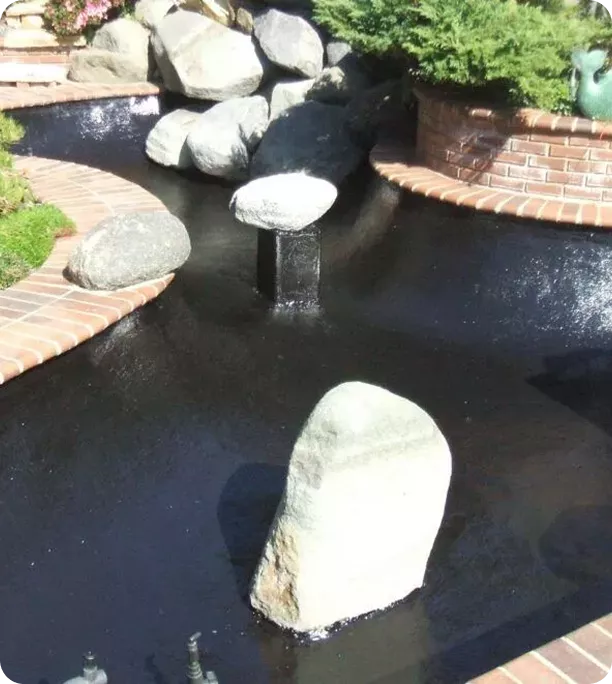
Where our coatings do earn their place
- Pool decks and coping. Slip resistance, UV stability with an aliphatic topcoat, and installed prices of $6–$12 a square foot in our deck guide. An ArmorFloor polyaspartic topcoat is one UV-resistant option.
- Fountains, water features and ponds. Seamless membranes over rockwork and odd shapes, where sheet liners have to be pleated and folded. See fountain rehabilitation and our guide to koi pond liners.
- Steel and container pools. The lining is what keeps water off the steel. Our shipping container pool guide covers the spec and the risks.
- Specialty refinishes. One pool refinish on our blog used sprayed fiberglass under ArmorFloor polyaspartic topcoats. It's a homeowner's account, not a warranty. Ask any installer for data before you copy it.
If you're weighing coatings for a deck or patio around the pool, polyaspartic vs epoxy explains why epoxy yellows outdoors and polyaspartic doesn't.
Pool and water-park lining spec
Our suggested dry film for sprayed polyurea in pools. Verify chlorine, bromine and shock resistance for the exact product.
Polyurea pool decks
Installed system with anti-slip aggregate and an aliphatic topcoat, per our deck guide.
ArmorFlex UV
An aliphatic polyurea liner system, formulated to be color-stable, that sprays a seamless membrane over concrete, metal or fiberglass. Product page.
Pools get resurfaced. Decks get coated.
Every pool around you comes back for a new finish every decade or so, and a fresh interior puts the deck, coping and water features on the homeowner's list. Our applicators coat decks, fountains, ponds and steel pool shells with polyurea and polyaspartic systems. No franchise fee, no royalties; startup packages start at $25,000.
Questions first? Call (417) 831-5090
Pool resurfacing cost FAQ
How much does it cost to resurface a pool?
Most inground concrete pools cost $6,000–$15,000 to resurface, with national averages near $11,000 (HomeGuide, Angi). The finish drives it: a 16x32 pool runs about $4,000–$7,900 in white plaster and $6,900–$14,900 in pebble before tile, coping and draining. Use the calculator for your size.
How much does pool resurfacing cost per square foot?
About $1–$2.50 for paint, $4–$8 for white plaster, $7–$10 for quartz, $7–$15 for pebble and $10–$35 for full tile, installed. Apply those to the interior surface, floor plus walls, not just length times width. A 16x32 pool with a 3.5–6.5 ft depth has about 992 sq ft.
How much does it cost to replaster a pool?
HomeGuide puts replastering at $6,000–$8,000 for a 1,000 sq ft pool; our band gives $4,000–$7,900 for a 16x32. Add about $425–$650 to drain and clean, and roughly $1,900–$4,800 if the waterline tile is replaced. Quartz plaster costs $1–$3 more per square foot.
How much does it cost to resurface a pool with Pebble Tec?
Pebble finishes run about $7–$15 per square foot installed, or roughly $6,900–$14,900 for a 16x32 pool. HomeGuide lists Pebble Tec at $4,000–$16,000 for an average pool. They cost about twice as much as white plaster and last about twice as long: 15–20+ years (HomeGuide).
Is it cheaper to paint or plaster a pool?
Paint is much cheaper up front, about $1,000–$2,500 for a 16x32 versus $4,000–$7,900 for plaster. It also wears out sooner: epoxy lasts up to 4–8 years depending on the line (Ramuc), acrylic up to 2. Going back to plaster later means removing the paint first.
How long does pool resurfacing last?
It depends on the finish: acrylic paint up to 2 years, epoxy paint up to 4–8, white plaster about 5–12, quartz 7–15, pebble 15–20 or more, and tile at least 20 (Ramuc, HomeGuide, Angi, River Pools, This Old House). Balanced water chemistry is what gets a finish to the top of its range.
How often should a pool be resurfaced?
Typically every 7–15 years (HomeGuide); River Pools says 10–15 years for concrete pools. Painted pools need repainting far more often. Resurface when the finish is rough, flaking, hollow-sounding or stained beyond what an acid wash can fix.
How long does it take to resurface a pool?
Usually 5–7 days from draining to refilling, and up to 14 in bad weather (Angi). Paint jobs need 5–7 dry days of cure for epoxy before filling, or 3 for acrylic. After a plaster or pebble finish, expect about four weeks of careful start-up: no heat for 14 days and no salt for 28, per Pebble Tec.
Can you paint over pool plaster?
Yes. Paint makers sell epoxy specifically for bare plaster and concrete pools. The plaster must be sound, clean and dry, and new plaster needs at least 28 days of cure first. Once painted, each repaint has to match the paint already on the wall.
What kind of paint do you use on a concrete pool?
Epoxy for bare concrete, plaster or fiberglass; high-build epoxy is one maker’s first choice and lasts up to 8 years. On a painted pool, match what’s there: epoxy over epoxy, acrylic over acrylic, rubber-based over rubber-based. Our paint planner checks compatibility and quantity.
How much does it cost to resurface a fiberglass pool?
HomeGuide puts a full fiberglass refinish at $7,000–$15,000, though River Pools says most fiberglass pools never need one. The usual options are epoxy paint or a sprayed polymer coating applied in the ground. Fix the water chemistry before deciding the gelcoat is finished.
How much does it cost to replace a vinyl pool liner?
About $3,000–$7,500 installed for an inground pool, from $2,500–$3,000 for a 14x28 to $7,500–$8,000 for a 20x40 (HomeGuide). Upgrading to a 30-mil liner adds $700–$1,000. Liners last roughly 5–15 years.
Can polyurea be used inside a swimming pool?
It can be sprayed into pools, but we don’t publish a chlorinated-pool rating for our polyureas. Our aquatic guide suggests 60–80 mils for pools and says to verify resistance to your chlorine or bromine regime and shock dosing. For a typical backyard pool, plaster, pebble or tile is the proven choice; polyurea earns its place on decks, water features and steel pools.
Written from cost-guide data, pool-paint and aggregate manufacturers’ published instructions, and 35+ years of making and supporting protective coatings. Last updated September 26, 2026.
Methodology and sources
Price bands are our synthesis of per-square-foot figures in HomeGuide, Angi, Bob Vila, This Old House and River Pools (2020–2026), applied to interior surface area (floor plus walls at average depth). Lifespans are the ranges those sources and the manufacturers state; paint data comes from Ramuc's application guides and FAQ, start-up steps from Pebble Tec's published instructions. Volumes use 7.48 gallons per cubic foot. Freeform shapes use our approximation. We'll re-pull prices each January.
- HomeGuide, pool resurfacing cost (Apr. 2025): homeguide.com/costs/pool-resurfacing-cost
- Angi, pool resurfacing cost (Aug. 2026): angi.com/articles/how-much-does-it-cost-resurface-swimming-pool.htm
- Bob Vila, pool resurfacing cost (Jul. 2022): bobvila.com/articles/pool-resurfacing-cost/
- This Old House, tips for pool resurfacing (Jun. 2026): thisoldhouse.com/pools/tips-for-pool-resurfacing
- Forbes Home, pool resurfacing guide (Sep. 2024): forbes.com/home-improvement/pool/pool-resurfacing-guide/
- River Pools, concrete pool resurfacing cost (Nov. 2024): riverpoolsandspas.com/blog/concrete-pool-resurfacing-cost
- River Pools, inground pool resurfacing cost (2020): riverpoolsandspas.com/blog/inground-pool-resurfacing-cost
- River Pools, do fiberglass pools need resurfacing (Sep. 2025): riverpoolsandspas.com/blog/resurfacing-fiberglass-pools
- River Pools, hydrostatic pressure in inground pools (Dec. 2023): riverpoolsandspas.com/blog/hydrostatic-pressure
- River Pools, pool epoxy paint cost (2019): riverpoolsandspas.com/blog/pool-epoxy-paint-cost-maintenance
- River Pools, when to replaster your pool (2019): riverpoolsandspas.com/blog/when-to-replaster-pool
- HomeGuide, pool tile cost (Jan. 2026): homeguide.com/costs/pool-tile-cost
- HomeGuide, pool coping cost (Jan. 2026): homeguide.com/costs/pool-coping-cost
- HomeGuide, pool liner replacement cost (Nov. 2023): homeguide.com/costs/pool-liner-cost
- HomeGuide, Pebble Tec pool cost (Mar. 2025): homeguide.com/costs/pebble-tec-pool-cost
- HomeGuide, cost to fill a pool (Jun. 2025): homeguide.com/costs/cost-to-fill-a-pool-with-water
- HomeGuide, pool remodel cost (Jun. 2024): homeguide.com/costs/pool-remodel-cost
- Ramuc pool paint, FAQ: ramucpaint.com/faq/
- Ramuc, quantity calculator: ramucpaint.com/quantity-calculator/
- Ramuc, Hi Build Epoxy application guide (PDF): ramucpaint.com/media/bbdegllc/ramuc_technical-bulletin_hi-build_applic
- Ramuc, EP Epoxy application guide (PDF): ramucpaint.com/media/z35pc254/ramuc_technical-bulletin_ep-poxy_applica
- Ramuc, A-2 synthetic rubber application guide (PDF): ramucpaint.com/media/twzlxy5z/ramuc_technical-bulletin_a-2_application
- Ramuc, Type A chlorinated rubber application guide (PDF): ramucpaint.com/media/3fwn3qjv/ramuc_technical-bulletin_type-a_applicat
- Ramuc, DS acrylic application guide (PDF): ramucpaint.com/media/d4wp1xia/ramuc_technical-bulletin_ds_application-
- Ramuc, paint compatibility field test guide (PDF): ramucpaint.com/media/ex2okjrl/ramuc_technical-bulletin_paint-compatibi
- Pebble Tec, pool care (start-up) instructions: pebbletec.com/customer-support/pool-care-instructions/
- Pebble Tec, warranty information: pebbletec.com/customer-support/warranty-information/
- CDC, operating public pools and hot tubs (Jan. 2025): cdc.gov/healthy-swimming/toolkit/operating-public-pools-hot-tubs-and-s
- ArmorThane, aquatic coatings guide: armorthane.com/aquatic-coatings/
- ArmorThane, polyurea for swimming pools and fountains: armorthane.com/polyurea-for-swimming-pools-and-fountains/
- ArmorThane, pool deck resurfacing guide: armorthane.com/knowledge-center/pool-deck-resurfacing-guide/
Doing the deck or a water feature too? Get a quote from a certified applicator.
Resurfacing the pool is a job for a pool plastering crew. Coating the deck, coping, a fountain or a steel pool shell is ours. Tell us what you have and we’ll connect you with an ArmorThane-certified applicator who will put the product, prep and thickness in writing.
- Polyurea and polyaspartic pool deck coatings
- Fountains, ponds and water features
- Steel and container pool linings
- Contractors: ask about spray rigs and training