ArmorBlast
The one that got taken to an explosives range. ArmorBlast is a 100% solids two-component polyurea built for heavy industrial work — around 5,000 psi tensile, a service range from forty below to 350°F, and forty-four chemicals published with a rating. In 2007 the Explosives Research Laboratory at the University of Missouri–Rolla blast-tested it on concrete block walls, and the results are on this page.
- 100% solids polyurea
- Blast tested in 2007
- Sprays from 25°F to 140°F
- Incidental food contact
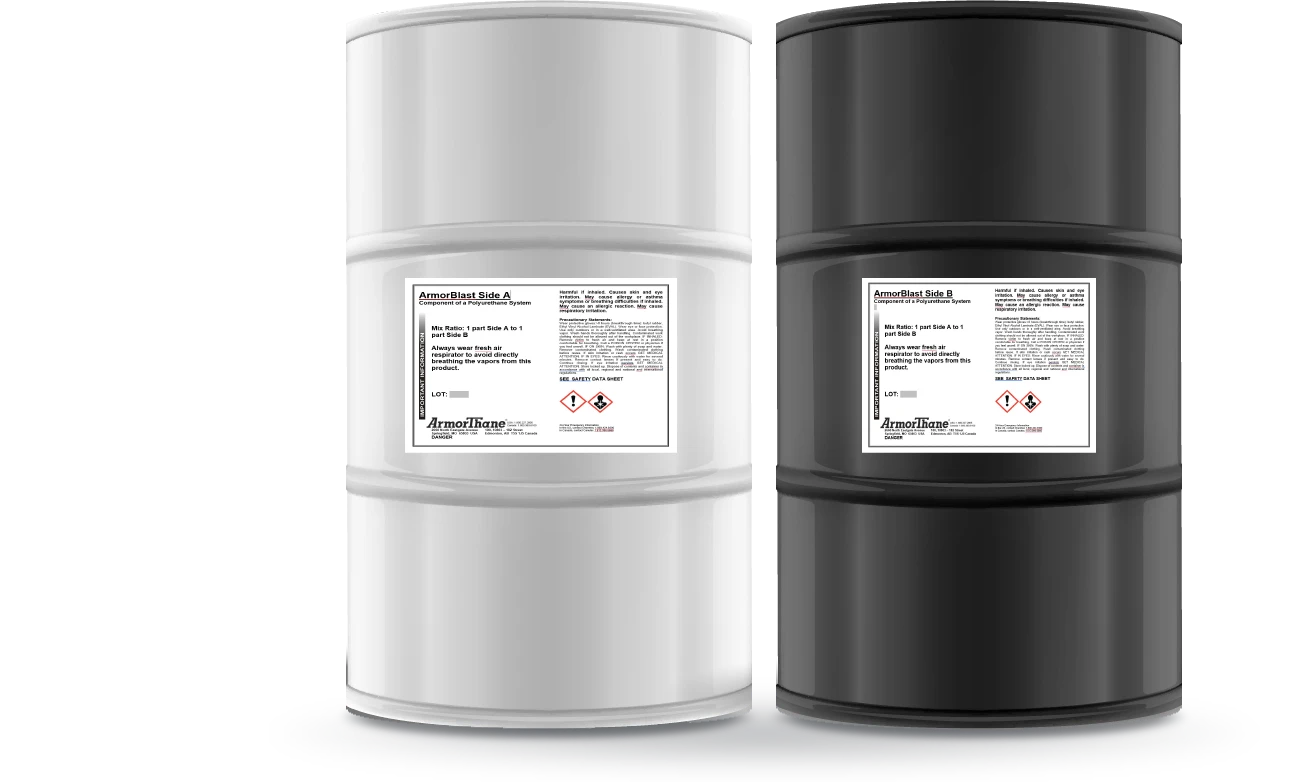
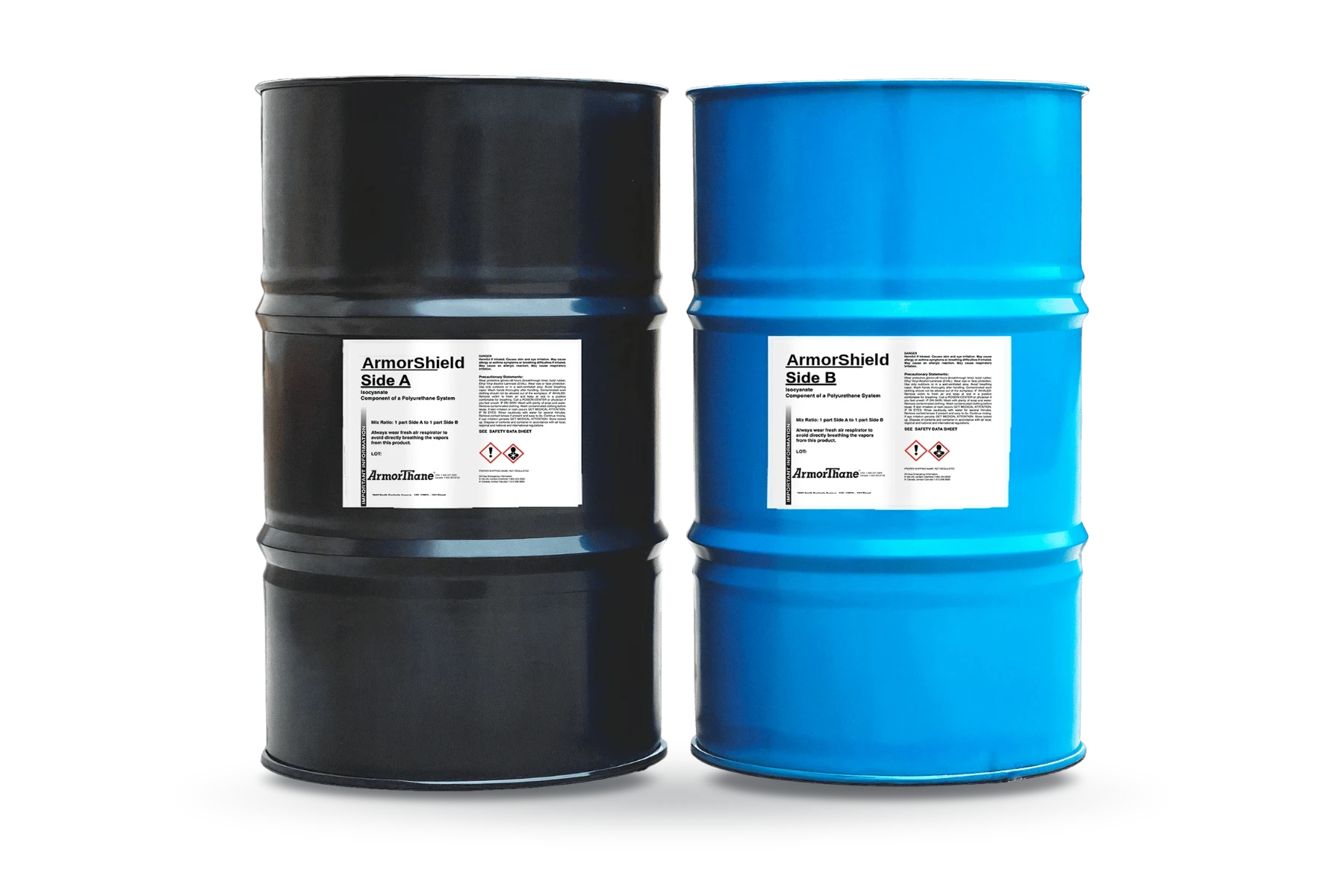
ArmorBlast is supplied in 55 gallon drums and can be custom tinted to most colors. Metered 1:1 by volume, through a high-pressure plural-component rig that can hold pressure and heat consistently over your hose length.
Side A runs around 450 cps — thicker than most of the range on both sides, which is part of why this product wants a rig that can genuinely hold pressure and heat rather than one that nearly can.
Side B runs around 500 cps, and the data sheet is explicit about one thing: always agitate the B side before using it. Custom tinting is done on this side.
A simulated concrete block building, coated and then blown up on purpose. Three of the four walls carried a one-eighth inch ArmorBlast coating in different configurations; the fourth was left bare as the control.
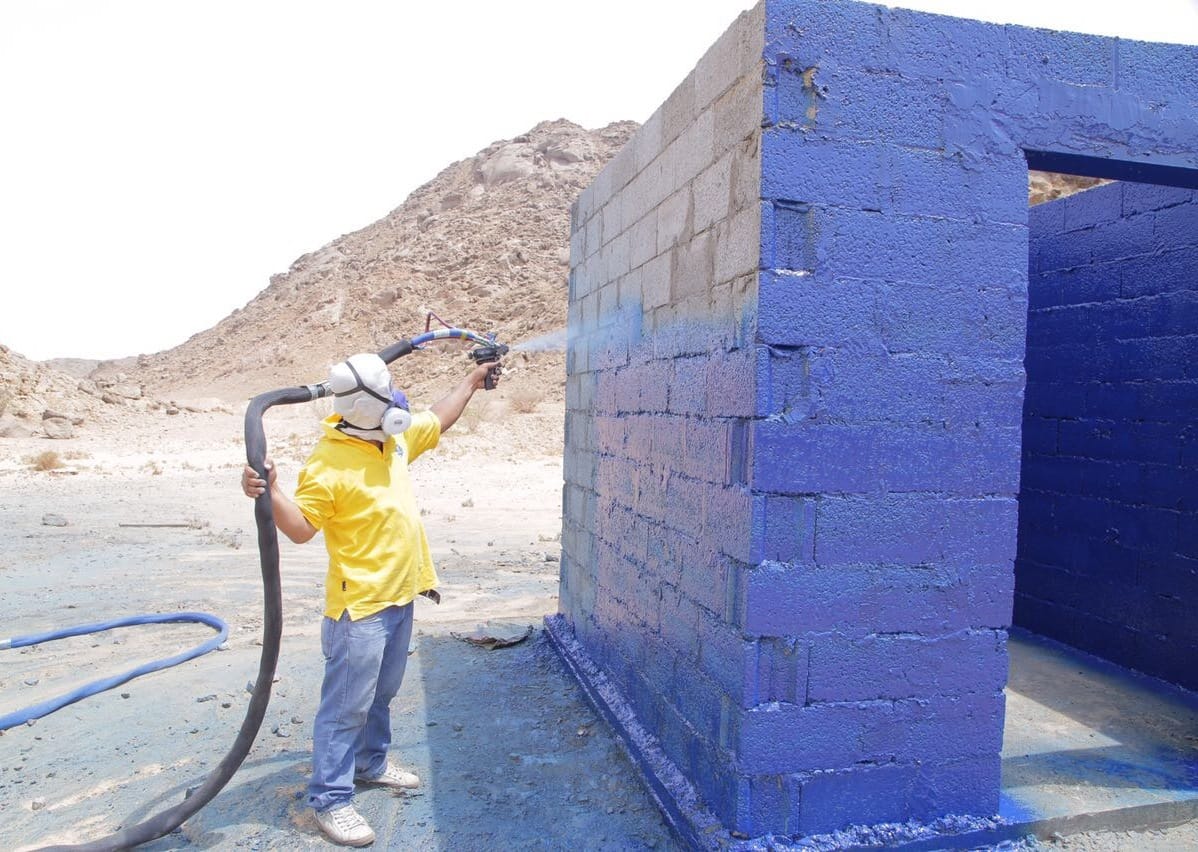
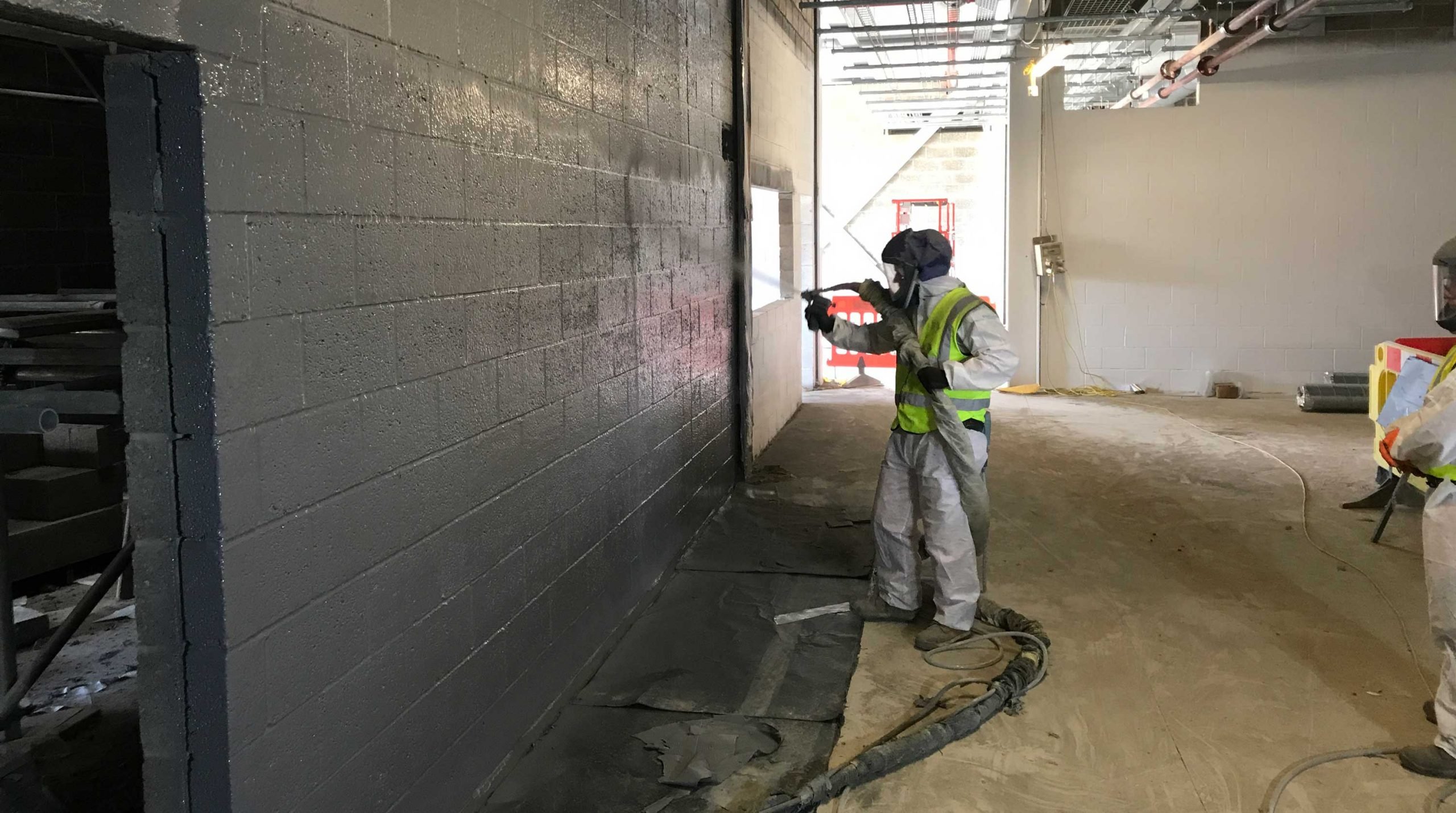
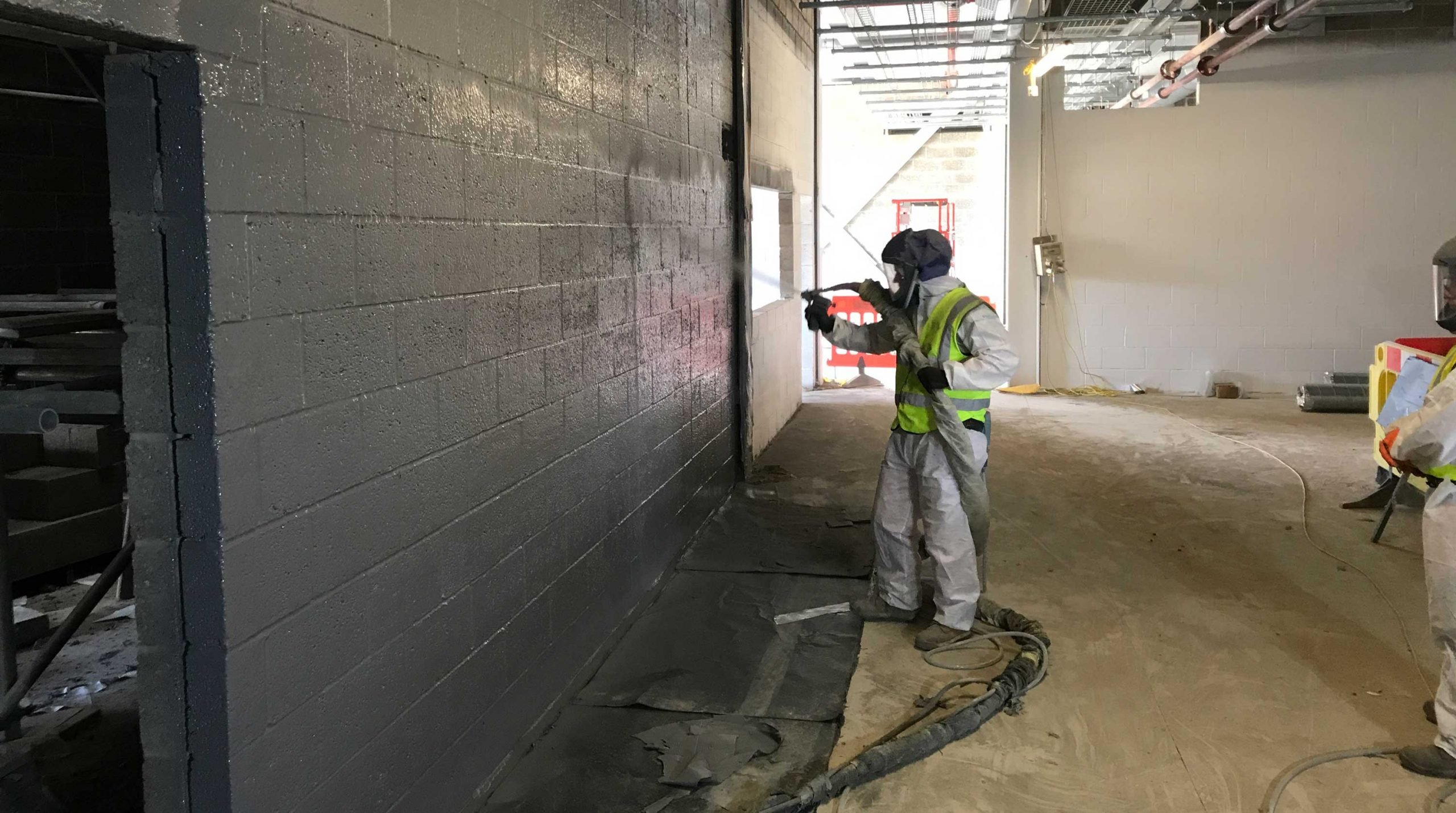
Away from the range, this is the ordinary work: concrete block, concrete and steel in industrial buildings, where the coating is doing chemical, abrasion and waterproofing duty rather than stopping a charge.
Formulated in-house, and taken to a range to find out.
ArmorBlast is an ArmorThane formulation, part of the ArmorLine series. We have developed and manufactured our own polyurea and polyurethane chemistry since 1989. ArmorBlast is the one we commissioned an explosives laboratory to test rather than describing it and hoping.
It has been blast tested by a university lab
In August 2007 the Explosives Research Laboratory at the University of Missouri–Rolla fired C-4 charges at a purpose-built concrete block structure, three walls of which carried a one-eighth inch ArmorBlast coating. The full results, including where the coating was eventually defeated, are set out further down this page. The report carries the laboratory's own standing notice that it is not an endorsement of any product.
University of Missouri–Rolla Explosives Research Laboratory, August 2007
The strongest numbers in the range
Around 5,000 psi tensile with 350% elongation and about 7 mg of Taber loss. That is the highest tensile figure we publish for any ArmorLine product, and it is paired with an elongation that still lets it move. Strength without flexibility would be a liability on a structure.
About 5,000 psi tensile · 350% elongation · about 92–97 Shore A
The widest service range we publish
Minus forty to 350°F of temperature exposure, and it can be sprayed anywhere between 25 and 140°F. That upper number is well above everything else in the line, which matters around process equipment, refineries and anything that runs hot.
Service exposure −40 to 350°F · application 25 to 140°F
Forty-four chemicals, published with ratings
Acids, caustics, fuels, solvents and oxidisers, each rated recommended, recommended-conditional or conditional. Nothing on the published list comes back as not recommended, but several need washing down within the hour — and we publish which ones rather than rounding it up to "excellent chemical resistance".
Full chemical resistance table published on this page
Rated for incidental food contact
ArmorBlast conforms to USDA, FDA and Agriculture Canada guidelines for incidental food contact, which opens up food plants, cold storage and wash-down areas alongside the heavy industrial work.
Conforms to USDA, FDA and Agriculture Canada guidelines for incidental food contact
Backed by the people who make it
Buying ArmorBlast means buying the chemistry, the plural-component rig that sprays it, the hands-on training that certifies the crew, and technical support for as long as you spray it. There are no franchise fees and no royalties on any of it.
$0 franchise fees · hands-on applicator training · support for the life of the business
The jobs ArmorBlast is genuinely the right answer for.
Each of these traces back to the published data sheet — the figures below are rounded.
Blast protection on masonry
Concrete block and masonry walls where a hardened lining is specified. Blast tested on CMU construction in 2007 — read the actual results on this page before you specify it.
Secondary containment and lagoons
Containment areas, wastewater lagoons, sewer liners and manhole restoration. Forty-four chemicals published with ratings, and a 40 mil minimum build on old concrete for chemical and abrasion duty.
Refineries and petrochemical plant
Petrochemical refineries, cooling towers, oilfield pipeline coatings and rail cars. Service exposure to 350°F and a strong chemical table behind it.
Industrial floors and wash bays
Industrial flooring, wash bay and shower linings, and cold storage. Around 7 mg of Taber loss, and foot traffic in as little as five minutes on the fast setting.
Bridges, waterproofing and anti-graffiti
Bridge coatings, general waterproofing and anti-graffiti work. It adheres well to concrete, steel and wood, with a published preparation spec for each.
Getting the asset back in service
Fast gel at around nine seconds, tack free in under twenty, foot traffic in five minutes and industrial traffic in an hour. A slow version shifts all four if you need working time.
What actually happened when they blew up the wall.
In August 2007 ArmorThane commissioned the Explosives Research Laboratory at the University of Missouri–Rolla to blast-test ArmorBlast. Masons built a four-wall structure from concrete block with reinforcing wire in alternate joints. The north wall was left bare as a control; the west and east walls were coated one-eighth of an inch on the outside only, without and with primer; the south wall was coated one-eighth of an inch on both faces. Two-pound C-4 charges were fired at a 36 inch standoff.
- Bare control wall: vertical hinge cracks down both sides and tensile cracks in the rear face
- Coated outside only: tensile cracks in the rear face, but less pronounced, and no damage to the front face
- Coated both faces: no visible damage at 36 inches, and none at 18 inches either
- Coated both faces, detonating cord at 6 inches: two small cracks in the outer coating and the wall pushed back about half an inch — concrete failure inside, but no gross cracking or deformation
- Coated both faces, two-pound charge in contact: the coating was breached — an eight inch hole outside and about three feet by three feet inside — but the wall did not fail structurally
This product is specific about what it wants underneath it.
Coating performance and adhesion are directly proportional to surface preparation, and ArmorBlast publishes a preparation spec per substrate rather than leaving it to judgement. Chloride, moisture and pH all get checked before anything is sprayed, and on concrete a primer is part of the system rather than an optional extra.
- Old concrete: sandblast, shot-blast or water-blast; Primer/Sealer WC-111 recommended; 40 mil minimum build for chemical and abrasion duty
- New concrete: let it cure at least 30 days, then shot-blast or sandblast off the surface laitance; WC-111 to reduce out-gassing
- Carbon steel: prepare to near-white metal, SSPC-10 or NACE 2; 2 mil profile generally, 3 mil for immersion; 10 to 40 mil build
- Repair all spalls and cracks first; fill horizontal control joints with a single-component urethane sealant
- Check chloride, moisture and pH levels before application, and always agitate Side B
Where ArmorBlast earns its keep.
The published use list is long — these are the places applicators put it most.
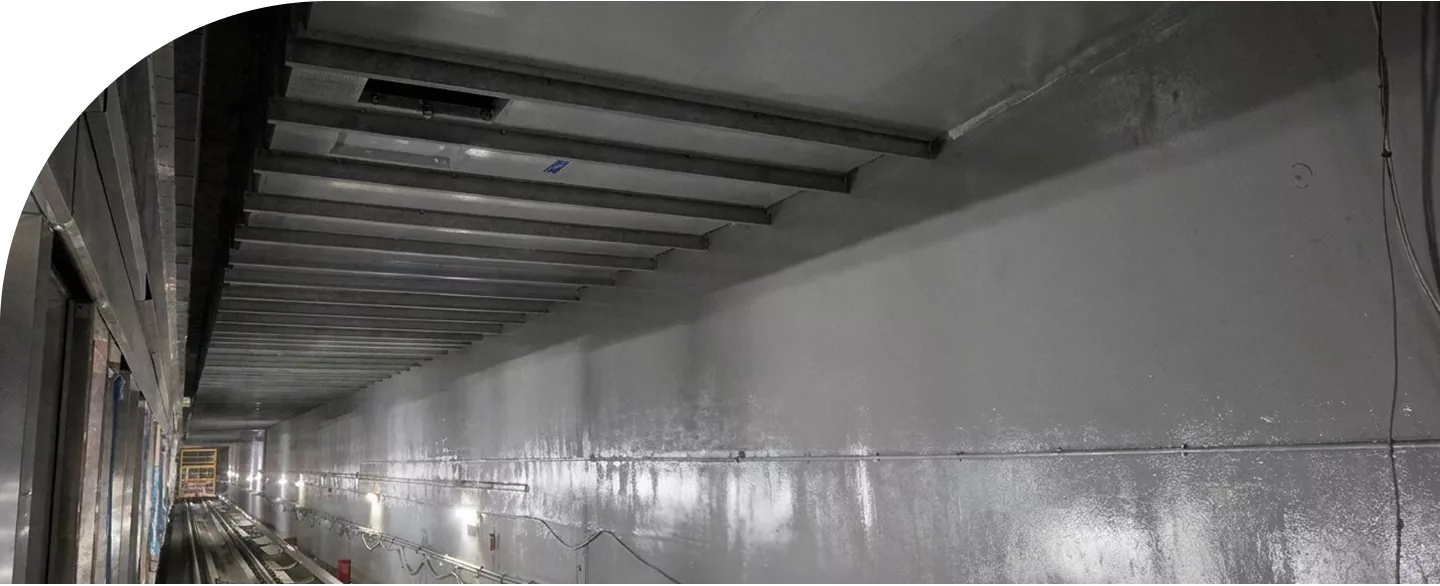
Blast protection
Masonry and concrete block walls where a hardened lining is specified. The 2007 university test is on this page in full, including where the coating was eventually defeated.
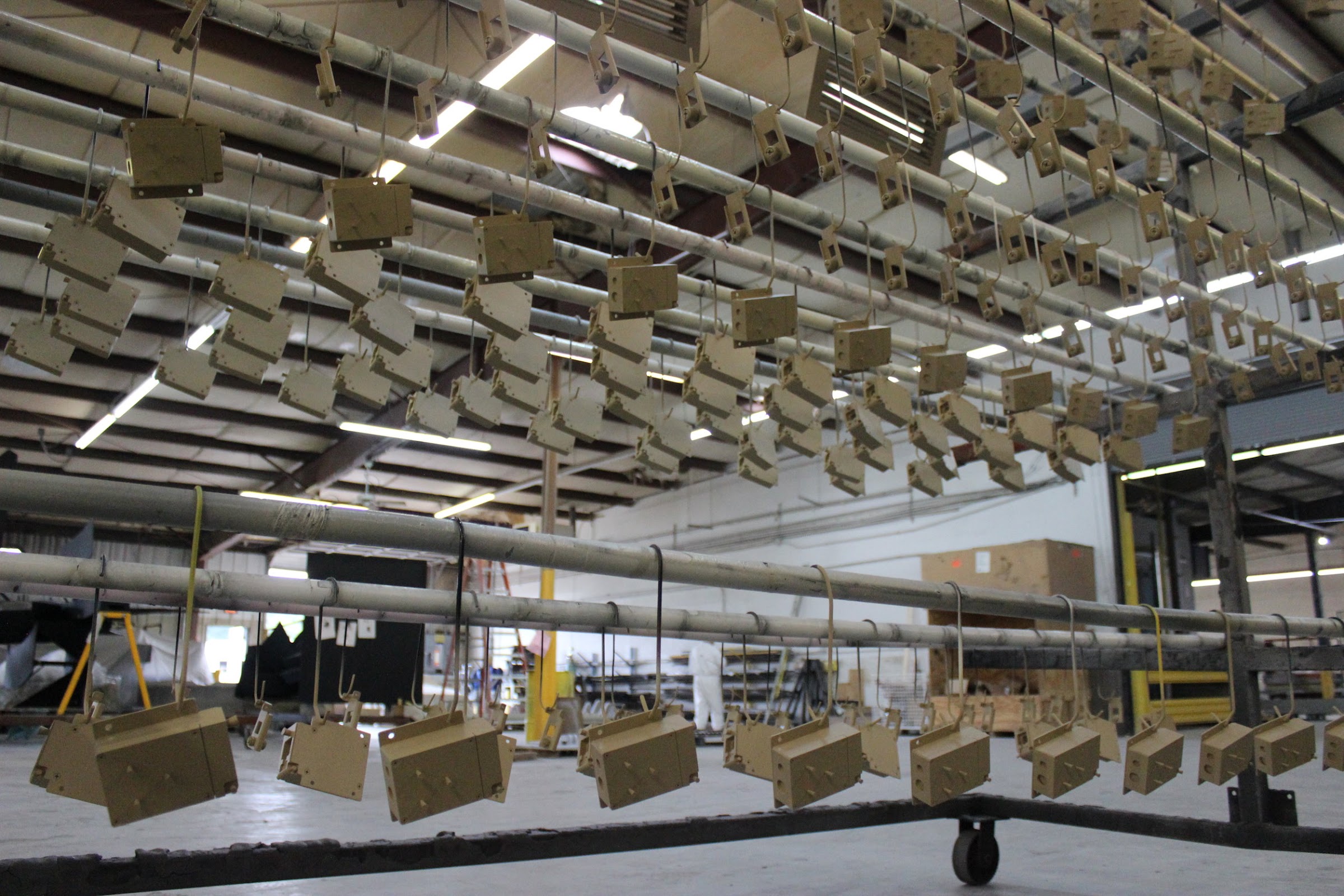
Defense and government facilities
Hardened structures, vehicle and equipment protection, and the kind of specification that asks for a test report rather than a brochure.
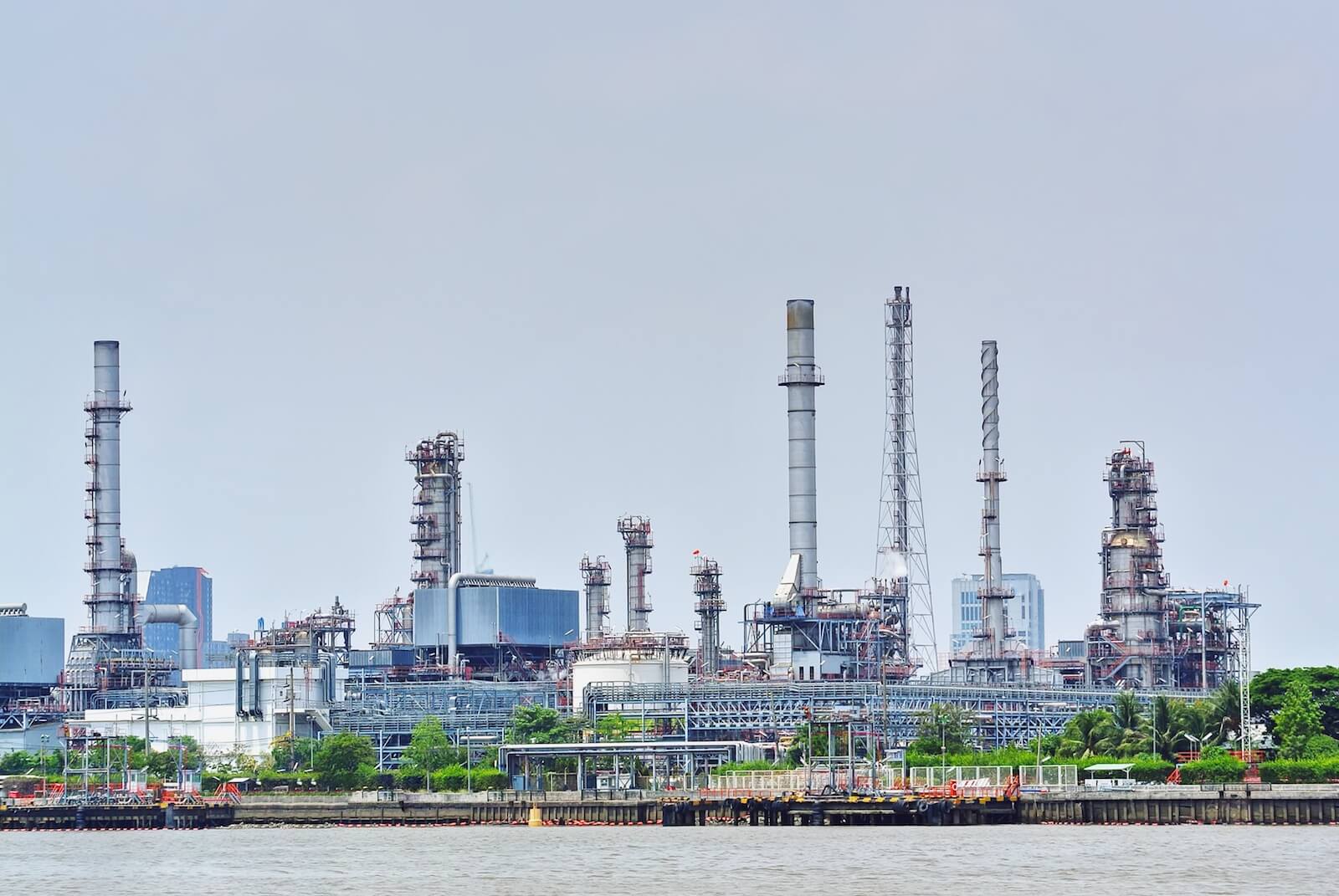
Refineries and petrochemical
Petrochemical refineries, cooling towers, rail cars and oilfield pipeline coatings. Service exposure to 350°F with forty-four chemicals published.
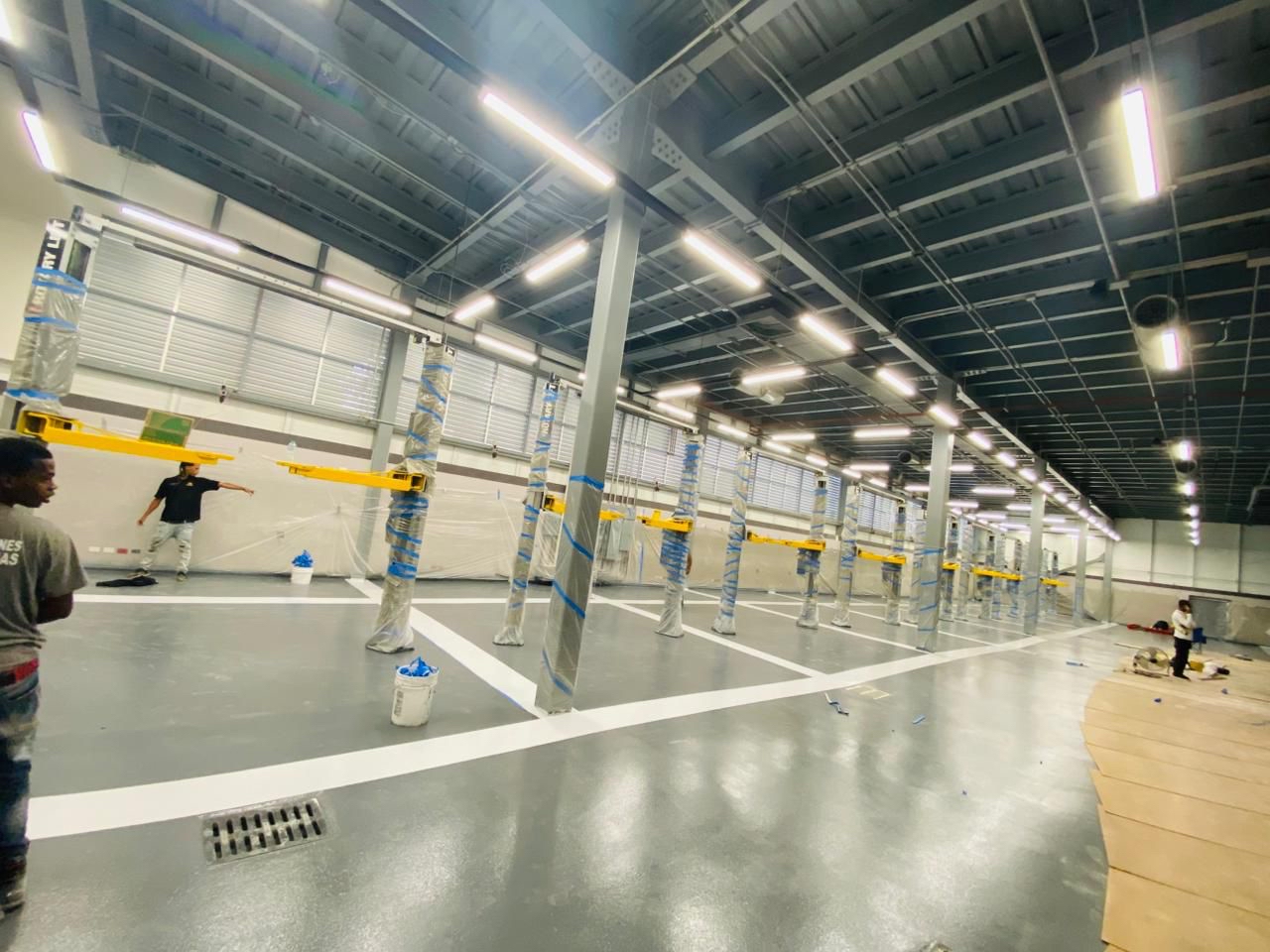
Industrial floors and wash bays
Industrial flooring, wash bay and shower linings and cold storage areas. Conforms to USDA, FDA and Agriculture Canada guidelines for incidental food contact.
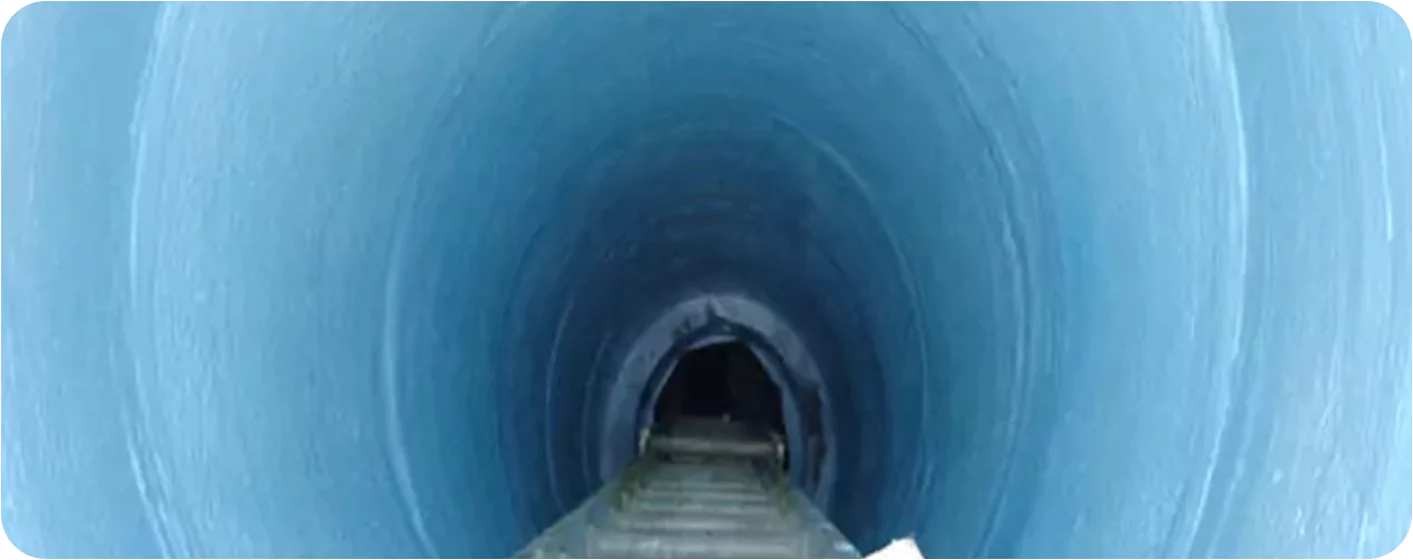
Sewers, manholes and lagoons
Sewer liners, manhole restoration and wastewater lagoons. A 40 mil minimum build on old concrete for chemical and abrasion resistance.
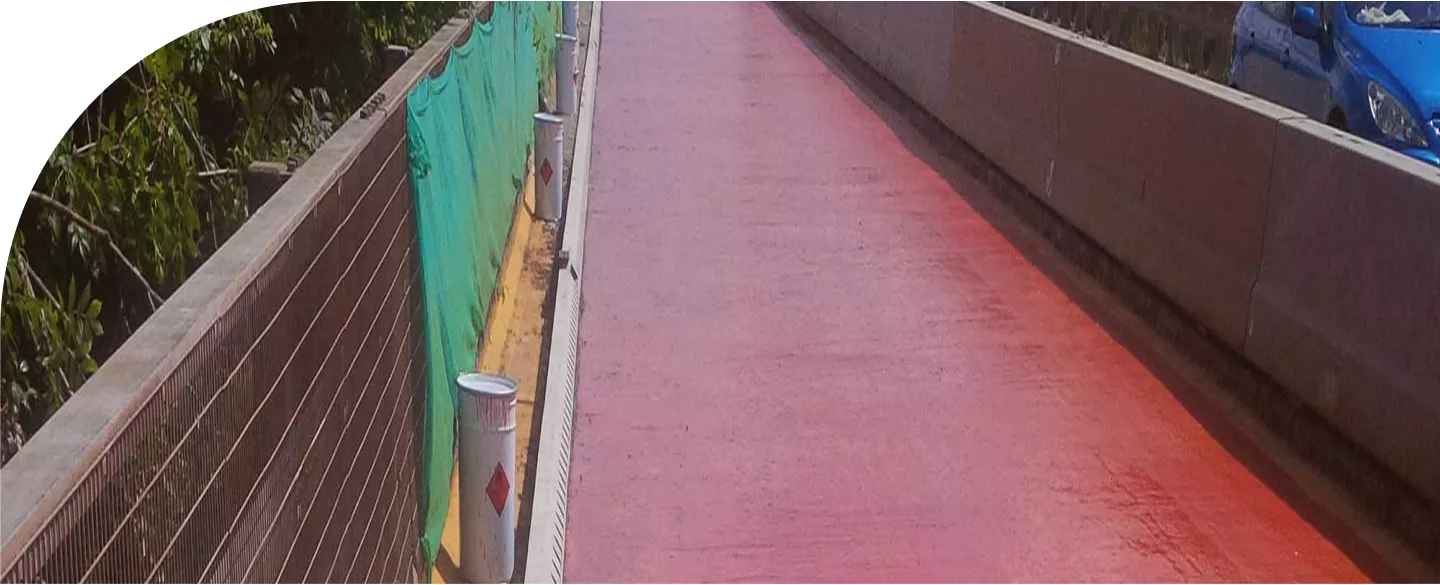
Bridges and waterproofing
Bridge coatings, waterproofing, pool linings and anti-graffiti work. Adheres well to concrete, steel and wood with a published prep spec for each.
What to expect from the film.
Typical values, rounded so you can size the product up quickly. Filter by what you care about, search for a property, or flip the sheet to metric.
No published property matches that search.
These are typical, rounded values obtained on ArmorThane equipment and parameters — they are here to give you a feel for the product, not to specify a job. Exact published figures, tolerances and test conditions are on the current ArmorBlast technical data sheet; ask us and we will send it. Different spray equipment and parameters will affect these properties, so applicators should run their own testing for a given job. ArmorBlast is for commercial use only and should only be applied by trained personnel.
Forty-four chemicals, every result published.
Spot testing on an ArmorBlast film at 25°C. Filter by the verdict — including the ones that need washing down within the hour.
No published property matches that search.
Spot testing only, at 25°C. Use caution wherever high temperatures are involved, wet or dry — heat changes these answers. Results were obtained in a controlled environment and will not represent every environment; application process, design and site conditions all vary. For any chemical not on this list, test before you coat, and talk to the ArmorThane technical department first.
How an ArmorBlast job actually goes down.
The short version of the data sheet, in the order a crew does it.
- 01
Assess and repair the substrate
Coating performance and adhesion are directly proportional to surface preparation, and most coating failures trace back to it. Surfaces must be free of loose particles, rust, voids and spills. Repair all spalls and cracks, recognise the expansion joints and deal with them, and fill horizontal control joints with a single-component urethane sealant first.
- 02
Blast clean to the published standard
Old concrete gets sandblasted, shot-blasted or water-blasted, with any oils or fats removed first. New concrete cures at least 30 days, then gets shot- or sandblasted to take off the surface laitance. Carbon steel goes to near-white metal — SSPC-10 or NACE 2 — at a 2 mil profile, or 3 mil for immersion service.
- 03
Test chloride, moisture and pH
All three get checked before anything is sprayed. This product publishes that step rather than assuming it, and on a containment or immersion job it is the step that decides whether the coating lasts.
- 04
Prime the concrete
Primer/Sealer WC-111 is recommended on old concrete and on new concrete, where it also reduces out-gassing as the slab breathes. On steel the primer is usually not needed, but the blast profile is.
- 05
Agitate Side B and set up the rig
Always agitate Side B before use. ArmorBlast must go through a high-pressure plural-component system capable of supplying correct pressure and heat consistently for your hose length — the data sheet calls that mandatory, not preferable.
- 06
Build to the thickness the duty needs
A 40 mil minimum is generally recommended on old concrete for chemical and abrasion resistance; on carbon steel, 10 to 40 mils depending on the chemical exposure. Use the published coverage table to work the material out, and allow for overspray and surface profile.
The chemistry is only half of what you get.
ArmorThane makes the coating, builds the plural-component rig that sprays it, trains your crew hands-on and certifies them, and answers the technical line afterwards. No franchise fees, no royalties, no territory you have to buy. Applicators have come first here since 1989.
- Equipment package matched to the work you want to take on
- Hands-on training and applicator certification
- Technical support for the life of the business
- Applicators in more than 50 countries
ArmorBlast, answered.
Is ArmorBlast blast proof?
No, and we would rather say that plainly than sell you something you will be disappointed by. The 2007 University of Missouri–Rolla testing showed a significant difference between a bare concrete block wall and one coated on both faces — two pounds of C-4 at 36 inches and again at 18 inches caused no visible damage to the both-faces wall, where the bare control wall cracked through. But a two-pound charge placed in contact with that same wall did breach the coating, punching an eight inch hole in the outer layer and a roughly three foot by three foot hole in the inner one. A coating changes the outcome; it does not repeal physics, and the test report itself carries the laboratory's notice that it is not an endorsement of any product.
Does it matter which side of the wall I coat?
On the evidence of that test, enormously. The walls coated on the outside face only still cracked on the rear face, though less than the bare control. The wall coated on both faces showed no visible damage at either standoff distance. If blast mitigation is the reason you are buying this product, coating both faces is the configuration that produced the result, and it is what we would discuss with you first.
How old is the blast test?
August 2007, at what was then the University of Missouri–Rolla and is now Missouri University of Science and Technology. It is a real third-party test by an explosives laboratory, and it is also nearly twenty years old — so if your specification needs current testing against a particular standard or threat, tell us and we will be straight with you about what we hold and what we do not.
What is the fast version and the slow version?
ArmorBlast publishes two processing speeds. Fast gels in about nine seconds and is tack free in sixteen, with foot traffic at five minutes and industrial traffic at an hour. Slow gels in about twenty-two seconds and is tack free in thirty-five, with foot traffic at an hour and industrial traffic at two. Pick by how much working time the geometry needs, not by how fast you want to finish.
Do I need a primer?
On concrete, yes — Primer/Sealer WC-111 is recommended on both old and new concrete, and on new concrete it also reduces out-gassing. On carbon steel the data sheet asks for a blast profile rather than a primer: near-white metal to SSPC-10 or NACE 2, at 2 mils generally or 3 mils for immersion service.
How thick does it need to go on?
It depends on the duty. A 40 mil minimum is generally recommended on old concrete where chemical and abrasion resistance matter. On carbon steel it is 10 to 40 mils depending on chemical exposure. The blast testing was done at one-eighth of an inch, which is 125 mils — considerably heavier than either. Published coverage runs from about 70 square feet per gallon at 20 mils down to 5.5 at 250 mils.
Can it go in a food plant?
It conforms to USDA, FDA and Agriculture Canada guidelines for incidental food contact, which covers wash bays, cold storage and food processing floors. Incidental contact is not the same as direct food contact, so if your application involves continuous contact with product, talk to us before you specify it.
Which chemicals need watching?
Four are rated conditional, meaning crackling unless you wash the spill down within the hour: methylene chloride, MTBE, Skydrol and 1,1,1-trichloroethane. Fourteen more are recommended-conditional — fuels, solvents and strong acids that cause some swelling or discoloration. Everything else on the published list is recommended. Use the table above and filter by verdict.
Why is the shelf life only six months?
That is what the data sheet states for ArmorBlast in factory-delivered, unopened drums. Rotate your stock, keep the drums between 60 and 100°F, and keep them away from extreme heat, cold and moisture. It ships by commercial truck line at freight class 55.
What do we need to know before handling it?
This product contains isocyanate and curative material. Read the Safety Data Sheets for both sides before anyone touches a drum — regulations require that every employee be trained on the SDS for the chemicals they work around. Wear a fresh-air respirator, protective gloves and clothing, and eye and face protection.
Tell us what you need to protect.
Describe the structure, the substrate, what it has to survive and where you are. An ArmorThane specialist will come back with the right chemistry, the rig that sprays it and what a startup actually costs.
- Equipment package matched to your applications
- Hands-on training and applicator certification
- The full 2007 blast test report on request