









Truck Frame Paint: Coatings That Survive Salt & Gravel
How to inspect a frame, frame-on vs. frame-off options, chassis paint vs. encapsulator vs. powder coat vs. polyurea, boxed rail cavities, and tools to plan the job.
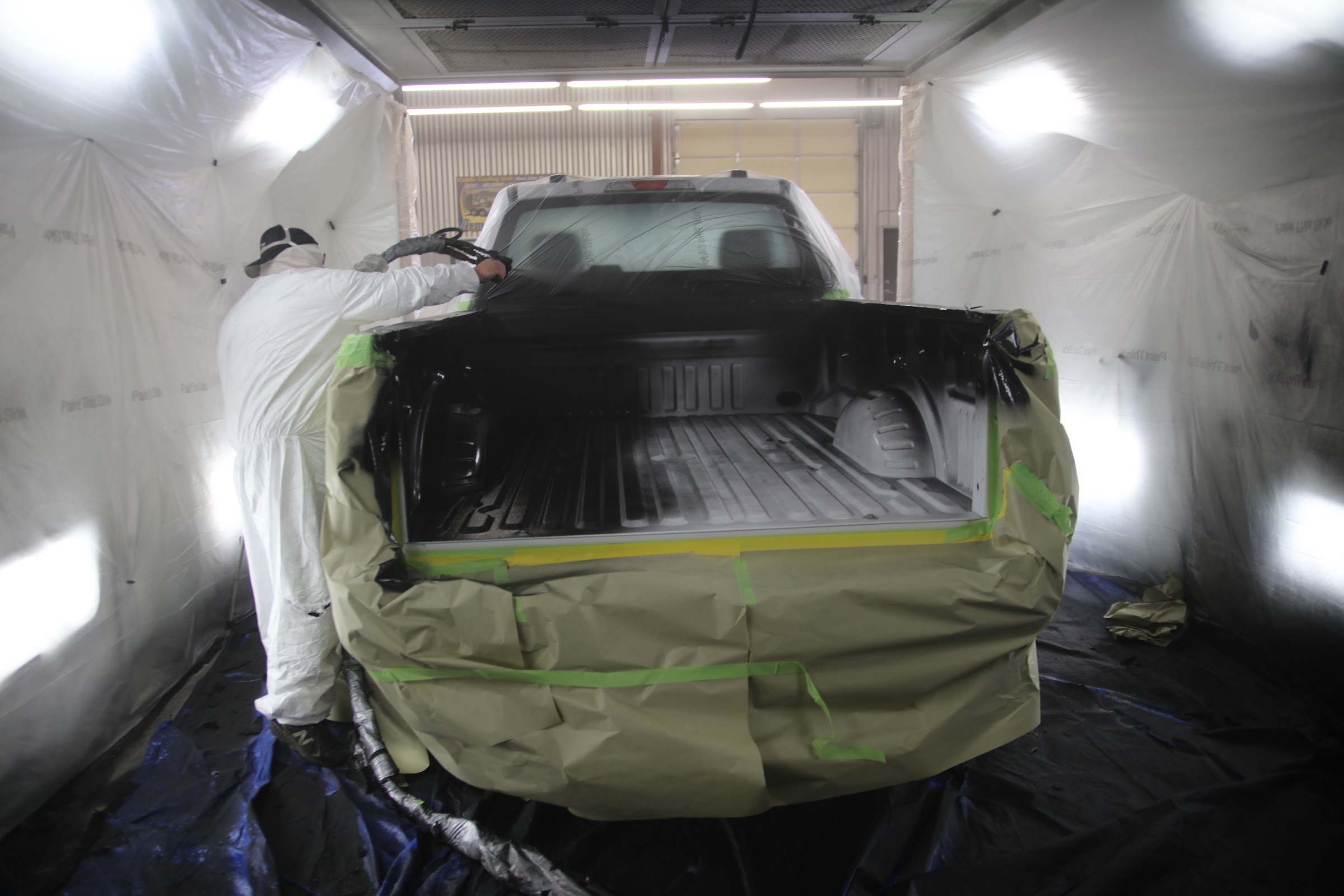
Spray bedliners for a living.
ArmorThane is the one-stop shop for applicators. We make the chemistry, build the equipment, train you hands-on and back you with technical support, with no franchise fees and no royalties. Applicators have come first here since 1989.
- $0franchise fees or royalties
- 35+years in business
- 50+countries with applicators
- 24/7technical support
Truck frame paint is not the same job as painting a fender. A frame flexes, takes gravel and salt brine at highway speed, holds wet mud in every pocket, and on most modern trucks hides half its steel inside boxed rails you cannot reach with a brush. We coat frames, undercarriages and trailers through our applicator network, and the frames that last are the ones where the coating system matched the frame, the rust and the way the truck is used. This guide covers how to inspect a frame, frame-on vs. frame-off options, chassis paints vs. encapsulators vs. powder coat vs. sprayed polyurea, what to do inside boxed rails, and two tools: a frame area and material calculator and a frame protection planner.
On a truck you are keeping on the road, clean the frame, remove loose rust to sound steel, prime with a rust-tolerant primer or encapsulator, topcoat with a chassis paint or have a polyurea undercoating sprayed, and fog the inside of boxed rails with a cavity wax or lanolin spray every year or two. On a frame-off restoration, blast it and use epoxy primer and urethane, or powder coat. If a hammer goes through the steel, stop: that frame needs repair or replacement, not paint.
Inspect the frame before you buy paint
Paint does not add strength. The frame carries the cab, the bed, the payload and the hitch, and the most important question is whether there is enough steel left. Frame rot became national news when Toyota agreed in 2016 to pay up to $3.4 billion over 2005–2010 Tacomas, 2005–2008 Sequoias and 2007–2008 Tundras whose frames rusted prematurely, including frame inspections and replacements. Your truck does not need to be on that list to have the same problem; it needs salt, moisture and time.
Put the truck on stands, wash the frame and look at it in good light. Then tap it.
Surface rust, solid ring
Orange rust on the surface, a hammer or screwdriver tap rings solid, no flaking layers. This is the ideal time to coat.
Scale and layered flaking
Rust peels in sheets, especially at spring hangers, crossmember joints and where mud packs. Knock it all off, then judge what is left.
Pitting and thinning
Deep pits, sharp edges on flanges, a dull thud when tapped. Have a shop check wall thickness. Coating will slow it, not reverse it.
Holes or soft spots
A hammer or pick goes through, or rust has perforated near mounts. That is a structural repair or a frame replacement. Do not cover it up.
Truck frame paint and coating options compared
These are the systems we see on frames, from a weekend spray can to a frame-off restoration. Film and coverage figures come from the data sheets cited below the table. The chip resistance column is our field rating from 1 (poor) to 5 (best), based on how each type holds up to gravel and flex; it is a judgment, not a lab test.
| System | Frame on truck? | Minimum prep | Film | Coverage | Chip resistance (1-5) | Upkeep |
|---|---|---|---|---|---|---|
| Oil-based rust enamel ("chassis black") | Yes | Wire brush, rusty metal primer | Thin, 2 coats | 50–110 sq ft/qt | 1 | Touch up yearly |
| Rust encapsulator + topcoat | Yes | Clean, etch, dry | 6–7 mils in 2–3 coats | 250–450 sq ft/gal | 3 | Topcoat where sun hits |
| Epoxy mastic + urethane | Yes | SSPC-SP 2 / SP 3 | 4.6–7.2 mils per coat | 175–275 sq ft/gal | 3 | Touch up chips |
| Blast + epoxy primer + urethane | Usually off | SSPC-SP 6 or SP 10 | 4–6 mils primer | 175–260 sq ft/gal primer | 3 | Touch up chips |
| Powder coat | No, oven cure | Strip to bare steel | 2–3 mils | n/a | 3 | Rust creeps under chips |
| Sprayed polyurea undercoating | Yes, by applicator | Clean, abrade, prime | Thick, per system | Per system | 5 | Inspect yearly |
| Lanolin / oil spray (inside rails) | Yes | Remove loose rust | 3–4 mils | 250 sq ft/gal | 1 | Reapply every 1–2 years |
Truck frame area and material calculator
Nobody knows how many square feet a frame is, which is why people run out of paint halfway down the second rail. Measure your rails and crossmembers and the calculator works out the outside area to coat, the inside area of any boxed sections, and how much of each product to buy. The default dimensions are just an example; replace them with yours.
How much frame is there to coat?
Open C-channel: length x (2 x height + 4 x flange) per rail, both faces of web and flanges. Boxed: length x (2 x height + 2 x flange) outside, plus the same inside. Crossmembers: count x length x perimeter. Material = area x coats / data sheet coverage.
Inside boxed frame rails: where frames really rot
Many modern pickup frames are fully or partly boxed. The outside looks fine and the inside is packed with wet mud and salt that never dries, so the rail rusts from the inside out. That is why a frame can pass a quick look and then fail a hammer test. No brush-on paint reaches in there, and spraying a hard coating into a dirty cavity just seals the mud in.
- Flush first. Run a hose or pressure washer wand through the factory holes until the water comes out clean. Let it dry for days, not hours, or use compressed air.
- Fog with a creeping product. Lanolin and wax-based cavity sprays are made for this. They migrate into seams and pits and stay soft. Fluid Film says it embeds in the pores of the metal and resists wash-off, and at 3 to 4 mils it covers about 250 sq ft per gallon.
- Use a 360-degree wand. A long flexible wand with a spray head that sprays in all directions reaches from one access hole to the next.
- Repeat on schedule. Soft films are not permanent. Fluid Film's data sheet describes roughly 1 to 2 years of service; in the salt belt, every fall is a good habit.
- Do not plug drain holes. Cavities need to drain. Keep the factory holes open after coating.
Truck frame protection planner
Tell the planner what the truck is for, where it lives, the frame condition and whether the frame comes off. It recommends a system, the prep it needs and a maintenance schedule built from the data sheet intervals on this page.
What should go on this frame?
Condition decides whether to coat at all. Frame-off work opens up blasting and powder coat (oven cure at 400°F part temperature). Salt exposure pushes toward thicker, tougher systems and annual cavity treatment.
How to paint a truck frame without taking it off
Lift, wash and degrease
Get the truck safely on jack stands or a lift. Pressure wash the frame, wheel wells and cavities, degrease around the engine and transmission, then rinse with plenty of fresh water to get salt out of seams.
Mask what must stay clean
Brake lines, fuel lines, wiring, sensors, exhaust, rubber bushings, driveshaft and anything that gets hot. Coating on brake components or exhaust is a safety and fire issue.
Remove loose rust and scale
Scraper, needle scaler, wire wheels and flap discs. Hit spring hangers, shackle mounts and crossmember joints hardest. Tap-test anything suspicious and stop if you find perforation.
Blow off, dry and check the weather
Blow out dust and water. Coat when air and steel are above the product's minimum (50°F for the Rust-Oleum enamels and the epoxy mastic in our table) and the steel is at least 5°F above the dew point.
Prime and build the film
Rust-tolerant primer or encapsulator first, worked into pits and seams with a brush, then topcoat within the recoat window. Two coats beat one heavy coat. For a rust converter, follow its 24 hour topcoat rule.
Treat the cavities last
Once the outside has cured, fog the inside of boxed sections with a cavity spray and leave the drain holes open.
Want the frame and the rest of the underbody done as one job? Our truck undercoating guide covers full undercarriage systems, and rubberized undercoating explains why rubber and asphalt undercoatings can trap moisture on a frame. For primer choices on bare steel, see the metal primer guide; for the toughest corrosion primer on a blasted frame, zinc rich primer.
Want the frame done once and done right?
Send photos of the frame, the year and model, and how the truck is used. A certified ArmorThane applicator near you can quote cleaning, prep and a sprayed polyurea frame and undercarriage coating.
Contractors: become an applicator →
More on rust and truck protection
Spray-on bedliners
The same polyurea that protects beds, sprayed on frames and undercarriages.
Truck frame paint questions
What is the best paint for a truck frame?
For a frame still on the truck, a rust-tolerant primer or encapsulator topped with a durable chassis paint, or a sprayed polyurea undercoating for the best chip resistance. For a frame-off restoration, blast it and use epoxy primer and urethane, or powder coat. In every case, treat the inside of boxed rails with a cavity spray.
Can I paint my truck frame without removing it?
Yes. Most frames are coated on the truck. Lift it, wash and degrease, mask brake and fuel lines, wiring and exhaust, remove loose rust, then prime and topcoat. You will not reach every surface behind the cab mounts or tank, so pair it with a cavity spray in hidden areas.
Is powder coating a truck frame worth it?
On a frame-off restoration, it gives a hard, even finish. It requires stripping to bare steel and an oven big enough to bring the whole frame to about 400°F part temperature and hold it for around 10 minutes, so it is not possible with the frame on the truck. Once chipped, rust can creep under powder, so touch up damage promptly.
Should I undercoat or paint my frame?
Paint is fine for a dry-climate truck. In salt country, a thicker, tougher film lasts longer. Avoid thick rubberized or asphalt undercoatings directly on a frame unless the steel is sound and primed, because if they crack they can trap moisture against the steel. Sprayed polyurea bonds to primed steel and stays flexible.
How do you treat rust inside a boxed truck frame?
Flush the mud out with water through the factory holes, let it dry thoroughly, then fog the inside with a lanolin or wax cavity spray using a 360-degree wand. Repeat every one to two years. Keep the drain holes open.
How much paint does it take to paint a truck frame?
It depends on the frame and the product. Measure the rails and crossmembers and use the calculator on this page. As a check, a gallon of encapsulator covers 250 to 450 sq ft per coat, and a quart of rust enamel covers 50 to 110 sq ft, so a full-size frame with two coats can easily take more than one quart of enamel.
Can a rusted truck frame be repaired?
Often, yes. Rusted sections can be cut out and plated or replaced with repair sections by a qualified welder, and replacement frames are available for many trucks. Whether repair is safe depends on where the damage is and how much steel is left; that is a call for a frame or alignment shop, not a paint job.
How long does truck frame paint last?
It depends far more on prep, film thickness and exposure than on the brand. A thin enamel over loose rust can fail in one salt season; a properly prepped, primed and topcoated frame lasts much longer, especially with yearly washing, chip touch-up and cavity treatment.
Sources
- Fox News, Toyota to pay up to $3.4 billion to resolve rust claims from truck owners (2016): foxnews.com (Toyota frame rust settlement)
- USGS, Mineral Commodity Summaries 2026, salt: pubs.usgs.gov/periodicals/mcs2026/mcs2026-salt.pdf
- PowderCoatPro, complete powder coating curing guide: powdercoatpro.com (curing guide)
- Fluid Film, frequently asked questions: fluid-film.com/frequently-asked-questions
- Fluid Film, Liquid A technical data sheet: fluidfilm.no (Liquid A TDS PDF)
- POR-15, Rust Preventive Coating technical data: qr.por15.com (TDS PDF)
- Rust-Oleum, Stops Rust Enamel Brush technical data SRT-02: assets.unilogcorp.com (Rust-Oleum TDS PDF)
- Rust-Oleum, Stops Rust Primer Brush technical data: taindustrial.com (Rust-Oleum TDS PDF)
- Benjamin Moore, Corotech V160 surface tolerant epoxy mastic TDS: media.benjaminmoore.com (V160 TDS PDF)
- Sherwin-Williams, Recoatable Epoxy Primer B67 product data sheet: paintdocs.com (S-W PDS)
Frame protection that stands up to winter.
Truck owners get a certified ArmorThane applicator who preps the frame properly and sprays a flexible polyurea coating that shrugs off gravel and salt. Contractors can add frame and undercarriage coating with no franchise fee and no royalties.
Start your coatings business with ArmorThane.
Tell us what you want to spray and where you are. An ArmorThane specialist will walk you through the equipment, chemicals, training and startup cost for the work you want to do.
- Equipment package matched to your applications
- Hands-on training and applicator certification
- Technical support once you are spraying
Frame rusting out from under you? Protect it while it is solid.
Tell us the truck year and model, how it is used, and send photos of the frame. We will connect you with a certified ArmorThane applicator near you.
- Year, make and model
- Daily driver, work or plow truck
- Photos of the worst frame rust
- Frame only or full undercarriage
More in Automotive & marine
 Automotive & marineBecome A Bedliner Applicator
 Automotive & marineBedliner Colors
 Automotive & marineBedliner Franchise Costs & Alternatives: The 2026 Guide
 Automotive & marineBedliner Near Me | Find Certified Spray-On Bedliner Installers Near You
 Automotive & marineBedliner Removal
 Automotive & marineBest Spray-In Bedliner
 Automotive & marineBoat Deck Paint
 Automotive & marineCar Undercoating