



Foam Board Insulation: EPS vs XPS vs Polyiso, R-Values & Costs
What separates the three rigid foam boards, which ASTM grade to buy, 2026 prices, code rules, and when spray foam is the better call.
Start a spray foam business
Spray foam for a living.
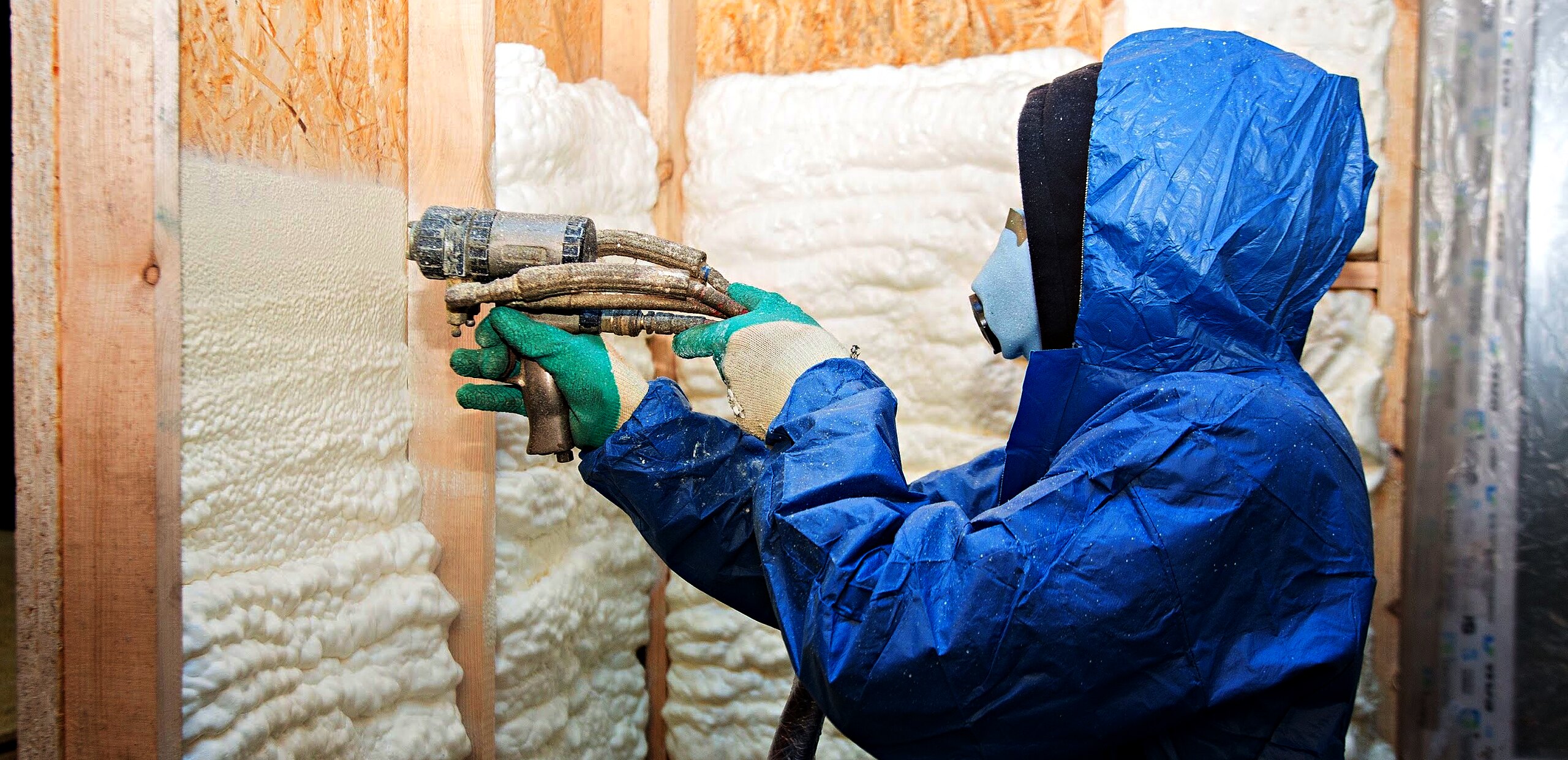
ArmorThane sets you up to do this work, and you own the business. We make the chemistry, build the rigs, train you hands-on and answer the phone when a job gets difficult. You pay no franchise fee and no royalties. It has been that way since 1989.
- $0
- franchise fees or royalties
- 35+
- years in business
- 50+
- countries with applicators
- 24/7
- technical support
Foam board insulation is rigid sheets of plastic foam, usually 4 by 8 feet, in three families: expanded polystyrene (EPS), extruded polystyrene (XPS) and polyisocyanurate (polyiso). It is the standard way to put continuous insulation on foundation walls, under slabs and over exterior sheathing, because it gives a lot of R-value for its thickness and covers the studs that cavity insulation cannot. We make spray foam, and our applicators install it against foam board all the time; each has a job. This guide covers what separates the three boards, the ASTM grades that matter, real costs, code rules, and two calculators for your project.
Use XPS or high-density EPS below grade and under slabs, where moisture and load are the issue. Use polyiso above grade on walls and roofs, where it has the highest R per inch of the three, but derate it to about R-5 per inch in cold climates. EPS is the cheapest per R-value and comes in many densities. Tape the seams if the board is your air barrier, and cover any interior foam with a thermal barrier such as 1/2 inch drywall. For rim joists and irregular cavities, closed-cell spray foam usually beats cut-and-cobble foam board on labor and air sealing.
Foam board insulation types: EPS vs XPS vs polyiso
All three are closed-cell foam plastics, all three are covered by an ASTM standard, and all three need a thermal barrier when used inside a house. After that they behave quite differently.
Expanded polystyrene
Beads expanded and fused in a mold, the white "bead board." ASTM C578 grades run from Type I (0.90 pcf, R-3.6 per inch, 10 psi) to Type XV (3.0 pcf, R-4.3, 60 psi). Most vapor-open of the three (about 2 to 5 perms per inch, per DOE). HomeAdvisor lists it at $0.25 to $0.35 per board foot, the cheapest per R. Used in ICFs, SIPs and under slabs.
Extruded polystyrene
The pink, blue or green board. Owens Corning's FOAMULAR 250 is R-5.0 per inch at 75°F, 25 psi minimum compressive strength, 0.3% maximum water absorption by volume and 1.5 perms maximum at 1 inch. HomeAdvisor lists XPS at $0.40 to $0.50 per board foot. Newer formulas such as FOAMULAR NGX claim a 90% cut in global warming potential versus the old blowing agent.
Polyisocyanurate
A thermoset foam usually faced with foil or fiberglass mat. DOE's sheathing guide puts most products at an aged R-6.5 per inch, and foil facings make it nearly vapor-proof (about 0.03 perms). It is the highest R per inch of the three at room temperature, but loses R-value below about 50°F. HomeGuide lists it at $0.40 to $0.75 per board foot.
Foam board insulation compared
Here are the properties that actually decide which board goes where. Click a heading to sort.
| Board | R per inch (75°F) | In the cold | Perms (1 in.) | Material $ / board ft | Below grade? | Best for |
|---|---|---|---|---|---|---|
| EPS Type I | R-3.6 | Holds or improves | 2 to 5 | $0.25–$0.35 | With care | Budget wall and roof layers, ICF blocks |
| EPS Type IX | R-4.2 | Holds or improves | 2 to 5 | $0.25–$0.75 | Yes | Under slabs and footings, foundations |
| XPS (25 psi) | R-5.0 | R-5.4 at 40°F | 1.1 to 1.5 | $0.40–$0.50 | Yes | Foundations, under slabs, basements |
| Polyiso, foil-faced | R-6.5 aged | Drops toward R-4.5 | About 0.03 | $0.40–$0.75 | We avoid it | Above-grade walls and roofs |
| Polyiso, mat-faced roof board | R-5.7 LTTR | Derate to R-5 design | Varies by facer | $0.40–$0.75 | No | Low-slope roofs over the deck |
The polyiso cold-weather catch
Every rated R-value is measured at a 75°F mean temperature. Building Science Corporation testing reported by Green Building Advisor found polyiso that delivers about R-6 per inch in summer can fall to roughly R-4.5 per inch on a cold winter day, which is why the roofing industry designs cold-climate roofs at R-5 per inch. Polystyrene goes the other way: FOAMULAR 250 rises from R-5.0 at 75°F to R-5.4 at 40°F. In cold climates a common fix is a layer of EPS or XPS on the cold side with polyiso inside it, where it stays warm.
Thermal drift
XPS and polyiso are blown with gases that slowly diffuse out, so their R-value drops over the first years. Polyiso is rated by long-term thermal resistance (LTTR), a 15-year time-weighted average, and the design value for permeable-faced polyiso roof board was cut from R-6.0 to R-5.7 per inch in 2014. EPS is expanded with pentane that leaves quickly, so its labeled R-value is essentially its long-term value.
Foam board R-value and sheet calculator
Enter the area you are covering, the board and thickness. The calculator gives total R-value (with the polyiso cold derate if you want it), how many 4x8 sheets to buy, board feet, and a material cost range.
How much foam board do I need?
Net area = length x height minus openings. Sheets = net area x layers x (1 + waste) / 32 sq ft. R = R per inch x thickness x layers. Prices are material only, per board foot, from HomeAdvisor and HomeGuide 2026.
Material is only part of the job. Add adhesive or fasteners, seam tape, a rim joist detail, and the 1/2 inch drywall or other thermal barrier that code requires over foam inside the house. HomeGuide's installed range of $1.20 to $3.70 per square foot covers that labor.
ASTM C578 grades and compressive strength
Polystyrene foam board is sold by type under ASTM C578. The type sets minimum density, R-value and compressive strength, which is what matters under a slab, a footing or a parking area. Ask for the type on the label, not just the color of the board.
| C578 type | Min. density (pcf) | R per inch | Compressive (psi) | Max water absorption | Typical use |
|---|---|---|---|---|---|
| EPS Type XI | 0.70 | 3.1 | 5 | 4.0% | Light-duty, non-load fill |
| EPS Type I | 0.90 | 3.6 | 10 | 4.0% | Walls, roofs, ICF blocks |
| EPS Type VIII | 1.15 | 3.8 | 13 | 3.0% | Walls, light foundation work |
| EPS Type II | 1.35 | 4.0 | 15 | 3.0% | Foundations, residential slabs |
| EPS Type IX | 1.80 | 4.2 | 25 | 2.0% | Under slabs, below grade, plaza decks |
| EPS Type XIV | 2.40 | 4.2 | 40 | 2.0% | Heavier slab and traffic loads |
| EPS Type XV | 3.00 | 4.3 | 60 | 2.0% | High-load slabs, freezers, roadways |
| XPS Type IV (FOAMULAR 250) | See data sheet | 5.0 | 25 | 0.3% by volume | Foundations, basements, under slabs |
Which foam board is right for the job?
Pick where the board is going and your climate. The selector gives the board we would use, the minimum grade, and the code item people most often miss for that location.
Foam board by application
Recommendations follow ASTM C578 compressive grades, manufacturer data, the polyiso cold-weather derate, and IRC foam plastic rules (Section R316 thermal and ignition barriers, Section R318.4 termite areas).
Installing foam board insulation the right way
Foam board is forgiving to cut and hang, and that is exactly why it gets installed badly. The R-value on the label assumes no gaps. These are the steps we see skipped most often on basement walls, the most common DIY job.
Fix water first
Foam on a wet wall hides the problem. Check grading, gutters and cracks before anything goes up; a damp wall needs drainage, not insulation.
Glue boards tight to the concrete
Use a foam-compatible adhesive (solvents in some construction adhesives melt polystyrene) and keep boards tight so humid basement air cannot circulate behind them.
Tape or foam every seam
Taped seams and canned-foam gaps at the top, bottom and corners turn the board into an air barrier. Two layers with staggered joints do this even better.
Treat the rim joist as its own job
The rim is the leakiest spot in most basements. Cut-and-cobble board sealed with canned foam works but is slow; many contractors spray closed-cell foam there instead. See rim joist insulation.
Cover it with a thermal barrier
Foam plastic inside a home must be separated from living space by an approved thermal barrier, typically 1/2 inch gypsum board, under IRC Section R316.4. Exposed foam board on a finished basement wall is a code violation and a fire hazard.
Exterior walls and roofs
On exterior continuous insulation, the board goes over the sheathing with a water-resistive barrier behind or on it, long fasteners or furring strips to hold the siding, and window and door openings detailed so water drains out. Thicker foam keeps the sheathing warmer, which matters for condensation in cold climates. DOE's recommendations for zone 4 and colder wood-frame walls already assume R-5 to R-15 of continuous insulation. On roofs, polyiso goes over the deck under the membrane; inside a cathedral ceiling, closed-cell foam is usually simpler (see cathedral ceiling insulation).
Foam board vs spray foam
We sell closed-cell spray foam, so here is the straight version. On large flat surfaces, a basement wall, a slab, the outside of a house, foam board is usually cheaper per R-value and a homeowner can install it. Spray foam wins on irregular surfaces: rim joists, stone or block foundations, crawl spaces with piers and pipes, and the underside of roof decks, where cutting and sealing board takes hours and still leaks at the edges. Plenty of good jobs use both, board on the walls and foam at the rim. Our basement wall insulation guide prices both methods side by side.
Board on the walls, foam where it won't fit.
Tell us the wall area, the rim joist length and what is there now. A certified ArmorThane applicator can quote closed-cell spray foam for the rim joists, crawl space or the whole wall, and tell you where board makes more sense.
Contractors: become an applicator →
Foam board insulation: common questions
What is foam board insulation?
Foam board insulation is rigid panels of plastic foam, usually 4 by 8 feet and 1/2 inch to 4 inches thick, made from expanded polystyrene (EPS), extruded polystyrene (XPS) or polyisocyanurate (polyiso). It is used as continuous insulation on foundations, under slabs, over wall sheathing and on roofs.
Which is better, XPS or EPS foam board?
XPS has a higher R-value per inch (about R-5 versus R-3.6 to R-4.3 for EPS). EPS is cheaper per R-value, comes in more densities, and its R-value does not drift down over time. For most below-grade and under-slab work either works if you buy the right compressive grade; EPS usually wins on cost.
What is the R-value of 1 inch and 2 inch foam board?
At 1 inch: EPS about R-3.6 to R-4.3 depending on type, XPS R-5.0, and foil-faced polyiso about R-6.5 aged. At 2 inches, double those: roughly R-7.2 to R-8.6 for EPS, R-10 for XPS and R-13 for polyiso. In cold weather, design polyiso at about R-5 per inch.
Can foam board be left exposed in a basement?
Not in living space. The IRC requires foam plastic inside a home to be separated from the interior by an approved thermal barrier, typically 1/2 inch gypsum board. Some attic and crawl space locations allow an ignition barrier instead, and a few products are tested for exposed use; check the product listing with your building official.
Does foam board need a vapor barrier?
Usually not, and adding plastic sheeting over foam on a basement wall can trap moisture. Foil-faced polyiso is already about 0.03 perms, and 1 inch of XPS is about 1.1 perms (a Class III vapor retarder), so the board itself controls vapor. Follow your local code for the assembly.
Can you put foam board under a concrete slab?
Yes, it is one of the best uses for it. Use board rated for the load: EPS Type IX or 25 psi XPS for typical residential slabs, and higher grades such as EPS Type XIV (40 psi) or stronger XPS where vehicles or heavy equipment sit on the slab. In very heavy termite areas the IRC restricts foam below grade unless specific protections are used.
Is foam board waterproof?
Closed-cell board absorbs very little water (FOAMULAR 250 is rated 0.3% by volume maximum), but the seams are not watertight, so it is not a waterproofing membrane. On a foundation it goes over proper dampproofing or waterproofing, with drainage at the footing.
Foam board or spray foam for basement walls?
On flat poured walls, foam board is usually cheaper and DIY-friendly. Closed-cell spray foam costs more but conforms to block, stone and uneven walls, seals the rim joist in the same pass, and needs no seam taping. Many jobs use board on the walls and spray foam at the rim.
Other insulation types, compared honestly
Types of insulation
Every major insulation type side by side, with a thickness calculator and a selector.
Mineral wool insulation
The vapor-open, noncombustible alternative for exterior continuous insulation.
Blown-in insulation
Fiberglass vs cellulose vs rockwool for attic floors, with a bag calculator.
Sources
- ASTM C578 EPS type properties (Quad-Lock technical library): quadlock.com
- Owens Corning, FOAMULAR and FOAMULAR NGX 250 product data: buildsite.com
- U.S. DOE Building America, Guide to Insulating Sheathing: eere.energy.gov
- U.S. DOE Energy Saver, Types of Insulation and recommended R-values: energy.gov, energy.gov
- Green Building Advisor, Cold-weather performance of polyisocyanurate: greenbuildingadvisor.com
- Building Science Corporation, Info Sheet 502, temperature dependence of R-values: buildingscience.com
- Roofing Contractor, New LTTR values for polyiso: roofingcontractor.com
- Airfoam, Long-term R-values of polystyrene foam insulation: airfoam.com
- International Code Council, 2021 International Residential Code, Chapter 3 (R316 foam plastic, R318.4 termite protection): codes.iccsafe.org
- HomeGuide, Insulation cost (2026): homeguide.com
- HomeAdvisor, Insulation cost by type (2026): homeadvisor.com
Foam board or spray foam? Ask an installer.
Homeowners get a certified ArmorThane applicator who will quote spray foam where it beats board and say so when it does not. Contractors can add spray foam with no franchise fee and no royalties.
Start your coatings business with ArmorThane.
Tell us what you want to spray and where you are. An ArmorThane specialist will walk you through the equipment, chemicals, training and startup cost for the work you want to do.
- Equipment package matched to your applications
- Hands-on training and applicator certification
- Technical support once you are spraying
Insulating a basement or crawl space? Get the board and foam plan right.
Tell us the wall area, rim joist length, wall type and climate. We will connect you with a certified applicator for spray foam where board will not fit or seal.
- Wall area and height
- Poured, block or stone walls
- Rim joist length
- Finished or unfinished space
More to read on spray foam
Short reads from ArmorThane on Issuu. Tap one to open it right here.


More in Spray foam & insulation
 Spray foam & insulationOpen Cell Spray Foam Guide
 Spray foam & insulationOpen Cell vs Closed Cell Spray Foam
 Spray foam & insulationQuonset Hut Insulation
 Spray foam & insulationRim Joist InsulationSpray foam & insulationShed InsulationSpray foam & insulationShipping Container InsulationSpray foam & insulationSpray Foam InsulationSpray foam & insulationSpray Foam Insulation Contractors