

Mineral Wool Insulation: R-Value, Fire Rating, Cost & Best Uses
Rock wool batts and boards explained by a spray foam manufacturer: how they perform for fire, sound and moisture, what they cost, and where they are the wrong call.
Start a spray foam business
Spray foam for a living.
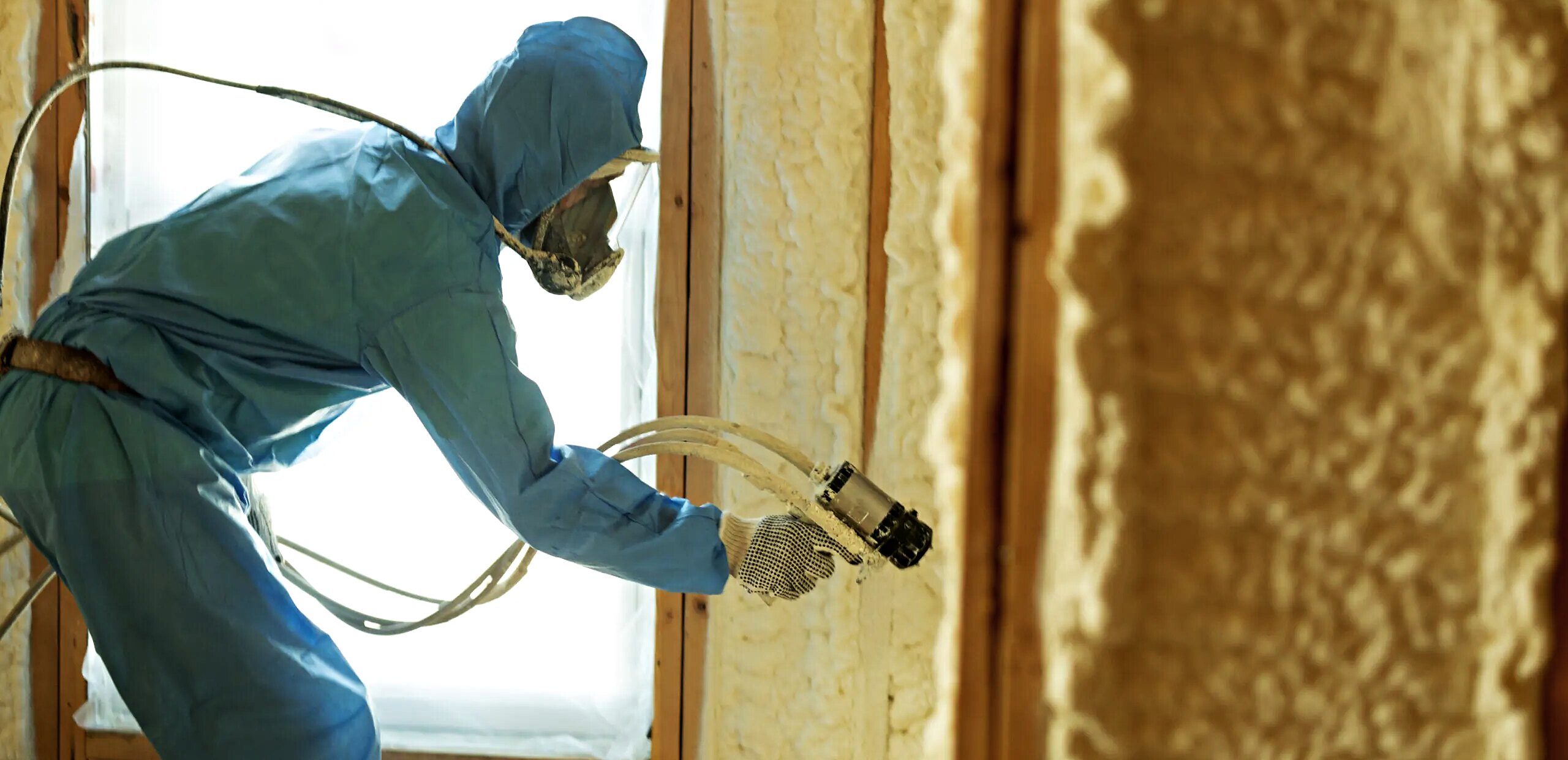
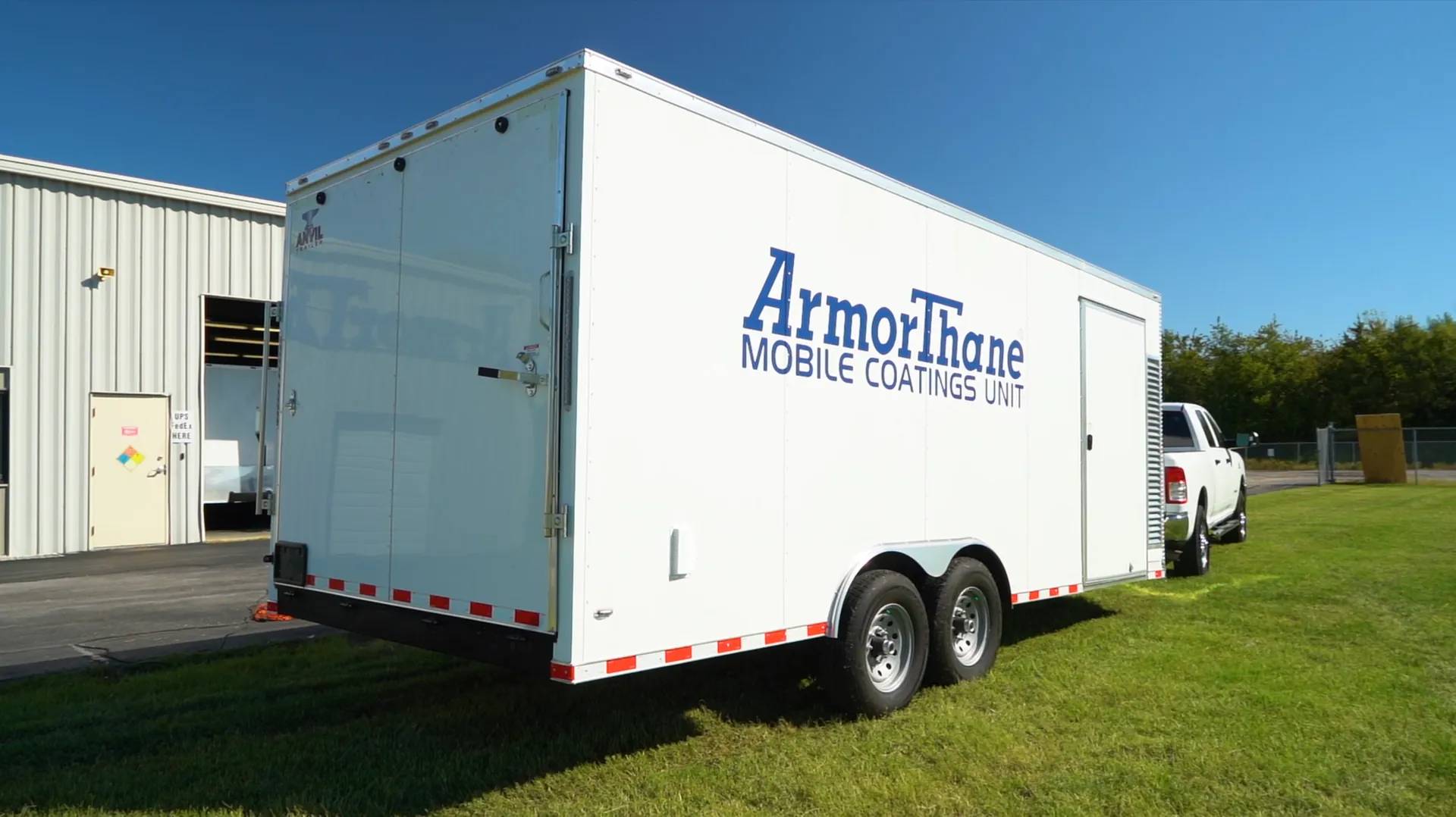
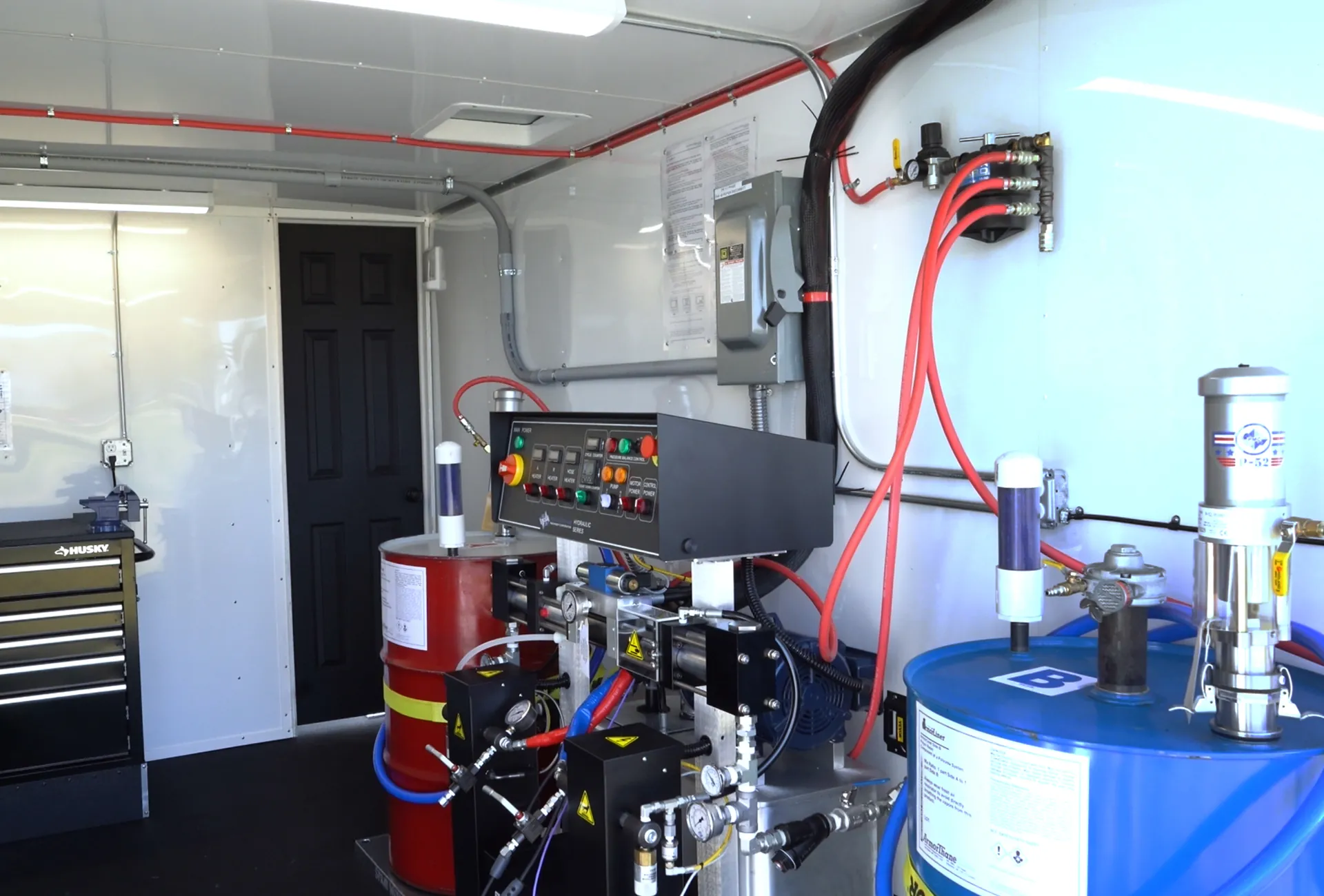
ArmorThane sets you up to do this work, and you own the business. We make the chemistry, build the rigs, train you hands-on and answer the phone when a job gets difficult. You pay no franchise fee and no royalties. It has been that way since 1989.
- $0
- franchise fees or royalties
- 35+
- years in business
- 50+
- countries with applicators
- 24/7
- technical support
Mineral wool insulation, also sold as rock wool or stone wool, is made by melting basalt-type rock and steel-mill slag and spinning it into fiber. It comes as batts for stud walls, rigid boards for exterior continuous insulation, and loose-fill for attics. Its selling points are real: it does not burn, it shrugs off moisture, it is dense enough to deaden sound, and the batts friction-fit better than fiberglass. It also costs more and, like every fibrous insulation, it does not stop air. As a spray foam manufacturer we see mineral wool on a lot of good jobs, often right next to our foam. This guide covers how it performs, what it costs, how it compares, and two tools for wall assemblies and exterior board.
Mineral wool is a noncombustible insulation made from stone and recycled slag. Batts run about R-4.2 to R-4.3 per inch (R-15 in a 2x4 wall, R-23 in a 2x6), boards about R-4.2 per inch, and it holds up when wet better than other fibrous insulation. Expect to pay more than fiberglass, roughly $1.40 to $4.00 per square foot. Choose it where fire resistance, sound control or a vapor-open exterior insulation layer matters. Pair it with real air sealing, and use closed-cell spray foam or foam board at rim joists, crawl spaces and roof decks, where air and vapor control matter more than fire rating.
What mineral wool insulation is made of
ROCKWOOL describes its residential batts as natural stone and recycled slag. The rock is melted, spun into fiber like cotton candy, bound and cured into batts or pressed into denser boards. Slag is a byproduct of steel making: NAIMA reports its member manufacturers used more than 567 million pounds of recycled slag in insulation production in 2025. The finished product is heavier than fiberglass (Comfortbatt is about 2 pounds per cubic foot; Comfortboard 80 is about 8) and much stiffer.
Batts
Friction-fit between studs or joists. Comfortbatt is R-15 at 3.5 inches and R-23 at 5.5 inches, about R-4.2 to R-4.3 per inch versus R-2.9 to R-3.8 for standard fiberglass (DOE). They cut cleanly with a serrated knife and stay put without stapling.
Rigid board
Dense board used as continuous insulation over sheathing and on basement walls. Comfortboard 80 is R-4.2 per inch, 8 pounds per cubic foot, noncombustible, and available from 1 to 5 inches thick. Unlike foil-faced foam, it lets the wall dry outward.
Loose-fill
Blown like fiberglass or cellulose. HomeGuide puts blown rockwool at R-3.2 to R-4.1 per inch and $1.90 to $4.20 per square foot installed, the priciest of the three blown options.
Mineral wool vs fiberglass, cellulose and foam
Mineral wool sits between fiberglass and foam: more R per inch and far better fire performance than fiberglass, less R per inch than foam, and no air sealing either way. Click a heading to sort.
| Material | R per inch | Cost / sq ft | Combustible? | Stops air? | Vapor | Typical use |
|---|---|---|---|---|---|---|
| Mineral wool batts | R-4.2 to R-4.3 | $1.40–$4.00 | No (ASTM E136) | No | Open | Walls, floors, fire and sound separations |
| Mineral wool board | R-4.2 | Board pricing varies | No (ASTM E136) | No | Open | Exterior continuous insulation, basements |
| Fiberglass batts | R-2.9 to R-3.8 | $0.80–$2.60 | Glass is not, facings can be | No | Open | Budget walls and floors |
| Cellulose, dense-pack | Avg R-3.7 | $1.60–$4.20 | Treated to pass CPSC test | Slows it | Open | Closed-wall retrofits |
| XPS foam board | R-5.0 | $1.20–$3.70 | Yes, needs thermal barrier | If taped | Semi (1.1 perm/in) | Foundations, under slabs |
| Closed-cell spray foam | R-5.0 to R-7.0 | $1.00–$4.50 | Yes, needs thermal barrier | Yes | Retarder | Rim joists, crawl spaces, metal buildings |
Mineral wool or fiberglass batts?
In a standard 2x4 wall, mineral wool gets you R-15 where standard fiberglass gets R-13; high-density fiberglass also reaches R-15 for 2x4 and R-21 for 2x6 (DOE). So the R-value gap is small if you buy high-density fiberglass. The real differences are fire resistance, sound absorption, and fit: mineral wool is stiff enough to stand in the cavity and press tight around boxes and pipes, which is where most batt jobs lose performance. If none of those matter for the wall in question, fiberglass is the cheaper product.
Wall assembly R-value checker
Pick your climate zone, stud size, cavity insulation and any exterior continuous insulation. The checker adds the nominal R-values and compares them with DOE's recommendation for an uninsulated wood-frame wall in that zone.
Does my wall meet the DOE recommendation?
Nominal R = cavity product R + continuous insulation R (mineral wool board R-4.2/in, XPS R-5/in, polyiso R-6.5/in or R-5/in in cold zones). DOE options: zones 1–2, R-13 cavity or R-10 continuous; zone 3, R-20, R-13 + R-5 ci, or R-15 ci; zone 4 and up, R-20 + R-5 ci, R-13 + R-10 ci, or R-15 ci. Colder zones may call for more, so confirm with DOE's table and your local code.
Nominal R-values ignore the studs themselves, and wood insulates far less per inch than the insulation between it. That is exactly why DOE's colder-zone recommendations lean on continuous insulation: a layer outside the framing covers the studs that cavity insulation cannot.
Fire, sound and moisture: why people pay more for mineral wool
Fire
This is mineral wool's strongest card. ROCKWOOL's Comfortbatt is classed noncombustible under ASTM E136, scores 0 for both flame spread and smoke developed under ASTM E84, and has a melting point of about 2,150°F (1,177°C). It does not need a thermal barrier the way foam plastics do, and it is a common choice for garage-to-house walls, around fireplaces and chases, and in fire-rated assemblies. Fiberglass itself does not burn either, but its kraft or foil facings can.
Sound
Mineral wool's density makes it a good sound absorber inside wall and floor cavities, which is why it is sold in dedicated acoustic versions for interior partitions. Insulation is only part of a quiet wall, though; mass, resilient mounting and sealed gaps do much of the work. Open-cell spray foam is the other common choice for sound in walls and ceilings; see does spray foam reduce noise.
Moisture
Stone wool fibers do not soak up water: ROCKWOOL lists moisture sorption of 0.03% for Comfortbatt (ASTM C1104) and 0.2% by volume for Comfortboard 80. Water drains out and the batt dries without slumping, so it tolerates the odd leak far better than cellulose. It is also vapor-open, which is the point on exterior walls: the board lets sheathing dry outward, while foil-faced foam blocks that route. What it does not do is stop air. Humid air can still move through it and condense on a cold surface behind it, which is why it is the wrong choice against a cold rim joist or a crawl space wall.
Exterior mineral wool board calculator
Mineral wool board as exterior continuous insulation is heavier and thicker than foam for the same R-value, which affects fastener and furring choices. This tool sizes the board order and shows how the thickness compares with XPS and polyiso for the same R.
How much mineral wool board do I need?
Boards are 2 x 4 ft (8 sq ft). R = 4.2 per inch (Comfortboard 80). Weight = volume x 8 lb per cubic foot. Equivalent thickness uses XPS at R-5 per inch and polyiso at R-6.5 (R-5 in cold climates).
The board goes over a water-resistive barrier on the sheathing, held with long screws through furring strips that also carry the siding. The furring creates a drainage gap, which mineral wool board works well with because it does not trap water. Detail window and door openings with extension jambs or bucks before the board goes up.
Where mineral wool insulation is the wrong call
Cold, leaky and humid
The rim is where indoor air meets cold framing. Any air-permeable insulation lets moist air reach the cold wood and condense. Closed-cell foam or sealed foam board is the fix; see rim joist insulation.
Between floor joists
Batts hung under a floor over a vented crawl space sag and stay damp. Insulating the sealed crawl space walls works better; see crawl space insulation.
Unvented roofs
Under an unvented roof deck, air-permeable insulation alone lets moisture reach the cold sheathing. The IRC's unvented attic rules (Section R806.5) generally require an air-impermeable layer against the deck, usually spray foam or rigid board.
Condensation on steel
Humid air through any fibrous insulation will condense on cold steel. Closed-cell foam sprayed directly to the panels stops that; see metal building insulation.
A good combined approach in many houses: closed-cell spray foam at the rim joists and any tight roof assemblies, mineral wool in interior walls and floors for sound and fire, and blown insulation on the open attic floor. Our wall insulation guide covers how spray foam handles exterior walls when air sealing is the priority.
Mineral wool in the walls? Seal the rim and roof first.
Tell us what you are insulating and the framing depth. A certified ArmorThane applicator can quote closed-cell spray foam for rim joists, crawl spaces and roof decks, the spots where mineral wool cannot control air and vapor.
Contractors: become an applicator →
Mineral wool insulation: common questions
What is mineral wool insulation?
Mineral wool, also called rock wool or stone wool, is insulation made by melting natural stone and recycled steel-mill slag and spinning it into fiber. It is sold as batts for walls and floors, rigid boards for exterior and basement walls, and loose-fill for attics.
Is mineral wool better than fiberglass?
It is better at fire resistance, sound absorption and fit, and slightly higher in R per inch (R-15 versus R-13 for standard fiberglass in a 2x4 wall, though high-density fiberglass also reaches R-15). Fiberglass is cheaper. Neither one stops air leakage, so both need separate air sealing.
What is the R-value of mineral wool?
ROCKWOOL Comfortbatt is R-15 at 3.5 inches and R-23 at 5.5 inches, about R-4.2 to R-4.3 per inch. Comfortboard 80 rigid board is R-4.2 per inch. DOE's insulation guide lists mineral wool batts and loose-fill at about R-3.7 per inch, and HomeGuide gives a range of R-3.2 to R-4.1 for blown rockwool.
Is mineral wool fireproof?
No building material is fireproof, but stone wool is noncombustible under ASTM E136, scores 0 flame spread and 0 smoke developed under ASTM E84, and has a melting point of about 2,150°F according to ROCKWOOL. That is why it is used in fire-rated walls and as fire blocking.
Is mineral wool good for soundproofing?
It is one of the better cavity insulations for sound absorption because of its density, and acoustic versions are made for interior walls and floors. For real sound isolation you also need mass (extra drywall), decoupling and sealed gaps; insulation alone will not do it.
Can mineral wool get wet?
It tolerates water far better than other fibrous insulation. ROCKWOOL lists moisture sorption of 0.03% for Comfortbatt, and wet batts drain and dry without slumping. The source of the water still has to be fixed, and because it is air-permeable it should not be used where humid air can reach a cold surface behind it.
How much does mineral wool insulation cost?
Angi's 2026 range is $1.40 to $4.00 per square foot. HomeGuide lists the material alone at $1.00 to $2.50 per square foot and blown rockwool at $1.90 to $4.20 installed. That is more than fiberglass batts at $0.80 to $2.60 installed.
Do you need a vapor barrier with mineral wool?
It depends on climate and the rest of the wall. In colder climate zones the IRC generally calls for a Class I or II vapor retarder on the interior side of framed walls (Section R702.7), with exceptions when enough continuous insulation is installed outside. Mineral wool itself is vapor-open, so it does not act as one. Follow your local code.
Other insulation types, compared honestly
Types of insulation
Every major insulation type compared, with a thickness calculator and a selector.
Foam board insulation
EPS vs XPS vs polyiso, the foam alternative for continuous insulation.
Blown-in insulation
Fiberglass vs cellulose vs rockwool for attic floors, with a bag calculator.
Sources
- ROCKWOOL, Comfortbatt thermal insulation brochure (R-values, ASTM E136, E84, C1104, density, melting point): rockwool.com
- ROCKWOOL, Comfortboard 80 technical data sheet: rockwool.com
- NAIMA / Insulation Institute, members' recycled content use in 2025: insulationinstitute.org
- U.S. DOE, Energy Renovations Insulation guide (Table 3.2): energy.gov
- U.S. DOE Energy Saver, Insulation (recommended wall R-values by zone) and Types of Insulation: energy.gov, energy.gov
- U.S. DOE Building America, Guide to Insulating Sheathing: eere.energy.gov
- Green Building Advisor, Cold-weather performance of polyisocyanurate: greenbuildingadvisor.com
- International Code Council, 2021 IRC (R702.7 vapor retarders, R806.5 unvented attics): codes.iccsafe.org
- Angi, Insulation cost by type (2026): angi.com
- HomeGuide, Insulation cost and Blown-in insulation cost (2026): homeguide.com, homeguide.com
Fire, sound and air sealing, each where it belongs.
Homeowners get a certified ArmorThane applicator for the spots mineral wool cannot seal. Contractors can add spray foam with no franchise fee and no royalties.
Start your coatings business with ArmorThane.
Tell us what you want to spray and where you are. An ArmorThane specialist will walk you through the equipment, chemicals, training and startup cost for the work you want to do.
- Equipment package matched to your applications
- Hands-on training and applicator certification
- Technical support once you are spraying
Planning walls, rims and roof? Get each spot right.
Tell us the framing, the climate and what you are insulating. We will connect you with a certified applicator for spray foam at rim joists, crawl spaces and roof decks.
- Wall framing and square footage
- Rim joist and crawl space details
- Roof or attic assembly
- Fire or sound requirements
More to read on spray foam
Short reads from ArmorThane on Issuu. Tap one to open it right here.


More in Spray foam & insulation
 Spray foam & insulationTypes of Insulation
 Spray foam & insulationWalk-In Cooler Insulation
 Spray foam & insulationAsbestos Insulation
 Spray foam & insulationAttic Foam Insulation
 Spray foam & insulationAttic Insulation Cost
 Spray foam & insulationAttic Insulation Removal
 Spray foam & insulationBlown-In InsulationSpray foam & insulationCathedral Ceiling Insulation