Greenhouse Insulation Heat vs Light
U-values by glazing, what bubble wrap saves and what it costs in light, where opaque foam belongs, where spray foam fits and two calculators to plan your winter.
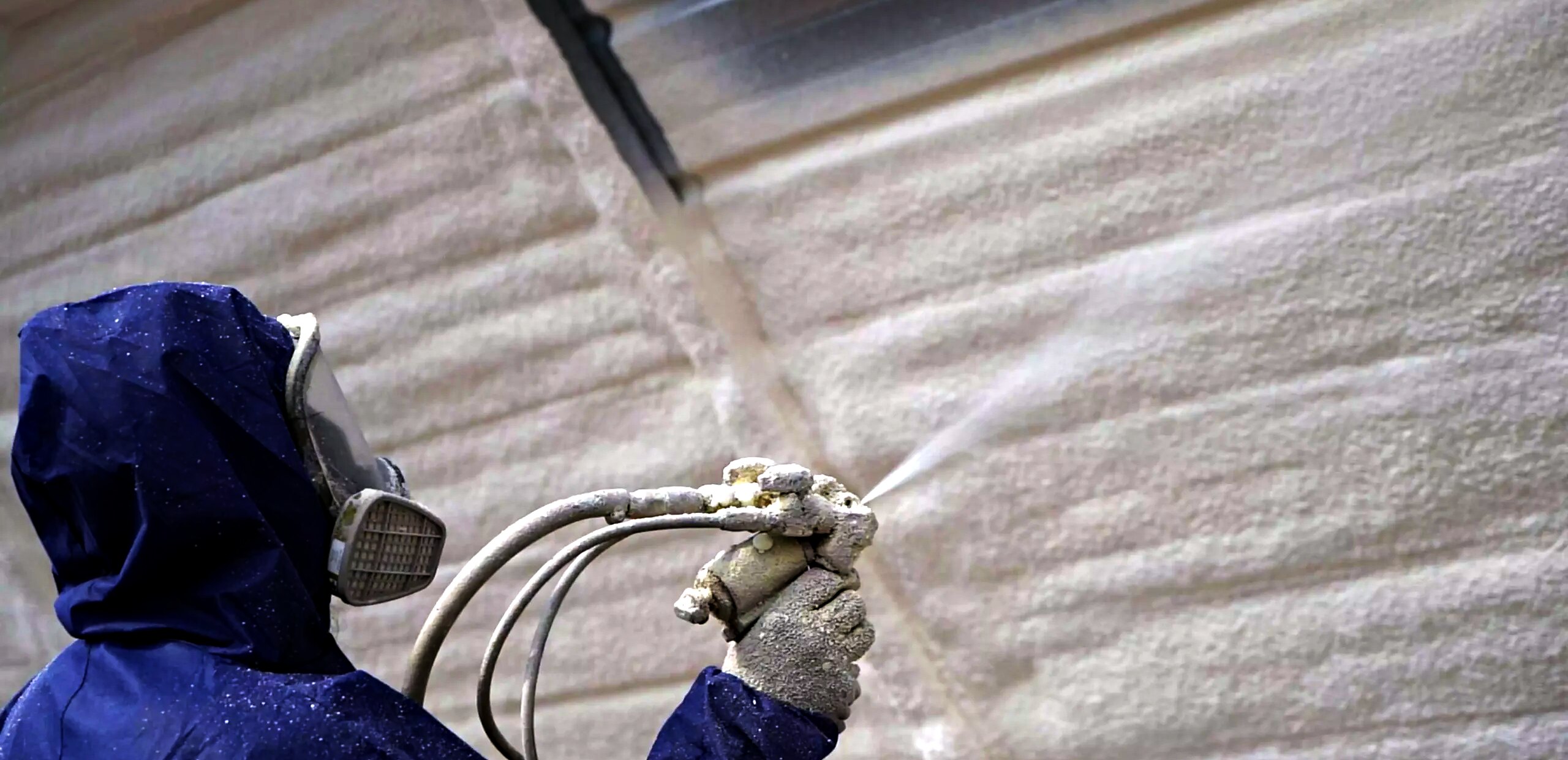
Start an agricultural coating business
Coat farms and ranches for a living.
ArmorThane sets you up to do this work, and you own the business. We make the chemistry, build the rigs, train you hands-on and answer the phone when a job gets difficult. You pay no franchise fee and no royalties. It has been that way since 1989.




- $0
- franchise fees or royalties
- 35+
- years in business
- 50+
- countries with applicators
- 24/7
- technical support
Insulating a greenhouse isn't like insulating a house. The walls you'd normally fill with insulation are the same walls your plants need light through. Every layer that holds heat also takes light, so the real job is deciding where heat matters more than light, and where it doesn't.
Single glass or single poly loses about 1.1–1.2 Btu per hour per sq ft per °F; double poly and twin-wall polycarbonate lose about 0.55–0.7. Horticultural bubble wrap roughly halves the loss through single glazing but blocks about 10–20% of the light. Put opaque foam where plants don't need light: the north wall, knee walls to bench height and the foundation perimeter, 18–24 in deep. Estimate your heat loss or plan where to insulate.
The numbers here come from university extension engineers and the greenhouse manufacturers' heat-loss standard. ArmorThane makes ArmorFoam spray foam and polyurea coatings in Springfield, Missouri, and trains the applicators who spray them. Foam belongs on some parts of a greenhouse and not others, and this guide says which.
- 1Light vs heat: the trade-off
- 2Heat loss by glazing type
- 3How to calculate greenhouse heat loss
- 4Heat-loss and fuel-cost calculator (interactive)
- 5Bubble wrap greenhouse insulation
- 6Double layers and energy curtains
- 7Where opaque insulation belongs
- 8Where-to-insulate planner (interactive)
- 9Where spray foam fits, and where it doesn't
- 10A winter insulation plan
- 11Greenhouse insulation FAQ
Light vs heat: the trade-off
Washington State University's extension handbook puts it plainly: heat is mainly lost by conduction through the covering. Single glass is about R-0.9, and even triple- or quad-wall polycarbonate reaches only R-2 to R-2.5.
Light is the other side of the ledger. John Bartok, the University of Connecticut extension engineer, found that a 1% increase in winter sunlight gives about a 1% increase in plant growth. A second layer lowers light 10–15%, and plastic loses another 1–2% a year to UV and grime.
So the question is where you can trade light for heat cheaply. In order: stop air leaks, insulate surfaces plants don't need light from, add clear layers where you can spare the light, and cover the glazing at night, when there's no light to lose.
Light transmission by covering
University of Arkansas glazing table. Bubble wrap bar: our estimate, 88% less the 10–20% reported by RHS and one seller.
Heat loss by glazing type
A U-factor is the heat that passes through a square foot of covering per hour for each degree of temperature difference. Lower is warmer. The fourth column compares each covering with single glass.
| Covering | Light in | U-factor | Loss vs single glass | Typical life |
|---|---|---|---|---|
| Single glass (double-strength) | 88% | 1.10 | 100% | 25+ yrs |
| Single poly film | 85% | 1.20 | 109% | 1–4 yrs |
| Double inflated poly | 77% | 0.70 | 64% | 1–4 yrs |
| Insulated (double) glass | 78% | 0.70 | 64% | 25+ yrs |
| Twin-wall polycarbonate, 8 mm | 80% | 0.56 | 51% | 20+ yrs |
| Twin-wall polycarbonate, 10 mm | 80% | 0.53 | 48% | 20+ yrs |
| Multiwall polycarbonate, 16 mm | 72% | 0.42 | 38% | 20+ yrs |
| Single glass + bubble wrap (our estimate) | 70–79% | ≈0.52 | ≈48% | 3–4 yrs (wrap) |
Double poly and twin-wall polycarbonate cut conduction by a third to a half against a single layer; Virginia Tech says double poly reduces heating costs about 50% over single poly. But the warmest covering, 16 mm multiwall, also lets in the least light. On price, HomeGuide lists polycarbonate at $1.50–$3.00 per sq ft, glass at $2.50–$3.50 and poly sheeting at $0.10–$0.70. If your structure is a round-top hoop, our Quonset hut insulation guide covers the arch shape.
How to calculate greenhouse heat loss
Extension engineers add three kinds of loss. The total sizes your heater and shows where the money goes.
Conduction through the covering
Surface area × U × temperature difference. Count side walls, end walls, gables and roof.
Air leakage (infiltration)
0.02 × volume × air changes per hour × temperature difference. Bartok uses 0.5–1 air change for a new greenhouse, 1.5 for a well-kept glasshouse and 2–3 for a poorly kept one, plus 10–15% on a windy site.
The foundation edge
Perimeter × P × temperature difference. UGA uses P = 0.8 Btu/hr per foot per °F uninsulated, 0.4 insulated.
Pick the temperatures
Inside: your night set point. Outside: UGA uses the average January low minus 15°F. Heater output should at least match the total.
A 16 × 12 ft gable greenhouse with 6 ft side walls, a 9 ft ridge and 8 mm twin-wall polycarbonate has about 587 sq ft of covering and 1,440 cu ft of air. Holding 50°F inside at 10°F outside:
- Conduction: 587 × 0.56 × 40 ≈ 13,100 Btu/hr
- Air leakage: 0.02 × 1,440 × 0.75 × 40 ≈ 860 Btu/hr
- Perimeter: 56 ft × 0.8 × 40 ≈ 1,790 Btu/hr
Total: about 15,800 Btu/hr, 83% of it through the covering.
Greenhouse heat-loss and fuel-cost calculator
Enter your greenhouse and covering. You get the heater size for a design night, a monthly fuel estimate and every covering side by side, light against heat.
How much heat does my greenhouse lose?
U-factors and light: University of Arkansas. Formulas: Bartok and UGA Extension. Fuel: EIA January 2026 U.S. residential averages.
Bubble wrap greenhouse insulation
Bubble wrap greenhouse insulation is a clear sheet of air pockets fixed inside the glazing for winter. Like double poly, it adds a layer of still air. Horticultural wrap is UV-stabilized with larger bubbles; packing wrap isn't UV-resistant and breaks down faster, Hartley Botanic notes.
What it saves: ACF Greenhouses claims up to 45% off heating costs, and Charley's and Harrod up to half. Those are best cases on single glass or poly: calculations for single glazing show the wrap taking it from about R-1 to R-2, halving conduction. On twin-wall polycarbonate, already near R-1.8, the same R-1 cuts conduction only about a third.
What it costs in light: RHS puts the loss at about 10% and advises against it for crops that need maximum light, such as winter lettuce and alpines. ACF lists 80% transmission, and Bartok gives 10–15% for any added layer. Plan on 10–20%. For tender plants that just need to stay above freezing, that's an easy trade.
About $0.45–$0.79 per sq ft
ACF: $49.95 for 112 sq ft. Charley's: $54.95 for 70 sq ft (read September 2026). HomeGuide: $0.50–$3.00.
3–4 winters indoors
Charley's rating. RHS says the same wrap can be reused year after year.
Trapped humidity
Hartley Botanic suggests a few small vents cut in the wrap, and taking it down in spring.
How to install it
Clean the glazing first
Dirt plus a new layer compounds the light loss.
Fix it to the frame, not wet glass
Orchid growers found wrap stuck to wet glass "minimally effective." Clips on the glazing bars leave a still-air gap.
Run it horizontally, no gaps
Start at the door, as Hartley Botanic advises.
Keep the vents working
Cut around roof vents and louvers so you can still ventilate on sunny days.
Get new greenhouse guides, fuel price updates and a fall insulation checklist by email: join the ArmorThane newsletter.
Double layers and energy curtains
If you grow through winter, clear layers and curtains beat opaque insulation on the roof and south side. Extension figures:
Double inflated poly
Virginia Tech: about 50% less than single poly; Bartok: "more than 30 percent." Light drops from 85% to 77%.
IR-inhibitor inner layer
UMass: an infrared-inhibitor inner layer saves another 15%, paying back in two to three months.
Plastic over old glass
Virginia Tech: single poly over glass cuts heating 5–40%, double inflated poly 40–60%. UMass says 50%.
Night energy curtain
UMass: 20–50% at $1.50–$3.00 per sq ft, paying back in one to three years; a second screen adds 10–15%. Open by day, it costs no light.
Lower night set point
Virginia Tech: each 1°F lower at night cuts the bill 2–3% (UMass: 3%). Free, if your crop allows it.
Air leaks and wind
UMass: infiltration doubles at 15 mph of wind. Seal laps, doors and louvers; WSU suggests a north-side windbreak.
Curtains need at least 24 in of space above the curtain truss, Bartok says. In a small hobby house, RHS suggests a bubble wrap screen on battens that closes off a smaller heated area.
Where opaque insulation belongs
An insulated greenhouse isn't one wrapped in foam. It has solid insulation where light does little work and clear coverings everywhere else. Extension guidance points to four places.
- North wall: solid insulation with a reflective or white face toward the plants
- Knee walls: 1–2 in of closed-cell insulation, no higher than the benches
- Foundation perimeter: 1–2 in board, 18–24 in below grade
- Bubble wrap or a second clear layer on the glazing
- Night energy curtain, open during the day
The north wall
A Connecticut extension trial found north-wall insulation cut heating about 10%, noting "more light passes out of the north wall than enters." Foil-faced board even improved the north bench. Bartok calls it controversial, since opaque insulation can reduce light and crop quality, but credits reflective north-wall board with up to 10% in sunny climates.
Knee walls to bench height
UMass: 2 in of foam on a 3 ft knee wall around a 28 × 100 ft greenhouse saves about 400 gallons of fuel oil a year, at about $1 per sq ft. Bartok specifies 1–2 in of closed-cell board and says it reduces light "very little." Virginia Tech puts savings at 5–10%; stop at bench height.
Foundation perimeter
WSU and Virginia Tech call for 1–2 in of polyurethane or polystyrene board 1.5–2 ft deep. UGA's perimeter factor halves, and Bartok reports soil along the walls 10–20°F warmer. In wet soil, extruded polystyrene absorbs the least water: 0.3% by volume against 2–4% for expanded.
The floor
Virginia Tech rates a warm insulated floor 90% efficient against 80% uninsulated. Minnesota's deep winter greenhouse stores solar heat in insulated rock or soil under the floor. Concrete also drains and reflects light; see greenhouse flooring options.
Opaque insulation there costs the most light for the heat it saves. Use a clear layer, bubble wrap or a night curtain instead, unless the house only overwinters dormant plants.
Where-to-insulate planner
Tick the steps you're considering. The planner shows the heat and fuel each saves over a season, a rough cost and how much glazing turns opaque. Prices are 2026 cost-guide ranges, not quotes.
Which insulation pays, and what does it cost in light?
Gable greenhouse; opaque insulation goes over the existing covering. Prices: HomeAdvisor (XPS board), Angi and HomeAdvisor (installed spray foam), two bubble wrap sellers, UMass (curtains).
Where spray foam fits, and where it doesn't
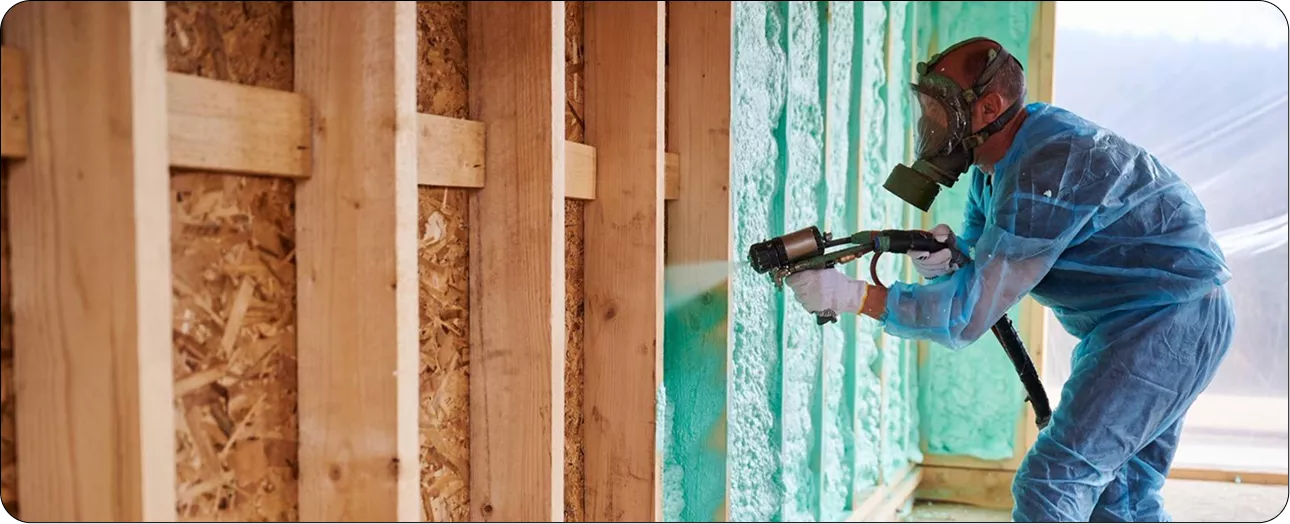
Closed-cell spray foam suits the opaque parts of a greenhouse. It runs about R-6 to R-7 per inch, absorbs under 2% water, and is an air barrier at 1 in and a vapor retarder at 1.5–2 in, per our closed-cell spray foam guide. It bonds to block, wood and metal and seals the gaps board leaves, which matters in a building that's humid all winter. Our spray foam R-value guide compares it with board. Its limits are sunlight, fire and cost.
| Where | Spray foam? | Why |
|---|---|---|
| Knee walls (block, wood or metal) | Good fit | Insulates and air-seals in one pass. Keep it below bench height. |
| North wall or north end wall | Good fit | Opaque by design. Cover it with a reflective or white finish facing the plants. |
| Inside face of the foundation | Good fit | Closed-cell only. For board buried in soil outside, XPS is the usual choice. |
| Anywhere sunlight reaches bare foam | Only if coated | IBHS: foam in sunlight darkens, turns friable and erodes. It needs a coating such as polyurea or an elastomeric roof coating, generally 20–40 mils. |
| Near heaters, or in greenhouses the public uses | Cover it | DOE and building codes call for a thermal barrier equal to 1/2 in gypsum board over foam. Ask your building inspector or fire marshal. |
| Roof and south glazing | No | Blocks the light the greenhouse exists for. |
Exposed plastic foam burns fast. A Penn State farm-building fact sheet reported insulation flashing over in slightly over a minute in most tests. Bartok tells growers to check with the building inspector or fire marshal, who may want foam covered with drywall. Keep heater flues and flames away from foam.
Board or spray foam?
For a backyard greenhouse, board is usually cheaper: HomeAdvisor lists XPS at $0.40–$0.50 per board foot, about $0.80–$1.00 per sq ft at 2 in. Closed-cell spray foam runs $1.30–$3.10 per board foot installed (Angi, HomeAdvisor), and smaller jobs start near $675. Spray foam earns its price on irregular block or metal framing, long commercial runs and wherever air sealing matters. A DIY foam kit follows the same UV and fire rules; our spray foam cost guide has pricing.
Want a price for foam on your knee walls, foundation or north wall? Get a free quote from a certified applicator and include your greenhouse size and covering.
A winter insulation plan
Here's an order that gets the most heat for the least light and money, built from the UMass and Virginia Tech energy checklists.
Seal air leaks
Doors, laps, vents and louvers.
Check the thermostat
Each 1°F lower at night saves 2–3%.
Insulate perimeter and knee walls
1–2 in of closed-cell board or foam. No light cost.
Decide on the north wall
Reflective insulation if your crops tolerate it.
Add a clear layer or bubble wrap
Biggest gain on single glazing; 10–20% less light.
Close a curtain at night
20–50% savings, no daytime light cost.
Converting a shed or barn instead? See our shed insulation guide and agricultural coatings guide.
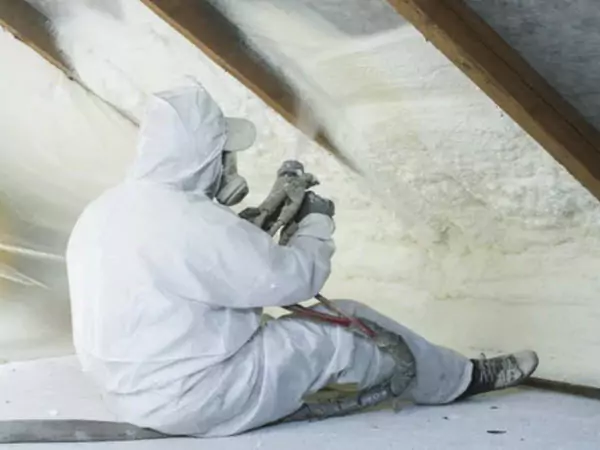
Foam where the light doesn't reach, sprayed by certified applicators
ArmorThane has made coatings since 1989 and trains independent applicators in more than 50 countries. For a greenhouse, that means closed-cell ArmorFoam on knee walls, foundations and north walls, a UV-protective coating where foam sees sun, and the thickness and R-value in writing. See also spray foam in geothermal greenhouses.
Use the applicator finder to reach a certified applicator near you, and join our newsletter for new greenhouse and outbuilding guides as we publish them.
Closed-cell ArmorFoam
An air barrier at 1 in, with under 2% water absorption.
Greenhouse and grow floors
ArmorFloor and ArmorLiner coat greenhouse concrete; see grow room floor coatings.
Franchise fee for applicators
We train and supply independent applicators with no franchise fee, dealership fee or royalty.
Greenhouses, barns and shops. Add farm insulation work.
Knee walls, north walls and foundations are quick jobs for a spray foam rig, and the same customers own barns and shops. We make ArmorFoam, build rigs and train your crew on site or virtually, ending in certification. Turnkey systems start at $25,000, with third-party financing. No franchise fee, no royalties.
Already spraying? See how to win spray foam customers →
Greenhouse insulation FAQ
What is the best way to insulate a greenhouse?
Start with the cheapest, lowest-light-cost steps. Seal air leaks, then insulate the foundation perimeter 18–24 in deep and the knee walls up to bench height with 1–2 in of closed-cell insulation. Decide whether the north wall can go opaque. Then add a second clear layer or bubble wrap, and close an energy curtain at night for 20–50% savings.
Does bubble wrap greenhouse insulation work?
Yes, especially on single glass or single poly. Calculations show bubble wrap raising single glazing from about R-1 to about R-2, roughly halving conduction, and sellers claim up to 45–50% lower heating bills. The gain is smaller on twin-wall polycarbonate. The cost is 10–20% less light, so skip it for high-light winter crops like lettuce.
How much light does bubble wrap block in a greenhouse?
About 10–20%. The Royal Horticultural Society says about 10%, one seller lists 80% transmission for its wrap, and extension engineer John Bartok gives 10–15% for any added layer. Dirt and condensation add to it. Since 1% less winter light means roughly 1% less growth, bubble wrap suits overwintering plants better than harvest crops.
Is regular packing bubble wrap OK for a greenhouse?
It works for a season, but horticultural bubble wrap is the better buy. Greenhouse wrap is UV-stabilized and usually has larger bubbles; packing wrap isn't UV-resistant and breaks down faster in sun. Horticultural wrap ran about $0.45–$0.79 per sq ft from two sellers in September 2026, and one rates it for 3–4 years indoors.
Should I insulate the north wall of my greenhouse?
Usually, if your crops tolerate it. A Connecticut extension trial found north-wall insulation cut heating about 10% and noted that more light passes out of the north wall than enters. Face it with foil or white to reflect light onto the benches. Extension engineer John Bartok calls it controversial, because opaque insulation can reduce light and crop quality.
What are the U-values of greenhouse glazing?
In Btu per hour per sq ft per °F, the University of Arkansas lists single glass at 1.05–1.1, single poly film at 1.2, double inflated poly and insulated glass at 0.70, 8 mm twin-wall polycarbonate at 0.56 and 16 mm polycarbonate at 0.42. Lower numbers hold more heat but usually let in less light: 88% for glass against 72% for the 16 mm panel.
How do I calculate greenhouse heat loss?
Add three parts. Conduction is covering area times U-value times the temperature difference. Air leakage is 0.02 times volume in cubic feet times air changes per hour times the temperature difference. The foundation edge is perimeter times 0.8 (0.4 if insulated) times the temperature difference. Use the January average low minus 15°F outside, and size the heater to the total.
Can you use spray foam insulation in a greenhouse?
Yes, on the opaque parts: knee walls, north walls and the inside of foundation walls. Closed-cell foam is about R-6 to R-7 per inch and absorbs under 2% water, which suits a humid building. Keep it off the roof and south glazing, coat it wherever sunlight reaches it, since UV degrades foam, and cover it where codes call for a thermal barrier.
How deep should greenhouse perimeter insulation go?
Extension guides call for 1–2 in of polyurethane or polystyrene board from 18 in to 2 ft below ground around the foundation. In University of Georgia calculations it halves the perimeter heat-loss factor, and it can keep soil along the walls 10–20°F warmer. Extruded polystyrene absorbs the least water of the common boards, which helps below grade.
Is double poly worth it on a greenhouse?
For a heated film greenhouse, usually yes. Virginia Tech says double poly reduces heating costs about 50% compared with single poly, and UMass says an infrared-inhibitor inner layer saves another 15% with a payback of two to three months. The trade-off is light: about 77% transmission for double poly against 85% for a single layer.
How much does it cost to heat a greenhouse in winter?
It depends on size, covering and climate. HomeGuide says a small hobby greenhouse in a mild climate may cost $10–$40 a month, while large climate-controlled houses in harsh climates can top $3,000. Our calculator's 16 by 12 ft twin-wall example runs about $155 a month on propane at January 2026 prices.
Written from university extension publications, the NGMA heat-loss standard, EIA fuel data, seller specs read September 27, 2026 and decades of making spray foam. Reviewed September 27, 2026.
Methodology and sources
Calculators use conduction, infiltration and perimeter loss as above, University of Arkansas U-factors and light values, bubble wrap as about R-1 and 15% light loss, R-5 per inch for XPS and R-6.5 aged for closed-cell foam, 30-day months and no solar gain during heated hours. Fuel prices are EIA January 2026 residential averages (electricity: EIA's 2026 forecast). Costs are ranges, not quotes.
- University of Arkansas (M. R. Evans), Greenhouse Management Unit 03: Glazing: uark.edu
- Greenhouse Management (J. Bartok), Determining greenhouse heat loss (Aug. 2019) and Insulate to save heat (Oct. 2023): greenhousemag.com
- UGA Extension, Bulletin 792 Greenhouses: Heating, Ventilation, and Cooling (Nov. 2025): uga.edu
- NGMA, Heat Loss standard (2010): ngma.com (PDF)
- Virginia Cooperative Extension, Pub. 430-101 Dealing with the High Cost of Energy for Greenhouse Operations (Aug. 2023): vt.edu
- UMass Extension (J. Bartok), Energy Conservation Checklist, Practical Ideas to Cut Your Energy Bill in Half (Jun. 2026) and BMP Manual: Energy: umass.edu
- Greenhouse Product News (J. Bartok), Grower 101: Using Insulation To Save Energy and Money: gpnmag.com
- Washington State University Extension, PNW Gardener's Handbook Ch. 26 (2025): wsu.edu
- J. Bartok, Improve Winter Greenhouse Light Levels (1994), and C. A. Salsedo, North Wall Insulation, via NC State HortScans: ncsu.edu (PDF)
- University of Minnesota Extension, Deep winter greenhouses: umn.edu
- Royal Horticultural Society, Greenhouses: Heating Efficiently: rhs.org.uk
- American Orchid Society, Insulating Your Greenhouse (Dec. 2005): aos.org
- Hartley Botanic, A Guide to Bubble Wrapping a Greenhouse (Feb. 2022): hartley-botanic.com
- ACF Greenhouses, Greenhouse Thermal Bubble Insulation; Charley's Greenhouse, Greenhouse Bubble Insulation; Harrod Horticultural, Greenhouse Bubble Wrap (read Sep. 2026): acfgreenhouses.com
- Build It Solar, Bubble Wrap Window Insulation: builditsolar.com
- HomeGuide, Greenhouse Cost (Jul. 2025): homeguide.com
- HomeAdvisor, Rigid Foam Insulation Cost and Spray Foam Insulation Cost (Jun. 2026): homeadvisor.com
- Angi, Spray Foam Insulation Cost (2026): angi.com
- U.S. DOE, Guide to Insulating Sheathing (Building Science Corp., 2007) and Energy Saver, Types of Insulation: energy.gov
- UpCodes, IBC-based §2603.4 Thermal barrier: up.codes
- IBHS/RICOWI Roof Guide, Spray Foam: ibhs.org
- Penn State Extension Fact Sheet #20 via NASD, Insulation Fire Hazards on Farms (1988): nasdonline.org
- U.S. EIA, British thermal units; residential propane, heating oil and natural gas prices; Short-Term Energy Outlook (Sep. 2026): eia.gov
- ArmorThane, Closed Cell Spray Foam guide; Spray Foam R-Value Guide; How ArmorFoam Can Support Renewable Agriculture; Greenhouse Flooring Options: armorthane.com
Heat leaking out of your greenhouse? Get a quote from a certified applicator.
Tell us your greenhouse size, covering and location. We'll connect you with an ArmorThane-certified applicator who can spray closed-cell foam on knee walls, foundations and north walls, and coat or cover it where it needs protection.
- Closed-cell foam on knee walls and foundations
- North and end walls that don't need light
- Thickness and R-value in writing
- Contractors: ask about ArmorFoam and training
More to read on spray foam
Short reads from ArmorThane on Issuu. Tap one to open it right here.