




Concrete Stain: Acid vs. Water-Based, Costs & What Lasts
The four kinds of concrete stain, what each covers and costs, how to tell if your slab will take color, and when a coating is the better call.
Start a floor coating business
Coat floors for a living.
ArmorThane sets you up to do this work, and you own the business. We make the chemistry, build the rigs, train you hands-on and answer the phone when a job gets difficult. You pay no franchise fee and no royalties. It has been that way since 1989.
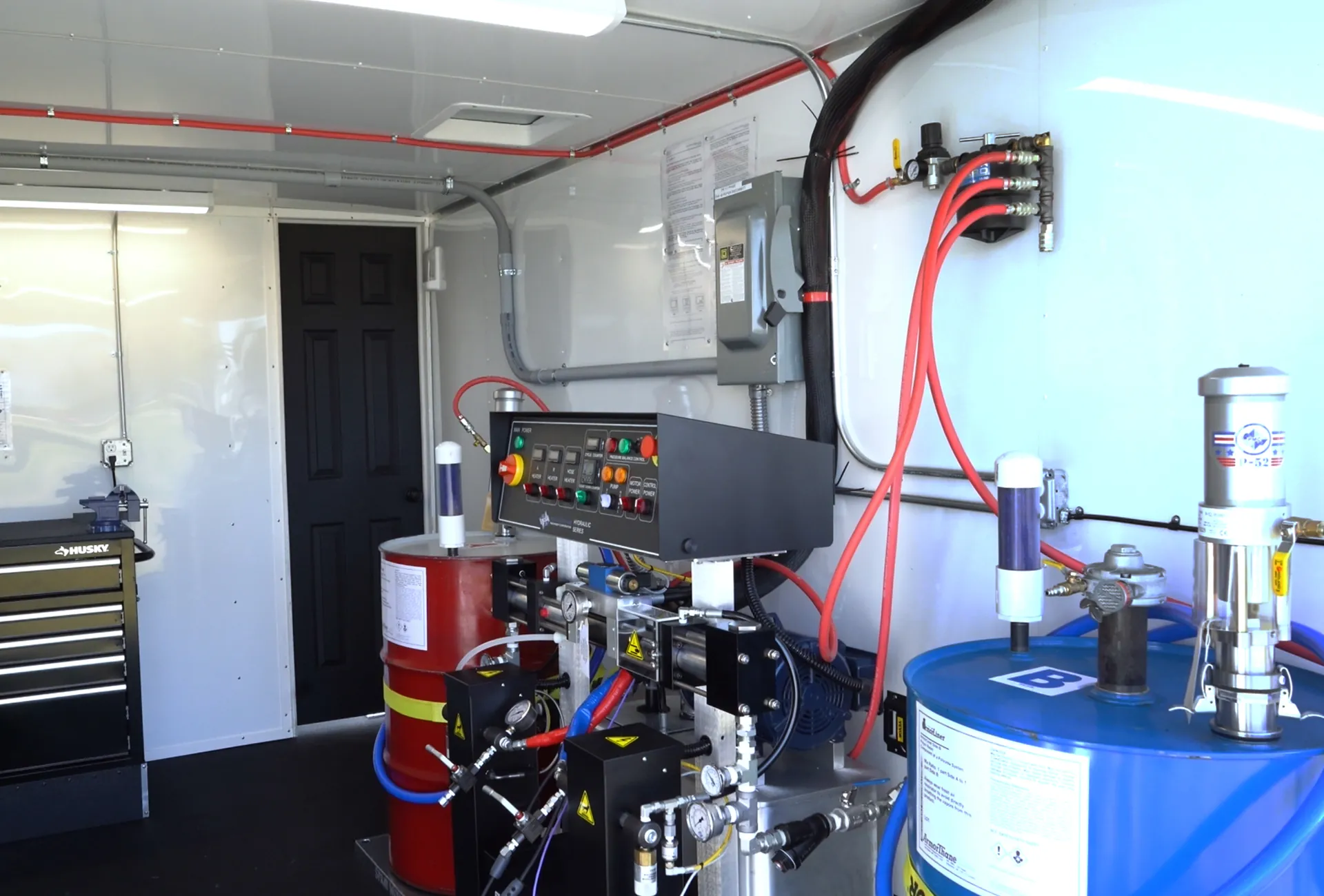
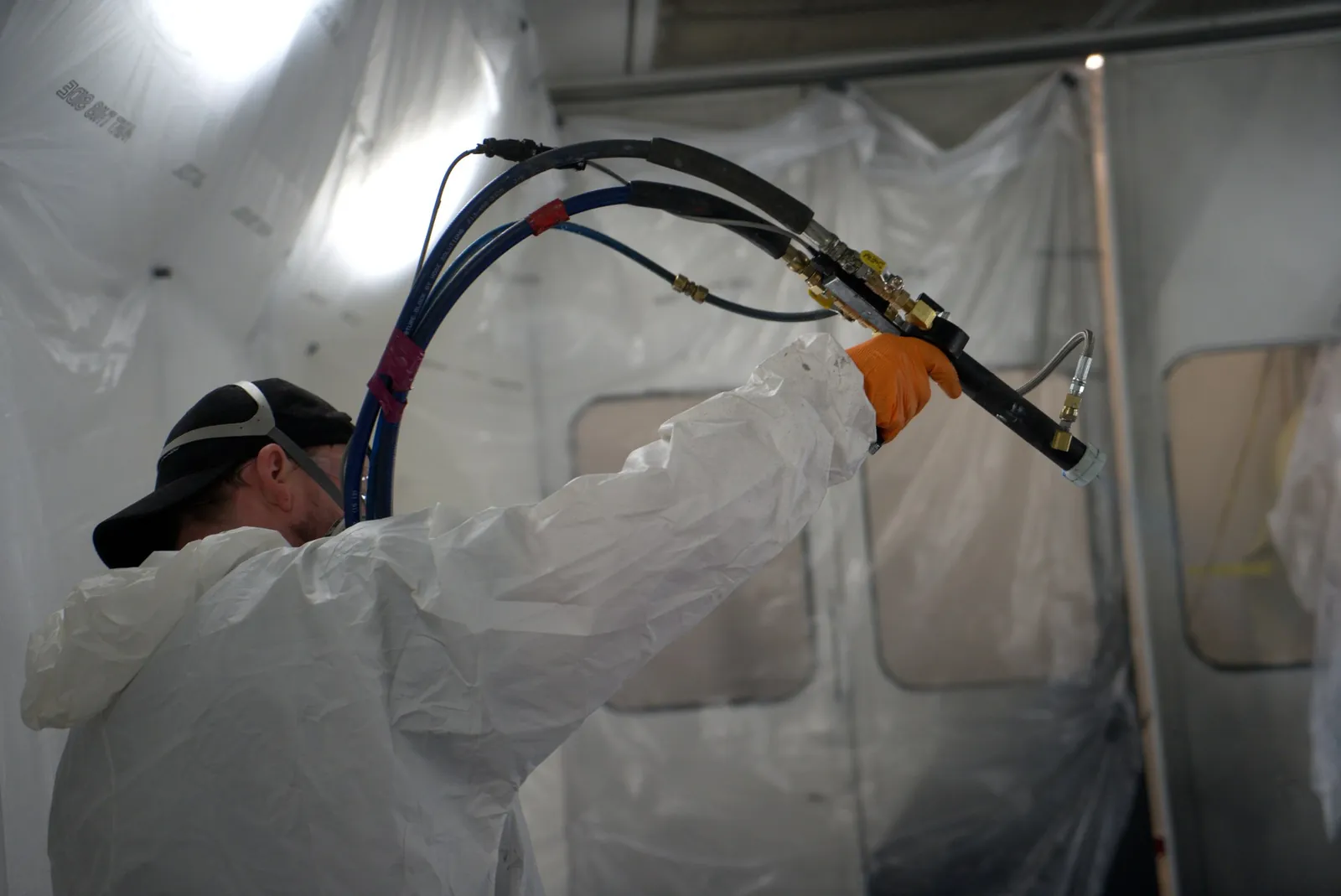
- $0
- franchise fees or royalties
- 35+
- years in business
- 50+
- countries with applicators
- 24/7
- technical support
Concrete stain changes the color of the slab itself instead of laying a film of paint on top of it. Done right it gives you a translucent, stone-like finish that will not peel, because there is nothing there to peel. Done on the wrong slab it highlights every patch, trowel mark and oil spot you were hoping to hide. We coat concrete for a living, and we see a lot of stained floors that needed something else. This guide covers the four kinds of concrete stain, what each one costs and covers per gallon, how to tell if your slab will take stain at all, and two tools: a stain selector and a gallons and cost calculator.
Use acid (reactive) stain for a mottled, marble-like look on clean, bare, fully cured concrete. Use a water-based semi-transparent stain for more predictable color, or a solid color stain to hide patches and discoloration. Use dye only indoors, usually on polished concrete, because dyes are not UV stable. Every stain needs a sealer on top; stain is color, not protection. If the slab is cracked, patched, oil-soaked or will see hot tires, plan on a coating or a high-performance topcoat instead of stain and acrylic sealer alone.
The four types of concrete stain
"Concrete stain" gets used for anything that colors a slab without being called paint. In practice there are four different products, and they behave nothing alike.
Acid stain
A water solution of metallic salts and mild acid that reacts with the lime (calcium hydroxide) in the cement paste. The color forms in the concrete over a few hours and comes out variegated: darker where the paste is rich, lighter where it is not. Kemiko notes that concrete with fly ash or slag in the mix may barely react, because those additives cut the lime content the stain needs.
Water-based semi-transparent stain
Fine pigment in an acrylic or similar carrier that soaks into open, porous concrete. No chemical reaction, so the color you test is close to the color you get, and the palette is far wider than acid stain's earth tones. Behr's semi-transparent stain covers 250 to 500 sq ft per gallon.
Solid color stain
Closer to a thin, breathable paint. It hides patches, old stains and mismatched pours, which is why people choose it for tired patios and porches. Behr's solid color stain covers 400 to 500 sq ft per gallon on rough concrete and 500 to 600 on smooth.
Concrete dye
Dissolved color, in water or solvent, with no binder and no reaction. It goes on fast and gives bright, even color, which is why polishers use it between grinding steps. Concrete Decor is blunt about the limitation: dyes are not UV stable, so no exterior installations.
Concrete stain comparison table
Coverage and cost figures come from manufacturer data sheets and 2026 cost guides. Click any column header to sort.
| Colorant | Look | Coverage per coat (sq ft/gal) | Outdoors / UV | Hides patches | Installed cost ($/sq ft) |
|---|---|---|---|---|---|
| Acid (reactive) stain | Mottled, marbled, translucent | 200–800 | Yes | No, highlights them | $3–$25 |
| Water-based semi-transparent | Even, translucent, wide color range | 250–500 | Yes | Partly | $3–$15 |
| Solid color stain | Opaque, uniform | 400–600 | Yes | Yes | $3–$10 (patio range) |
| Concrete dye | Bright, even, translucent | Varies by product | No, fades in UV | No | Usually priced with polishing |
Which concrete stain fits your slab?
Answer five questions about the slab. The selector applies the same rules we use when someone asks us whether their floor is a staining job: concrete age, condition, location, the look you want and whether cars will sit on it.
Concrete stain match
Checks cure time against the 28 to 30 day minimums in stain instructions, screens out slabs stain cannot fix, and suggests a colorant and sealer.
How to stain concrete, step by step
This is the acid stain sequence, since it has the most steps. Water-based stains skip the reaction and neutralizing steps but need the same cleaning, testing and sealing. Always follow the data sheet for the product in your hand; dwell times and dilution vary by brand.
Let new concrete cure
Concrete Network puts full cure at 21 to 28 days, Concrete Coatings asks for 28, and Behr's stains require a minimum of 30. Staining green concrete gives blotchy, unpredictable color.
Strip and clean
Remove sealer, paint, mastic, curing compound and grease. A degreaser and scrubber handles light soil; old coatings usually need grinding. Anything left on the surface blocks the stain.
Do the water drop test
Behr's instruction is simple: sprinkle water on the surface, and if it is quickly absorbed, the surface is ready. If it beads, something is still sealing the pores.
Test a hidden area
Bottle color is not floor color. Concrete Coatings tells installers to choose colors only from test sections on the actual slab. Let the test dry and seal it before you judge it, because sealer deepens the color.
Apply the stain
Spray with an acid-resistant plastic sprayer and work it in with a brush in overlapping circles. Kemiko's standard mix is one part water to one part stain; one diluted gallon covers about 800 sq ft in one application or 400 sq ft in two.
Let it react
Acid stain color usually develops in two to four hours. Keep traffic off and do not let water drip on it.
Neutralize and rinse
Scrub off the residue with a neutralizer. Concrete Network lists TSP, baking soda or ammonia, and gives a mix of one tablespoon of baking soda per gallon of water. Keep mopping until the mop water runs clear; leftover residue is the number one reason sealers fail on stained floors.
Dry, then seal
Wait at least 24 hours before sealing, per Concrete Coatings. Most stain makers recommend two coats of sealer, according to Concrete Network.
Concrete stain gallons and cost calculator
Enter the area and pick a stain and sealer. The calculator uses the coverage ranges from the data sheets above, adds 10% for waste and porous spots, prices stain at the $35 to $60 per gallon HomeGuide reports for DIY material, and prices sealer materials from Angi's per square foot ranges. The professional figure uses HomeGuide's installed ranges by project level.
Stain, sealer and budget
Gallons = area x coats / coverage x 1.10. Low gallons use the high coverage figure; high gallons use the low one.
The gap between the DIY and professional numbers is mostly labor and prep. Angi puts labor at $2 to $14 per square foot, and lists removing an old floor covering at another $1.50 to $3.50 per square foot. If your floor needs grinding to remove old sealer or mastic, the DIY number above is not the whole story.
Sealing stained concrete: the part that wears
Stain is not a wear layer. On every stained floor we look at, the color is fine and the sealer is what has failed: scratched, dull, peeling at the doorway or lifted under car tires. Pick the sealer for the traffic, not for the price of the first coat.
Acrylic sealer
The default on patios and lightly used interiors. Angi lists acrylic sealer materials at $0.85 to $1.15 per sq ft, and HomeGuide says sealing typically needs repeating every one to three years. It is easy to recoat, which is the point. It is soft, though, and it does not like hot tires.
Polyurethane and epoxy
Harder and more chemical resistant. Angi puts polyurethane sealer materials at $0.95 to $1.10 per sq ft and epoxy at $3 to $7. Epoxy belongs indoors; most standard epoxies yellow in sunlight. Both need a mechanically clean, residue-free surface or they will delaminate, taking the top skin of stained concrete with them.
High-performance clear topcoats
For garages, shops and commercial floors, a stained slab needs a topcoat built for tires and chemicals, typically a polyaspartic or aliphatic polyurethane. This is where we come in. ArmorThane applicators install ArmorFloor aliphatic polyaspartic systems, and our polyaspartic floor coating guide explains how those cure and wear. For an overview of penetrating versus film-forming sealers, see our concrete sealer guide. If you are weighing a colored, polished slab against a full coating, our polished concrete vs epoxy comparison runs the numbers.
When concrete stain is the wrong answer
We would rather tell you now than have you strip a failed stain job later. Stain is the wrong tool when:
The slab is cracked, spalled or heavily patched
Translucent color shows every repair. Fix the surface first with an overlay; our concrete resurfacing guide covers when an overlay makes sense. Indoors, a stainable self-leveling topping is another route; see self leveling concrete.
It is soaked with oil
Oil blocks penetration and reaction. Degreasers help at the surface, but deep spills often show through any translucent finish.
You need chemical or impact resistance
Stain plus acrylic sealer will not stand up to brake fluid, forklifts or dropped tools. An epoxy floor coating or a polyurea or polyaspartic system will. For shops, stores and kitchens, see our commercial floor coating guide.
You want a flat, uniform color on a budget
A good floor paint or solid stain is cheaper and more forgiving than acid stain. See our concrete paint guide for products that actually hold up.
Keep the color, add real protection.
A certified ArmorThane applicator can grind, repair and top a stained or bare slab with a coating system made for tires, chemicals and wet feet, or tell you honestly that stain and sealer are enough.
Contractors: become an applicator →
Concrete stain questions
How long does concrete stain last?
The color from an acid stain is a chemical change in the concrete, so it lasts as long as the surface it is in. What wears is the sealer and the top skin of concrete under traffic. Plan to reseal every one to three years with acrylic sealers, per HomeGuide, and sooner at doorways and in garages.
Can you stain old concrete?
Usually, if it is bare and porous. Do the water drop test: if water soaks in quickly, stain can penetrate. Very old or heavily worn concrete may react weakly with acid stain, which Concrete Coatings warns can give little or no color, so test first. Previously sealed or painted concrete has to be stripped or ground.
How soon can you stain new concrete?
Wait for full cure. Instructions range from 21 to 28 days (Concrete Network) to a 28 day minimum (Concrete Coatings) to 30 days (Behr). Do not use a curing compound or cure-and-seal on a slab you plan to stain, because it blocks penetration.
Is acid stain or water-based stain better?
Neither is better across the board. Acid stain gives the deeper, variegated, natural stone look but only in earth tones and only on reactive concrete. Water-based stain gives more colors and more predictable results, and it works on concrete that acid stain will not react with, such as mixes high in fly ash.
Does stained concrete need to be sealed?
Yes. Sealer protects the color from wear, makes the floor cleanable and brings out the depth of the stain. Most manufacturers recommend two coats. Wait at least 24 hours after neutralizing and rinsing an acid stain before you seal.
Can you stain a garage floor?
You can, but the sealer is the weak point. Hot tires soften and lift many acrylic sealers, and stain does nothing against oil or brake fluid. For a garage, put a polyaspartic or polyurethane topcoat over the stain, or choose a full garage floor coating system.
Can concrete stain go outside?
Acid stains and water-based stains are made for exterior use. Concrete dyes are not; Concrete Decor notes they are not UV stable and should not be installed outdoors. Use a UV-stable sealer outside too, since most standard epoxies yellow in sun.
How much does it cost to stain concrete?
HomeGuide puts professional staining of existing floors at $3 to $15 per square foot, with complex acid stain designs up to $25. DIY stain runs $35 to $60 per gallon, plus sealer, cleaners, a sprayer and any grinding rental. Use the calculator above for your area.
Related concrete guides
Sources
- HomeGuide, cost to stain concrete (2026): homeguide.com/costs/cost-to-stain-concrete
- Angi, stained concrete floor costs: angi.com/articles/how-much-stained-concrete-floors-cost.htm
- Kemiko, acid stain FAQs: kemiko.com/resources/faqs/acid-stain
- Kemiko Stone Tone concrete stain technical bulletin: Kemiko-Stone-Tone-Concrete-Stain-Technical-Data-Sheet.pdf
- Concrete Coatings, Vivid acid stain instructions: concreteexchange.com/.../Vivid-Acid-Stain-Instructions_CX.pdf
- Behr Premium Semi-Transparent Concrete Stain No. 850 data: images.thdstatic.com (Behr No. 850 PDF)
- Behr Premium Solid Color Concrete Stain: behr.com/pro/.../behr-premium-solid-color-concrete-stain
- Concrete Network, how to stain concrete: concretenetwork.com/products-stains/how-to.html
- Concrete Decor, dye or stain: concretedecor.net/.../dye-or-stain-which-topical-colorant-is-right-for-the-job
Color that lasts starts with the right system.
Homeowners and facility managers get a certified ArmorThane applicator who preps the slab properly and tops it with a coating built for real traffic. Contractors can add floor coatings to their business with no franchise fee and no royalties.
Start your coatings business with ArmorThane.
Tell us what you want to spray and where you are. An ArmorThane specialist will walk you through the equipment, chemicals, training and startup cost for the work you want to do.
- Equipment package matched to your applications
- Hands-on training and applicator certification
- Technical support once you are spraying
Stain, seal or coat? Get a straight answer.
Tell us about the slab, where it is, what it sees every day and the look you want. We will connect you with a certified applicator near you.
- Square footage and location
- Age and condition of the concrete
- Cars, foot traffic or chemicals
- Photos if you have them