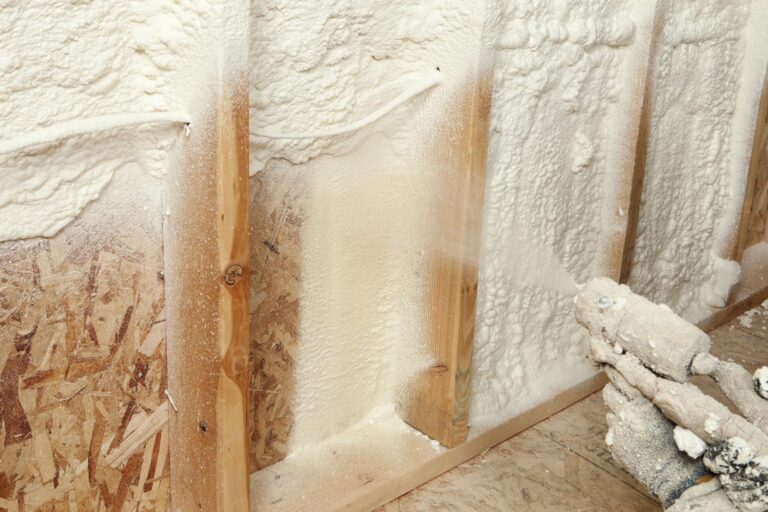
Polyurea Spray: How Spray-On Polyurea Works
How spray polyurea is applied: plural-component equipment, heat, pressure and mix ratio, spray technique, common problems, and what it takes to do it safely.
Start a protective coatings business
Spray protective coatings for a living.
ArmorThane sets you up to do this work, and you own the business. We make the chemistry, build the rigs, train you hands-on and answer the phone when a job gets difficult. You pay no franchise fee and no royalties. It has been that way since 1989.
- $0
- franchise fees or royalties
- 35+
- years in business
- 50+
- countries with applicators
- 24/7
- technical support
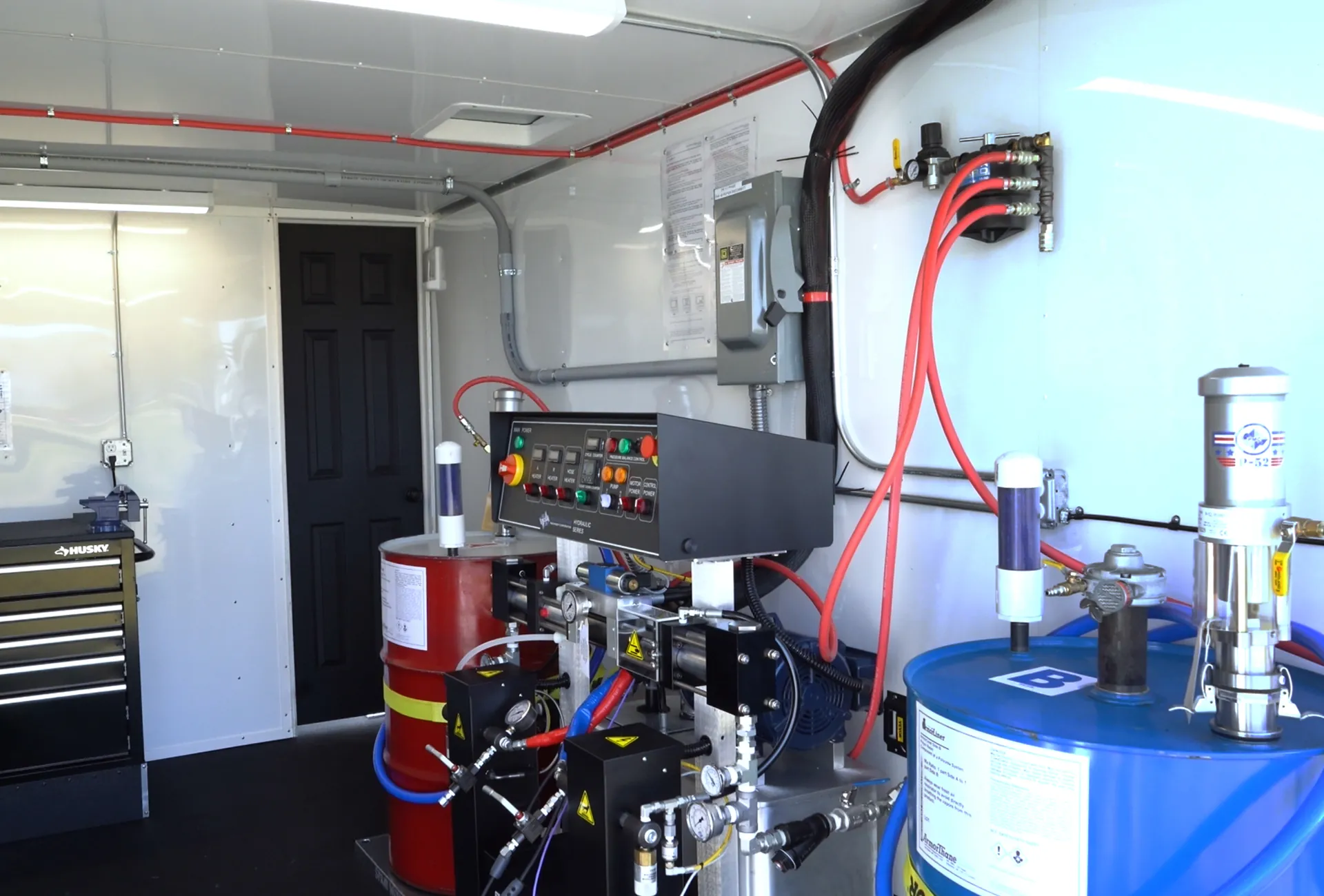
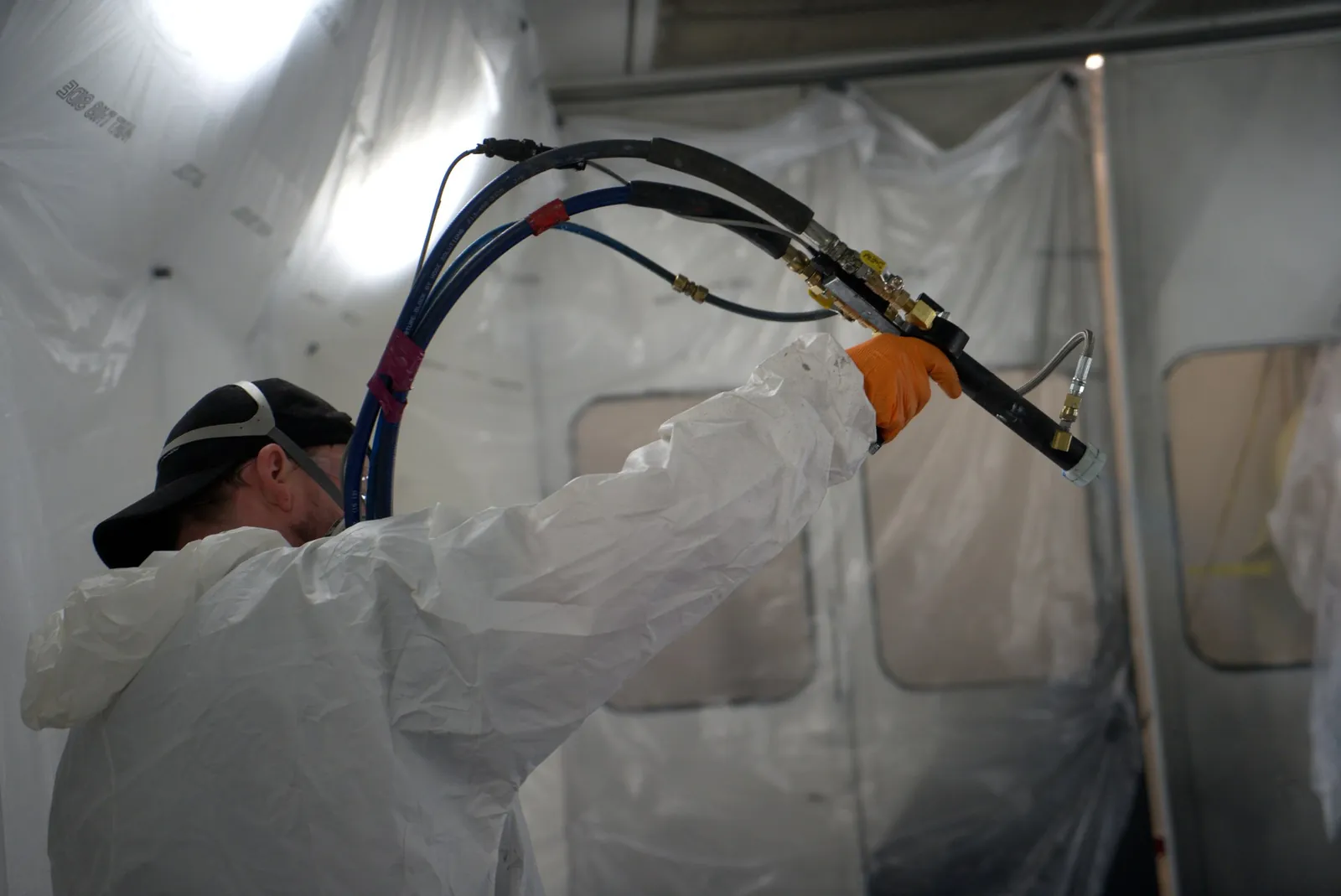
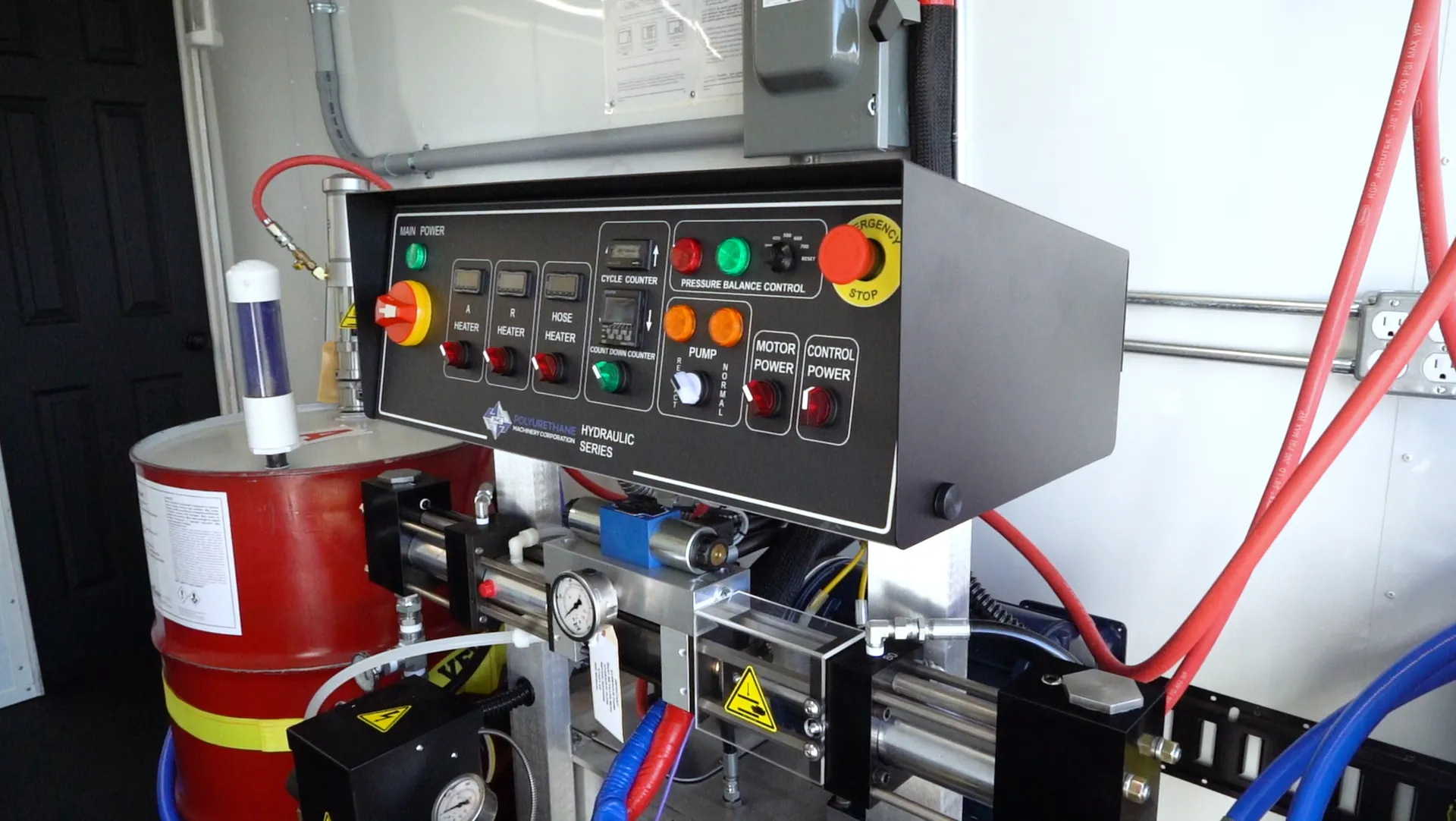
Spray polyurea is applied as two liquids that meet only inside the spray gun. A heated, high-pressure proportioner pumps an isocyanate (A side) and a resin blend (B side) at a fixed ratio through heated hoses to an impingement-mix gun, where they collide, mix and leave the tip already reacting. Within seconds the film gels, and within minutes it can be walked on. Getting that right takes the right equipment, settings and training. Here is how it works.
Polyurea is sprayed with a plural-component proportioner that heats the A and B components (commonly around 150 to 170°F) and pumps them at high pressure (often 2,000 psi or more) at a fixed ratio, usually 1:1 by volume, to an impingement-mix spray gun. The applicator builds the film in multiple overlapping passes to the specified thickness. Results depend on surface prep, correct temperature, pressure and ratio, and safe handling of isocyanates with supplied-air respiratory protection.
The spray polyurea system
Heat, pressure, ratio
Pumps A and B at a fixed ratio and heats both to spray temperature. The heart of the system.
Heated hose
Keeps material at temperature all the way to the gun; long runs need more heat capacity.
Impingement-mix gun
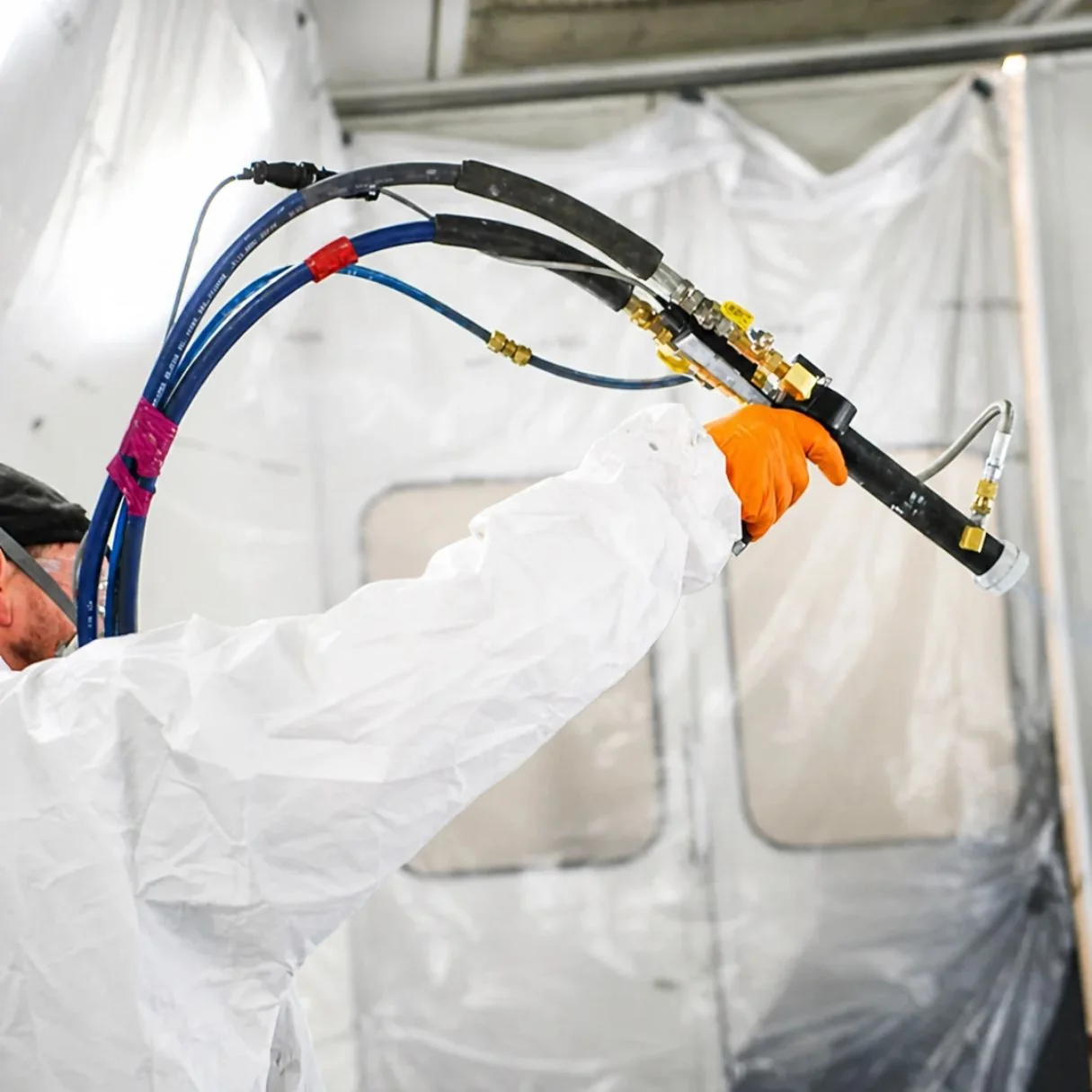
Mixes the two streams by high-pressure collision in a small chamber and sprays the reacting blend.
Common Polyurea Spray Mistakes
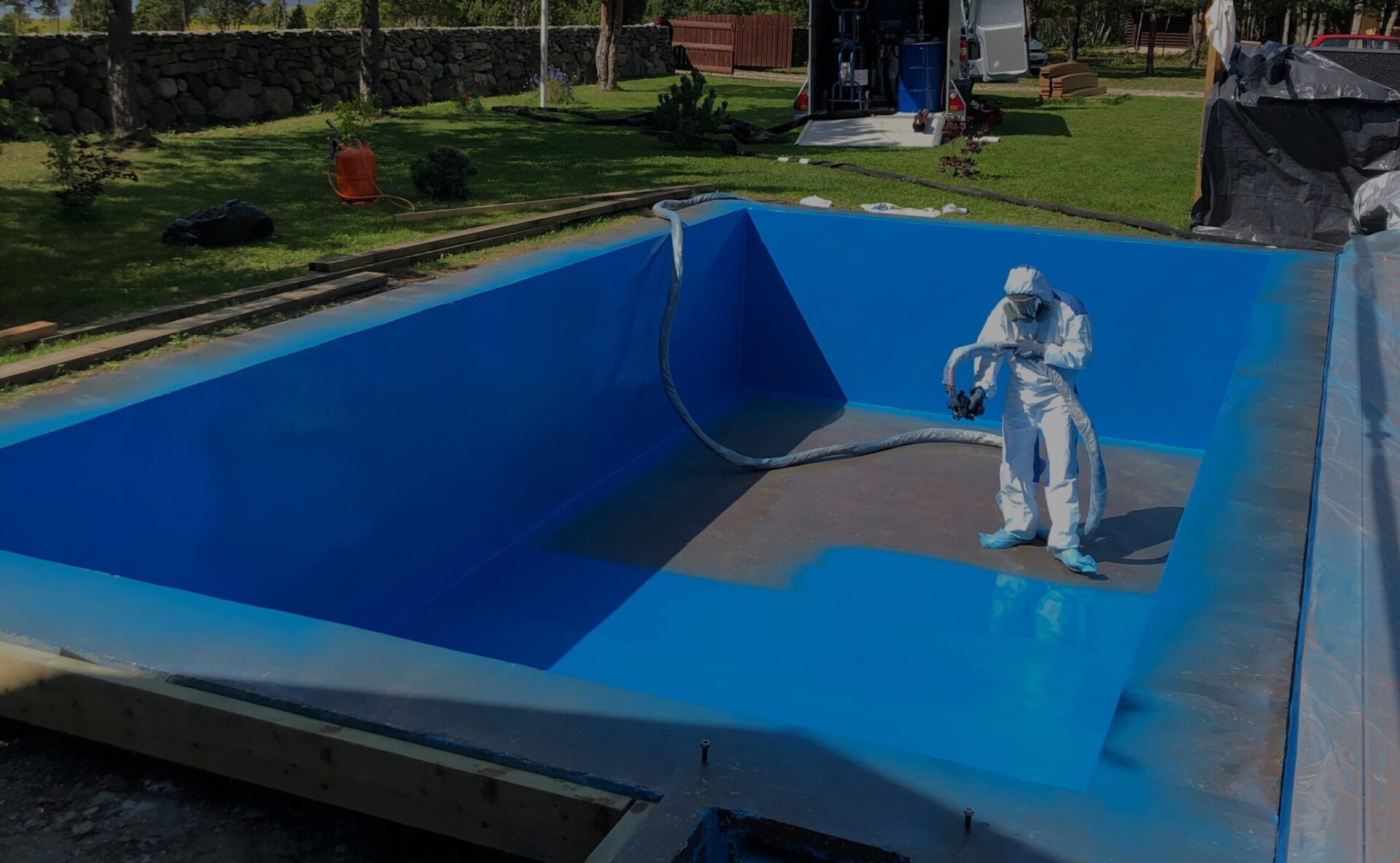
Most spray problems come from a few avoidable errors. Cold material is the big one. If the two parts are not heated to the right temperature, they will not mix well at the gun. The ratio matters too. An off-ratio spray can leave soft spots that never fully cure. Some crews spray too thick in one pass, which traps air. Others ignore the dew point. Spraying onto a surface that is close to the dew point puts a thin film of moisture under the coating, and adhesion suffers. Finally, skipping surface prep is the fastest way to a failed job. Good habits fix all of these: check temperatures and pressures before you start, spray a test pattern, and log the conditions on every job. Learn more about the Probler P2 spray gun, weather conditions for coating jobs and proportioner shutdown procedures.
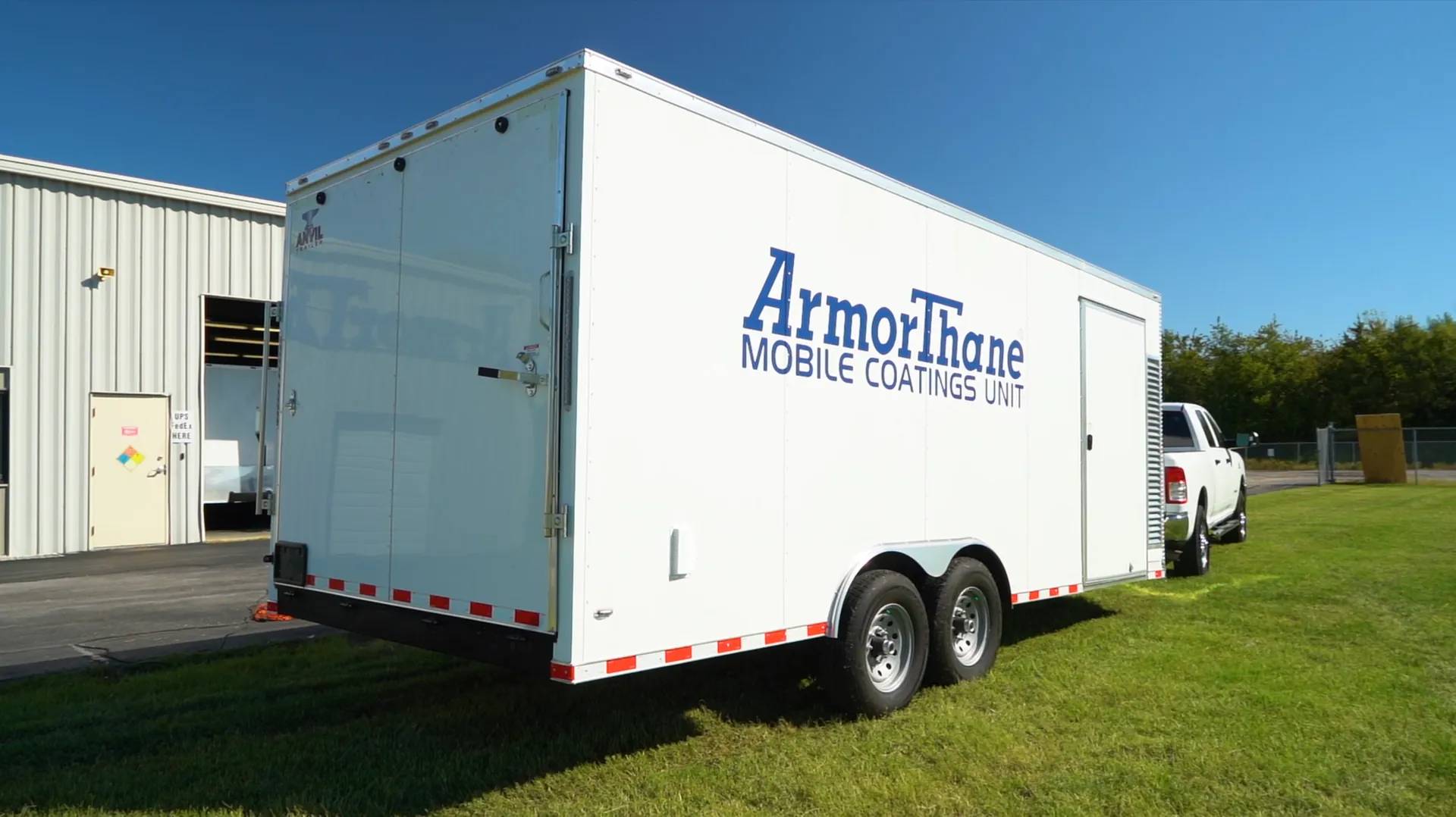
ArmorThane builds complete systems and mobile spray rigs. See spray foam rigs for what goes inside a rig.
Temperature, pressure and ratio
| Setting | Why it matters | If it is wrong |
|---|---|---|
| Material temperature | Lowers viscosity so A and B mix completely | Poor mix, rough texture, soft spots |
| Spray pressure | Drives impingement mixing and atomization | Poor mix, spitting, uneven pattern |
| Ratio | Sets the chemistry; polyurea is ratio-sensitive | Off-ratio film that is tacky, brittle or weak |
| Drum temperature | Keeps material in range before it reaches heaters | Cavitation, pressure imbalance |
| Mix chamber and tip | Controls output and pattern | Wrong film build, overspray |
Spray technique
Prep
Surface clean, profiled and primed. See surface preparation.
Test spray
Spray a test panel to check pattern, color and cure.
Detail first
Hit edges, corners, seams and penetrations first.
Cross-hatch passes
Build the film in overlapping passes at right angles for even thickness.
Check thickness
Use wet-film checks while spraying and verify after cure.
Inspect
Look for pinholes, blisters and thin spots; holiday test linings.
Common polyurea spray problems
| Problem | Likely cause | Fix |
|---|---|---|
| Pinholes and blisters | Outgassing from concrete, moisture, spraying on a warming slab | Prime, spray when substrate temperature is steady or falling |
| Delamination | Poor prep, contamination, missed recoat window | Re-prep, prime, respect recoat times |
| Soft or tacky film | Off-ratio, cold material | Check ratio and heat; fix the cause before continuing |
| Brittle film | Off-ratio toward the A side | Check ratio and pumps |
| Orange peel or rough texture | Low heat or pressure, gun too close or far | Adjust settings and technique |
Spraying polyurea safely
Spray polyurea contains isocyanates, which can cause respiratory sensitization. Applicators need training, supplied-air respiratory protection in most spraying situations, skin and eye protection, ventilation and controlled re-entry times for occupied spaces. See OSHA guidance on isocyanates.
Thinking about starting? See opportunities, aromatic vs aliphatic polyurea and polyurea cost.
Equipment, coatings and training.
ArmorThane supplies spray polyurea, plural-component equipment and hands-on training, or connects you with a certified applicator.
Contractors: become an ArmorThane applicator
Polyurea spray questions
How is polyurea sprayed?
With a heated plural-component proportioner that pumps the two components at a fixed ratio through heated hoses to an impingement-mix gun, where they mix and spray.
Can you spray polyurea with a regular paint sprayer?
No. Fast-set spray polyurea needs plural-component equipment because it gels within seconds of mixing. Slower hand-applied and roll-on polyurea-type products exist but perform differently.
How thick is spray polyurea applied?
It depends on the job: roughly 20 mils for light-duty coatings to 125 mils or more for heavy linings, built in multiple passes.
How long does spray polyurea take to cure?
It gels in seconds and is typically walkable in minutes, with light service in hours. Full properties develop over a longer period per the product data sheet.
Is spraying polyurea dangerous?
It contains isocyanates and requires training, supplied-air respirators in most spraying situations, protective clothing and ventilation.
Sources
- OSHA, isocyanates safety and health topic. osha.gov/isocyanates
- Polyurea Development Association resources. pda-online.org
- American Chemistry Council, Center for the Polyurethanes Industry. americanchemistry.com
Start your coatings business with ArmorThane.
Tell us what you want to spray and where you are. An ArmorThane specialist will walk you through the equipment, chemicals, training and startup cost for the work you want to do.
- Equipment package matched to your applications
- Hands-on training and applicator certification
- Technical support once you are spraying