




Radiant Barrier: Does Attic Foil Work & Is It Worth It?
How radiant barriers block roof heat, what DOE, ORNL and Florida research say they save, where to install them, and when insulation or spray foam is the better buy.
Start a protective coatings business
Spray protective coatings for a living.
ArmorThane sets you up to do this work, and you own the business. We make the chemistry, build the rigs, train you hands-on and answer the phone when a job gets difficult. You pay no franchise fee and no royalties. It has been that way since 1989.
- $0
- franchise fees or royalties
- 35+
- years in business
- 50+
- countries with applicators
- 24/7
- technical support
A radiant barrier is a sheet of foil, or foil-faced roof sheathing, that stops a sun-baked roof deck from beaming its heat down onto your attic insulation and ductwork. In the right house it trims summer cooling bills; in the wrong one it does almost nothing, and laid in the wrong spot it can trap moisture. We insulate attics with spray foam for a living, and we tell customers in hot climates when foil is the cheaper answer and when it isn't. This guide covers how radiant barriers work, what the research says they save, where to install them, and two tools: one calculates radiant heat flow with and without foil, the other estimates your savings and payback.
A radiant barrier is worth it in a hot, sunny climate, in a vented attic with ductwork in it and modest insulation (around R-19). DOE puts the cooling cost reduction at 5 to 10% in warm, sunny climates, and Florida research found 8 to 12% in the Southeast. Install it under the rafters or roof deck, foil facing down, with an air space. Do not lay it on top of attic insulation, where dust and trapped moisture defeat it. If your attic already has R-30 or more, or you live in a cold climate, spend the money on air sealing and insulation instead.
How a radiant barrier works
Heat moves three ways: conduction through solids, convection through moving air, and radiation across open space. Insulation, rated by R-value, fights conduction. A radiant barrier fights radiation, which is why it has no R-value of its own (see our insulation R-value chart for the materials that do).
On a summer afternoon, DOE notes, a conventional roof can reach 150°F or more. The underside of the roof deck radiates that heat across the attic to whatever it can "see": the top of the insulation, the ductwork, the ceiling joists. Ordinary building materials are good emitters and good absorbers. Aluminum is the opposite. FSEC describes it as reflecting thermal radiation very well while giving off very little heat itself, and says foil blocks about 95% of the heat radiated down by the roof.
The property that matters is emittance, a number from 0 to 1 that describes how readily a surface gives off radiant heat. ASTM C1313, the standard for sheet radiant barriers, requires at least one surface with an emittance of 0.1 or less. Wood, shingles and insulation are typically up around 0.9.
- It needs an air space. Foil pressed tight against something conducts heat right through. DOE says the material should droop between attachment points to keep at least a 1-inch air space against the roof.
- Facing down beats facing up. Dust on foil turns it from a reflector into an absorber. FSEC recommends single-sided barriers be installed foil side down, and ORNL found downward-facing roof installations are not likely to get dusty.
- It works best with a big temperature difference. DOE notes the benefit grows with the temperature difference across the barrier, which is why it shines in hot, sunny climates and fades in mild ones.
Radiant heat calculator
This tool uses the standard equation for radiant exchange between two large parallel surfaces (the Stefan-Boltzmann law) to estimate how much heat radiates from the underside of your roof deck to the top of your attic insulation, with and without a foil barrier. It ignores convection and conduction, so it shows only the part of the heat flow a radiant barrier can affect.
How much heat does the foil stop?
q = σ(T1⁴ − T2⁴) ÷ (1/e1 + 1/e2 − 1), with σ = 0.1714 × 10⁻⁸ Btu/h·ft²·°R⁴. Deck and insulation emittance taken as 0.9. The 0.05 and 0.25 chips are illustrative inputs; check the emittance on your product data sheet.
Notice the gap between the radiant cut in this tool and the ceiling heat gain cuts measured in the field. Real attics also move heat by convection and conduction, the insulation still resists whatever reaches it, and dust and installation gaps erode the foil's advantage. That is why measured savings, covered next, are much smaller than the 90%-plus radiant reduction the physics suggests.
What the research says a radiant barrier saves
Most of the good data comes from Oak Ridge National Laboratory (ORNL) and the Florida Solar Energy Center (FSEC). Their numbers line up better than the marketing does:
16 to 42% less ceiling heat gain
In attics with R-19 insulation, radiant barriers cut summer ceiling heat gains by about 16 to 42%. ORNL's expected cooling bill reduction is 2 to 10% of the cooling portion of the bill, possibly up to 17% under some conditions.
8 to 12% of cooling cost in the Southeast
Florida tests found radiant barriers can reduce heat gain through R-19 ceilings by over 40%, worth 8 to 12% of annual cooling costs. FSEC projected a six to seven year simple payback for Florida homes.
5 to 10% in warm, sunny climates
DOE's summary: radiant barriers can reduce cooling costs 5 to 10% in a warm, sunny climate, and are more effective when air conditioning ducts are in the attic. In cool climates, more insulation is usually the more cost-effective upgrade.
Less benefit over deep insulation
FSEC notes that homes with R-30 or more in the attic see little benefit, because there is very little heat flow left to reduce. ORNL adds that very little testing has been done in climates colder than Knoxville.
Put together: a radiant barrier is a hot-climate, low-insulation, ducts-in-the-attic upgrade. FSEC also found the attic was 22% of the total cooling load in a typical 1,500 sq ft Central Florida home, so even a large cut in attic heat gain is a smaller cut in the whole bill.
Radiant barrier savings and payback estimator
Enter what you spend on cooling each year (your summer electric bills minus a typical spring or fall month gets you close), your climate and attic details, and the roof area you would cover. The estimator applies the published savings range for your climate and compares it with the installed cost range from HomeGuide's 2026 data.
Will a radiant barrier pay for itself?
Savings ranges: hot-humid 8–12% (FSEC), hot and sunny 5–10% (DOE), mixed 2–10% (ORNL). Our assumptions: with ducts in the attic we use the upper half of the range, without them the lower half; at R-30 or more we cut the range in half, per FSEC's finding of little benefit over deep insulation. Installed cost $0.30–$2.00 per sq ft (HomeGuide).
Radiant barrier vs. insulation, spray foam and cool roofs
A radiant barrier is one of several ways to keep summer heat out of the house. They attack different parts of the problem, and the cheapest one is not always the best value. Click a header to sort.
| Upgrade | What it stops | Installed cost per sq ft | Published effect | Helps in winter? | Best fit |
|---|---|---|---|---|---|
| Radiant barrier foil under the rafters | Radiant heat from the roof deck | $0.30–$2.00 | 5–10% lower cooling costs in warm, sunny climates (DOE) | Little documented | Hot climates, ducts in attic, R-19 or less |
| Air sealing plus blown insulation top-up | Conduction and air leakage | $0.90–$2.40 | Up to 10% off annual energy bills (ENERGY STAR) | Yes | Almost every attic under R-30 |
| Open-cell spray foam on the roof deck | Conduction and air leakage; brings the attic inside | $1.50–$3.50 | Ducts end up in a conditioned attic | Yes | Ducts in attic, hot or mixed climates |
| Closed-cell spray foam on the roof deck | Conduction, air leakage and vapor | $3.00–$5.00 | Highest R per inch, about R-6.5 | Yes | Shallow rafters, cold or humid climates |
| Cool roof coating | Solar heat at the roof surface | Quoted per roof | Roof can stay more than 50°F cooler (DOE) | Can add a heating penalty in cold climates | Low-slope and metal roofs in hot climates |
Our honest read: if your attic is under R-30, air sealing and more insulation come first in every climate, because they help year-round. A radiant barrier is a reasonable add-on in a hot climate when the ducts stay in a vented attic. If the ducts are in the attic and you are already planning major work, foaming the roof deck makes the attic part of the conditioned space, and at that point a radiant barrier has nothing left to do. Our attic foam insulation page explains that approach, the attic insulation cost guide prices each option, and our guide to the cost to insulate a house puts them in whole-house context.
For low-slope commercial and metal roofs, a reflective coating on the outside often beats anything inside, because it keeps the roof from absorbing the heat in the first place. Our roof coating guide covers the options.
How to install a radiant barrier the right way
Retrofit radiant barrier installs are within reach of a careful homeowner, but attics are hot, cramped and full of wiring. Work early in the morning, wear a respirator around fiberglass, and keep these points in mind:
Pick the roof, not the floor
Attach the foil to the underside of the rafters or truss top chords, or directly under the roof decking. FSEC recommends these locations; DOE warns that foil laid over attic floor insulation collects dust and may trap moisture in the insulation below.
Face the foil down
With single-sided product, the shiny side faces down into the attic. A downward face stays clean, and FSEC notes dust on an upward face makes the foil absorb heat instead of reflecting it.
Keep an air space
Let the foil droop between staples so there is at least a 1-inch air gap against the roof deck, as DOE advises. In new construction, radiant barrier roof sheathing has the foil bonded to the panel, facing the attic.
Keep the ventilation path open
Stop the foil a few inches short of the ridge and keep it off the soffit vents. FSEC says soffit-to-peak ventilation improves radiant barrier performance; you are not trying to make the attic airtight.
Stay clear of wiring
DOE warns that reflective foil conducts electricity. Keep it away from bare conductors, junction boxes and light fixtures, and leave gaps around flues and chimneys per the product instructions.
Radiant barrier mistakes we see in attics
Foil laid on top of the insulation
It is the easiest install and the worst one. ORNL's modeling suggests a dusty attic floor application loses about half of its effectiveness in one to ten years, and DOE warns it may trap moisture in fiber insulation.
Foil over a sprayed roof deck
Once the underside of the roof deck is foamed, the attic is inside the thermal envelope and there is no hot deck radiating into a vented space. Foil there is wasted money.
Blocked soffit vents
Foil stapled down to the top plate can choke the intake vents. Keep the airflow path from soffit to ridge clear, the same way you would with baffles before blowing insulation.
Expecting heating savings
A radiant barrier is a summer upgrade. FSEC notes possible winter heat-loss reduction but says tested climates do not show it well. In cold climates, DOE says more insulation is usually more cost-effective.
R-value claims on foil products
Under the FTC R-value Rule, insulation R-values must come from standard tests at 75°F mean. A foil product's performance depends on the air spaces around it, so read how any claimed R-value was measured before you compare it to batts.
Skipping the air sealing
A radiant barrier does nothing for the air leaking through top plates, recessed lights and the attic hatch. DOE says to seal air leaks before insulating, and the same order applies here.
Bring the attic inside with spray foam.
A certified ArmorThane applicator can foam the roof deck so your ducts sit in conditioned space, or tell you plainly when a radiant barrier and blown insulation are the better value for your house.
Contractors: become an applicator →
Radiant barrier questions
Is a radiant barrier worth it?
In hot, sunny climates with ducts in a vented attic and around R-19 of insulation, usually yes. DOE estimates a 5 to 10% cut in cooling costs in warm, sunny climates, and FSEC projected a six to seven year payback in Florida. Over R-30 attics or in cold climates, the benefit is small.
Where should a radiant barrier be installed?
Under the roof: stapled to the underside of the rafters or truss top chords, or attached under the roof decking, foil side facing down, with at least a 1-inch air space. Avoid laying it over attic floor insulation.
Which side of the radiant barrier faces up?
For single-sided foil installed under the roof, the reflective side faces down into the attic. A downward-facing surface stays free of dust, which keeps its low emittance. Follow the manufacturer's instructions for double-sided products.
Can I put a radiant barrier on top of my attic insulation?
We do not recommend it. DOE says foil on top of floor insulation is susceptible to dust and may trap moisture in fiber insulation, and ORNL modeling suggests a dusty attic floor installation loses about half its effectiveness within one to ten years.
Does a radiant barrier help in winter?
Not much that has been measured. FSEC notes there may be some winter heat-loss reduction, but the climates where testing was done do not demonstrate it well. In cold climates, DOE says adding insulation is usually more cost-effective.
How much does a radiant barrier cost?
HomeGuide puts reflective or radiant barrier installation at $0.30 to $2.00 per square foot, and Angi reports an average around $1,700. Roof pitch, attic access and whether the barrier goes in during a reroof drive the price.
Do I need a radiant barrier with spray foam insulation?
No. Spray foam applied to the underside of the roof deck creates an unvented, conditioned attic, so there is no hot deck radiating into a vented space for foil to block.
Is radiant barrier paint as good as foil?
They are different products. ASTM C1313 covers sheet radiant barriers, which must have a surface emittance of 0.1 or less. Painted or sprayed coatings are tested and sold separately, so compare the measured emittance on each product's data sheet before assuming it performs like foil.
Sources
- U.S. Department of Energy, Radiant Barriers: energy.gov/energysaver/radiant-barriers
- U.S. Department of Energy, Cool Roofs: energy.gov/energysaver/cool-roofs
- Oak Ridge National Laboratory, Radiant Barrier Fact Sheet: web.ornl.gov
- Florida Solar Energy Center, Radiant Barriers: A Question and Answer Primer (FSEC-EN-15): fsec.ucf.edu
- ASTM C1313, standard specification for sheet radiant barriers: astm.org
- HomeGuide, insulation cost (radiant barrier, batt, blown-in, spray foam): homeguide.com
- HomeGuide, spray foam insulation cost: homeguide.com
- HomeGuide, blown-in insulation cost: homeguide.com
- Angi, insulation cost: angi.com
- ENERGY STAR, seal and insulate: energystar.gov
- Federal Trade Commission R-value Rule, 16 CFR Part 460: ecfr.gov
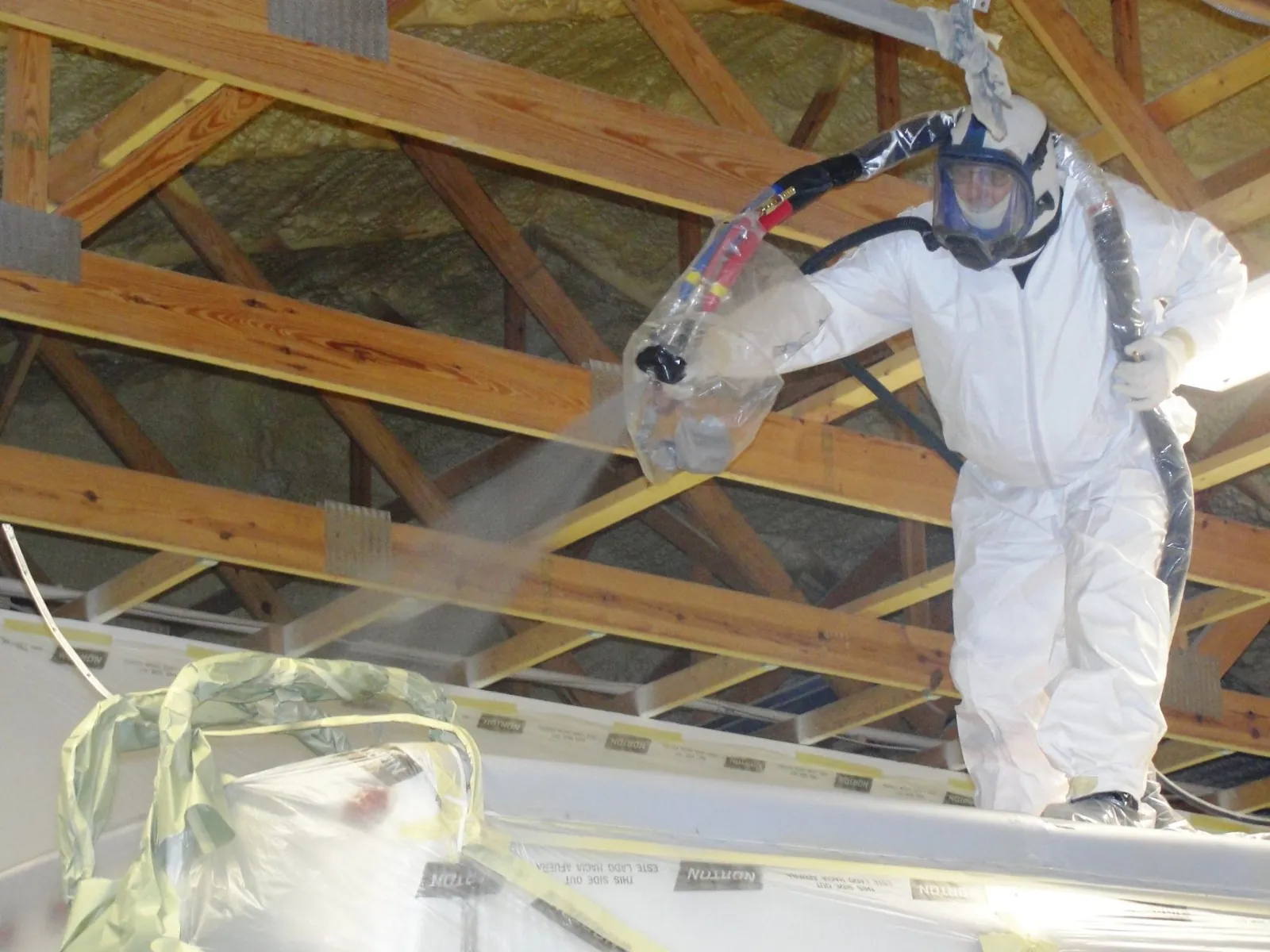
Cooler attics, lower cooling bills.
Homeowners get a certified ArmorThane applicator who can foam the roof deck or recommend foil and blown insulation when that is the better value. Contractors can add spray foam with no franchise fee and no royalties.
Start your coatings business with ArmorThane.
Tell us what you want to spray and where you are. An ArmorThane specialist will walk you through the equipment, chemicals, training and startup cost for the work you want to do.
- Equipment package matched to your applications
- Hands-on training and applicator certification
- Technical support once you are spraying
Attic too hot in summer? Let's fix the real cause.
Tell us where you live, how the attic is insulated today, whether ducts or the air handler sit in the attic, and the approximate square footage. We will connect you with a certified applicator near you.
- City or ZIP code
- Current attic insulation
- Ducts in the attic or not
- Approximate square footage