Spray Foam Machines & Rigs: 2026 Buyer’s Guide
Proportioners, heated hose, guns, generators and trailers, priced from 2026 listings. We build spray rigs and make ArmorFoam, so we’ll show you what a first rig really costs, how to size it and when it pays off.
Start a protective coatings business
Spray protective coatings for a living.
ArmorThane sets you up to do this work, and you own the business. We make the chemistry, build the rigs, train you hands-on and answer the phone when a job gets difficult. You pay no franchise fee and no royalties. It has been that way since 1989.
- $0
- franchise fees or royalties
- 35+
- years in business
- 50+
- countries with applicators
- 24/7
- technical support
A spray foam machine is the easy part to buy. It’s the one item on the invoice with a model number everybody recognizes. The hose, the generator, the air, the respirators, the trailer and the first few sets of chemical are where first-time buyers get surprised.
The machine itself, a heated plural-component proportioner, costs about $26,000–$53,000 in 2026 dealer listings. A complete new trailer rig with hose, gun, pumps, air and power runs about $38,000–$140,000; used trailer rigs were listed at $60,000–$99,000. Plan roughly $12,000–$16,000 more for first chemical, supplied-air respirators and training. Run the startup calculator or size your machine.
Every page ranking for this term is a store. That’s fine if you already know what you need. This page is for the contractor who doesn’t yet: what’s actually in a rig, which machine size fits the work, how much power it pulls, what everything costs at 2026 list prices, and whether the payment pencils out.
We’ve been building spray rigs and making polyurethane and polyurea systems in Springfield, Missouri for more than 35 years. We sell rigs, so read our advice with that in mind. We’ll also tell you where a used rig, a rental or simply hiring an applicator is the smarter move.
- 1What’s in a spray foam rig
- 2Machine types: air, electric, hydraulic
- 32026 prices: machines, rigs, used rigs
- 4Startup cost calculator
- 5Sizing: output, hose, heat and power (tool)
- 6Trailer, box truck, van or cart
- 7New, used, rented or hired out
- 8Will the rig pay for itself? (tool)
- 9Safety, training and compliance
- 10Setting up and running the machine
- 11Spray foam rigs from ArmorThane
- 12Spray foam machine FAQ
What is a spray foam machine, and what’s in a rig?
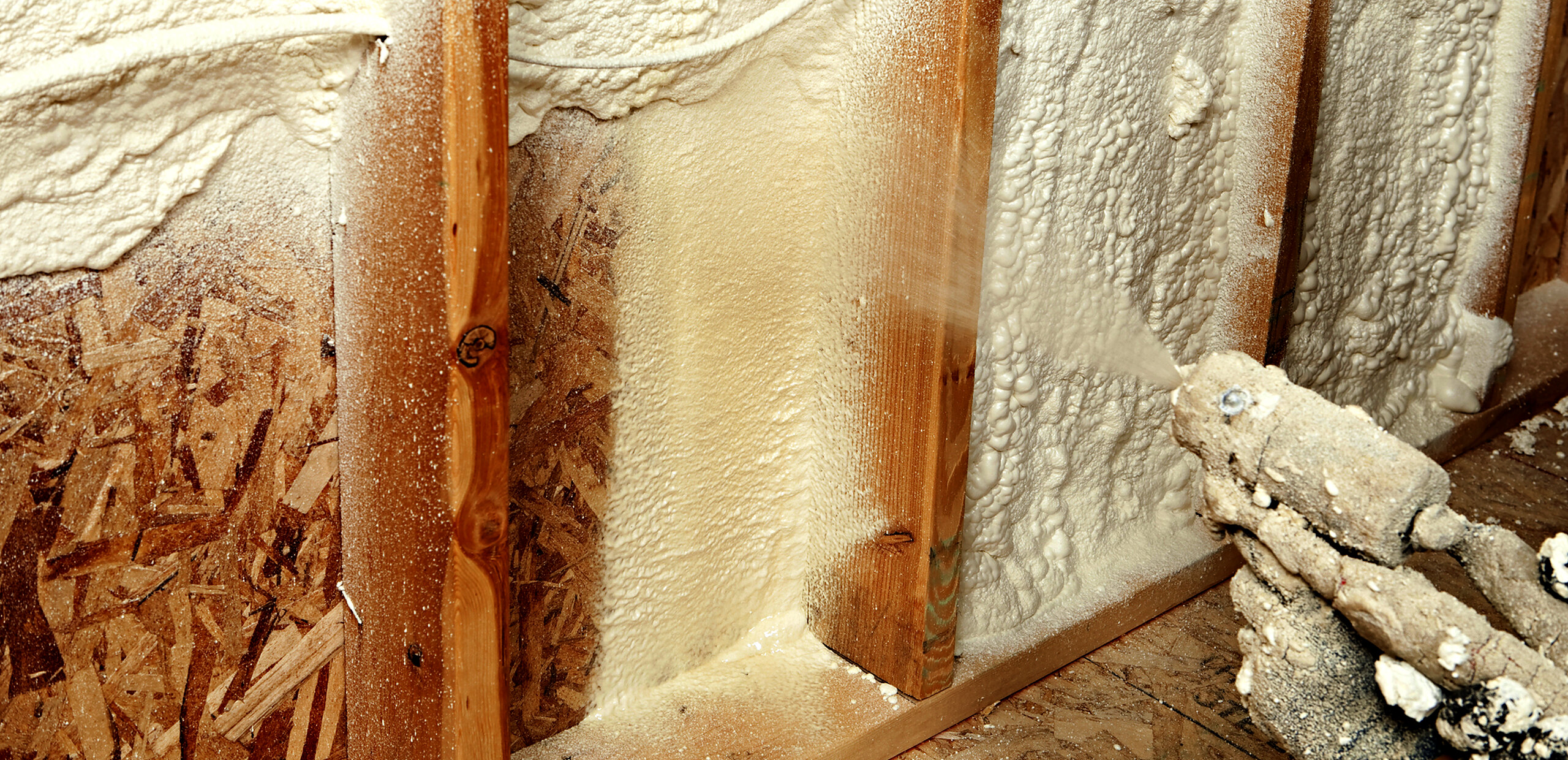
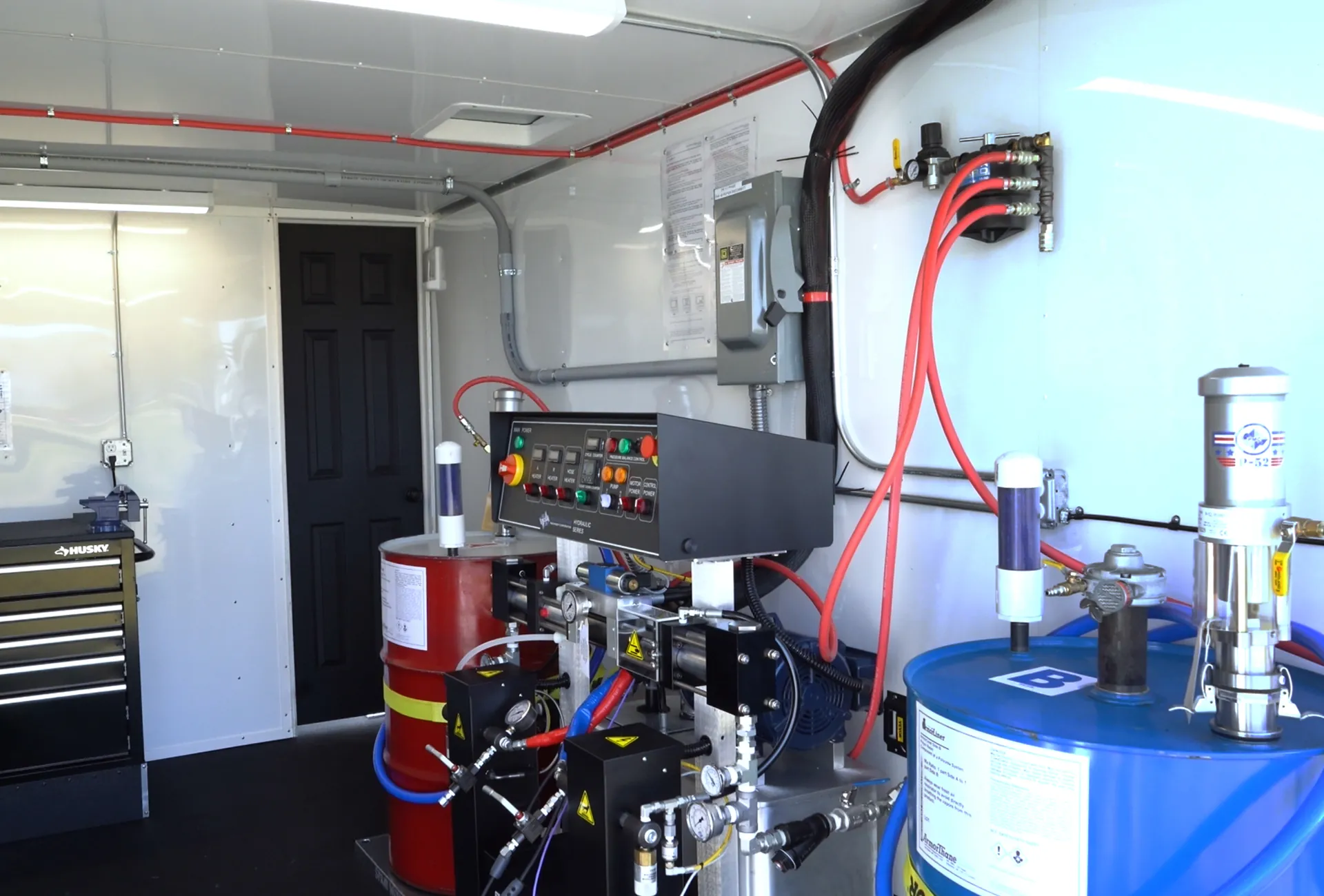
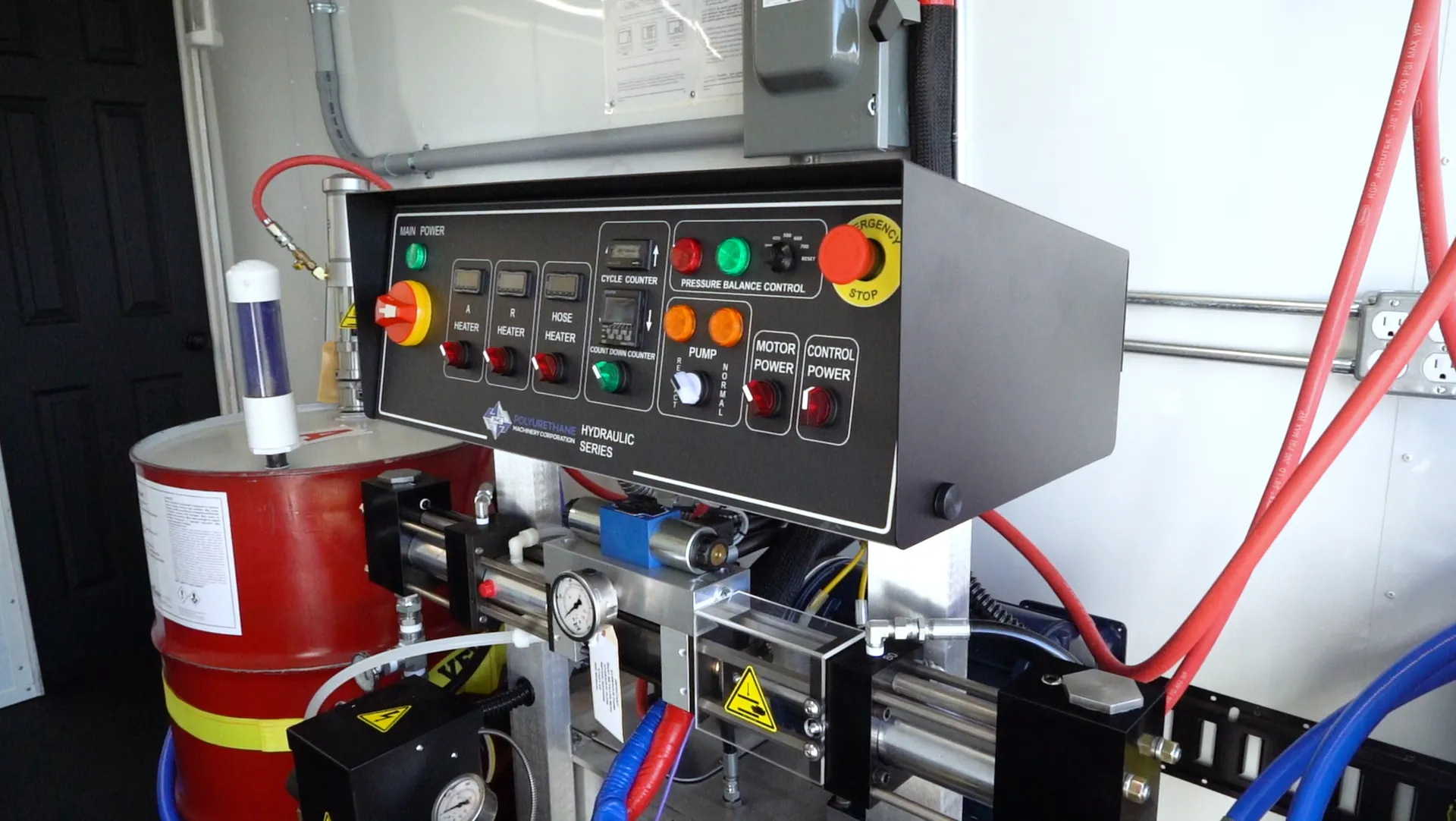
A spray foam machine is a plural-component proportioner, often called a reactor. It heats the A-side (isocyanate) and B-side (resin) separately, meters them 1:1 by volume and pumps them at up to 2,000 psi through a heated hose to a gun, where they collide and mix. A rig is that machine plus everything that keeps it spraying on a job site.
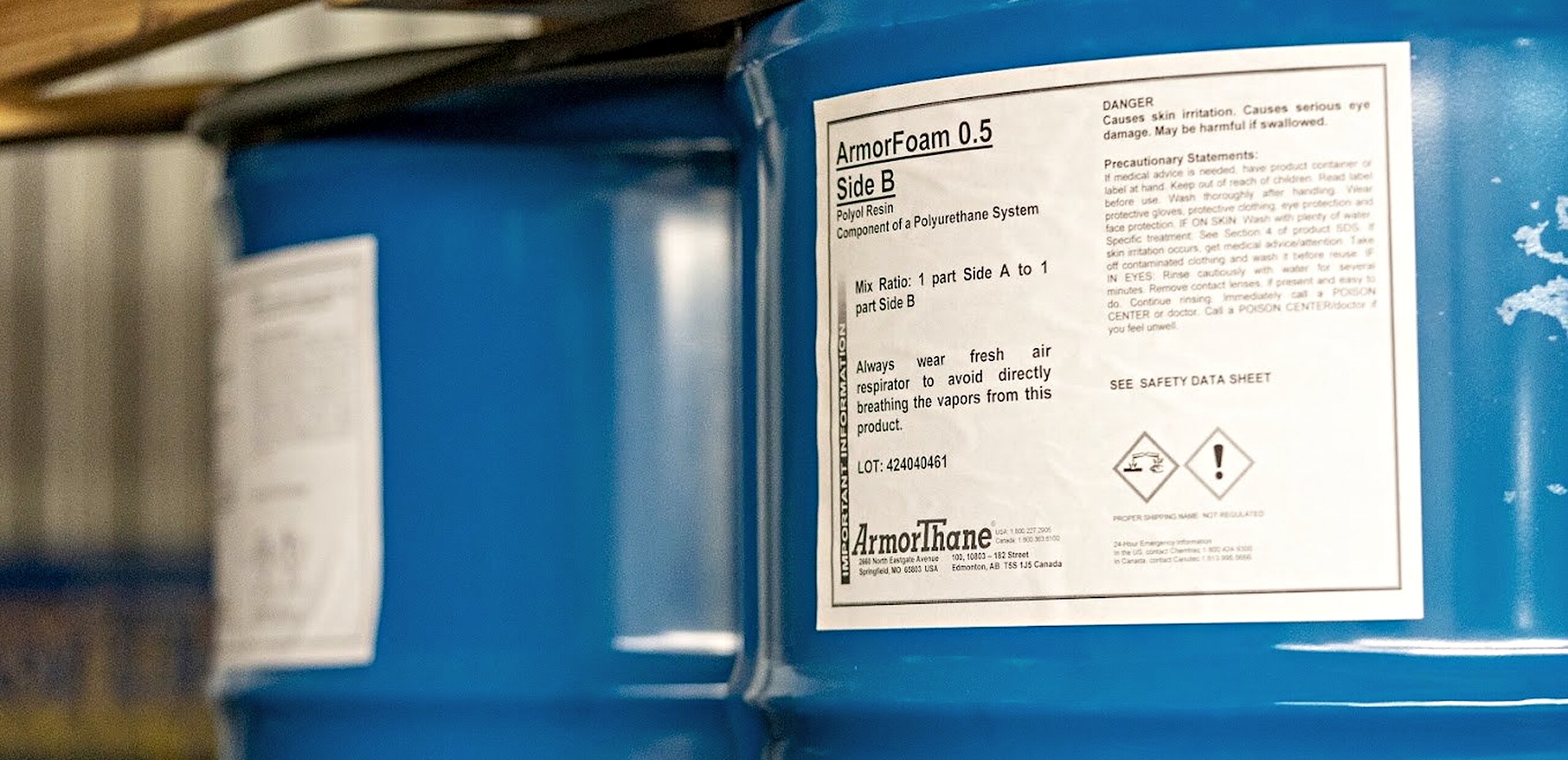
- Chemical drums. A-side (isocyanate) and B-side (resin), 55 gallons each. A pair is a “set.”
- Transfer pumps push chemical from each drum to the proportioner.
- Proportioner (reactor): heats both sides, meters them 1:1 and pumps them.
- Heated hose on a reel, in 50-ft sections, holds temperature to the gun.
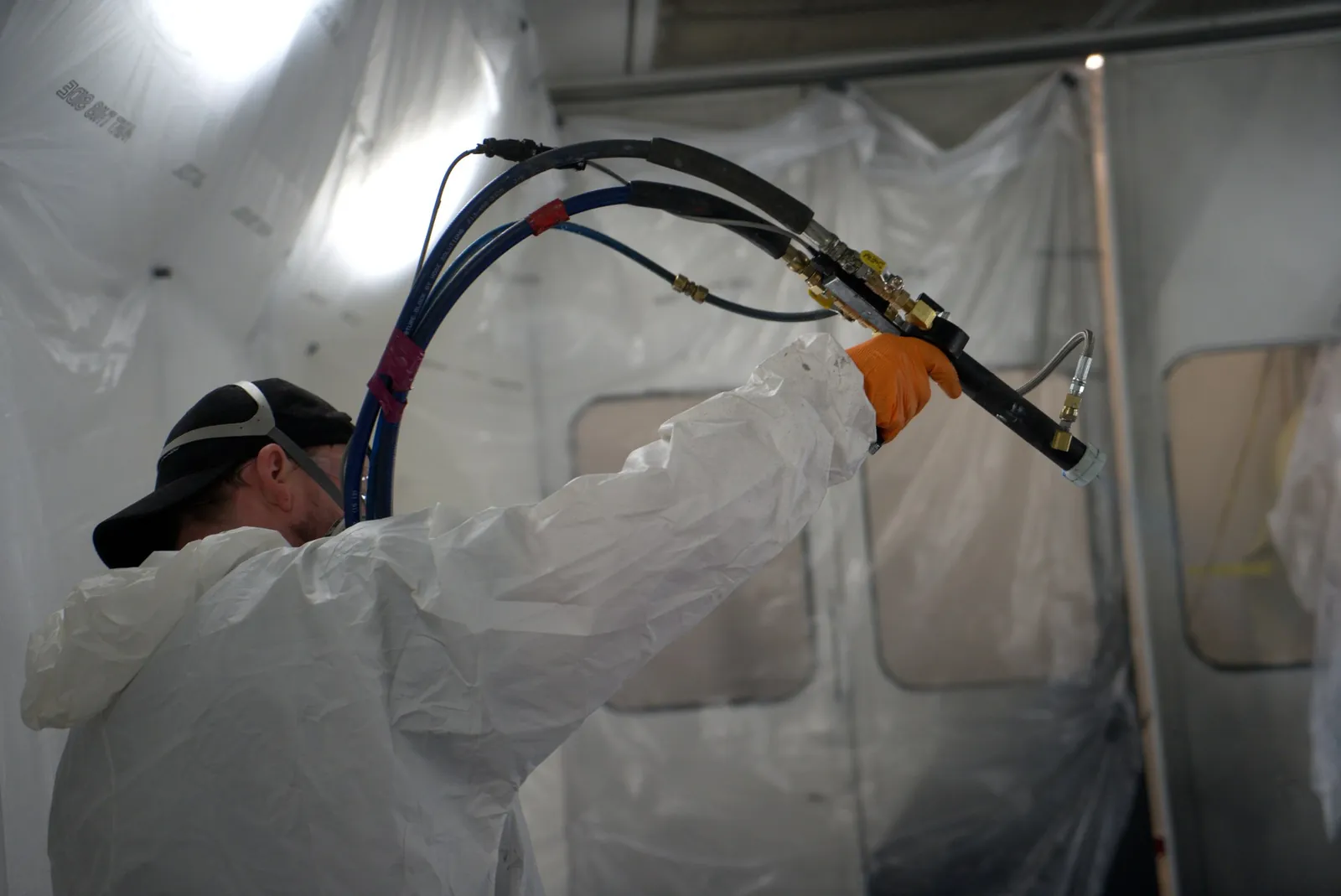
- Spray gun: impingement mix chamber with an air purge.
- Air compressor and dryer for the gun purge and pumps. Wet air ruins isocyanate.
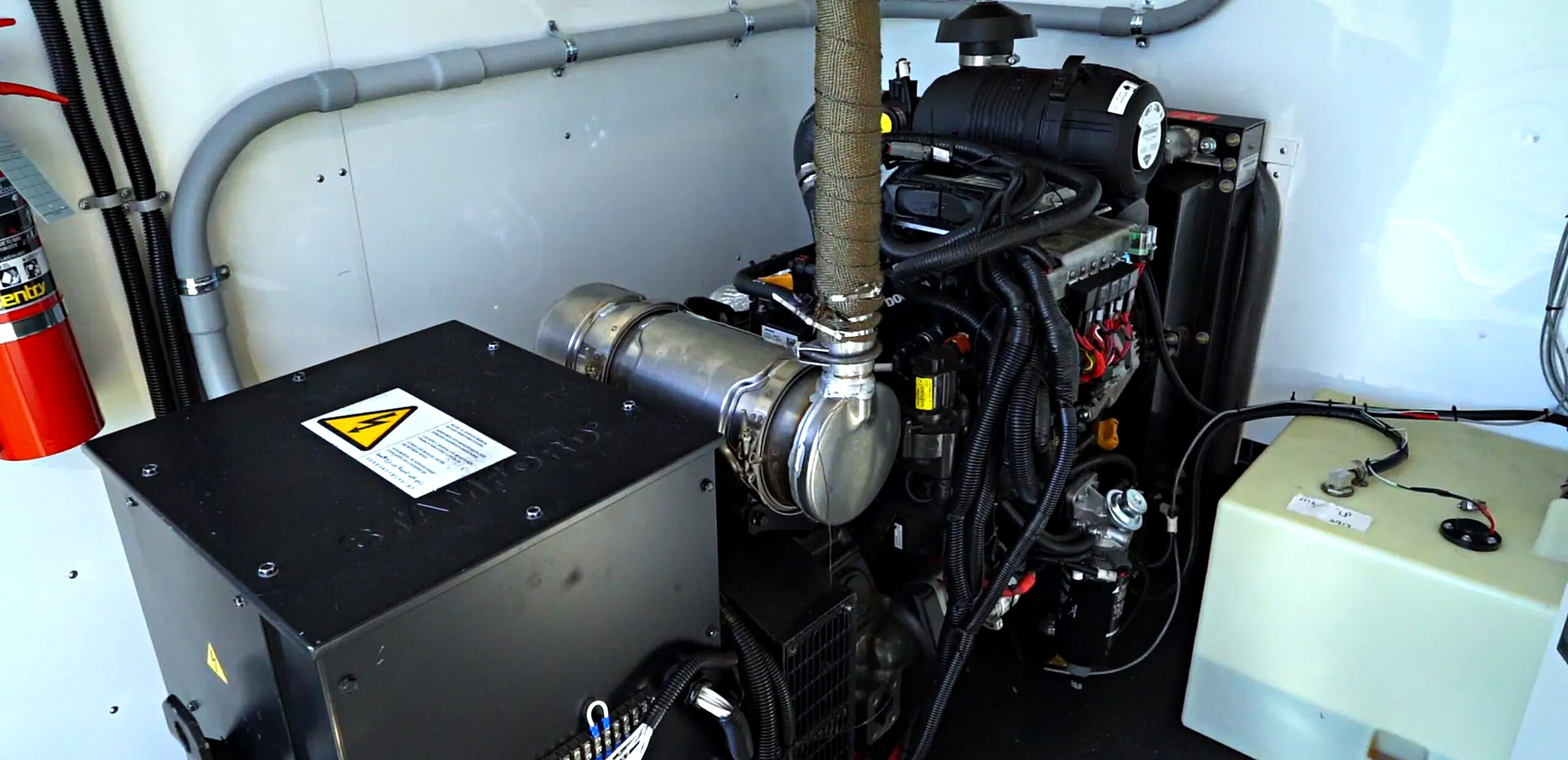
- Generator or shore power for the heaters, motor, compressor and lights.
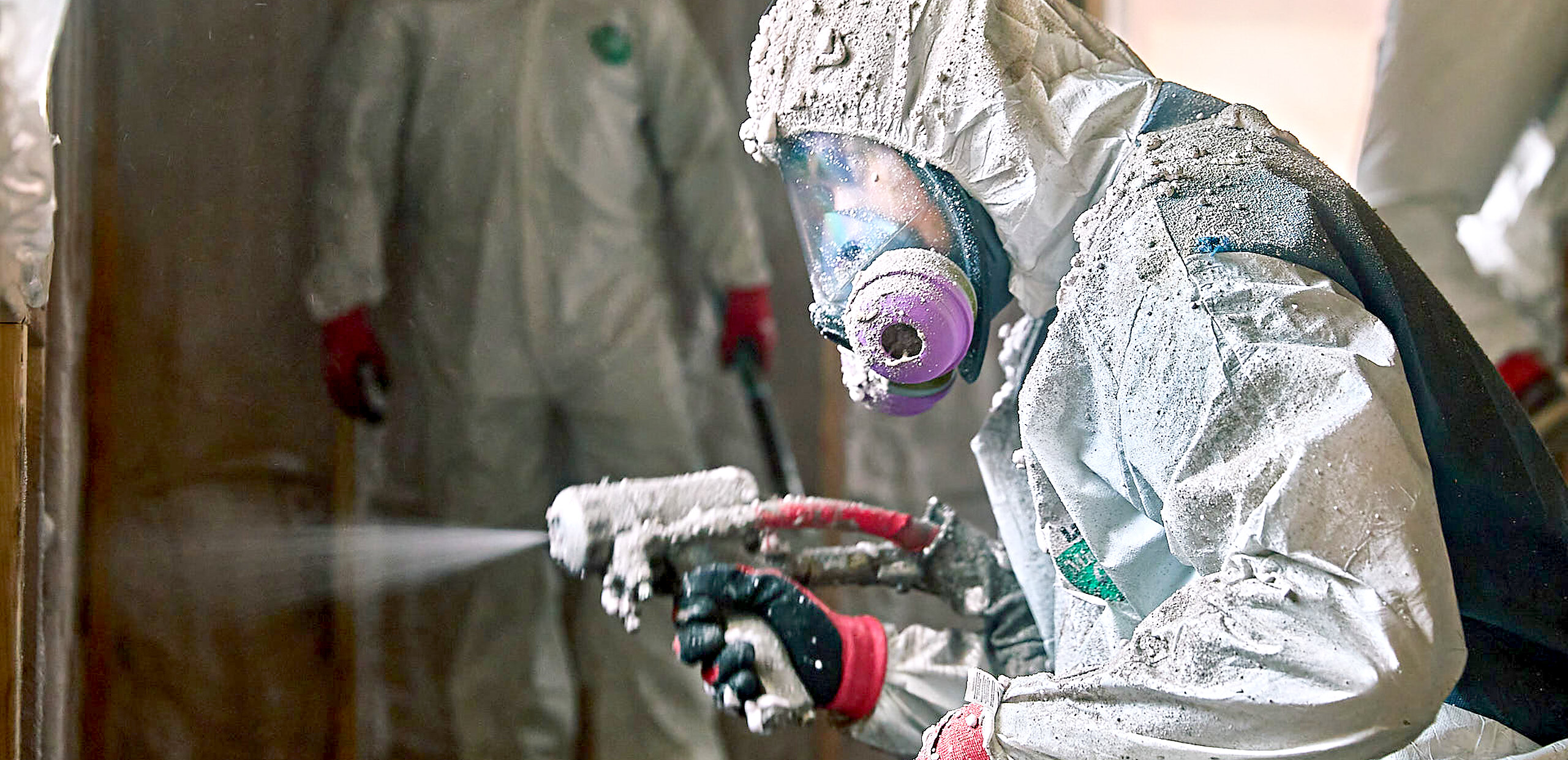
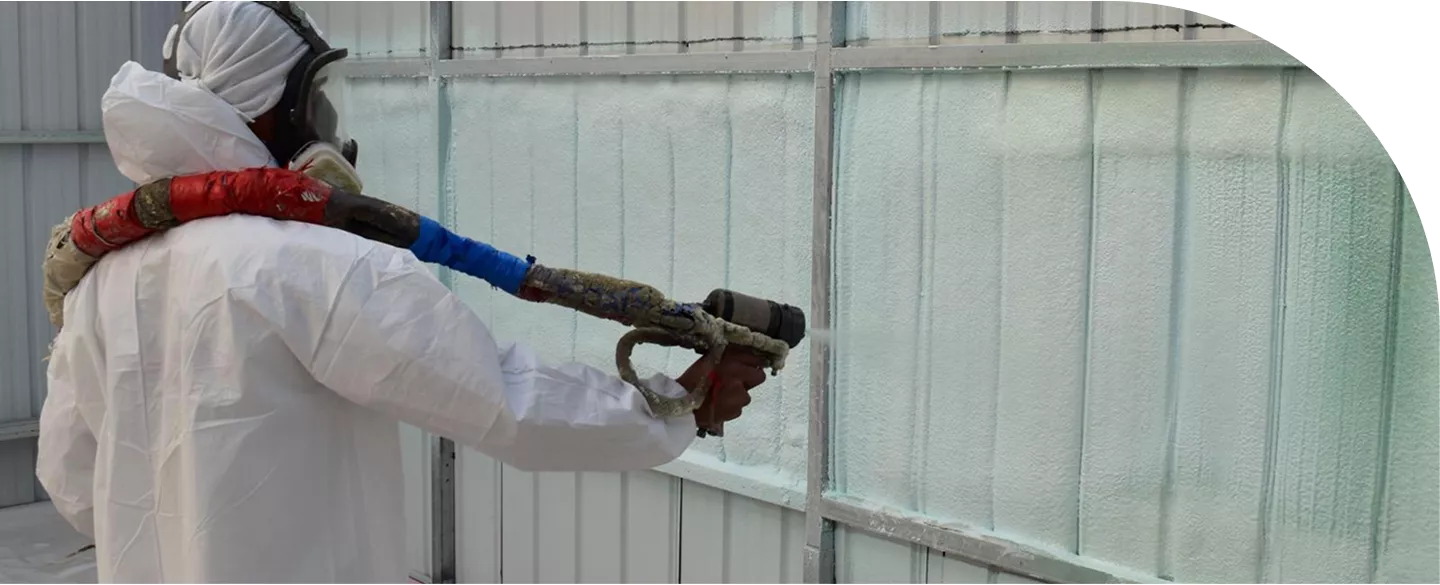
- Supplied-air system so the sprayer breathes clean air, not the spray cloud.
Every component, what to check and what it costs
Here’s the parts list for a working rig, priced from one national dealer’s September 2026 catalog so the numbers compare. Other dealers will be close, not identical.
| Component | What it does | What to check | 2026 list price example |
|---|---|---|---|
| Proportioner | Heats, meters and pumps A and B | Output (lb/min), heater kW, max hose length, amps | $26,170 bare hydraulic (Gusmer GH-2) to $52,920 (Reactor 2 E-30 Elite package) |
| Heated hose | Keeps chemical at temperature to the gun | 2,000 psi (foam) or 3,500 psi (coatings) rating; ID; total length vs. machine limit | $2,340 (¼ in.) to $2,660 (⅜ in.) per 50 ft; 20-ft whip $1,760 |
| Spray gun | Impingement mixing, air purge | Mix chamber sizes, spare parts on the shelf | $3,680 (Graco Fusion air-purge) |
| Transfer pumps | Feed the proportioner from the drums | Pump ratio, air use, drum fittings | $4,250 (pair of T1 pumps) to $6,180 (complete T2 system) |
| Air compressor | Gun purge, pumps, agitator | cfm at 100 psi vs. total demand | $3,847 (5 hp constant-run) to $5,531 (10 hp) |
| Air dryer | Keeps moisture out of the ISO side | cfm rating at least equal to the compressor | $2,548 (45 cfm refrigerated) |
| Generator + compressor | Power and air where there’s no site power | kW vs. load; diesel vs. gas; Tier 4 Final | $41,184 (30 kW diesel with 20 cfm compressor) |
| Supplied-air system | Breathing air for sprayers | NIOSH approval, number of workers, hose length | $1,737 (one worker) to $4,545 (two workers, 200 ft) |
| Trailer or truck | Houses, heats and moves everything | Length, GVWR, insulation, doors, tow vehicle | $29,000 (new 16-ft equipment-ready trailer) to $32,500 (20-ft) |
| First chemical | A-side and B-side drums | Yield per set, HFO or water-blown | $2,033–$2,060 per open-cell set; $2,219–$2,788 per closed-cell set |
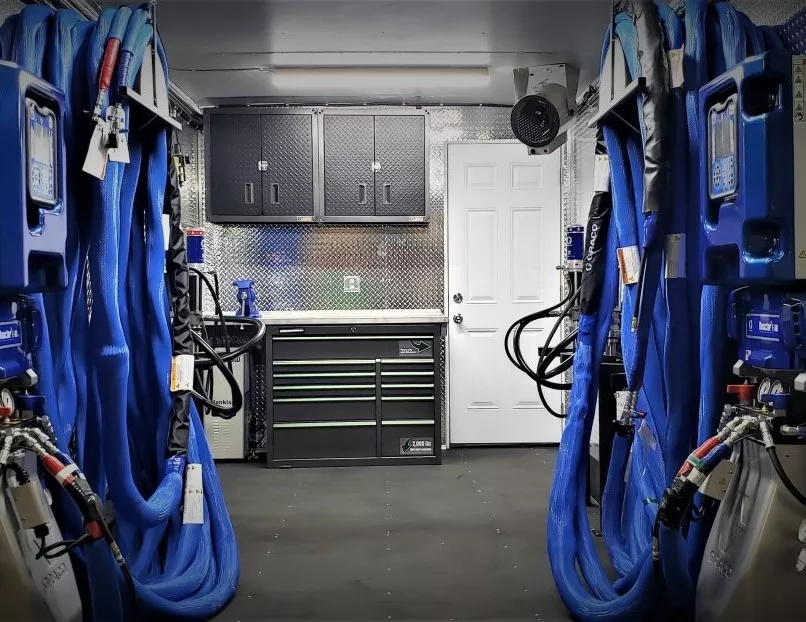
The proportioner decides almost everything else
Pick the machine first and the rest of the rig follows from it. Its heater size and amp draw set the generator. Its maximum hose length sets how far from the building you can park. Its drive (air, electric or hydraulic) sets how much compressed air you need. And its output decides which mix chambers you can run without the heaters falling behind.
The items buyers forget
- Dry air. Water vapor in the air line reacts with isocyanate. A refrigerated dryer is the minimum.
- Drum heat. Cold chemical sprays badly. Keep drums at 70–80°F, which in winter means drum heaters and an insulated or heated trailer.
- Breathing air for everyone inside the spray area, not just the sprayer.
- Spare mix chambers, tips and a second gun. A worn mixing chamber is the most common cause of off-ratio spray in the field.
- Hose you can actually reach the job with. 150 ft sounds like plenty until the rig has to park at the street.
For a deeper look at how the six rig subsystems fit together, see our overview of spray rig pricing and configurations.
Types of spray foam machines: air, electric and hydraulic
Spray foam machines come in three drives. Air-driven units are simple and cheap to power but consume a lot of compressed air. Electric units are the usual starter and mid-size machines. Hydraulic units carry the highest output and hold it through long, continuous spraying, which is why roofing and big commercial rigs use them.
| Machine | Drive | Output | Max hose | Heat | Power at 230 V | Max pressure |
|---|---|---|---|---|---|---|
| Graco Reactor E-10 | Electric | 12 lb/min | 105 ft | 1.7–2.0 kW | 120 V two-cord or 240 V | 2,000 psi |
| Graco Reactor E-20 | Electric | 20 lb/min | 210 ft (R3: 220) | 6.0 kW (R3: 7 or 10) | 48 A 1-ph / 32 A 3-ph | 2,000 psi |
| Graco Reactor A-25 | Air | 25 lb/min | 210 ft | 6.0 kW | 40 A 1-ph, plus 28 scfm air at 100 psi | 2,000 psi |
| Graco Reactor 2 E-30 | Electric | 30 lb/min | 310 ft (R3: 320) | 10.2 or 15.3 kW | 78–100 A 1-ph / 50–62 A 3-ph | 2,000 psi |
| Graco Reactor 2 H-30 | Hydraulic | 28 lb/min (R3: 30) | 310 ft (R3: 320) | 10.2 or 15.3 kW | 79–100 A 1-ph / 46–59 A 3-ph | 2,000 psi |
| Graco Reactor 2 H-40 | Hydraulic | 45 lb/min | 410 ft | 15.3 kW | 71 A 3-ph | 2,000 psi |
| Graco Reactor 2 H-50 | Hydraulic | 52 lb/min (R3: 54) | 410 ft (R3: 420) | 20.4 kW | 95 A 3-ph | 2,000 psi |
| PMC PHX-40 (polyurea-rated) | Hydraulic | 2.8 gal/min | 410 ft | up to 21 kW | 142 A 1-ph / 82 A 3-ph | 3,500 psi |
Air-driven machines
An air-driven proportioner uses an air motor to drive its pumps. The appeal is simplicity and a lower electrical load. The catch is air: Graco’s A-25 alone uses 28 scfm at 100 psi before the gun purge and transfer pumps take their share, so the compressor has to be sized for it. Our own equipment article adds a second caution: pneumatic systems don’t monitor pressure the way electric and hydraulic machines do, so the operator has to watch for off-ratio foam.
Electric machines
Electric reactors are the most common first machine. They’re quieter, lighter and simpler to install. Graco describes its E-20 as a starter machine with smaller heaters, best for smaller jobs and temperate climates. The E-30 is the workhorse size: 30 lb/min and 310–320 feet of hose. The trade-off is the amp draw, covered in the sizing section, and Graco’s own note that continuous spraying or very hot weather shrinks an electric unit’s performance envelope.
Hydraulic machines
Hydraulic reactors run an electric motor driving a hydraulic pump, which holds pressure steadily through long passes. They’re the choice for spray foam roofing, big metal buildings and anyone spraying most of the day. They’re heavier (Graco’s H-40 weighs 600 lb) and need more power, and the biggest ones are rated for three-phase only.
Low-pressure foam machines
Some rig builders sell low-pressure foam machines that run lighter hose and are easier to learn. Our equipment article explains the limit: foam sprays in roughly the 800–2,000 psi range, and low-pressure machines only work well without long hoses, because long runs need more pressure to move the material. They suit shop work and short pulls. They won’t spray polyurea.
Can one machine spray foam and polyurea?
Often, yes, and that’s a real advantage. Coatings run at roughly 1,850–3,500 psi and foam at 800–2,000 psi, so a polyurea-rated machine like the PMC PHX-40 (3,500 psi) can be turned down to spray foam with the right temperatures and pressures. The reverse is harder. Graco’s foam reactors top out at 2,000 psi, the bottom of what pure polyurea needs, and polyurea also wants hotter material and more heater wattage. If you want both markets, buy the coatings-rated machine. More in switching from spray foam to polyurea and our high-pressure equipment lineup.
How much does a spray foam machine cost in 2026?
A spray foam machine costs about $26,000–$53,000 on its own, depending on size and how much hose and which gun come with it. Complete new trailer rigs are published at $37,995 to about $140,000, box-truck rigs at $129,000–$196,000, and used trailer rigs were listed at $60,000–$99,000 in September 2026.
The machine alone
| Proportioner package | What’s included | List price (Sep 2026) |
|---|---|---|
| Graco Gusmer H-20/35 GH-2, 10 kW | Bare hydraulic machine | $26,170 |
| Graco Reactor 3 E-20 Pro, 7 kW | Machine with heated hose package | $33,760 |
| Graco Reactor 3 E-20 Standard | Machine with multiple hose sections | $39,980 |
| Graco Reactor 3 E-20 Elite | Elite machine with hose package | $40,180 |
| Graco Reactor 2 E-30 Elite, 10 kW | Machine with multiple hose sections | $52,920 |
Complete new rigs
A rig price is only comparable to another rig price when you know what’s inside. Some include the generator and compressor; some are shore-powered and expect 230-volt power at the job. Here’s what builders published this year.
| Rig | Machine | Platform and power | Price |
|---|---|---|---|
| Equipment package (Profoam) | Not specified | For buyers who already own a trailer | $29,999 |
| SprayEZ 3000 starter | SprayEZ 3000, 30 lb/min, 250 ft hose | 7x16 trailer | $37,995 |
| Graco A-25 starter (SprayEZ) | Reactor A-25 | Trailer rig | $45,540 |
| PMC PH2 starter (SprayEZ) | PMC PH2 hydraulic | 7x16 trailer | $47,995 |
| 14-ft Base Series (Profoam) | Not specified | 14-ft trailer, shore power | $54,999 |
| ProPAK Portable 200 (Spray Foam Systems) | Reactor 3 E-20 Standard | Mobile cart, shore power | $58,317 |
| Graco R3 E-20 starter (SprayEZ) | Reactor 3 E-20 | Trailer rig | $60,843 |
| PMC PH-40 insulated (SprayEZ) | PMC PH-40 hydraulic | 7x18 insulated trailer | $74,647 |
| ProPAK 200G (Spray Foam Systems) | Reactor 3 E-20 Elite | 12-ft trailer, gas generator | $75,000 (sale) |
| Graco R3 E-30 insulated (SprayEZ) | Reactor 3 E-30 | Insulated trailer | $83,290 |
| ProPAK 300S (Spray Foam Systems) | Reactor 3 E-30 Standard | 16-ft trailer, shore power | $94,659 |
| ProPAK 300D (Spray Foam Systems) | Reactor 3 E-30 Pro | 20-ft trailer, diesel | $126,128 |
| ProPAK BXT 300C (Spray Foam Systems) | Reactor 3 E-30 Elite | 20-ft box truck, diesel | $129,153 |
| ProPAK 400D roofing (Spray Foam Systems) | Reactor 2 H-40 Elite | 20-ft trailer, diesel | $139,743 |
Used spray foam rigs
| Used rig (listed Sep 2026) | What’s on it | Price |
|---|---|---|
| 2016 Reactor 2 E-30, 24-ft trailer | 210 ft hose, two T1 pumps, 5 hp compressor, 30 kW generator, dryer | $60,000 (was $72,000) |
| Graco Reactor 3 E-20, 12-ft trailer | Trailer package | $65,000 |
| 2016 PMC PH-25, box truck | 5 hp compressor, 37.5 kW diesel, 20 cfm dryer | $76,470 |
| 2023 ProMaster van, Reactor 3 E-20 Elite | Complete van rig | $84,000 |
| 2024 16-ft trailer, Reactor 3 E-30 Elite | Complete trailer rig | $85,000 (was $98,000) |
| Graco Reactor H-40, 8.5x26 trailer | Complete system | $92,000 |
| 2024 Reactor 2 H-30, 20-ft trailer | 320 ft hose, two T3 pumps, two guns, 5 hp compressor, 30 kW generator | $99,000 |
Chemical: what a set costs and yields
A set is one A-side and one B-side drum. At 1–3 set pricing, open-cell sets listed at $2,033–$2,060 and closed-cell HFO sets at $2,219–$2,788 in September 2026. ArmorFoam yields about 17,000 board feet per open-cell set and 5,000 per closed-cell set at ideal yield, so chemical runs about $0.12 per board foot for open-cell and $0.44–$0.56 for closed-cell before waste. What you charge for that foam is covered in our spray foam insulation cost guide.
What the sticker price usually leaves out
- Your first chemical. Four sets is about $9,000.
- Supplied-air respirators: $1,737 for one worker, $4,545 for two.
- A generator, if the package is shore-powered and your jobs don’t have 230-volt power to spare.
- Extra hose. Each 50-ft section is $2,340–$2,660.
- Training, if it isn’t included: one dealer’s 3½-day class is $1,050 per person.
- The truck that tows it, insurance, licensing and your first months of marketing.
Spray foam rig startup cost calculator
Pick a published rig or enter your own quote, add what it doesn’t include, and see the total, the cash you need up front and the monthly payment. Add-on prices are one dealer’s September 2026 list prices; change the chemical prices to your supplier’s.
What will a first spray foam rig really cost?
Financing terms are examples. Dealer financing partners quote 12 to 60 months, with rates set by your credit and business history.
Graco Reactor 3 E-20 starter rig (SprayEZ): $60,843. Add-ons $4,545. First chemical: 2 open-cell and 2 closed-cell sets, $9,080. Training: 2 x $1,050 (one dealer’s 3½-day class). Financing $58,849 at 10.0% over 60 months after 10% down.
Ask whether this package includes a generator and compressor. If not, budget them or confirm site power. Tow vehicle, insurance and licensing are set to $0. Get real quotes; insurance alone is a genuine line item. Published yardsticks: starter rig packages $33,000–$58,000 (SprayEZ FAQ); rig packages $29,999–$150,000 (Profoam FAQ). Estimate only; prices change.
How we calculated this: equipment = rig price + add-ons; startup total = equipment + chemical + training + tow vehicle + insurance; financed amount = equipment x (1 − down payment); payment = P x r ÷ (1 − (1 + r)−n) with r = APR ÷ 12. Chemical, training and insurance are treated as cash. Estimates only.
How to size a spray foam machine: output, hose, heat and power
Size the machine for the hose length you need, the heat your winters demand and the power you’ll really have on site, not for the biggest output number. A 20 lb/min electric reactor handles most residential work in mild climates. Long pulls, cold weather, big mix chambers and roofing push you to 30 lb/min and up.
Output: pounds per minute, mix chambers and board feet
Reactor output is rated in pounds of chemical per minute. What you actually spray is set by the mix chamber in the gun and the pressure. Graco’s own chart example: an AR6060 (03) mix chamber at 1,250 psi flows about 22 lb/min, which puts it in E-30, H-30, H-40 or H-50 territory. A smaller machine can’t keep that chamber hot and on pressure.
To turn pounds into board feet, divide by the foam’s weight per board foot. Closed-cell at 2.0 lb per cubic foot weighs 0.167 lb per board foot, so 20 lb/min is about 120 board feet a minute with the trigger pulled. Open-cell at 0.5 lb per cubic foot is 0.042 lb per board foot, so the same 20 lb/min lays down about 480. That’s why an open-cell crew can spray a house in a day and why closed-cell jobs are rarely limited by the machine.
Hose length
Every reactor has a maximum heated-hose length: about 210–220 ft for an E-20, 310–320 ft for an E-30 or H-30, and 410–420 ft for the H-40 and H-50. Past that, the heaters can’t hold temperature at the gun. Measure from where the rig will park to the farthest corner of your typical job, then add slack. A rig that parks at the street for a two-story house needs more hose than you think.
Heaters and cold weather
Primary heaters range from 6 kW on an E-20 to 20 kW on the biggest hydraulic units. Cold drums, a cold trailer and long hose all eat heat. If you’ll spray through a real winter, plan on 10 kW or more of primary heat, drum heaters to keep chemical at 70–80°F, and an insulated trailer.
Shore power or a generator?
This is the line item that derails more first-time buyers than the machine price. A Graco E-20 draws 48 amps at 230 volts single-phase. A Reactor 2 E-30 draws 78 amps with its 10 kW heater and 100 amps with the 15 kW heater. Many shop buildings have a 100-amp service for everything, and a customer’s house has other loads running. So most trailer rigs carry a generator, and here’s what builders actually pair:
| Machine | Generator and air on the rig | Source |
|---|---|---|
| Reactor 2 E-30 or H-30 | Graco Integrated PowerStation: 33.6 kW diesel engine, 22 kVA alternator (240 V, 90 A), 20 or 35 cfm compressor | Graco brochure |
| Reactor 2 E-30 | 30 kW generator, 5 hp compressor, air dryer | Used-rig listing |
| Reactor 2 H-30 | 30 kW generator, 5 hp compressor, air dryer | Used-rig listing |
| PMC PH-25 | 37.5 kW diesel, 5 hp compressor, 20 cfm dryer | Used-rig listing |
| Graco H-XP3 (coatings) | 45 kW diesel, 5 hp compressor | Used-rig listing |
Which reactor fits your work, and what will power it?
Checks eight Graco spray foam reactors against your hose run, target flow, climate and power. Specs and amps are from Graco’s published brochure.
Smallest fit E-20: 20 lb/min rated, 210 ft of heated hose, 6.0 kW of heat. Load: 11.0 kVA machine + 4.4 kW compressor + 2.0 kW other, plus 25% headroom = about 22 kW. For scale, builders commonly pair 30 lb/min rigs with 30 kW generators, and Graco’s own E-30/H-30 PowerStation uses a 22 kVA alternator. At 15 lb/min, the gun lays down about 90 board feet a minute of 2.0 pcf closed-cell or 360 of 0.5 pcf open-cell while the trigger is pulled. Graco specs and amps are from its Reactor 2 brochure; Reactor 3 versions carry 7–20 kW heaters and 220–420 ft hose limits. Headroom factors are our assumptions.
| Graco reactor | Output | Max hose | Heat | Amps at 230 V | Generator est. | Your job |
|---|---|---|---|---|---|---|
| E-20 | 20 lb/min | 210 ft | 6.0 kW | 48 A 1-ph / 32 A 3-ph | ≈22 kW | Fits |
| A-25 (air-driven) | 25 lb/min | 210 ft | 6.0 kW | 40 A 1-ph / 32 A 3-ph | ≈19 kW | Fits |
| E-30, 10 kW | 30 lb/min | 310 ft | 10.2 kW | 78 A 1-ph / 50 A 3-ph | ≈30 kW | Fits |
| H-30, 10 kW | 28 lb/min | 310 ft | 10.2 kW | 79 A 1-ph / 46 A 3-ph | ≈31 kW | Fits |
| E-30, 15 kW | 30 lb/min | 310 ft | 15.3 kW | 100 A 1-ph / 62 A 3-ph | ≈37 kW | Fits |
| H-30, 15 kW | 28 lb/min | 310 ft | 15.3 kW | 100 A 1-ph / 59 A 3-ph | ≈37 kW | Fits |
| H-40 | 45 lb/min | 410 ft | 15.3 kW | 71 A 3-ph | ≈43 kW (3-ph) | Fits |
| H-50 | 52 lb/min | 410 ft | 20.4 kW | 95 A 3-ph | ≈55 kW (3-ph) | Fits |
How we calculated this: a reactor fits if the hose run is within its maximum, its rated output is at least 1.2 times your target flow (our headroom, since Graco notes continuous spraying and heat reduce electric performance), it has 10 kW or more of heat for cold work, and on shore power the machine plus compressor stays under 80% of your service. Generator = (machine kVA + compressor kW + other loads) x 1.25, with kVA = 230 V x amps (single-phase) or 1.732 x 230 V x amps (three-phase) and compressor kW = hp x 0.746 ÷ 0.85. The 1.2, 1.25, 0.8 and 0.85 factors are our assumptions; your generator supplier should confirm starting loads.
Power is the same problem in any spray business. Our bedliner equipment cost guide walks through it for a shop, where a 21 kW polyurea machine pulls 142 amps single-phase.
Spray foam rig platforms: trailer, box truck, van or cart?
Most spray foam rigs are enclosed trailers because they’re the cheapest way to carry a machine, drums, hose and power, and you can unhook the truck. Box trucks carry more and keep everything in one vehicle. Vans suit tight urban work. Portable carts on shore power suit shops and contractors who already have a trailer.
Enclosed trailer
Starter rigs usually ride on a 7x16; experienced crews move to 7x18, 8.5x20 or an 8.5x28 gooseneck (SprayEZ). One builder’s trailers are rated 5,200 lb (12-ft), 10,400 lb (16-ft) and 14,000 lb (20-ft), so check your truck’s tow rating before you pick the size. We build them from 16 to 36 feet.
Box truck
More storage and more drums on board, one vehicle to drive, and no trailer to back into a tight driveway. New 20-ft box-truck rigs listed at $129,153–$196,408 this year; a used 2024 unit at $138,000.
Van
A Sprinter-type van with an E-20 gets into cities and neighborhoods a trailer can’t. A used 2023 ProMaster van rig listed at $84,000. The trade-off is room for drums, hose and a generator.
Cart or equipment-only package
A shore-powered cart ($58,317 with an E-20) or an equipment-only package ($29,999) for buyers who already own a trailer. A new equipment-ready insulated 16-ft trailer listed at $29,000 if you’d rather build your own.
Whatever you tow, keep the spray equipment in a heated, ventilated space. The rise of mobile spray rigs covers why contractors have moved from shop work to taking the whole plant to the job.
New, used, rented or hired out?
Buy new if you want a warranty, training and a known history. Buy used to save roughly half, but only after you’ve tested the machine. Rent for one project. Buy a kit for a few small bays. And if you only need one building sprayed, hire an applicator; owning a rig makes sense only if you’ll keep it busy.
What a used rig saves
The 2016 Reactor 2 E-30 rig with a 30 kW generator listed at $60,000 is about half the price of a new diesel E-30 trailer rig at $126,128. That gap buys a lot of hose and pump rebuilds. It also carries risk, so inspect like it’s your money, because it is.
Used spray foam rig checklist
- Run a shot-weight ratio test on the spot: equal-time shots from each side into separate cups, weighed. Off-ratio points to pumps or check valves.
- Heat it from cold and time how long each zone takes to reach set point. A lagging zone can mean a failing heater.
- Walk the hose. Look for jacket damage, kinks, seeping fittings and a temperature sensor that reads.
- Check the pumps for packing leaks and ask when they were last rebuilt.
- Ask which blowing agent it last ran. Switching a rig from HFC to HFO foam means draining B-side holding tanks, day tanks, recirculation lines and pump wet wells, because the resins can’t be mixed (our closed-cell spray foam guide covers it).
- Get generator hours and service records, and test the compressor and dryer under load.
- Confirm parts support for that model, and check the trailer’s title, tires and brakes.
Renting a spray foam machine
Some companies deliver a rig, the foam and a technician who trains you and stays on site. One rental outfit advertises savings of 25–40% against contractor quotes. That can make sense for a big shop you’re building yourself. It doesn’t build a business, and nobody publishes day rates, so get a written quote.
Kits for tiny jobs, applicators for one-off buildings
For a handful of rim-joist bays or a small shed, a two-part kit is cheaper than any rig; see DIY spray foam insulation for what kits can and can’t do. For a single house or shop, a certified applicator will almost always beat the cost of owning equipment. Find an ArmorThane applicator near you.
Will a spray foam rig pay for itself?
It can, and fast, if you sell enough work. Closed-cell chemical costs about $0.50–$0.59 per board foot and sells installed for roughly $1.00–$2.12; open-cell costs about $0.12–$0.14 and sells for $0.44–$0.73. The machine is rarely the bottleneck. Selling jobs is.
Material cost per board foot
Divide the set price by the yield you actually get. A $2,507 closed-cell set at a 5,000 board-foot ideal yield is $0.50 per board foot; at 15% real-world loss it’s $0.59. A $2,033 open-cell set at 17,000 board feet is $0.12, or $0.14 with the same loss. Overspray, trimming, cold chemical and off-ratio foam all eat yield, which is why a well-run rig makes more money than a new one.
What you can charge
The installed price bands in our spray foam insulation cost guide, the median of seven published 2021–2026 ranges, are $0.44–$0.73 per board foot for open-cell and $1.00–$2.12 for closed-cell. Angi’s September 2026 figures run higher: $0.60–$1.60 and $1.30–$3.10. Local competition sets where you land.
Break-even spray days and months to earn the rig back
Defaults are examples: set prices are September 2026 list prices, selling prices are the median-band midpoints, and the crew rate is BLS’s May 2025 median wage for insulation workers ($24.68/hr) plus about 30% for payroll costs.
Covers its costs Chemical cost: open-cell $0.141/bf and closed-cell $0.590/bf after 15% yield loss (ArmorFoam ideal yields of 17,000 and 5,000 bf per set). Blended price $1.08/bf against $0.37/bf of chemical: 66% of each sale is left after chemical. A 2,500 bf day brings in $2,688; crew costs $640 and other daily costs $150. You need 2.8 spray days a month to cover the $1,250 payment and $1,500 of fixed costs. At 8 spray days a month, the business earns back $76,568 in about 12 months (before owner pay and taxes). Every default here is an example; board feet per day and days per month are the two numbers that matter most, and they depend on how much work you sell.
How we calculated this: chemical per board foot = set price ÷ (ideal yield x (1 − loss)), with ArmorFoam ideal yields of 17,000 (open-cell) and 5,000 (closed-cell) board feet per set; left per spray day = board feet x (blended price − blended chemical) − crew pay − fuel and consumables; break-even days = (payment + fixed costs) ÷ left per day; months to earn back = investment ÷ (spray days x left per day − fixed costs). Before owner pay and taxes. Examples, not a forecast.
The bottleneck isn’t the machine
Plug in your numbers and you’ll see it: a rig that sprays eight days a month and one that sprays sixteen are the same machine. What changes is the sales pipeline, the job minimum you charge and how many small jobs you can bundle into one mobilization. Plenty of contractors add polyurea roof, floor or bedliner work to the same rig to fill the calendar. Our page on starting a spray foam business covers the business side.
Spray foam safety, training and compliance costs
Budget for three things before your first job: a written respiratory protection program with supplied-air respirators, real training for everyone on the crew, and chemical that meets EPA’s HFC limits. None of them is optional, and together they cost a few thousand dollars, not tens of thousands.
Respiratory protection
Isocyanates in the A-side can cause “irritation of skin and mucous membranes, chest tightness, and difficult breathing,” and the main effects of hazardous exposure are “occupational asthma and other lung problems” (OSHA). Under OSHA’s respiratory protection standard, anyone in a tight-fitting respirator must be fit tested before first use and at least annually, and the employer provides respirators, training and medical evaluations at no cost to the employee.
In practice, spray crews work on supplied air. One-worker systems listed at $1,737 and a two-worker system with 200 ft of hose at $4,545 this year. Add suits, gloves and eye protection as a running consumable.
Training and certification
Machine basics take days to learn; consistent thickness and yield take weeks of real jobs. Classes run from a $149 one-day business seminar to a 3½-day hands-on class at $1,050 per person at one major dealer. Certification can be a condition of using a product, not just a résumé line: one foam’s ICC-ES evaluation report (ESR-3228) says it “must be applied by installers certified by” the manufacturer “or by the Spray Polyurethane Foam Alliance (SPFA).” SPFA runs a Professional Certification Program and lists supplier training facilities.
HFO blowing agents and your rig
EPA’s Technology Transitions rule set a global warming potential limit of 150 for rigid polyurethane foam, including pre-blended polyols, with a manufacture and import compliance date of January 1, 2025. That pushed closed-cell foam to HFO and water-blown systems. For a new rig it changes nothing. For a used rig, find out what it last ran, since converting means a full drain of the B-side system.
Setting up and running a spray foam machine
Every spray day follows the same pattern: condition the chemical, heat the machine and hose, prove the ratio, test spray, then spray while watching temperatures and pressures. The day ends with a purge and a proper shutdown. Skip steps and you pay for it in bad foam or a pump rebuild.
Condition the drums
Keep chemical at the maker’s temperature, commonly 70–80°F for storage, and mix any B-side that settles. Cold drums spray badly.
Heat up
Bring the primary heaters and hose to set point before spraying. On a cold morning that can take 30–45 minutes.
Check the ratio
Do a shot-weight test at the start of the day, and again after drum changes on big jobs.
Test spray
Spray a board or cardboard and check pattern, cure and color before touching the building.
Shut down right
Relieve pressure, service the gun and follow the short- or long-term shutdown steps so the ISO side can’t crystallize.
The details are in our polyurea equipment guide, which covers daily and weekly maintenance and troubleshooting (the machine side is the same for foam), and in shutting down your proportioner. A well-maintained proportioner can run 10–20 years or more with scheduled pump rebuilds and hose replacement.
Spray foam rigs from ArmorThane, and when we’re not the answer
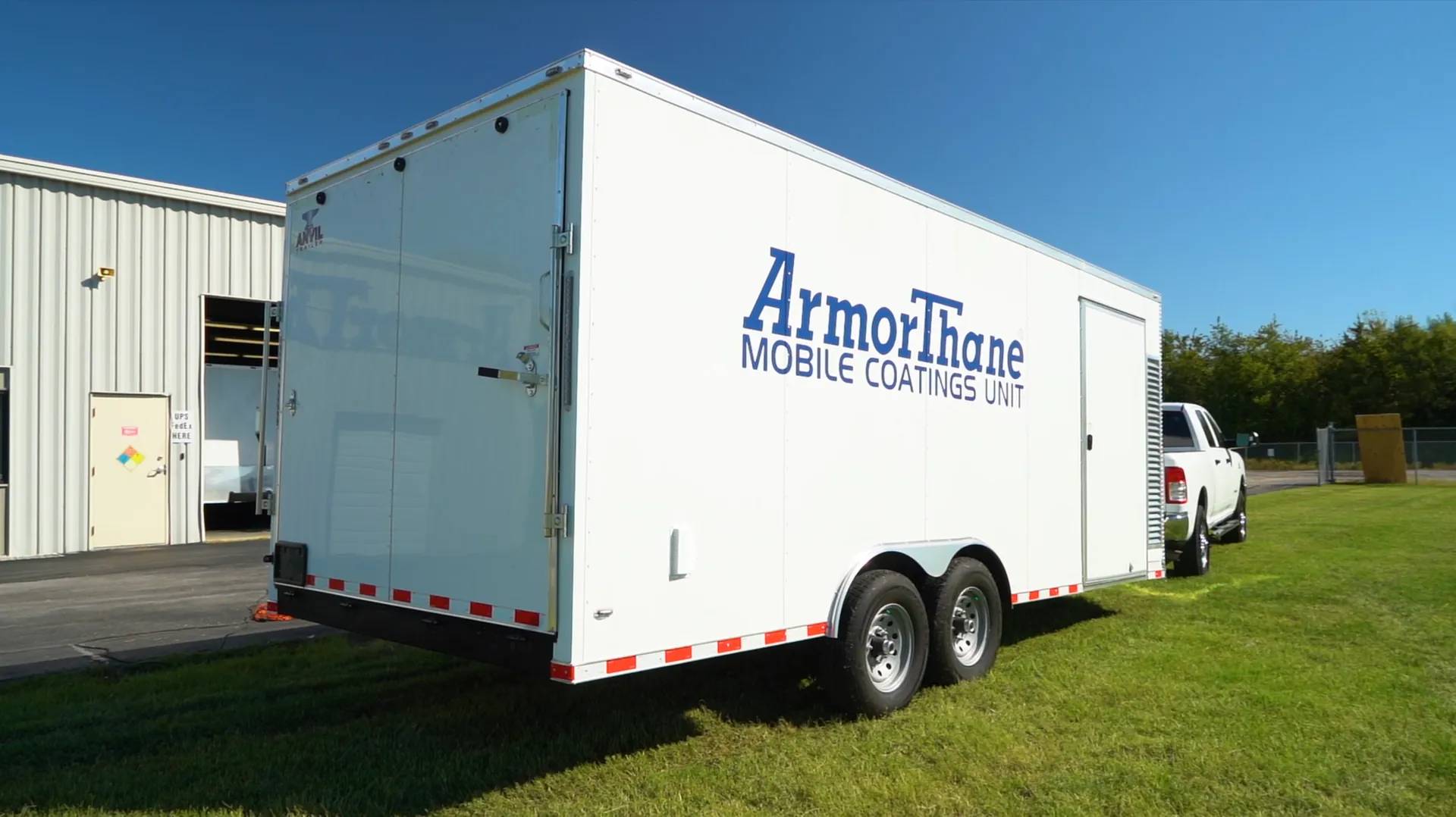
We build custom Mobile Coatings Units, enclosed trailers from 16 to 36 feet, single or dual compartment, around PMC and Graco proportioners, with the power, air and heating packages your work needs. We make ArmorFoam open- and closed-cell, and the same rig can spray our polyurea and concrete-lifting foam. In most cases we train you and your crew at your location, on your rig, and the tech line answers 24/7.
One thing to be straight about: our startup packages start at $25,000, but that’s a low-pressure coatings package for bedliners and RV roofs. It won’t spray insulation foam. A spray foam rig is a heated high-pressure system. Our high-pressure packages (proportioner, heated hose, gun, first material and training) run near $50,000 before a trailer, generator and air, and a complete trailer rig is quoted to your spec. There’s no franchise fee and no royalty, and third-party equipment financing is available.
When are we not the answer? If you want the lowest price on a bare machine and already have your chemistry and training sorted, an equipment distributor may beat us. If your crew already runs Graco and the parts counter is down the road, staying in that system is a reasonable call. And if you need one building sprayed, hire an applicator. See our custom spray foam rigs.
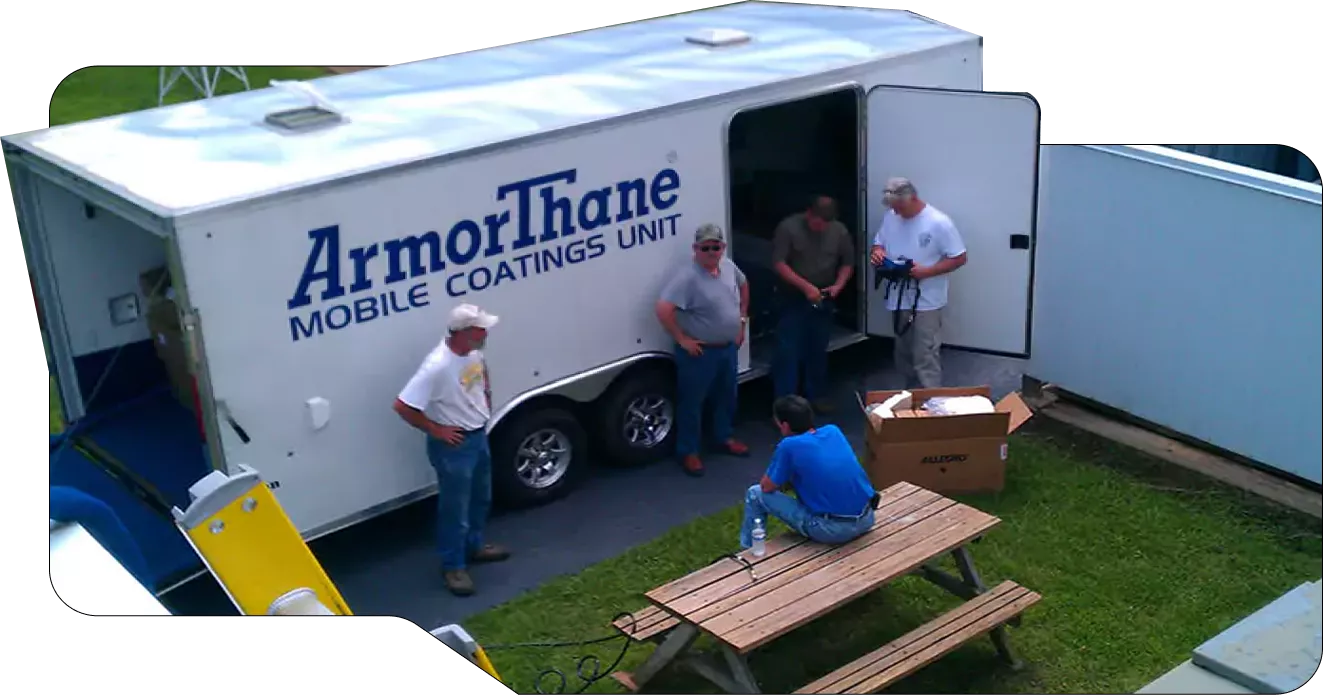
Custom trailer rigs
High or low pressure, one or two compartments, built around the work you’ll sell.
ArmorFoam per set
Closed-cell and open-cell yields at ideal yield. Closed-cell at R-6.5 per inch aged.
Franchise fee
No franchise fee and no royalties. Rig, chemistry, training and support from one company.
A rig is a business. Spec it like one.
Tell us what you’ll spray, where the rig will park and what power you’ll have. We’ll quote the rig, the ArmorFoam and the training in writing, and tell you if a smaller setup makes more sense. No franchise fee, no royalties.
Coatings too? Polyurea spray rigs →
Spray foam machine FAQ
How much does a spray foam machine cost?
The proportioner alone runs about $26,000–$53,000 in 2026 dealer listings: a bare hydraulic Graco Gusmer GH-2 at $26,170, a Reactor 3 E-20 Pro package with hose at $33,760, and a Reactor 2 E-30 Elite package with several hose sections at $52,920. That’s the machine, not the rig. A complete new trailer rig costs $37,995 to about $140,000.
How much does a spray foam rig cost?
Published 2026 packages run from $37,995 (a 7x16 starter trailer) to $139,743 (a 20-foot diesel roofing rig with a Reactor 2 H-40), and box-truck rigs list at $129,153–$196,408. Used trailer rigs were listed at $60,000–$99,000 in September 2026. Add $12,000–$16,000 for first chemical, supplied-air respirators and training. The startup calculator totals it for you.
What equipment do I need to start a spray foam business?
A heated plural-component proportioner, heated hose (in 50-foot sections), an impingement spray gun, two transfer pumps, an air compressor and dryer, a generator or reliable 230-volt site power, and an enclosed trailer or truck. Then the things packages often leave out: supplied-air respirators, spare mix chambers, drum heaters, your first sets of chemical, training and insurance.
What’s the best spray foam machine for a beginner?
For residential work in a mild climate, an electric 20 lb/min class machine such as a Graco E-20 is the common starting point; Graco itself pitches it as a starter machine with smaller heaters. Step up to a 30 lb/min electric or hydraulic unit if you need more than about 210 feet of hose, spray through cold winters or plan to do commercial and roofing work.
What size generator do I need for a spray foam rig?
Add up the proportioner, compressor and everything else. A Graco E-20 draws 48 amps at 230 volts single-phase (about 11 kVA); a Reactor 2 E-30 draws 78–100 amps (about 18–23 kVA) depending on heater size. Builders commonly pair 30 lb/min rigs with about 30 kW, and Graco’s own PowerStation for the E-30 and H-30 uses a 22 kVA alternator. The sizing tool estimates yours.
Can I use a polyurea machine to spray foam?
Usually, yes. High-pressure polyurea machines are rated to 3,500 psi and can be turned down to the 800–2,000 psi range foam sprays at, with temperatures set from the foam’s data sheet. The reverse is harder: Graco’s foam-series reactors top out at 2,000 psi, which is the bottom of the pressure range pure polyurea needs. See switching from spray foam to polyurea.
Should I buy a new or used spray foam rig?
Used rigs can save a third or more: a 2016 Reactor 2 E-30 rig with a 30 kW generator was listed at $60,000 in September 2026. Buy used only after a shot-weight ratio test, a heat-up test, a close look at the hose and pumps, and a straight answer on which blowing agent it last ran. New rigs cost more but come with warranty, training and a known history.
How much does a set of spray foam cost?
A set is two drums, A-side and B-side. At 1–3 set pricing in September 2026, open-cell sets listed at $2,033–$2,060 and closed-cell HFO sets at $2,219–$2,788. ArmorFoam yields about 17,000 board feet per open-cell set and 5,000 per closed-cell set at ideal yield, so closed-cell chemical runs roughly $0.50 per board foot before waste.
Can I rent a spray foam machine?
For one project, yes: some companies bring a rig, the foam and a technician who stays on site, and one advertises savings of 25–40% against contractor quotes. Renting doesn’t build a business, though. For a few small bays, a two-part kit is simpler (see DIY spray foam insulation), and for a one-time house or shop, hiring a certified applicator is usually the better deal.
Do I need a certification to spray foam?
Requirements vary by product and job. Some evaluation reports make it a condition of use: ICC-ES ESR-3228 says its foam must be applied by installers certified by the manufacturer or by the Spray Polyurethane Foam Alliance (SPFA), which runs a Professional Certification Program. OSHA also requires respirator fit testing before first use and at least annually for tight-fitting respirators.
How long does a spray foam machine last?
A well-maintained proportioner can run 10–20 years or more with scheduled pump rebuilds, hose replacement and new mix chambers. The wear parts are consumables. What shortens a machine’s life is skipping daily purges and long-term shutdown procedures, running wet air, and letting isocyanate crystallize in the lines.
Do I need three-phase power for a spray foam machine?
Not for most electric reactors. Graco’s E-series can be wired for 230-volt single-phase, but the draw is high: a 15 kW Reactor 2 E-30 pulls 100 amps single-phase versus 62 amps on three-phase. Graco lists its H-40 and H-50 with three-phase ratings only. Most shops and houses can’t spare 100 amps, which is why most trailer rigs carry a generator.
How long does it take to learn to run a spray foam rig?
Machine basics (startup, ratio check, spraying, shutdown) take days. Consistent thickness and yield take weeks of real jobs. One major equipment dealer runs a 3½-day class at $1,050 per person; ArmorThane trains you and your crew on your own rig, in most cases at your location.
Does ArmorThane sell spray foam rigs?
Yes. We build custom Mobile Coatings Units from 16 to 36 feet around PMC and Graco proportioners, supply ArmorFoam open- and closed-cell, and train your crew. Our $25,000 starter package is a low-pressure coatings system and won’t spray insulation foam; foam rigs are quoted to spec. There’s no franchise fee and no royalty. Talk to us about a rig.
Written from equipment makers’ spec sheets, 2026 dealer price lists and 35+ years of building spray rigs and supporting applicators. Last updated September 26, 2026.
Methodology and sources
Machine specs are from Graco’s published Reactor brochures and, for the PMC PHX-40, our own equipment pages. Prices are list, “starting at” or asking prices published by rig builders and one national dealer in September 2026; they change often and exclude tax, freight and setup. Chemical yields are ArmorFoam ideal yields. Calculator factors marked as assumptions are ours. We sell spray rigs; we’ve used competitors’ published prices so you can compare.
- Graco, Reactor spray foam and coatings equipment brochure 300615EN-N (PDF): graco.com/content/dam/graco/com_documents/300/300615/300615EN-N.pdf
- Graco, Reactor 3 brochure 3J0315EN (PDF): graco.com/content/dam/graco/com_documents/3J0/3J0315/3J0315EN.pdf
- Graco, spray foam insulation equipment: graco.com/us/en/contractor/products/spray-foam/spray-foam-insulation-e
- Graco, Reactor 3 E-20 proportioner systems: graco.com/us/en/contractor/product-group/reactor-3-e20-spray-foam-prop
- SprayEZ, spray foam rig packages and FAQ (Sep. 2026): sprayez.com/rig-packages/
- Profoam, rig packages, training calendar and FAQ (Sep. 2026): profoam.com/
- Spray Foam Systems, buying your first rig (Sep. 2026): sprayfoamsys.com/buying-your-first-rig/
- Spray Foam Systems, used rigs (Sep. 2026): sprayfoamsys.com/product-category/used-rigs/
- Spray Foam Systems, Graco reactor packages (Sep. 2026): sprayfoamsys.com/product-category/proportioners/reactors/
- Spray Foam Systems, Graco heated hoses (Sep. 2026): sprayfoamsys.com/product-category/heated-hoses/heated-hoses-graco-equi
- Spray Foam Systems, Graco spray guns (Sep. 2026): sprayfoamsys.com/product-category/spray-guns/spray-guns-graco-equipmen
- Spray Foam Systems, Graco transfer pumps (Sep. 2026): sprayfoamsys.com/product-category/transfer-pumps/transfer-pumps-graco-
- Spray Foam Systems, air compressors (Sep. 2026): sprayfoamsys.com/product-category/air-equipment/air-compressors-air-eq
- Spray Foam Systems, air dryers (Sep. 2026): sprayfoamsys.com/product-category/air-equipment/air-dryers-air-equipme
- Spray Foam Systems, diesel generator/compressor combos (Sep. 2026): sprayfoamsys.com/product-category/generators/diesel-generators/
- Spray Foam Systems, supplied fresh-air systems (Sep. 2026): sprayfoamsys.com/product-category/ppe-safety/supplied-fresh-air-system
- Spray Foam Systems, open-cell foam sets (Sep. 2026): sprayfoamsys.com/product-category/chemicals/open-cell-foam/
- Spray Foam Systems, closed-cell foam sets (Sep. 2026): sprayfoamsys.com/product-category/chemicals/closed-cell-foam/
- Super Arbor, Huntsman Heatlok HFO High Lift set listing: superarbor.io/products/huntsman-building-solutions-heatlok%C2%AE-hfo-h
- U.S. Spray Foam Rentals, how the rental service works: sprayfoamrentals.com/
- Angi, spray foam insulation cost (Sep. 2026): angi.com/articles/spray-foam-insulation-cost.htm
- OSHA, Isocyanates: osha.gov/isocyanates
- OSHA, 29 CFR 1910.134 Respiratory protection: osha.gov/laws-regs/regulations/standardnumber/1910/1910.134
- U.S. EPA, Technology Transitions HFC restrictions by sector: epa.gov/hfcs/technology-transitions-hfc-restrictions-sector
- Spray Polyurethane Foam Alliance, industry training: sprayfoam.org/industry-training/
- ICC-ES ESR-3228, Froth-Pak (PDF): icc-es.org/wp-content/uploads/report-directory/ESR-3228.pdf
- U.S. BLS, Occupational Outlook Handbook: Insulation Workers (May 2025 pay): bls.gov/ooh/construction-and-extraction/insulation-workers.htm
- ArmorThane, applicator opportunities and starter packages: armorthane.com/knowledge-center/opportunities/
- ArmorThane, spray-on bedliner equipment cost (PMC and Graco specs, power): armorthane.com/bedliner-equipment-cost/
- ArmorThane, polyurea equipment guide: armorthane.com/knowledge-center/polyurea-equipment-guide/
- ArmorThane, understanding chemical coating equipment: armorthane.com/understanding-chemical-coating-equipment/
- ArmorThane, closed-cell spray foam guide: armorthane.com/closed-cell-spray-foam/
- ArmorThane, ArmorFoam spray foam products: armorthane.com/products/armorfoam-products/
Start your coatings business with ArmorThane.
Tell us what you want to spray and where you are. An ArmorThane specialist will walk you through the equipment, chemicals, training and startup cost for the work you want to do.
- Equipment package matched to your applications
- Hands-on training and applicator certification
- Technical support once you are spraying
Buying your first spray foam rig? Talk to us about a rig or startup package.
Tell us what you plan to spray, where you’ll work and what power you’ll have. An ArmorThane equipment specialist will spec the rig, quote it in writing and walk you through training and material.
- Custom trailer rigs from 16 to 36 feet
- Spray foam, polyurea and concrete lifting from one rig
- Training at your location and a 24/7 tech line
- No franchise fee and no royalties
More to read on spray foam
Short reads from ArmorThane on Issuu. Tap one to open it right here.