Dew Point Calculator: Check the 5°F Rule Before You Spray
Enter air temperature, humidity and surface temperature to see the dew point, the spread and whether the surface is safe to prep and coat.
Start a protective coatings business
Spray protective coatings for a living.
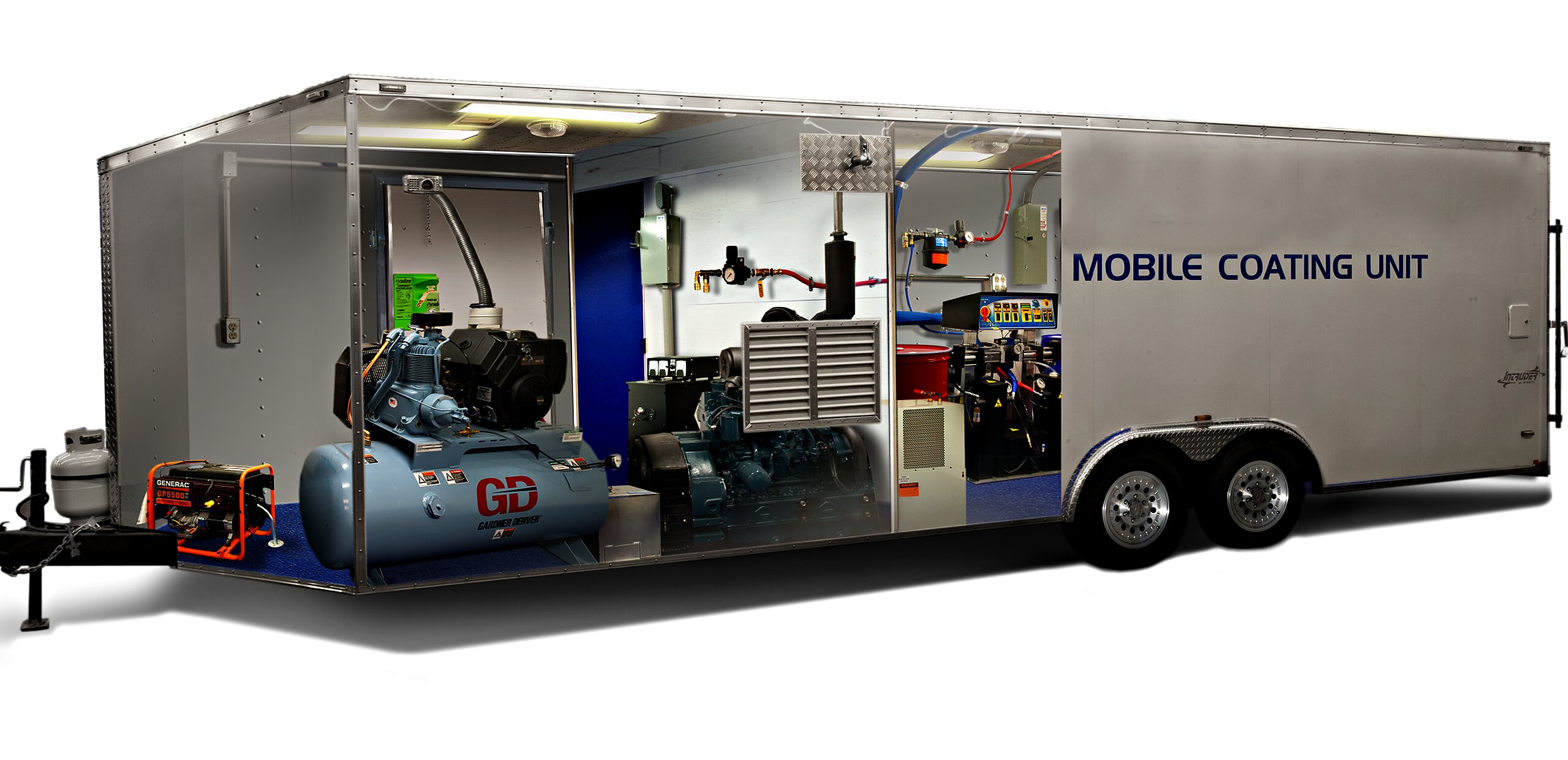
ArmorThane sets you up to do this work, and you own the business. We make the chemistry, build the rigs, train you hands-on and answer the phone when a job gets difficult. You pay no franchise fee and no royalties. It has been that way since 1989.

- $0
- franchise fees or royalties
- 35+
- years in business
- 50+
- countries with applicators
- 24/7
- technical support
This dew point calculator answers the question every coating crew asks at 6 a.m.: can we spray yet? Dew point is the temperature at which the moisture in the air starts condensing on whatever it touches. If the steel, slab or roof deck you are coating is at or near that temperature, a film of water forms on it, often too thin to see, and the coating goes down on water instead of the surface.
Dew point is the temperature at which air becomes saturated and water condenses. For coating work, the surface must stay at least 5°F (3°C) above the dew point through prep, application and cure. Example: air at 70°F and 60% relative humidity has a dew point of about 55.5°F, so the surface needs to read 60.5°F or warmer before you blast, prime or spray.
Dew point calculator with a spray check
Feed the dew point calculator readings taken at the work surface, not the weather app. Air temperature and humidity come from a sling psychrometer or a digital gauge; surface temperature comes from a contact or infrared thermometer on the actual substrate, in the coldest spot you plan to coat.
Dew point and surface spread check
Dew point uses the Magnus formula with Alduchov and Eskridge constants: γ = ln(RH/100) + 17.625·T/(243.04 + T), dew point = 243.04·γ/(17.625 − γ), with T in °C. Go requires surface temperature at least 5°F (3°C) above dew point, per ASTM D3276 and ISO 8502-4, and RH at or below the limit you set.
Switching units converts the numbers already entered. The bars show how the dew point climbs with humidity at your air temperature; the gold bar is closest to your reading.
Dew point chart in °F
Find the air temperature in the left column and read across to the humidity. Add 5°F and that is the coldest the surface can be. Notice how fast it tightens: at 80°F and 80% RH, the dew point is already 73°F, so any surface under 78°F is out.
| Air temp (°F) | 40% RH | 50% RH | 60% RH | 70% RH | 80% RH | 90% RH |
|---|---|---|---|---|---|---|
| 40 | 18 | 23 | 27 | 31 | 34 | 37 |
| 50 | 27 | 32 | 37 | 41 | 44 | 47 |
| 60 | 36 | 41 | 46 | 50 | 54 | 57 |
| 70 | 45 | 51 | 55 | 60 | 64 | 67 |
| 80 | 54 | 60 | 65 | 69 | 73 | 77 |
| 90 | 62 | 69 | 74 | 79 | 83 | 87 |
| 100 | 71 | 78 | 84 | 88 | 93 | 97 |
Why condensation ruins coatings
A surface 2°F below the dew point can carry a water film you will never see or feel. Nothing about the job looks wrong until weeks later. Different coatings fail in different ways, but none of them like it.
Flash rust before primer
Fresh white-metal steel starts to rust within hours when moisture condenses on it. The primer then bonds to rust bloom instead of the clean profile you paid to create. Blast only what you can prime in the same dry window.
Bubbles and lost adhesion
Isocyanates react with water and release carbon dioxide. On a damp substrate that means pinholes, blisters and foamy spots at the bond line, with adhesion that peels off by hand. The fast gel time does not save you; the water is already under the film.
Blush and soft film
Many amine-cured epoxies react with moisture and carbon dioxide at the surface and form a greasy blush. Recoats will not stick to it until it is washed off, and the gloss and cure suffer.
Wash-off and slow cure
Acrylic and other latex roof coatings need dry air to coalesce. Evening dew on a fresh film can leave it soft, streaked or rinsed off the high spots. Stop early enough for a skin to form.
For roof jobs where condensation also forms under the deck, see our page on metal roof condensation. For lined steel tanks, the tank lining guide covers conditions inside the shell.
Measuring conditions on site
Inspectors use four tools for this, and the readings go on the daily report. If a dispute ever comes up over a failed coating, that log is the first thing everyone asks for.
Sling psychrometer
Wet and dry bulb thermometers spun in the air, per ASTM E337. Cheap and trusted, but needs clean wicks and distilled water.
Digital dew point meter
Reads air temperature, RH and dew point together, and many pair with a surface probe to show the spread directly.
Magnetic or contact thermometer
Sits on steel and settles in two or three minutes. The reading that counts for the 5°F rule.
Infrared thermometer
Fast for scanning a whole deck or tank, but shiny or light surfaces can fool it. Confirm low readings with a contact probe.
Read before prep starts
Record conditions before blasting or grinding, not just before spraying. Prepped surfaces are the most vulnerable.
Read the coldest surface
Shaded steel, north walls, slabs on grade and tank shells holding cold product run colder than the air.
Repeat through the day
About every four hours is a typical minimum, and right away when clouds roll in, wind shifts or the sun drops.
Keep watching through cure
The rule covers cure as well as application. A coating that is not yet cured can still take on evening condensation.
Working the weather window
Outside, the safe window usually opens mid-morning once the sun burns the dew off and closes in late afternoon as surfaces cool faster than the air. Our general guidance for spray coatings is an ambient range of roughly 60 to 85°F; outside that, check the data sheet closely. See how weather conditions affect coating applications for more.
- Roofs: metal decks lose heat to a clear night sky and stay below air temperature well after sunrise. Check the surface, not the air.
- Tanks and pipes: a shell full of cold water or product can sit below dew point all day in humid weather. Drain, warm or dehumidify.
- Enclosed spaces: desiccant dehumidifiers and indirect-fired heaters hold conditions steady. Direct-fired propane heaters add water vapor to the air and can make things worse.
- Concrete slabs: a cold slab in a warming building is a dew point problem waiting to happen; it also brings outgassing. Check slab moisture separately with concrete moisture testing.
- Primers: where a project allows it, a primer applied in the best part of the day protects prepped steel and concrete until the topcoat. See metal primer and ArmorPrime.
Weather limits are one part of prep. The surface preparation guide covers profile, cleanliness and the checklist that goes with them.
Conditions logged, coating protected.
A certified ArmorThane applicator can plan your job around dew point and humidity and record the conditions from prep through cure.
Contractors: become an ArmorThane applicator
Dew point questions
How does a dew point calculator work?
It takes air temperature and relative humidity and solves for the temperature at which that air would be saturated. Most use the Magnus formula, which is accurate to within about 0.4% between −40 and 60°C. Comparing the result to surface temperature tells you whether condensation can form.
What is the 5 degree dew point rule for painting?
The surface being prepared, coated or cured must be at least 5°F (3°C) warmer than the dew point. ASTM D3276 and ISO 8502-4 both use this margin, and most coating data sheets repeat it. Some products ask for more.
Can you paint or coat when humidity is high?
Sometimes. Humidity alone is not the test; the surface-to-dew-point spread is. Many data sheets also cap RH, often around 85%. Moisture-cure products tolerate more, while epoxies and water-based coatings are usually stricter. Follow the specific product limits.
What is the dew point at 70 degrees and 60% humidity?
About 55.5°F (13°C). For coating work, the surface would need to be at least 60.5°F to meet the 5°F rule. At 70°F and 80% humidity, the dew point rises to about 63.5°F, so the surface needs 68.5°F.
Should I use air temperature or surface temperature?
Both, for different jobs. Air temperature and humidity give you the dew point. Surface temperature, measured on the substrate itself, is what you compare against it. Steel, roof decks and slabs are often colder than the air, especially early and late in the day.
Does dew point matter for spray polyurea?
Yes. Polyurea cures fast, but isocyanate still reacts with water on the substrate and gives off carbon dioxide, causing bubbles, pinholes and weak adhesion. Keep the surface 5°F above dew point and dry before priming and spraying.
Sources
- Alduchov, O. A. and Eskridge, R. E., Improved Magnus Form Approximation of Saturation Vapor Pressure, Journal of Applied Meteorology 35 (1996). doi.org/10.1175/1520-0450(1996)035
- DeFelsko, Measuring Environmental Conditions for the Application of Paints and Coatings. defelsko.com/resources/measuring-environmental-conditions
- ISO 8502-4, Guidance on the estimation of the probability of condensation prior to paint application. iso.org/standard/68469.html
- ASTM International, E337 Standard Test Method for Measuring Humidity with a Psychrometer. astm.org/e0337-15.html
Right conditions, lasting coating.
Certified ArmorThane applicators log temperature, humidity and dew point before they spray and while the coating cures. Contractors can add polyurea and spray foam with our equipment and training, with no franchise fee and no royalties.
Start your coatings business with ArmorThane.
Tell us what you want to spray and where you are. An ArmorThane specialist will walk you through the equipment, chemicals, training and startup cost for the work you want to do.
- Equipment package matched to your applications
- Hands-on training and applicator certification
- Technical support once you are spraying
Tight spray window? Plan it with a pro.
Tell us about the job and the season. A certified ArmorThane applicator can schedule around dew point, humidity and surface temperature and pick a product that suits the conditions.
- Substrate: steel, concrete, roof or foam
- Indoor, outdoor or enclosed tank
- Time of year and location
- Area and target thickness