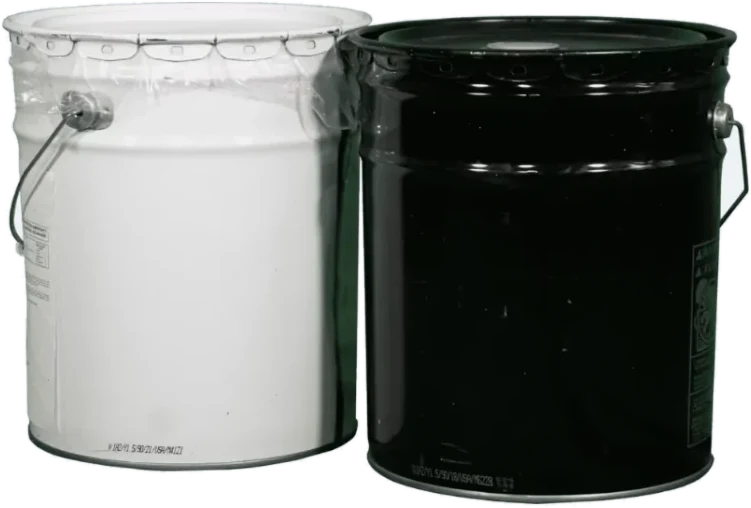




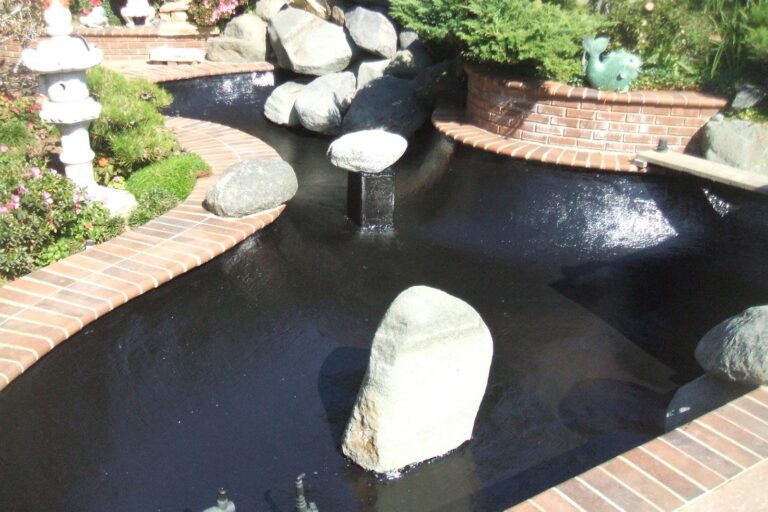

Polyurethane Coating: Types, Specs & Systems
Aliphatic vs aromatic, 1K vs 2K, and how polyurethane fits into coating systems for steel, concrete and roofs. With real data-sheet numbers, an ISO 12944 system builder and a DFT calculator, from a polyurethane manufacturer.
Start a protective coatings business
Spray protective coatings for a living.
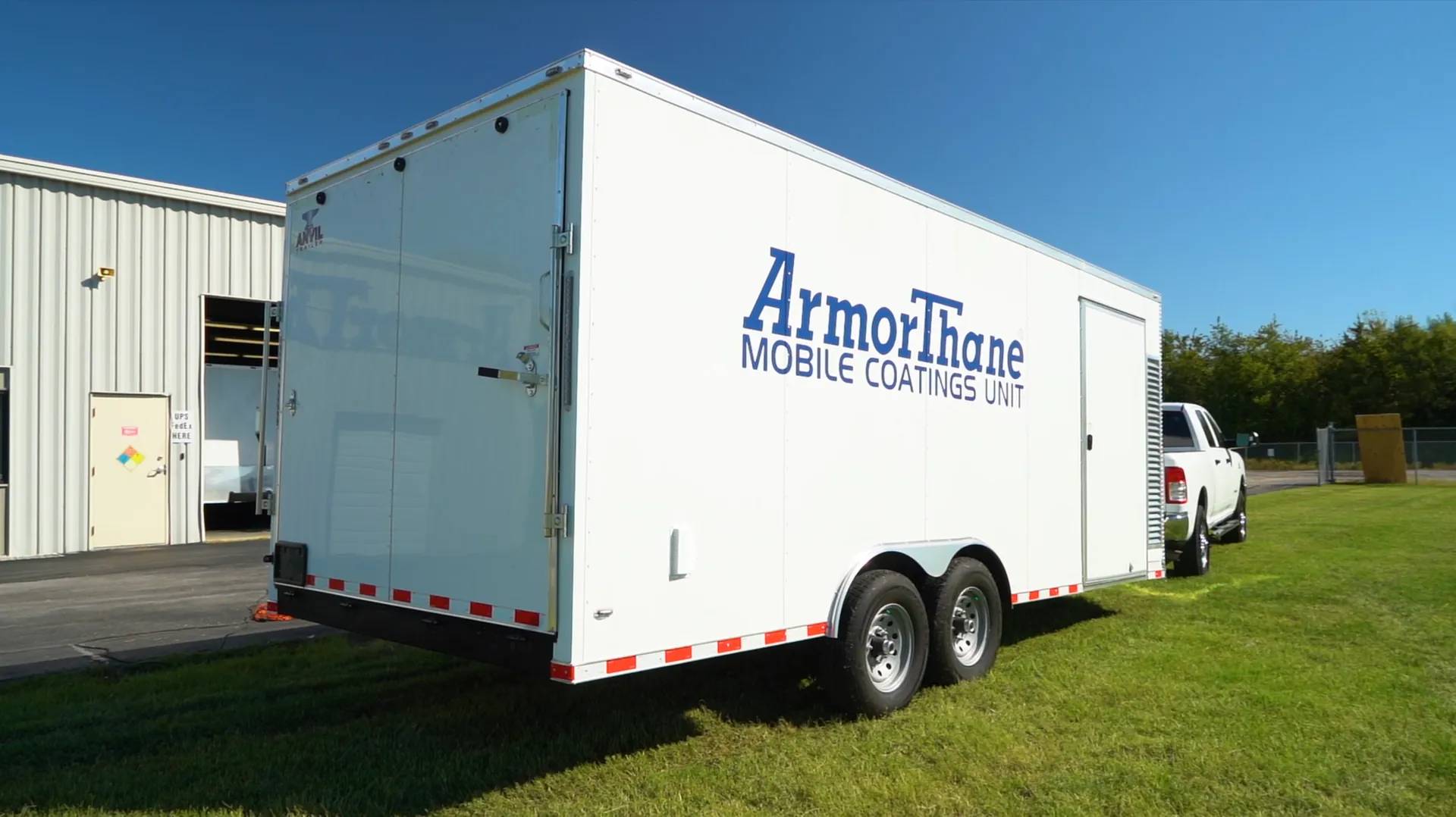
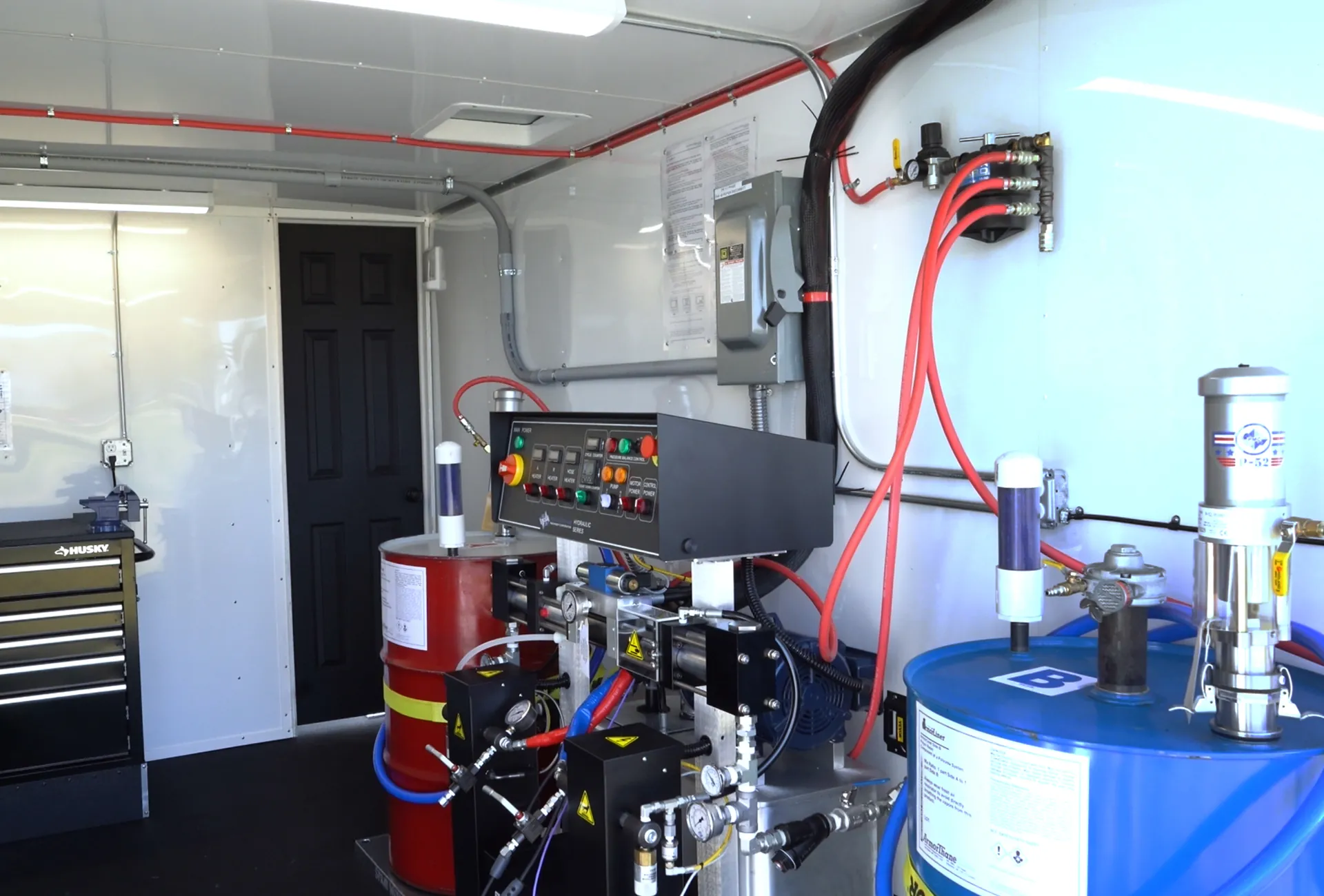
ArmorThane sets you up to do this work, and you own the business. We make the chemistry, build the rigs, train you hands-on and answer the phone when a job gets difficult. You pay no franchise fee and no royalties. It has been that way since 1989.
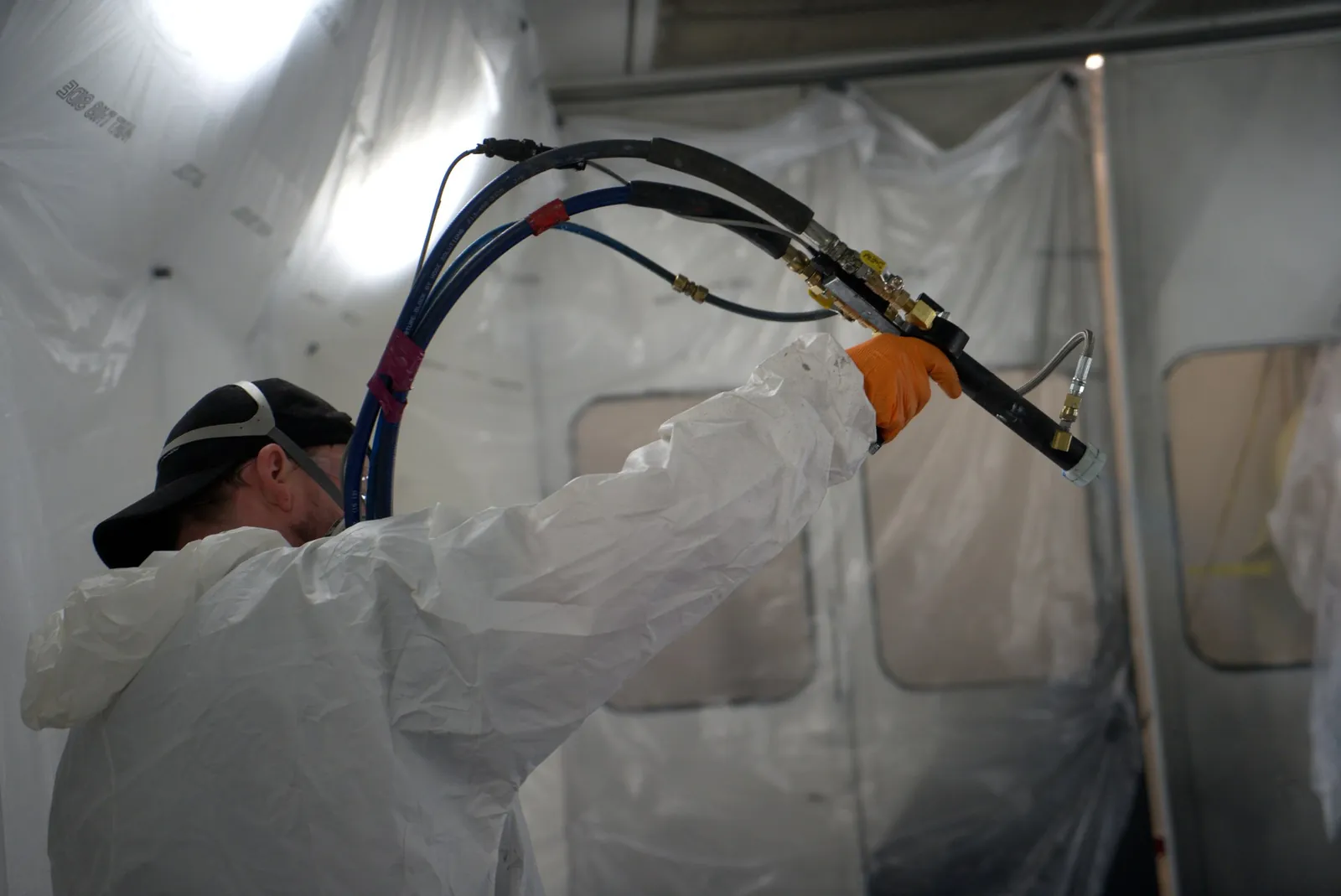
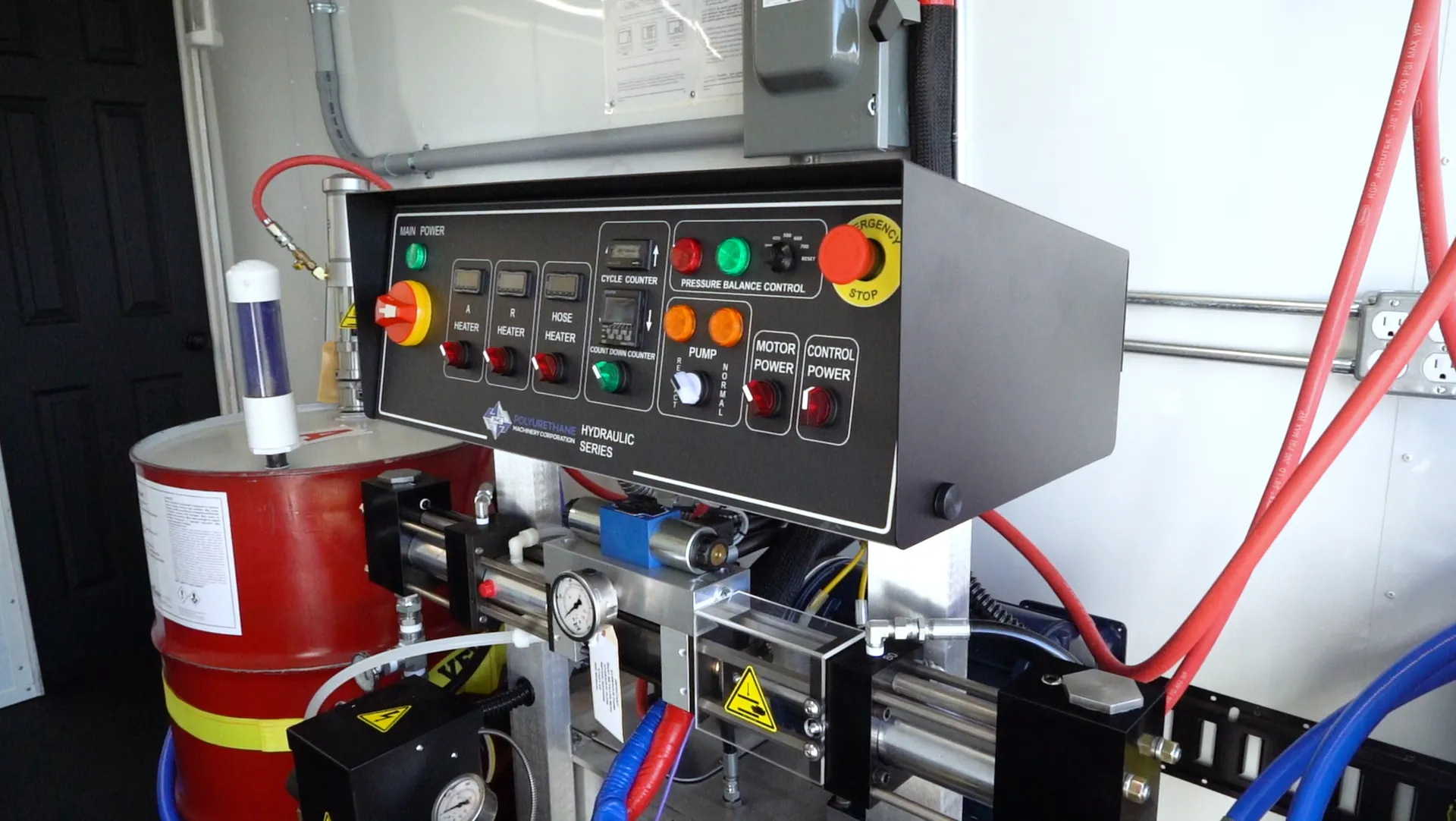
- $0
- franchise fees or royalties
- 35+
- years in business
- 50+
- countries with applicators
- 24/7
- technical support
"Polyurethane coating" means a clear finish on a tabletop to a homeowner, a glossy topcoat on a bridge girder to a corrosion engineer, and a sprayed truck liner to us. We've been formulating polyurethane and polyurea coatings since 1989, so this guide covers the industrial and protective side: what the chemistry actually is, aliphatic vs aromatic, how polyurethane fits into coating systems for steel and concrete, the numbers on real data sheets, and the safety rules that come with isocyanates.
A polyurethane coating forms when an isocyanate reacts with a polyol to create urethane links. It's tough, abrasion-resistant and flexible, and it comes as single-component (1K) moisture-cure products or two-component (2K) systems. Aliphatic polyurethanes hold color and gloss in sunlight, which makes them the standard topcoat over epoxy primers on steel, typically at 2–5 mils dry. Aromatic polyurethanes are cheaper and tougher but yellow in UV, so they're used as base coats, membranes and liners. On metal, polyurethane is almost always the last layer of a system, not the only one. Build a system for your environment.
- 1How polyurethane coatings work
- 2Types of polyurethane coating and where they're used
- 3Aliphatic or aromatic? (selector)
- 4Polyurethane on metal: system builder
- 5DFT & coverage calculator
- 6Real data-sheet numbers
- 7Polyurethane waterproofing & floors
- 8Humidity, blisters and recoat windows
- 9Isocyanate safety and regulations
- 10Polyurethane vs polyurea vs epoxy
- 11Polyurethane coating FAQ
How polyurethane coatings work
Every polyurethane coating has two halves. The isocyanate (the "A side" in our world) carries reactive –NCO groups. The polyol (the "B side") carries –OH groups. When they meet, they form urethane linkages and build a cross-linked polymer. Change the polyol and you change the coating: polyester and acrylic polyols give hard, chemical-resistant topcoats; long polyether chains give soft, stretchy membranes.
Single-component, moisture-cure
A prepolymer with spare isocyanate groups that react with humidity in the air. No mixing, long open time, and they can go on damp or green concrete in some cases (Sikalastic-320 NS). Shelf life is limited, around six months, because any moisture that gets into the can starts the cure.
Two-component
Isocyanate and polyol mixed just before use, with a pot life of typically 2–6 hours. More controlled cure, higher performance, and the format of virtually every industrial topcoat and spray-applied liner. Full properties take days; one source puts full cure around 14 days at 25°C.
Aromatic vs aliphatic is the other big split. Aromatic isocyanates (MDI, TDI) contain benzene rings, react fast and cost less, but yellow and chalk in sunlight. Aliphatic isocyanates (HDI, IPDI, H12MDI) don't absorb UV the same way, so they keep color and gloss outdoors. That's why the same coating system often uses both: an aromatic base for toughness and an aliphatic top for appearance.
Polyurethane vs polyurea: if the B side is an amine instead of a polyol, the product is a polyurea, which reacts in seconds and is far less sensitive to humidity. Hybrids sit in between. We've written a full comparison: polyurea vs polyurethane, plus urethane vs polyurethane for the naming question.
Types of polyurethane coating and where they're used
| Type | Format | Typical build | Used for | Example |
|---|---|---|---|---|
| Aliphatic acrylic or polyester PU topcoat | 2K, solvent or high-solids | 2–5 mils DFT | Steel structures, tanks, equipment, OEM finishes | SW Hi-Solids B65-300; PPG Amercoat 450H; ArmorThane UV TopCoat |
| Moisture-cure waterproofing membrane | 1K | 30–60 mils | Below-grade, planters, balconies | Sikalastic-320 NS (95% solids) |
| Traffic / deck coating system | Aromatic base + aliphatic top | ≈35–40 mils | Parking decks, plazas, balconies (ASTM C957) | Sikalastic 720/745 AL; ArmorDeck |
| Roof coating over SPF | 1K moisture-cure (ASTM D6947) | ≈30–40 mils total | Spray foam roofs | Aromatic base + aliphatic top |
| Sprayed polyurethane elastomer liner | 2K, low-pressure | Built to spec | Bedliners, trailers, equipment, containment | ArmorThane STS-200 / STS-300 (2:1) |
| Polyurethane floor / urethane cement | 2K or 3-part | Coatings to ¼ in mortars | Food plants, hot washdowns, garages (topcoats) | Urethane mortar systems |
| Spray polyurethane foam | 2K, plural component | Inches | Insulation, roofing, flotation | ArmorFoam closed- and open-cell |
Aliphatic or aromatic? Quick selector
Which polyurethane chemistry fits this layer?
A rule-of-thumb guide; the coating system specification governs.
Polyurethane on metal: system builder
On steel, polyurethane is the weather-resistant skin of a multi-coat system. ISO 12944 classifies environments from C1 (heated interiors) to CX (extreme offshore and industrial) and durability from Low (under 7 years) to Very High (over 25 years). Pick both, and the builder shows a typical layer stack drawn from certified Sherwin-Williams ISO 12944 systems.
Typical stack for your steel
Illustrative systems, not a specification. Verify with the coating manufacturer's certified systems.
DFT & coverage calculator
Theoretical coverage = 1,604 × volume solids ÷ DFT in mils (or 10 × volume solids ÷ DFT in microns, for m² per liter). Check: Sherwin-Williams Hi-Solids at 65% solids works out to about 1,043 sq ft per gallon at 1 mil, matching its published 1,040; Carbothane 134 HG at 70% and 50 µm gives 14 m²/L, matching its sheet. Then subtract application losses.
How much coating to order
Loss factors are rules of thumb; adjust for your crew, wind and surface.
Real data-sheet numbers for 2K aliphatic topcoats
| Property | SW Hi-Solids Polyurethane (B65-300) | PPG Amercoat 450H | Carboline Carbothane 134 HG |
|---|---|---|---|
| Volume solids | 65% ±2% | 67% ±2% | 70% ±2% |
| DFT per coat | 3–5 mils | 2–3 mils | 50–75 µm (2–3 mils) |
| VOC | <300 g/L | 311.5 g/L | 264 g/L |
| Pot life | 4 h | 4 h | 4 h |
| Recoat | 18 h min, 30 days max (77°F) | 4 h min, no max (70°F) | 8 h (24°C); 36 h (2°C) |
| Max humidity | 85% RH | 85% RH | 80% RH |
| Performance | Taber 87.1 mg; adhesion 1,050 psi; 9,000 h salt fog | Over zinc or epoxy primers | SSPC Paint 36 Level 3; dry heat to 149°C |
For gloss retention, the gap between chemistries is large. In accelerated QUV-A testing summarized by PCI Magazine, acrylic urethanes took 3,800–6,600 hours to lose 25% of their gloss, while a urethane-crosslinked fluoropolymer went past 10,000 hours. Aromatic polyurethanes aren't in the same race; they're not meant to be the layer the sun sees.
Polyurethane waterproofing & floor coatings
Waterproofing membranes. Polyurethane's elongation is what makes it a waterproofer. Sika's Sikalastic 720/745 AL traffic system lists 800% elongation, 2,500 psi tensile and 300 pli tear, meets ASTM C957 for traffic-bearing membranes and carries a Class A fire rating (ASTM E108). The single-component Sikalastic-320 NS goes on at 25 sq ft per gallon for 60 mils, works from −25 to 200°F and tolerates damp concrete. That flexibility is why polyurethane membranes are specified on balconies, plaza decks and planters where concrete moves. ArmorThane's ArmorDeck system follows the same pattern: a moisture-cured base membrane with an aliphatic topcoat.
Floors. On garage and commercial floors, polyurethane usually appears as the clear topcoat over an epoxy base, adding abrasion and UV resistance. In food plants, urethane cement mortars ($8–$15 per sq ft installed vs $5–$8 for high-build epoxy, per AICoat) handle hot washdowns and thermal shock that crack epoxy. See our epoxy floor coating and garage floor coating guides.
Roofs. Over spray foam, moisture-cure polyurethane roof coatings are covered by ASTM D6947. A typical system is a 20–25 mil aromatic base with a 10–15 mil aliphatic top, about 30–40 mils total. More in our spray-on roof coating guide.
Humidity, blisters and recoat windows
Isocyanates react with water as well as polyol, and that side reaction releases carbon dioxide. Apply a 2K polyurethane in high humidity, or over a damp surface, and the CO2 gets trapped as fine bubbles or "foaming" that can weaken intercoat adhesion (KTA-Tator). That's why topcoat data sheets cap humidity at 80–85% RH and require the steel to be at least 5°F (3°C) above the dew point.
- Check dew point, not just RH. Steel at dawn is often colder than the air.
- Respect the recoat window. Sherwin-Williams Hi-Solids allows 18 hours to 30 days at 77°F; beyond the maximum, scuff-sand before recoating.
- Don't over-thin. Extra solvent raises VOC and can push DFT below spec; measure wet film as you go.
- Consider polyurea where humidity or cold is unavoidable. Amine-cured polyureas are far less moisture-sensitive and cure in seconds.
Isocyanate safety and regulations
Diisocyanates are respiratory sensitizers: once someone is sensitized, very small exposures can trigger asthma. The risk is highest while the product is uncured and especially when it's sprayed. Once fully cured, polyurethane coatings are inert plastics.
United States
OSHA's ceiling for MDI is 0.02 ppm (0.2 mg/m³), and OSHA runs a National Emphasis Program on isocyanates (CPL 03-00-017). EPA requires 90-day notice for consumer coatings and sealants with more than 0.1% TDI under a significant new use rule.
European Union
Since 24 August 2023, REACH Entry 74 requires training before professional use of products with 0.1% or more diisocyanates, renewed every five years. Spraying outdoors or with limited ventilation requires the advanced level.
On the job
Supplied-air or appropriate respirators for spraying, skin and eye protection, ventilation, setbacks for other trades, and safety data sheets on site. Every ArmorThane applicator course covers this before anyone sprays.
Polyurethane vs polyurea vs epoxy
| Polyurethane | Polyurea | Epoxy | |
|---|---|---|---|
| Cure speed | Hours (2K) to days (1K) | Seconds to minutes | Hours; 7-day full cure |
| UV stability | Aliphatic: excellent | Aliphatic grades only | Ambers and chalks |
| Flexibility | Low to very high | High | Rigid |
| Moisture sensitivity during cure | High (CO2 bubbling) | Low | Moderate (blush) |
| Adhesion to concrete / steel | Usually over a primer | Usually over a primer | Excellent primer |
| Typical role | Topcoats, membranes, liners, foam | Liners, waterproofing, containment | Primers, floors, tank linings |
ArmorThane polyurethane coatings
STS-200 & STS-300
2:1 low-pressure polyurethane liners free of mercury, VOCs and TDI, for metal, concrete, fiberglass, wood and some plastics.
UV TopCoat
Two-component acrylic polyurethane topcoat, semi-gloss, with 3.5 lb/gal VOC and strong chemical and exterior resistance.
UV ColorCoat
Aliphatic polyurethane topcoat for UV protection and custom color matching over liners.
Need a polyurethane system? Talk to the people who formulate it.
Tell us the substrate, the environment and how it's applied. Our technical team will recommend an ArmorThane polyurethane, polyurea or hybrid system with data sheets, and connect you with an applicator or set you up to apply it yourself.
Starting a coatings business? See applicator opportunities →
Polyurethane coating FAQ
What is polyurethane coating used for?
Weather-resistant topcoats on steel structures and equipment, waterproofing membranes on decks and below-grade concrete, roof coatings over spray foam, sprayed liners for trucks and equipment, floor topcoats, and spray foam insulation. Clear polyurethanes are also common wood finishes.
Is polyurethane coating waterproof?
Yes. Elastomeric polyurethane membranes are used specifically for waterproofing, and products like Sikalastic-320 NS meet ASTM C836 for below-grade waterproofing. Thin decorative polyurethane topcoats are water-resistant but aren't designed as membranes.
Can you put polyurethane coating on metal?
Yes, as part of a system. Steel is blasted (typically SSPC-SP6 minimum, SP10 for severe service), primed with zinc or epoxy, then topcoated with an aliphatic polyurethane at about 2–5 mils. In ISO 12944 C4–C5 environments, systems of roughly 240–300 µm total are typical.
What's the difference between aliphatic and aromatic polyurethane?
Aromatic polyurethanes (based on MDI or TDI) are tougher per dollar but yellow and chalk in sunlight, so they're used as base coats, membranes and liners. Aliphatic polyurethanes (HDI, IPDI, H12MDI) hold color and gloss outdoors and are used as topcoats.
What is a 2K polyurethane coating?
A two-component coating: an isocyanate hardener mixed with a polyol resin just before application. It cures by chemical reaction, typically has a pot life of 2–6 hours and outperforms single-component (1K) moisture-cure products in most industrial uses.
How long does polyurethane coating last?
As part of a protective system on steel, ISO 12944 durability ranges run from under 7 years (Low) to over 25 years (Very High), depending on the environment and system. Topcoats are often refreshed during that life to restore gloss and color.
How thick should a polyurethane coating be?
Topcoats on steel are typically 2–5 mils dry. Waterproofing membranes are 30–60 mils, and traffic deck systems around 35–40 mils. Always follow the product's data sheet.
Is polyurethane coating toxic?
Uncured isocyanates are respiratory sensitizers, so spraying requires proper respiratory protection, ventilation and training. OSHA's ceiling for MDI is 0.02 ppm. Fully cured polyurethane is an inert plastic.
Is polyurethane better than epoxy?
For different jobs. Epoxy is the better primer and adheres strongly to concrete and steel; aliphatic polyurethane is the better topcoat for UV, gloss retention and abrasion. Many systems use both: epoxy underneath, polyurethane on top.
Why is my polyurethane coating bubbling?
Usually moisture. Isocyanates react with water to form CO2, which gets trapped as bubbles when applied in high humidity, over damp surfaces or too thick. Data sheets typically cap humidity at 80–85% RH and require the surface to be 5°F above the dew point.
Sources
- Sherwin-Williams Hi-Solids Polyurethane B65-300 product data sheet: paintdocs.com
- PPG Amercoat 450H product data sheet: ppg.com
- Carboline Carbothane 134 HG product data sheet (distributor copy): altexcoatings.com
- Sikalastic 720/745 AL traffic system: usa.sika.com (PDF)
- Sikalastic-320 NS: usa.sika.com
- SSPC Paint 36 summary: rustbullet.com.au
- PCI Magazine, 2-component polyurethane topcoats: pcimag.com
- Sherwin-Williams ISO 12944:2018 systems guide: sherwin-williams.com (PDF)
- ISO 12944 corrosivity categories: worldofcorrosion.com
- Cloverdale Paint, ISO 12944 systems guide: cloverdalepaint.com (PDF)
- SSPC abrasive blast cleaning standards: freerconsulting.com
- US Made Supply, polyurethane roof coating guide: usmadesupply.com
- SpecialChem, polyurethane coatings guide: specialchem.com
- KTA-Tator, blistering and bubbling of coatings: kta.com
- ScienceDirect, polyurethane coating topic overview: sciencedirect.com
- OSHA, MDI chemical data: osha.gov/chemicaldata/23
- OSHA, isocyanates National Emphasis Program: osha.gov
- Finnish OSH Administration, REACH diisocyanate training requirements: tyosuojelu.fi
- EPA, toluene diisocyanate fact sheet: epa.gov
- AICoat, commercial epoxy flooring cost: aicoat.com
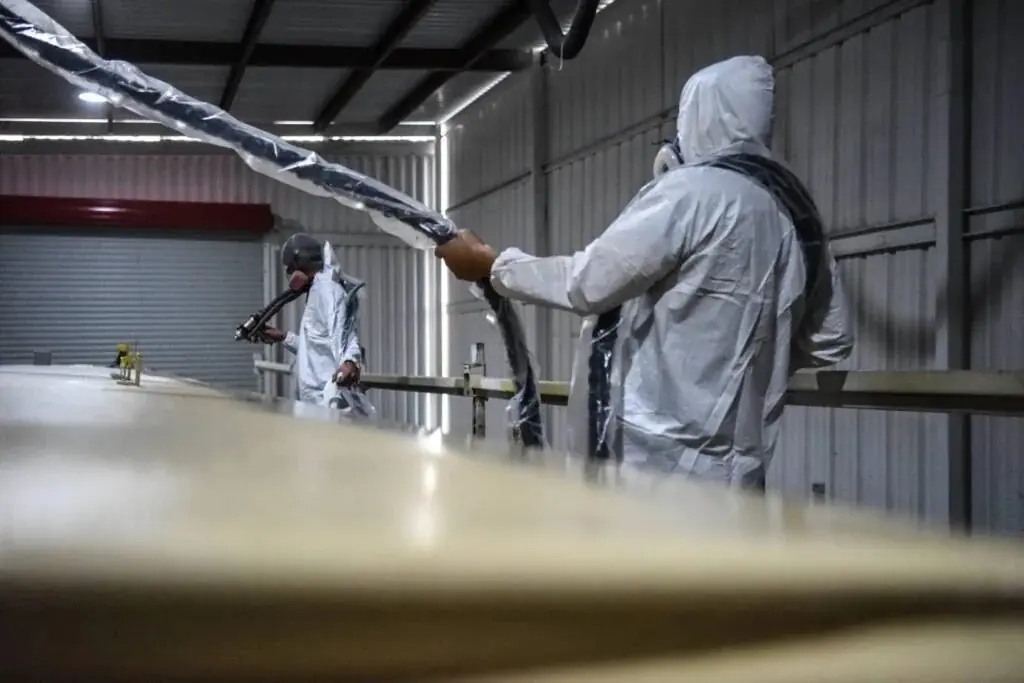
Polyurethane and polyurea, made by us since 1989.
ArmorThane formulates polyurethane, polyurea and hybrid coatings and supplies the spray equipment and training to apply them. Need it applied? We'll connect you with a certified applicator. Want to apply it? Join our network with no franchise fee.
Start your coatings business with ArmorThane.
Tell us what you want to spray and where you are. An ArmorThane specialist will walk you through the equipment, chemicals, training and startup cost for the work you want to do.
- Equipment package matched to your applications
- Hands-on training and applicator certification
- Technical support once you are spraying
Need the right polyurethane system? Ask the people who formulate it.
Tell us the substrate, the environment and how you'll apply it. Our technical team will recommend an ArmorThane polyurethane, polyurea or hybrid system with data sheets, or connect you with a certified applicator.
- Liners, topcoats, membranes and spray foam
- Steel, concrete, wood and fiberglass
- Data sheets and application guidance
- Contractors: ask about equipment and training