




Floor Insulation: Crawl Spaces, Garages & Cold Floors
When to insulate the floor instead of the crawl walls, what the 2021 code requires, how to keep it tight to the subfloor, and tools to size the job and price the savings.
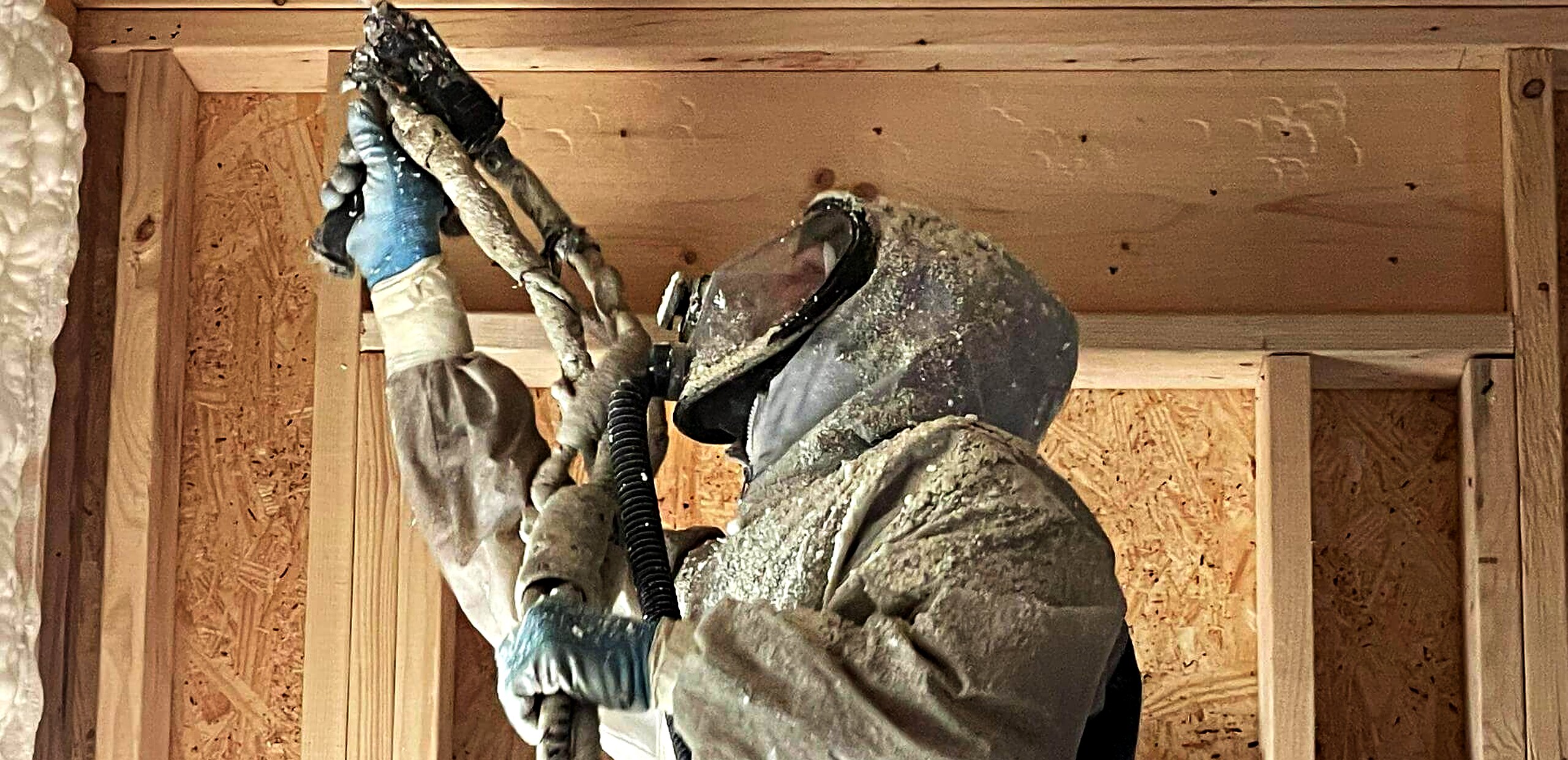
Start a spray foam business
Spray foam for a living.
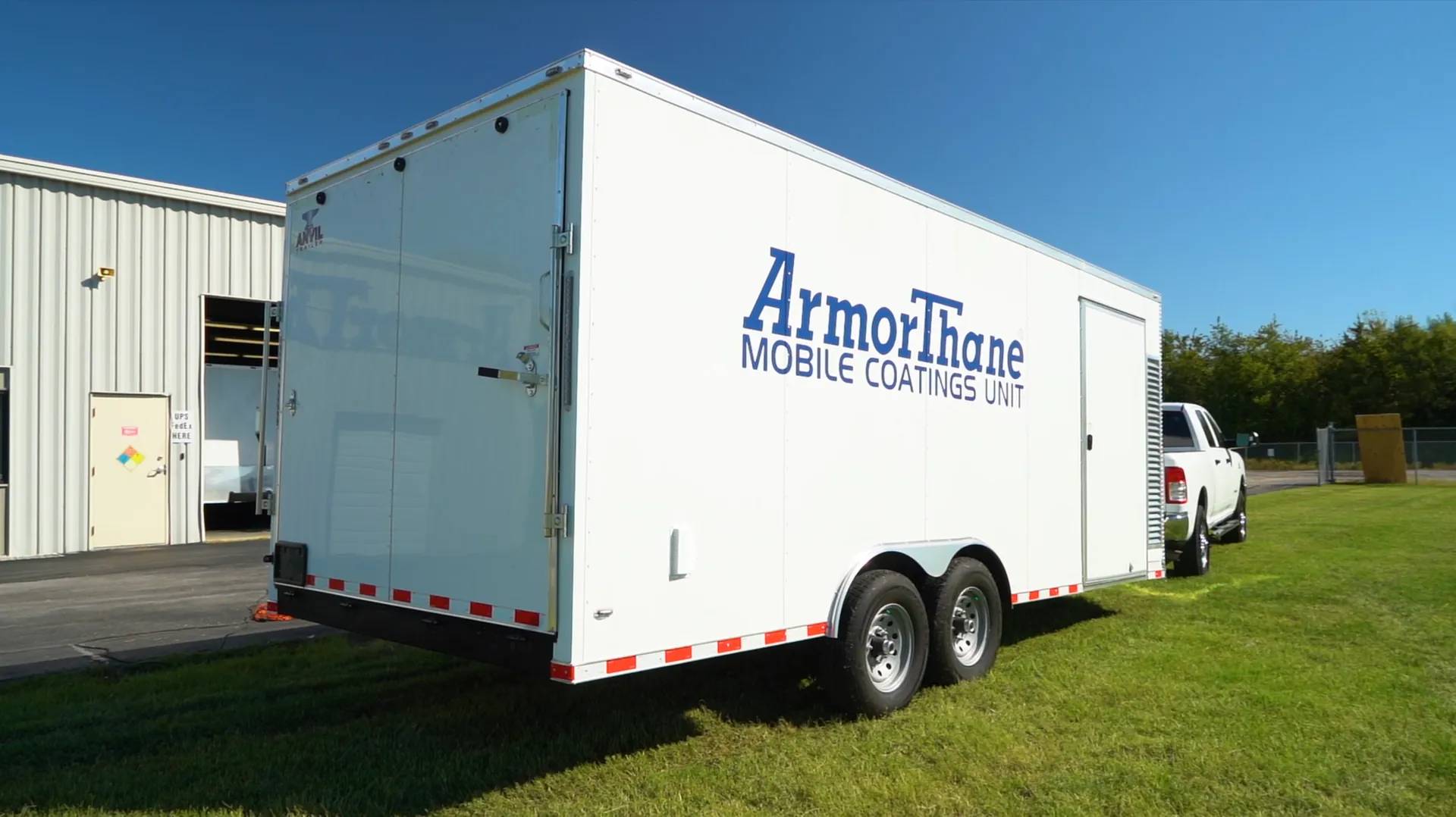
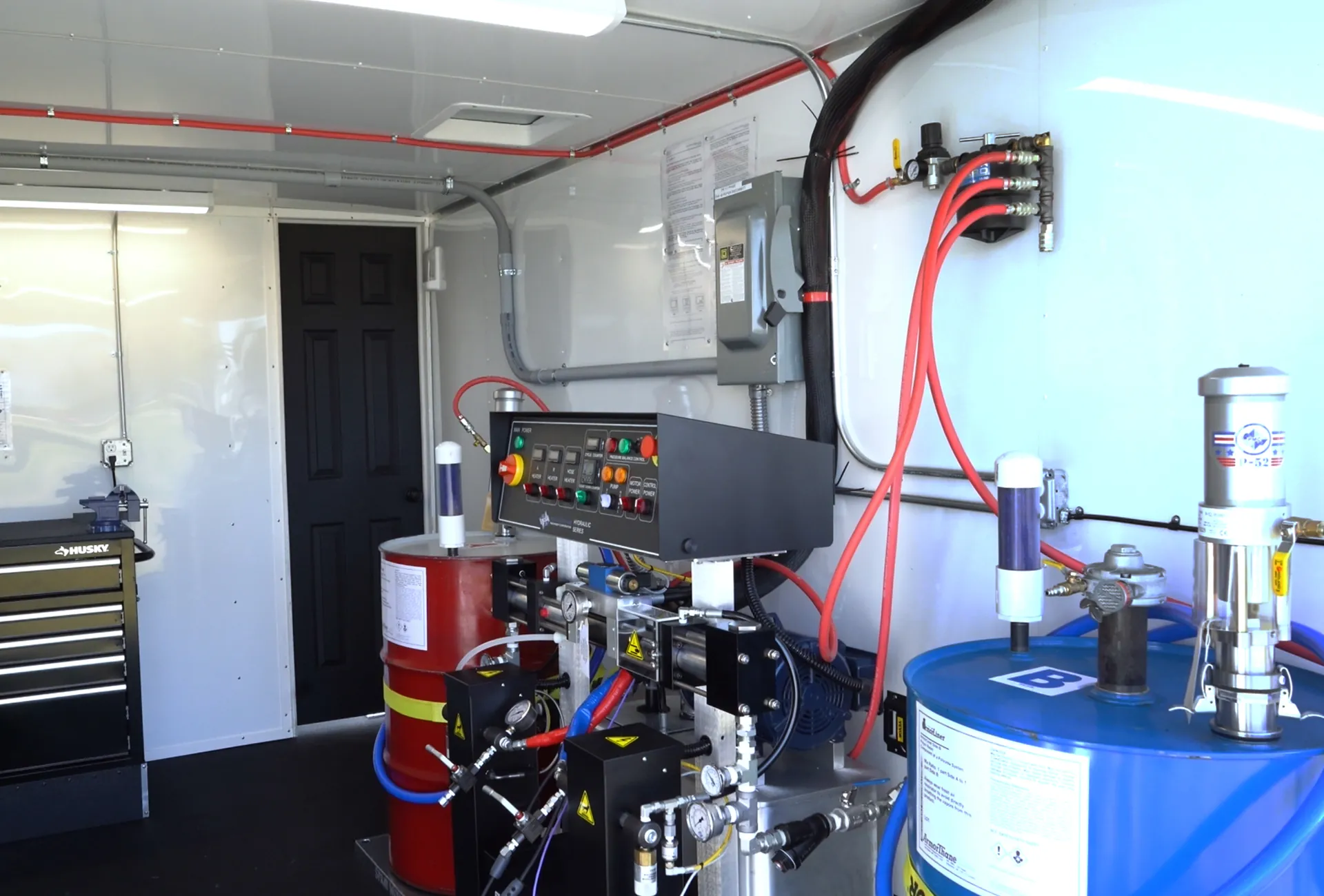
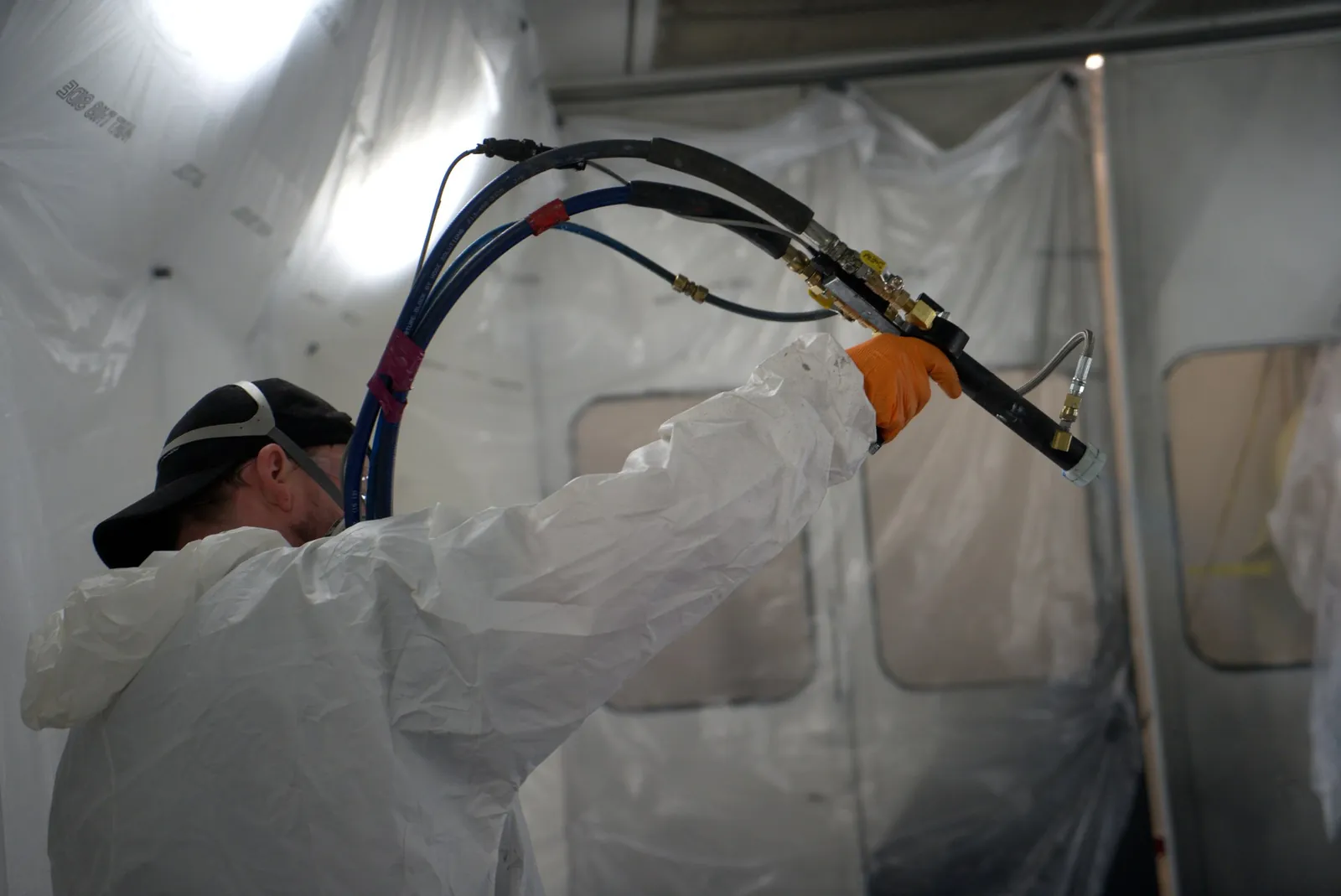
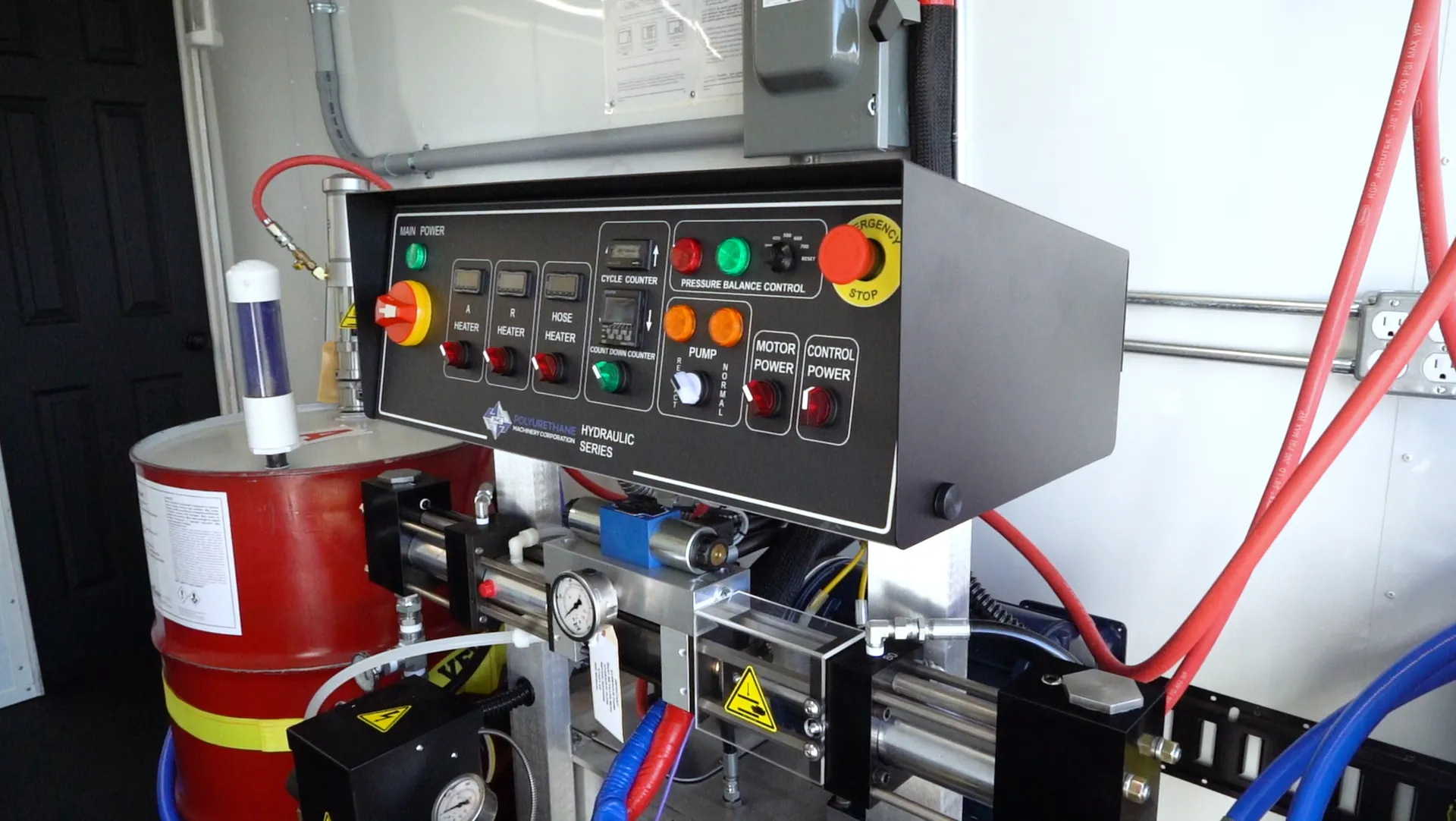
ArmorThane sets you up to do this work, and you own the business. We make the chemistry, build the rigs, train you hands-on and answer the phone when a job gets difficult. You pay no franchise fee and no royalties. It has been that way since 1989.
- $0
- franchise fees or royalties
- 35+
- years in business
- 50+
- countries with applicators
- 24/7
- technical support
Floor insulation goes under any floor that sits over a space you do not heat: a vented crawl space, a garage under a bonus room, a cantilever, a porch or an unheated basement. Cold floors are a common complaint in older homes, and the fix is straightforward if it is done in the right order. We make spray foam and see a lot of crawl spaces and bonus rooms. This guide covers when to insulate the floor versus the crawl space walls, what the 2021 code requires, how to keep batts from ending up on the ground, and two tools to size the job and price the savings.
Insulate the floor when the space below is vented and unconditioned and you want to keep it that way. Code calls for R-13 in zones 1 and 2, R-19 in zones 3 and 4, R-30 in zones 5 and 6, and R-38 in zones 7 and 8, or batts that fill the joist cavity at R-19 or more in the colder zones. Air-seal first, keep the insulation tight against the subfloor, and support it so it stays there. Over garages and in damp crawl spaces, closed-cell spray foam on the underside of the subfloor air-seals and resists moisture where batts struggle. If the crawl space holds ducts, plumbing or a furnace, consider sealing and insulating the crawl space walls instead.
Which floors need insulation?
Over a vented crawl space
The Department of Energy's guidance is to insulate floors above unconditioned spaces such as vented crawl spaces. The crawl stays an outdoor space; the floor becomes the boundary.
Over a garage or porch
Bonus rooms over garages are known for cold floors. DOE's advice is to seal every air leak first, then add an air barrier so cold garage air cannot "short circuit" the insulation under the subfloor.
Over a basement or sealed crawl
If the space below holds the furnace, ducts or water lines, or you plan to encapsulate the crawl space, insulate its walls and keep it inside the envelope. See basement ceiling insulation for the trade-offs.
Slab-on-grade floors are different again: the insulation belongs at the slab edge and, for heated slabs, under the slab, and it has to go in before the pour. Our barndominium insulation guide covers slab-edge requirements for new builds.
Floor insulation R-values by climate zone
The 2021 IECC sets the floor R-value for floors over unconditioned space, and the alternatives if you insulate the crawl space or basement walls instead. Click a heading to sort.
| Climate zone | Floor over unconditioned space | Fill-the-cavity option | Crawl space wall (instead of floor) | 2x10 cavity, fiberglass |
|---|---|---|---|---|
| 1 and 2 | R-13 | n/a | None required | Holds about R-30 |
| 3 | R-19 | n/a | R-5 ci or R-13 | Holds about R-30 |
| 4 (not marine) | R-19 | n/a | R-10 ci or R-13 | Holds about R-30 |
| 5 and marine 4 | R-30 | Fill cavity, R-19 min. | R-15 ci, R-19, or R-13 + 5 ci | Close; high-density batt fits |
| 6 | R-30 | Fill cavity, R-19 min. | R-15 ci, R-19, or R-13 + 5 ci | Close; high-density batt fits |
| 7 and 8 | R-38 | Fill cavity, R-19 min. | R-15 ci, R-19, or R-13 + 5 ci | Short; use fill-cavity option or foam |
The contact rule
The 2021 IECC (R402.2.8) requires floor cavity insulation to stay in permanent contact with the underside of the subfloor, or to fill the cavity. The newer alternative allows an air space above the insulation only when insulation is installed across the bottom of the joists and the perimeter framing is insulated to the wall R-value. A batt sagging an inch below the subfloor fails the rule and leaves a cold air channel above it.
Floor insulation sizer
Enter the floor area, your joist size and climate zone, and pick a material. The sizer gives the code target, what fits in your joists, how much material to order and an installed cost range.
What floor insulation do I need?
Targets from 2021 IECC Table R402.1.3. Fiberglass at R-3.2 per inch, closed-cell foam at R-6.5, rigid board at R-5. Installed costs from HomeGuide's 2026 subfloor ranges: batts $0.90 to $1.40, closed-cell $2.00 to $5.00, rigid board $1.20 to $3.70 per sq ft.
Floor insulation types compared
Under a floor, the enemies are gravity, air movement and moisture from the ground. Click a heading to sort.
| Material | R per inch | Installed cost per sq ft | Air seals? | Moisture tolerance | Best use |
|---|---|---|---|---|---|
| Fiberglass batts | About 3.2 | $0.90 to $1.40 | No | Low; loses R-value when wet | Dry, vented crawl spaces on a budget |
| Mineral wool batts | 3.2 to 4.1 | $1.50 to $3.80 | No | Better; does not absorb water readily | Floors over garages and where fire resistance matters |
| Closed-cell spray foam | 6 to 7 | $2.00 to $5.00 | Yes | High | Damp crawls, floors over garages, cantilevers, rim joists |
| Rigid foam board under joists | 3.6 to 5.0 | $1.20 to $3.70 | With taped seams | High | Continuous layer under the joists, often with batts above |
| Open-cell spray foam | 3.5 to 3.8 | $1.50 to $5.00 (spray foam) | Yes | Low; absorbs water | Rarely the right choice over a crawl space |
Floor heat-loss and payback calculator
The space under a floor is rarely as cold as outdoors, so this calculator asks for the average winter temperature down there. A cheap thermometer left in the crawl space or garage for a week gives you a good number.
What is my cold floor costing me?
Heat loss = area x (indoor minus under-floor temperature) x 24 hours x heating days / R. An uninsulated floor is treated as about R-4 for the subfloor, finish floor and air films. Energy prices default to recent EIA averages.
How to insulate a floor over a crawl space
Fix water and ground moisture first
Standing water, wet soil or a missing ground cover will soak batts and rot the framing they touch. Grade and gutter problems come first; a 6-mil polyethylene ground cover is the usual minimum in a crawl space.
Air-seal the floor
Seal plumbing, wiring and duct penetrations through the subfloor with foam or caulk, and seal the rim joist. Air leaking up through the floor makes it feel colder than conduction alone ever would. Our rim joist insulation guide covers that band of framing.
Fit insulation tight to the subfloor
Batts go up into each joist bay with no gap above, full width, cut around bridging and pipes rather than compressed behind them. Faced batts go with the facing toward the heated side, against the subfloor.
Support it so it stays
Use wire supports, twine or netting at the spacing the manufacturer specifies. Sagging and fallen batts are a common sight in vented crawl spaces.
Protect the underside where needed
Over a garage or outdoors, cover the insulation with an air barrier: drywall in a garage (fire separation rules apply), or rigid board or sheathing under a cantilever, with every seam sealed.
Deal with the pipes and ducts
Once the floor is insulated, the crawl space gets colder. Insulate water lines and seal and insulate any ducts below the floor, or they will freeze or lose heat to a space you just cut off from the house.
Spray foam floor insulation: when it is worth it
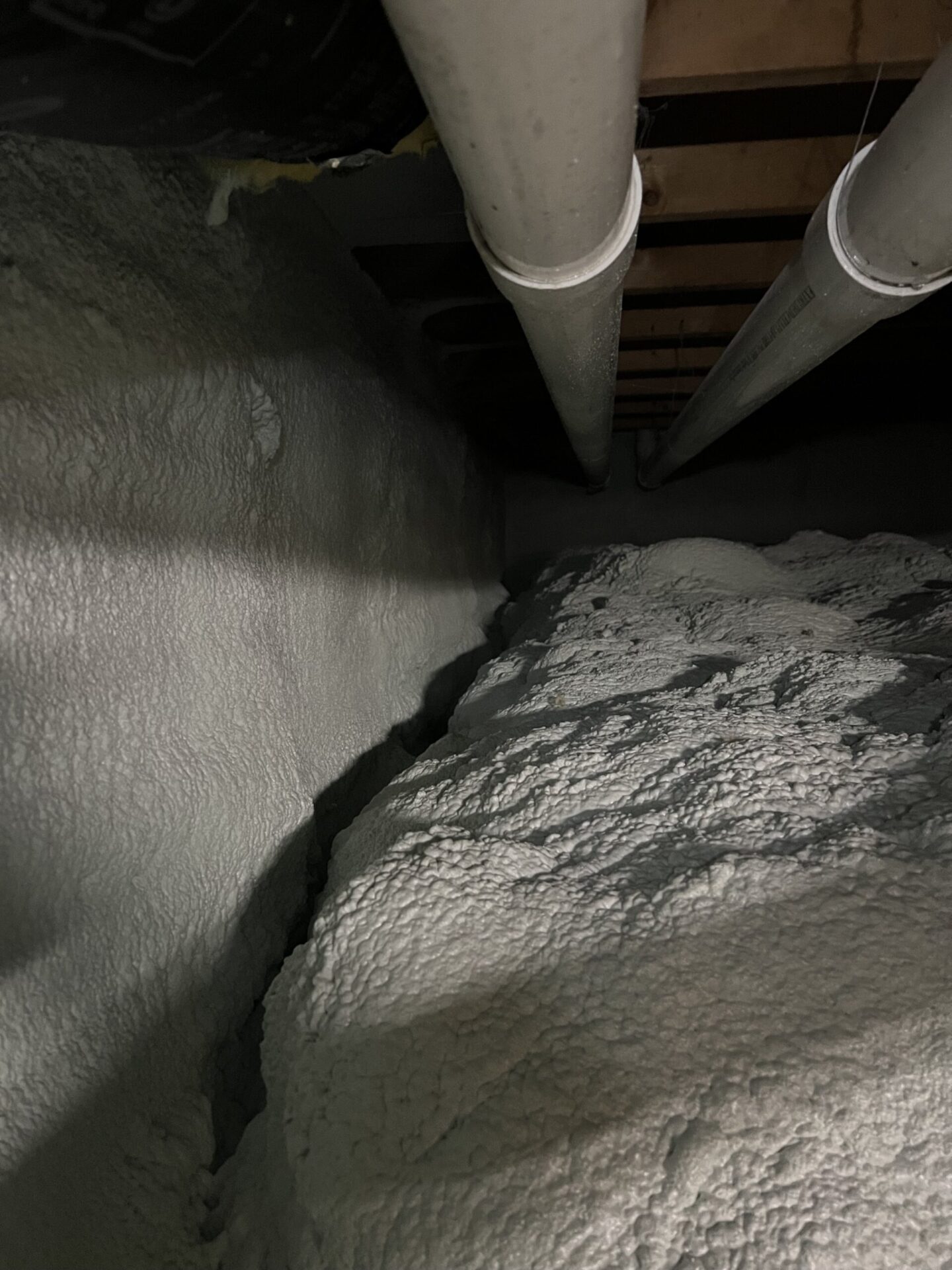
Batts are fine under a dry, vented floor where you can reach every bay. Closed-cell spray foam costs more per square foot, but it is the better tool in four situations:
Damp crawl spaces
Closed-cell foam does not soak up water or sag, so it does not end up on the ground.
Bonus room over a garage
It air-seals the floor and rim from the garage side in one pass, which batts cannot.
Cantilevers and bay windows
Small, awkward, exposed cavities where air sealing matters more than R-value.
Crawl with ducts and plumbing
Here we usually recommend sealing the crawl and foaming its walls instead of the floor.
Foam left exposed in a crawl space generally needs an ignition barrier or a product listed for exposed use in that location; ask your applicator what the foam is listed for. For the crawl-space-walls route, see crawl space insulation and the crawl space encapsulation guide; for the foam itself, closed-cell spray foam. More from this insulation series: roof insulation.
Cold floor over a crawl or garage? Seal it and insulate it.
A certified ArmorThane applicator can spray closed-cell foam under the subfloor and along the rim joist, or seal the crawl space walls instead.
Contractors: become an applicator →
Floor insulation questions
What R-value do I need for floor insulation?
Under the 2021 IECC: R-13 in climate zones 1 and 2, R-19 in zones 3 and 4, R-30 in zones 5 and 6 (and marine 4), and R-38 in zones 7 and 8. In zones 5 to 8 you can instead fill the joist cavity with insulation of at least R-19.
What is the best insulation for floors over a crawl space?
In a dry, vented crawl, fiberglass or mineral wool batts held tight to the subfloor are the most cost-effective. In a damp crawl, or anywhere you need air sealing, closed-cell spray foam on the underside of the subfloor holds up better. If the crawl holds ducts or plumbing, sealing and insulating the crawl walls is often the better plan.
How much does floor insulation cost?
HomeGuide's 2026 figures for insulating under a subfloor are $0.90 to $1.40 per square foot for fiberglass batts, $1.20 to $3.70 for rigid board and $2.00 to $5.00 for closed-cell spray foam, or about $1,000 to $4,500 for a 1,000 square foot floor.
Which way does the paper face on floor insulation?
Toward the heated side, which under a floor means up against the subfloor. Kraft facing is combustible, so it should not be left exposed where code requires it to be covered, for example on the underside of a garage ceiling.
Should I insulate the floor or the crawl space walls?
Insulate the floor if the crawl is vented and holds nothing that can freeze or leak heat. Insulate the walls, with a sealed ground cover and a small amount of conditioning, if it holds ducts, a furnace or water lines. Building America guidance for unvented crawls calls for conditioned air at 1 cfm per 50 square feet of floor, or another approved drying method.
Why is my floor over the garage so cold?
Usually air leakage, not missing R-value. Garage air moves through gaps at the rim joist and between joist bays and washes through batts. DOE recommends sealing every leak and adding an air barrier so cold air cannot short-circuit the insulation. Closed-cell foam does both.
Can I insulate a concrete slab floor?
Not from below once it is poured. New slabs get R-10 edge insulation from zone 3 north, plus R-5 under heated slabs. On an existing slab you can add insulation on top under a new floor, with a corresponding loss of ceiling height.
Does floor insulation need a vapor barrier?
The bigger moisture control in a vented crawl is the ground cover, not a vapor barrier in the floor. Kraft-faced batts provide a vapor retarder on the warm side. Do not add a second plastic layer under the joists, which can trap moisture in the floor.
Sources
- DOE/PNNL Building America Solution Center, 2009–2021 IECC minimum insulation requirements: basc.pnnl.gov/…/2009-2021-iecc-and-irc-minimum-insulation-requirements-new-homes
- ICC, 2021 IECC Residential, Chapter 4 (R402.2.8 floors): codes.iccsafe.org/content/IECC2021P1/chapter-4-re-residential-energy-efficiency
- U.S. Department of Energy, where to insulate in a home: energy.gov/energysaver/where-insulate-home
- Building America Solution Center, unvented insulated crawlspaces: basc.pnnl.gov/resource-guides/unvented-insulated-crawlspaces
- HomeGuide, crawl space insulation cost (2026): homeguide.com/costs/crawl-space-insulation-cost
- HomeGuide, basement insulation cost and R per inch (2026): homeguide.com/costs/basement-insulation-cost
- ENERGY STAR, insulation fact sheet: energystar.gov/…/Insulation Fact Sheet.pdf
- ENERGY STAR, recommended home insulation R-values: energystar.gov/…/insulation-r-values
- ROCKWOOL Comfortbatt product data: rockwool.com/…/comfortbatt
- U.S. EIA, natural gas, electricity and propane prices: eia.gov/dnav/ng/ng_pri_sum_dcu_nus_m.htm, eia.gov/electricity/monthly/update/end-use.php, eia.gov/petroleum/heatingoilpropane
- ArmorThane, spray foam R-value guide: armorthane.com/knowledge-center/spray-foam-r-value-guide

Start your coatings business with ArmorThane.
Tell us what you want to spray and where you are. An ArmorThane specialist will walk you through the equipment, chemicals, training and startup cost for the work you want to do.
- Equipment package matched to your applications
- Hands-on training and applicator certification
- Technical support once you are spraying
Cold floors over a crawl or garage? Seal and insulate them once.
Tell us what is under the floor, the area, joist size and any moisture you have seen. We will connect you with a certified ArmorThane applicator near you.
- Crawl space, garage or overhang
- Floor area and joist size
- Ducts or plumbing below
- Any moisture or old insulation
More to read on floors and decks
Short reads from ArmorThane on Issuu. Tap one to open it right here.