
Garage Floor Coating Contractors
How to vet an epoxy or polyaspartic installer: the prep, the moisture test, what the quote should list, fair 2026 prices and what a lifetime warranty really covers.
Start a floor coating business
Coat floors for a living.
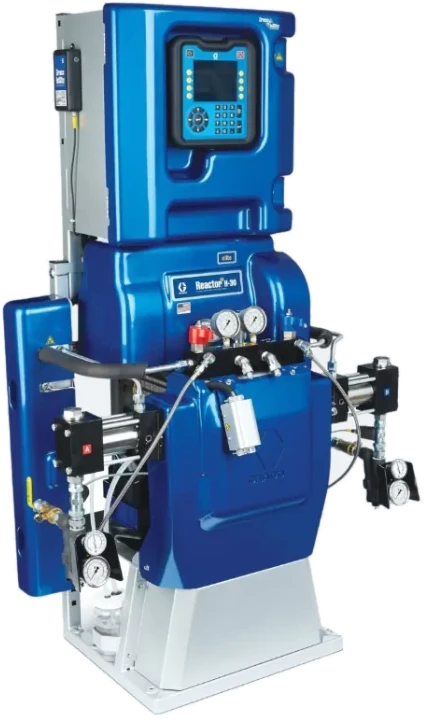
ArmorThane sets you up to do this work, and you own the business. We make the chemistry, build the rigs, train you hands-on and answer the phone when a job gets difficult. You pay no franchise fee and no royalties. It has been that way since 1989.
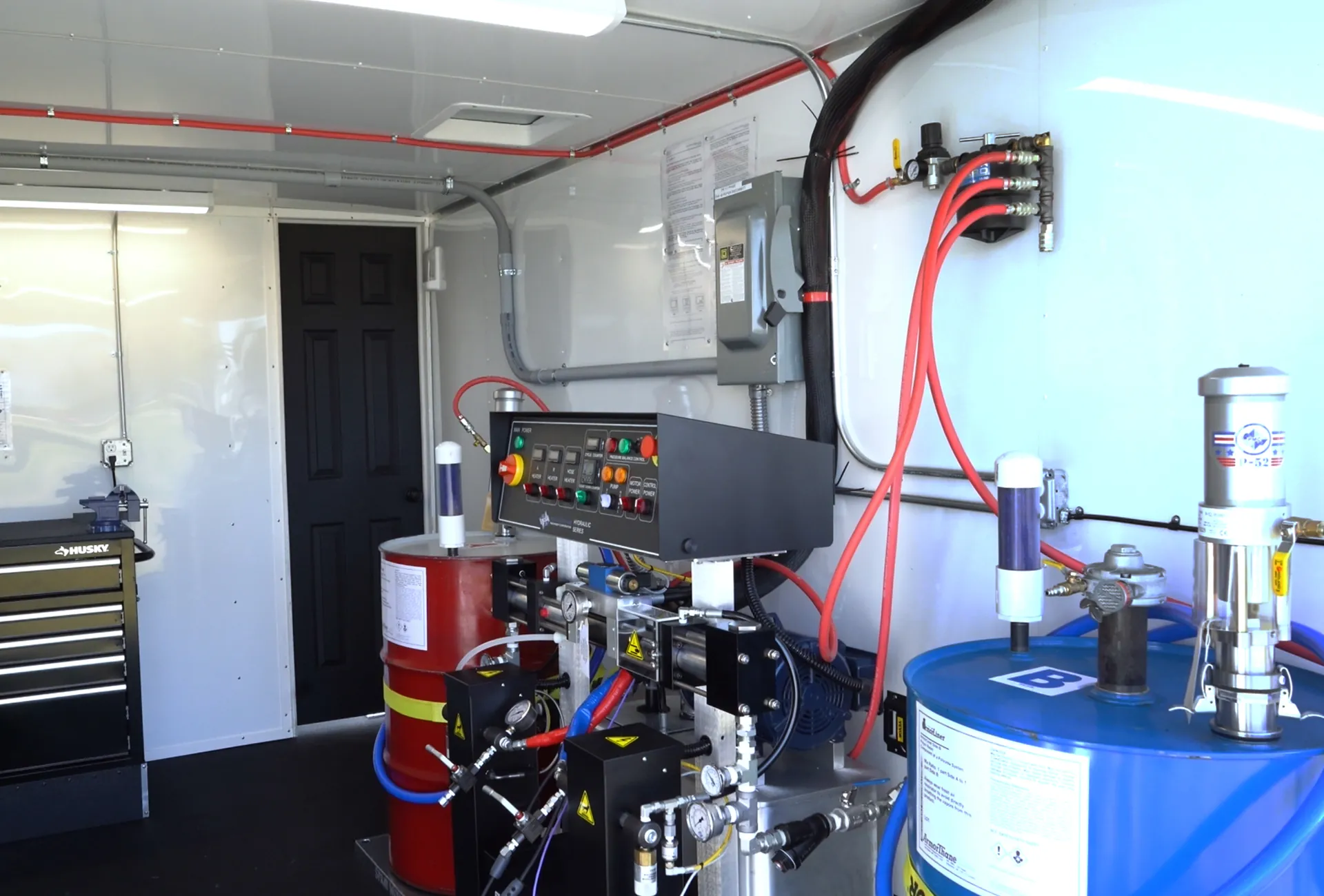
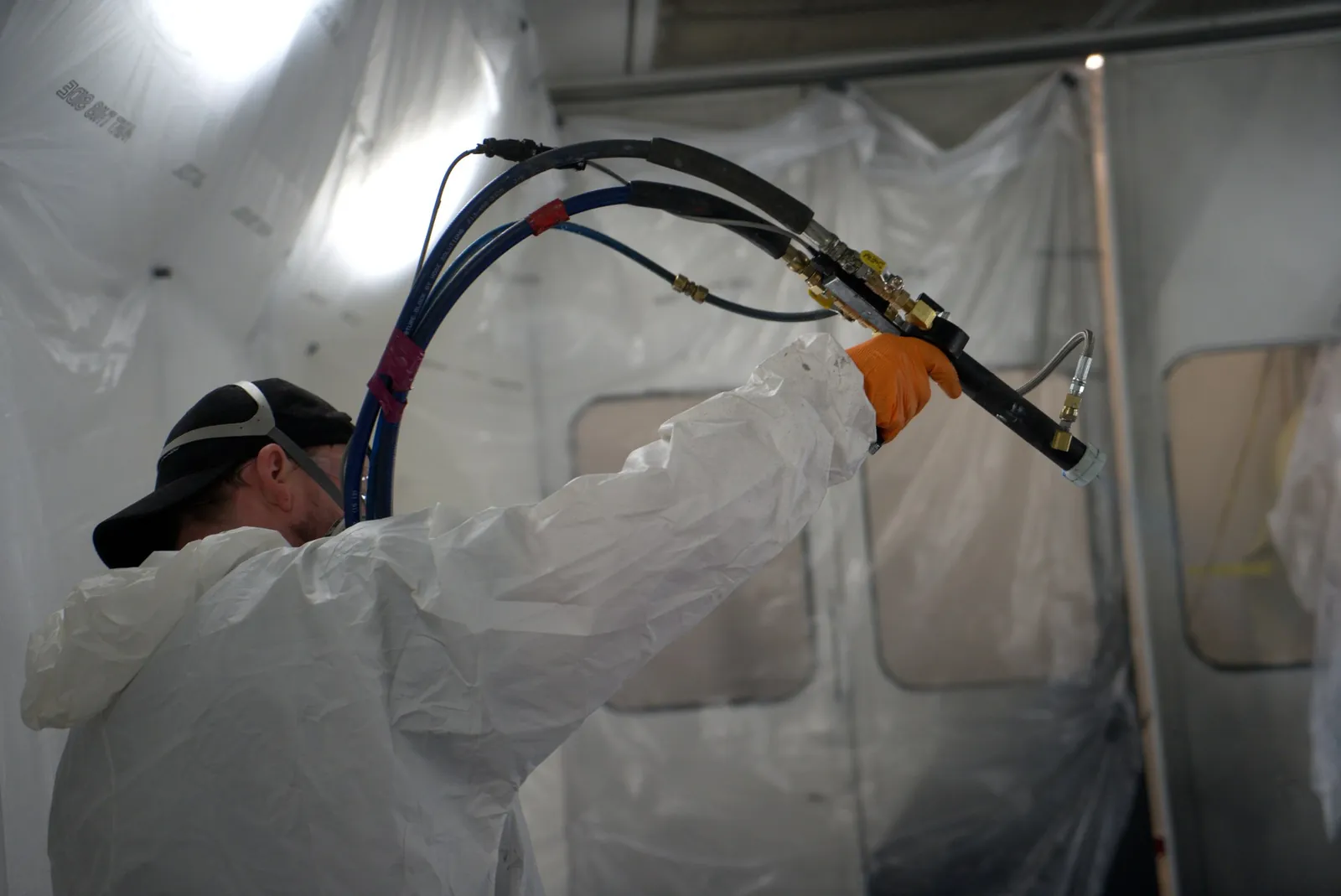
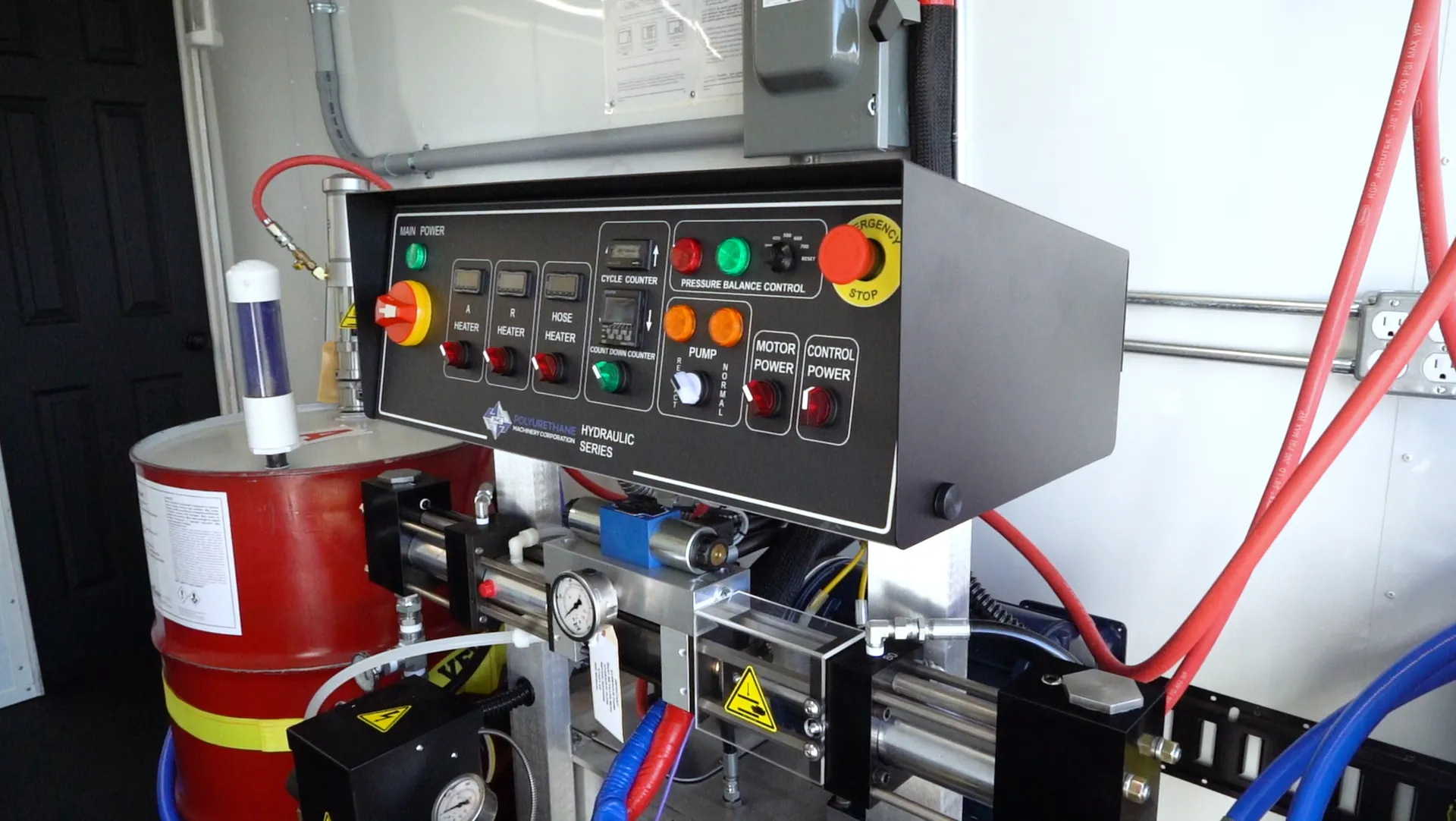
- $0
- franchise fees or royalties
- 35+
- years in business
- 50+
- countries with applicators
- 24/7
- technical support
Three contractors look at the same garage. One says $1,900, one says $3,400 and one says $5,800. All three promise a lifetime floor. They're rarely pricing the same job, and the difference is almost never the coating in the bucket. It's what happens to the concrete before the first coat.
Hire a garage floor coating contractor who diamond grinds or shot blasts the slab (not a quick acid wash), tests the concrete for moisture, and puts every layer on the quote: crack repair, basecoat, flake and topcoat, ideally with thickness. A professional 2-car garage (about 400 sq ft) runs about $1,600–$4,800 in HomeGuide's data, with polyaspartic at $5–$12 per sq ft. Read the warranty closely: the one lifetime warranty we could read in full covers materials only and excludes moisture, cracks and tire-shine stains. Check a quote or plan the prep.
This guide is for the moment you have a few bids and need to tell them apart. We'll show you what the prep should be, which tests matter, what a complete quote looks like, what national installers actually promise and where the published prices sit.
A word about who's writing. ArmorThane makes polyurea and ArmorFloor polyaspartic coatings in Springfield, Missouri, and trains the applicators who install them. We'd still rather you hire any contractor who preps and tests properly than one of ours who doesn't.
- 1Garage floor quote checker (interactive)
- 2Prep: grinding, shot blasting or acid etch?
- 3Prep and moisture planner (interactive)
- 4Moisture testing, explained
- 5What a complete quote lists
- 6Epoxy, polyaspartic or polyurea?
- 7What "lifetime warranty" really covers
- 8Hot tire pickup: whose fault is it?
- 9Red flags and questions to ask
- 10What contractors charge in 2026
- 11Garage floor contractor FAQ
Garage floor coating quote checker
Enter what the quote says. The checker works out your price per square foot, compares it with published 2026 ranges for that system, and flags the line items a complete quote should include.
Is this garage floor quote complete, and is the price in range?
Ranges are installed prices from HomeGuide and The Garage Guide. A quote above range isn't wrong if it includes heavy repairs or coating removal.
Grinding, shot blasting or acid etch?
A coating can only hold on as well as the concrete it's stuck to. Garage slabs come with a weak top layer (laitance), oil, tire residue and sometimes an old sealer. Prep removes all of that and roughens the surface so the basecoat can grab.
The industry's yardstick is the concrete surface profile (CSP) from ICRI Technical Guideline 310.2R, a set of ten reference chips running from CSP 1 (nearly flat) to CSP 10 (very rough). Contractors compare their prepared floor against the chips. Thin coatings need less profile than thick overlays, but the one-day flake systems many installers sell call for more than a quick scuff. Simiron's one-day polyurea and epoxy flake system guides both say to "diamond grind or shotblast to a CSP-3 or greater surface profile," and one polyaspartic data sheet we reviewed calls for CSP 2 and above depending on the system.
| Prep method | What it does | What it can't do | What sources say |
|---|---|---|---|
| Diamond grinding with a HEPA vacuum | Grinds off the top layer and leaves an even texture; removes thin sealers and coatings | Heavy profiles for thick overlays | ArmorPoxy likens a ground floor to 60–120 grit sandpaper. GarageFloorCoating.com calls grinders with HEPA vacuums what professionals use. |
| Shot blasting | Steel shot blasts the surface to a uniform, rougher profile | Edges and corners need a hand grinder | ICRI's guideline lists shot blasting as able to reach CSP 2–9. Garage Force tells buyers to ask for shot blasting to CSP 3. |
| Acid etching | Dissolves some surface cement; cheap and fast | Won't remove sealers, oil stains, glues or mastics; residue can clog pores | All Garage Floors: "Acid etching will not remove a sealer." GarageFloorCoating.com: acid etching with a buffer is "an indicator of an amateur applicator." |
To be fair to acid etching: some coating suppliers still allow it. Legacy Industrial says newer floors can be etched, while older floors should be ground and primed, and ArmorGarage warns that failing to neutralize after etching "is the cause of many hot tire lifting and peeling issues." Most DIY kits are built around etching. But when you're paying a professional $1,600 or more, you're paying for a grinder or a shot blaster. If a bid doesn't mention either, ask.
Prep also shows up on the price. The Garage Guide puts diamond grinding at $1.00–$3.00 per sq ft and old coating removal at $1.00–$3.00 per sq ft; one contractor's 2026 guide puts full coating removal at $3–$8 per sq ft plus disposal. That's why "we'll coat right over your old paint" is the most expensive sentence a contractor can say.
Prep and moisture planner
Tell the planner about your slab and it lists the prep and testing a careful contractor should include, with published cost ranges for each extra. Take the list with you when you walk the garage with bidders.
What should the prep line on my quote say?
Cost ranges from The Garage Guide (March 2026) and a contractor's 2026 cost guide. Your contractor's inspection governs.
Moisture testing, explained
A garage slab sits on the ground, and ground moisture moves up through concrete as vapor. Under a coating, that vapor pushes. It's one of the most common reasons coated floors blister and peel, and it's the one thing a contractor can't see without testing. There are three tests you'll hear about.
In-slab relative humidity
Probes set in holes drilled into the slab (at 40% of its depth) read the humidity inside the concrete. The flooring-industry lab IFTI recommends it for new construction.
Calcium chloride
A dish of calcium chloride under a sealed dome measures how much moisture the surface emits, in pounds per 1,000 sq ft per 24 hours. It runs 60–72 hours and is for bare concrete only.
Plastic sheet
A sheet of plastic taped to the floor shows whether moisture collects under it. ASTM calls it an indicator of capillary moisture, not a measurement. DIY kits use a version of it.
| System (example) | F1869 limit | F2170 limit |
|---|---|---|
| Simiron polyurea base + polyaspartic flake (1-day) | 3 lb / 1,000 sq ft / 24 h | 75% RH |
| CHEMTEC CHEM1000 PG polyaspartic | 3 lb | Below 80% RH |
| Simiron 1150FC 100%-solids epoxy at 16 mils | 12 lb | 85% RH |
Notice how different those numbers are. The fast-curing systems most one-day installers sell are the most moisture-sensitive in this sample, and Simiron warns that without a vapor barrier under an on-grade slab, seasonal ground moisture "can cause excessive moisture vapor transmission (MVT) regardless of results measured prior to coating application." That's a manufacturer telling you a passing test isn't a guarantee.
What it costs: one contractor's 2026 guide puts moisture testing at $200–$500. If the slab fails, moisture mitigation (usually a special primer) runs $2.00–$5.00 per sq ft in The Garage Guide's March 2026 figures. Cheaper than peeling.
What a complete garage floor quote lists
A quote that says "full flake polyaspartic floor, $3,200" gives you nothing to compare. Here's what a complete one spells out, with an example of the numbers from a published one-day system.
| Line item | What good looks like | Example from a published system |
|---|---|---|
| Prep method and profile | Diamond grind or shot blast, with a CSP target | CSP 3 or greater (Simiron) |
| Crack and spall repair | Named repair material; moving joints and cracks may still show through | A "flexible elastomeric filler" for cracks (GarageFloorCoating.com) |
| Moisture test | Method and result, before coating | ≤ 3 lb and ≤ 75% RH (Simiron polyurea system) |
| Basecoat | Product name and thickness or coverage rate | Polyurea basecoat at 6–8 mils (200–267 sq ft/gal) |
| Flake | Full or partial broadcast, flake size and blend | About 6 sq ft per lb, or 240 sq ft per 40 lb box, then scraped |
| Topcoat | Product name, number of coats and thickness | Polyaspartic at 10–16 wet / 9–14 dry mils |
| Vertical surfaces | Stem walls, steps, curbs: included or priced separately | Listed as a price driver by contractors; get it in writing |
| Return to service | Foot traffic and vehicle times | Vehicles at 24 h (one polyaspartic) to 72 h (some polyurea systems) |
| Data sheets | A technical data sheet for every product | Standard ask; reluctance is a red flag |
| Warranty | Length, what's excluded, materials and labor | See the warranty section below |
Crack repair is where quotes drift the most. One 2026 contractor guide prices minor crack repair at $250–$800 and structural crack repair above $1,000; The Garage Guide uses $0.50–$2.00 per sq ft. Neither number means much until the contractor has walked your floor. For the flake decision, our epoxy flakes guide covers sizes, full vs partial broadcast and how many pounds a garage takes.
Epoxy, polyaspartic or polyurea: what contractors sell
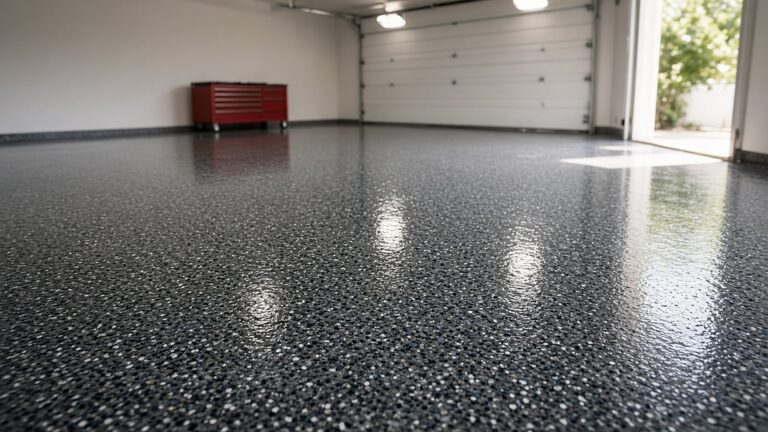
Most professional garage floors today are a flake system: a basecoat, a broadcast of vinyl flakes and one or more clear topcoats. The difference between bids is usually the basecoat chemistry and the topcoat.
| System | Installed cost per sq ft | UV resistance | Typical lifespan | Typical vehicle return |
|---|---|---|---|---|
| Epoxy | $4–$10 (HomeGuide); $2–$12 (Angi) | Poor to fair | Water-based 3–5 yrs; solid epoxy up to 20 yrs | Varies by product |
| Polyaspartic | $5–$12 | Excellent | 10–20+ yrs | About 24 h |
| Polyurea base, polyaspartic top | $5–$10 | Depends on the topcoat | 10–20+ yrs | 24–72 h |
Are one-day garage floors any good?
This is the industry's live argument. Garage Force markets a floor "installed in a day" and back in use in 24 hours, and manufacturers like Simiron sell "1-Day" flake systems. GarageFloorCoating.com counters that many one-day polyurea-polyaspartic floors are "about ½ a commercial-grade application," and Granite Garage Floors sells a two-day system as the alternative. Our view as a coatings maker: fast-cure chemistry is real, and a one-day floor can be excellent. What makes it fail is rushing the prep or skipping the moisture test to hit the one-day promise. Judge the bid on those two lines, not on the number of days.
For deeper comparisons, see polyaspartic vs epoxy, polyurea vs polyaspartic, our ranking of the best garage floor coatings and what a polyurea garage floor really is.
What "lifetime warranty" really covers
Nearly every national installer advertises a lifetime warranty. Here's what their own websites say, and what the one full warranty document we could read actually covers.
| Installer | What they publicly claim | Published pricing |
|---|---|---|
| Garage Force | "Transferrable Lifetime Warranty"; covers "peeling, delamination, and UV damage for the life of your floor"; "lifetime coverage depends on certified installation"; installed in a day, back on the floor in 24 hours | None current (a 2023 blog cited $4–$9 per sq ft for polyaspartic) |
| Penntek Industrial Coatings | "Limited lifetime manufacturer warranty" through certified dealers | None |
| GarageExperts | "Limited lifetime warranty"; foot traffic in 24 h, vehicles in 72 h | None |
| Granite Garage Floors | "Lifetime Satisfaction Warranty"; "100% Guarantee against hot tire pick up"; two-day installation | None |
The fine print, from a real warranty
Penntek publishes its full residential warranty, which makes it a useful example of how these documents work. It requires registration within 30 days, covers delamination and UV discoloration of the polyaspartic topcoat, and transfers only if the home sells within 12 months of installation. It excludes hydrostatic pressure and excess moisture, cracks, and discoloration from "soft tires, tire shine." And the remedy is materials: "Labor costs… are not covered" except in a recall. It also voids coverage for installation error, including a substrate that wasn't prepared to a specified profile and moisture reading.
That's not a knock on Penntek; it's how most coating warranties are written. It's also why two warranty questions matter more than the word "lifetime": does it cover moisture, and does it cover labor? ArmorGarage calls lifetime claims "mostly marketing hype," and The Garage Guide says quality contractors offer 10–15 year warranties on polyurea and polyaspartic systems and 3–5 years on epoxy. A clear 10-year warranty that includes labor can be worth more than a lifetime one that doesn't.
Hot tire pickup: whose fault is it?
You park a warm car, and the next morning the coating has lifted in the shape of a tire. It's the complaint installers dread. All Garage Floors explains the mechanics: hot tires soften some coatings, then contract as they cool and "grab" the surface. Weak coatings (especially thin water-based epoxies) and weak bonds fail first. Chemicals matter too. Tire plasticizers can migrate into a coating and stain it, and silicone tire dressings act as a bond breaker.
- Prep and bond: a well-ground, well-bonded floor resists the pull. Poor prep is the most common root cause.
- Coating chemistry: thin, soft coatings pick up; harder polyaspartic and 100%-solids systems hold up better.
- Staining is different from lifting: Simiron's guides say "tire marking may occur" and suggest sheet metal or plexiglass under tires, and Penntek's warranty excludes staining from soft tires and tire shine.
- Guarantees vary: Granite Garage Floors advertises a 100% guarantee against hot tire pickup. Ask your bidders what theirs covers.
Red flags and questions to ask
- Acid etching with a floor buffer as the only prep.
- No moisture test, or "we've never had a moisture problem."
- Won't share technical data sheets.
- A warranty you can't understand in one read (Garage Force's own test).
- Product substitutions after you sign.
- Coating over an old coating or sealer without removing it.
- Prorated or non-transferable coverage sold as "lifetime."
- How will you prepare the floor, and to what profile?
- Will you test for moisture? Which test, and what's the limit?
- What exactly goes down: basecoat, flake, topcoat, and how thick?
- How will you repair cracks and joints?
- Can I see the data sheet for each product?
- When can I walk on it, and when can I park on it?
- Does your warranty cover moisture and labor?
- Are you licensed and insured, and may I have references?
Questions compiled from HomeGuide, GarageFloorCoating.com and Garage Force's hiring guides (2024–2026), plus our own.
What garage floor coating contractors charge
Here is what each major cost guide publishes, as they publish it. Sizes differ: HomeGuide counts a 2-car garage as 400 sq ft; Angi uses 500.
| Source (date) | Per sq ft | 1-car | 2-car | 3-car |
|---|---|---|---|---|
| HomeGuide, garage floor coating (Dec. 2024) | Epoxy $4–$10; polyaspartic $5–$12; polyurea $5–$10 | $1,200–$3,500 (288 sq ft) | $1,600–$4,800 (400 sq ft) | $3,500–$10,400 (864 sq ft) |
| HomeGuide, polyaspartic (Nov. 2024) | $5–$12 | $1,400–$4,700 | $2,000–$6,900 | $2,900–$10,400 |
| HomeGuide, polyurea (Sep. 2025) | $5–$10 (materials $2–$4, labor $3–$6) | $1,400–$3,900 | $2,000–$5,800 | $2,900–$8,600 |
| Angi (Aug. 2026) | Epoxy $2–$12 | $750–$3,000 (250 sq ft) | $1,500–$6,000 (500 sq ft) | $2,250–$9,000 (750 sq ft) |
| The Garage Guide (Mar. 2026) | Epoxy $3–$7; flake epoxy $5–$8; polyurea $5–$10; polyaspartic $5–$12 | — | 400 sq ft: epoxy $1,600–$2,800; polyurea $2,000–$4,000; polyaspartic $2,400–$6,000 | — |
For a calculator that prices your own garage by system, see our garage floor coating cost guide. Considering doing it yourself? Our epoxy garage floor kit comparison covers coverage, solids and when a kit makes sense.
Where ArmorThane fits, and where it doesn't
We make ArmorFloor aliphatic polyaspartic, polyurea and roll-on floor coatings, and we train the applicators who install them. A certified ArmorThane applicator should quote exactly what this guide asks for: the prep method, the moisture test, the crack repair and every coat by name.
Where we don't fit: if you want the lowest possible price on a light-use floor and you're handy, a well-prepped DIY kit can be the right answer. If your slab fails a moisture test badly, the fix starts with the slab, not the coating. More on our systems on the ArmorFlooring and roll-on floor coatings pages.
Coat floors without a franchise fee.
Garage floors are one of the steadiest coating jobs there is. We supply ArmorFloor polyaspartic and polyurea systems, train your crew and support you on the phone. Not a franchise: no franchise fee, no royalties.
Already coating floors? See our concrete coating systems →
Garage floor contractor FAQ
How do I choose a garage floor coating contractor?
Pick a contractor who diamond grinds or shot blasts the slab, tests for moisture, repairs cracks with a named material and lists every coat (basecoat, flake, topcoat) on the quote. Ask for technical data sheets, references and proof of insurance, and read the warranty for what it excludes, especially moisture and labor.
Should a garage floor be ground, shot blasted or acid etched?
Professionals usually diamond grind (with a HEPA vacuum) or shot blast. Acid etching won't remove sealers or oil stains and can leave residue; GarageFloorCoating.com calls acid etching with a buffer a sign of an amateur applicator. Some suppliers allow etching on newer floors if it's neutralized, but most one-day flake systems call for a mechanically prepared surface, often CSP 3 or greater.
What is CSP and what profile does a garage floor coating need?
CSP means concrete surface profile, a 1–10 scale from the International Concrete Repair Institute (ICRI 310.2R) that describes how rough prepared concrete is. Thin coatings need less profile than thick overlays. Simiron's one-day flake systems call for CSP 3 or greater, and one polyaspartic data sheet calls for CSP 2 and above depending on the system.
Do contractors need to test a garage floor for moisture?
They should. Moisture vapor from the ground is a common cause of blistering and peeling. Common tests are ASTM F2170 (in-slab relative humidity probes) and ASTM F1869 (calcium chloride). Limits depend on the product; one polyurea flake system calls for 3 lb per 1,000 sq ft per 24 hours or 75% RH, while one 100%-solids epoxy allows 12 lb or 85% RH.
How much does a professional garage floor coating cost for a 2-car garage?
HomeGuide puts a 400 sq ft 2-car garage at $1,600–$4,800, with polyaspartic at $5–$12 per sq ft installed. Angi's figures for a 500 sq ft garage run $1,500–$6,000. Prep extras like coating removal, crack repair and moisture mitigation are usually on top.
Are one-day garage floor coatings any good?
They can be. Fast-curing polyurea and polyaspartic systems are designed for one-day installs. Critics argue some one-day jobs are thinner than commercial-grade systems. The deciding factors are whether the contractor preps to the manufacturer's profile, tests for moisture and applies the full system thickness, not the number of days.
What does a lifetime warranty on a garage floor coating cover?
Usually less than it sounds. The full residential warranty we reviewed covers topcoat UV discoloration and delamination, requires registration within 30 days, excludes moisture, cracks and tire-shine staining, and covers materials but not labor. Ask whether the warranty covers moisture failures and labor, and get it in writing.
What causes hot tire pickup on a coated garage floor?
Hot tires can soften weak coatings and pull them up as they cool, especially thin water-based epoxies or floors with poor prep and bond. Tire plasticizers and silicone tire dressings can also stain or weaken the surface. Good prep and harder coatings reduce the risk; staining is often excluded from warranties.
How long before I can drive on a new garage floor coating?
It depends on the system. One polyaspartic data sheet allows vehicles after 24 hours at about 72°F, while some polyurea systems and installers call for 72 hours. Cold weather slows curing. Get the return-to-service time on your quote.
Should the quote include crack repair and stem walls?
Yes, it should say either way. Crack and spall repair should name the repair material, and stem walls, steps and curbs should be listed as included or priced separately. Moving joints and shrinkage cracks can reflect through a coating, so ask how they'll be treated.
Is polyaspartic or polyurea worth the extra cost over epoxy?
Often, in garages that get sun or need a fast return to service. HomeGuide rates polyaspartic's UV resistance excellent and epoxy's poor to fair, and lists polyurea and polyaspartic lifespans of 10–20+ years. Solid epoxy can also last a long time indoors. The prep matters more than the chemistry for how long any floor lasts.
What questions should I ask an epoxy floor installer?
Ask how they'll prep and to what profile, whether and how they test moisture, which products go down and how thick, how they repair cracks, when you can drive on it, whether they'll share data sheets, and whether the warranty covers moisture and labor. Ask for proof of insurance and references too.
Written from ICRI and ASTM references, manufacturer system guides and data sheets, installer warranties, dated 2024–2026 cost guides and decades of making floor coatings. Last updated September 27, 2026.
Methodology and sources
Prices and warranty claims are shown as each source publishes them, with that source's date. The quote checker uses HomeGuide's per-square-foot ranges (and The Garage Guide's for flake epoxy); the prep planner uses The Garage Guide's and a contractor's 2026 cost ranges. Moisture limits vary by product; your installer's data sheets govern. Company claims are quoted from their websites, not verified by us. Nothing here is legal advice.
- ICRI / P. Winkler, Introduction to ICRI Technical Guideline 310.2R-2013 (2014): icri.org (PDF)
- DeFelsko, ICRI Concrete Surface Profile Chips: defelsko.com/csp
- Simiron, SimFlake SB 1-Day Polyurea System Guide (Jul. 2024): simiron.com (PDF)
- Simiron, SimFlake SB 1-Day Epoxy System Guide (Jan. 2024): simiron.com (PDF)
- CHEMTEC Coatings, CHEM1000 PG Polyaspartic TDS (Mar. 2025): PDF
- ASTM F1869-23, D4263-24 and F2170 scope pages: store.astm.org
- IFTI, ASTM F2170 vs. F1869 (Nov. 2025): ifti.com
- ArmorPoxy, Grinding vs. Acid Etching Your Concrete Floor (Apr. 2024): armorpoxy.com
- All Garage Floors, Why Garage Floor Epoxy Peels Up (2020) and What Causes Hot Tire Pickup (2015): allgaragefloors.com
- GarageFloorCoating.com, Questions to Ask a Contractor (Dec. 2023): garagefloorcoating.com
- GarageFloorCoating.com via PRUnderground, Warranty Red Flags (Dec. 2025): financialcontent.com
- Garage Force, Professional Garage Floor Installers: What to Look for (Jul. 2026) and warranty article (Jun. 2026): garageforce.com
- Penntek Industrial Coatings, Limited Lifetime Residential Warranty (2025): PDF
- GarageExperts, homepage: garageexperts.com
- Granite Garage Floors, warranty page: granitegaragefloors.com
- ArmorGarage, FAQ: armorgarage.com
- Legacy Industrial, Nohr-S Polyurea Aegis Coating Kit: legacyindustrial.co
- HomeGuide, Garage Floor Coating Cost (Dec. 2024): homeguide.com
- HomeGuide, Polyaspartic Floor Coating Cost (Nov. 2024): homeguide.com
- HomeGuide, Polyurea Garage Floor Coating Cost (Sep. 2025): homeguide.com
- HomeGuide, Epoxy Flooring Cost (Feb. 2026): homeguide.com
- Angi, Epoxy Flooring Costs (Aug. 2026): angi.com
- HomeAdvisor, Concrete Coating Cost (Jun. 2026): homeadvisor.com
- The Garage Guide, Garage Floor Coating Cost 2026 (Mar. 2026): thegarage.guide
- Duration Concrete Coatings, How Much Does Garage Floor Coating Cost? (Aug. 2026): durationconcretecoatings.com
- Bob Vila, Polyaspartic Floor Coating Cost (Jan. 2024): bobvila.com

Want your garage floor specified, not just sold? Get a quote from a certified applicator.
Tell us the garage size, how old the slab is and what's on it now. We'll connect you with an ArmorThane-certified floor coating applicator who lists the prep, the moisture test and every coat on the quote.
- Diamond grinding or shot blasting, not a quick acid wash
- Moisture checked before anything goes down
- Basecoat, flake and topcoat listed on the quote
- Contractors: ask about ArmorFloor polyaspartic
More to read on floors and decks
Short reads from ArmorThane on Issuu. Tap one to open it right here.